Estimated reading time: 13 minutes
Last updated: September 2026
Is Jacksonville, FL Worth Visiting?
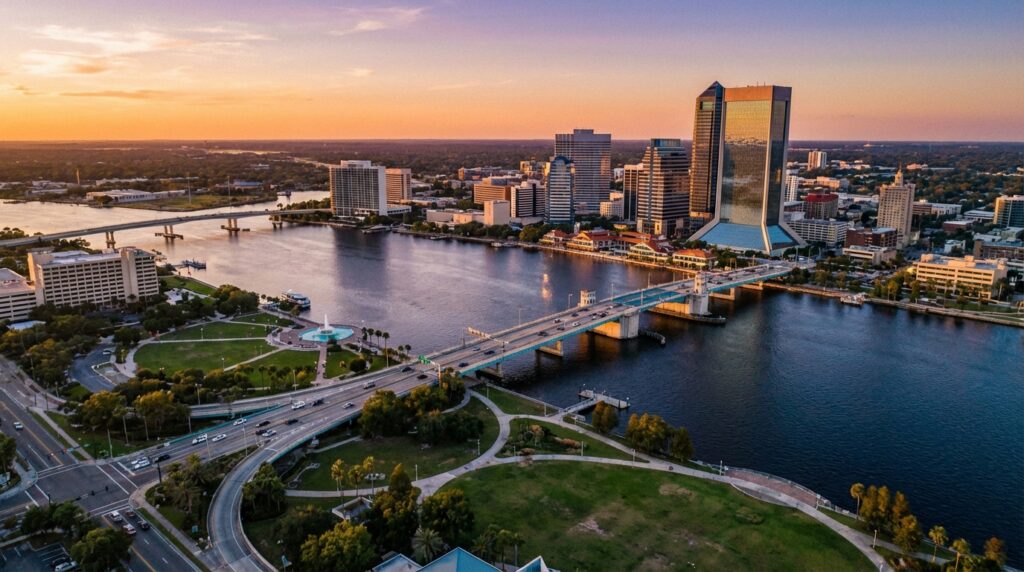
Yes — Jacksonville is an easy, affordable Florida base with the best of both city and coast. As the largest US city by area, it packs 22 miles of Atlantic beaches, a riverfront downtown and the Riverwalk, the well-regarded Jacksonville Zoo & Gardens, walkable historic neighbourhoods like Riverside and San Marco, a strong craft-beer and food scene, and the NFL Jaguars — with fewer crowds and lower prices than South Florida.
Research Methodology
We built this guide using Jacksonville’s official tourism data, government resources, documentary footage, and firsthand traveler insights. Details about attractions, transport, and costs were verified as of publication, please check local websites for any recent changes before visiting.
Want to see Jacksonville’s massive scale for yourself? Watch our complete Jacksonville travel guide in 4K Ultra HD.
Planning Tip
The weather here runs subtropical. Winters stay mild, January averages 65°F. Summers push into the low 90s with afternoon thunderstorms rolling in like clockwork. You’ll sweat from June through September. The National Weather Service Jacksonville Forecast updates hourly if you’re planning outdoor time.
Jacksonville sprawls across northeast Florida along the St. Johns River. According to the U.S. Census Bureau, the city’s 875 square miles make it the largest municipality by land area in the Lower 48. That’s bigger than Los Angeles. The metro area holds 1.6 million people as of 2026 Census estimates. Most visitors underestimate the distances here, downtown to the beaches runs 20 miles.
The St. Johns River cuts through the city flowing north (one of the few rivers in North America that does this). You get 22 miles of Atlantic beaches on the east side. Marshlands and nature preserves fill the western edges. The city operates in Eastern Time year-round.
Beaches anchor most itineraries, Atlantic Beach, Neptune Beach, Jacksonville Beach. The Museum of Science and History sits downtown. Riverside and Avondale neighborhoods hold the art galleries and independent coffee shops. Kayakers paddle the river tributaries. Golfers hit courses designed for the PGA Tour. The Visit Jacksonville site lists current events and attraction hours.
Top Attractions and Things to Do
Jacksonville Zoo & Gardens attracts over 1 million annual visitors across its 117-acre campus featuring 2,000 animals and rare plant collections, while Catty Shack Ranch Wildlife Sanctuary provides big cat rescue experiences rated 4.8 stars.
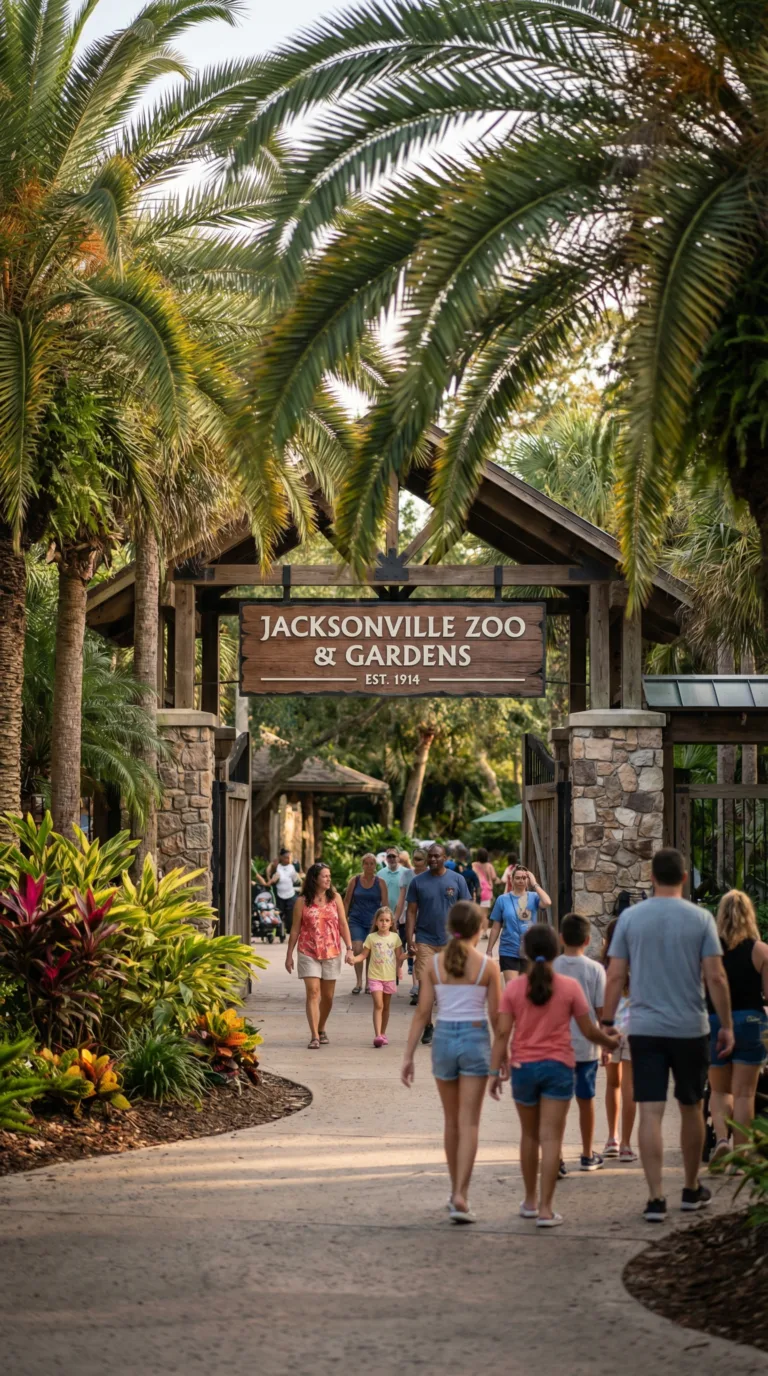
How to spend a day in Jacksonville, FL? Start with the zoo, hit a beach, tour a plantation, browse art, or watch rescued tigers eat dinner. The city spreads across 875 square miles. You’ll need a car.
Jacksonville Zoo & Gardens ranks first among family attractions here. Over 1 million people visit annually, according to the zoo’s 2024 attendance report. The 117-acre campus holds 2,000 animals representing more than 200 species. African elephants roam a multi-acre savanna. Jaguars prowl through a South American rainforest exhibit. The Range of the Jaguar section alone cost $8 million to build. Kids sprint toward the Stingray Bay touch tank. Parents rest under live oaks in the botanical gardens. Admission runs $24.95 for adults, $19.95 for children ages 3-12. The zoo opens at 9 a.m. daily. Plan three hours minimum.
Catty Shack Ranch Wildlife Sanctuary operates differently. This is a rescue facility, not a zoo. Lions, tigers, cougars, and leopards live here after being surrendered by private owners or rescued from roadside attractions. The sanctuary earned a 4.8-star rating from 1,644 reviewers. Friday and Saturday night feeding tours sell out weeks ahead. You watch a 400-pound tiger devour 15 pounds of raw chicken in under two minutes. Daytime tours cost $15 for adults. Night feedings run $25. The sanctuary relies entirely on admission fees and donations. No government funding. Located off Heckscher Drive in north Jacksonville.
The Cummer Museum of Art & Gardens sits on the St. Johns River in Riverside. The permanent collection spans 5,000 years. Meissen porcelain. American Impressionist paintings. Contemporary sculpture. The riverfront gardens matter as much as the art. Three formal gardens cascade down to the water. Azaleas bloom in March. Live oaks drape Spanish moss over brick pathways. Admission costs $15 for adults, free for ages 5 and under. The museum closes Mondays. Allow 90 minutes for both galleries and grounds.
Kingsley Plantation tells Florida’s slavery history without sugarcoating it. This National Park Service site preserves the oldest plantation house in the state, built in 1798. Twenty-three slave cabins still stand in a semicircle behind the main house. Tabby construction, oyster shells, sand, and lime mixed into concrete. Rangers lead free tours explaining how Zephaniah Kingsley enslaved over 200 people to grow Sea Island cotton. His wife, Anna Madgigine Jai, was herself enslaved before Kingsley freed her. She eventually owned slaves herself. The site earned a 4.4-star rating from 746 visitors. No admission fee. Open 9 a.m. to 5 p.m. daily. Bring bug spray.
Little Talbot Island State Park protects five miles of undeveloped Atlantic coastline. No hotels. No condos. Just dunes, maritime forest, and wide sandy beaches. The park attracts surfers, kayakers, and people who hate crowds. A 4.3-mile hiking trail loops through salt marshes where herons hunt fiddler crabs. Entrance fees run $5 per vehicle. Arrive before 10 a.m. on summer weekends or the parking lot fills.
Kathryn Abbey Hanna Park combines beach access with 450 acres of coastal hammock. Sixty campsites sit under live oaks 200 yards from the ocean. Mountain bike trails wind through the interior. Freshwater lakes allow fishing. Day use costs $5 per vehicle. Camping runs $30 per night. The beach here stays quieter than Jacksonville Beach proper.
Riverside Arts Market operates every Saturday from 10 a.m. to 4 p.m. under the Fuller Warren Bridge. Over 100 vendors sell handmade jewelry, local produce, vintage clothing, and prepared food. A 4.5-star rating from regular visitors. Live music plays on a small stage. Free admission. Parking fills early.
St Johns Town Center anchors the shopping scene. This outdoor mall sprawls across 120 acres with Apple, Anthropologie, Lululemon, and 150 other retailers. Restaurants cluster around fountains and pedestrian plazas. Not charming. Just convenient. Free parking in multi-level garages.
Jacksonville Neighborhoods to Explore
Jacksonville’s Riverside and Avondale historic districts contain over 2,600 contributing structures built between 1869 and 1945, listed on the National Register of Historic Places since 1985.
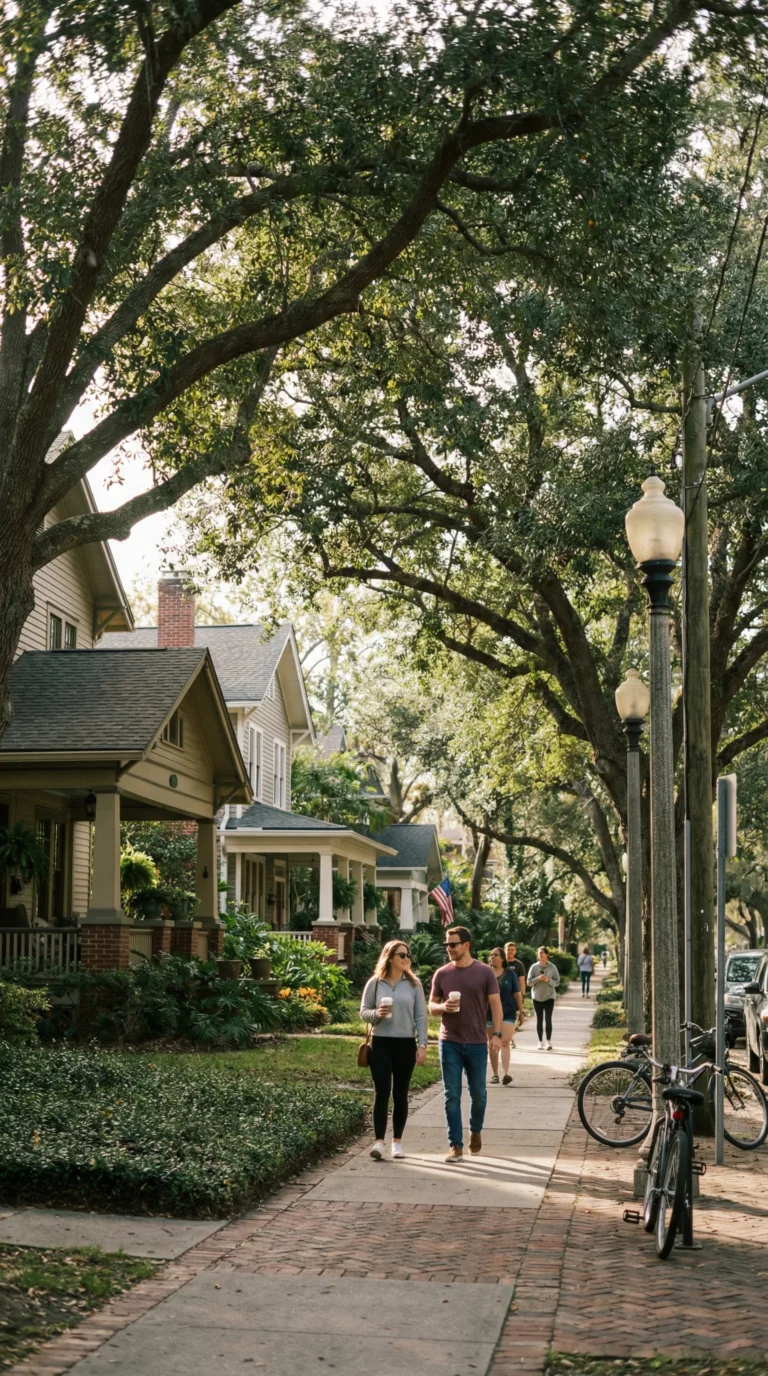
Jacksonville sprawls across 875 square miles. You’ll need a car. The city of Jacksonville absorbed most of Duval County in 1968, creating a metro area that feels more like a collection of distinct towns than one unified downtown.
Riverside is where you’ll find the most walkable streets. This is historic Jacksonville at its best, early 20th-century bungalows under live oak canopies, independent coffee shops, and the kind of front porches people actually use. The Jacksonville Historic Preservation Commission oversees the district’s 2,600-plus contributing structures. The Riverside Arts Market runs Saturdays under the Fuller Warren Bridge, local produce, crafts, live music. Park once and explore on foot.
San Marco sits across the river. Mediterranean Revival buildings from the 1920s, boutique shopping along San Marco Boulevard, the old San Marco Theatre. Springfield to the north has similar bones, historic homes, slower gentrification, lower prices.
Atlantic Beach is the beach town locals prefer over the main Jacksonville Beach strip. Quieter. Better parking.
The terms east Jacksonville and west Jacksonville describe large residential zones with chain restaurants and strip malls. Not tourist destinations. Just context for how spread out this place really is.
Getting to and Around Jacksonville
Jacksonville International Airport (JAX) served 6.8 million passengers in 2025 with direct flights to 35+ destinations, located 13 miles north of downtown with 20-minute drive times.
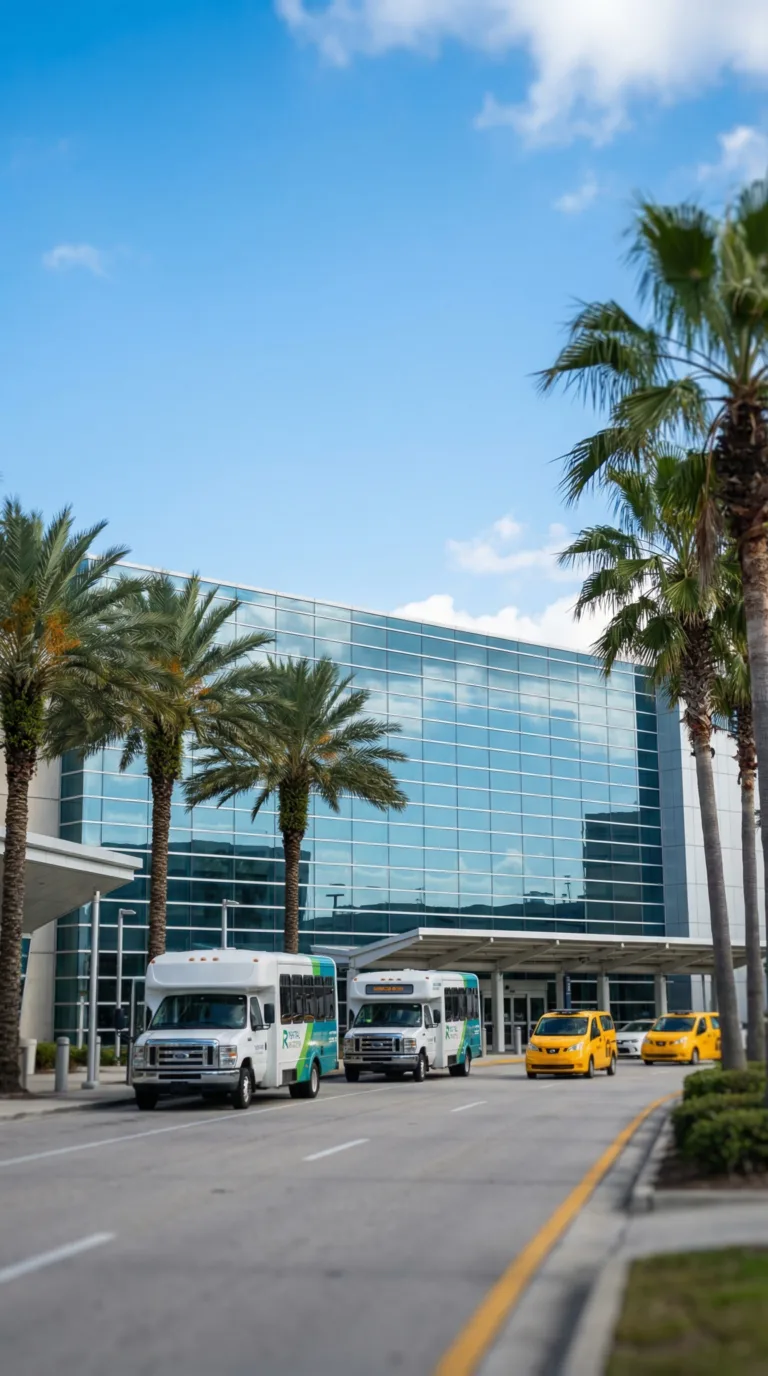
Jacksonville International Airport (JAX) is your arrival point. The airport sits 13 miles north of downtown, a 20-minute drive on I-95 according to Jacksonville Aviation Authority route data. JAX handled 6.8 million passengers in 2025 per official airport statistics, with direct flights to more than 35 U.S. cities. Delta, American, and Southwest run the most routes. International service is minimal. You’ll fly domestic connections through Atlanta, Charlotte, or Dallas if you’re coming from overseas.
Rent a car at the airport. This is not optional. Jacksonville sprawls across 875 square miles. Public transit exists but won’t get you where you need to go. The Jacksonville Transportation Authority (JTA) runs the Skyway, an automated people mover in downtown. It connects San Marco to the Northbank along a 2.5-mile loop. Free to ride. Useless for beaches, restaurants, or anything beyond the urban core.
I-95 runs north-south through the city. I-10 cuts east-west. Both highways put you within 30 minutes of most neighborhoods if you time it right. Morning rush (7, 9 AM) and evening rush (4:30, 6:30 PM) clog the bridges. The Hart Bridge and Main Street Bridge back up fast. Plan around that or sit in traffic.
Best Time to Visit
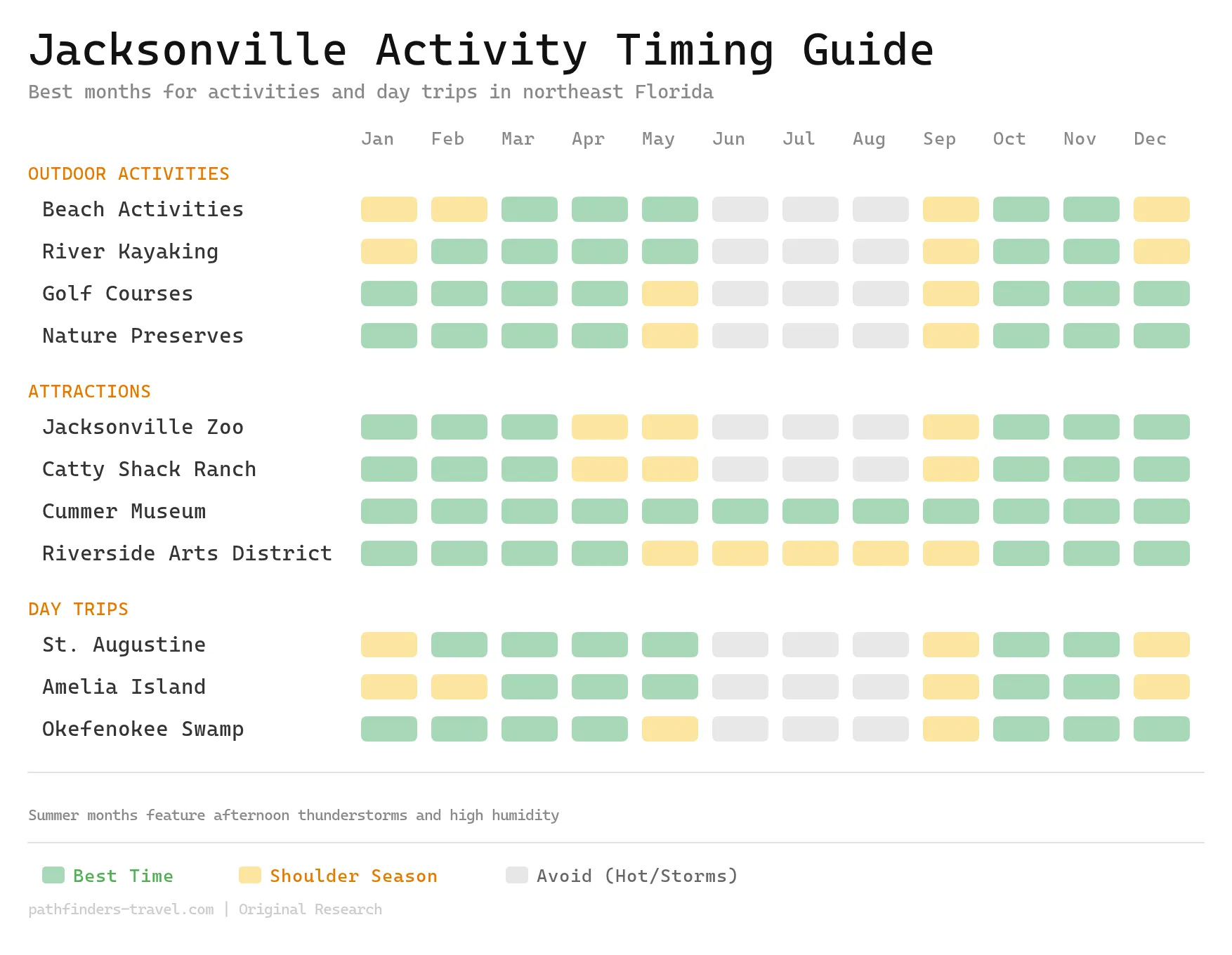
Jacksonville’s subtropical climate creates distinct seasonal patterns for activities. Winter and spring offer ideal conditions with mild temperatures and low humidity, while summer brings intense heat, humidity, and daily afternoon thunderstorms that can disrupt outdoor plans.
Travel Routes
Below are recommended travel routes with key stops and estimated drive times.
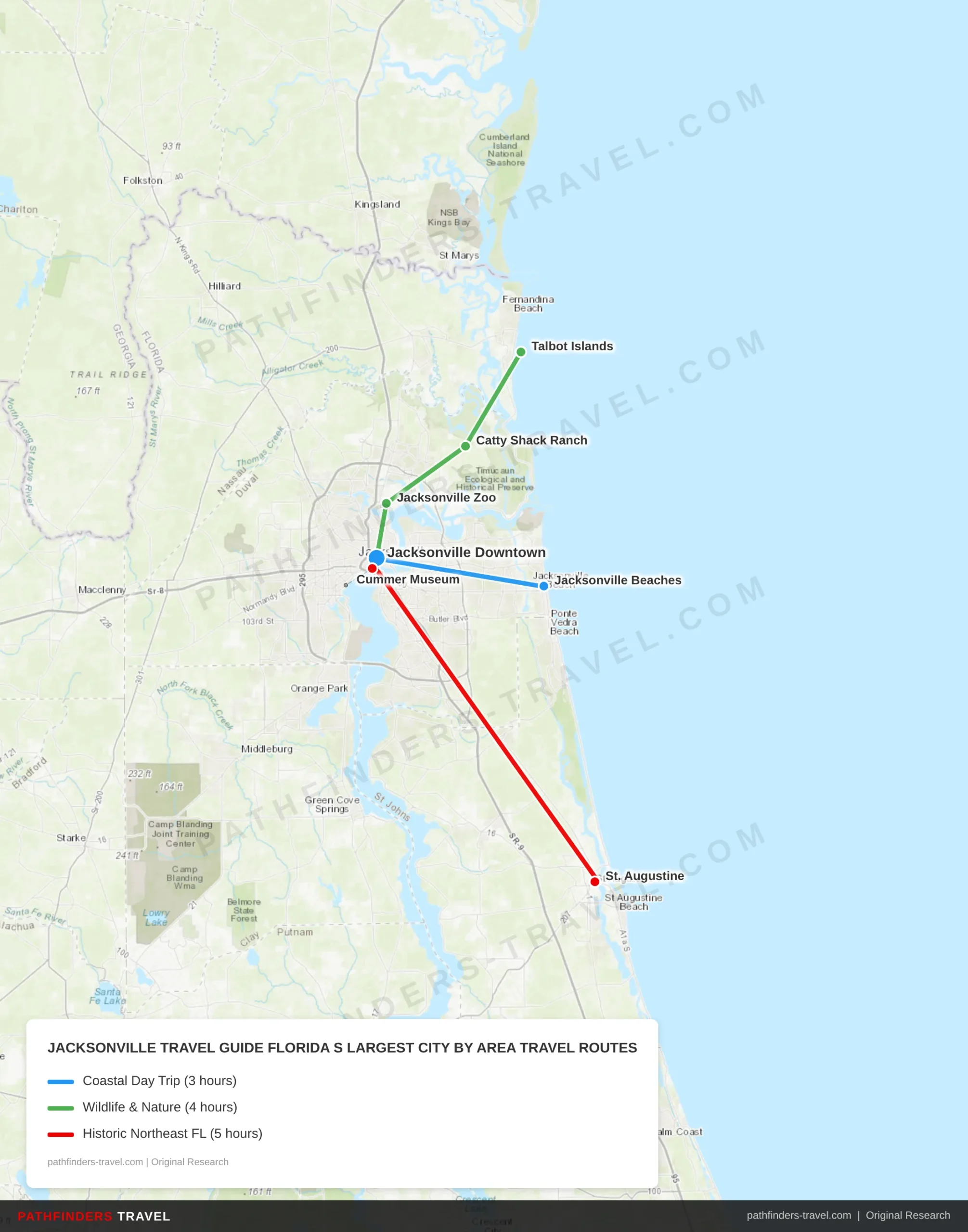
| # | Stop | Highlights | Drive Time |
|---|---|---|---|
| 1 | Jacksonville Downtown | St. Johns River waterfront, Southbank Riverwalk, Museum of Science and History | Start |
| 2 | Jacksonville Beaches | Atlantic Beach, Neptune Beach, Jacksonville Beach – 22 miles of coastline | 25m |
| 3 | Fernandina Beach | Historic Victorian seaport, Fort Clinch State Park, Amelia River | 45m |
| 4 | Amelia Island | untouched beaches, resort areas, nature trails, golf courses | 15m |
| # | Stop | Highlights | Drive Time |
|---|---|---|---|
| 1 | Jacksonville Downtown | Urban core, St. Johns River, starting point for nature excursions | Start |
| 2 | Jacksonville Zoo | 117 acres, 2,000 animals, Range of the Jaguar, Stingray Bay, botanical gardens | 20m |
| 3 | Catty Shack Ranch | Big cat rescue sanctuary, feeding tours, tigers and lions up close | 35m |
| 4 | Talbot Islands | State parks, clean beaches, kayaking, bird watching, nature trails | 25m |
| # | Stop | Highlights | Drive Time |
|---|---|---|---|
| 1 | Jacksonville Downtown | Modern riverfront city, largest by area in continental US | Start |
| 2 | Cummer Museum | 5,000 years of art, riverfront gardens, Meissen porcelain, Impressionist paintings | 15m |
| 3 | Fernandina Beach | Victorian architecture, historic downtown, Fort Clinch Civil War fort | 45m |
| 4 | St. Augustine | America’s oldest city, Castillo de San Marcos, colonial Spanish architecture | 1h 15m |
Day Trips from Jacksonville
St. Augustine, located 40 miles south of Jacksonville, receives over 8 million annual visitors as America’s oldest continuously occupied European settlement founded in 1565.
Jacksonville sits at the center of Florida’s northeast corridor. Check a map of Florida and you’ll see the state’s entire coastline within reach, from Georgia’s border down to the Keys.
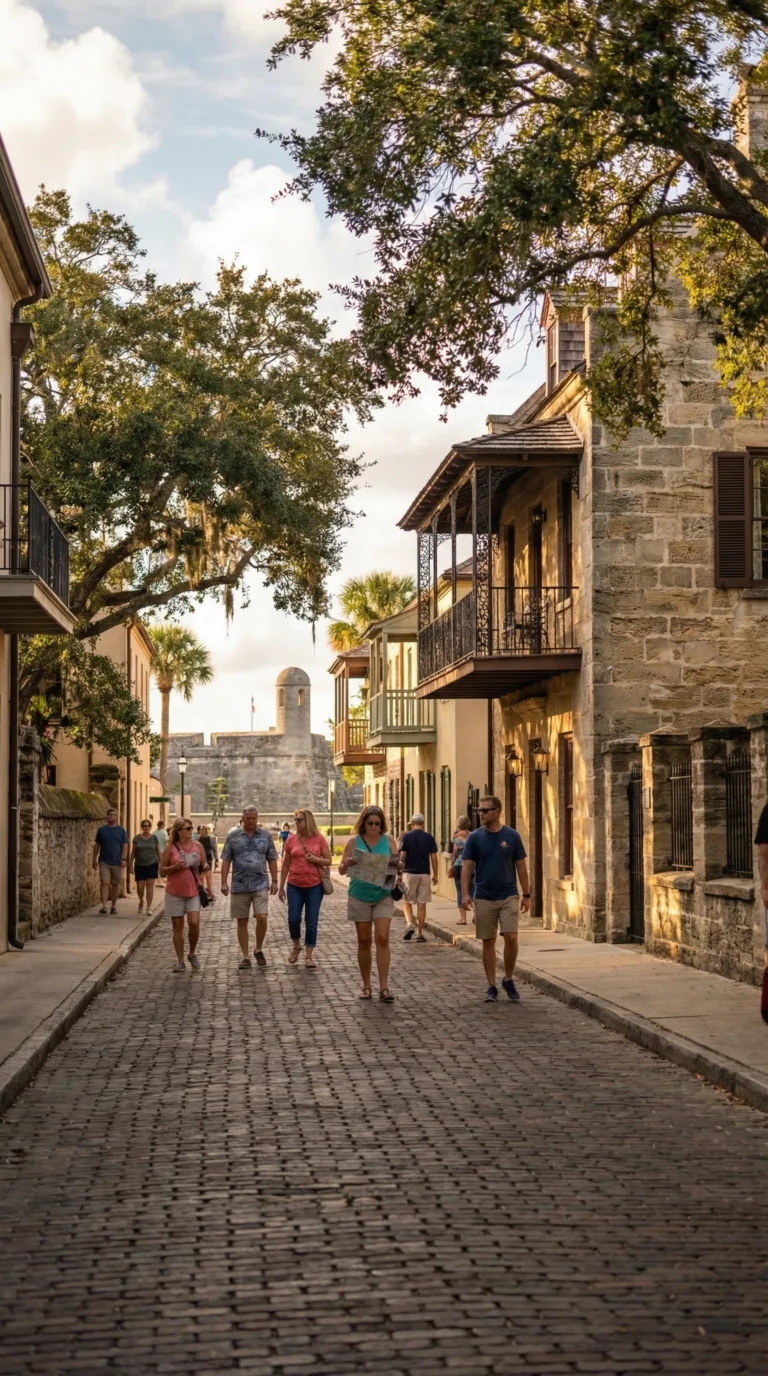
St. Augustine claims the top spot for day trips. 40 miles south, 45 minutes by car. The Spanish founded it in 1565, making it the oldest continuously occupied European settlement in the continental United States. Walk the cobblestone streets. Tour the Castillo de San Marcos National Monument, a 17th-century stone fortress that’s never been taken by force. Park admission costs $15 per adult. The historic district stretches along St. George Street, no cars allowed, just pedestrians browsing shops in buildings that predate the American Revolution. According to the St. Augustine Visitors Bureau, over 8 million people visit annually.
Orlando sits two hours south on I-95 and I-4. Disney World. Universal Studios. SeaWorld. Theme park admission runs $109-$189 per day depending on the park and season. Traffic on I-4 near the parks backs up most afternoons, so leave Jacksonville by 7 AM if you want to maximize ride time.
Beach towns line the coast in both directions. Daytona Beach lies 90 miles south, famous for NASCAR and cars driving directly on the sand. Cocoa Beach stretches another 30 miles past Daytona, putting you at the Space Coast. Kennedy Space Center Visitor Complex charges $75 for adults, $65 for kids. Rocket launches happen year-round; check NASA’s schedule before you drive down.
Head southwest for Gulf Coast cities. Tampa and St. Petersburg sit three hours away via I-10 and I-75. Tampa offers Busch Gardens ($119 admission) and the Florida Aquarium ($34.95 adults). St. Pete’s downtown waterfront includes the Salvador Dalí Museum ($25 adults) and a pier extending into Tampa Bay. Clearwater Beach, 20 minutes west of Tampa, consistently ranks among America’s top beaches. White sand. Calm water. Parking costs $2-$3 per hour at municipal lots.
Anna Maria Island requires a four-hour drive but delivers a barrier island with zero high-rises. Seven miles of beach, mostly residential. Free public beach access at Coquina Beach and Manatee Public Beach. Bring your own food, restaurant options stay limited outside the main village.
Sarasota sits just across the bridge from Anna Maria. The Ringling Museum complex ($25 adults) includes an art museum, circus museum, and Ca’ d’Zan mansion. Marie Selby Botanical Gardens ($25 adults) specializes in orchids and epiphytes.
Push farther south to Southwest Florida’s Gulf Coast. Naples and Marco Island sit five hours from Jacksonville. Naples Fifth Avenue offers upscale shopping and dining. Marco Island’s Tigertail Beach provides shelling opportunities at low tide. Both destinations skew expensive, hotel rooms start at $200-$300 per night even in shoulder season.
Tallahassee, Florida’s state capital, lies 2.5 hours west on I-10. The Florida State Capitol building offers free tours. Wakulla Springs State Park ($6 per vehicle) features one of the world’s largest freshwater springs, glass-bottom boat tours run $8 per person.
South Florida destinations require commitment. Fort Lauderdale sits four hours south. Miami and Miami Beach push to 4.5-5 hours depending on traffic through Fort Lauderdale and Miami’s I-95 corridor. Art Deco architecture lines Ocean Drive. Little Havana serves Cuban coffee for $2. Parking in South Beach costs $3-$5 per hour at meters, $25-$40 at private lots.
The Florida Keys and Key West stretch even farther. Seven hours minimum from Jacksonville to Key West via the Overseas Highway. 113 miles of two-lane road connecting 42 bridges. Sunset at Mallory Square. Hemingway House ($17 adults). Southernmost Point marker. Plan an overnight stay, driving 14 hours round-trip in one day leaves zero time to enjoy anything. For complete Florida trip planning resources, visit Visit Florida.
Frequently Asked Questions
What is Jacksonville most famous for?
Jacksonville is famous as the largest US city by area, with 22 miles of Atlantic beaches, the St. Johns River and downtown Riverwalk, the NFL Jacksonville Jaguars, the Jacksonville Zoo & Gardens, and a fast-growing craft-beer scene. It is also a gateway to Amelia Island and St. Augustine.
How do you spend a day in Jacksonville?
Start with breakfast in historic Riverside, walk the downtown Riverwalk along the St. Johns River, then spend the afternoon at Jacksonville Beach or the Jacksonville Zoo & Gardens. Finish with dinner and craft beer in San Marco or at the Beaches, or catch live music downtown.
What is the best time to visit Jacksonville?
Spring (March to May) and fall (October to November) bring warm, pleasant weather and fewer crowds, ideal for the beaches and the outdoors. Summer is hot, humid, and stormy, while winter is mild and quiet. The TPC Sawgrass golf tournament in March is a major draw.
How far is Jacksonville from other Florida cities?
Jacksonville sits in Florida’s northeast corner: about 40 minutes north of St. Augustine, 2 to 2.5 hours northeast of Orlando, and roughly 5 hours north of Miami. Savannah, Georgia is about 2 hours north, making Jacksonville a handy regional base.
What free things can you do in Jacksonville?
Plenty: relax on the public Atlantic beaches, walk the Southbank and Northbank Riverwalks, explore the free Jacksonville Arboretum trails and city parks, and browse the historic Riverside and Avondale districts. Many First Wednesday Art Walk events downtown are free too.