Estimated reading time: 16 minutes
Last updated: August 2026
Table of Contents
- Is Valley Forge Worth Visiting?
- Historical Sites and Things to Do at Valley Forge
- Where to Stay Near Valley Forge National Historical Park
- Getting to Valley Forge from Philadelphia and Beyond
- Day Trips from Valley Forge: Exploring Pennsylvania
- Planning Your Visit: Weather, Tickets, and Events
- Valley Forge FAQ
Is Valley Forge Worth Visiting?
Yes. Valley Forge National Historical Park preserves 3,500 acres where George Washington’s Continental Army of 12,000 soldiers endured the brutal winter of 1777-1778. Admission is free, and you can walk through reconstructed soldier huts, explore the grounds of Washington’s Headquarters, and bike 19 miles of paved trails. Plan three to four hours for the main sites.
How We Researched This Guide
This guide draws from Valley Forge’s official park website, National Park Service documents, and visitor feedback current as of writing. Details change seasonally, so we recommend checking the NPS site directly before your visit for the latest hours, exhibits, and any closures.
Want to explore this historic battlefield for yourself? Watch our complete Valley Forge tour in 4K Ultra HD.
What happened at Valley Forge changed the course of American history. George Washington marched his army here in December 1777 after losing Philadelphia to the British. The soldiers built 2,000 log huts on frozen ground. They had no winter coats. No proper shoes. Disease killed 2,000 men before spring.
But something unexpected happened that winter. Baron von Steuben arrived from Prussia and drilled the ragged troops into a professional fighting force. The Continental Army that left Valley Forge in June 1778 could stand toe-to-toe with British regulars. That’s why Valley Forge was important. It wasn’t a battle. It was a transformation.
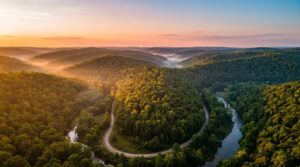
Valley Forge National Historical Park sits in southeastern Pennsylvania, 25 miles northwest of Philadelphia. The park sprawls across 3,500 acres of rolling hills along the Schuylkill River, according to National Park Service management data. You can walk through reconstructed soldier huts. Stand inside Washington’s headquarters. Bike 19 miles of paved trails past artillery positions and monuments.
This guide covers the historical sites you shouldn’t miss, where to stay nearby, how to get there from Philadelphia, and what else to see in the area. No fluff. Just the details you need to plan your visit.
Historical Sites and Things to Do at Valley Forge
Valley Forge National Historical Park features 26 miles of trails, the Valley Forge Visitor Center with museum exhibits, Washington’s Headquarters, reconstructed soldier huts, and the National Memorial Arch commemorating the Continental Army’s sacrifice.
Start at the Visitor Center at Valley Forge. You’ll find a 20-minute orientation film, museum exhibits on the 1777-1778 winter encampment, and a bookstore stocked with Revolutionary War histories. Rangers hand out valley forge maps here. The center opens at 9 a.m. daily except Christmas.
Valley forge national historical park tickets? You don’t need them. The park is free to enter. Some ranger-led programs and the trolley tour charge fees, but walking the grounds costs nothing.
Drive or walk to Washington’s Headquarters, the Isaac Potts House. General George Washington lived here from December 1777 to June 1778. He planned military strategy in the upstairs study, sharing the cramped stone farmhouse with his wife Martha and about two dozen staff officers. Note that the Isaac Potts House interior is closed for restoration from May 2026 into 2027 ahead of the encampment’s 250th anniversary, so for now you can view the exterior and grounds but not the period rooms inside.
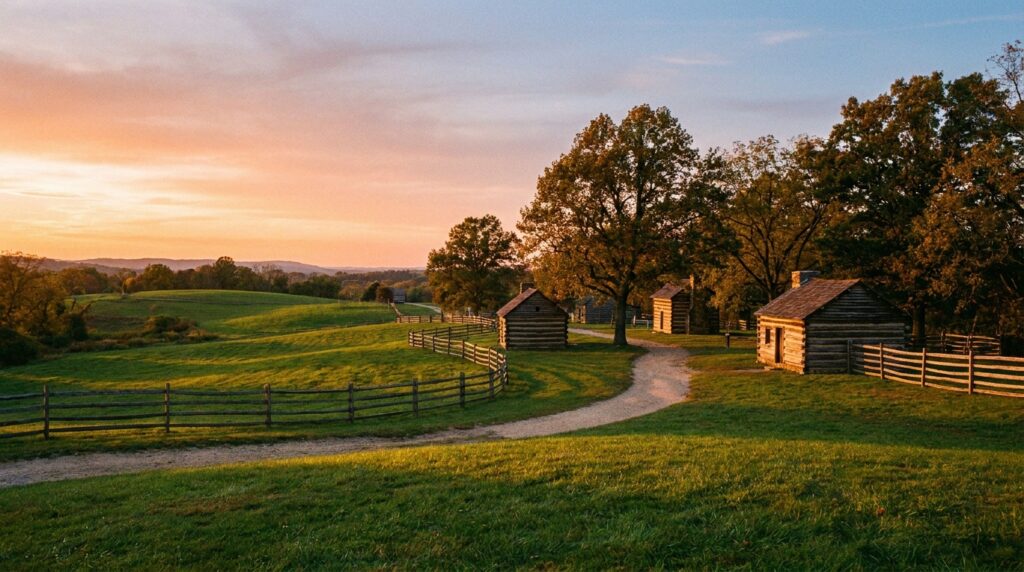
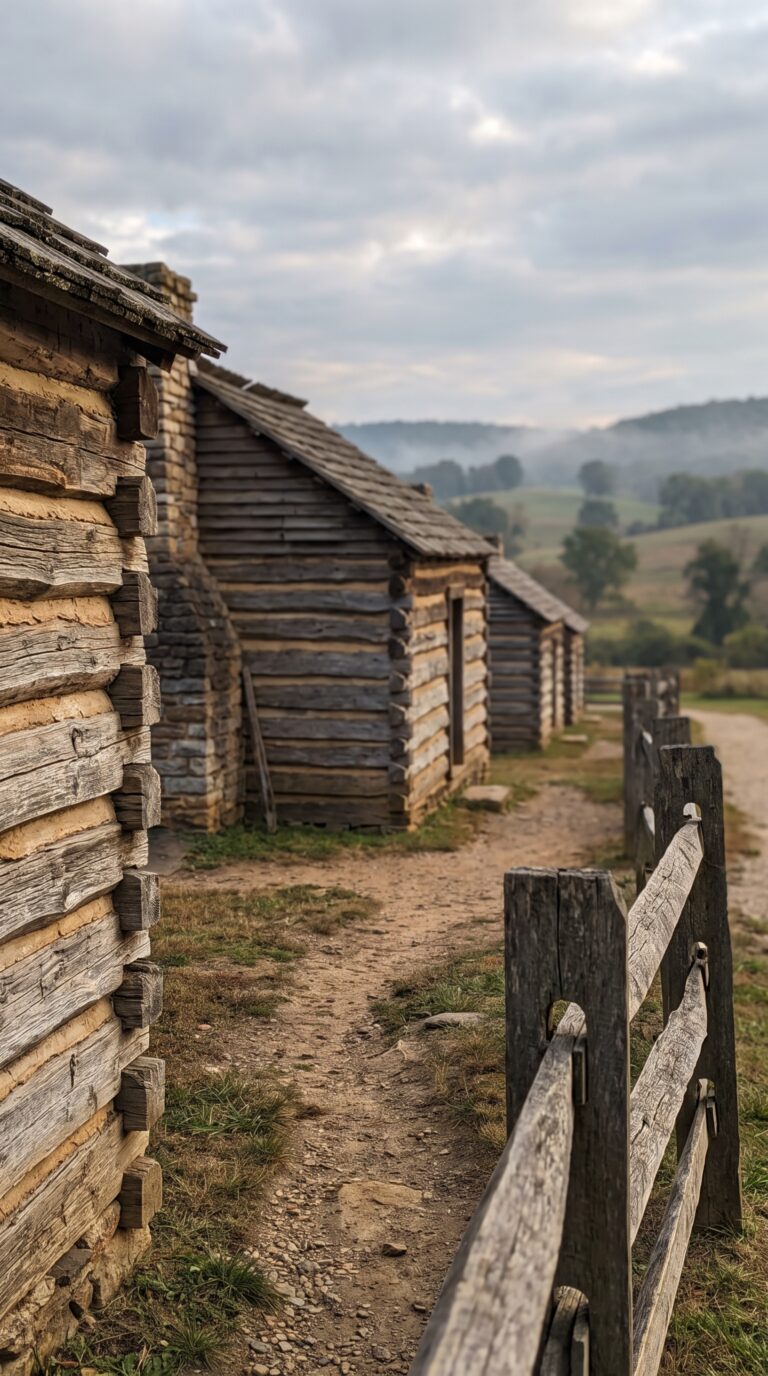
The reconstructed soldier huts sit a half-mile from headquarters. These log cabins housed 12,000 Continental Army troops during the valley forge winter encampment. Each hut held 12 men. No windows. One fireplace. Dirt floors. Temperatures dropped below freezing most nights. About 2,000 soldiers died here from disease and exposure, not combat. The National Park Service rebuilt a dozen huts based on Washington’s specifications: 14 feet wide, 16 feet long, 6.5 feet tall at the eaves.
The National Memorial Arch stands near the park entrance. Congress authorized it in 1910 to honor the Continental Army’s perseverance. The arch is 60 feet tall. The inscription reads: “Naked and starving as they are, we cannot enough admire the incomparable patience and fidelity of the soldiery.” You can walk through it.
Valley forge national historical park trails cover 26 miles. The Joseph Plumb Martin Trail loops 8.7 miles through the encampment area. The River Trail follows the Schuylkill for 5 miles. Both are paved and open to bikes. According to the National Park Service, the park logged 1.3 million visitors in 2024. Most people hike or bike the trails. The Hike, Bike, and Run – Valley Forge Trails page has downloadable valley forge trail maps.
Planning Tip
The valley forge trolley tour runs spring through fall. It’s a 90-minute guided loop with stops at key sites. Costs $22 for adults. The trolley departs from the visitor center. Good option if you don’t want to walk 3 miles in the heat.
The Muhlenberg Brigade huts sit near the inner line defenses. These were built by Pennsylvania German troops. You’ll also find the artillery park, where cannons were stored and repaired. Red and white markers throughout the park show where different brigades camped.
The Knox Estate is a 19th-century mansion built long after the Revolution. It’s closed to the public but visible from the road. The grounds include several other historic buildings: the Varnum Quarters, the Huntington Quarters, and the von Steuben Memorial.
Valley forge events include living history weekends in spring and fall. Rangers in period uniforms demonstrate musket drills and cooking techniques. The March Out of the Continental Army happens each June, reenacting the day Washington’s troops left camp in 1778. Check the park calendar before you visit.
Plan three to four hours to see the main sites. Drive the 10-mile auto tour loop if you’re short on time. Better: rent a bike at the visitor center and ride the trails. Bring water. There are no food vendors inside the park.
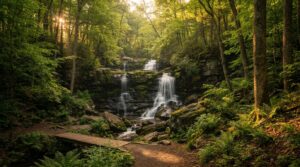
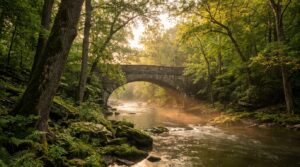
Nature hikers should explore Wissahickon Valley after Valley Forge. It’s a 30-minute drive southeast. The Wissahickon Creek gorge has 50 miles of wooded trails and covered bridges. Less crowded than Valley Forge on summer weekends.
Where to Stay Near Valley Forge National Historical Park
Valley Forge accommodation centers on King of Prussia, located 2 miles from the park, offering 30+ hotels ranging from budget chains to upscale properties, with additional options in Wayne and Phoenixville.
Valley Forge itself is a park. No lodging exists inside the boundaries. You stay in surrounding communities.
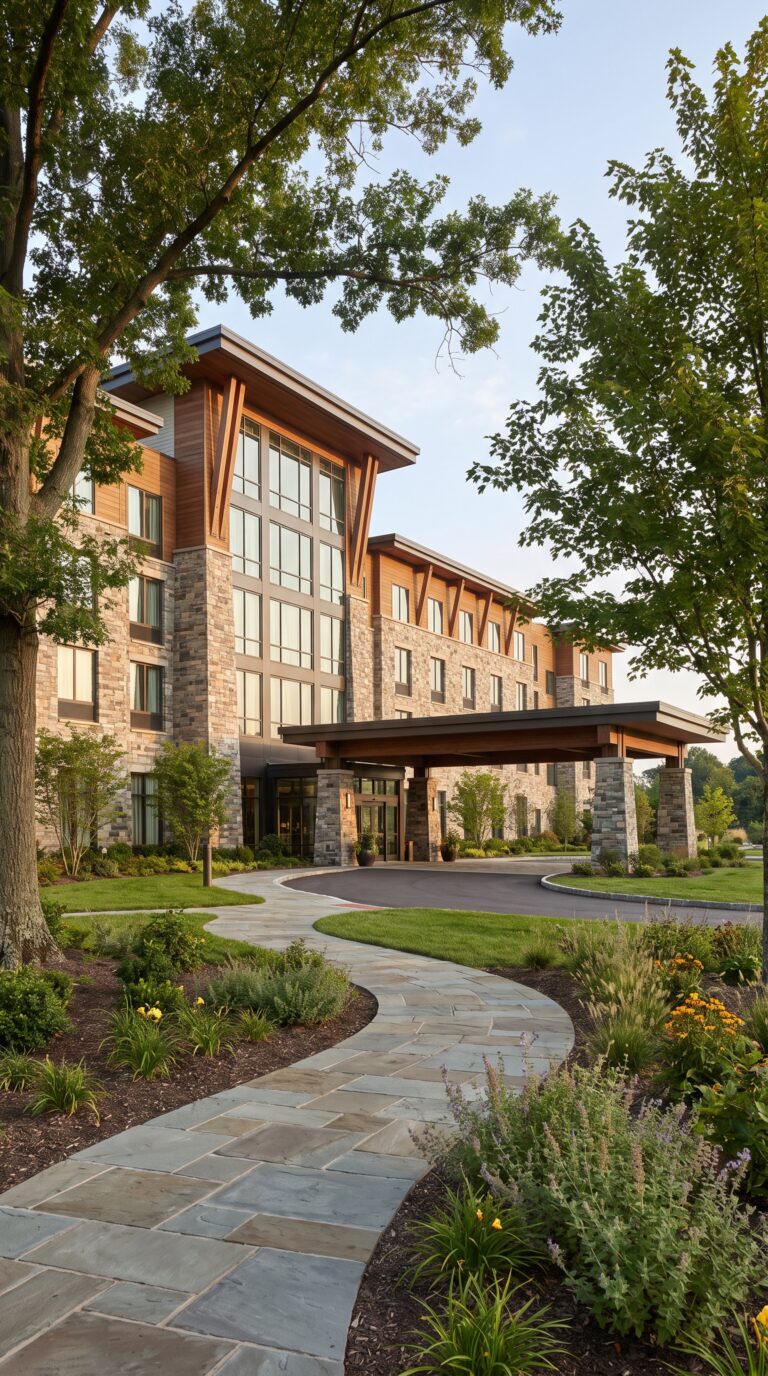
King of Prussia sits 2 miles from the visitor center entrance. It’s the primary hotel hub. You’ll find 30+ properties here, everything from Hampton Inn and Marriott to Hilton Garden Inn. Budget chains run $90–130 per night on weekdays. Full-service hotels with pools and restaurants go for $150–220.
King of Prussia works if you want both park access and shopping. The mall (second-largest in the U.S.) sits right here. Restaurants cluster around the retail zones. Drive time to the park: 5 minutes.
Wayne offers a quieter alternative. You’ll find boutique properties and smaller chains here. It’s 4 miles from the park. Less commercial sprawl than King of Prussia. Rates run slightly lower, $80–140 for most places.
Phoenixville sits 8 miles northwest. This small town has B&Bs and historic inns. More character than chain hotels. Colonial-era buildings converted into guesthouses. Expect $120–180 per night. The downtown has independent restaurants and a walkable main street.
Book ahead for October weekends. Foliage season drives up rates. Weekday prices drop 20–30% compared to Fridays and Saturdays. Check the Valley Forge Tourism & Convention Board accommodation guide for current availability and deals.
Getting to Valley Forge from Philadelphia and Beyond
Valley Forge National Historical Park is located 25 miles northwest of Philadelphia, accessible via I-76 West and Route 422, with a drive time of 35-45 minutes depending on traffic.
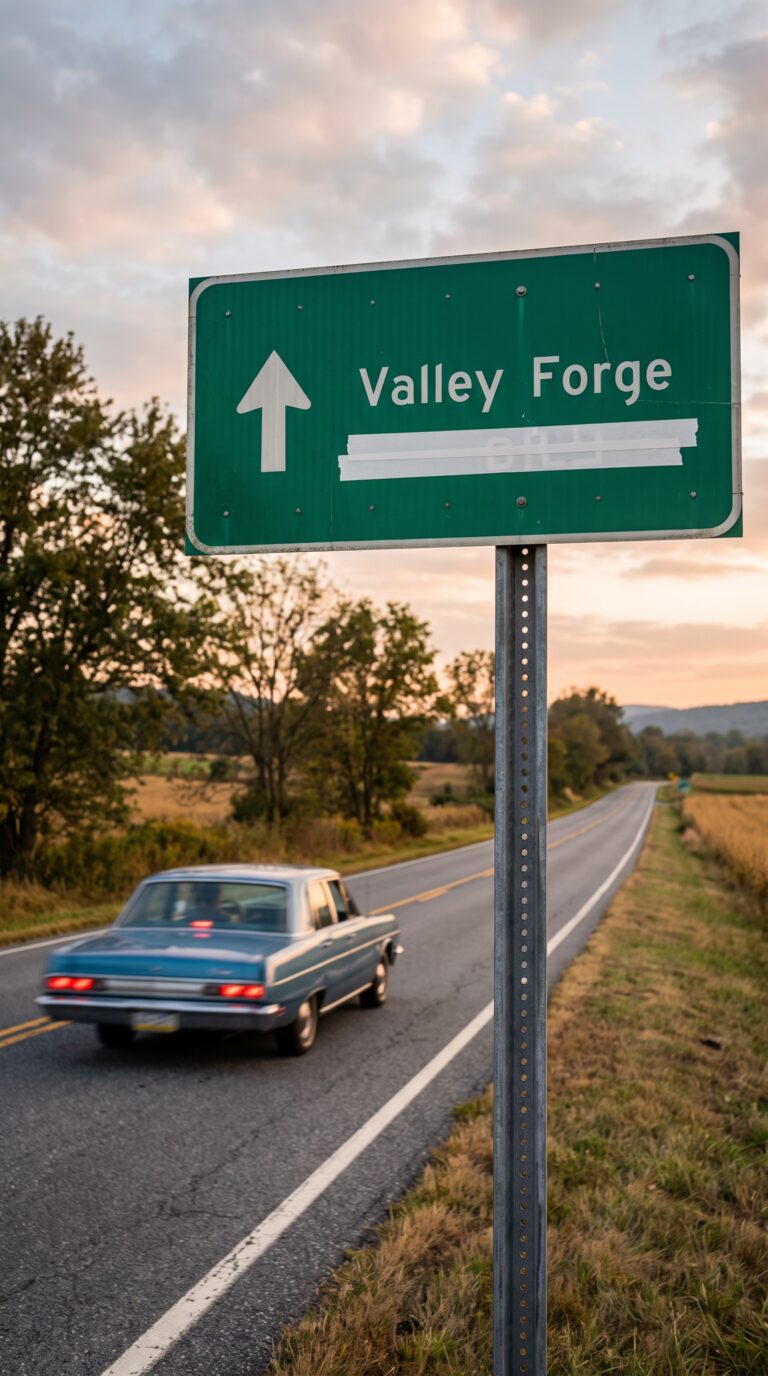
Philadelphia sits exactly 25 miles southeast of the park entrance. Take I-76 West (Pennsylvania Turnpike) toward King of Prussia. Exit onto Route 422 West. Follow brown directional signs for Valley Forge. The drive takes 35 minutes off-peak, 45 minutes during rush hour.
The park sits in Chester County, southeastern Pennsylvania. Free parking lots scatter throughout the grounds, the main visitor center lot fills first on weekends.
Public transit exists but barely. SEPTA regional rail stops at nearby Norristown and King of Prussia stations. From there you need a taxi or rideshare. No bus routes serve the park directly. Rent a car. The 10-mile driving loop requires wheels, and you’ll want flexibility to explore surrounding Revolutionary War sites in the area.
Check the Valley Forge National Historical Park Directions and Maps page for real-time road closures. The SEPTA Regional Rail Maps and Schedule shows train times if you’re attempting the transit route.
Day Trips from Valley Forge: Exploring Pennsylvania
Valley Forge’s central Pennsylvania location enables day trips to Philadelphia (25 miles), Gettysburg (120 miles), Lancaster County Amish Country (45 miles), Hershey (65 miles), and Bethlehem (50 miles).
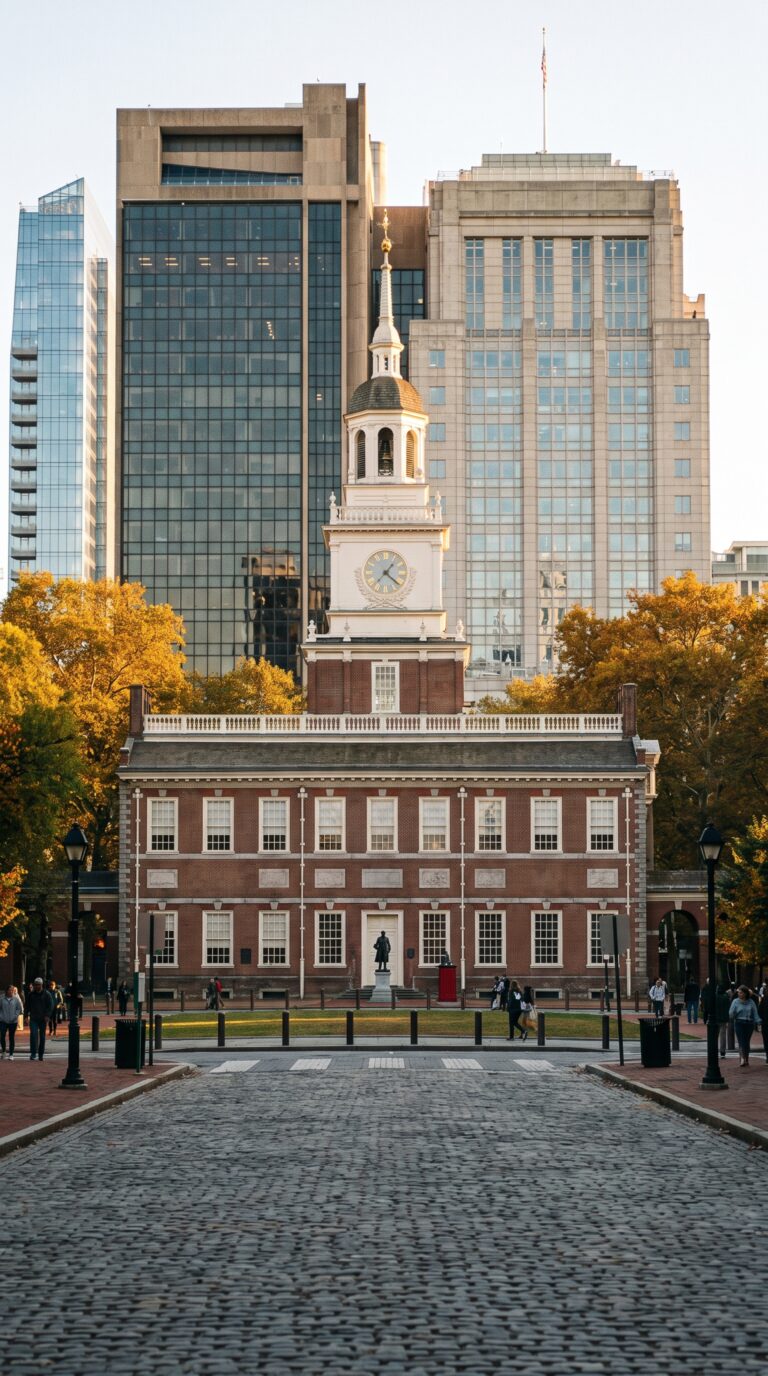
Philadelphia sits 25 miles southeast. You can drive there in 40 minutes without traffic. The city holds Independence Hall and the Liberty Bell, the Revolutionary War sites that bookend Valley Forge’s winter encampment story. Most visitors pair both destinations in a single trip. Check the Visit Philadelphia tourism website for current museum hours.
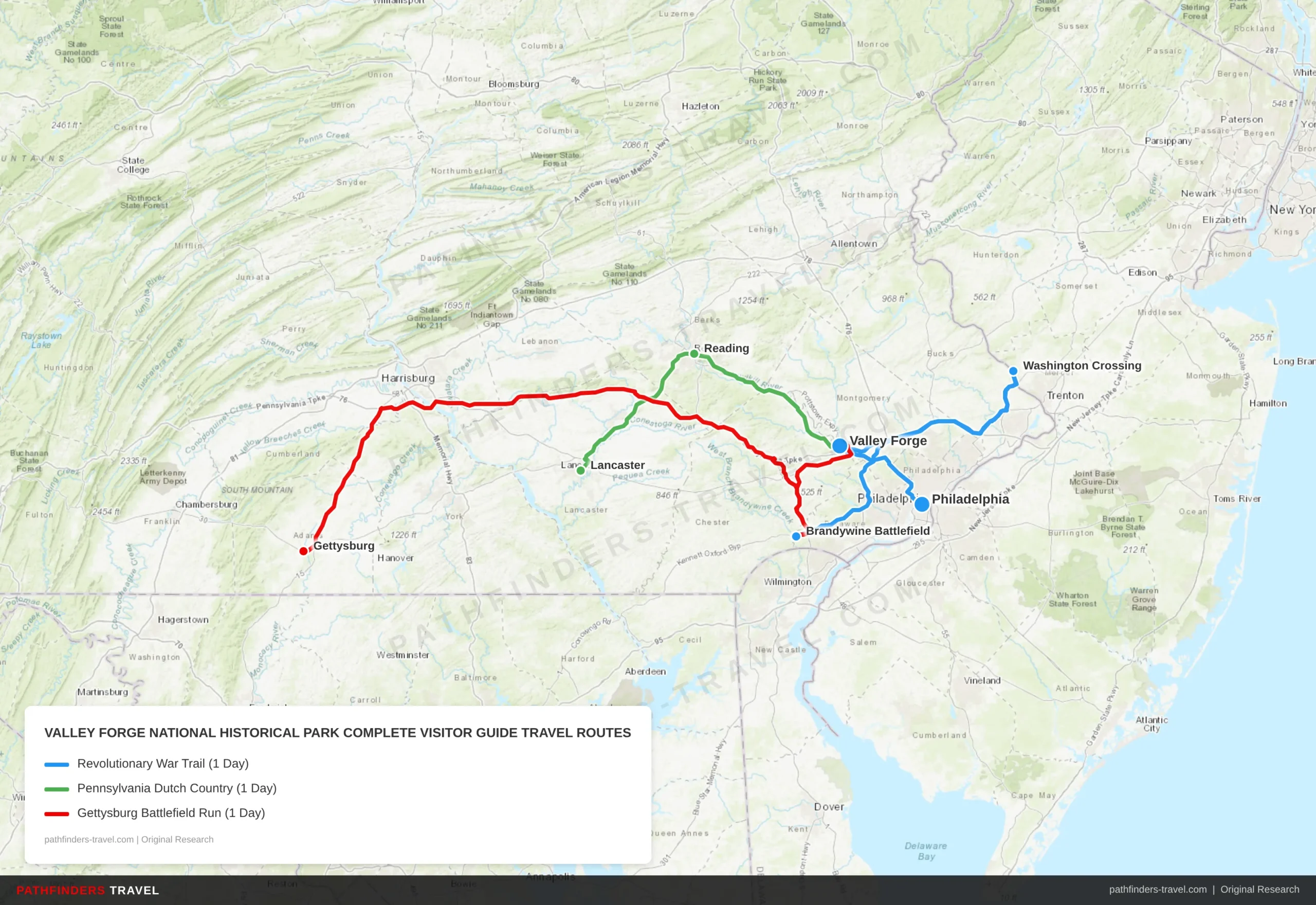
| # | Stop | Highlights | Drive Time |
|---|---|---|---|
| 1 | Philadelphia | Independence Hall, Liberty Bell, Betsy Ross House, the birthplace of American democracy and gateway to Valley Forge | Start |
| 2 | Valley Forge | Washington’s Headquarters, reconstructed soldier huts, National Memorial Arch, 19-mile bike trail along Schuylkill River | 45 min from Philadelphia |
| 3 | Washington Crossing | Washington Crossing Historic Park, site of Washington’s famous Christmas Night crossing of the Delaware River, 1776 | 40 min from Valley Forge |
| 4 | Brandywine Battlefield | Site of the largest land battle of the Revolution (Sept 1777), Lafayette’s battlefield debut, visitor center with period maps | 55 min from Washington Crossing |
| # | Stop | Highlights | Drive Time |
|---|---|---|---|
| 1 | Valley Forge | Morning walk of the encampment grounds and Visitor Center orientation film before heading west | Start |
| 2 | Reading | Outlet shopping, GoggleWorks arts center, and Pagoda landmark overlooking the city, midpoint fuel and lunch stop | 40 min from Valley Forge |
| 3 | Lancaster | Amish farm tours, Central Market (oldest public market in the US), Kitchen Kettle Village, Pennsylvania Dutch cuisine | 45 min from Reading |
| # | Stop | Highlights | Drive Time |
|---|---|---|---|
| 1 | Valley Forge | Early start at the park, National Memorial Arch and soldier huts before the drive south | Start |
| 2 | Brandywine Battlefield | Quick stop at the 1777 battle site where Washington’s forces retreated, directly leading to the Valley Forge encampment | 30 min from Valley Forge |
| 3 | Gettysburg | Gettysburg National Military Park, Battlefield Auto Tour, National Cemetery where Lincoln delivered the Gettysburg Address, Museum & Visitor Center | 1h 30m from Brandywine |
Gettysburg lies 120 miles west, a two-hour drive. The Civil War battlefield draws history buffs who want to trace America’s military past from 1777 to 1863. Plan a full day. The battlefield tour takes three hours minimum.
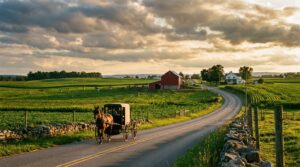
Lancaster County spreads across farmland 45 miles west. Amish buggies share the roads with cars. You’ll see working farms, roadside produce stands, and handmade quilts for sale. Skip the tourist traps. Drive the backroads instead.
Hershey sits 65 miles northwest, about an hour’s drive. Hersheypark operates May through September. Hershey’s Chocolate World and its free chocolate-making ride run year-round.
Bethlehem is 50 miles north. The Moravian settlement dates to 1741. SteelStacks, a former steel mill turned arts campus, hosts concerts and festivals. The Christmas markets draw crowds in December.
Reading offers outlet shopping 40 miles northwest. The Pagoda overlooks the city from Mount Penn. Jim Thorpe nestles in the mountains 75 miles north, a Victorian town with hiking trails and whitewater rafting. Harrisburg, the state capital, sits 70 miles west with the State Museum and riverfront parks.
York has Revolutionary War history 90 miles west. The Pocono Mountains and Delaware Water Gap provide hiking and waterfalls for nature lovers, both about 90 miles north. The Visit Pennsylvania tourism information site maps multi-day routes combining these destinations.
Planning Your Visit: Weather, Tickets, and Events
Valley Forge National Historical Park is open year-round with free admission, experiences four distinct seasons with temperatures ranging from 20°F in winter to 85°F in summer, and hosts major events including the March Out reenactment each June.
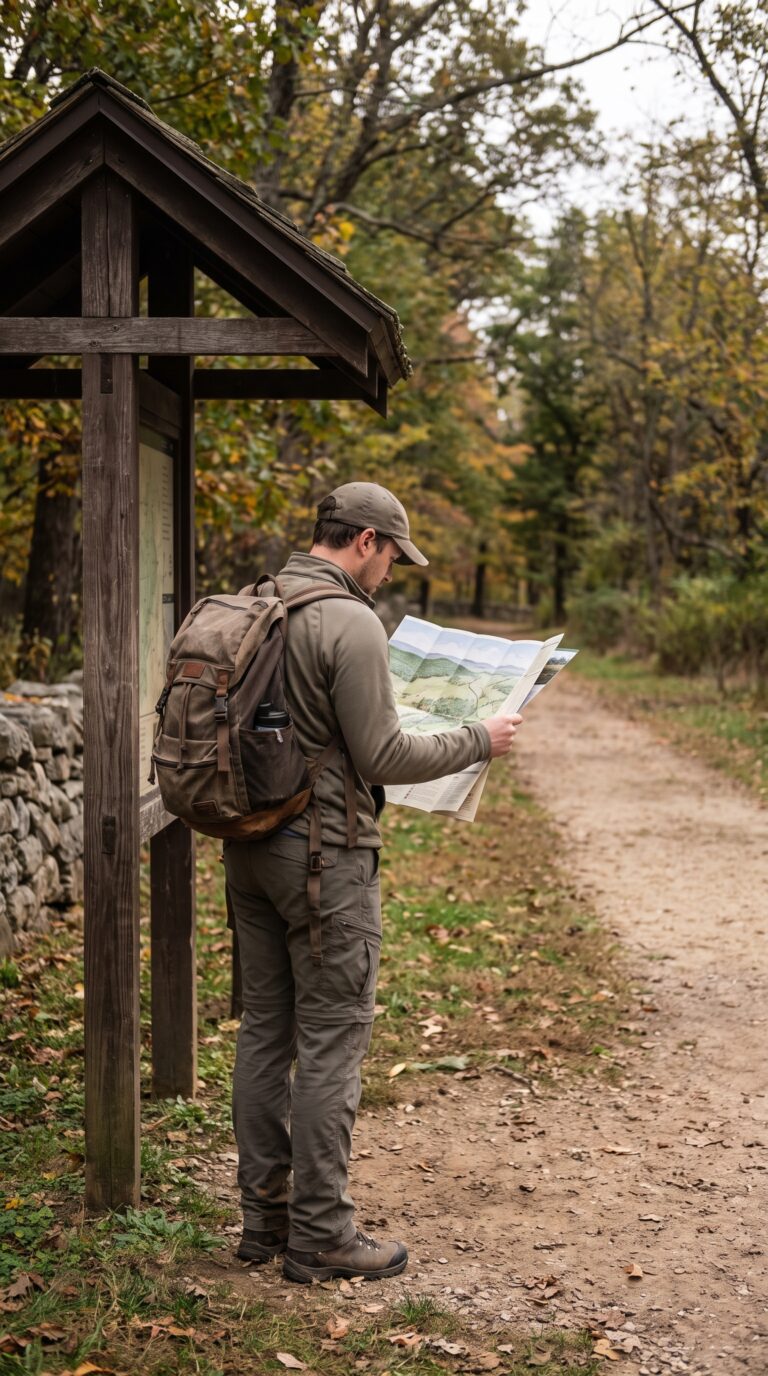
Admission to Valley Forge National Historical Park costs nothing. Zero dollars. The park entrance is free, the visitor center is free, and most ranger-led programs are free. Some special workshops or guided tours may charge $5 to $10, but those are rare. Park grounds stay open from dawn to dusk every day. The visitor center typically operates 9am to 5pm, check the National Park Service website before you go because hours shift seasonally.
Valley Forge Pennsylvania weather swings hard between seasons. Summers hit the mid-80s°F with thick humidity that makes the air feel like soup. Winters drop into the 20s and 30s°F with snow that blankets the fields where Washington’s troops froze. Spring and fall are the sweet spots, April through May and September through October deliver mild temperatures in the 60s and 70s°F with fewer crowds. According to the National Weather Service forecast, Chester County sees about 45 inches of rain per year, so pack a rain jacket no matter when you visit.
The winter at Valley Forge from 1777 to 1778 killed more soldiers than any battle of the Revolutionary War. Visiting in January or February puts you in the same frozen mud those men endured. The cold bites differently when you’re standing where 2,000 troops died of typhus and frostbite. It’s not comfortable. That’s the point.
Major Valley Forge events cluster around June. The March Out of the Continental Army reenactment happens mid-month, hundreds of costumed soldiers recreate the moment Washington’s army left camp in 1778. Check the Valley Forge events calendar for exact dates. Revolutionary War demonstrations run most weekends April through October. Rangers lead free history talks daily.
Pack comfortable walking shoes with good tread. The trails cover 26 miles of mixed terrain, paved paths near the visitor center, dirt tracks through the woods. Bring layers. Weather flips fast in Pennsylvania. Water bottle. Sunscreen in summer. Thermal base layers and a heavy coat in winter. Budget at least three hours to see the main sites. A full day lets you hike the outer loop and explore the reconstructed huts without rushing.
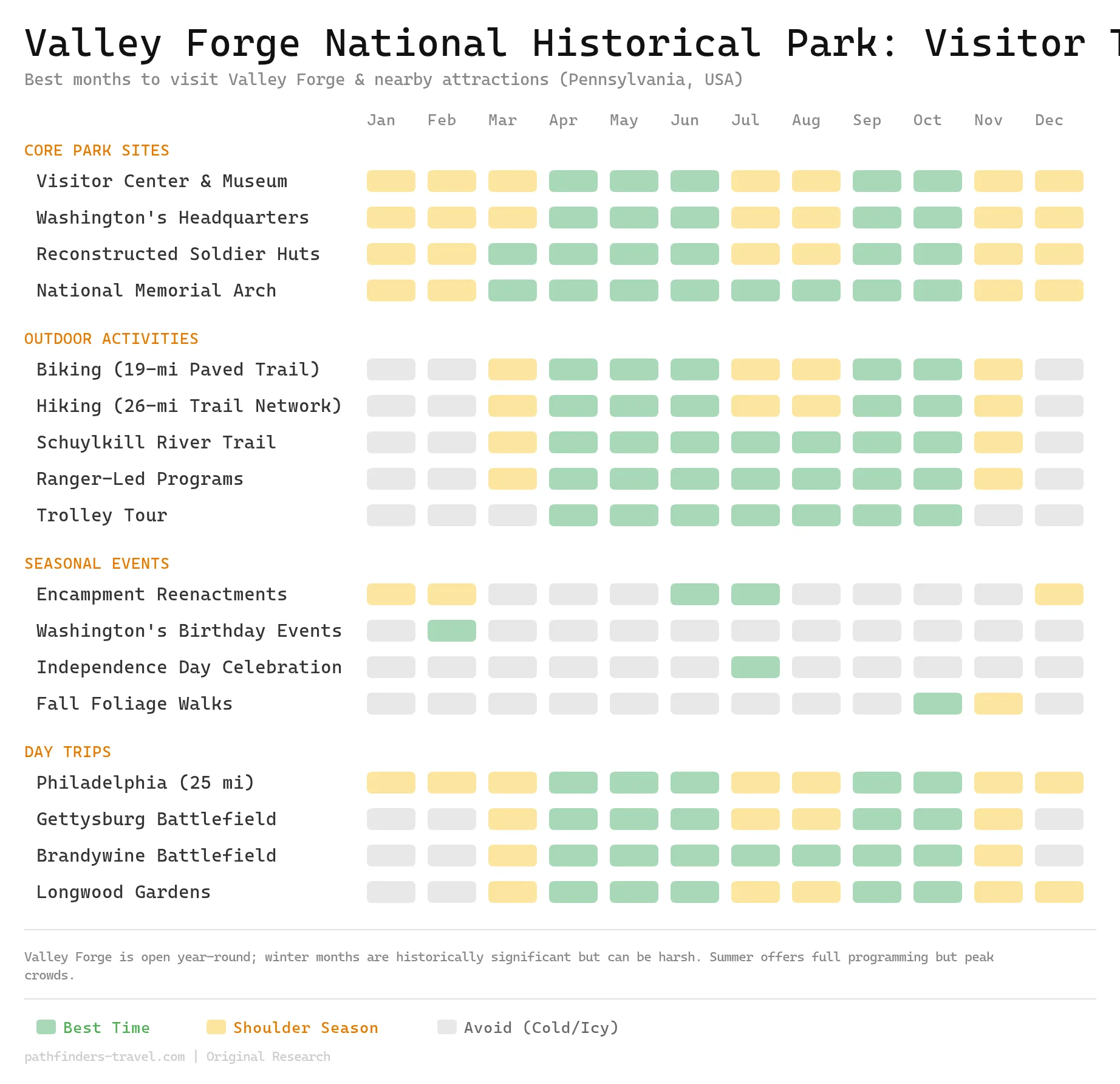
Best Time to Visit
Valley Forge National Historical Park is most enjoyable in spring (April, May) and fall (September, October), when mild temperatures make hiking, biking, and outdoor exploration comfortable and park programming is in full swing. Summer offers the widest range of ranger-led events and trolley tours but brings humidity and crowds, while winter, though historically evocative, brings icy trails and limited programming. Plan around seasonal events like July 4th celebrations or October foliage walks to add extra depth to your visit.
Valley Forge FAQ
Who won the battle of Valley Forge?
There was no battle at Valley Forge. The site served as the Continental Army’s winter encampment from December 1777 to June 1778, not a battlefield. The “victory” here was survival. Around 12,000 soldiers endured brutal conditions while Baron von Steuben drilled them into a professional fighting force. The army that marched out in June could actually stand toe-to-toe with British regulars. That transformation contributed directly to American victory in the Revolutionary War. Valley Forge was a crucible, not a battlefield.
Why was Valley Forge important?
Valley Forge turned amateur militiamen into professional soldiers. Baron von Steuben arrived in February 1778 and implemented standardized military training that the Continental Army desperately needed. He taught troops how to march in formation, use bayonets effectively, and execute complex battlefield maneuvers. Before Valley Forge, Washington’s army was a collection of regional militias with different tactics. After six months of Steuben’s drilling, they functioned as a unified fighting force. The encampment also tested Washington’s leadership. Soldiers dealt with starvation, disease, and freezing temperatures. About 2,000 died. Yet the army held together. When they marched out in June 1778, they were capable of defeating British forces in open combat.
How many soldiers were at Valley Forge?
Approximately 12,000 Continental Army soldiers encamped at Valley Forge during the winter of 1777-1778. That number fluctuated constantly. Desertions happened regularly. New recruits trickled in. Disease killed hundreds. By spring, the army had lost about 2,000 men to typhus, dysentery, pneumonia, and exposure. Malnutrition weakened immune systems. Soldiers lived in drafty log huts with inadequate clothing. Many lacked shoes and wrapped their feet in rags. The National Park Service Valley Forge history and education page documents these conditions in detail through primary sources and historical records.
What state is Valley Forge in?
Valley Forge is in Pennsylvania. Specifically, it sits in Chester County in southeastern Pennsylvania, about 25 miles northwest of Philadelphia. The location was strategic during the Revolutionary War because it allowed Washington to monitor British forces occupying Philadelphia while positioning his army defensively. Today, the park is easily accessible from Philadelphia, King of Prussia, and other Pennsylvania cities along the I-76 corridor.
How much does it cost to visit Valley Forge?
Valley Forge National Historical Park is free to enter. There is no admission fee for the grounds, the trails, or the visitor center, and most ranger-led programs also cost nothing. The main paid option is the 90-minute guided trolley tour, which runs spring through fall and costs about $22 for adults. Parking throughout the park is free as well. Budget only for the trolley, food, or any special workshops you choose to add.