AZORES TRAVEL GUIDE
Overview
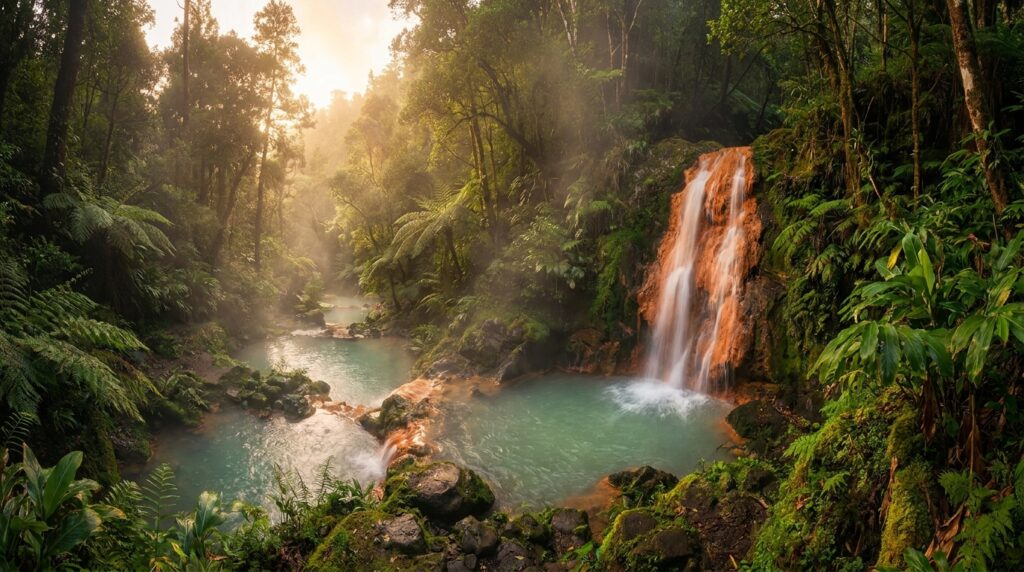
The Azores is a captivating blend of volcanic landscapes, lush green valleys, and striking Atlantic Ocean scenery. You can wander through charming historic towns and crater lakes on São Miguel, then hop across to Pico to hike Portugal’s highest peak or snorkel in crystalline waters teeming with marine life. From dramatic calderas and geothermal hot springs to whale watching and black sand beaches, the Azores offers an extraordinary range of experiences that showcase both centuries-old Portuguese heritage and a deeply connected relationship with the natural world.
We absolutely love traveling in the Azores. The inter-island ferry and flight network connects all nine islands, the locals are warm and welcoming, and the compact size of each island makes getting around surprisingly easy. São Miguel is an excellent starting point — it’s perfect for experiencing iconic landmarks like Sete Cidades and Furnas, soaking up the thermal pools, and wandering the colorful streets of Ponta Delgada with its blend of Baroque architecture and contemporary island life.
Faial serves as a lively hub with its famous marina and the dramatic Caldeira volcano. Flores delivers some of the most breathtaking waterfall scenery in Europe, with cascades tumbling into vivid blue lagoons. For adventure seekers, Terceira offers fascinating UNESCO-listed Angra do Heroísmo and thrilling cave systems, while Pico’s stark lava-field vineyards — also UNESCO-listed — produce unique wines unlike anything found elsewhere in Europe.
From the steaming fumaroles of Furnas to the windswept cliffs of Corvo, the Azores is a year-round destination that promises unforgettable memories. Whether you’re seeking whale and dolphin watching encounters, cultural immersion in island traditions, world-class diving, or simply want to witness volcanic landscapes that exist nowhere else in Europe, the Azores delivers experiences that will leave you genuinely speechless.
Bookmark this Azores travel guide and keep checking back for more of our best Azores travel tips and hidden gems!
Country Snapshot
Safety
The Azores is one of the safest destinations in Europe, with very low crime rates and reliable emergency services across all nine islands. The main safety considerations are related to outdoor activities and natural conditions — ocean currents can be strong along certain coastlines, and volcanic terrain requires sensible footwear and awareness of geothermal areas. Always follow local guidance when swimming in natural pools and along exposed Atlantic shores.
Most Azoreans speak Portuguese as their primary language, though English is widely understood in tourist areas, hotels, and restaurants. Learning a few basic phrases like “obrigado” (thank you) and “bom dia” (good morning) will go a long way with the friendly locals.
Accommodation
As a visitor to the Azores, you’ll find a solid range of accommodation options across the islands, with the widest selection on São Miguel, Terceira, and Faial. Ponta Delgada has the greatest variety of hotels, guesthouses, and hostels. For something more memorable, consider staying in a traditional Azorean quinta (rural estate), a solar (manor house), or a boutique guesthouse overlooking a volcanic crater lake. You can search for the best accommodation deals in the Azores on Booking.com or Hotels.com.
Budget
The Azores sits in a mid-range price bracket compared to mainland Europe. Budget guesthouses and hostels start from around €25–45 per night, while comfortable mid-range hotels typically begin around €70–120. Meals at local restaurants range from €10–20 for a generous sit-down lunch or dinner, and the islands’ famous cozido das Furnas (volcanic hot spring stew) is both a must-try and surprisingly affordable. Renting a car on each island is the biggest additional cost but is highly recommended for reaching viewpoints and hiking trailheads.
Best Time to Visit
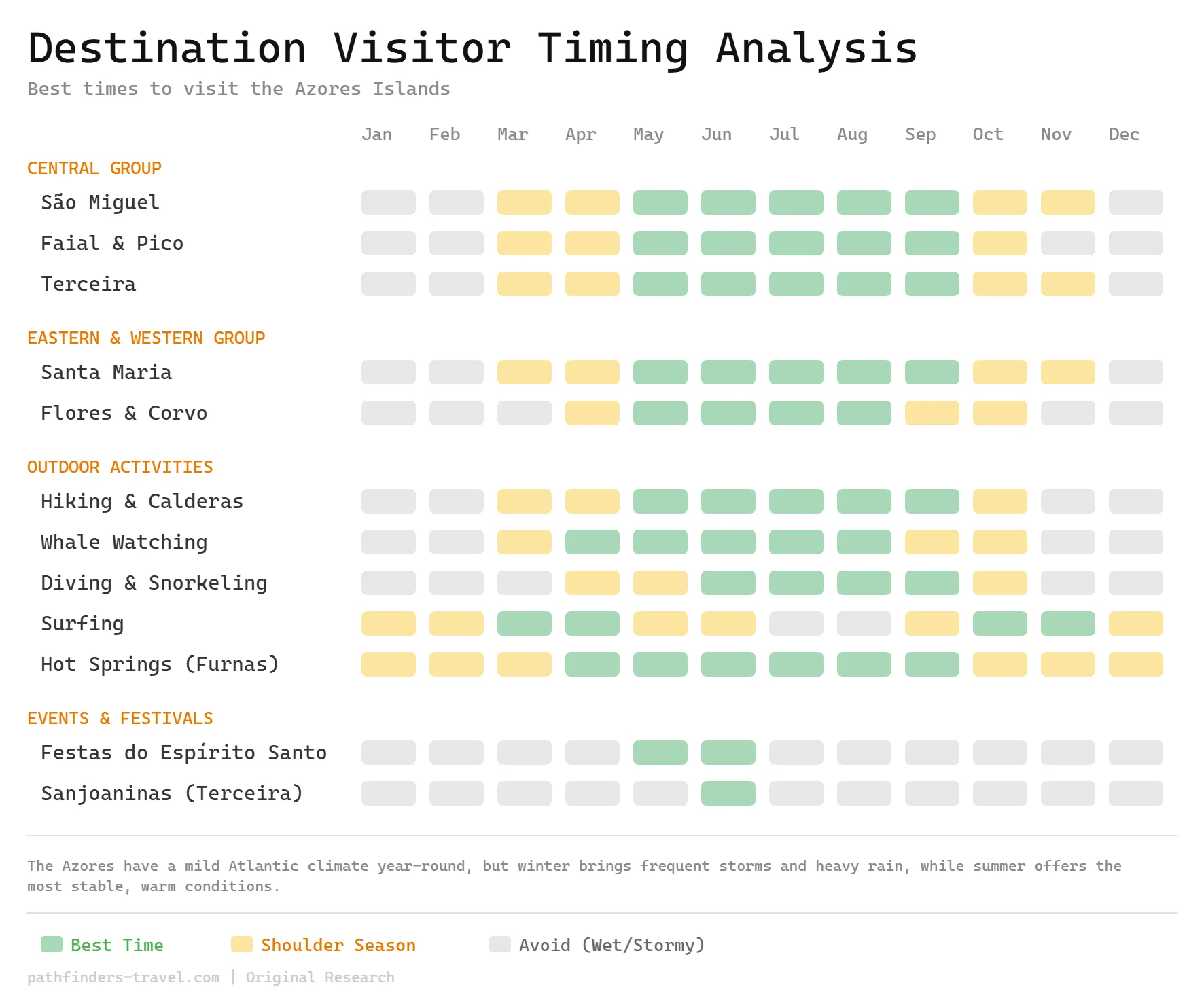
The Azores has a mild oceanic climate year-round, but the best time to visit depends on what you want to do. The summer months from June to September bring the warmest and driest weather, ideal for hiking, swimming, and whale watching. Spring, particularly April and May, sees the islands at their lushest and most flower-filled, with fewer crowds than peak summer. Autumn can still be pleasant through October. Winter months bring more rain and occasional storms, though whale watching can still be excellent and prices drop considerably. The chart below breaks down the optimal timing for each island and activity.
Places to Visit
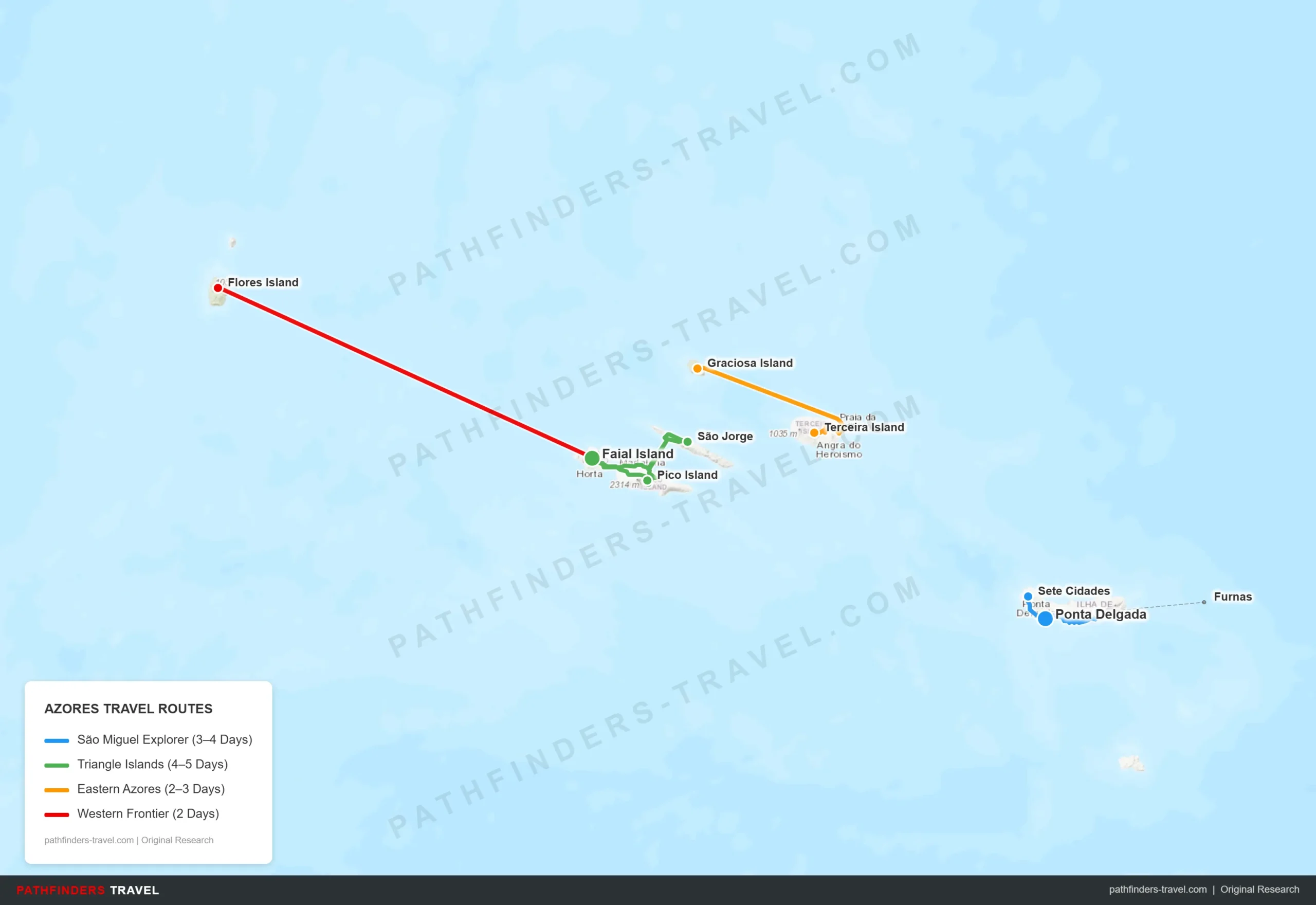
The Azores is made up of nine islands spread across the Atlantic, so most travelers focus on two or three per trip. The Eastern Group, centered on São Miguel, is the classic starting point — combining geothermal wonders, crater lakes, and the charming capital Ponta Delgada. The Central Group, with Faial, Pico, and São Jorge, offers exceptional hiking, UNESCO-recognized vineyards, and outstanding marine life. For truly remote beauty, the Western Group of Flores and Corvo features some of the most dramatic cliffs and waterfalls in all of Europe. Below are our recommended island-hopping routes with key stops and travel connections.
| # | Stop | Highlights | Travel Time |
|---|---|---|---|
| 1 | Ponta Delgada | Historic gates, gardens, local markets | — |
| 2 | Sete Cidades | Twin crater lakes, viewpoints, hiking trails | 45 min drive |
| 3 | Furnas | Geothermal pools, cozido stew, Terra Nostra Garden | 1h drive |
| 4 | Nordeste | Rugged cliffs, waterfalls, forested viewpoints | 1h drive |
| 5 | Santa Maria | White sand beaches, vineyards, colorful villages | 35 min flight |
| # | Stop | Highlights | Travel Time |
|---|---|---|---|
| 1 | Faial | Caldeira crater, Horta marina, Peter Café Sport | — |
| 2 | Pico | Mount Pico hike, UNESCO vineyards, whale watching | 30 min ferry |
| 3 | São Jorge | Fajãs, dramatic cliffs, artisan cheese | 1h ferry |
| # | Stop | Highlights | Travel Time |
|---|---|---|---|
| 1 | São Miguel | Sete Cidades, Furnas, Ponta Delgada | — |
| 2 | Terceira | Angra do Heroísmo (UNESCO), Algar do Carvão cave | 40 min flight |
| 3 | Graciosa | Caldeira, thermal cave, windmills | 30 min flight |
| 4 | Faial & Pico | Caldeira, Mount Pico, vineyards, marine life | 30 min flight |
| 5 | São Jorge | Fajãs, cheese, coastal hikes | 1h ferry |
| 6 | Flores | Waterfalls, lagoons, dramatic cliffs | 1h flight |
| 7 | Corvo | Caldeirão crater, birdwatching, remote solitude | 15 min flight |
Destination Difficulty
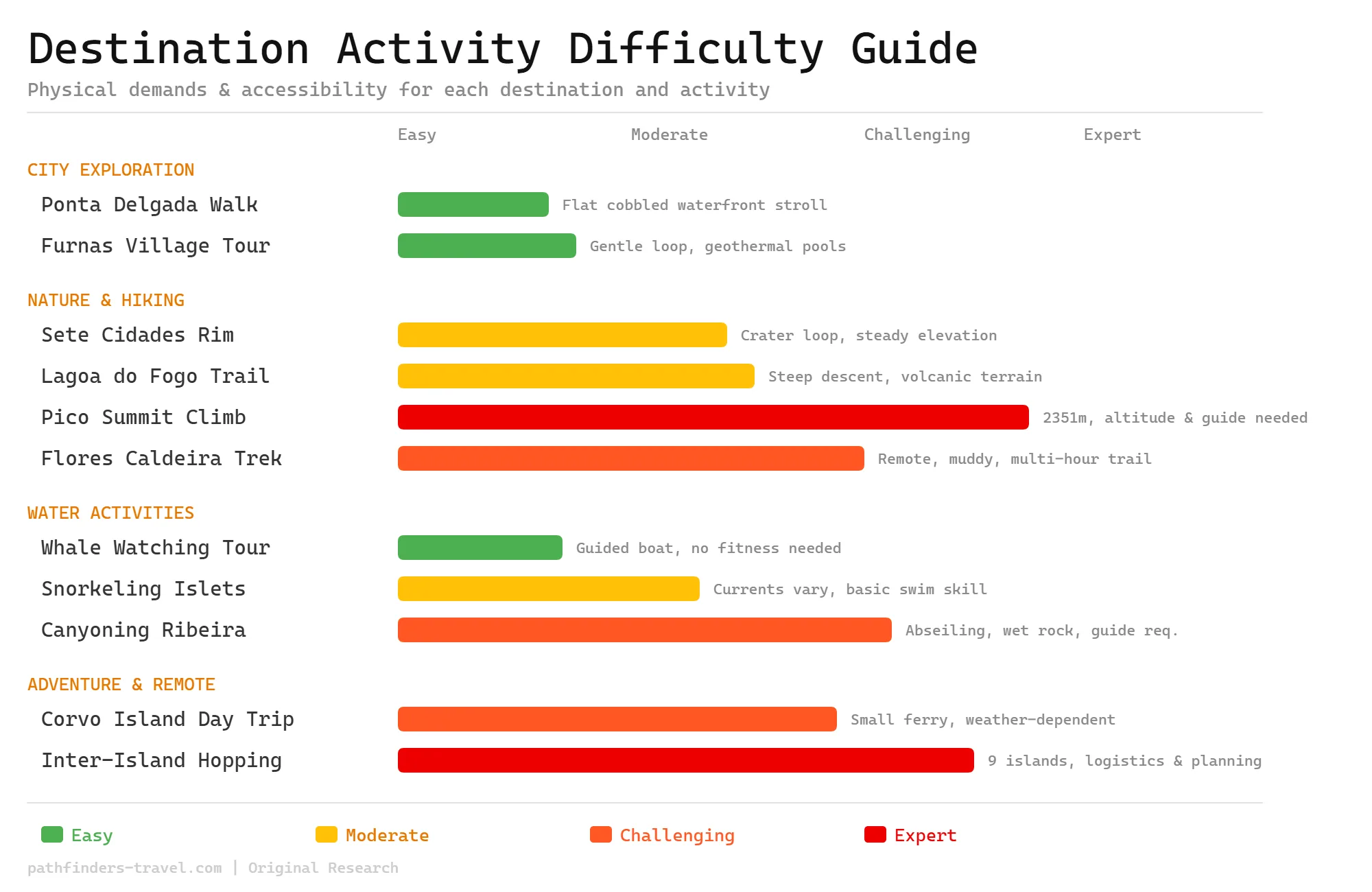
The Azores offers experiences ranging from gentle lakeside strolls to demanding summit hikes. Town centers like Ponta Delgada and Angra do Heroísmo are flat and walkable, suitable for all fitness levels. Mid-level hiking trails across São Miguel, Faial, and São Jorge require reasonable fitness and sturdy footwear on uneven volcanic terrain. Climbing Mount Pico — Portugal’s highest point at 2,351 meters — is a serious physical challenge requiring preparation, proper gear, and a licensed guide. The chart below rates each destination and activity so you can plan according to your comfort level.
Transport
Transportation in the Azores is primarily by inter-island flights and ferry services, with SATA Air Açores connecting all nine islands from São Miguel. Ferries operate between the Central Group islands — Faial, Pico, São Jorge, Graciosa, and Terceira — making island hopping affordable and scenic. Within each island, renting a car is by far the most practical option, giving you the freedom to reach remote viewpoints, trailheads, and coastal swimming spots at your own pace. Public bus services exist on the larger islands but are limited in frequency. I’d recommend booking inter-island flights in advance during summer, as routes fill quickly.
Best Activities
The Best Activities & Tours That I Recommend
Blog Posts
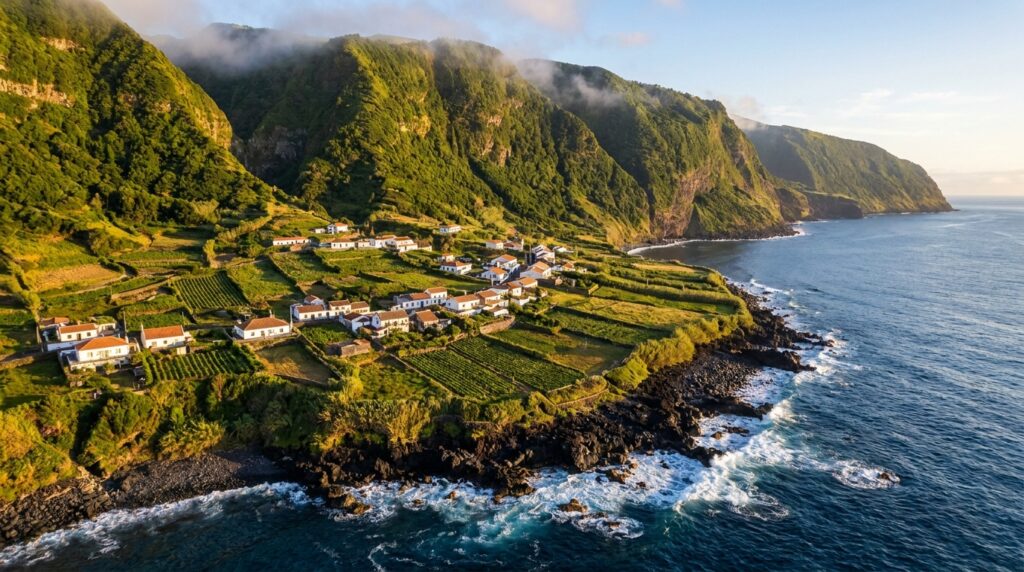
São Jorge, Azores: Fajãs, Cliff Hikes & Coastal Villages
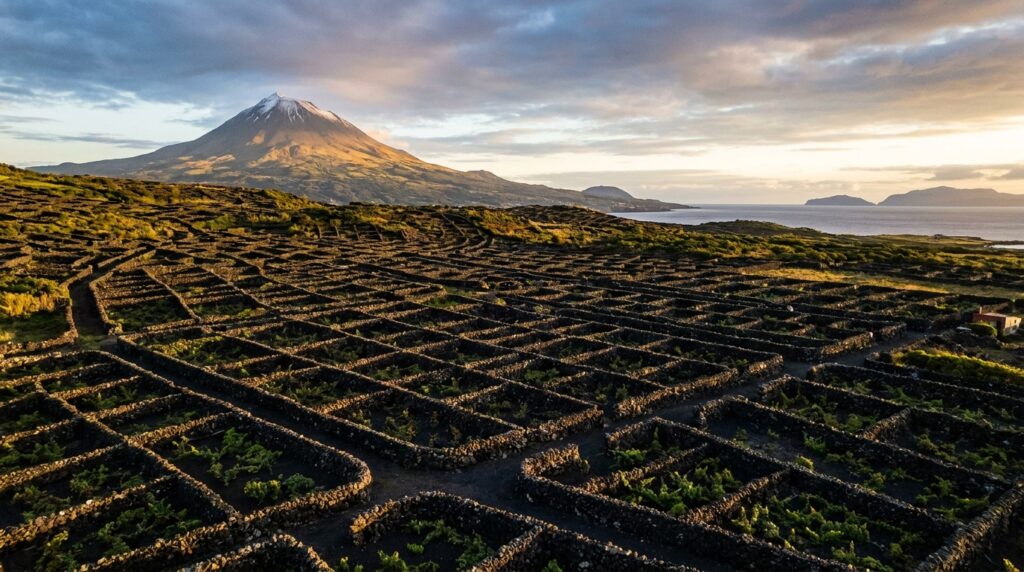
Pico Island Vineyards: Volcanic Wine, Tastings & UNESCO Walls
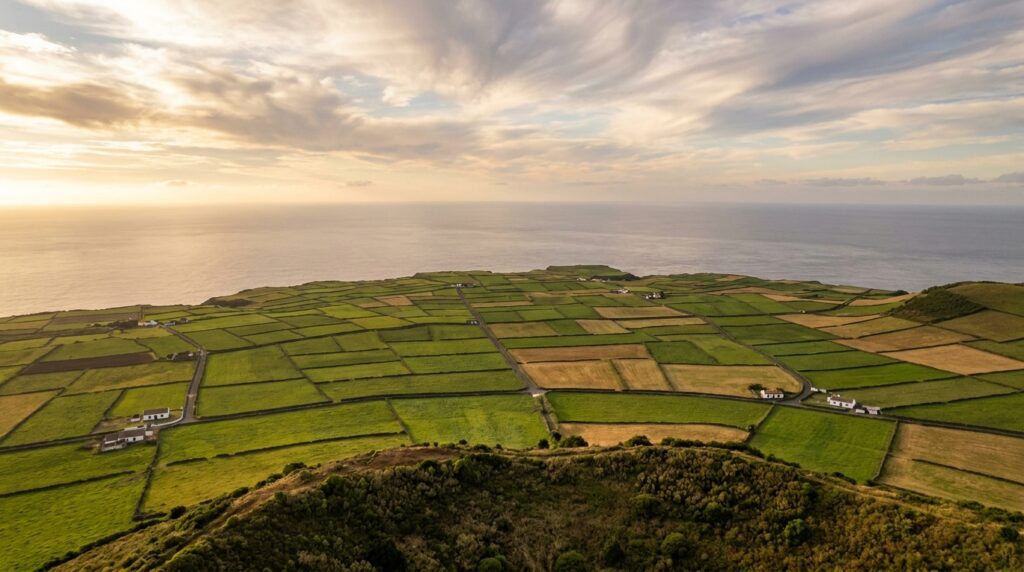
Serra do Cume: Terceira’s Patchwork-Fields Viewpoint, Azores
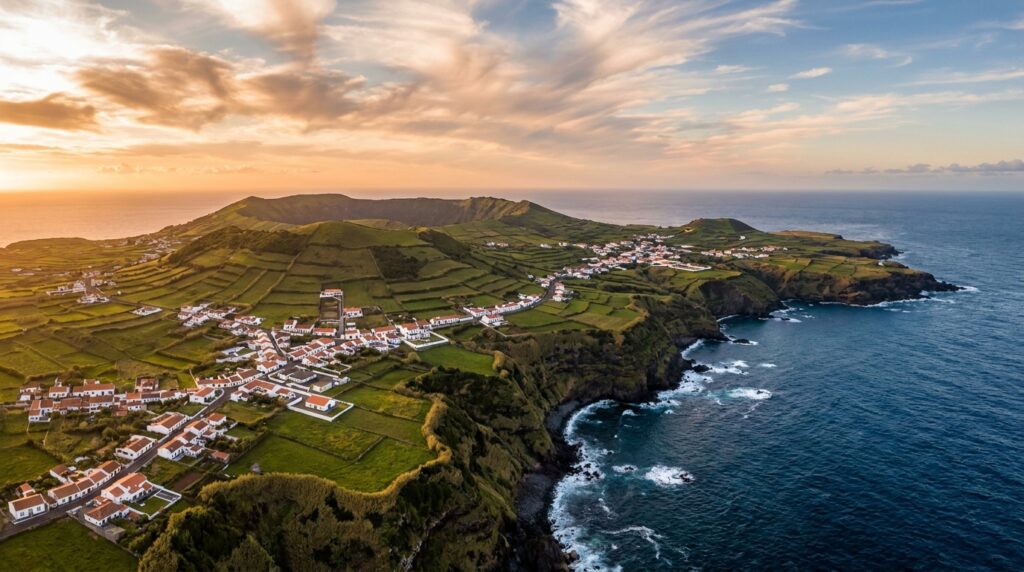
Graciosa Island, Azores: Furna do Enxofre, Caves & Windmills
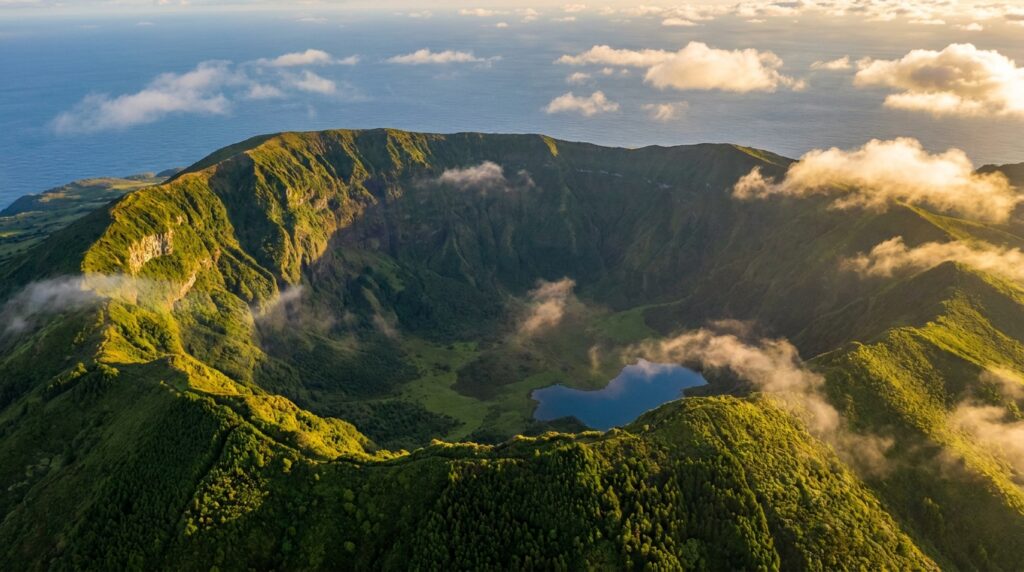
Caldeira do Faial: Volcanic Crater Hike on Faial, Azores
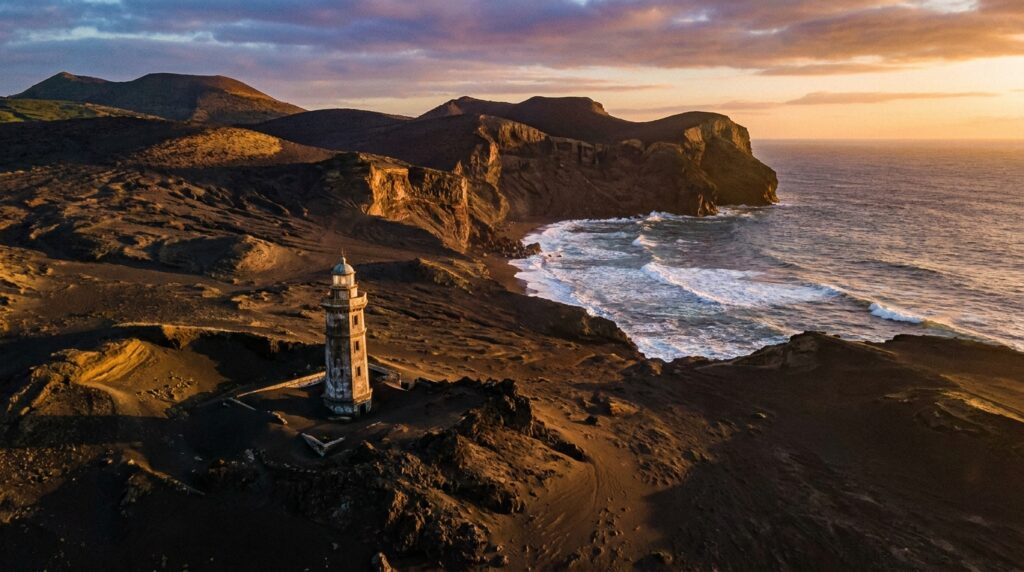
Capelinhos Volcano: Complete Guide to Faial’s Dramatic 1957 Eruption Site
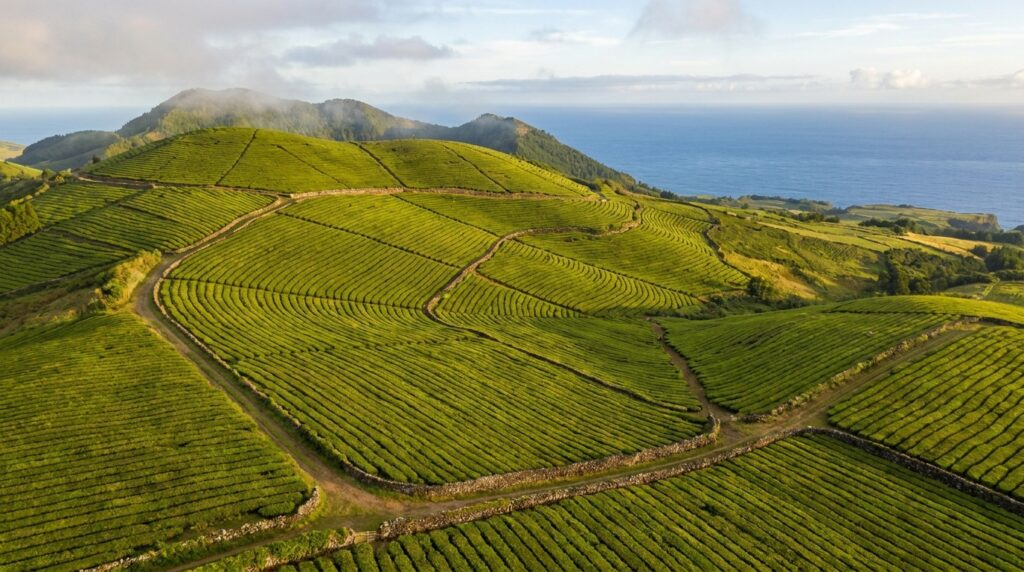
Gorreana Tea Plantation: Europe’s Oldest Tea Estate in the Azores
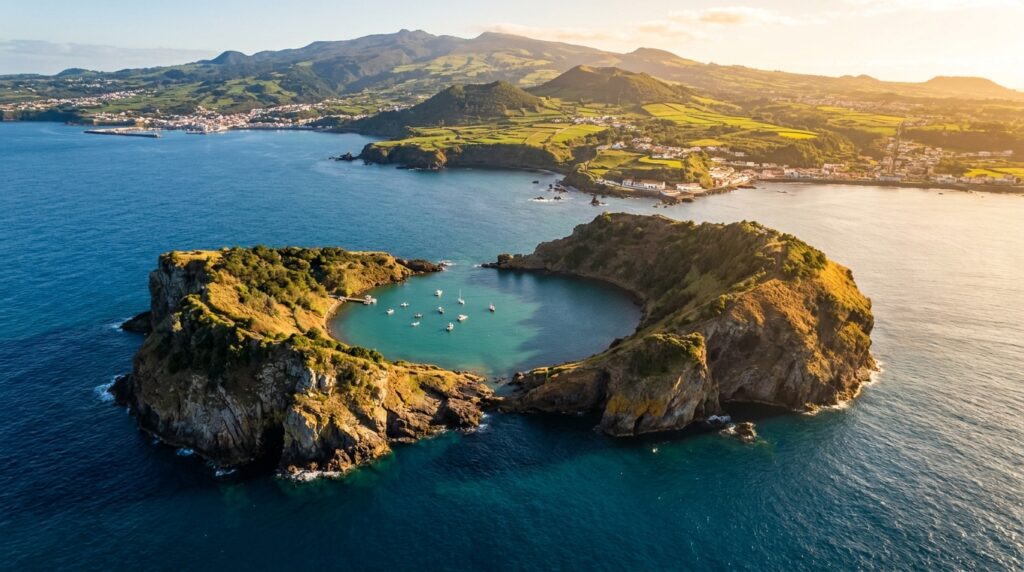
Ilhéu de Vila Franca do Campo: Complete Guide to the Azores’ Hidden Volcanic Crater

Ponta da Ferraria: Complete Guide to the Azores’ Natural Hot Springs