PENNSYLVANIA TRAVEL GUIDE
Overview
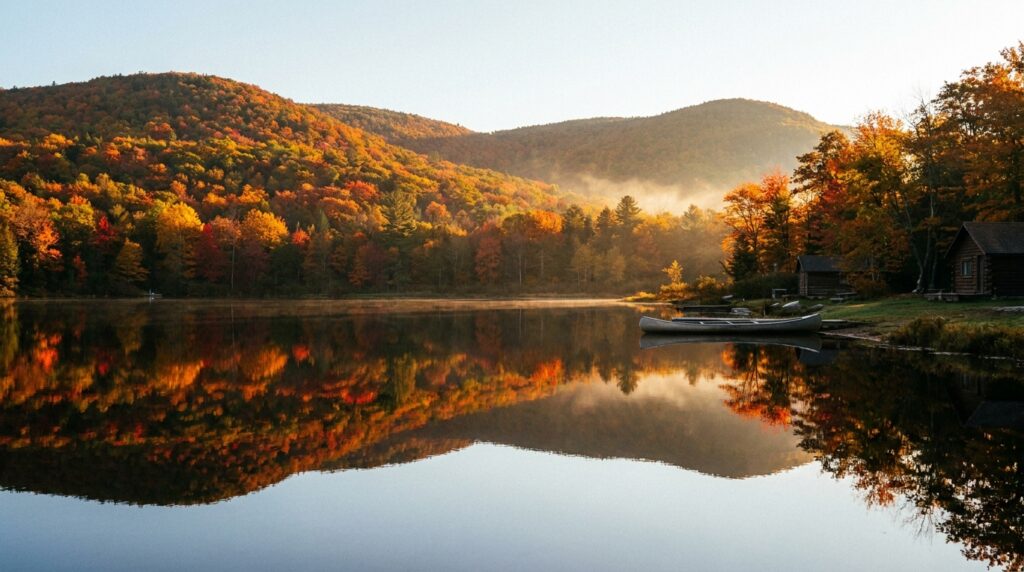
Pennsylvania is a fascinating blend of rich American history and diverse natural landscapes. You can walk the streets where the Declaration of Independence was signed in Philadelphia, then venture into the rolling Appalachian Mountains or visit traditional Amish farmlands in the same trip. From vibrant urban centers to peaceful countryside valleys, Pennsylvania offers an incredible range of experiences that showcase both colonial heritage spanning centuries and modern American culture.
We absolutely love traveling in Pennsylvania. The highway network connects even rural destinations, the locals are warm and proud of their history, and the infrastructure makes exploring everything from bustling cities to scenic wilderness surprisingly accessible. Philadelphia is an excellent starting point – it’s perfect for experiencing iconic landmarks like Independence Hall and the Liberty Bell, soaking up the vibrant food scene, and wandering the historic neighborhoods that blend Revolutionary War history with contemporary urban life.
Pittsburgh serves as the western anchor with its transformed industrial heritage, world-class museums, and thriving tech scene. The Pocono Mountains deliver some of the most beautiful forested scenery in the Mid-Atlantic with cascading waterfalls and scenic overlooks. For a unique cultural experience, head to Lancaster County for Amish country tours and farm-to-table dining, or challenge yourself with hiking trails in the vast Allegheny National Forest.
From the historic battlefields of Gettysburg to the natural splendor of the Pennsylvania Grand Canyon, Pennsylvania is a year-round destination that promises memorable experiences. Whether you’re seeking American history immersion, outdoor adventures, traditional Amish culture, or simply want to witness landscapes that showcase the Mid-Atlantic’s beauty, Pennsylvania delivers experiences that will captivate history buffs and nature lovers alike.
Bookmark this Pennsylvania travel guide and keep checking back for more of our best Pennsylvania travel tips and hidden gems!
State Snapshot
Safety
Pennsylvania is generally a safe state to visit, with low to moderate crime rates in most areas. The biggest safety considerations are related to winter weather driving conditions, wildlife encounters while hiking, and standard urban awareness in city centers. Be prepared for sudden weather changes in mountainous regions and always check trail conditions before hiking to popular spots like Ricketts Glen or the Grand Canyon of Pennsylvania.
Most Pennsylvanians speak English as their primary language, making communication straightforward for visitors. However, learning about local terms like “yinz” in Pittsburgh or understanding Pennsylvania Dutch phrases in Lancaster County will help you connect with locals and appreciate regional culture.
Accommodation
As a visitor to Pennsylvania, you’ll find excellent accommodation options in major cities like Philadelphia and Pittsburgh, as well as smaller towns throughout the countryside and mountain regions. Philadelphia and Pittsburgh offer the widest selection of hotels, bed and breakfasts, and vacation rentals. For unique experiences, consider staying in historic inns in Gettysburg, traditional farmhouse B&Bs in Lancaster County, or cozy mountain lodges in the Poconos. You can search for the best accommodation deals in Pennsylvania on Booking.com or Hotels.com.
Budget
Pennsylvania offers reasonable travel costs compared to coastal states. Budget hotels start from around $60-90 per night, while mid-range hotels begin around $100-150. Chain motels along major highways are plentiful and affordable. Meals range from $12-25 for casual dining, though cities like Philadelphia offer world-class restaurant scenes at higher prices. Grocery shopping at regional chains like Weis or Giant can significantly reduce food costs, especially for road trips through rural areas.
Best Time to Visit
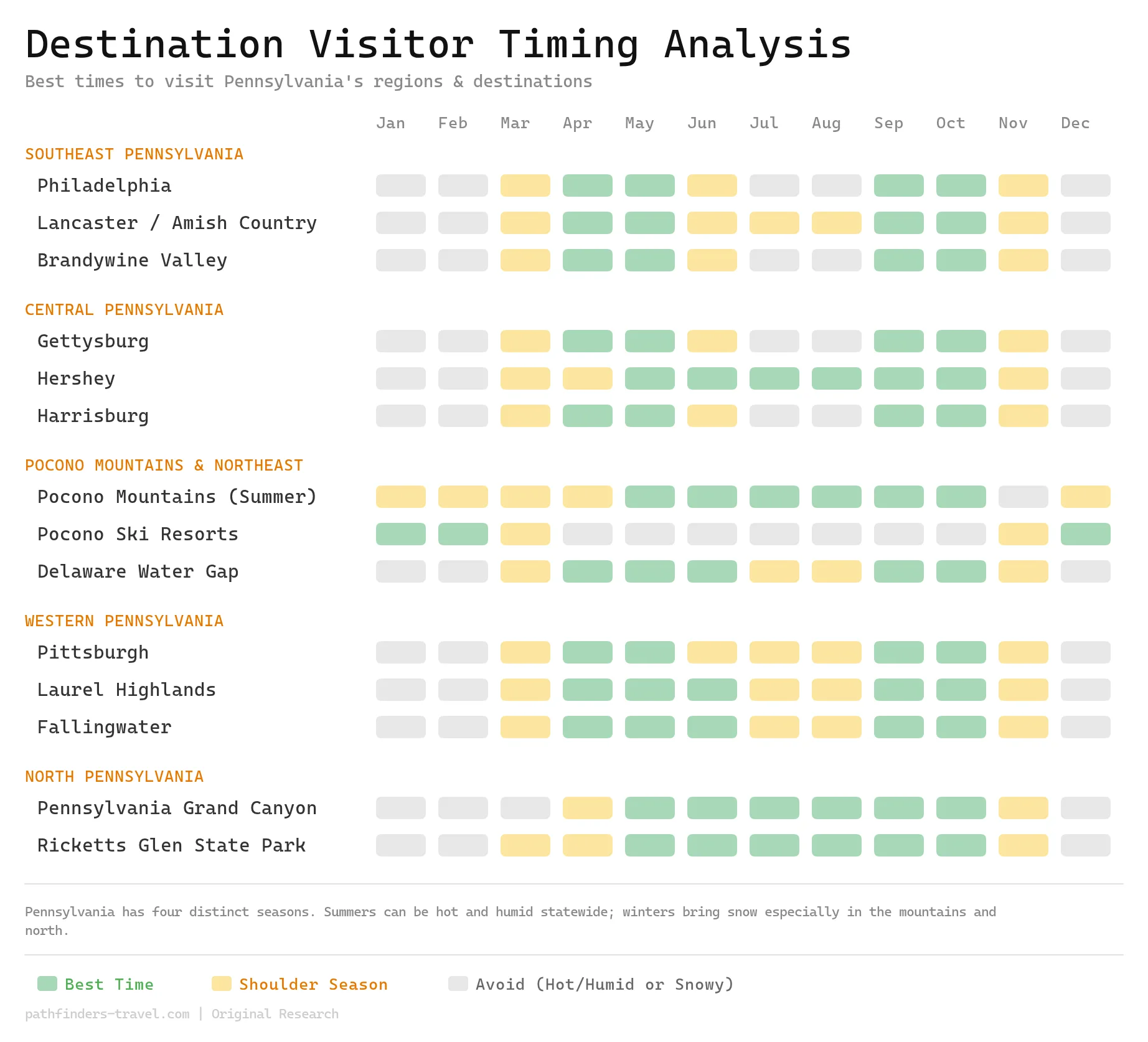
Pennsylvania experiences four distinct seasons, so the best time to visit depends on your interests and which region you’re exploring. Fall (September to November) is spectacular statewide for foliage, especially in the Laurel Highlands and Pocono Mountains. Spring (April to June) brings comfortable temperatures perfect for Philadelphia sightseeing and Lancaster County farmland tours. Summer (July to August) is ideal for outdoor activities but can be humid in cities. Winter offers skiing in the Poconos and festive holiday markets. The chart below breaks down the optimal timing for each destination.
Places to Visit
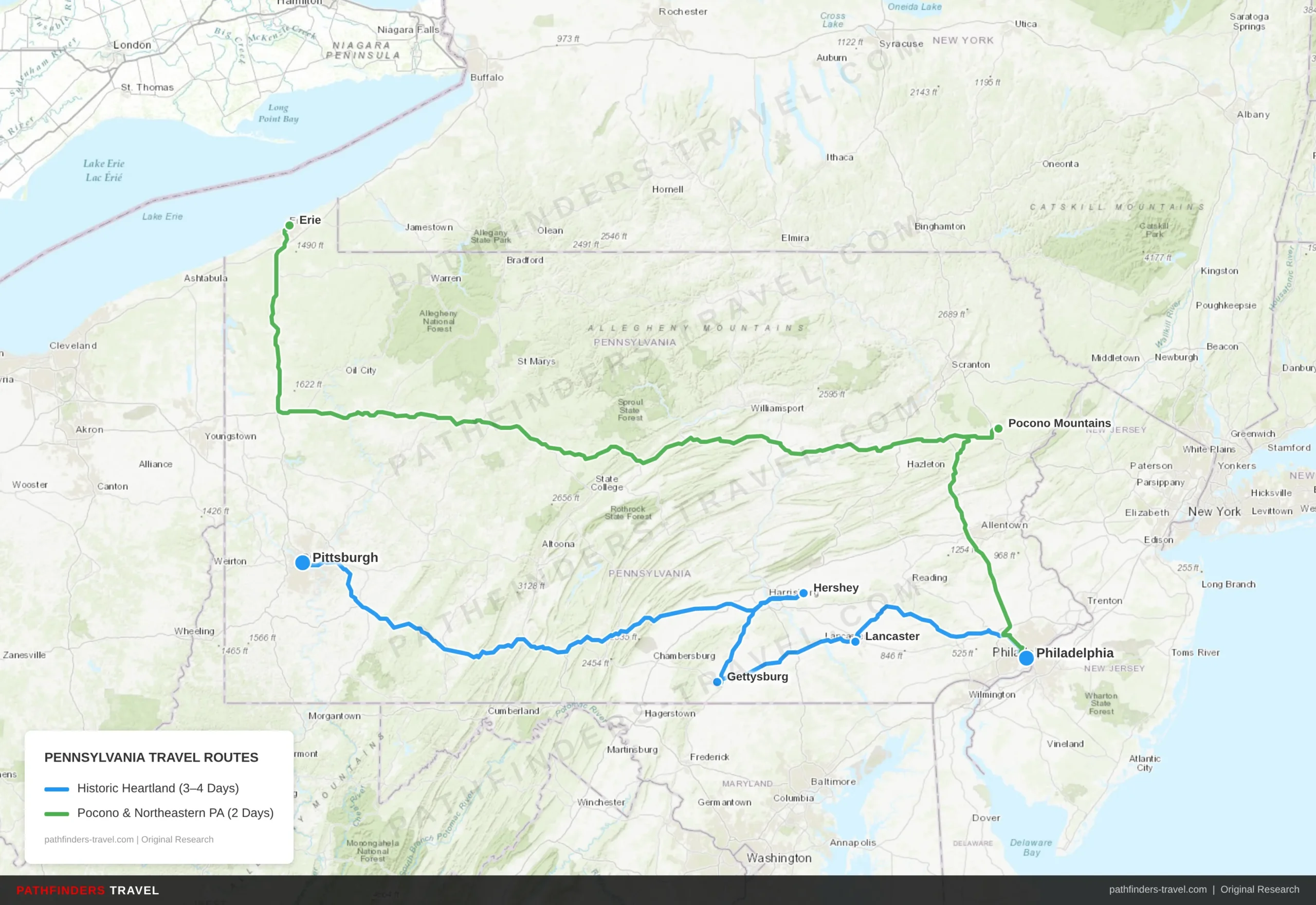
Pennsylvania’s moderate size makes it possible to see multiple regions in one trip. The Historic East route from Philadelphia through Lancaster to Gettysburg is the classic journey, combining Revolutionary War sites with Amish culture and Civil War history. The Mountain Adventure from the Poconos through the Pennsylvania Wilds to the Allegheny National Forest offers pristine natural beauty and outdoor recreation. For an urban cultural experience, the City-to-City route connecting Philadelphia and Pittsburgh showcases Pennsylvania’s transformation from industrial powerhouse to modern innovation hub. Below are our recommended travel routes with key stops and drive times.
| # | Stop | Highlights | Drive Time |
|---|---|---|---|
| 1 | Philadelphia | Independence Hall, Liberty Bell, Reading Terminal Market | — |
| 2 | Valley Forge | Revolutionary War National Park, Washington’s headquarters | 40m |
| 3 | Lancaster County | Amish farmlands, farmers markets, covered bridges | 1h |
| 4 | Hershey | Chocolate World, Hersheypark amusement rides | 45m |
| 5 | Gettysburg | Civil War battlefield, national military park, historic town | 1h |
| # | Stop | Highlights | Drive Time |
|---|---|---|---|
| 1 | Pocono Mountains | Waterfalls, ski resorts, lake recreation | — |
| 2 | Jim Thorpe | Victorian architecture, Lehigh Gorge scenic railway | 1h |
| 3 | Pine Creek Gorge | Pennsylvania Grand Canyon, scenic overlooks, hiking | 2h 30m |
| 4 | Allegheny National Forest | Old-growth forest, Kinzua Bridge, remote wilderness | 2h |
| # | Stop | Highlights | Drive Time |
|---|---|---|---|
| 1 | Philadelphia | Historic district, art museums, South Street | — |
| 2 | Harrisburg | State capitol building, Susquehanna riverfront | 2h |
| 3 | Pittsburgh | Museums, rivers, inclines, revitalized neighborhoods | 3h 30m |
Destination Difficulty
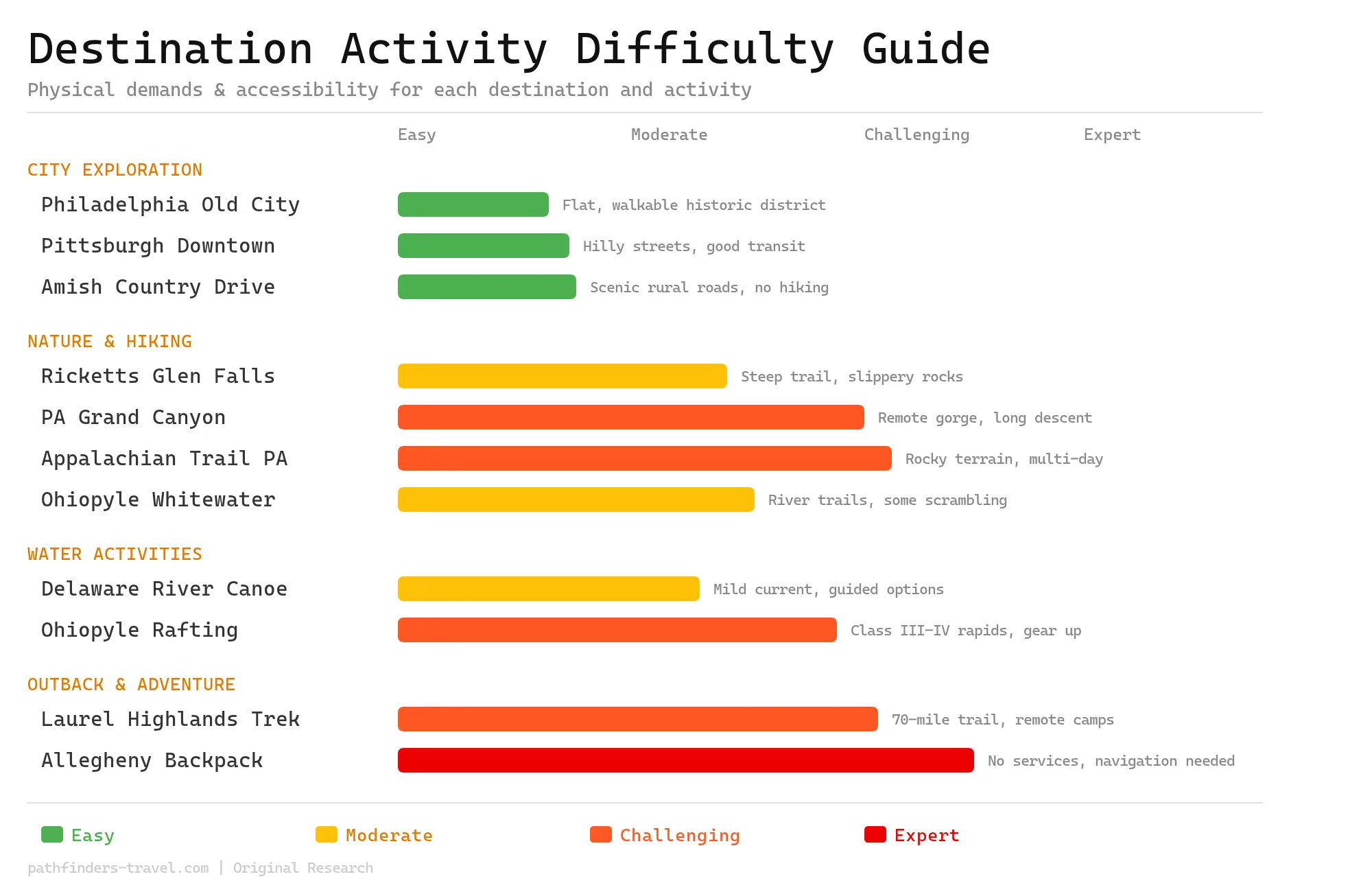
Pennsylvania offers experiences ranging from easy urban walking tours to challenging mountain hikes. Major cities like Philadelphia and Pittsburgh are walkable with excellent public transit and full accessibility. Historic sites and Amish country generally require minimal fitness for gentle walking tours. Mountain regions like the Poconos and Pennsylvania Wilds demand moderate fitness for trail hiking and waterfall access. Remote wilderness areas in Allegheny National Forest require careful planning and proper equipment. The chart below rates each destination and activity so you can plan according to your fitness level.
Transport
Transportation in Pennsylvania is generally by rental car, intercity buses, and regional rail, with an extensive highway network connecting major destinations. Rental cars provide the most flexibility for exploring rural areas and mountain regions at your own pace. Amtrak serves major cities along the Keystone Corridor between Harrisburg and Philadelphia. For urban exploration, Philadelphia has comprehensive public transit (SEPTA) and Pittsburgh has buses and light rail. Rural areas like the Pennsylvania Wilds require personal vehicles. I’d recommend using apps like Google Maps or Waze for navigation and real-time traffic updates.
Best Activities
The Best Activities & Tours That I Recommend
Blog Posts
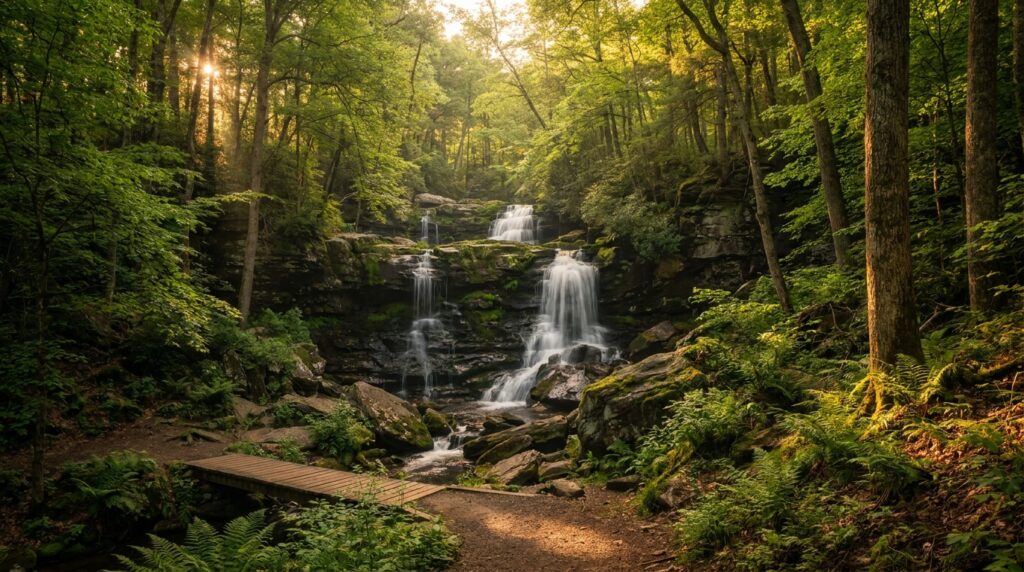
Ricketts Glen State Park: Waterfalls, Hiking & the Falls Trail
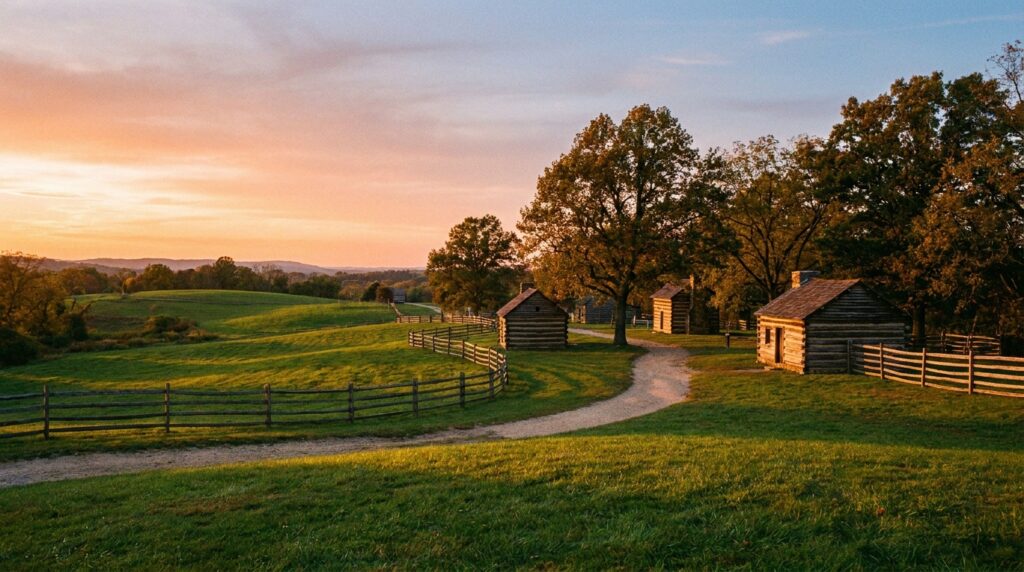
Valley Forge National Historical Park: Complete Visitor Guide
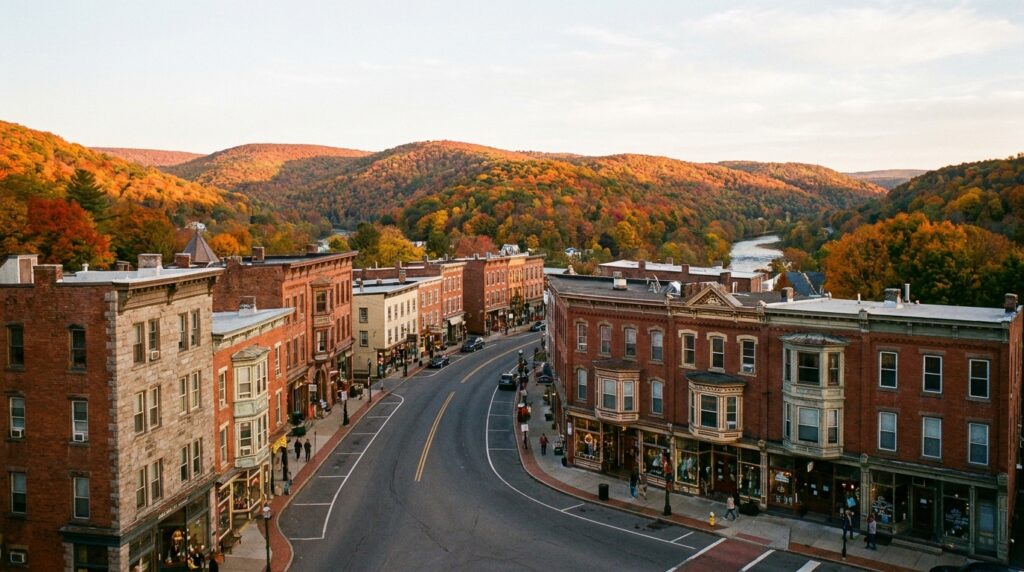
Jim Thorpe, PA Attractions: Scenic Trains & Mansions
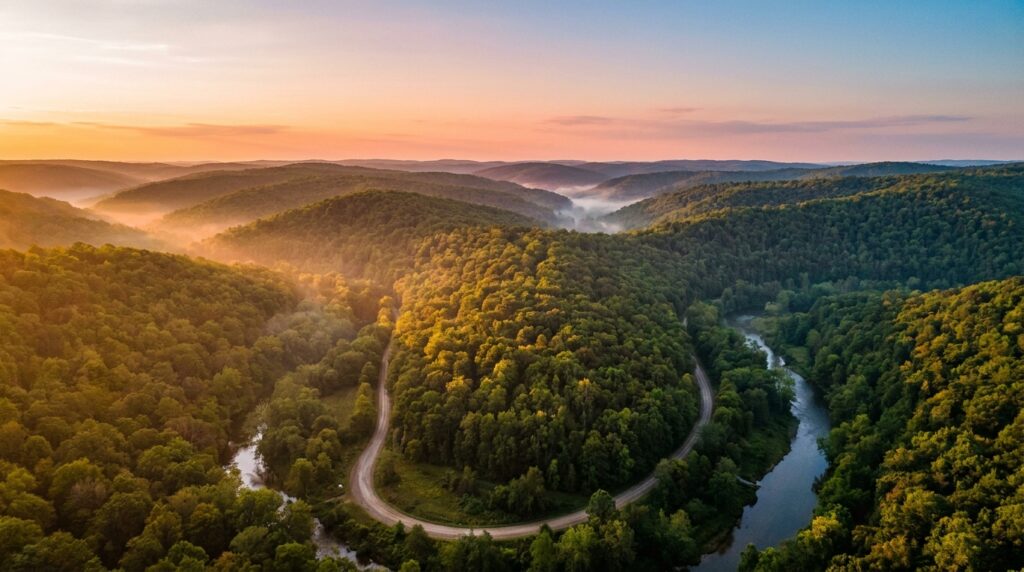
Allegheny National Forest: Camping, Hiking Trails & the Allegheny Reservoir

Things to Do in Harrisburg, PA: Capitol & Riverfront
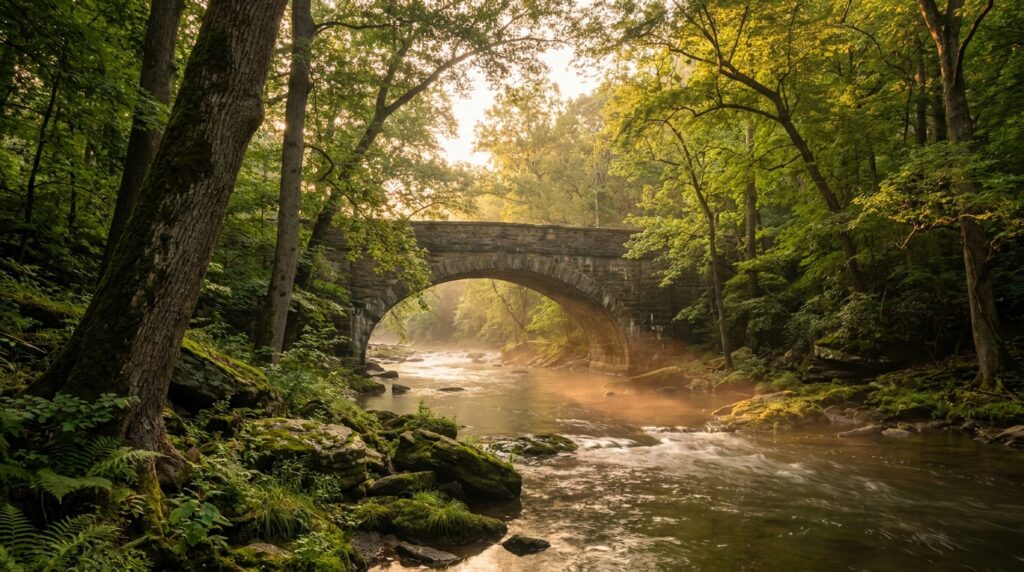
Wissahickon Valley Park: Forbidden Drive & Trail Guide
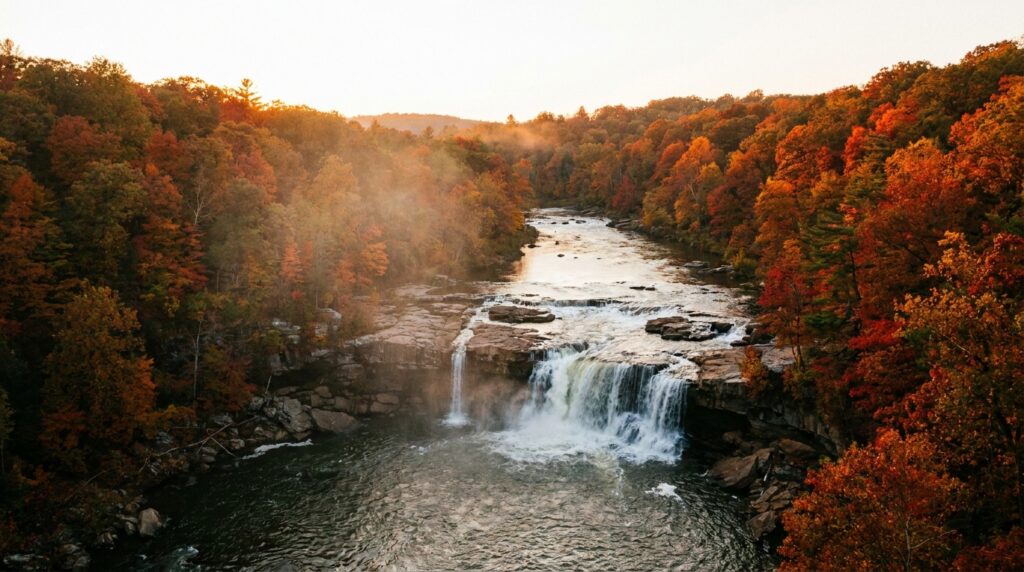
Ohiopyle State Park: Waterfalls, Whitewater Rafting & Hiking
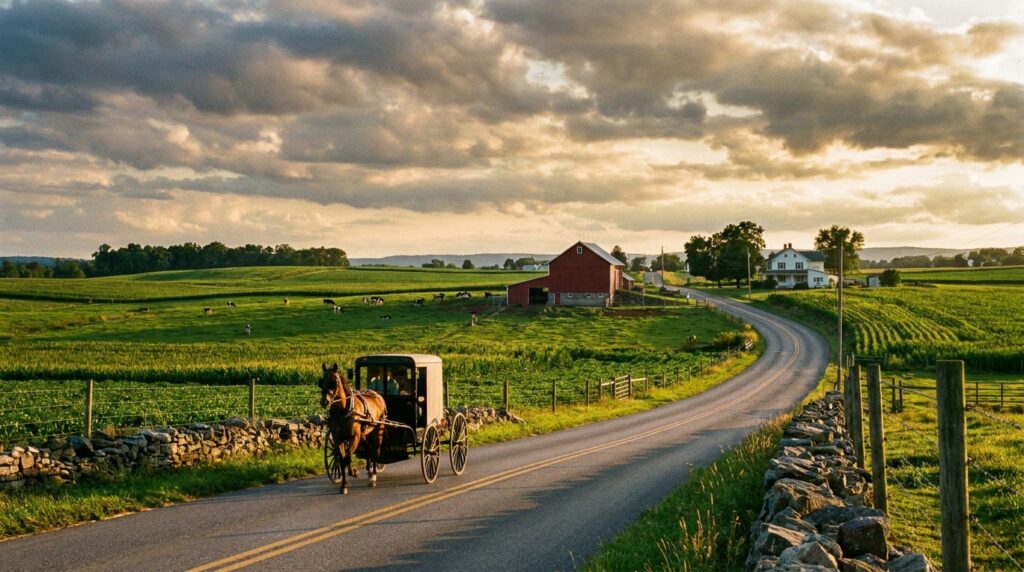
Things to Do in Lancaster County, PA: Amish Country
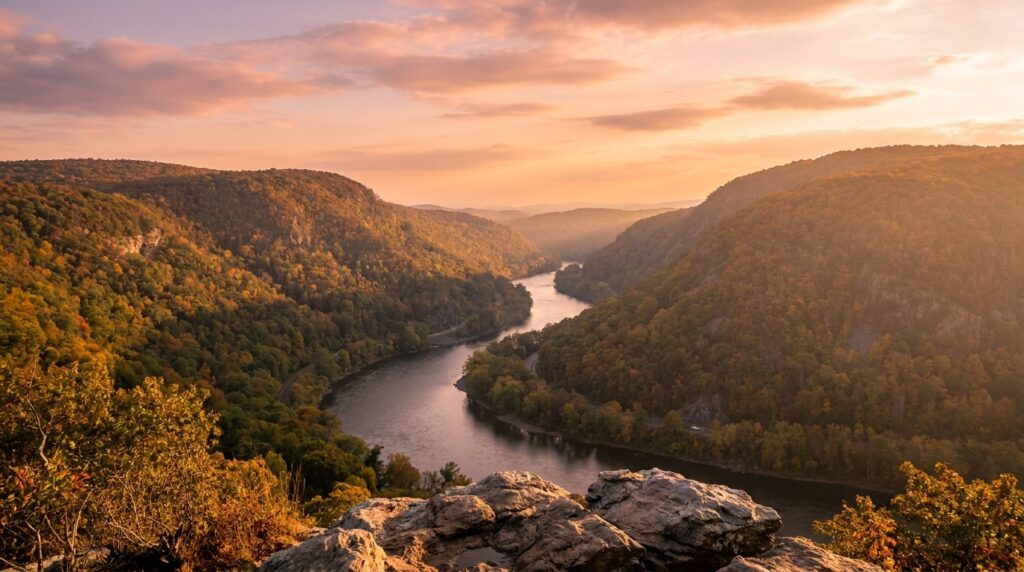
Hiking the Delaware Water Gap: Waterfalls & Trails