This guide contains affiliate links. As an Amazon Associate we earn from qualifying purchases — at no extra cost to you.
Estimated reading time: 7 minutes
Last updated: August 2026
What Should I Pack for Oregon?
Pack waterproof layers, sturdy hiking boots, a reliable rain jacket, and clothes you can layer for Oregon’s unpredictable weather. You’ll need gear that handles both coastal rain and high desert sun, with temperature swings of 40 degrees or more between morning and afternoon. Think versatile pieces that work with the Cascades and the coast, and always throw in an extra fleece.
Oregon’s climate splits dramatically down the middle. The western valleys and coast get drenched from October through June, while the high desert east of the Cascades stays dry and sunny most of the year. Your single suitcase needs to handle misty rainforests in the morning and bright sunshine by afternoon, sometimes on the same day.
I learned this the hard way on my first trip when I packed for Portland‘s rain and found myself sweating in Bend by lunchtime. The temperature can swing 40 degrees between sunrise at Crater Lake and midday in the Willamette Valley. Coastal mornings start cool and foggy, then the sun breaks through by noon. In the mountains, you might need a puffy jacket at sunrise and strip down to a t-shirt by 2 PM.
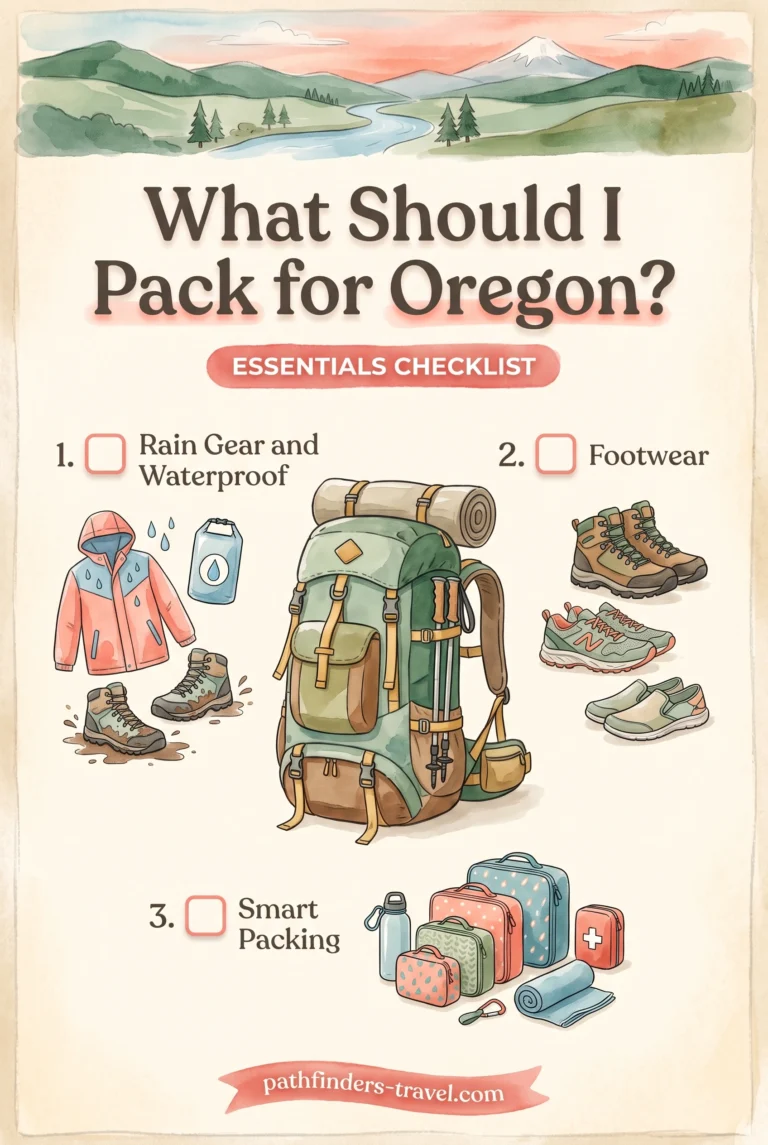
This guide walks you through the essentials in practical sections covering clothing layers, rain gear, footwear for trails and city streets, and outdoor basics. We’ll keep it simple and focus on what actually works, not what looks good in a catalog.
Rain Gear and Waterproof Essentials
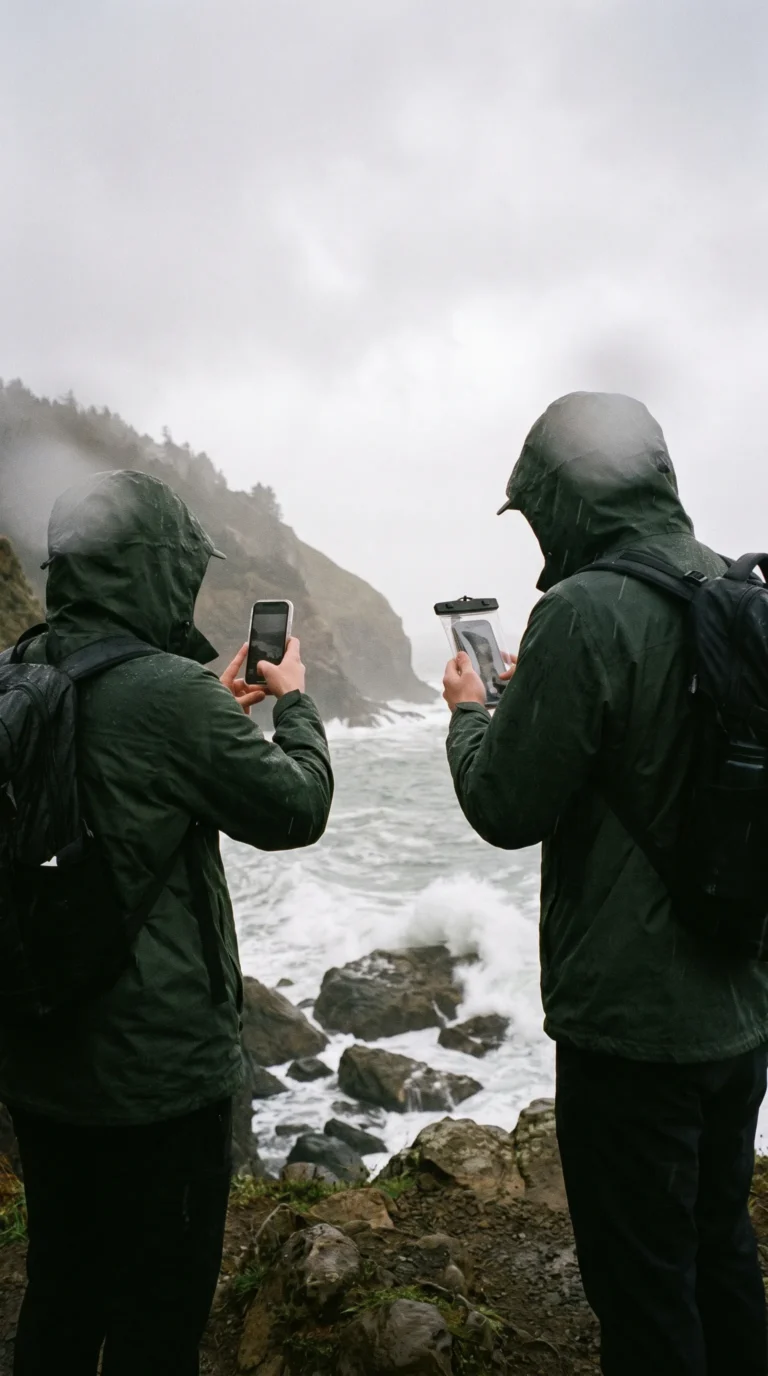
West of the Cascades, rain isn’t a question of if but when. From Portland coffee runs to stormy afternoons at Cannon Beach, a good rain jacket is the single item you’ll reach for most often during any Oregon trip, and locals wear theirs nearly year-round.
I always start with the Columbia Watertight II for adults who want a reliable, lightweight shell with a packable hood. It has proven itself on Oregon trails and in town, balancing breathability with waterproof protection without feeling clammy. You can toss it in a daypack and forget about it until the clouds open up.
If you’re traveling with kids who will be splashing through tide pools or running under waterfalls, this kids waterproof jacket offers full-coverage hoods and a cotton lining for comfort. It keeps young explorers dry without the crinkly, sweaty feel that makes them want to yank it off five minutes into a hike.
For electronics and small valuables, a Pelican marine waterproof phone pouch is worth the few dollars. Columbia Gorge hikes and coastal spray can soak a pocket in seconds, and the floating feature is a bonus if you’re kayaking or paddleboarding on the Deschutes or Willamette.
If you’re doing serious hiking in shoulder seasons when trails turn to rivers, pack rain pants or a small pack cover. October through April especially, even a sunny morning can hand you a soaking afternoon, and wet denim or soggy gear turns a great day into a miserable slog back to the car.
Footwear for Trails, Water, and Town
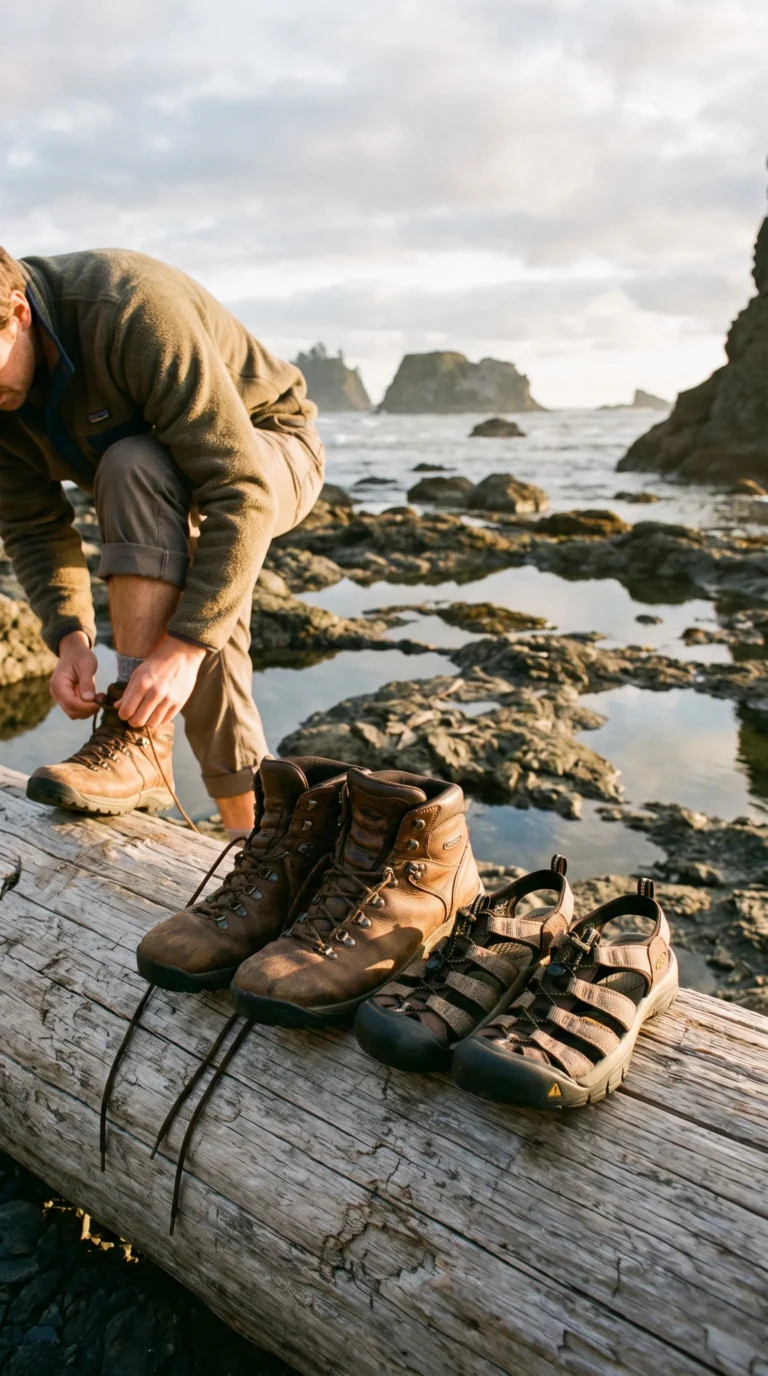
Oregon asks more from your shoes than most states. You’ll walk through mud-slick coastal trails, scramble over volcanic rocks, splash through creeks, and grab coffee in Portland’s Pearl District all in one weekend. That’s why packing at least two pairs of shoes is the single smartest move you can make for an Oregon trip. One pair for serious hiking, another for water or casual exploring.
Waterproof hiking boots with ankle support are non-negotiable here. Trail runners might work on dry summer days east of the Cascades, but the moment you hit mossy coastal forests or rocky mountain paths after a rain, you’ll wish you had the grip and stability of real boots. Oregon’s roots, rocks, and red clay turn slippery fast, and a twisted ankle miles from the trailhead ruins a trip.
If you’re heading to tide pools, hot springs, or any of Oregon’s rivers, water shoes earn their weight. Quick-dry mesh water shoes work well for adults hopping between shoreline boulders and soaking spots, with grippy soles that handle wet basalt and fast drainage. For families with kids who want more protection on those same volcanic rock shores and creek crossings, the Keen Newport H2 closed-toe water sandal is the upgrade that makes sense. It drains like a sandal but shields toes from sharp edges, and the kids can wear them all day without blisters.
Don’t forget a lightweight third option for town time. After a long hike, your feet will thank you for comfy sneakers or sandals when you’re wandering Bend’s breweries or Powell’s Books in Portland. Pack light, but pack smart.
Smart Packing for Oregon’s Range
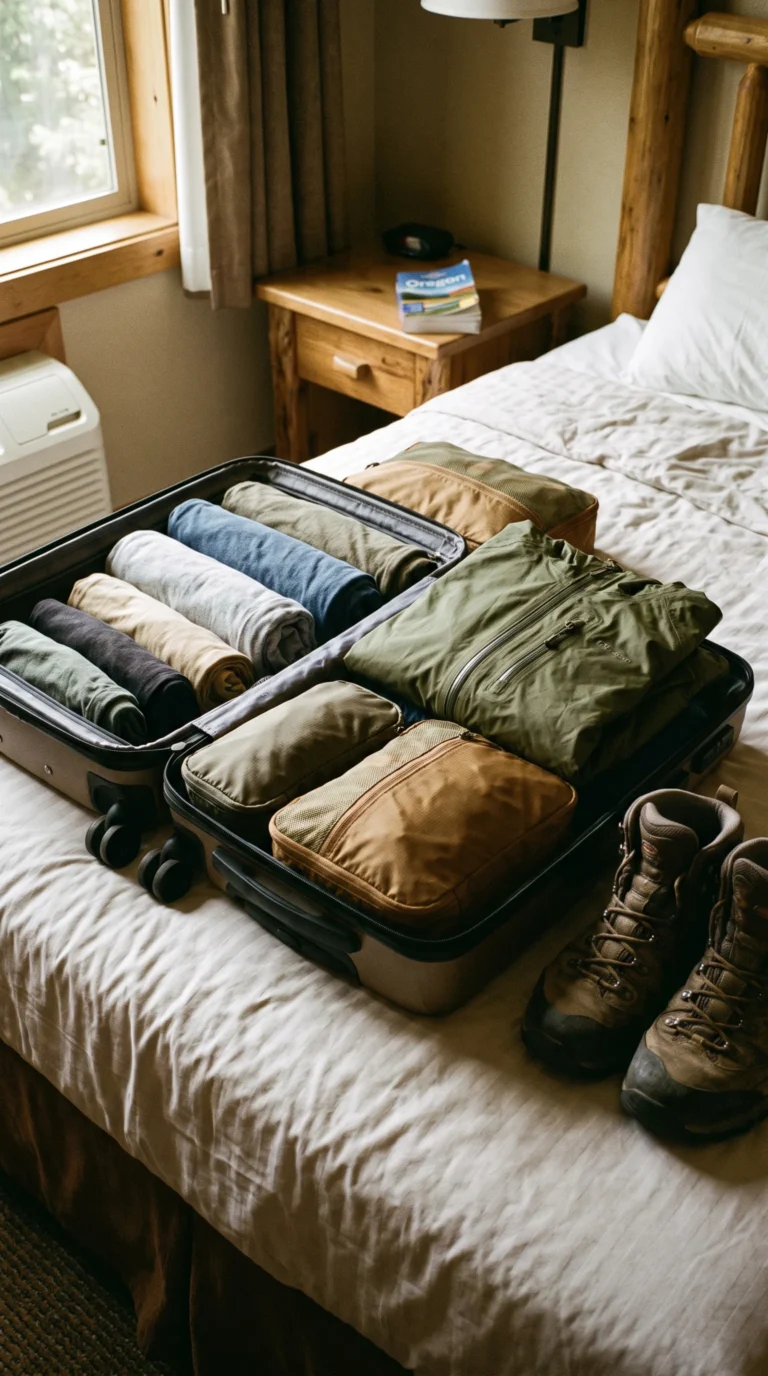
Oregon’s varied terrain means you’ll pack smarter if you keep your wardrobe simple. Stick with a neutral color palette of blacks, grays, and blues that all work together. This lets you mix and match with fewer pieces, which frees up precious suitcase space for that bulky rain jacket and fleece you’ll actually need.
Packing cubes or stuff sacks are a lifesaver here. They compress your clothes down and keep everything organized. Even better, you can use one cube to separate wet or damp items after a misty coastal hike from your clean, dry clothes.
While Oregon runs casual most of the time, pack one nice outfit for dinner in Portland or an afternoon wine tasting in the Willamette Valley. Think dark jeans and a button-down or a simple dress. The vibe is relaxed but people still appreciate a little polish when you’re out.
Don’t forget a reusable water bottle and a stash of snacks in your daypack. The scenic drives between the coast, mountains, and high desert are beautiful but services can be sparse for stretches. You’ll be glad to have water and trail mix on hand when the next gas station is 50 miles away.
Frequently Asked Questions
What is the most forgotten item when packing for Oregon?
Rain gear is the most commonly forgotten item, especially for visitors traveling in spring or fall. Many people assume Oregon’s weather will cooperate, only to find themselves caught in an unexpected drizzle without a waterproof layer. I always recommend packing a lightweight rain jacket even if the forecast looks clear, since microclimates can shift quickly throughout the state. A compact umbrella is also worth throwing in your bag for urban exploring in Portland or Eugene.
Do I need waterproof boots for Oregon hiking trails?
Waterproof hiking boots are highly recommended for Oregon trails, particularly from October through May. Trail conditions stay muddy and wet for much of the year, even when it’s not actively raining. If you’re visiting in summer and sticking to well-maintained paths, water-resistant trail runners can work fine. For coastal hikes or forest trails after rain, full waterproof boots will keep your feet comfortable and blister-free throughout the day.
What should I pack for Oregon in summer?
Pack layers for Oregon summers, including t-shirts, a light fleece or hoodie, and one pair of long pants. Daytime temperatures can reach the 80s inland, but evenings cool down significantly, especially near the coast. Sunscreen and sunglasses are important since the sun feels stronger at higher elevations. Don’t forget a swimsuit if you plan to visit lakes, rivers, or the coast, and comfortable walking shoes for exploring towns and easier trails. Since summer brings the driest weather and the longest coastal days, you’ll have more flexibility planning your route from Oregon’s mountains to its beaches.
What is the 3 3 3 rule for packing?
The 3-3-3 rule means packing three tops, three bottoms, and three pairs of shoes for a trip. It works well in Oregon because the state forces you into footwear variety anyway: hiking boots, water shoes, and something comfortable for town. For the clothing half, make one of the three tops a fleece and one of the bottoms a pair of quick-dry trousers, and the same nine pieces will cover the coast, the Cascades, and the high desert.
What items is Oregon known for that I should pack space for?
Leave room in your bag for Oregon wine, craft beer, artisan chocolates, and locally roasted coffee. The state is famous for its Pinot Noir from the Willamette Valley and creative microbrews from nearly every town. You’ll also find incredible handmade goods at craft markets, including pottery, woodwork, and natural skincare products. The coastal towns especially overflow with local art and specialty foods—if you’re exploring Newport’s working waterfront and historic bayfront, you’ll discover smoked salmon, sea salt, and handcrafted souvenirs that make great gifts and pack flat in checked luggage. For dramatic coastal scenery paired with shopping, Cape Kiwanda’s sandstone cliffs and nearby Pacific City offer both stunning photo ops and local breweries worth visiting.