
Estimated reading time: 17 minutes
Last updated: September 2026
Table of Contents
- Which Is the Nicest Key in Florida?
- The Main Keys: from Key Largo to Key West
- Top Things to Do in the Florida Keys
- Where to Eat in the Florida Keys
- Where to Stay in the Florida Keys
- Getting to and Around the Florida Keys
- When to Visit and What to Pack
- Florida Keys FAQ
Which Is the Nicest Key in Florida?
It depends on your style. Key West has the most history, dining and nightlife; Key Largo is the diving and snorkelling capital; Islamorada is known for sport fishing and upscale resorts; and Marathon is the most family-friendly. The Florida Keys span about 120 miles from Key Largo to Key West along the Overseas Highway and its 42 bridges, so many visitors island-hop several in one trip.
How We Researched This Guide
We built this guide using official Keys tourism data, documentary research, and traveler feedback, all verified when writing. Since conditions and pricing shift seasonally, we recommend checking local tourism websites and attraction pages for current details before booking.
Want to experience the island-hopping drive for yourself? Watch our Florida Keys travel documentary in 4K Ultra HD.
People always ask “what are the 7 keys in Florida?” The real answer surprises them. The Florida Keys archipelago contains over 1,700 islands according to the National Oceanic and Atmospheric Administration’s coastal survey. Most are tiny mangrove clumps. Only about 30 islands are inhabited.
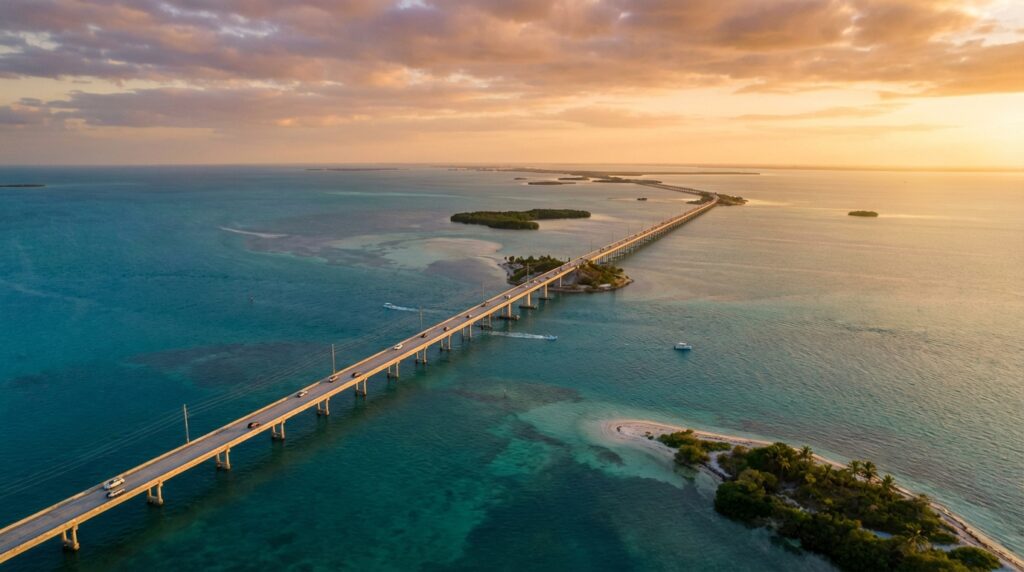
This 120-mile chain runs southwest from mainland Florida into the Caribbean. Key Largo sits at mile marker 106. Key West ends the road at mile marker 0. The Overseas Highway (US Route 1) connects them all, spanning 113 miles of pavement and 42 bridges per Florida Department of Transportation records.
The Atlantic Ocean pounds the eastern shore. The Gulf of Mexico laps the western side. That geography creates some of the clearest water in North America. Coral reefs thrive just offshore. Water visibility hits 100 feet on good days.
Planning Tip
You come here to dive the third-largest barrier reef system on the planet. You eat stone crab claws pulled from traps that morning. You slow down to island time, where flip-flops count as formal wear. The weather stays warm year-round, with winter highs around 75°F and summer peaks near 90°F.
This guide covers which islands matter, where to sleep, what to eat, and how to get around without wasting time. Check the Official Florida Keys & Key West tourism website for current event listings and road conditions before you drive down.
The Main Keys: from Key Largo to Key West
The Florida Keys’ four main inhabited islands, Key Largo, Islamorada, Marathon, and Key West, each offer distinct experiences with diving capital and historic southernmost city.
The Keys divide into three geographic zones: Upper, Middle, and Lower. The Overseas Highway (US Route 1) threads through all of them, covering 113 miles from Key Largo to Key West according to Florida Department of Transportation measurements. Ocean spreads on both sides of the road for most of the drive.
Key Largo sits closest to mainland Florida. Divers call it the diving capital of the world. John Pennekamp Coral Reef State Park protects 70 nautical square miles of coral reefs just offshore. You can snorkel the Christ of the Abyss statue in 25 feet of water.
Islamorada claims the title of sportfishing capital. Charter boats line the marinas. The Upper Keys island also hosts some of the best restaurants and luxury resorts in the chain. Tarpon migrate through here in spring.
Marathon anchors the Middle Keys with a family-friendly vibe. The Seven Mile Bridge starts here, one of the longest bridges in the world when it opened in 1982. The Dolphin Research Center lets you watch marine mammal training sessions. Groceries and gas cost less here than in Key West.
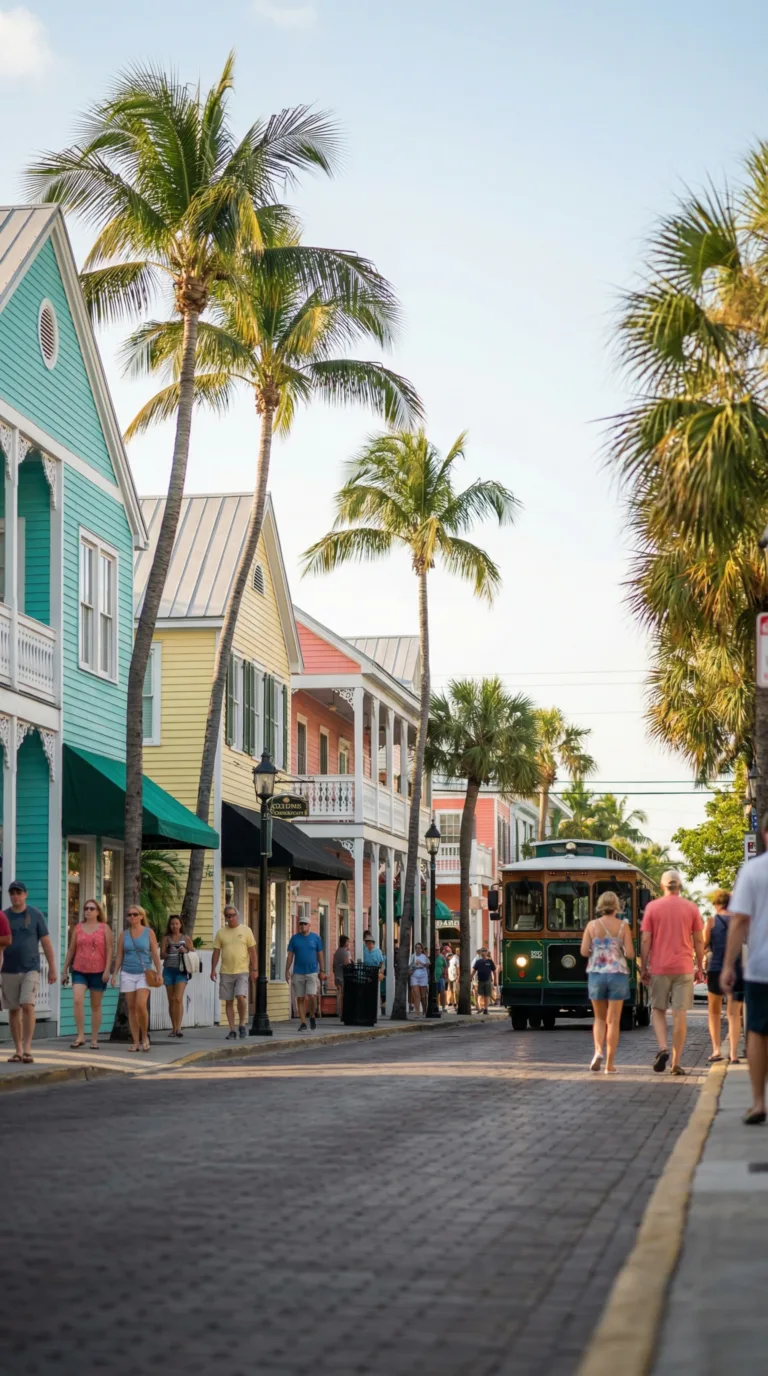
Key West marks the end of the road. The U.S. Census Bureau lists its population at 24,649, making it the largest city in the Florida Keys. The historic Old Town district fills with 19th-century wooden houses painted in Caribbean pastels. Duval Street runs the length of the island, packed with bars and shops. Mallory Square hosts nightly sunset celebrations with street performers and vendors. You can visit the southernmost point marker, though it’s just a photo op, the actual southernmost point sits on a naval base. Miami lies 160 miles north, Miami Beach slightly closer at 155 miles. The Official Key West tourism website lists current events and attraction hours. The Florida Keys Scenic Highway scenic byway information details pullover spots and historical markers along the drive.
Top Things to Do in the Florida Keys
The Florida Keys are a premier diving and snorkeling destination, home to the only living coral barrier reef in North America and 6,000 square nautical miles of protected marine sanctuary.
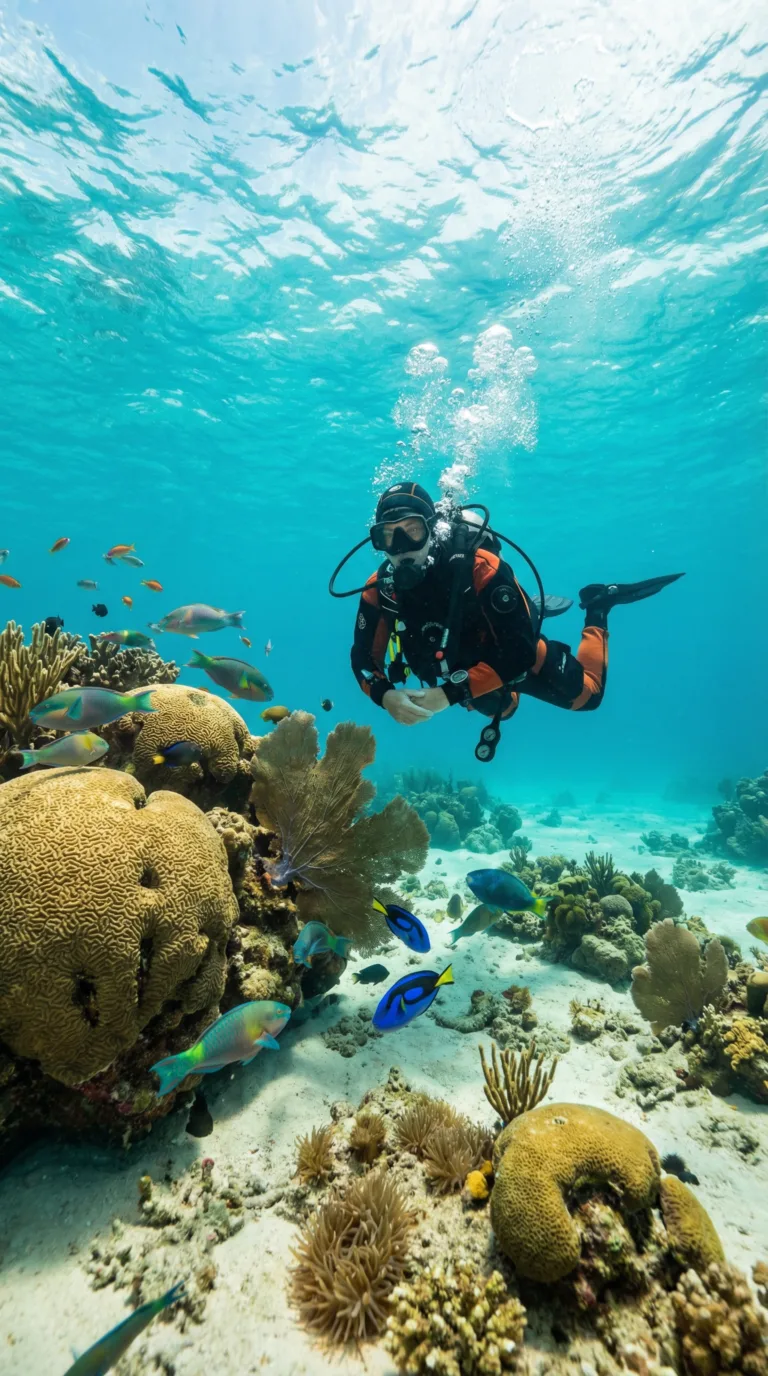
The water is the point here. Everything else is secondary. The Keys sit atop the only living coral barrier reef in the continental United States, protected within the NOAA Florida Keys National Marine Sanctuary, a 6,000-square-nautical-mile zone that stretches between Key Largo and the Dry Tortugas. According to NOAA, this sanctuary protects over 6,000 species of marine life and receives millions of visitors annually who come specifically for underwater access.
John Pennekamp Coral Reef State Park in Key Largo is the entry point for most divers. The park logs over 1 million visitors per year, per Florida State Parks statistics. The star attraction is the Christ of the Abyss statue, a nine-foot bronze sculpture submerged in 25 feet of water. Divers circle it like pilgrims. The statue sits in clear water most of the year, visibility often hitting 60 feet.
Wreck diving is the other draw. The Spiegel Grove, a 510-foot Navy landing ship, rests in 130 feet of water off Key Largo. It’s one of the largest artificial reefs in the world. Shallower wrecks like the Benwood (45 feet) work for newer divers. These sites swarm with barracuda, grouper, and nurse sharks.
Non-divers can snorkel the same reefs from shore or book glass-bottom boat tours. Looe Key Reef near Big Pine Key offers some of the clearest water, 30 to 40 feet of visibility is standard. You can wade in from the beach at Bahia Honda State Park and see parrotfish within minutes.
Florida Keys Aquarium Encounters in Marathon lets you feed stingrays and swim with sharks in controlled tanks. It’s a 90-minute hands-on program, not a walk-through aquarium. Kids can touch horseshoe crabs and sea cucumbers. The shark encounter involves reef sharks, docile species, but still sharks.
Sportfishing defines the Middle Keys. Islamorada calls itself the sportfishing capital of the world, and the charter captains here don’t exaggerate much. Deep-sea trips target mahi-mahi, sailfish, and wahoo. Flats fishing goes after bonefish, permit, and tarpon in knee-deep water. Backcountry fishing weaves through mangrove islands. Half-day charters start around $600 for up to four people.
The Florida Keys Wild Bird Center in Tavernier rehabilitates injured pelicans, herons, and ospreys. You can walk the boardwalk for free and watch birds recover in open-air enclosures. It’s a 20-minute stop, not a half-day attraction.
Camping puts you closest to the water. Bahia Honda State Park has beachfront campsites for $36 per night. John Pennekamp offers sites near the boat ramps for $45 per night. Both parks book out months ahead in winter.
Key West adds the cultural layer. The Ernest Hemingway Home and Museum charges $17 for a self-guided tour of the author’s 1930s estate. Fifty-nine six-toed cats roam the property, descendants of Hemingway’s original polydactyl cat. Fort Zachary Taylor has Civil War-era cannons and the best beach in Key West. Dry Tortugas National Park sits 70 miles offshore, accessible only by ferry ($190 round-trip) or seaplane ($350). The park sees fewer than 80,000 visitors per year, according to the National Park Service.
Kayaking through mangrove tunnels works best in the backcountry near Big Pine Key. The water is calm, the tunnels are shaded, and you’ll see herons, roseate spoonbills, and the occasional crocodile. Paddleboard rentals run $25 per hour. Parasailing costs $80 for a 10-minute flight.
Sunset watching is free. Mallory Square in Key West hosts nightly sunset celebrations with street performers, but the crowds are thick. The view from the old Seven Mile Bridge near Marathon is quieter, just you, the water, and the light dropping into the Gulf.
Where to Eat in the Florida Keys
Florida Keys cuisine centers on ultra-fresh seafood including stone crab, hogfish, and mahi-mahi, with Keys Fisheries in Marathon a popular waterfront seafood market.
The food scene here runs on one rule: eat what swam this morning. Caribbean spices meet American comfort food at picnic tables overlooking the water. You’ll find no white tablecloths at the best spots.
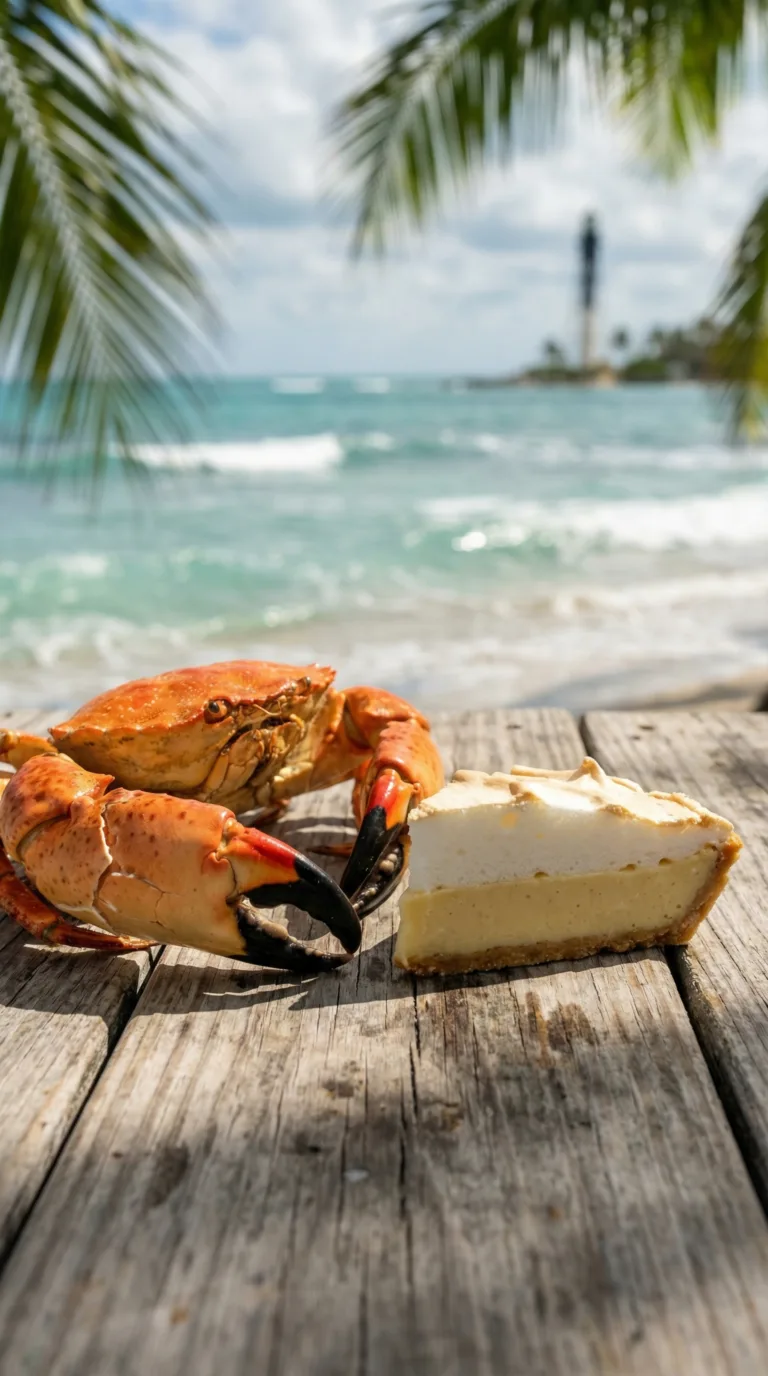
Keys Fisheries in Marathon packs tourists and locals onto weathered benches for lobster reuben sandwiches and stone crab claws cracked to order. The place operates as both fish market and restaurant. Order at the counter, grab a number, wait for your name. Stone crab season runs October through May, according to the Florida Fish and Wildlife Conservation Commission, commercial fishermen harvest over 2.5 million pounds annually in state waters. Miss the season and you’re stuck with frozen.
For tablecloths and wine lists, Florida Keys Steak and Lobster House serves dry-aged ribeyes alongside whole Florida lobsters. The kitchen splits its focus between land and sea. Prices jump accordingly.
Key lime pie, the official state pie, appears on every menu. The real version uses Persian limes (actual Key limes are rare now) and tastes tart, not candy-sweet. Hogfish, yellowtail snapper, and conch fritters round out the must-try list. Conch is imported from the Bahamas these days since harvesting died out locally in the 1970s.
Dining formats range with roadside shacks and tiki bars to Key West’s Duval Street fine dining. Cuban sandwiches show up in Key West thanks to the island’s cigar-rolling history. Food trucks park near beaches. Fresh fish markets sell the day’s catch if you’re cooking at your rental.
Check the Keys Fisheries official website for current hours. The Florida Keys & Key West restaurant guide lists farm-to-table spots using day-boat seafood and local tropical fruits.
Where to Stay in the Florida Keys
Florida Keys accommodation searches total over 27,100 monthly for resorts and 22,200 for hotels, with options ranging from luxury beachfront properties to family-friendly all-inclusive resorts and waterfront campgrounds.

The Keys offer roughly 11,500 hotel rooms and vacation rental units across the island chain, according to the Monroe County Tourist Development Council. Your choice depends on budget and location priorities.
True all-inclusive resorts don’t really exist here. Properties marketed as “all-inclusive” typically bundle breakfast, some water sports equipment, and maybe a sunset cruise. Expect to pay separately for most meals and activities. Average nightly rates for Florida Keys resorts hit $425 during peak season (December through April), per STR hotel performance data.
Florida Keys resorts luxury options cluster in Islamorada and Key West. Cheeca Lodge in Islamorada features a private beach, golf course, and full-service spa. Sunset Key Cottages in Key West sits on a private island accessible only by boat. These properties run $600-$900 per night in winter.
Families gravitate toward Marathon and Key Largo. Florida Keys resorts for families like Hawks Cay Resort offer kids’ clubs, multiple pools, and dolphin encounters. Rooms sleep four comfortably. Expect $350-$500 nightly for family suites during high season.
Key West hotels range from $89 chain motels to $700 boutique inns. Old Town properties put you walking distance from Duval Street bars and Mallory Square. The Marker Waterfront Resort offers a private beach 10 minutes from downtown. Historic bed-and-breakfasts occupy restored Conch houses with pools and complimentary breakfast.
Florida Keys hotels on the beach with actual sand access are rarer than you’d think. Many “waterfront” properties face rocky shorelines or seawalls. Verify beach access before booking. Isla Bella Beach Resort in Marathon and Postcard Inn in Islamorada both feature genuine sand beaches.
Budget travelers find chain hotels along the Overseas Highway for $120-$180 nightly. Vacation rentals through Airbnb or VRBO offer full kitchens and often better value for groups.
Florida Keys campgrounds and Florida Keys RV parks provide waterfront stays for $50-$95 per night. Bahia Honda State Park camping reservations book up six months ahead for oceanfront sites with bathhouses. John Pennekamp Coral Reef State Park in Key Largo offers similar amenities. Private RV parks like Boyd’s Key West Campground include full hookups, pools, and boat ramps.
Book six months out for winter stays. Spring break (March) and Fantasy Fest (October) sell out fast. Check the Official Florida Keys lodging search for real-time availability. Watch for resort fees ($25-$45 daily) not included in quoted rates.
Getting to and Around the Florida Keys
The Florida Keys are accessed via Miami International Airport (110 miles from Key Largo) or Key West International Airport, with the scenic 113-mile Overseas Highway (US Route 1) connecting all islands by car.
Miami International Airport (MIA) is the main gateway. It sits 110 miles from Key Largo, 160 miles from Key West. More flight options. Cheaper fares. Most visitors fly here.
Key West International Airport (EYW) offers direct flights from major U.S. cities, Atlanta, Charlotte, Miami, Fort Lauderdale. Closer to the Lower Keys. More expensive tickets. According to Key West International Airport official statistics, the facility handles roughly 500,000 passengers annually. The airport code is EYW.
Compare both. Miami gives you flexibility. Key West saves you two hours of driving if you’re staying in the Lower Keys.
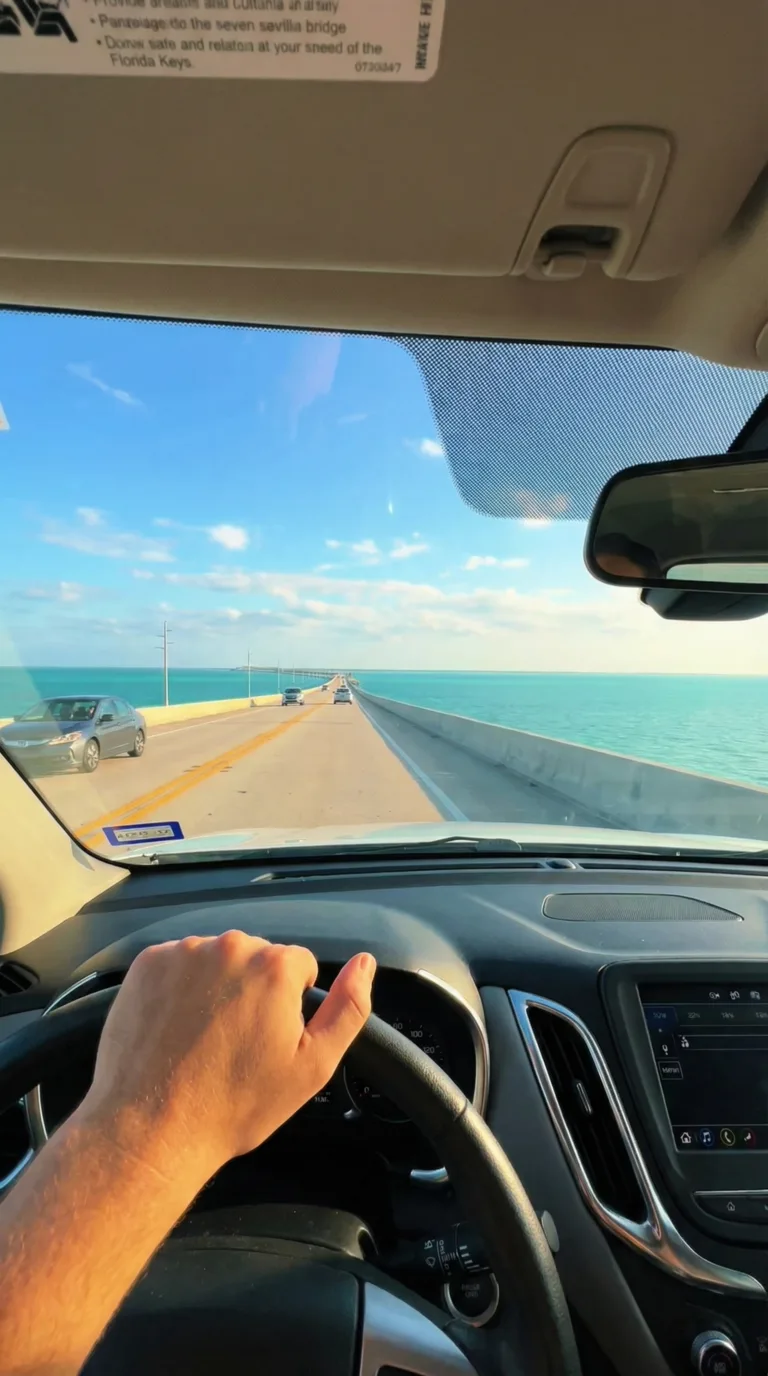
The Florida Keys Scenic Highway (US Route 1) connects every island. Ocean on both sides. Bridges over open water. The drive from Miami to Key West takes 3-4 hours without stops, per Florida Department of Transportation travel time estimates. You’ll pass Key Largo, Islamorada, Marathon, Big Pine Key.
Rent a car. This is non-negotiable for exploring multiple islands. Pick up at either airport or in Key Largo, Marathon, Key West. Public transit exists, Keys Shuttle runs limited routes, but it’s slow and infrequent.
Parking is easy everywhere except Old Town Key West. Street spots vanish fast there. Most hotels offer free parking.
Road trip tips: Fill up gas before long stretches between islands. Navigation uses mile markers (MM), not street addresses. Watch for drawbridge openings, they’ll add 10 minutes to your drive. Bike rentals work well in compact Key West. Scooters and golf carts are popular too.
Travel Routes
Below are recommended travel routes with key stops and estimated drive times.
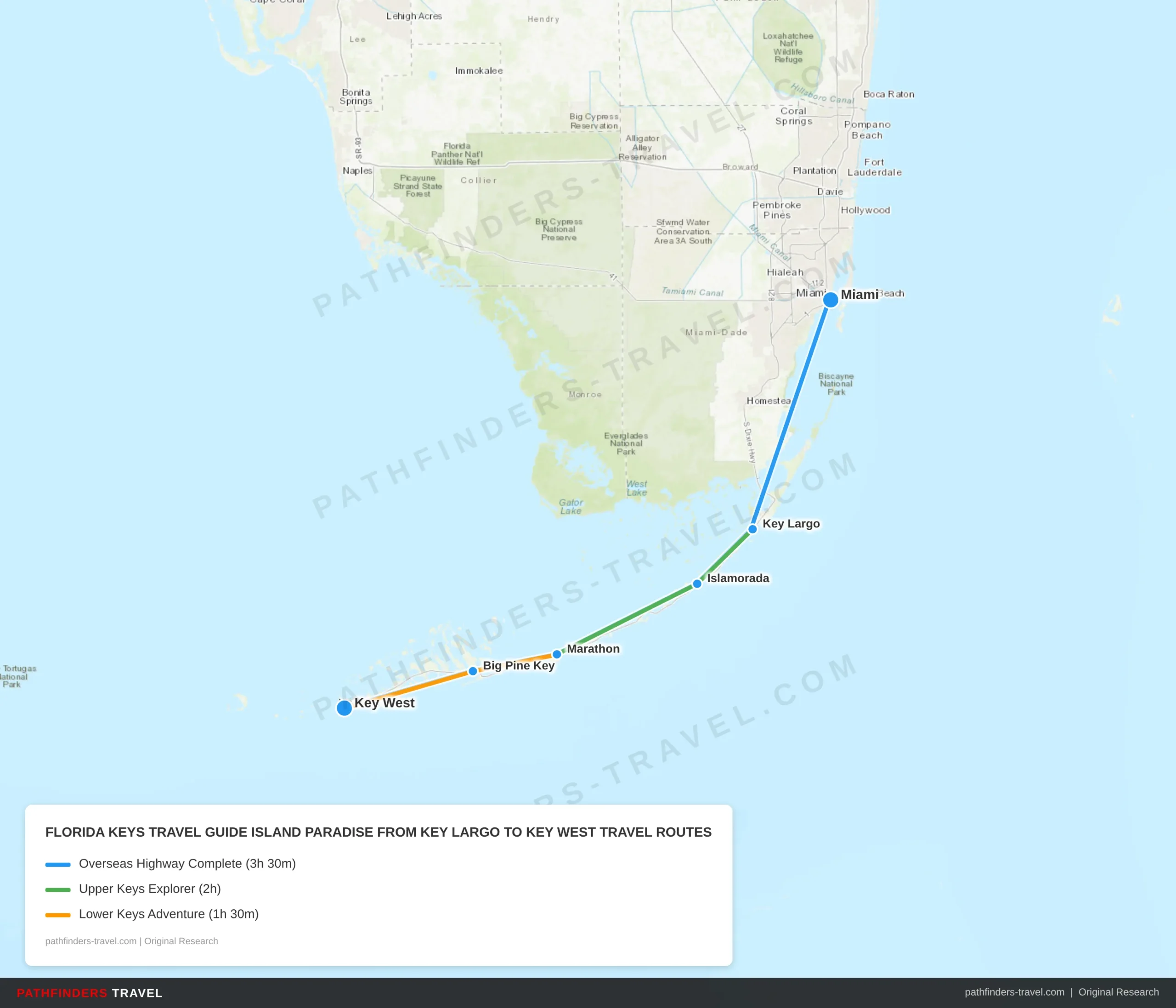
| # | Stop | Highlights | Drive Time |
|---|---|---|---|
| 1 | Miami | Gateway city, departure point for Keys adventure | Start |
| 2 | Key Largo | John Pennekamp Coral Reef State Park, Christ of the Abyss statue, diving capital | 1h |
| 3 | Islamorada | Sportfishing capital, luxury resorts, tarpon migration hub | 45m |
| 4 | Marathon | Seven Mile Bridge, Dolphin Research Center, family-friendly base | 1h |
| 5 | Big Pine Key | Key deer refuge, untouched nature, quiet island atmosphere | 30m |
| 6 | Key West | Duval Street, Mallory Square sunsets, southernmost point | 45m |
| # | Stop | Highlights | Drive Time |
|---|---|---|---|
| 1 | Key Largo | World-class diving, coral reef state park, glass-bottom boat tours | Start |
| 2 | Islamorada | Charter fishing, fine dining, luxury accommodations | 45m |
| 3 | Marathon | Seven Mile Bridge views, dolphin encounters, shopping | 1h 15m |
| # | Stop | Highlights | Drive Time |
|---|---|---|---|
| 1 | Marathon | Bridge gateway to Lower Keys, family attractions | Start |
| 2 | Big Pine Key | Endangered Key deer, clean nature preserves | 30m |
| 3 | Key West | Historic Old Town, sunset celebrations, Caribbean culture | 1h |
When to Visit and What to Pack
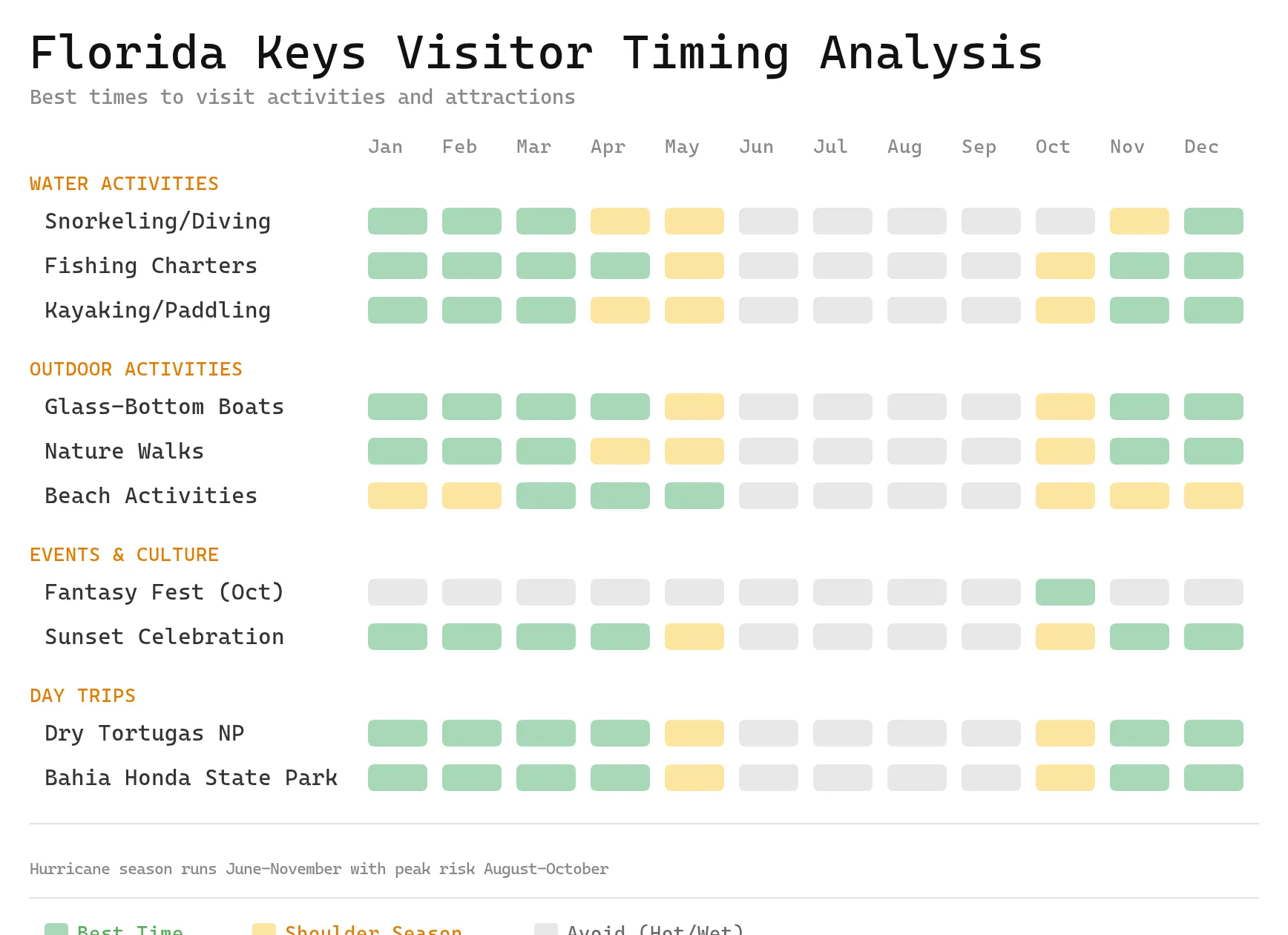
The Florida Keys enjoy year-round warm weather averaging 75-90°F, with the best months being December through April for dry conditions and calm seas, while May through November brings higher humidity and hurricane risk.

The islands sit in a tropical climate zone. Water temperatures hover between 73°F and 86°F depending on the season. According to the National Weather Service Key West, the region receives about 39 inches of rain annually, most of it falling during summer thunderstorms.
December through April is peak season. Dry weather. Calm seas. Perfect diving conditions. Prices spike and crowds fill the streets. May and November offer good weather with smaller crowds and cheaper rooms. Summer (June through August) brings heat and humidity. Afternoon thunderstorms roll in like clockwork. Budget travelers benefit from low-season rates.
Hurricane season runs June 1 through November 30. Peak risk hits September and October. The National Hurricane Center tracks storms in real time. Buy travel insurance if you book summer trips.
Avoid Fantasy Fest in October if you’re traveling with kids, it’s an adults-only party week. March brings spring break chaos. August delivers brutal heat.
Pack lightweight, breathable clothing. Reef-safe sunscreen is required by law. Bring your own snorkel gear if you have it. Water shoes protect your feet on rocky beaches. Add a hat, sunglasses, and a light rain jacket for those sudden tropical downpours – the Keys’ afternoon storms and warm evenings call for the same versatile layers detailed in our Florida packing guide. Insect repellent for evening walks. Cash for small vendors. A waterproof phone case. A cooler if you’re renting a boat. Get a fishing license online if you plan to cast a line.
Florida Keys FAQ
What are the 7 keys in Florida?
There aren’t just 7 keys, the Florida Keys archipelago contains over 1,700 islands. The “7 keys” you’re thinking of are the main inhabited islands that most visitors explore: Key Largo, Plantation Key, Upper Matecumbe Key (Islamorada), Lower Matecumbe Key, Marathon (Vaca Key), Big Pine Key, and Key West. These islands connect via the Overseas Highway. They’re the most developed and tourist-friendly spots in the chain.
How many Florida Keys are there?
The Florida Keys archipelago has approximately 1,700 islands. Only about 30 are inhabited. The islands stretch 120 miles from Key Largo to Key West, with 42 bridges connecting the main islands along the Overseas Highway.
How many days do you need in the Florida Keys?
Three to five days is a good amount for the Florida Keys. With three days you can base in one area and dip into a couple of islands; five days lets you drive the whole Overseas Highway from Key Largo to Key West at a relaxed pace, with time to dive, fish, kayak and watch the sunsets. Allow a full day each way for the drive from Miami.
What’s the best month to go to the Florida Keys?
December through April is the best time, dry weather, calm seas, ideal diving conditions. March and April offer the best balance of good weather and slightly lower prices than peak winter months. Avoid September and October during peak hurricane season. Summer (June through August) brings heat, humidity, and afternoon storms.
Is Florida Keys good for kids?
Yes. The Florida Keys work well for families with children. Marathon is especially good, calm beaches, the Dolphin Research Center, family-friendly resorts. Kids love snorkeling, glass-bottom boat tours, swimming with dolphins, visiting the aquarium, and beach activities. Key West is family-friendly during the day (Hemingway cats, fort, beaches) but has a party atmosphere at night on Duval Street. Many resorts offer kids’ clubs and family-oriented activities.