
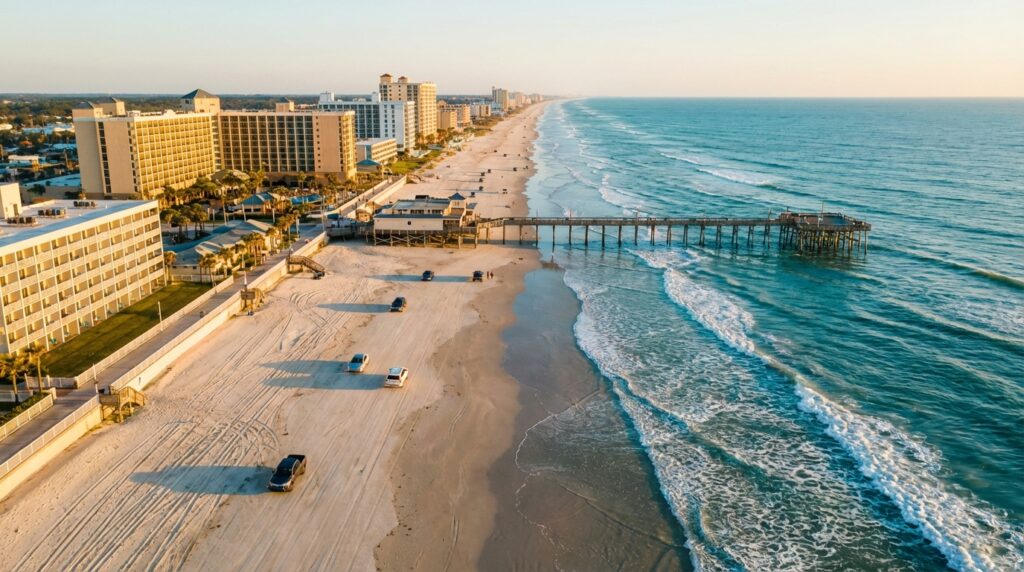
Estimated reading time: 15 minutes
Last updated: September 2026
What’s So Special About Daytona Beach?
What makes Daytona Beach special is that you can drive your car onto 23 miles of hard-packed Atlantic sand, a rare experience in the US. It is also a motorsport capital: the Daytona International Speedway hosts the Daytona 500 each February. Add a classic boardwalk and pier, affordable oceanfront hotels, and over 8 million visitors a year.
About This Guide
This guide was created using official Daytona Beach tourism data, government resources, and feedback from experienced travelers. All details about attractions, costs, and logistics were current at the time of writing, we suggest checking with local authorities for any changes before your visit.
Want to see Daytona Beach in action? Watch our complete Daytona Beach travel guide in 4K.
You’ve probably heard the warnings. Search “Daytona Beach” and the autocomplete fills with “dangerous.” Here’s the reality: Daytona has a reputation problem tied to spring break chaos from the 1980s and 90s. The city cracked down hard. Today’s Daytona is a working beach town with families, retirees, and motorsports fans. Crime exists, like any city of 73,000 people. But the beach itself? Safe during daylight hours if you use common sense.
What makes Daytona famous is simple. You can drive your car onto the sand. This 23-mile stretch of hard-packed beach has allowed vehicles since 1903, when early race car drivers tested speed on the flat, firm shoreline. That racing heritage built the Daytona International Speedway, home to NASCAR’s biggest event, the Daytona 500. According to Visit Daytona Beach, over 8 million people visit Volusia County each year, many drawn by the combination of beach access and motorsports culture.
Planning Tip
Daytona Beach USA means something specific. It’s not the Hamptons. It’s not Miami. This is blue-collar Florida where surfers share the waves with fishermen, where you pay $20 to park your truck on the sand for the day, where the boardwalk still has arcade games and funnel cake stands. The spring break crowds have moved to Panama City and Cancun. What remains is a town that lives on tourism but doesn’t pretend to be something it’s not.
This guide covers the real details. Where to eat without getting ripped off. Which beach access points allow driving and which don’t. How to visit the Speedway even if you’re not a race fan. Safety tips for walking the boardwalk at night. Day trips to nearby Volusia County attractions like Blue Spring State Park. Expect straight answers, not brochure copy.
Top Things to Do in Daytona Beach
Daytona Beach offers unique beach driving on 23 miles of hard-packed sand for $20 daily, Daytona International Speedway tours showcasing NASCAR history, and the historic Daytona Beach Pier extending 1,000 feet into the Atlantic Ocean.
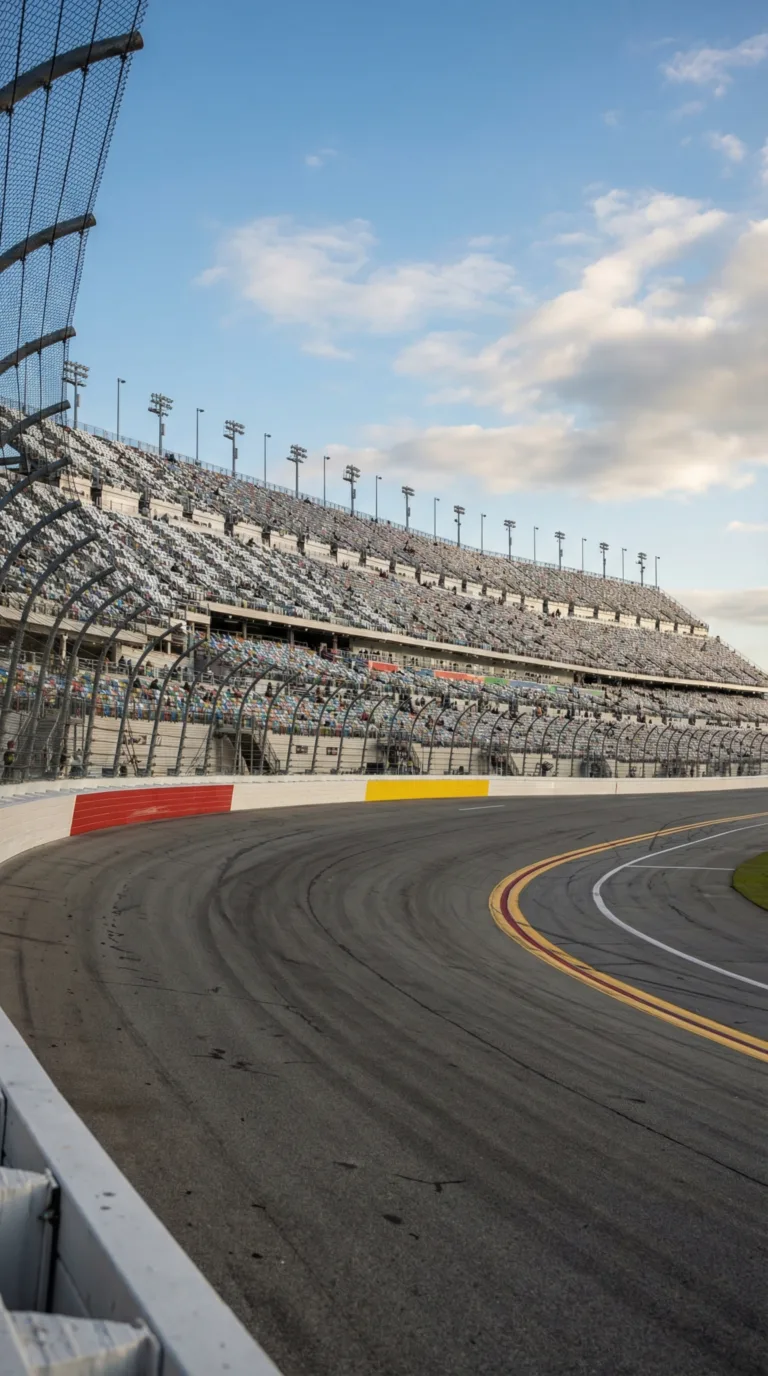
You can drive your car directly onto the beach here. That’s the headline. Daytona Beach allows vehicles on a 23-mile stretch of hard-packed sand from Ormond Beach south to Ponce Inlet. A daily pass costs $20 (per Volusia County Beach Services), valid from sunrise to sunset. You pay at toll booths near beach access ramps. The sand is firm enough to support regular cars, not just trucks. Park parallel to the water. Stay off the dunes. Speed limit is 10 mph. This isn’t a gimmick. It’s how locals and visitors have used this beach since the 1900s, back when car racing happened on the sand itself.
The Daytona International Speedway sits three miles west of the beach. This is where the Daytona 500 happens every February. Daytona International Speedway tours run year-round when races aren’t scheduled. You ride a tram through the infield, pit road, and up onto the 31-degree banking. The turns feel steeper than they look on TV. Tours cost around $20 for adults. The Motorsports Hall of Fame museum sits inside the facility. You’ll see actual race cars, trophies, and exhibits covering 100 years of speed history. If you want to drive the track yourself, the Richard Petty Driving Experience offers ride-alongs and driving sessions starting at $150.
Daytona Beach Pier extends 1,000 feet into the Atlantic (per the pier’s official site). Built in 1925, rebuilt after hurricanes. You can fish without a license from the pier. Rod rentals available. Joe’s Crab Shack operates at the end. Walk out for free. The pier offers the best ocean views in town without getting wet. Sunrise here is worth the early alarm.
Daytona Lagoon is a waterpark and entertainment complex near the boardwalk. Indoor arcade, outdoor wave pool, lazy river, go-kart track, mini golf. Day passes run about $40. Good for families with kids under 12. The go-karts are surprisingly fast. Open year-round, though the outdoor pools close in winter.
The Bandshell sits on the beach near the Main Street Pier. This outdoor amphitheater hosts free concerts Thursday through Sunday evenings in summer. Rock, reggae, country acts. Bring a blanket. Parking is tight, so walk or bike if you can. Check the Daytona Beach Bandshell events calendar before you go. The boardwalk area around it has arcades, souvenir shops, and fried food stands. Classic beach town atmosphere.
Surfing works best near Sunglow Pier in Daytona Beach Shores and around the Main Street Pier. Waves are small but consistent. Several shops rent boards for $20–30 per day. Lessons start at $60 for a two-hour group session. You’ll also find paddleboard and kayak rentals along the beach. The water is warm from May through October.
Tanger Outlets sits on International Speedway Boulevard, about four miles from the beach. Over 75 stores. Nike, Coach, Gap, Levi’s. Discounts range from 25% to 65% off retail. Open daily. Parking is free.
Swimming and sunbathing are obvious activities, but the beach is wide enough that you can find space even during spring break. Beach volleyball nets are set up near lifeguard stations. Bring your own ball. Daytona hosts Beach driving permits and regulations for specific zones, so check before you park.
Bike Week in March and Biketoberfest in October bring 500,000 motorcycles to town. Main Street becomes a rolling bike show. Spring break peaks in March. Expect crowds and higher hotel rates during these events.
Where to Eat in Daytona Beach
Daytona Beach’s dining scene centers on fresh seafood at oceanfront restaurants like the iconic Ocean Deck Restaurant & Beach Club, with over 200 restaurants ranging from casual beachfront eateries to upscale dining establishments.
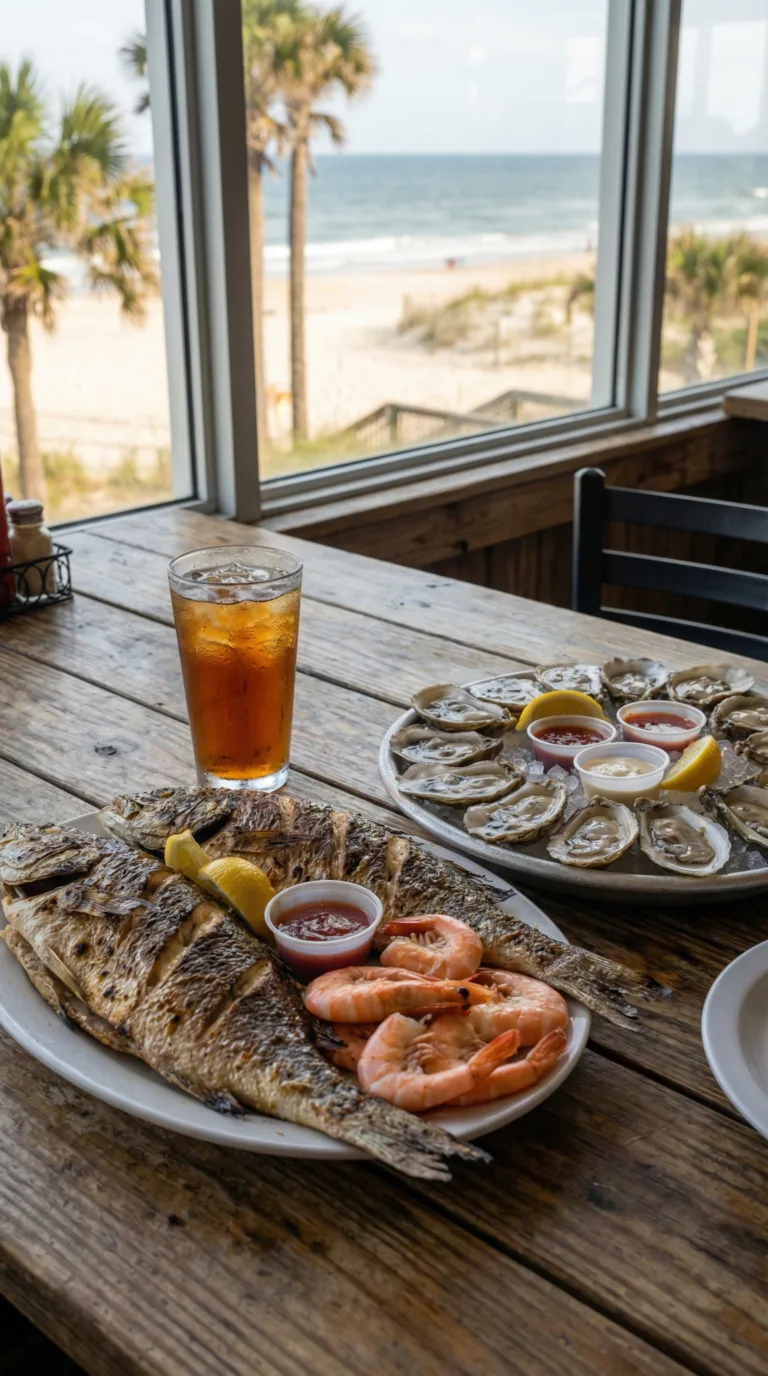
The Ocean Deck Restaurant & Beach Club official website tells you everything about this 40-year beachfront institution. Live music seven nights a week. Feet in the sand. Grouper sandwiches for $14. The place has survived hurricanes and recessions because locals actually eat there.
Seafood dominates the menu landscape here. Shrimp comes off boats at Ponce Inlet, 10 minutes south. Restaurants along Seabreeze Boulevard serve grilled mahi-mahi caught that morning. You’ll see grouper, snapper, and oysters on most menus. Prices run $18-$28 for entrees at mid-range spots.
Breakfast culture runs strong in beach towns. Daytona Beach delivers. Pancake houses open at 6 AM. Diners serve eggs and grits until 2 PM. You’ll find Cuban toast, biscuits with sausage gravy, and massive omelets stuffed with seafood. Most breakfast spots charge $8-$12 per person.
The Beach Street historic district offers upscale options if you want tablecloths and wine lists. Downtown restaurants serve Italian, steakhouse fare, and fusion concepts. Expect $30-$50 per person at these places. The Daytona Beach area supports over 200 restaurants according to Visit Daytona Beach, so you won’t run out of options during a week-long stay.
American cuisine dominates, but you’ll find Thai, Mexican, and Japanese restaurants scattered around town. Most visitors stick to the oceanfront strip where you can watch surfers between courses.
Where to Stay in Daytona Beach
Daytona Beach offers over 12,000 hotel rooms ranging from budget-friendly oceanfront motels starting at $70 per night to luxury resorts like the Hilton Daytona Beach Oceanfront Resort and Hard Rock Hotel Daytona Beach.
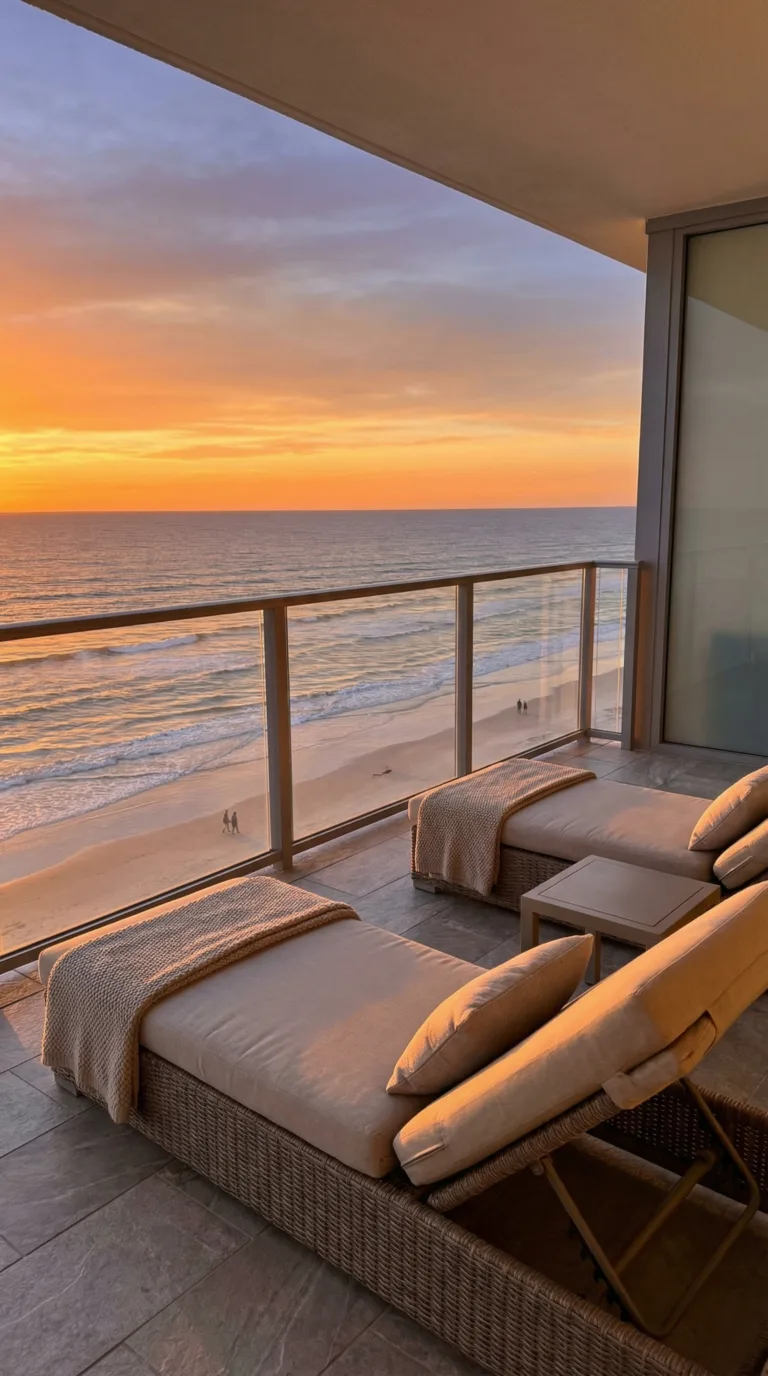
The hotel strip runs along Atlantic Avenue. You’ll find dozens of properties with direct beach access. Most sit within a 10-minute walk of the pier and boardwalk.
The Hilton Daytona Beach Oceanfront Resort anchors the upscale end. It’s got 744 rooms, a lazy river, two pools, and a rooftop bar. Rooms start around $180 per night during low season.
The Hard Rock Hotel Daytona Beach opened in 2019. It targets a younger crowd with live music, multiple restaurants, and a guitar-shaped pool. Expect $200-plus per night.
Budget travelers can score oceanfront rooms for $70-$90 at older motels along the strip. They’re basic but clean. You get a balcony and beach access without the resort fees.
Pet-friendly hotels like La Quinta Inn and Best Western Plus allow dogs under 50 pounds. Most charge a $25-$50 pet fee per stay.
Race fans should book near Daytona International Speedway, about 5 miles inland. Hampton Inn and Fairfield Inn sit closest to the track. Rates triple during race weekends, so book months ahead.
Room types matter. Oceanfront means your balcony faces the water directly. Ocean view might give you a partial glimpse. City view faces the street. Always request a balcony, ground-floor patios get zero privacy.
Getting to and Around Daytona Beach
Daytona Beach International Airport sits just 4 miles from the beach with direct flights from major US cities, while rental cars are essential for beach driving and exploring the area’s attractions.
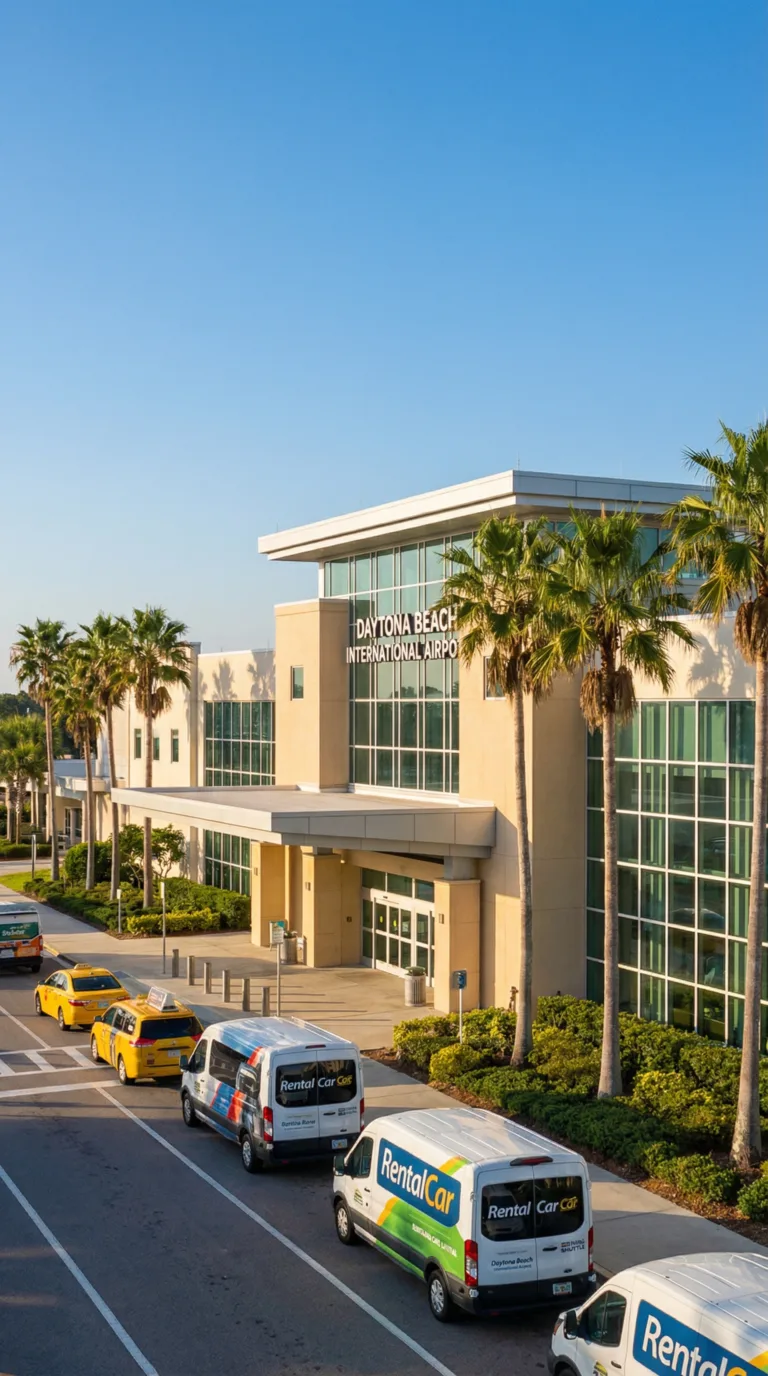
Daytona Beach International Airport (DAB) handles direct flights from Atlanta, Charlotte, and Newark. You’ll be at your hotel in 10 minutes. The airport is small. No crowds, no chaos.
Don’t see a direct flight? Orlando International (MCO) sits one hour south via I-4. Jacksonville International (JAX) is 90 minutes north on I-95. Both offer more airline options and competitive fares. Rent a car at either airport, you’ll need one anyway.
Driving to Daytona Beach is straightforward. I-95 runs along Florida’s east coast. Take exit 261 for the beach. From Tampa or Disney World, take I-4 east until it meets I-95. The drive from Orlando takes 60 minutes without traffic.
Public transit exists but barely functions for tourists. Votran route maps and schedules show limited bus coverage along major roads. Buses run infrequently. Skip it unless you’re staying in one spot.
Beach parking costs $20 per day at most access points. Hotels charge $10–25 per night for parking. Public lots near the pier fill up by 10 a.m. on weekends.
Bike rentals work for cruising the boardwalk. Several shops rent beach cruisers for $25 per day. The flat terrain makes cycling easy, but you can’t bike on the sand itself.
Daytona Beach on a Budget
Budget travelers can enjoy Daytona Beach for $80-120 daily including cheap oceanfront hotels from $70 per night, free beach access, and affordable casual dining, with costs 0.9% lower than the US national average.

You can visit Daytona Beach without emptying your wallet. Budget travelers spend $80-150 per person daily. Mid-range visitors hit $200 or more.
The beach itself costs nothing. No admission fee. No parking meters on the sand if you buy the $20 beach driving pass, which pays for itself if you’re staying more than two days. Walk the shoreline for free. Catch bandshell concerts without spending a dime.
Cheap hotels in Daytona Beach oceanfront start around $70-120 per night. Older motels line Atlantic Avenue. They’re not fancy. Clean rooms, ocean views, and you’re steps from the water. Daytona Beach hotels cheap options multiply if you book off-season, skip spring break, Bike Week in March, and race weekends when prices triple.
Food runs affordable here. Breakfast cafes serve eggs and toast for $8. Casual beachfront spots do burgers and fish sandwiches under $15. Happy hour deals knock $3 off appetizers and drinks. Pack snacks from a grocery store and you’ll save another $20 daily.
The cost of living in Daytona Beach sits 0.9% lower than the US national average, according to local economic data. Your dollar stretches slightly further than most American cities. Bring your own beach chairs and umbrella instead of renting. Visit between September and February when hotel rates drop 40%. You’ll spend less and dodge the crowds.
Day Trips from Daytona Beach
Top day trips from Daytona Beach include St. Augustine‘s 450-year-old historic district 45 minutes north, Orlando’s world-famous theme parks 1 hour west, and Kennedy Space Center at Cocoa Beach 1 hour south.
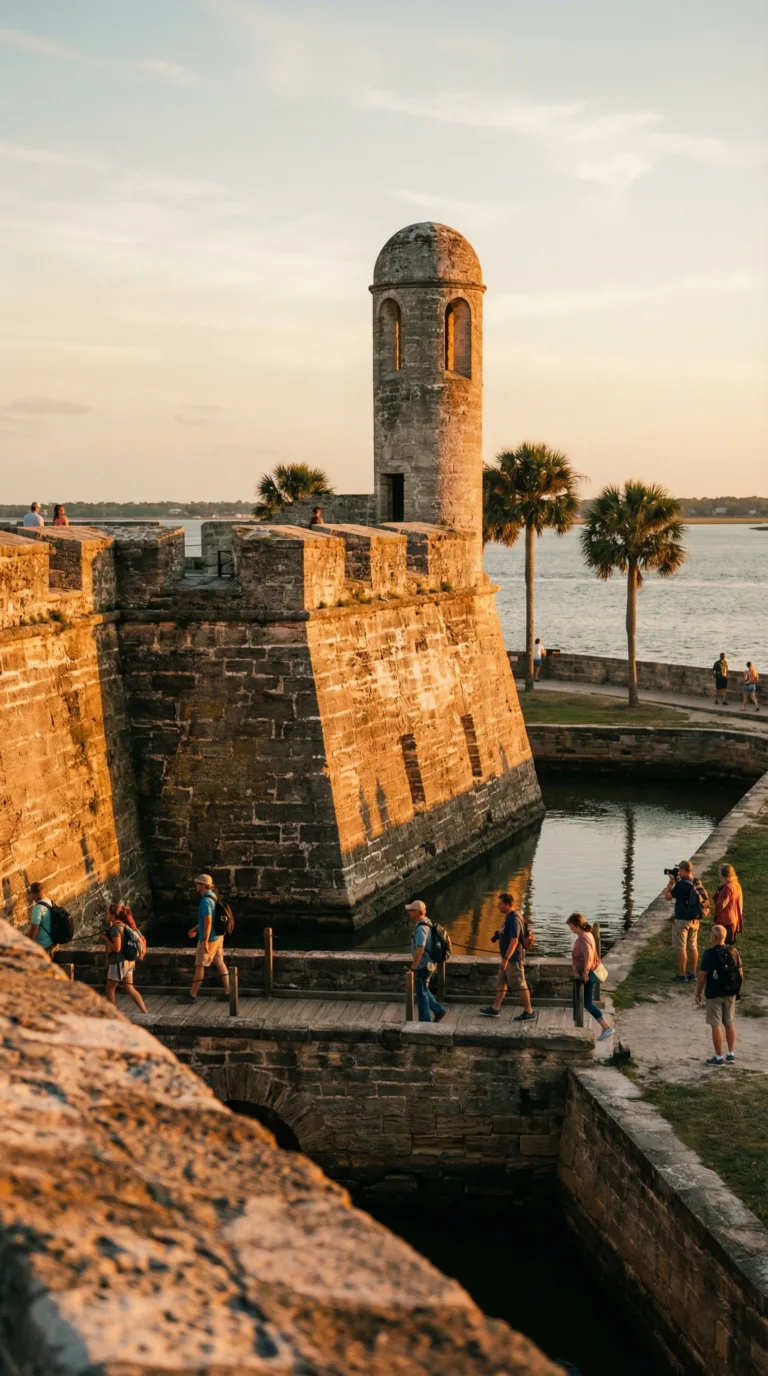
St. Augustine sits 45 minutes north on A1A. Founded in 1565, it’s America’s oldest continuously occupied European settlement. Walk the cobblestone streets of the historic district. Tour the Castillo de San Marcos, a 17th-century Spanish fortress built from coquina stone. The fort’s walls are 12 feet thick. Check St. Augustine official tourism for current event schedules and walking tour maps.
Orlando is one hour west on I-4. Disney World, Universal Studios, and SeaWorld anchor the theme park capital. Traffic gets brutal during peak season. Leave before 8 AM or you’ll hit gridlock.
Cocoa Beach and the Kennedy Space Center Visitor Complex are one hour south. Watch rocket launches from the beach if timing works. The visitor complex has real Saturn V rockets and shuttle exhibits. Admission runs $75 for adults.
Jacksonville is 90 minutes north. Bigger city. More museums. The Riverside Arts Market runs Saturdays under the Fuller Warren Bridge.
Blue Spring State Park is 45 minutes west near Orange City. Manatees gather here November through March when water temps drop. You can kayak the spring run year-round.
West coast options like Tampa, St. Petersburg, and Clearwater take 2 to 2.5 hours. Doable but long for a day trip.
Practical Tips for Visiting Daytona Beach
The best time to visit Daytona Beach is March through May or September through November when temperatures average 70-85°F, avoiding summer’s peak heat and the Atlantic hurricane season from June to November.

March through May delivers perfect beach weather. September through November works too. You dodge the July and August crowds when temperatures hit 90°F and humidity makes everything sticky. Winter runs mild, 60 to 70°F most days, but the ocean feels cold. Hurricane season runs June through November, per the National Hurricane Center. Most storms miss Daytona, but check forecasts if you’re booking summer travel.
The “dangerous for families” reputation is overblown. Daytona Beach is safe for tourists who use common sense. Stay in the main beach areas. Avoid walking alone after dark in empty parking lots. The actual danger is rip currents, not crime. Volusia County Beach Safety runs year-round lifeguard patrols. They post colored flags daily: green means calm, yellow means moderate surf, red means high hazard, double red means water closed. Purple warns of jellyfish. If you get caught in a rip current, swim parallel to shore until you’re out of the pull.
Pack reef-safe sunscreen. Florida sun burns fast. Bring a beach umbrella, chairs, and a cooler with ice. No glass containers allowed on the sand. Dogs need leashes. If you plan to drive on the beach, buy a permit at the toll booth, $20 for the day. The unspoken spacing rule: park at least three car lengths from other groups. People get territorial about their beach real estate.
Check National Weather Service Daytona Beach before you go. Afternoon thunderstorms pop up fast in summer. When you hear thunder, get off the beach.
Frequently Asked Questions
Is Daytona Beach worth visiting?
Yes, Daytona Beach is worth visiting if you want a classic, affordable Florida beach break. The headline draw is driving onto 23 miles of hard-packed sand, alongside the Daytona International Speedway, a lively boardwalk and pier, and easy day trips to St. Augustine and Orlando. It is more laid-back and budget-friendly than Miami, though spring break and race weeks get busy.
What airport should I fly into for Daytona Beach?
Daytona Beach International Airport (DAB) sits just 4 miles from the oceanfront. Orlando International Airport (MCO) offers more flight options and sits about a hour’s drive south. Jacksonville International Airport (JAX) is another choice, roughly 1.5 hours north. For a beach-focused trip, DAB is your most convenient pick.
How do you spend a day in Daytona Beach?
Start your morning by driving onto the beach and claiming your spot on the sand. Midday, tour Daytona International Speedway or walk out to the Pier. Spend your afternoon surfing, swimming, or playing beach volleyball. Grab dinner at Ocean Deck or another beachfront spot, then take a sunset walk along the water. The beach stays open until 7 p.m. for vehicles.
Is Daytona Beach safe for families?
Yes, Daytona Beach is safe for families despite its rough-around-the-edges reputation. Stick to the main tourist zones, oceanfront hotels, and popular attractions. Beach areas get regular patrols and stay family-friendly during daylight hours. Use basic common sense, don’t wander unfamiliar neighborhoods alone at night, and watch for rip currents when swimming. Millions of families visit safely every year. The “dangerous” label is mostly hype.
What is the best time to visit Daytona Beach?
The best time is spring and early summer, roughly March to June, for warm, sunny beach weather. February draws huge crowds for the Daytona 500, while Bike Week in March and Biketoberfest in October are loud and busy. Late summer is hot and humid with afternoon storms in hurricane season, and winter stays mild and quiet.