This guide contains affiliate links. As an Amazon Associate we earn from qualifying purchases — at no extra cost to you.
Estimated reading time: 28 minutes
Last updated: September 2026
What Are the Azores Known For?
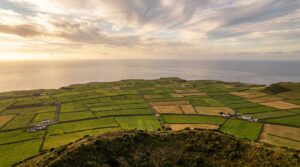
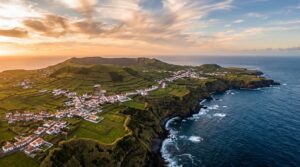
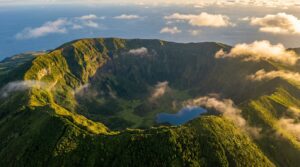
The Azores are a volcanic archipelago of nine Portuguese islands scattered across the mid-Atlantic, about 1,500 km west of Lisbon. They are known for packing dramatic scenery into a small area: crater lakes and calderas, geothermal hot springs, whale-watching, UNESCO-listed Pico vineyards, and some of Europe’s best hiking — all with a mild, green, uncrowded feel. São Miguel is the main gateway, but each island has its own distinct character.
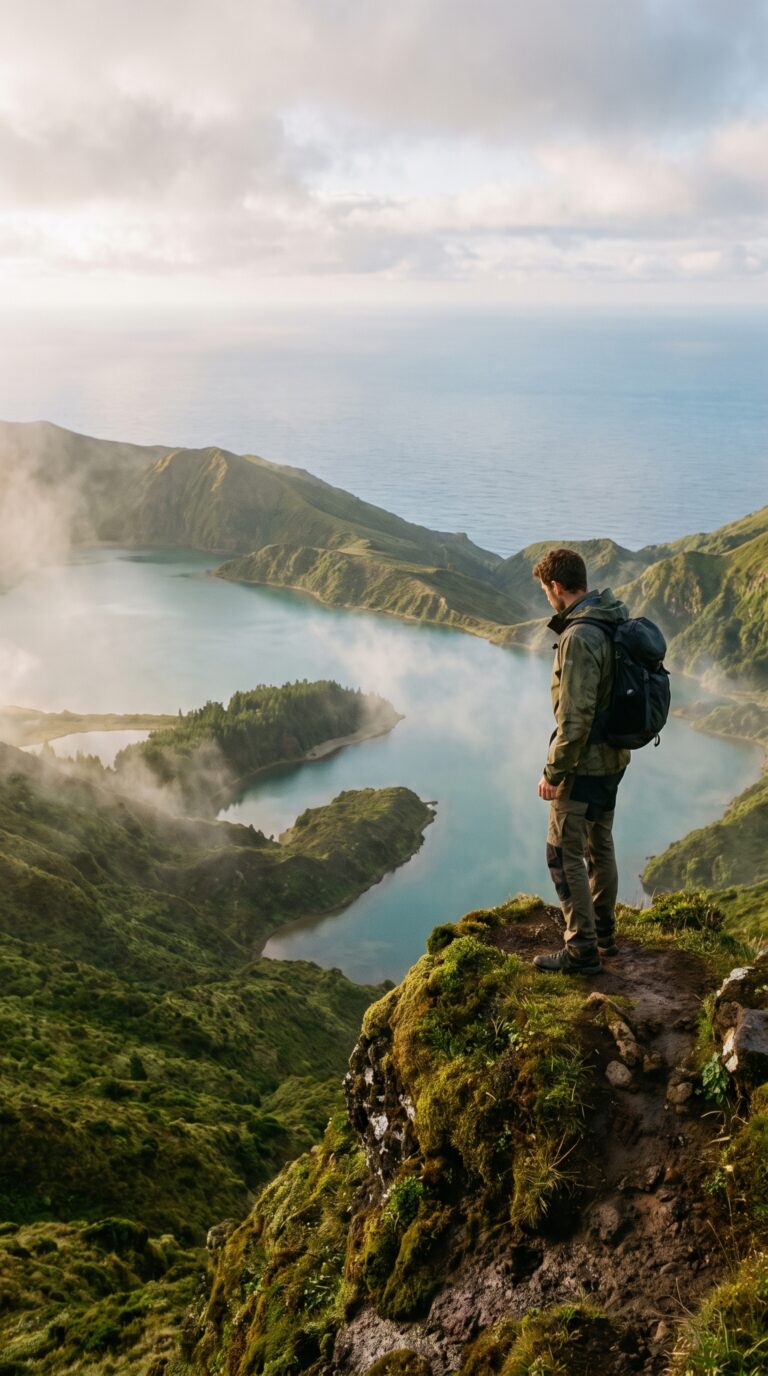
If you are wondering whether the Azores is safe to visit, the answer is yes. This Portuguese archipelago has one of the lowest crime rates in Europe, with violent crime nearly nonexistent. According to the 2025 Portuguese National Statistics Institute, the Azores reports fewer than 12 incidents per 1,000 residents annually, well below the European Union average of 45 per 1,000.
The Azores sits 1,500 kilometers west of Lisbon in the middle of the Atlantic Ocean. These nine volcanic islands form a remote chain where you can hike to the rim of dormant craters, soak in natural hot springs heated by geothermal activity, and watch sperm whales breach just offshore. The main island, São Miguel, holds twin crater lakes colored blue and green by different mineral deposits. Flores and Corvo, the westernmost islands, remain wild and sparsely populated, with hiking trails cutting through waterfalls and endemic plant species found nowhere else on Earth.
The Visit Azores tourism board reports that 330,000 international visitors traveled to the islands in 2025, drawn by UNESCO World Heritage vineyard landscapes on Pico Island and year-round whale watching. This Azores travel guide covers all nine islands, from practical flight and ferry logistics to detailed itineraries and insider tips for planning your trip.
Is the Azores Safe? What Travelers Need to Know
The Azores has one of Europe’s lowest crime rates with no active travel advisories, though travelers should monitor weather conditions and volcanic activity through official channels.
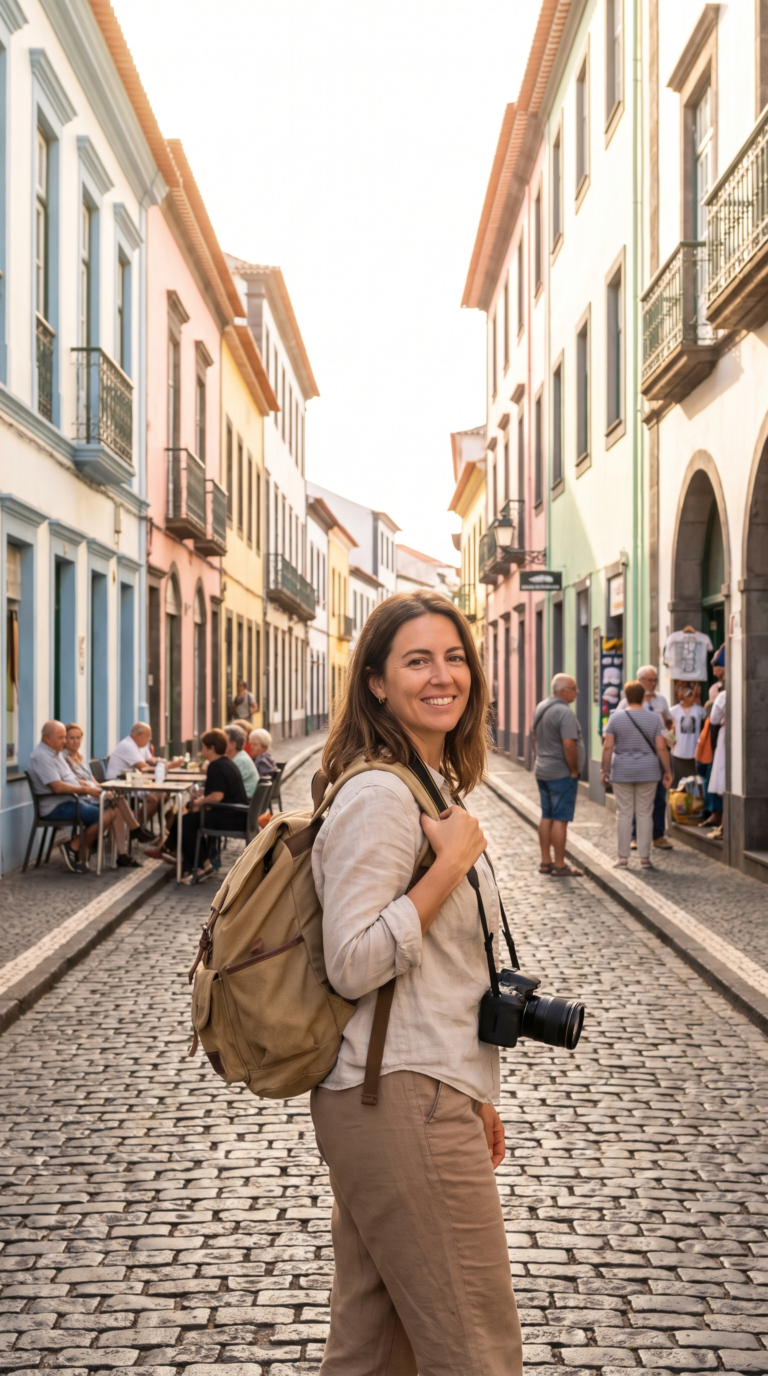
The Azores ranks among the safest destinations in Europe. Violent crime is rare, and petty theft remains uncommon even in tourist areas. The US State Department travel advisory for Portugal lists no warnings for the islands. Solo travelers, including women, report feeling comfortable exploring alone at all hours.
Natural conditions require more attention than crime. Weather shifts quickly in the mid-Atlantic. Bring a rain jacket even on sunny mornings. Ocean currents along the coast can be strong, so swim only at marked beaches. Volcanic activity is constant but closely tracked through the CIVISA volcanic monitoring system, which issues alerts if conditions change.
Hiking trails turn slippery after rain. Wear waterproof hiking boots with grip, and check the forecast before heading into the mountains or along coastal paths. Standard travel sense applies: keep your phone and wallet secure in crowded spots, and let someone know your plans if you hike alone.
Best Time to Visit the Azores
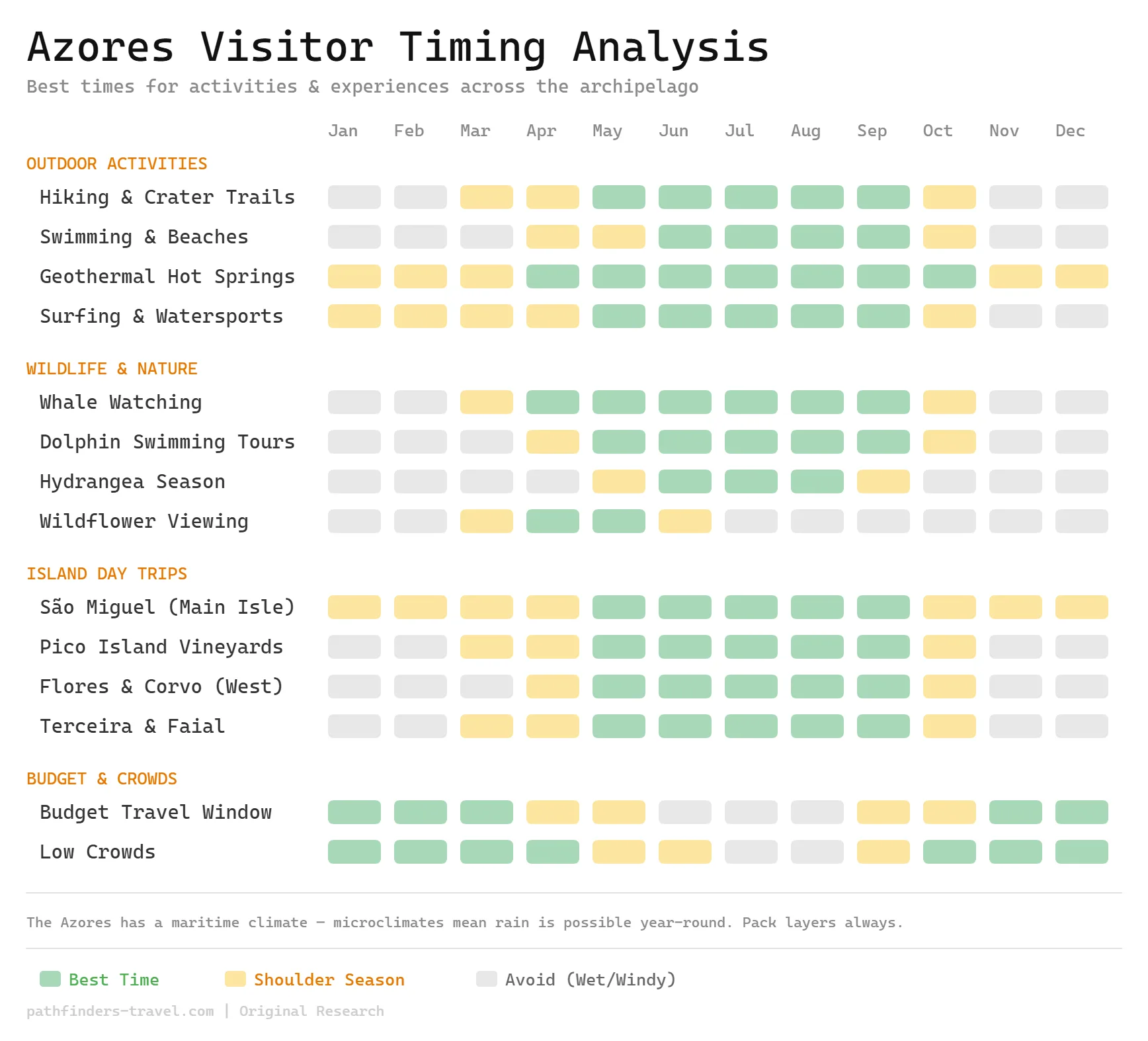
The best time to visit the Azores is June through September when temperatures reach 18-25°C with the driest weather, though April-May and October offer fewer crowds and lower prices.
Peak season runs from June to September. During these months, you’ll find the warmest and driest conditions, with temperatures between 18-25°C (64-77°F). This window is perfect for swimming, hiking, and whale watching. The ocean warms enough for comfortable dips, and trails stay dry most days.
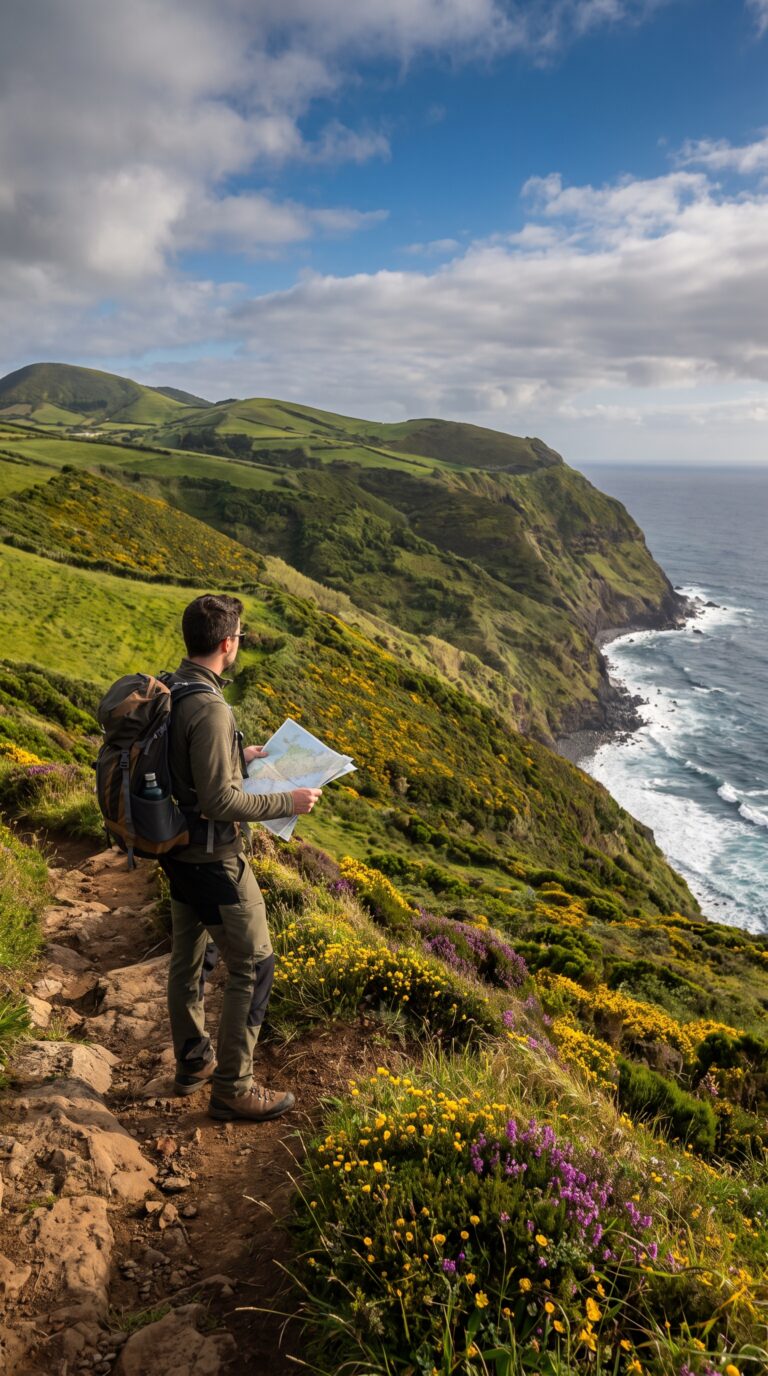
Shoulder season — April through May and October — offers a sweet spot for many travelers. You’ll pay 20-30% less for hotels, encounter fewer tour groups, and still enjoy pleasant weather. Spring brings carpets of wildflowers across the hillsides, while fall delivers calm seas and clear skies. According to Portuguese Institute for Sea and Atmosphere weather data, these months see only slightly more rain than summer.
Winter months (November through March) bring cooler, wetter conditions. Temperatures stay mild at 13-17°C (55-63°F), but expect more rain and wind. Budget travelers benefit from rock-bottom prices, and storm-watching from coastal viewpoints becomes its own attraction. Some boat tours and remote trails close during this period.
The Azores has a maritime climate with constant microclimates. You might experience sun, fog, rain, and wind in a single afternoon. Always pack a waterproof rain jacket and layers, no matter when you visit. Whale watching season peaks from April through October, with the highest sightings in May and June. From June to September, hydrangeas blanket the islands in blue and pink blooms.
Getting to the Azores: Flights & Ferry Options
Most travelers fly into João Paulo II Airport in Ponta Delgada on São Miguel, with direct flights from Boston (5 hours), Toronto, and major European cities, or connections via Lisbon.
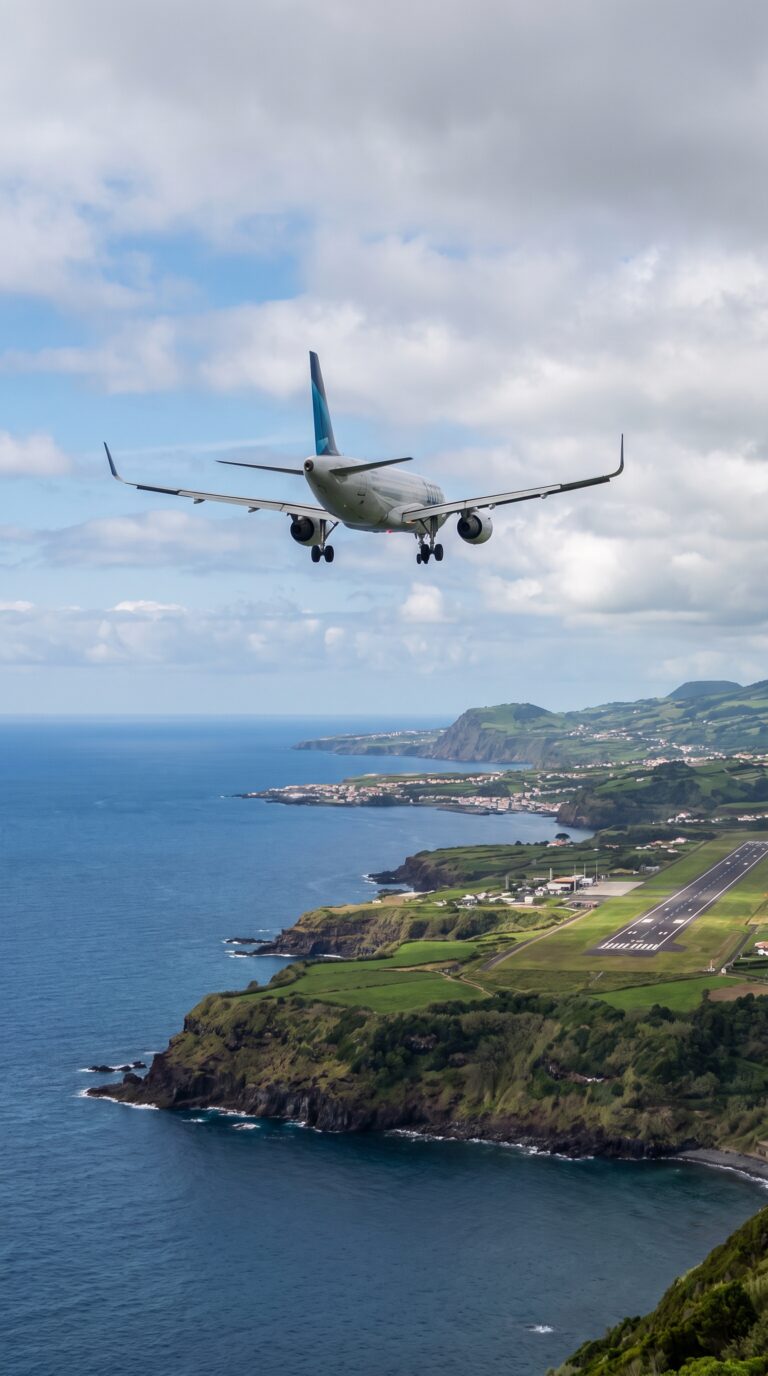
João Paulo II Airport in Ponta Delgada serves as the main gateway to the Azores. From North America, you can fly direct from Boston (around 5 hours) or Toronto during peak season. Travelers from other US cities connect through Lisbon. From Europe, direct flights to the Azores depart from Lisbon (2.5 hours), Porto, London, and Frankfurt. SATA Azores Airlines and TAP Air Portugal operate most routes.
Terceira’s Lajes Airport handles some international flights, while smaller airports on Faial, Pico, and Santa Maria serve inter-island connections. Between the Central Group islands—Faial, Pico, and São Jorge—Atlânticoline runs summer ferries. These boats offer scenic crossings but operate limited routes.
Book flights 2 to 3 months ahead for the best prices. Summer seats fill quickly, especially on direct routes from North America.
Getting Around the Azores Islands
Renting a car on each island is essential for exploring the Azores, with SATA Air Açores operating 15-45 minute inter-island flights and summer ferries connecting Faial, Pico, and São Jorge.
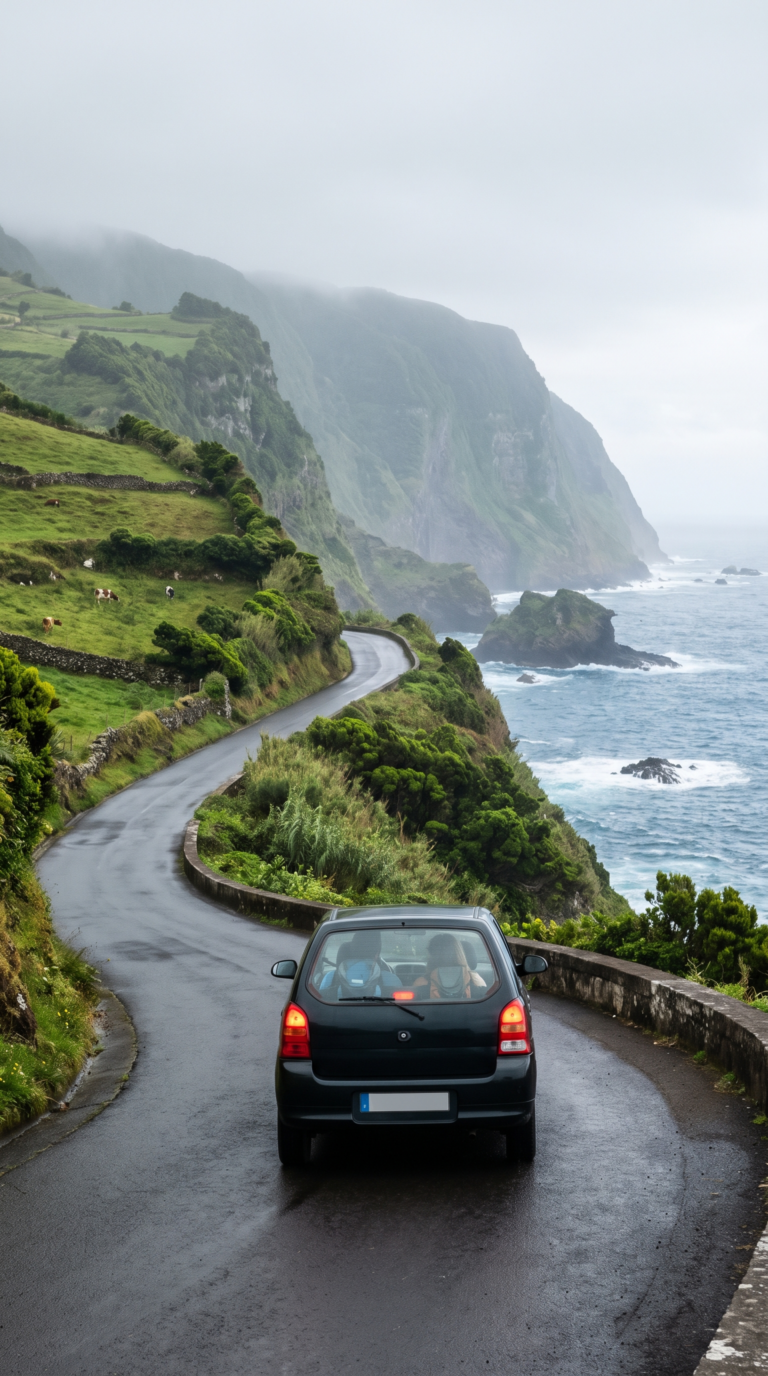
Renting a car is the best way to explore each island. Roads are generally well-maintained, but expect narrow lanes and tight curves in rural areas. You need a car to reach remote trailheads, hidden beaches, and clifftop viewpoints that make the Azores special. Most rental agencies operate at the airports on São Miguel and Terceira, with smaller fleets on the other islands. Book ahead during summer. Gas stations can be sparse outside main towns, so fill up before heading into the countryside. Parking is easy and almost always free.
To travel between islands, book SATA Air Açores inter-island flights. These short hops take 15 to 45 minutes and connect all nine islands. Planes are small and fill quickly, so reserve your seat at least a few weeks in advance. In summer, Atlânticoline ferries link Faial, Pico, and São Jorge in the Central Group, but no ferries run between island groups.
Public buses exist on São Miguel and Terceira, but routes are limited and schedules infrequent. They are not practical for tourists. Taxis and organized day tours are available in larger towns if you prefer not to drive. Bring a European travel adapter for your electronics—the Azores use Type C and F plugs with 230V power.
Azores Budget Guide: How Much Does It Cost?
Daily costs in the Azores range from €50-70 for budget travelers to €100-150 for mid-range comfort, with car rentals at €25-50/day and whale watching tours around €55-70.
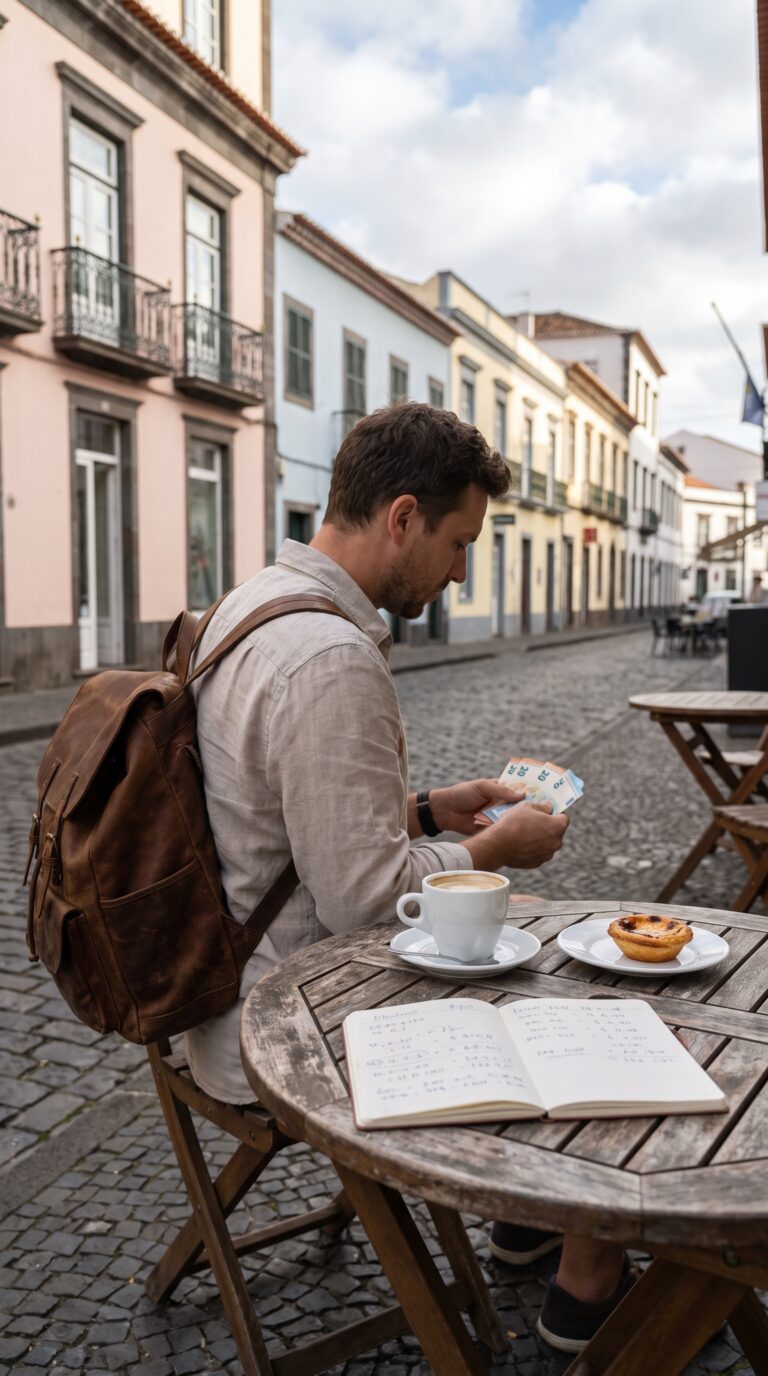
The Azores sits in the middle ground for pricing. It costs less than Lisbon or Porto but more than rural mainland Portugal. Hostels run €20-30 per night. Mid-range guesthouses and hotels cost €60-100. Upscale properties start at €120 and climb past €200.
Food is reasonable. Breakfast costs €3-6. Lunch runs €8-15. Dinner at a sit-down restaurant averages €15-25, according to 2025 Numbeo cost of living data for the Azores. Groceries are affordable if you self-cater.
Car rentals cost €25-50 per day. Gas runs €1.60-1.80 per liter. Inter-island flights cost €50-100 one way. Many natural attractions are free. Guided tours cost €40-80. Whale watching runs €55-70, and a pair of waterproof binoculars pays off on the water. Thermal baths charge €2-8.
Budget travelers spend €50-70 per day. Mid-range travelers spend €100-150. Luxury travelers spend €200 or more. Save money by visiting in shoulder season, cooking some meals, booking early, and focusing on free natural sites.
What Should I Pack for the Azores?
Pack a waterproof rain jacket, waterproof hiking boots, and warm layers first, because Azores weather can swing from sun to rain in a single afternoon. Add a dry bag for boat trips and waterfalls, a daypack and a reusable water bottle for long island days, and a quick-dry towel for the thermal pools. Bring a Type C or F travel adapter for Portuguese outlets, trekking poles for the steep volcanic trails, and binoculars for whale and dolphin watching.
Azores packing checklist
The seven pieces of gear that make the biggest difference on wet, volcanic islands:
- Waterproof rain jacket — sun-to-rain weather flips in a single afternoon
- Waterproof hiking boots — grip for muddy caldera and coastal trails
- Waterproof binoculars — spot whales and dolphins on Atlantic boat tours
- Hydration daypack — carries water and layers on long island days
- Trekking poles — steady footing on steep climbs like Mount Pico
- Waterproof dry bag — keeps your phone and camera dry on the water
- Type C/F travel adapter — Portugal runs 230V on Type C and F plugs
As an Amazon Associate we earn from qualifying purchases.
São Miguel: The Green Island
São Miguel is the Azores’ largest and most visited island, offering volcanic crater lakes, geothermal hot springs, Europe’s only tea plantations, and the capital city Ponta Delgada.
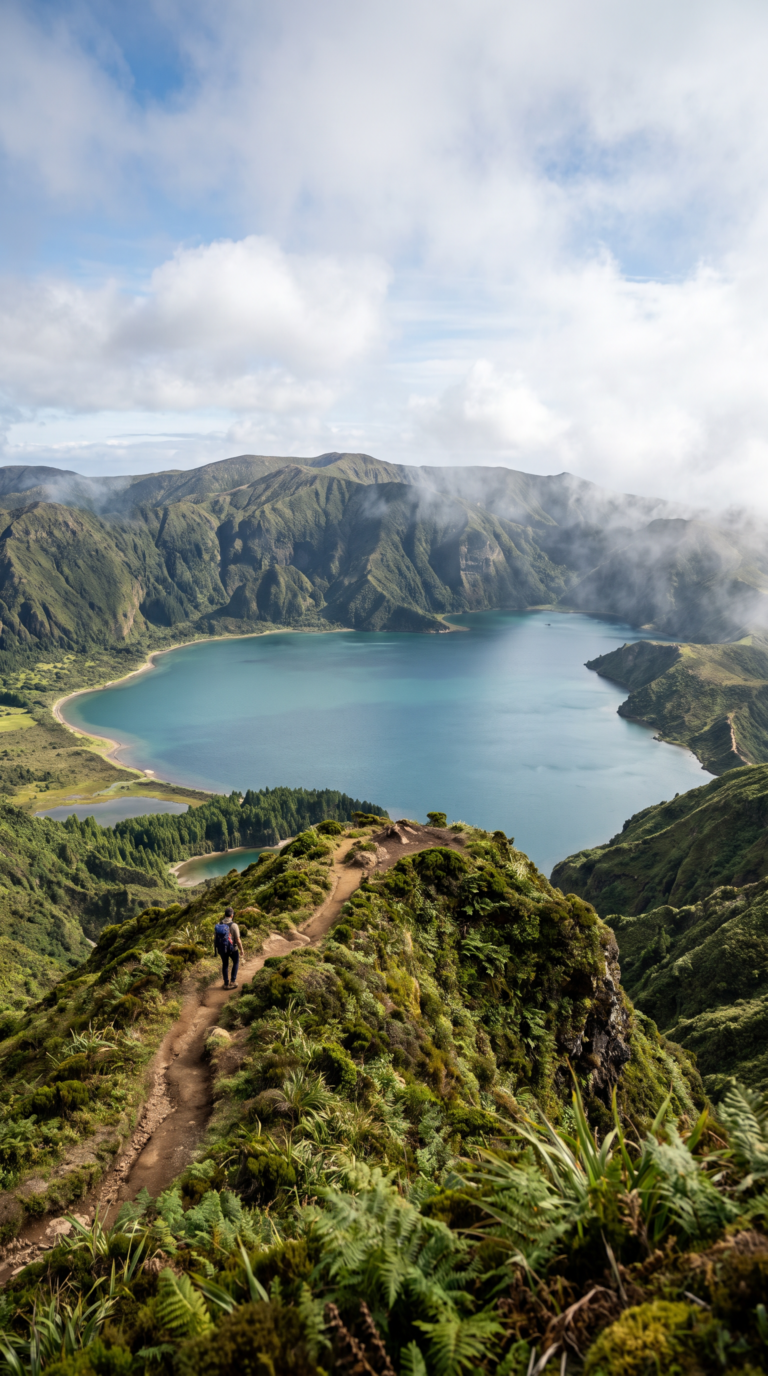
São Miguel is the largest island in the Azores and home to more than half of the archipelago’s 236,000 residents. It serves as the main gateway for visitors, with Ponta Delgada’s international airport handling over 1.2 million passengers annually according to Azores Tourism Board data. Most travelers spend three to five days here before exploring other islands.
The island earned its nickname “The Green Island” from the dense vegetation that covers its volcanic slopes year-round. Rainfall feeds the hydrangea hedges lining country roads, the cryptomeria forests blanketing the interior, and the tea bushes growing on coastal hillsides. This lush landscape creates a backdrop for São Miguel’s main attractions: twin crater lakes at Sete Cidades, bubbling geothermal springs in Furnas valley, and clifftop viewpoints along the rugged northern coast.
São Miguel offers the most developed infrastructure in the Azores. The capital has dozens of restaurants, rental car agencies, and hotels at every price point. Paved roads circle the island and connect major sites. Cell service works almost everywhere. This makes São Miguel the easiest island to explore independently, whether you rent a car or join organized tours.
Ponta Delgada
The capital city sits on São Miguel’s southern coast, where cruise ships dock and most flights arrive. The historic center spreads inland from the marina, with black-and-white Portuguese pavement forming geometric patterns on pedestrian streets. The three-arched Portas da Cidade gates mark the waterfront, built from local basalt and white limestone in the 18th century.
Walk the compact downtown in an hour. The Mercado da Graça market opens early with vendors selling passion fruit, pineapples grown in island greenhouses, and fresh limpets pulled from tide pools that morning. Restaurants along Rua Hintze Ribeiro serve grilled Atlantic fish, octopus stew, and lapas (grilled limpets with garlic butter). Prices run lower than mainland Portugal, with full meals starting around €12.
Ponta Delgada works as a base for day trips across São Miguel. Most hotels cluster near the marina or along Avenida Infante Dom Henrique. The city has the island’s best restaurant selection and the only real nightlife, with bars staying open past midnight on weekends. Visit São Miguel Island provides current event listings and accommodation options.
From year-round sperm whale watching to the rust-colored thermal pool at Terra Nostra Park and the twin crater lakes of Sete Cidades, our Ponta Delgada guide maps out every day trip worth taking across São Miguel.
Sete Cidades
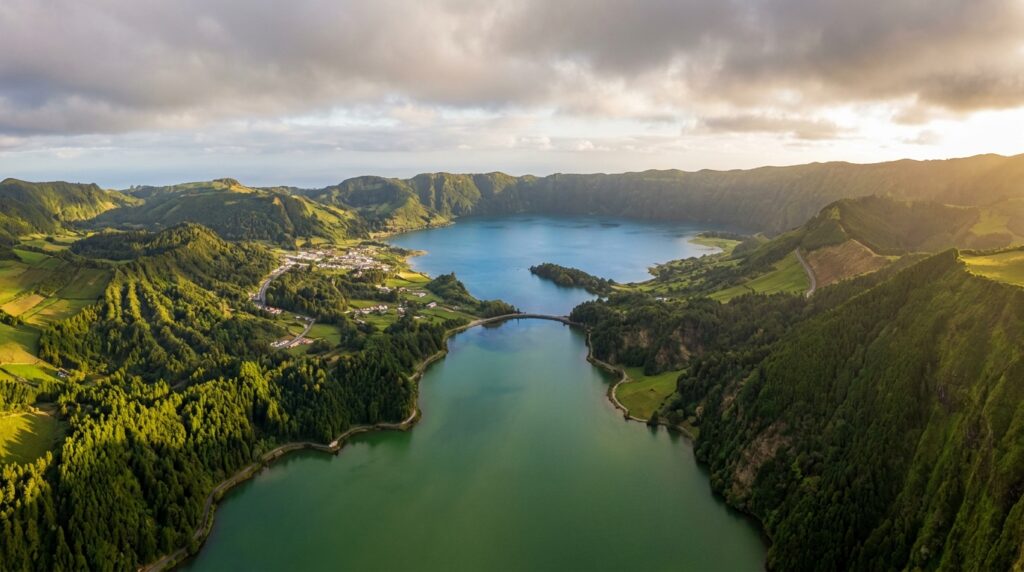
Two crater lakes fill a massive volcanic caldera on São Miguel’s western edge. From the Vista do Rei viewpoint, you look down into the crater at Lagoa Azul (Blue Lake) and Lagoa Verde (Green Lake) separated by a narrow bridge. Local legend says the lakes formed from tears shed by a princess and a shepherd forbidden to marry, though the different colors actually come from varying depths and algae content.
The caldera rim trail takes three hours to walk, passing through forests of Japanese cedar and offering views across the crater. A paved road descends to the lakeside village of Sete Cidades, where 800 people live in whitewashed houses with red tile roofs. You can rent kayaks to paddle on the lakes or follow dirt roads around the shoreline.
Drive 30 minutes west from Ponta Delgada to reach Sete Cidades. Tour buses arrive between 10 AM and 2 PM, filling the Vista do Rei parking area. Visit early morning or late afternoon for fewer crowds and better light for photos. The caldera creates its own weather, with fog rolling in quickly even on clear days.
The coastal village of Mosteiros sits below Sete Cidades on the northwest shore. Black sand covers the beach, and volcanic rock formations jut from the surf like broken teeth. Natural pools form between the rocks at low tide, warm enough for swimming in summer. The village has two restaurants serving fresh fish and views of the sunset behind the sea stacks.
Just up the hill, the 11-kilometre caldera rim trail loops past Vista do Rei and Boca do Inferno for 360-degree views over the blue and green twin lakes.
Furnas
The Furnas valley sits in São Miguel’s eastern interior, where volcanic activity heats the ground and sulfur steam rises from vents along the lakeshore. Locals dig pits near Lagoa das Furnas each morning, lowering pots of meat, vegetables, and sausage into the volcanic soil. The stew cooks underground for five hours using only geothermal heat. Restaurants serve this cozido das Furnas for lunch, with portions large enough for two people starting at €15.
Terra Nostra Park covers 12 hectares with botanical gardens surrounding a massive thermal pool. The water runs 35-40°C year-round, stained orange-brown from iron oxide. Centuries-old trees shade the paths between the pool and gardens planted with species from former Portuguese colonies. The €17 entrance fee includes pool access. Bring an old swimsuit because the iron permanently stains fabric.
The town of Furnas has several public thermal baths and spa facilities. Poça da Dona Beija offers five pools at different temperatures (€16 entry), open until 11 PM. The water smells of sulfur but locals say it helps with skin conditions and joint pain. Steam rises from manholes along the main street, and hot springs bubble up in the Parque Terra Nostra stream where you can soak your feet for free.
From the iron-orange thermal pool at Terra Nostra Park to the underground-cooked cozido das Furnas you’ll watch unearthed at noon, our complete Furnas travel guide maps out every steaming caldeira and thermal soak in the valley.
Lagoa do Fogo
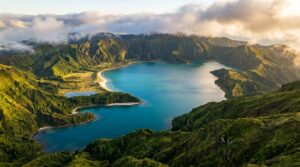
A nature reserve protects this crater lake in São Miguel’s center, keeping development minimal. The lake sits 575 meters above sea level, surrounded by steep crater walls covered in native vegetation. Miradouro da Serra da Barrosa viewpoint on the crater rim offers the classic view down to the blue water and the small beach at the southern shore.
A hiking trail descends from the rim to the beach, dropping 200 meters over 30 minutes. The path gets steep and muddy after rain. The beach has white sand and clear water cold enough that few people swim. No facilities exist at the lake, so bring water and snacks. The protected status means you see fewer people here than at Sete Cidades.
Weather changes quickly at this elevation. Fog can roll in within minutes, reducing visibility to a few meters. Check conditions before hiking down because you need to climb back up the same trail. The best months for clear views run from June through September, though mornings offer better visibility year-round.
Nordeste
The municipality of Nordeste covers São Miguel’s northeastern corner, the most remote and least visited part of the island. The drive from Ponta Delgada takes 90 minutes through winding mountain roads. Rainfall averages higher here than anywhere else on São Miguel, feeding the waterfalls and keeping the hillsides green even in summer.
Miradouro da Ponta do Sossego and Miradouro da Ponta da Madrugada rank among the island’s best viewpoints. Both sit on clifftops 200 meters above the ocean, with views along the jagged coastline. Hiking trails connect the viewpoints through pastures where cows graze next to hydrangea hedges. The Ponta do Arnel lighthouse sits at sea level, reached by a steep trail with 600 steps down the cliff face.
Salto do Farinha waterfall drops 40 meters into a pool surrounded by ferns and moss-covered rocks. A short trail from the parking area leads to the base. The rural character and dramatic landscapes make Nordeste worth the drive if you have time for a full day exploring the eastern end of São Miguel.
Caldeira Velha
This geothermal spring complex sits in a forest ravine between Lagoa do Fogo and the north coast town of Ribeira Grande. A warm waterfall cascades over volcanic rock into a pool maintained at 38°C. Two additional pools offer cooler temperatures. Boardwalks wind through the site past fumaroles releasing sulfur steam.
The €10 entrance fee includes changing rooms and showers. Capacity limits mean you might wait during peak afternoon hours in summer. The pools stay open year-round, with the warm water especially appealing on cool or rainy days. Most visitors stop here after hiking at Lagoa do Fogo or before continuing to Furnas, making it a convenient spot to relax between attractions.
Ponta da Ferraria
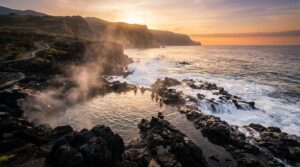
Hot volcanic springs bubble up where São Miguel’s western coast meets the Atlantic. The springs mix with ocean water in natural pools formed by lava rock. Water temperature varies from 25-35°C depending on tide and wave action. At low tide, the pools stay warm and calm. High tide brings cold ocean water and rough waves over the rocks.
A rope stretches across the main pool so swimmers can hold on when waves hit. The experience feels wild compared to developed thermal baths, with the ocean crashing a few meters away. Check tide times before visiting because high tide makes the pools too rough for safe swimming. A modern spa facility sits above the natural pools, offering controlled thermal pools and treatments at higher prices.
The site sits 30 minutes west of Ponta Delgada on the coastal road. Free parking fills quickly on summer weekends. Bring water shoes because the volcanic rock feels sharp underfoot. The sunset view from Ponta da Ferraria looks west across open ocean, with nothing between you and North America.
More São Miguel Highlights
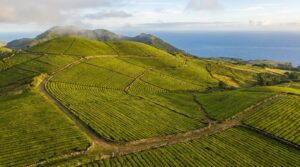
The Gorreana Tea Plantation grows tea on terraced hillsides overlooking the north coast. Founded in 1883, it remains Europe’s oldest tea producer. Free tours show the processing facility where workers dry and roll leaves by hand. The tasting room serves green and black teas grown on site, with ocean views from the veranda. The plantation shop sells packaged tea starting at €3 per box.
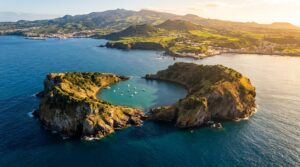
Ilhéu de Vila Franca do Campo is a circular volcanic islet 500 meters off the south coast. The crater forms a natural swimming pool protected from ocean currents. A nature reserve limits daily visitors to 400 people. Boats run from Vila Franca do Campo marina in summer (June through September) for €15 round trip. The sheltered lagoon offers calm water for swimming and snorkeling, with visibility reaching 10 meters on clear days.
The Central Islands: Terceira, Faial, Pico & Beyond
The Central Group includes five islands connected by summer ferries, featuring UNESCO World Heritage sites, Portugal’s highest peak, volcanic wine country, and dramatic coastal fajãs.
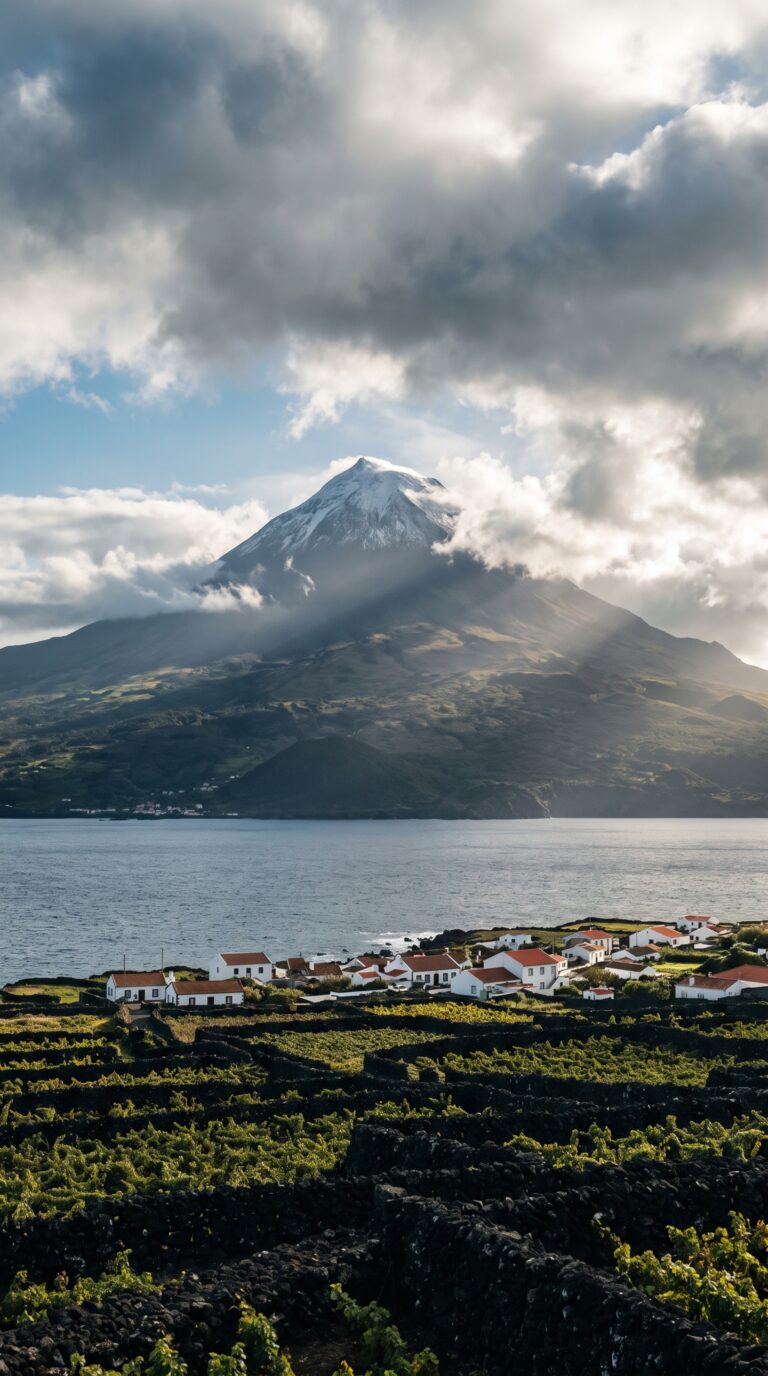
The Central Group is the most accessible multi-island cluster in the Azores. Short ferries connect Faial, Pico, and São Jorge in 20 to 40 minutes during summer months, making island-hopping easy. This region offers incredible variety: Terceira’s colorful UNESCO city and lively festivals, Faial’s legendary sailing hub and volcanic moonscapes, Pico’s towering peak and ancient wine terraces, São Jorge’s cliff-edged coastal plains, and Graciosa’s quiet caves and windmills. Many travelers base themselves on one island and take day trips to the others.
Horta
Horta is the charming capital of Faial Island and a legendary crossroads for transatlantic sailors. The marina walls are covered in colorful murals painted by crews for safe passage, a tradition dating back decades. Peter Café Sport, an iconic sailors’ bar, has served as the social hub since 1918. The historic town center features cobbled streets, a small fort, and cafés overlooking the harbor. Across the channel, Mount Pico rises like a pyramid from the sea. Whale watching tours depart daily in summer, and the town hosts regattas and maritime festivals. Horta is the social heart of the Central Group.
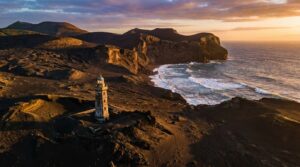
On Faial’s western tip, Capelinhos Volcano erupted from 1957 to 1958, creating a lunar-like landscape of ash and rock. An interpretation center built into the old lighthouse explains the eruption’s impact on the island. The dramatic coastal setting feels otherworldly. At Faial’s center, the Caldeira do Faial is a massive crater surrounded by a rim trail offering 360-degree views. Lush vegetation fills the caldera floor, and hydrangeas bloom along the path in summer.
From the sailor-painted murals of Horta Marina to the half-buried lighthouse at Capelinhos Volcano, our Horta travel guide covers the attractions, seafood, and inter-island logistics that make Faial worth more than a fuel stop.
Angra do Heroísmo
Angra do Heroísmo on Terceira Island is a UNESCO World Heritage city with the best-preserved historic center in the Azores. Colorful Renaissance buildings line the streets, and the São João Baptista Fort guards the harbor. The cathedral dates to the 16th century. The marina buzzes with activity, and the town hosts cultural events year-round. Terceira is known for unique traditions like tourada à corda, where bulls run through streets tethered by ropes. The island also features volcanic caves and green pastures divided by stone walls.
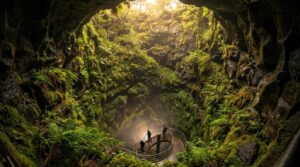
Algar do Carvão is one of the Azores’ most unusual sites: a rare lava tube cave you can descend into. A staircase leads down to a lake at the bottom, surrounded by stalactites and ferns. The cave stays cool year-round and offers a glimpse into the islands’ volcanic origins. Serra do Cume viewpoint overlooks Terceira’s patchwork agricultural fields, a quilt of green and gold stretching to the coast.
(Full guide of Terceira Island coming soon.)
Mount Pico
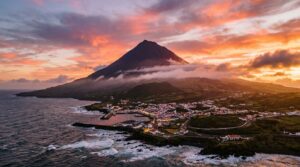
Mount Pico is Portugal’s highest peak at 2,351 meters. The climb is challenging but rewarding, taking four to six hours up and three to four down. Most hikers start before dawn to catch sunrise above the clouds. You need a guide or permit to climb, and the volcanic trail is steep and rocky. The summit crater releases steam vents, and the views stretch across the Central Group on clear days. According to UNESCO World Heritage listing for Pico Island Vineyard Culture, Pico’s vineyards are unique: black volcanic stone walls called currais protect vines from Atlantic winds, creating a geometric landscape that has earned World Heritage status. The island’s whaling history is preserved in museums at Lajes do Pico, and whale watching tours now depart from the same harbor where whalers once launched.
From the mandatory GPS tracker at Casa da Montanha to the sulfur-scented fumaroles where climbers heat lunch over summit steam, our Mount Pico hiking guide walks you through every step of the 7.6-kilometer scramble up Portugal’s highest peak.
Hidden Gems: São Jorge & Graciosa
São Jorge is famous for its fajãs, flat coastal plains formed by lava flows or landslides at the base of towering cliffs. Hike down to Fajã da Caldeira de Santo Cristo, where a natural lagoon sits behind a pebble beach, or visit Fajã dos Cubres for dramatic isolation. The trails are steep but offer some of the Azores’ most striking scenery.
Graciosa Island, the ‘White Island,’ is the second-smallest in the archipelago. The Furna do Enxofre is a sulfur cave with an underground lake, accessible by a spiral staircase carved into rock. Windmills dot the hillsides, and thermal springs bubble near the coast. Graciosa’s peaceful rural landscapes make it ideal for a quiet day trip from Terceira.
The Western & Eastern Outposts: Flores, Corvo & Santa Maria
Flores, Corvo, and Santa Maria are the Azores’ most remote islands, accessible only by flight, offering pristine waterfalls, volcanic craters, and uncrowded beaches for adventurous travelers.
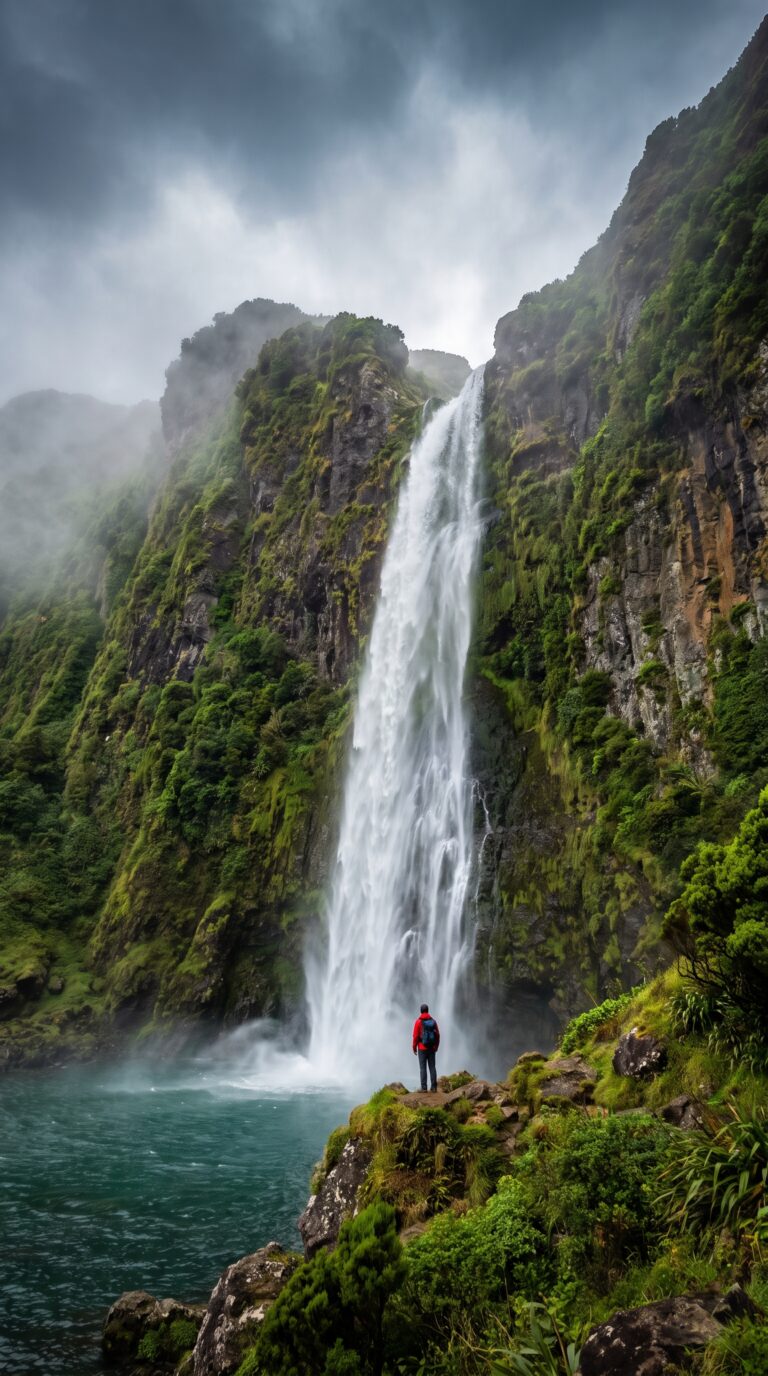
These three islands sit at opposite ends of the archipelago, far from the central cluster. Reaching them requires careful planning. No ferries connect them to the other island groups, so you’ll need to book inter-island flights. The payoff for this extra effort is solitude and landscapes that feel untouched by modern tourism. If you want to escape crowds and experience the Azores at their most raw, these islands deliver.
Flores Island
Flores marks the westernmost point of Europe. The island earns its name (Portuguese for “flowers”) from the hydrangeas that blanket the roadsides each summer. Waterfalls cascade down every cliff face. The Poço da Alagoinha and Poço do Bacalhau falls drop hundreds of feet into emerald pools. Seven crater lakes dot the interior, each surrounded by hiking trails that see maybe a dozen visitors per week. The Rocha dos Bordões basalt columns rise like organ pipes from the hillside.
Flores has minimal tourist infrastructure. You’ll need to rent a car, and accommodation options are limited to a handful of guesthouses. The island suits nature lovers who value pristine wilderness over convenience. (Full guide of Flores Island coming soon.)
Corvo Island
Corvo is the smallest inhabited island in the Azores, home to around 400 people. The entire population lives in Vila do Corvo, a single village of whitewashed houses. The Caldeirão crater dominates the island’s center. A viewpoint at the rim looks down onto a lake dotted with tiny islets. Migratory birds use Corvo as a stopover, making it prime territory for birdwatchers.
Most visitors come as a day trip from Flores via a short flight or summer boat service. The island has almost no tourist facilities, so bring cash and pack snacks.
Santa Maria Island
Santa Maria sits at the eastern edge of the archipelago. As the oldest island in the chain, it has a different character from its volcanic neighbors. The climate is warmer and drier. White-sand beaches line the coast, a rarity in the Azores. Praia Formosa is the best, with calm water and golden sand backed by cliffs.
The Barreiro da Faneca looks like a red desert, with rust-colored clay formations that contrast sharply with the green hills. Terraced vineyards climb the slopes, producing wine that rarely leaves the island. Santa Maria draws fewer visitors than São Miguel but offers a more relaxed, beach-focused experience. The Maré de Agosto music festival each August brings international acts to this quiet island.
Azores Itineraries: 5, 7 & 10-Day Routes
The most popular Azores itineraries are 5 days (São Miguel only), 7 days (São Miguel + one Central island), and 10 days (São Miguel + two Central islands), all starting from Ponta Delgada.
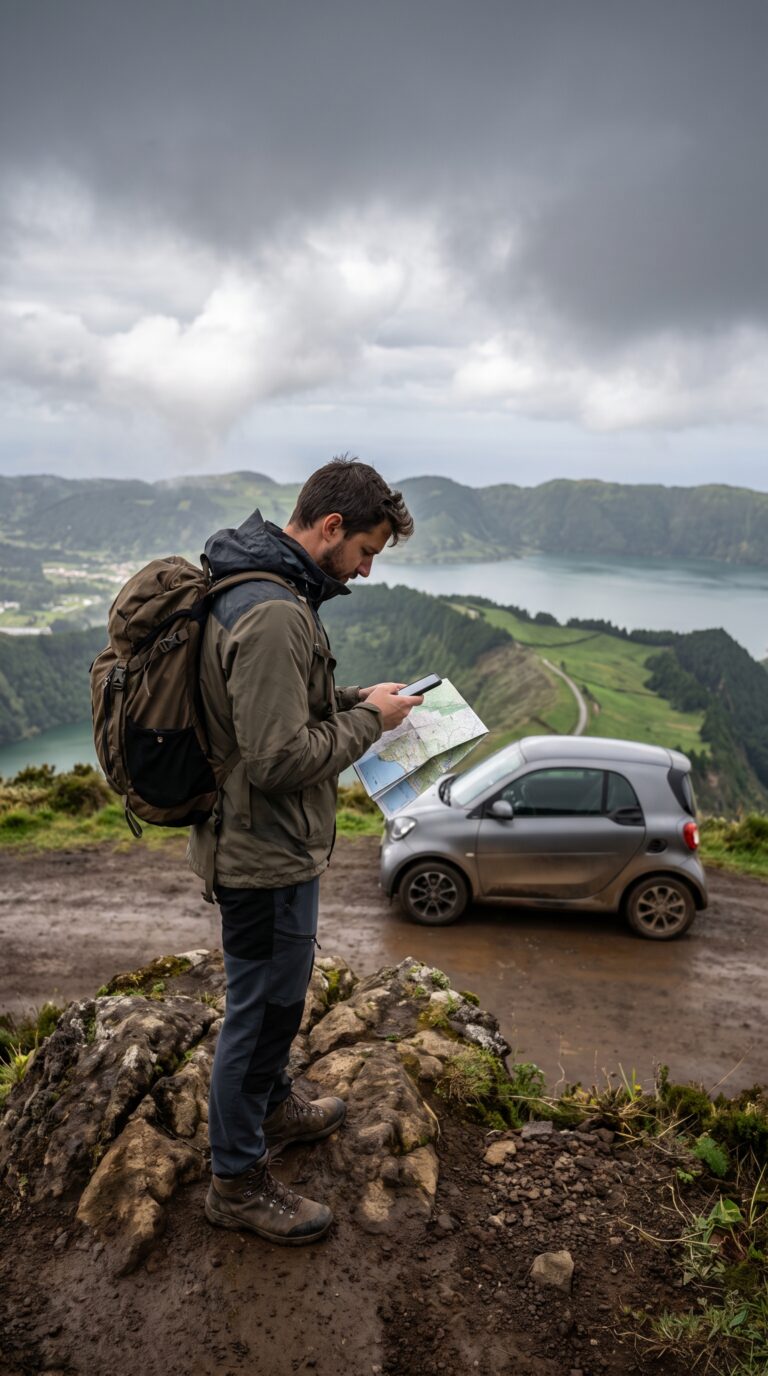
These three routes reflect how most travelers actually explore the Azores. All assume you fly into Ponta Delgada on São Miguel, the archipelago’s main gateway. Inter-island flights fill up fast in summer, so book those tickets as soon as you finalize your dates.
The 5-day route keeps you on São Miguel. You will cover the twin crater lakes at Sete Cidades, the geothermal valley of Furnas, and the mountain lake Lagoa do Fogo. Rent a car for the entire stay. This itinerary works well if you have limited vacation time or want to test the islands before committing to a longer trip.
The 7-day route adds Terceira to the mix. Spend four days on São Miguel hitting the same highlights, then fly to Terceira for two full days. You will explore the UNESCO-listed city of Angra do Heroísmo and descend into the Algar do Carvão lava cave. Rent separate cars on each island.
The 10-day route covers São Miguel and the Central Group triangle: Faial, Pico, and Terceira. After four days on São Miguel, fly to Faial for whale watching and the Capelinhos Volcano. Take the 30-minute ferry to Pico to explore the UNESCO vineyards or climb Mount Pico. Finish with a day in Terceira before flying back to São Miguel. Book ferries and flights early for this route.
| Itinerary | Best For | Islands Covered | Transport Notes |
|---|---|---|---|
| 5-Day Azores Itinerary | First-time visitors or those with limited time who want to experience the highlights of São Miguel | São Miguel only | Rent a car for the entire stay on São Miguel |
| 7-Day Azores Itinerary | Travelers who want to explore São Miguel thoroughly and add one Central Group island | São Miguel, Terceira | Rent cars separately on São Miguel and Terceira; book inter-island flights in advance |
| 10-Day Azores Itinerary | Island-hoppers who want to experience São Miguel and the Central Group triangle (Faial, Pico, Terceira) | São Miguel, Faial, Pico, Terceira | Rent cars on each island; use Atlânticoline ferries between Faial-Pico-São Jorge (summer) or SATA flights; book all inter-island transport early |
5-Day Azores Itinerary
| Day | Destination | Highlights |
|---|---|---|
| 1 | Ponta Delgada | Arrive, explore the historic center, marina, and local restaurants |
| 2 | Sete Cidades | Full day at the twin lakes—hike the crater rim, visit Vista do Rei viewpoint, explore the lakeside village, stop at Mosteiros beach on return |
| 3 | Furnas | Morning at Furnas Lake to see cozido cooking, afternoon at Terra Nostra Park thermal pool, evening in Furnas town |
| 4 | Lagoa do Fogo & Caldeira Velha | Hike to Lagoa do Fogo viewpoint and beach, soak in Caldeira Velha hot springs, explore Ribeira Grande |
| 5 | Nordeste or Ponta Delgada | Morning drive to Nordeste for coastal viewpoints and waterfalls, or relax in Ponta Delgada before departure |
7-Day Azores Itinerary
| Day | Destination | Highlights |
|---|---|---|
| 1-4 | São Miguel | Follow the 5-day itinerary Days 1-4: Ponta Delgada, Sete Cidades, Furnas, Lagoa do Fogo |
| 5 | Fly to Terceira | Morning flight to Terceira, explore Angra do Heroísmo UNESCO city, visit Algar do Carvão lava cave |
| 6 | Terceira | Full day exploring Serra do Cume viewpoint, coastal pools, local villages, and beaches |
| 7 | Return to São Miguel or depart | Fly back to São Miguel for departure, or direct flight home from Terceira if available |
10-Day Azores Itinerary
| Day | Destination | Highlights |
|---|---|---|
| 1-4 | São Miguel | Ponta Delgada, Sete Cidades, Furnas, Lagoa do Fogo, Nordeste—comprehensive São Miguel exploration |
| 5 | Fly to Faial | Explore Horta marina and town, visit Peter Café Sport, whale watching tour |
| 6 | Faial | Drive to Capelinhos Volcano and interpretation center, hike Caldeira do Faial rim trail |
| 7 | Ferry to Pico | Morning ferry to Pico (30 min), explore Madalena town, visit UNESCO vineyard landscape, wine tasting |
| 8 | Pico | Climb Mount Pico (full day for experienced hikers) or explore Lajes do Pico and whale museums |
| 9 | Ferry to Terceira | Ferry or flight to Terceira, afternoon in Angra do Heroísmo, visit Algar do Carvão |
| 10 | Return to São Miguel | Morning in Terceira, fly back to São Miguel for departure |
Activity Difficulty Guide
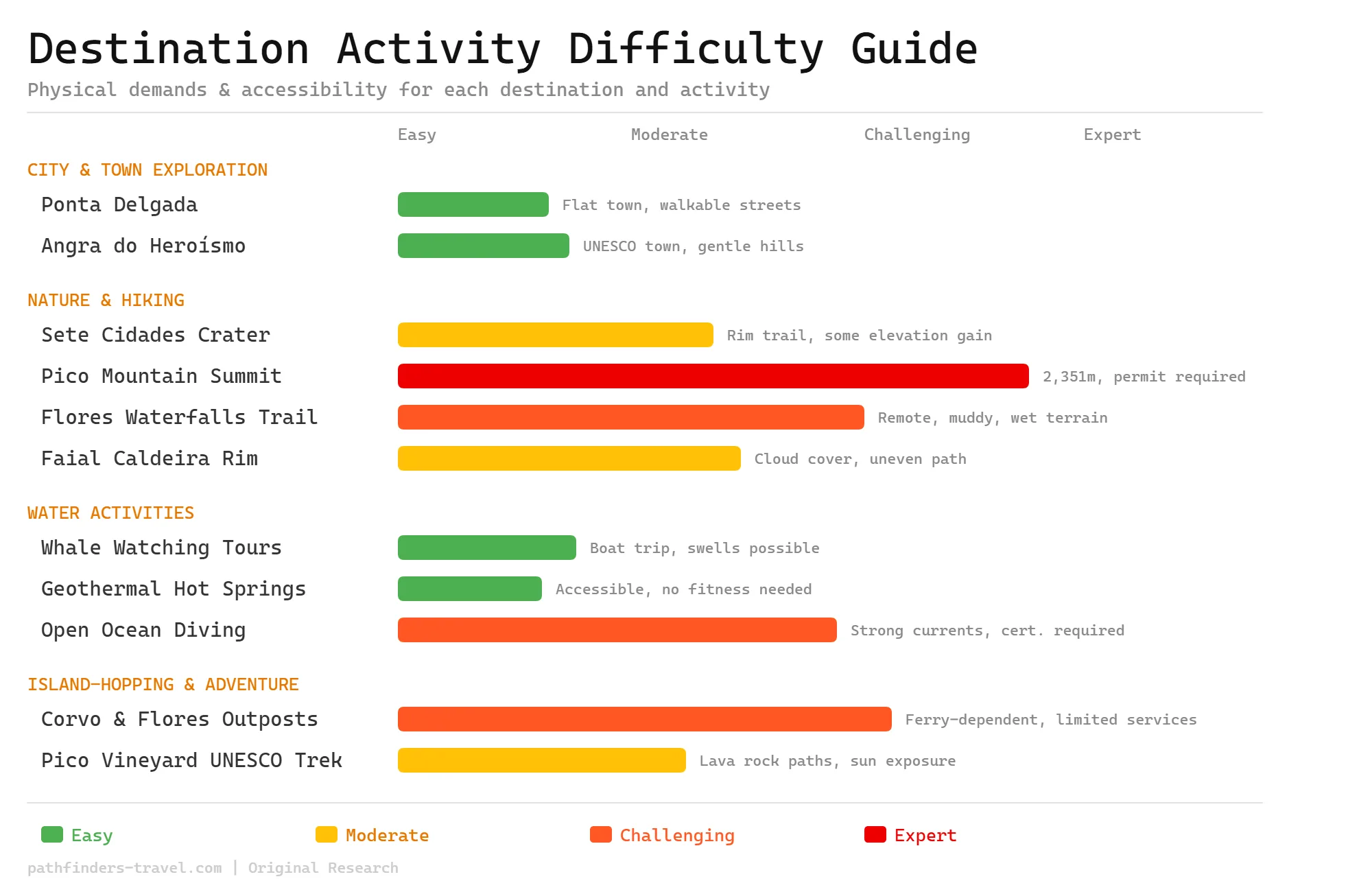
The Azores spans nine volcanic islands with activity difficulty ranging from leisurely thermal baths and cobblestone town walks to summit climbs requiring permits and multi-day ferry logistics. Most visitors on São Miguel will encounter easy-to-moderate terrain, but those venturing to Pico’s summit or the remote western islands of Flores and Corvo should prepare for expert-level conditions. This guide covers the full spectrum so you can match each island and activity to your fitness level and travel style.
Frequently Asked Questions
Is the Azores safe to visit?
Yes, the Azores is extremely safe with very low crime rates. No active travel warnings exist from the US, UK, or other governments. Solo travelers, including women, report feeling very safe throughout the islands. The main safety considerations are natural rather than criminal. Weather conditions, ocean currents, and volcanic activity require attention, but all are closely monitored by local authorities. Standard precautions apply in tourist areas, but violent crime is rare.
What is the best month to visit the Azores?
June through September offers the warmest, driest weather, with temperatures ranging from 18 to 25°C (64 to 77°F). July and August are peak season. You will find the warmest weather during these months, but also the most crowds and highest prices. May, June, and September are ideal for good weather with fewer tourists. April through May brings wildflowers across the islands. October is still pleasant but wetter. Whale watching is best from April to October, peaking in May and June.
How many days do you need in the Azores?
A minimum of 5 days works for São Miguel only, which is the most popular first-time itinerary. Seven days allows you to explore São Miguel plus one Central Group island like Terceira or Faial and Pico. Ten to 14 days is ideal for island-hopping between São Miguel and the Central Group triangle. Add 2 to 3 days each for remote islands like Flores or Santa Maria. Most visitors spend 5 to 7 days focusing on São Miguel and one other island.
Which Azores islands should I visit?
São Miguel is essential. It has the most infrastructure, the most diverse attractions, and serves as the main gateway. Add Terceira for UNESCO history and caves, or Faial and Pico for sailing culture and volcano climbing. Flores and Corvo offer pristine nature and solitude but require more time. Santa Maria provides beaches and warmer weather. First-timers should visit São Miguel plus one Central island. Returning visitors can explore the remote western islands.
Are the Azores expensive?
The Azores offers mid-range pricing. It is more affordable than mainland Portugal’s tourist hotspots but not a budget destination. Daily costs run €50 to 70 for budget travelers, €100 to 150 for mid-range, and €200 or more for luxury. Accommodation and car rentals are the biggest expenses. Food is reasonably priced, especially at local restaurants. Many natural attractions are free. Tours and activities typically cost €40 to 80. Save money by visiting during shoulder season, self-catering some meals, and booking early.