Estimated reading time: 18 minutes
Last updated: September 2026
Table of Contents
- Where Is the Best View of Sete Cidades?
- What to See and Do at Sete Cidades
- Where to Eat in Sete Cidades
- Where to Stay Near Sete Cidades
- Getting to Sete Cidades
- Day Trips from Sete Cidades
- Practical Tips for Visiting Sete Cidades
- Frequently Asked Questions
Where Is the Best View of Sete Cidades?
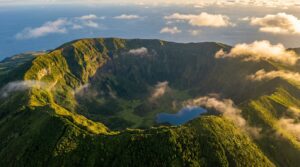
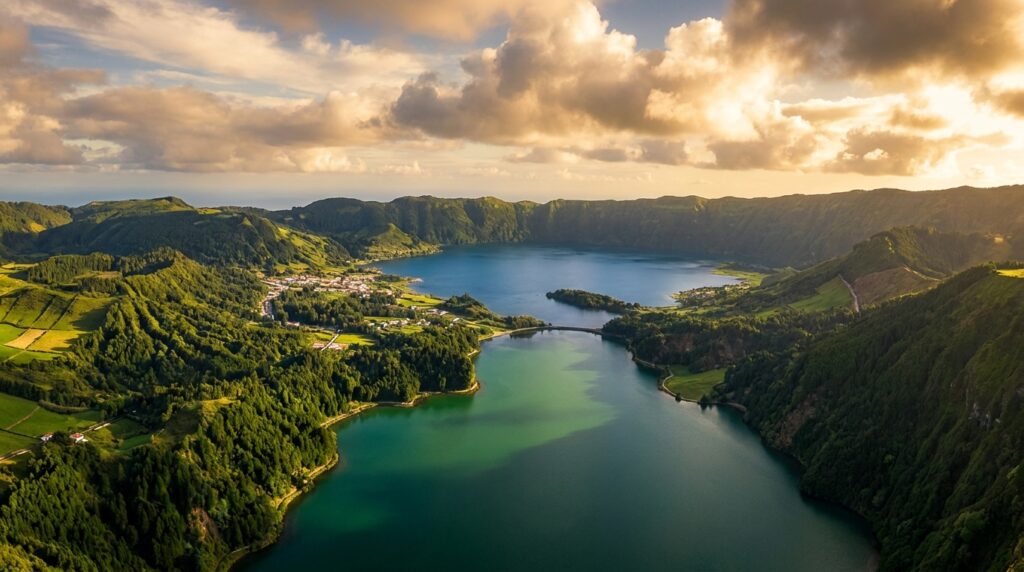
The most famous view of Sete Cidades is from Vista do Rei, where the twin lakes — blue Lagoa Azul and green Lagoa Verde — spread out below beside an abandoned hilltop hotel. For the wider shot of the whole 5-kilometre caldera, walk on to the Boca do Inferno viewpoint. Both are reached by car or along the rim-trail hike, and mornings offer the clearest skies before the fog rolls in.
How We Researched This Guide
Gunnar compiled this guide using official Azores tourism resources, government geographic data, and high-quality documentary footage, all verified as current at publication. For the latest visitor information, weather updates, and access details, we recommend checking with the Azores Tourism Board directly.
Want to see the twin lakes for yourself? Watch our Sete Cidades travel documentary in 4K Ultra HD.
The legend goes like this: a princess with blue eyes fell in love with a shepherd with green eyes. They couldn’t be together. They cried. Their tears filled the crater and created two lakes, each the color of their eyes. That’s the story locals tell about Lagoa Azul and Lagoa Verde, the twin lakes at Sete Cidades.
The real story is less romantic but more dramatic. About 22,000 years ago, a massive volcanic explosion ripped open the western end of São Miguel island. The eruption created a caldera roughly 5 kilometers wide and 350 meters deep. Rainwater filled the crater floor over thousands of years, forming the twin lakes you see today. According to the Azores Geopark, the last eruption at Sete Cidades volcano happened in 1880, a small phreatic event that didn’t alter the landscape significantly.
The name translates to “Seven Cities.” Nobody knows why. One legend claims seven cities once stood inside the crater. Another says seven bishops fled the Moorish invasion of Portugal in the 8th century and founded seven settlements here. No archaeological evidence supports either story.
Sete Cidades sits on the western side of São Miguel, the largest island in the Azores archipelago. It’s the most photographed natural site in the entire island chain. This guide covers the twin lakes, the hiking trails around the crater rim, the viewpoints that frame those postcard shots, the small village tucked inside the caldera, and the practical details you need to visit. The Visit Azores website lists it as the top natural attraction on São Miguel for good reason.
What to See and Do at Sete Cidades
The Sete Cidades caldera rim trail is an 11-kilometer loop hike taking approximately 4-5 hours, offering 360-degree views of the twin lakes from elevations up to 500 meters above the crater floor.
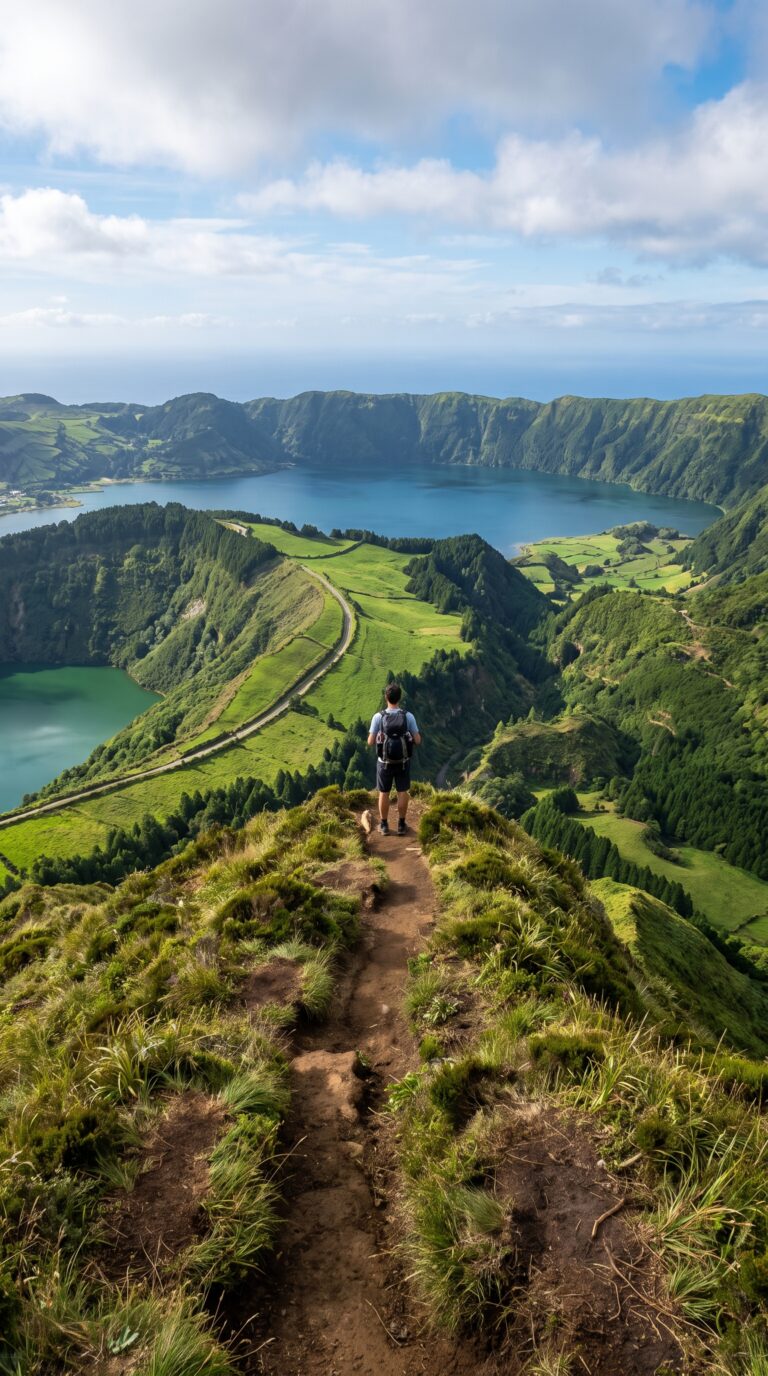
The twin lakes sit in the collapsed volcanic crater like two mismatched eyes. Lagoa Azul reflects blue on clear days. Lagoa Verde leans toward green. The color difference comes from depth and algae, not magic. Local legend says a blue-eyed princess and a green-eyed shepherd cried these lakes into existence when their families forbade their love. The story sells postcards. The reality is better.
Vista do Rei is the most famous Sete Cidades viewpoint. You park along the crater rim road and walk 50 meters to a stone platform. On a clear morning, you see both lakes, the village below, and the Atlantic beyond the western crater wall. Clouds roll in by noon most days. Get there by 9 AM. According to the Azores Regional Tourism Board, Sete Cidades receives over 300,000 visitors annually, with Vista do Rei being the single most photographed spot on São Miguel.
The full Sete Cidades caldera rim trail loops the entire crater edge. It’s 11 kilometers with 500 meters of elevation gain, according to Trails Azores – Sete Cidades hiking trails. Budget five hours. The path is mostly dirt and volcanic gravel. You’ll pass through sections of Japanese cedar forest, open grassland, and exposed ridgeline. Trail markers are yellow and red paint on rocks. The views rotate constantly. One minute you’re looking down at Lagoa Azul. Ten minutes later, you’re staring at the ocean.
Boca do Inferno viewpoint sits on the western rim. The name means “Mouth of Hell.” It’s dramatic but accurate. You look straight down a near-vertical crater wall into Lagoa Verde. The drop is 300 meters. On windy days, updrafts hit your face. This spot is less crowded than Vista do Rei because the access road is rougher.
Shorter hikes exist. A 3-kilometer trail descends from Vista do Rei to Sete Cidades village. It takes 45 minutes down, 90 minutes back up. Your knees will feel it. Another option is the flat lakeshore walk around Lagoa Azul. It’s 5 kilometers, mostly paved or packed dirt. Families with kids do this one.
Planning Tip
Kayaking on the Sete Cidades lakes is quiet. No motorboats allowed. You rent two-person kayaks from operators near the village for €15-20 per hour. Atazores Kayak Rental – Sete Cidades has online booking. Paddling across Lagoa Azul takes 20 minutes. The water is cold year-round, around 16°C. You’ll see the crater walls from a new angle. Mornings are calmest.
Sete Cidades village sits at the bottom of the caldera. It’s 30 buildings and 400 people. The Igreja de São Nicolau church dates to 1872. White walls, blue trim, simple inside. The village has one café, one mini-market, and zero ATMs. It’s peaceful in a way that feels deliberate. A tunnel built in 2007 connects the caldera floor to the outside world. Before that, one winding road was the only exit.
The abandoned Monte Palace Hotel looms on the northern rim. It’s been empty since 1990. You can’t enter legally, but it’s visible from multiple viewpoints. The building looks like a concrete cruise ship run aground on the crater edge.
Parking at Vista do Rei is free but fills up by 10 AM in summer. A second lot exists 500 meters east. For the rim trail, park at Grota do Inferno on the southern rim. Trail markers start from there. Best light for photography is early morning or late afternoon. Midday sun washes out the lake colors.
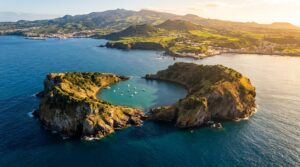
Nearby stops worth combining: Gorreana Tea Plantation is 30 minutes east. It’s Europe’s oldest tea farm, with free tastings. Mosteiros black sand beach is 20 minutes west. Volcanic rock formations jut from the surf. Ilhéu de Vila Franca do Campo is a flooded volcanic crater off the south coast, 45 minutes away. You take a boat to swim inside it. All three pair well with a Sete Cidades morning visit.
Where to Eat in Sete Cidades
Sete Cidades village has approximately 5-6 small restaurants and cafés serving traditional Azorean cuisine, with most offering lake views and specializing in fresh local fish, cozido stew, and regional cheeses.
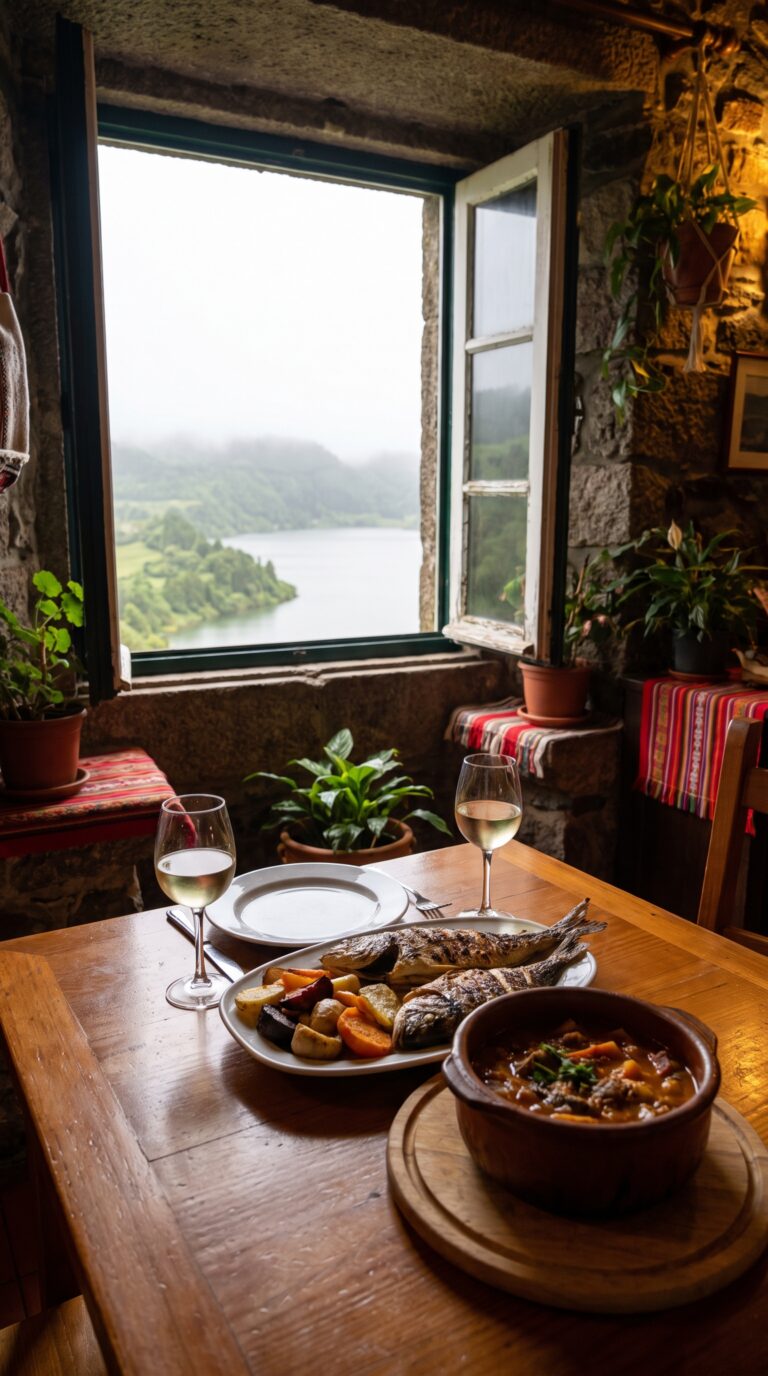
Dining options here are limited. You won’t find a long restaurant strip. What you get instead: family-run spots serving straightforward Azorean food. Expect grilled fish caught that morning. Expect cozido, a meat and vegetable stew traditionally cooked using volcanic heat in Furnas, but also served here. Expect local cheeses that taste nothing like supermarket blocks.
Restaurante Lagoa Azul sits right by the water. Lake views through the windows. The menu doesn’t change much, fresh fish, octopus, simple salads. Average meal cost runs about €12-15 per person, according to Azores restaurant price surveys. No fuss. Just food that works.
The Sete Cidades sorveteria (ice cream shop) gets packed after hikes. Locals line up alongside tourists. Flavors include passion fruit and local honey. A scoop costs around €2.
Many visitors skip the restaurants entirely. They pack sandwiches and fruit, then spread out on the lakeshore grass. No one stops you. The Visit Azores Official Tourism Board lists regional specialties if you want to shop before arriving.
Ponta Delgada sits 30 minutes away. That’s where you’ll find variety, sushi, pizza, craft beer bars, upscale seafood. Sete Cidades isn’t about choice. It’s about eating what the island gives you that day.
Where to Stay Near Sete Cidades
Accommodation options at Sete Cidades include Lake Lodge Sete Cidades and several guesthouses within the crater, plus a campground, with most visitors staying in Ponta Delgada 25 kilometers away for wider hotel selection.
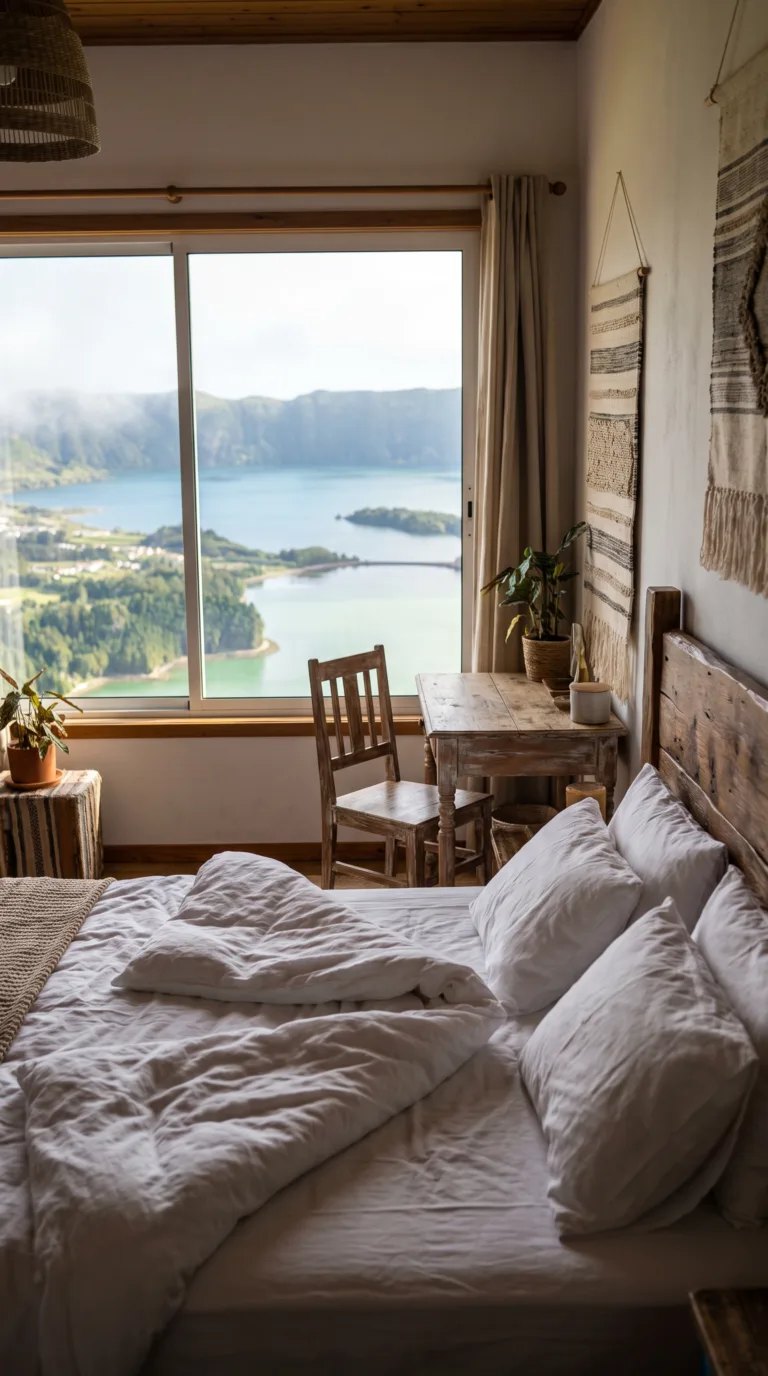
Sete Cidades village is tiny. This is a quiet settlement inside a volcanic crater, not a resort town. You’ll find fewer than 10 properties to book.
Lake Lodge Sete Cidades is the most recognized option right by the water. Clean rooms, lake views, and you’re already there at sunrise. A handful of guesthouses and Airbnb rentals scatter through the village, most are family-run, basic, and book up months ahead in summer.
The Parque de Campismo Sete Cidades sits inside the caldera for budget travelers and campervan owners. Facilities are simple but the location is hard to beat.
Staying in the crater means you get the lakes at dawn and dusk when tour buses have left. The silence is real. No restaurants, no nightlife, just you and the volcanic rim.
Most people base themselves in Ponta Delgada, 25 kilometers south. That’s where you’ll find 50-plus hotels, actual dinner options, and car rental offices. Day trips to Sete Cidades take 35 minutes by car. Other bases: Furnas for hot springs, Ribeira Grande on the north coast, or Vila Franca do Campo for a quieter vibe with beach access.
Getting to Sete Cidades
Sete Cidades is located 25 kilometers west of Ponta Delgada, accessible via a 30-minute drive on well-maintained roads, with rental cars being the most practical transport option as public bus service is limited to 1-2 daily departures.
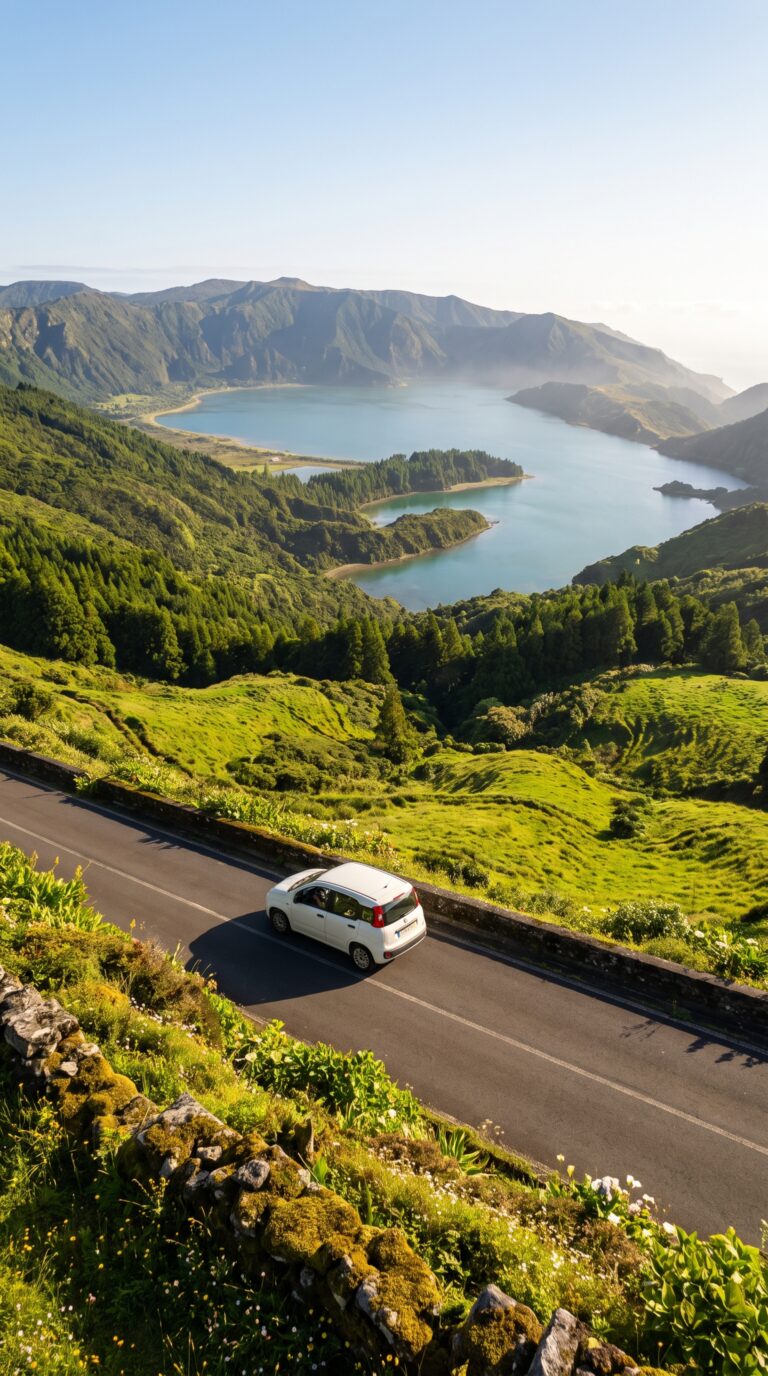
Ponta Delgada is where most visitors land. João Paulo II Airport sits on the edge of the city. From there, the drive west takes 30 minutes. Roads are paved and well-signposted. You’ll pass dairy farms and hydrangea hedges the entire way.
Rent a car. This is the only practical way to see Sete Cidades properly. Public buses run once or twice daily according to S. Miguel Transportes, which makes timing nearly impossible. A car lets you stop at Vista do Rei, explore the lakeshore, and leave when you want.
Parking is free at Vista do Rei viewpoint and in Sete Cidades village. Spots fill up by mid-morning in summer. Arrive before 9 AM or after 4 PM.
Organized tours from Ponta Delgada are common. Half-day trips typically bundle Sete Cidades with other stops around São Miguel. Full-day tours add Lagoa do Fogo or Furnas. Tours cost €40–70 per person. You’ll spend about 90 minutes at the lakes.
Check Ponta Delgada Airport for flight arrival times if you’re planning a same-day visit. Most rental agencies operate from the terminal.
Day Trips from Sete Cidades
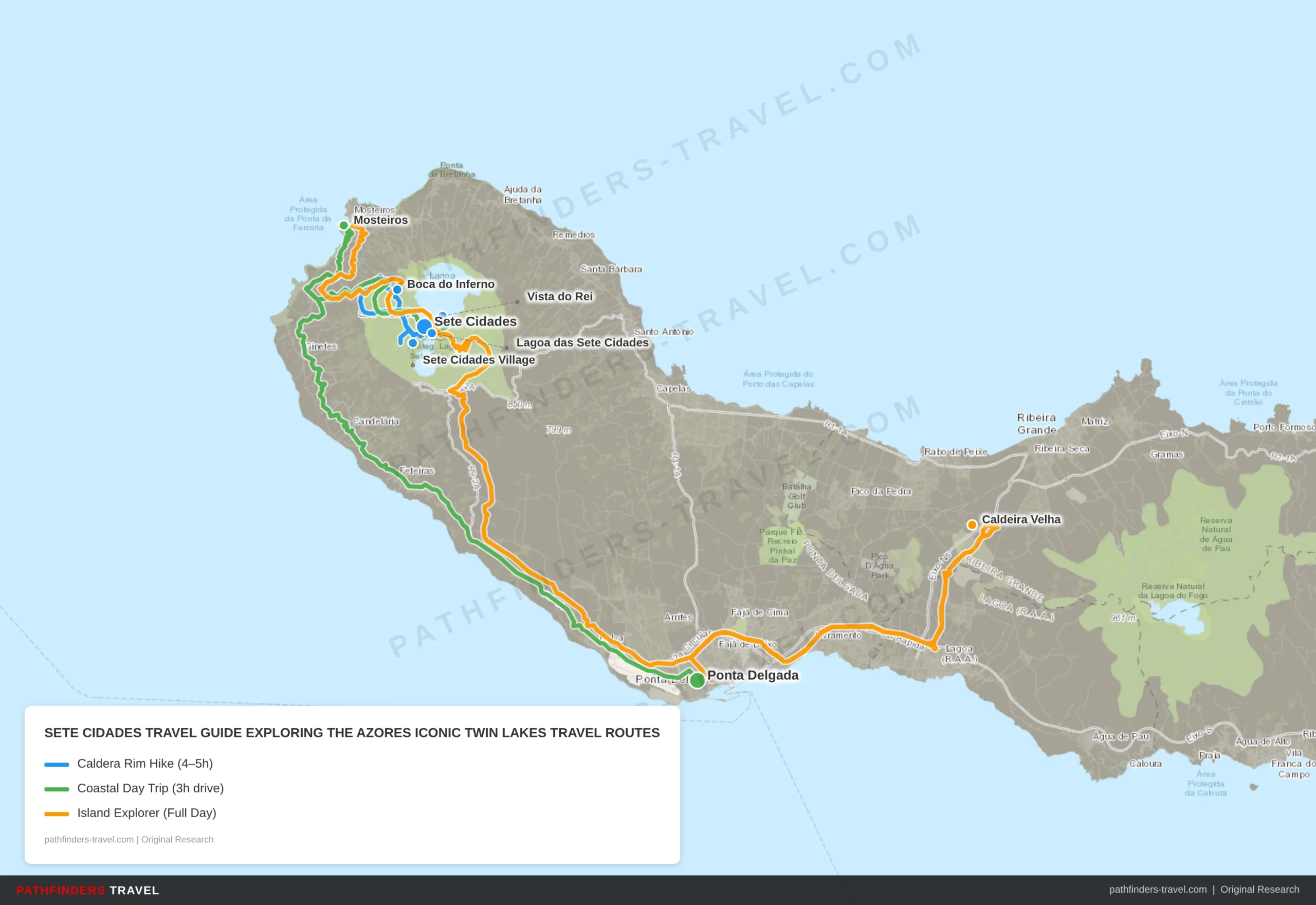
São Miguel island’s compact size allows visitors based at Sete Cidades to reach major attractions like Furnas hot springs (50 km, 1 hour), Lagoa do Fogo crater lake (35 km, 45 minutes), and Nordeste viewpoints (80 km, 1.5 hours) as day trips.
São Miguel is small enough that Sete Cidades works as a base for exploring the entire island. Most major sights sit within a 90-minute drive.
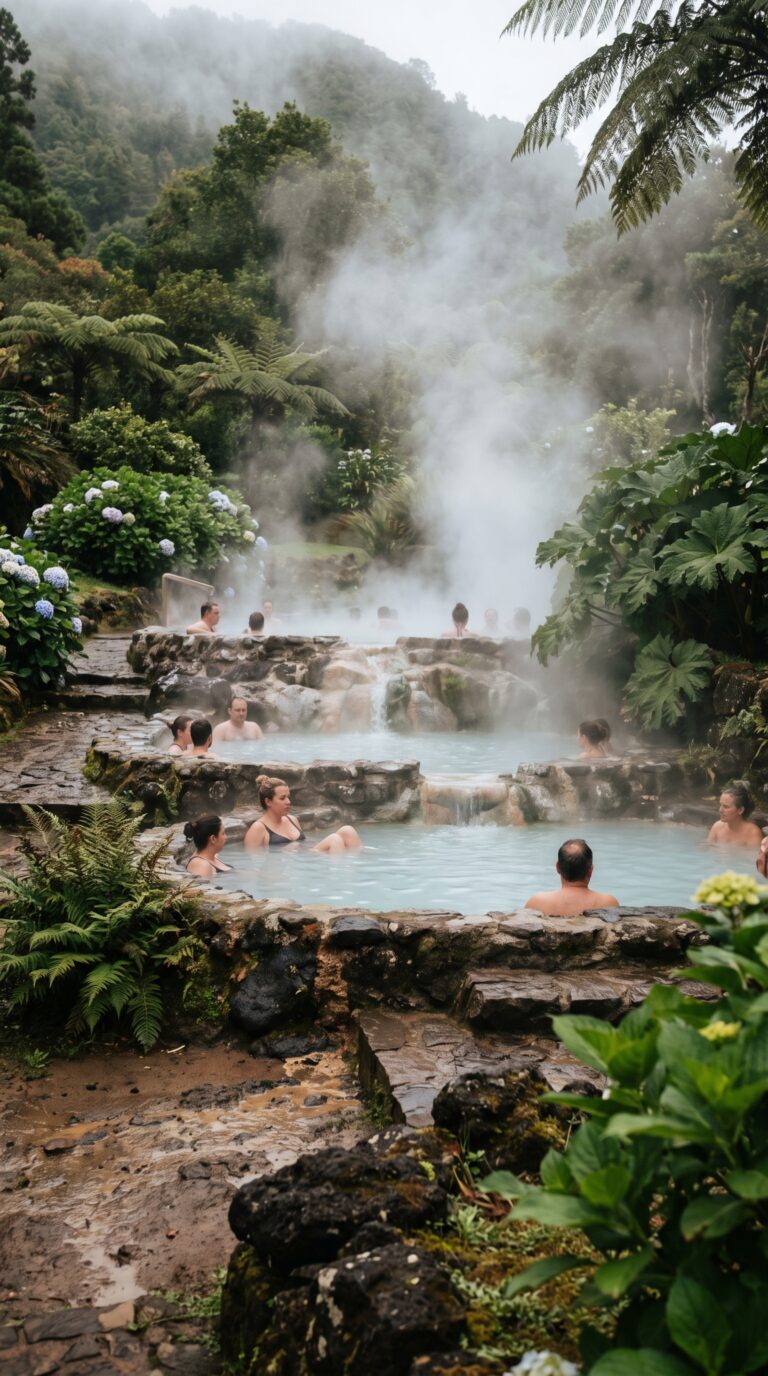
Furnas tops the list. This volcanic valley on the eastern side of the island (50 km, 1 hour drive) offers bubbling fumaroles, thermal hot springs, and the Parque Terra Nostra botanical garden with its massive iron-rich thermal pool. Restaurants cook cozido stew underground using volcanic heat, you can watch them dig up the pots at lunch. The town smells like sulfur. Expect to spend half a day here.
Lagoa do Fogo sits in the center of São Miguel, 35 km from Sete Cidades (45 minutes). Another crater lake. Less developed than Sete Cidades. The beach at the bottom requires a steep hike down loose gravel, but you’ll have it mostly to yourself. Water stays cold year-round.
Caldeira Velha makes a quick roadside stop between Sete Cidades and Lagoa do Fogo. Thermal waterfall and small pools surrounded by jungle vegetation. Entry costs €10. Good for an hour.
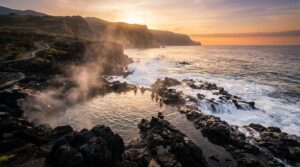
Ponta da Ferraria on the western coast (15 km from Sete Cidades) offers natural ocean thermal pools where volcanic hot water mixes with Atlantic waves. Time your visit for low tide, high tide makes the pools too cold. Free access.
Nordeste occupies the thick northeastern corner of São Miguel, 80 km from Sete Cidades (1.5 hours). This region holds the island’s most dramatic coastal viewpoints and waterfalls. The drive alone justifies the trip.
A full-island loop hits all these spots: Sete Cidades → Lagoa do Fogo → Furnas → Nordeste → back to Ponta Delgada. You can cram it into one long day or split it across two. Check the Visit Azores – São Miguel attractions page for current road conditions.
All these destinations sit on São Miguel. Visiting other Azores islands requires flights or ferries from Ponta Delgada.
Practical Tips for Visiting Sete Cidades
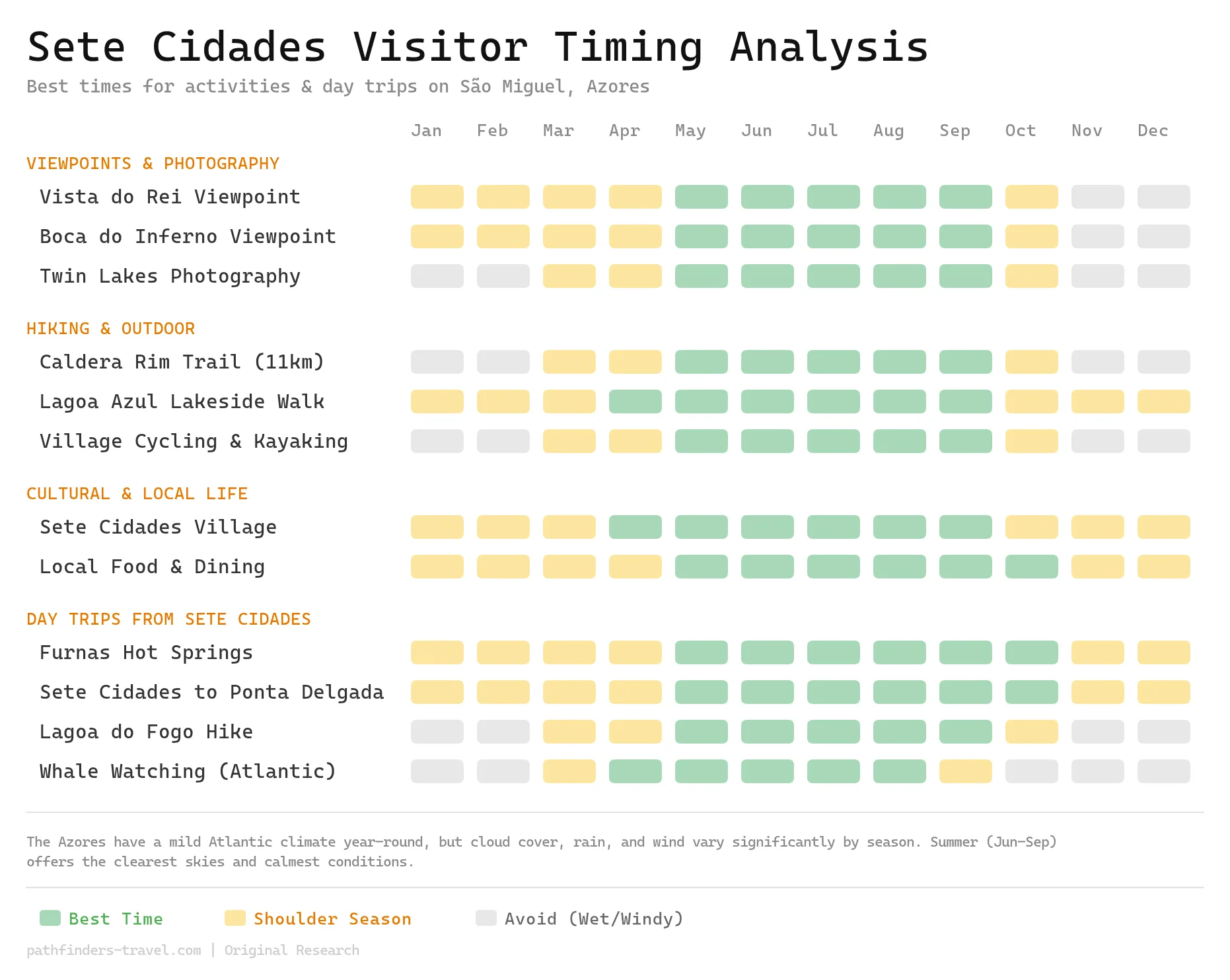
Sete Cidades experiences mild temperatures year-round (15-25°C) but frequent rain and fog, with June through September offering the most stable weather and clearest views, though mist can occur any time.
The Azores climate doesn’t follow normal rules. You can wake up to sunshine and eat lunch in a cloud. According to the IPMA weather forecast for the Azores, average monthly rainfall varies from 40mm in July to 120mm in December, with temperatures hovering between 15°C in winter and 25°C in summer. But those numbers don’t tell the real story. Rain and fog roll in fast, even in August.
Check the Sete Cidades live webcam before you drive out. If the crater is socked in with mist, you won’t see anything from Vista do Rei. Wait an hour. The weather shifts constantly.
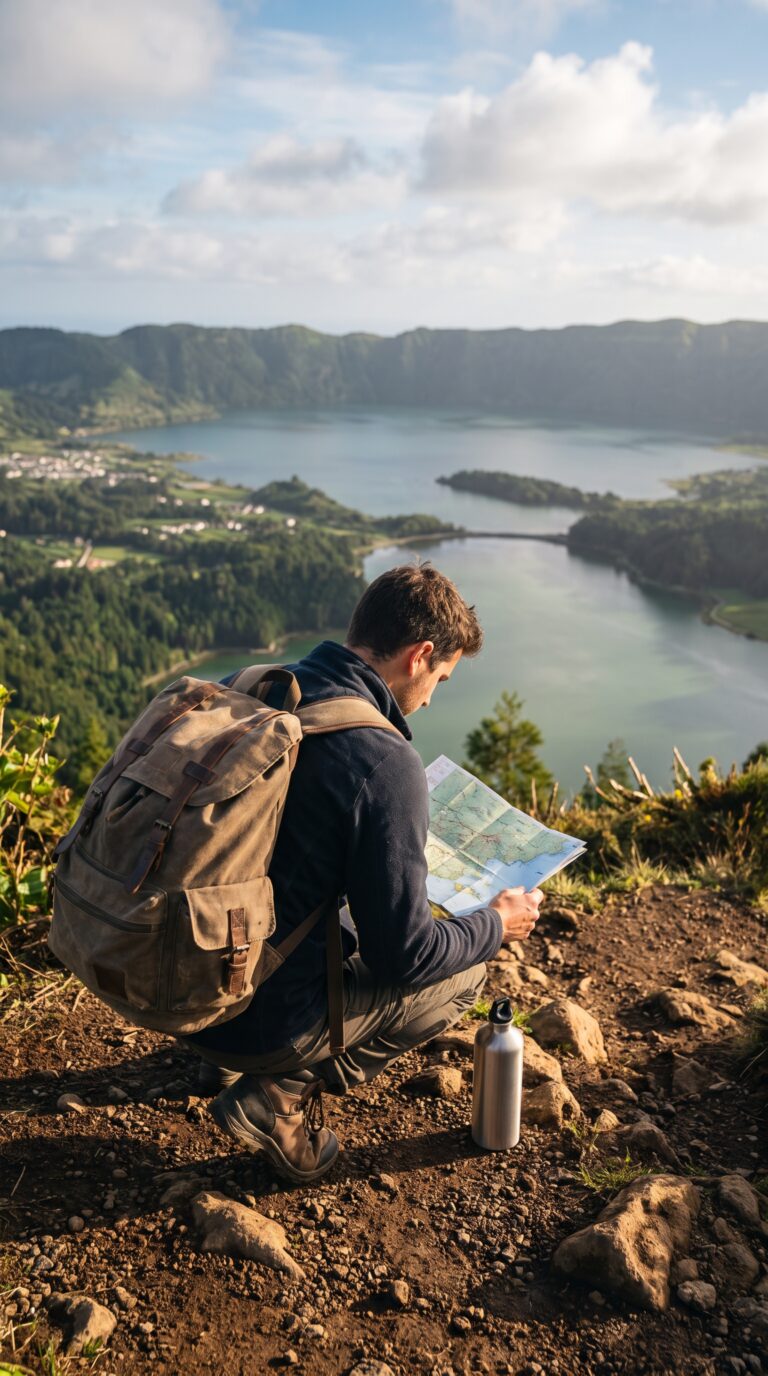
Pack layers. A waterproof jacket is mandatory. Sturdy hiking shoes matter more than you think, the caldera rim trail turns into a mud slick after rain. Bring sun protection, water, and snacks. Sete Cidades village has no ATMs or shops. You need cash and supplies before you arrive.
Arrive early morning or late afternoon to dodge tour bus crowds at Vista do Rei. Download offline maps, mobile signal drops to nothing inside the crater.
Best Time to Visit
Sete Cidades is accessible year-round, but the Azores’ famously unpredictable Atlantic weather makes a significant difference to your experience. Summer (May, September) brings the clearest skies, calmest winds, and the best chance of an unobstructed view from Vista do Rei, arrive early morning before clouds build by midday. Winter months (November, February) see frequent rain and low visibility that can completely obscure the twin lakes, making viewpoints and the exposed caldera rim trail ungreat for most visitors.
Frequently Asked Questions
What does Sete Cidades mean and what is the legend behind it?
Sete Cidades translates to “Seven Cities” in Portuguese. The name’s origin is debated, some historians link it to a medieval legend about seven cities of gold. The most popular story involves a princess with blue eyes and a shepherd with green eyes who fell in love but couldn’t marry. Their tears supposedly formed the two lakes, each reflecting the color of their eyes. This romantic tale explains why Lagoa Azul looks blue and Lagoa Verde appears green. The real reason? Depth and algae content. The blue lake is deeper and reflects more sky. The green lake is shallower with more plant matter. Still, the Sete Cidades story adds charm to an already beautiful landscape.
How long does the Sete Cidades rim trail hike take?
The full caldera rim trail covers 11-12 kilometers and takes 4-5 hours at a moderate pace. The trail is moderately challenging. Expect steep sections and uneven terrain. But the 360-degree views make every step worth it. Don’t want to commit to the full loop? Hike from Vista do Rei to Boca do Inferno in 1-2 hours. Or walk around the lakeshore in the village, that’s about an hour. The Sete Cidades hike length is flexible depending on your fitness and schedule.
When did the Sete Cidades volcano last erupt?
The Sete Cidades volcano last eruption happened in 1880. It was a minor phreatic (steam) eruption. Nothing catastrophic. The massive caldera-forming blast that created the twin lakes occurred around 22,000 years ago. That was a big one. Today, Sete Cidades is still classified as an active volcano. Portuguese volcanic surveillance systems monitor it continuously. No eruption is expected anytime soon, so you can visit without worry.
Can you swim or kayak in the Sete Cidades lakes?
Yes, kayaking is permitted and popular on both Lagoa Azul and Lagoa Verde. Several operators in the village rent kayaks by the hour. Swimming is technically allowed but the water is cold year-round, typically 15-18°C. Most visitors stick to kayaking. The calm, protected waters inside the crater make for excellent paddling conditions. You’ll get beautiful scenery from water level. It’s a different perspective than the viewpoints.
Is Sete Cidades worth visiting if it’s foggy?
Fog and mist are common at Sete Cidades, especially in the morning. If the viewpoints are socked in, descend into the crater. Visibility is often better down there. The village and lakeshore can be atmospheric and beautiful even in fog. You can still hike and kayak. Weather in the Azores changes rapidly. If you have time, wait an hour or return later in the day. The fog often lifts. Check the webcam at Vista do Rei before making the drive, it’ll save you a wasted trip if conditions are terrible.