Estimated reading time: 18 minutes
Last updated: 28 August 2026
What Is Furnas Known For?
Furnas is best known for its geothermal drama: a steaming valley of bubbling caldeiras and hot springs in São Miguel’s east. Visitors come to bathe in Terra Nostra Park’s iron-orange thermal pool and the smaller Poça da Dona Beija, to taste cozido das Furnas — a stew slow-cooked underground by volcanic heat — and to walk the crater lake ringed by fumaroles. It is the Azores‘ hot-spring capital.
Our Research Sources
This guide draws from Azores tourism boards, geological surveys, and verified visitor experiences documented through multiple sources. Since conditions at natural sites can shift seasonally, we recommend checking with local authorities before your visit to confirm access and any safety updates.
Want to see Furnas’ volcanic landscape for yourself? Watch our complete Azores travel guide in 4K Ultra HD.
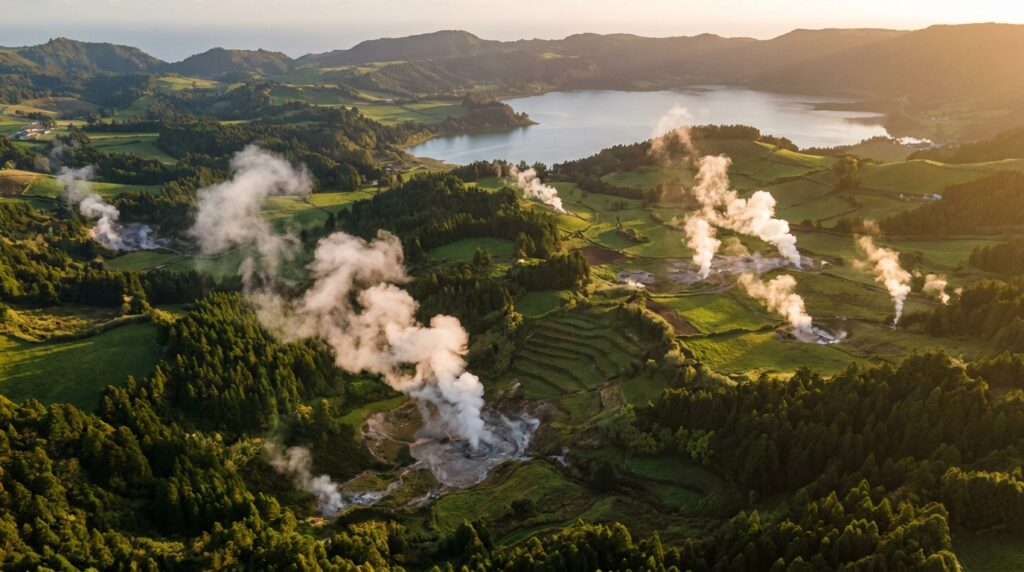
Steam rises from the ground here. The smell of sulfur hangs in the air. Furnas sits in a collapsed volcanic crater on the eastern side of São Miguel, the largest island in the Azores, Portugal. This is one of the most geothermally active spots in the entire archipelago. Over 20 caldeiras bubble and hiss across the valley floor, releasing superheated water and volcanic gases from deep underground.
Planning Tip
The main attraction? Furnas hot springs. You can soak in iron-rich thermal pools heated to 38°C (100°F) at Terra Nostra Park, according to the Terra Nostra Garden Hotel official website. The water turns your swimsuit orange. Locals cook stew in underground pits using volcanic heat. Furnas Lake sits at the valley’s northern edge, surrounded by fumaroles that look like industrial smokestacks.
This guide covers what to see, where to eat cozido das Furnas (the underground-cooked stew), accommodation options with budget hostels and thermal spa hotels, how to get around without a car, and day trips to nearby waterfalls and tea plantations. The Official Visit Azores tourism website lists Furnas as a worth visiting destination on São Miguel island. Expect crowds in summer. Go early or late to dodge tour buses.
Top Attractions in Furnas
Terra Nostra Park features a 38°C thermal pool within a 12-hectare botanical garden, while Furnas Lake offers a scenic 7-kilometer walking trail past steaming caldeiras where traditional cozido is cooked underground.
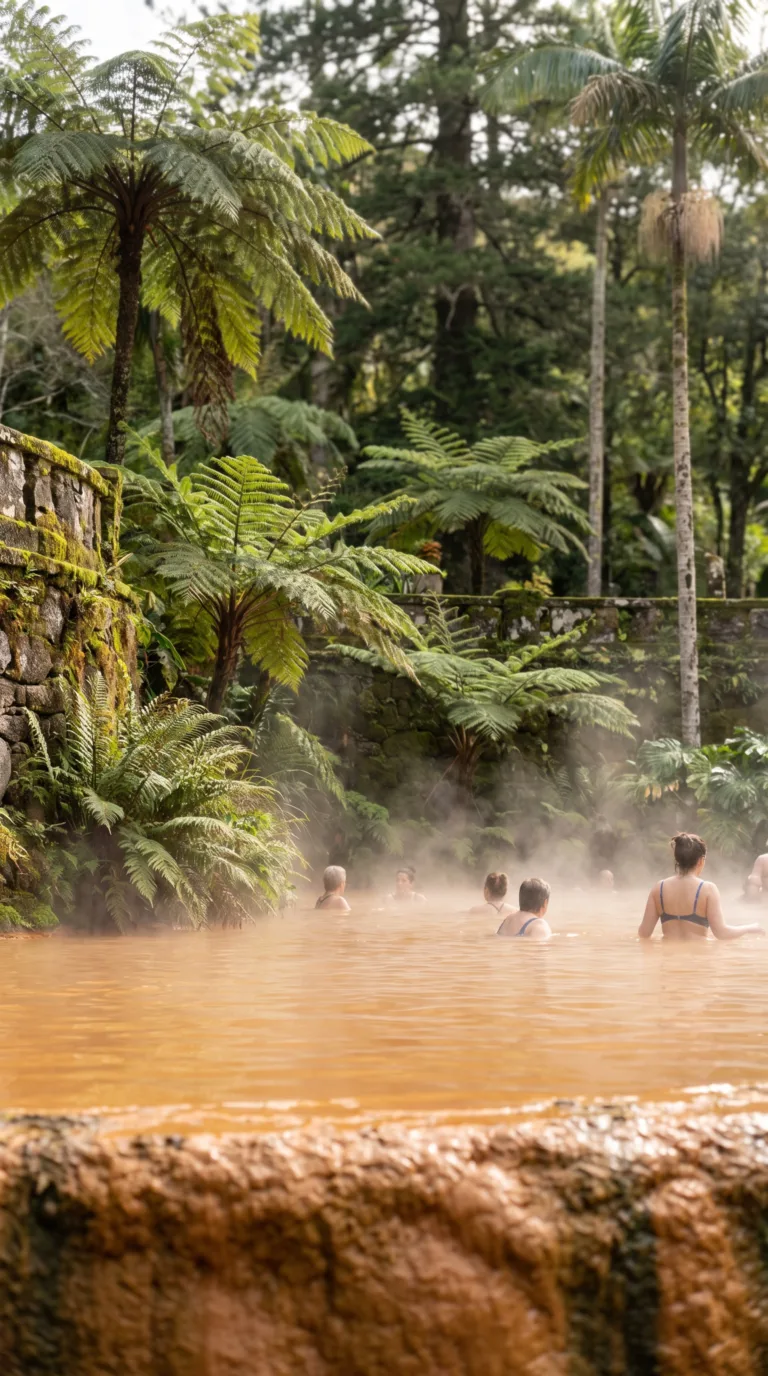
Terra Nostra Park is the main draw. The thermal pool here glows rust-orange from iron deposits. Water sits at 38°C year-round. The pool measures 60 meters long. You can swim in it. The botanical garden around the pool spans 12 hectares and contains over 2,000 plant species from five continents, according to the Terra Nostra Garden Hotel official website. Camellias bloom in winter. Tree ferns tower overhead. Entry costs €17 for adults, €14.50 for youths and seniors. Bring a dark swimsuit. The iron stains fabric permanently. Arrive before 10 AM or after 4 PM to skip the tour bus crowds.
Furnas Lake (also called Lagoa das Furnas) fills a volcanic crater. The walking trail around the perimeter measures 7 kilometers. You’ll pass fumaroles bubbling at the water’s edge. Steam rises from vents in the ground. The path is mostly flat. Budget 90 minutes for the full loop. The neo-Gothic Chapel of Nossa Senhora das Vitórias sits on the north shore. It’s worth a quick photo stop. Early morning fog often blankets the lake. By noon the sun burns it off.
Caldeiras das Furnas sits right in the village center. Free to visit. Wooden boardwalks let you walk among the steaming vents. This is where restaurants bury pots of cozido stew at 6 AM. The pots cook underground for six hours using geothermal heat. You can watch them dig up the pots around noon. The sulfur smell hits hard here. Don’t wear jewelry. The gases tarnish silver instantly.
Poça da Dona Beija offers five thermal pools at different temperatures. Ranges from 28°C to 39°C. The complex is smaller than Terra Nostra but less crowded. Entry costs €12 per person until 5:30 PM and €16 from 6 PM, per the Poça da Dona Beija official website. Open daily until 11 PM. The iron content here is lower. Your swimsuit survives.
The entire Furnas valley sits inside a volcanic caldera. The last eruption happened in 1630. The volcano isn’t extinct. It’s dormant. The geothermal activity you see today comes from magma chambers still heating groundwater kilometers below the surface.
On the drive from Ponta Delgada to Furnas, stop at Caldeira Velha. It’s a smaller thermal springs site with a waterfall and a warm pool. Entry costs €10 (€3 to visit without bathing). The water here runs clearer than in Furnas. Less iron. The site gets packed by midday. Go before 9 AM.
Visit Terra Nostra Park on weekday mornings. Tour groups arrive after lunch. The caldeiras in the village center look best in early morning light when the steam is thickest. Save Furnas Lake for late afternoon. The light on the water improves as the day goes on.
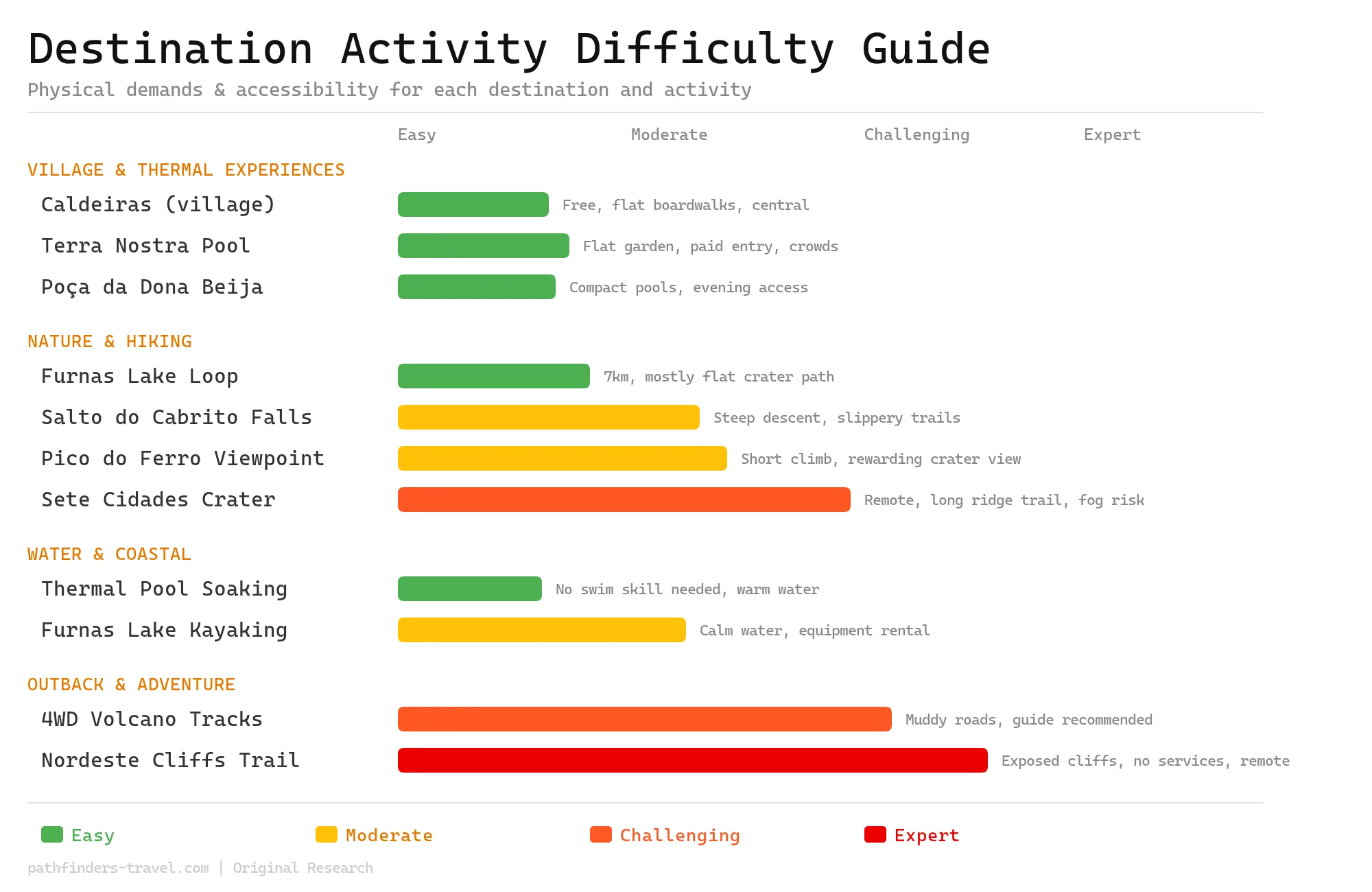
Activity Difficulty Guide
Furnas offers a surprisingly wide spectrum of physical demands, from zero-effort thermal soaking in the village center to rugged volcanic ridge walks requiring solid fitness and navigation skills. Most first-time visitors will find the core attractions (caldeiras, Terra Nostra, and the lake loop) comfortably easy, while the island’s outer trails and coastal cliffs step up sharply in challenge. Plan your itinerary around your fitness level and always check trail conditions locally before heading into remote areas.
Where to Eat in Furnas
Cozido das furnas is a traditional meat and vegetable stew cooked for 6-7 hours underground in volcanic caldeiras, available at restaurants like Tony’s and Terra Nostra Garden Hotel from around €15-25 per person.
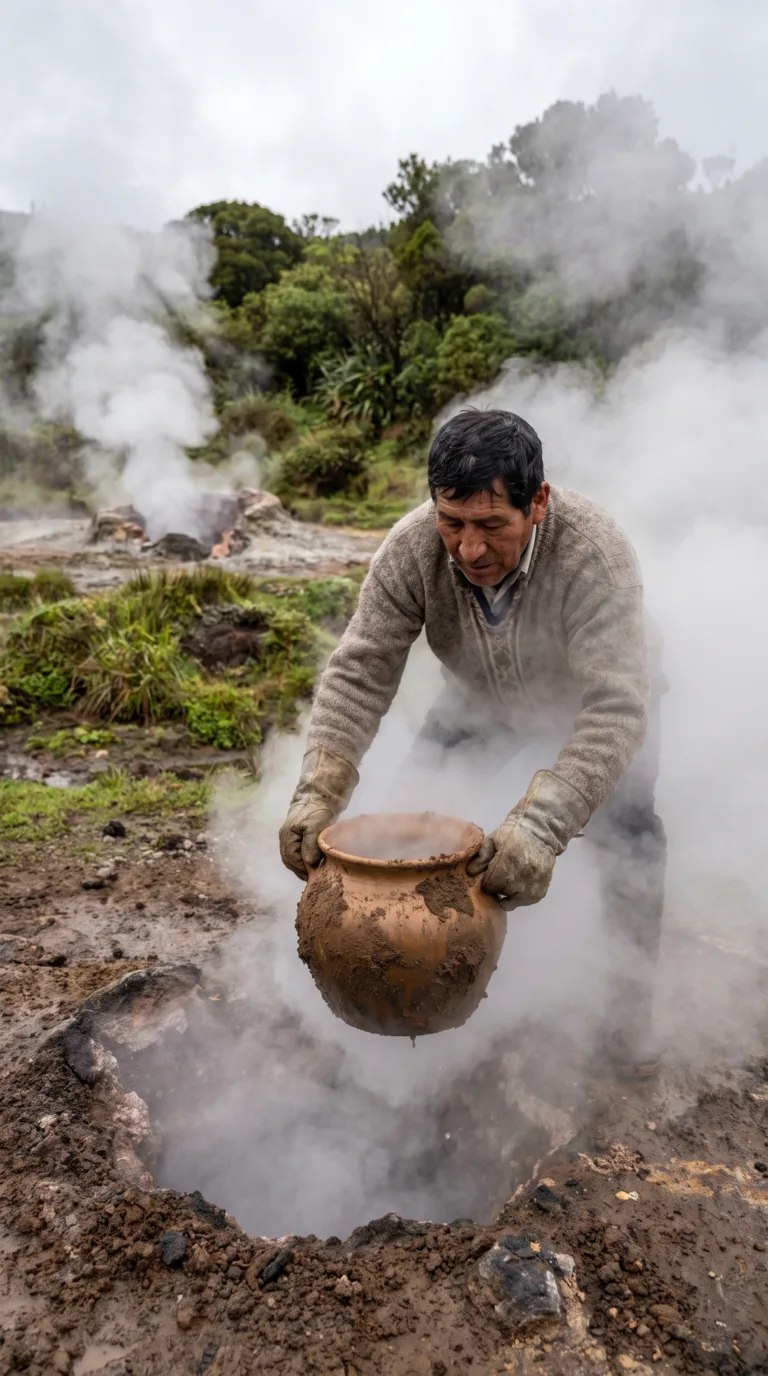
Cozido das furnas is the dish you came here for. Restaurants lower metal pots into geothermal pits near Furnas Lake around 9 AM. The volcanic heat, roughly 90-100°C according to local culinary tourism data, slow-cooks beef, pork, chicken, blood sausage, cabbage, sweet potato, and taro for six to seven hours. You watch staff unearth the pots at lunchtime, steam pouring out like a special effect.
The stew tastes earthy. Sulfurous. Not unpleasant, just different from anything cooked on a stovetop. The meat falls apart. The vegetables absorb the mineral-heavy steam.
Tony’s Restaurant Furnas serves cozido for €20-25 per person. The dining room is plain. The food is not. Terra Nostra Restaurant at the garden hotel charges similar prices but adds linen napkins and a view of the park. Restaurante Caldeiras & Vulcões sits closer to the caldeiras themselves, you can walk to the cooking pits after eating.
Other furnas restaurants serve standard Azorean fare. Grilled limpets. Octopus rice. Fresh fish from Ponta Delgada’s morning market. Bolo lêvedo, sweet, pillowy muffins, appear at breakfast tables everywhere. Queijadas are small cheese tarts, dense and not too sweet. Local cheeses from São Jorge island show up on appetizer plates.
The municipal market near the town center sells fresh produce, honey, and packaged tea grown on the island. You can buy vacuum-sealed cozido spice mix if you want to attempt the dish at home. Good luck replicating the volcano.
Where to Stay in Furnas
Furnas offers accommodation ranging from the historic Terra Nostra Garden Hotel with direct thermal pool access to modern boutique hotels and budget guesthouses, with most properties featuring on-site or nearby thermal bathing facilities.
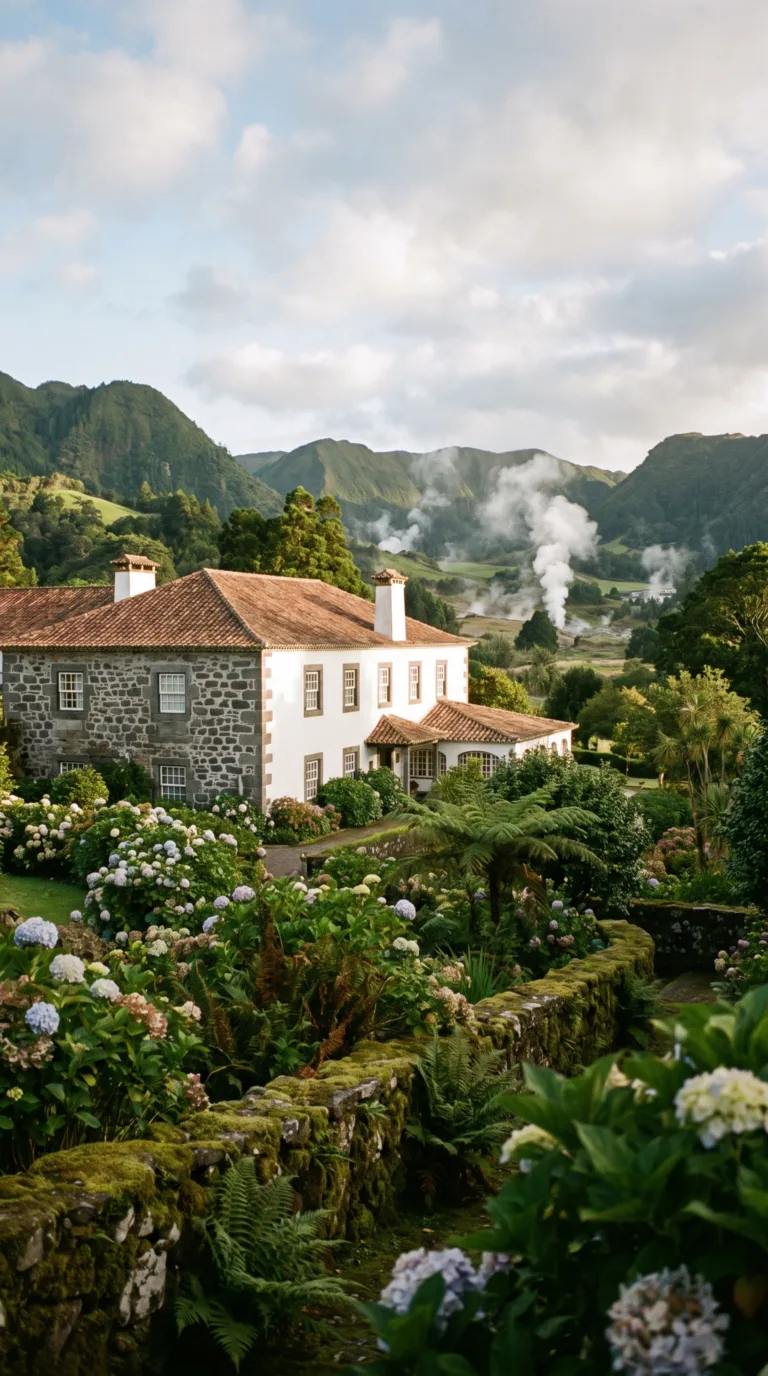
The village has around 15 hotels and guesthouses. Prices run from €60 per night for basic rooms to €200+ for luxury stays during peak season (June through September). Most properties include some form of thermal bathing, either private pools or discounted access to nearby facilities.
Terra Nostra Garden Hotel sits inside the park itself. You get unlimited access to the thermal pool and 12 hectares of botanical gardens. The building dates to the 1930s. Rooms start around €180 in summer. You can walk to the pool in your bathrobe at 7 AM before day-trippers arrive.
Furnas Boutique Hotel offers a modern alternative, known for its own thermal spa circuit. Rates average €120–150 per night. The design is contemporary, clean lines, large windows facing the valley. They run a small wellness center with massage treatments.
Octant Furnas focuses on wellness programming. Think yoga classes, guided hikes, and multi-day detox packages. It’s the newest luxury option in the valley, opened in 2021.
Budget travelers can find guesthouses and vacation rentals in Furnas village for €50–80 per night. You won’t have on-site thermal pools, but you’re a 10-minute walk from the public caldeiras and Terra Nostra’s paid entrance.
Staying overnight beats day-tripping from Ponta Delgada. You avoid the 90-minute drive each way. You can soak in thermal pools after dinner when crowds thin out. Morning mist over the lake looks different at 6 AM.
Book three months ahead for July and August. Many hotels bundle thermal bath packages, unlimited pool access plus breakfast for a flat rate.
Getting to and Around Furnas
Furnas is located 45 kilometers east of Ponta Delgada airport, accessible by a 45-minute drive via rental car, limited public bus service (2-3 daily departures), or organized day tours.
Ponta Delgada is your starting point. The airport sits 45 kilometers west of Furnas. Most visitors rent a car. This gives you freedom to stop at viewpoints and explore the caldeiras outside the village center. Ponta Delgada Airport car rental desks include Hertz, Europcar, and local operators. Expect to pay €25–40 per day for a compact vehicle.
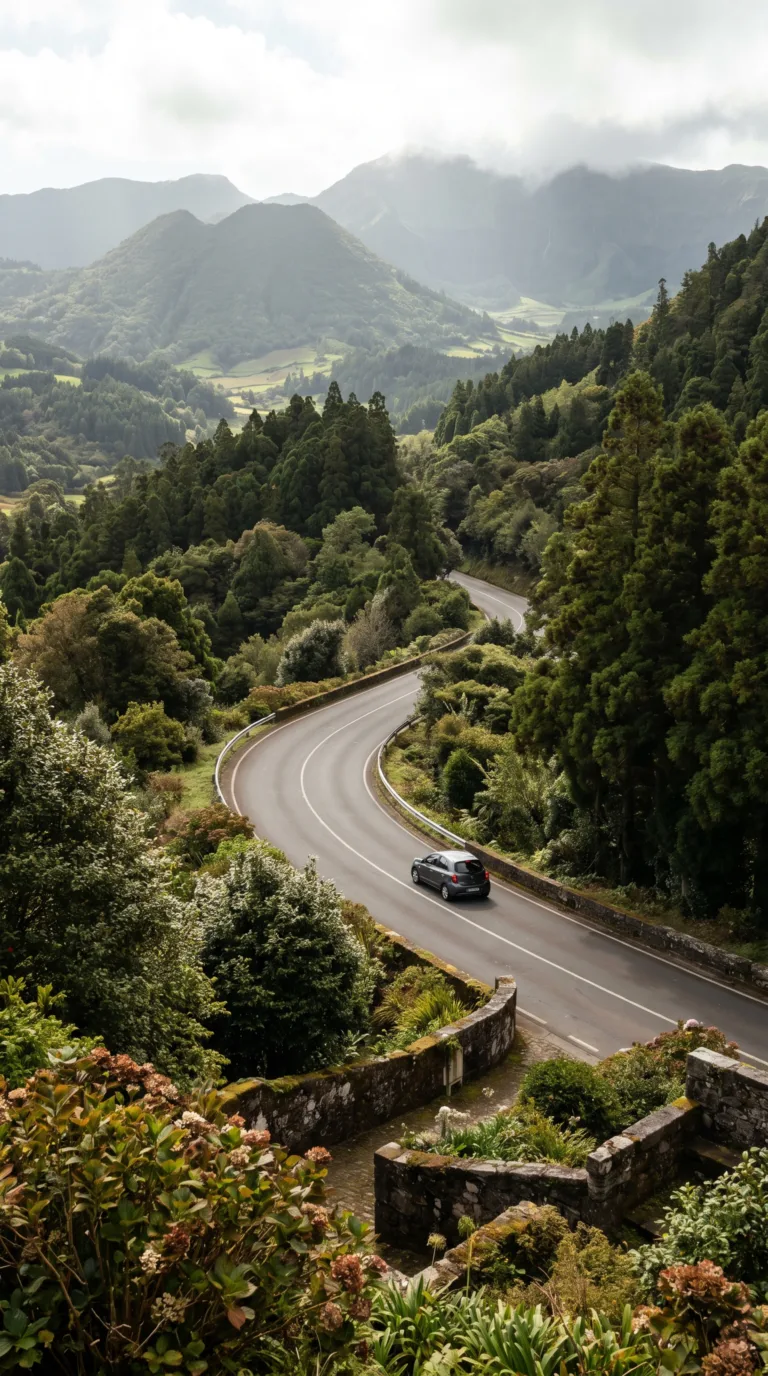
The drive takes 45 minutes on clear roads. You’ll climb through volcanic hills and pass tea plantations. Roads are narrow in sections. Drive cautiously on curves.
Public buses run from Ponta Delgada to Furnas 2–3 times daily, according to the regional transport operator. Check Azores public bus schedules and routes before you travel. A one-way ticket costs around €4. Buses don’t run late, so you’ll need to plan your return carefully.
Day tours from Ponta Delgada cost €50–70 per person. They bundle Furnas Lake, Terra Nostra Park, and a cozido lunch. You sacrifice flexibility but skip the driving.
Furnas village is compact. You can walk between the hot springs, restaurants, and Terra Nostra Park. A car helps if you want to reach Furnas Lake or the Pico do Ferro viewpoint. Parking is free at most attractions.
Travel Routes
Below are recommended travel routes with key stops and estimated drive times.
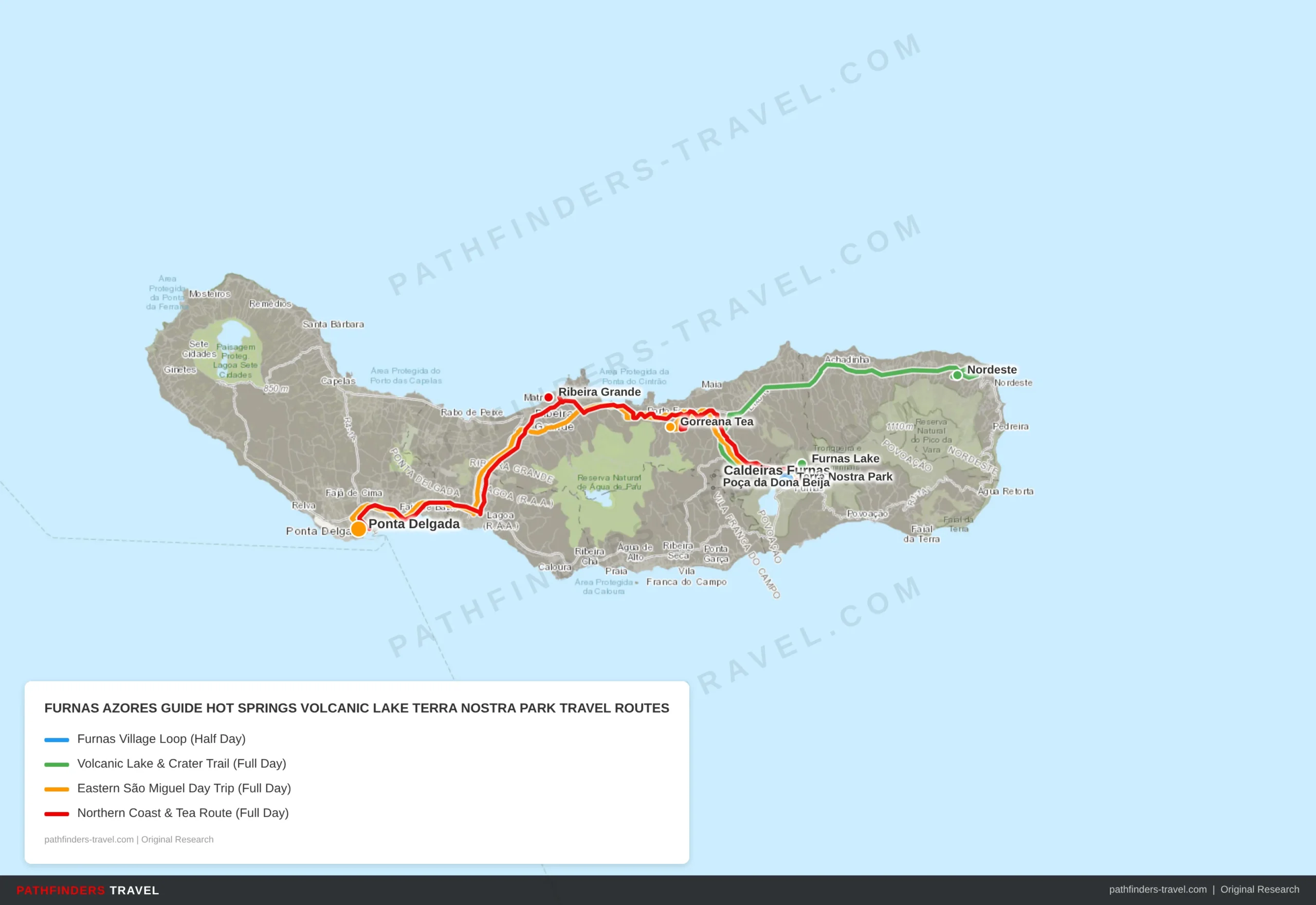
| # | Stop | Highlights | Drive Time |
|---|---|---|---|
| 1 | Caldeiras Furnas | Free volcanic vent boardwalk in the village center; watch cozido pots dug up at noon; strong sulfur smell, remove silver jewelry | Start |
| 2 | Terra Nostra Park | Iconic 60m rust-orange thermal pool at 38°C; 12-hectare botanical garden with 2,000+ plant species; entry €17, wear a dark swimsuit | 5 min walk |
| 3 | Poça da Dona Beija | Five thermal pools ranging 28–39°C; lower iron content than Terra Nostra; entry €12; open until 11 PM, less crowded alternative | 3 min walk |
| # | Stop | Highlights | Drive Time |
|---|---|---|---|
| 1 | Caldeiras Furnas | Start at the steaming village caldeiras; grab an early coffee and watch cozido pots being buried at 6 AM for a noon reveal | Start |
| 2 | Furnas Lake | 7km flat walking trail around volcanic crater lake; fumaroles bubble at water’s edge; neo-Gothic Chapel of Nossa Senhora das Vitórias on north shore; allow 90 minutes | 10 min drive |
| 3 | Nordeste | Scenic eastern tip of São Miguel with clifftop viewpoints and hydrangea-lined roads; least visited corner of the island, quiet coastal village atmosphere | 30 min drive |
| # | Stop | Highlights | Drive Time |
|---|---|---|---|
| 1 | Ponta Delgada | Main gateway city and hub; depart early from the harbor area; rent a car here for the eastern island loop | Start |
| 2 | Gorreana Tea | Europe’s oldest operating tea plantation; free to visit and tour; try green and black teas grown in Atlantic mist; gift shop on site | 45 min drive |
| 3 | Furnas Lake | Arrive mid-morning before fog lifts; walk part of the 7km crater trail; spot fumaroles steaming at the lake’s edge from multiple viewpoints | 30 min drive |
| 4 | Terra Nostra Park | End the day soaking in the famous 38°C thermal pool; time entry after 4 PM to avoid tour bus crowds; botanical garden included with the €17 entry after swimming | 10 min drive |
| # | Stop | Highlights | Drive Time |
|---|---|---|---|
| 1 | Ponta Delgada | Depart from São Miguel’s capital; historic city gates, seafront promenade, and city market worth a quick morning stop | Start |
| 2 | Ribeira Grande | Charming northern coast town with black-sand beaches and colorful azulejo-tiled churches; good stop for a local pastelaria breakfast | 30 min drive |
| 3 | Gorreana Tea | Europe’s only remaining tea plantation in operation; free factory tour shows 19th-century tea processing machinery still in use; ocean-view tea terraces | 20 min drive |
| 4 | Caldeiras Furnas | Arrive for the noon cozido pot dig-up; book lunch at a local restaurant serving the iconic underground-cooked stew; evening soak at Poça da Dona Beija | 35 min drive |
Day Trips from Furnas
From Furnas, visitors can explore Sete Cidades twin lakes (90 minutes west), Lagoa do Fogo crater lake (45 minutes), Nordeste coastal viewpoints (60 minutes east), and Gorreana Tea Plantation (30 minutes north) as day trips across São Miguel.
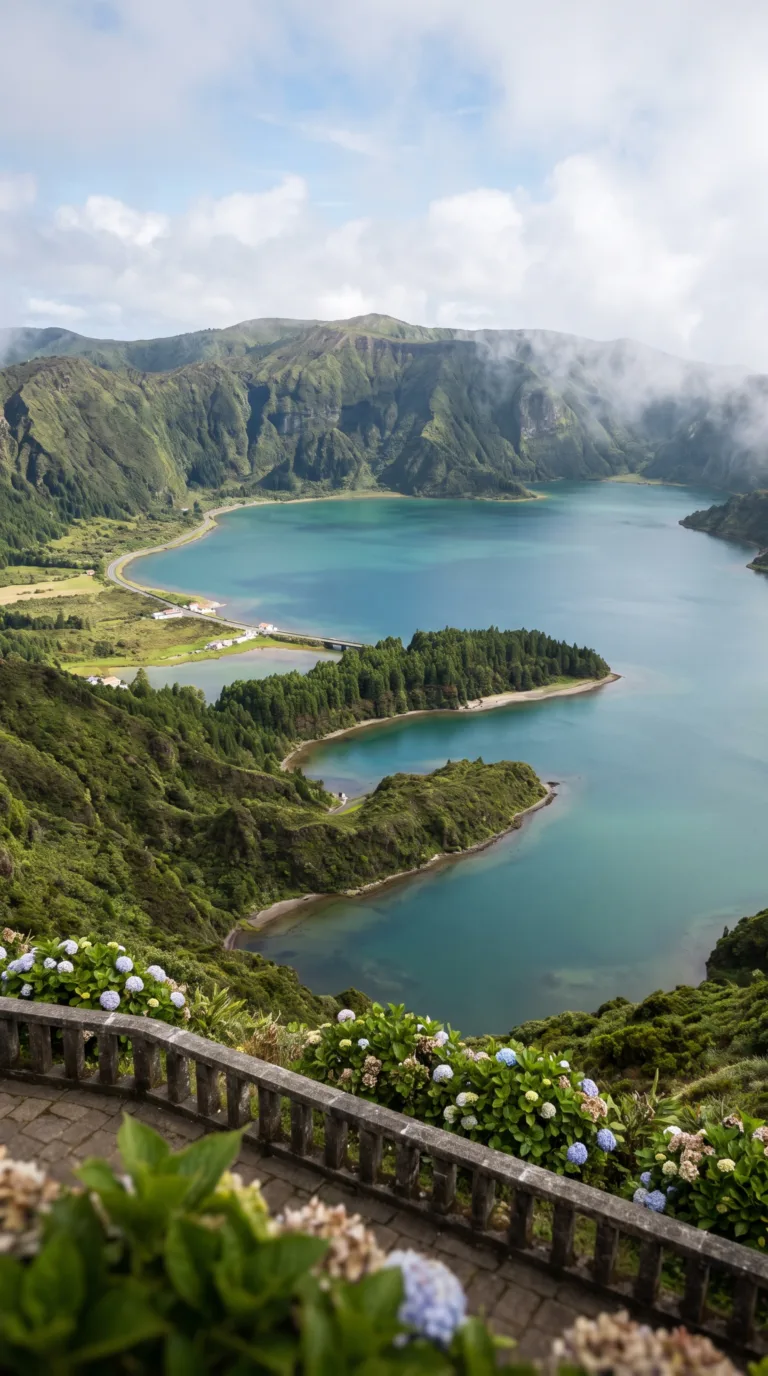
Sete Cidades sits 90 minutes west of Furnas. Two lakes, one blue, one green, fill a massive volcanic crater. Vista do Rei viewpoint gives you the postcard shot. The drive takes you across the island’s central spine. Hiking trails circle the lakes if you have time. Budget a full day for this trip.
Lagoa do Fogo is closer. 45 minutes north, straight up the island’s center. This crater lake sits higher than Sete Cidades. The hiking trail down to the lake takes about 30 minutes. A small beach lines the shore. The water is cold. No facilities at the bottom.
Ponta da Ferraria on the west coast mixes ocean waves with volcanic heat. Natural thermal pools form between the rocks. The experience depends entirely on the tide, check the schedule before you drive out. When the tide is right, you sit in bathwater-warm pockets while Atlantic swells crash around you. It’s a 75-minute drive from Furnas.
Nordeste occupies the island’s northeastern corner, about 60 minutes east. The coastal road strings together dramatic viewpoints. Ponta do Arnel lighthouse perches on a cliff accessible by a steep road. The landscape here is greener and wetter than the rest of São Miguel.
Gorreana Tea Plantation runs 30 minutes north of Furnas. Europe’s oldest tea plantation still operates on the original 1883 estate. Tours are free. Tastings are free. The Gorreana Tea Plantation official website with visiting hours lists current schedules.
Mosteiros on the west coast has black sand and jagged rock formations jutting from the water. Sunset here is worth the 80-minute drive. The village is small. One or two restaurants. Nothing fancy.
Ilhéu de Vila Franca do Campo is a nature reserve islet with a volcanic crater pool in the middle. Boats run from Vila Franca town, June through September only. According to local boat operators, daily trips carry a maximum of 400 visitors. Book ahead. The Ilhéu de Vila Franca do Campo nature reserve official information and boat booking page has current schedules.
Combine stops for efficiency. Sete Cidades, Mosteiros, and Ponta da Ferraria all sit on the western half of the island, you can hit all three in one long day if you start early.
Practical Tips for Visiting Furnas
Visit Furnas between May and September for optimal weather, and always pack a dark-colored swimsuit as the iron-rich thermal water permanently stains light fabrics, plus waterproof bags and layers for the valley’s misty microclimate.
Furnas works year-round. May through September brings the warmest weather, but the thermal baths Azores stay at 38°C even in January. Terra Nostra recommends limiting soaks to 20–30 minutes at this temperature, your body overheats faster than you think. Stay hydrated.
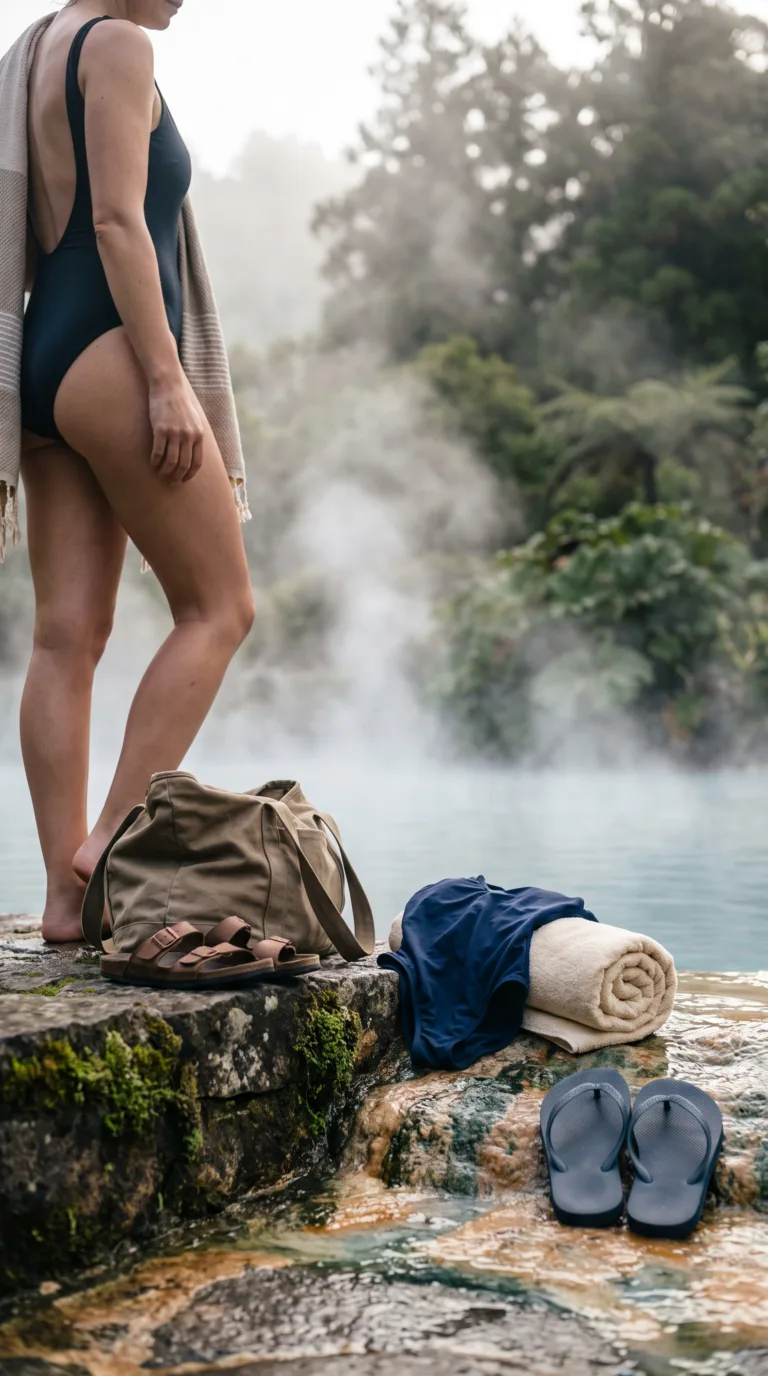
Pack a dark swimsuit. Black or navy. The iron-rich water turns white and pastel fabrics rust-orange permanently. Bring flip-flops for wet tile walkways and a waterproof bag for your phone. Visit Azores notes that Furnas Azores receives 1,400mm of annual rainfall, double the island’s south coast, so throw in a rain jacket and layers.
The valley traps mist. Mornings deliver the best steam effects for photos. Golden hour at Furnas Lake runs around 7:30 PM in summer. Shower before entering any thermal pool. Most facilities enforce this strictly. Respect quiet zones, some pools ban loud conversation.
Portuguese is the official language, but English works fine in tourist spots. Check IPMA Weather Forecast before you go. Furnas weather shifts fast.
Best Time to Visit
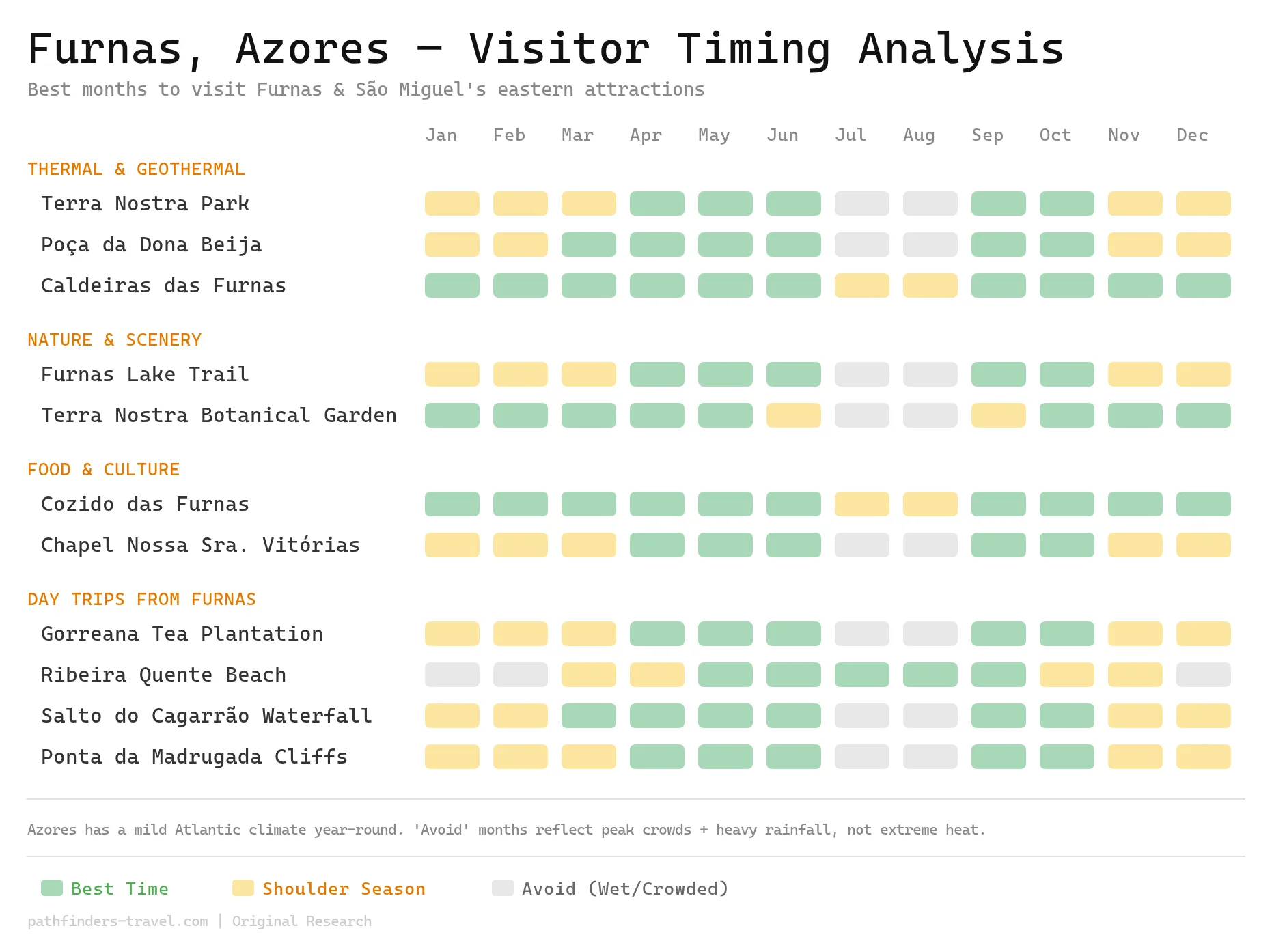
Furnas enjoys a mild Atlantic climate year-round, making it visitable in every month, but timing matters. Spring (April–June) and autumn (September–October) offer the sweet spot: stable weather, clear lake views, blooming gardens, and far thinner crowds than the July, August peak when tour buses overwhelm the caldeiras and Terra Nostra queues stretch past a hour. Winter brings heavy rainfall and dramatic morning fog over the lake, which appeals to atmospheric photographers but less so to hikers.
Frequently Asked Questions
Is Furnas worth visiting?
Yes, Furnas is one of São Miguel’s most unique destinations and absolutely worth the trip. You’ll find experiences here that don’t exist anywhere else on the island, including volcanic hot springs heated by geothermal activity, botanical gardens surrounding thermal pools, and traditional cozido das furnas cooked underground using volcanic heat. The landscape itself is unlike anything you’ve seen, steaming caldeiras, sulfur vents, and iron-rich thermal water that turns Terra Nostra’s pool a recognizable orange-brown. Furnas works for all types of travelers. Relaxation seekers soak in thermal baths. Nature lovers hike the volcanic trails. Food enthusiasts line up for geothermal-cooked stew. You can visit as a day trip from Ponta Delgada (about 45 minutes by car) or stay overnight to experience the thermal pools when crowds thin out in early morning or evening.
What is there to do in Furnas, Azores?
The main attraction is bathing in Terra Nostra Park’s massive thermal pool, which sits inside a 12-hectare botanical garden filled with rare plants and tree ferns. Walk the 6-kilometer trail around Furnas Lake to see steaming caldeiras along the shoreline where locals bury pots of cozido das furnas for lunch. Try this traditional stew yourself at restaurants like Tony’s or Caldeiras & Vulcões, it’s cooked entirely by volcanic heat for 5-6 hours underground. Visit Poça da Dona Beija thermal baths if you prefer smaller, hotter pools (€12 entry versus Terra Nostra’s €17). Explore the village caldeiras on foot to watch geothermal vents releasing steam and sulfurous gases. Hike trails through the volcanic landscape, including paths to abandoned thermal springs and viewpoints over the valley. The village itself has a few small museums and churches if you want indoor activities on rainy days.
What is the meaning of Furnas?
Furnas means “caverns” or “caves” in Portuguese. The name refers to the volcanic caldeiras and geothermal vents that define the area’s landscape. These natural “caverns” in the earth release steam and heat from underground volcanic activity, you’ll see them everywhere around the village and lake. The caldeiras function like openings into the volcanic system beneath São Miguel, where temperatures reach 200°C just a few meters below the surface.
How long should I spend in Furnas?
Plan a minimum of half a day to cover the main highlights: Terra Nostra Park, the caldeiras, and lunch. A full day is better if you want to explore at a relaxed pace and actually enjoy the thermal baths without rushing (most people spend 1-2 hours soaking). An overnight stay makes sense if you want to use the thermal pools during off-peak hours, early morning or evening sessions have far fewer tourists. Two days works well if you’re using Furnas as a base for exploring eastern São Miguel, including Nordeste and the tea plantations near Ribeira Grande.
Can you swim in Furnas Lake?
No, swimming is not permitted in Furnas Lake itself. The lake is a volcanic crater lake with active geothermal vents along its shores, not safe or legal for swimming. For bathing, use the designated thermal pools: Terra Nostra Park (the largest and most famous), Poça da Dona Beija (smaller and hotter), or the free thermal stream near the village center. The lake is best experienced via the walking trail that circles its perimeter, where you can photograph the caldeiras and watch steam rising from the shoreline.