Estimated reading time: 16 minutes
Last updated: 14 September 2026
Table of Contents
- Can You Swim at Ilhéu de Vila Franca do Campo?
- What to See and Do on Vila Franca Islet
- Getting to Vila Franca Islet: Ferry Tickets and Schedule
- Practical Tips for Visiting the Islet
- Exploring São Miguel Beyond the Islet
- Frequently Asked Questions
Can You Swim at Ilhéu de Vila Franca do Campo?
Yes — swimming and snorkelling in the crater lagoon are the whole point of visiting. Ilhéu de Vila Franca do Campo is a protected volcanic islet about 1 kilometre off São Miguel’s south coast, where a collapsed cone forms a calm circular natural pool with visibility often over 20 metres. You reach it only by a 10-minute ferry from Vila Franca do Campo, running mid-June to mid-October, with a cap of 400 visitors a day.
Want to see this volcanic crater for yourself? Watch our complete São Miguel island tour in 4K.
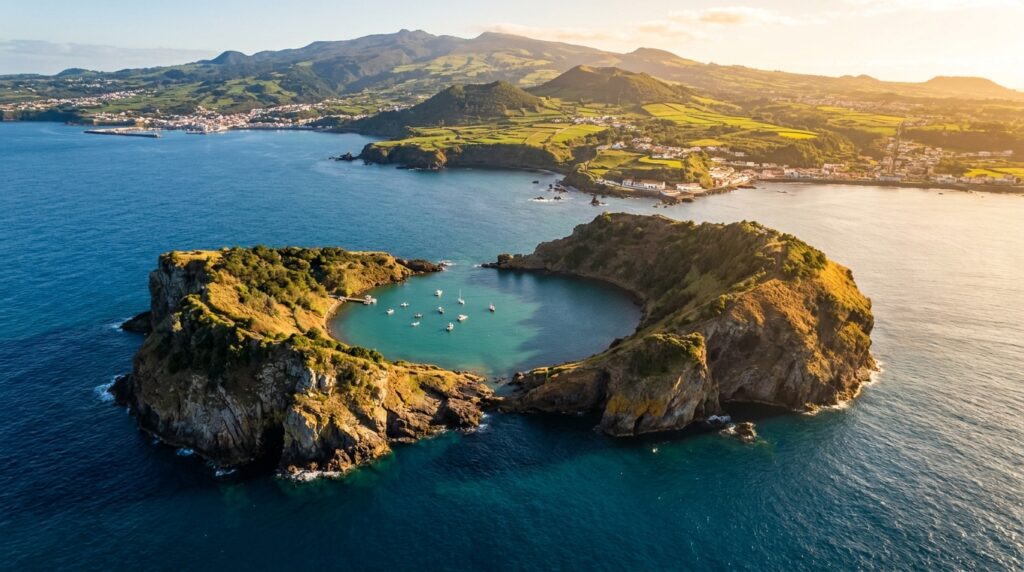
Vila Franca Islet sits 1 kilometer off São Miguel’s southern coast. The Azores Regional Government protects this volcanic crater as a nature reserve. A collapsed cone forms a near-perfect circular lagoon in the middle of the Atlantic. The water inside stays calm while waves crash against the outer walls.
This is one of the most photographed spots in the Azores. Red Bull used the crater for their Cliff Diving World Series. Divers jumped from platforms built on the crater rim. That event ended, but the location remains popular with swimmers and snorkelers.
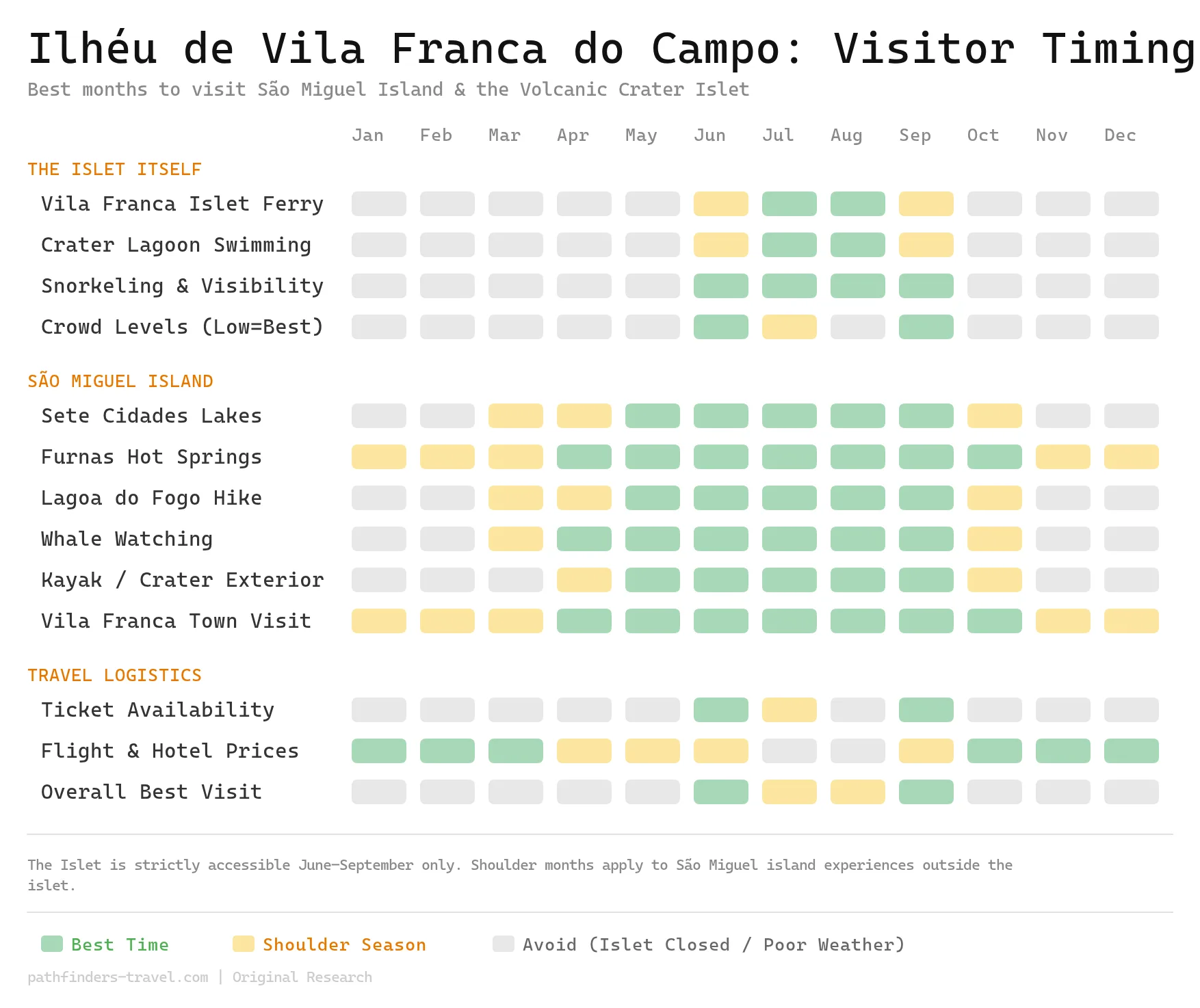
The Official Azores Regional Government nature reserve information page caps daily visitors at 400 people, according to environmental protection regulations. Ferries run only from mid-June through mid-October (June 12 to October 11 in 2026). You cannot visit outside these months. The restriction protects the ecosystem and prevents overcrowding.
Getting there requires advance planning. Ferry tickets sell out fast in July and August. The Visit Azores official tourism website page about the islet provides current schedules. You board at Vila Franca do Campo marina. The crossing takes 10 minutes.
This guide covers ferry logistics, what you’ll find inside the crater, snorkeling conditions, and what to bring. The islet has no facilities. No bathrooms, no shade, no food stands. You bring everything in and carry everything out.
What We Used to Write This
This guide draws on tourism board resources, geological data, and visitor experiences shared online. Everything here was current as of writing, but we’d recommend checking with local authorities in the Azores before planning your visit, as conditions and access policies can change.
What to See and Do on Vila Franca Islet
The islet’s collapsed volcanic crater forms a 150-meter-wide natural swimming pool with visibility often exceeding 20 meters, ideal for snorkeling among parrotfish, damselfish, and volcanic rock formations.
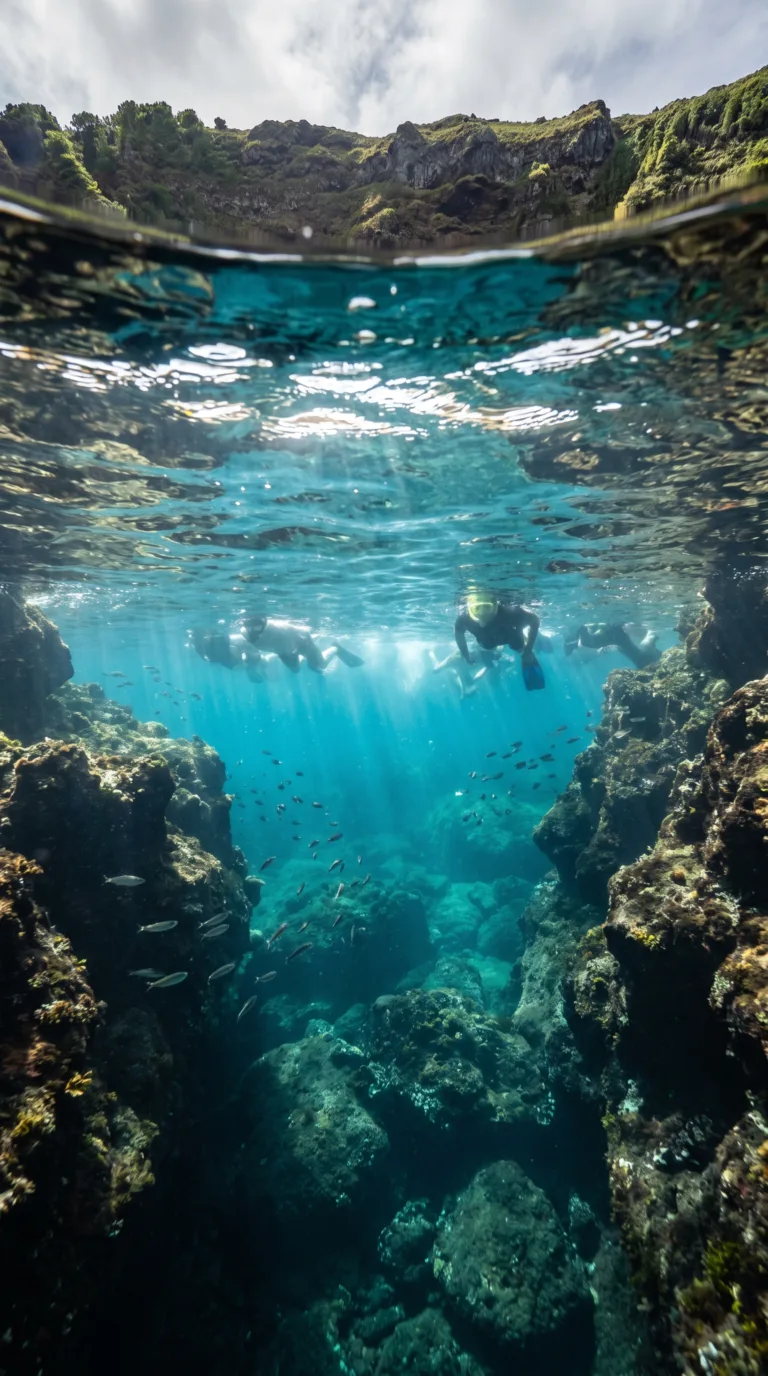
The main attraction here is simple: swimming. The crater lagoon is a protected natural pool carved from a collapsed volcanic cone that formed roughly 5,000 years ago, according to geological surveys from the University of the Azores. Volcanic rock walls rise 60 feet above the water, creating a sheltered arena that blocks wind and waves. The Atlantic pours in through a narrow channel on the south side, keeping the water fresh and clear.
Water clarity is exceptional. You’ll often see 20 meters down on calm days. The volcanic rock formations underwater create ledges, caves, and drop-offs that attract marine life. Parrotfish graze on algae along the crater walls. Damselfish dart between rocks. If you’re lucky, you’ll spot an octopus tucked into a crevice. The protected nature reserve status means fishing is banned, so fish populations are healthy.
Bring your own snorkel gear. There are no rentals on the islet. No facilities at all, actually. No shade, no bathrooms, no snack bar. Just rock and water.
The islet gained international attention when the Red Bull Cliff Diving World Series held events here from 2012 to 2014. Divers launched themselves from platforms built on the crater rim, plunging 27 meters into the lagoon below. The footage went viral. Suddenly, this obscure Azorean rock was on Instagram feeds worldwide. The events ended, but the legacy stuck.
Some kayak tours let you paddle around the exterior of the crater. The outside walls are more dramatic than the inside, sheer cliffs dropping straight into deep water. Sea caves puncture the rock face. Swells surge against the base. It’s a different perspective from the calm interior.
Photography opportunities are obvious. The circular crater shape is impressive from any angle. Shoot wide to capture the full ring of rock. Shoot tight on swimmers floating in turquoise water. Turn around and frame São Miguel’s green coastline across the channel. The light is best mid-morning before crowds arrive.
Visitor numbers are capped to protect the ecosystem. The Azores Regional Government limits daily access to 400 people during peak season. This keeps the experience from turning into a zoo. But it also means you need to book ahead or risk getting shut out.
Set your expectations correctly. This is not a beach day. There’s no sand, no lounging, no cocktails. It’s a raw natural environment. You swim, you snorkel, you sit on volcanic rock. That’s it. If you want amenities, stay on São Miguel.
Getting to Vila Franca Islet: Ferry Tickets and Schedule
Round-trip ferry tickets to Vila Franca Islet cost €15 (Azores residents €6, under-10s free) and must be pre-booked online, with boats departing from Vila Franca do Campo marina hourly through the afternoon between mid-June and mid-October.
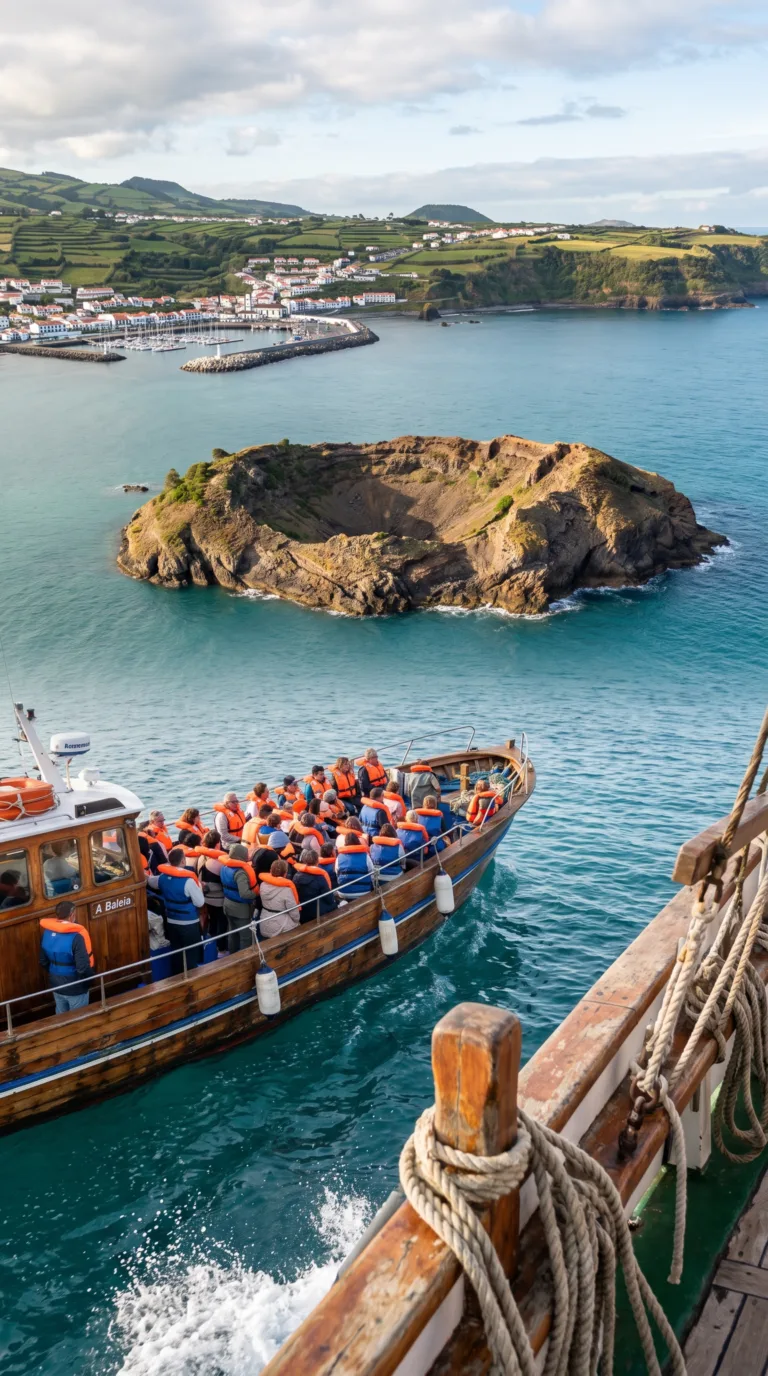
You cannot buy tickets at the dock. The official ferry booking system requires advance online reservations. Same-day availability is rare. The regional government caps daily visitors at 400 people to protect the crater ecosystem. Summer weekends sell out weeks ahead.
According to the official operator (Cruzeiro do Ilhéu), round-trip tickets cost €15 per person, with a reduced €6 fare for Azores residents and free passage for children under 10. Prices change annually. The crossing takes 10 minutes each way.
Ferries run from mid-June through mid-October only. Weather shuts down service frequently. Atlantic swells exceeding 1.5 meters cancel departures. If your boat gets scrubbed, operators issue full refunds. Build flexibility into your São Miguel itinerary.
Boats leave Vila Franca do Campo marina at set times from 10:00am, then hourly through the afternoon until 6:00pm. You pick a departure time when booking. Return trips run on the same interval. Most visitors stay 1 to 3 hours. The ferry drops you at a small concrete platform on the islet’s outer edge. You walk through a natural rock tunnel to reach the interior lagoon.
The marina sits on São Miguel’s southern coast, roughly 20 kilometers east of Ponta Delgada. Drive time from the capital runs 25 minutes. Free parking fills up by 10am in July and August. Arrive early or take a taxi. Expect to pay €25-30 for a cab from Ponta Delgada. Local bus service exists but runs infrequently.
Some outfitters sell combined kayak-and-islet packages. You paddle around the marina and the crater, then board the return ferry. These tours cost €30-45 and include gear. Standard ferry-only tickets remain cheaper for swimmers who just want lagoon time.
Check your email the night before departure. Operators send weather updates and cancellation notices by 8pm. Rough seas develop quickly in the Azores. Bring your confirmation code to the marina ticket window 15 minutes before boarding.
Travel Routes
Below are recommended travel routes with key stops and estimated drive times.
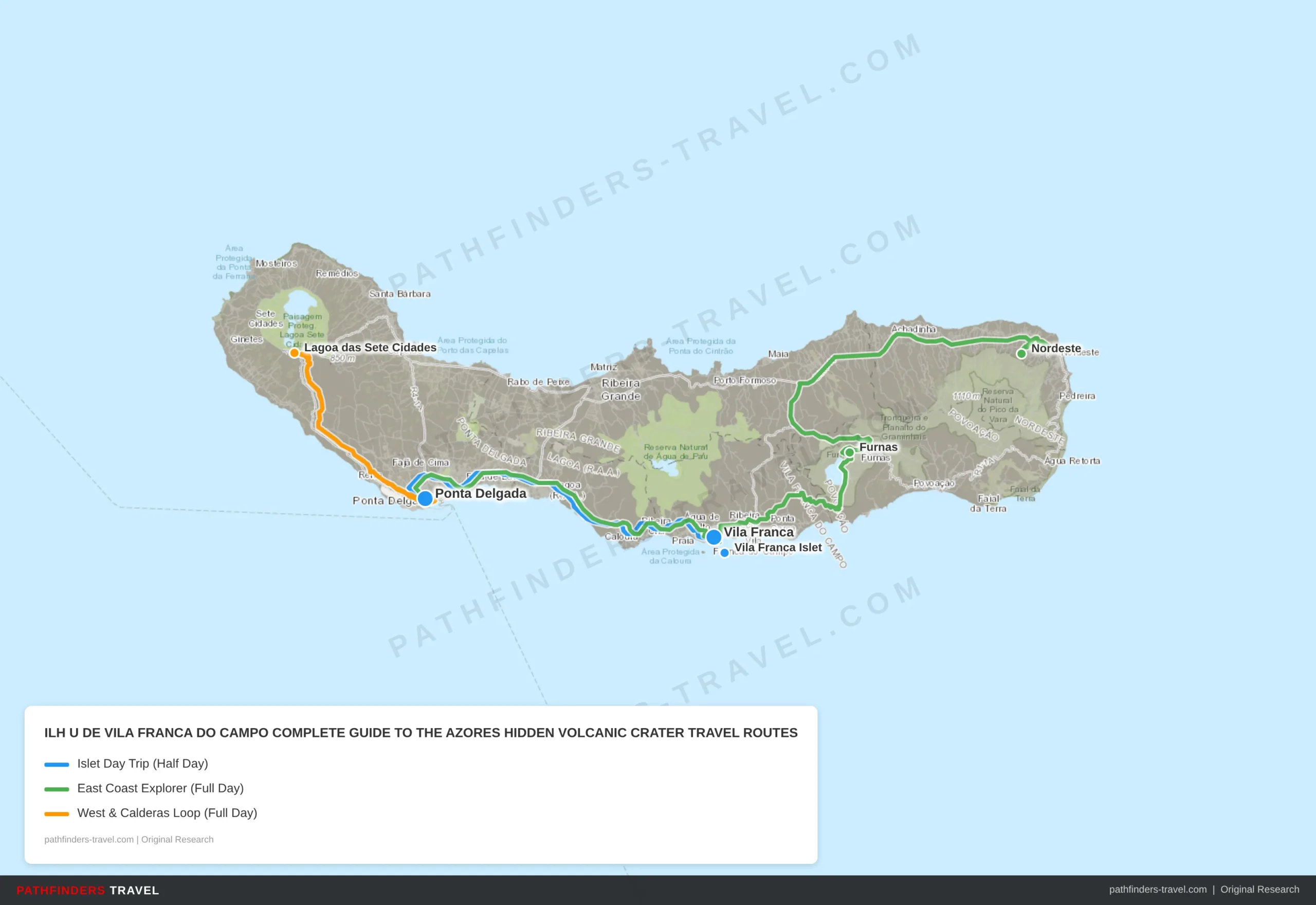
| # | Stop | Highlights | Drive Time |
|---|---|---|---|
| 1 | Ponta Delgada | Gateway city and main ferry hub for São Miguel. Rent a car, grab supplies, the islet has zero facilities, so stock up on water, sunscreen and snacks here. | Start |
| 2 | Vila Franca | Small fishing town where the islet ferry departs. Board at the marina; crossing takes 10 minutes. Book tickets well in advance for July, August. | 35 min |
| 3 | Vila Franca Islet | Protected volcanic crater with a 150 m natural swimming pool. Snorkel among parrotfish and damselfish with 20 m visibility. Max 400 visitors/day, open mid-June to mid-October only. | 10 min ferry |
| # | Stop | Highlights | Drive Time |
|---|---|---|---|
| 1 | Ponta Delgada | Early start from the island capital. Pick up ferry tickets for the islet (first crossing) and pack a full day’s supplies. | Start |
| 2 | Vila Franca | Catch the morning ferry from Vila Franca marina. Spend 2–3 hours swimming and snorkeling inside the volcanic crater. | 35 min |
| 3 | Vila Franca Islet | The crown highlight, collapsed volcanic cone, crystal-clear lagoon, and sheer 18 m crater walls. Bring your own snorkel gear; nothing is available on the islet. | 10 min ferry |
| 4 | Furnas | Volcanic hotspring village with bubbling fumaroles, Lagoa das Furnas lake, and caldeira-cooked cozido stew. Soak in the Terra Nostra thermal garden pool. | 30 min |
| 5 | Povoação | One of the oldest settlements in the Azores, tucked in a dramatic valley. Scenic coastal viewpoints and quiet fishing harbour. | 20 min |
| 6 | Nordeste | The wild northeastern tip of São Miguel, rugged cliffs, thick hydrangea-lined roads, and miradouros (viewpoints) over the Atlantic. Return to Ponta Delgada via the north coast. | 35 min |
| # | Stop | Highlights | Drive Time |
|---|---|---|---|
| 1 | Ponta Delgada | Start early and head west. The drive to Sete Cidades passes through green hillside villages and coastal viewpoints. | Start |
| 2 | Lagoa das Sete Cidades | Iconic twin-coloured crater lakes, one blue, one green, set inside a massive caldera. Hike the rim trail or take in the panorama from Vista do Rei viewpoint. | 45 min |
| 3 | Ribeira Grande | Charming north coast town with a historic centre, lively market, and excellent seafood restaurants. Good lunch stop before looping back south to Ponta Delgada. | 30 min |
| 4 | Ponta Delgada | Return to the capital along the north coast road. Evening options: Portas da Cidade gateway, the harbour esplanade, and local restaurants in the old town. | 40 min |
Practical Tips for Visiting the Islet
Planning Tip
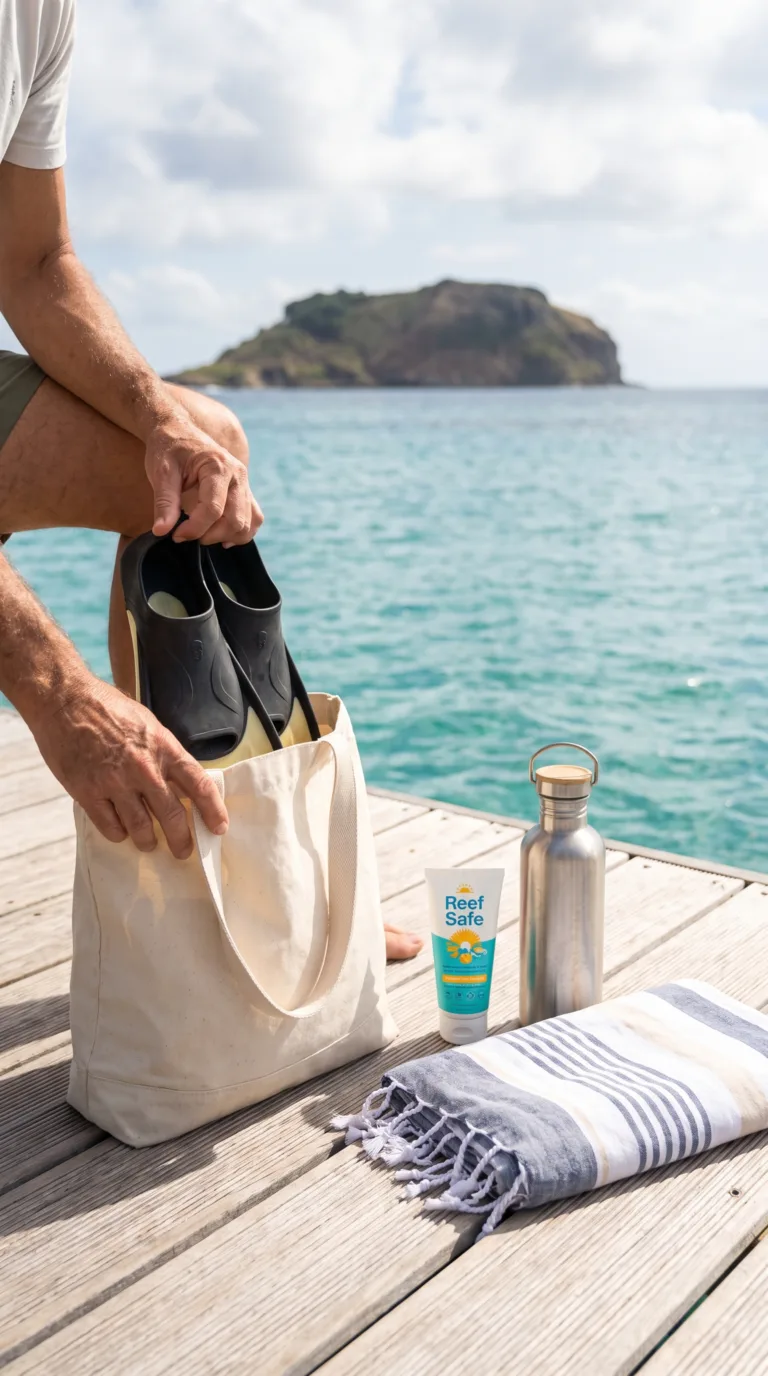
Visit between July and August for water temperatures of 20-23°C, bring all supplies including reef-safe sunscreen and snorkel gear, and book at least one week in advance during peak summer months.
July and August deliver the warmest water. Expect 20-23°C according to the IPMA Marine Weather Forecast. Seas stay calmer during these months. June and September work if you want fewer people, but the water drops to 18-19°C. You’ll feel it.
The islet has zero facilities. No shops. No shade. No rentals. Bring your own snorkel gear or skip the best part of the trip. Reef-safe sunscreen is mandatory here, the nature reserve enforces it to protect the marine ecosystem. Water shoes help on the volcanic rocks. Pack more water than you think you need. Throw in snacks, a towel, and a waterproof bag for your phone.
Sun protection matters more than you expect. There’s nowhere to hide from the midday sun. A hat helps. A rash guard or UV shirt works better. Most visitors stay 1.5 to 2 hours. That’s enough time to swim the crater, snorkel the perimeter, and scramble over the rocks without rushing.
Ferries cancel when winds hit 20 knots or seas get rough. Check the forecast before you book. Summer weather shifts fast in the Azores. Reviews of Ilhéu de Vila Franca do Campo consistently mention the clear water and unique geology, but nearly everyone warns about the lack of facilities and the need to book ahead, at least one week during July and August, according to ferry operator data.
You need moderate swimming skills. Currents run outside the main crater. Life jackets come with the ferry ticket if you want one. Bring a waterproof camera or phone case. A GoPro captures the underwater volcanic formations better than anything else.
Rules are simple. Pack out all trash. No fishing. Don’t touch the marine life. No drones without a permit. Stay inside the designated swimming zones. The islet isn’t accessible for anyone with mobility issues, you’ll climb over rocks and swim to see most of it.
Best Time to Visit
The Ilhéu de Vila Franca do Campo operates on a strict seasonal window: ferries run mid-June through mid-October only, with a hard cap of 400 daily visitors enforced by the Azores Regional Government. July and August offer the warmest water temperatures and longest daylight hours, but tickets sell out weeks in advance, June and September offer the sweet spot of open access, calmer crowds, and excellent snorkeling visibility. São Miguel Island itself is visitable year-round, but pairing island activities with the islet experience is only possible in the summer season.
Exploring São Miguel Beyond the Islet
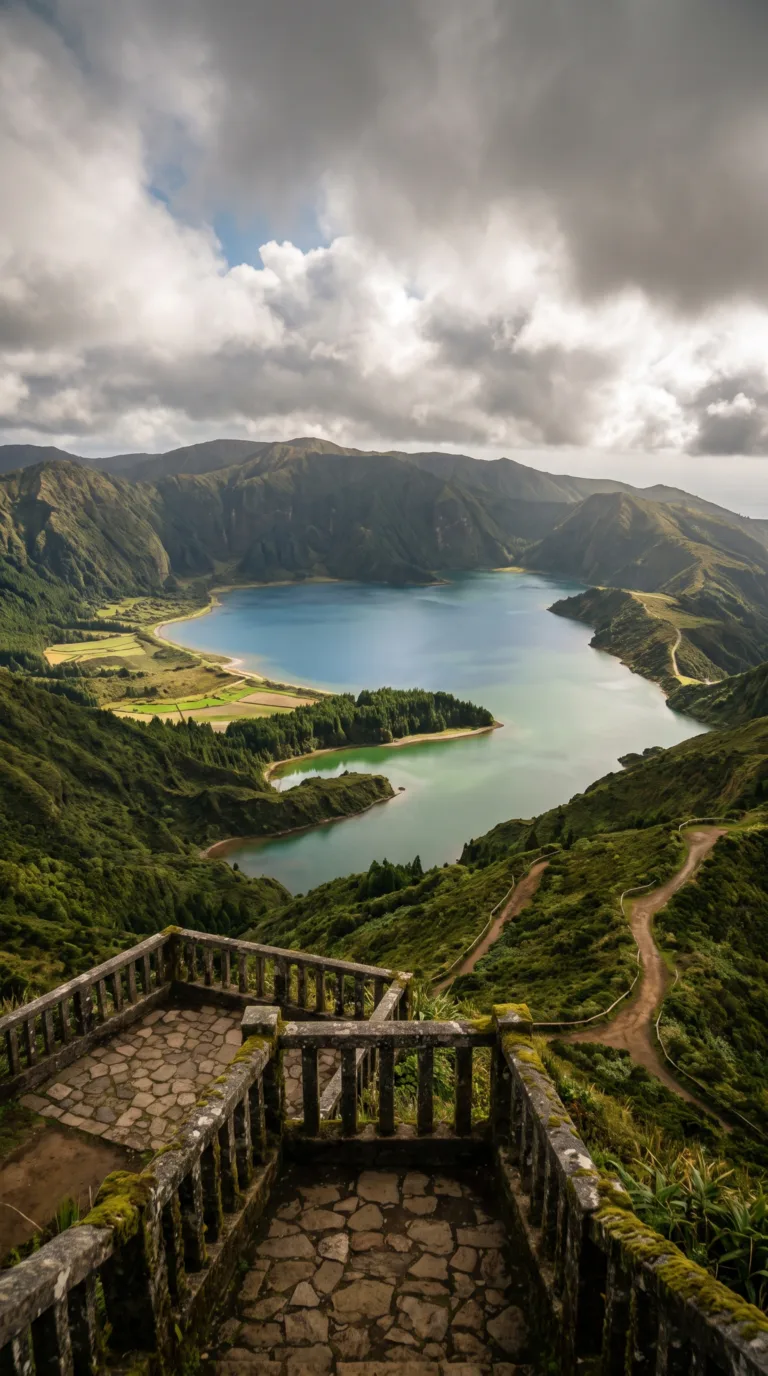
São Miguel offers volcanic crater lakes at Sete Cidades and Lagoa do Fogo, geothermal hot springs in Furnas and Caldeira Velha, and the capital Ponta Delgada, all within 45 kilometers of Vila Franca do Campo.
Vila Franca do Campo itself deserves a few hours. The town center has historic churches dating to the 1500s. Local restaurants serve fresh fish caught that morning. The marina area fills with fishing boats every afternoon.
Ponta Delgada sits 20 kilometers west. The drive takes 25 minutes on the coastal highway. São Miguel’s capital has cobblestone streets lined with black basalt and white limestone buildings. The Portas da Cidade gates mark the harbor entrance. Jardim António Borges botanical garden contains plants from five continents. Museums cover whaling history and Azorean art. Restaurants outnumber those in Vila Franca by a factor of ten.
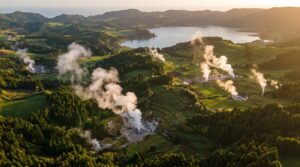
Furnas lies 15 kilometers north in a collapsed volcanic crater. Steam vents hiss along the roadside. Terra Nostra Park surrounds a massive thermal pool stained orange by iron oxide. The water stays at 38°C year-round. Local restaurants prepare cozido das Furnas, a meat and vegetable stew cooked underground for six hours using volcanic heat. You can watch them dig up the pots at lunchtime. The Visit Azores website lists multiple Furnas tour operators departing from Ponta Delgada.
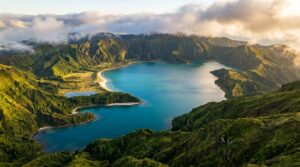
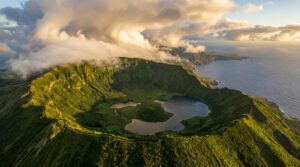
Lagoa do Fogo occupies a crater 30 kilometers northwest. The lake sits 575 meters above sea level. No development mars the shoreline. A hiking trail descends from the main viewpoint to the water’s edge in 45 minutes. The climb back up takes twice as long. Pack water. The lake contains no facilities.
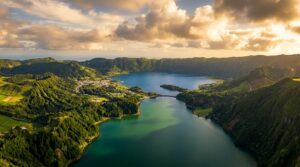
Sete Cidades dominates every São Miguel postcard. Two lakes fill a crater seven kilometers across. One appears blue, the other green, though both contain the same water. The color difference comes from light reflection and algae concentration. Vista do Rei viewpoint overlooks both from the crater rim. The drive from Vila Franca takes one hour. Morning light works best for photos.
Caldeira Velha provides a quick thermal soak between destinations. A waterfall feeds a series of pools at around 38°C. The site charges €10 admission (€3 to visit without bathing). Changing rooms and showers are available. The forest canopy blocks most sunlight. Arrive before 11:00 to avoid tour groups.
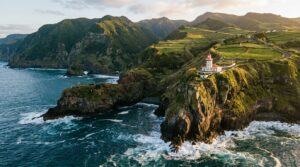
Nordeste occupies the island’s northeastern corner. The road winds through 30 miradouros (viewpoints) overlooking cliffs and valleys. Ponta do Arnel lighthouse requires a steep descent on a narrow road. Salto do Farinha waterfall drops 40 meters into a pool surrounded by ferns.
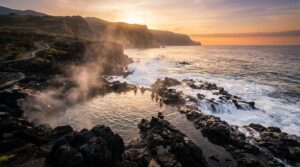
Ponta da Ferraria mixes volcanic springs with Atlantic surf on the western coast. A metal staircase descends into natural rock pools. Water temperature fluctuates with the tide. High tide brings cold ocean water. Low tide concentrates the hot springs. Check tide tables before driving out.
Gorreana Tea Plantation grows Camellia sinensis on volcanic soil since 1883. Free tours run every 30 minutes. The tasting room serves five tea varieties. No reservations needed. The Azores Geopark recognizes the plantation as a geological heritage site.
Mosteiros beach features black sand and offshore rock formations called ilhéus. The rocks once formed part of the island before erosion separated them. Sunset lights them from behind. A small natural pool offers calm swimming when the ocean runs rough.
Rent a car. São Miguel spans 65 kilometers end to end. Buses connect major towns but skip most natural sites. Daily car rental starts at €35 in summer. Book ahead. Tour companies in Ponta Delgada run full-day circuits hitting Sete Cidades, Lagoa do Fogo, and Furnas for €60 per person.
Frequently Asked Questions
How do I get to Ilhéu de Vila Franca do Campo?
You can only reach the islet by authorized ferry from Vila Franca do Campo marina on São Miguel’s southern coast. Ferries run mid-June through mid-October (June 12 to October 11 in 2026), weather permitting. You must book tickets in advance online through the Ferry tickets to Ilhéu de Vila Franca do Campo portal. Same-day tickets are rarely available because daily visitor numbers are capped at 400 people. The marina sits 20km east of Ponta Delgada. You can drive there and park for free, take a taxi for €25-30, or catch a local bus.
How much do ferry tickets to Vila Franca Islet cost?
Round-trip ferry tickets cost €15 per person, with a reduced €6 fare for Azores residents and free passage for children under 10. Some tour packages bundle ferry access with kayaking or guided snorkeling for €30-50. Book only through the official operator (Cruzeiro do Ilhéu) or authorized partners.
What is the ferry schedule to the islet?
Ferries depart multiple times daily, typically from 10:00am to 6:00pm. Return boats run every 30-60 minutes. You can stay on the islet for 1-3 hours depending on your chosen return time. The ferry crossing takes about 10 minutes each way. The schedule depends on weather conditions. Ferries get cancelled in rough seas or high winds. According to ferry operator statistics, boats successfully operate on approximately 85% of scheduled days during the season.
Is snorkeling good at Ilhéu de Vila Franca do Campo?
Snorkeling here is excellent, with visibility often exceeding 20 meters in the protected crater lagoon. You’ll see parrotfish, damselfish, octopus, and various Atlantic species. Volcanic rock formations create interesting underwater topography. You must bring your own snorkel gear. No rentals exist on the islet. Water temperature ranges from 18-23°C depending on season. Warmest months are July and August.
When is the best time to visit Vila Franca Islet?
July and August offer the warmest water (20-23°C) and calmest seas, but crowds peak then. June and September are less busy with cooler water but still good conditions. Book at least 1-2 weeks ahead during July-August. Weekdays are quieter than weekends. Morning departures (9:30-11:00am) often have better weather and calmer seas than afternoon slots.