Estimated reading time: 16 minutes
Last updated: September 2026
Table of Contents
- What Is Angra do Heroísmo Known For?
- Top Attractions and Things to Do in Angra do Heroísmo
- Where to Eat in Angra do Heroísmo
- Where to Stay in Angra do Heroísmo
- Getting to and Around Angra do Heroísmo
- Day Trips from Angra do Heroísmo
- Practical Tips for Visiting Angra do Heroísmo
- Frequently Asked Questions
What Is Angra do Heroísmo Known For?
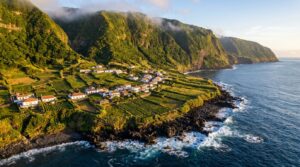
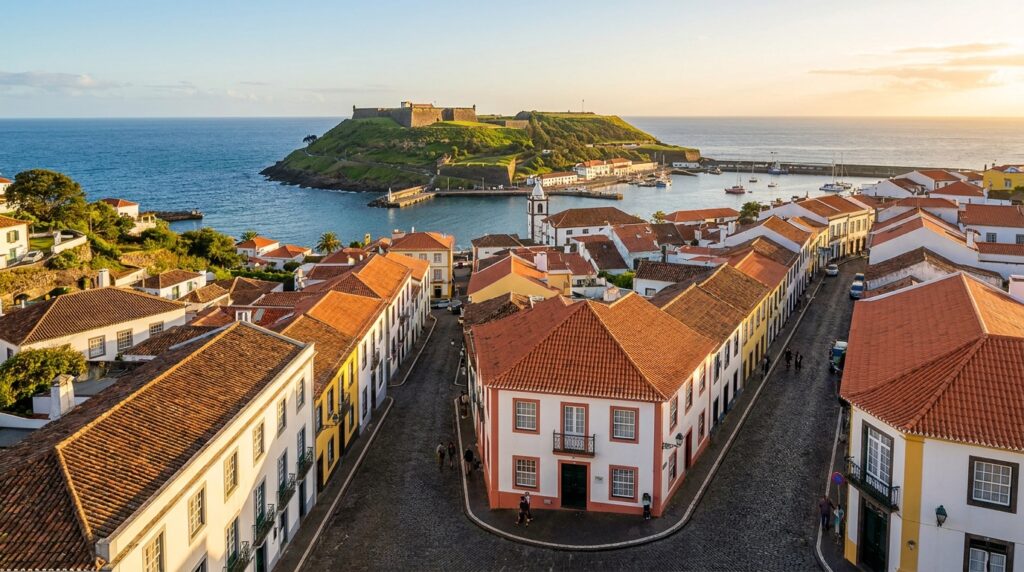
Angra do Heroísmo is best known as the oldest city in the Azores and a UNESCO World Heritage Site since 1983. Founded in 1534, it grew rich as the mid-Atlantic port where Portuguese and Spanish fleets sheltered between Europe and the New World. Today its cobbled old town of pastel churches and palaces, two hilltop forts, and the green cone of Monte Brasil make it one of the Azores’ most historic and photogenic cities.
Research Behind This Guide
This guide draws from official Azores tourism materials, government heritage documentation, and verified traveler experiences rather than firsthand visits. All details were current at publication, though we recommend checking local tourism websites for the latest information on opening hours and events.
Want to see Angra do Heroísmo’s historic streets and UNESCO sites for yourself? Watch our complete Terceira Island travel guide in 4K.
Angra do Heroísmo sits on the southern coast of Terceira Island, roughly 900 miles west of mainland Portugal. The UNESCO World Heritage Centre recognized the city in 1983 for its role as a maritime crossroads during the Age of Discovery. This makes it Portugal’s first UNESCO site and one of only two in the Azores.
The name breaks down simply. “Angra” means bay or inlet in Portuguese. “Heroísmo” was tacked on in 1837 after locals defended the city during the Liberal Wars. They held out against absolutist forces for years. The full name honors that resistance.
You’ll find a Renaissance grid layout frozen in time. Pastel-colored colonial buildings line cobblestone streets. Two fortresses guard the harbor. The volcanic peninsula of Monte Brasil looms over everything. According to Visit Azores, the municipality has around 35,000 residents today, but the historic center feels smaller and walkable.
Angra works as a base for exploring Terceira’s lava caves, crater lakes, and coastal villages. You get authentic Azorean food, zero cruise ship crowds, and easy island-hopping flights to São Miguel or Pico. The city delivers history without the tourist circus you’d find in Lisbon or Porto.
Top Attractions and Things to Do in Angra do Heroísmo
Angra do Heroísmo’s UNESCO-protected historic center features the 16th-century Fortress of São João Baptista, Museu de Angra do Heroísmo, and the Renaissance-era Sé Cathedral within a grid of pastel colonial buildings.
The UNESCO historic center is what separates Angra from every other Azorean town. Renaissance urban planning laid out these streets in the 1500s. Pastel-colored colonial buildings line cobblestone lanes in a grid that hasn’t changed in 400 years. You walk through a living museum.
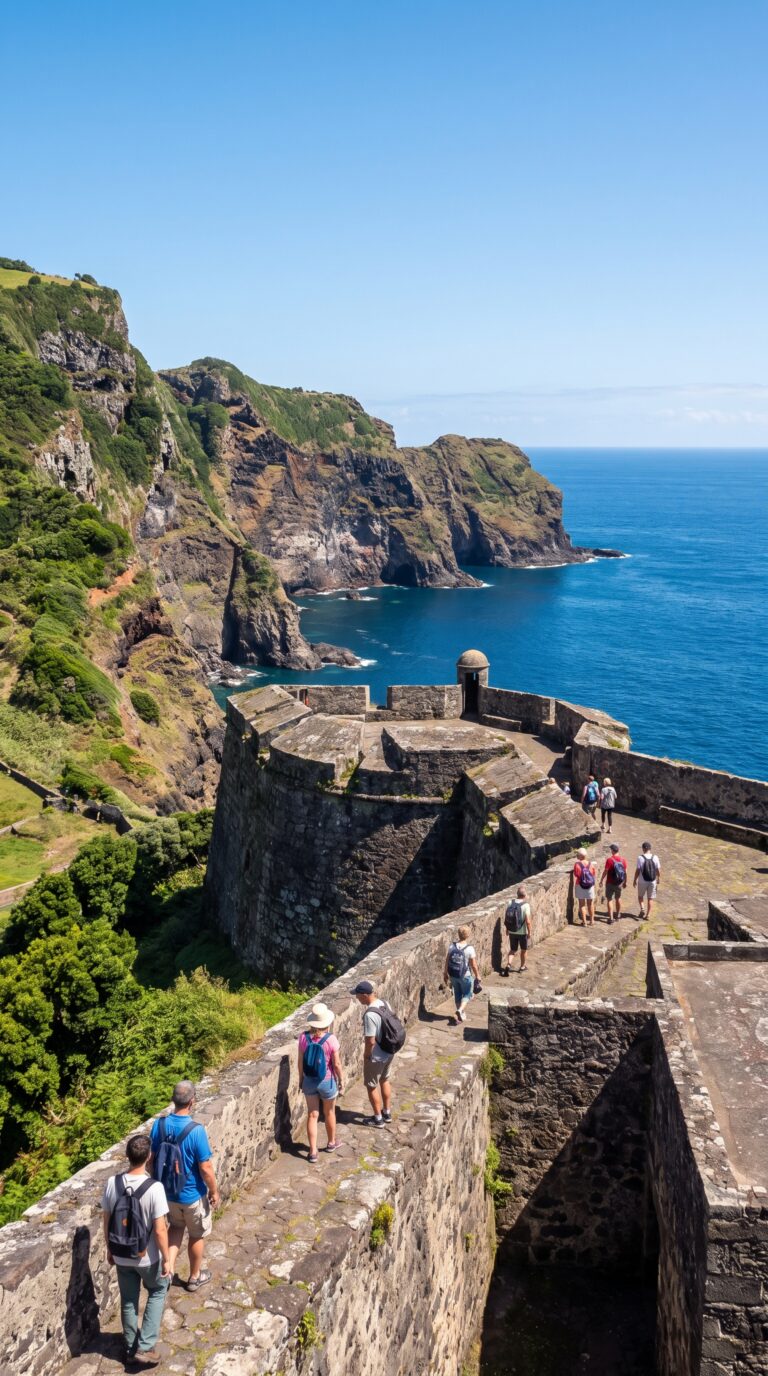
The Fortress of São João Baptista sits on Monte Brasil peninsula like a stone crown. Built starting in 1593, it ranks among the largest fortifications in the Atlantic according to Portuguese cultural heritage records. The walls stretch over 4 kilometers. You can walk the ramparts for wide views across Terceira and open ocean. Military architecture nerds will spend hours here. Admission costs €3.
The Museu de Angra do Heroísmo occupies a former 17th-century convent. Three floors cover Azorean history, maritime heritage, and military artifacts. The carriage collection is surprisingly good. The museum explains why Angra mattered so much to Portuguese trade routes. Entry is €2. Closed Mondays.
Palácio dos Capitães Generais served as the governor’s palace for centuries. The building itself is government offices now, but the gardens (Jardim Duque da Terceira) stay open to the public. Manicured hedges, tropical plants, peacocks wandering around. Free entry. Good for 20 minutes if you need a break from walking.
Sé Cathedral anchors the main square. Gothic bones with Baroque additions. The silver treasury inside holds ornate religious pieces from the 1600s. Mass still happens here. Modest dress required. No entry fee but donations expected.
UNESCO designated 122 buildings in Angra’s historic zone as protected monuments according to the World Heritage Site documentation. Churches, manor houses, civic buildings. You’ll stumble across them just walking around.
Algar do Carvão sits 12 kilometers from Angra. This volcanic cave system lets you descend into an accessible lava tube. Stalactites hang from the ceiling. A lake sits at the bottom. One of Terceira’s top natural attractions. Guided tours only. Book ahead in summer.
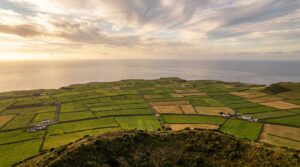
Serra do Cume viewpoint lies 10 kilometers east. The patchwork fields of Terceira spread out below like a quilt. Stone walls divide tiny plots into geometric patterns. Clear days let you see across the entire island. Free. Drive or taxi only.
Porto Judeu beach area offers the closest swimming to Angra. Rocky coastline with natural pools. Locals use it more than tourists. Bring water shoes. The ocean here is cold year-round.
Sanjoaninas festival takes over Angra every June. Ten days of traditional bullfighting, religious processions, street parties. The bulls run through wooden arenas built in town squares. Not like Pamplona. The bulls don’t get killed. Accommodation books out months ahead during festival week.
Where to Eat in Angra do Heroísmo
Angra do Heroísmo’s dining scene centers on traditional Azorean cuisine including alcatra (Terceira’s signature beef stew), fresh Atlantic seafood, and local cheeses, served in family-run tascas and modern restaurants throughout the historic center.
The historic center holds around 40 restaurants, according to the municipal tourism office. Most cluster around Praça Velha and Rua da Sé. You’ll find everything from hole-in-the-wall tascas to white-tablecloth spots.
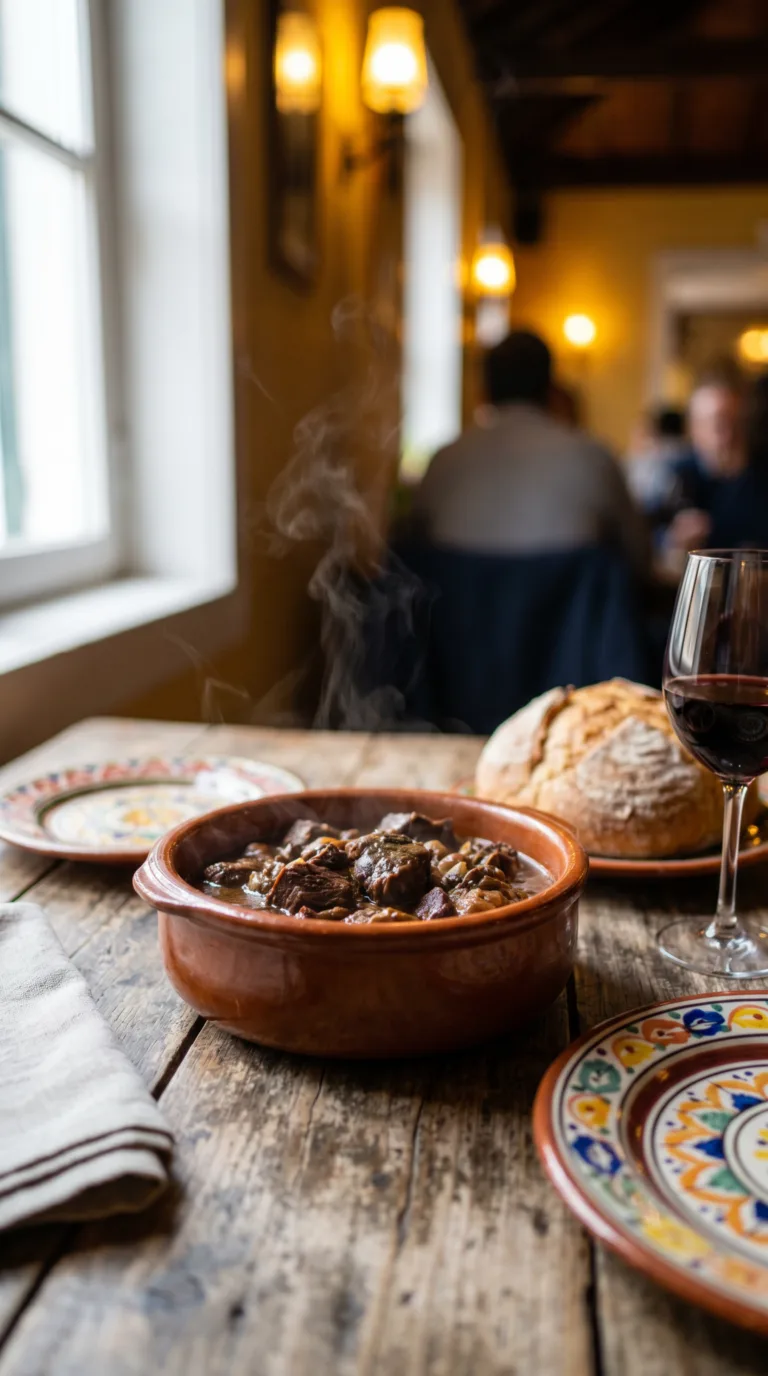
Alcatra is what you came for. This slow-cooked beef stew simmers for hours in a clay pot with red wine, garlic, and spices. The meat falls apart. The sauce soaks into bread. Every family-run tasca serves it slightly differently.
Other dishes worth ordering: fresh limpets (lapas) grilled with butter and garlic, octopus stewed in wine, Queijo Vaquinha (local cow’s milk cheese), sweet bread called massa sovada, and Dona Amélia cakes for dessert.
Elio’s does traditional Azorean cooking without fuss. The menu rotates based on what’s available. Expect alcatra, grilled fish, and house wine. Osteria mixes Italian techniques with Azorean ingredients, think fresh pasta with local seafood. Porta 42 takes a contemporary approach, plating local products in smaller, sharper portions.
Main courses at traditional tascas run €10-20. You can Enjoy the Azorean food without spending much. Hit Mercado Duque de Bragança in the morning for fresh produce, local cheese, and cured meats if you’re self-catering.
Where to Stay in Angra do Heroísmo
Angra do Heroísmo offers accommodation ranging from historic pousadas and boutique hotels in the UNESCO center to modern resorts like Terceira Mar Hotel and Vila Galé Angra, with options from €50-150 per night.
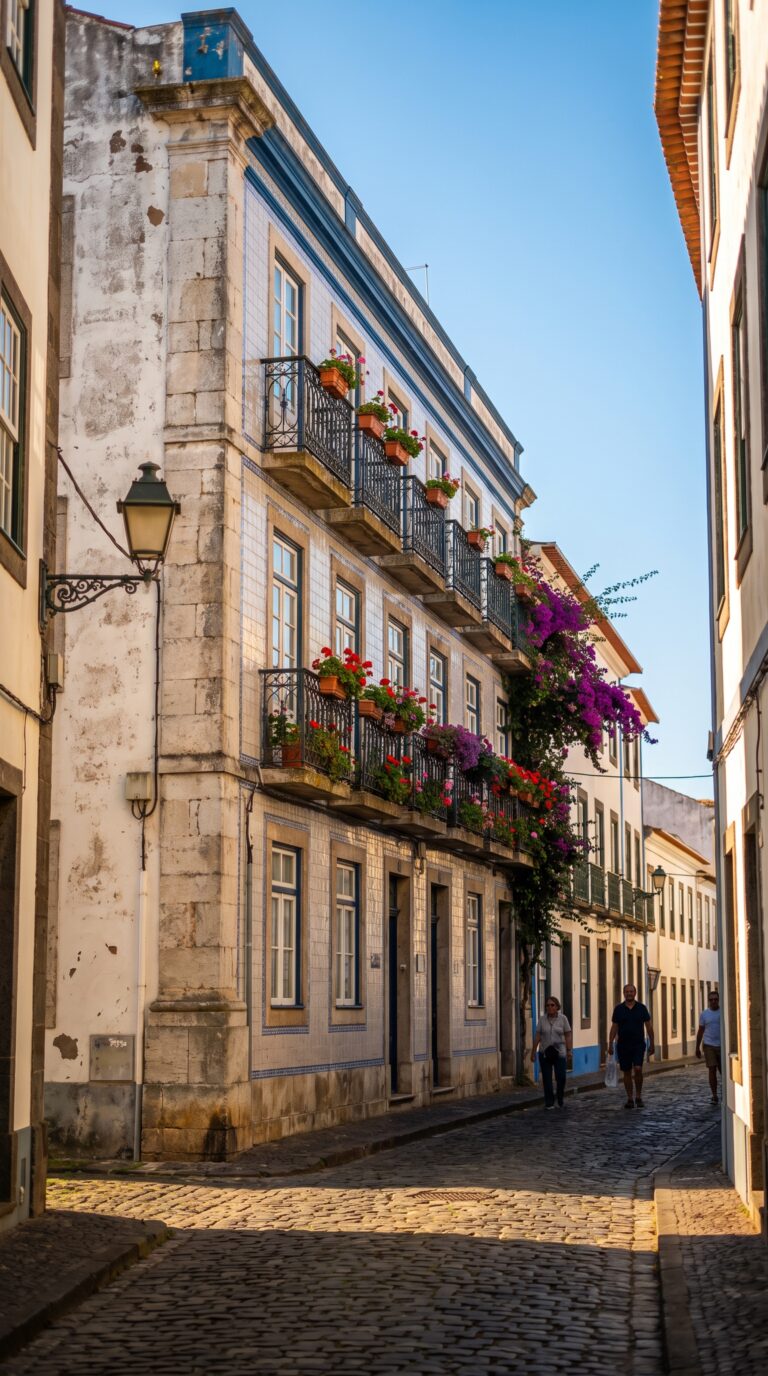
Angra do Heroísmo hotels cluster in two main zones. The historic center puts you inside cobblestone streets and 16th-century architecture. The marina area offers modern builds with parking and pools. Both work fine, you can walk between them in 15 minutes.
The Pousada de Angra do Heroísmo sits inside a converted fortress from the 1500s. Rooms start around €120 in summer. You get stone walls, a restaurant with harbor views, and direct access to the old town. Book months ahead for July and August.
Terceira Mar Hotel near the marina runs €90-130 per night according to Booking.com summer 2026 rates. Modern rooms, outdoor pool, breakfast buffet. Popular with package tourists flying into Lajes Airport.
Hotel Zenite occupies a central spot on Rua Direita. Three-star comfort, no frills. Hotel do Caracol offers boutique styling in a restored townhouse, smaller, quieter, around €80-100. Hotel Cruzeiro drops to €50-70 for basic doubles if you’re counting euros.
Vila Galé Angra sprawls as the largest resort property. Full amenities, conference facilities, multiple restaurants. Rates hit €140-180 in peak season. You trade historic charm for resort convenience.
Alojamento local, private guesthouses and apartments, fill the side streets of the UNESCO zone. Owners rent out floors of colonial homes. Prices run €60-90. Check platforms for verified listings.
Summer months (June through September) and festival dates like Sanjoaninas in late June require advance booking. Shoulder seasons drop rates by 20-30%.
Getting to and Around Angra do Heroísmo
Angra do Heroísmo is served by Lajes Airport (TER) located 21km away in Praia da Vitória, with direct flights from Lisbon, Porto, and other Azorean islands, plus seasonal European connections.
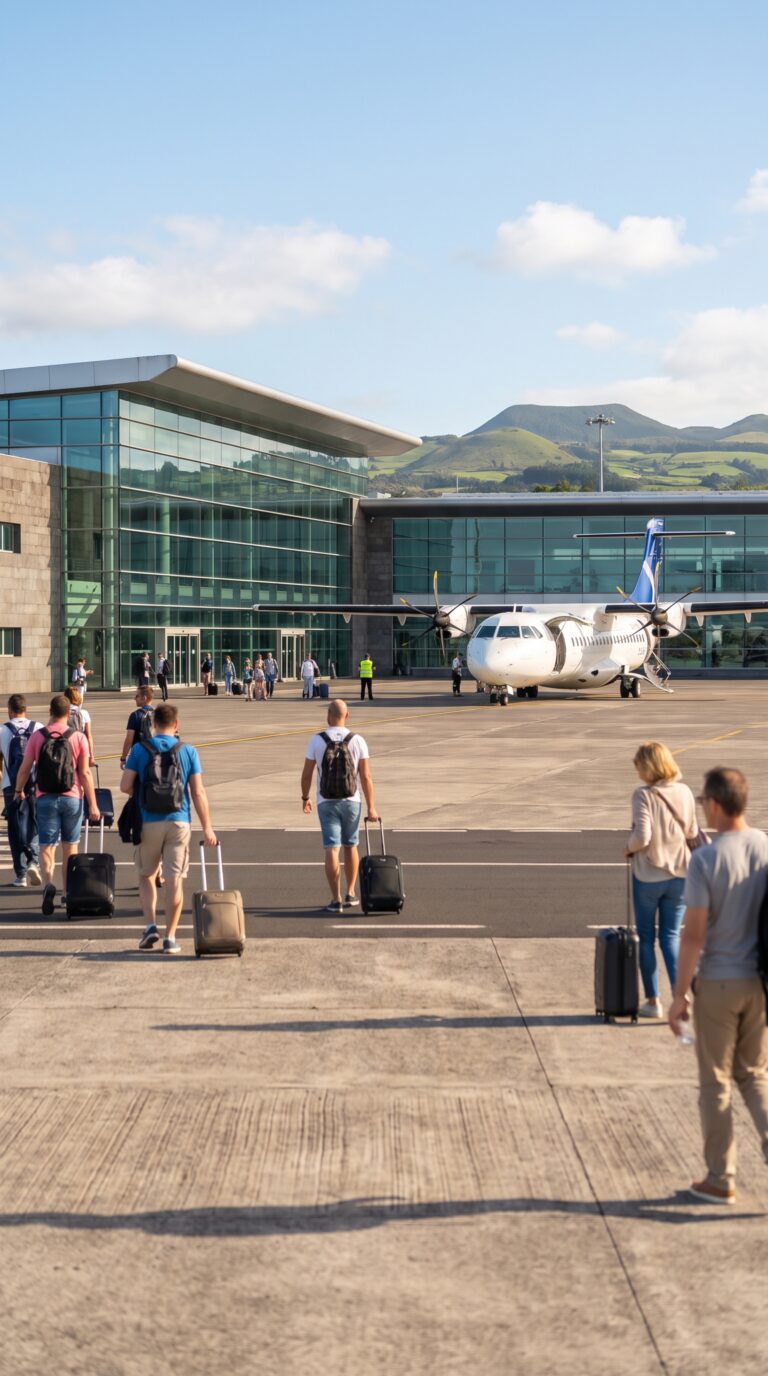
Lajes Airport sits 21km northeast of Angra in Praia da Vitória. SATA Air Açores and TAP Air Portugal operate direct flights from Lisbon (2 hours). You’ll also find connections from Porto and inter-island routes to São Miguel, Faial, and Pico. Summer brings seasonal flights from European cities. According to SATA Air Açores schedules, Lisbon-Terceira runs 3-4 times daily during peak season.
Taxis from the airport cost €25-30 for the 20-minute ride into Angra. Rental cars wait at the terminal. Public buses exist but run infrequently. Most hotels arrange transfers if you book ahead. Check Azores Airlines booking for current flight schedules.
The historic center is compact. Walk everywhere. Most attractions cluster within a 15-minute radius. Free street parking exists outside the old town. Paid spots near the marina charge €0.50-1 per hour.
Rent a car to explore Terceira beyond Angra. Roads are well-maintained. Local buses connect Angra to Praia da Vitória and island towns, but service is sparse. Taxis use meters and charge reasonable rates for short trips around the city.
Travel Routes
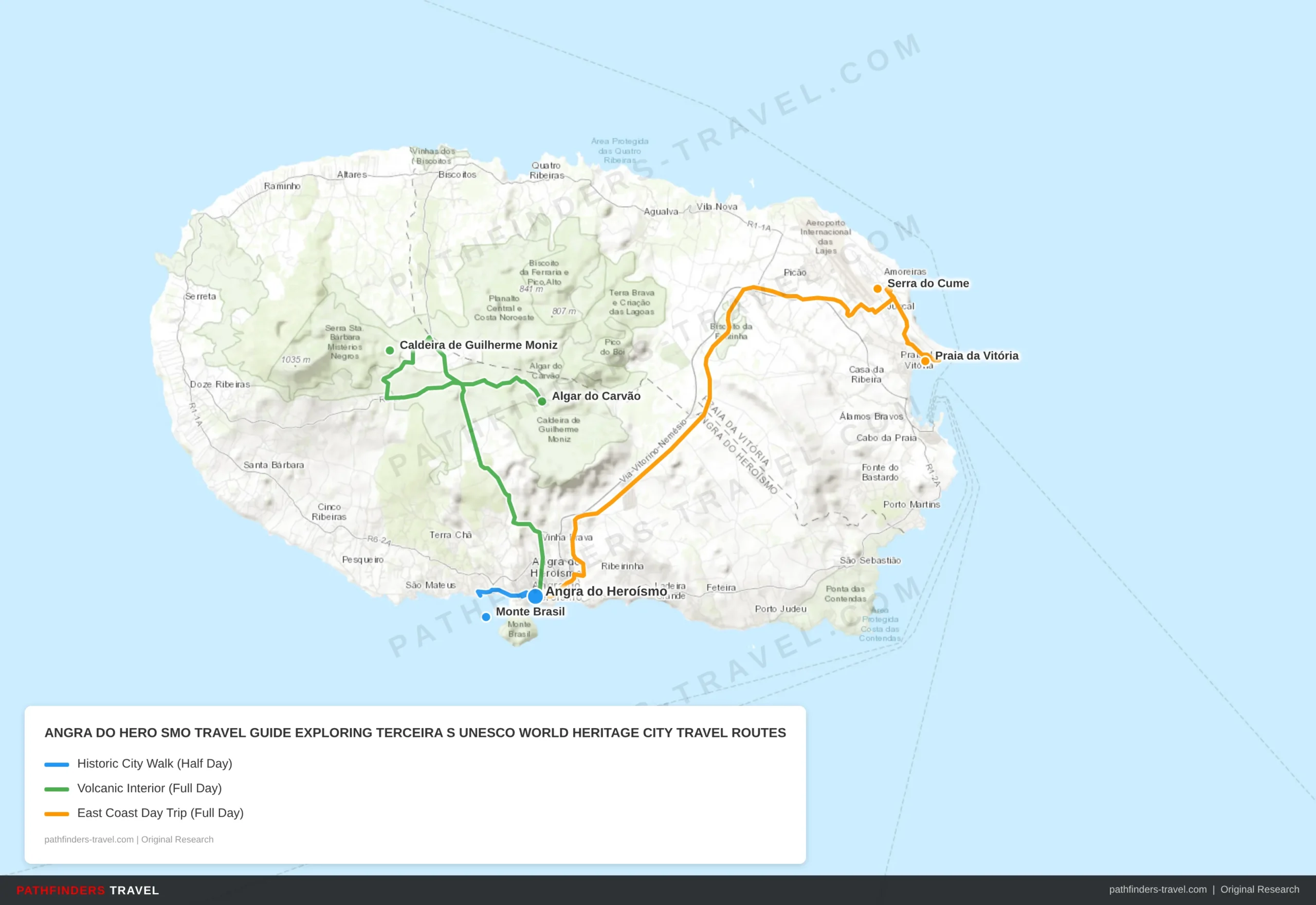
Below are recommended travel routes with key stops and estimated drive times.
| # | Stop | Highlights | Drive Time |
|---|---|---|---|
| 1 | Angra do Heroísmo | UNESCO historic center, Sé Cathedral, Museu de Angra do Heroísmo (€2), Palácio dos Capitães Generais gardens with free entry and peacocks | Start |
| 2 | Monte Brasil | Fortress of São João Baptista (€3), one of the Atlantic’s largest fortifications with 4km of walkable ramparts and sweeping ocean views | 10 min walk |
| # | Stop | Highlights | Drive Time |
|---|---|---|---|
| 1 | Angra do Heroísmo | Start early from the historic center; grab breakfast at a local café on Rua Direita before heading inland | Start |
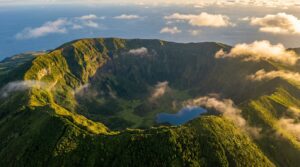
| 2 | Caldeira de Guilherme Moniz | Terceira’s largest caldera offering wide views into a wide volcanic crater; scenic viewpoint with short walking trails | 20 min |
| 3 | Algar do Carvão | Descend into an accessible lava tube with dramatic stalactites and a crater lake at the bottom; guided tours only, book ahead in summer | 10 min |
| 4 | Biscoitos | Natural lava rock ocean pools on Terceira’s north coast; perfect for swimming and snorkeling; local wine cooperative nearby producing recognizable Verdelho | 25 min |
| # | Stop | Highlights | Drive Time |
|---|---|---|---|
| 1 | Angra do Heroísmo | Depart from the city center heading northeast along the coastal road toward Terceira’s east side | Start |
| 2 | Serra do Cume | Iconic viewpoint at Terceira’s highest accessible ridge; patchwork green fields divided by stone walls stretch to the sea, one of the Azores’ most photographed landscapes | 30 min |
| 3 | Praia da Vitória | Terceira’s second town with a sandy beach, historic pelourinho (pillory), and relaxed seafood restaurants along the waterfront; less touristy than Angra | 15 min |
Day Trips from Angra do Heroísmo
From Angra do Heroísmo, day trips include ferry excursions to Pico Island (Mount Pico and UNESCO vineyards), Faial Island (Horta and Capelinhos Volcano), São Jorge’s coastal fajãs, and Graciosa’s volcanic caves.
Angra sits at the center of the Central Azores group. You can reach three other islands by ferry in under two hours. This makes it a solid base for exploring beyond Terceira itself.
Start close. Praia da Vitória sits 21km northeast of Angra. Terceira’s second town has a long sandy beach and pastel-colored buildings lining the waterfront. The vibe is more relaxed than Angra. You can drive there in 25 minutes or take a local bus for €3.
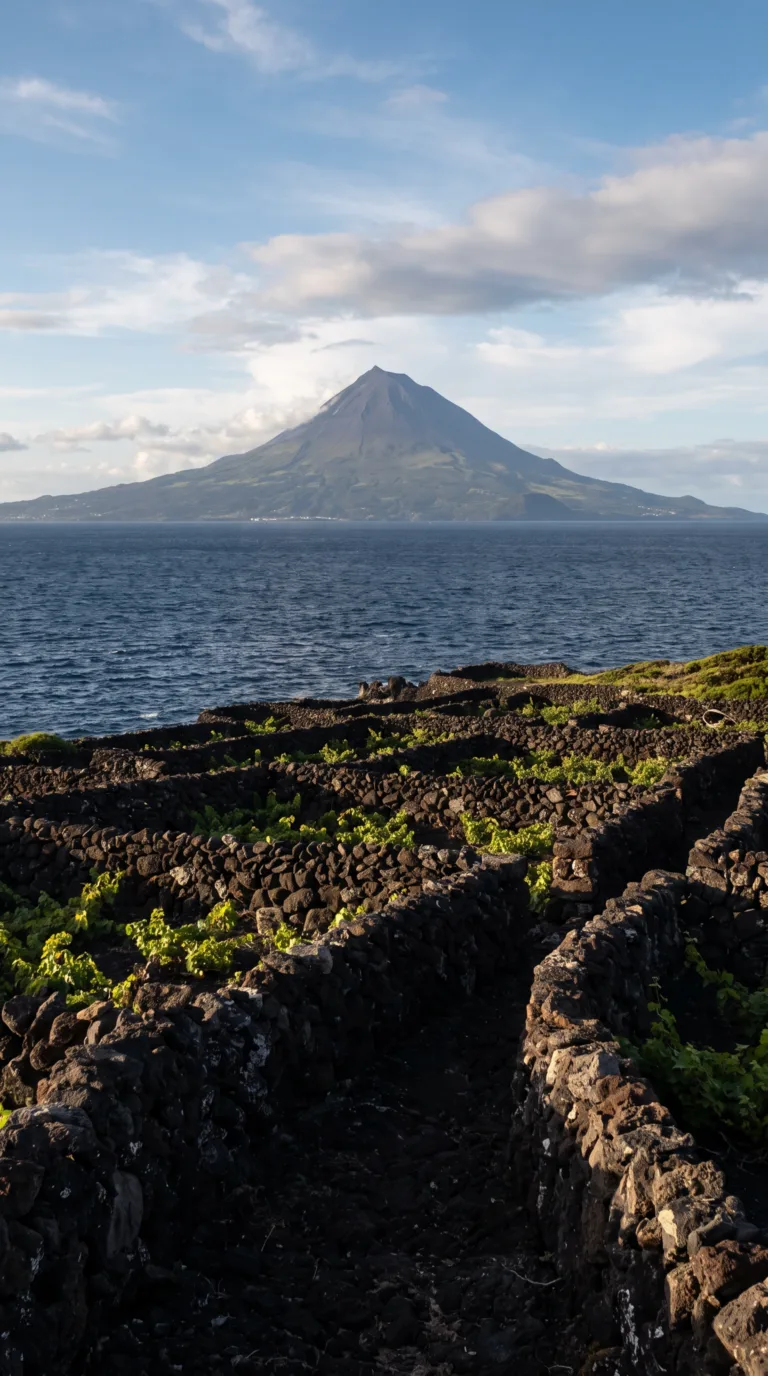
Mount Pico dominates the skyline from Terceira on clear days. Portugal’s highest peak stands at 2,351 meters on Pico Island. The ferry from Angra to Madalena (Pico’s main port) takes 2.5 hours and costs around €35 round-trip according to Atlânticoline official ferry schedule and booking website. Summit hikes require a guide (€25 per person) and start at 2am to catch sunrise above the clouds.
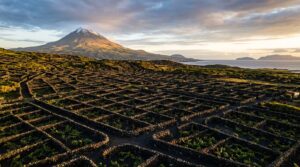
Skip the summit? The Pico Island Vineyards spread across the island’s northern coast. UNESCO protects these stone-walled vineyard plots called currais. They date back to the 15th century. Local producers offer tastings of Verdelho wine for €10 to €15. The volcanic soil gives the wine a mineral edge you won’t find on the mainland.
Horta on Faial Island draws sailors from around the world. The marina walls are covered in thousands of hand-painted murals left by visiting yachts. Peter Café Sport has served gin and tonics to transatlantic crews since 1918. The ferry from Terceira takes 3 hours. You can combine Horta with Capelinhos Volcano on Faial’s western tip. The 1957-58 eruption buried a lighthouse in ash. The interpretation center (€10 entry) sits half-submerged in black sand. The landscape looks like the moon.
Caldeira do Faial is a massive crater in the island’s center. The rim trail takes 2 hours and offers views into the green bowl below. Hydrangeas bloom along the path in summer.
Graciosa Island is the smallest and quietest of the group. The Furna do Enxofre volcanic cave has a sulfur lake 100 meters underground. Entry costs €5. Thermal waters bubble up near the coast at Carapacho.
São Jorge‘s coastal fajãs (flat plains formed by landslides) offer hiking trails along cliffs. The island produces sharp cheese aged in caves.
Book ferries in advance during July and August. Day trips require early departures (7am or 8am boats). Check the Official Pico Island tourism information page for current attraction hours before you go.
Practical Tips for Visiting Angra do Heroísmo
Planning Tip
Angra do Heroísmo has a mild oceanic climate with temperatures ranging 14-25°C year-round; the best time to visit is April-October with June-August being driest, though rain gear is essential any time of year.
The weather here never gets extreme. Winter lows hover around 14°C. Summer peaks at 25°C. According to the Portuguese Institute for Sea and Atmosphere (IPMA), Angra receives about 1,000mm of annual rainfall, spread across the entire year. Atlantic fronts roll through without warning.
April through October gives you the warmest weather and longest daylight hours. June to August sees the least rain but also the most tourists. Shoulder seasons, April, May, September, October, deliver solid weather with half the crowds. December to March brings the wettest conditions, though rain can hit any month. Check the IPMA weather forecast before you leave your hotel each morning.
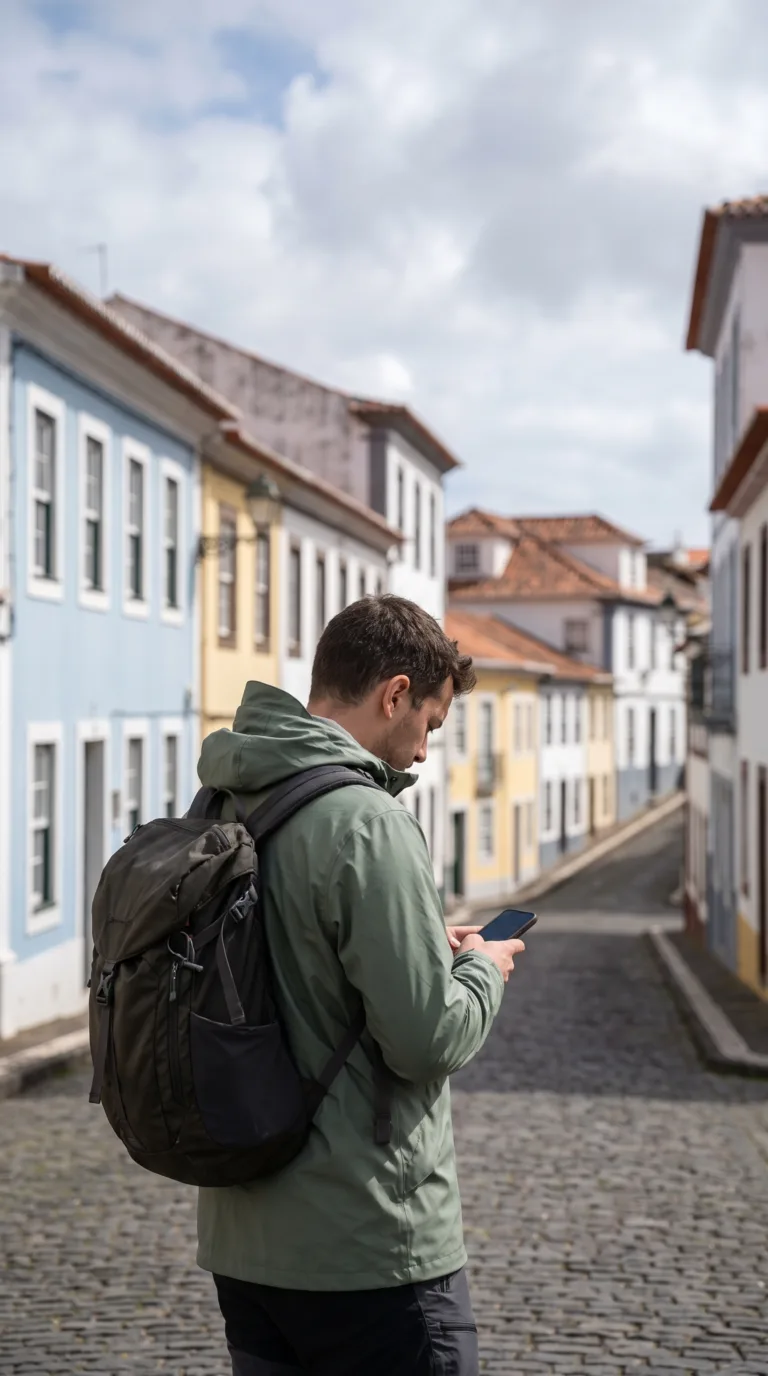
Pack layers. The weather shifts fast here. A waterproof jacket is non-negotiable. Bring comfortable walking shoes with grip, those cobblestones get slick when wet. Sun protection matters even on cloudy days. Toss in swimwear if you plan to hit coastal areas.
Portuguese is the official language. English works fine in hotels and tourist spots. The currency is the Euro. ATMs are everywhere. Credit cards clear at most establishments. Angra operates on Azores Time (UTC-1), one hour behind mainland Portugal.
Grab a map at the tourism office on Praça Velha or download offline maps before you arrive. The Visit Azores tourism office website has solid planning resources. Angra ranks as one of Portugal’s safest cities for visitors. Standard travel precautions apply.
Frequently Asked Questions
What country is Angra do Heroísmo in?
Angra do Heroísmo is in Portugal, specifically in the Azores archipelago. It’s the capital of Terceira Island, one of nine islands in the autonomous region of the Azores. The city sits in the mid-Atlantic, about 1,500km west of mainland Portugal. While the Azores are Portuguese territory, they operate with significant political autonomy and have their own regional government based in Ponta Delgada.
How do you get to Angra do Heroísmo?
Fly into Lajes Airport (TER) on Terceira Island, 21km from the city. SATA Air Açores and TAP Air Portugal run direct flights from Lisbon (2 hours) and Porto. You can also catch inter-island flights from São Miguel, Faial, and Pico. Several European cities offer seasonal direct service during summer months. Ferry connections link Terceira with other Azorean islands, though schedules are less frequent. From the airport, expect a 20-minute taxi ride costing €25-30. Rental cars are available at the terminal, or arrange a hotel transfer in advance.
What is the population of Angra do Heroísmo?
The municipality of Angra do Heroísmo has approximately 35,000 residents. The historic city center, the UNESCO-protected zone, is more compact with around 10,000-12,000 inhabitants. It’s the second-largest city in the Azores after Ponta Delgada on São Miguel. The Angra do Heroísmo population has remained relatively stable over the past two decades, with modest growth driven by tourism and government employment.
Why is Angra do Heroísmo a UNESCO World Heritage Site?
UNESCO designated Angra in 1983, making it one of Portugal’s first World Heritage Sites. The city earned recognition for its perfectly preserved Renaissance urban planning and architecture. During the Age of Discovery, Angra served as a critical maritime crossroads between Europe, Africa, and the Americas. It’s a unique example of Portuguese colonial town planning adapted to volcanic island geography, the grid system wraps around natural harbor contours and volcanic slopes. The designation protects 16th-century fortifications, churches, and civic buildings that survived the 1980 earthquake.
When is the best time to visit Angra do Heroísmo?
April through October delivers the warmest weather and longest daylight hours. June, July, and August are driest and busiest, ideal for beach days and island-hopping. Shoulder seasons (April-May, September-October) offer pleasant temperatures with fewer tourists and better hotel rates. Skip December through March if you can. These are the wettest months with unpredictable weather that can ground flights and cancel ferry crossings. June stands out for the Sanjoaninas festival, Terceira’s biggest cultural event, featuring bullfights, parades, and street parties that run for ten days.