Estimated reading time: 17 minutes
Last updated: September 2026
Table of Contents
- How Many Days Do You Need in Ponta Delgada?
- Top Attractions and Things to Do
- Where to Eat in Ponta Delgada
- Where to Stay
- Getting There and Around
- Best Time to Visit
- Budget and Costs
- Day Trips from Ponta Delgada
- Practical Information
- Frequently Asked Questions
How Many Days Do You Need in Ponta Delgada?
Most travellers spend two to three days based in Ponta Delgada — enough to walk the old town and use the city as a launchpad for São Miguel’s headline sights: Sete Cidades, Lagoa do Fogo, and the hot springs of Furnas. With four or five days you can add whale-watching, the eastern Nordeste coast, and the tea plantations. As São Miguel’s capital and airport city, it is the natural base for the whole island.
A Note on Our Sources
This guide draws from Azores tourism boards, Portuguese government travel resources, and verified visitor experiences. All details reflect what was accurate at publication, so we recommend checking official tourism sites before you go to catch any recent changes.
Want to see Ponta Delgada and São Miguel for yourself? Watch our full Azores travel guide in 4K Ultra HD.
Is Ponta Delgada safe? Yes. Crime rates here sit well below mainland Portugal’s averages. You can walk the cobblestone streets at night without worry. Cruise passengers routinely explore the city center alone.
This is the largest city in the Azores. Most international flights land at João Paulo II Airport, 2 kilometers west of downtown. According to the Azores Tourism Board, the airport handled over 1.8 million passengers in 2025. That makes Ponta Delgada your entry point for volcano lakes, whale watching trips, and hot spring hikes across São Miguel.
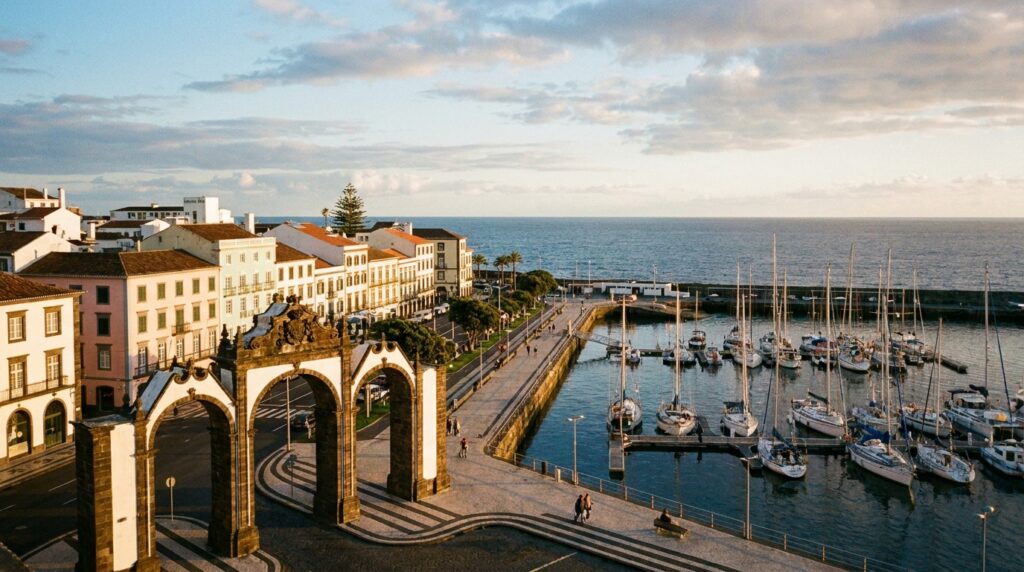
The city mixes 16th-century Portuguese colonial architecture with modern marina facilities. Black basalt churches face the Atlantic. Fishing boats dock next to tour operators running sperm whale expeditions. You get authentic island culture without the resort polish that sanitizes other Atlantic destinations.
Is Ponta Delgada worth visiting? If you want direct access to volcanic calderas, thermal pools, and marine wildlife, yes. The city itself takes half a day to cover. Then you use it as a base for the rest of São Miguel. This guide covers where to eat grilled limpets, which guesthouses offer the best value, how much a rental car costs, and which day trips deliver the biggest payoff. Check the official Visit Azores portal or the Ponta Delgada Tourism site for current ferry schedules and event listings.
Top Attractions and Things to Do
Ponta Delgada offers year-round whale watching with 24 cetacean species, historic city center walks from the cruise terminal, and access to São Miguel’s volcanic attractions including Sete Cidades twin lakes and Furnas hot springs within 30-60 minutes by car.
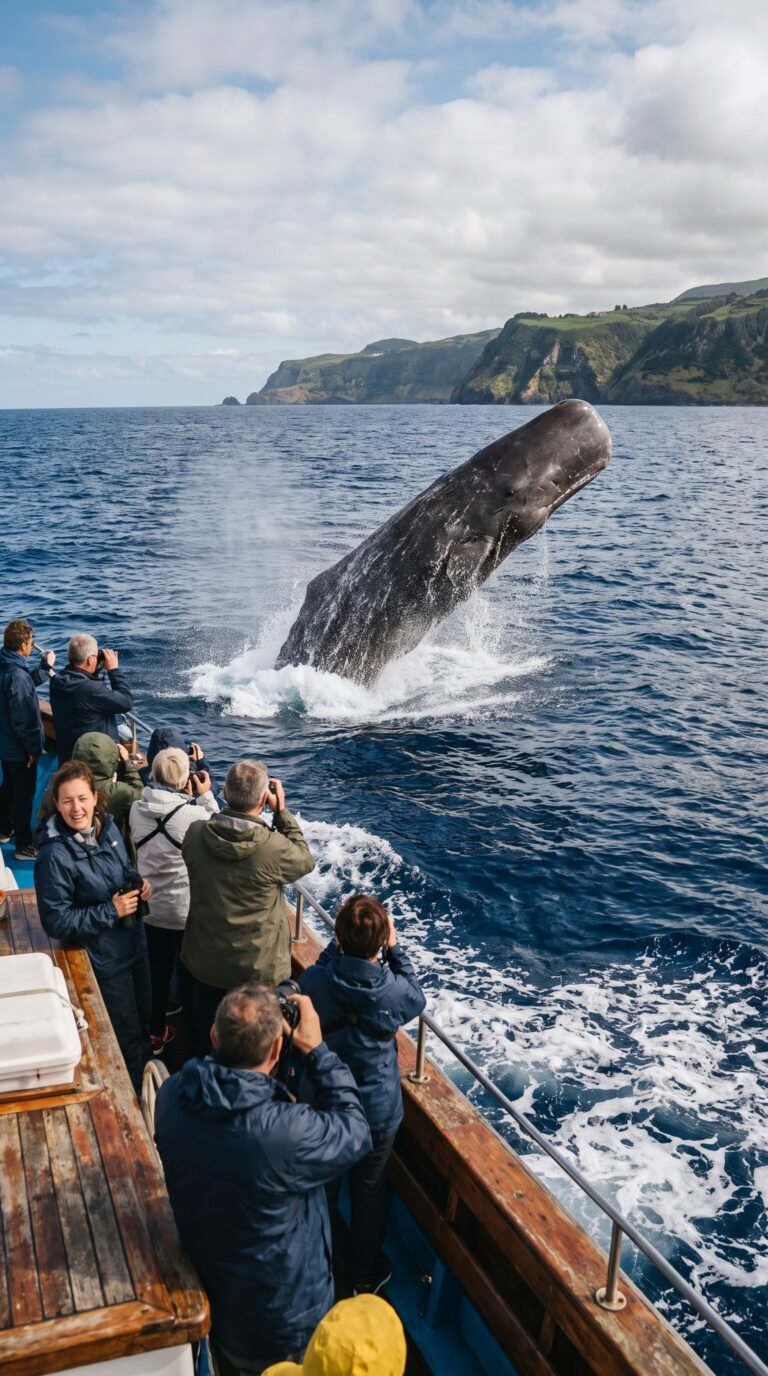
Whale watching is the main draw. You can see sperm whales, blue whales, fin whales, and dolphins in these waters. According to the Azores Whale Watching Association, 24 cetacean species pass through the region. Tours run every day of the year. Most operators leave from the marina downtown. Expect to pay €55-€65 per person for a three-hour trip. Success rates hover around 95% according to World Cetacean Alliance Approved Operators. Spring and summer bring more variety, but sperm whales stick around all twelve months.
The historic city center sits ten minutes on foot from the cruise terminal. Start at Portas da Cidade, three arches built from volcanic rock in 1783. Walk the black-and-white Portuguese pavement to Igreja Matriz de São Sebastião. The church dates to the 1500s. Free entry. The downtown grid is small. You can cover it in an hour.
Ponta Delgada itself has no proper beaches. The coastline is rocky. For sand, drive 20 minutes west to Mosteiros. Black volcanic sand. Rock formations jut from the water. Natural pools form at low tide. You’ll find a handful of cafés and a small parking lot.
The real attractions are day trips. Sete Cidades is 30 minutes west by car. Twin crater lakes, one blue, one green, sit inside a massive volcanic caldera. The Vista do Rei viewpoint gives you the postcard shot. Hiking trails loop around the rim and down to the water. No entry fee.
Lagoa do Fogo is 40 minutes northeast. Another crater lake, this one higher up. The road climbs to a viewpoint at 947 meters. A steep trail leads down to the lake shore. The beach here is white sand, rare for the Azores. The water is cold. Bring layers. Weather shifts fast.
Planning Tip
Furnas sits 50 minutes east. The town is built over volcanic vents. Steam rises from cracks in the ground. Terra Nostra Park has a thermal pool the color of rust. Entry costs €17. The water is 35-40°C year-round. Locals cook cozido das Furnas, a stew buried in the hot earth for six hours. Restaurants serve it for lunch. Around €20 per person.
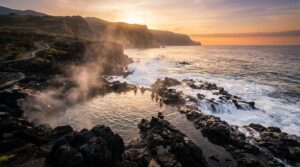
Ponta da Ferraria is 30 minutes west. A natural thermal pool forms where hot springs meet the Atlantic. The temperature varies with the tide. Go at low tide for the warmest water. Free access. Slippery rocks. Wear water shoes.
Caldeira Velha is a smaller hot spring complex on the way to Lagoa do Fogo. Wooden walkways lead through tropical vegetation. Two thermal pools. Entry is €10. The water is 38°C. Less crowded than Furnas.
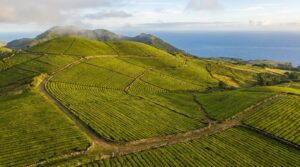
Gorreana Tea Plantation is Europe’s oldest tea farm, operating since 1883. It’s 45 minutes north of Ponta Delgada. Free tours. Free tastings. You can walk through the fields. The factory runs Monday to Friday. Buy tea at the shop, €3-€7 per box. Visit the official Gorreana Tea Plantation site for hours.
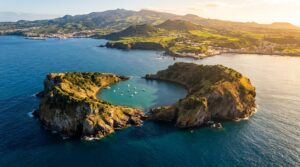
Ilhéu de Vila Franca do Campo is a volcanic islet 40 minutes south. A near-perfect circular crater filled with seawater. You take a boat from Vila Franca harbor. Trips run June through September. Daily visitor limit is 400. Book ahead through the Ilhéu de Vila Franca do Campo reserve page. The boat crossing costs about €15. Snorkeling gear available for rent.
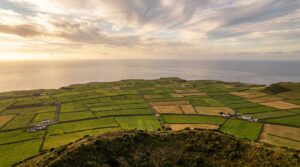
Serra do Cume is a viewpoint 30 minutes southeast. You look down on a patchwork of stone-walled fields. The walls date back centuries. Free parking. No facilities. Five-minute walk with the car and the overlook.
At night, the marina area has a few bars. Taberna Açor serves local gin and craft beer. Cais 20 has live music on weekends. Most restaurants close by 10 PM. Evening strolls along the harbor are quiet. Street lighting is dim.
Where to Eat in Ponta Delgada
Ponta Delgada’s restaurant scene features fresh Atlantic seafood, traditional cozido das Furnas volcanic stew, and locally produced pineapple and cheese, with meals averaging €12-20 per person at mid-range establishments.
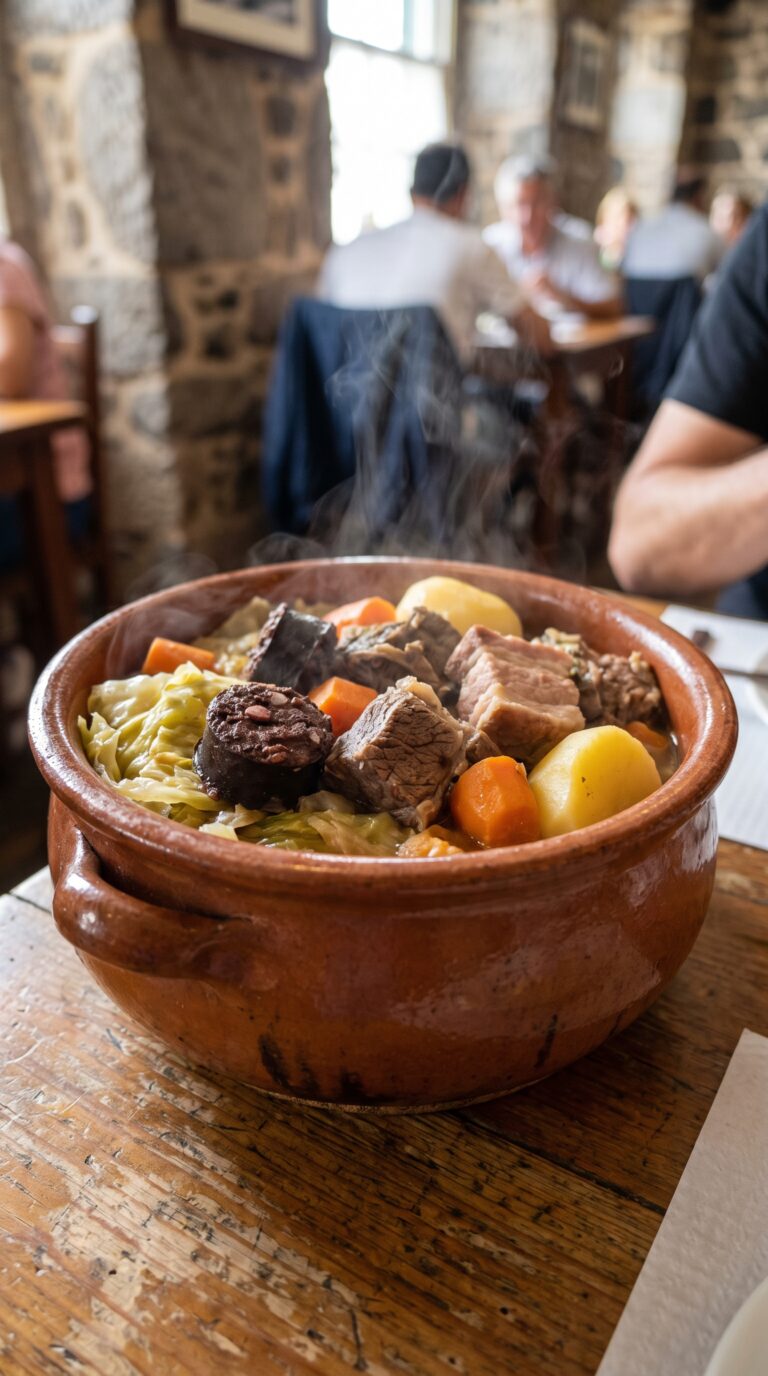
The food here blends Portuguese mainland cooking with ingredients you won’t find anywhere else. Cozido das Furnas is the signature dish, a stew of beef, pork, chicken, blood sausage, cabbage, and potatoes cooked underground using volcanic heat for six hours. Most restaurants source it from Furnas village and serve it daily. Expect to pay €15-18 for a full portion.
Fresh Atlantic fish dominates local menus. Lapas (grilled limpets) cost around €8 as a starter. Whole grilled fish runs €12-16 depending on the catch. Queijo São Jorge, a sharp aged cheese from a neighboring island, appears on nearly every appetizer menu.
The marina area and historic center hold the highest concentration of restaurants. Avenida Infante Dom Henrique runs along the waterfront with a dozen seafood spots. Traditional tascas (taverns) cluster in the old town near Portas da Cidade. Modern fusion restaurants have opened near Jardim António Borges in the past three years.
Mercado da Graça, the municipal market, operates Tuesday through Saturday mornings. Vendors sell Azorean pineapple (smaller and sweeter than tropical varieties), fresh fish caught that morning, and local cheese wheels. A pineapple costs €3-5. The market’s upstairs food stalls serve espresso for €0.80 and pastéis de nata for €1.20.
Reservations help at popular seafood restaurants on weekends. Most kitchens close between 3 PM and 7 PM. Locals eat dinner after 8 PM.
Where to Stay
Ponta Delgada accommodation ranges from €40 budget guesthouses to €200+ luxury hotels, with the waterfront and historic center offering the best location for walking access to attractions, restaurants, and the cruise terminal.
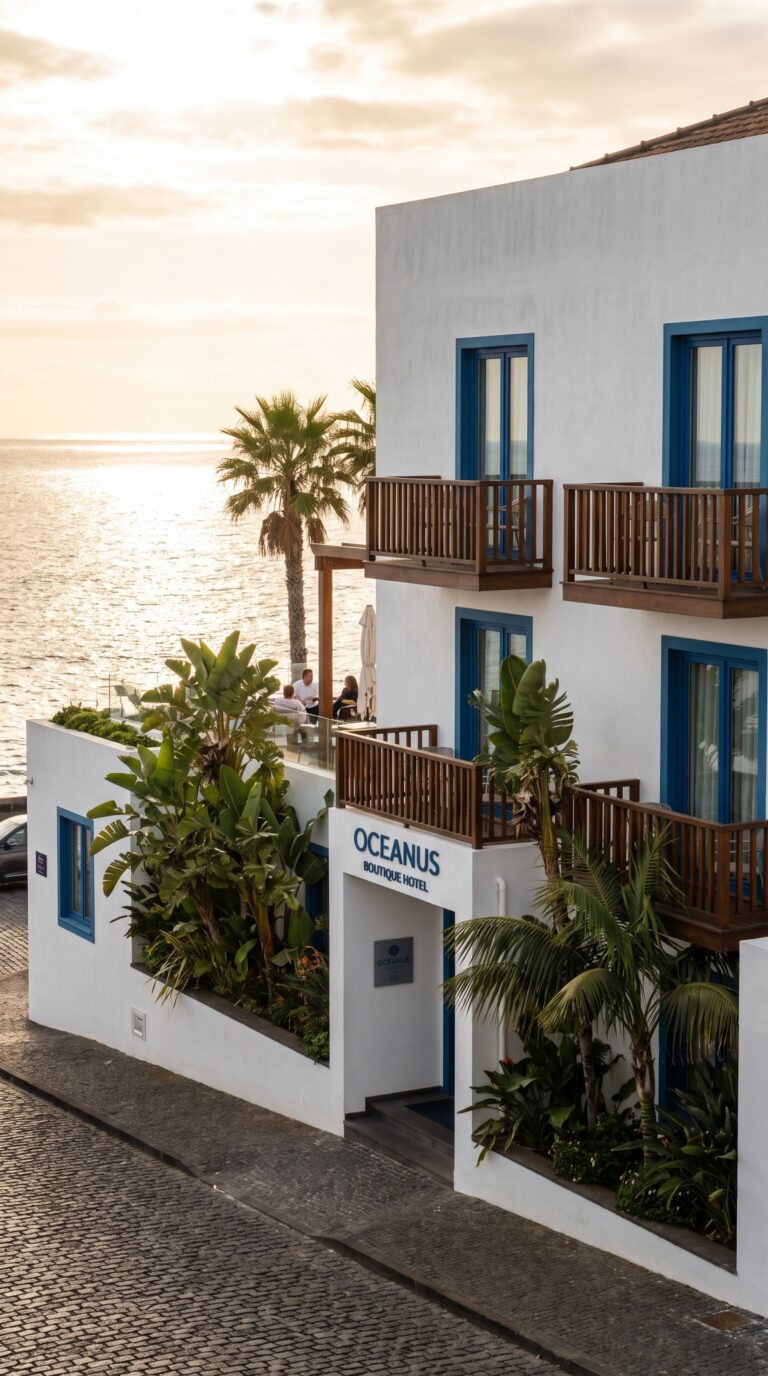
The city offers three main accommodation zones. The waterfront and marina area puts you within walking distance of restaurants, the cruise terminal, and Portas da Cidade. The historic center trades convenience for atmosphere, cobblestone streets and traditional architecture. Areas near João Paulo II Airport work for early departures but require a car or taxi for everything else.
Octant Ponta Delgada anchors the luxury tier. This waterfront property features minimalist design, a rooftop pool, and direct marina views. Rooms start around €180 per night in summer. Other solid mid-range picks include Azoris Royal Garden Hotel near the botanical gardens and VIP Executive Azores Hotel on the marina.
Budget travelers find guesthouses in the €40–70 range scattered through the historic center. Mid-range hotels run €70–120. Luxury options push past €120, sometimes hitting €200+ in peak season. According to Visit Azores accommodations data, average mid-range rates hover around €95 per night during June through September.
Book summer stays (June to September) at least two months ahead. Vacation rentals make sense for week-long stays, you’ll save money and get a kitchen. If you’re renting a car for day trips around São Miguel, confirm your hotel offers parking. Street parking in the historic center is a nightmare.
Getting There and Around
João Paulo II Airport (PDL) connects Ponta Delgada to mainland Portugal, Europe, and North America, located 3km west of the city center with car rentals, taxis, and bus service available, while the cruise terminal sits within walking distance of downtown.

João Paulo II Airport handles direct flights from Lisbon, Porto, and seasonal routes from Boston, London, and Frankfurt. The airport sits just 3km from the city. A taxi costs around €10 with fixed rates posted at the terminal. Airport buses run hourly to downtown for €3. Most hotels offer free shuttle pickups if you book ahead.
Car rental desks line the arrivals hall. Book online before you fly, summer availability gets tight. You can compare rental prices at Ponta Delgada Airport for your dates. You’ll need a car to reach Sete Cidades, Furnas, and the island’s remote coastlines. Roads are narrow but well-maintained. Gas stations cluster near Ponta Delgada, then thin out in rural areas. Check the Ponta Delgada Airport official website for current transport schedules.
Cruise ships dock at the terminal 1km east of Avenida Infante Dom Henrique. Walk 10 minutes to reach the city gates. Shuttle buses wait at the port for €2 per person. The Azores Ports – Ponta Delgada cruise terminal site lists arrival schedules and shore excursion options.
Downtown Ponta Delgada is compact. Walk everywhere within the historic core. Public buses serve residential neighborhoods but skip most tourist sites. Taxis charge €5–8 for cross-town trips. For island exploration, skip the bus system, it’s designed for locals, not visitors. Rent a car or book guided tours. The Visit Azores – Getting Around page explains the limited public transport network across São Miguel.
Best Time to Visit
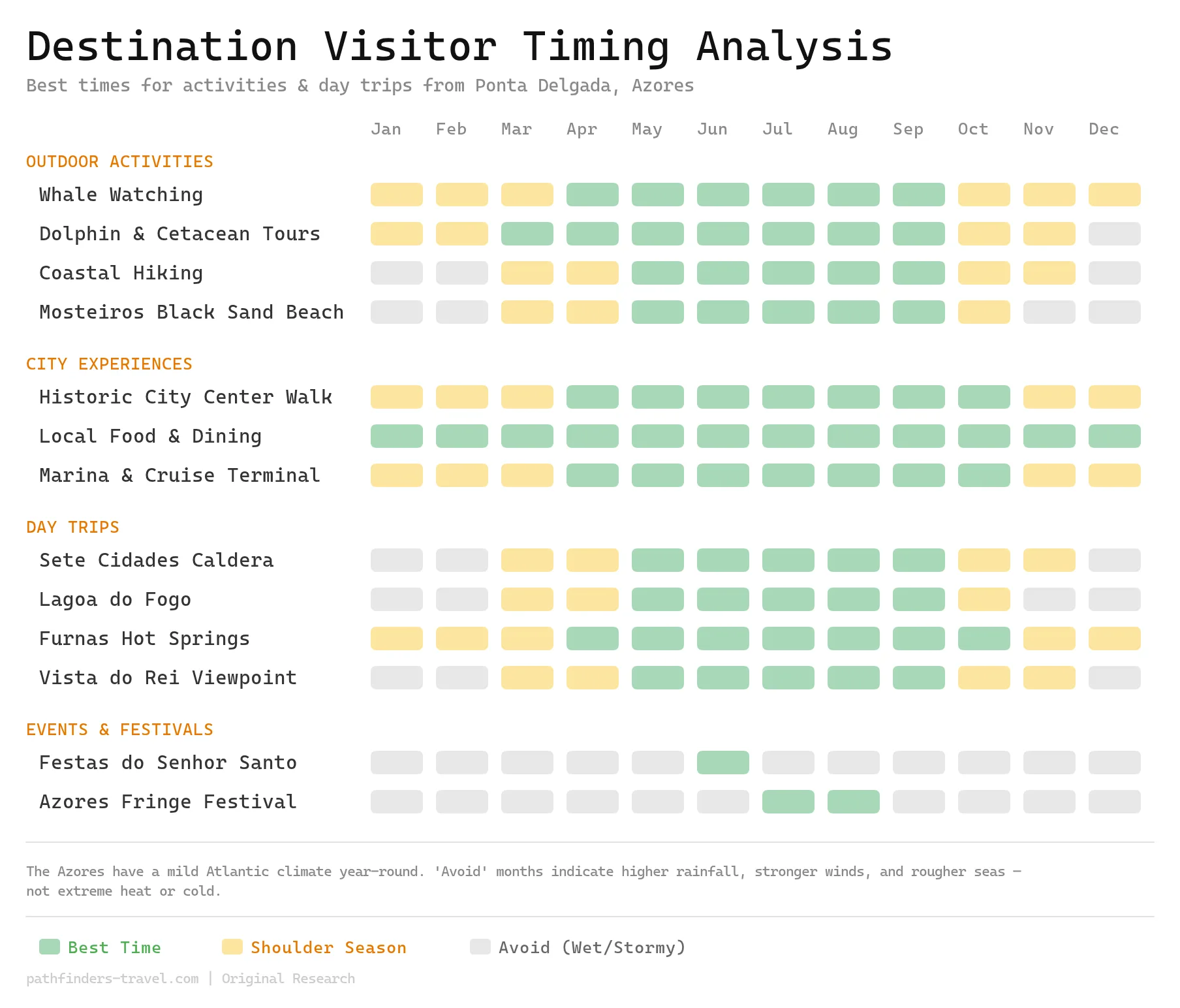
Ponta Delgada enjoys a mild Atlantic climate with no true off-season, but the best conditions for outdoor activities, caldera hikes, and calm-sea whale watching fall between April and October. Winter months (November, February) bring heavier rainfall and rougher Atlantic swells that can limit boat tours and cloud over the famous crater lake views. Year-round activities like dining, city walks, and Furnas hot springs remain enjoyable in any season.
Budget and Costs
Daily costs in Ponta Delgada average €50-70 for budget travelers and €100-150 for mid-range visitors, with the Azores offering better value than mainland Portugal for accommodation and dining while car rentals and activities carry premium pricing.
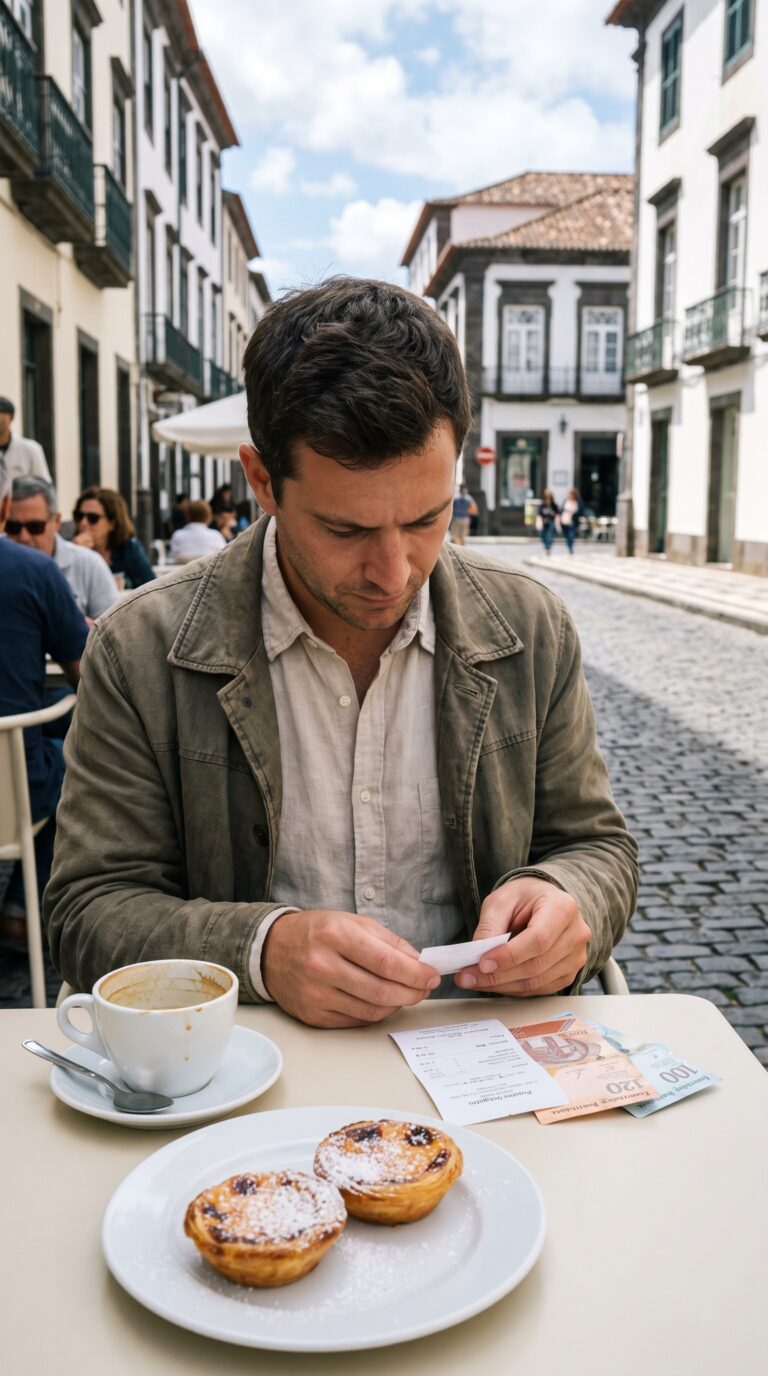
Is Ponta Delgada expensive? Not really. The island costs less than Lisbon or Porto. You’ll pay €40-120 per night for a hotel or guesthouse. Meals run €25-40 daily if you eat at local tascas instead of tourist traps. A prego sandwich costs €4. A full fish dinner with wine runs €15-20 at neighborhood spots.
Car rentals hit your wallet harder. Expect €25-40 per day for a compact. Split that cost with travel partners. Gas prices match mainland Europe, around €1.70 per liter. Whale watching tours cost €50-60. Canyoning and diving add another €60-80. But hiking trails and volcanic viewpoints are free.
Budget travelers scrape by on €50-70 daily. Stay in hostels. Cook your own meals. Skip paid tours. Mid-range visitors spend €100-150, which buys comfort and flexibility. Luxury travelers burn through €200+ without trying hard.
The Azores use the euro. Credit cards work everywhere except tiny village cafés. ATMs are common. Grocery stores like Continente sell cheap produce and fresh bread. Self-catering cuts your food bill in half. Local markets offer even better deals on cheese and fruit.
Book your accommodation two months ahead. Summer prices spike. Off-season rates drop 30%. Share car costs. Pack snacks for day trips. You’ll stretch your budget further here than anywhere on the Portuguese mainland.
Day Trips from Ponta Delgada
You will need a car to see São Miguel.
The island’s landmarks sit 30 to 90 minutes apart, and the bus network is built for residents rather than visitors. Sete Cidades, Furnas and Lagoa do Fogo are all effectively car-only.
Two things worth checking before you book: summer availability on São Miguel is genuinely tight, so book weeks ahead rather than days, and look at the excess on your quote as well as the daily rate. Island roads are narrow and often wet, and standard cover usually excludes windscreen, tyre and undercarriage damage.
Ponta Delgada serves as the base for exploring São Miguel’s volcanic attractions within 30-90 minutes by car, plus inter-island day trips to Terceira, Faial, and Pico via 30-minute flights from João Paulo II Airport.
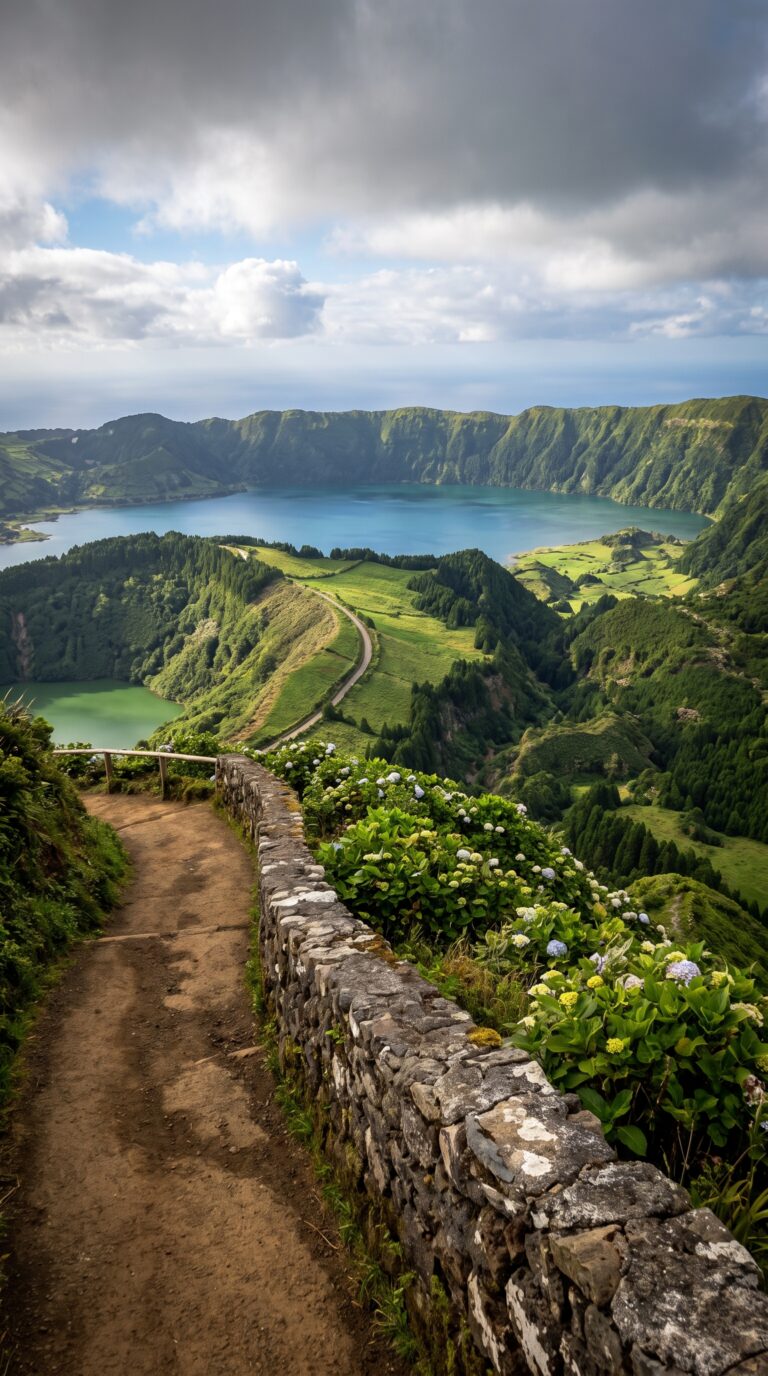
São Miguel’s big-ticket landscapes sit close enough for easy car trips. Sete Cidades takes 30 minutes west. Furnas lies 45 minutes east. Lagoa do Fogo sits dead center, 50 minutes up winding mountain roads. Nordeste, the island’s far eastern corner, requires 90 minutes each way through tunnel-cut cliffs and tea plantations. Rent a car. Bus schedules don’t align with photography light.
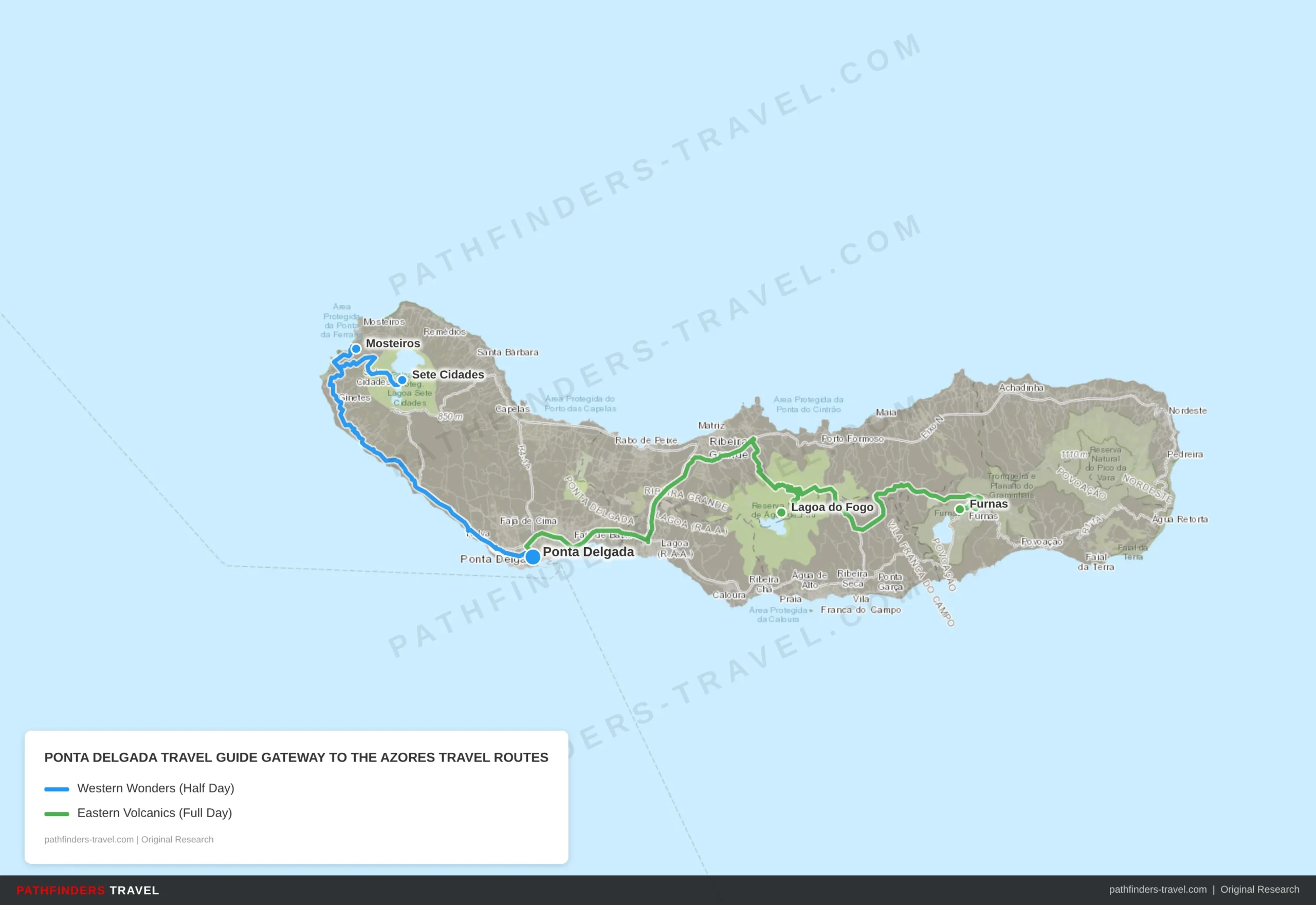
| # | Stop | Highlights | Drive Time |
|---|---|---|---|
| 1 | Ponta Delgada | Start at the marina for whale watching (€55, €65), explore Portas da Cidade arches and Igreja Matriz de São Sebastião in the historic center | , |
| 2 | Mosteiros | Black volcanic sand beach, dramatic sea-stack rock formations, natural tidal pools, best swimming spot near the city | 25 min |
| 3 | Sete Cidades | Twin blue-and-green crater lakes inside a massive volcanic caldera; Vista do Rei viewpoint for the classic postcard shot; rim and lakeside hiking trails, free entry | 15 min |
| # | Stop | Highlights | Drive Time |
|---|---|---|---|
| 1 | Ponta Delgada | Pick up a rental car and stock up on provisions at the Mercado da Graça before heading east along the coastal road | , |
| 2 | Ribeira Grande | Charming north-coast town with a 16th-century pillory and riverside old quarter; good spot for a morning coffee break | 30 min |
| 3 | Lagoa do Fogo | Remote crater lake at 947 m elevation; beautiful wide viewpoint on the summit road; steep trail descends to the clean lakeshore, no facilities, bring water | 20 min |
| 4 | Furnas | Active geothermal valley with bubbling fumaroles and mud pools; soak in the Terra Nostra thermal gardens; taste traditional cozido das Furnas stew slow-cooked underground | 25 min |
Inter-island flights open up the rest of the archipelago. SATA Air Açores flies 30-minute hops to Terceira, Faial, and Pico. Most routes run twice daily. Book two weeks ahead in summer, planes hold 48 passengers.
Terceira’s Angra do Heroísmo UNESCO World Heritage Site showcases 16th-century Portuguese colonial architecture in pastel-painted rows. Algar do Carvão, a 300-foot-deep lava tube, lets you walk into a volcanic chimney. Flights leave Ponta Delgada at 7:15 AM, return at 7:45 PM, enough time for both stops.
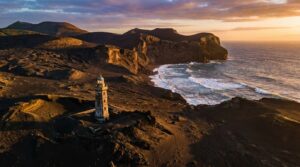
Horta on Faial island draws sailors who paint murals on the marina wall. Capelinhos Volcano erupted in 1957, burying a lighthouse in ash, still half-visible today. Caldeira do Faial, a mile-wide crater, offers a rim trail through cloud forest. True day-trippers rush. Most visitors sleep over.
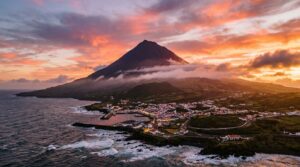
Mount Pico, Portugal’s highest peak at 7,713 feet, requires a 6-hour round-trip climb. Pico Island Vineyards, another UNESCO site, grow grapes in black lava-rock corrals. Santa Maria Island has the archipelago’s only white-sand beaches. Flores Island and Corvo Island sit 200 miles west, too far for day trips without overnight stays. Graciosa Island hides a sulfur cave lit by a skylight hole. All require advance flight bookings and rental cars upon arrival.
Practical Information
Ponta Delgada experiences mild year-round temperatures of 14-25°C with the driest months from June to September, requiring layered clothing and rain gear for the Atlantic’s changeable weather patterns.
Ponta Delgada sits in Portugal. The Azores autonomous region. You’ll use euros here.
Weather shifts fast. According to IPMA Azores weather data, average temperatures range from 14°C in winter to 25°C in summer, with the island receiving approximately 1,000mm of annual rainfall concentrated between November and March. June through September delivers the driest conditions. But microclimates mean rain can hit any time. Pack a waterproof jacket always.
Best time to visit depends on priorities. June to September brings warmest weather and peak whale watching season. April, May, September, and October offer fewer crowds. Winter means dramatic storm watching and cheaper accommodation.
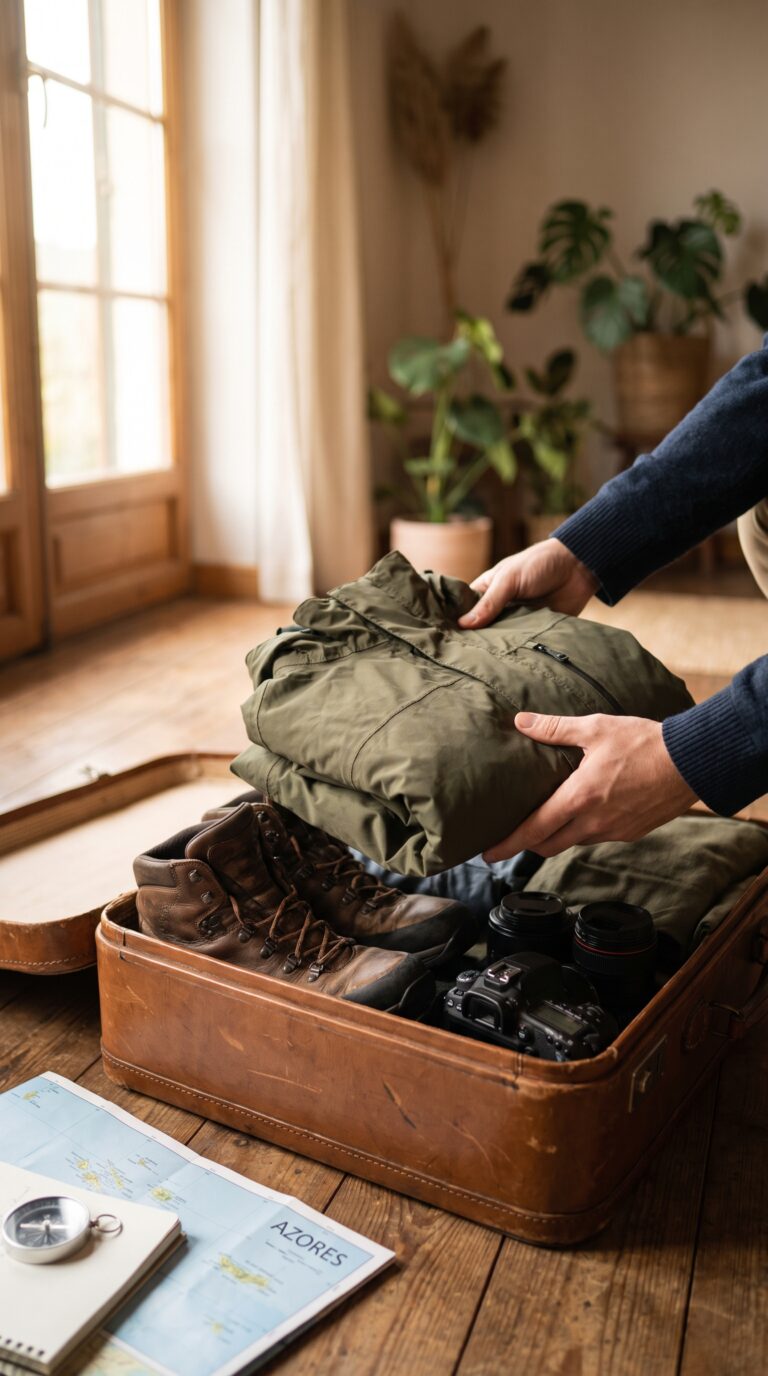
Your packing list needs layers. Waterproof jacket tops the list. Comfortable walking shoes for town. Hiking boots for crater trails. Swimwear for thermal springs. The weather changes three times in one afternoon.
Portuguese is the official language. English works fine in hotels and tour operators. Time zone runs UTC-1, one hour behind mainland Portugal. Book whale watching tours and rental cars ahead during summer months. It is worth checking rental prices and the excess before you travel. Download offline maps before heading to rural areas. Bring a European plug adapter for your electronics.
Frequently Asked Questions
Is Ponta Delgada safe?
Yes, Ponta Delgada is extremely safe for tourists. Crime rates sit very low. You can walk around day and night without worry. Cruise passengers walk straight with the port and the city center with zero issues. Standard travel sense applies, watch your bag in crowded spots, don’t leave valuables visible in rental cars. That’s it. The Azores rank among Europe’s safest destinations.
Is Ponta Delgada worth visiting?
Absolutely. It’s your gateway to São Miguel’s volcanic landscapes, hot springs, crater lakes, tea plantations, black sand beaches. Ponta Delgada itself offers whale watching tours, Portuguese colonial architecture, and authentic island culture. The city works as a perfect base. Hotels are solid. Restaurants serve fresh fish and local cheese. Transport connections reach every corner of the island. Nature lovers and outdoor types find exactly what they need here.
Is Ponta Delgada expensive?
Moderately priced, cheaper than Lisbon or Porto. Budget travelers spend €50-70 per day. Mid-range budgets run €100-150. Accommodation and meals cost less than mainland Portugal. The big expenses are car rentals and organized tours like whale watching (€55-75 per person). Compared to Madeira or the Canaries, the Azores deliver better value. Groceries are affordable if you cook some meals.
What country is Ponta Delgada in?
Ponta Delgada is in Portugal, specifically the Azores autonomous region. It sits on São Miguel island in the mid-Atlantic, roughly 1,500 km west of mainland Portugal. The Azores are part of the European Union. Currency is the euro. Official language is Portuguese.
Do they speak English in Ponta Delgada?
English is widely spoken in tourist areas, hotels, restaurants, and by tour operators. Portuguese remains the official language, but tourism workers handle English well. Younger generations speak it fluently. You won’t struggle to communicate. Learning a few Portuguese phrases, obrigado, bom dia, por favor, earns smiles, but it’s not essential for getting around.