Estimated reading time: 15 minutes
Last updated: 7 September 2026
Table of Contents
- How Deep Is Algar do Carvão?
- What to See Inside Algar do Carvão
- Tickets, Opening Hours & Visiting Information
- Getting to Algar do Carvão
- Exploring More of Terceira & the Azores
- Frequently Asked Questions
How Deep Is Algar do Carvão?
Algar do Carvão plunges about 90 metres straight into the earth — a rare volcanic chimney left when a magma chamber emptied roughly 2,000 years ago. A lit stairway of over 300 steps leads down past silica stalactites and stalagmites to a clear rainwater lake at the bottom. Visits are self-guided down a lit stairway, take about thirty minutes, and cost €10 per adult, with children under twelve free.
Research Behind This Guide
This guide draws from official Terceira tourism resources, geological documentation, and visitor experiences shared online. All details were current as of writing, but we recommend checking the Algar do Carvão’s official site before visiting for the latest opening hours and access information.
Want to see what it’s like to descend into a volcanic chimney? Watch our complete Terceira travel documentary in 4K.
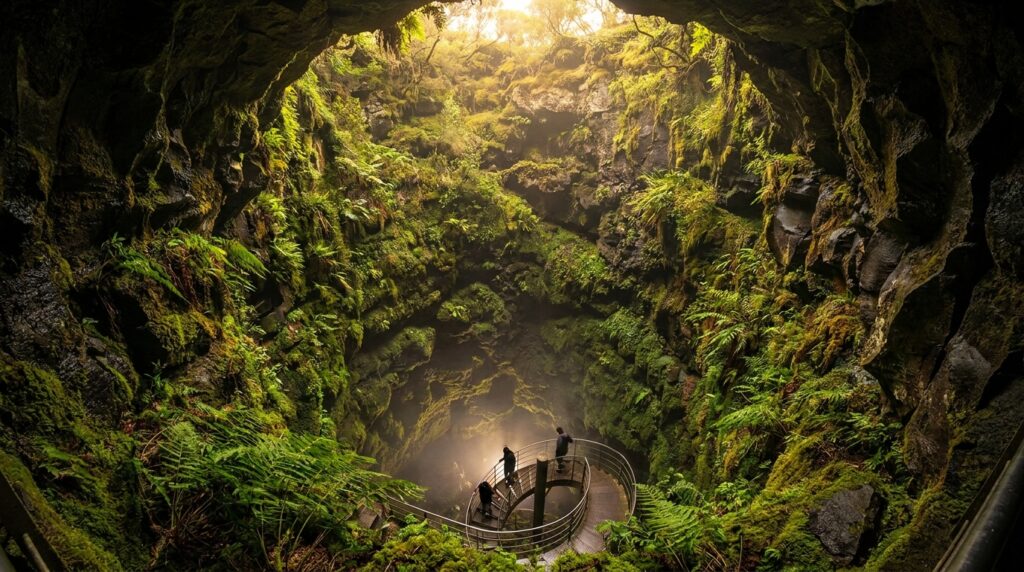
Algar do Carvão is one of the world’s few accessible volcanic chimneys. You can descend 90 meters into the heart of an extinct volcano. Most volcanic caves seal themselves shut. This one stayed open.
The cave formed around 2,000 years ago when the magma chamber of a volcano emptied, leaving a massive hollow chimney. The walls cooled. The roof collapsed inward. What remained was a vertical tunnel straight into the earth.
It sits in the central highlands of Terceira Island, part of the Azores archipelago in Portugal. The Visit Azores – Terceira Attractions page lists it as one of the island’s top geological sites. According to the Montanheiros Association, the site receives approximately 40,000 visitors annually.
The cave holds protected status as the Reserva Natural Geológica do Algar do Carvão, a Regional Natural Monument. The Montanheiros association manages access and maintains the metal staircase that spirals down into the darkness.
You descend via that staircase to reach an underground lake. The water sits at the bottom, surrounded by rare silica formations and ferns growing in near-total darkness. The temperature drops. The air smells like wet stone. You’re standing inside a volcano that went quiet two millennia ago.
What to See Inside Algar do Carvão
The cave features a 90-meter descent through a volcanic chimney lined with endemic ferns and mosses, culminating in a 15-meter-deep underground lake surrounded by rare silica stalactites and stalagmites formed over millennia.

The descent starts immediately. Metal staircases spiral down through the volcanic chimney. Ninety meters straight into the earth. The walls drip with life, ferns cling to cracks, mosses carpet the rock, lichens spread in patches. This vegetation thrives in the cave’s microclimate. High humidity. Constant temperature. No direct sunlight.
The chimney itself formed when lava drained from the magma chamber thousands of years ago. The molten rock flowed out. Left behind this hollow tube. The walls show oxidation patterns, rust-colored streaks where minerals reacted with air and water. Layers of basalt stack like pages in a book. Each layer marks a separate eruption.
Halfway down, the silica formations appear. White stalactites hang from the ceiling. Translucent stalagmites rise from the floor. These aren’t limestone formations like you find in most caves. They formed from silica-rich water seeping through volcanic rock over thousands of years. According to Montanheiros, the organization managing the cave, this is one of fewer than ten sites worldwide where such formations exist inside a volcanic chimney. The silica creates glassy deposits. Some catch light and glow.
Planning Tip
The underground lake sits at the bottom. Fifteen meters deep, per geological surveys by the Portuguese Institute for Nature Conservation. Crystal-clear water. Fed by rainwater that filters through hundreds of feet of porous volcanic rock. The filtration process removes impurities. The result is water so transparent you can see the lake floor. The temperature stays around 15°C year-round. The surface reflects the cave walls. On calm days, it mirrors the entire chamber.
The upper walls host a hanging garden. At least 14 endemic plant species grow here, adapted to low light and high moisture. Ferns drape from ledges. Mosses form thick mats. The greenery creates a stark contrast against black basalt. This ecosystem exists nowhere else. The plants evolved specifically for these conditions inside volcanic caves.
Photography works well here. The cave allows cameras. No flash restrictions. The best shot is looking up from the lake level, a perfect circle of sky framed by the chimney walls. The silica formations photograph well with side lighting. Bring a tripod. The light is dim. Exposure times run long.
The guided route takes 30 to 45 minutes. Walkways and platforms provide safe viewing angles. You see every major feature. The tour follows a one-way path down and back up. No rushing. The guides pause at key points. They explain the geology. Answer questions. The stairs require moderate fitness. Not technical. Just steady climbing on the way out.
Activity Difficulty Guide
Terceira Island offers a genuinely wide range of physical demands, from leisurely strolls through UNESCO-listed Angra do Heroísmo to challenging hikes across remote volcanic calderas. Algar do Carvão itself sits at a moderate level, the 200-step descent is manageable for most visitors but requires care on wet, uneven surfaces in low light. the island has something matched to your fitness level.

Tickets, Opening Hours & Visiting Information
Algar do Carvão opens on a seasonal schedule for most of the year, with tickets costing €10 for adults and children under twelve free. While the visitor centre is being finished the association sells tickets only on arrival, first-come first-served, with no online booking, and a self-guided visit lasts around thirty minutes.
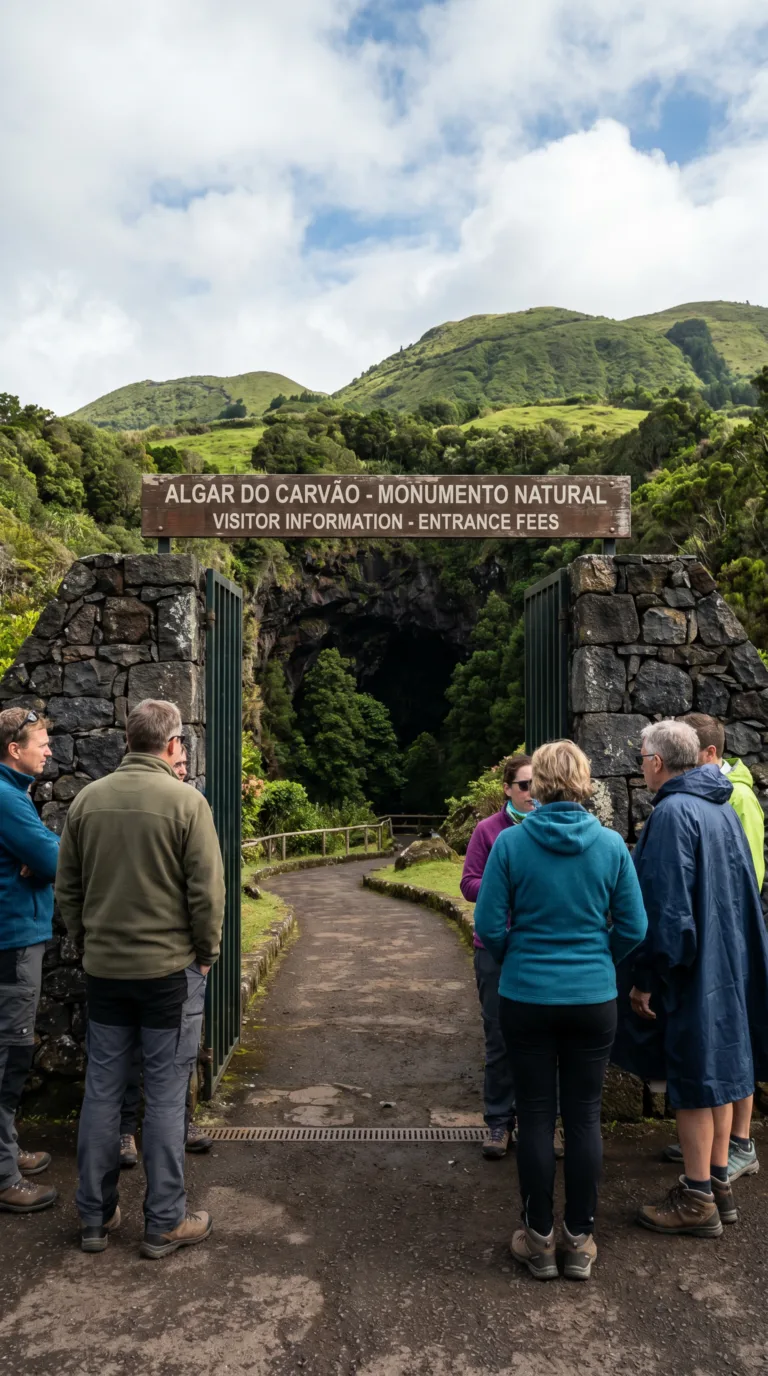
Adult tickets cost €10, and children under twelve enter free. Tickets are sold only at the temporary ticket office on arrival, on a first-come, first-served basis. While the new visitor centre is being finished, there are no combined tickets with Gruta do Natal or other Montanheiros sites, and no group rates.
There is no online booking, so arrive early, especially in July and August when queues build fast. The Montanheiros association manages all access, so check their official website for the latest opening days and conditions before you go.
The cave is open for most of the year on a seasonal schedule. From June through September it runs daily, roughly 2:00 PM to 6:00 PM, with shorter afternoon hours and fewer days in the shoulder and winter months. Check the official Montanheiros website for the current days and times before you book flights, as the schedule shifts with the ongoing construction.
Winter access is limited rather than absolute. From October to December the cave opens only on selected weekdays, and it shuts on national holidays and during heavy-rain or construction closures. Always confirm the day is open before driving out.
Pack a jacket. The cave sits at 10-12°C year-round. Outside might be 25°C in July, inside stays cold. Bring a fleece or windbreaker. Your shorts-and-t-shirt beach outfit won’t cut it.
Wear real shoes. The stairs get slick from moisture and foot traffic. Sneakers with grip work. Flip-flops and sandals don’t. People slip every season.
The visit takes about thirty minutes. You descend, walk the perimeter of the lagoon, and climb back up. Montanheiros staff are on hand inside the cave to answer questions, though the walk is self-guided.
Accessibility is poor. No elevator exists. The stairs are steep and uneven in places. Small children need constant supervision. Anyone with knee problems or mobility issues should skip this one.
Visit in May or September. Fewer tour buses. Shorter ticket lines. The cave looks identical in June or August, same temperature, same formations. Avoid July and August if you hate crowds.
Getting to Algar do Carvão
Algar do Carvão is located 18 kilometers from Angra do Heroísmo in central Terceira, requiring a rental car as no public transport serves the site, with free parking available and the drive taking approximately 25 minutes.

The cave sits in the central highlands of Terceira Island. Angra do Heroísmo lies 18 kilometers to the south. Praia da Vitória and Lajes Airport sit 15 kilometers to the northeast.
You need a car. Period. No buses run to Algar do Carvão. Book a rental at Lajes Airport when you land. Most international agencies operate there, Hertz, Europcar, Sixt.
From Angra do Heroísmo, take the EN3-2ª road inland. The route cuts through pastures and volcanic ridges. Brown tourism signs mark the turnoff. The drive takes 25 minutes in normal conditions. Roads are paved and maintained, but they narrow in spots. Expect sharp curves through the highlands.
From Praia da Vitória or the airport, head west on the ER3-1ª. Connect to the EN3-2ª after 10 kilometers. Total drive time: 20 minutes. The landscape shifts with coastal scrub and dense greenery as you climb.
Free parking sits at the site entrance. Space for 20 to 30 vehicles. On summer weekends, arrive before 11 AM to guarantee a spot.
The official address: Algar do Carvão, 9700 Terceira, Portugal. GPS coordinates: 38.7333° N, 27.2000° W. Plug those into your navigation system if the address fails.
All vehicle types handle the route, sedans, compact cars, SUVs. You don’t need four-wheel drive. Signage is clear from main roads. Look for the brown cave symbol.
Travel Routes
Below are recommended travel routes with key stops and estimated drive times.

| # | Stop | Highlights | Drive Time |
|---|---|---|---|
| 1 | Angra do Heroísmo | UNESCO World Heritage city; pick up supplies, park near the old town centre before heading inland | Start |
| 2 | Algar do Carvão | Descend 90 m into a volcanic chimney; underground lake, silica stalactites, endemic ferns, allow 1 hour for the guided visit | 25 min from Angra |
| 3 | Caldeira de Guilherme Moniz | Vast ancient caldera viewpoint; wide highland scenery, grazing cattle and hydrangea-lined roads | 10 min from Algar |
| 4 | Angra do Heroísmo | Return to Angra; evening stroll along the waterfront or dinner in the historic quarter | 20 min from Caldeira |
| # | Stop | Highlights | Drive Time |
|---|---|---|---|
| 1 | Angra do Heroísmo | Start at Terceira’s main gateway; explore the 16th-century fortifications and harbour before departing | Start |
| 2 | Monte Brasil | Volcanic peninsula with hiking trails; fort of São João Baptista and sweeping views over Angra Bay | 10 min from Angra |
| 3 | Praia da Vitória | Terceira’s second city; sandy beach, scenic main square, and fresh seafood lunch options | 30 min from Monte Brasil |
| 4 | Serra do Cume | Iconic viewpoint over patchwork green fields divided by stone walls; one of Terceira’s most photographed vistas | 15 min from Praia |
| 5 | Algar do Carvão | Conclude at the volcanic chimney; book afternoon entry slot to avoid crowds, guided descent takes 45, 60 min | 25 min from Serra do Cume |
| # | Stop | Highlights | Drive Time |
|---|---|---|---|
| 1 | Angra do Heroísmo | Base for the full island loop; start early to make the most of the north coast drive | Start |
| 2 | Biscoitos | Unique natural lava rock pools along the north coast; swim in crystal-clear Atlantic water between volcanic formations | 35 min from Angra |
| 3 | Algar do Carvão | Main highlight of the day; 90-meter descent into the volcanic chimney with underground lake and rare silica formations | 20 min from Biscoitos |
| 4 | Caldeira de Guilherme Moniz | Dramatic highland caldera with walking trails; look for endemic flora and birdlife in the central plateau | 10 min from Algar |
| 5 | Angra do Heroísmo | Return to Angra for the evening; UNESCO old town, local wine tasting, and traditional Azorean cuisine | 25 min from Caldeira |
Exploring More of Terceira & the Azores
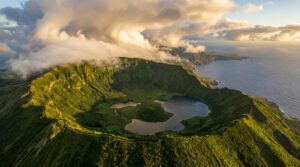
Terceira Island offers Serra do Cume viewpoint and UNESCO-listed Angra do Heroísmo within 30 minutes of Algar do Carvão, while the broader Azores archipelago includes São Miguel’s Sete Cidades and Furnas, accessible via inter-island flights from Terceira.
Algar do Carvão is one highlight on Algar do Carvão Ilha Terceira, not a standalone destination. The island packs enough attractions for three days minimum. Most visitors combine the cave with other volcanic sites and coastal towns in a single trip.
Serra do Cume sits 15 minutes from the cave entrance. This viewpoint overlooks a patchwork of stone-walled fields stretching to the coast. The geometric pattern of pastures dates back centuries. Locals call it the “Azores quilt.” Go at sunrise for empty parking and soft light. The viewpoint has no facilities, just a pullout and a fence.
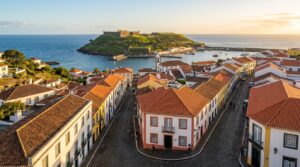
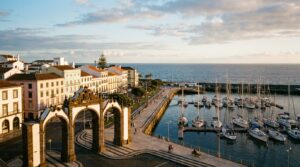
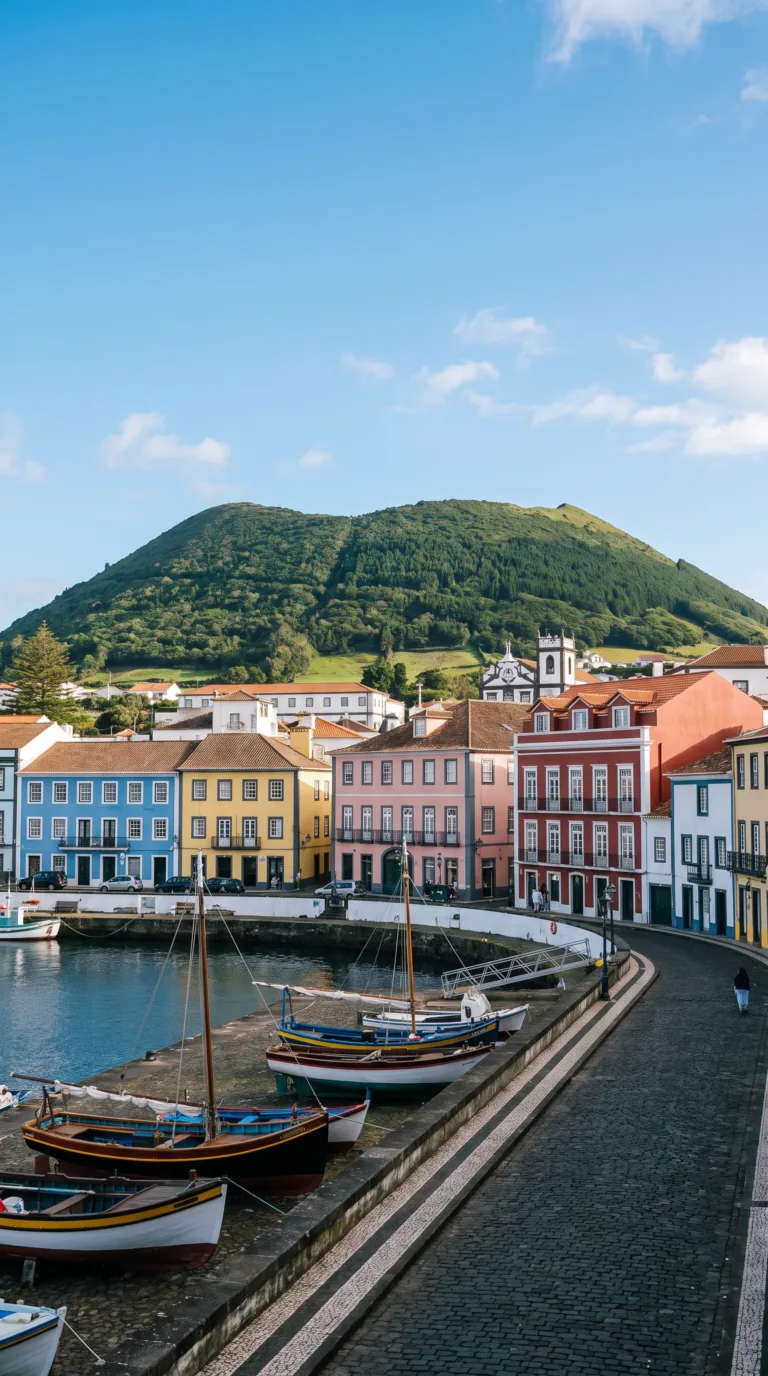
Angra do Heroísmo is 25 minutes southwest. UNESCO designated this town a World Heritage Site in 1983, one of two such sites in the Azores. The historic center features pastel-colored buildings, cobblestone streets, and 16th-century fortifications. Spend an afternoon here after the cave. Walk the waterfront, visit the Duke of Terceira Garden, and eat at a local tasca. The town charges no entry fees. Street parking costs €0.50 per hour.
Other Terceira stops include Gruta do Natal (Christmas Cave), a smaller lava tube with stalactites, and the Biscoitos natural pools, volcanic rock formations filled with seawater. Mistérios Negros is a black lava field from a 1761 eruption. It looks like the moon.
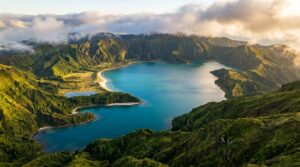
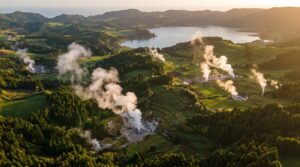
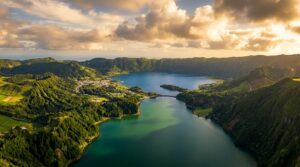
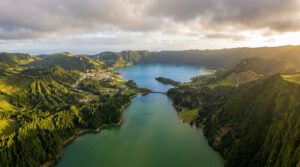
São Miguel is the largest Azores island. SATA Air Açores flies from Terceira in 30 minutes. Flights cost €60–120 roundtrip. Sete Cidades features twin lakes, one blue, one green, inside a volcanic crater. Furnas has hot springs, fumaroles, and botanical gardens. Lagoa do Fogo is a crater lake at 575 meters elevation. Ponta Delgada is the capital city, with restaurants, hotels, and a marina. São Miguel needs three days minimum.
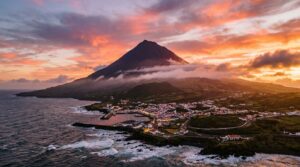
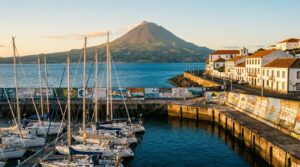
Mount Pico rises 2,351 meters on Pico Island, Portugal’s highest peak. Climbing it takes seven hours roundtrip. Pico Island Vineyards are UNESCO-listed, producing wine from vines grown in black lava rock. Ferries from Terceira take 2.5 hours. Flights take 20 minutes.
Horta on Faial Island is a famous sailing port. The marina walls are covered in paintings left by visiting yachts. Capelinhos Volcano erupted in 1957, adding new land to the island. The visitor center sits half-buried in ash. Faial pairs well with Pico, they’re 30 minutes apart by ferry.
Flores Island is the westernmost Azores island, with waterfalls and hiking trails. Santa Maria Island is the oldest geologically. Graciosa Island has a volcanic cave with an underground lake. Corvo Island is the smallest, home to 400 people. These islands suit travelers with two weeks or more.
Inter-island ferries connect Terceira, Pico, Faial, and São Jorge. Check schedules on Visit Azores. Summer service runs daily. Winter service drops to three times weekly. Book flights and ferries in advance during July and August.
Frequently Asked Questions
Is Algar do Carvão open year-round?
No, Algar do Carvão operates seasonally from April or May through September or October. The cave closes during winter months when water levels rise and safety conditions deteriorate. Exact opening and closing dates shift each year based on weather. Check the official Montanheiros website before planning your trip. Missing the season means missing the cave entirely, there are no winter exceptions.
What are the opening hours for Algar do Carvão?
The cave opens daily from approximately 2:30 PM to 5:30 PM during the operating season. These algar do carvão opening hours can shift slightly, so verify current times on the Montanheiros website the day before your visit. Last entry closes 30 to 45 minutes before the official closing time. Arrive early. Tours take time, and staff won’t admit latecomers.
How much do tickets to Algar do Carvão cost?
Adult tickets cost €10, and children under twelve enter free. While the new visitor centre is being finished there are no combined tickets with Gruta do Natal or other Montanheiros sites. Tickets are sold only at the site on arrival, so there is no online booking.
Is Algar do Carvão suitable for children and elderly visitors?
The cave demands climbing roughly 300 stairs down and back up. That makes it physically challenging. Young children and anyone with mobility issues should skip it. No elevator exists. No alternative route. Elderly visitors in solid physical shape can manage the descent, but prepare for cool temperatures, 10 to 12°C inside, and slippery metal stairs. Children need constant supervision. The stairs are steep, the surfaces wet, and the consequences of a fall serious.
Do I need to book Algar do Carvão tickets in advance?
No. During the visitor-centre construction there is no online booking or reservation system. Tickets are sold only at the ticket office on arrival, first-come, first-served. Arrive early in July and August, when queues are longest, and check the Montanheiros website for the day’s opening hours before you set out.