Estimated reading time: 21 minutes
Last updated: August 2026
Table of Contents
- What Are the Best Places to Visit in Pennsylvania?
- Pennsylvania Travel Conditions & Safety
- Best Time to Visit Pennsylvania
- Getting to Pennsylvania
- Getting Around Pennsylvania
- Pennsylvania Travel Budget: What to Expect
- Southeast Pennsylvania: Philadelphia & Beyond
- Northeast Pennsylvania: The Pocono Mountains Region
- Lehigh Valley: Bethlehem
- South Central Pennsylvania: History & Heritage
- Southwest Pennsylvania: Pittsburgh & the Laurel Highlands
- Northwest Pennsylvania: Erie & the Wilds
- Sample Weekend Getaway Itinerary
- What to Pack for Pennsylvania
- Frequently Asked Questions
What Are the Best Places to Visit in Pennsylvania?
Pennsylvania’s best places to visit are Philadelphia (Independence Hall and the Liberty Bell), Pittsburgh’s three-rivers skyline, Lancaster County’s Amish Country, Gettysburg National Military Park, Hershey’s chocolate attractions, the Pocono Mountains, and Presque Isle State Park on Lake Erie. The state spans Revolutionary War history, Amish farmland, mountain resorts, and two major cities, drawing over 200 million visitors a year.
Curious what Pennsylvania really looks like? Watch our complete Pennsylvania travel guide in 4K.
Pennsylvania attracts millions of travelers each year, known for its unique blend of American history, natural beauty, and cultural diversity. The state holds more than 170 National Historic Landmarks, making it one of the most historically significant destinations in the country. From the Liberty Bell in Philadelphia to the battlefields of Gettysburg, you can walk through the places where American independence took shape.
The variety of Pennsylvania tourist attractions means you can design almost any type of trip. Couples find romantic retreats in the Pocono Mountains. Families explore interactive museums and theme parks. Outdoor enthusiasts hike 121 state parks and ski winter slopes. Culture seekers tour Amish farmland in Lancaster County or catch top-quality performances in Pittsburgh.
This guide covers the best places to visit in PA by region, from Philadelphia’s colonial streets to Erie’s Great Lakes shoreline. You’ll find practical advice on when to go, how to get around, and what each area offers. We’ve also included sample itineraries and budget breakdowns to help you plan your trip.
The state delivers history, nature, and culture in equal measure. Visit Pennsylvania for official tourism resources and current event listings.
Research Behind This Guide
This Pennsylvania guide draws from state tourism boards, government resources, and verified visitor experiences rather than firsthand travel. Information was accurate when written, but attractions and details can change, we recommend confirming hours and access with official sources before heading out.
Pennsylvania Travel Conditions & Safety
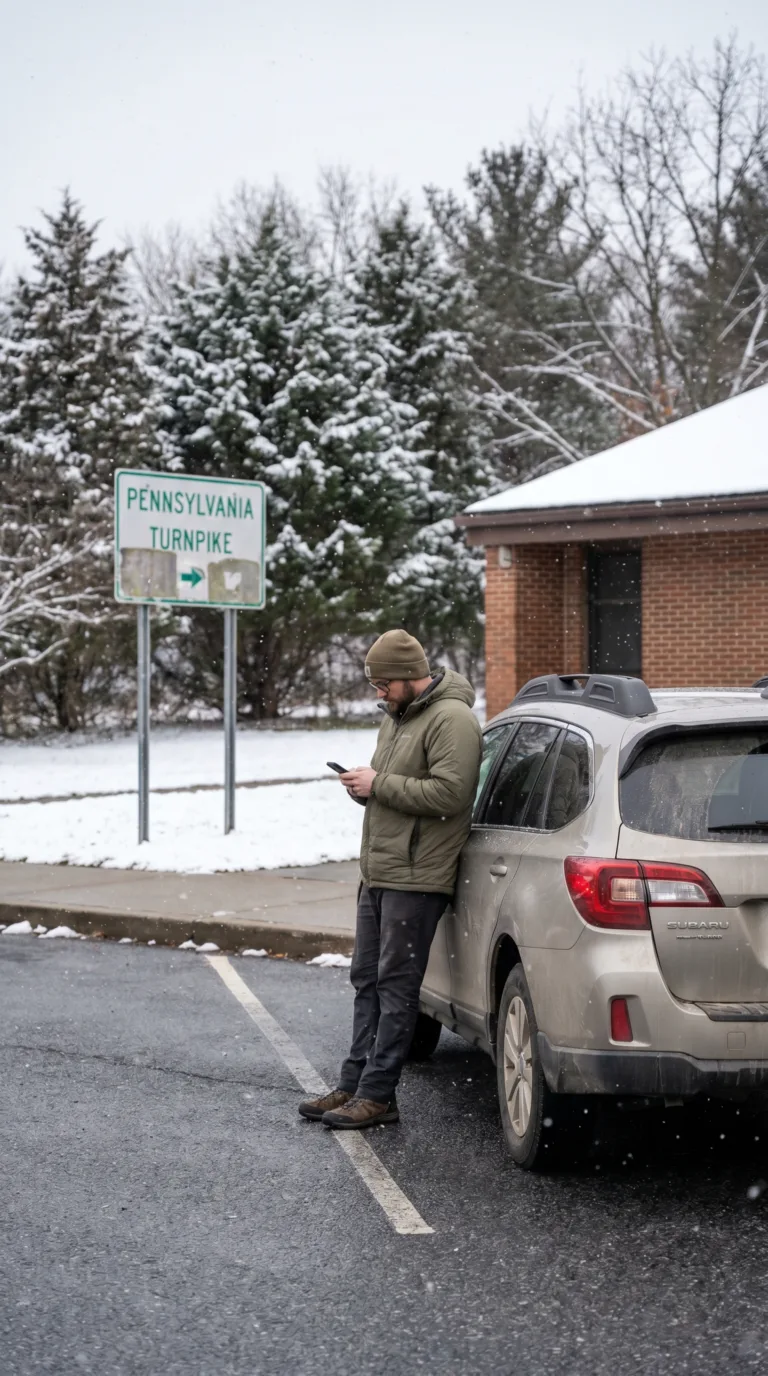
Pennsylvania experiences safe travel conditions year-round, though winter drivers should monitor 511PA.com for real-time updates on the Pennsylvania Turnpike and I-80, which can close during severe snowstorms.
Pennsylvania is generally safe for travelers year-round. In cities like Philadelphia and Pittsburgh, use standard urban awareness: keep valuables out of sight and stay alert in unfamiliar neighborhoods after dark.
Winter travel conditions demand attention from November through March. The Pennsylvania Turnpike, I-80, and mountain routes through the Poconos can become treacherous during snowstorms. Erie receives an average of 104 inches of snow per year due to lake-effect patterns off Lake Erie, while Philadelphia averages just 22 inches. Check 511PA before departing for real-time road conditions and travel advisories. The Pennsylvania Turnpike operates 15 full-service plazas along its 360-mile route, providing regular stopping points for updates and fuel.
Cell service can be spotty in rural areas, particularly in the Allegheny National Forest and remote sections of the Poconos. Download offline maps before heading into these regions. Mountain weather in the Laurel Highlands changes quickly, so pack layers even during summer visits.
Best Time to Visit Pennsylvania
Pennsylvania’s fall season (late September through October) offers peak foliage viewing with temperatures between 50–70°F, while spring and early summer bring fewer crowds and lower accommodation rates.
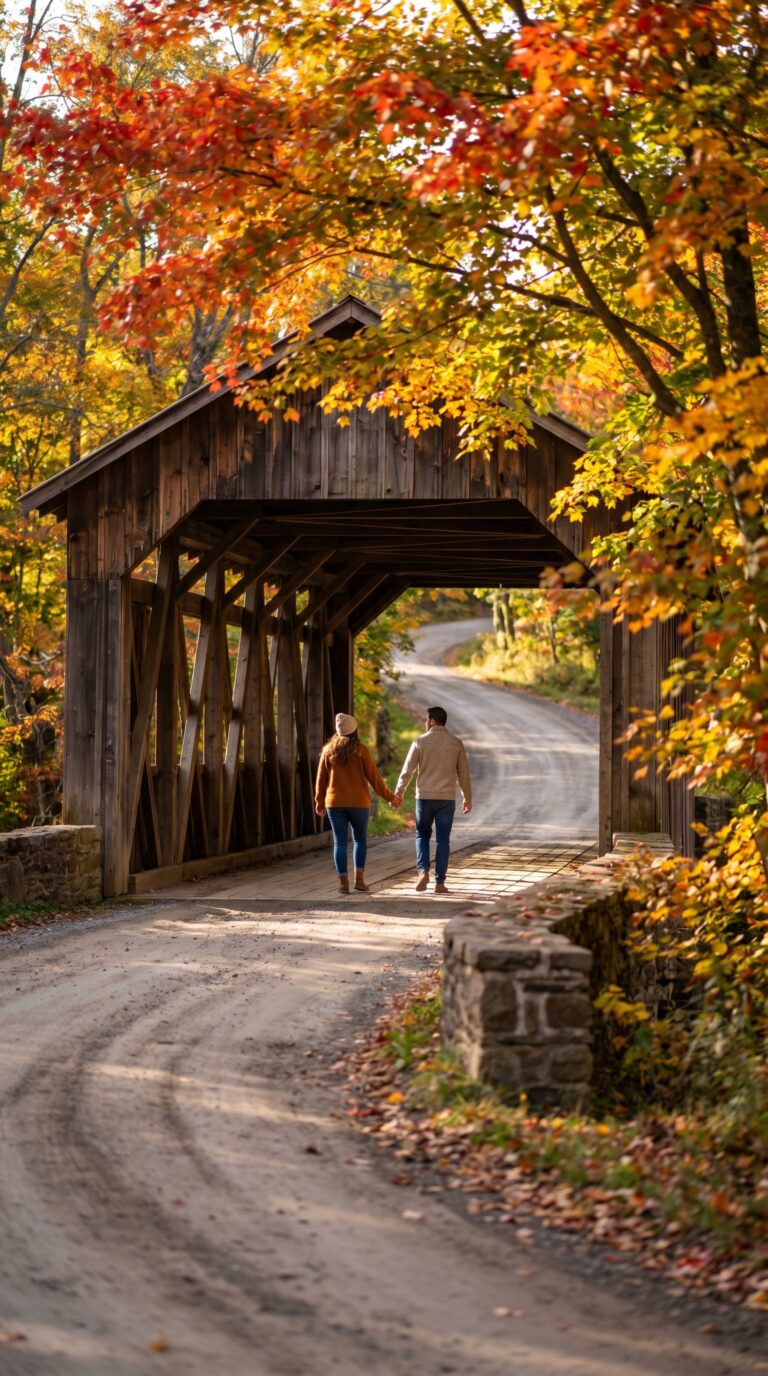
Fall runs from September through November and brings the state’s most dramatic scenery. Temperatures hover between 50 and 70 degrees, perfect for hiking and driving tours. The Pennsylvania Department of Conservation and Natural Resources fall foliage report tracks color changes across regions. Northern counties peak in early October, while southern areas hit their stride by late October. Harvest festivals fill the calendar, and accommodation prices climb 30 to 40 percent above off-season rates.
Spring arrives in April and May with blooming dogwoods and moderate weather. Crowds thin out after winter, and hotel rates drop. This season suits outdoor activities like kayaking and trail hiking. Summer from June through August draws families to lakes and theme parks. Expect warm days in the 80s, higher prices, and packed attractions.
Winter appeals to skiers heading to the Poconos and anyone chasing holiday markets in Bethlehem or Hershey. Some rural sites close for the season. Shoulder months in April, May, and September offer the best balance of weather and value for romantic getaways in Pennsylvania.
Getting to Pennsylvania
Philadelphia International Airport handles 32 million passengers annually and connects to 140 destinations, while Amtrak’s Keystone Service runs 13 daily trains between Philadelphia and Harrisburg in 90 minutes.

Pennsylvania sits at the crossroads of the Northeast Corridor, making it easy to reach from every direction. Philadelphia International Airport serves as the state’s largest gateway, with Pittsburgh International Airport anchoring the western side. Smaller regional airports in Harrisburg, Allentown, and Erie handle connecting flights.
Train travelers can ride Amtrak Keystone Service between New York and Harrisburg, with stops in Philadelphia and Lancaster. The Pennsylvanian route connects Pittsburgh to Philadelphia and continues to New York. Both routes offer comfortable seats and power outlets at every seat.
Drivers enter Pennsylvania via I-95 along the eastern corridor, I-80 for cross-country trips, or the Pennsylvania Turnpike (I-76) cutting east to west. I-81 runs north-south through the center of the state. Philadelphia sits 90 minutes from New York City, two hours from Washington DC, and five hours from Pittsburgh. Greyhound and Megabus connect major cities for budget-conscious travelers.
Getting Around Pennsylvania
Renting a car is essential for visiting 90% of Pennsylvania’s top attractions outside Philadelphia and Pittsburgh, as public transit serves only urban cores and the Amtrak Keystone Corridor.
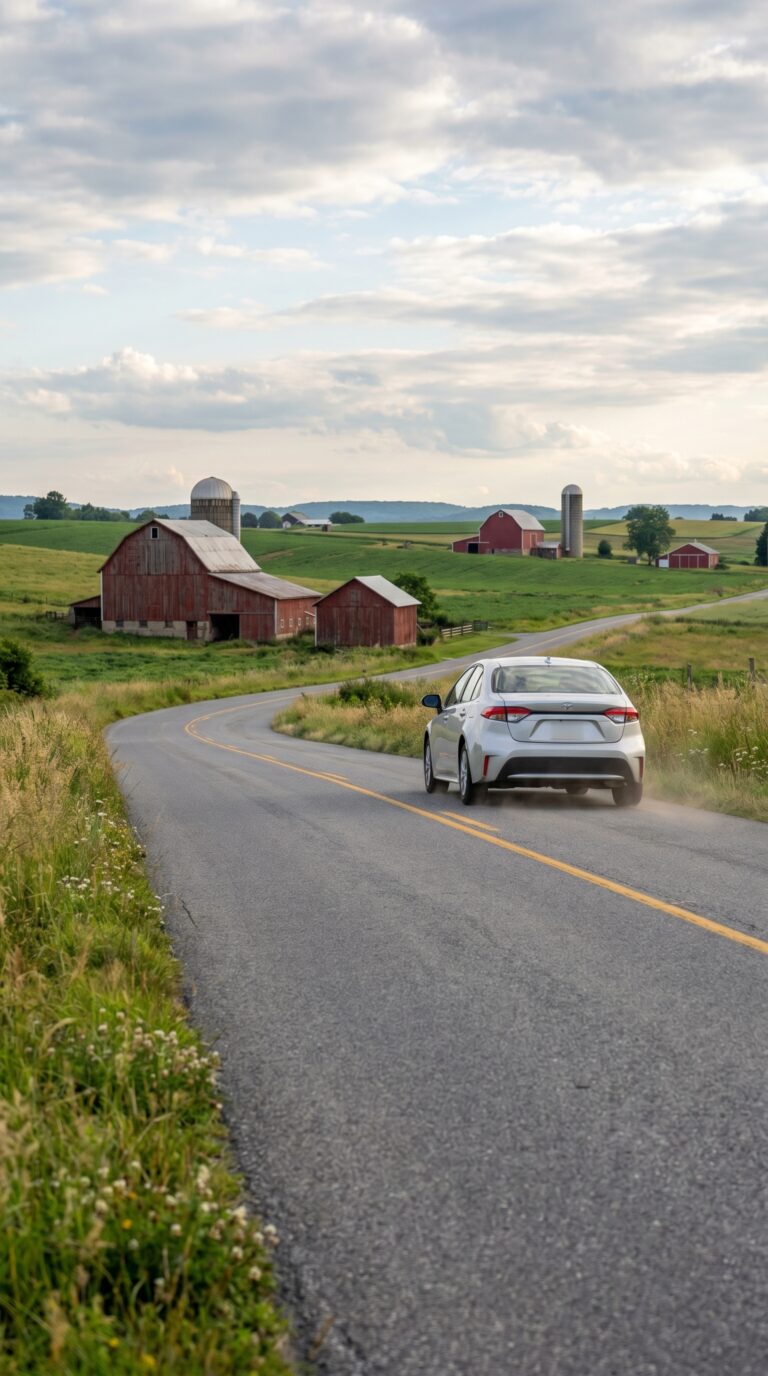
A rental car is your best option for exploring beyond the two major cities. Lancaster County, the Pocono Mountains, and most rural destinations have no public transit. Philadelphia operates SEPTA public transit, which includes subway lines, buses, trolleys, and 13 regional rail lines reaching suburbs like West Chester and Doylestown. Pittsburgh has Port Authority buses and a light rail system serving downtown and nearby neighborhoods.
The Pennsylvania Turnpike (I-76) runs 360 miles across the state from Philadelphia to the Ohio border. Tolls cost about $58 for the full drive without E-ZPass. A PA Turnpike E-ZPass cuts that cost by 30% and lets you skip toll booth lines at Pennsylvania turnpike travel plazas. Amtrak connects Philadelphia, Harrisburg, and Pittsburgh, but trains don’t reach most tourist sites.
Ride-sharing works in cities and college towns like State College. In rural areas, you won’t find drivers. Parking is metered in Philadelphia and Pittsburgh city centers. Most attractions outside the cities offer free parking lots.
Pennsylvania Travel Budget: What to Expect
Mid-range travelers should budget $150–250 per day in Pennsylvania, covering a $120–180 hotel, $40–60 for meals, $15–30 for attractions, and $50–70 for a rental car with gas.
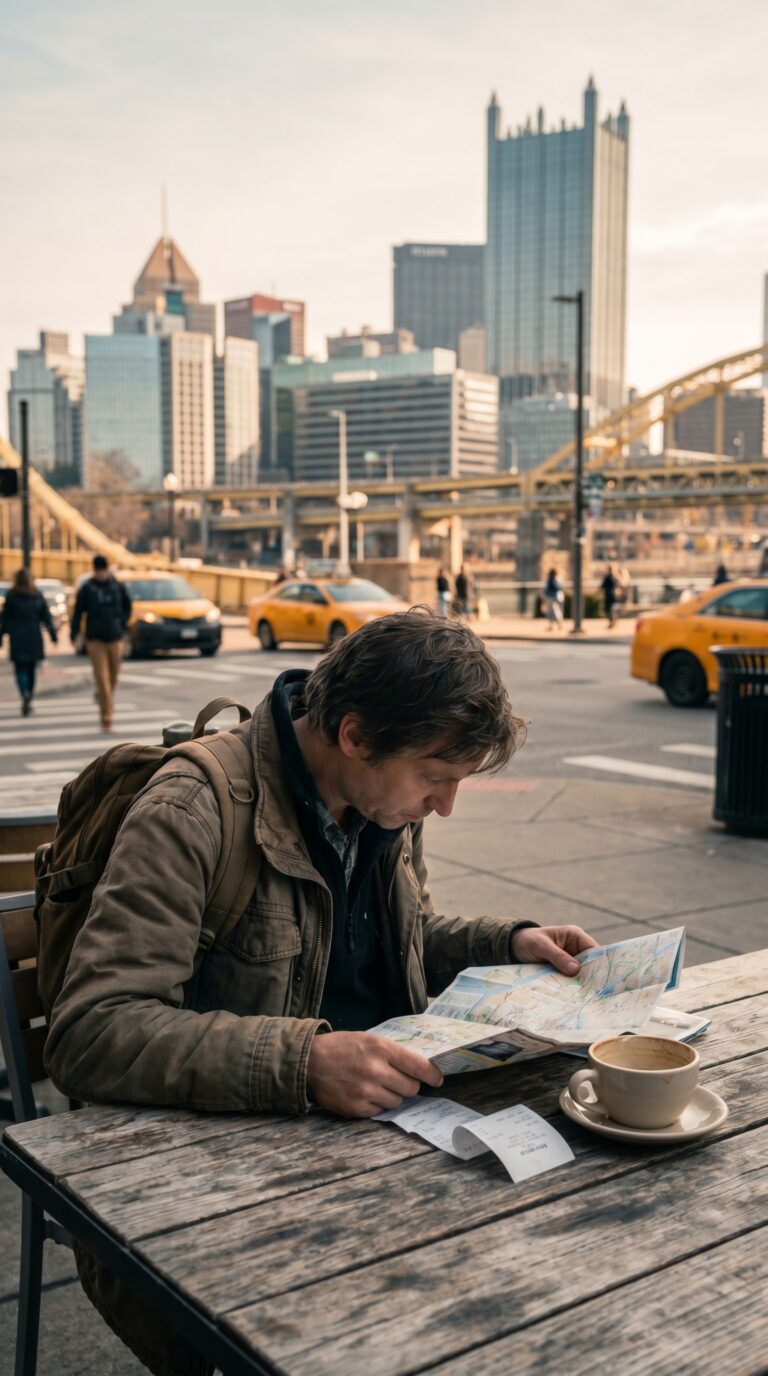
Pennsylvania sits in the middle range for U.S. travel costs. Budget motels run $60–90 per night, while mid-range hotels cost $120–180. Upscale properties start at $200. Expect higher rates in Philadelphia, Pittsburgh, and the Poconos during summer and fall. According to recent hotel booking data, average rates in Philadelphia during peak season run about 30% higher than in Lancaster County.
Casual meals cost $12–18, mid-range restaurants charge $25–40 per person, and fine dining starts at $60. Pennsylvania Dutch Country and Pittsburgh deliver strong value for food. Many historic sites charge $5–15 for entry, while theme parks and major museums run $30–80 per person.
Rental cars cost $40–70 per day. Gas averages around $3.50 per gallon. The Pennsylvania Turnpike toll from Philadelphia to Pittsburgh costs approximately $63 for a passenger vehicle, per the Pennsylvania Turnpike Commission. Budget travelers can manage on $80–120 per day. Mid-range travelers need $150–250. Luxury travelers should plan for $300 or more daily.
Southeast Pennsylvania: Philadelphia & Beyond
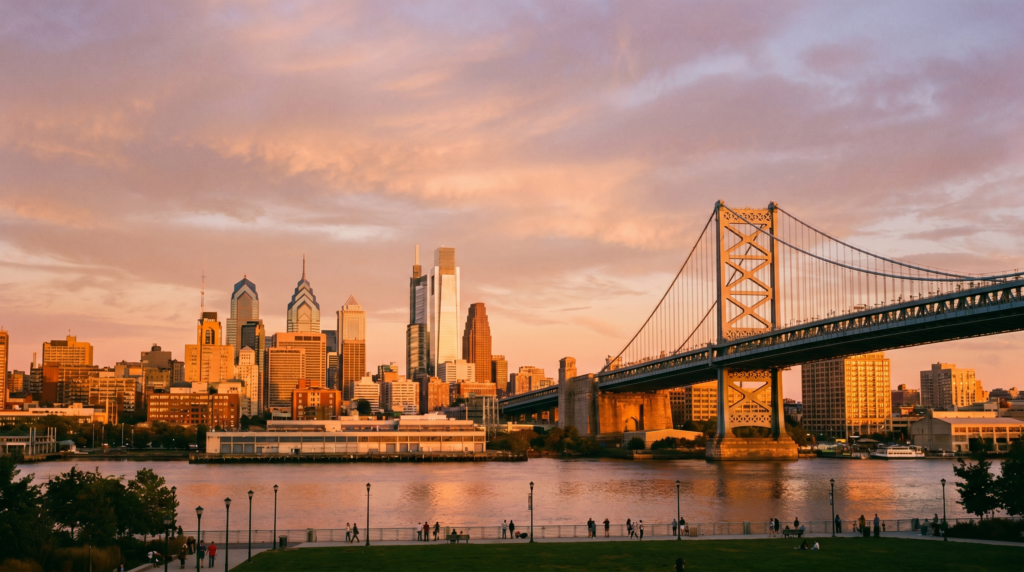
Southeast Pennsylvania centers on Philadelphia, the nation’s sixth-largest city with 1.6 million residents, plus Reading’s outlet shopping district and Wissahickon Valley’s 1,800-acre urban park system.
Southeast Pennsylvania is the state’s most populous region, anchored by Philadelphia and extending northwest to Reading and the Wissahickon Valley. This corner of the state blends Revolutionary War history with modern urban culture, factory outlet shopping, and surprising natural escapes. this region delivers variety within a compact area. The Visit Philadelphia official tourism website provides updated event calendars and neighborhood guides for trip planning.
Philadelphia
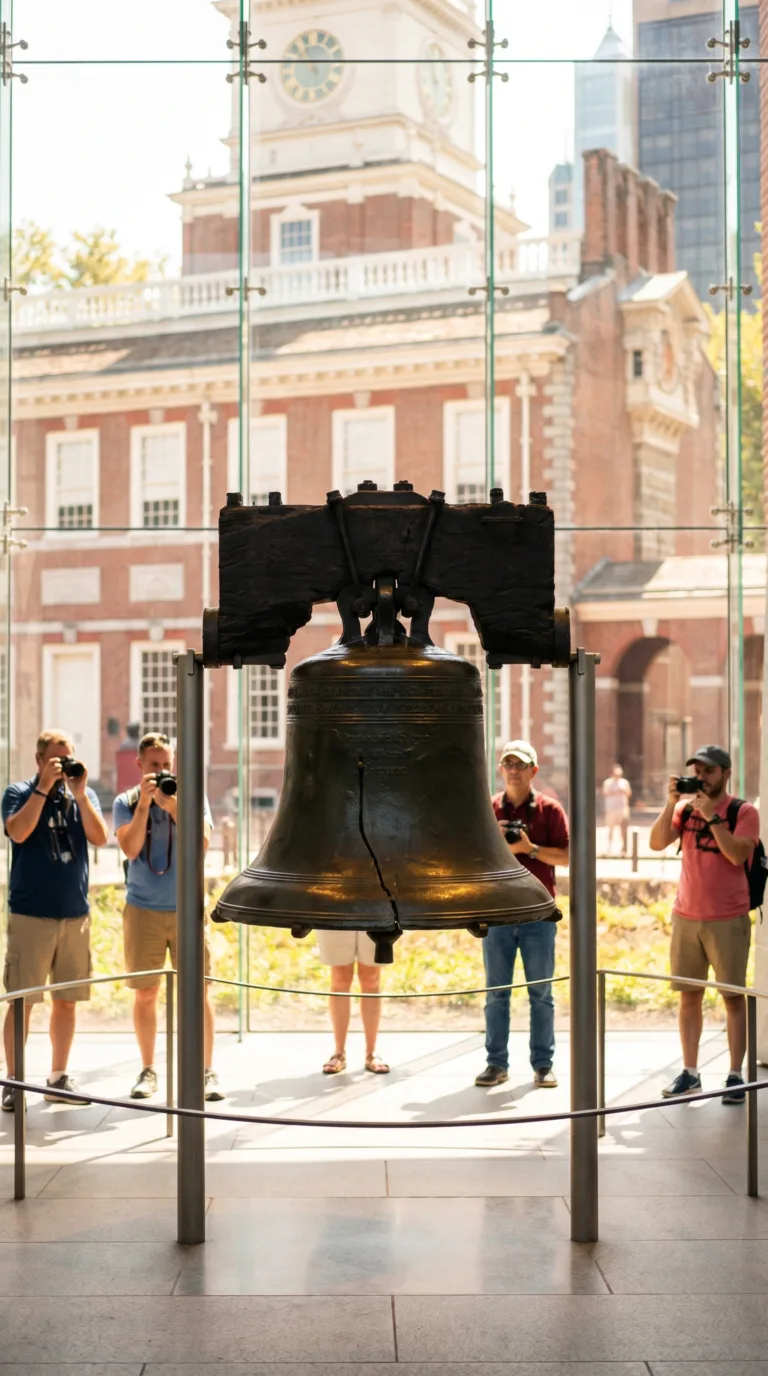
Philadelphia is the birthplace of American democracy and Pennsylvania’s largest city. Start at Independence Hall, where the Declaration of Independence and Constitution were signed. Free timed tickets (required) let you tour the Assembly Room where the Founding Fathers debated. The Liberty Bell sits in its glass pavilion across the street, part of Independence National Historical Park, which welcomed 5.2 million visitors in 2024 according to National Park Service statistics. Beyond history, climb the 72 steps at the Philadelphia Museum of Art (the Rocky Steps) for skyline views, then explore the museum’s 240,000-piece collection. Reading Terminal Market packs 80+ food vendors under one roof, serving everything with Amish pretzels and Cambodian noodles. Old City’s cobblestone blocks hold galleries and cafes, while neighborhoods like Fishtown (craft breweries, music venues) and Rittenhouse Square (upscale dining, boutiques) show the city’s modern side. Plan at least two to three days to cover the highlights. From the free Liberty Bell to DiNic’s $14 roast pork sandwich at Reading Terminal Market and Steve Buscemi’s audio tour of Eastern State Penitentiary, our complete Philadelphia travel guide lays out the walkable historic core and beyond.
Reading
Reading calls itself the outlet capital of the world. VF Outlet Village anchors a shopping district with over 50 factory stores selling brands like Nike, Coach, and Calvin Klein at discounts up to 70% off retail. Beyond the outlets, the Reading Public Museum holds 300,000 artifacts spanning art, science, and natural history. Drive up Mount Penn to the Pagoda, a 1908 Japanese-style tower offering 360-degree views across the city and surrounding valleys. Reading sits 30 minutes from Lancaster County, making it a natural pairing for a shopping day before or after exploring Pennsylvania Dutch Country. Most visitors spend four to six hours here focused on outlet deals. Climb to the 1908 Pagoda on Mount Penn for 360-degree views, then map out day trips to Hershey and Gettysburg with our complete Reading travel guide.
Wissahickon Valley
Wissahickon Valley Park stretches 1,800 acres along Wissahickon Creek within Philadelphia’s northwest city limits. Over 50 miles of trails wind through this wooded gorge, popular with trail runners, mountain bikers, and hikers seeking an escape without leaving the city. Forbidden Drive, a seven-mile gravel path closed to cars, follows the creek past stone bridges and forest canopy. Valley Green Inn, built in 1850, serves lunch and snacks at the trail midpoint. The park’s covered bridges and rocky outcrops attract photographers year-round. Best for outdoor enthusiasts who want nature mixed into a Philadelphia itinerary, the park requires no entrance fee and offers free street parking at multiple trailheads.
Northeast Pennsylvania: The Pocono Mountains Region
The Pocono Mountains region spans 2,400 square miles of northeastern Pennsylvania, attracting 27 million visitors annually to its ski resorts, water parks, hiking trails, and romantic couple’s resorts.
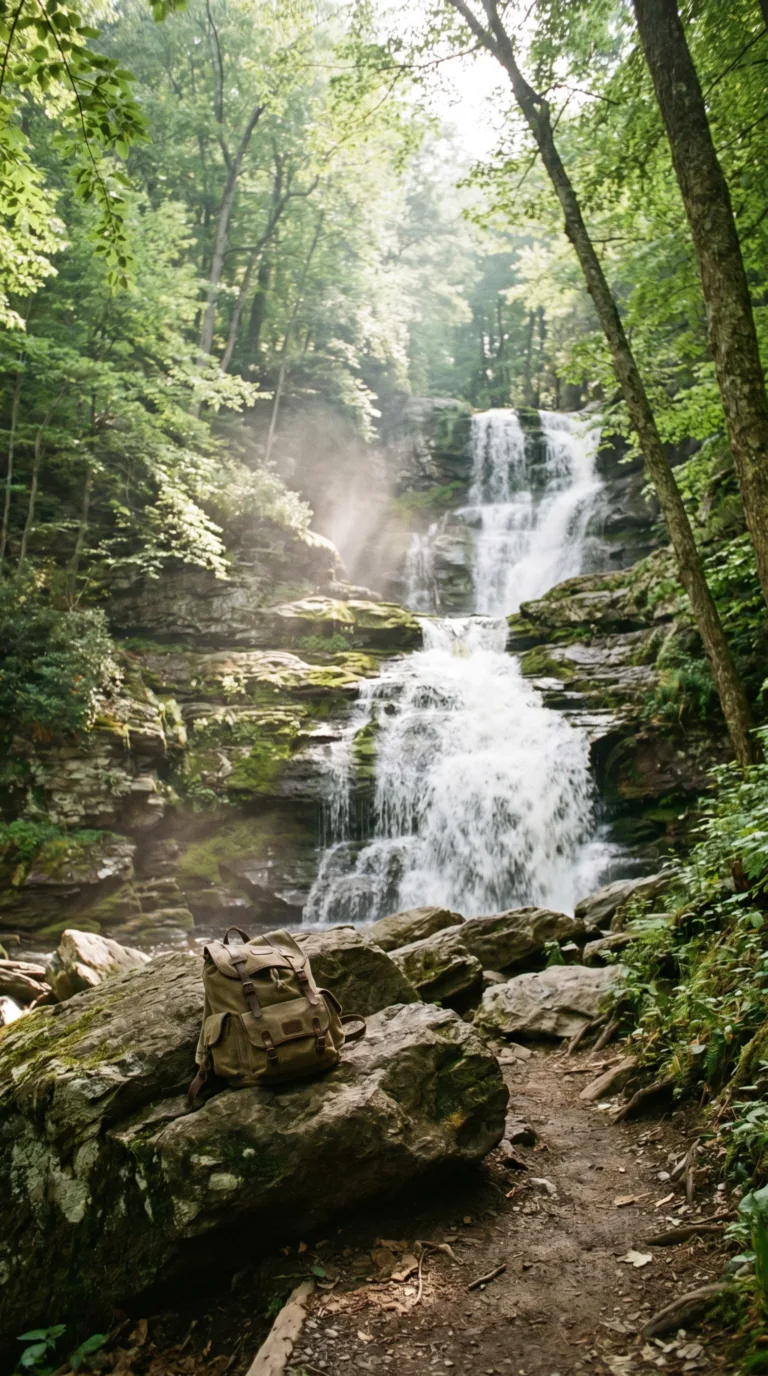
Northeast Pennsylvania’s Pocono Mountains serve as the state’s outdoor recreation hub, drawing families, couples, and nature lovers year-round. Located 90 minutes from both New York City and Philadelphia, the region offers easy weekend escapes to ski slopes, indoor water parks, and protected wilderness. According to the Pocono Mountains Visitors Bureau, the area welcomes 27 million visitors each year, making it one of the most visited mountain destinations in the eastern United States.
Pocono Mountains
The Pocono Mountains deliver four-season recreation across 2,400 square miles of forested peaks and river valleys. Winter brings downhill skiing at Camelback Mountain Resort, Jack Frost Big Boulder, and Shawnee Mountain, with 165 combined trails. Indoor water parks at Kalahari Resorts, Great Wolf Lodge, and Aquatopia at Camelback keep families entertained when snow falls outside. Summer shifts the focus to zip-lining through tree canopies, whitewater rafting on the Lehigh River, and hiking trails that connect state parks. The region earned its reputation for romantic getaways through couple’s resorts featuring heart-shaped hot tubs, private dining, and spa packages. Most resorts cluster near Mount Pocono and Tannersville, with lodging ranging from budget motels to all-inclusive properties. Plan two to three days to experience both outdoor adventures and resort amenities. From skiing Shawnee Mountain’s 23 trails to chasing the 130-foot drop of Dingmans Falls, our complete Pocono Mountains guide maps out the region’s top attractions, waterfalls, and 150-plus lakes season by season.
Delaware Water Gap
Delaware Water Gap National Recreation Area protects 70,000 acres along the Pennsylvania-New Jersey border, where the Delaware River cuts through the Kittatinny Ridge. The Delaware Water Gap National Recreation Area charges no entrance fee, making it one of the most accessible national park units in the region. The Appalachian Trail crosses through the park, offering day hikes with ridge-top views stretching into three states. Raymondskill Falls drops 178 feet in three tiers, ranking as Pennsylvania’s tallest waterfall, while Dingmans Falls provides wheelchair-accessible boardwalk viewing. Canoe and kayak rentals launch from multiple access points along the river, with Class I-II rapids suitable for beginners. Scenic drives follow Old Mine Road through historic villages and overlooks. Visit between May and October for the best trail conditions and water levels. Day trips work well, though nearby campgrounds allow multi-day stays.
Jim Thorpe
Jim Thorpe sits in a narrow valley where the Lehigh River carves through the mountains, earning its nickname as the “Switzerland of America” for its alpine setting and Victorian architecture. The town’s brick buildings date to the 1800s coal boom, when it served as the county seat under its original name, Mauch Chunk. Today, Broadway’s shops and restaurants occupy restored storefronts, while the Asa Packer Mansion museum preserves the home of a railroad tycoon. The Lehigh Gorge Scenic Railway runs 16-mile round trips through the gorge, with open-air cars in summer and heated coaches in fall. Whitewater rafting companies guide trips down Class II-III rapids from spring through early fall. Mountain bikers ride the Switchback Trail, a 18-mile converted rail line with views of the gorge. Plan a full day to walk the historic district and ride the railway, or stay overnight to add river activities. From the vintage cars of the Lehigh Gorge Scenic Railway to the eerie handprint in Cell 17 of the Old Jail Museum, our Jim Thorpe travel guide maps out a weekend among Victorian mansions and gorge-side trails.
Lehigh Valley: Bethlehem
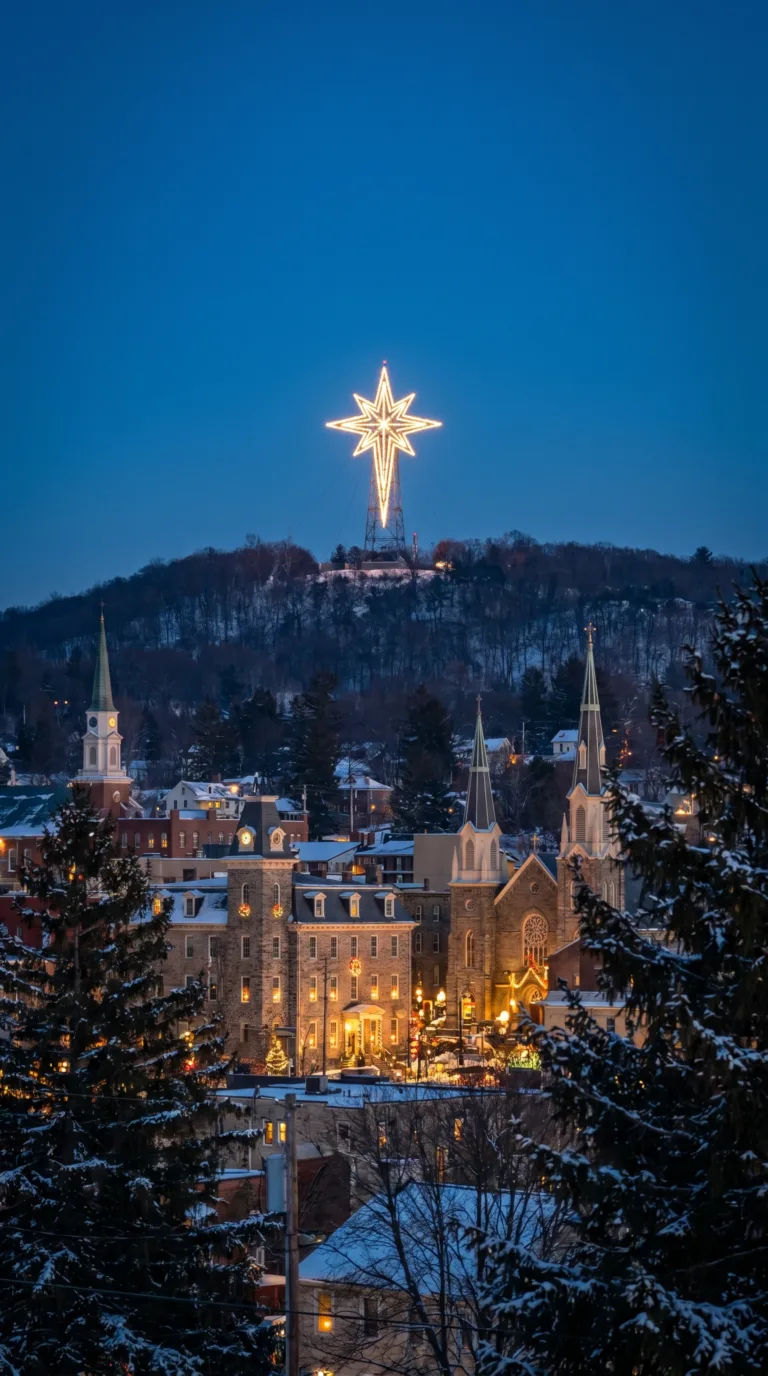
Bethlehem attracts over 1 million visitors during its annual Christkindlmarkt (November, December), one of the largest German-style Christmas markets in the United States.
Bethlehem
Bethlehem earns its nickname “Christmas City USA” through elaborate holiday displays that transform the downtown from mid-November through early January. The Lehigh Valley official tourism website reports that more than one million people visit the annual Christkindlmarkt, a German-style Christmas market featuring handcrafted ornaments, roasted chestnuts, and mulled wine. The Bethlehem Star atop South Mountain glows every night during the season, visible for miles across the valley.
Beyond the holidays, Bethlehem offers year-round attractions rooted in its Moravian heritage and industrial past. The SteelStacks arts campus occupies the former Bethlehem Steel site, where five blast furnaces now host concerts, festivals, and outdoor movies against a dramatic industrial backdrop. The Moravian historic district preserves 18th-century stone buildings, including the 1741 Gemeinhaus, the oldest building in Bethlehem. The National Museum of Industrial History explains how the city’s steel mills shaped American manufacturing. Plan a day trip to explore the Historic Bethlehem Museums & Sites official page locations, or stay a weekend to experience one of the unique places to visit in PA for culture seekers and holiday enthusiasts alike.
South Central Pennsylvania: History & Heritage
South Central Pennsylvania is the heart of Pennsylvania Dutch Country and Civil War history, encompassing Lancaster County’s Amish farmland, Gettysburg’s battlefield, Hershey’s chocolate empire, and the state capital at Harrisburg.
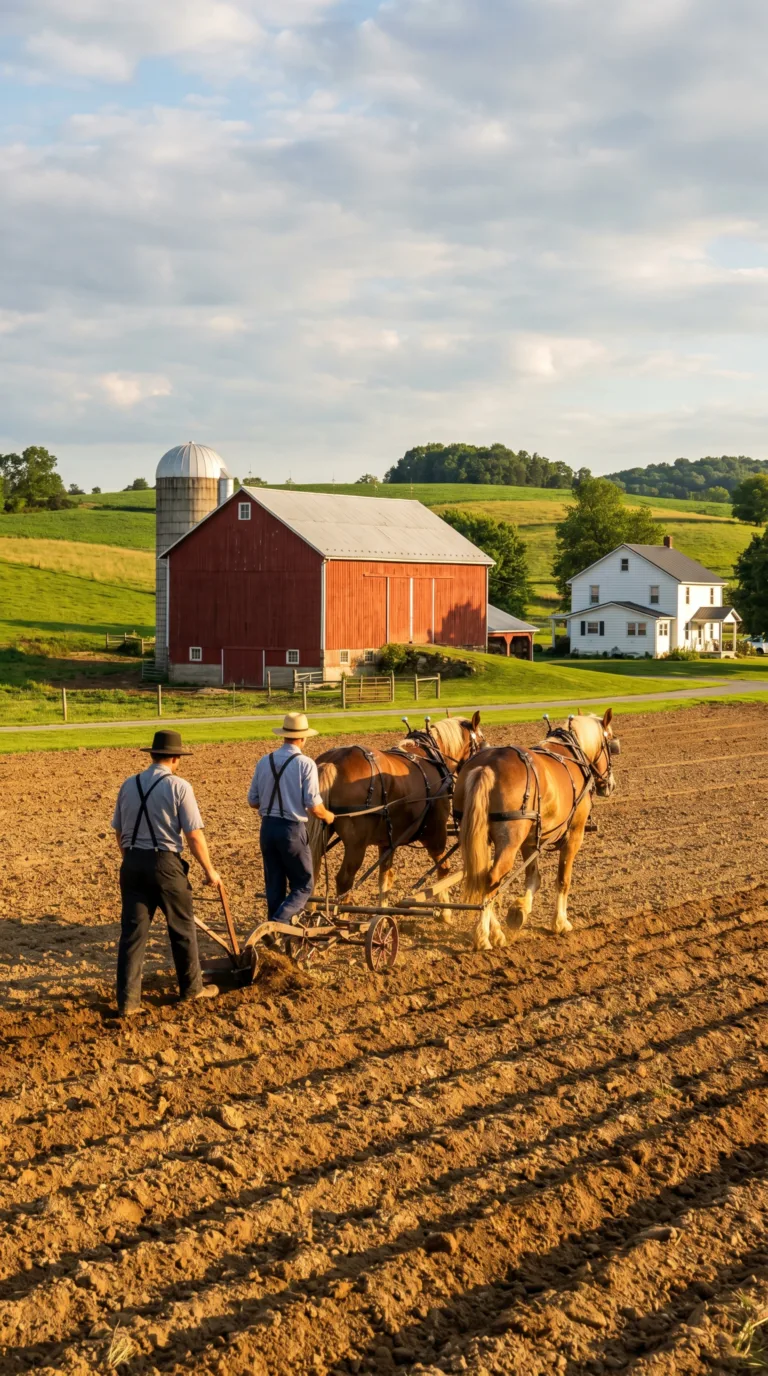
This region packs in some of Pennsylvania’s most recognizable attractions within easy driving distance of one another. From horse-drawn buggies on Lancaster’s back roads to the hallowed ground at Gettysburg and the chocolate-scented streets of Hershey, South Central Pennsylvania rewards travelers interested in history, heritage, and family fun. The Discover Lancaster official tourism website is a useful starting point for planning your route through Pennsylvania Dutch Country.
Lancaster County
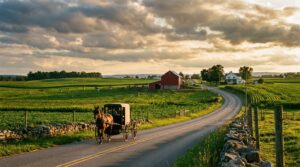
Lancaster County is home to North America’s oldest Amish settlement, established in the early 1760s and now numbering more than 40,000 Amish residents according to the Young Center for Anabaptist and Pietist Studies. Horse-drawn buggies share the roads with cars, roadside stands sell produce and shoofly pie, and farmers markets like Lancaster Central Market (the nation’s oldest continuously operating public market) showcase Pennsylvania Dutch cooking. Ride the historic Strasburg Rail Road, tour a working Amish farm, or simply drive the rolling backroads past covered bridges and red barns. Plan a full day to take it in slowly. From driving the 90-mile covered-bridge loop past Hunsecker’s Mill to tasting honest shoofly pie at Stoltzfus Farm Market, our Lancaster County guide shows you Amish country beyond the buggy rides.
Gettysburg
Gettysburg National Military Park preserves the site of the pivotal three-day 1863 Civil War battle and draws roughly a million visitors each year. Start at the Museum and Visitor Center to see the restored Cyclorama painting, then tour the battlefield by car, bike, or licensed guide. The Soldiers’ National Cemetery, where Lincoln delivered the Gettysburg Address, sits a short walk away. Allow at least a half-day; serious history buffs spend two. The Gettysburg National Military Park NPS page lists ranger programs and seasonal hours. From the 24-mile auto tour past Little Round Top to the 377-foot Cyclorama painting of Pickett’s Charge, our Gettysburg battlefield and museum guide maps out how to spend a day on this hallowed ground.
Hershey
Known as “The Sweetest Place on Earth,” Hershey was built around Milton Hershey’s chocolate factory, and the town still has streetlights shaped like Hershey’s Kisses. Hersheypark offers more than 70 rides and a water park, while Hershey’s Chocolate World provides a free factory-tour ride and make-your-own-candy experiences. Check the Hersheypark official website for operating calendars before you go.
Harrisburg
Pennsylvania’s state capital sits on the banks of the Susquehanna River. The Pennsylvania State Capitol, completed in 1906 with a dome modeled on St. Peter’s Basilica, offers free guided tours of its lavish murals and tiled floors. Add the National Civil War Museum and a stroll along Riverfront Park to round out a half-day visit.
Southwest Pennsylvania: Pittsburgh & the Laurel Highlands
Southwest Pennsylvania pairs Pittsburgh’s urban renaissance with the natural beauty of the Laurel Highlands, from the state’s second-largest city to whitewater rivers and Frank Lloyd Wright’s Fallingwater.
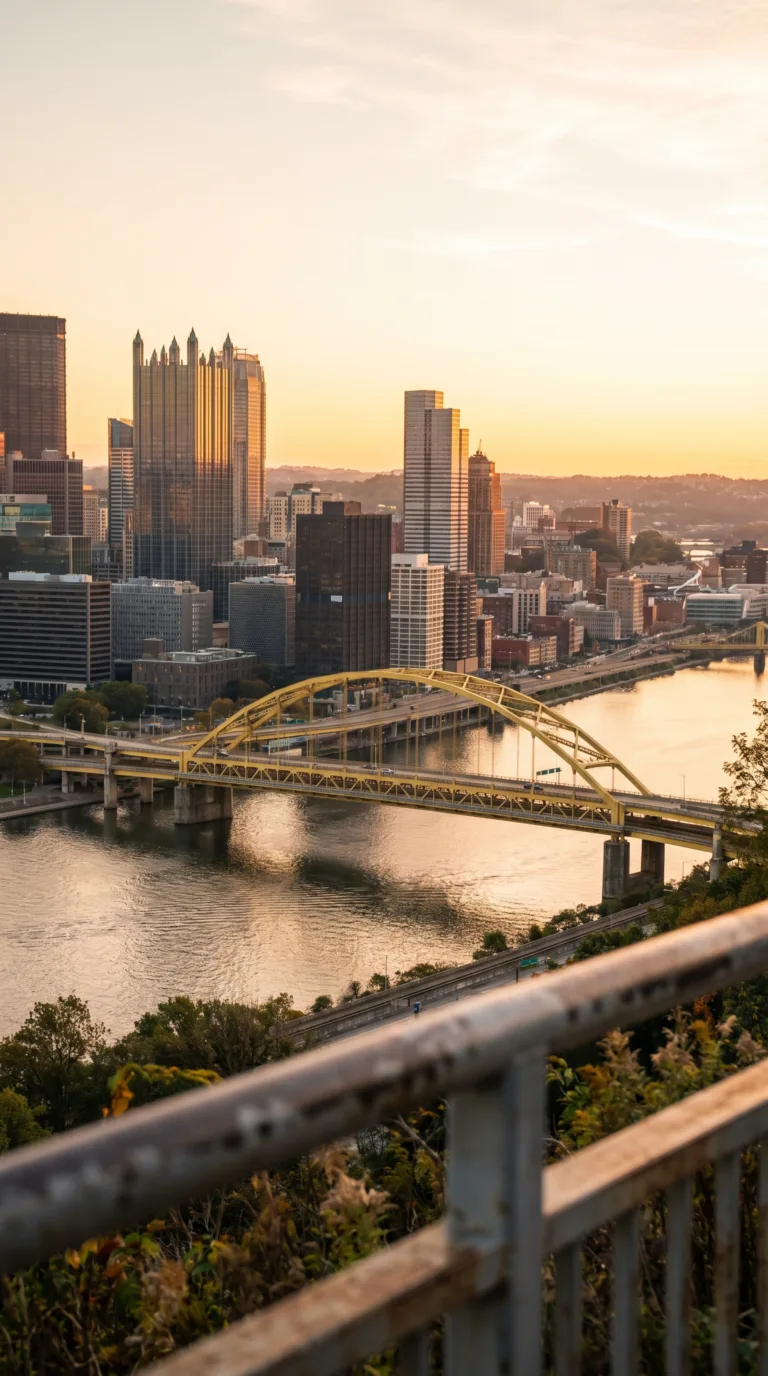
Once a steel town, Pittsburgh has reinvented itself as a hub for technology, medicine, and the arts, while the surrounding Laurel Highlands offer some of the best outdoor recreation in the state. Together they make Southwest Pennsylvania a great mix of city culture and mountain adventure. The Visit Pittsburgh official tourism website has neighborhood guides and event listings.
Pittsburgh
Pittsburgh, the state’s second-largest city with about 300,000 residents, famously claims 446 bridges, more than any other city in the world. The three rivers, the Allegheny, Monongahela, and Ohio, meet downtown at the Point, best viewed from atop Mount Washington via the historic Duquesne Incline. Visit the Andy Warhol Museum, the Carnegie Museums of Art and Natural History, and the lively Strip District for food and markets. Two days lets you sample the city’s distinct neighborhoods. From the historic inclines climbing Mount Washington to the 5 AM produce vendors of the Strip District, our Pittsburgh neighborhood guide breaks down which of the city’s 90 neighborhoods are actually worth your time.
The Laurel Highlands
An hour southeast of Pittsburgh, Ohiopyle State Park spans roughly 20,000 acres along the Youghiogheny River, Pennsylvania’s premier whitewater rafting destination, with hiking trails and Cucumber Falls nearby. The region is also home to Frank Lloyd Wright’s Fallingwater, the iconic house built over a waterfall. See the Ohiopyle State Park DCNR page for rafting outfitters and trail maps.
Northwest Pennsylvania: Erie & the Wilds
Northwest Pennsylvania is the state’s Great Lakes region and wilderness frontier, anchored by Erie’s Presque Isle beaches and the vast Allegheny National Forest.
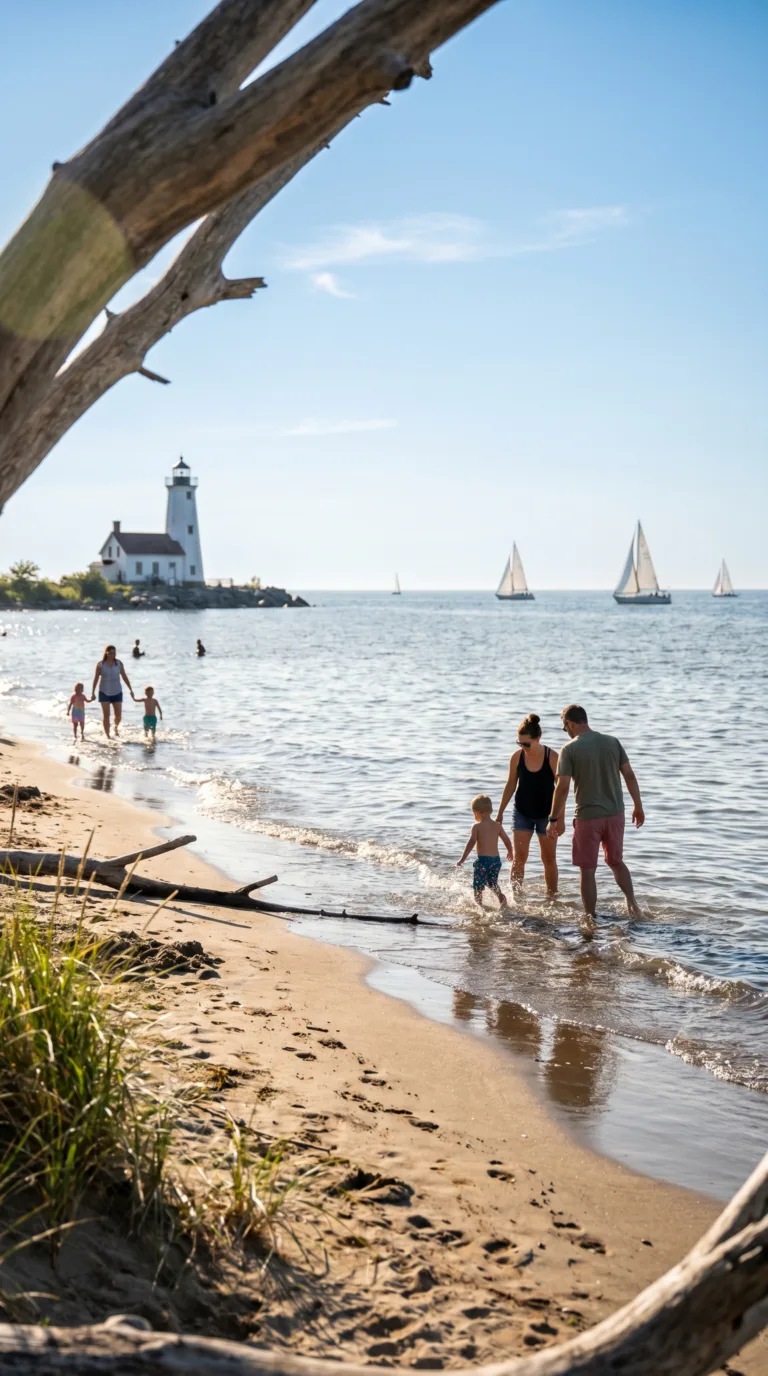
Pennsylvania’s northwest corner surprises many visitors with sandy Great Lakes beaches and half a million acres of forest. It is the place to come for swimming, boating, hiking, and some of the best fall foliage in the state. The Visit Erie official tourism website covers lodging and seasonal events.
Erie & Presque Isle
Erie is Pennsylvania’s only Great Lakes port city, and Presque Isle State Park is its crown highlight, a sandy peninsula curving into Lake Erie with 11 miles of beaches. One of Pennsylvania’s most-visited state parks, drawing roughly four million visitors a year, Presque Isle offers swimming, kayaking, cycling, and birdwatching, plus the Bicentennial Tower overlooking the bay. Summer is peak season. The Presque Isle State Park DCNR page has beach and trail details. Our complete Erie travel guide maps out the peninsula’s beaches, the Bicentennial Tower, and the best of the Lake Erie waterfront.
Allegheny National Forest
Covering 513,000 acres, the Allegheny National Forest is Pennsylvania’s only national forest, a remote expanse of hardwood ridges, reservoirs, and quiet campgrounds. Paddle or fish the Allegheny Reservoir, drive the scenic byways for autumn color, or visit the nearby Kinzua Sky Walk, a repurposed railroad viaduct with glass-floor views. Plan ahead using the Allegheny National Forest US Forest Service page.
Sample Weekend Getaway Itinerary
This 3-day weekend itinerary connects Pennsylvania’s most accessible highlights in a roughly 200-mile loop, covering Philadelphia’s history, Lancaster’s Amish culture, and Gettysburg’s battlefield.
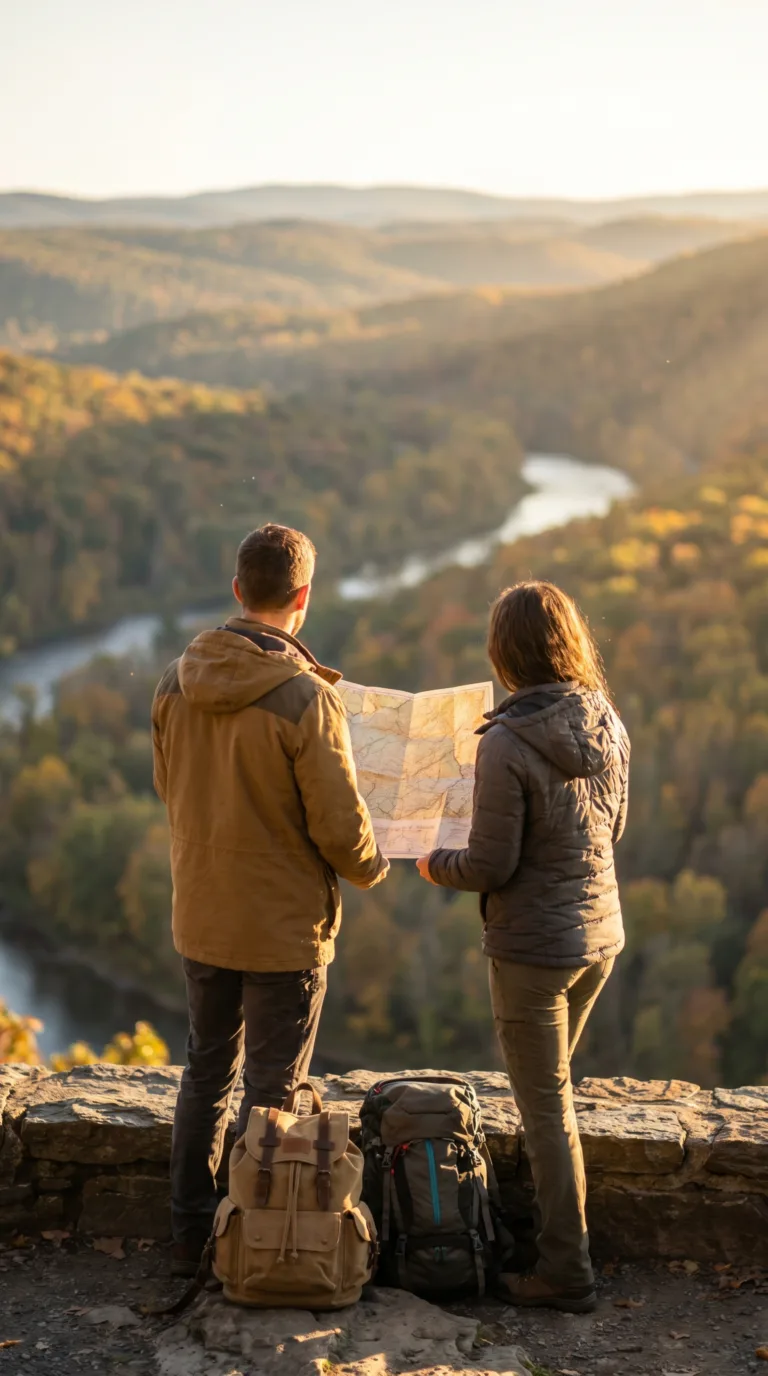
Pennsylvania offers many possible weekend routes depending on your interests, but this loop is ideal for first-time visitors based on the East Coast. Day 1: Explore Philadelphia, Independence Hall, the Liberty Bell, and lunch at Reading Terminal Market. Day 2: Drive west to Lancaster County for an Amish buggy ride and farmers-market breakfast, then continue to Gettysburg for the evening. Day 3: Tour the Gettysburg battlefield in the morning and stop in Hershey for chocolate and rides on the way home.
What to Pack for Pennsylvania
Pennsylvania’s variable climate calls for layered clothing year-round, with temperatures ranging from around 20°F in January to 85°F in July and frequent rain showers averaging about 42 inches annually.

Because weather varies by season and region (mountains versus cities), layers are essential. Pack with your itinerary in mind:
- Spring/Fall: light jacket, long pants, comfortable walking shoes, and rain gear for frequent showers.
- Summer: shorts, t-shirts, sunscreen, a hat, a swimsuit for the Poconos or Erie, and insect repellent.
- Winter: heavy coat, gloves, hat, and boots, especially for Poconos skiing or Erie lake-effect snow.
- Year-round: comfortable walking shoes for cobblestones and trails, a daypack, a reusable water bottle, and a camera.
- Specific gear: hiking boots for state parks, an umbrella, and binoculars for Amish Country back roads.
Frequently Asked Questions
How many days do you need to visit Pennsylvania?
Plan 5 to 7 days to see the highlights without rushing. A long weekend (3 days) covers Philadelphia, Lancaster, and Gettysburg, while a full week lets you add Pittsburgh, the Poconos, or Erie.
What are the best things to do in Pennsylvania for couples?
Popular romantic getaways include the Pocono Mountains (resorts, spas, and waterfalls), wine country tastings, a Pittsburgh skyline dinner via the Duquesne Incline, and cozy bed-and-breakfasts in Lancaster County.
When is the best time to visit Pennsylvania?
Fall (mid-September through October) is the most popular season for spectacular foliage across the mountains and forests. Late spring and early summer are also excellent for mild weather and fewer crowds.
What is Pennsylvania known for?
Pennsylvania is known for its founding-era history (Philadelphia and Gettysburg), Pennsylvania Dutch and Amish culture in Lancaster County, Hershey’s chocolate, Pittsburgh’s bridges and reinvention, and the Pocono Mountains.
Is Pennsylvania expensive to visit?
Pennsylvania is generally a mid-range destination. Philadelphia and Pittsburgh hotels cost more, but rural areas like Lancaster, Gettysburg, and the Allegheny region offer affordable lodging, dining, and many free or low-cost attractions.