This guide contains affiliate links. As an Amazon Associate we earn from qualifying purchases — at no extra cost to you.
Estimated reading time: 12 minutes
Last updated: September 2026
What gear do you need for hiking Guadalupe Mountains National Park?
For hiking Guadalupe Peak and other trails in the park, you need sturdy ankle-supporting boots for loose limestone terrain, trekking poles for 3,000-foot elevation gains, a daypack carrying 3-4 liters of water per person, and merino wool socks to prevent blisters on rocky eight-mile climbs. Layer clothing for 30-40°F temperature drops from trailhead to summit, and bring windproof protection against 50-mph gusts common year-round.
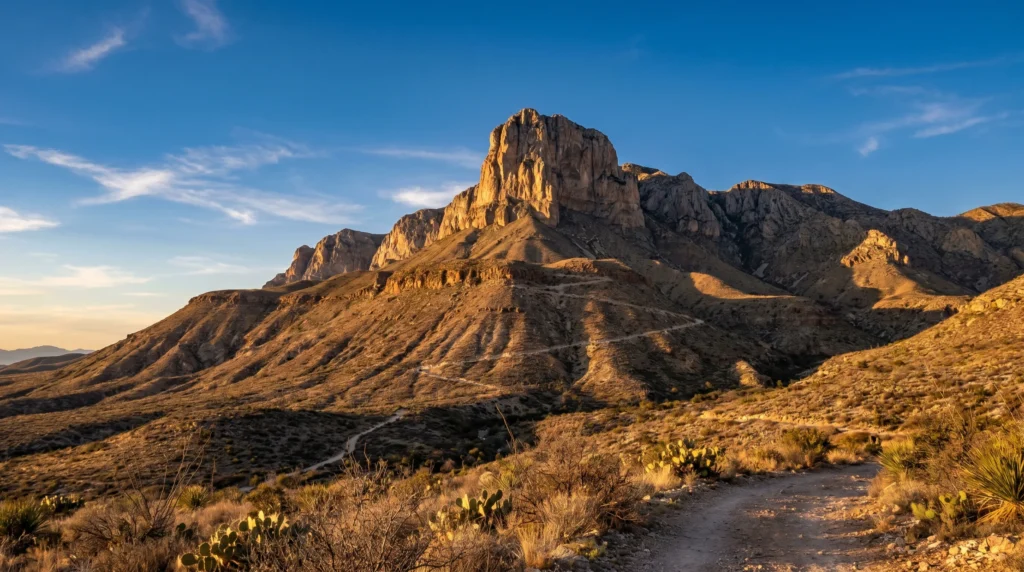
Guadalupe Mountains National Park demands more from your gear than most trails. The temperature can shift forty degrees between trailhead and summit, and there are zero water sources once you start climbing. The exposed rocky terrain includes steep sections with loose limestone that tests your ankles on every step, while relentless sun reflects off white stone and wind gusts hit you from every direction.
The Guadalupe Peak trail gains 3,000 feet over 8.5 miles with no shade or bailout points. This isn’t a hike where you can turn back easily if something goes wrong. Unlike wooded eastern parks where tree cover offers some protection, mistakes here have real consequences. I learned this watching unprepared hikers turn around at mile two, their cotton shirts soaked and water bottles already empty.
The park enjoys 300+ days of sunshine, but winter storms can dump snow above 7,000 feet with little warning. Your gear needs to work in both scenarios. This guide breaks down practical recommendations by category, each tested against the specific challenges of hiking Texas’ highest terrain. We’re talking about what actually works when you’re exposed on that final summit push.
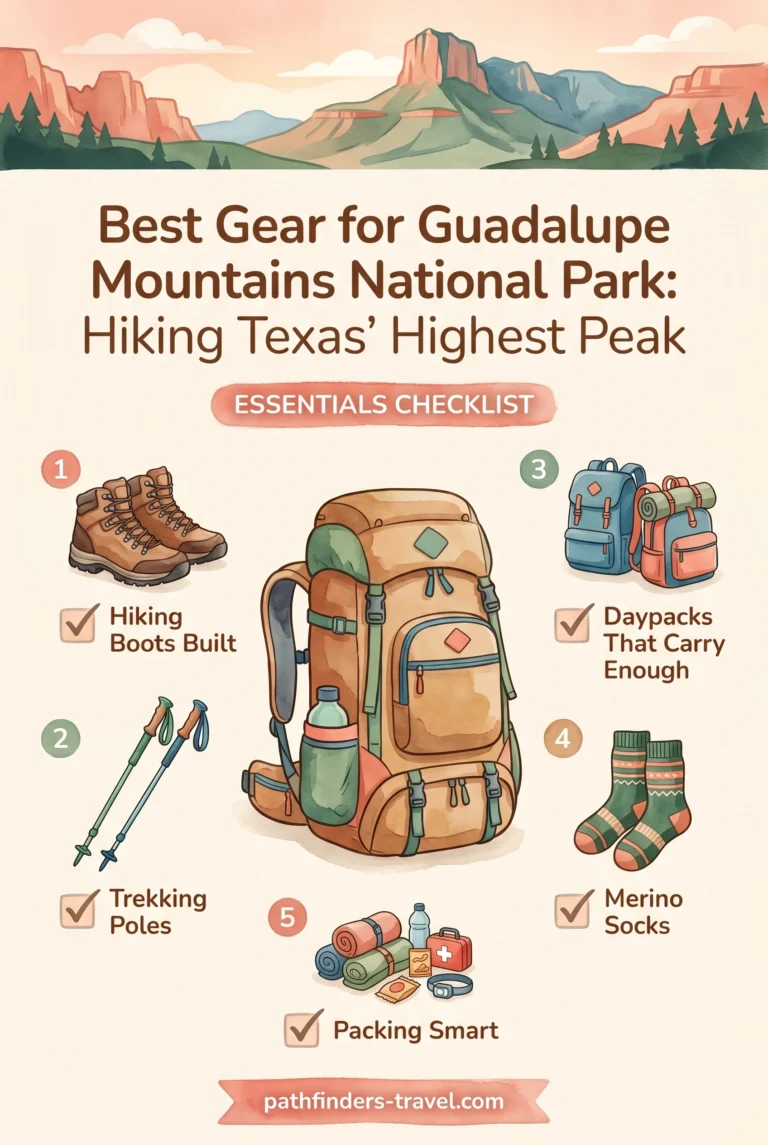
Hiking Boots Built for Limestone Scrambles
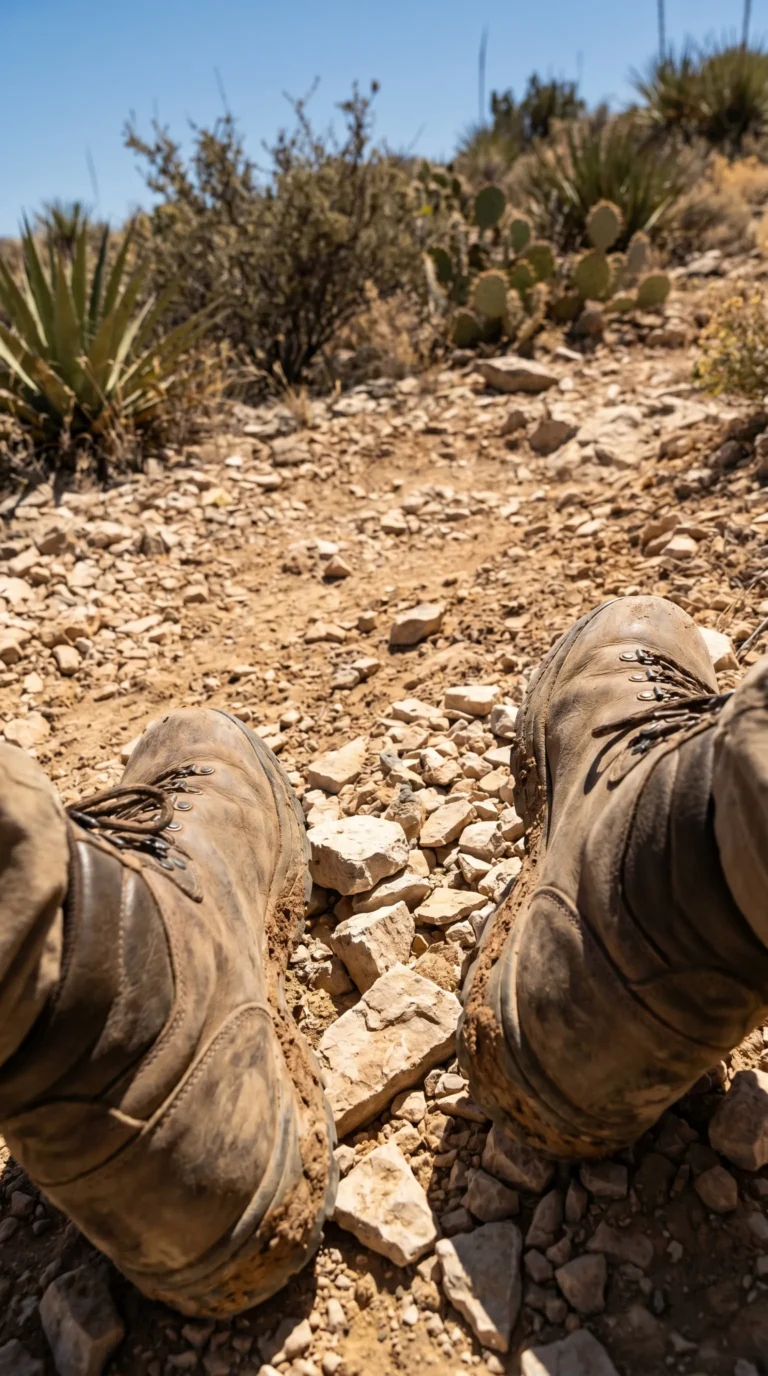
The best gear for Guadalupe Mountains National Park starts with boots that can handle loose shale and limestone, which create unstable footing on steep descents where most ankle rolls happen. Aggressive tread and ankle support aren’t optional here; they’re the difference between confidently picking your line down from Guadalupe Peak and slipping on fractured rock when your legs are tired and gravity is working against you.
If you’re tackling the summit in spring or fall when temperatures are moderate, these lightweight waterproof hiking boots strike a smart balance between support and agility. The waterproof construction guards against the sudden thunderstorms that roll in without much warning, and the lighter weight means less fatigue over long climbs. The ankle-high cut provides support without the bulk of taller boots, giving you nimble footwork on technical sections where you need to place your feet carefully between rocks.
For winter conditions or if you’re carrying a heavier pack, these 8-inch tactical boots offer maximum ankle protection on the rockiest stretches. The taller shaft really shines when you’re scrambling over unstable talus fields, and the side zipper makes trailhead changes easy when your feet swell after hours of climbing. The breathable leather handles summer heat while standing up to sharp rock edges that chew through lesser materials.
Break in your boots before you arrive at the park. Blisters on mile three of an eight-mile summit push are miserable, and there are no shortcuts back. I always try new boots with a loaded daypack at home, walking downhill on gravel or stairs to simulate what the descent from Guadalupe Peak feels like when tired legs meet gravity.
Your ankles will thank you on the way down, which is where most people get hurt. The trail doesn’t care if you’re exhausted, and loose limestone has ended more summit days than weather ever has.
Trekking Poles for Steep Rocky Climbs
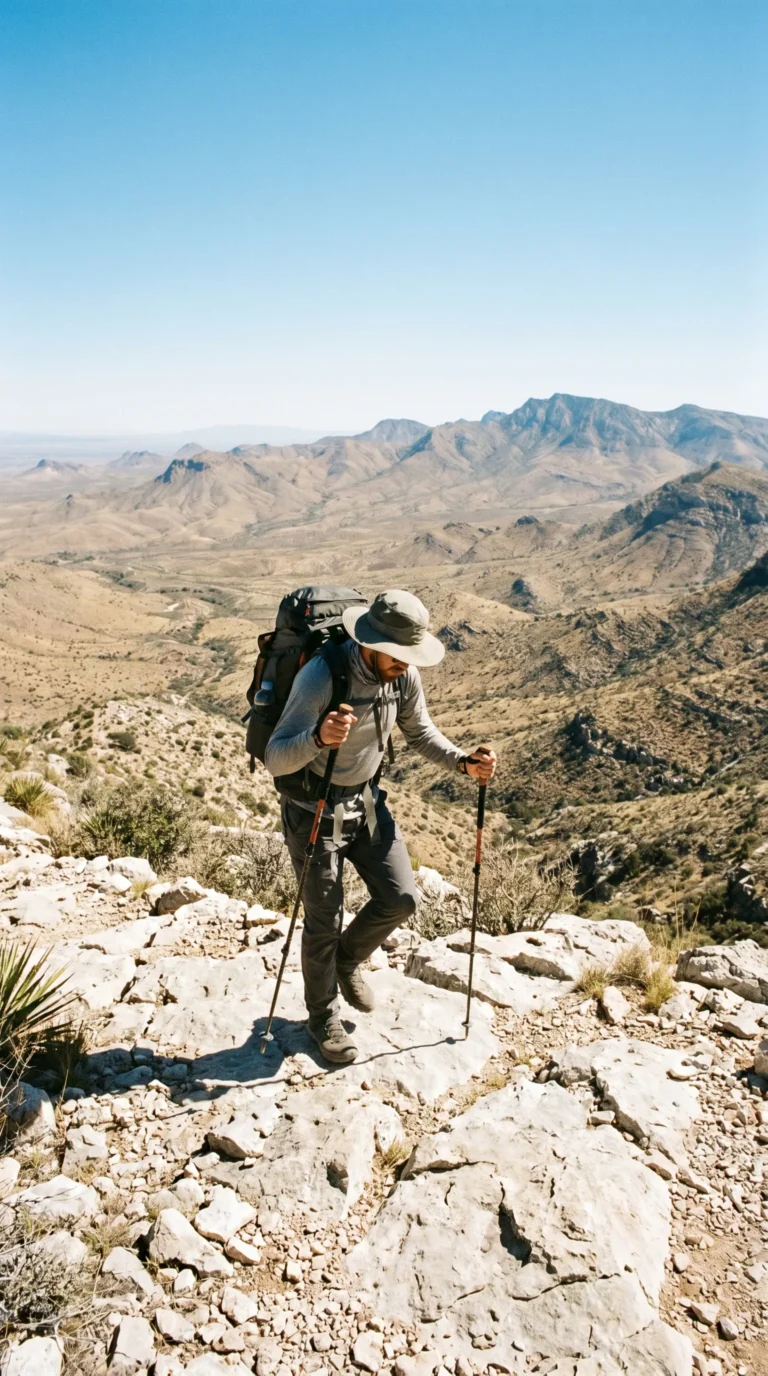
Trekking poles aren’t optional gear on Guadalupe trails, they’re essential safety equipment. When you’re gaining 3,000 feet of elevation to reach Guadalupe Peak, your knees absorb punishing stress on the ascent. The descent is even harder. Your legs are tired, your muscles are shaky, and every step on loose rock that shifts underfoot can throw you off balance. Poles redistribute that load across four points of contact instead of two and provide the stability you need when fatigue sets in.
If you’re outfitting yourself for day hikes without breaking the bank, the TrailBuddy collapsible poles deliver serious value. They use 7075 aluminum, which strikes a smart balance between strength and light weight. The collapsible design packs down small when you need both hands to scramble over boulders, then extends quickly for the next stretch of trail. You can adjust the length on the fly to adapt to steep uphill and downhill sections, and they won’t fail on demanding terrain.
If you’re a peak bagger planning to tackle multiple trails across the park, or you hike often enough to justify premium gear, the Premium Foldable Hiking Poles by USA are worth the investment. Aircraft-grade aluminum handles rugged use season after season. Cork grips wick sweat during summer heat and stay comfortable when temperatures drop. Metal locks provide more secure height adjustment than twist locks, which can slip under heavy load on steep descents.
I always remind people that poles dramatically reduce fatigue over eight-plus-mile days. Tired hikers make mistakes, and mistakes on technical descents can mean serious injury far from help. Adjust your poles shorter for steep climbs to maintain efficient posture, then lengthen them for descents to reduce strain on your knees and hips. That simple tweak makes a huge difference by the time you reach the trailhead again.
Daypacks That Carry Enough Water
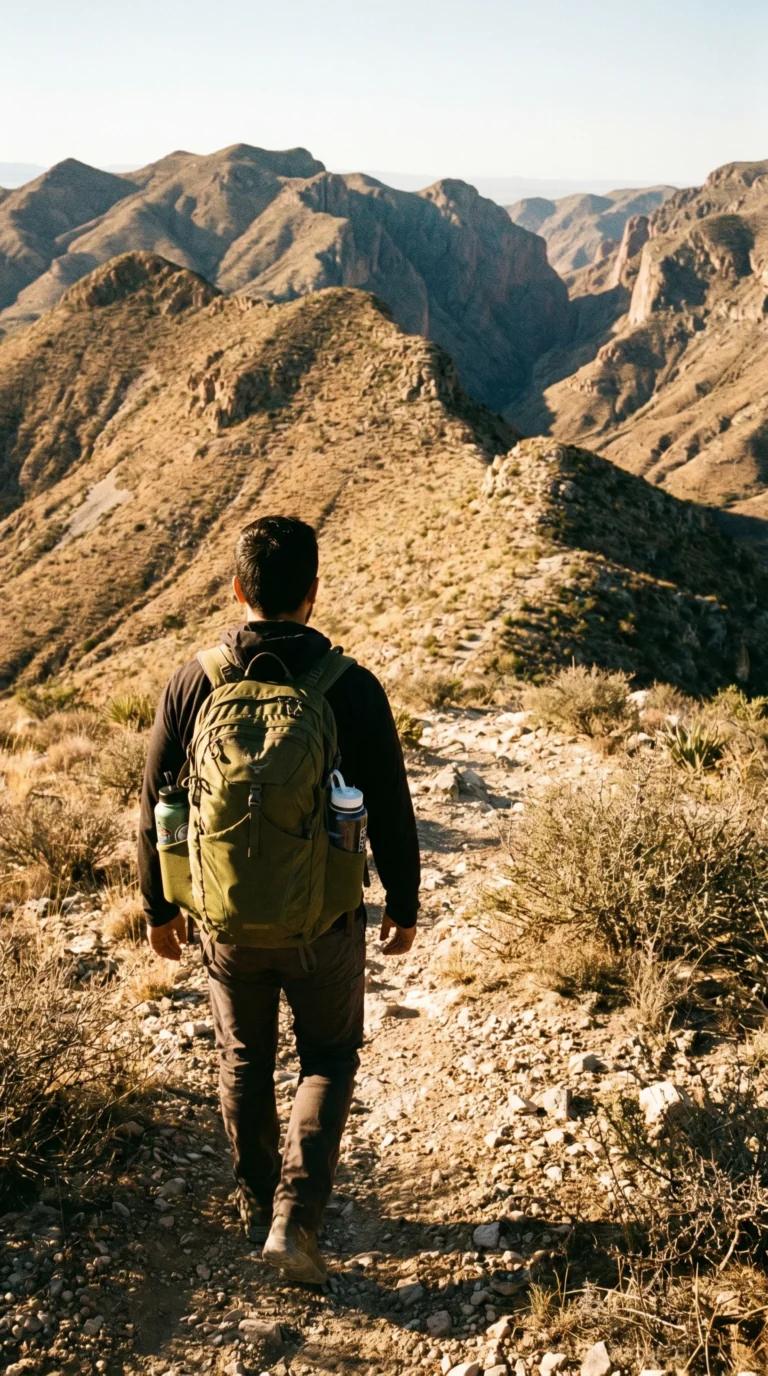
Guadalupe Mountains trails offer zero natural water sources, so your daypack needs to carry 3-4 liters of water per person, plus food, layers, and emergency gear. Dehydration is the biggest danger in this exposed, shadeless park where temperatures soar and the bone-dry air pulls moisture from your body before you even feel thirsty. Choosing the right pack means thinking about capacity first, comfort second.
If you’re tackling shorter routes like Devil’s Hall or prefer moving fast and light in spring or fall, the Osprey Ultralight Collapsible Stuff Pack gives you 18 liters of space in a design that weighs almost nothing. This ultralight option holds two large water bottles, snacks, and a windbreaker, but not much beyond that. I like that it packs flat when you’re done, so it travels easily in your luggage and doesn’t eat up space in your car between hikes.
For the full Guadalupe Peak push or winter conditions, you need more room. The Maelstrom 40-liter hiking backpack handles summit attempts with space for three liters of water, a proper lunch, extra layers, first aid supplies, and seasonal gear like microspikes or trekking poles. The included rain cover protects everything when those sudden afternoon storms roll in. Multiple compartments keep your gear organized so you’re not digging to the bottom for your headlamp or blister kit at a rest stop.
Before you hit the trail, load your pack with the full water weight and adjust the shoulder straps and hip belt. Those tweaks make a massive difference in comfort over eight miles of steep, rocky climbing. A pack that rides well when empty can turn into a torture device when loaded, so test it on a neighborhood walk first. Your shoulders will thank you halfway up the peak.
Merino Socks to Prevent Blisters
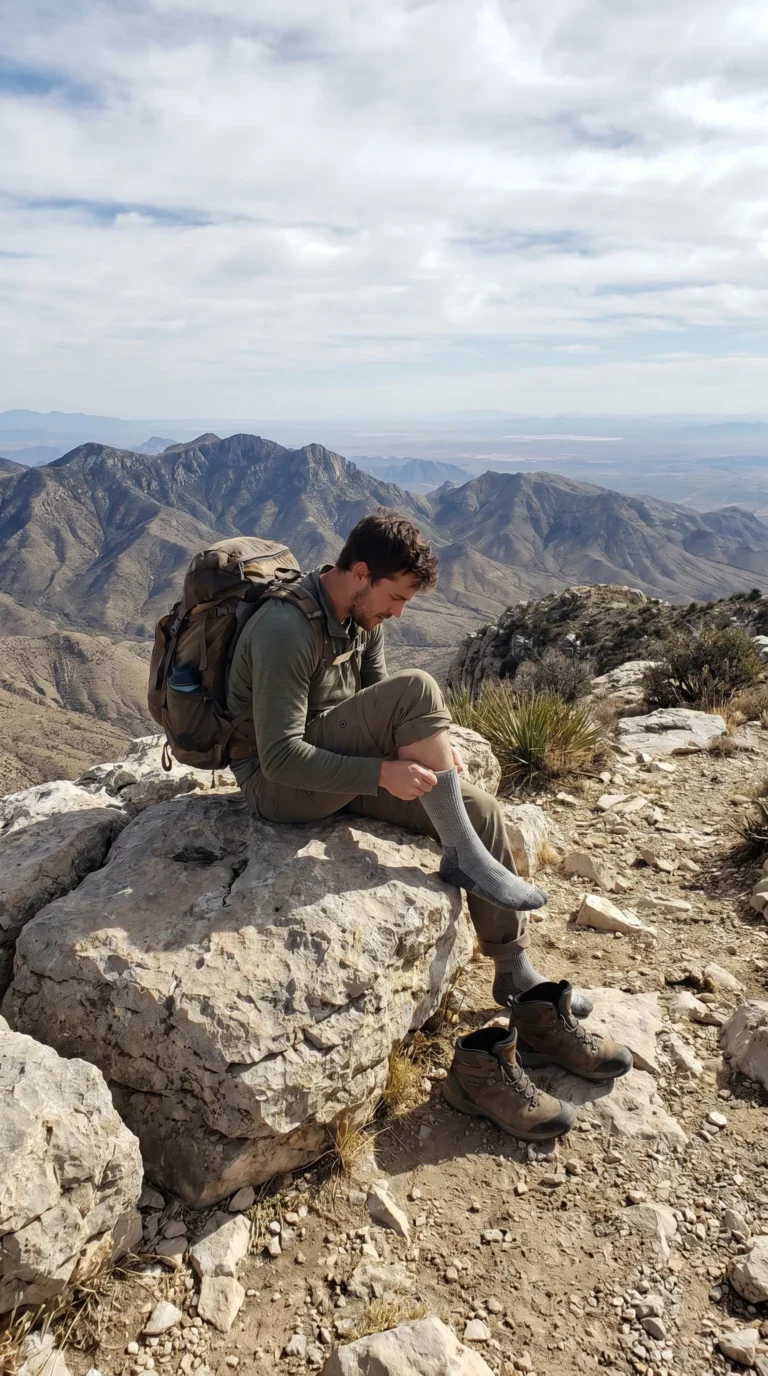
Sock choice can make or break your Guadalupe Peak climb. Blisters form when friction and moisture team up against your feet, and eight-plus miles of rocky, uneven terrain creates constant rubbing in every direction. Cotton socks trap sweat, stay soaking wet, and will absolutely destroy your feet before you hit the halfway point. You need fabrics that pull moisture away and cushion the pounding.
If you’re summiting Guadalupe Peak or tackling other long routes, these full-height merino wool hiking socks are your best bet. Merino wicks moisture in summer heat and still insulates when winter cold settles in. Extra cushioning at the heel and toe guards the high-impact zones that take the most abuse on steep climbs. The taller sock height prevents boot tops from rubbing your ankles raw on the relentless uphill sections. A three to five pack means you’ll have a fresh pair for multi-day park visits without doing laundry.
For shorter trails or hot weather hiking, these ZEALWOOD no-show ultra-light merino socks work well if you prefer trail runners over boots. The low-cut design stays cooler when temps climb, but you still get merino’s moisture management and anti-blister protection without the bulk. They’re a solid option for spring and fall when conditions are moderate and you want lighter footwear.
Never wear brand-new socks on a long hike. Even quality merino can have seams that irritate until they’re broken in. I always pack an extra pair in my daypack to swap at the summit if my feet get wet from sweat. Fresh socks for the descent make the trip down feel like you’re walking on clouds instead of stumps.
Packing Smart for Guadalupe Conditions
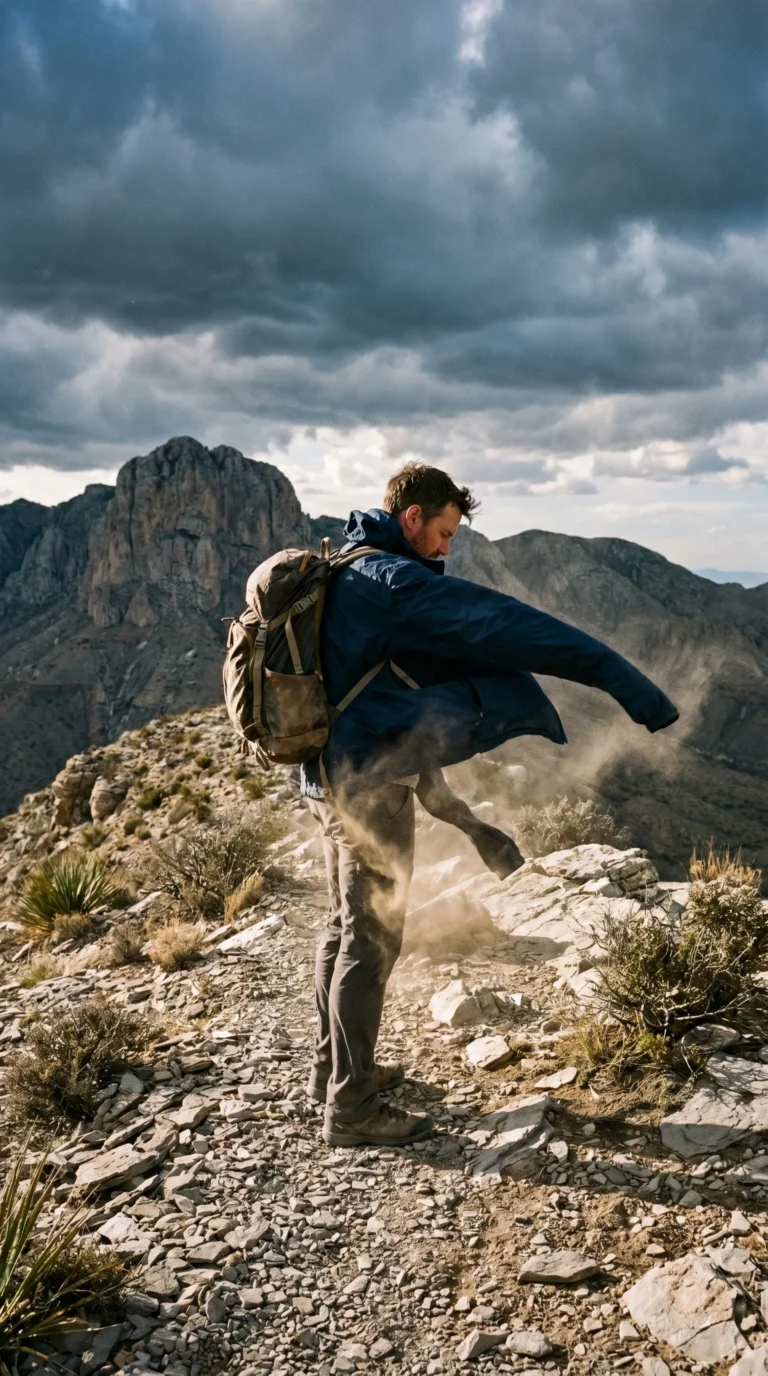
The single biggest packing mistake at Guadalupe Mountains is underestimating the wild temperature swings and wind. You’ll face 30 to 40 degree temperature differences between trailhead and summit, so layering is everything. Start with a moisture-wicking base layer that pulls sweat away from your skin, add an insulating mid-layer like fleece or synthetic fill, and top it with a windproof shell. As you climb and your body heats up, peel layers off and stuff them in your pack. When you hit the exposed summit where wind cuts through everything, you’ll be glad to have them ready.
That windproof jacket is non-negotiable. Gusts of 50 mph are common up high, and they can turn a warm sunny day dangerous in minutes. Even summer hikers need serious wind protection at elevation, so don’t leave it in the car.
Sun protection prevents real misery out here. Pack a wide-brim hat, quality sunglasses, and SPF 30-plus sunscreen. With over 300 days of sunshine and zero shade on most trails, UV exposure is relentless. I always reapply sunscreen at the summit before heading down, because the descent takes longer than you think.
Electrolyte supplements or salty snacks matter as much as water. The dry air makes you sweat more than you realize, depleting salts fast, and plain water won’t fix that. Muscle cramps on those steep rocky descents are no joke.
Winter hikers between December and February need insulating layers and microspikes for snow and ice above 7,000 feet. Conditions change fast when cold fronts blow through.
Always pack a headlamp even for day hikes. A slower pace or late start can mean finishing in twilight, and these rocky trails turn treacherous in dim light. Bring offline maps or printed trail guides too. Cell service is spotty to nonexistent, and wrong turns waste water and energy you can’t spare.
Frequently Asked Questions
How much water should I pack for Guadalupe Peak?
Plan to carry at least three liters of water per person for the Guadalupe Peak trail, and bring more during summer months. There’s no water available on the trail, and the dry West Texas climate dehydrates you faster than you might expect. I always pack an extra liter beyond what I think I need, especially since the 8.4-mile round trip takes most hikers six to eight hours. Electrolyte packets or tablets are smart additions to help your body absorb the water more effectively.
What clothing layers do I need for Guadalupe Mountains?
You need a moisture-wicking base layer, an insulating mid-layer, and a windproof outer shell for the peak. Temperatures can swing 30 degrees between the trailhead and summit, and wind speeds often hit 50 mph at the top. Start your hike in light layers and add clothing as you gain elevation. Even on warm days, that summit wind cuts through cotton shirts instantly, so synthetic or wool fabrics work best.
Do I need trekking poles for Guadalupe Peak trail?
Trekking poles aren’t required but they really help on the rocky switchbacks and reduce knee strain on the descent. The trail gains over 3,000 feet in elevation with plenty of loose limestone sections where poles provide extra stability. I find them most useful during the final push to the summit where the grade steepens considerably. They also double as support when you’re catching your breath at higher elevations.
When is the best time to hike Guadalupe Mountains?
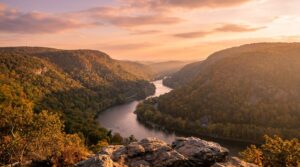
Late September through early November offers the most comfortable temperatures and spectacular fall colors in McKittrick Canyon. Spring (March through May) is also excellent, though afternoon winds pick up considerably. Summer hiking is possible but start before sunrise to avoid afternoon heat and thunderstorms. Winter brings ice and snow to higher elevations, making microspikes essential and some trails potentially dangerous.
Can I wear trail runners instead of hiking boots at Guadalupe Mountains?
Trail runners work fine for most Guadalupe Mountains trails if you have strong ankles and prefer lighter footwear. The trails are well-maintained and mostly rocky rather than muddy, so you don’t necessarily need waterproof boots. However, the ankle support from hiking boots helps on the sustained climbs and loose descents. I’ve hiked Guadalupe Peak in both, and boots felt more secure during the steeper sections.