
Estimated reading time: 19 minutes
Last updated: June 2026
Table of Contents
- Why Is Miami Beach So Famous?
- Top Attractions and Things to Do in Miami Beach
- Miami Beach Neighborhoods: South Beach and North Beach
- Where to Eat in Miami Beach: Restaurants and Dining
- Where to Stay in Miami Beach: Hotels for Every Budget
- Getting to and Around Miami Beach
- Day Trips from Miami Beach
- Practical Tips for Visiting Miami Beach
- Miami Beach FAQ
Why Is Miami Beach So Famous?
Miami Beach is famous for its Art Deco Historic District, a stretch of more than 800 pastel 1930s buildings along Ocean Drive, plus the white sand and nightlife of South Beach. This 7-mile barrier island in Florida rose to global fame through fashion shoots, celebrity culture and shows like Miami Vice, and now draws over 16 million visitors a year.
How We Researched This Guide
We built this guide using official Miami tourism data, verified accommodation and venue information, and genuine traveler insights. All details were accurate at the time of writing, though we encourage you to confirm current prices and hours with local operators before visiting.
Want to see Miami Beach in stunning detail? Watch our complete Miami Beach travel guide in 4K Ultra HD.
Miami Beach sits on a narrow strip of land separated from mainland Miami by Biscayne Bay. This is not a neighborhood of Miami. It’s a separate city on an actual island connected by five causeways. Over 16 million people visit each year, according to the Greater Miami Convention & Visitors Bureau, drawn by the same elements that made it famous in the 1930s: warm Atlantic water, white sand, and architecture that looks like a movie set.
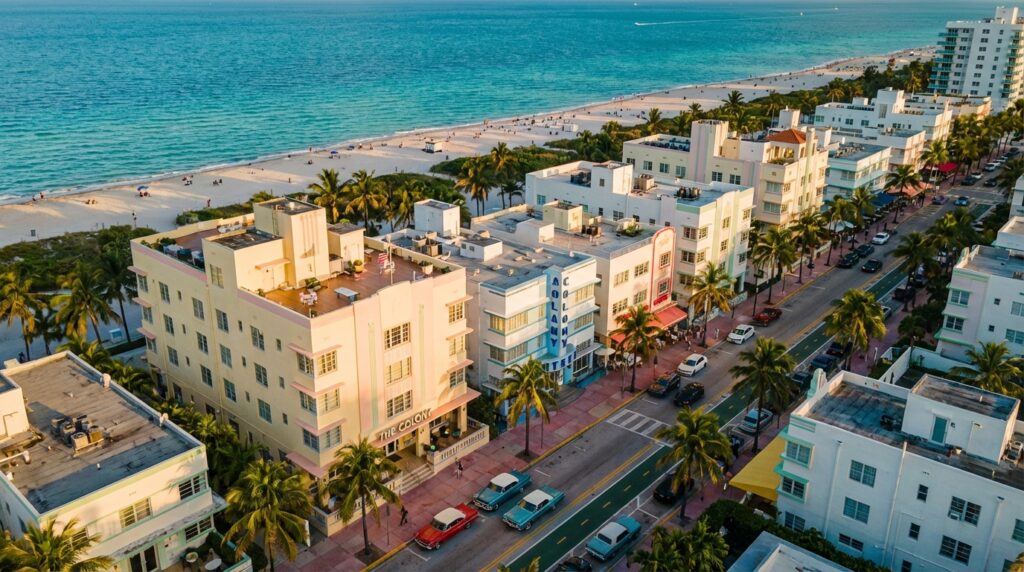
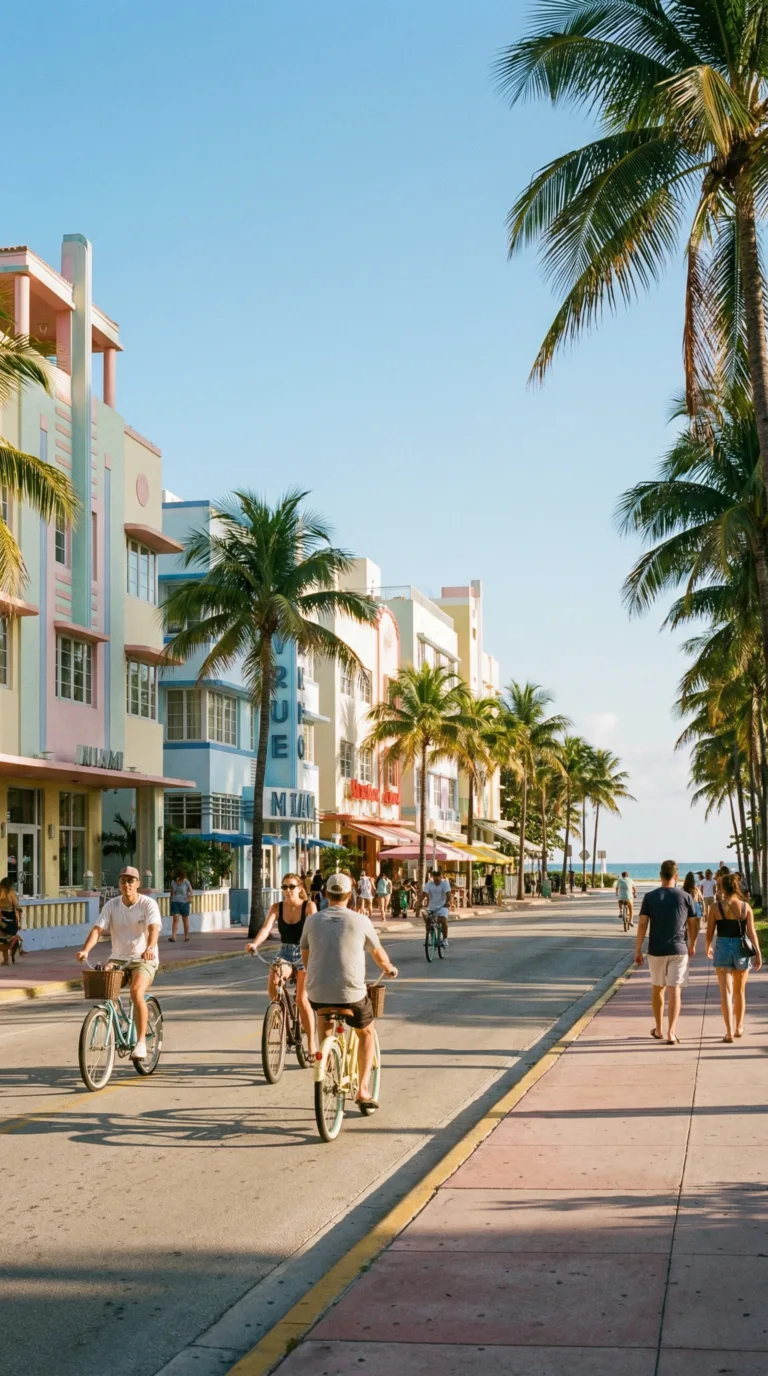
South Beach occupies the southern tip of the island and holds the most concentrated tourism energy. Ocean Drive runs parallel to the beach here, lined with pastel buildings from the 1920s and 1930s. The Miami Design Preservation League counts more than 800 preserved Art Deco structures in this single square mile, the largest collection of this architectural style anywhere on Earth. Neon signs. Porthole windows. Curved facades painted in mint green and flamingo pink.
Planning Tip
The beach itself stretches the entire length of the island. You get 300 days of sunshine per year in Miami Beach Florida. Water temperature rarely drops below 70°F. Lifeguard towers painted in bright colors mark each section of sand. People speak Spanish, Portuguese, French, Russian, and Hebrew on the same beach towel.
This guide covers where to stay, what to eat, which neighborhoods matter, and how to move between the island and the mainland without wasting money on rideshares. You’ll learn which beaches locals actually use, which Art Deco buildings you can tour inside, and where the nightlife happens after the cruise ship passengers leave.
Top Attractions and Things to Do in Miami Beach
South Beach spans 2.5 miles of Atlantic coastline and anchors Miami Beach’s Art Deco Historic District, which contains over 800 preserved buildings from the 1930s and 1940s.
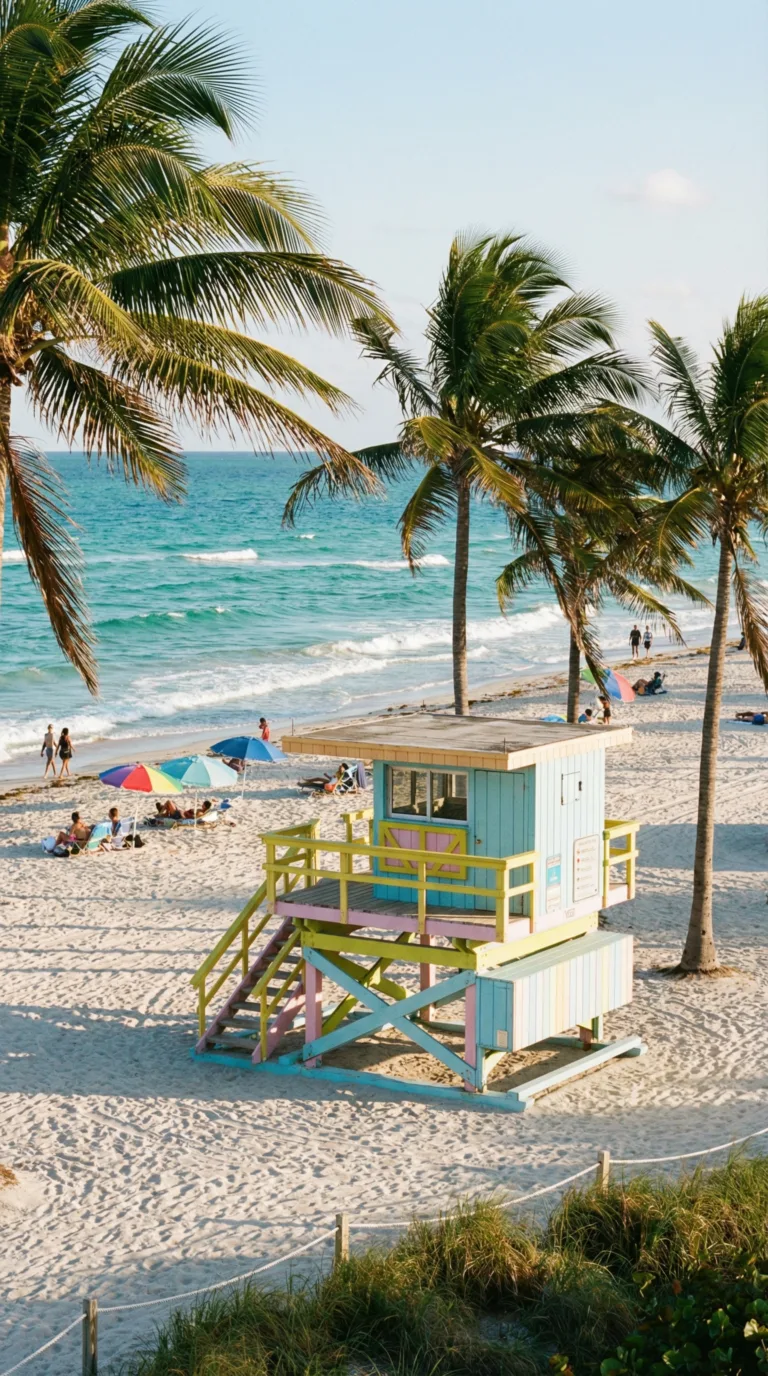
South Beach is the main draw. The water runs turquoise. The sand stays white. Lifeguard towers painted in candy colors sit every few hundred feet. This is where people come to see and be seen. Volleyball nets stretch along the shore. Families stake out spots near 3rd Street. The gay beach scene centers around 12th Street. Muscle Beach types cluster near 10th. You’ll find your corner.
What is the prettiest part of Miami Beach? South Beach wins that title. The combination of wide sand, clear water, and the pastel Art Deco skyline behind you creates the postcard shot everyone wants. Early morning light hits best around 7 AM, before the crowds arrive.
The Art Deco Historic District runs from 5th to 23rd Streets. Over 800 buildings from the 1930s and 1940s line these blocks, according to the National Register of Historic Places. Ocean Drive gets the most foot traffic. You’ll see rounded corners, porthole windows, neon signs, and terrazzo floors. The Art Deco Welcome Center on Ocean Drive runs 90-minute walking tours Thursday through Sunday at 10:30 AM for $30 per person. You learn the difference between Streamline Moderne and Mediterranean Revival. The buildings aren’t museums, they’re hotels, restaurants, and apartments people actually use.
South Pointe Park sits at the southern tip of Miami Beach. The park covers 17 acres. A pier extends into Government Cut, where cruise ships pass close enough to wave at passengers. Locals jog the waterfront path. Kids use the playground. The green space gives you a break from the beach scene without leaving the island. Free entry. Open sunrise to sunset.
The Miami Beach Botanical Garden hides behind the convention center on Convention Center Drive. Four acres of native plants, Japanese gardens, and orchid collections. Admission costs $5 for adults. Open Tuesday through Sunday, 9 AM to 5 PM. You can walk the whole thing in 30 minutes. It’s quiet.
Lincoln Road Mall runs ten blocks as a pedestrian-only promenade between Alton Road and Washington Avenue. Outdoor cafes spill onto the sidewalk. Chain stores mix with local boutiques. Sunday mornings bring an antique market. The road itself is a 1960s Morris Lapidus design, the same architect who did the Fontainebleau hotel. People-watching peaks around 8 PM on weekends.
The Miami Beach Convention Center hosts Art Basel each December, pulling over 80,000 visitors annually for contemporary art fairs and satellite events. The rest of the year sees trade shows, conferences, and cultural exhibitions. Check their event calendar if you’re visiting, sometimes you can catch free exhibits in the public spaces.
Nightlife splits between beach clubs and proper nightclubs. LIV at the Fontainebleau books top-tier DJs. Cover charges hit $100 for men on weekends. Nikki Beach on Ocean Drive does the daytime-into-evening beach club thing, white beds, bottle service, house music starting at 2 PM. Dress codes apply everywhere. Sneakers get you turned away.
For things to do in South Beach Miami for adults beyond the club scene, Rooftop Cinema Club South Beach screens movies under the stars at 1100 Lincoln Road. Tickets run $19-29. Wireless headphones. Full bar. Films range from classics to new releases. O Cinema South Beach on Washington Avenue shows independent and foreign films in a small theater setting. $13 general admission.
Water sports rent by the hour along the beach. Jet skis cost $80 for 30 minutes. Paddleboard rentals go for $30 a hour. Parasailing launches from 10th Street Beach at $85 per person for a 10-minute flight. The water stays warm year-round, low 70s in winter, mid-80s in summer.
Miami Beach Neighborhoods: South Beach and North Beach
South Beach (SoBe) occupies the southernmost 2.5 miles of Miami Beach from 1st to 23rd Street, while Mid-Beach spans 24th to 63rd Street and North Beach extends from 63rd Street to the northern city limits.

South Beach is the neighborhood everyone pictures when they think of Miami Beach. This is where the action is. Ocean Drive runs through the heart of it, neon-lit Art Deco hotels, sidewalk cafés packed until 2 a.m., shirtless rollerbladers, models posing for Instagram. The beach here draws an international crowd: European tourists, LGBTQ+ travelers, bachelorette parties, influencers. It’s loud, colorful, and unapologetically over-the-top. If you want nightlife and people-watching, this is your zone.
Mid-Beach shifts gears completely. Between 24th and 63rd Street, the energy drops. You’ll find luxury hotels like the Fontainebleau and Eden Roc, wider beaches, fewer spring breakers. Families choose Mid-Beach for the calmer vibe. The sand is less crowded. Restaurants skew more upscale than South Beach’s tourist traps. It’s still Miami Beach, but with a mute button.
North Beach feels like a different city. Past 63rd Street, the tourists thin out. You’ll see more locals walking dogs, retirees playing bocce, Cuban cafés with $2 cortaditos. Hotels here cost half what they do in SoBe. The beach is wide and quiet. No velvet ropes. No DJ booths. Just sand and ocean. The City of Miami Beach Neighborhoods page breaks down the official districts if you want exact boundaries.
Pick South Beach for nightlife and Art Deco. Mid-Beach for luxury and families. North Beach for budget and local flavor.
Where to Eat in Miami Beach: Restaurants and Dining
Miami Beach offers over 400 restaurants ranging from iconic Joe’s Stone Crab (founded 1913) to casual beachfront cafes, with South Beach concentrating the highest density of dining options along Ocean Drive and Lincoln Road.
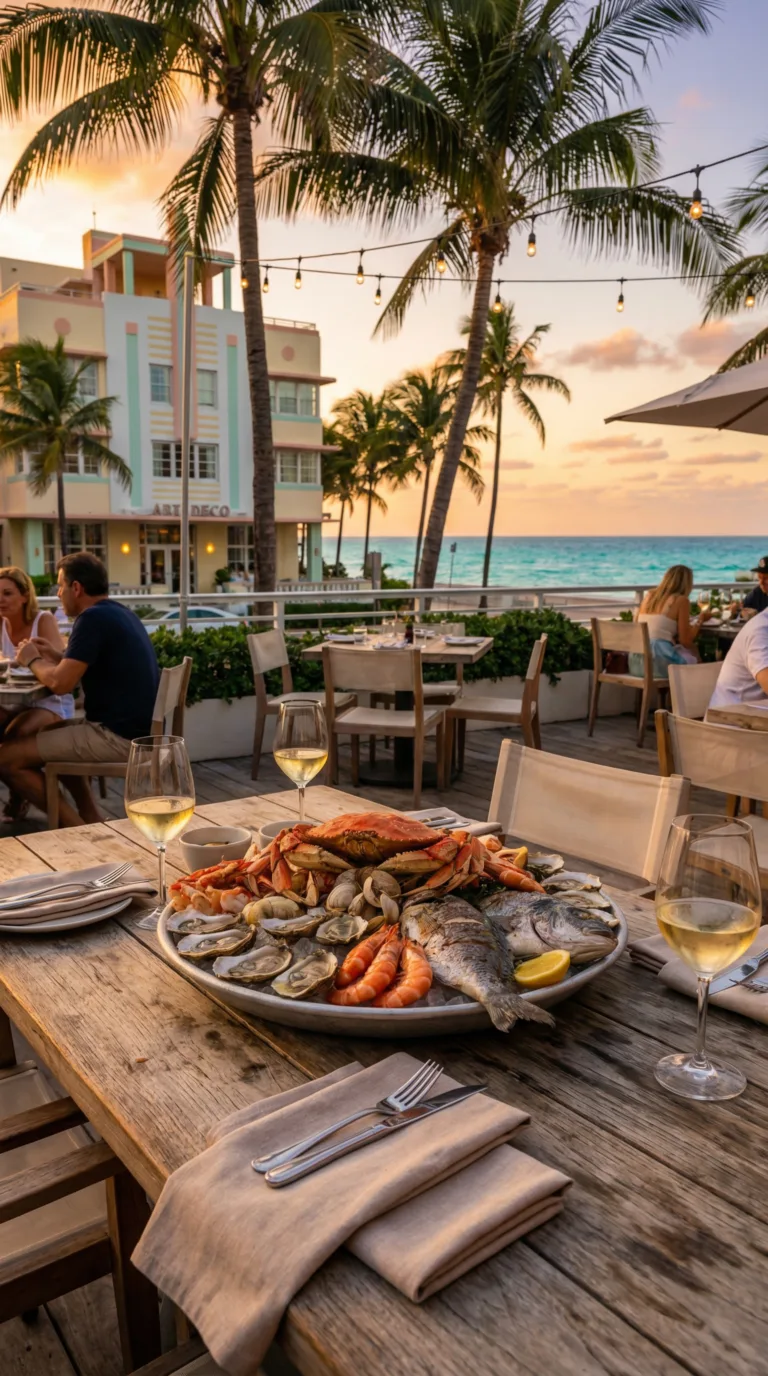
The dining scene here runs deep. Joe’s Stone Crab is the heavyweight, opened in 1913, still packing tables every night during stone crab season (October through May). You’ll wait. Sometimes two hours. The Joe’s Stone Crab official website posts current wait times and season dates. No reservations for parties under six. The stone crabs come chilled with mustard sauce. Sides cost extra. Expect $80–120 per person.
La Sandwicherie operates on the opposite end of the spectrum. This French sandwich counter on 14th Street stays open until 5 a.m. on weekends. Fresh baguettes, prosciutto, brie, tomatoes. $12 gets you a massive sandwich. Locals hit it after midnight.
Pura Vida serves acai bowls, avocado toast, and fresh juices at multiple South Beach locations. Quick, healthy, under $15. Sazon cooks Cuban classics, ropa vieja, lechon, black beans, in a small storefront on Washington Avenue. Cash only. Entrees run $10–16.
Ocean Drive restaurants charge premium prices for mediocre food and prime people-watching real estate. Lincoln Road offers better variety, Italian, sushi, steakhouses, tapas. Española Way’s European-style pedestrian street hosts smaller bistros and cafes with outdoor seating under string lights.
The food trends lean hard into fresh seafood (grouper, snapper, mahi), Latin fusion (Peruvian-Japanese, Cuban-Asian), and farm-to-table concepts sourcing from South Florida growers. Prices skew high. Budget $20–35 for casual meals, $60–100 for upscale dining before drinks.
Where to Stay in Miami Beach: Hotels for Every Budget
Miami Beach offers over 300 hotels ranging from budget-friendly options under $150/night to ultra-luxury resorts like Fontainebleau and Faena exceeding $500/night, with South Beach concentrating the highest number of beachfront properties.
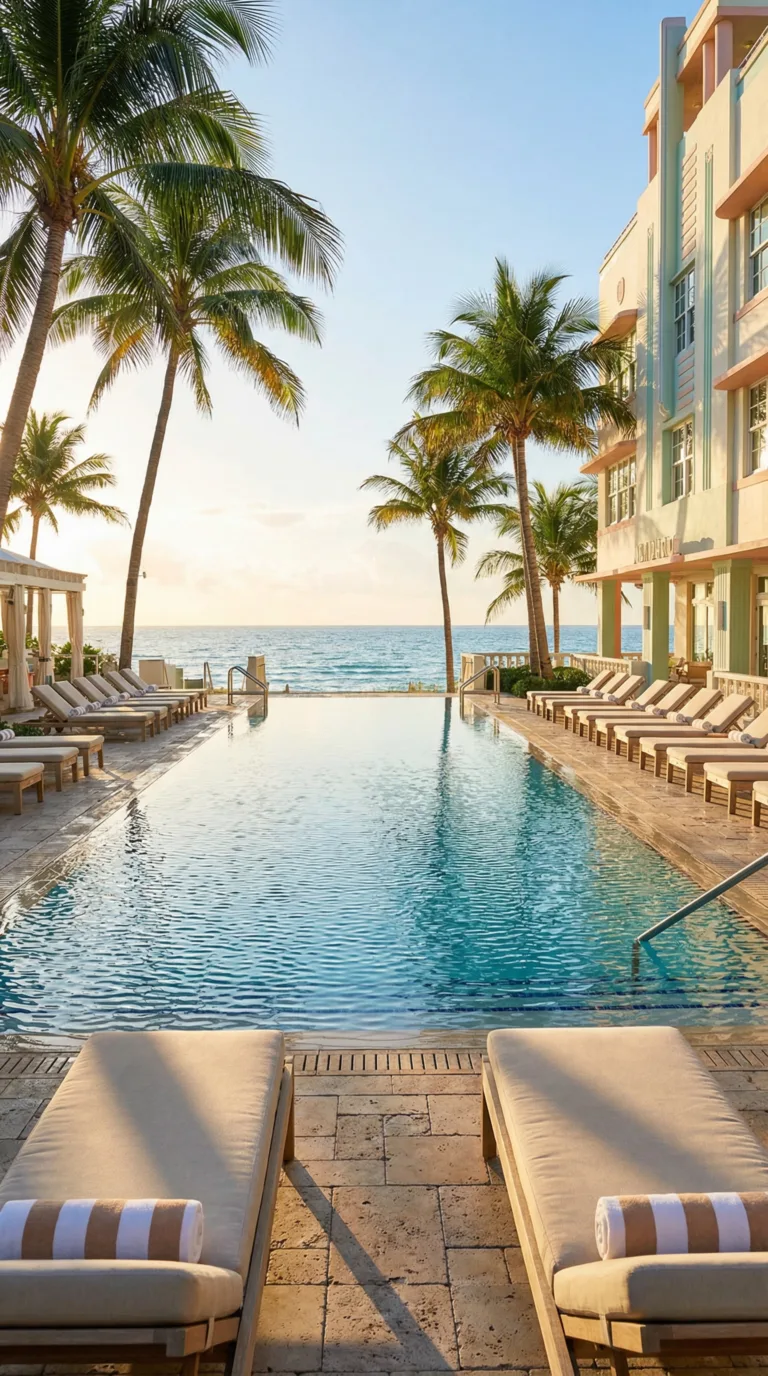
The hotel scene here splits into three zones. South Beach packs the most famous names into a walkable grid. Mid-Beach runs quieter with family resorts. North Beach delivers budget motels and smaller Art Deco properties at half the price.
Fontainebleau Miami Beach sprawls across 22 acres in Mid-Beach like a small city. The 1954 Morris Lapidus design still draws crowds to its curved lobby and bow-tie pool. Rooms start at $400 in winter. The Fontainebleau Miami Beach official website lists current packages. You’re paying for 12 restaurants, a nightclub, and direct beach access.
1 Hotel South Beach flips the luxury script with reclaimed wood furniture and rooftop solar panels. The beachfront location puts you 200 feet from the sand. Rates hover around $500 nightly. Check the 1 Hotel South Beach official website for their sustainability programs. The lobby smells like eucalyptus instead of air conditioning.
Faena Hotel Miami Beach costs $600+ per night for gilded Art Deco rooms and a private beach club. The in-house theater hosts tango shows and experimental performances. This isn’t a hotel, it’s a cultural compound with a dress code.
Loews Miami Beach Hotel targets families with connecting rooms and a kids’ club. The 790-room property sits on Collins Avenue with a guarded beach section. Winter rates start at $350. You get space and predictability.
Eden Roc Miami Beach preserves its 1956 mid-century bones with terrazzo floors and curved balconies. Rooms run $300–450 depending on season. The pool deck faces north toward Fort Lauderdale.
W South Beach pulls a younger crowd with a lobby bar that turns into a nightclub after 11pm. Rooms start at $375. The beachfront location means you stumble home from clubs in five minutes.
The Betsy Hotel hides 61 rooms in a restored 1942 building on Ocean Drive. Nightly rates hit $280. The rooftop hosts poetry readings and jazz concerts. No DJ pool parties here.
South Beach hotels cost 30% more than North Beach equivalents. You pay for walkability to Lincoln Road and Ocean Drive. Beachfront properties add another $100–150 to the nightly rate for direct sand access and ocean-view balconies.
Budget travelers should scan North Beach between 63rd and 87th Streets. Art Deco motels charge $120–180 per night. The Freehand Miami hostel offers dorm beds for $45 and private rooms for $160. You’ll ride the bus or bike to South Beach action.
Five-star properties deliver 24-hour room service, beach butlers who set up your umbrella, and lobbies with original artwork. Expect to spend $400+ nightly at this tier.
Pick South Beach if you want nightlife within stumbling distance. Choose Mid-Beach for resort pools and family programming. Book North Beach when your budget caps at $200 per night.
Getting to and Around Miami Beach
Miami Beach is accessible via Miami International Airport (MIA) 9 miles west, with the free South Beach Local shuttle circulating every 10-15 minutes and Citi Bike stations offering 24/7 bike rentals throughout the island.
Miami International Airport sits 9 miles west of the beach. Taxis run $35-45 to South Beach. Rideshares cost $25-35 depending on surge pricing. SuperShuttle shared vans charge around $22 per person. Rental cars start at $40 daily, but you won’t need one if you’re staying in South Beach. Fort Lauderdale-Hollywood International Airport is 30 miles north, a backup option if MIA flights are pricier.
Parking on the island is a headache. Street spots require the ParkMobile app. Hotel garages charge $35-50 per night. Municipal lots fill up by 10 a.m. on weekends.
South Beach is completely walkable. Ocean Drive to Lincoln Road is 1.5 miles on foot. The free South Beach Local shuttle loops every 10-15 minutes along Washington Avenue and Alton Road, according to Miami-Dade Transit. The Miami Beach Trolley routes and schedules cover the entire island with multiple lines connecting to mainland buses.
Citi Bike Miami has 100+ stations across the beach. Day passes cost $18. Scooter rentals cluster near Lincoln Road. Water taxis run between Miami Beach Marina and Bayside Marketplace downtown, $25 round-trip, scenic but slow.
Travel Routes
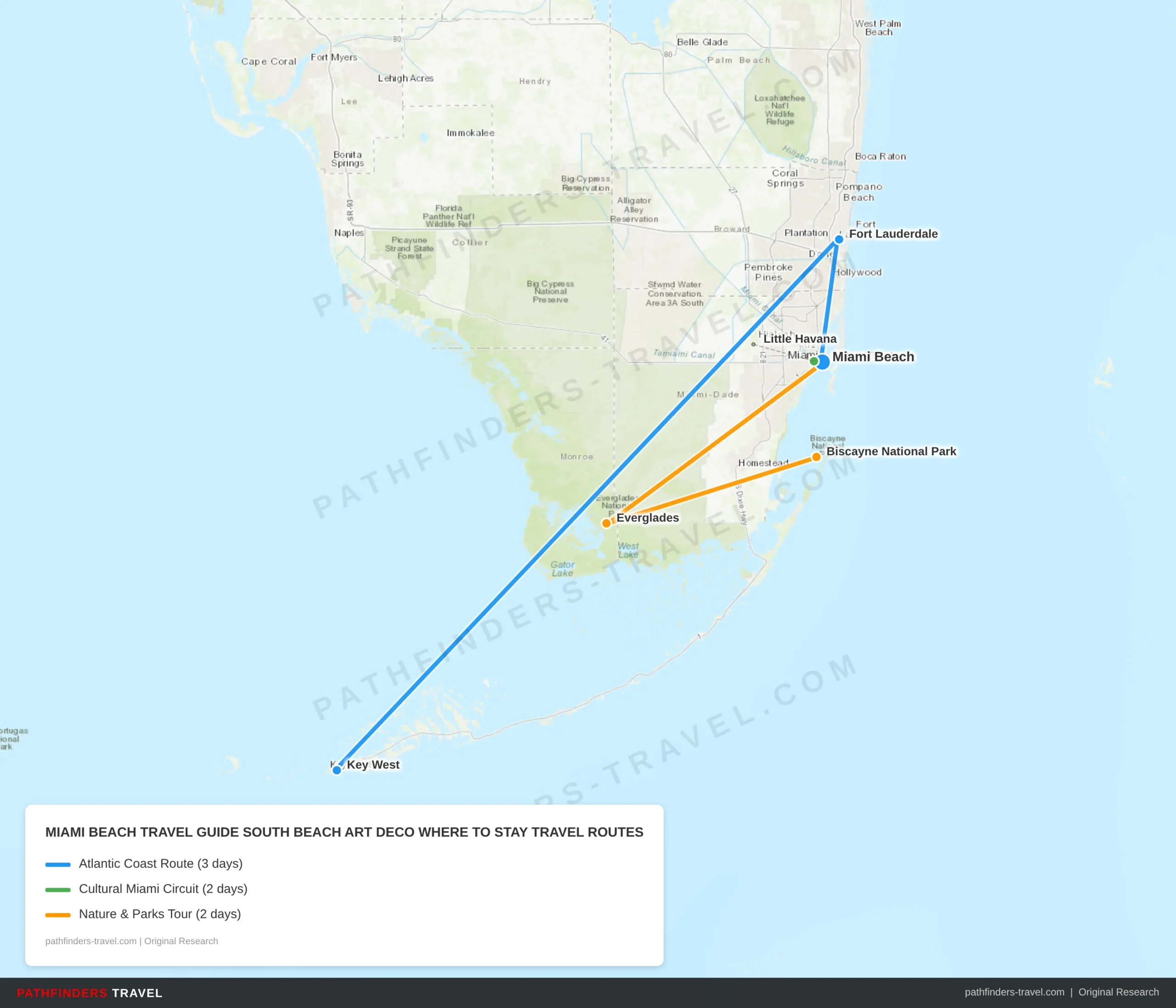
Below are recommended travel routes with key stops and estimated drive times.
| # | Stop | Highlights | Drive Time |
|---|---|---|---|
| 1 | Miami Beach | Art Deco Historic District, South Beach, Ocean Drive, lifeguard towers | Start |
| 2 | Fort Lauderdale | Las Olas Boulevard, Riverwalk, beach promenade, water taxi tours | 45m north |
| 3 | Key West | Duval Street, Hemingway House, sunset at Mallory Square, conch republic | 3h 30m southwest |
| # | Stop | Highlights | Drive Time |
|---|---|---|---|
| 1 | Miami Beach | Art Deco architecture tours, South Beach culture, international dining | Start |
| 2 | Wynwood | Street art murals, galleries, craft breweries, hipster dining scene | 15m west |
| 3 | Little Havana | Calle Ocho, Cuban coffee, cigar shops, domino park, Latin culture | 20m southwest |
| 4 | Coral Gables | Mediterranean architecture, Venetian Pool, upscale shopping, fine dining | 15m south |
| # | Stop | Highlights | Drive Time |
|---|---|---|---|
| 1 | Miami Beach | Beach activities, water sports, ocean access, Art Deco backdrop | Start |
| 2 | Everglades | Airboat tours, alligator spotting, anhinga trail, visitor center | 1h west |
| 3 | Biscayne National Park | Snorkeling, boat tours, coral reefs, underwater trails, manatees | 45m south |
Day Trips from Miami Beach
Miami Beach serves as a gateway to Florida attractions including Fort Lauderdale 30 miles north, the Everglades 45 minutes west, Orlando‘s theme parks 235 miles northeast, and Key West 160 miles south via the Overseas Highway.
Your hotel sits at the center of South Florida’s best road trips. Fort Lauderdale is 30 miles north, a 45-minute drive up A1A. Las Olas Boulevard runs through downtown. The Riverwalk connects restaurants and bars along the New River. Beaches here are wider and less crowded than South Beach.
Head 45 minutes west to Everglades National Park. Airboat tours leave from the Shark Valley entrance every hour. You’ll see alligators miami beach visitors ask about, they’re everywhere in the sawgrass. The park logged 1.1 million visitors in 2025 according to National Park Service data. Book morning tours before the afternoon heat.
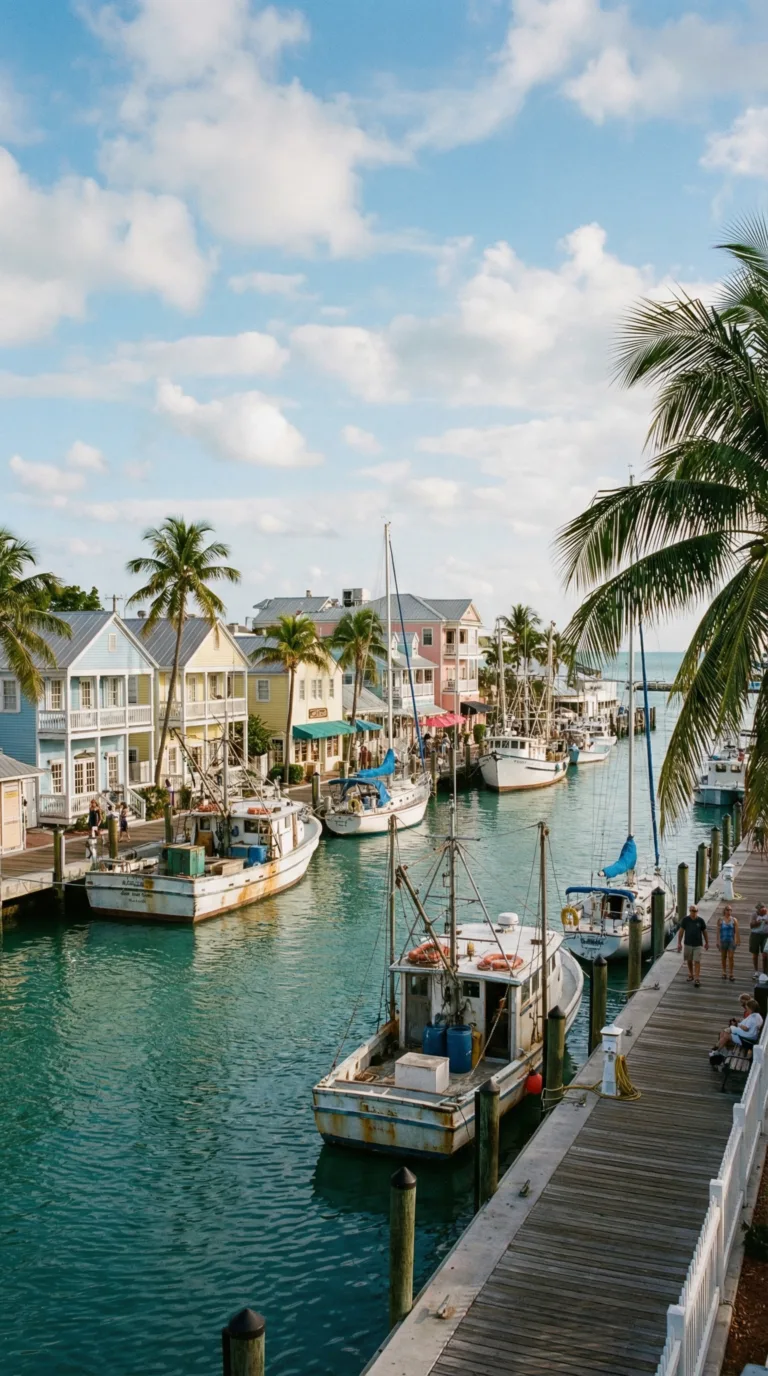
Key West sits 160 miles south. The Overseas Highway crosses 42 bridges over turquoise water. Drive time is 3.5 hours without stops. Duval Street runs the length of downtown. The Hemingway House charges $17 admission. The southernmost point marker draws a line of tourists all day. Florida Keys & Key West tourism data shows peak season runs January through March.
Orlando theme parks are 235 miles northeast, a 3.5 to 4-hour drive up the Florida Turnpike. Disney World, Universal Studios, SeaWorld. This works better as an overnight trip.
Naples on the Gulf Coast is 2 hours west on I-75. Fifth Avenue South has upscale shopping and restaurants. Beaches face west for sunset views. St. Augustine is 5 hours north, Spanish colonial forts and cobblestone streets dating to 1565.
Closer options: Biscayne National Park for snorkeling, Vizcaya Museum’s Italian gardens, Little Havana in Miami proper for Cuban coffee and cigars on Calle Ocho.
Practical Tips for Visiting Miami Beach
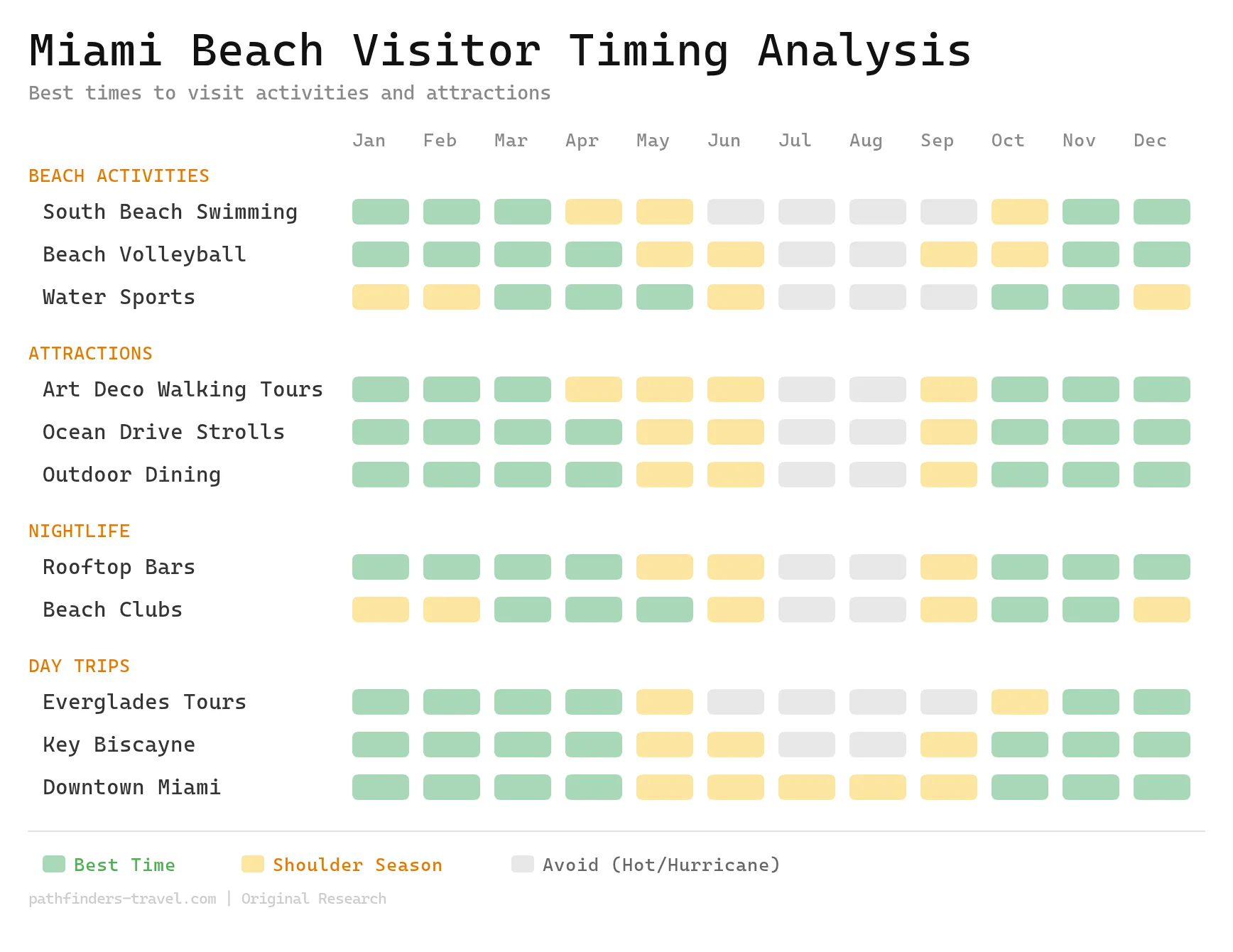
Miami Beach’s hurricane season runs June through November with peak risk August-October, while the best weather occurs December through April with average temperatures of 75°F and minimal rainfall.
December through April delivers the best weather. Temperatures hover around 75°F according to the National Weather Service Miami official forecast. Rain stays minimal. You’ll pay more for hotels, but you’ll actually enjoy the beach.
The worst time? Hurricane season. June through November brings storms, with peak danger August through October per National Hurricane Center data. Summer also means 90°F heat, brutal humidity, and daily afternoon thunderstorms. You’ll sweat through your shirt walking two blocks.
Miami Beach sits on a barrier island, not in Miami proper. The two cities share a metro area but occupy different land masses connected by causeways. The island sits in Florida, USA, not a separate country, despite what some search queries suggest.
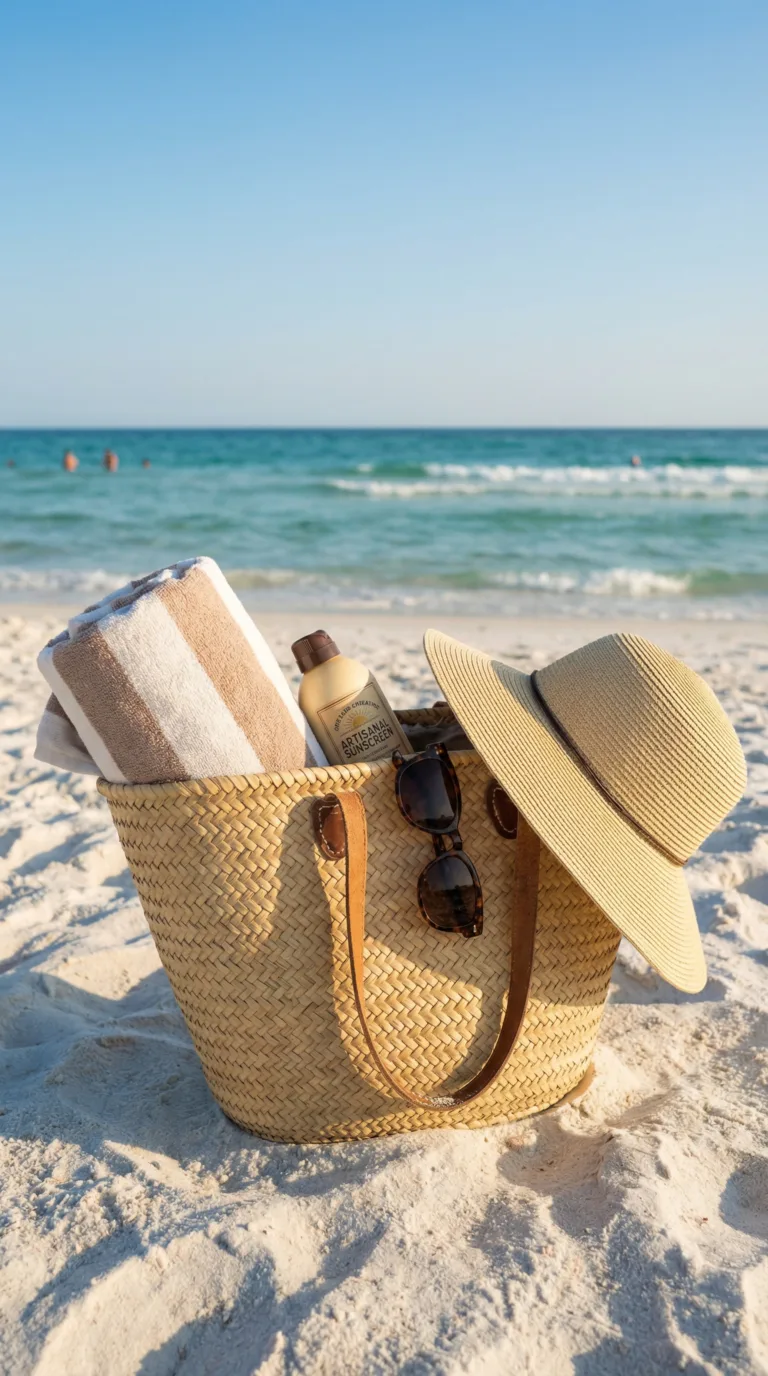
Pack high-SPF sunscreen. The Florida sun burns fast. Bring a wide-brimmed hat, polarized sunglasses, light cotton clothing, and swimwear. Toss in a light jacket for over-air-conditioned restaurants. Check Current Beach Conditions – City of Miami Beach before heading to the water. Flag warnings matter. Red means stay out. Purple means jellyfish or stingrays. Don’t leave valuables unattended on the sand.
Best Time to Visit
Miami Beach enjoys year-round warmth, but timing matters for comfort and hurricane risk. Peak season (December-April) offers perfect weather with temperatures in the 70s-80s and minimal rainfall, ideal for beach activities and outdoor dining. Summer months bring intense heat, humidity, and hurricane season, making indoor attractions more appealing during midday hours.
Miami Beach FAQ
What is the prettiest part of Miami Beach?
South Beach is widely considered the prettiest part of Miami Beach, featuring the iconic Art Deco buildings along Ocean Drive, turquoise waters, and the most photogenic beaches. The area from 5th to 15th Street offers the best combination of architecture, beach scenery, and atmosphere. South Pointe Park at the southern tip provides great views and is another contender for most beautiful spot.
When’s the worst time to go to Miami Beach?
Hurricane season from June through November is the worst time, with peak risk in August, September, and October. Summer months (June-September) bring extreme heat, high humidity (often 90%+), and daily afternoon thunderstorms. September and October combine hurricane risk with oppressive weather and are generally the least desirable months to visit.
Can you walk around Miami Beach?
Yes, Miami Beach is highly walkable, especially the South Beach area where most attractions, restaurants, and hotels are within a 20-30 minute walk. The Miami Beach Boardwalk runs 4 miles along the oceanfront from South Pointe to 46th Street, perfect for walking or jogging. The compact layout, flat terrain, and pedestrian-friendly streets make walking the preferred way to explore, though summer heat may require breaks.
Is Miami Beach an island?
Yes, Miami Beach is a barrier island located between the Atlantic Ocean and Biscayne Bay, separated from mainland Miami. The island is approximately 7 miles long and connected to Miami via several causeways including the MacArthur, Venetian, and Julia Tuttle. It’s a natural barrier island that was developed starting in the early 1900s and is now a separate municipality from the City of Miami.
Where to avoid staying in Miami Beach?
Avoid hotels far from the beach or main areas unless you have a car, as you’ll spend significant time and money on transportation. Some budget hotels along Collins Avenue in North Beach can be dated or in less maintained areas. Check recent reviews carefully. During spring break (March) and major events like Art Basel, South Beach can be extremely crowded and noisy. Consider Mid-Beach for a quieter experience during these times.