Estimated reading time: 15 minutes
Last updated: September 2026
What Is Honeymoon Island State Park Known For?
Honeymoon Island State Park is a 385-acre barrier island on Florida’s Gulf Coast near Dunedin, best known for its four miles of white-sand beaches, excellent shelling, a dedicated dog beach, osprey-lined nature trails, and the ferry to neighbouring Caladesi Island. It draws over 800,000 visitors a year, is reached by causeway (no ferry needed), and charges an $8-per-vehicle entrance fee.
Want to see Honeymoon Island’s beaches and trails for yourself? Watch our complete Honeymoon Island State Park guide in 4K.
Honeymoon Island State Park pulls in over 800,000 visitors every year. That number puts it among Florida’s busiest state parks. The reason? You drive straight onto a barrier island without waiting for a ferry. The causeway from Dunedin drops you at parking lots steps from the sand.
This 385-acre park stretches along four miles of Gulf shoreline. White sand beaches dominate the southern end. The northern sections hold slash pine forests and coastal scrub. Honeymoon Island beach areas stay open to dogs on leashes, a rarity for Florida state parks. Families spread out on the wide sand. Shellers crouch at the waterline hunting lightning whelks and sand dollars.
The park sits just across the water from Caladesi Island State Park. A ferry runs between the two islands hourly during peak season. You can explore both parks in one day if you start early. Caladesi requires a boat, but Honeymoon Island lets you park and walk straight to the water.
This guide covers the beaches you’ll actually use, the trails worth walking, and the logistics that trip up first-time visitors. You’ll get parking strategies, fee breakdowns, and nearby lodging options. No fluff. Just the details you need to plan a day on Florida’s Gulf Coast.
How This Guide Was Built
We researched this guide using official state park documentation, verified visitor feedback, and tourism resources specific to Florida’s Gulf Coast. Details about fees, facilities, and seasonal conditions were accurate when written. Check the official Honeymoon Island State Park website before visiting for any recent changes.
Beaches, Trails, and Natural Attractions
Honeymoon Island State Park features four miles of Gulf beaches including a dedicated pet beach, two nature trails totaling 2.5 miles, and ferry access to neighboring Caladesi Island State Park.
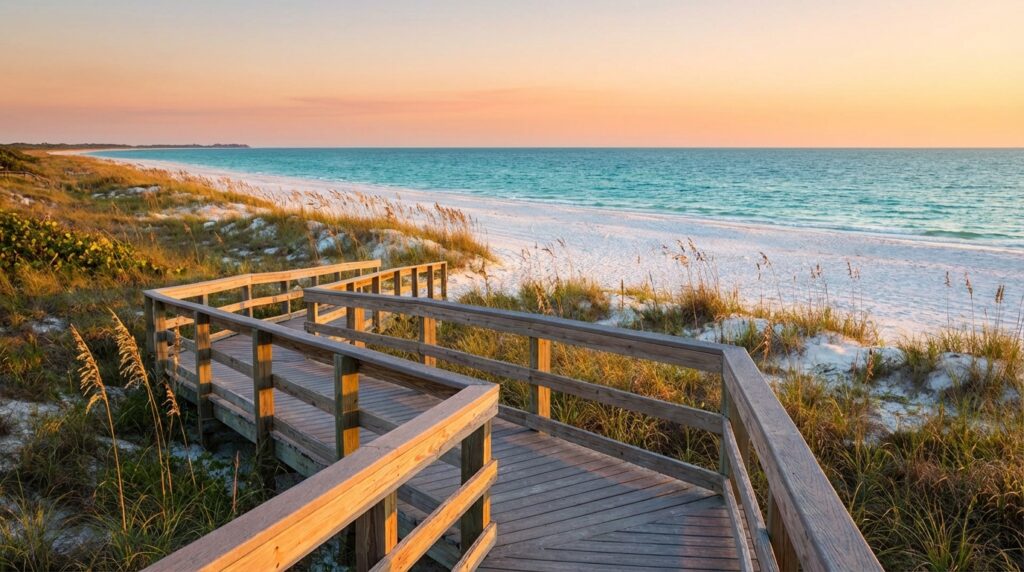
Four miles of white sand stretch along the Gulf of Mexico here. The main beaches consistently rank among Florida’s cleanest. Water stays shallow for 50 yards out, making this spot safe for kids who want to wade without getting knocked around by waves.
The north end holds the Pet Beach, a dedicated section where leashed dogs can run in the sand and splash in the shallows. Your dog must stay on a leash no longer than six feet. Most visitors bring collapsible water bowls and rinse their pets at the outdoor showers before heading home. Early morning sees the biggest crowd of dog owners, usually before 9 AM when the sand hasn’t heated up yet.
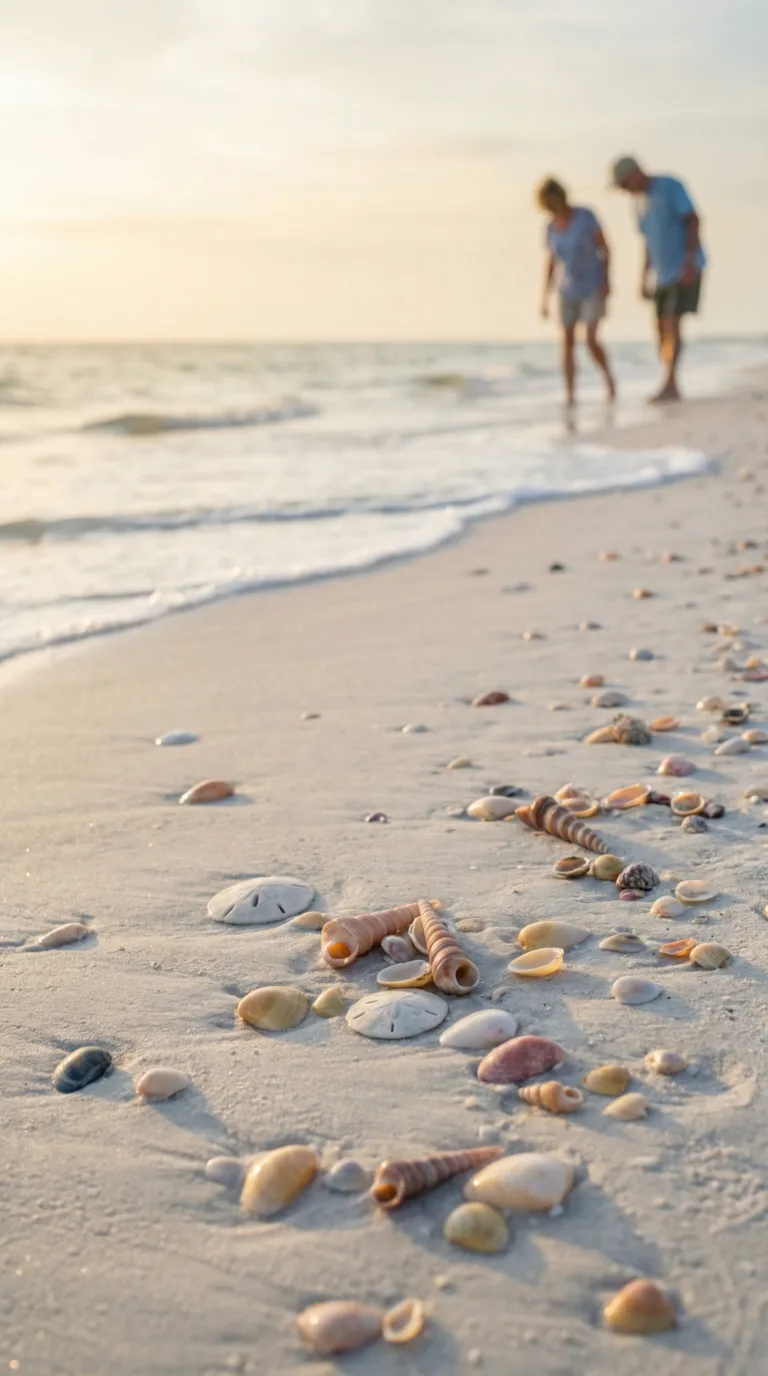
Shelling here rivals any Gulf Coast spot. Storms push up lightning whelks, sand dollars, scallops, and fighting conchs, with the best finds after cold fronts pass through — check the beach at low tide within 24 hours of a storm. Winter (December through February) produces the heaviest shell deposits. You can keep empty shells, but leave live mollusks alone: rangers patrol and will fine you $500 for taking occupied shells.
Two nature trails cut through the interior. The Osprey Trail runs 2.5 miles through slash pine flatwoods and coastal hammocks. Boardwalks keep your feet dry over marshy sections. You’ll spot osprey nests in dead pines, some platforms hold the same nesting pairs year after year. The Pelican Cove Trail is shorter, looping through mangrove thickets where herons and egrets hunt at high tide. According to Florida State Parks, these trails total 2.5 miles of maintained pathways with interpretive signs explaining the coastal ecosystem.
Gopher tortoises dig burrows along the trail edges. Don’t approach them. These guys are protected, and their burrows house dozens of other species like burrowing owls and indigo snakes. Early morning hikes (before 8 AM) give you the best chance to see tortoises out foraging.
Fishing from shore works well at the north and south ends. Anglers target redfish, snook, and spotted seatrout in the grass flats. You need a Florida saltwater fishing license unless you’re under 16 or over 65. The park doesn’t rent gear, so bring your own rod. Live shrimp works best for most species here.
The Caladesi Connection ferry departs from the north dock every hour during peak season. Round-trip tickets cost $20 for adults, $10 for kids ages 6-12. The ferry holds 40 passengers and runs daily from 10 AM to 4 PM, weather permitting. The ride takes 20 minutes across Hurricane Pass. Caladesi Island State Park has its own clean beach, a kayak trail through mangroves, and a small café. Most people spend 3-4 hours there before catching the return ferry. Check the Caladesi Connection ferry official website with schedules and rates before you go, service shuts down during storms or high winds.
Sunset photography works best from the south beach. The sun drops straight into the Gulf between November and February, painting the sky orange and pink. Bring a tripod if you want sharp shots in low light. Wildlife photographers camp out along the Osprey Trail with long lenses, waiting for roseate spoonbills and reddish egrets to wade through the shallows. Dolphins cruise past the shoreline most mornings, you’ll see their dorsal fins cutting through the water about 100 yards out.
Download the Florida State Parks trail map for Honeymoon Island before your visit. Cell service gets spotty on the trails, so having an offline map helps you get around without draining your phone battery.
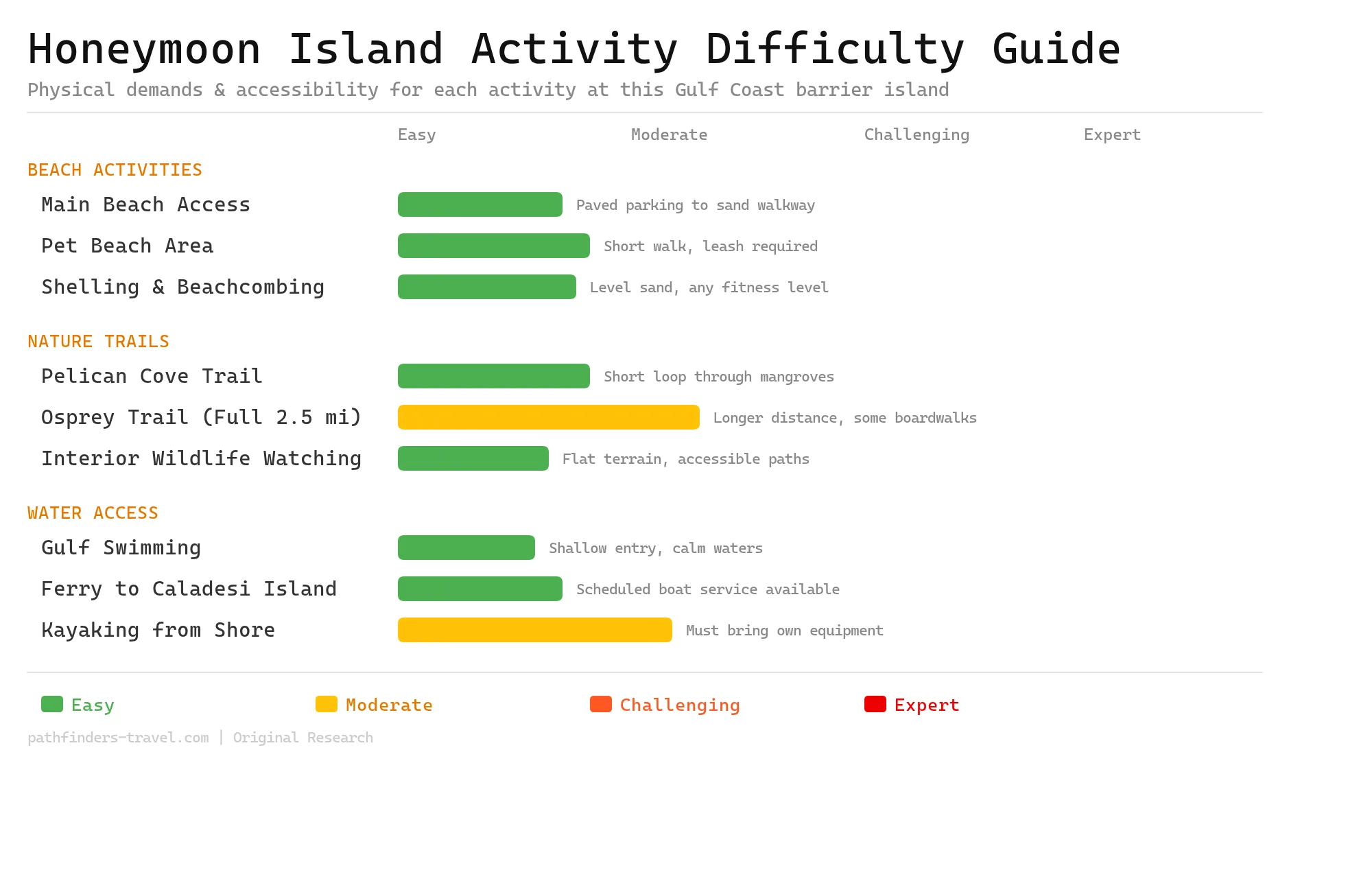
Activity Difficulty Guide
Honeymoon Island State Park offers primarily easy activities accessible to all fitness levels. Most attractions require minimal walking on flat terrain with paved parking and boardwalk access. The longest trail covers 2.5 miles through level coastal habitat.
Where to Stay Near Honeymoon Island
Honeymoon Island State Park does not offer camping facilities; the nearest accommodations are in Dunedin (5 minutes) and Clearwater Beach (15 minutes), with options ranging with boutique inns and beachfront resorts.
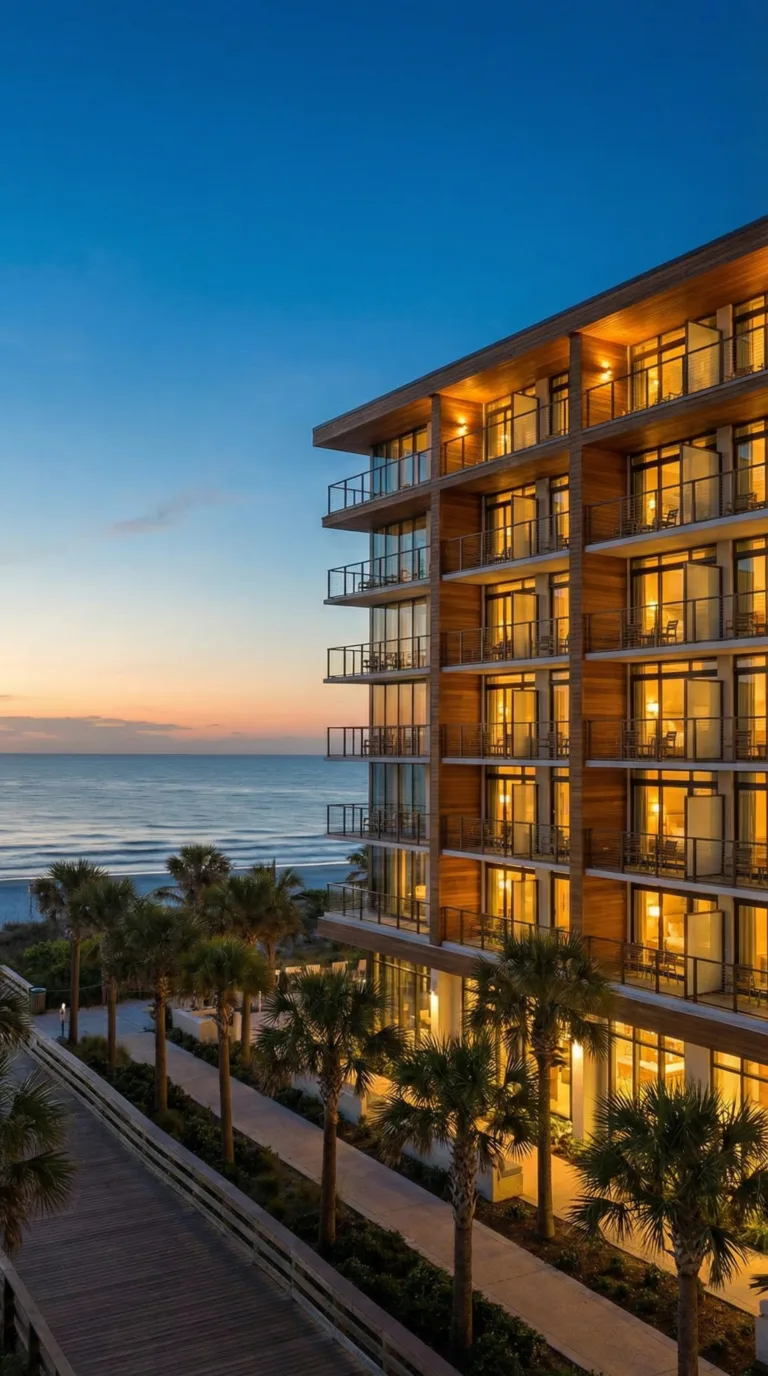
First thing: you can’t camp at Honeymoon Island State Park. No tents, no RVs, no overnight stays. This catches people off guard because many Florida state parks do allow camping. Not this one.
Your closest base is Dunedin. Five minutes south on Alternate 19. Small downtown. Walkable. You’ll find boutique inns near the marina, a handful of chain hotels along the highway, and vacation rentals scattered through residential streets. Check the Dunedin lodging directory for current inventory.
Clearwater sits 15 minutes south (about 10 miles by car, per Google Maps). Bigger selection. Beachfront resorts line the sand. Budget motels cluster inland. Family-friendly condos rent by the week. Winter and spring break fill up fast, book two months ahead if you’re visiting January through March. The Visit St. Petersburg/Clearwater accommodation options page lists everything from hostels to high-rises.
If you actually want to camp, Fort De Soto Park offers tent and RV sites 30 minutes south. Caladesi Island allows boat-in camping, but you need a kayak or small watercraft to reach the primitive sites. Both require advance reservations.
Getting to Honeymoon Island
Honeymoon Island State Park is accessible by car via the Dunedin Causeway (State Road 586) at 1 Causeway Blvd, Dunedin, FL 34698, with no ferry required; parking lots accommodate hundreds of vehicles but fill quickly on weekends.
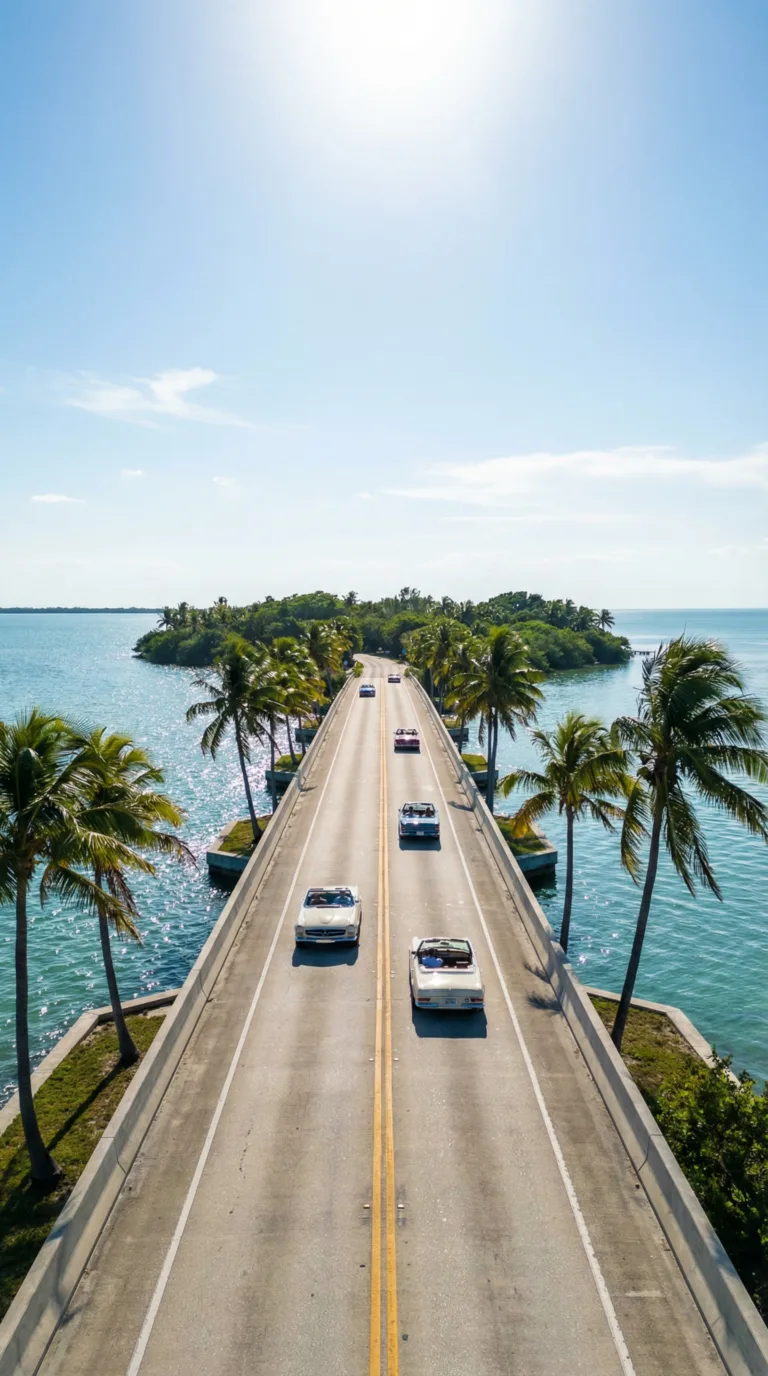
You can drive straight to the park. No ferry needed. This surprises people who assume all Gulf Coast barrier islands require boat access. The Dunedin Causeway connects the mainland directly to the island entrance.
From US 19 Alternate in Dunedin, turn west onto State Road 586 (Causeway Boulevard). The road crosses a three-mile causeway with water views on both sides. You’ll reach the park entrance at 1 Causeway Blvd, Dunedin, FL 34698. Google Maps – Honeymoon Island State Park provides turn-by-turn navigation from anywhere in the Tampa Bay area.
The park has two large parking lots holding approximately 600 vehicles total, according to Florida State Parks facility data. Weekend mornings see these lots fill by 10 a.m. during peak season (November through April). Arrive before 9 a.m. or after 3 p.m. to guarantee a spot. Rangers close the entrance gate once capacity is reached.
Bicycles and pedestrians can cross the causeway using a dedicated path. The three-mile ride from Dunedin takes about 20 minutes.
One ferry does operate here, but it goes TO Caladesi Island, not to Honeymoon Island. That ferry departs from Honeymoon Island’s north end. You drive to Honeymoon first, then board the boat if you want to visit Caladesi. Check the Florida State Parks – Honeymoon Island State Park page for current ferry schedules and pricing.
Entrance Fees and Passes
Honeymoon Island State Park charges $8 per vehicle (2-8 people), $4 for single-occupant vehicles, and $2 for pedestrians or cyclists, with a Florida State Parks Annual Pass ($60 individual, $120 family) covering admission to all state parks.
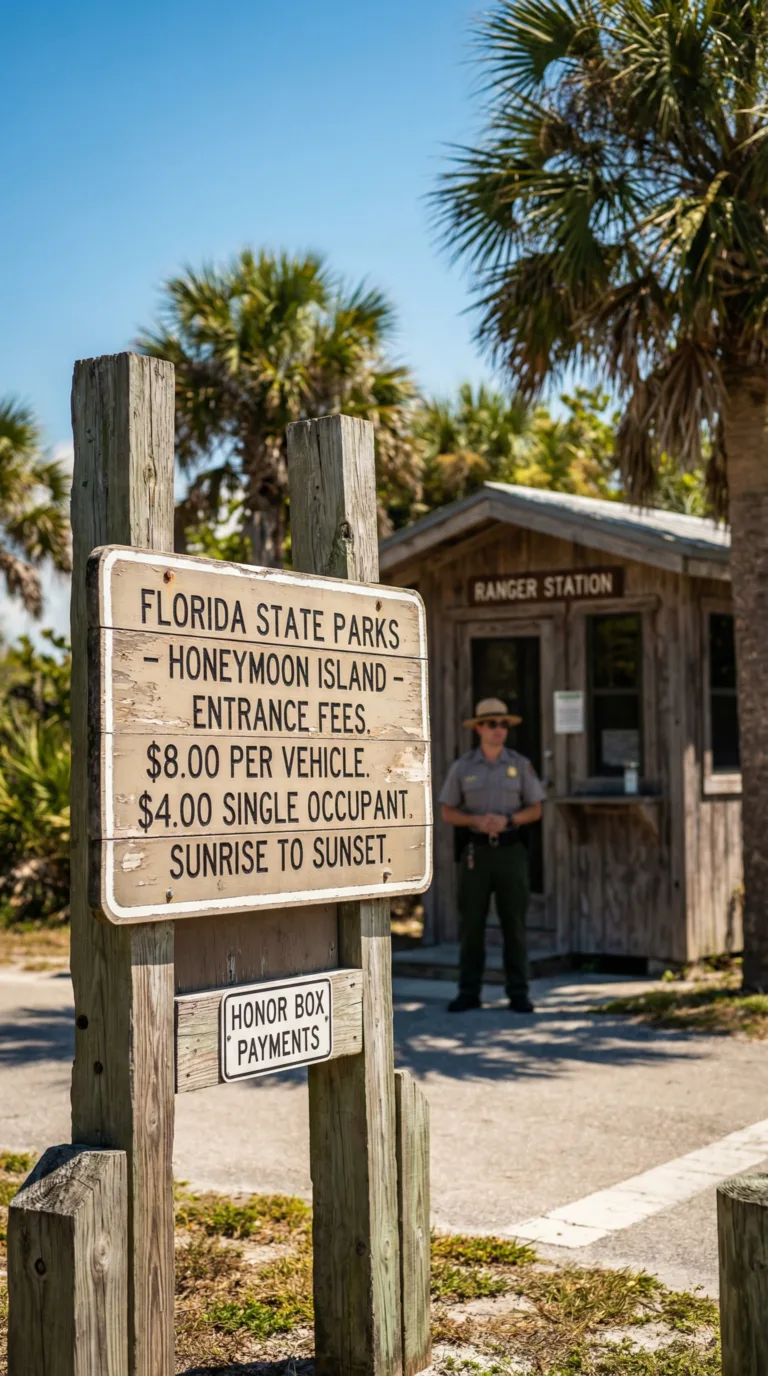
The Honeymoon Island State Park entrance fee is $8 per vehicle carrying two to eight people. Single drivers pay $4. Walk in or bike in and you’ll pay just $2. Cash and cards both work at the ranger station.
The Florida State Parks official fee schedule and annual pass information shows that the annual pass costs $60 for individuals or $120 for families. Visit six times in a year and the pass pays for itself. The family pass covers everyone in your vehicle.
Ferry tickets to Caladesi Island run separately, $20 round-trip for adults, $10 for kids. That’s on top of your park admission. The ferry leaves from the north end of Honeymoon Island.
Save money by arriving on a bicycle. You skip the $8 vehicle fee entirely. The park has bike racks near the beach pavilions. Your entrance fees fund trail maintenance, restroom upkeep, and sea turtle monitoring programs across Florida’s 175 state parks.
Day Trips from Honeymoon Island
Caladesi Island State Park, accessible via a 20-minute ferry from Honeymoon Island, tops the day trip list, while St. Petersburg (30 minutes), Tampa (45 minutes), and Tarpon Springs (20 minutes) offer diverse cultural and entertainment options.
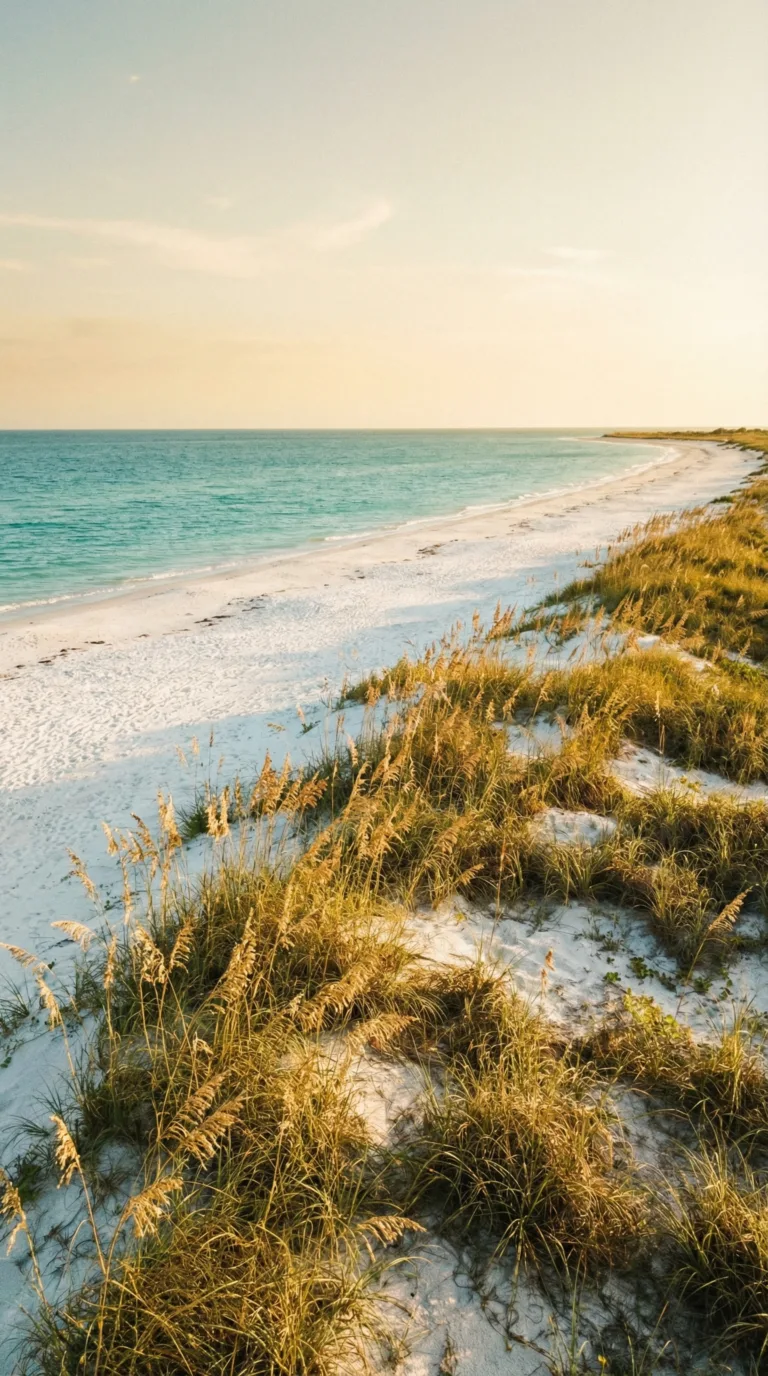
Caladesi Island State Park sits at the top of every local’s recommendation list. The Caladesi Connection ferry departs hourly from Honeymoon Island’s north end, making the 20-minute crossing to one of America’s most clean barrier islands. Dr. Beach ranked Caladesi the #1 beach in the United States in 2008. The island remains roadless and undeveloped. You’ll find three miles of white sand, a kayak trail through mangrove tunnels, and a beach café. No cars. No condos. Just sand and sea oats.
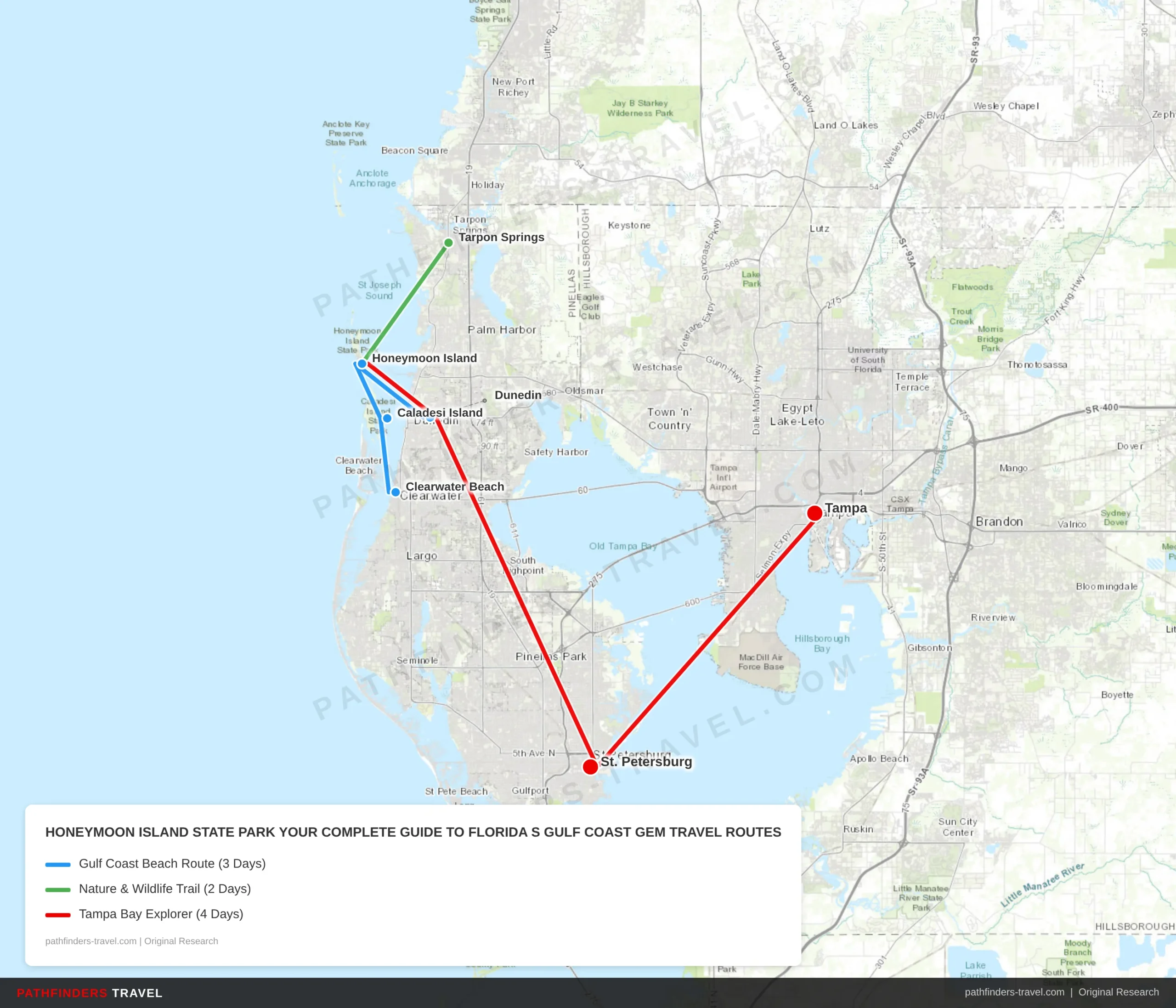
| # | Stop | Highlights | Drive Time |
|---|---|---|---|
| 1 | Dunedin | Causeway departure point, downtown dining, historic railway depot | Start |
| 2 | Honeymoon Island | 4 miles of beaches, pet beach, Osprey Trail, ferry to Caladesi | 10m |
| 3 | Caladesi Island | untouched beaches, kayak trails, nature center, ferry access | Ferry 20m |
| 4 | Clearwater Beach | Sugar sand beaches, pier, marine aquarium, sunset celebrations | 30m |
| # | Stop | Highlights | Drive Time |
|---|---|---|---|
| 1 | Crystal River | Manatee encounters, springs, kayaking, wildlife refuge | Start |
| 2 | Tarpon Springs | Sponge docks, Greek culture, historic district, boat tours | 1h 45m |
| 3 | Honeymoon Island | Pelican Cove Trail, mangrove wildlife, osprey nesting, shelling | 20m |
| # | Stop | Highlights | Drive Time |
|---|---|---|---|
| 1 | Tampa | Urban attractions, Riverwalk, museums, dining scene | Start |
| 2 | St. Petersburg | Dalí Museum, downtown waterfront, arts district, pier | 45m |
| 3 | Dunedin | Historic downtown, Pinellas Trail, Scottish heritage | 30m |
| 4 | Honeymoon Island | State park beaches, nature trails, barrier island ecosystem | 10m |
The ferry costs $20 for adults, $10 for kids. It runs every hour from 10 AM to 4 PM. Bring cash for the beach café, they don’t take cards.
St. Petersburg sprawls 30 minutes south down Gulf Boulevard. The Salvador Dalí Museum holds the largest collection of Dalí’s work outside Spain. Downtown’s waterfront district packs in breweries, restaurants, and the Museum of Fine Arts. The Sunken Gardens, a 100-year-old botanical garden, sits in the middle of the city. Check Visit St. Petersburg/Clearwater for current exhibits and events.
Tampa sits 45 minutes east across the bay. Busch Gardens combines roller coasters with a zoo. The Florida Aquarium’s coral reef exhibit holds 500,000 gallons of water. Ybor City, Tampa’s historic Latin quarter, serves Cuban sandwiches and hosts cigar factories you can tour. Visit Tampa Bay lists weekend events and festival schedules.
Tarpon Springs lies 20 minutes north on US-19. Greek immigrants built the town’s sponge diving industry in the 1900s. The sponge docks still operate today. You can watch divers work, eat spanakopita at waterfront tavernas, and buy natural sponges direct from the boats.
Downtown Dunedin sits 15 minutes south. Main Street runs six blocks of breweries, coffee shops, and boutiques. The Pinellas Trail, a 47-mile paved bike path, cuts through the center of town.
Anna Maria Island offers another beach option 45 minutes south. The island bans high-rises and chain restaurants. You’ll find seven miles of public beaches, a historic pier, and a slower pace than most Gulf Coast towns.
Sarasota sits one hour south on I-75. The Ringling Museum complex includes an art museum, a circus museum, and Ca’ d’Zan, John Ringling’s Venetian Gothic mansion. Marie Selby Botanical Gardens specializes in orchids and epiphytes. Siesta Key Beach, consistently ranked among America’s best, lies just west of downtown.
Practical Tips for Your Visit
Honeymoon Island State Park opens daily at 8am (closing at sundown), with October through April offering the most comfortable weather; visitors should check the park’s website for closure alerts related to hurricanes or red tide before traveling.
The park gates open at 8am every day. Closing time shifts with sunset, usually around 5:30pm in winter, 8pm in summer. Arrive before 10am on weekends. The parking lot fills fast.
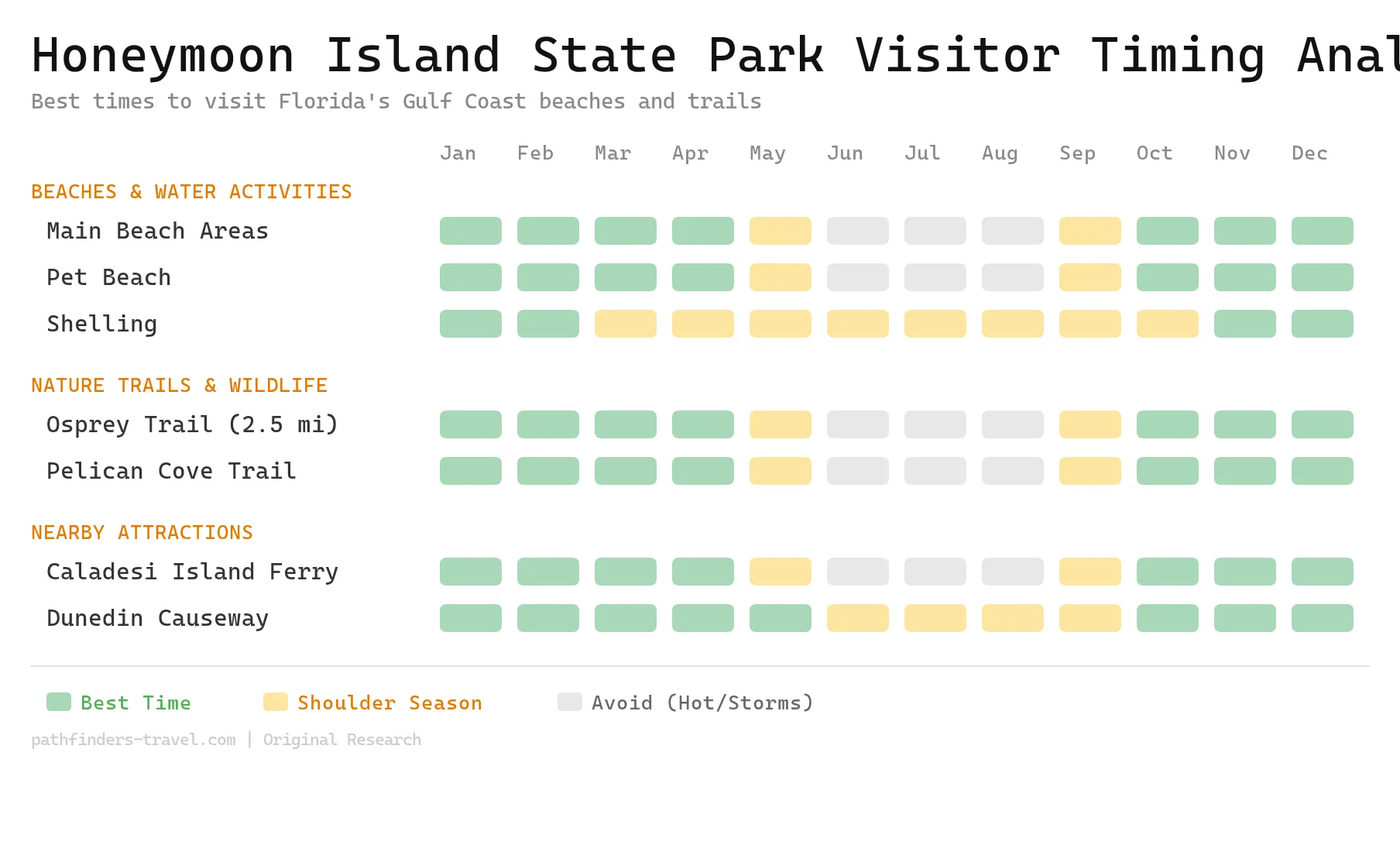
October through April delivers the best weather. Temperatures hover between 65°F and 80°F. Summer brings 90°F heat and thick humidity. Hurricane season runs June through November. Check the Florida State Parks alerts and closures map before you drive out, storms force temporary closures several times each year.
Red tide can shut down beaches or make breathing uncomfortable. The NOAA Gulf Coast Harmful Algal Bloom Forecast posts current conditions. Don’t skip this check.
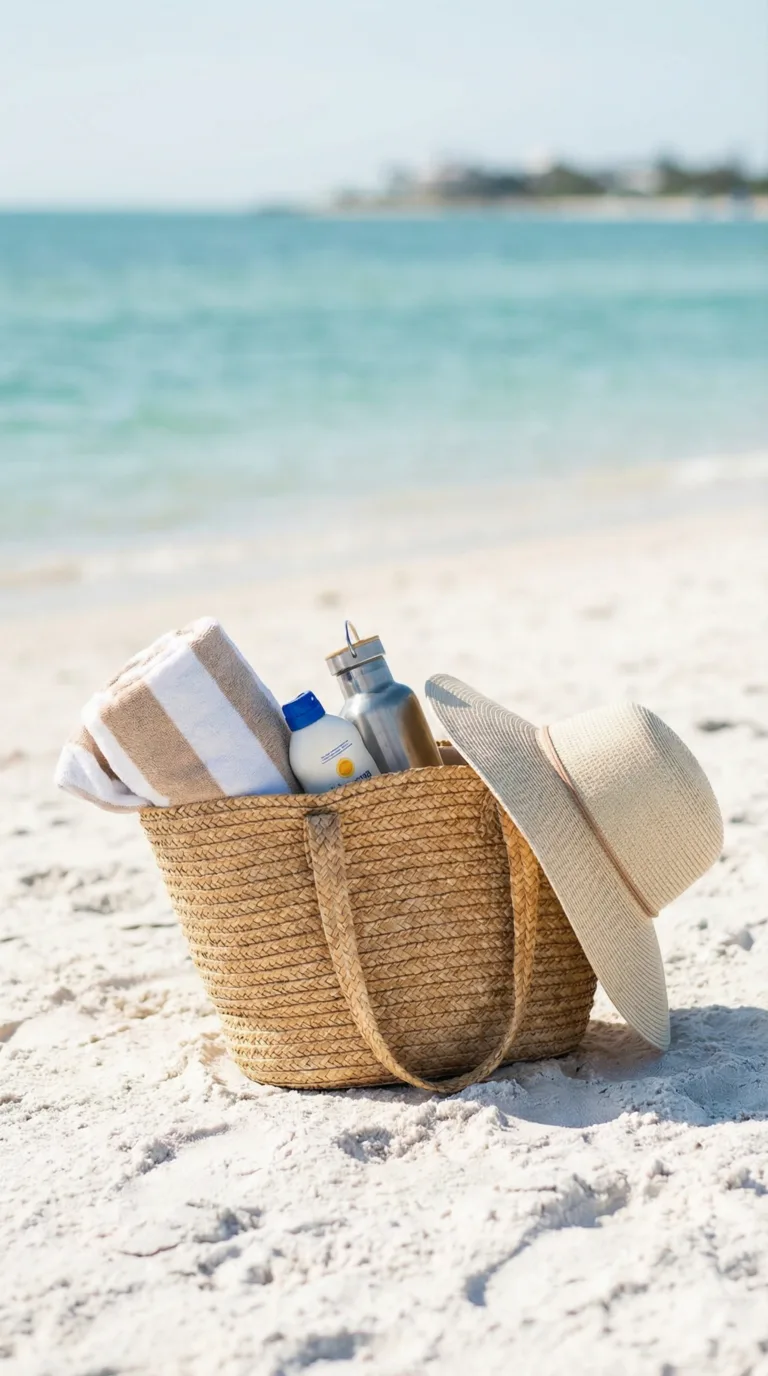
Pack sunscreen. The beaches offer zero shade. Bring a beach umbrella, two liters of water per person, and a mesh bag for shells. Water shoes help on the rocky north beach sections. Dogs can visit the designated pet beach south of the main swimming area, leash required, waste bags mandatory.
Bring cash for the Caladesi Island ferry. The boat doesn’t take cards. Fill your gas tank before heading to the island, no services exist on Honeymoon Island itself.
Best Time to Visit
Honeymoon Island State Park offers year-round access, but Florida’s subtropical climate creates distinct seasons for comfort. Winter through early spring (December-April) provides ideal temperatures in the 70s-80s with low humidity and minimal rainfall. Summer months bring intense heat, humidity, and afternoon thunderstorms that can interrupt beach activities. The park’s 800,000 annual visitors concentrate heavily during winter months when northern snowbirds flock to the Gulf Coast.
Frequently Asked Questions
Is Honeymoon Island worth visiting?
Yes. Honeymoon Island State Park ranks among Florida’s top state parks with over 800,000 annual visitors. The park delivers untouched Gulf beaches, excellent shelling, nature trails, and wildlife viewing. A pet-friendly beach area makes it ideal for dog owners. You also get access to the Caladesi Connection ferry service, which takes you to Caladesi Island, one of America’s best beaches. For $8, you’re getting serious value.
Do you need to take a ferry to Honeymoon Island?
No. The park is accessible by car via the Dunedin Causeway. You can drive, bike, or walk directly to the entrance at 1 Causeway Blvd, Dunedin, FL 34698. The confusion comes from the Caladesi Connection ferry that departs with Honeymoon Island and Caladesi Island. That’s optional. You don’t need a boat to reach Honeymoon Island itself.
How much does it cost to go into Honeymoon Island?
The Honeymoon Island State Park fee is $8 per vehicle carrying 2-8 people. Single-occupant vehicles pay $4. Pedestrians, bicyclists, or extra passengers pay $2 each. A Florida State Parks Annual Pass covers all state parks for $60 (individual) or $120 (family). The ferry to Caladesi Island costs extra.
Can you camp at Honeymoon Island State Park?
Honeymoon Island State Park camping is not available. The park is day-use only and closes at sundown. Nearest camping options include Fort De Soto Park (30 minutes south) or Caladesi Island (boat-in camping only). Hotels and vacation rentals are available in nearby Dunedin and Clearwater.
Is Honeymoon Island beach open today?
The park typically opens daily from 8am to sundown. Check the Honeymoon Island State Park website or call (727) 469-5942 for current status. Temporary closures happen for hurricanes, severe weather, or red tide events. Parking lots can reach capacity on weekends and holidays even when the park is open.