Estimated reading time: 13 minutes
Last updated: 27 November 2026
Table of Contents
- Is Nara a Walkable City?
- Nara Park, Todai-ji and the Deer That Bow
- Naramachi and the Old Merchant Lanes
- What to Eat in Nara
- Nara Hotels, Ryokan, or Just Day-Trip It
- Trains From Kyoto and Osaka to Nara
- What Nara Costs for a Day
- Mount Yoshino and Other Trips Beyond Nara
- Best Time to Visit Nara and Its Weather
- Frequently Asked Questions
Is Nara a Walkable City?
Yes. Nara’s main sights sit inside one 500 hectare park, and the walk from Kintetsu Nara Station to Todai-ji takes about 15 minutes, then another 20 minutes on to Kasuga Taisha. Around 1,200 free-roaming deer cover the same ground. Most visitors cover everything on foot in five to six hours without any transport.
How This Guide Was Researched
This guide was compiled from travel documentaries, verified tourism sources, and community traveler feedback. Prices and operational details were confirmed at the time of writing. We recommend checking official sources for the latest information before your trip.
Want to see this for yourself? Watch the full video in 4K.
Nara sits in Nara Prefecture, out in the Kansai region, about 35 minutes from Kyoto and 40 from Osaka. So it’s an easy hop, and the Nara City Tourism Association is right that you can do the whole thing on foot.
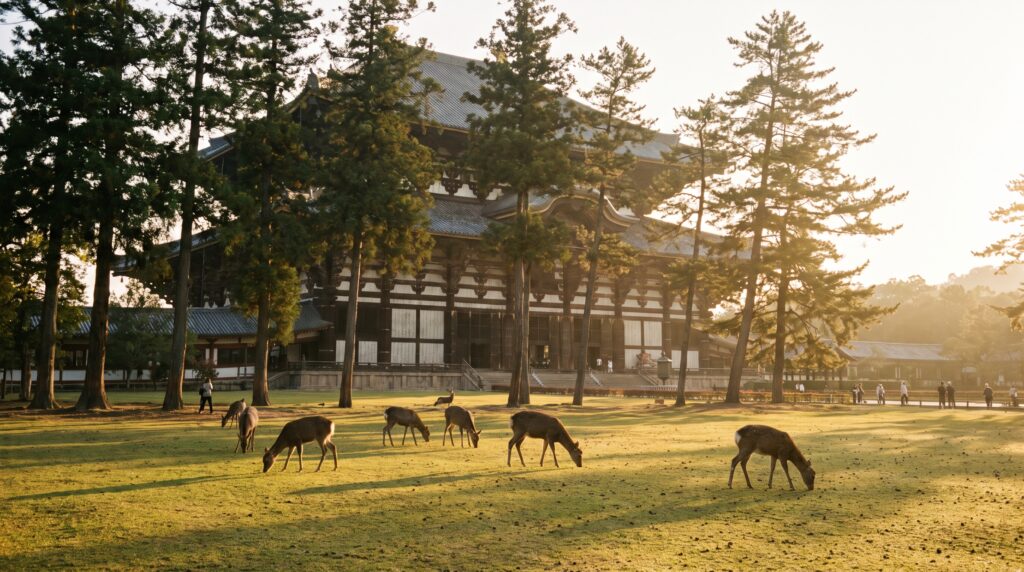
The deer are the draw. Roughly 1,200 sika deer roam Nara Park freely, protected as national natural monuments, and they’ve had that status for centuries. They wander the temple grounds, the lawns, the paths, everywhere.
The history is what makes the buildings matter. Nara was Japan‘s capital from 710 to 794, so the temples here predate anything in Kyoto. Todai-ji and its bronze Great Buddha. Kasuga Taisha’s lantern paths. Kofuku-ji’s pagoda. The Naramachi merchant lanes. The Visit Nara, the official prefecture guide counts three World Heritage sites here.
One honest tip. Most people treat Nara as a day trip and clear out by dark. Stay the night if you can. The park at dawn, with the deer and no crowds, is the version worth having.
Nara Park, Todai-ji and the Deer That Bow
Nara Park is free to enter and open at all hours, while Todai-ji charges 800 yen and Kasuga Taisha’s inner area costs 700 yen.
Start with the Nara Japan deer, because they’re everywhere and they run the place. About 1,200 sika deer roam Nara Park freely, protected since the eighth century. Vendors sell shika senbei crackers at stalls for 200 yen, and generations of deer have learned to bow their heads for one. Bow back and they’ll bow again. It’s the reason most people come.
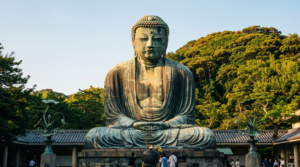
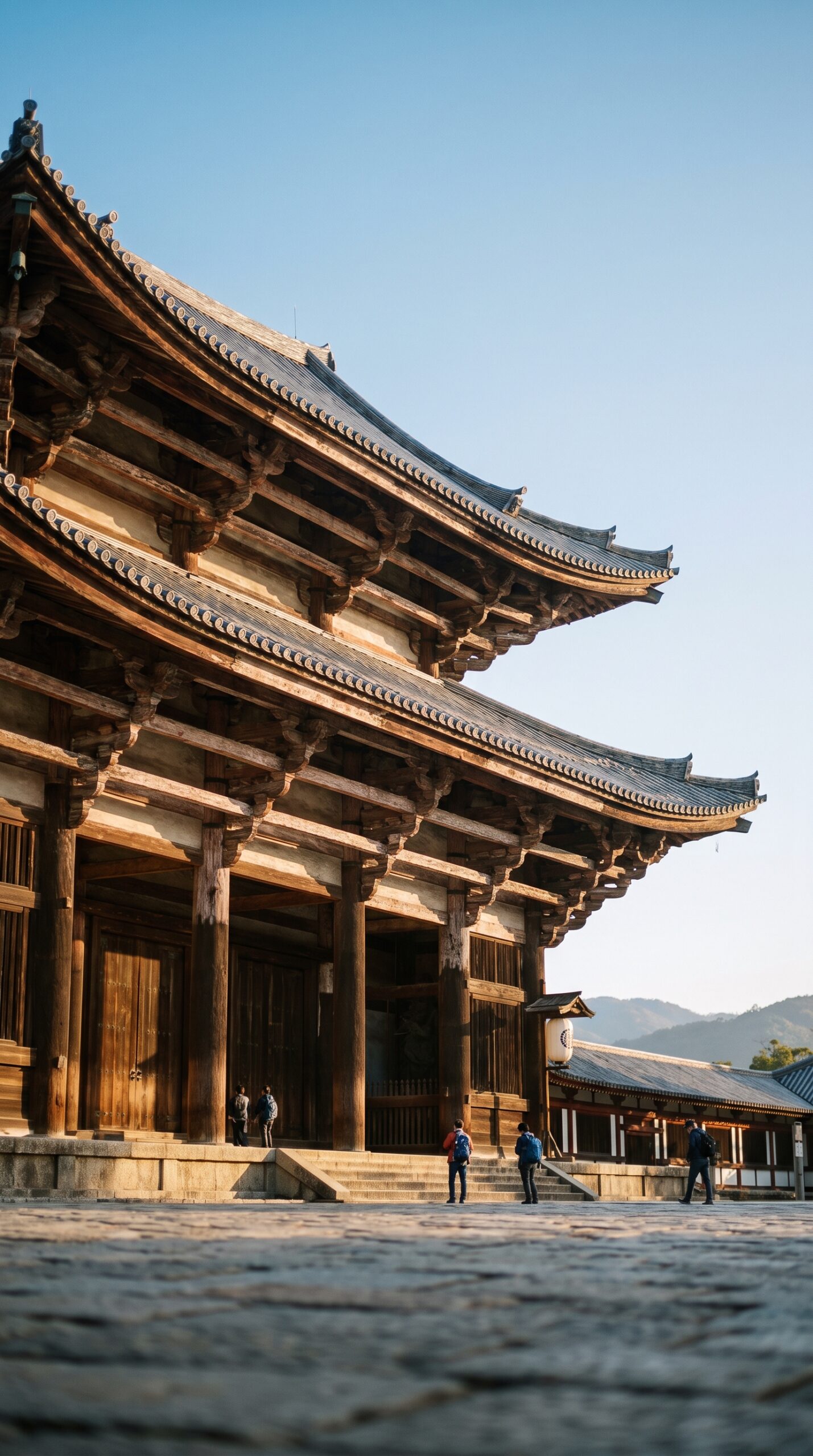
Todai-ji is the temple everyone photographs. The Daibutsuden houses a bronze Buddha about 15 metres tall, cast in 752, and the hall around it, rebuilt in 1709, is still one of the largest wooden buildings on earth. Entry runs 800 yen. Behind the Buddha, a wooden pillar has a hole the size of the statue’s nostril, and squeezing through it is supposed to bring good luck.
Kasuga Taisha is the shrine to walk to next. Founded in 768, its approach paths are lined with roughly 3,000 stone and bronze lanterns, mossy and crowded under the cedars. The lantern paths cost nothing; only the inner area charges 700 yen. Kofuku-ji sits closer to the station, and its five-storey pagoda stands 50 metres tall, the second tallest wooden pagoda in the country.
Two gardens sit beside Todai-ji, Isuien and Yoshikien, and Yoshikien is free for foreign visitors. Worth 20 quiet minutes away from the crowds.
Straight answer on the fee people keep searching for. Nara Park itself costs nothing and never closes. Only the individual temples charge, so you can feed deer and walk the lantern paths for free and pay only where you step inside. The Visit Nara’s attractions guide lists current hours for each.
One real warning about the deer. They are wild, and they will headbutt, nip and chase anyone they think is holding crackers. Buy your senbei last, feed them fast, and keep your hands empty once they’re gone. And skip searching for Nara Dreamland, the old abandoned theme park; it was demolished in 2017 and there’s nothing left to see.
Naramachi and the Old Merchant Lanes
Naramachi sits about ten minutes south of Nara Park and holds preserved Edo-era machiya townhouses, several of which are free to enter.
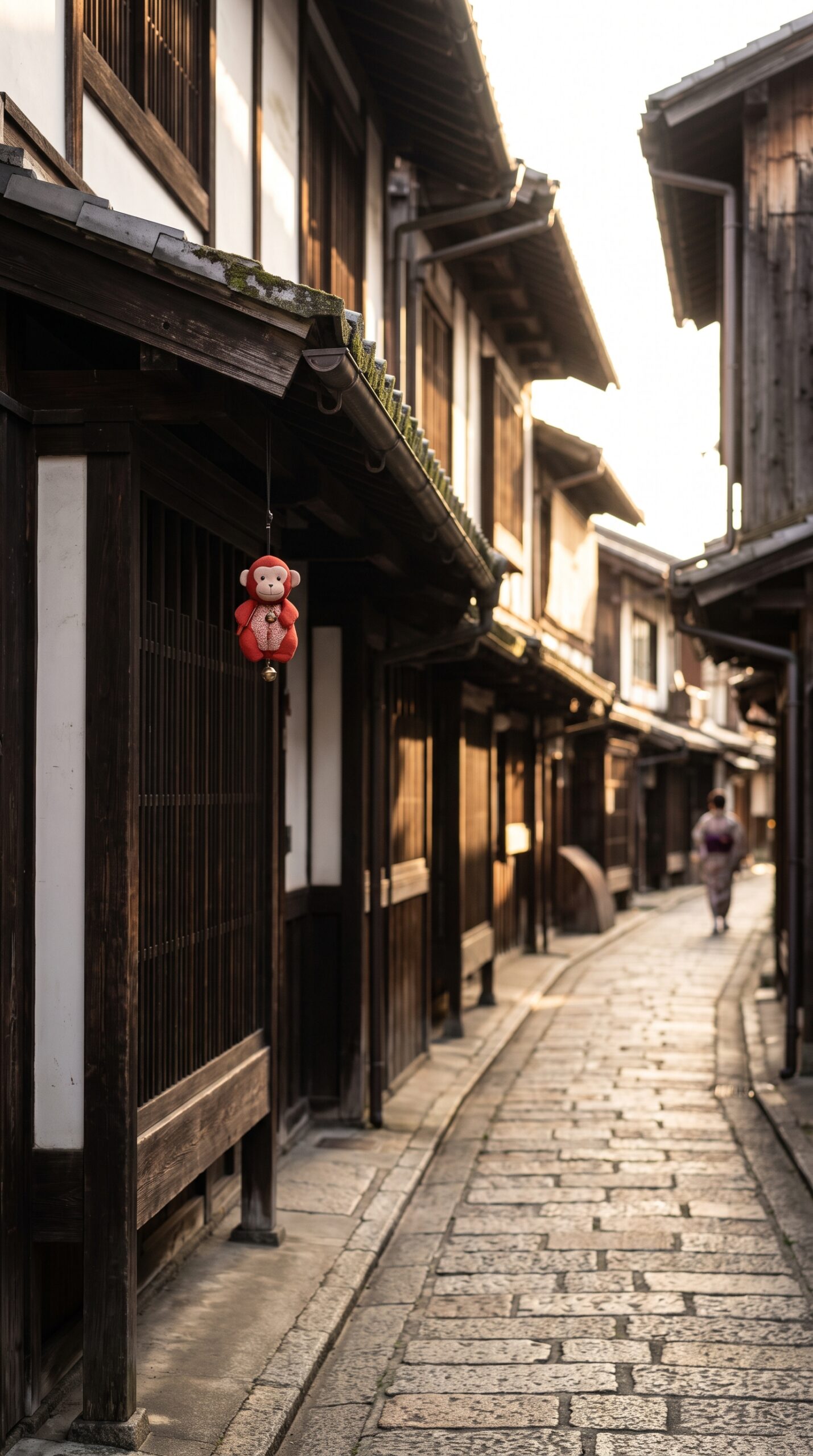
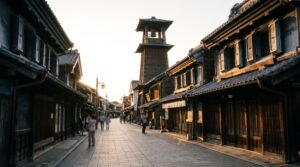
Naramachi is the old merchant quarter, south of Sarusawa Pond, a grid of narrow lanes with dark timber townhouses. It’s a ten minute walk from the park, per the Nara City Tourism Association, so it slots in easily after the temples.
Look up as you walk. Small red cloth monkeys hang from the eaves. They’re migawari-zaru, charms hung to take on a household’s bad luck so the family doesn’t have to. One per doorway, roughly.
Step into the Naramachi Koshi-no-Ie. It’s a restored merchant house, free to enter, and it shows how these buildings worked: narrow at the street, running deep back from it, built long and thin because old taxes were charged on street frontage.
Planning Tip
Know your stations before you buy a ticket. Kintetsu Nara Station in Nara city drops you at the park edge. JR Nara Station sits further west, about a 20 minute walk out. That single fact decides which line to take.
Honest note. Naramachi is quiet and low-key, not dramatic. Give it an hour, not a day.
What to Eat in Nara
Kakinoha-zushi, Nara’s persimmon-leaf pressed sushi, sells in boxes from about 900 yen, and most restaurants near Nara Park close by 18:00.
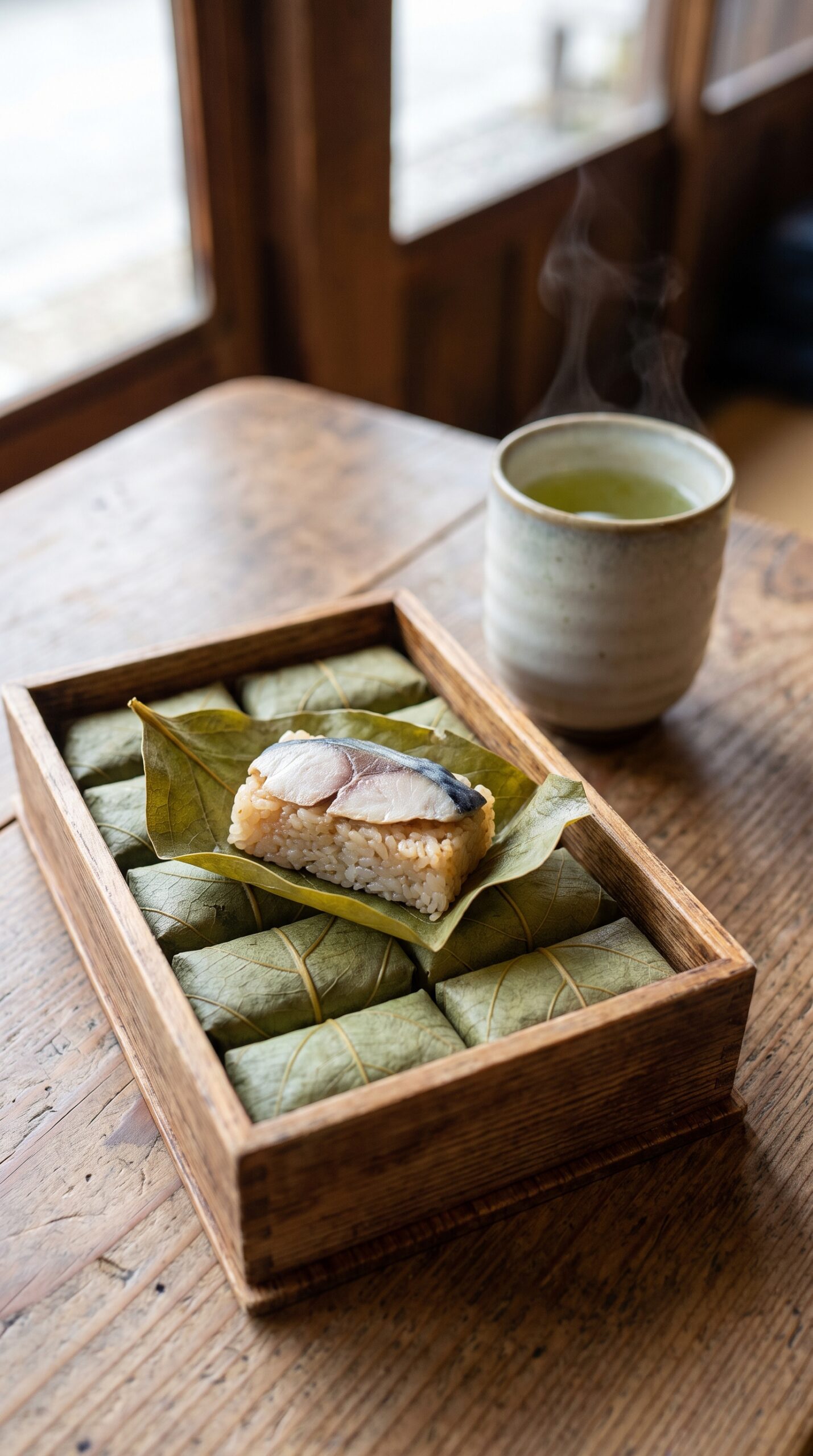
Kakinoha-zushi is the dish to try. Pressed mackerel or salmon sushi, each piece wrapped in a persimmon leaf. The leaf started as a way to preserve salted fish carried inland before refrigeration, and it stuck. Boxes run from about 900 yen, per Nara’s official gourmet guide.
Narazuke are vegetables pickled in sake lees. Sharp, strong, a bit boozy. The shops along Sanjo-dori hand out free samples, so taste before you commit.
Miwa somen comes from nearby Sakurai, thin wheat noodles served cold in summer and in hot broth when it’s cold. Usually 800 to 1,200 yen. For a snack, watch the mochi pounders at Nakatanido near Sarusawa Pond hammer rice dough at absurd speed, then buy a warm piece for around 150 yen.
One thing to plan around. Nara empties out early. Most restaurants near the park shut by 17:00 or 18:00. Eat before the last train, or carry on to Osaka for dinner.
Nara Hotels, Ryokan, or Just Day-Trip It
Hotels near Kintetsu Nara Station cost roughly 9,000 to 16,000 yen a night for two, and ryokan start near 15,000 yen per person with two meals.
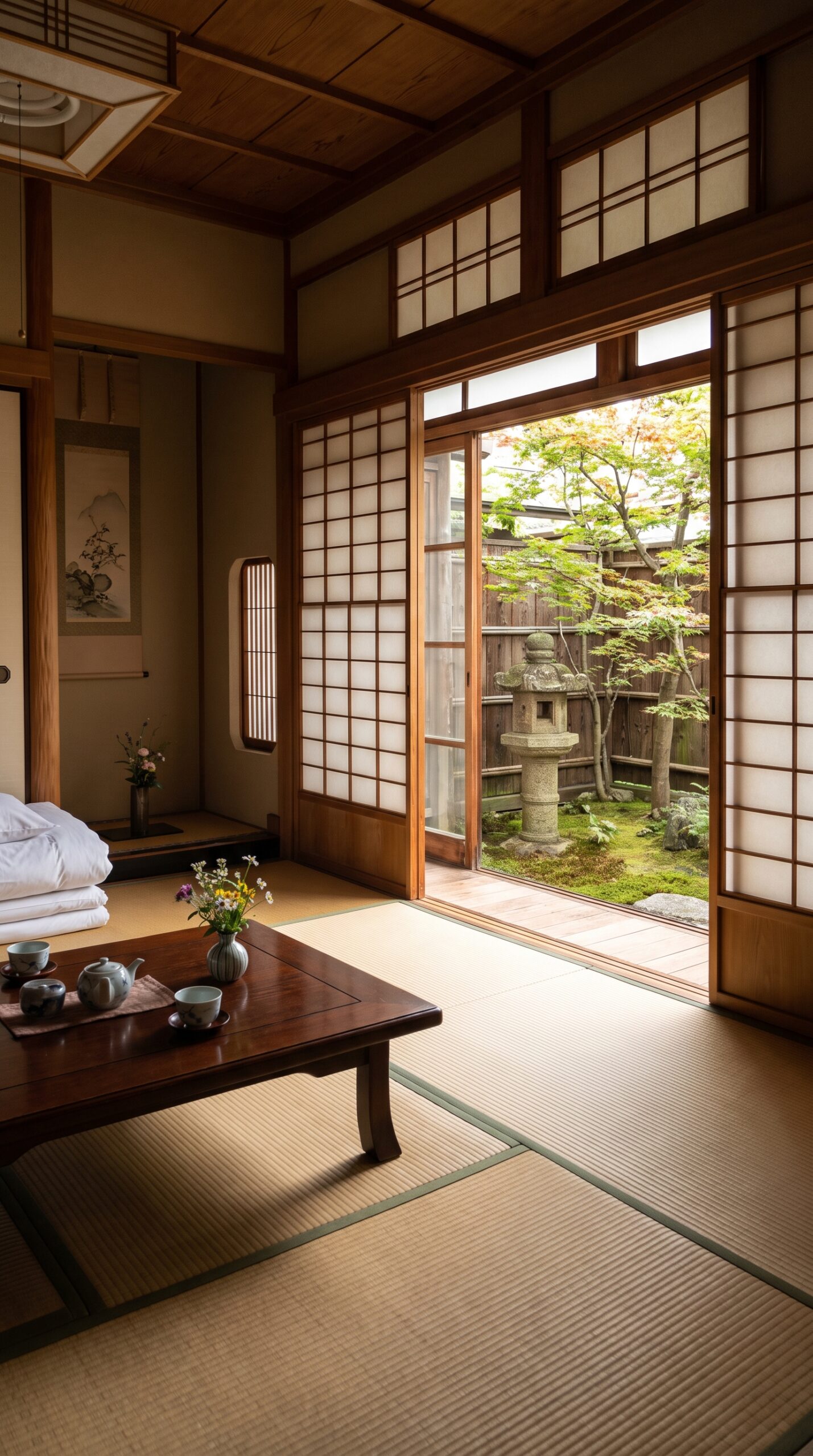
The trade-off is simple. Most people day-trip from Kyoto or Osaka. Staying over buys you one thing the day-trippers never get: the park at 07:00, deer and lanterns and almost nobody else.
Nara hotels near Kintetsu Nara Station run roughly 9,000 to 16,000 yen a night for two, cheaper than the same standard in Kyoto. Ryokan in Nara start around 15,000 yen per person including dinner and breakfast, and several sit within walking distance of the park; the Nara Ryokan Hotel Association lists them. The Nara Hotel, open since 1909, is the grand old wooden-staircase option if you want the historic version.
Onsen in Nara Prefecture mostly sit far south around Tenkawa and Dorogawa, not in the city, so budget the travel time if a hot spring is the plan.
One honest caveat. Nara city goes quiet after 20:00. If you want bars and late food, base in Osaka and visit for the day.
Trains From Kyoto and Osaka to Nara
Kintetsu limited express trains reach Nara from Kyoto in about 35 minutes for 1,280 yen, and Kintetsu Nara Station sits a five minute walk from Nara Park.
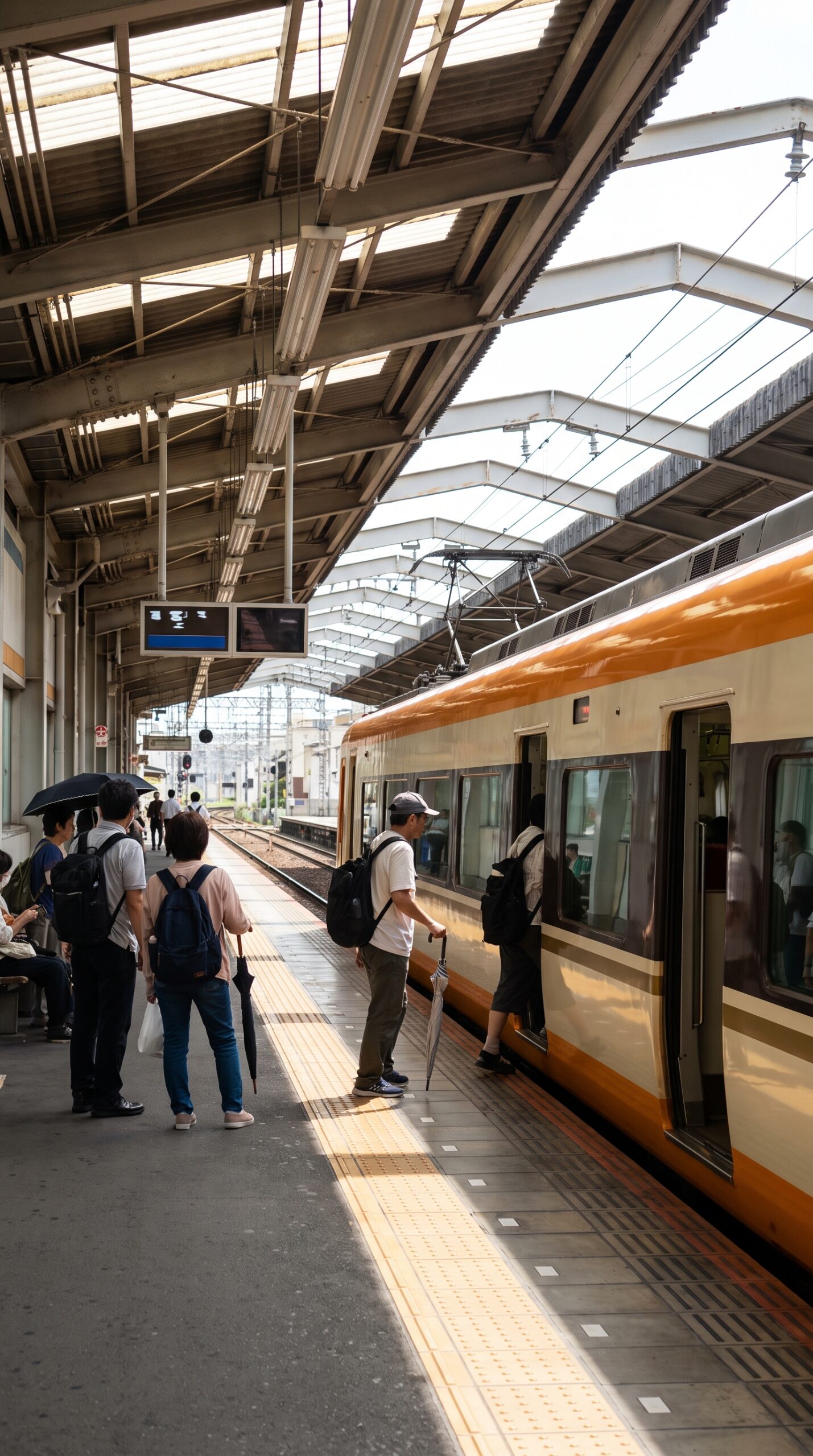
From Kyoto, two options. The Kintetsu Railway limited express takes about 35 minutes and runs around 1,280 yen. The JR Nara Line rapid takes 45 minutes for 720 yen. From Osaka, Kintetsu leaves Osaka-Namba and reaches Nara in about 40 minutes, and the JR Yamatoji rapid from Osaka Station takes 50.
The station you land at matters more than the line. Kintetsu Nara Station is a five minute walk from Nara Park. JR Nara Station is about 20 minutes out. So pick your ticket by where you want to end up, not just the price.
JR Pass holders should take the JR Nara Line, since the pass covers it and Kintetsu it does not, per JR West route and fare finder. Once you arrive, walk. The whole circuit is on foot anyway.
Plan dinner around the trains. The last services back to Kyoto and Osaka run late, but Nara’s kitchens close hours earlier, so eat before you’d normally think to.
What Nara Costs for a Day
A day trip to Nara costs roughly 4,800 to 7,000 yen per person including return train fare, three temple tickets, deer crackers and lunch.
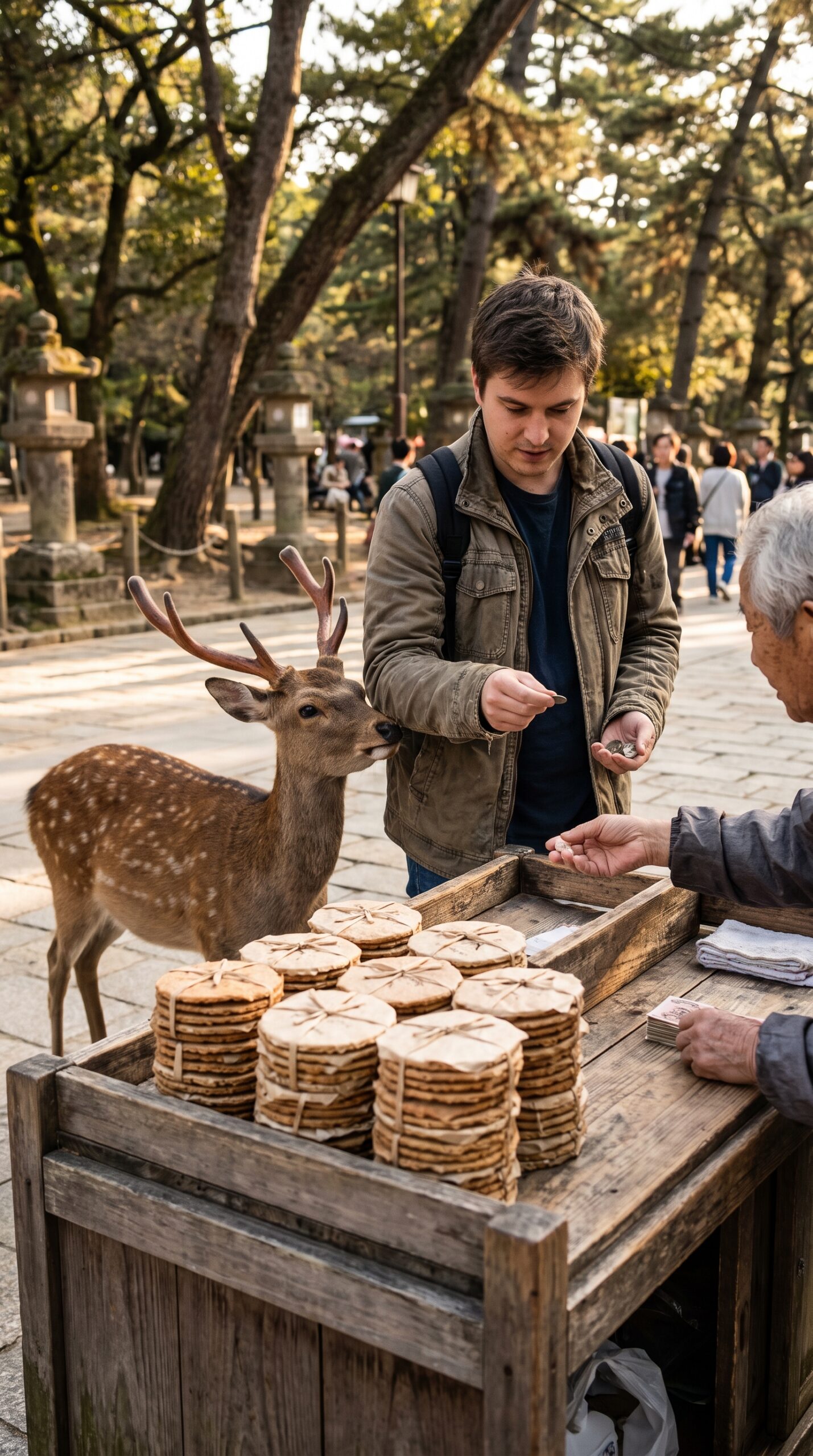
Here’s a day from Kyoto, broken out. Return train, 1,440 to 2,560 yen depending which line. Todai-ji, 800 yen, per Todai-ji’s official admission page. Kasuga Taisha inner area, 700. Kofuku-ji, 700. Deer crackers, 200. Lunch, 1,000 to 2,000. That lands at roughly 4,800 to 7,000 yen a head.
The answer to the fee question people keep searching: Nara Park costs nothing and never closes. Only the temples charge.
Plenty stays free. The deer. The whole park. Kasuga Taisha’s lantern paths. The Naramachi lanes. Yoshikien garden for foreign visitors.
Carry cash. Temple ticket counters take nothing else, and once you’re inside the park, ATMs that accept foreign cards are thin on the ground.
Mount Yoshino and Other Trips Beyond Nara
Mount Yoshino sits about 90 minutes south of Nara by Kintetsu train and holds roughly 30,000 cherry trees across four elevation bands.
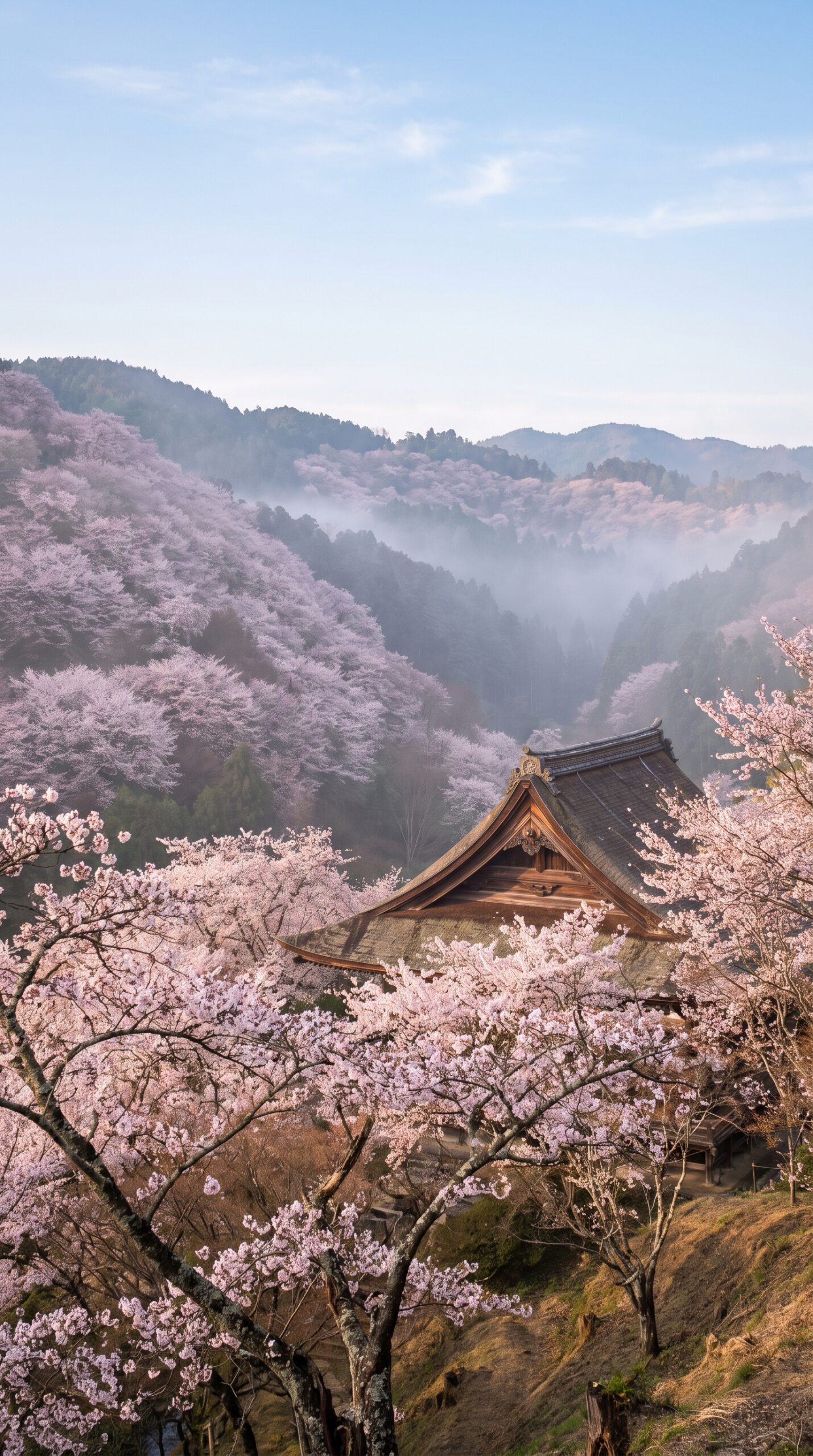
Mount Yoshino holds roughly 30,000 cherry trees, planted in four bands up the slope, so the blossom rolls uphill and the season stretches for weeks rather than days. About 90 minutes south by Kintetsu. The Yoshino Tourist Association posts bloom updates each spring.
Horyu-ji sits 20 minutes west by train and holds the oldest surviving wooden buildings in the world, up since around 700. Worth the detour for anyone who cares about how these things were made.
Kyoto is 35 minutes away, and Arashiyama with its bamboo grove sits at that city’s western edge. Fushimi Inari Shrine and its torii tunnels are about 45 minutes off on the JR Nara Line, easy to bolt onto the ride back. Osaka is 40 minutes the other way, and it’s where you go once Nara shuts down for the night.
One caveat. Mount Yoshino is a full day on its own, and outside blossom season it’s a long ride to a quiet mountain town. Save it for spring.
Best Time to Visit Nara and Its Weather
Nara sits inland with summer highs near 33C, so late March to April and November are the comfortable windows for walking the park.
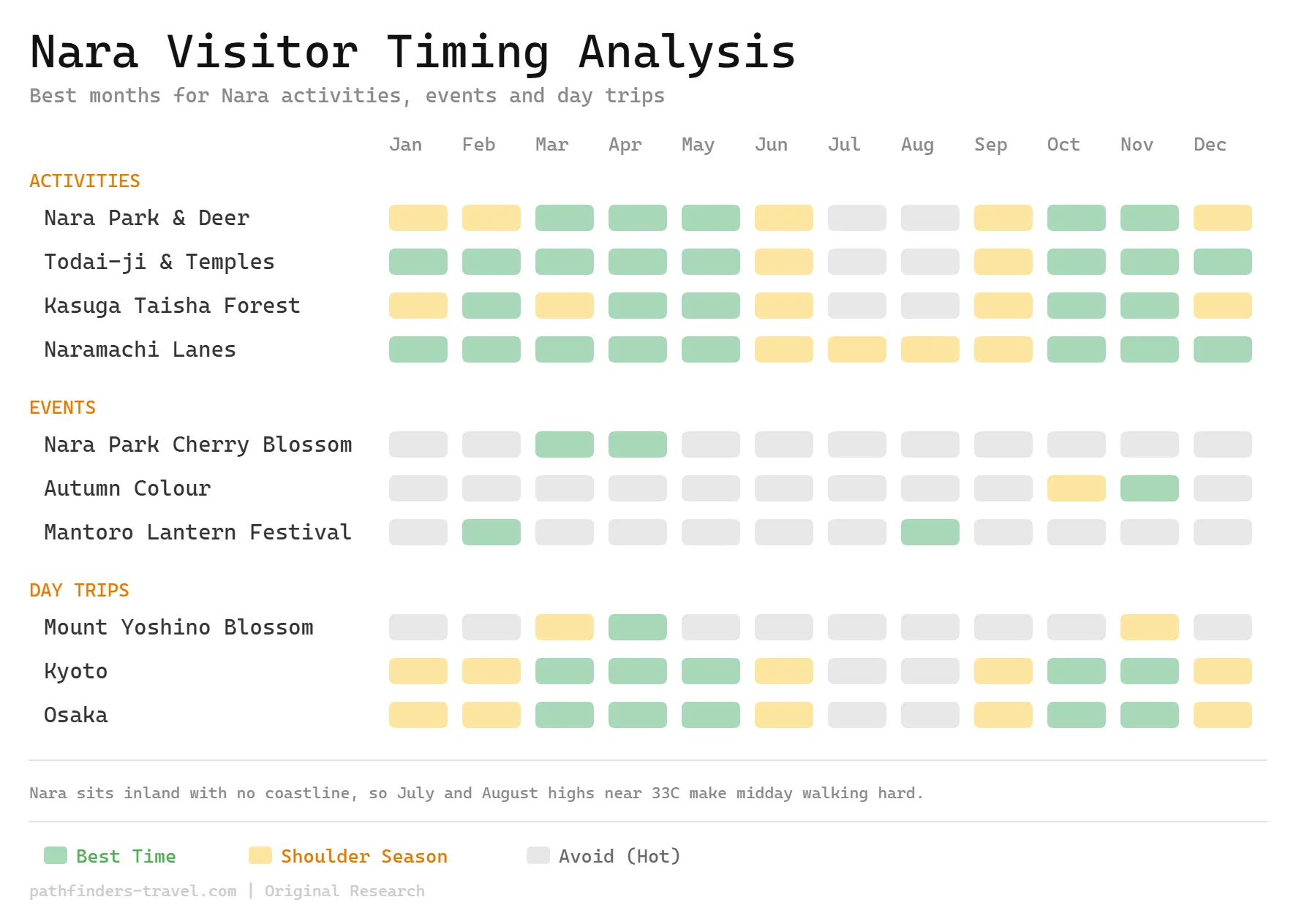
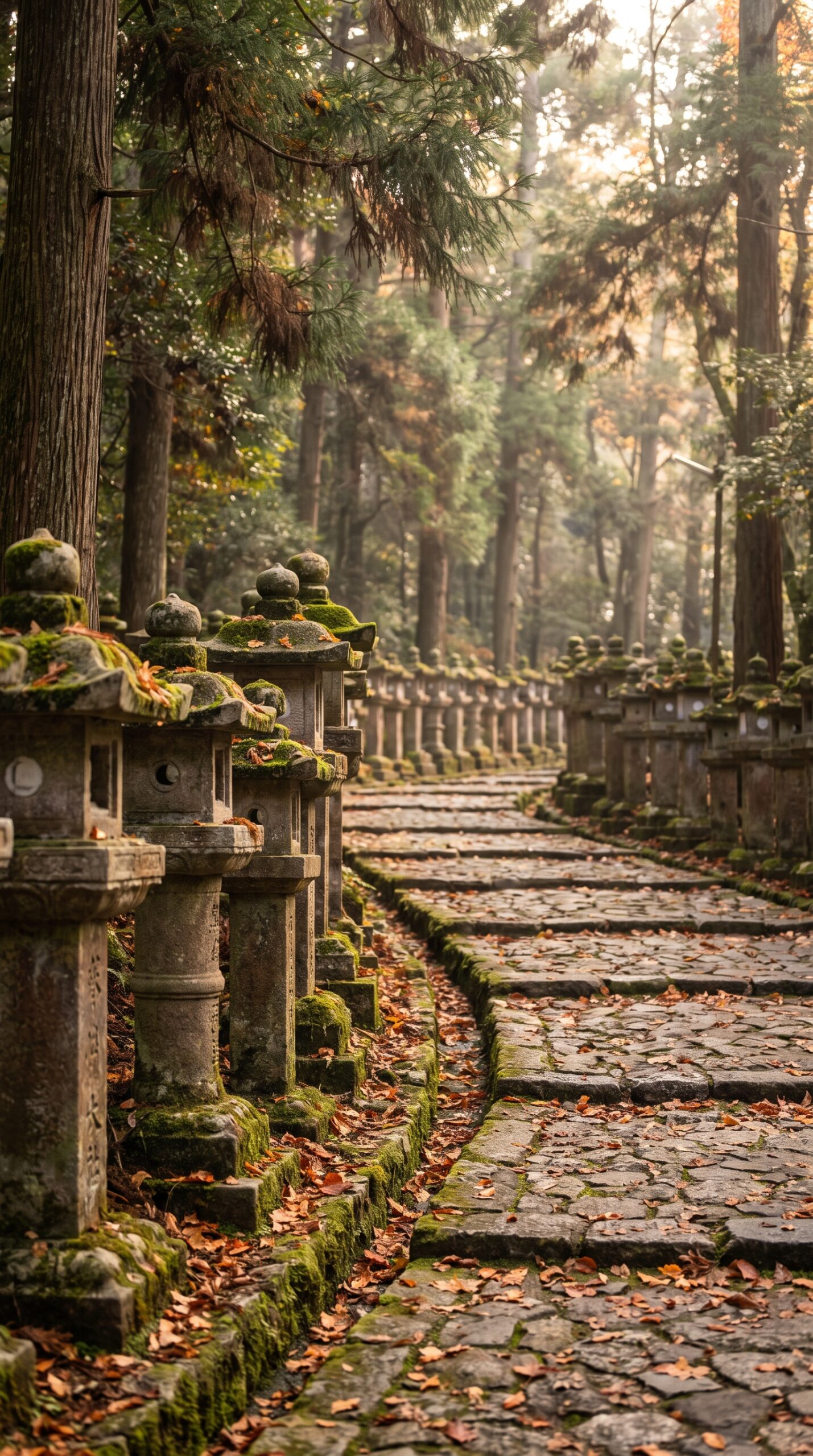
Two windows stand out. Late March into early April for cherry blossom across Nara Park. November for autumn colour running through the Kasuga forest.
Summer is the one to avoid. Nara is inland with no sea breeze, and July and August highs sit around 33C, per the Japan Meteorological Agency climate data. Start at 08:00 or skip those months. Winter is cold, dry and quiet, and Nara in December and January hands you the park almost to yourself.
Two events worth timing a trip around. The Mantoro lantern festivals at Kasuga Taisha, early February and mid August, light around 3,000 lanterns after dark.
Pack for a lot of walking on gravel and stone steps. And bring a bag that actually closes, because an open one is an invitation, and the deer will help themselves.
Travel Routes
1,200 Deer Roam Nara Park in Japan, and They Bow for Crackers offers diverse travel experiences across multiple regions. Below are our recommended travel routes with key stops and estimated drive times.
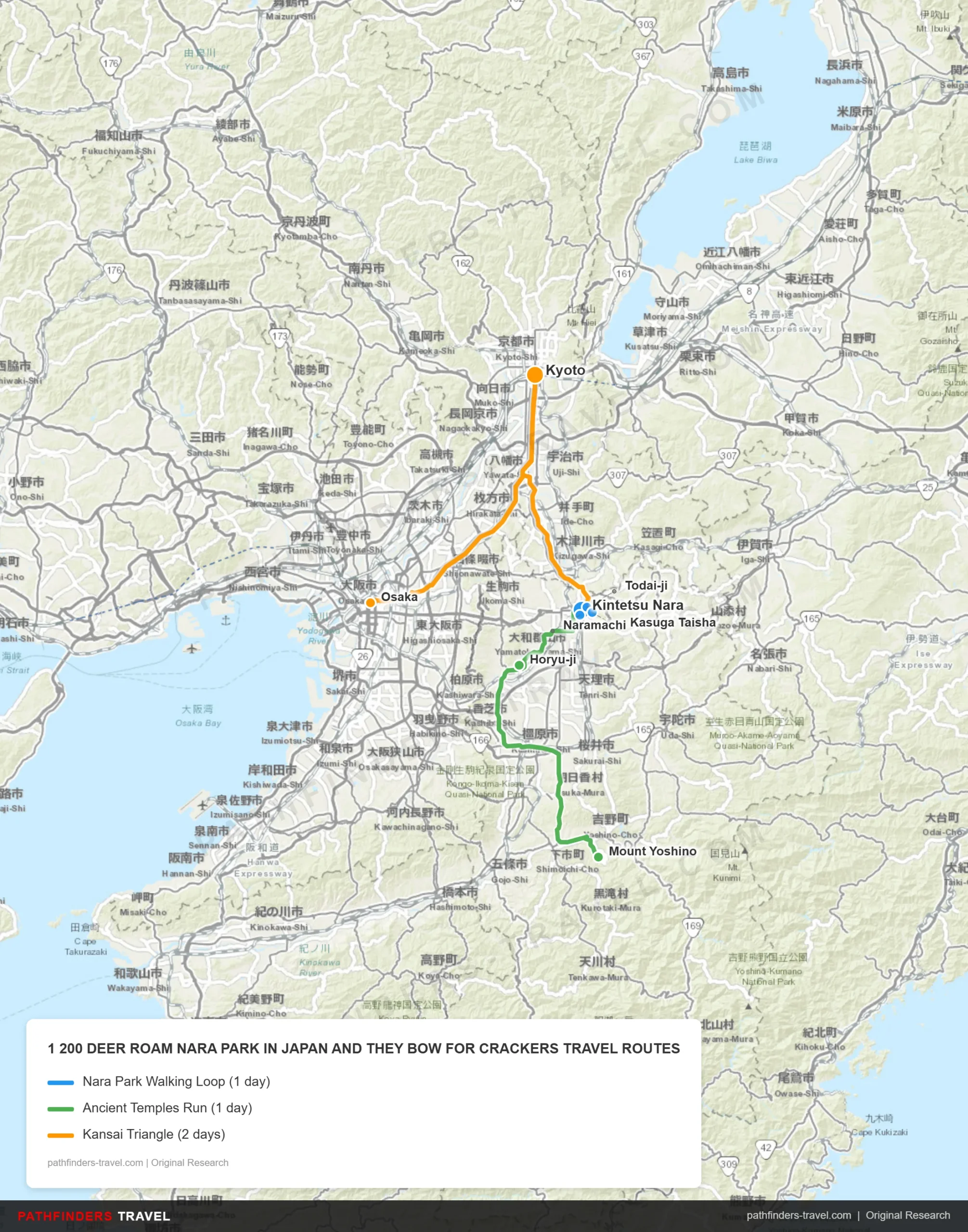
| # | Stop | Highlights | Drive Time |
|---|---|---|---|
| 1 | Kintetsu Nara | Arrive here, five minutes from the park. Kofuku-ji’s five-storey pagoda is right outside. | Start |
| 2 | Todai-ji | The 15 metre bronze Great Buddha in one of the largest wooden halls on earth, 800 yen. | 15m on foot |
| 3 | Kasuga Taisha | Around 3,000 stone and bronze lanterns lining forest paths, inner area 700 yen. | 20m on foot |
| 4 | Naramachi | Old merchant lanes with machiya townhouses and free-to-enter Koshi-no-Ie. | 20m on foot |
| # | Stop | Highlights | Drive Time |
|---|---|---|---|
| 1 | Kintetsu Nara | Start point for the Kintetsu line running west and south. | Start |
| 2 | Horyu-ji | The oldest surviving wooden buildings on earth, up since around 700. | 20m by train |
| 3 | Mount Yoshino | Roughly 30,000 cherry trees across four bands, best in April. A full day of its own. | 90m by train |
| # | Stop | Highlights | Drive Time |
|---|---|---|---|
| 1 | Kintetsu Nara | Base for a two-city Kansai loop, cheaper hotels than Kyoto. | Start |
| 2 | Kyoto | Temples, Arashiyama’s bamboo grove and Fushimi Inari, 35 minutes north. | 35m by train |
| 3 | Osaka | Street food and nightlife, 40 minutes the other way, where to go once Nara shuts. | 40m by train |
Frequently Asked Questions
What is there to do in Nara?
Feed the deer in Nara Park, see the bronze Great Buddha at Todai-ji, walk Kasuga Taisha’s lantern paths, and wander the Naramachi lanes. The full circuit takes five to six hours on foot. Kofuku-ji’s five-storey pagoda sits right by the station if you’re short on time.
Is it worth visiting Nara?
Yes. Nara packs three UNESCO World Heritage sites, around 1,200 free-roaming deer, and the bronze Great Buddha of Todai-ji into one walkable park, about 35 minutes from Kyoto. Most people visit as a half-day or day trip and rate it a highlight of any Kansai itinerary.
Is 4 hours in Nara enough?
For the main park, yes. Four hours covers the deer, Todai-ji’s Great Buddha, and Kasuga Taisha’s lantern paths at a brisk pace. Five to six hours is more comfortable and lets you add Naramachi. If you also want Kofuku-ji and a sit-down lunch, plan a full day.
Is Nara close to Kyoto or Osaka?
Both are close. Nara sits about 35 minutes from Kyoto by Kintetsu limited express and 40 minutes from Osaka-Namba, in the same Kansai region. Many visitors base in either city and day-trip to Nara, since the deer park and temples are an easy walk from Kintetsu Nara Station.
Is there an entrance fee for Nara Deer Park?
No. Nara Park is free and open at all hours, and the deer cost nothing to see. Deer crackers run 200 yen a bundle from the park stalls. The individual temples inside do charge, though, with Todai-ji at 800 yen.