Estimated reading time: 8 minutes
Last updated: 11 November 2026
Table of Contents
- How Many People Cross Shibuya Crossing at Once?
- Best Photo Spots and Viewpoints at Shibuya Crossing
- Shibuya Beyond the Scramble
- How to Get to Shibuya Crossing
- Day Trips From Shibuya
- Best Time to See the Scramble
- Frequently Asked Questions
How Many People Cross Shibuya Crossing at Once?
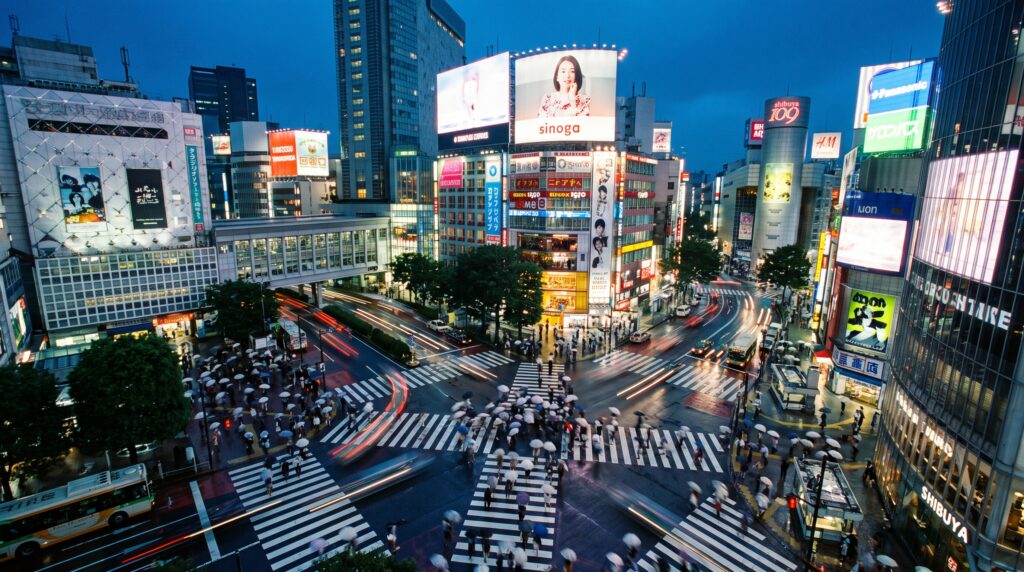
Up to 3,000 people cross Shibuya Crossing on a single green light, and 1,000 to 2,500 walk it every two minutes at peak times. All vehicle traffic stops and pedestrians surge from five directions at once, right outside Shibuya Station, the world’s second busiest train station, beneath giant video billboards in central Tokyo.
How This Guide Was Researched
This guide was compiled from travel documentaries, verified tourism sources, and community traveler feedback. Prices and operational details were confirmed at the time of writing. We recommend checking official sources for the latest information before your trip.
Want to see this for yourself? Watch the full video in 4K.
The numbers keep climbing at peak hours. Between 1,000 and 2,500 people forge across every two minutes on busy evenings, enough to fill a football stadium within the hour, according to GO TOKYO’s official Shibuya guide. The trick is the signal cycle. Every light around the intersection turns red at the same moment, and the whole plaza empties into the street from five directions at once.
It’s organized chaos, and it never gets old. This guide covers the best photo spots and viewpoints, the fastest way to reach the crossing in Tokyo, day trips that start from Shibuya’s platforms, and the times when the scramble is at its best. You can also see the crossing in motion in our Wonders of Japan documentary on the Pathfinders Travel YouTube channel.
Best Photo Spots and Viewpoints at Shibuya Crossing
The best Shibuya Crossing photo spots are the free street-level scramble, the Shibuya Sky deck at 229 meters, the Tsutaya Starbucks window, and the Mag’s Park rooftop.
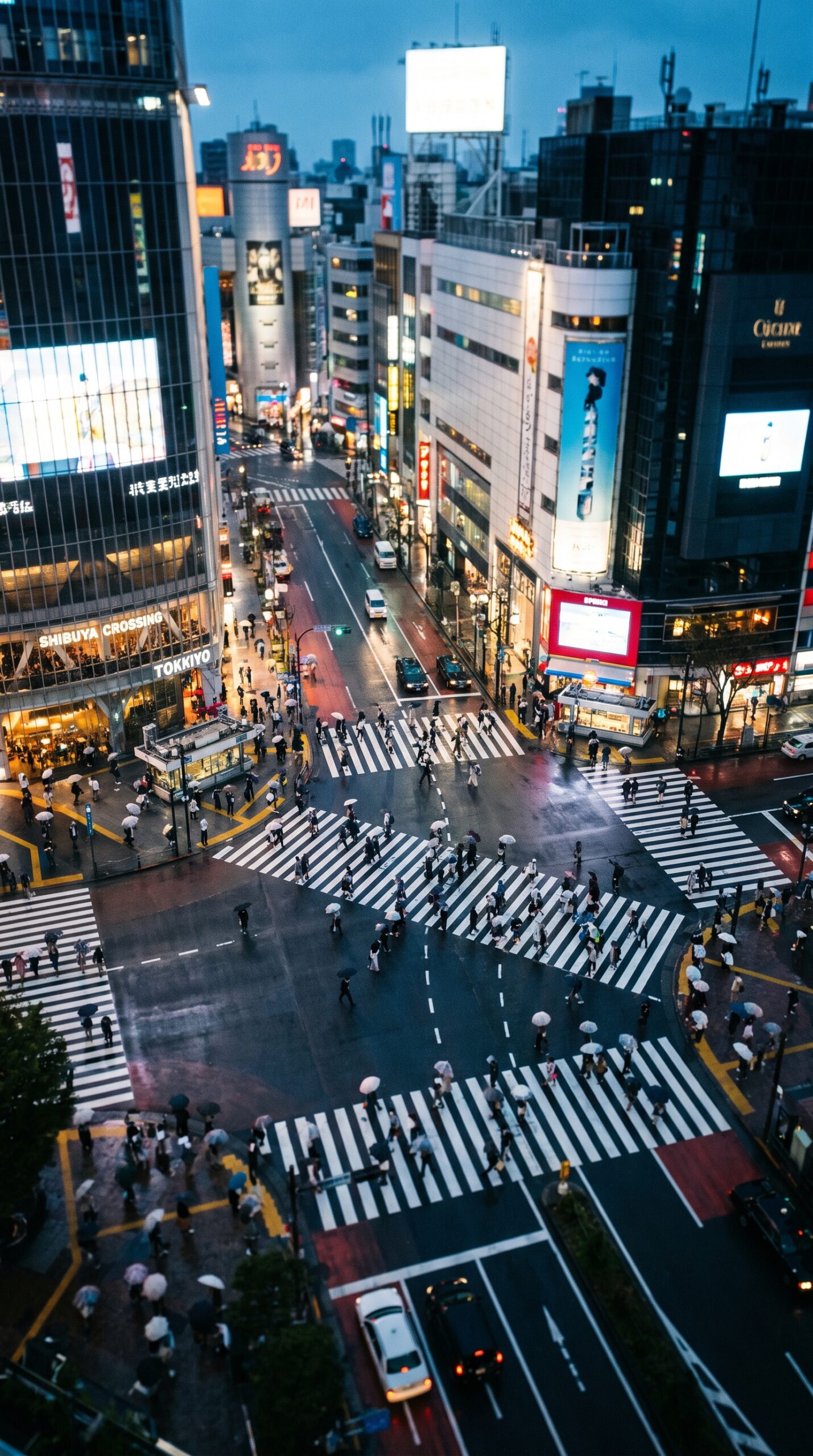
Start at street level, because that costs nothing and it’s the whole point. Cross corner to corner in every direction at least once. Phones held overhead, strangers brushing past, screens shouting above you. That first crossing is the memory you keep.
Then get some height. The open-air official Shibuya Sky site deck sits 229 meters above the intersection and serves the clean top-down shot where crossers shrink to confetti. Tickets are timed, and the sunset slots sell out days ahead, so book before you fly. On clear winter days you can spot Mount Fuji on the horizon.
Cheaper options work almost as well. The Starbucks inside the Tsutaya building faces the crossing head-on from the second floor, and one coffee buys you a window seat for the price of a latte. It’s the busiest Starbucks in Japan for a reason. Mag’s Park, the rooftop of the Magnet by Shibuya 109 building, gives a closer, lower angle that photographers like for compressing the crowd against the billboards.
A few practical notes. Shibuya Crossing photos come out flat at midday; dusk light and wet pavement do the heavy lifting. Tripods on the street draw police attention, so shoot handheld. Can’t visit yet? A live cam streams the scramble on YouTube around the clock, handy for scouting your angle before you go. And don’t skip the small stuff: the Hachiko statue by the station exit honors the Akita who waited nine years for his late owner, and it remains Tokyo’s favorite meeting point.
Shibuya Beyond the Scramble
The district around Shibuya Crossing is Tokyo’s youth capital, anchored by the Center Gai pedestrian street, Shibuya 109 fashion tower, and hundreds of izakaya and arcades.
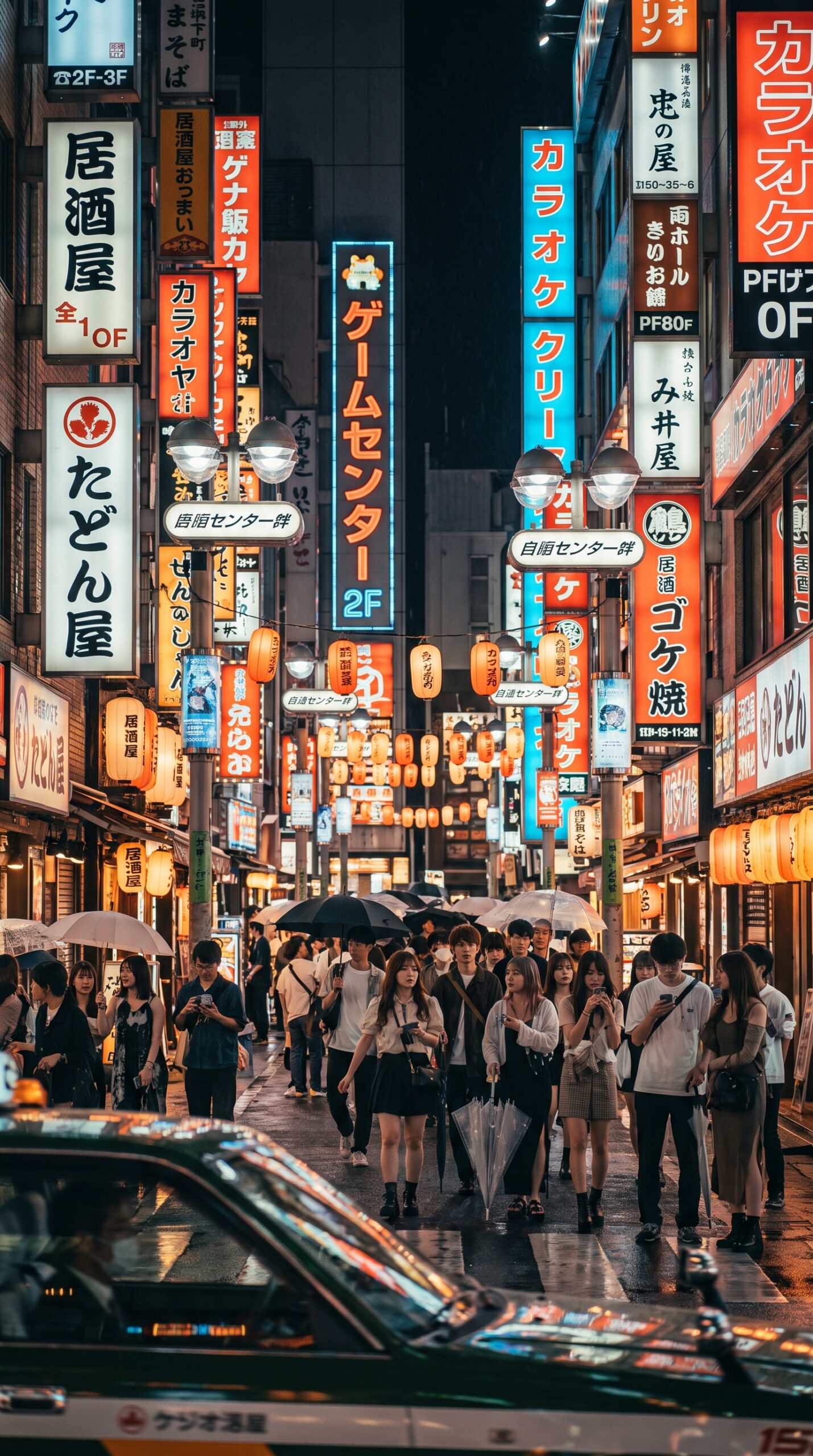
The crossing is the doorway, not the destination. Center Gai, the pedestrian lane that opens directly off the scramble, is where Shibuya, Japan, actually lives, including ramen counters, game arcades, sneaker shops, and karaoke towers stacked five floors high. The Japan National Tourism Organization’s Shibuya page calls the district the youth heart of the city, and the fashion floors of Shibuya 109 have been proving it since the 1970s.
The scramble itself has history. It’s been a crossing since the postwar decades, but the giant video screens of the 1990s turned it into the movie-set version the world recognizes from films and anime. Halloween grew so wild here that the ward now bans street drinking around the crossing in late October. Skip the last week of October if crowds aren’t your thing, or come exactly then if they are.
How to Get to Shibuya Crossing
Shibuya Crossing sits outside the Hachiko exit of Shibuya Station, 25 minutes from Tokyo Station on the JR Yamanote line.
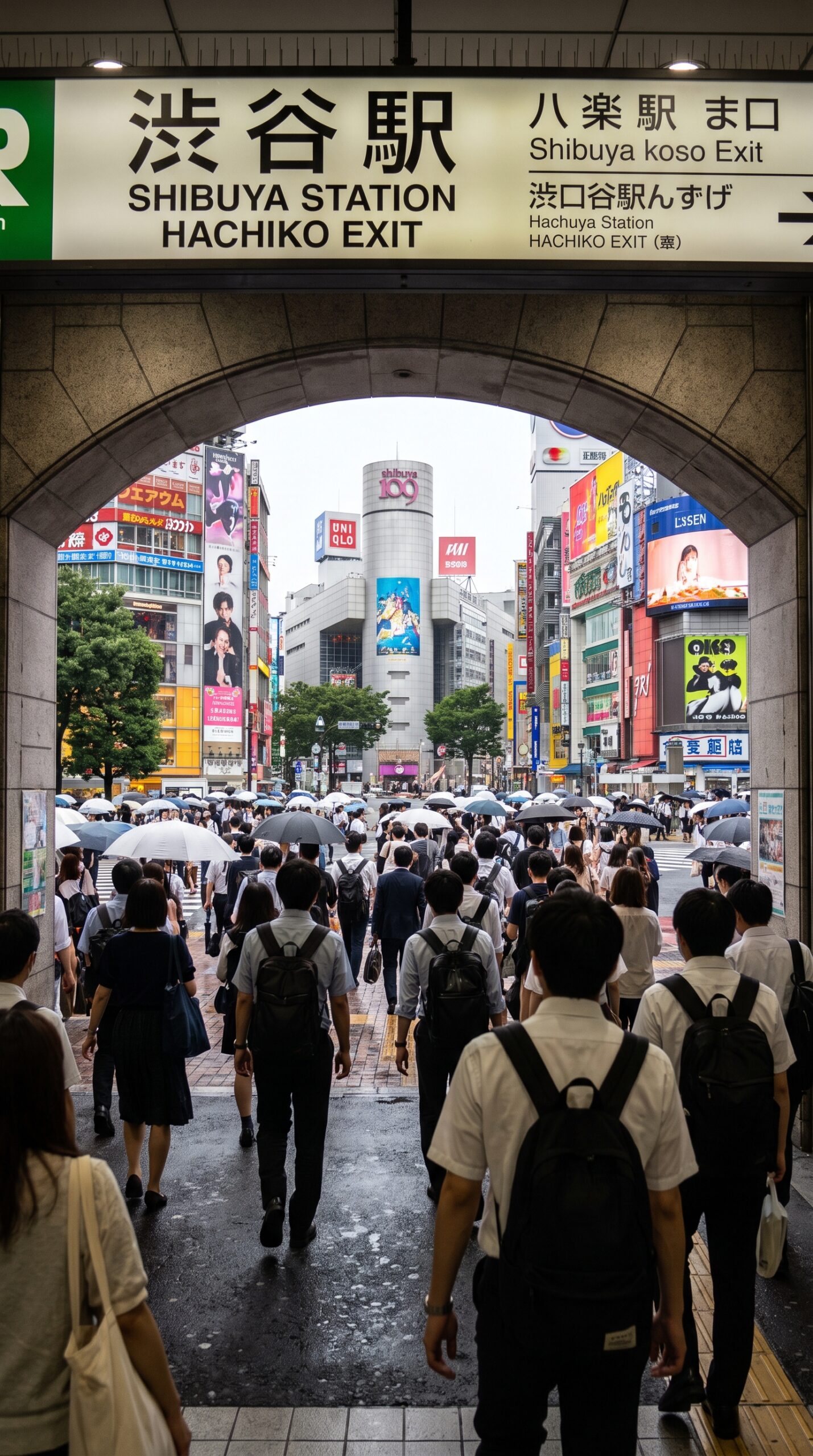
It spreads across the plaza directly outside Shibuya Station in central Tokyo. The JR Yamanote loop line gets you there from Tokyo Station in about 25 minutes, and the Ginza and Hanzomon metro lines stop underneath the same complex. Tap in with a Suica or Pasmo card and you’re moving.
One warning that saves real time: the station handles around 3 million passengers a day, the second busiest on Earth, and it has more than a dozen exits spread across multiple levels. Follow signs for the Hachiko exit specifically. Step out, and the scramble is right there. Pick the wrong exit and you’ll surface ten confused minutes away in a canyon of department stores.
Day Trips From Shibuya
From Shibuya, direct trains reach Yokohama in 30 minutes, Kamakura in about an hour, and the Hakone hot spring region in roughly 90 minutes.
Shibuya works as a launchpad. Spend the morning at Tokyo’s Shibuya Crossing, then ride out. The Tokyu Toyoko line runs direct to Yokohama in about 30 minutes, dropping you near the Minato Mirai waterfront and the biggest Chinatown in the country. Go hungry.
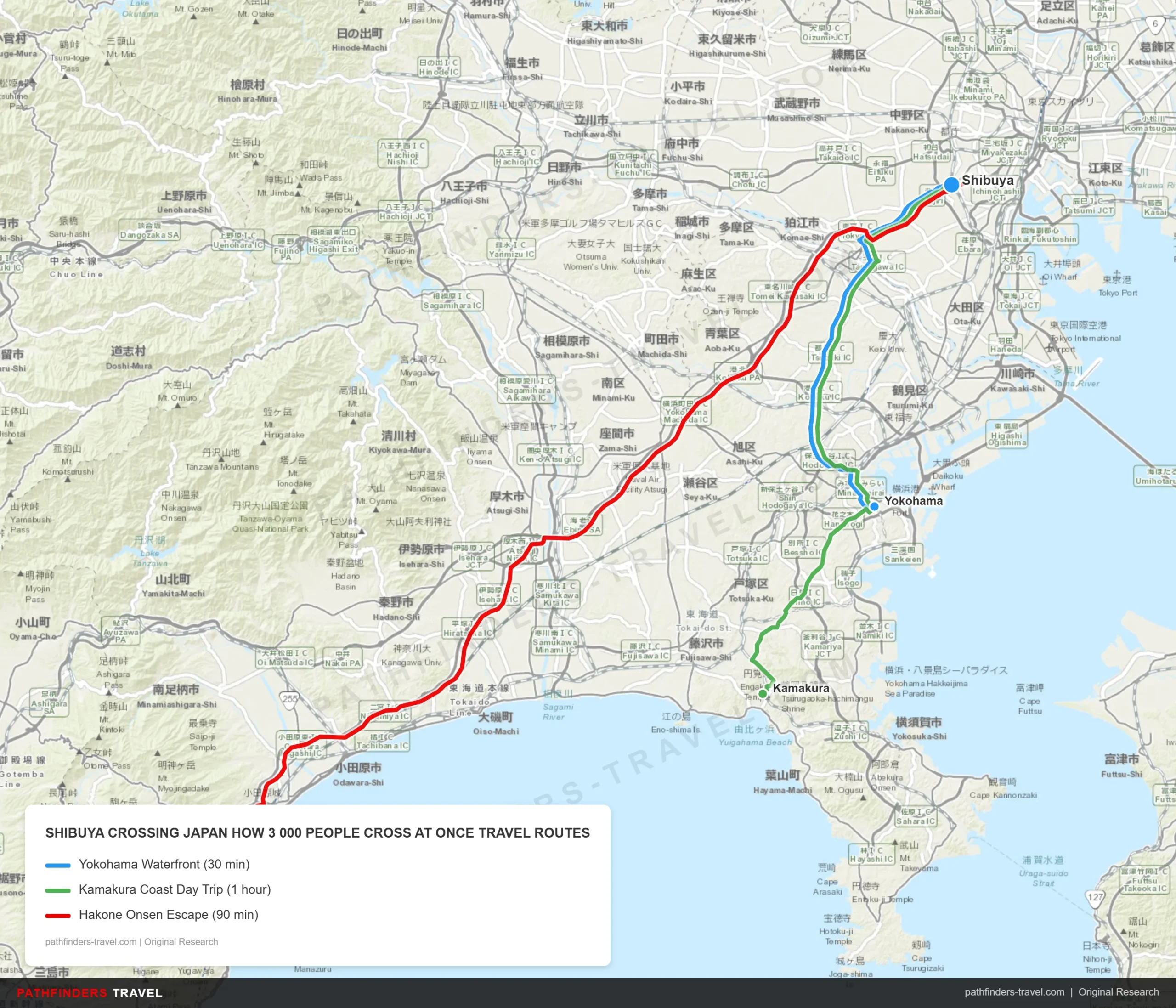
| # | Stop | Highlights | Drive Time |
|---|---|---|---|
| 1 | Shibuya | Morning at the scramble, Hachiko statue | — |
| 2 | Yokohama | Minato Mirai, Cup Noodles Museum, Chinatown | 30m direct train |
| # | Stop | Highlights | Drive Time |
|---|---|---|---|
| 1 | Shibuya | Depart on the JR Shonan-Shinjuku line | — |
| 2 | Yokohama | Optional stop en route | 30m |
| 3 | Kamakura | Great Buddha, Hasedera Temple, beach trails | 30m |
| # | Stop | Highlights | Drive Time |
|---|---|---|---|
| 1 | Shibuya | One stop to Shinjuku for the Odakyu line | — |
| 2 | Hakone | Lake Ashi, ropeway, open-air onsen, Fuji views | 90m |
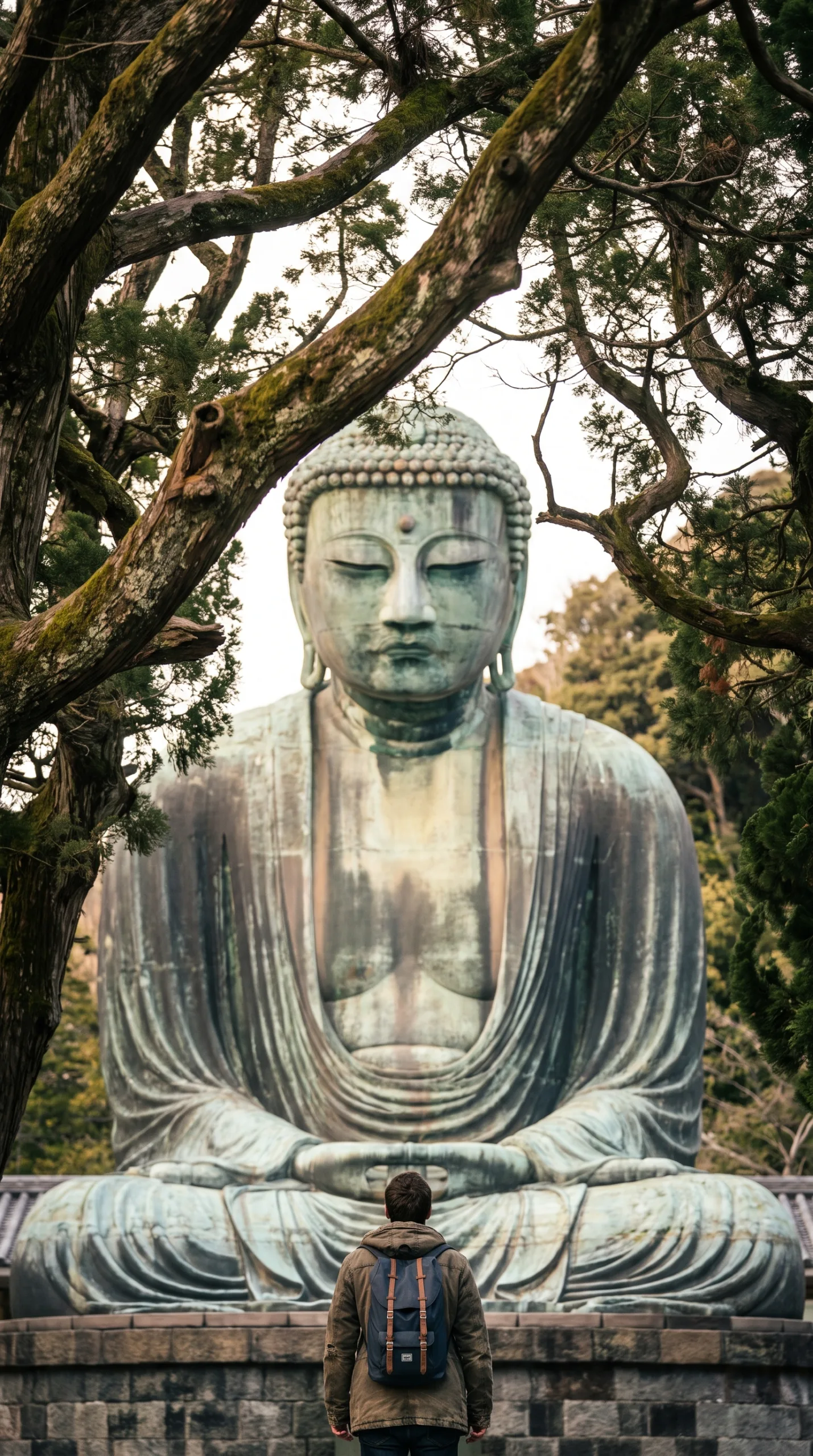
Kamakura takes about an hour on a direct JR train. The bronze Great Buddha has sat in the open air there since 1498, all 13 meters of it, and wooded trails link the hillside temples down to the beach. It’s the easiest full-day escape on this side of Tokyo.
Hakone needs a touch more planning. Hop one stop to Shinjuku and the Odakyu line delivers you to the hot spring hills in roughly 90 minutes, with ropeways, a volcanic crater, and open-air baths waiting. Clear mornings add Mount Fuji to the view across Lake Ashi. Each trip fits the same pattern: scramble at dawn, out by nine, back for dinner in the neon.
Best Time to See the Scramble
Dusk delivers Shibuya Crossing’s biggest crowds and best light, while early weekday mornings offer a nearly empty scramble for photographers.
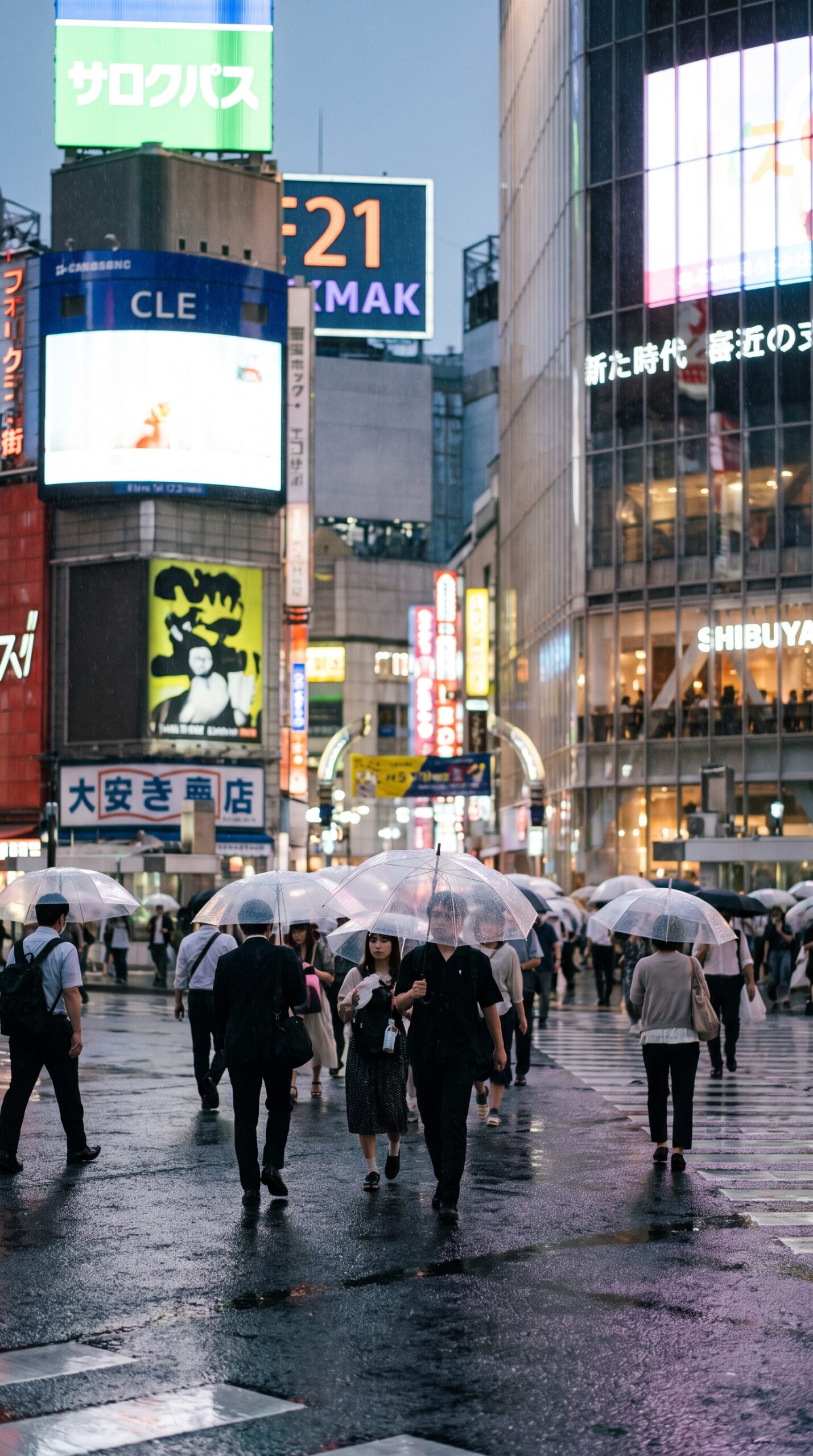
Dusk wins. The crowds hit their peak just as the screens start to outshine the sky, and the light flatters everything. That’s the consensus answer, and it holds up.
Timing changes the whole experience. Friday and Saturday evenings pack the scramble to its 3,000-person maximum. Early weekday mornings flip it: near-empty crosswalks, soft light, and space to frame a clean shot without a stranger’s elbow in it. Shibuya time runs 13 hours ahead of New York, so jet lag actually helps here; wake at 5am and use it.
Rain is a gift, not a problem. Wet asphalt mirrors the neon, umbrellas glow like lanterns, and Shibuya Crossing photos at night in the rain are the ones that get printed. The crossing never closes. Screens dim after midnight, and the scramble keeps its rhythm until the last trains leave around 1am.
Frequently Asked Questions
Is Shibuya Crossing worth visiting?
Yes, Shibuya Crossing is worth visiting; it is Tokyo’s most identifiable landmark, it costs nothing, and it takes ten minutes to experience at street level. Pair the crossing itself with one elevated viewpoint for the full effect. The Hachiko statue and the Center Gai shopping street sit within a five minute walk, so one stop covers three sights.
Is Shibuya the busiest crossing in the world?
Shibuya is widely described as the busiest pedestrian crossing in the world, with up to 3,000 people crossing on a single green light. It sits outside the world’s second busiest train station. At peak times, 1,000 to 2,500 people cross every two minutes, which fills a football stadium’s worth of walkers in under an hour.
What time is best for Shibuya Crossing?
Dusk is the best time for Shibuya Crossing, combining peak crowds with the most flattering light for photos. Friday and Saturday nights bring the biggest scrambles of the week. Photographers who want clean, empty shots go at sunrise on a weekday instead.
What is Shibuya mostly known for?
Shibuya is known for youth culture, fashion, nightlife, and the scramble crossing at its center. Center Gai supplies the arcades and izakaya, and Shibuya 109 anchors the fashion scene. The district is also home of the Hachiko story, Japan’s most loved tale of a loyal dog.
Where is Shibuya Crossing?
Shibuya Crossing is directly outside the Hachiko exit of Shibuya Station in central Tokyo. The station is about 25 minutes from Tokyo Station on the JR Yamanote loop line. The station has more than a dozen exits, so follow the Hachiko signs to surface at the scramble.