
Estimated reading time: 8 minutes
Last updated: 13 November 2026
Table of Contents
- Why Is Sensoji Temple So Famous?
- Things to See at Sensoji Temple
- Sensoji Temple Hours, Tickets and Entrance Fee
- Sensoji Temple at Night
- Asakusa Beyond the Temple
- How to Get to Sensoji Temple
- Frequently Asked Questions
Why Is Sensoji Temple So Famous?
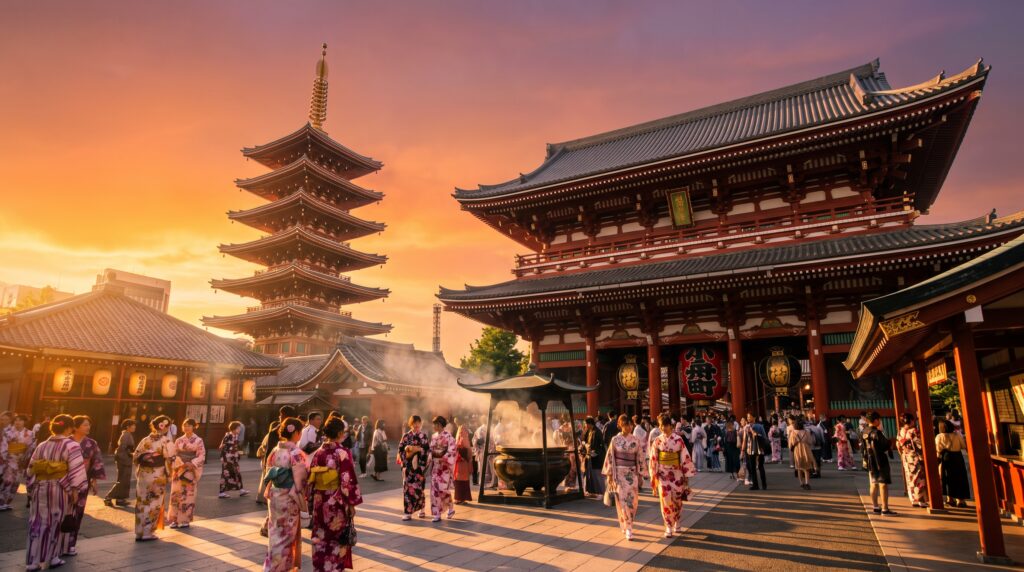
Sensoji Temple is famous as Tokyo’s oldest temple, founded in 628 to enshrine a golden Kannon statue two fishermen pulled from the Sumida River. Its Kaminarimon gate with a 700-kilogram red lantern, the 250-meter Nakamise shopping street, and free entry draw roughly 30 million visitors a year, making it one of the most visited spiritual sites in the world.
How This Guide Was Researched
This guide was compiled from travel documentaries, verified tourism sources, and community traveler feedback. Prices and operational details were confirmed at the time of writing. We recommend checking official sources for the latest information before your trip.
Want to see this for yourself? Watch the full video in 4K.
The legend behind it is a fishing story. On a March morning in 628, brothers Hinokuma Hamanari and Takenari hauled their net from the Sumida River and found a small golden statue of Kannon inside, according to the official Sensoji Temple website. They threw it back. It returned. The village built a temple around it, and Tokyo grew up around the temple.
Fourteen centuries later the incense still burns. This guide covers what to see inside the grounds, the real story on hours and tickets, why night visits beat the afternoon crush, the Asakusa streets around the gates, and the fastest way to get there. The temple also stars in our Wonders of Japan documentary on the Pathfinders Travel YouTube channel if you’d like a preview in 4K.
Things to See at Sensoji Temple
Sensoji Temple’s key sights are the Kaminarimon gate, the 250-meter Nakamise shopping street, the Hozomon gate, a five-story pagoda, and the incense-wreathed main hall.
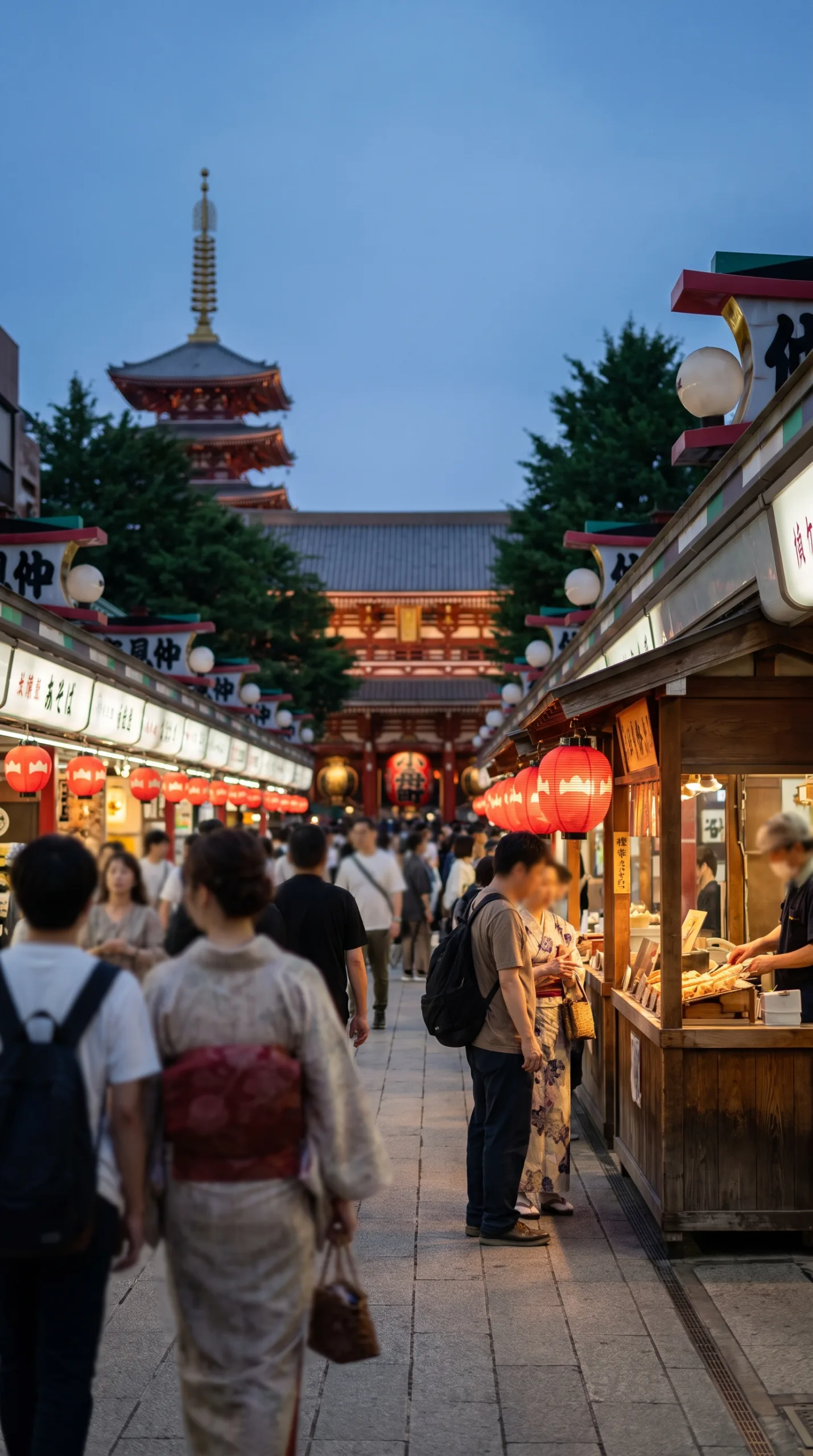
The approach is half the show. Start at the Kaminarimon, the Thunder Gate, where a red paper lantern the size of a small car hangs between statues of the wind and thunder gods. The lantern weighs about 700 kilograms. Look underneath it. A carved wooden dragon coils across the base, and most visitors walk past without ever noticing.
Nakamise-dori runs 250 meters between the gate and the temple, lined with stalls that have served pilgrims since the Edo period. Eat your way down it. Ningyo-yaki sponge cakes come filled with red bean paste, senbei crackers get grilled to order, and the age-manju fried buns cost pocket change. Quality varies stall to stall, so follow the lines of locals.
The second gate, Hozomon, hides a detail on its back side: two straw sandals, each 4.5 meters long, hung as offerings to guard the temple. The five-story pagoda rises to your left, glowing vermilion against the sky.
Then the main hall of Sensoji Temple itself. Waft smoke from the giant incense cauldron over your head first; tradition says it heals whatever hurts. Toss a coin, bow twice, and know that the golden Kannon statue inside has never once been shown to the public, per GO TOKYO’s Sensoji page. Draw an omikuji fortune for 100 yen from the wooden drawers; a bad one gets tied to the rack and left behind. Collectors can pick up a hand-brushed goshuin stamp at the office beside the hall for about 500 yen.
One honest warning: from mid-morning to late afternoon the courtyard is shoulder to shoulder. Dawn is the quiet window, and the rituals feel real then.
Sensoji Temple Hours, Tickets and Entrance Fee
Sensoji Temple charges no entrance fee; the main hall opens 6am to 5pm while the temple grounds and gates stay open 24 hours.
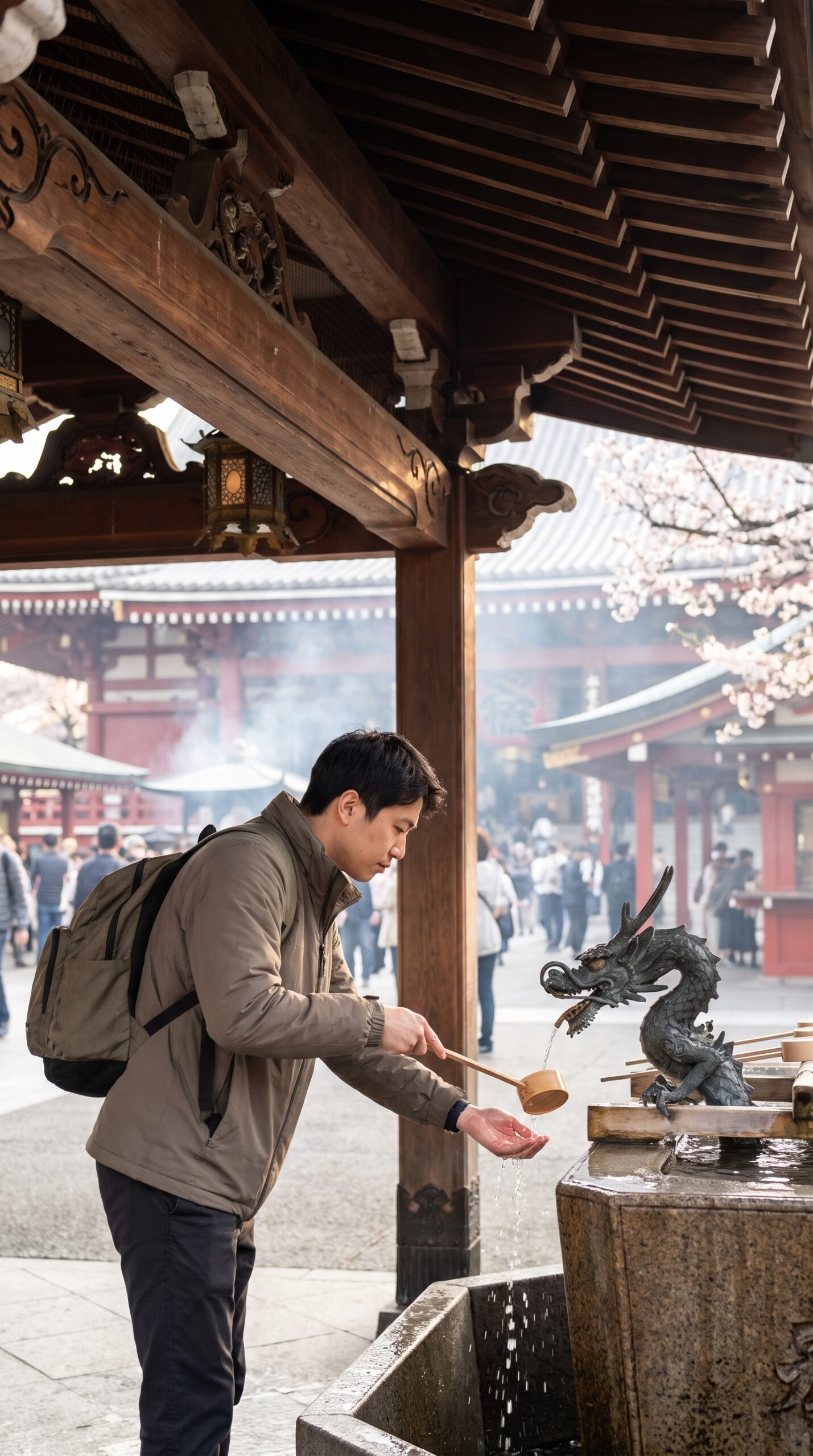
Skip the search for Sensoji Temple tickets. There aren’t any. Entry is free, every day of the year, gates to garden. The sites selling “Sensoji tours” are selling a guide’s company, not admission, and a guided walk is worth it only if you want the deeper history told well.
Sensoji Temple hours work in two layers. The main hall opens at 6am and closes at 5pm, with a 6:30am start from October through March. The outer grounds never close at all. You can stand under the Kaminarimon at 2am with the lanterns glowing and nobody around.
Budget a little pocket change anyway. Omikuji fortunes cost 100 yen on the honor system, and a hand-brushed goshuin stamp runs about 500 yen. That’s the entire spend for a visit.
Time-wise, 60 to 90 minutes covers the full circuit at an easy pace, snacks included. Come before 8am and you’ll share the courtyard with commuters and pigeons instead of tour groups. The crowd machine switches on around 9:30 and doesn’t stop until evening.
Sensoji Temple at Night
Sensoji Temple’s grounds stay open 24 hours, and its pagoda, gates, and main hall are illuminated nightly until around 11pm.
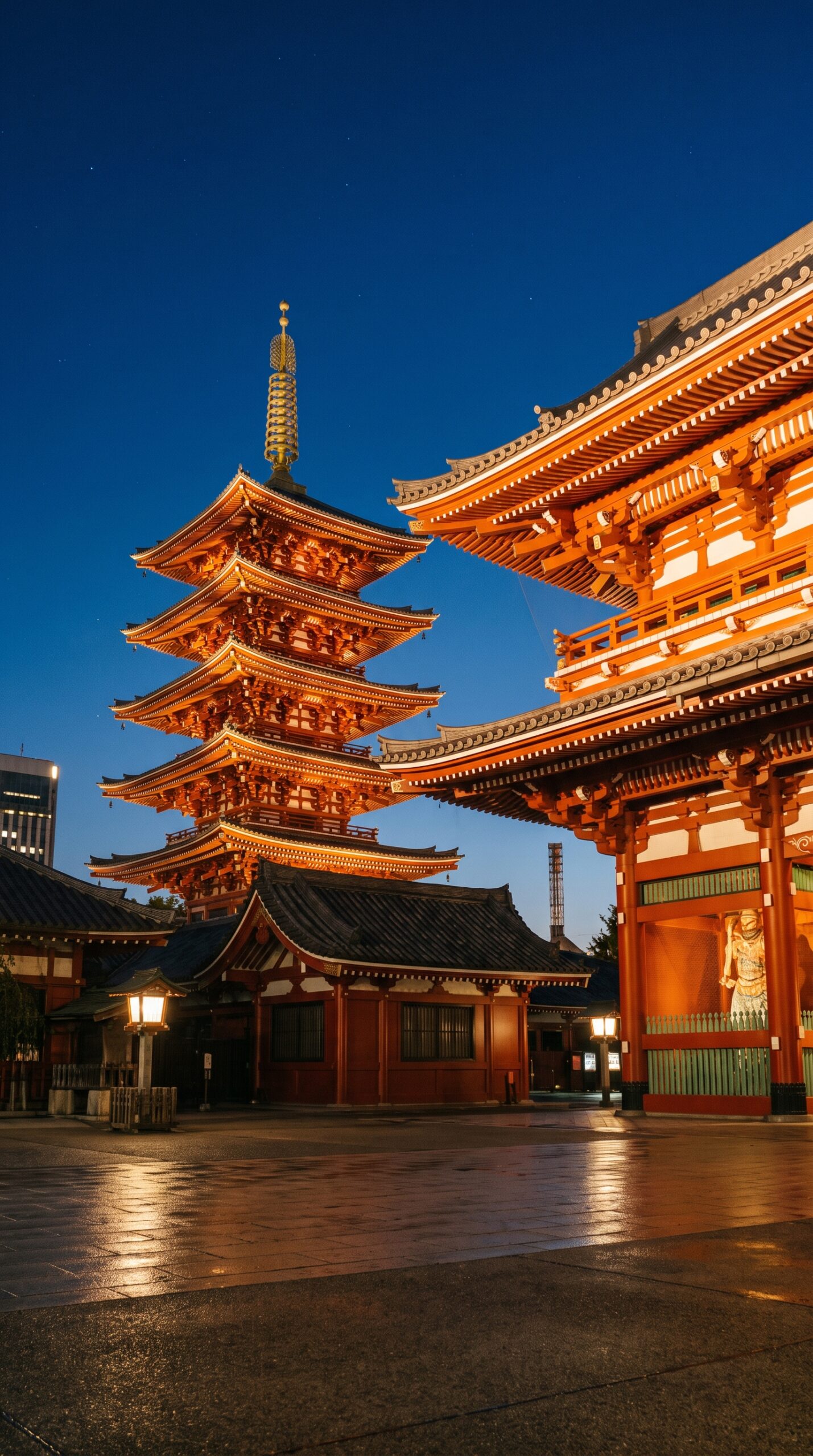
Is Sensoji Temple open at night? The doors of the main hall close at 5pm, but the grounds never shut. Anyone can walk through the gates at midnight.
Most visitors never learn this. They fight the afternoon crowds, buy their senbei, and leave. Come back after dark instead. Floodlights switch on at dusk and hold until around 11pm, turning the five-story pagoda and both great gates a deep glowing gold against the sky. The courtyard sits nearly empty. Your camera gets clean lines instead of a thousand heads.
Sensoji Temple at night has a bonus most guides skip: the Nakamise stalls roll down their shutters, and the shutters themselves are painted with bright murals of festivals and seasons. The shopping street becomes an outdoor gallery only night visitors ever see.
The verdict on day or night? Both. Dawn for incense smoke and the ritual, night for the silence and the glow. They feel like two different temples.
Asakusa Beyond the Temple
Asakusa surrounds Sensoji Temple with old Tokyo streets, rickshaw runners, the Sumida River promenade, and direct views of the 634-meter Tokyo Skytree.
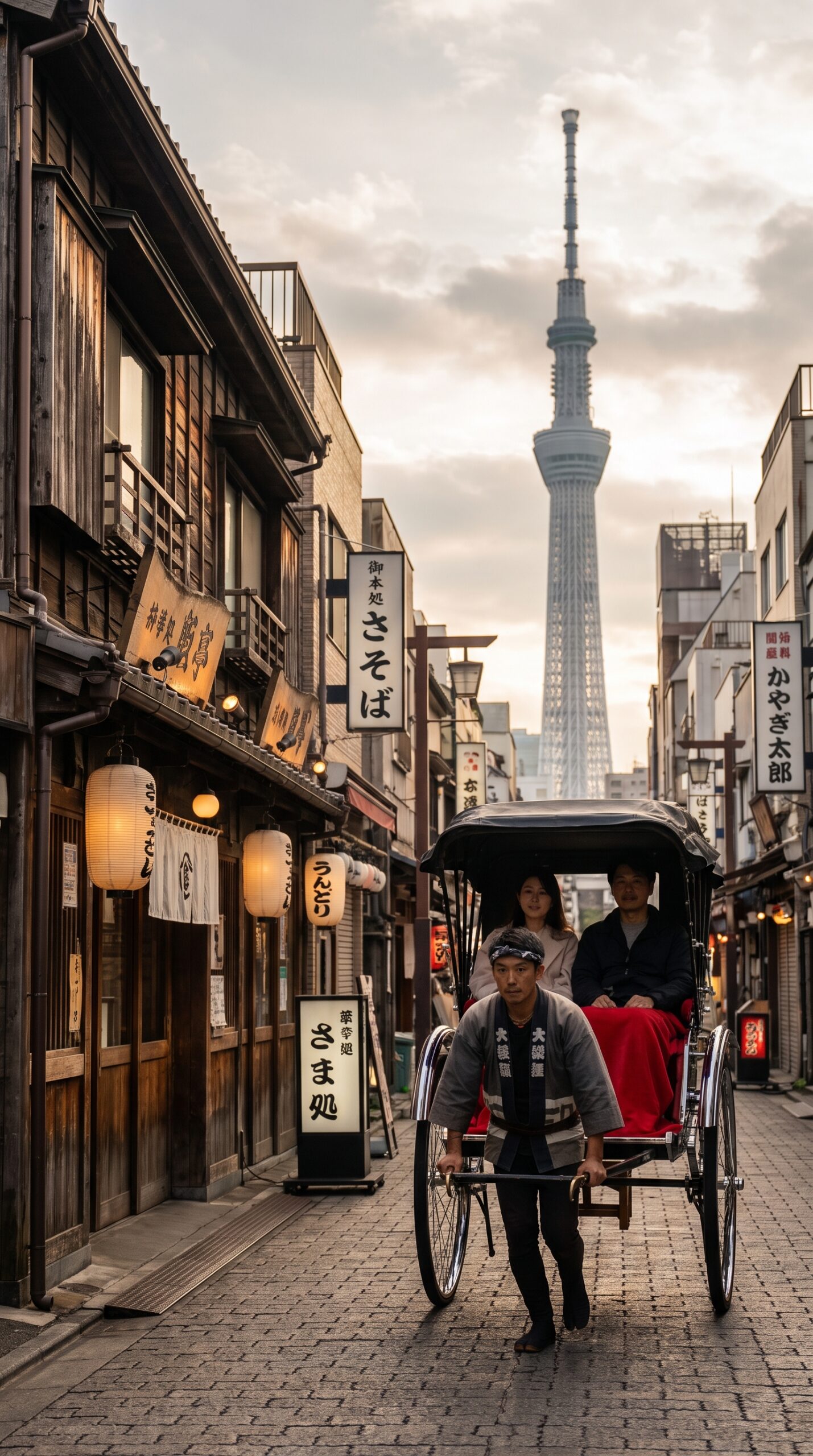
The temple’s story is Asakusa’s story. The original halls burned in the 1945 air raids, along with most of the district, and the buildings you see today are postwar reconstructions raised as symbols of the city’s rebirth. Knowing that changes how the vermilion paint reads. It’s not old wood. It’s stubbornness.
Asakusa kept the low-rise soul of prewar Tokyo anyway. Rickshaw runners in split-toe shoes wait by the gate, kimono rental shops dress visitors by the hundreds, and family craft stores sell knives, combs, and paper goods the way they have for generations, per GO TOKYO’s Asakusa area guide.
Walk five minutes east and the Sumida River opens up, with a promenade that frames the 634-meter Tokyo Skytree on the far bank. Old temple, newest tower, one photo. Finish on Hoppy Street, a lane of open-front izakaya pouring cheap drinks over beef tendon stew from mid-afternoon. Tourist prices have crept in, sure, but the mood stays local.
How to Get to Sensoji Temple
Sensoji Temple is a five minute walk from Asakusa Station’s Exit 1, served by the Ginza subway line, the Asakusa line, and the Tobu railway.
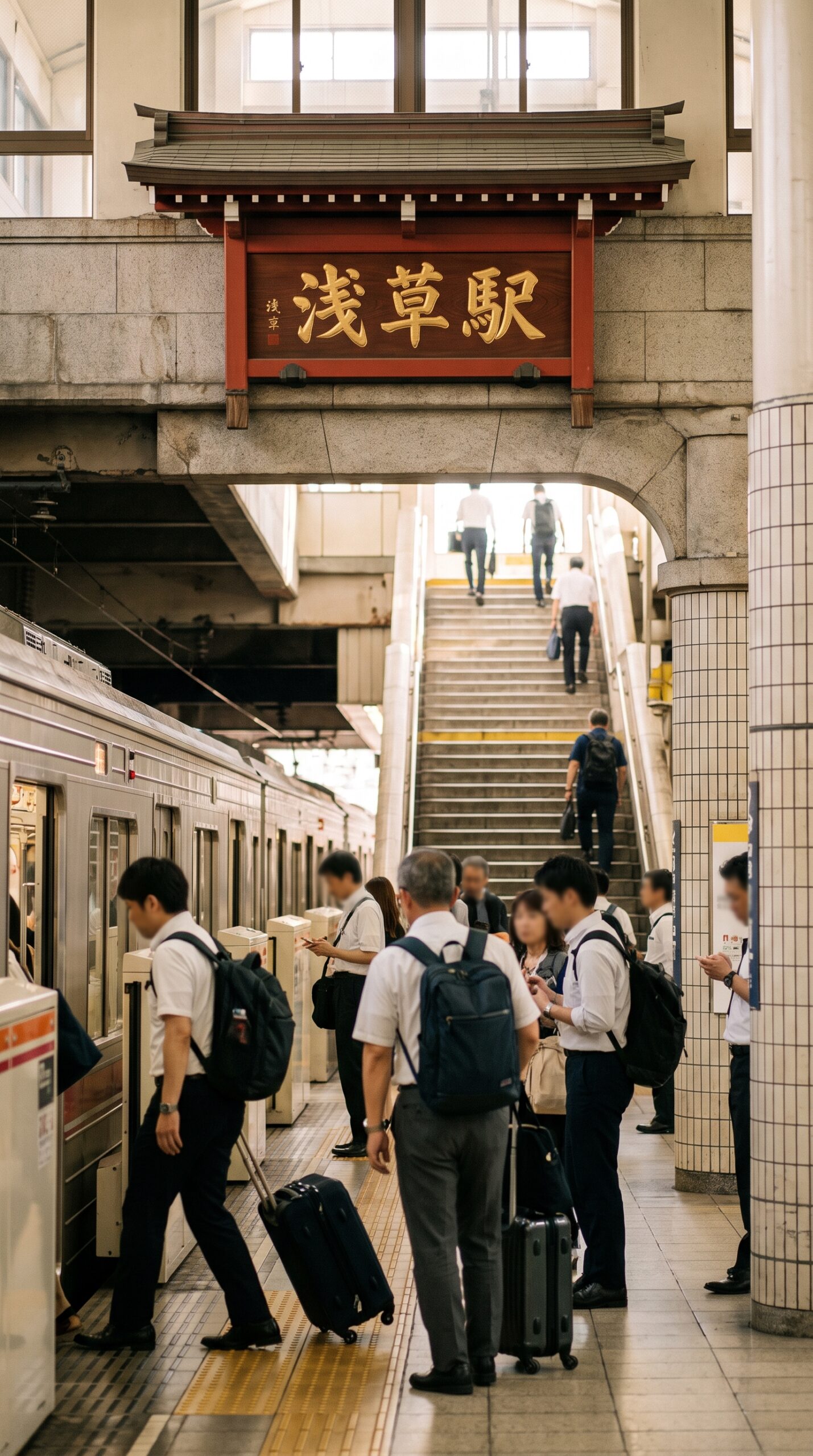
Asakusa Station is your stop. Three lines meet there: the Ginza subway line, the Asakusa subway line, and the Tobu railway. Take Exit 1, and the walk between Asakusa Station and Sensoji Temple runs about five minutes, straight to the Kaminarimon gate. Sensoji Temple directions really are that short.
Coming from Shibuya or Tokyo Station, count 30 to 40 minutes by subway with a single easy change. The Ginza line runs direct from Ueno and Ginza, which keeps things simple with luggage.
There’s a slower option worth knowing. The Tokyo Water Bus glides up from Odaiba and docks at the Asakusa pier, trading tunnel time for river views. It costs more than the subway and takes twice as long. Worth it once.
Frequently Asked Questions
What hours is Sensoji Temple open?
Sensoji Temple’s main hall is open 6am to 5pm, with a 6:30am opening from October through March. The outer grounds and gates never close, so the courtyards are walkable 24 hours a day. Illuminations light the pagoda and gates until around 11pm.
Is the Sensoji Temple free?
Yes, Sensoji Temple is completely free to enter, with no tickets or reservations needed. The only costs are optional: an omikuji fortune runs 100 yen and a hand-brushed goshuin stamp costs about 500 yen. Everything else, gates to main hall, costs nothing.
Is Sensoji Temple worth visiting?
Yes, Sensoji Temple is worth visiting; it is Tokyo’s oldest temple, it costs nothing, and it anchors one of the city’s best walking districts. The Nakamise snack street and Tokyo Skytree views come bundled into the same stop. A full visit takes 60 to 90 minutes.
What do people do at Sensoji Temple?
Visitors pray at the main hall, waft healing incense smoke over themselves, and draw omikuji paper fortunes for 100 yen. Snacking along Nakamise’s stalls is half the tradition. Collectors line up for the goshuin stamp, brushed by hand at the office beside the hall.
Was Sensoji destroyed in WWII?
Yes, the 1945 air raids on Tokyo destroyed Sensoji’s main buildings along with most of Asakusa. The halls, pagoda, and gates were rebuilt in the postwar decades as symbols of the city’s rebirth. The temple’s founding still dates to 628, making it Tokyo’s oldest temple site by far.