Estimated reading time: 12 minutes
Last updated: 16 November 2026
Table of Contents
- What Not to Miss in Kamakura?
- The Great Buddha, Bamboo Groves and Kamakura’s Best Sights
- Shirasu Bowls, Warabimochi and Komachi Street Food
- Where to Stay in Kamakura
- Getting to Kamakura from Tokyo
- What a Day in Kamakura Costs
- Best Time to Visit Kamakura
- Frequently Asked Questions
What Not to Miss in Kamakura?
Four stops carry a first visit: the 13.35 metre Great Buddha at Kotoku-in, cast in bronze in 1252 and standing in the open air; the bamboo grove at Hokokuji; the hillside terrace and Kannon hall at Hasedera; and Tsurugaoka Hachimangu at the head of Wakamiya Oji. Add Yuigahama beach if the weather holds. Kamakura sits about 50 km south of Tokyo in Kanagawa Prefecture.
How This Guide Was Researched
This guide was compiled from travel documentaries, verified tourism sources, and community traveler feedback. Prices and operational details were confirmed at the time of writing. We recommend checking official sources for the latest information before your trip.
Want to see this for yourself? Watch the full video in 4K.
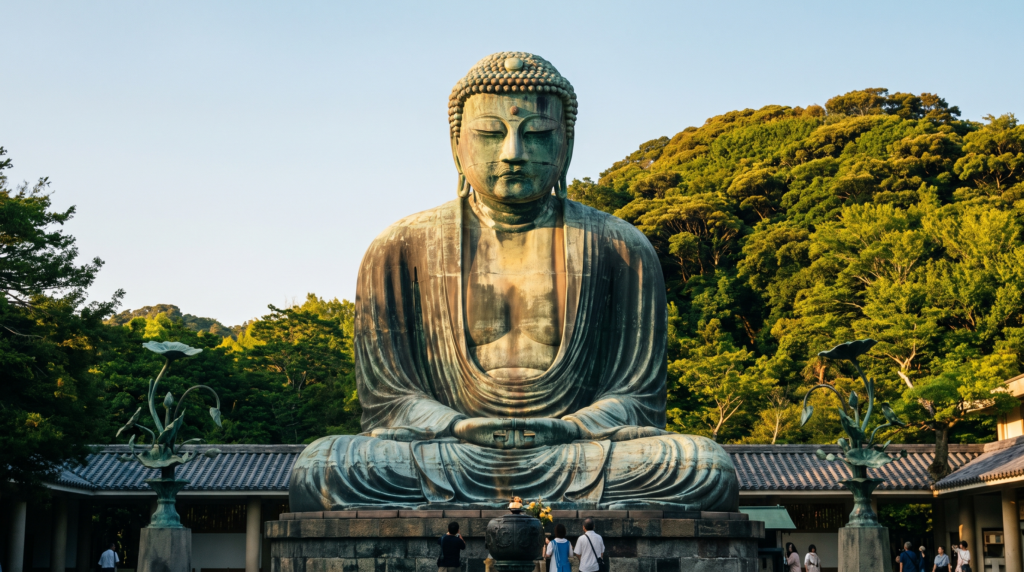
The Buddha pulls most people here. It sits out in the open air at Kotoku-in, cast in bronze in 1252 and standing 13.35 metres tall. A tsunami took its wooden hall in 1498. Nobody rebuilt it, so the statue has weathered outdoors for over five centuries.
Kamakura faces Sagami Bay in Kanagawa Prefecture, roughly 50 km south of Tokyo. Hills wrap the town on three sides. That shape made it easy to defend, which is why the shogunate set up here from 1185 to 1333. The Japan National Tourism Organization dates the Kamakura period to those years, and the temple building that came with it never got undone.
Size matters when you plan. This is a small town, not Kyoto. You can walk most of it, and one short train line covers the rest. About 65 Buddhist temples fit inside that small footprint, per the Kamakura City Tourist Association.
Then there’s the coast. Yuigahama and Shichirigahama fill with surfers and swimmers every summer, so the town runs on two crowds at once.
One honest warning. Weekends and cherry blossom season jam Komachi Street solid, and the line at the Buddha can hit 20 minutes. Come midweek if you can.
The Great Buddha, Bamboo Groves and Kamakura’s Best Sights
The Great Buddha at Kotoku-in stands 13.35 metres tall and weighs about 121 tonnes, and entry costs 300 yen with another 50 yen to step inside the hollow statue.
Start with the Buddha. The bronze statue at Kotoku-in was cast in 1252 and has sat in the open ever since a tsunami wrecked its wooden hall in 1498. It’s 13.35 metres tall and weighs roughly 121 tonnes, per the temple’s own figures. Entry runs 300 yen. Pay another 50 yen and you can climb into the hollow interior, which takes about two minutes and shows the bronze plates riveted together from the inside. The grounds are small. Thirty to forty minutes covers the whole thing, photos included.
Tsurugaoka Hachimangu sits at the far end of Wakamiya Oji, the wide ceremonial road that runs up from the sea. The shrine was founded in 1063 and moved to its current hilltop spot in 1180 by Minamoto no Yoritomo. Climb the stone stairway and you get a clean view straight back down the avenue to the coast. The Tsurugaoka Hachimangu grounds cost nothing to enter, though the small museum charges 200 yen.
Hasedera is the one people underrate. The temple climbs a hillside above Hase Station, so the upper terrace looks out over Sagami Bay and the rooftops below. Inside sits a nine metre wooden Kannon statue, one of the largest in Japan. The garden path fills with hydrangeas in June.
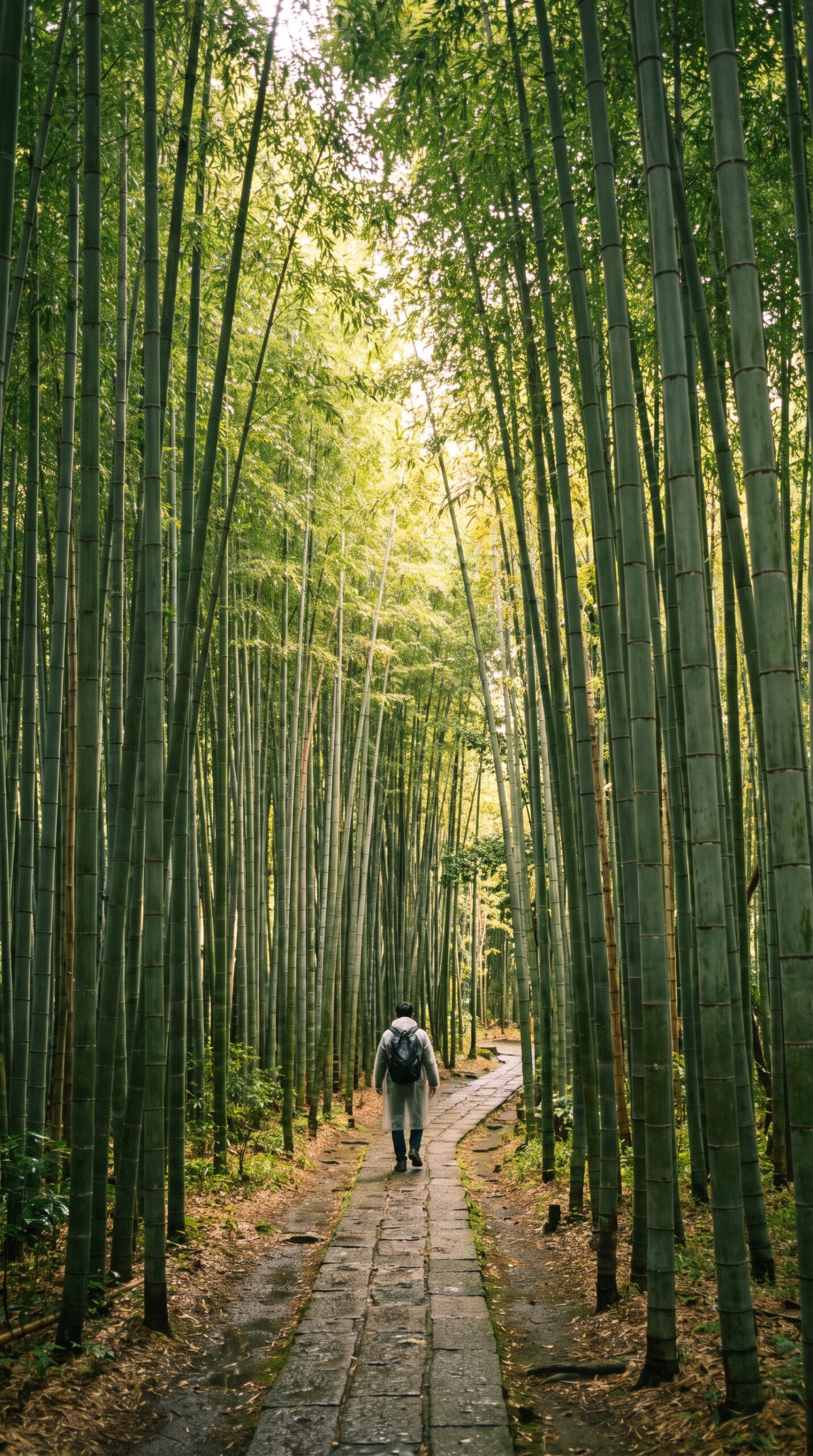
Hokokuji is where you go for bamboo. About 2,000 stalks grow behind the main hall, packed close along a short stone path. Entry is 400 yen, and matcha with a sweet at the tea house among the stalks adds around 600 yen. Compare it to Arashiyama in Kyoto and it’s tiny. It’s also far quieter, and you can sit down with tea instead of shuffling through a crowd.
Head one train stop north to Kita-Kamakura for the zen temples. Engaku-ji sits right by the station, founded 1282, with a bell cast in 1301 that’s a designated National Treasure. Kencho-ji, a ten minute walk away, dates to 1253 and ranks first among Kamakura’s five great zen temples. Both charge 500 yen. Both stay half empty on weekday mornings while the Buddha down the hill is packed.
The Daibutsu hiking trail links the two halves of town. It runs roughly 3 km from Kita-Kamakura through wooded ridges and drops out near the Great Buddha. Budget 90 minutes. The path is dirt with tree roots and gets slick after rain, so trainers with grip beat sandals.
Then the coast. Yuigahama is the main swimming beach, a fifteen minute walk from Kamakura Station, with beach huts open through July and August. Zaimokuza next door is calmer. Shichirigahama is the surf beach, and on clear winter days you can see Mount Fuji sitting on the horizon behind the break. Surfers are out there year round in wetsuits.
Timing beats everything here. The Buddha and Komachi Street are full by 10:30, so either take a first train and go straight to Kotoku-in, or flip the day and start at Kita-Kamakura, walking the trail south while everyone else queues.
Shirasu Bowls, Warabimochi and Komachi Street Food
Komachi Street runs about 360 metres between Kamakura Station and Tsurugaoka Hachimangu and is lined with roughly 250 shops and food stalls.
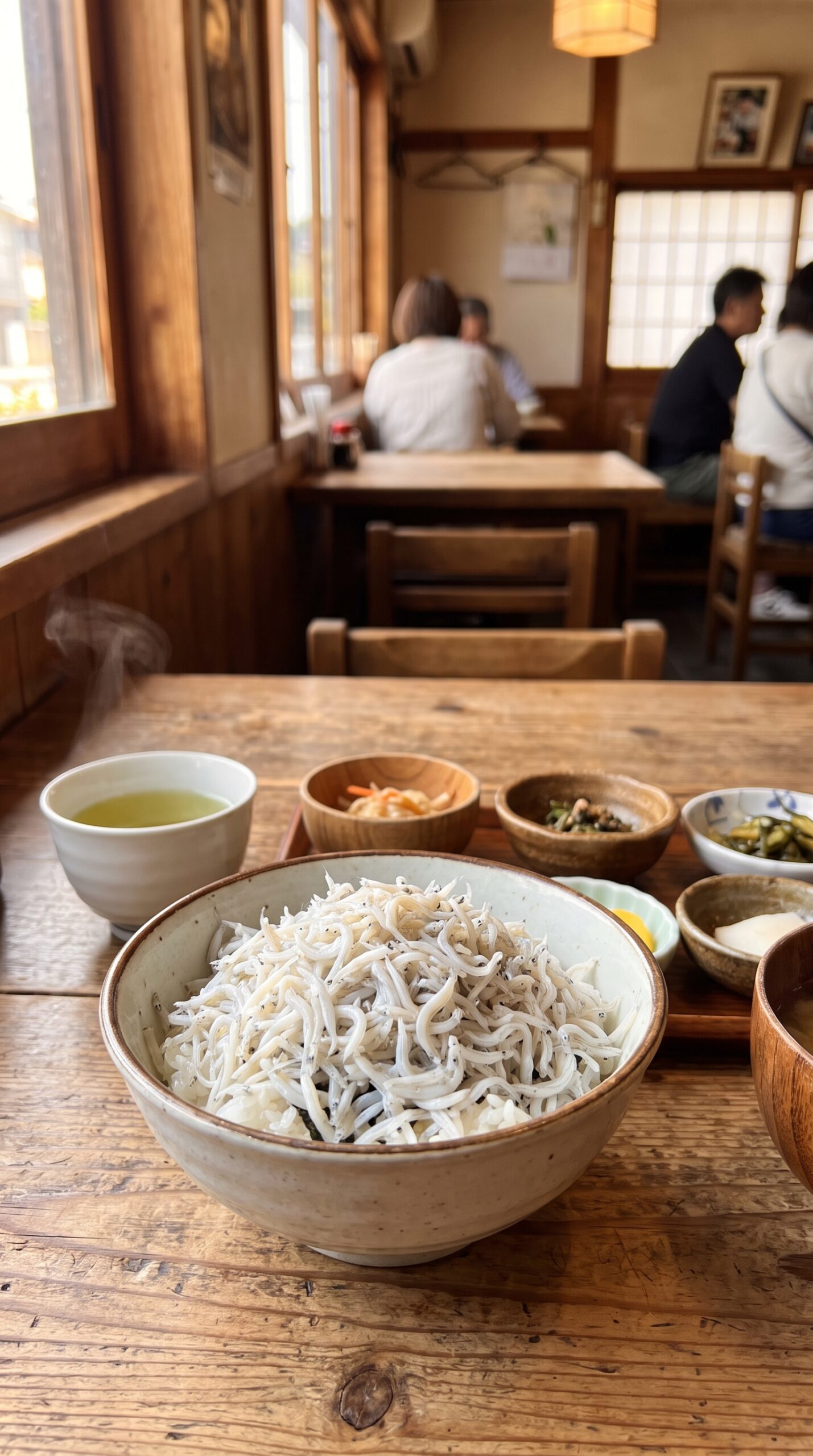
Shirasu don is the local dish. It’s a bowl of rice buried under tiny whitebait pulled straight out of Sagami Bay, served either raw or boiled. Raw shirasu tastes faintly sweet and slips apart on the tongue. Boiled is firmer and saltier. Most shops near the station serve a bowl for 1,000 to 1,800 yen, and the places along the coast road toward Hase do it best because the boats land almost outside.
Komachi Street handles the snacking. The strip runs about 360 metres from the station up to the shrine, packed with roughly 250 shops. Grab a purple sweet potato soft serve, a fried croquette, or senbei crackers grilled on the spot for 200 to 400 yen. Warabimochi is the one to look for. It’s a soft, wobbly mochi made from bracken starch, dusted in roasted soybean flour, sold cold in small plastic tubs.
Up near the zen temples in Kita-Kamakura, several restaurants serve shojin ryori, the vegetarian food monks eat. Expect five or six small dishes of tofu, pickles, sesame and seasonal vegetables, usually 2,500 to 4,000 yen per set, and usually needing a booking.
Two things to plan around. Raw shirasu disappears from January to March when the fishery closes, so you’ll only get the boiled version then. And most Kamakura kitchens shut around 17:00 or 18:00. Dinner usually means a train back to Tokyo or a stop in Yokohama.
Where to Stay in Kamakura
Kamakura has roughly 60 hotels, ryokan and guesthouses, with mid-range double rooms near Kamakura Station typically running 12,000 to 25,000 yen a night.
Most people never sleep here. They come out from Tokyo, see the Buddha, eat, and go back the same evening. Staying over is a deliberate trade. You give up a night of Tokyo food and nightlife, and in exchange you get the temples at 08:00 with almost nobody in them.
Three areas make sense. Around Kamakura Station you’re next to the trains, Komachi Street and the shrine, which suits a short stop. Hase puts you a five minute walk from the Great Buddha and about ten from Yuigahama beach. Kita-Kamakura is the quiet choice, one stop north among the zen temples, with fewer places to eat after dark.
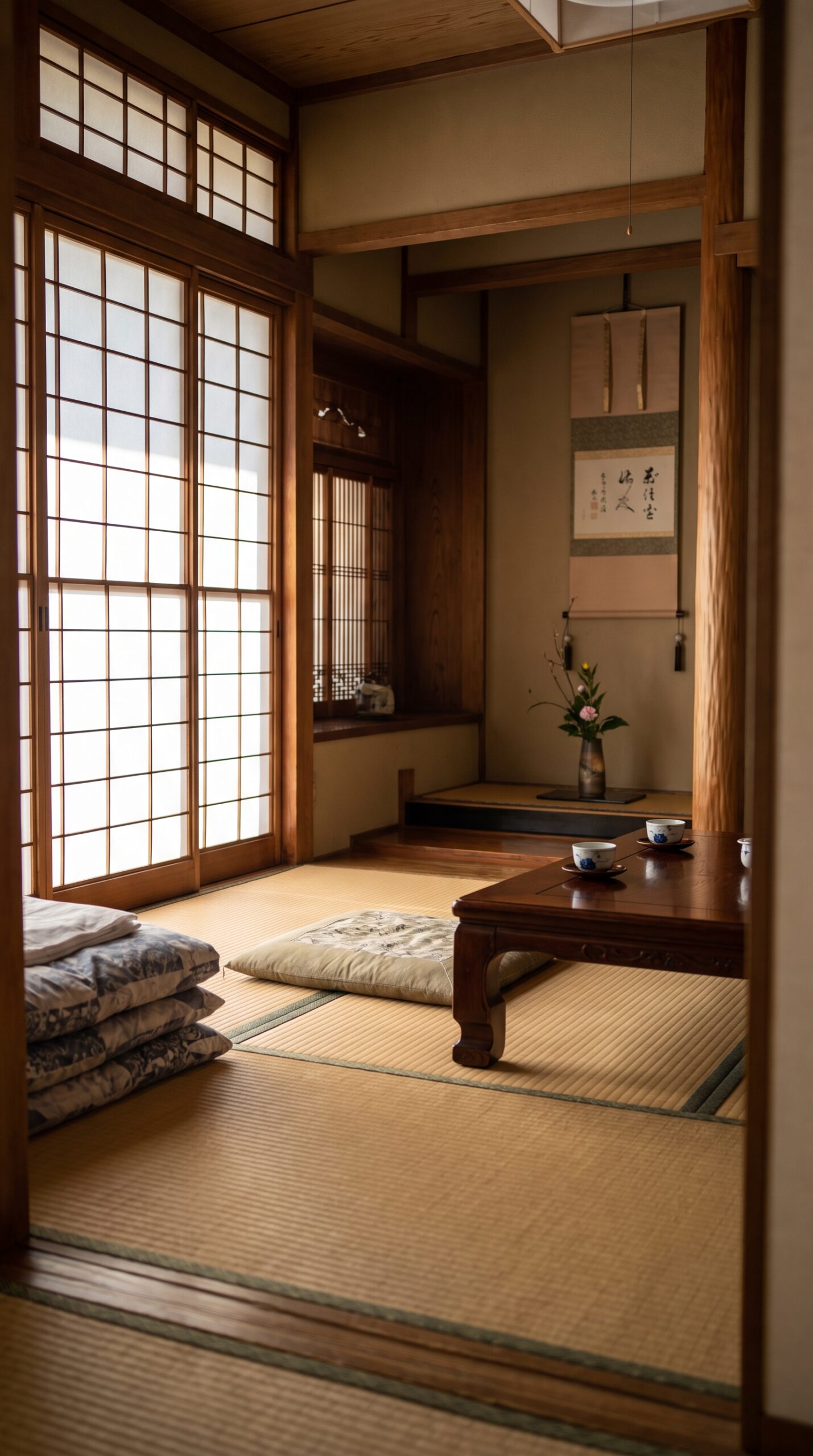
The stock splits into three types. Small business hotels near the station run clean and plain. Ryokan give you tatami floors, futon bedding and often a shared bath. Guesthouses cluster toward Shichirigahama and the beach, and several run surf rentals from the front desk. Mid-range doubles usually land between 12,000 and 25,000 yen a night, with guesthouse dorm beds closer to 4,000.
Book early or don’t bother. The town has only about 60 places total, so June hydrangea weekends and August beach weekends sell out weeks ahead, and the rates climb hard. If you can’t find a room, Hakone and Yokohama both sit within an hour and hold far more beds.
Getting to Kamakura from Tokyo
The JR Yokosuka Line runs between Tokyo Station and Kamakura Station in about 55 minutes for roughly 940 yen, with no train change needed.
One train does it. The JR Yokosuka Line leaves Tokyo Station and reaches Kamakura in about 55 minutes for roughly 940 yen, no transfer. Coming from Shinjuku, take the JR Shonan-Shinjuku Line instead, which runs 55 to 60 minutes. Trains go every ten to fifteen minutes through the day, so there’s no need to plan around a timetable. Both lines are covered by the JR East network, which matters if you already hold a rail pass.
Skip the bullet train question. There’s no shinkansen station in Kamakura. People search for it, but the local JR line is both faster door to door and about a fifth of the price. The town sits roughly 50 km south of central Tokyo, past Yokohama, which is why it works as a day trip and not an overnight expedition.
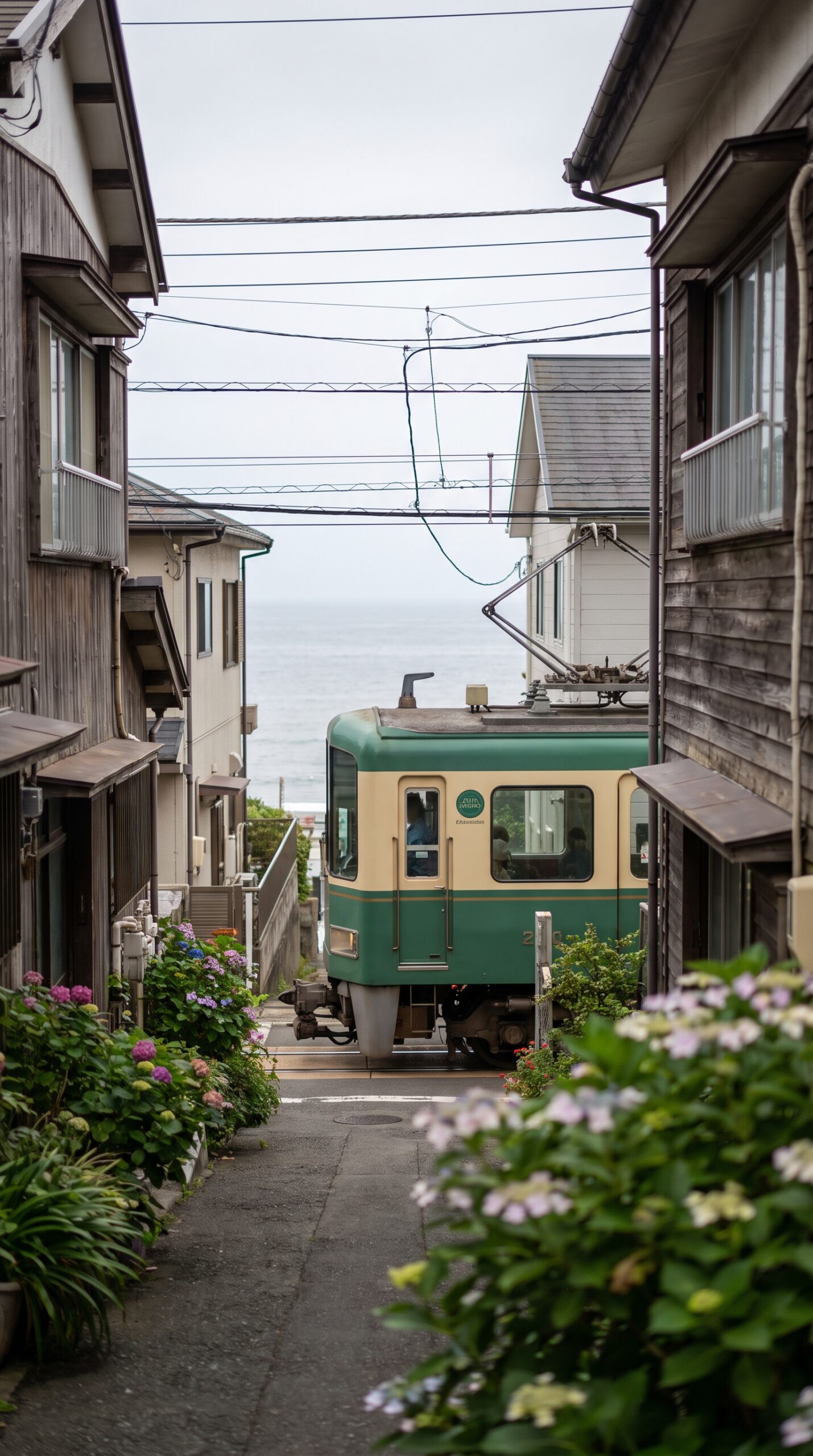
Once you’re there, the Enoden takes over. It’s a single track line, green and cream, running from Kamakura through Hase and Shichirigahama out to Enoshima. Trains are short and come about every 12 minutes. Kamakura to Hase costs 200 yen and takes four minutes. A one day Noriorikun pass runs 800 yen and pays off if you hop on and off more than three times.
Honest warning about the Enoden. On weekends it gets crushed, and you can watch two full trains go past before squeezing onto a third. The walk between Kamakura Station and Hase takes about 20 minutes on flat ground. On a busy Sunday, walking wins.
What a Day in Kamakura Costs
A full day in Kamakura from Tokyo runs about 5,000 to 7,000 yen per person, covering the 1,880 yen return train, roughly 1,500 yen in temple fees and a 1,200 yen lunch.
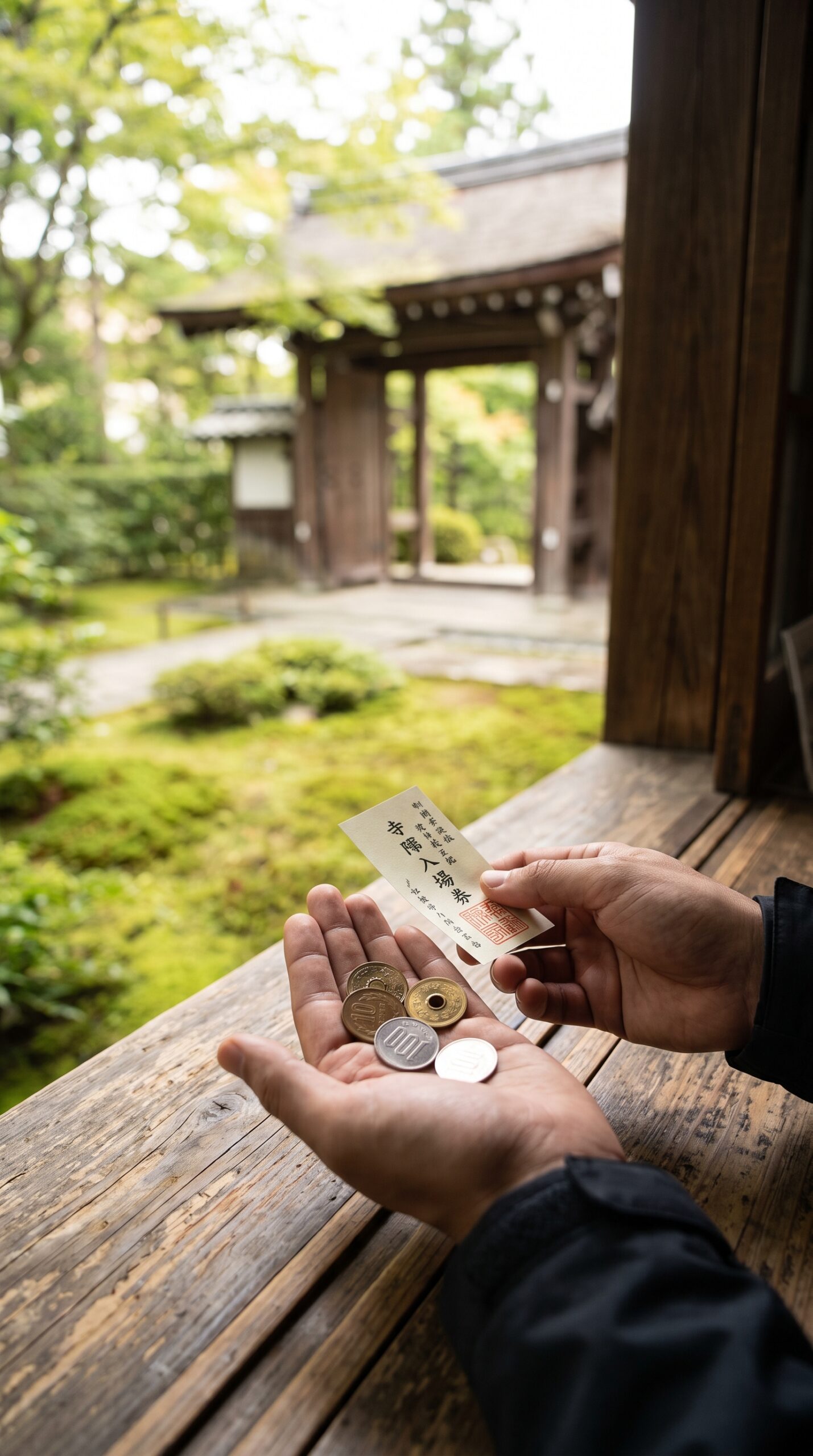
Four things cost money here. The return train from Tokyo is 1,880 yen. Temple entries run 200 to 400 yen each, so three or four sites lands around 1,200 to 1,500. Lunch sits near 1,200 yen for a shirasu bowl. Local Enoden hops add 400 to 800 depending on how much you ride.
The Great Buddha charges 300 yen for adults, per the VISIT KAMAKURA listing, plus 50 yen to go inside. Hasedera and Hokokuji are 400 each. Engaku-ji and Kencho-ji are 500. The shrine grounds at Tsurugaoka Hachimangu cost nothing, which makes it the obvious stop when you’re watching money.
Add it up and a normal day runs 5,000 to 7,000 yen. Skip the paid temples, walk instead of riding, and you can do it on 3,000. Already holding a JR Pass or a Tokyo Wide Pass? Knock the train off entirely.
One thing catches people out. Several temples take cash only at the gate, and ATMs get scarce once you’re away from the station. Pull out 5,000 yen before you leave Tokyo.
Best Time to Visit Kamakura
Planning Tip
June is Kamakura’s hydrangea peak, when Hasedera’s 2,500 plants bloom, while April brings cherry blossom and August averages 31 degrees Celsius with heavy beach crowds.
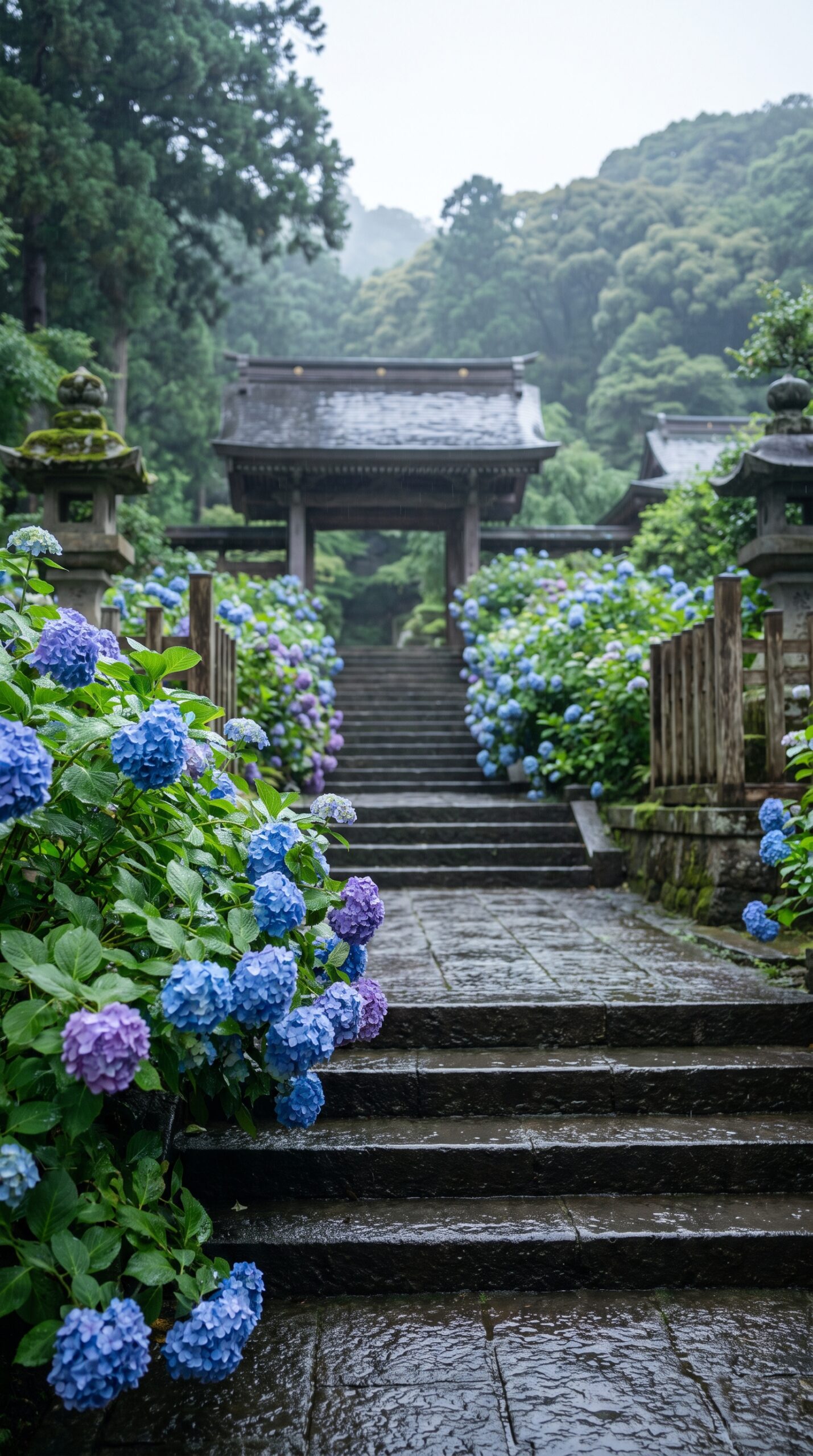
Every season here trades something. Spring brings cherry blossom along Dankazura, the raised path up the middle of Wakamiya Oji, usually peaking in the first week of April. June is hydrangea month. Hasedera grows about 2,500 plants along a hillside path, and Meigetsu-in in Kita-Kamakura turns almost entirely blue. Both run a numbered ticket system in peak weeks because the paths are narrow.
Summer is hot and loud. August highs sit around 31 degrees with heavy humidity, according to Japan Meteorological Agency climate data for eastern Japan. The sea is warm enough to swim, beach huts open on Yuigahama, and the town fills with day trippers from the city.
Autumn is the easy pick. October and November stay dry and mild, and the maples at Engaku-ji turn red into early December. Winter runs cold and clear, 5 to 10 degrees, with the fewest visitors of the year. Clear winter mornings also give the best odds of seeing Mount Fuji across the water from Shichirigahama.
Whatever month you pick, take an early train. The first arrivals from Tokyo put you at the Great Buddha before the tour coaches roll in around 10:00.
One caveat on June. The rain is steady, not showery, and hydrangea paths turn to mud. Bring shoes you don’t mind soaking.
Frequently Asked Questions
Is it worth visiting Kamakura, Japan?
Yes, if you want temples and coastline without a long trip out of Tokyo. One small town holds the 13.35 metre Great Buddha, about 65 Buddhist temples, a bamboo grove and two swimming beaches. It suits a day rather than a week. Anyone with only three or four days in Tokyo gets more out of Kamakura than a second day of city museums.
Is Kamakura a day trip from Tokyo?
Yes, it’s one of Tokyo’s easiest day trips, at about 55 minutes each way on a direct train. Six to seven hours covers the Great Buddha, Hasedera, Tsurugaoka Hachimangu and lunch on Komachi Street. Ride the Enoden between Kamakura and Hase to save your legs for the temple stairs.
How do I get to Kamakura from Tokyo?
Take the JR Yokosuka Line from Tokyo Station straight through to Kamakura, about 55 minutes for roughly 940 yen with no transfer. From Shinjuku the JR Shonan-Shinjuku Line runs 55 to 60 minutes. Trains leave every ten to fifteen minutes, and both lines are covered by a JR East pass. The town is about 50 km south of central Tokyo.
What is Kamakura, Japan known for?
Kamakura is known for the Great Buddha, a 13.35 metre bronze statue cast in 1252, and for serving as Japan’s political capital from 1185 to 1333. That period left roughly 65 Buddhist temples and 19 Shinto shrines in one small coastal town on Sagami Bay, with surf beaches such as Yuigahama and Shichirigahama on the same doorstep.
Is Kamakura like Kyoto?
It gets called the Kyoto of eastern Japan for its temple count, but it’s far smaller and it has a coast. Kyoto holds around 1,600 temples against Kamakura’s 65. The draw here is walking between zen temples, wooded hills and the beach in a single afternoon.