Estimated reading time: 12 minutes
Last updated: 18 November 2026
Table of Contents
- Is Hakone Worth Visiting?
- The Hakone Loop: Ropeway, Black Eggs and Lake Ashi
- Onsen Ryokan and Where to Sleep in Hakone
- What to Eat in Hakone
- Getting to Hakone from Tokyo
- What Two Days in Hakone Costs
- Best Time to Visit Hakone
- Frequently Asked Questions
Is Hakone Worth Visiting?
Yes, if hot springs are the reason you came. Hakone sits inside a volcanic caldera about 90 km southwest of Tokyo in Fuji-Hakone-Izu National Park, where around 17 onsen areas draw water straight from the volcano. Mount Fuji shows across Lake Ashi on clear days, and the Owakudani ropeway crosses live sulfur vents. The catch is resort pricing: a ryokan night runs 25,000 to 60,000 yen.
How This Guide Was Researched
This guide was compiled from travel documentaries, verified tourism sources, and community traveler feedback. Prices and operational details were confirmed at the time of writing. We recommend checking official sources for the latest information before your trip.
Want to see this for yourself? Watch the full video in 4K.
The water is the whole point. Hakone sits in the crater of a volcano that last erupted about 3,000 years ago, and that volcano still heats everything underground. Around 17 separate onsen areas tap it. Some feed grand old ryokan, some feed public baths where you pay 1,000 yen and walk in off the street.
Geography puts it within reach. The town lies roughly 90 km southwest of Tokyo in western Kanagawa Prefecture, inside Fuji-Hakone-Izu National Park. The Hakone Tourism Association runs an information centre at Hakone-Yumoto, the station where almost every visit starts.
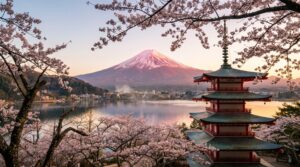
The second draw is the mountain. On a clear day Mount Fuji stands right across Lake Ashi, and that view is why so many people book here rather than at a closer hot spring town like the ones near Kamakura. The Japan National Tourism Organization lists it among the country’s most visited hot spring areas.
Hakone doesn’t work like a normal town. There’s no single centre you walk around. You ride a loop instead, switching between a mountain railway, a cable car, a ropeway, a boat and a bus, and the sights sit along that circuit.
Worth knowing before you commit. This is a resort area with resort pricing, so expect to pay well above Tokyo rates for a room and a meal. Weekends fill the ropeway queues fast.
The Hakone Loop: Ropeway, Black Eggs and Lake Ashi
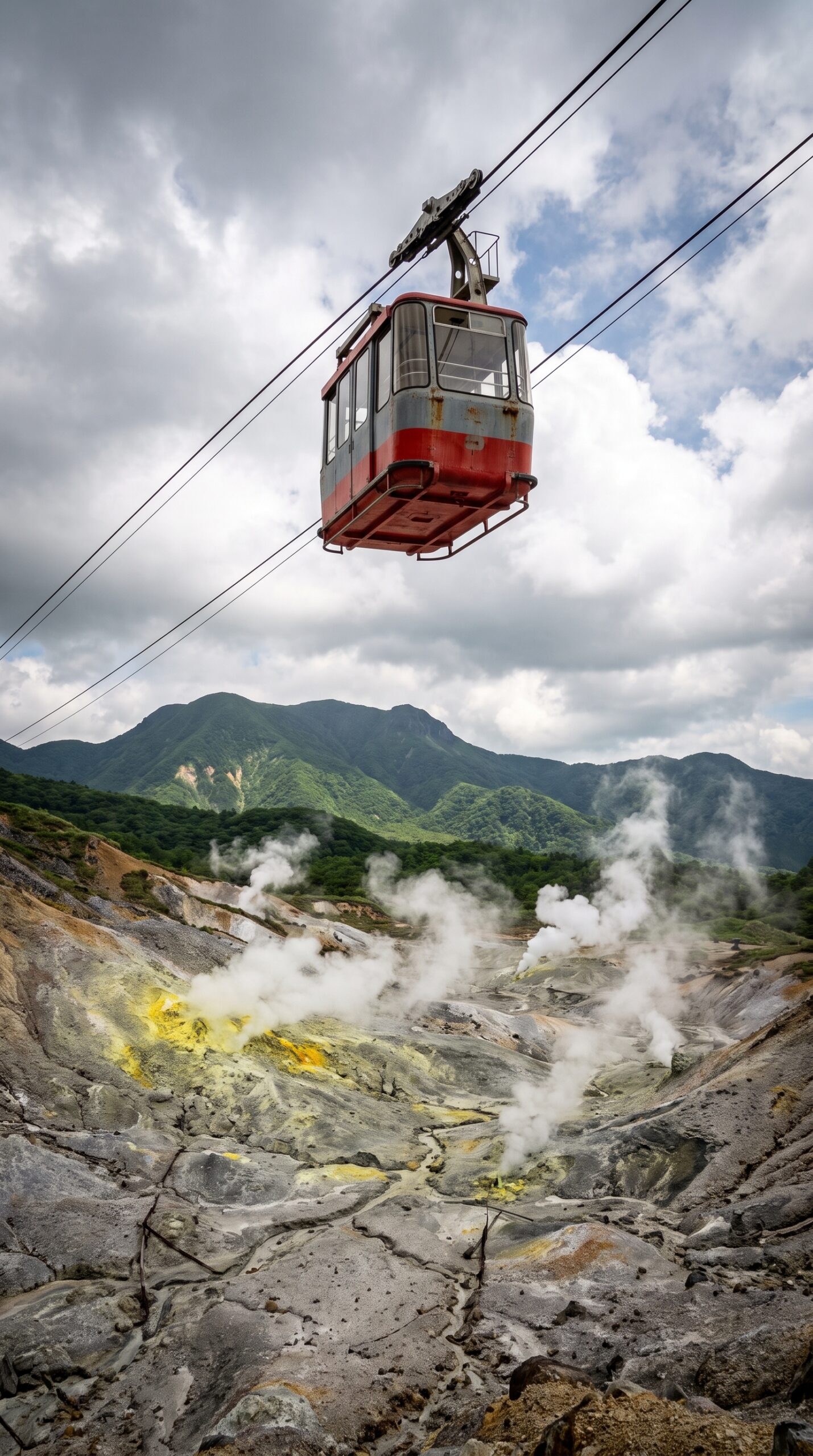
The Hakone Ropeway climbs 4 km over the Owakudani sulfur vents in about 30 minutes, and the black eggs boiled there sell in packs of five for 500 yen.
Hakone gets done as a circuit. You start at Hakone-Yumoto, ride a mountain train up, switch to a cable car, then a ropeway, then a boat across the lake, then a bus back down. The whole loop runs six to seven hours with stops. Most people go clockwise because the trains fill up later in the day.
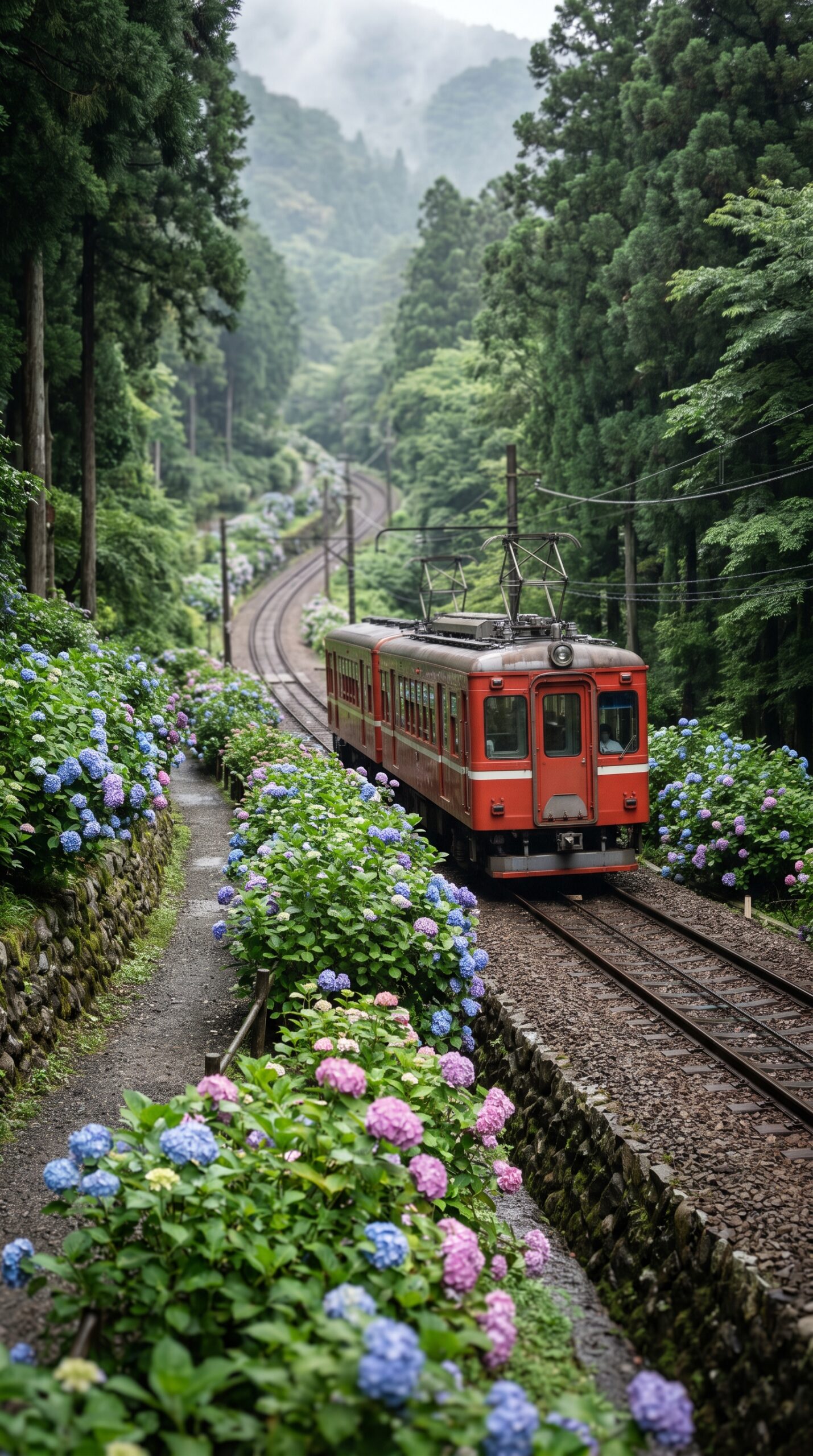
The Hakone Tozan Railway does the climbing. It’s a two-carriage red train that reverses direction three times to work its way up the slope to Gora, and the driver walks between one end and the other at each switchback. In June the track sides fill with hydrangeas. The trip takes about 40 minutes and feels older than everything around it, because it is. The line opened in 1919.
From Gora a cable car pulls you further up to Sounzan, where the Hakone Ropeway takes over. That’s the good part. The gondolas cover about 4 km in roughly 30 minutes and pass directly above Owakudani, a grey volcanic valley where steam pours out of the ground and the rock is stained yellow with sulfur. The smell reaches you inside the cabin.
Get out at Owakudani for the eggs. Vendors boil them in the sulfur pools until the shells turn black, then sell them five to a bag for 500 yen. Local lore says each egg adds seven years to your life. They taste like ordinary boiled eggs with a faint mineral edge, and the shell peels off grey.
The Hakone Open Air Museum sits back down the hill at Chokoku-no-Mori. About 120 sculptures stand across an open hillside, with a pavilion holding roughly 300 Picasso works. Entry is 2,000 yen. Kids climb inside a mesh tower called the Woven Nest, and there’s a free foot bath fed by the hot springs near the exit. Give it two hours.
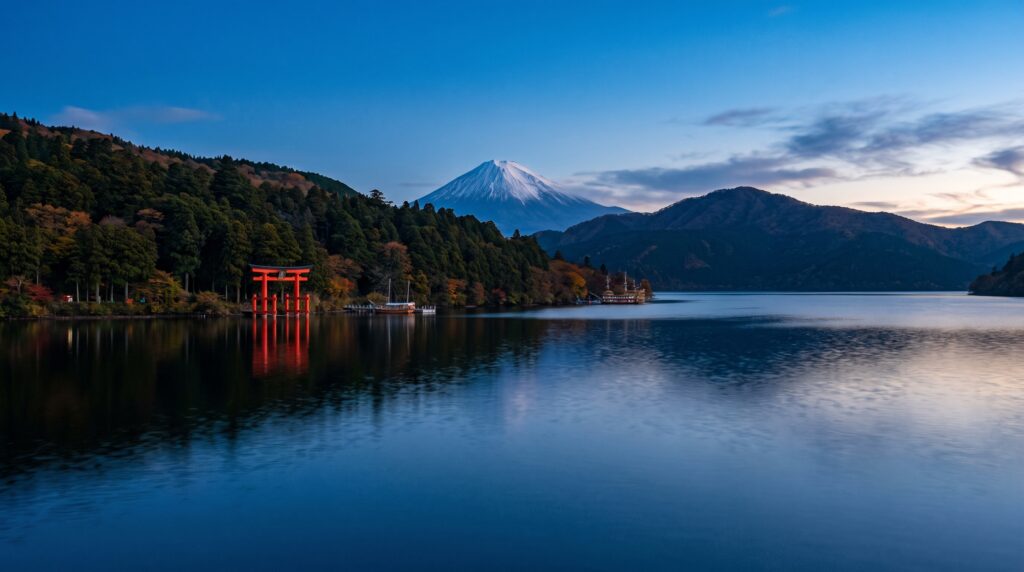
Lake Ashi closes the loop. Boats styled as pirate ships cross it in about 30 minutes, which sounds ridiculous and is. Hakone Shrine sits on the shore, known for its red torii gate standing in the shallow water, and the queue to photograph it can run 40 minutes on a weekend. On a clear day Mount Fuji fills the gap between the hills at the far end. The official Hakone travel guide lists current times for every leg.
One thing can wreck the plan. Owakudani shuts with no notice when volcanic gas levels climb, and the ropeway then runs a replacement bus. Check the status the morning you go.
Onsen Ryokan and Where to Sleep in Hakone
A Hakone onsen ryokan with dinner and breakfast included typically costs 25,000 to 60,000 yen per person per night, and rooms with a private open-air bath sit at the top of that range.
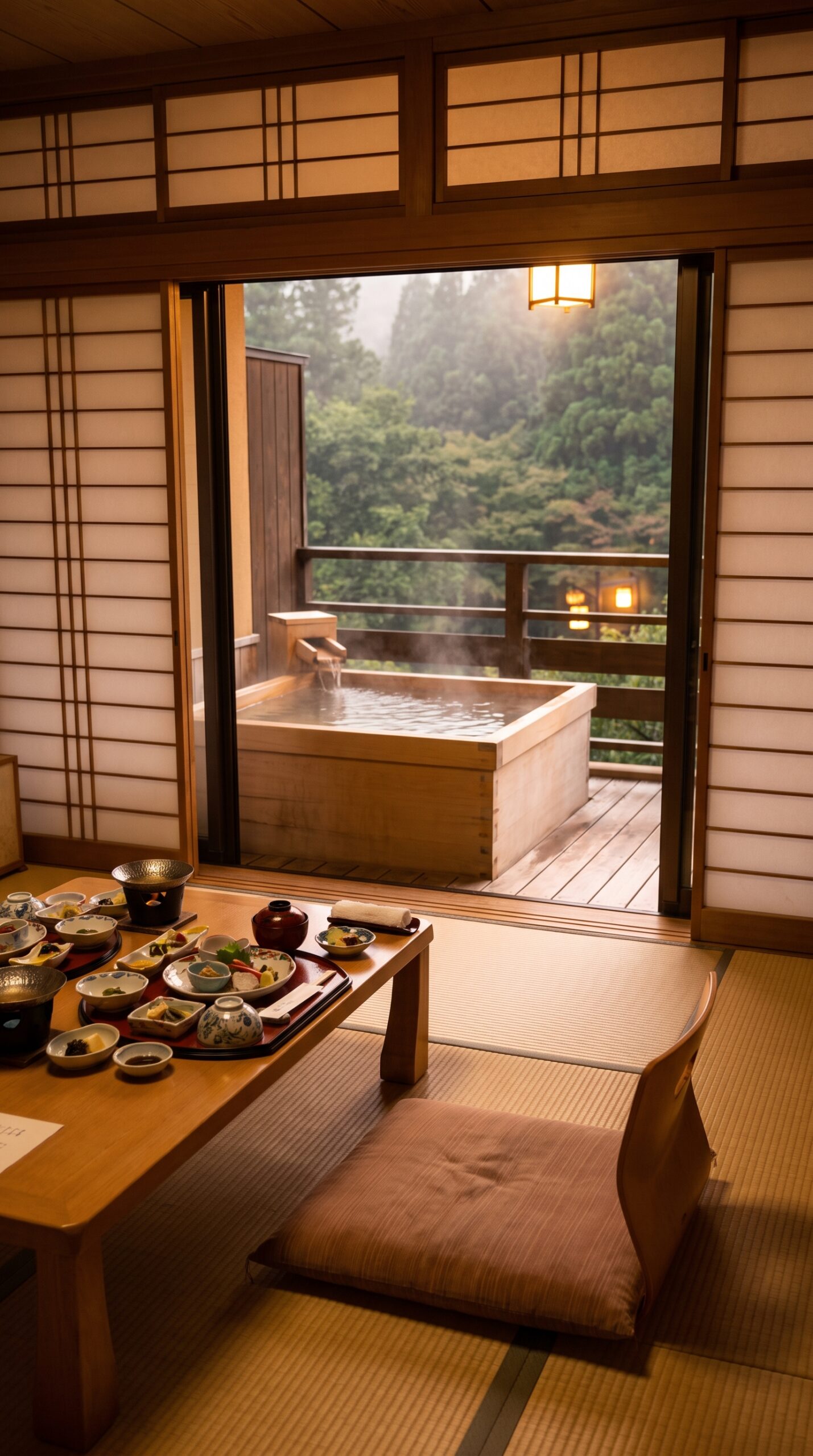
The room is the destination here. A ryokan stay bundles the bath, a long dinner and breakfast into one price, and the evening runs on a schedule: bathe, eat, sleep on a futon someone lays out while you’re at dinner.
Dinner is kaiseki. Ten or so small courses arrive in order, usually in your room or a private dining room, built around whatever is in season. It takes about two hours. Breakfast the next morning is grilled fish, rice, miso and pickles, and it’s included too.
Rates run 25,000 to 60,000 yen per person a night with both meals, according to listings from the Hakone Ryokan and Hotel Association. That’s the real cost of Hakone. Skip the meals and a business hotel near Hakone-Yumoto drops to 8,000 to 15,000 yen, though you lose most of what makes the trip.
Book a private bath if communal bathing puts you off. Some rooms come with their own open-air tub on the balcony, and many ryokan rent a kashikiri bath by the 45 minute slot for around 3,000 yen. That’s also the workaround for tattoos.
Pick your area by what you want. Hakone-Yumoto is cheapest and closest to the trains. Gora and Sengokuhara sit higher, quieter, with better views and worse late-night food. Around Lake Ashi you’re paying for the Fuji outlook.
Not staying the night? Day-use bathing runs 1,000 to 2,500 yen at most public onsen, and you can walk in with a towel.
One caveat worth checking before you pay. Plenty of traditional ryokan still turn away guests with visible tattoos, and the policy is often buried in the Japanese version of the site. Ask directly.
What to Eat in Hakone
Hakone’s signature foods are the Owakudani black eggs at 500 yen for five and soba made with local mountain water, served across Hakone-Yumoto and Gora.
Black eggs come first, because everyone buys them. Five to a bag, 500 yen, boiled black in the sulfur pools at Owakudani. Peel one and it’s a plain hard-boiled egg underneath, just with a faint mineral smell. Salt is sold next to them for a reason.
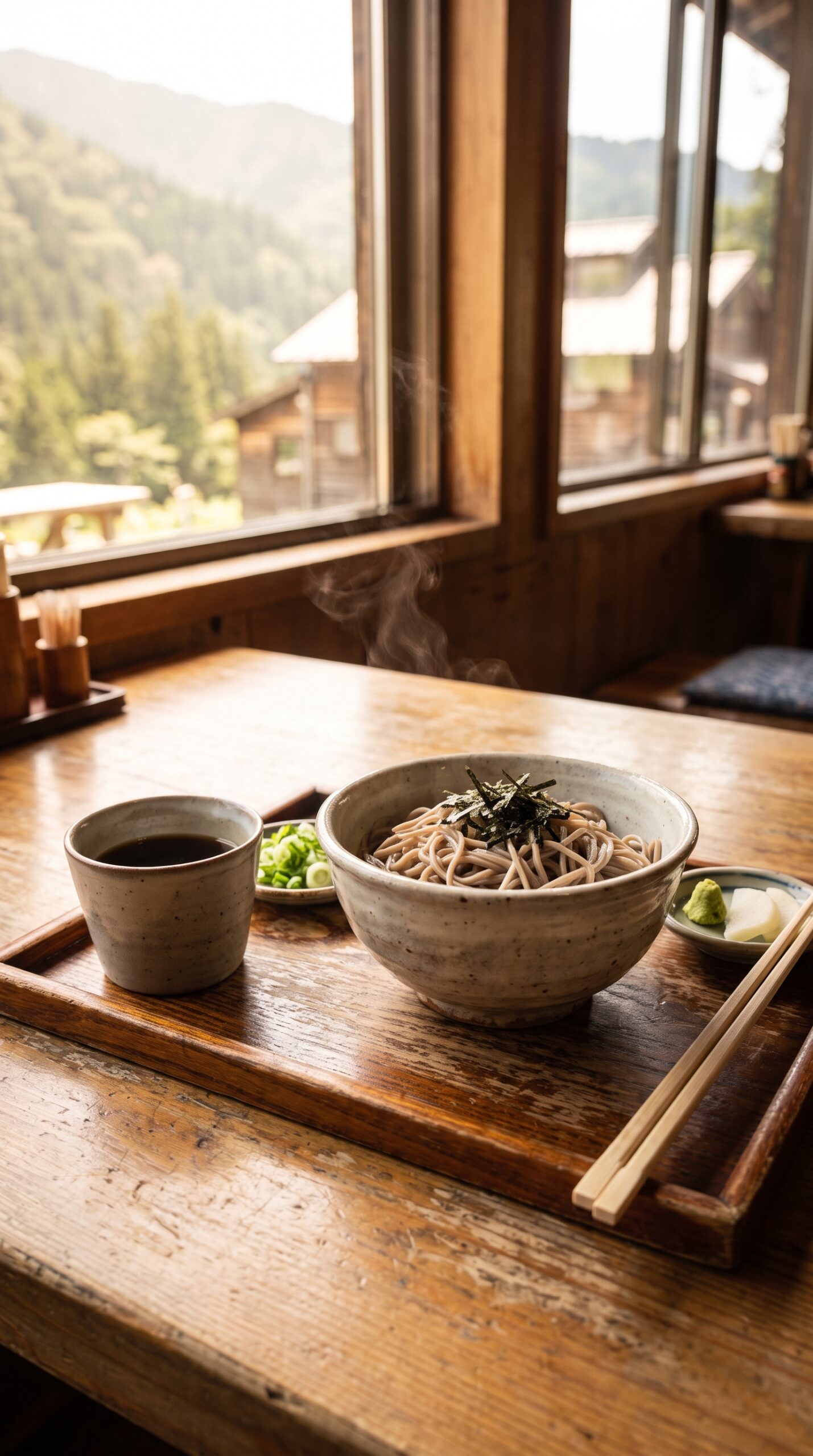
Soba is the better meal. Hakone’s mountain spring water is soft, which suits buckwheat noodles, and shops around Hakone-Yumoto have been making it for generations. Order it cold on a bamboo tray with dipping sauce for 900 to 1,500 yen. Slurping is expected and speeds it up.
Staying at a ryokan? Dinner is handled, and it’s the best food you’ll eat here.
Beyond that, look for yuba, the delicate tofu skin served chilled with soy, and grab a steamed manju bun from the row of shops outside Hakone-Yumoto station. They’re 120 to 200 yen, filled with sweet bean paste, and best eaten straight from the steamer.
Plan dinner carefully if you’re not on a meal plan. Kitchens outside the ryokan shut early, most by 19:00, and the stations along the loop empty out fast once the last trains thin.
Getting to Hakone from Tokyo
The Odakyu Romancecar runs from Shinjuku to Hakone-Yumoto in about 85 minutes for 2,470 yen, and the Hakone Freepass covers the whole loop for 7,100 yen over two days.
The Romancecar is the easy answer. It leaves Shinjuku and reaches Hakone-Yumoto in about 85 minutes for 2,470 yen, every seat reserved, with big front windows if you book early enough to get them. Odakyu Railway runs it several times an hour through the morning.
Want it cheaper? Take the standard Odakyu express and change at Odawara. That’s about 100 minutes and roughly 1,200 yen, with no reserved seat. The saving is real if you’re travelling as a group.
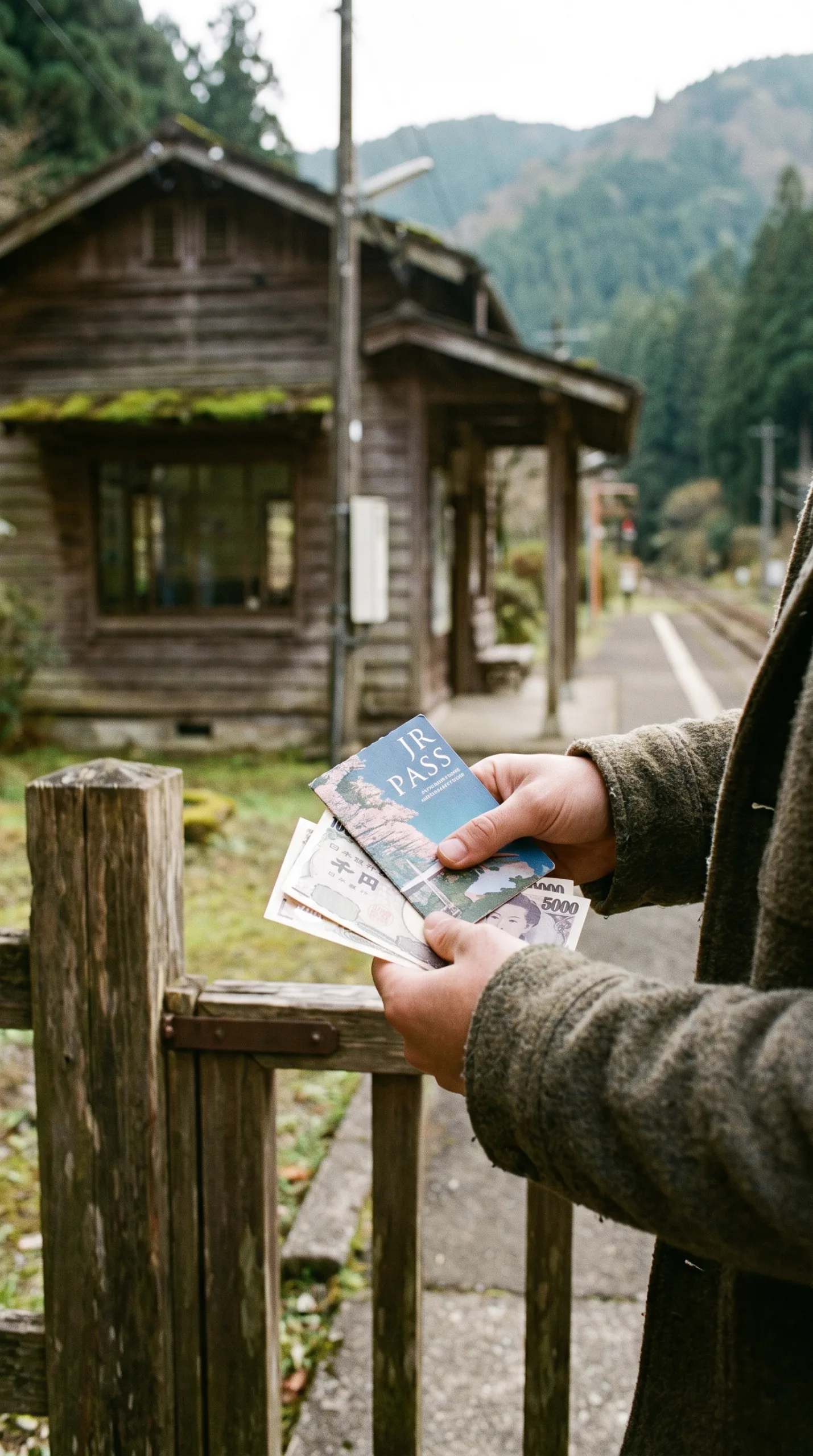
Holding a JR Pass changes the calculation, because the Odakyu isn’t covered by it. Take the shinkansen from Tokyo to Odawara instead, 35 minutes, then pick up the Tozan line there.
Buy the Hakone Freepass before you set off. It’s 7,100 yen from Shinjuku for two days and covers the mountain train, cable car, ropeway, lake boat and the local buses, plus discounts at several museums. Doing the loop on single tickets across two days costs more than that. Note that the Romancecar seat reservation is charged on top, at 1,200 yen each way.
For orientation: Hakone sits roughly 90 km southwest of Tokyo, past Yokohama, in the hills of western Kanagawa.
Driving works but it isn’t the smart choice. The loop roads are narrow and twisting, and the car parks at Owakudani and the Open Air Museum fill by mid-morning on weekends. The trains reach everything anyway.
What Two Days in Hakone Costs
Two days in Hakone runs about 40,000 to 75,000 yen per person, with the ryokan night at 25,000 to 60,000 yen making up most of it.
One line dominates the budget. The ryokan night runs 25,000 to 60,000 yen per person with dinner and breakfast, and everything else is small change beside it. Drop to a business hotel with no meals and that falls to 8,000 to 15,000.
The rest adds up quickly but predictably. The Freepass is 7,100 yen for two days and covers all the loop transport. The Open Air Museum charges 2,000 yen, the Hakone Museum of Art 900. Lunch and the black eggs come to maybe 2,500 across a day.
So the total lands between 40,000 and 75,000 yen per person for two days. A single day trip with no overnight, using the Freepass and a 1,500 yen day-use bath, comes in closer to 15,000.
That gap is worth thinking about. If your budget is tight, do Hakone as a day trip and spend the saved money on nights in Tokyo. If you want the point of Hakone, pay for one ryokan night and skip a museum.
Fair warning: this is the priciest stop within easy reach of Tokyo, and the ryokan rate is why.
Best Time to Visit Hakone
Planning Tip
Clear winter days from December to February give Hakone its best Mount Fuji visibility, while June brings hydrangeas along the Tozan railway and August highs near 27 degrees Celsius.
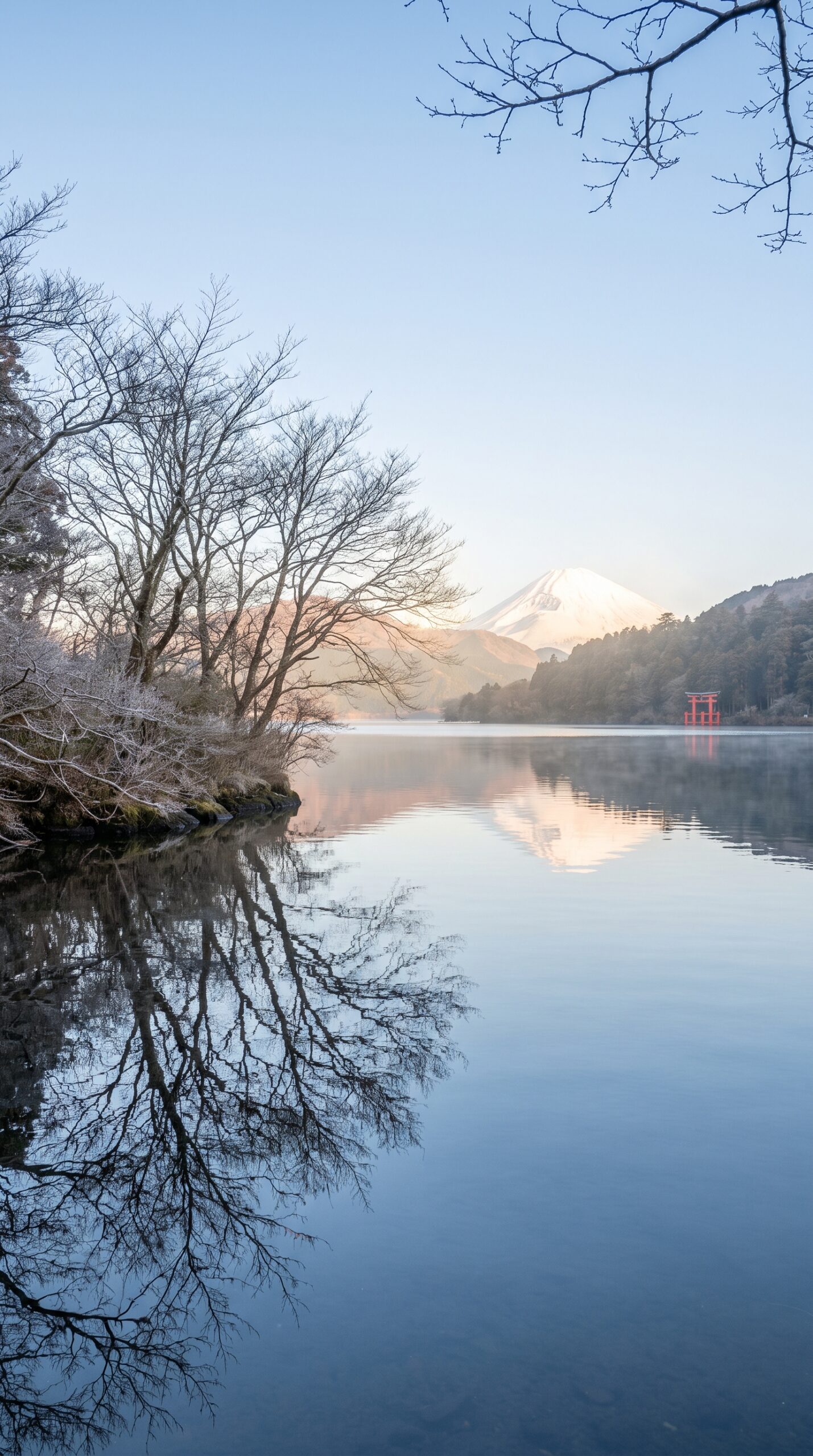
Winter wins if you came for the mountain. December through February brings cold dry air, and that’s when Fuji shows itself across Lake Ashi most reliably. The trade is temperature. Mornings sit near freezing, which matters when half the attractions are outdoors and the other half involve sitting in hot water, so it balances out better than it sounds.
June is the hydrangea month. Thousands of them line the Tozan railway between Hakone-Yumoto and Gora, and the company runs evening services with the track sides lit. Rain comes with it, steady rather than showery, and the mountain disappears for weeks at a time.
Autumn is the busiest stretch. Maples around Gora and the Open Air Museum turn through November, weekends jam solid, and ryokan rates climb by a third.
Summer stays cooler than the city because Hakone sits several hundred metres up. August highs average around 27 degrees against Tokyo’s 31, per Japan Meteorological Agency climate data for eastern Japan. Anyone heading on toward Yamanashi and the Fuji Five Lakes gets a similar break from the heat.
Be realistic about the view. Fuji stays hidden behind cloud on most summer days. Come in winter if the mountain is the reason for the trip, and treat a summer sighting as luck.
Frequently Asked Questions
Is Hakone a day trip from Tokyo?
Yes, at about 85 minutes each way it works as a long day trip. The full loop takes six to seven hours, so leave Shinjuku by 08:00 to get through it without rushing. Staying a night buys you the ryokan dinner and a bath at 06:00 with nobody else in it, which is a different trip entirely.
Is Hakone a tourist trap?
It’s busy and expensive, but the hot springs and volcanic scenery are real, not manufactured. The loop is heavily packaged and weekends feel like it, with queues at the ropeway and the shrine gate. Go midweek, or stay overnight after the day trippers leave, and it turns quiet fast.
Is it better to stay in Hakone or Mt. Fuji?
Hakone for hot springs and easy transport, the Fuji Five Lakes for close-up mountain views. Fuji sits behind cloud through much of July and August, which tips the balance toward Hakone in summer. Hakone also works without a car, while the Fuji lakes really don’t.
What food is Hakone known for?
Black eggs boiled in the sulfur springs at Owakudani, and soba made with local mountain water. A kaiseki dinner at a ryokan is the other signature meal, usually included in the room rate. Steamed manju buns outside Hakone-Yumoto station are the standard snack.
How many days do you need in Hakone?
Two days is the sweet spot. One full day covers the loop, the ropeway, Owakudani and Lake Ashi, and the second gives you a ryokan night, an early bath and the Open Air Museum without rushing. A single day trip from Tokyo works if you leave Shinjuku by 08:00, but you will be moving the whole time.