Estimated reading time: 14 minutes
Last updated: 20 November 2026
Table of Contents
- What Is Yamanashi Famous For?
- Top Attractions on Mount Fuji’s North Side
- Kofu, Fujikawaguchiko and Other Towns to Know
- Wine, Peaches and Hoto Noodles
- Best Areas to Stay in Yamanashi
- Getting to Yamanashi from Tokyo
- Day Trips You Can Add On
- Best Time to Visit Yamanashi
- Frequently Asked Questions
What Is Yamanashi Famous For?
Yamanashi is famous for holding Mount Fuji’s northern half and all of the Fuji Five Lakes, including Lake Kawaguchi, along with the Chureito Pagoda viewpoint and the spring ponds of Oshino Hakkai. It is also Japan’s wine and fruit prefecture, making around 30 percent of the country’s wine and growing more peaches and grapes than anywhere else. The capital, Kofu, sits about 100 kilometres west of Tokyo.
How This Guide Was Researched
This guide was compiled from travel documentaries, verified tourism sources, and community traveler feedback. Prices and operational details were confirmed at the time of writing. We recommend checking official sources for the latest information before your trip.
Want to see this for yourself? Watch the full video in 4K.
The mountain does most of the work here. Mount Fuji keeps its northern half inside this prefecture, and every one of the Fuji Five Lakes sits on that same side. Lake Kawaguchi is the one people photograph.
Yamanashi has no coastline at all. It borders Tokyo, Kanagawa, Shizuoka, Nagano and Saitama, and forest covers close to 78 percent of the land, per the Official Travel Guide Yamanashi. Kofu, the capital, sits in a flat basin ringed by peaks.
Trips here split neatly in two. One side is lakes, lava caves and Fuji viewpoints. The other is Kofu, with vineyards, peach orchards and cheaper beds. About an hour of driving separates them, which the Japan National Tourism Organization’s Yamanashi page lays out by area.
Now the honest part. No shinkansen stops anywhere in the prefecture, so the fast train you’re imagining doesn’t exist here. Fujikawaguchiko also clogs badly on weekends. Come on a Tuesday and you’ll have a different trip.
Top Attractions on Mount Fuji’s North Side
Yamanashi’s five Fuji lakes, Oshino Hakkai’s eight spring ponds and the Chureito Pagoda viewpoint all sit within 30 kilometres of Mount Fuji’s northern base.
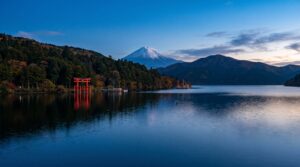
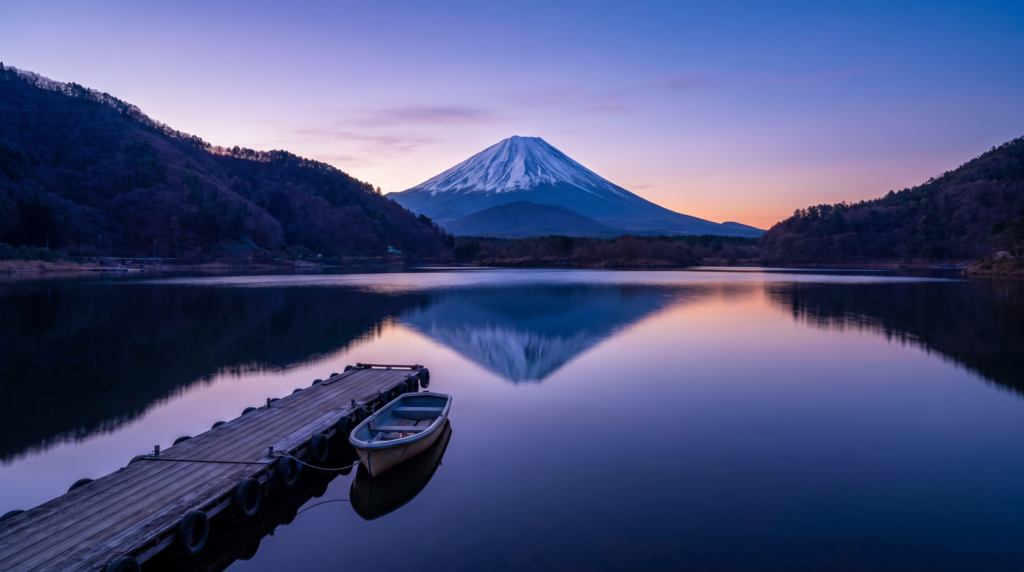
Lake Kawaguchi takes almost everyone first. It’s the easiest of the Fuji Five Lakes to reach, with a train station in town and direct buses from Shinjuku. The northern shore holds the classic view. Stand there early and Mount Fuji doubles itself in the water.
The other four lakes thin out fast. Lake Yamanaka is the biggest of the group and popular with windsurfers. Saiko and Shoji are quiet, wooded and short on restaurants. Lake Motosu is the one printed on the 1,000 yen banknote, which makes standing at the right spot a small game of matching the picture.
Oshino Hakkai is eight ponds fed by Fuji snowmelt that filters through lava for decades before surfacing. The water runs clear enough to count the stones on the bottom, and the deepest pond drops past 8 metres. Here’s the catch. The village is tiny, tour buses start arriving around 10am, and by noon you’re photographing other people’s elbows. Get there before 9am or don’t bother.
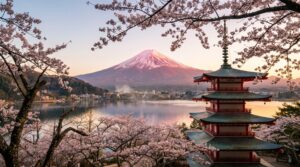
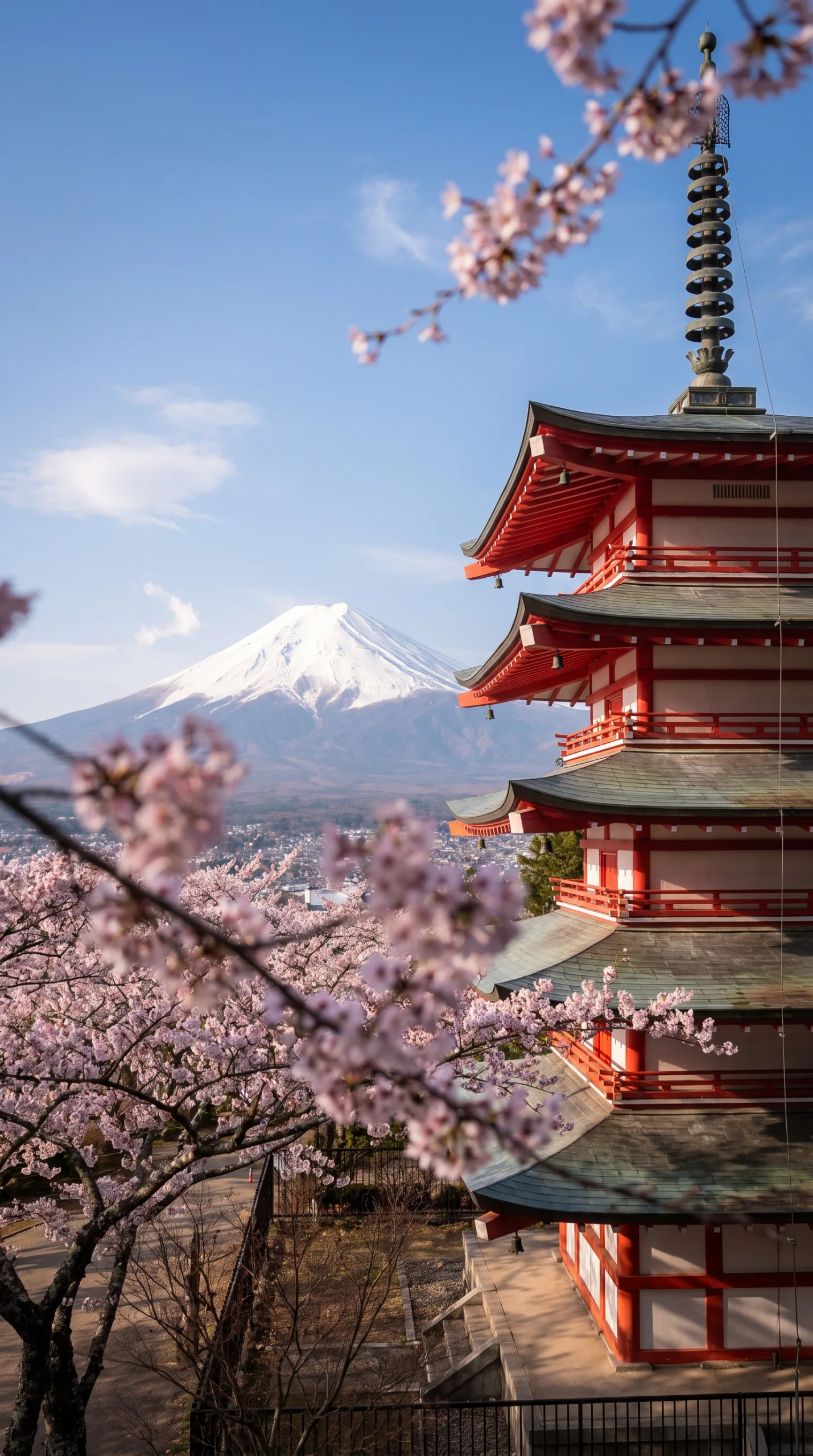
Chureito Pagoda sits above Fujiyoshida at Arakura Sengen Shrine. You climb 398 steps to reach it. The payoff is the shot you’ve seen a hundred times, a red five-storey pagoda with Fuji behind it, and in mid-April cherry blossom filling the gaps. The steps are steep and there’s no lift.
Aokigahara spreads across the lava at Fuji’s northwest base. The forest grew on rock left by the 864 eruption, which is why the ground is uneven and tree roots crawl sideways instead of digging down. Marked trails run through it, and two lava tubes nearby are open to visitors: the Narusawa Ice Cave, which holds ice year round, and the Fugaku Wind Cave. Stay on the marked paths. Compasses behave oddly over the iron-rich rock.
Rainy days have options. The Kawaguchiko Music Forest Museum runs automated organs and music boxes in a lakeside garden. From mid-April to late May the Fuji Shibazakura Festival grounds near Lake Motosu turn pink with moss phlox planted in bands below the mountain.
Climbers use this side too. The Yoshida Trail starts in Yamanashi and carries more traffic than the other three routes combined. According to the official Mount Fuji climbing website, the 2026 season runs 1 July to 10 September and Yamanashi charges 4,000 yen per climber. Slots are booked and paid online in advance, the trail is capped at 4,000 climbers a day, and the fifth-station gate closes at 2pm to anyone without a mountain hut reservation. One honest warning about all of it. Fuji hides behind cloud on most summer afternoons, so mornings between November and February give you the best odds of actually seeing the thing you came for.
Kofu, Fujikawaguchiko and Other Towns to Know
Yamanashi splits into two travel bases: Kofu in the central basin, population around 187,000, and Fujikawaguchiko by the lakes, about 55 kilometres south.
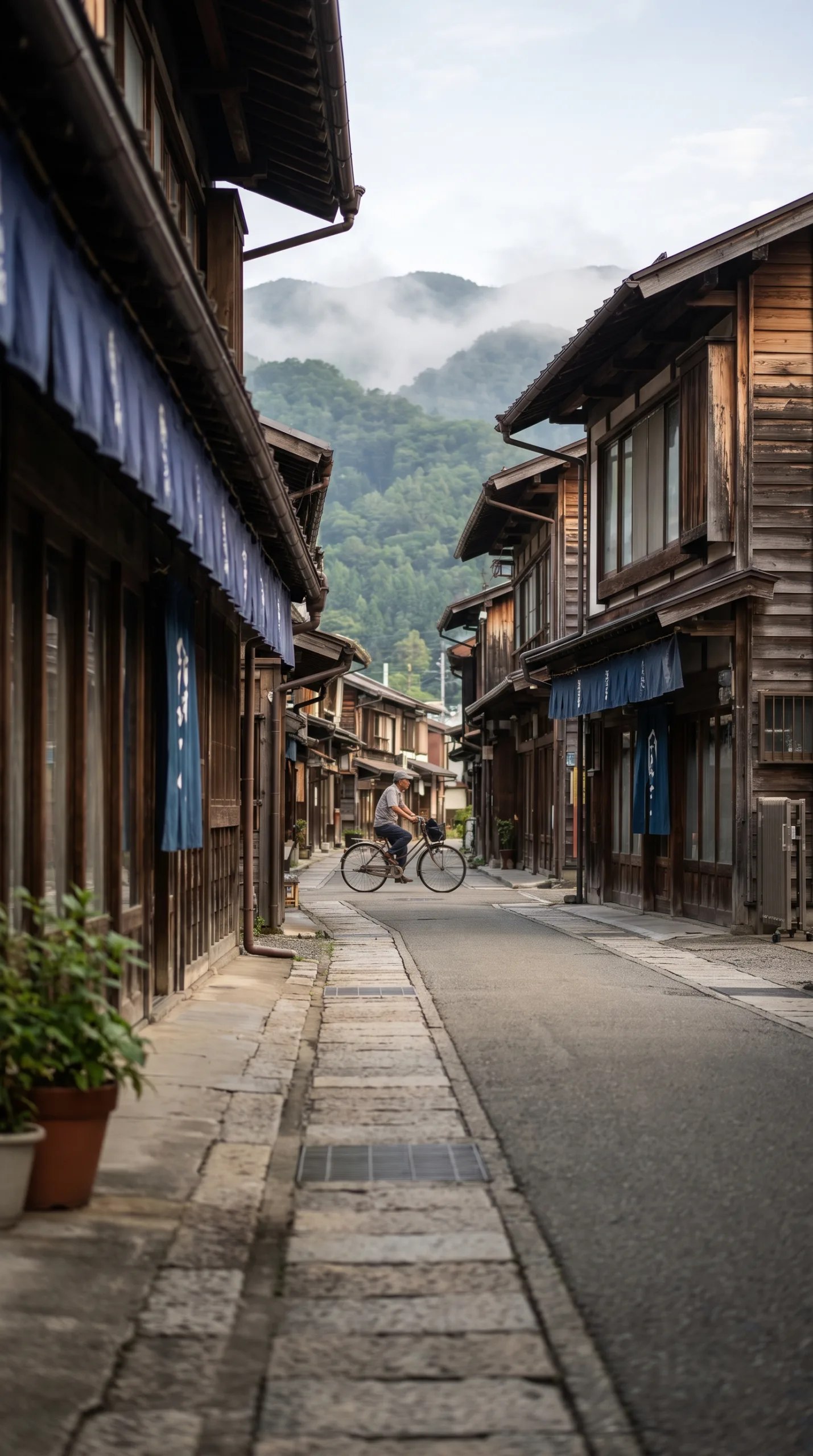
Kofu is the capital and the rail hub. Around 187,000 people live in a basin ringed by mountains on every side, which makes summer here hotter than the coast and winter nights sharp. The Takeda Shrine sits on the site of the clan’s old residence, and the Kofu Castle ruins give you a stone keep base to climb for a free view over the city. The Visit Kofu tourism office near the station hands out area maps in English.
Fujikawaguchiko is the other base. It’s a lakeside town in Minamitsuru District built almost entirely around Fuji tourism, so you get hotels, buses and rental bikes, plus prices to match. Everything on the lakes side of the prefecture runs from here.
Hokuto sits up in the northwest corner at altitude. Spring water is the local product, the night skies are dark, and several observatories take advantage of that. Cyclists like the climbs.
Koshu and Fuefuki fill the ground east of Kofu. This is vineyard and orchard country, flat enough to cycle between wineries, and it’s where most of the fruit picking happens.
Two villages sit between the lakes. Oshino holds the spring ponds. Narusawa has the ice cave and sits at the edge of the lava field. Both are small, so treat them as stops rather than bases.
Yamanakako village wraps the largest lake and stays quieter than Kawaguchiko. Uenohara is near the Tokyo border, which makes it a cheap place to break a drive.
One naming point trips people up constantly. Yamanashi City is a small separate city inside Yamanashi Prefecture, and it is not the capital. Kofu is. If you book a hotel in “Yamanashi City” expecting the main hub, you’ll end up about 20 kilometres east of where you meant to be.
Wine, Peaches and Hoto Noodles
Yamanashi produces roughly 30 percent of Japan’s wine and leads the country in peach and grape output, with the Koshu grape grown here for over 1,000 years.
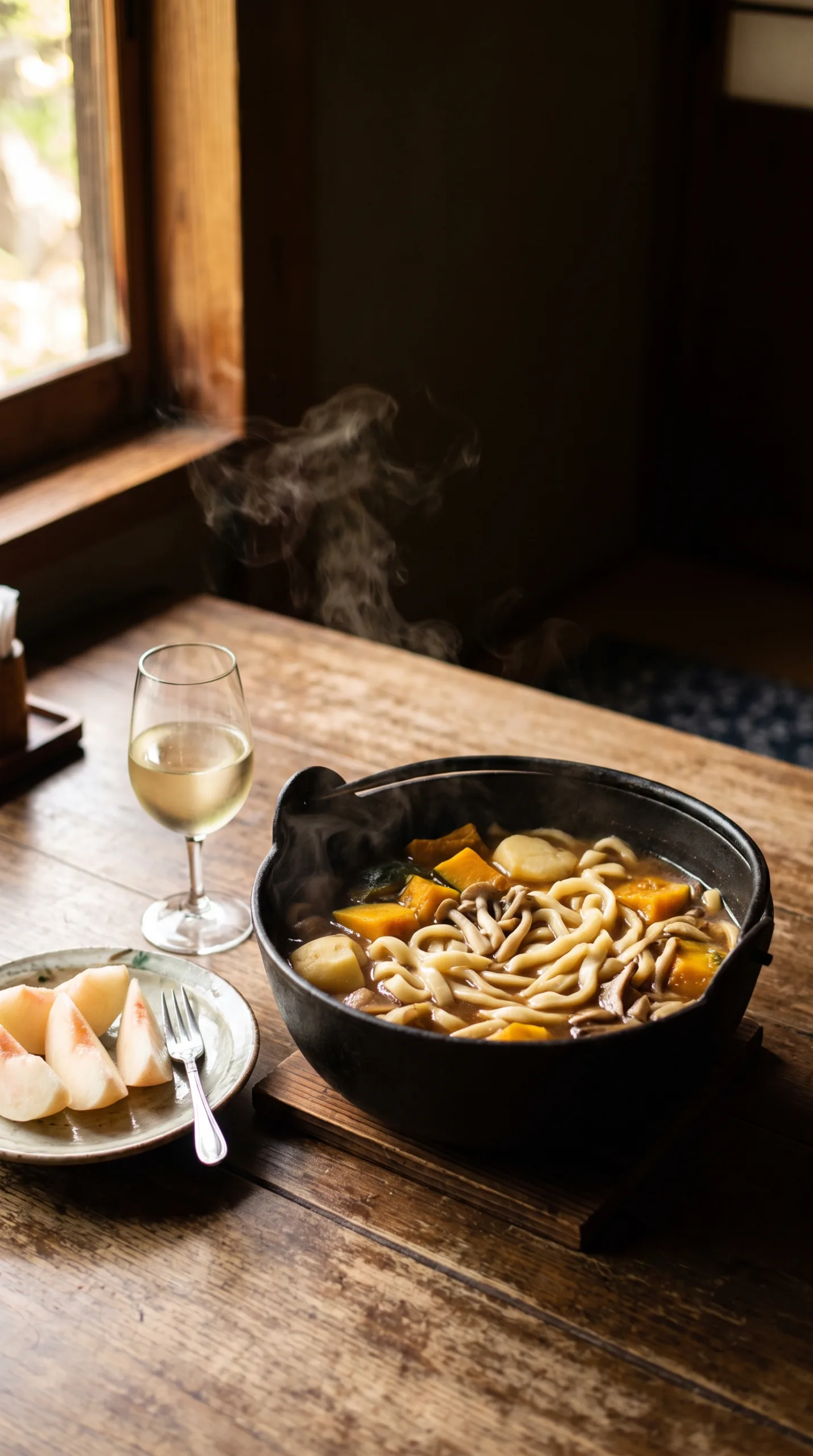
Hoto is the dish to order. Thick flat wheat noodles go straight into a miso broth with pumpkin and root vegetables, then the whole iron pot arrives still bubbling at your table. It started as farm food, not restaurant food, and it tastes like it. The pumpkin breaks down and thickens everything. One pot runs about 1,200 to 1,800 yen and easily feeds a hungry person.
Wine is the prefecture’s other calling card. The Yamanashi Prefectural Government’s wine pages put the count at over 90 wineries, the most of any prefecture, making around 30 percent of all Japanese wine. Most cluster in Katsunuma, in Koshu city, where tasting flights start near 500 yen a glass. The Koshu grape itself is pink-skinned and has grown here for roughly a thousand years. It makes a dry, light white that goes better with sashimi than anything imported does.
Fruit runs on a strict calendar. Cherries come in June. White peaches take over in July and August, and they’re the thing people carry home in padded boxes. Grapes start in late August and run into October. Pick-your-own orchards around Fuefuki and Koshu charge roughly 2,000 to 3,000 yen for 30 minutes of all-you-can-eat, and they sell out on summer weekends.
Kofu has one more local plate worth trying. Torimotsuni is chicken giblets simmered in a sweet soy glaze, cheap, and served in izakaya all over the city.
The honest problem is transport. Wineries sit spread across farmland with thin bus service, so tasting your way through Katsunuma without a car or a booked tour turns into a lot of walking between stops. And you can’t drive after tasting. Japan’s drink-driving limit is effectively zero.
Best Areas to Stay in Yamanashi
Lakeside ryokan in Fujikawaguchiko with Mount Fuji views typically run 25,000 to 60,000 yen per night, while business hotels in Kofu sit near 8,000 yen.
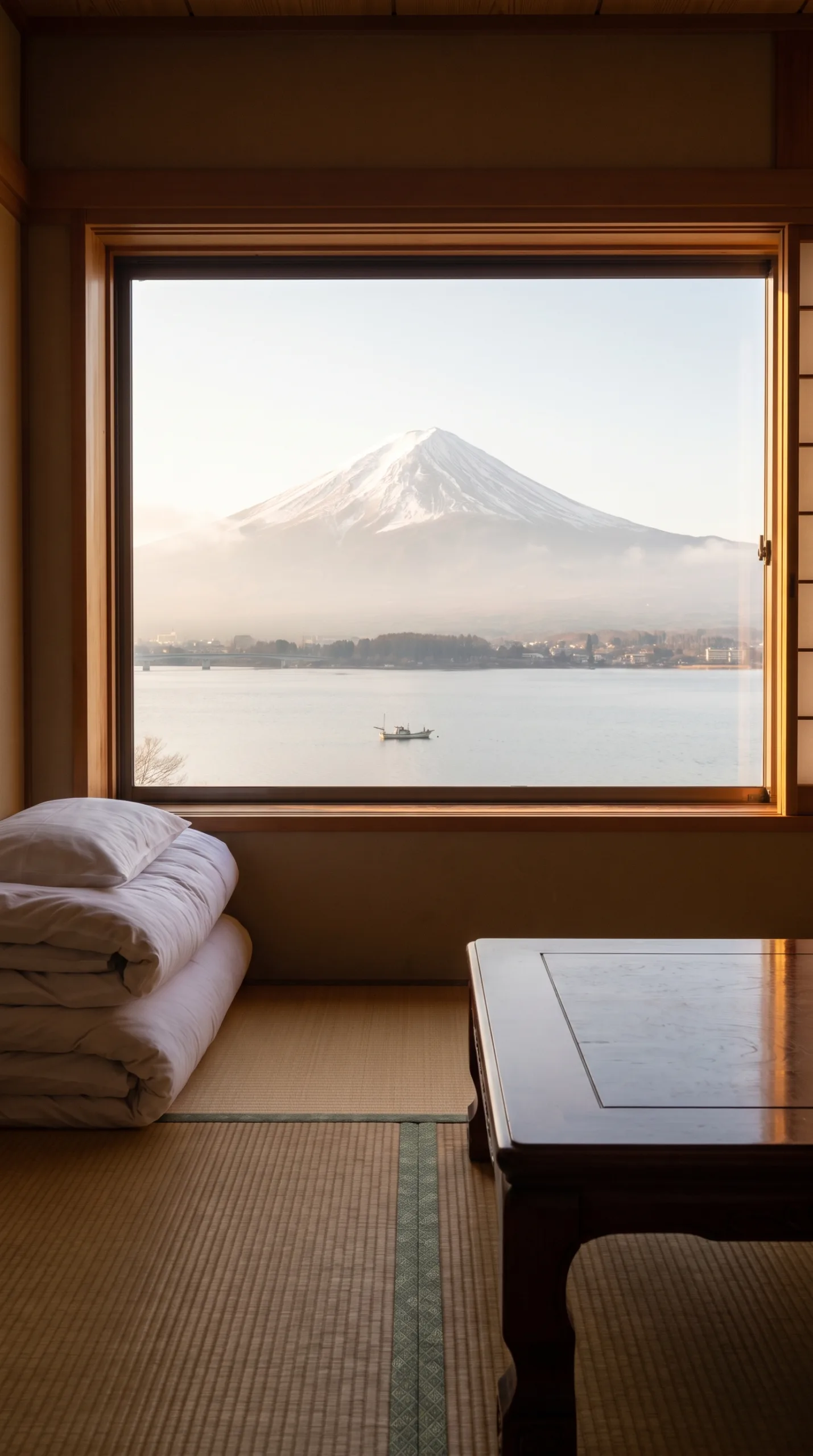
Fujikawaguchiko is the expensive choice and the obvious one. Rooms on the lake with a clear line to the mountain carry a hard premium, usually 25,000 to 60,000 yen a night for a ryokan with dinner and breakfast included. Same building, wrong side, and the price can drop by half. Ask which direction the window faces before you book, because listings love the phrase “Fuji view” for rooms that need you to lean out.
Kofu is the practical choice. Business hotels near the station go for around 8,000 yen, trains run in every direction, and you’re 20 minutes from the vineyards. Nobody comes to Kofu for the room. You come because it costs a third as much and you’d rather spend the difference on wine.
Isawa Onsen and Yamanashi City split the difference. Both have hot spring ryokan at prices well below the lake, usually 12,000 to 20,000 yen with meals, and both sit on the Chuo Line so getting around stays easy.
Book early if your dates are fixed. Fuji-facing rooms sell out months ahead for autumn weekends, the New Year period and Golden Week.
Here’s the part nobody puts in the brochure. A Fuji-view room is worth exactly nothing on a cloudy day, and you’ve already paid the premium. No hotel refunds weather. If a clear mountain matters that much, give yourself two nights and take two chances at it.
Getting to Yamanashi from Tokyo
The JR Azusa limited express reaches Kofu from Shinjuku in about 90 minutes for roughly 4,000 yen, and highway buses reach Kawaguchiko in around two hours.
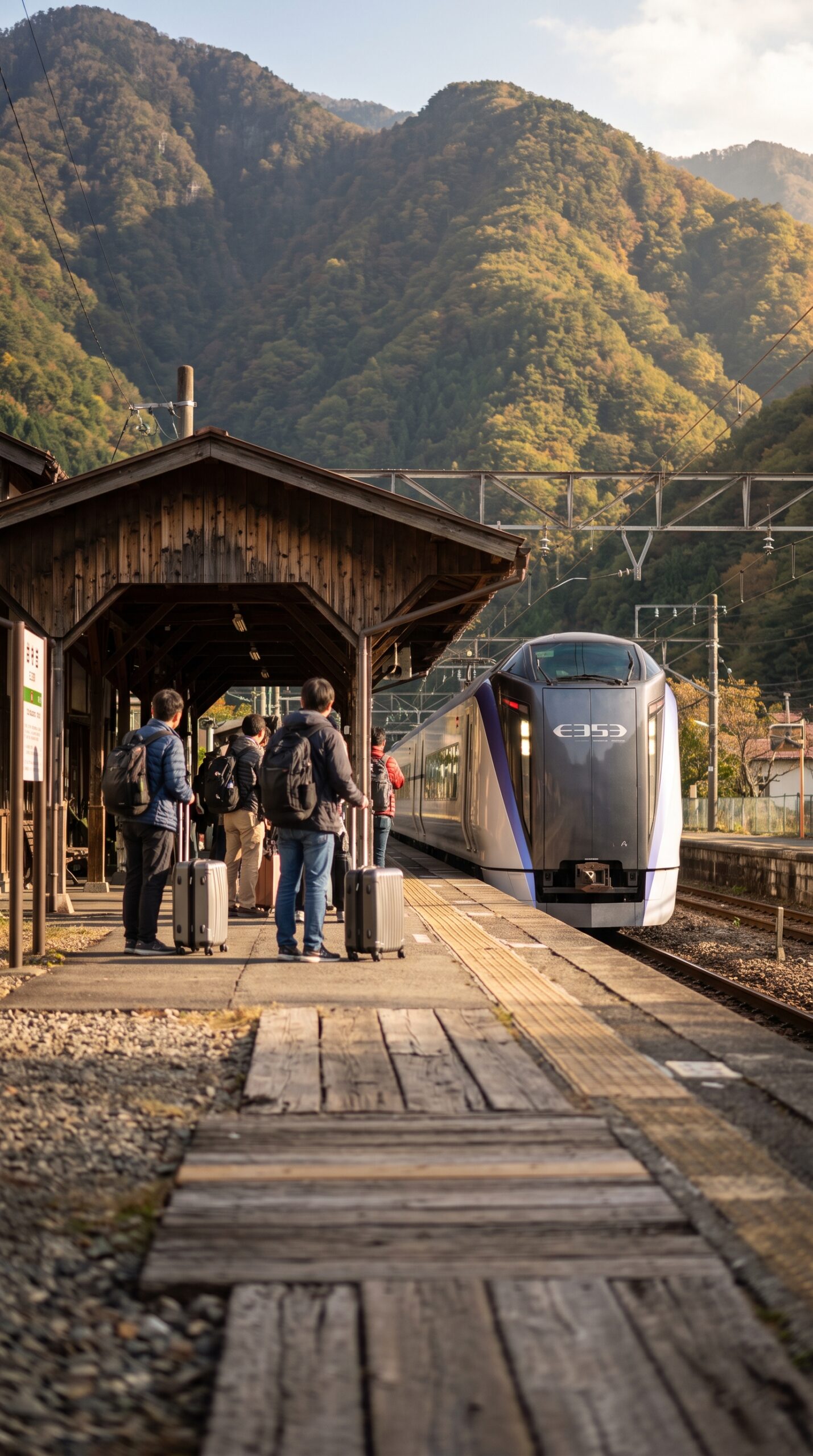
Rail is the simple option. The Azusa and Kaiji limited express trains leave Shinjuku in Tokyo and reach Kofu in about 90 minutes for roughly 4,000 yen, running on the JR Chuo Line. You can check the line on the JR East route maps. For the lakes, change at Otsuki onto the Fujikyu Railway, which runs the last 25 kilometres to Kawaguchiko.
Clear up one thing before you plan. There’s no shinkansen station anywhere in Yamanashi, so searching for a bullet train from Tokyo gets you nowhere. The limited express is the fast train here.
Buses often beat the train. Highway coaches leave the Shinjuku Expressway Bus Terminal and run straight to Kawaguchiko in about two hours for roughly 2,200 yen, with no transfers and luggage space underneath. Book ahead on weekends. They fill.
Inside the prefecture, things slow down. Buses link the lakes reliably but stop often, and getting between the lakes and Kofu by public transport eats most of a morning. A rental car pays for itself the moment you want wineries, orchards or an early start at a viewpoint.
One oddity worth a stop. The Chuo Shinkansen maglev test track runs through the prefecture, and its visitor centre near Tsuru lets you watch trains pass at over 500 km/h from a viewing gallery. The exhibition hall costs 420 yen for adults, while the Yamanashi Pavilion next door, which has its own third-floor viewing room, is free.
Day Trips You Can Add On
Hakone sits about 60 kilometres south of Lake Kawaguchi and connects by direct bus in roughly two hours, making it the easiest add-on from Yamanashi.
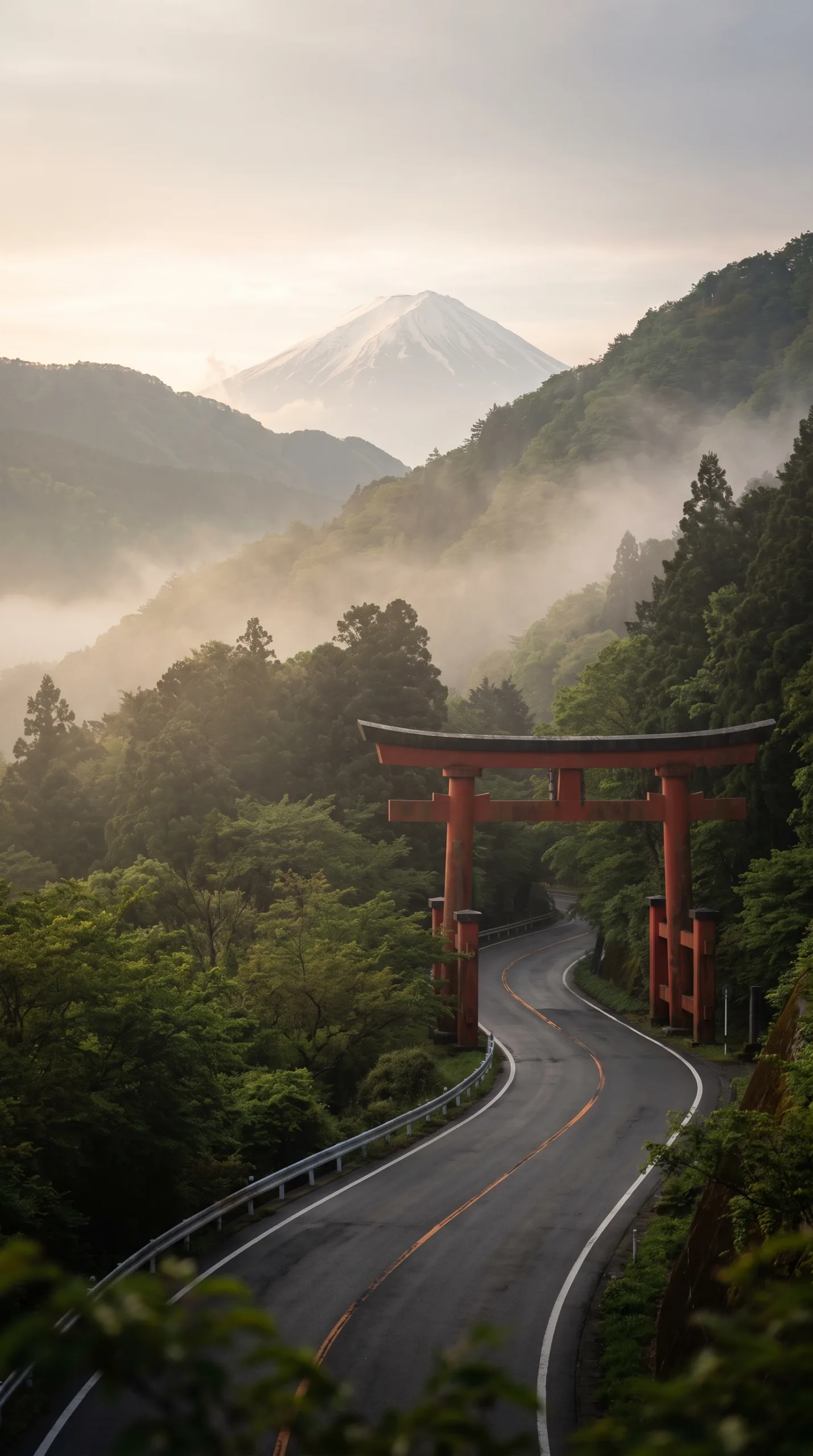
Hakone is the obvious add-on. It’s roughly 60 kilometres south of Lake Kawaguchi, about two hours by direct bus, and it sits inside the same national park. Hot springs are the draw, along with Lake Ashi, the ropeway over the sulphur vents at Owakudani, and a south-side view of Fuji that looks nothing like the northern one. The Hakone Tourist Information Center at Hakone-Yumoto is where most visits start.
People do search Yamanashi against Hakone, so here’s a straight comparison. Yamanashi wins on Fuji views, wine, fruit and price. Hakone wins on onsen quality, open-air museums and its rail-and-ropeway loop. Yamanashi suits two or three days. Hakone works as an overnight.
Time it right and the Fuji Shibazakura Festival is worth a half day. The grounds near Lake Motosu open roughly mid-April to late May, planted in bands of pink moss phlox with the mountain behind them. Adult entry is around 900 yen booked in advance or 1,000 yen on the day.
Heading west afterwards takes planning. Nagoya, Kyoto and Osaka all sit on the Tokaido line, and with no shinkansen station in Yamanashi you have to backtrack toward Tokyo or drop south to Shizuoka first. Budget an extra transfer and two hours over what a route map suggests.
One thing to skip. Pairing Yamanashi and Hakone into one day looks fine on a map and turns into four hours on a bus. Sleep in one of them instead.
Best Time to Visit Yamanashi
Mount Fuji is visible from Yamanashi on roughly 60 percent of winter days but under 20 percent of midsummer days, so November to February gives the clearest views.
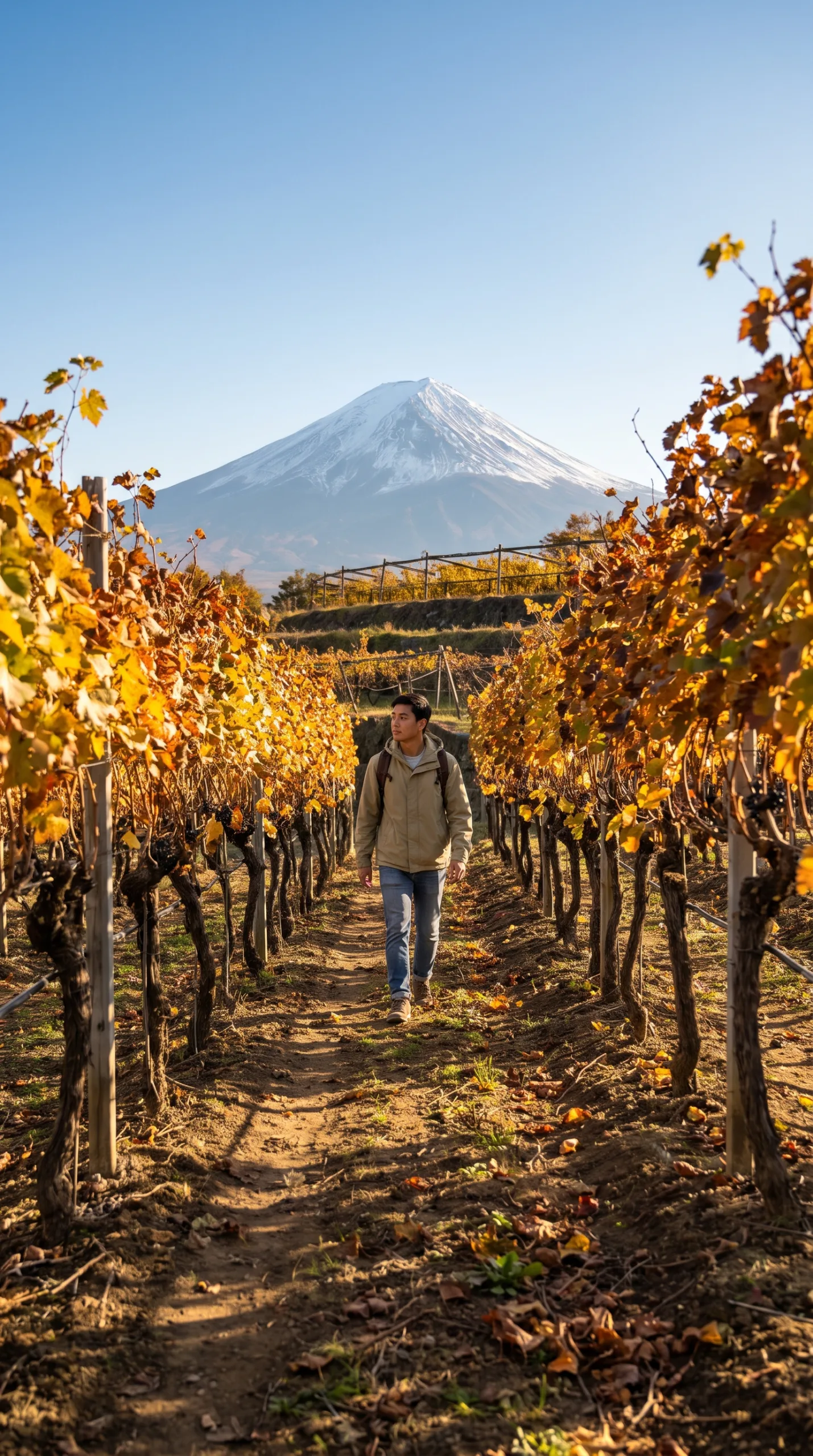
Winter wins on visibility, and it isn’t close. Cold dry air from November through February keeps the sky open, and the mountain shows on well over half of those mornings. Summer flips it. Humidity builds cloud by mid-morning and Fuji disappears behind it on most July and August afternoons. Check Japan Meteorological Agency climate data if you want the monthly detail before booking.
Spring brings colour instead. Cherry blossom hits the lakes in mid-April, later than Tokyo because of the altitude, and the shibazakura fields run into late May.
Autumn is the compromise everyone picks. November gives red maples around the lakes, clear air, and grape harvest still finishing in Koshu. It’s also the busiest month, so weekends turn into traffic.
Fruit sets its own calendar. Cherries in June, white peaches in July and August, grapes from late August to October. Pick a month based on what you want to eat and the weather sorts itself out after.
Pack warmer than you think. The Fuji Five Lakes sit between 830 and 1,000 metres, so nights run several degrees colder than Tokyo all year, and winter mornings at the viewpoints drop below freezing. A hotel that quotes mild weather is quoting Kofu, down in the basin.
Two dates to avoid if crowds bother you. Golden Week in early May and the autumn weekends in November both jam the lakeside roads badly.
Frequently Asked Questions
Is Yamanashi in Tokyo?
No. Yamanashi is a separate prefecture immediately west of Tokyo, in Japan’s Chubu region, with Kofu as its capital. The two border each other but are governed separately. Trains between them take about 90 minutes, which is why plenty of people treat Yamanashi as a day trip and assume it’s part of the capital.
How many days should you spend in Yamanashi?
Two nights and three days covers both halves of the prefecture without rushing. One night works if you stay by the lakes and only want Fuji viewpoints and Oshino Hakkai. Add a third night if wine country in Koshu and fruit picking are on your list, since those sit an hour from the lakes and eat a full day on their own.
Is Yamanashi worth visiting?
Yes, if Mount Fuji is on your list. Yamanashi holds the classic north side views, the Fuji Five Lakes, the Chureito Pagoda shot and the Oshino Hakkai springs, plus wineries in the Kofu valley. It works as a long day trip from Tokyo, though staying a night by Lake Kawaguchi gives you the still dawn reflections most day trippers miss.
Is Mt. Fuji in Yamanashi?
Partly. Mount Fuji straddles the border between Yamanashi and Shizuoka, and Yamanashi holds the northern half, including the summit approach used by the Yoshida Trail. Every one of the Fuji Five Lakes sits on the Yamanashi side, which is why the classic reflection shots and the Chureito Pagoda view all come from this prefecture rather than Shizuoka.
Do you need a car for the Fuji Five Lakes?
Not for Lake Kawaguchi. Buses circle the lake and reach Oshino Hakkai and Chureito Pagoda, and Kawaguchiko has its own train station. A car starts to matter once you want the quieter lakes such as Saiko, Shoji and Motosu, an early start at a viewpoint before the buses run, or the wineries and orchards around Katsunuma, where bus service is thin.