Estimated reading time: 13 minutes
Last updated: 23 November 2026
Table of Contents
- How Far Is Saitama From Tokyo?
- Top Sights Across Saitama Prefecture
- Kawagoe, Omiya and the Other Districts Worth a Day
- Saitama’s Famous Food and Where to Eat It
- Hotels in Saitama and Where to Base Yourself
- Trains, Fares and Getting Around Saitama
- What a Day in Saitama Actually Costs
- Day Trips You Can Add On From Saitama
- Best Time to Visit Saitama and What to Bring
- Frequently Asked Questions
How Far Is Saitama From Tokyo?
Saitama is a prefecture directly north of Tokyo on Japan‘s main island of Honshu, with Saitama City as its capital. Its southern edge starts about 20 km from central Tokyo, so trains from Ikebukuro reach Kawagoe in roughly 30 minutes and Omiya in about 25. No bullet train or overnight stay is needed for a visit.
How This Guide Was Researched
This guide was compiled from travel documentaries, verified tourism sources, and community traveler feedback. Prices and operational details were confirmed at the time of writing. We recommend checking official sources for the latest information before your trip.
Want to see this for yourself? Watch the full video in 4K.
Saitama Prefecture wraps around the top of Tokyo and touches six other prefectures: Chiba, Ibaraki, Tochigi, Gunma, Nagano and Yamanashi. It’s landlocked. The east is flat and built up, the west climbs into the Chichibu mountains, and that’s where the hiking trails and onsen sit. About 7.3 million people live here, per the Saitama Prefectural Government, which makes it Japan’s fifth most populous prefecture.
One thing trips people up. Saitama is a prefecture and also a city, and they’re not the same place. Searches for “saitama ken japan” usually mean the prefecture. The Saitama Prefecture tourism office covers both.
Be honest with yourself about what this trip is. Most of Saitama is commuter suburbs, and it won’t compete with Kyoto for atmosphere. Go for a day, not a week. Three things pull visitors north: Kawagoe’s Edo warehouse street, Omiya’s bonsai village and railway museum, and concerts at the Saitama Super Arena. The Japan National Tourism Organization’s Saitama page puts it in the Kanto region, an easy hop from anywhere in the capital.
Top Sights Across Saitama Prefecture
Hitsujiyama Park in Chichibu plants around 400,000 moss phlox across 17,600 square metres, and the flowers peak between late April and early May each year.
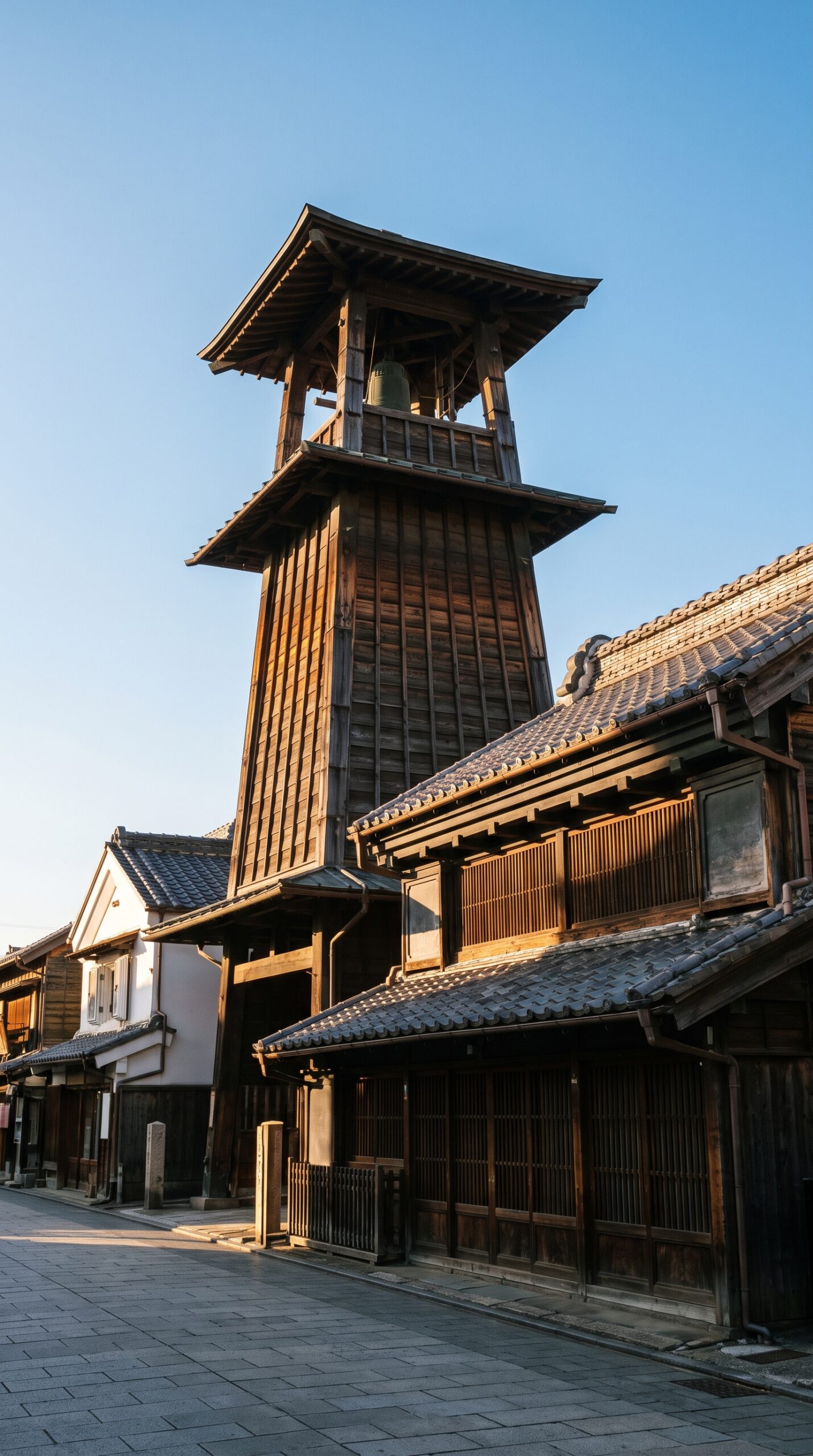
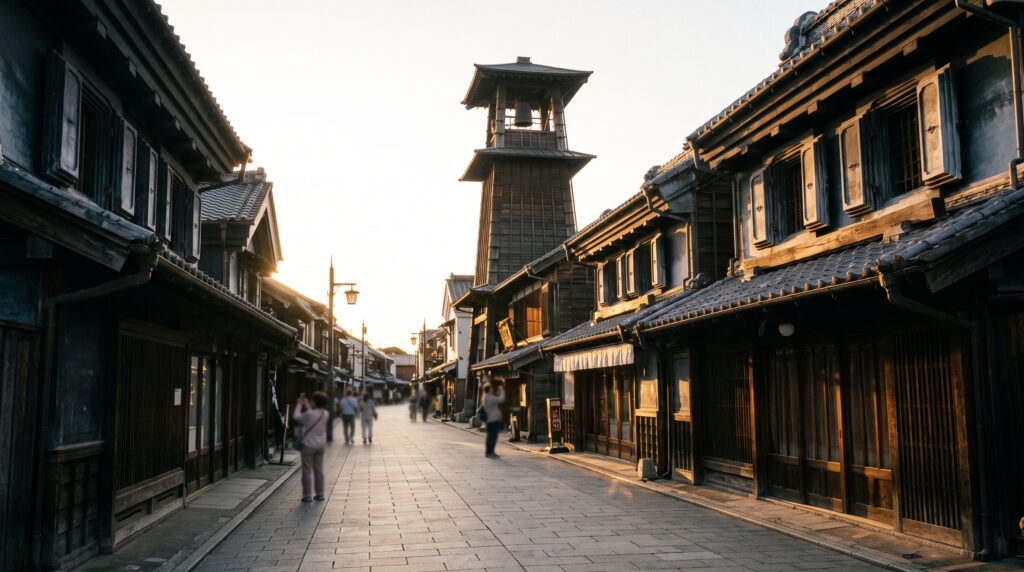
Start with Kawagoe. The Kurazukuri warehouse street runs about 400 metres and holds roughly 30 clay-walled merchant houses, all dark plaster and heavy tiled roofs. They survived the fire that flattened the rest of the town in 1893 because the clay walls were built to resist exactly that. The Toki no Kane bell tower went up again in 1894 and still rings four times a day, at 6am, noon, 3pm and 6pm. Around the corner sits Kashiya Yokocho, a short candy lane packed with about 20 sweet shops. Kids love it. Adults leave with a bag of sweet potato chips.
Omiya is the second cluster, and it’s a 20 minute train ride away. The Railway Museum opened there in 2007 and holds one of the largest rail collections in the country, with real steam locomotives you can walk under and a shinkansen driving simulator that books out on weekends. Adult tickets run 1,600 yen. A short walk north, the Omiya Bonsai Village is still a working cluster of nurseries, started by growers who left Tokyo after the 1923 earthquake wrecked their land. The museum there charges 310 yen and the surrounding streets cost nothing to walk.
Chichibu sits west, up in the mountains, and it’s the outdoor half of the prefecture. Hitsujiyama Park is the draw. Per the Chichibu tourism office, about 400,000 moss phlox plants cover the hillside in bands of pink, white and purple, with Mount Buko looming behind them. Late April into the first week of May is the window. Cherry blossom searches for Saitama point here too, and to the tree rows in Omiya Park, both far quieter than anything in Tokyo. Nagatoro, further along the same line, runs wooden boats down the Arakawa through flat slate rock beds.
Two more names come up constantly in Saitama searches, and both are event venues rather than places to wander. Saitama Super Arena seats around 37,000 for concerts. Saitama Stadium 2002 is the country’s largest football-only ground, home to Urawa Red Diamonds. Go if you have a ticket. Otherwise skip them.
One honest warning. These sights sit far apart, and crossing the prefecture usually means a change at Omiya. Pick one cluster per day. Trying to see Kawagoe and Chichibu in the same daylight hours will leave you on trains for most of it.
Kawagoe, Omiya and the Other Districts Worth a Day
Kawagoe holds Saitama’s only preserved Edo warehouse district, roughly 30 clay merchant buildings within a ten minute walk of Hon-Kawagoe Station.
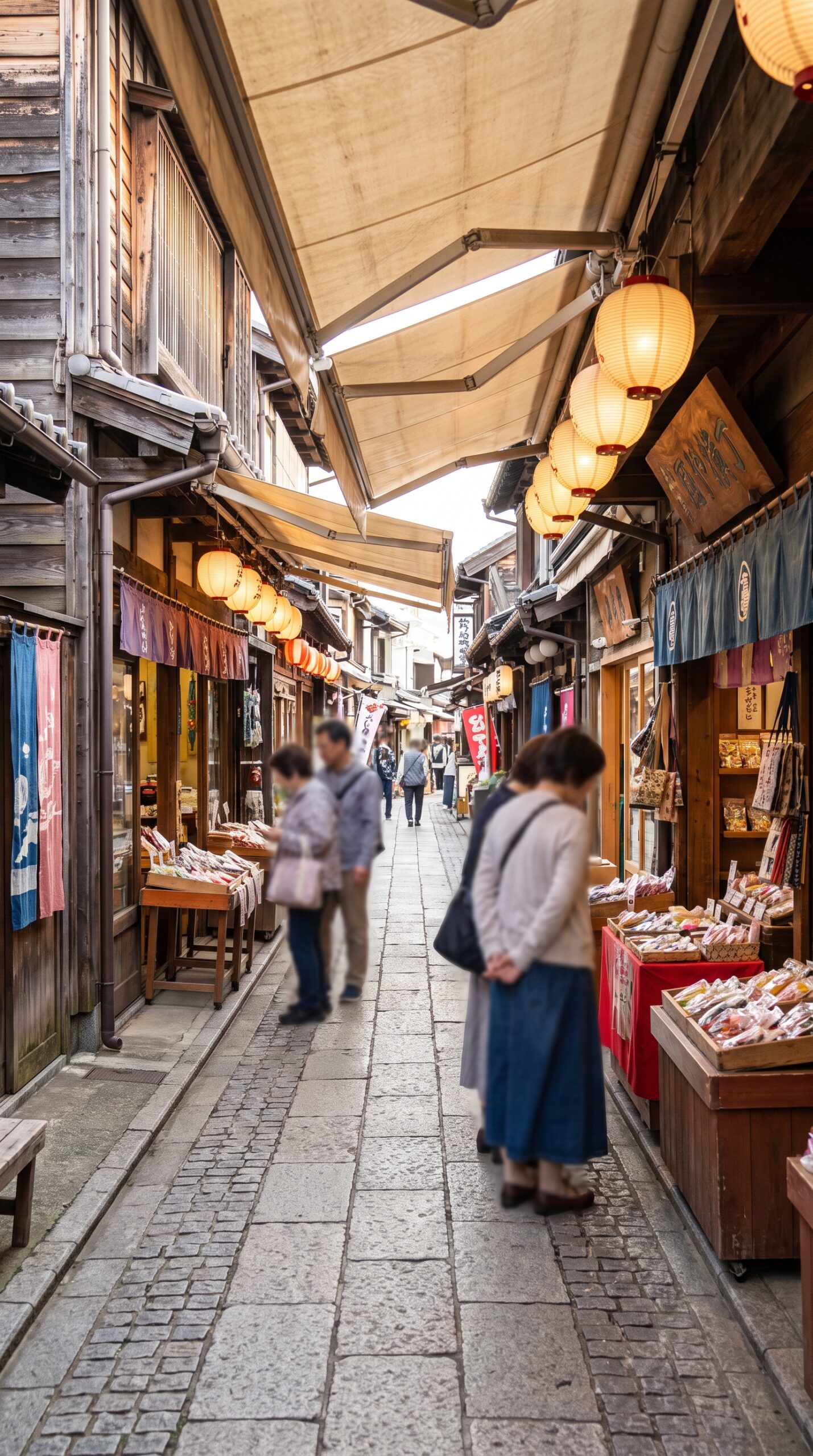
Kawagoe deserves a full day. The warehouse street and Kashiya Yokocho fill a morning, then Kita-in temple takes the afternoon. That temple keeps about 540 stone rakan statues, each carved with a different face, and no two are alike. The Koedo Kawagoe Tourism Association runs a small information desk near the station if you want a paper map.
Omiya in Saitama is the transport hub, and every line stops there. It’s the bonsai and railway district. Easy to bolt onto a Kawagoe day since you’ll change trains there anyway.
Urawa is the administrative centre and the home ground of the Urawa Red Diamonds. Worth knowing if you’re chasing a football match. Kawaguchi and Tokorozawa are mostly residential and commercial, though Tokorozawa does hold the Seibu baseball dome and the Kadokawa Culture Museum, a hulking stone building designed by Kengo Kuma.
Be realistic about the rest. Outside Kawagoe and Omiya, most Saitama neighborhoods are ordinary commuter towns. Nice places to live. Not much for a visitor.
Saitama’s Famous Food and Where to Eat It
Kawagoe’s signature satsumaimo sweet potato appears in over a dozen forms along Kurazukuri street, with snacks priced between 200 and 500 yen.
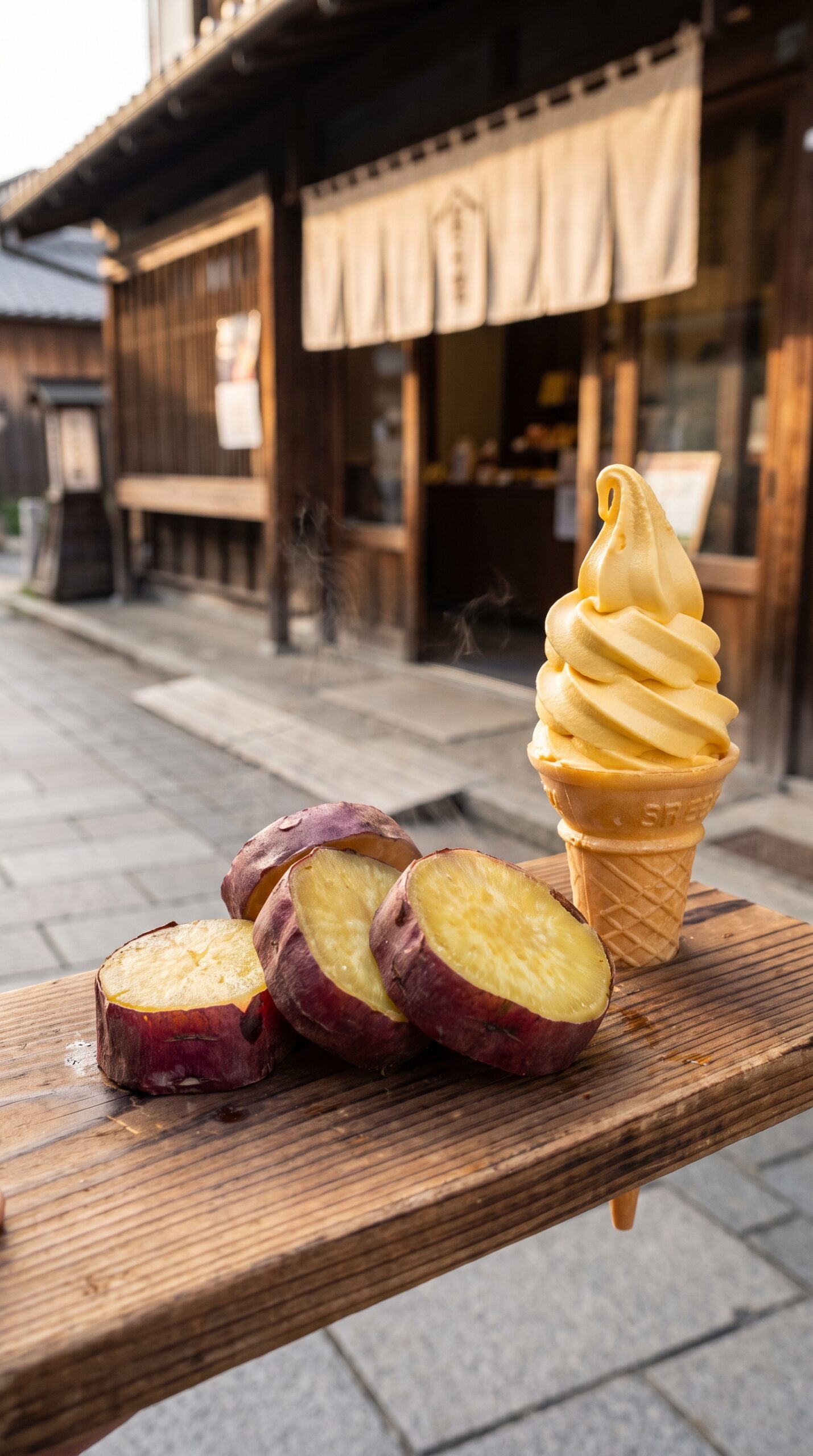
Sweet potato is the thing Saitama is famous for, and Kawagoe pushes it hard. Roasted whole. Sliced into chips. Churned into soft serve. Brewed into Coedo beer, which is genuinely good and sold in most shops on the main street. Snacks run 200 to 500 yen, so grazing your way down Kurazukuri costs less than a sit-down lunch.
Unagi is the other Kawagoe speciality. Freshwater eel, grilled over charcoal, brushed with a sweet soy glaze. The town built its reputation on it back when river trade ran through here. Expect 2,500 yen and up for a proper unagi set, so it’s a splurge, not a snack.
Musashino udon is what farmers in Saitama actually ate. Thick, chewy noodles served cold with a hot dipping broth, usually 900 to 1,200 yen a bowl per the Saitama Prefecture tourism guide. Gyoza no Manshu is the local dumpling chain, cheap and everywhere.
One practical warning. Most Kawagoe stalls shut by 17:00. Eat early or you’re stuck with a convenience store.
Hotels in Saitama and Where to Base Yourself
Business hotels near Omiya Station in Saitama typically cost 6,000 to 11,000 yen per night, roughly half the rate of comparable rooms in central Tokyo.
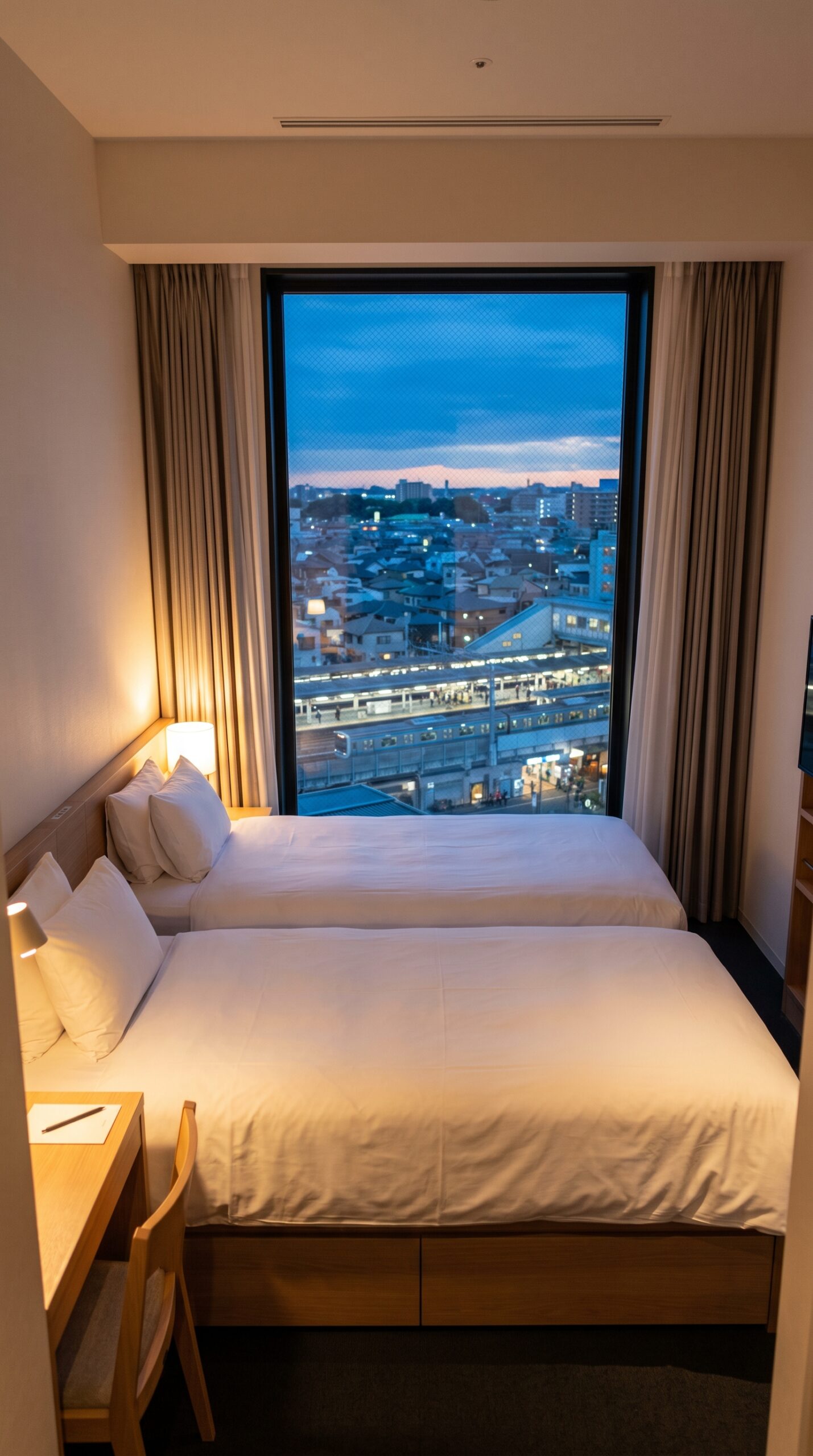
Sleep in Tokyo. That’s the short version. The train ride is 30 minutes, and Tokyo has far more going on after dark, so a hotel in Saitama Japan rarely makes sense for a first trip.
One exception. If you’ve got tickets to Saitama Super Arena or Saitama Stadium, book near Omiya or Saitama-Shintoshin and skip the crush for the last train.
Omiya Station is the practical base if you do stay. Business hotels there run 6,000 to 11,000 yen a night for two, and every line passes through, so nothing is single change away. The Saitama Tourism Support Desk keeps current listings.
Kawagoe has a few small hotels and guesthouses. Worth it for one reason: the warehouse street at 07:00, before the coach groups land. Up in Chichibu, ryokan with onsen baths start around 12,000 yen per person including dinner and breakfast.
Trains, Fares and Getting Around Saitama
Tobu Tojo Line express trains run from Ikebukuro to Kawagoe in about 30 minutes for roughly 500 yen, with departures every few minutes at peak times.
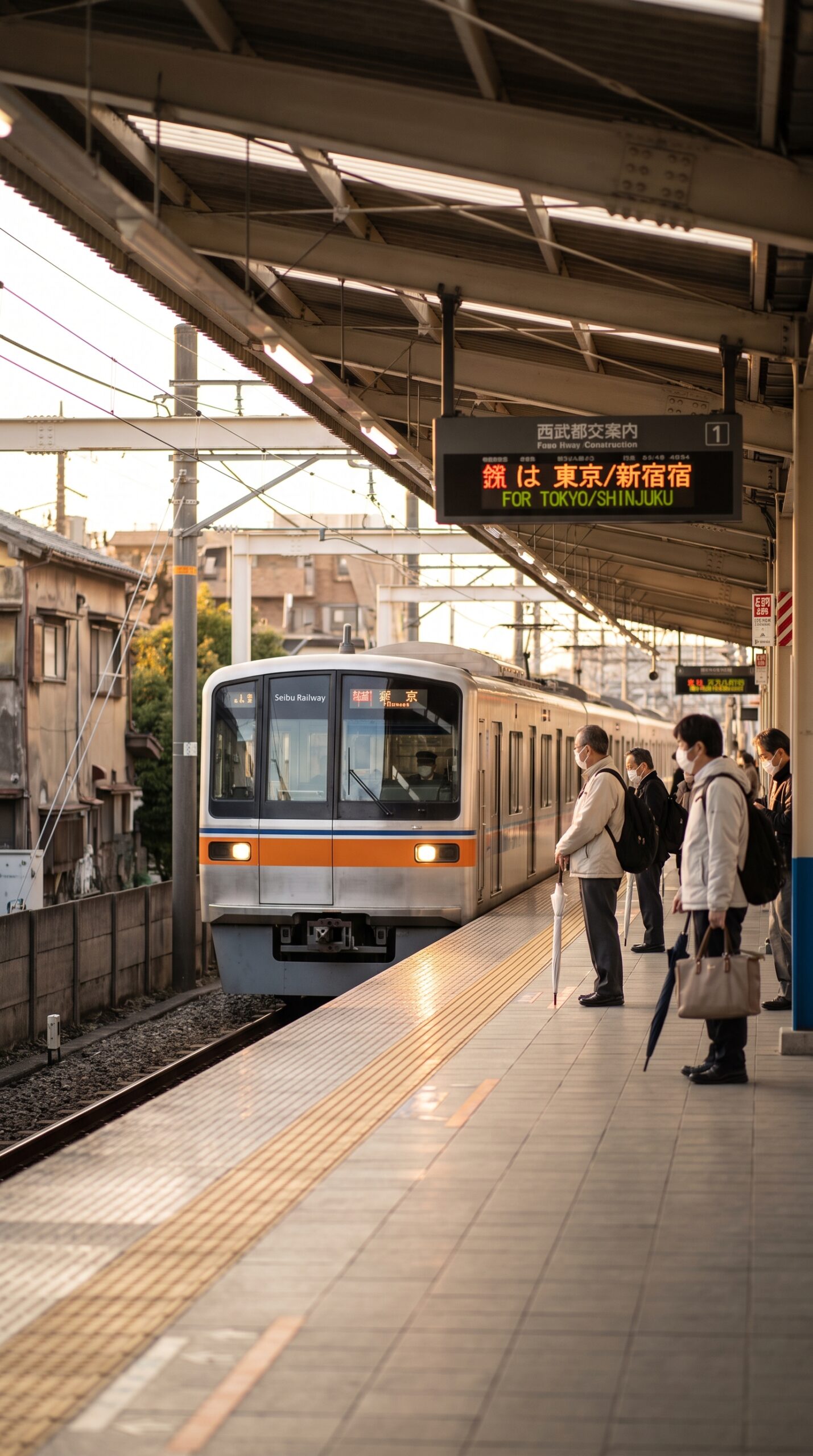
Three lines get you from Tokyo to Kawagoe. The Tobu Railway Tojo Line leaves Ikebukuro and takes about 30 minutes on an express. The Seibu Shinjuku Line runs to Hon-Kawagoe in roughly 45. The JR Kawagoe Line covers the last hop from Omiya in 20. Fares sit between 300 and 800 yen one way, cheaper than a short taxi ride inside Tokyo.
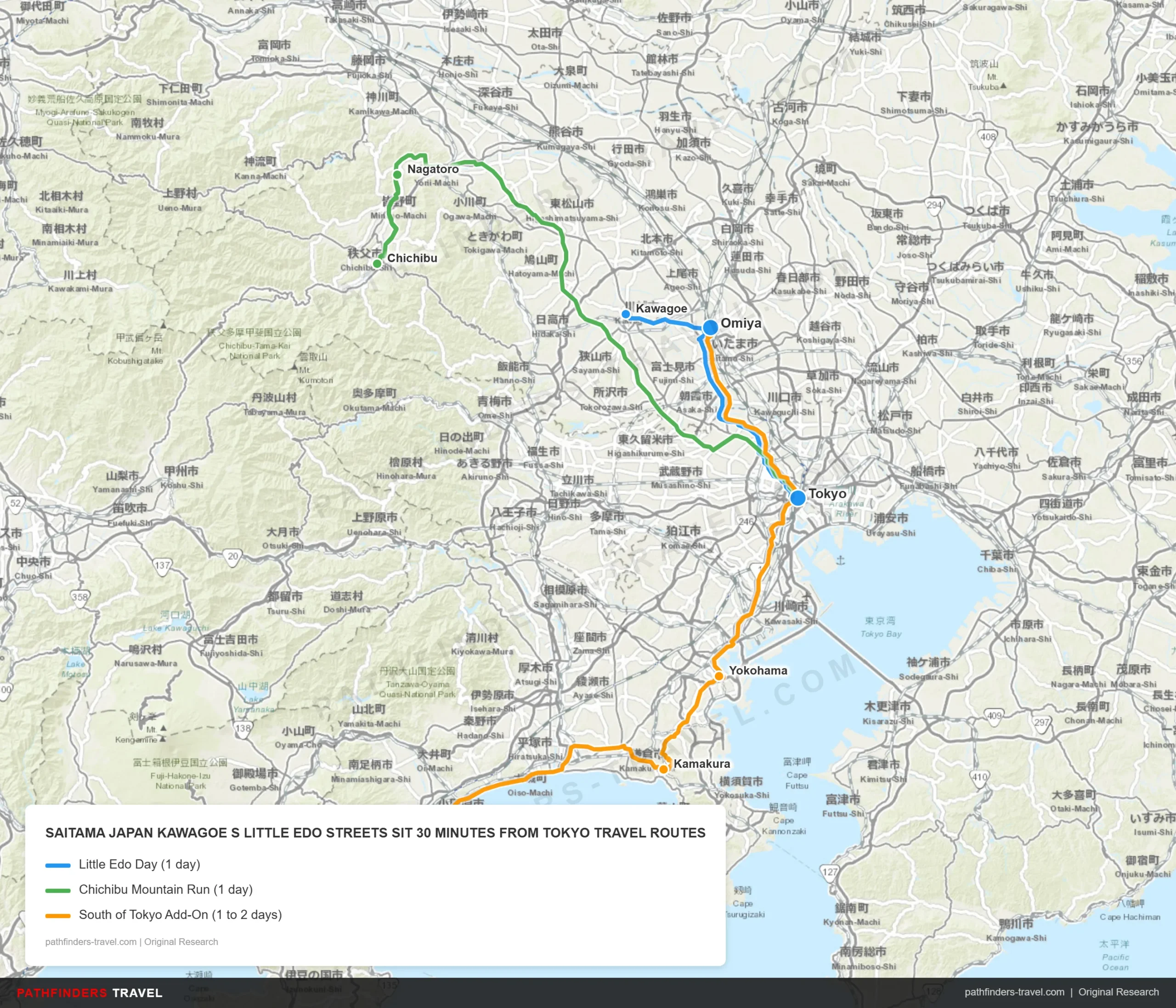
| # | Stop | Highlights | Drive Time |
|---|---|---|---|
| 1 | Tokyo | Start at Ikebukuro for the Tobu Tojo Line express, or Shinjuku for the Seibu line. | Start |
| 2 | Omiya | Railway Museum, 1,600 yen for adults, plus the bonsai village lanes just north. | 25m by train |
| 3 | Kawagoe | Kurazukuri warehouse street, Toki no Kane bell tower, Kashiya Yokocho candy lane, Kita-in temple. | 20m by train |
| # | Stop | Highlights | Drive Time |
|---|---|---|---|
| 1 | Tokyo | Seibu limited express leaves Ikebukuro for Seibu-Chichibu. | Start |
| 2 | Chichibu | Chichibu Shrine and Hitsujiyama Park, where moss phlox peaks in late April. | 80m by train |
| 3 | Nagatoro | Wooden boats down the Arakawa through flat slate rock beds. | 30m by train |
| # | Stop | Highlights | Drive Time |
|---|---|---|---|
| 1 | Omiya | Saitama’s transport hub and the Shonan-Shinjuku Line starting point. | Start |
| 2 | Tokyo | Every Saitama line ends here, so pair a half day in Kawagoe with an evening in Shinjuku. | 25m by train |
| 3 | Yokohama | Waterfront and Chinatown, about 70 minutes from Omiya direct. | 45m by train |
| 4 | Kamakura | The Great Buddha and the coastal temples, roughly 90 minutes from Saitama. | 30m by train |
| 5 | Hakone | Onsen town about two and a half hours out, better as an overnight than a day trip. | 90m by train |
Omiya is the shinkansen stop, per the JR East route maps, so it’s handy if you’re carrying on north to Sendai or Niigata.
Saitama has no airport. Haneda is about 75 minutes away by train and bus, Narita closer to 100.
Get a Suica or Pasmo card. It works on every line here. The JR Pass only covers JR sections, which leaves out both private routes to Kawagoe. Honest warning: hopping between Saitama towns often means backtracking through Omiya, so cluster your stops.
What a Day in Saitama Actually Costs
Planning Tip
A day trip from Tokyo to Saitama costs roughly 3,000 to 5,500 yen per person including return train fare, lunch, snacks and one museum ticket.
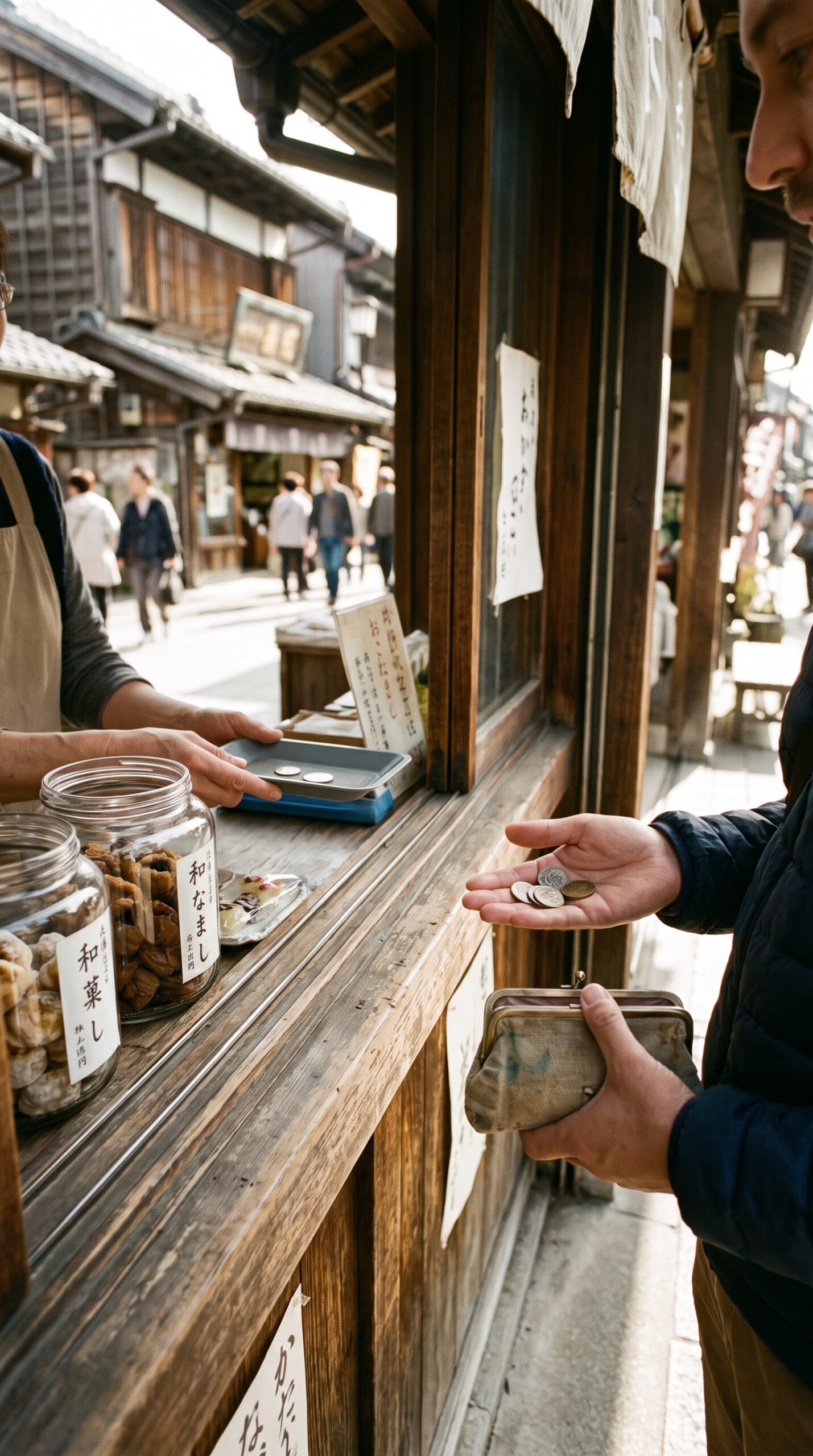
Here’s the real breakdown for a Saitama day trip. Return train from central Tokyo, 600 to 1,600 yen. Lunch, 900 to 1,800. Snacks along the street, another 500 to 1,000. One museum, 600 to 1,600 depending which. That lands at 3,000 to 5,500 yen a head, shopping not included.
The Railway Museum is the biggest single ticket at 1,600 yen for adults, per The Railway Museum ticket page. Kawagoe’s temples ask 300 to 400 yen each.
Carry cash. Plenty of Kawagoe shops and small restaurants take nothing else, and ATMs that accept foreign cards are basically limited to convenience stores.
Some of the best bits are free. The warehouse street, the bell tower, Omiya Park, the bonsai village lanes. Walking those costs nothing.
Day Trips You Can Add On From Saitama
Chichibu sits about 80 minutes from Ikebukuro by Seibu limited express, making it the most practical add-on from Kawagoe or central Tokyo.
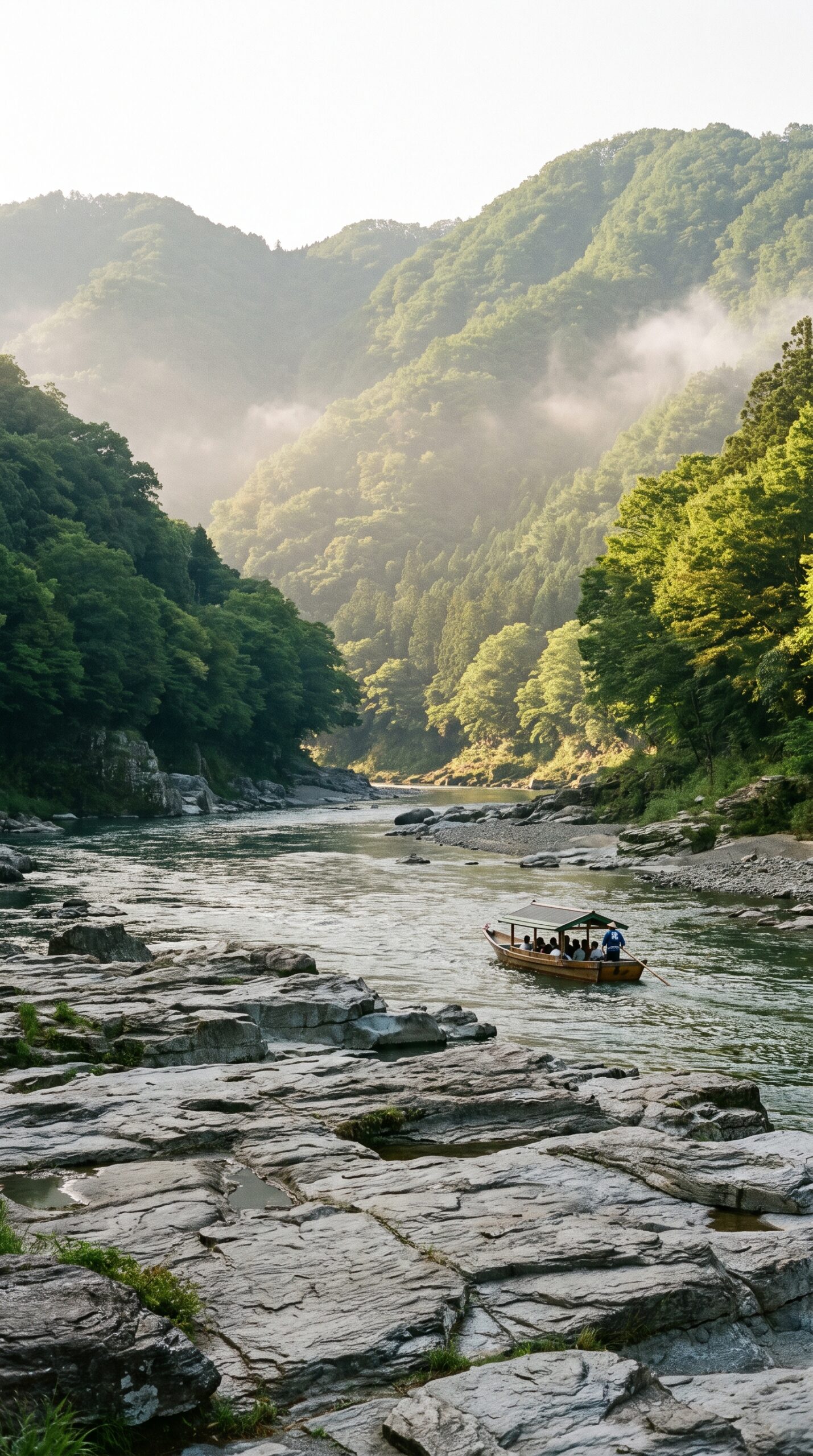
Chichibu and Nagatoro sit west, deep in the hills. Wooden boats run the Arakawa through flat slate rock beds at Nagatoro. Chichibu Shrine and the Hitsujiyama flower park fill the rest of a day, and the Chichibu tourism organization lists what’s open by season. The Seibu Railway limited express covers Ikebukuro to Seibu-Chichibu in about 80 minutes.
Tokyo pairs with everything, since every Saitama line ends there. A half day in Kawagoe and an evening in Shinjuku works fine.
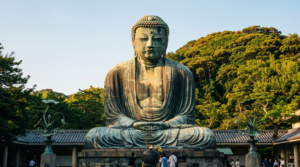
Yokohama is about 70 minutes from Omiya on the Shonan-Shinjuku Line, good for the waterfront and Chinatown. Kamakura takes roughly 90 minutes and pays off with the Great Buddha and the coastal temples. Hakone runs closer to two and a half hours, so make it an overnight instead.
Pick one direction per day. Saitama sits north of Tokyo, and almost everything else on this list sits south of it.
Best Time to Visit Saitama and What to Bring
Kumagaya in Saitama has recorded temperatures above 41C in summer, so late March to May and October to November are the comfortable windows for visiting.
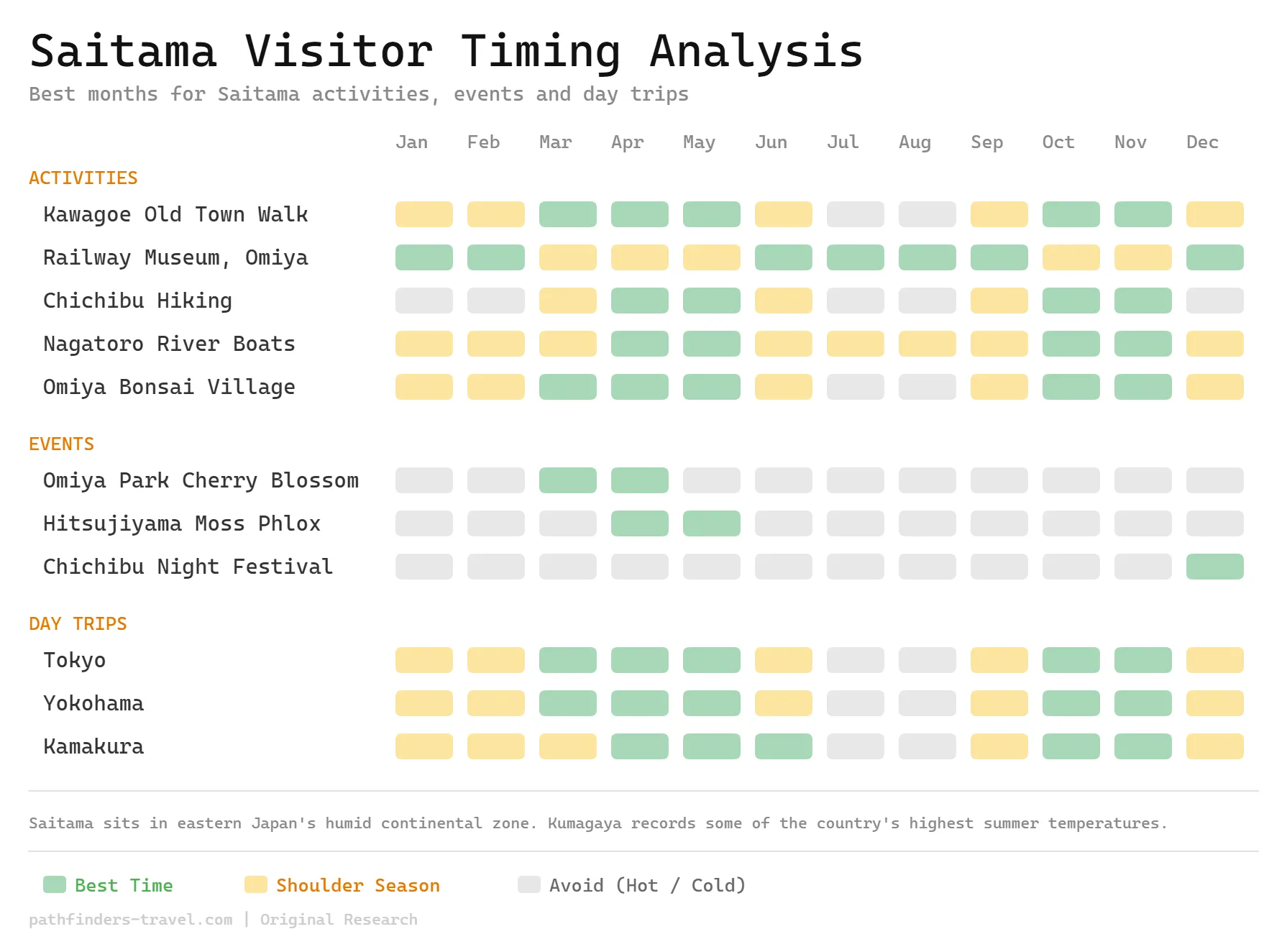
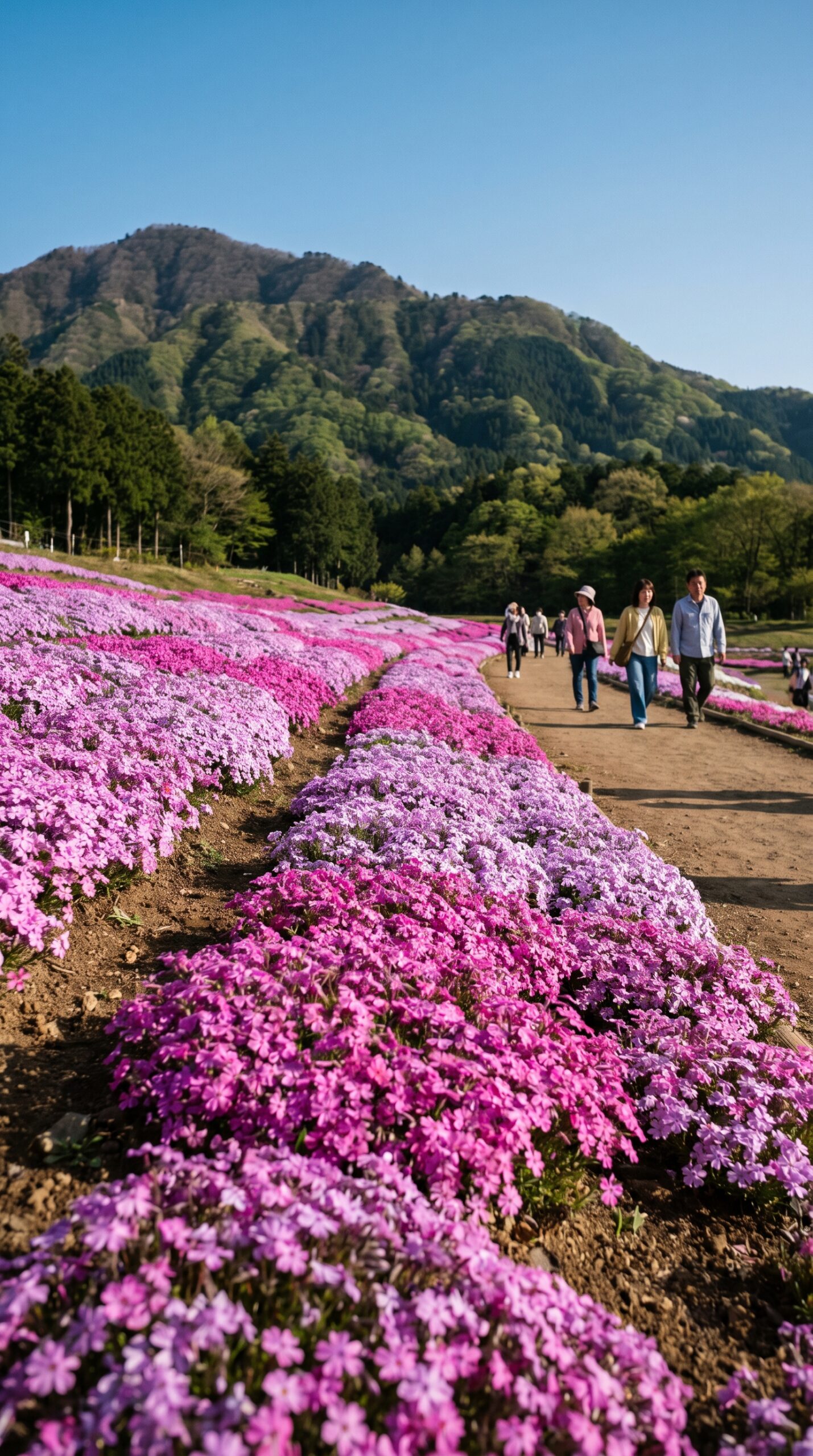
Three good windows. Late March into early April for cherry blossom in Omiya Park. Late April into early May for the Hitsujiyama moss phlox. Late October through November for autumn colour in Chichibu.
Skip July and August if you can. Kumagaya holds one of Japan’s highest recorded temperatures, and Saitama Japan weather in midsummer makes walking Kawagoe genuinely unpleasant. Check the Japan Meteorological Agency climate normals before you book.
Winter is dry and clear. The Chichibu Night Festival runs 2 and 3 December with huge floats and fireworks, and it’s packed.
Bring shoes for uneven stone. Bring cash. Golden Week and the moss phlox peak collide, so avoid early May unless crowds don’t bother you.
Frequently Asked Questions
What is Saitama famous for?
Saitama is best known for Kawagoe’s preserved Edo warehouse street, the Omiya bonsai village and the Railway Museum. The prefecture also hosts concerts at Saitama Super Arena and football at Saitama Stadium 2002. Farmers here grow a large share of Japan’s sweet potato and udon wheat.
What is there to do in Saitama, Japan?
Walk Kawagoe’s warehouse street and candy alley, visit the Railway Museum in Omiya, then hike or ride a river boat in Chichibu. Most of it fits into one or two day trips from Tokyo. Spring brings moss phlox at Hitsujiyama, and November brings autumn colour through the Chichibu valley.
Is Kawagoe worth visiting?
Yes. Kawagoe, nicknamed Little Edo, is the highlight of Saitama, with a preserved street of Edo-era kurazukuri warehouses, the wooden Toki no Kane bell tower, and a candy-shop lane. It sits about 30 minutes from central Tokyo, which makes it one of the easiest half-day trips from the capital.
What is Saitama’s famous food?
Sweet potato from Kawagoe and thick Musashino udon are the two dishes Saitama is known for. Unagi, grilled freshwater eel, is the local splurge. Coedo brews craft beer with sweet potato. All three turn up along Kurazukuri street.
What can you visit in Saitama in winter?
The Chichibu Night Festival on 2 and 3 December, the Railway Museum, and Kawagoe’s old town, which is quietest in January. The Misotsuchi icicles in Chichibu get lit up on winter evenings. Days are dry and clear, with good views of Mount Buko.