Estimated reading time: 13 minutes
Last updated: 25 November 2026
Table of Contents
- Is Yokohama Worth a Day Trip From Tokyo?
- Top Sights in Yokohama, From Chinatown to the Ferris Wheel
- Minato Mirai, Motomachi and the Districts That Matter
- Eating in Yokohama, Chinatown and Beyond
- Hotels in Yokohama and Which Area to Book
- Trains, Airports and Getting Around Yokohama
- What a Yokohama Day Costs
- Where to Go Next From Yokohama
- Best Time to Visit Yokohama and Its Weather
- Frequently Asked Questions
Is Yokohama Worth a Day Trip From Tokyo?
Yes. Yokohama sits about 30 km south of central Tokyo in Kanagawa Prefecture, and trains from Tokyo Station reach it in 25 to 30 minutes for around 500 yen. A single day covers Chinatown, the Minato Mirai waterfront, Sankeien Garden and Yamashita Park without rushing, so almost nobody stays overnight.
How This Guide Was Researched
This guide was compiled from travel documentaries, verified tourism sources, and community traveler feedback. Prices and operational details were confirmed at the time of writing. We recommend checking official sources for the latest information before your trip.
Want to see this for yourself? Watch the full video in 4K.
Yokohama sits on Tokyo Bay in Kanagawa Prefecture, straight down the coast from Tokyo. About 3.7 million people live here, per the City of Yokohama, which makes it the largest single municipality in the country. The two cities have grown into each other, so the ride south feels like crossing town rather than leaving it. The Yokohama Official Visitors Guide covers the whole area.
Why it looks so unlike the rest of Japan comes down to one date. The port opened to foreign trade in 1859. Traders, sailors and merchants poured in, and what grew was a Chinatown, a hillside of Western houses and a working harbour. Not temples.
A day fills itself. Yokohama Chinatown, the Minato Mirai waterfront, Sankeien Garden, Yamashita Park, and the site where the moving Gundam statue stood. The Japan National Tourism Organization’s Yokohama page maps it out.
One honest warning. If you came to Japan for old wooden temples and quiet gravel paths, this city won’t scratch that itch. Go to Kamakura instead.
Top Sights in Yokohama, From Chinatown to the Ferris Wheel
Yokohama Chinatown holds around 600 shops and restaurants, making it the largest Chinatown in Japan and one of the largest in Asia.
Yokohama Chinatown comes first. Roughly 600 shops and restaurants pack into a handful of blocks, ringed by ten painted gates that each face a different direction. Kanteibyo temple sits in the middle, red and gold and loud with incense. Start at the Zenrinmon gate and just wander. The streets are short and you can’t really get lost.
Sankeien Garden is the opposite mood. A silk merchant named Hara Sankei laid it out and opened the outer half to the public in 1906. It covers over 175,000 square metres and holds 17 historic buildings he bought and moved here from around the country, including a three-storey pagoda from Kyoto that dates to 1457. Ponds, bridges, plum trees in February. It takes 90 minutes to walk properly.
Yamashita Park runs along the water and was Japan’s first seaside park, opened in 1930. What’s under your feet is rubble from the 1923 Great Kanto Earthquake, which flattened most of the old city. The retired ocean liner Hikawa Maru is moored alongside and you can go aboard.
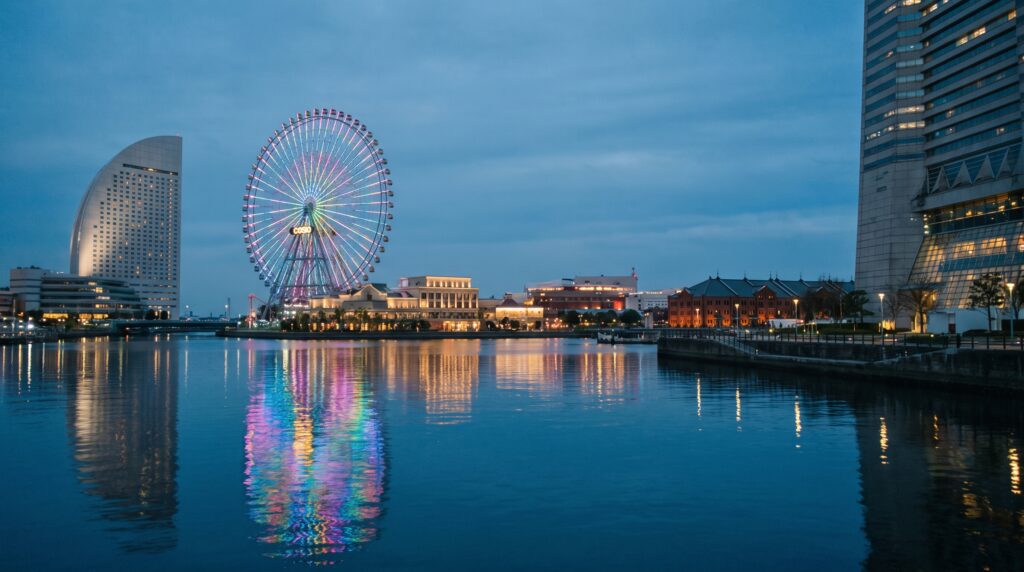
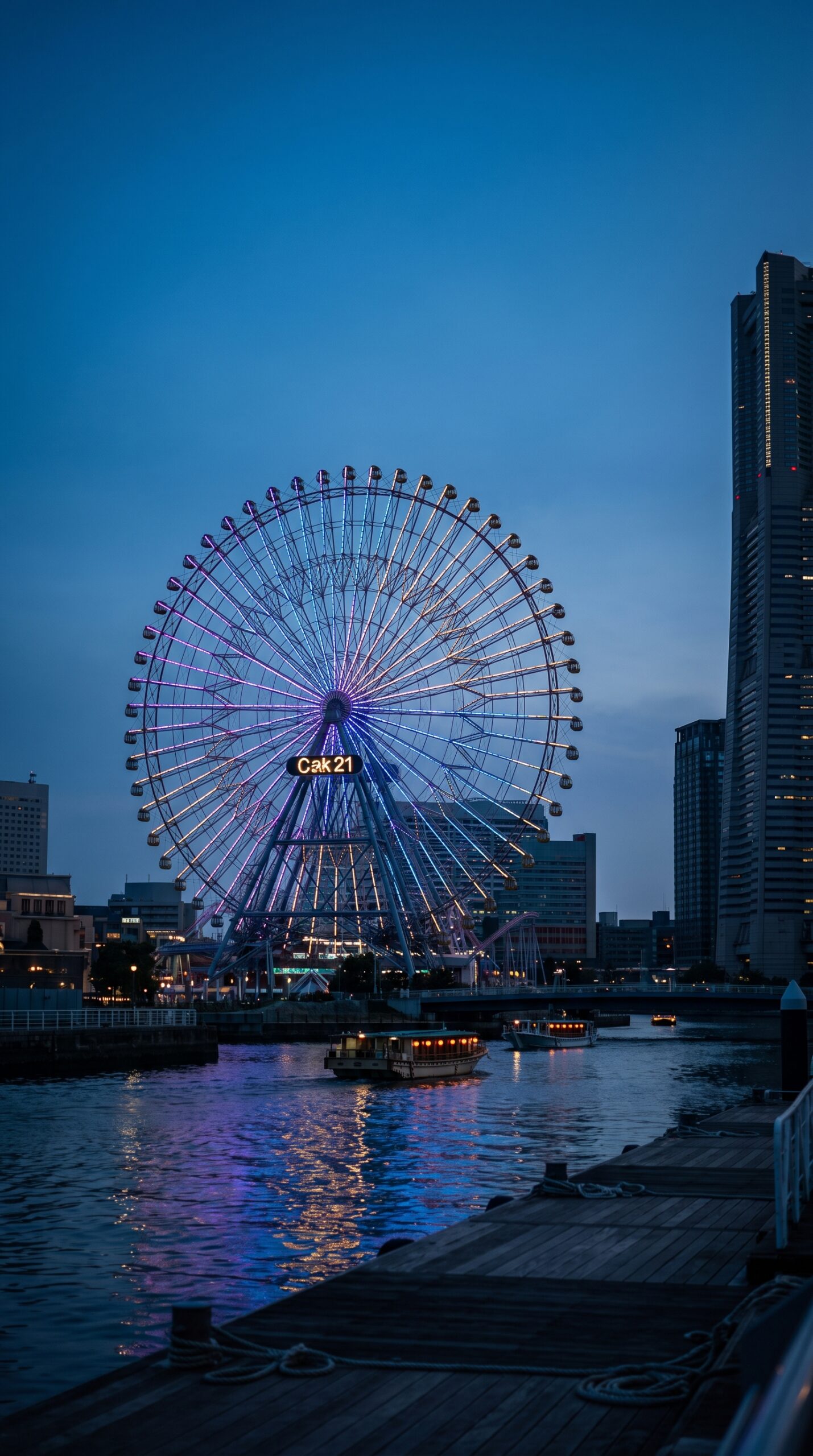
Cosmo Clock 21 is the ferris wheel everyone photographs. It stands 112.5 metres, one rotation takes about 15 minutes, and a ride costs 1,000 yen. Go after dark. The whole rim changes colour and the harbour lights up behind it.
Two more things at Minato Mirai. The Pokemon Center Yokohama, inside Landmark Plaza, is the largest in Japan and worth ten minutes even if you don’t care about Pokemon. The Red Brick Warehouses are two 1911 customs buildings, now shops and cafes, with seasonal markets in the plaza between them. Nearby, the Cup Noodles Museum lets you design your own packet, cup and all, for 500 yen.
One practical note about the layout. These Yokohama attractions string along the waterfront rather than cluster, so the walk from Chinatown to Minato Mirai runs about 25 minutes. Pleasant once. Tiring by the fourth time. Use the Minatomirai Line or the sightseeing bus to cover the long stretches and save your legs for the gardens.
Minato Mirai, Motomachi and the Districts That Matter
Yokohama’s visitor districts run along a 3 km waterfront strip, with Minato Mirai, Chinatown, Motomachi and Yamate all walkable from each other.
Minato Mirai is the harbour end. Landmark Tower rises 296 metres over it, and around the base sit the ferris wheel, the Red Brick Warehouses and most of the modern shopping. Glass, water, wide walkways.
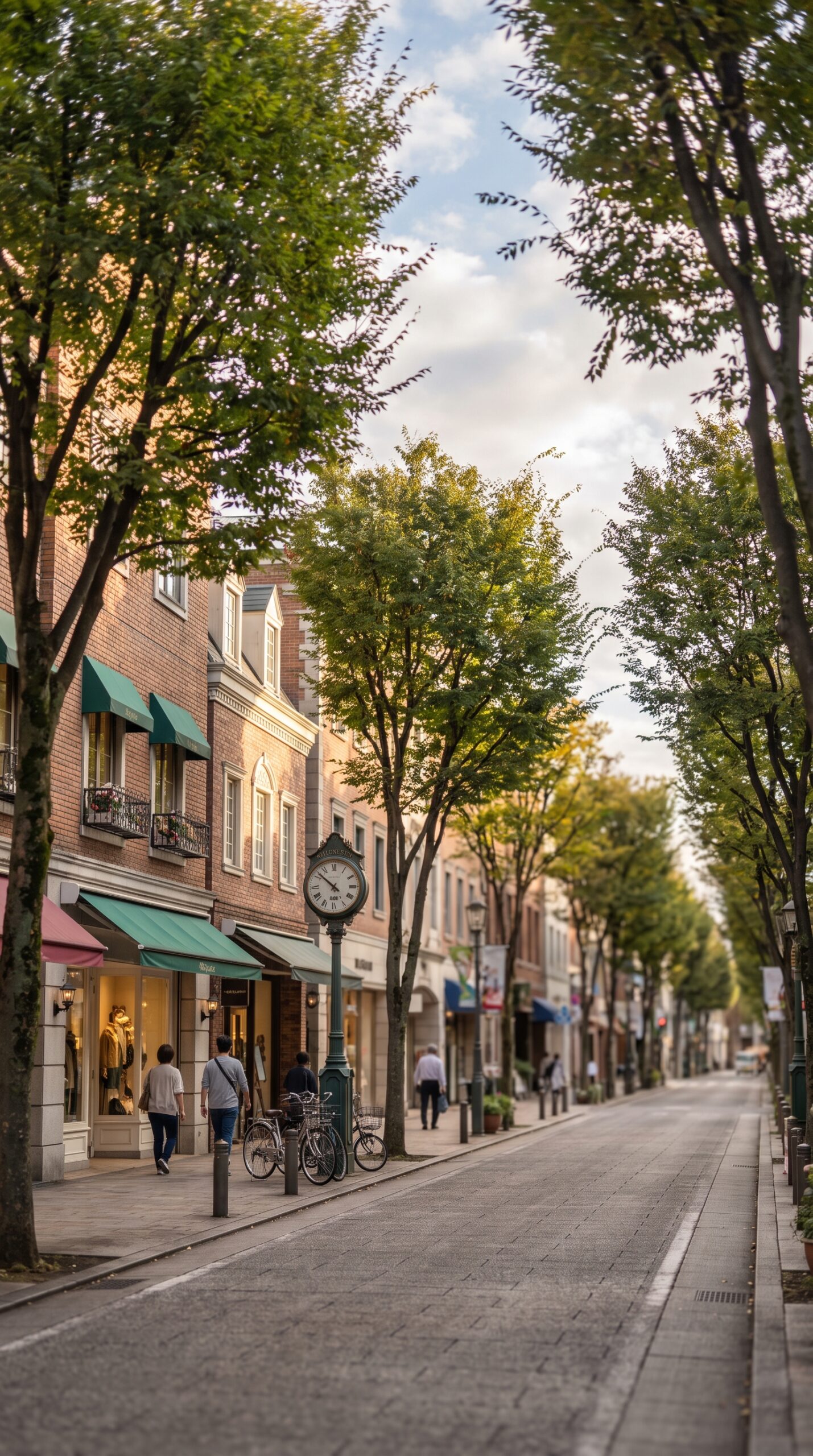
Chinatown and Motomachi sit ten minutes apart just south. Motomachi is the shopping street proper, a tidy tree-lined run of small boutiques that has served foreign residents since the 1860s. Above it, the Yamate bluff keeps a row of preserved Western houses, and most of them cost nothing to walk into.
Shin-Yokohama is the shinkansen district, useful for arrivals and for the Ramen Museum. Nothing else out there. Kannai fills the gap between Chinatown and the ballpark, and it’s where the cheap izakaya hide after dark. Check Yokohama’s official visitor maps before you set off.
Blunt warning about Yokohama Station. It’s a shopping maze, not a sight. Change trains and keep moving.
Eating in Yokohama, Chinatown and Beyond
Yokohama Chinatown sells nikuman steamed buns for around 500 yen, and a sit-down Chinese meal there typically costs 1,200 to 2,500 yen.
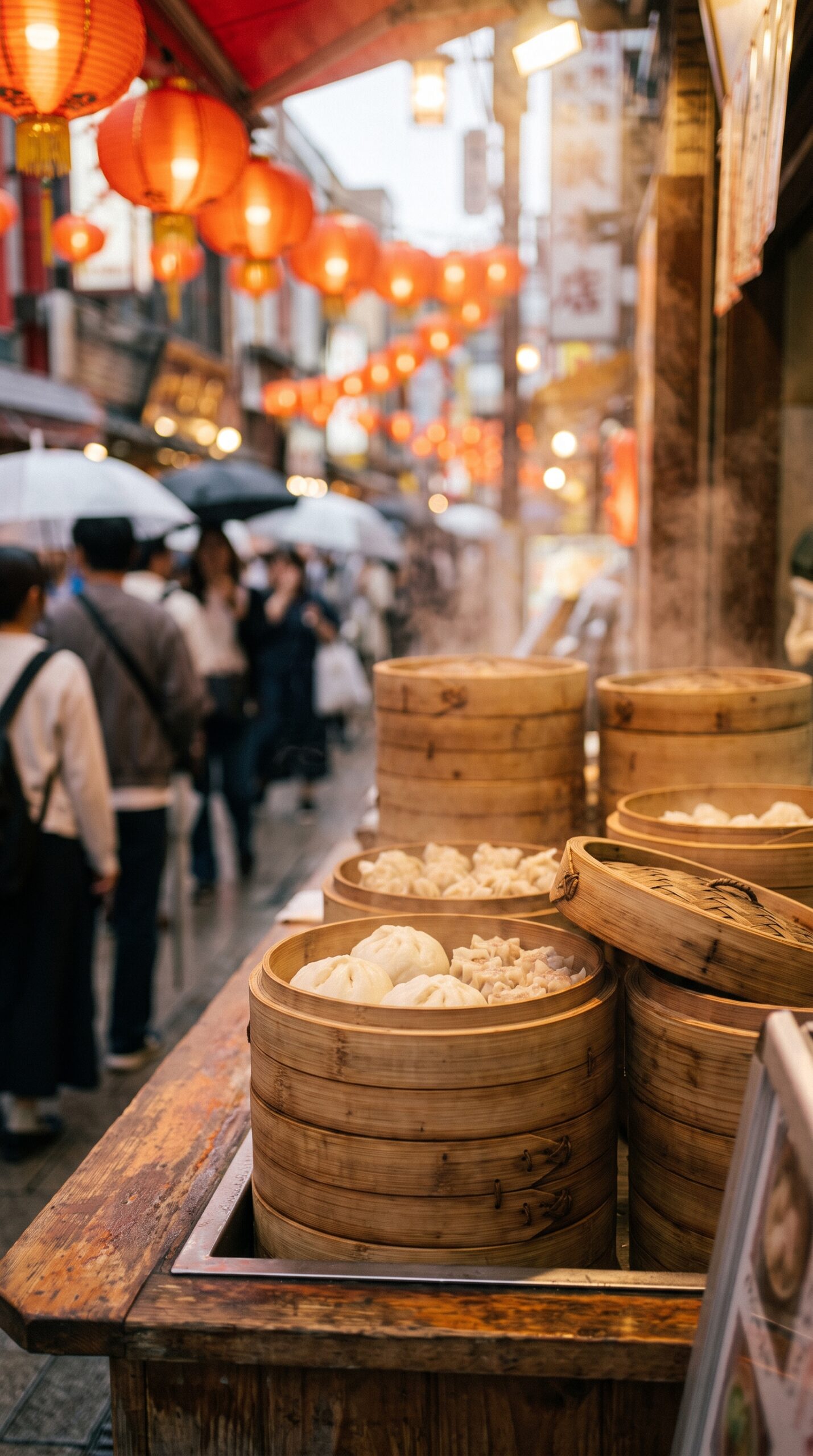
Chinatown carries the food scene. Street counters sell nikuman, fist-sized steamed pork buns, for about 500 yen, and they’re the correct first thing to eat. Sit-down places run Cantonese and Sichuan, most landing between 1,200 and 2,500 yen a head.
Shumai is the local dumpling. Kiyoken has sold boxes of them at Yokohama Station since 1928, and a boxed set is still what people carry home. Cheap, good, everywhere.
Iekei ramen started here in 1974. Thick pork and soy broth, straight noodles, a sheet of nori on top. Bowls cost 900 to 1,200 yen and there are dozens of shops across the city. If you want the crash course, the Shin-Yokohama Ramen Museum charges 450 yen to enter and holds nine regional ramen shops inside a recreated 1958 street.
One warning about food in Yokohama Japan. Chinatown’s all-you-can-eat buffets are cheap for a reason. Pick the places with a queue of locals instead.
Hotels in Yokohama and Which Area to Book
Harbour-view hotel rooms at Minato Mirai in Yokohama start around 14,000 yen a night, while business hotels near Yokohama Station run 7,000 to 12,000 yen.
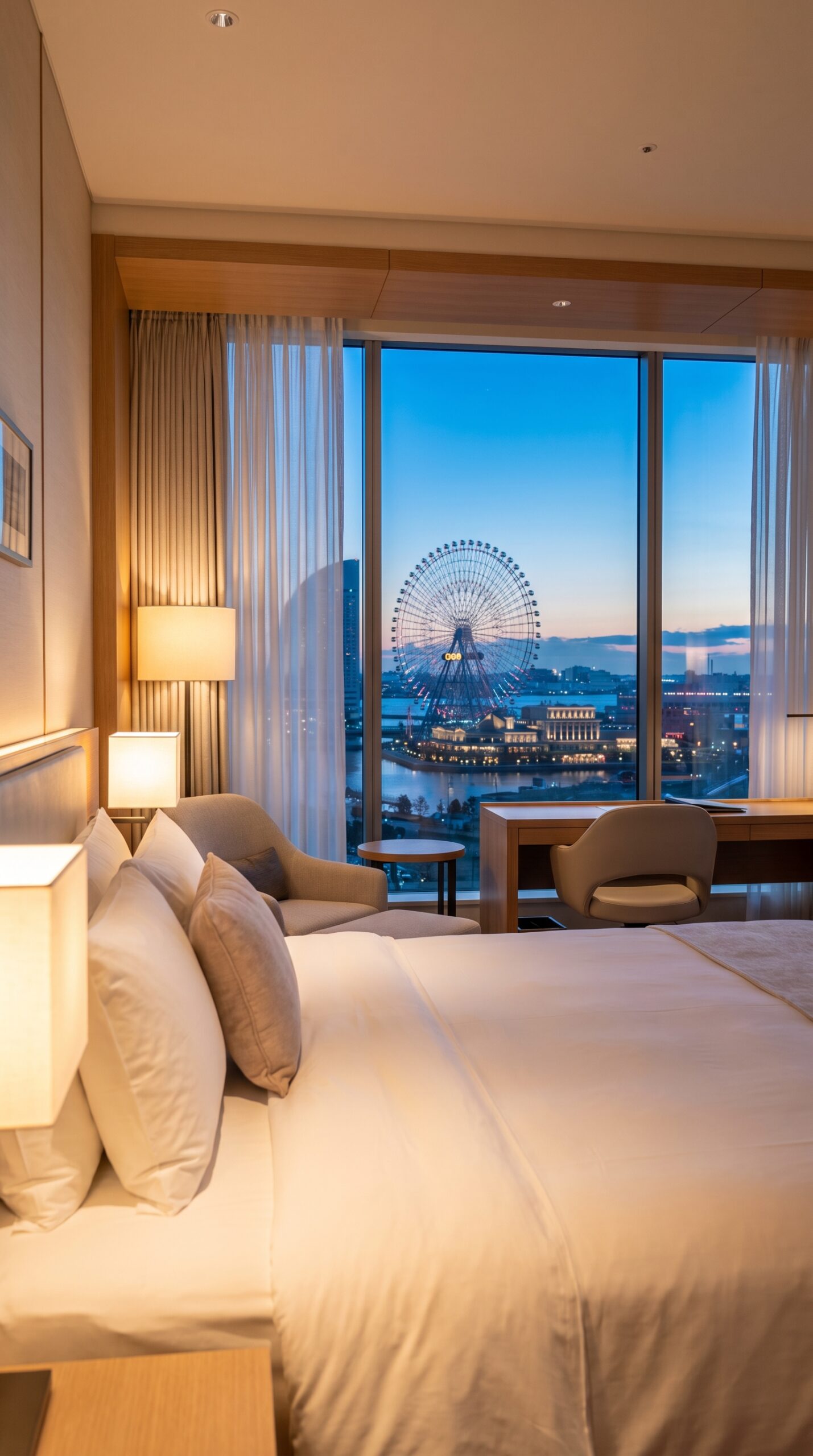
Most people do this city as a day trip, so hotels in Yokohama Japan only make sense for two reasons: you want the harbour lit up at night, or you want an early start before the crowds.
Minato Mirai is where you book for the view. Harbour-view rooms start around 14,000 yen, and the Royal Park Hotel sits on floors 52 to 67 of Landmark Tower, which is about as high as a hotel bed gets in Japan.
Yokohama Station has the practical option. Business hotels there run 7,000 to 12,000 yen a night and every line passes through, so onward travel is simple.
Kannai and Chinatown work if you plan to eat late. Small hotels and guesthouses start near 6,000 yen. Shin-Yokohama only makes sense for an early shinkansen, since the district clears out after dinner.
Worth knowing: when Tokyo sells out during big events, Yokohama is where everyone overflows to. Book early on those weekends.
Trains, Airports and Getting Around Yokohama
JR trains link Tokyo Station to Yokohama in 25 to 30 minutes for about 500 yen, and Haneda Airport is roughly 30 minutes away by Keikyu train.
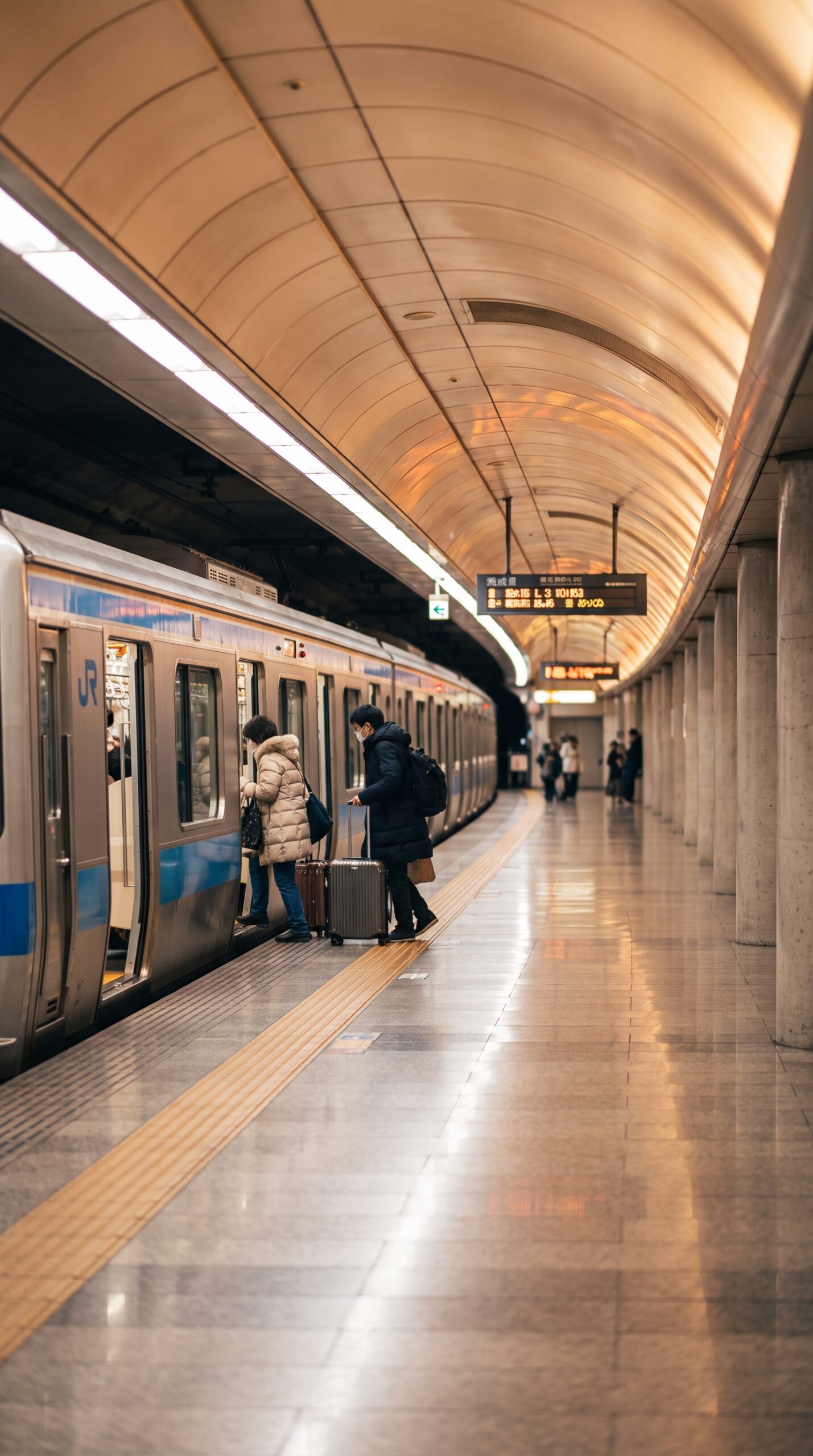
From Tokyo, take the JR Tokaido Line or the Shonan-Shinjuku Line. Both reach Yokohama Station in 25 to 30 minutes for about 500 yen. The Tokyu Toyoko Line runs from Shibuya in roughly 30 and drops you closer to Chinatown. Check the JR East route maps if you’re connecting from further out.
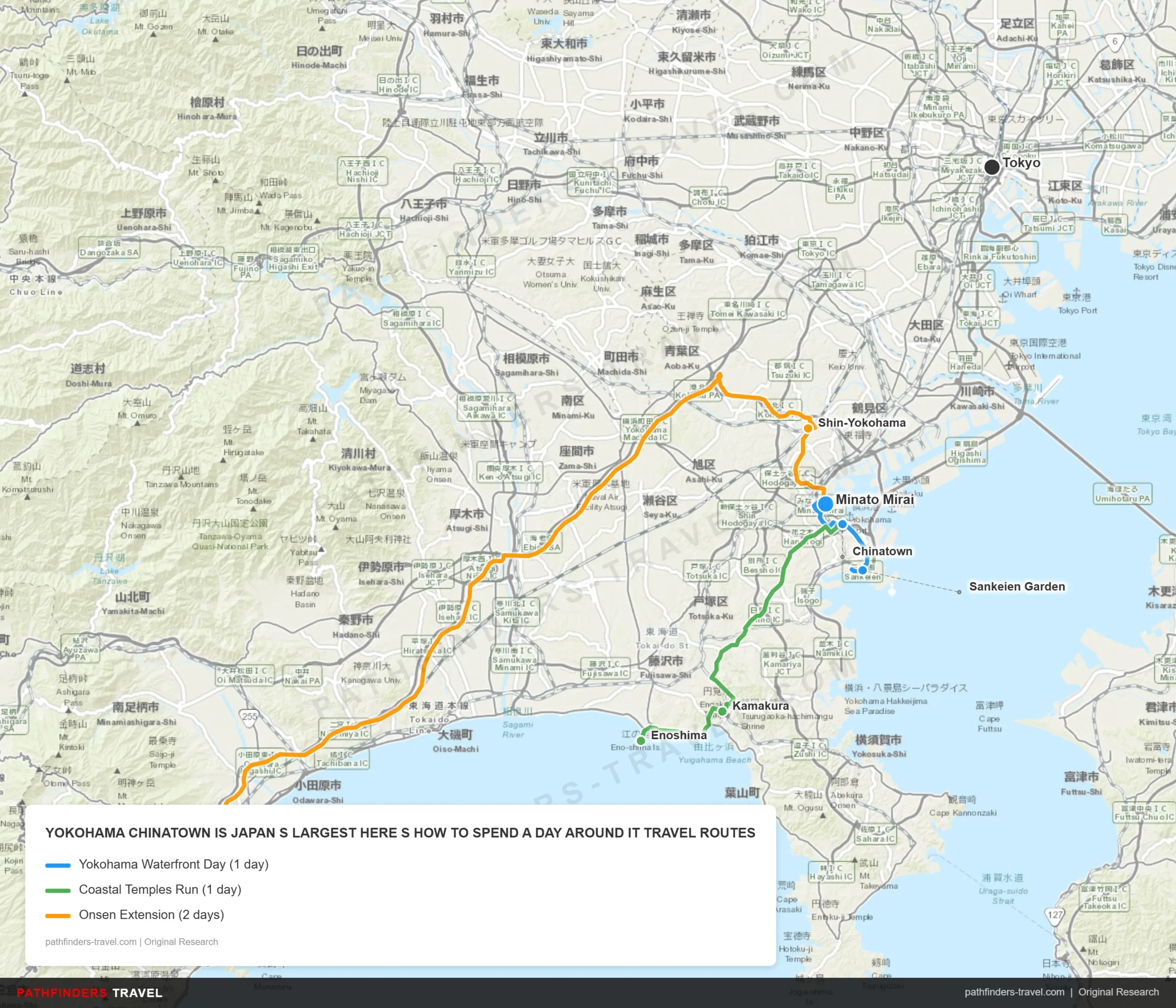
| # | Stop | Highlights | Drive Time |
|---|---|---|---|
| 1 | Minato Mirai | Landmark Tower, the Red Brick Warehouses, and the Cosmo Clock 21 ferris wheel at 1,000 yen a ride. | Start |
| 2 | Chinatown | Around 600 shops and restaurants, ten painted gates, and nikuman steamed buns from street counters for about 500 yen. | 25m on foot |
| 3 | Sankeien Garden | 175,000 square metres of classical garden with 17 relocated historic buildings, 900 yen to enter. | 25m by bus |
| # | Stop | Highlights | Drive Time |
|---|---|---|---|
| 1 | Chinatown | Eat early, then pick up the JR Yokosuka Line south from Yokohama Station. | Start |
| 2 | Kamakura | The Great Buddha, cast in 1252, plus the temple trails through the hills behind town. | 30m by train |
| 3 | Enoshima | Shrine island with a beach and a lighthouse observation deck, on the same coastal line. | 25m by train |
| # | Stop | Highlights | Drive Time |
|---|---|---|---|
| 1 | Minato Mirai | Finish the harbour after dark, then move up to the shinkansen station. | Start |
| 2 | Shin-Yokohama | Shinkansen stop and the Ramen Museum, 450 yen for nine regional ramen shops. | 20m by train |
| 3 | Hakone | Onsen towns, Lake Ashi and the ropeway over the sulphur vents. Stay the night. | 70m by train |
Haneda is the closest airport to Yokohama Japan. About 30 minutes on the Keikyu Line for 370 yen, per the Haneda Airport access guide. Narita takes closer to 90 minutes by train or bus.
Inside the city, the Minatomirai Line covers Yokohama Station to Chinatown in eight minutes across six stations. The Akai Kutsu sightseeing bus loops the waterfront sights for 220 yen a ride, and it’s the right call once your legs give out.
Suica and Pasmo work on everything here. The JR Pass covers the approach from Tokyo but not the Minatomirai Line, so budget a few hundred yen separately. Allow ten extra minutes at Yokohama Station; the signage there defeats most people on the first try.
What a Yokohama Day Costs
Planning Tip
A day in Yokohama costs roughly 3,500 to 6,000 yen per person including return train fare from Tokyo, local transport, lunch and one paid attraction.
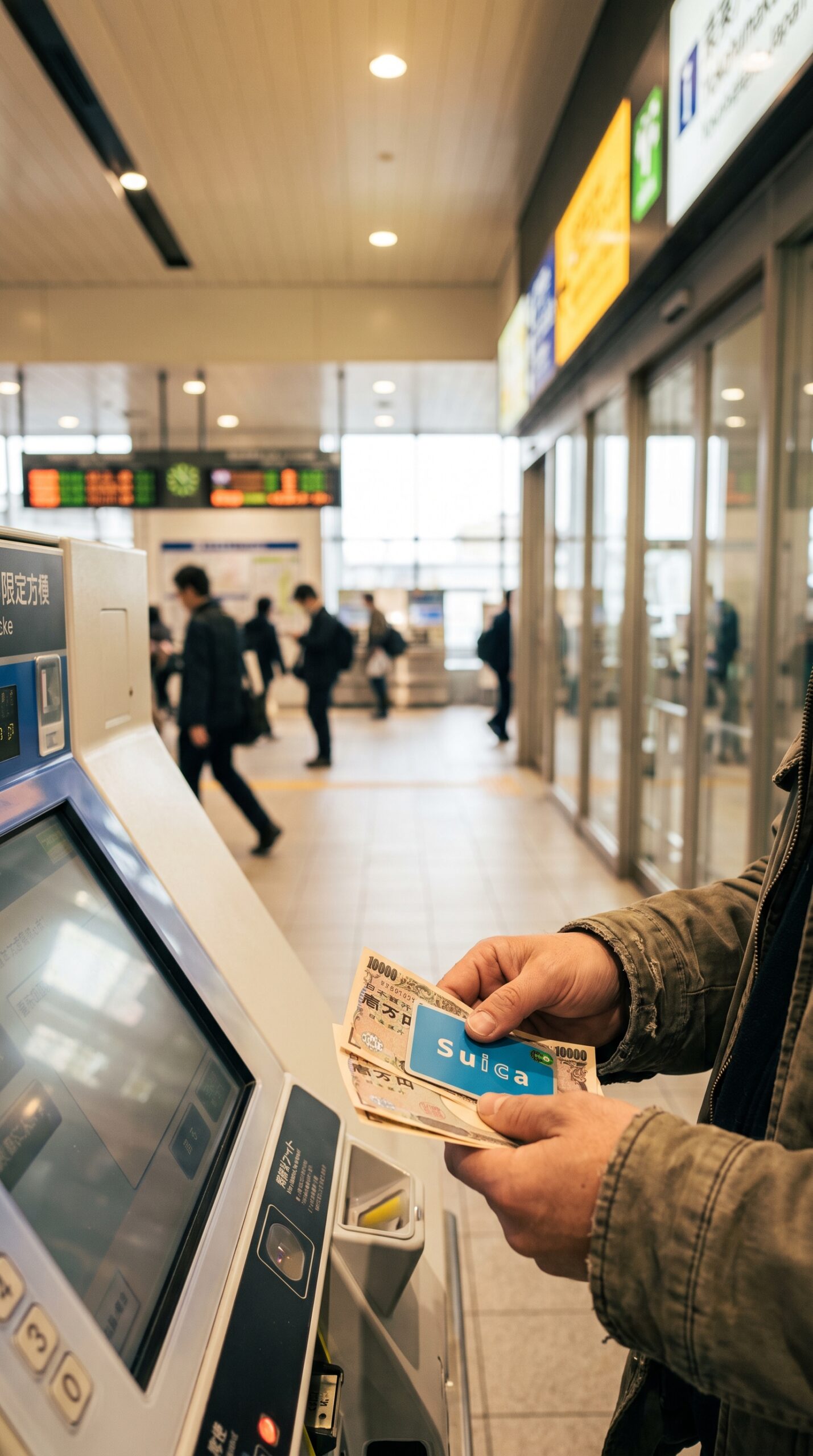
Here’s the arithmetic. Return train from Tokyo, about 1,000 yen. Local transport inside the city, another 500 or so. Lunch in Chinatown, 1,200 to 2,500. Snacks along the way, 500 to 1,000.
Add one paid attraction and you’re done. Sankeien Garden charges 900 yen and opens 9:00 to 17:00, per Sankeien Garden’s official listing. The ferris wheel is 1,000. The Cup Noodles Museum is 500. Total for a comfortable day: 3,500 to 6,000 yen a head, shopping excluded.
Plenty is free. Yamashita Park, the Red Brick Warehouse shops, the Yamate Western houses, and Chinatown itself cost nothing to walk.
Small practical point on Yokohama sightseeing. Restaurants here take cards more readily than most old Japanese districts, but street counters are cash only. Keep coins.
Where to Go Next From Yokohama
Kamakura sits about 30 minutes south of Yokohama on the JR Yokosuka Line, making it the most practical add-on from the city.
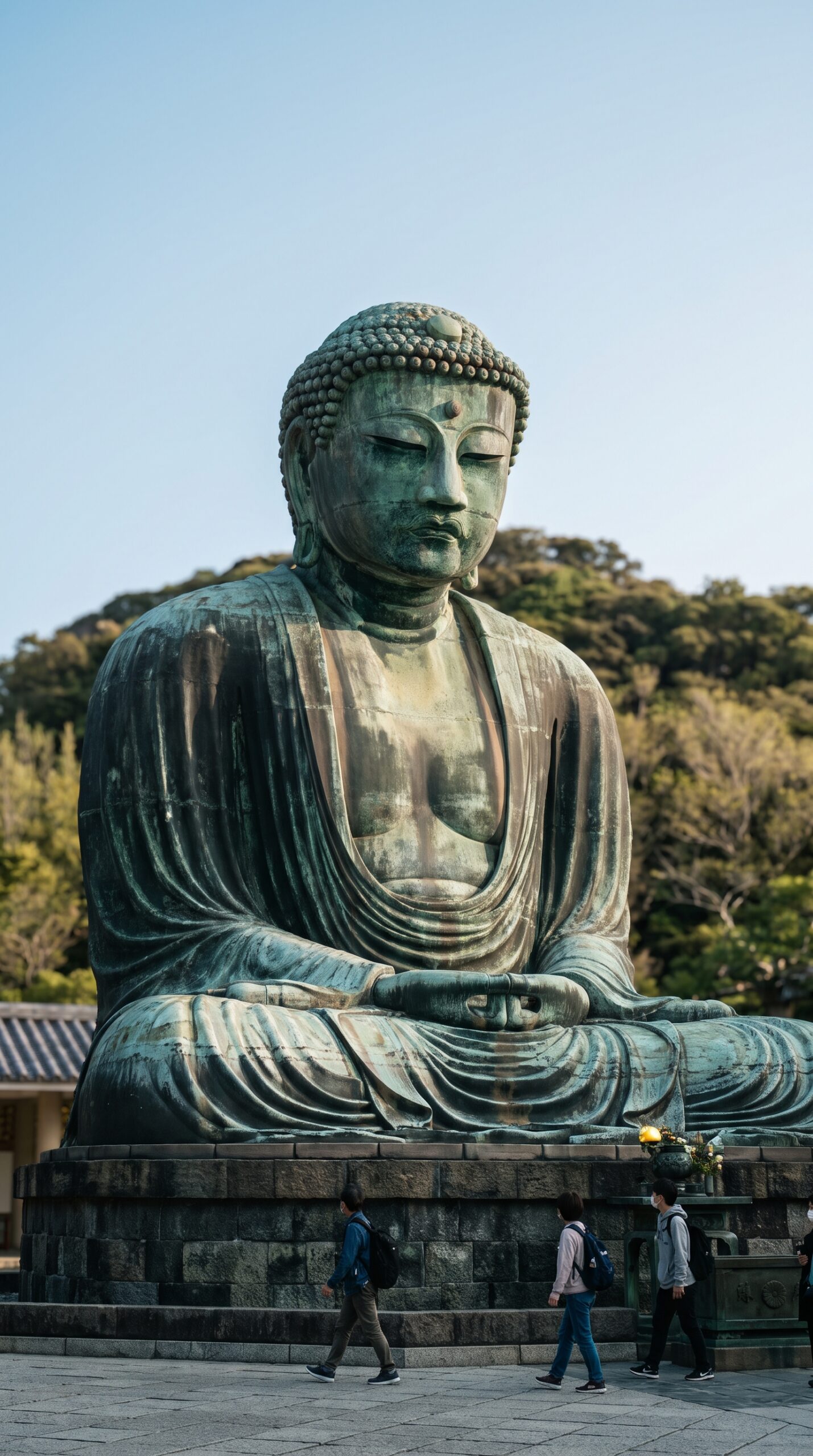
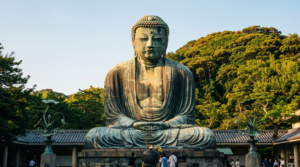
Kamakura is the obvious next move. Thirty minutes south on the JR Yokosuka Line, and it delivers exactly the old Japan that Yokohama doesn’t: the Great Buddha, cast in bronze in 1252 and sitting in the open air since a tsunami took its hall in 1498, plus dozens of temples in the hills. Enoshima sits on the same coastal line, a shrine island with a beach, worth an extra hour. The Kamakura and Enoshima tourist guide covers both.
Hakone takes roughly 90 minutes west. Onsen, the lake, the ropeway over the sulphur vents. Treat it as an overnight.
Mount Fuji shows up from Yokohama’s tall buildings on clear winter mornings, and the Fuji Five Lakes are about two and a half hours out. Tokyo is 30 minutes north, so an evening in Shibuya after a Yokohama afternoon is easy.
Don’t overpack the itinerary. Kamakura and Hakone each eat a full day, so neither bolts onto a Yokohama afternoon without ruining both.
Best Time to Visit Yokohama and Its Weather
Yokohama averages summer highs near 30C with high humidity, so late March to early April and October to early December are the comfortable windows.
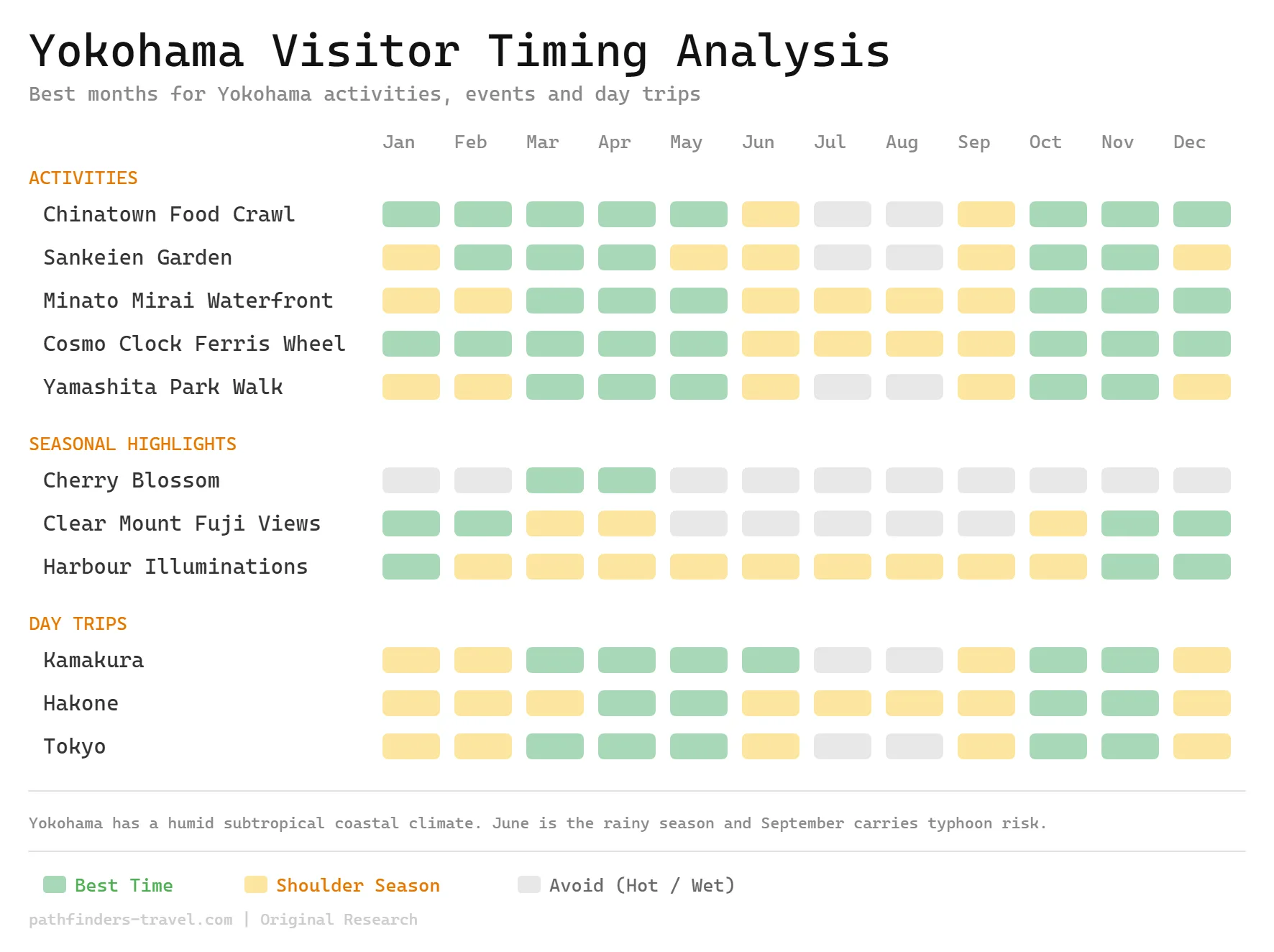
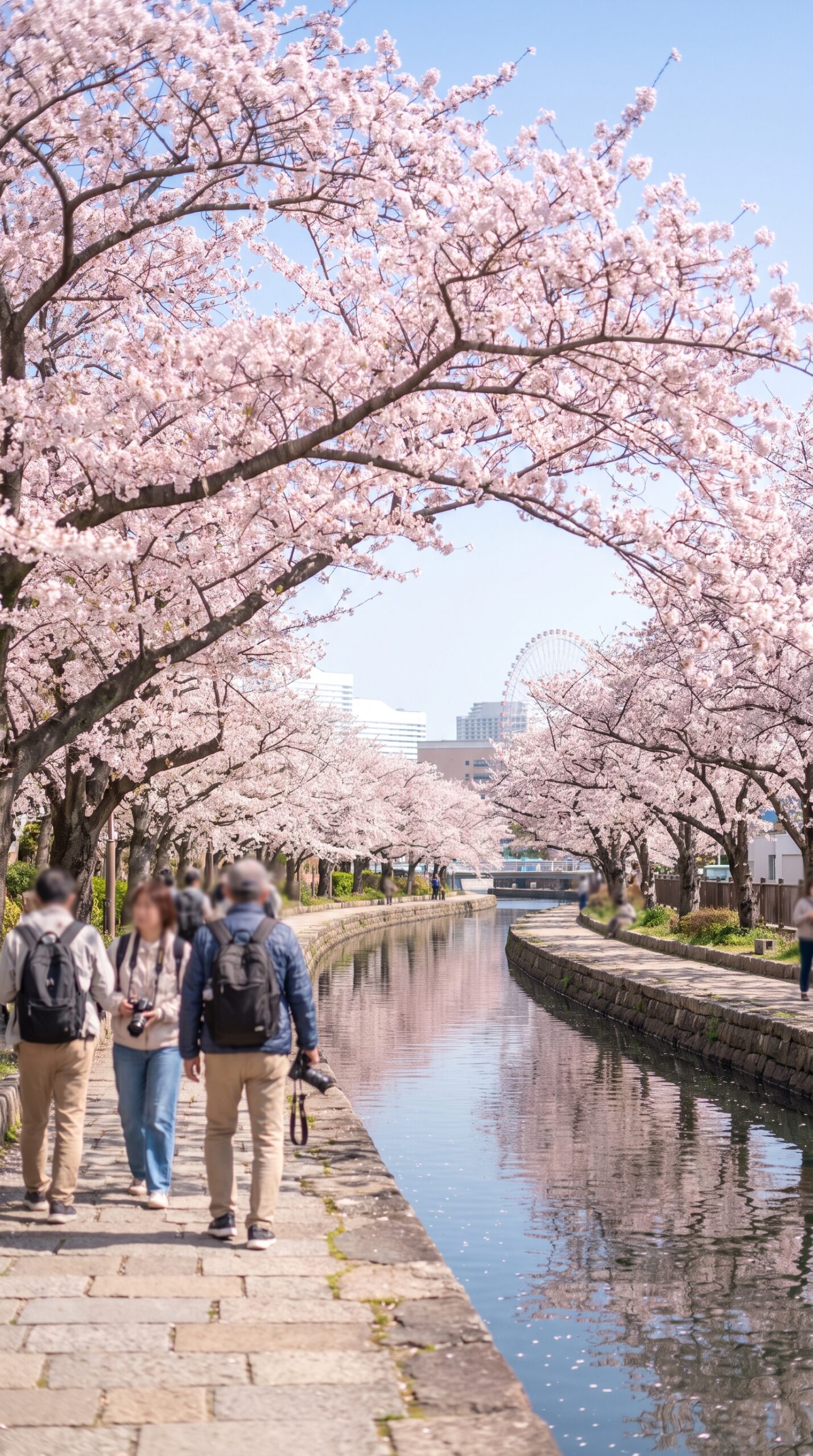
Two good windows. Late March into early April for blossom, and October through early December for dry clear days when the harbour views are at their best.
Summer is the problem. July and August average highs around 30C with heavy sea humidity, per the Japan Meteorological Agency climate normals. The waterfront breeze helps after sunset. Midday does not.
June is the rainy season and September is typhoon season, so both carry real weather risk. Yokohama Japan winter is mild by national standards, rarely dropping below freezing, and it gives the clearest Mount Fuji views from the tall buildings.
Packing is simple. You’ll walk a lot on flat pavement, so shoes matter more than anything else. Bring one light layer for the wind coming off the bay.
Frequently Asked Questions
How far is Yokohama from Tokyo?
Yokohama sits about 30 km south of central Tokyo on Tokyo Bay. Trains from Tokyo Station take 25 to 30 minutes and cost around 500 yen, and the two cities blur into one continuous urban area with no real gap. It is one of the easiest day trips in Japan.
What is there to do in Yokohama, Japan?
Walk Chinatown, ride the Cosmo Clock 21 ferris wheel at Minato Mirai, visit Sankeien Garden, and stroll Yamashita Park along the harbour. The Red Brick Warehouses and the Cup Noodles Museum fill any gaps. Nearly all of it sits within a 3 km waterfront strip.
What is Yokohama famous for?
Yokohama is famous for Japan’s largest Chinatown, the Minato Mirai harbour skyline, and its role as the first Japanese port opened to foreign trade in 1859. The city also gave Japan shumai dumplings and Iekei ramen. It’s the second largest city in the country by population.
What is the closest airport to Yokohama, Japan?
Haneda Airport is the closest, about 30 minutes from Yokohama Station by Keikyu train for roughly 370 yen. Narita takes closer to 90 minutes by train or bus. Yokohama has no airport of its own.
How much time do you need in Yokohama?
A full day is plenty for the highlights. Four to five hours covers Chinatown, the Minato Mirai waterfront, and the Cosmo Clock 21 ferris wheel. Add Sankeien Garden or the Cup Noodles Museum and you fill a comfortable day. Nearly everything sits within a walkable 3 km harbour strip.