This guide contains affiliate links. As an Amazon Associate we earn from qualifying purchases — at no extra cost to you.
Estimated reading time: 8 minutes
Last updated: September 2026
What Should I Pack for Hiking in Lofoten?
For Lofoten hiking, pack waterproof layers (jacket and pants), insulated mid-layer, moisture-wicking base layers, sturdy ankle-high hiking boots with aggressive tread, trekking poles, merino wool socks, 18-22L daypack with hydration, headlamp (except peak summer), emergency shelter, and extra snacks. Weather shifts fast on these Arctic islands, so always prepare for four seasons regardless of forecast.
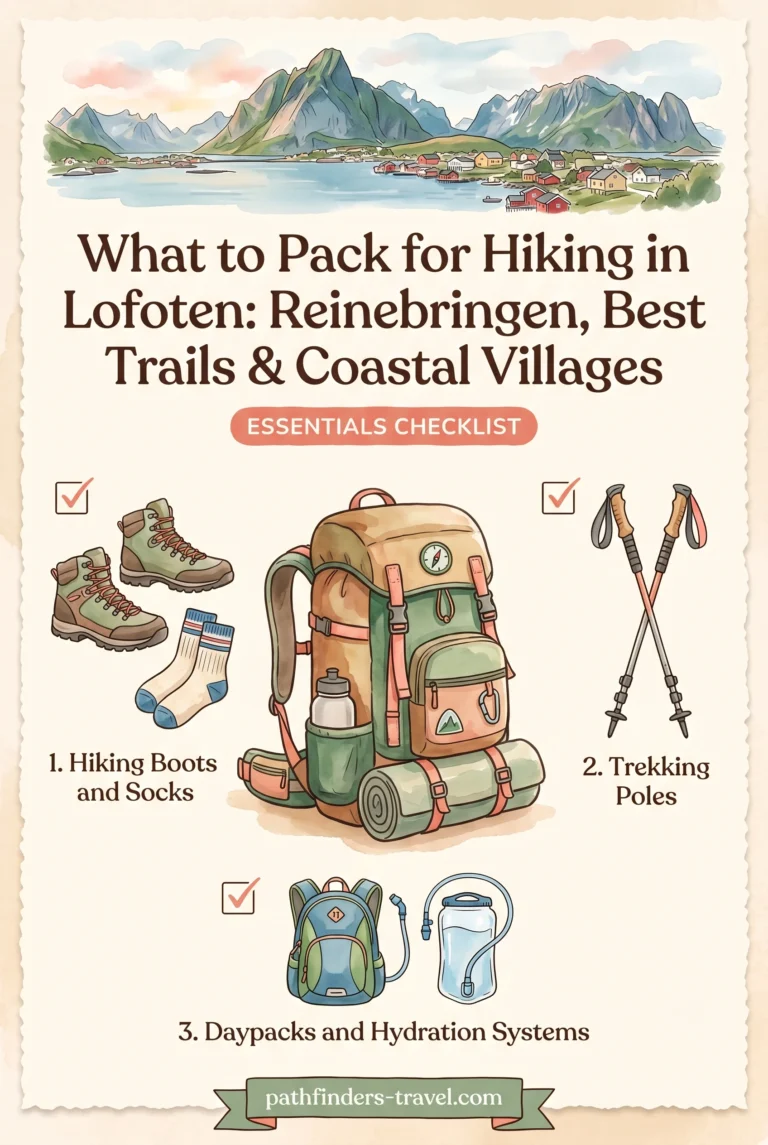
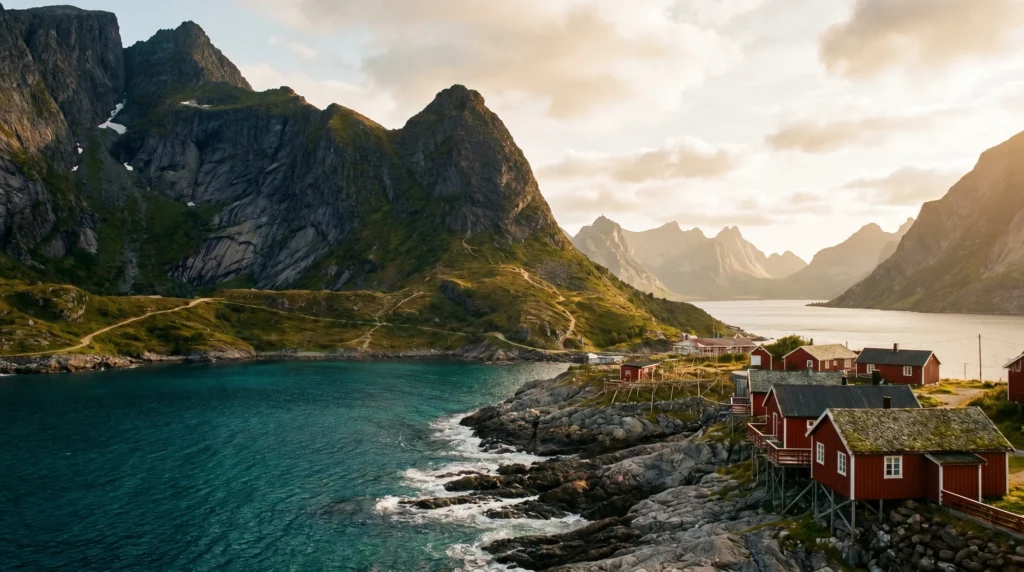
I have spent weeks on Lofoten’s trails, from the iconic stone steps of Reinebringen to the windswept coastal paths around Reine and Hamnøy. These Norwegian islands throw weather curveballs daily. You can start a morning hike under blue sky and finish in sideways rain a hour later.
The terrain here isn’t forgiving. Granite ridges, wet roots, loose scree, and those famous 1,988 Reinebringen steps demand real gear, not compromise. I have watched travelers in sneakers turn back halfway up because the rocks were too slick.
This guide covers the essentials I wouldn’t hike without in Lofoten, organized by how you’ll actually use them on the trail. Each section groups options for different budgets, conditions, and hiking styles so you can pack what fits your trip.
Hiking Boots and Socks for Lofoten Terrain
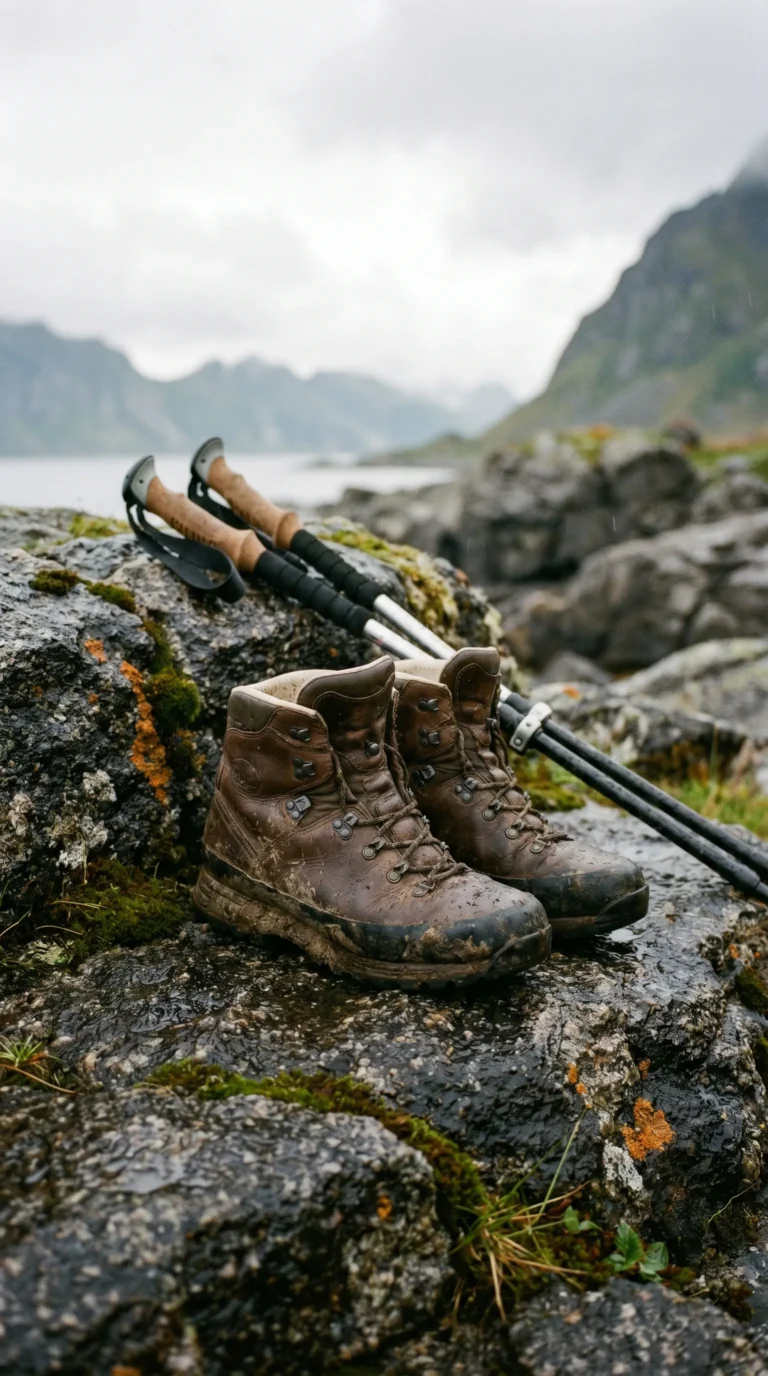
Lofoten trails destroy lightweight trail runners. The granite is sharp, the roots are wet, and those Reinebringen steps punish your ankles if you don’t have proper support. Pack footwear with aggressive tread, real waterproofing, and ankle protection for the mix of stone stairs, muddy forest paths, and exposed rock scrambles you’ll face.
The coastal climate means moisture is constant, whether from morning dew, afternoon showers, or spray from waterfalls. Your boots need to handle wet conditions without turning your feet into a swamp. I learned this the hard way on my first trip when I underestimated how technical even the popular trails are.
If you’re covering the main coastal routes and tackling Reinebringen in summer or early fall, the Men’s Breathable Tactical Military Work Boots offer solid ankle support with good ventilation for those long ascents. For hikers expecting wetter conditions or planning shoulder-season trips in April, May, or September, the Transverse™ Hike Waterproof boots bring better weatherproofing and dry faster between hikes when rain is more frequent.
Socks matter more than people think. Wet cotton socks cause blisters on long descents, and Reinebringen has plenty of steep downhill sections. Merino Wool Hiking Socks for Men wick moisture, regulate temperature, and stay comfortable even when damp. I always pack at least three pairs so I can rotate dry socks each day.
If you’re hiking in shoulder seasons when trails get sloppy and puddles are unavoidable, Waterproof Socks for Men & Women work as a backup layer. They’re not breathable enough for summer, but they keep your feet dry without needing full gaiters when conditions turn messy.
Boots that break in fast are worth their weight because you’ll be on your feet for hours. Test them on shorter hikes before you leave home.
Trekking Poles for Stability and Safety
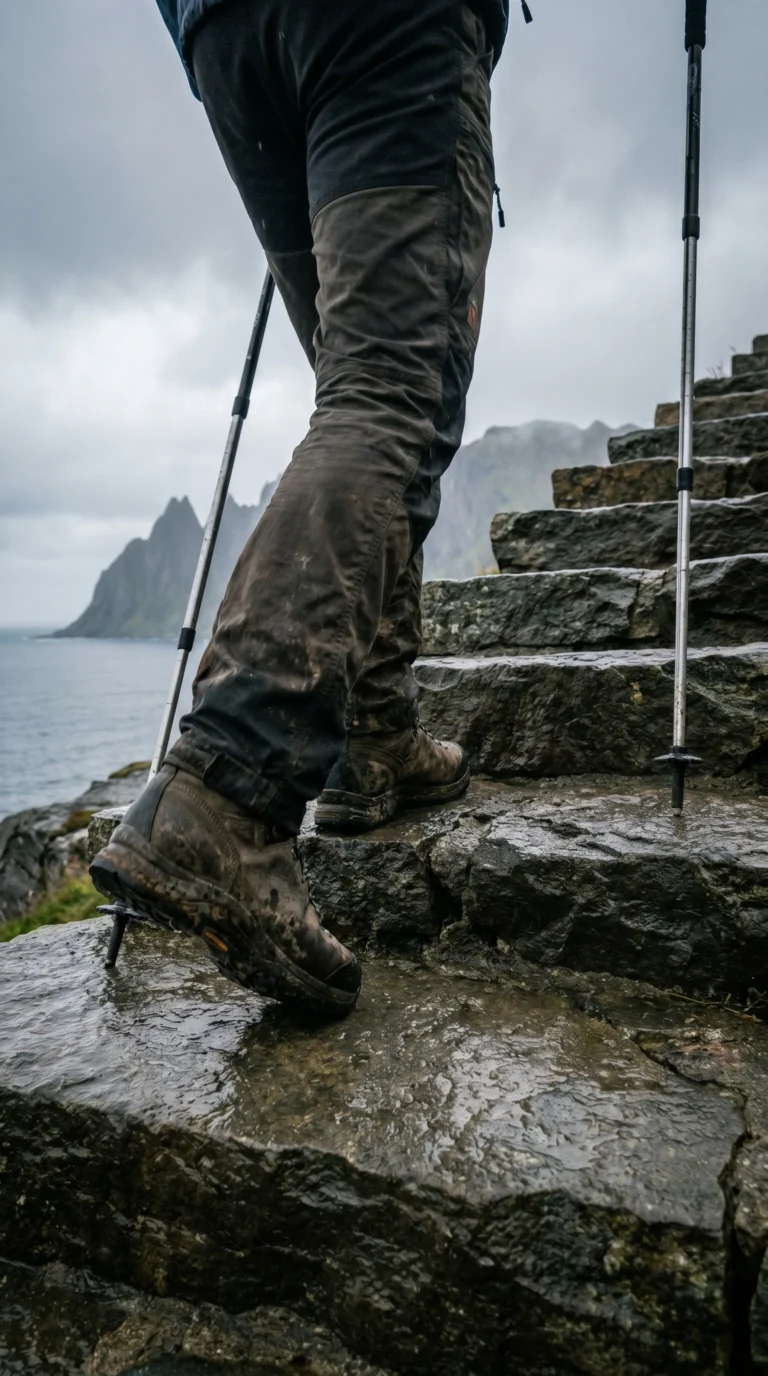
I never hike Lofoten without trekking poles anymore. The first time I climbed Reinebringen without them, my knees screamed on the descent. Those stone steps are relentless, and poles turn your arms into shock absorbers that save your joints from taking the full impact.
On wet days, which is most days in Lofoten, poles give you two extra points of contact on slick granite. I have caught myself from falls more times than I can count thanks to a quick pole plant when my boot slipped on moss or rain-soaked rock. That extra stability isn’t just comfort, it’s safety.
For Lofoten, you want collapsible or foldable poles that pack small when you’re not using them. Some ridge sections get narrow or require scrambling where poles just get in the way. Being able to stash them quickly in your pack is key.
If you’re tackling multiple trails and spending serious time on technical descents, these carbon fiber trekking poles absorb vibration better than aluminum and weigh less, which makes a real difference when your arms are working for hours. Carbon handles the constant wet conditions well and won’t leave you fatigued.
For day hikers who want flexibility without the premium price, these foldable hiking poles pack down fast when you stop for photos or need both hands free on a scramble. They’re sturdy enough for Lofoten’s terrain and fold small enough to tuck away without fuss.
Cork grips are my preference in damp conditions because they absorb hand sweat and don’t get slippery. EVA foam works too but can get clammy. Whichever you choose, make sure the pole has good locking mechanisms because constant adjustment on varied terrain gets old fast.
Daypacks and Hydration Systems
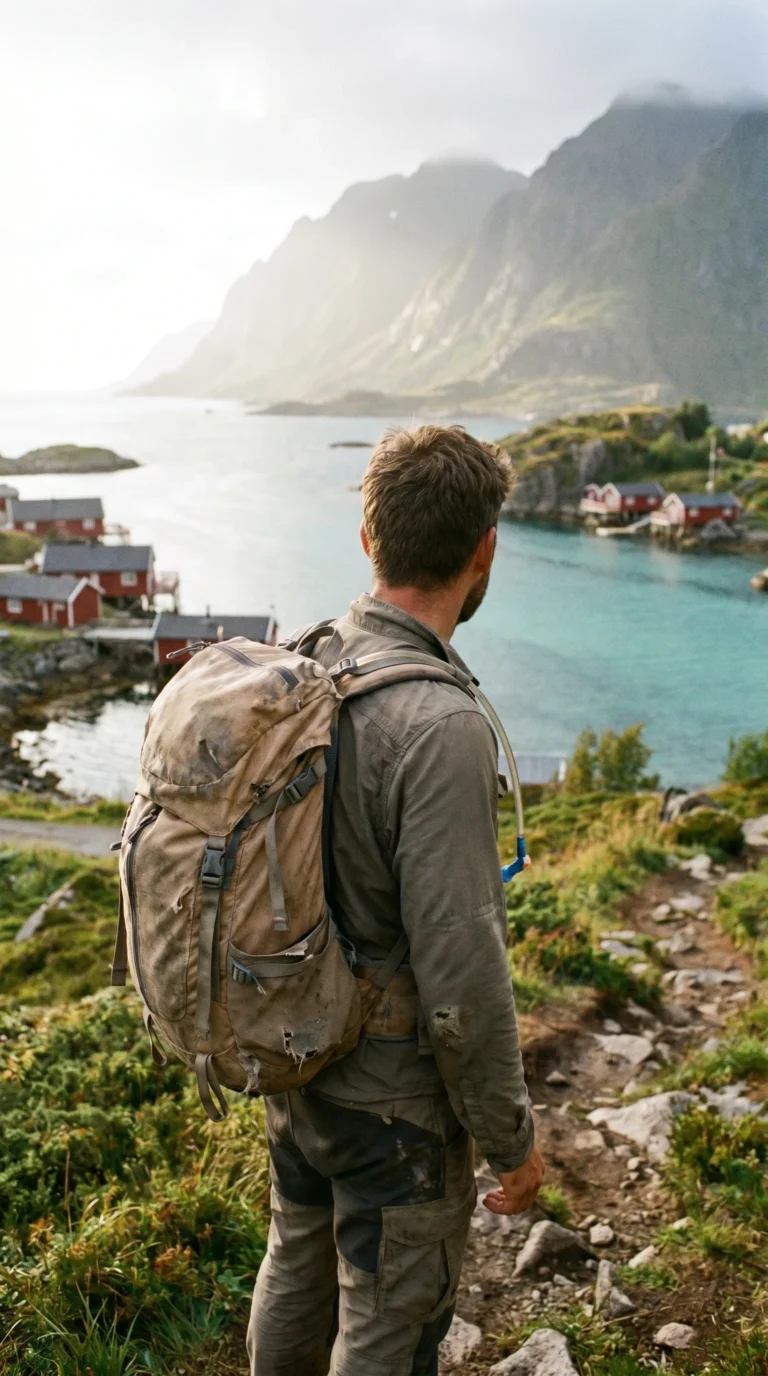
You don’t need a massive backpack for day hikes in Lofoten, but you do need space for layers, food, and emergency gear. An 18 to 22 liter pack is the sweet spot for trails like Reinebringen and longer coastal routes. Weather changes so fast that you’ll be adding and removing jackets constantly, so look for a design that keeps everything organized without playing Tetris every time the wind picks up.
I like packs with external attachment points for wet jackets and trekking poles. When the sun comes out (yes, it happens), you want your rain gear accessible but not stuffed inside soaking your snacks. Hip belts matter even on smaller daypacks. On steep climbs like Reinebringen, shifting weight to your hips saves your shoulders from fatigue, and a chest strap helps lock the pack tight to your body when you’re scrambling over rocks or navigating narrow cliff edges.
Hydration bladders are worth considering if you hike long days. Stopping to dig out a water bottle on narrow trails gets annoying, and you drink more water when it’s convenient. If you’re tackling multiple trails or spending full days on the ridges, the Teton green space hydration backpack offers a 2 liter bladder and enough room for layers and snacks without feeling bulky on your back.
For lighter missions or as a backup bag, an ultralight collapsible pack takes almost no space in your main luggage. I use mine for town days or short village walks when I just need a layer and camera. The Osprey Ultralight Stuff Pack weighs almost nothing, packs down to the size of a softball, and works perfectly for quick hikes around Reine or Hamnøy when you don’t need all your gear.
Frequently Asked Questions
How difficult is the Reinebringen hike and what should I bring?
Reinebringen is moderately challenging with 1,570 stone steps and a 450-meter elevation gain over 1.5 kilometers. The hike takes about 45 minutes to a hour going up and slightly less coming down. I always bring trekking poles because they help tremendously with the steep steps, especially on the descent when your knees take a beating. Pack more water than you think you need, at least a liter per person, and bring layers because the summit can be windy even on warm days. The views at the top are worth every step, but take your time and know your limits.
Do I need hiking boots for Lofoten or can I use trail runners?
Trail runners work fine for most Lofoten hikes if the weather is dry and you have strong ankles. Many trails are rocky with uneven terrain, so boots offer better ankle support and protection. I switched to boots after twisting my ankle on loose rocks near Kvalvika Beach. The weather changes fast here, and boots keep your feet drier when trails get muddy or wet. If you’re doing multiple hikes or carrying a heavy pack, boots are the safer choice.
What should I pack for changing weather while hiking Lofoten?
Always pack a waterproof jacket, warm mid-layer, and extra socks regardless of the forecast. Lofoten weather shifts from sunshine to rain in minutes, even in summer. I learned to bring gloves and a beanie year-round after freezing on an August summit. Use a dry bag for electronics and snacks. Layering works better than one heavy jacket because you can adjust as you climb and your body temperature changes.
How many days should I spend hiking in Lofoten?
Plan at least four to five days to hike the best trails without rushing. This gives you time for Reinebringen, Kvalvika Beach, and a few village walks, plus flexibility for weather delays. The islands offer a solid range of difficulty levels and scenery, and you’ll want time to explore coastal villages between hikes without feeling rushed. We originally planned three days and regretted not having more time to explore. If you want to hike multiple peaks and visit coastal villages, a full week is ideal and lets you rest between challenging climbs.
What power adapter and payment methods should I bring to Lofoten?
Norway uses Type F power outlets, so bring a European adapter with two round pins. Most places accept credit cards and many prefer them over cash, but bring some Norwegian kroner for remote trail parking fees or small cafes. We rarely needed cash except at self-service parking stations near trailheads. Your card should have no foreign transaction fees to save money during your trip.