Estimated reading time: 15 minutes
Last updated: 28 September 2026
Table of Contents
- What Is Pico Island Known For?
- Exploring the Vineyards and Wine Experiences
- Wine and Dine: Pico’s Culinary Scene
- Where to Stay in Pico’s Wine Country
- Getting to and Around Pico Island
- Day Trips from Pico’s Wine Region
- Planning Your Visit: Best Time and Tips
- Frequently Asked Questions
What Is Pico Island Known For?
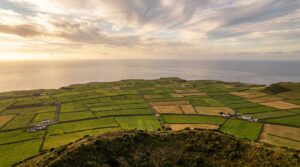
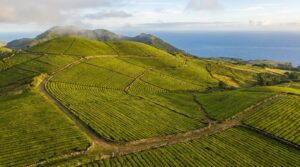
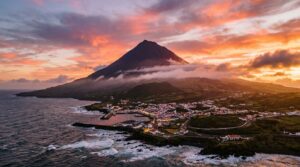
Pico is best known for two things: Mount Pico — Portugal’s highest peak at 2,351 metres — and its UNESCO-listed vineyards. Since 2004 the island’s western slopes have been protected as a World Heritage landscape of hand-built black basalt walls, called currais, that shelter grapevines from Atlantic wind and salt spray. The volcanic soil yields distinctive wines such as verdelho, and the wine tradition dates back to 15th-century settlers.
Research Sources
This guide draws from Pico’s official tourism board, UNESCO documentation, and accounts from visitors who’ve explored the island’s vineyards. All details were current as of publication, but we recommend checking local sources before planning your trip, as vineyard hours and tours can shift seasonally.
Want to see Pico’s volcanic vineyards for yourself? Watch our complete travel guide to Pico Island in 4K.
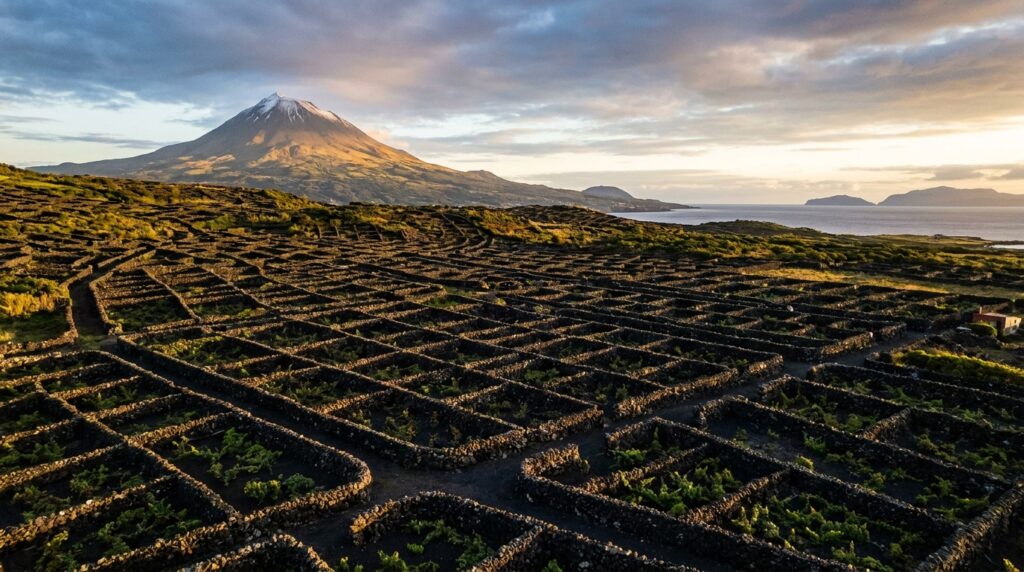
The UNESCO World Heritage Centre official page lists 987 hectares of protected vineyard landscape. This isn’t wine country as you know it. Pico Island vineyards sit in the middle of the Atlantic, 1,500 kilometers west of mainland Portugal. Black volcanic rock everywhere. Tiny plots of vines squeezed between stone corrals called currais.
Farmers built these walls starting in the 15th century. The basalt blocks shield grapes from salt spray and howling ocean winds. Mount Pico, Portugal’s highest peak at 2,351 meters, looms behind the vines. The Azores vineyards stretch along Pico’s western coast from Madalena to Lajido, a 10-kilometer ribbon of black stone and green leaves.
The volcanic soil drains fast. Vines dig roots deep into porous basalt. Verdelho grapes thrive here, producing crisp white wines with mineral notes. Terrantez, an almost-extinct variety, grows in small experimental plots. Visit Azores reports over 50,000 tourists visited Pico in 2025, many specifically for wine tourism.
This guide walks you through vineyard visits, tasting rooms, where to sleep among the vines, and how to move around the island. You’ll learn which estates pour the best wines and which beaches sit five minutes from the cellars.
Exploring the Vineyards and Wine Experiences
Azores Wine Company offers guided tastings of volcanic terroir wines including verdelho and terrantez varietals, with 90-minute experiences priced around €25-35 per person including estate vineyard tours.
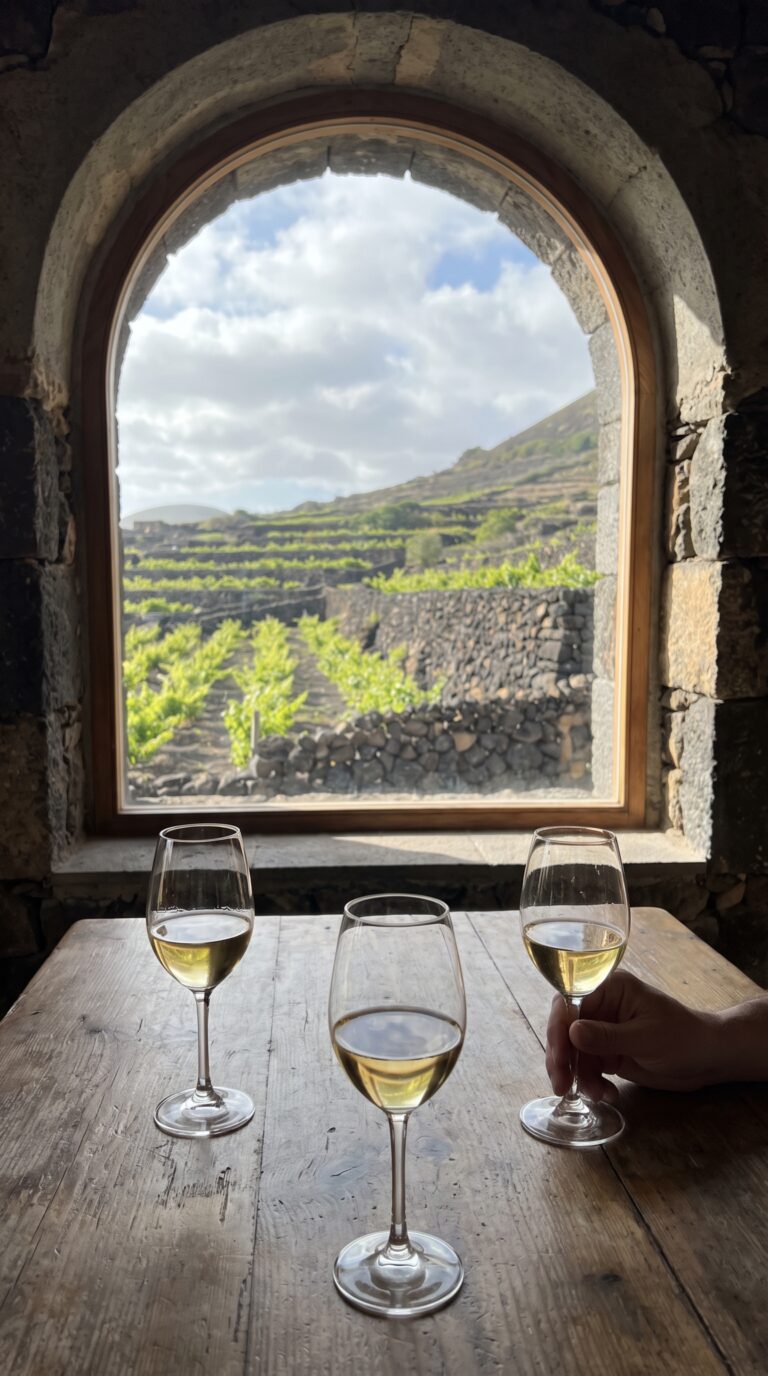
Azores Wine Company dominates wine tourism on the island. Their estate sits in Criação Velha, surrounded by 400-year-old stone walls. The tasting room overlooks the Atlantic. Floor-to-ceiling windows frame the vineyard landscape.
You’ll taste three to five wines during a standard session. Expect verdelho, the island’s workhorse white grape. Sharp citrus notes. Mineral finish. Terrantez appears in premium tastings, a rare varietal nearly extinct elsewhere. Arinto rounds out the lineup with green apple acidity. The 90-minute experience includes a walk through the estate vineyards. Your guide explains how vines grow in individual stone enclosures called currais.
The volcanic terroir makes Pico wines taste different. Basalt soil drains fast. Roots dig deep into porous rock searching for water. Atlantic winds blast the vines with salt spray. Grapes develop intense mineral character, some tasters describe it as “licking a wet stone.” The wines finish bone-dry. Acidity cuts through the fruit.
Book tastings at least three days ahead during summer. The winery limits group sizes to twelve people. Wear closed-toe shoes for vineyard walks. Bring a light jacket, the tasting room can be cool even in July.
The Pico Wine Museum (Museu do Vinho) in Madalena tells the full story. Three buildings house exhibits on viticulture history dating back to the 15th century. You’ll see traditional winemaking tools, wooden presses, clay fermentation vessels, copper stills for aguardente production. The museum explains how monks planted the first vines. How phylloxera nearly destroyed the industry in the 1850s. How UNESCO recognition in 2004 saved the landscape from abandonment. Entry costs €3. Plan 45 minutes to see everything.
Walking the currais beats any museum visit. These stone walls form a 1,000-hectare grid across the western coast. Each curral measures roughly 5 by 5 meters. Walls stand 2 meters tall. They block wind. Trap heat. Create microclimates for individual vines. The Pico Island Vineyards landscape produces about 300,000 liters of wine annually according to the Azores Wine Institute. You can walk public paths through the vineyard zone without a guide. Start at Criação Velha village. Follow the coastal trail north. Black basalt walls stretch to the horizon. Bring a camera, the geometric patterns photograph well in late afternoon light.
Mount Pico rises 2,351 meters behind the vineyards. Portugal’s highest peak. The volcano dominates every vineyard view. On clear mornings, the summit reflects pink in the dawn light. By afternoon, clouds usually swallow the top third. The mountain creates its own weather. Rain on the peak means sun in the vineyards. This rain shadow effect gives Pico’s western coast 30% less rainfall than the eastern side.
Several smaller producers welcome visitors beyond Azores Wine Company. Cooperativa Vitivinícola da Ilha do Pico operates a tasting room in Madalena. They represent 250 small growers. Prices run €15 for a basic tasting. Curral Atlantis offers vineyard tours focused on organic farming methods. Buraca Wines specializes in fortified dessert wines made from verdelho. Call ahead, these operations have limited hours.
Most vineyard visits last two to three hours including transport time. The wine zone stretches 10 kilometers along the coast. You’ll need a car to visit multiple producers in one day. Designate a driver or hire a taxi. Local regulations prohibit cycling after wine tastings.
Wine and Dine: Pico’s Culinary Scene
Azores Wine Company’s restaurant serves contemporary Azorean cuisine with wine pairings featuring estate-grown verdelho, with mains ranging from €18-28 and tasting menus available by reservation.
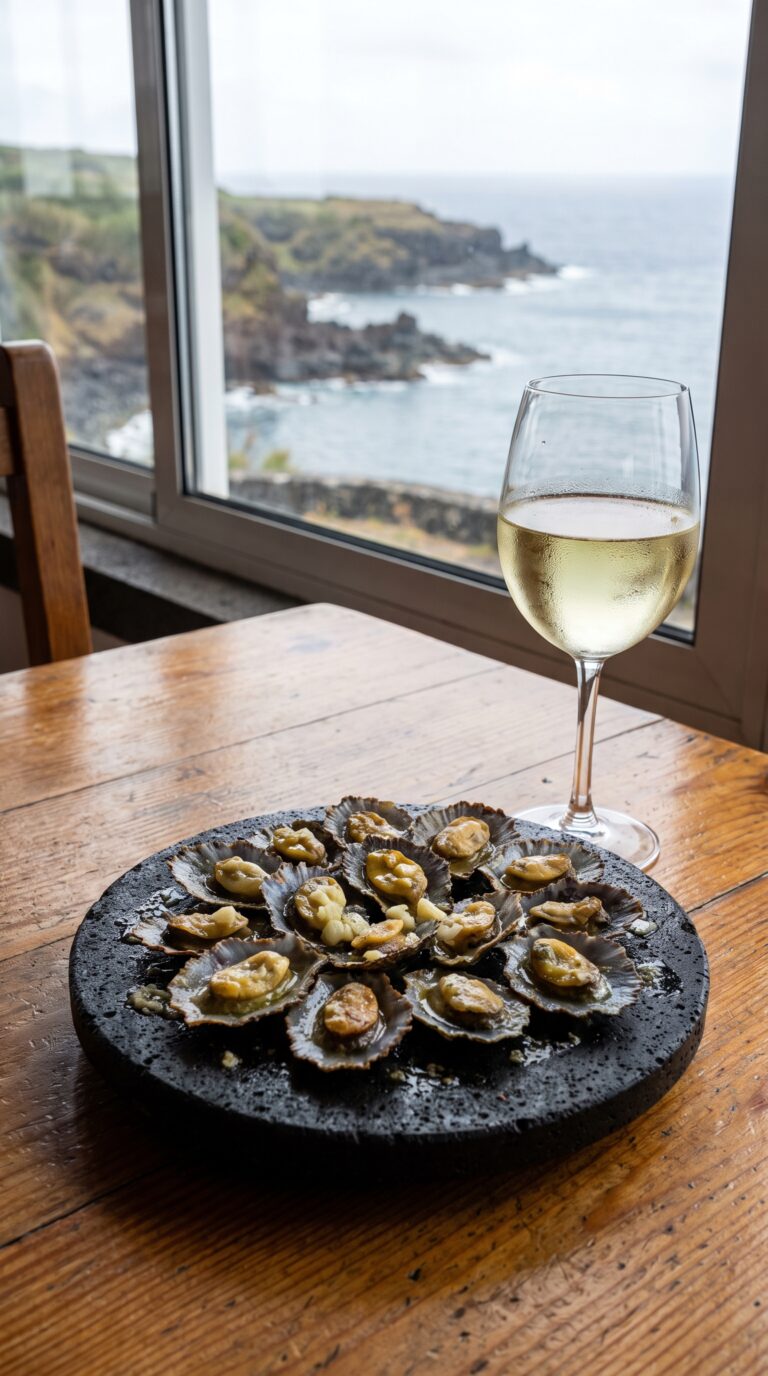
The Azores Wine Company restaurant sits inside the winery itself. You eat surrounded by barrels and fermenting tanks. The menu changes with the season, but expect grilled octopus, seared tuna belly, and local cheese plates. Reservations required for the full tasting menu. Walk-ins can sometimes grab a table for small plates and a bottle.
Volcanic wines pair unnaturally well with Atlantic seafood. The mineral edge in a chilled verdelho cuts through the richness of grilled lapas (limpets served on volcanic rock). Arinto balances the salt in fresh octopus. The restaurant staff will guide you through pairings if you ask.
Beyond the winery, family-run tascas (taverns) in Madalena and São Roque serve traditional Azorean stews and grilled fish. Most source ingredients from neighboring farms and fishing boats. You’ll find octopus stew, beef alcatra slow-cooked in wine, and cheese from São Jorge island. Prices drop to €12-15 per main at these spots.
The farm-to-table approach isn’t a trend here. It’s how the island has always operated. Wine estates grow their own vegetables. Fishermen deliver catches directly to restaurant kitchens. Menus shift based on what’s available that week. Check the Azores Wine Company – Restaurant Latitude page for current offerings and booking details.
Where to Stay in Pico’s Wine Country
Pico’s wine region offers three dedicated vineyard hotels including Pico Vineyards Hotel and Azores Wine Company Hotel, with rates from €120-250 per night and spa facilities at Pico Terramar.
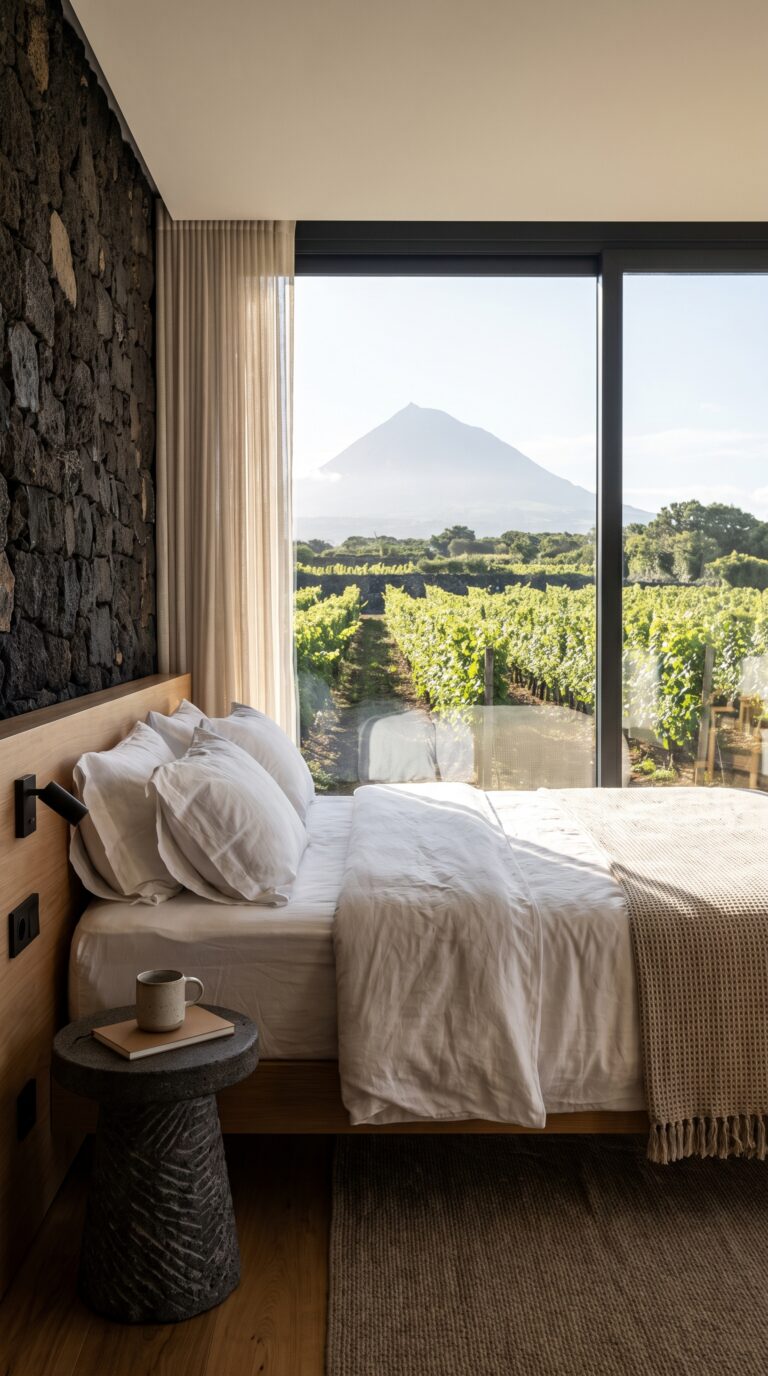
Pico Vineyards Hotel sits directly in the currais landscape near Criação Velha. The property has 11 rooms with floor-to-ceiling windows facing Mount Pico. Breakfast includes local cheese and Verdelho wine jam. Rates run €180-220 in summer according to their direct booking site. Reserve three months ahead for July and August.
Planning Tip
Pico Terramar & Spa offers the only full spa in the wine region. Indoor pool uses volcanic spring water heated to 32°C. The 24 rooms include vineyard-view suites with private terraces. Massage treatments incorporate grape seed oil from local wineries. Nightly rates start at €160. Spa access costs €25 for non-guests.
Azores Wine Company runs three guest rooms inside their Criação Velha estate. You sleep above the barrel cellar. Morning tastings come free with your stay. The setup works for serious wine tourists who want production access. Rooms cost €120-150. Book directly through their site.
Budget travelers find guesthouses in Madalena from €60 per night. Turismo rural houses near the vineyards offer kitchen access and more space for families. Peak season runs June through September. Package deals combining two nights with winery tours save about 15% compared to booking separately.
Getting to and Around Pico Island
Pico Island is reached by 30-minute ferry from Horta (Faial) running 6-8 times daily or direct flights from Ponta Delgada, with rental cars essential for vineyard touring at approximately €35-50 per day.
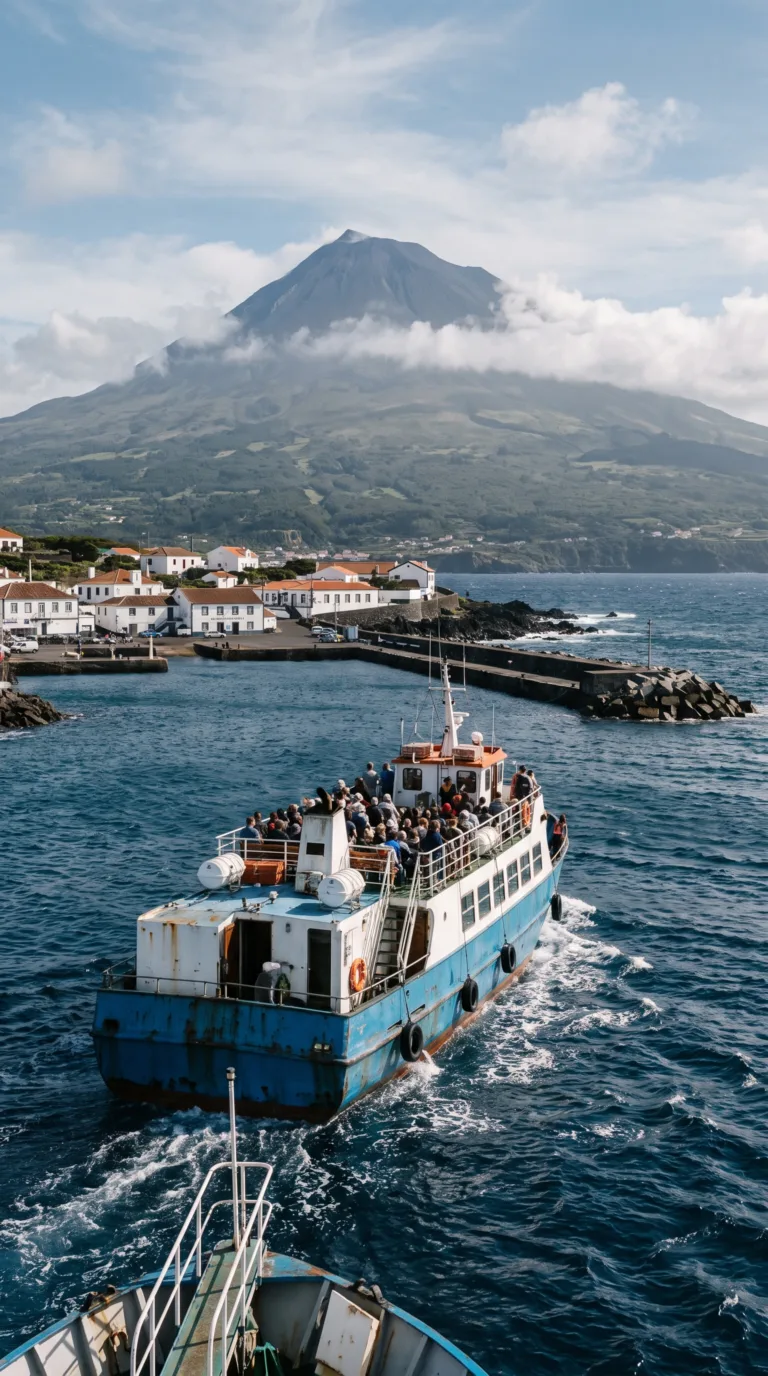
Most visitors arrive via Atlânticoline ferry from Horta on Faial Island. The crossing takes 30 minutes and costs around €6 one-way. According to Atlânticoline’s 2026 schedule, ferries run 6-8 times daily between Horta and Madalena. Book online or buy tickets at the port.
Direct flights land at Pico Airport from São Miguel (Ponta Delgada) in 45 minutes and from Terceira. SATA Air Açores operates these routes year-round.
Rent a car in Madalena. Public buses don’t reach most vineyard areas. Taxis exist but cost €30-40 for a one-way trip to Criação Velha. Driving from Madalena to the main wine zone takes 15 minutes. Roads are narrow but paved. Parking at wine estates is free and informal.
Bike rentals work for fit cyclists in dry weather. The coastal vineyard trail between Madalena and Lajido covers 10 kilometers with minimal elevation. Wind can be brutal.
Travel Routes
Below are recommended travel routes with key stops and estimated drive times.
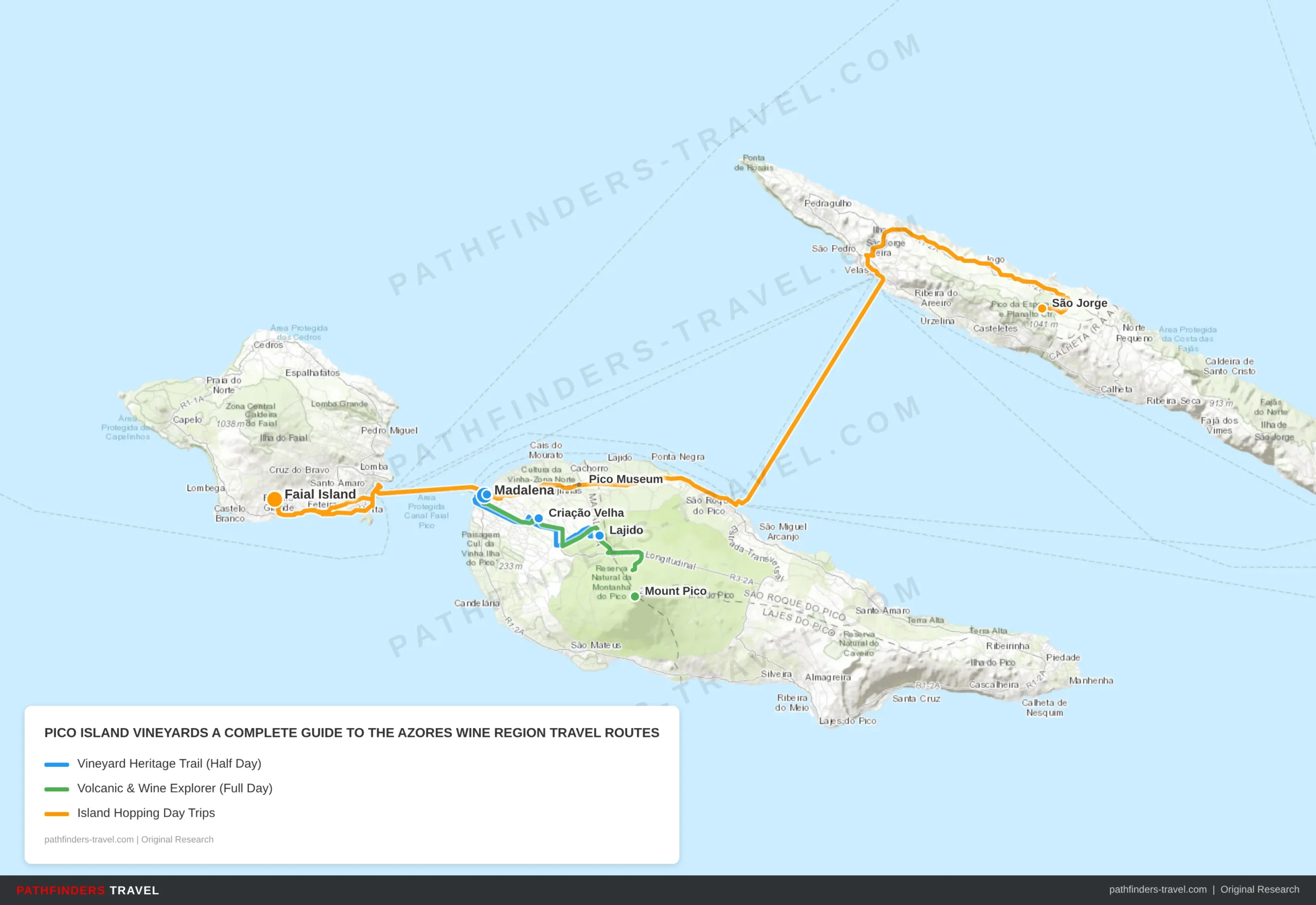
| # | Stop | Highlights | Drive Time |
|---|---|---|---|
| 1 | Madalena | Main port and gateway to Pico; pick up a rental car, grab coffee at the waterfront before heading into wine country | Start |
| 2 | Pico Museum | Museu do Vinho tells the full history of Pico viticulture from 15th-century monks to UNESCO recognition; wooden presses, clay fermentation vessels, €3 entry | 5 min |
| 3 | Criação Velha | Heart of the UNESCO landscape; Azores Wine Company estate with 400-year-old stone walls, 90-min tasting of verdelho, terrantez & arinto (€25–35), book 3 days ahead in summer | 10 min |
| 4 | Lajido | Eastern end of the 10km currais corridor; walk public paths through the basalt stone vineyard grid, Atlantic views, traditional stone corrals up to 2m tall | 15 min |
| # | Stop | Highlights | Drive Time |
|---|---|---|---|
| 1 | Madalena | Early start from the port; stock up on supplies and picnic food from local shops before the day’s drive | Start |
| 2 | Criação Velha | Morning vineyard walk through the UNESCO currais landscape; best light for photography before tourist groups arrive | 10 min |
| 3 | Lajido | Continue walking the basalt stone vineyard grid eastward; Atlantic coast lava pools nearby for a mid-morning swim | 15 min |
| 4 | Mount Pico | Portugal’s highest peak at 2,351m looms above the vineyards; scenic drive to the base for views over the entire wine landscape and out to Faial and São Jorge islands | 25 min |
| # | Stop | Highlights | Drive Time |
|---|---|---|---|
| 1 | Madalena | Ferry terminal for inter-island connections; ferries run regularly to Faial and São Jorge, check Atlanticoline schedules seasonally | Start |
| 2 | Faial Island | 30-min ferry from Madalena; Horta marina, the famous Peter Café Sport, Caldeira volcano caldera, and a vivid contrast to Pico’s volcanic wine landscape | 30 min ferry |
| 3 | São Jorge | 1.5-hr ferry from Madalena; dramatic fajãs (coastal ledges), local queijo São Jorge cheese to pair with Pico wines, clifftop hiking trails with views back to Mount Pico | 1h 30m ferry |
Day Trips from Pico’s Wine Region
Horta on neighboring Faial Island is the most accessible day trip from Pico’s vineyards via 30-minute ferry, with Capelinhos Volcano and Caldeira do Faial crater both reachable within a full-day excursion.
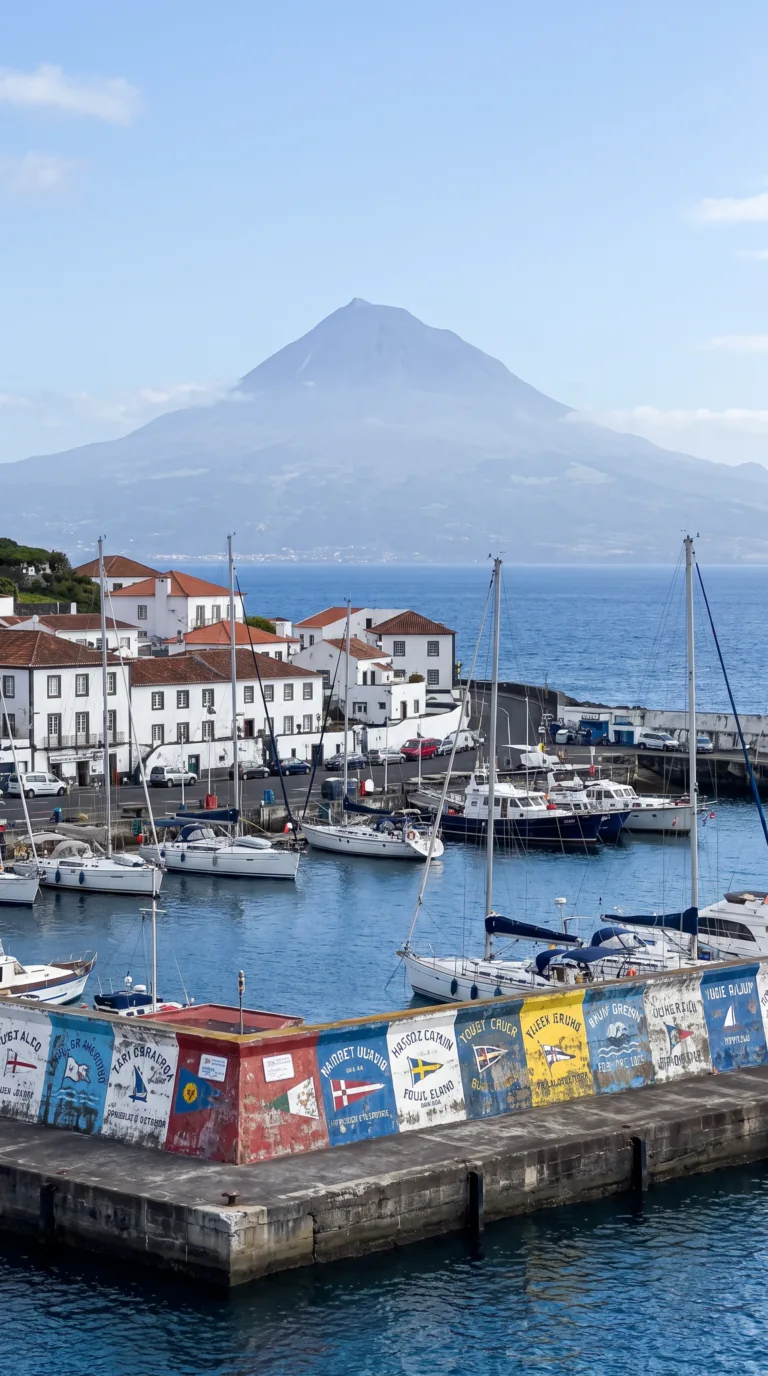
Horta sits just across the channel. Atlânticoline runs ferries every two hours from Madalena, €5 each way. The historic whaling port draws sailors from around the world. They paint murals on the marina walls before departing. Hundreds of colorful yacht signatures cover the concrete. Peter Café Sport anchors the harbor. Whalers drank there in the 1800s. Sailors still do.
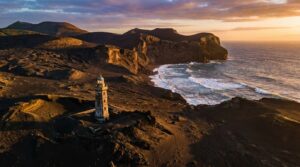
From Horta, rent a car and drive 30 kilometers west to Capelinhos Volcano. The 1957 eruption added new land to Faial’s western tip. Black ash blankets the coastline. No vegetation grows. It looks like the moon. The Capelinhos Volcano Interpretation Centre sits half-buried in volcanic debris. Exhibits explain the 13-month eruption that forced 2,000 residents to evacuate.
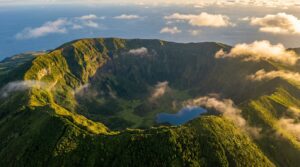
Circle back through Faial’s interior to reach Caldeira do Faial. This massive crater measures 2 kilometers wide and 400 meters deep. A hiking trail loops the rim in two hours. Mist rolls through endemic juniper forests. On clear days you see Pico’s peak from the caldera edge.
Angra do Heroísmo on Terceira requires more commitment. The UNESCO World Heritage city lies 90 minutes by plane from Pico. Renaissance fortifications ring the harbor. Cobblestone streets climb past 16th-century churches. Plan an overnight stay. Day trips leave too little time.
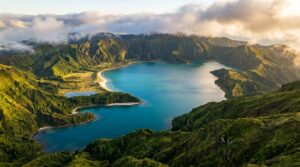
Ponta Delgada on São Miguel serves as the Azores capital. Most international visitors land there first. The city offers botanical gardens and Atlantic-facing promenades. Three major attractions sit within driving distance: Sete Cidades twin lakes fill a volcanic crater, Lagoa do Fogo hides in the island’s center, and Furnas bubbles with geothermal hot springs. São Miguel deserves three days minimum.
Flores Island appeals to travelers chasing waterfalls. Dozens cascade down vertical cliffs into the Atlantic. The island sits 250 kilometers west of Pico. Flights run twice weekly. According to the Visit Azores official tourism website, Flores works better as a separate trip than a rushed day excursion.
Planning Your Visit: Best Time and Tips
September is optimal for visiting Pico’s vineyards during the grape harvest season, with temperatures averaging 22°C and the most wine tourism activities, though May through October all offer good weather for vineyard touring.
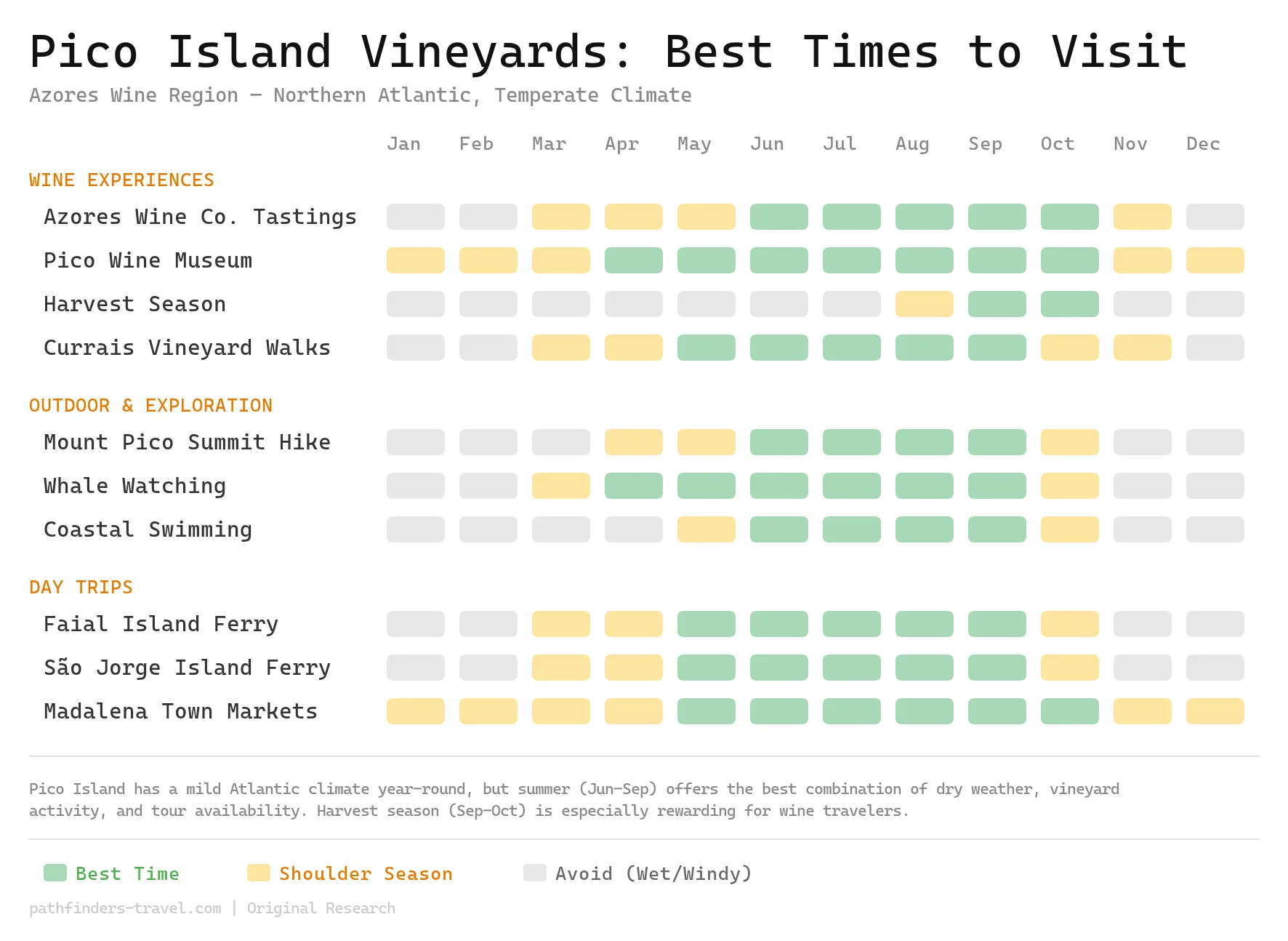
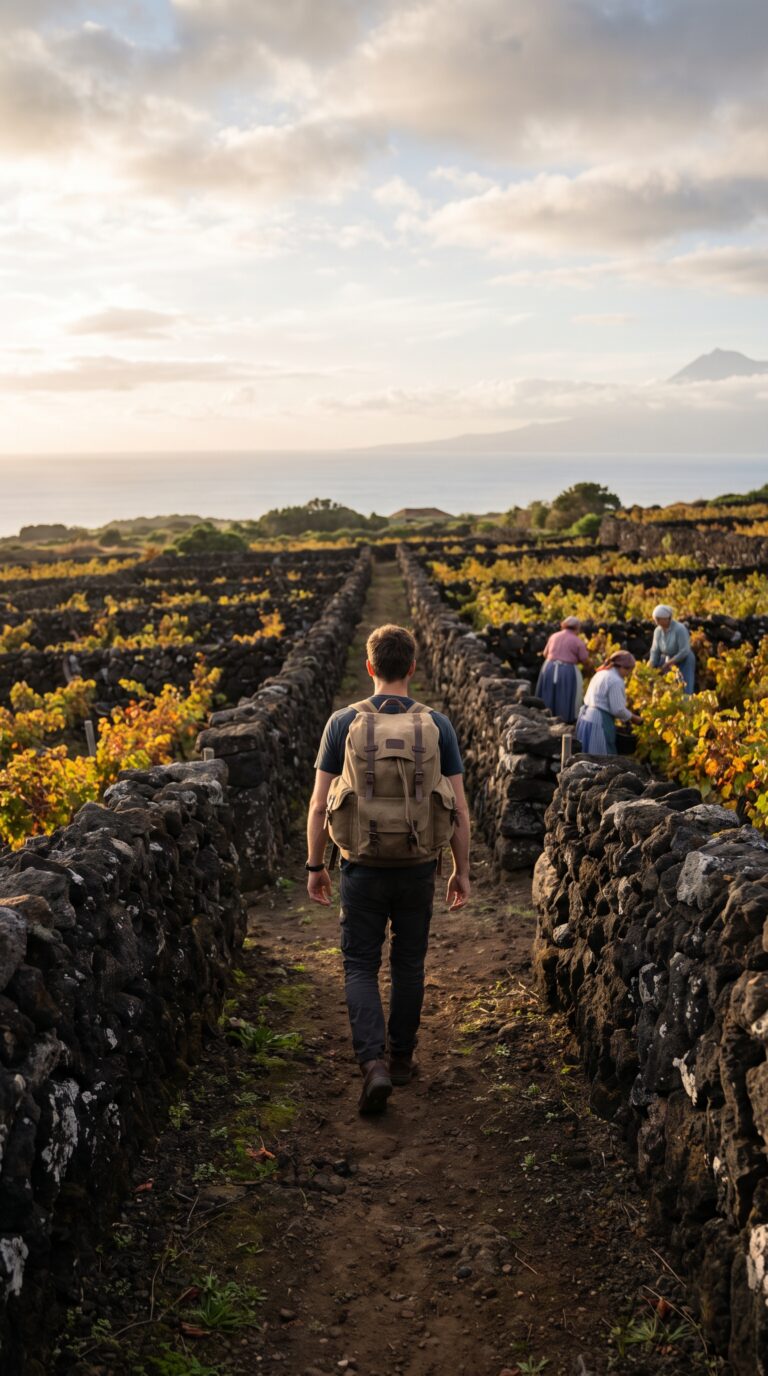
September brings the vindima (grape harvest). Vineyard workers pick grapes by hand. Festivals happen. Wineries run at full capacity. You’ll see the entire production process. According to the Azores Wine Company, harvest typically runs from early September through mid-October depending on the grape variety.
The Atlantic climate stays mild year-round. Summer temperatures hover between 20-25°C. Wind hits constantly. Rain comes without warning. Pack layers. Bring a waterproof jacket even in July.
May through October works for vineyard touring. Shoulder seasons (May-June, October) mean fewer tourists and lower accommodation prices. Winter months (November through March) get very wet. Winds can reach 80 km/h. Some wine estates close or reduce hours. Check the IPMA weather forecasts before booking.
Book accommodations three months ahead for September visits. Harvest festivals fill hotels fast. Wear sturdy shoes for vineyard trails. The volcanic rock tears up sneakers. Bring sun protection. The Atlantic sun burns through clouds.
Frequently Asked Questions
What makes Pico Island vineyards UNESCO-listed?
The UNESCO designation recognizes Pico’s landscape of hand-built basalt stone walls called currais. These walls protect individual vines from brutal Atlantic winds. Farmers have used this method since the 15th century. The 2004 listing honors this as an outstanding example of human adaptation to a hostile environment. You’re looking at centuries-old viticulture frozen in time. The stone grid stretches across lava fields. No other wine region looks like this.
How much does wine tasting cost at Azores Wine Company?
Standard tastings run €25-35 per person. That includes a guided tour of the vineyards and cellars, plus four to five wines. Your guide explains the volcanic terroir. You’ll taste verdelho and terrantez varietals. Book ahead. High season fills up fast. Walk-ins get turned away during September harvest.
Where is Azores Wine Company located on Pico?
Azores Wine Company Pico sits near Madalena on the island’s western coast. It’s inside the UNESCO vineyard zone. The ferry from Faial docks at Madalena port. From there it’s a short drive. They run day visits and also have an on-site hotel if you want to stay overnight. Easy access from the main town.
What are reviews like for Azores Wine Company?
Azores Wine Company reviews skew positive. Visitors praise the knowledgeable guides and the quality of the wines. The vineyard setting is beautiful. People love the volcanic terroir experience. The tastings feel professional. Common complaints: you must book in advance. Peak season gets crowded. Don’t show up without a reservation.
Can you visit Pico vineyards without a car?
A rental car makes everything easier. But you have options. Taxis run from Madalena to the main vineyard areas. Some hotels offer shuttle services. Organized wine tours exist. Azores Wine Company and other producers are within taxi distance of Madalena. Public transport barely exists. Budget for taxi fares if you skip the rental.