This guide contains affiliate links. As an Amazon Associate we earn from qualifying purchases — at no extra cost to you.
Estimated reading time: 13 minutes
Last updated: August 2026
Table of Contents
- Can You Camp for Free in the Allegheny National Forest?
- Things to Do in Allegheny National Forest
- Where to Stay: Camping and Cabins
- Getting There and Around
- Budget and Costs
- Day Trips from Allegheny National Forest
- Practical Tips for Visiting
- Frequently Asked Questions
Can You Camp for Free in the Allegheny National Forest?
Yes — dispersed camping is free on roughly 90% of the Allegheny National Forest’s 513,000 acres, with no entrance fee and no permit required. Pitch a tent at least 150 feet from water sources and trails, and pack out everything. If you prefer facilities, the forest’s 15 developed campgrounds charge about $20–40 per night, bookable through Recreation.gov.
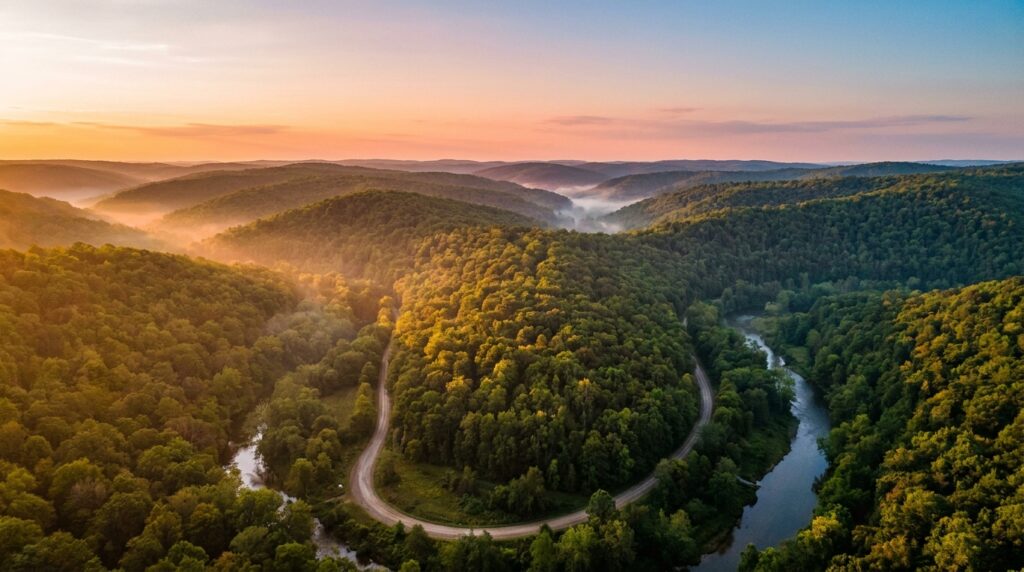
Allegheny National Forest Pennsylvania sits in the state’s northwest corner. It’s the only national forest in Pennsylvania. The Official USDA Forest Service Allegheny National Forest website reports 513,257 acres of public land across four counties. That’s more than 800 square miles of public land.
The forest was established in 1923, according to USDA Forest Service historical records. Loggers clear-cut nearly every tree here in the 1800s. The land was stripped bare. The federal government bought it back cheap and let it regrow. Today you’ll find second-growth hardwoods mixed with patches of old-growth forest that somehow survived the saws.
This isn’t a developed park with visitor centers and paved loops. Allegheny National Forest offers dispersed camping on most of its acreage. You can pitch a tent almost anywhere outside designated recreation areas. The Pennsylvania Department of Conservation and Natural Resources manages some state forest land adjacent to the national forest, creating an even larger wilderness block.
The forest is famous for synchronous fireflies that blink in unison during late June. Light pollution out here is nearly zero. On clear nights you’ll see the Milky Way with your naked eye. Old-growth hemlock stands still exist in remote valleys. Some trees are over 300 years old.
Expect mud, bugs, and no cell service — a satellite communicator is smart backup this far out. This is backcountry. Bring paper maps.
Research Behind This Guide
We compiled this forest guide using Pennsylvania’s official recreation data, Forest Service resources, and accounts from regular visitors. Information was accurate when written, but we recommend confirming current conditions and access details with the Allegheny National Forest office before heading out.
Things to Do in Allegheny National Forest
Allegheny National Forest offers over 600 miles of trails including the North Country Trail, rare synchronous firefly displays in late June, 100+ miles of OHV trails, and access to the 12,000-acre Allegheny Reservoir.
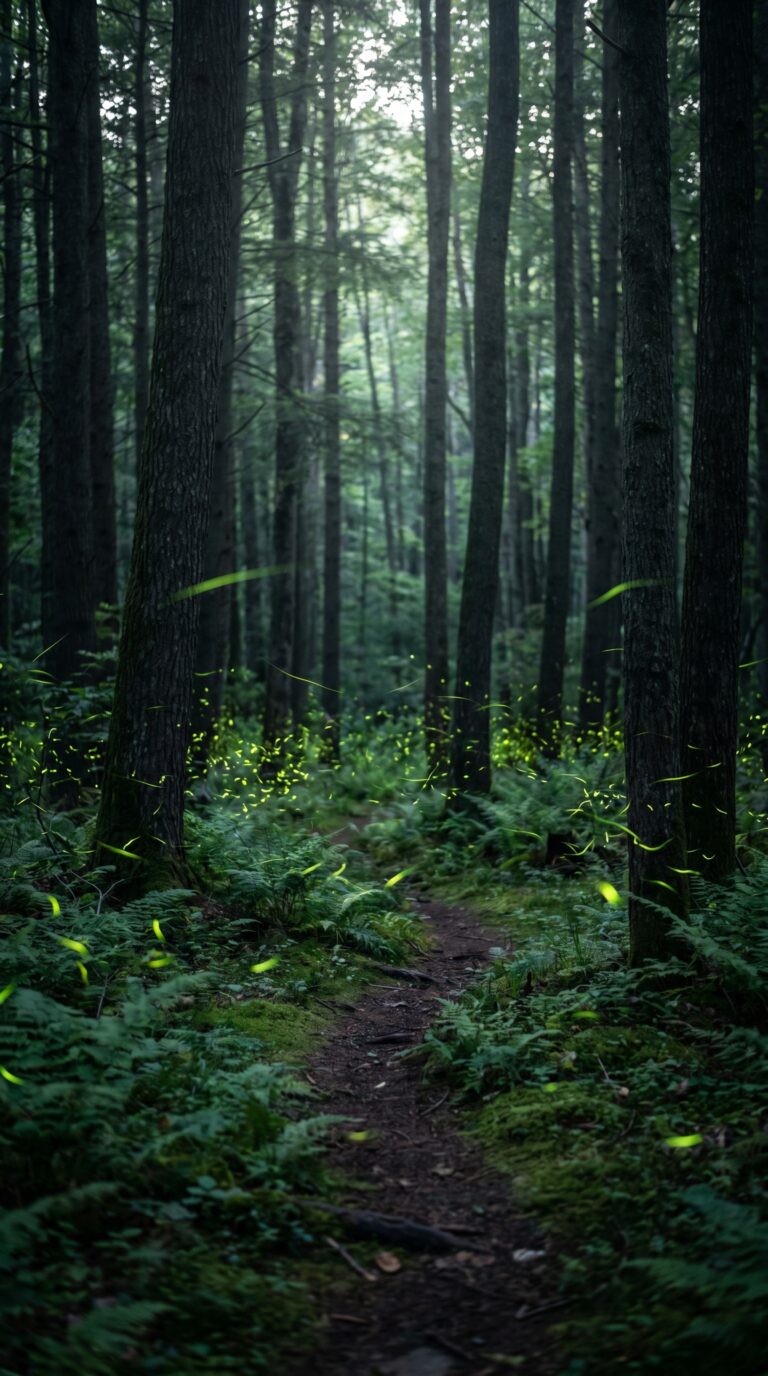
The forest’s most unusual attraction happens for about two weeks each June. Synchronous fireflies blink in unison across the forest floor, a phenomenon found in only a handful of locations across North America. The PA Firefly Festival coordinates viewing events and guided tours near Tionesta, on the forest’s western edge. You’ll need to arrive before sunset. No flashlights allowed once the show starts.
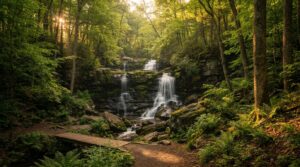
Trails cut through every corner of the forest. The North Country Trail passes through on its 4,800-mile route from North Dakota to Vermont. Hearts Content Scenic Area preserves 121 acres of old-growth forest, white pines and hemlocks that escaped the logging era. Some trees here are over 300 years old. The Minister Creek Trail loops 6.6 miles through designated wilderness with no blazes, just rock cairns marking the path.
Planning Tip
Off-highway vehicle riders have 100+ miles of trails to explore. Marienville serves as the OHV hub with direct trail access from town. You can ride ATVs and dirt bikes on designated forest roads and single-track trails. Trail permits cost $35 for the year or $10 per day according to the Allegheny National Forest permits page, and the riding season runs from the Friday before Memorial Day through late September.
Water activities center on the Allegheny Reservoir, created by Kinzua Dam in 1965. The reservoir stretches 12,000 acres with boat launches at multiple points. Tionesta Creek offers lazy tubing runs in summer, put in at Nebraska and float 3 hours down to the campground. Trout fishing peaks in April and May. Bass season runs June through November.
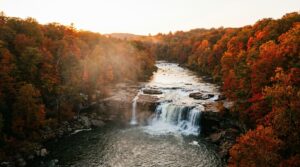
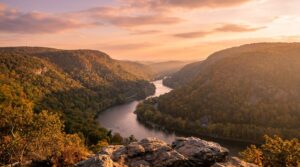
Fall foliage peaks between October 10-20 most years. Route 6 crosses the forest east to west with pulloffs every few miles. Forest roads branch off into less-traveled areas where you won’t see another car for hours. Winter brings cross-country skiing and snowshoeing on unplowed roads. The Hearts Content trail system grooms 15 miles of ski trails when snow depth hits 6 inches.
Elk viewing happens year-round but rut season in September offers the best chance to hear bugling bulls. Bowhunting for deer runs October through November. The forest manages 513,000 acres of public hunting land with no permit required beyond your Pennsylvania hunting license.
Photographers target the Kinzua Bridge overlook for sunrise shots of the valley below. With near-zero light pollution, the forest is one of the best spots in Pennsylvania for Milky Way photography. Hearts Content’s virgin forest creates cathedral-like scenes with light filtering through 150-foot canopy gaps.
What should I pack for Allegheny National Forest?
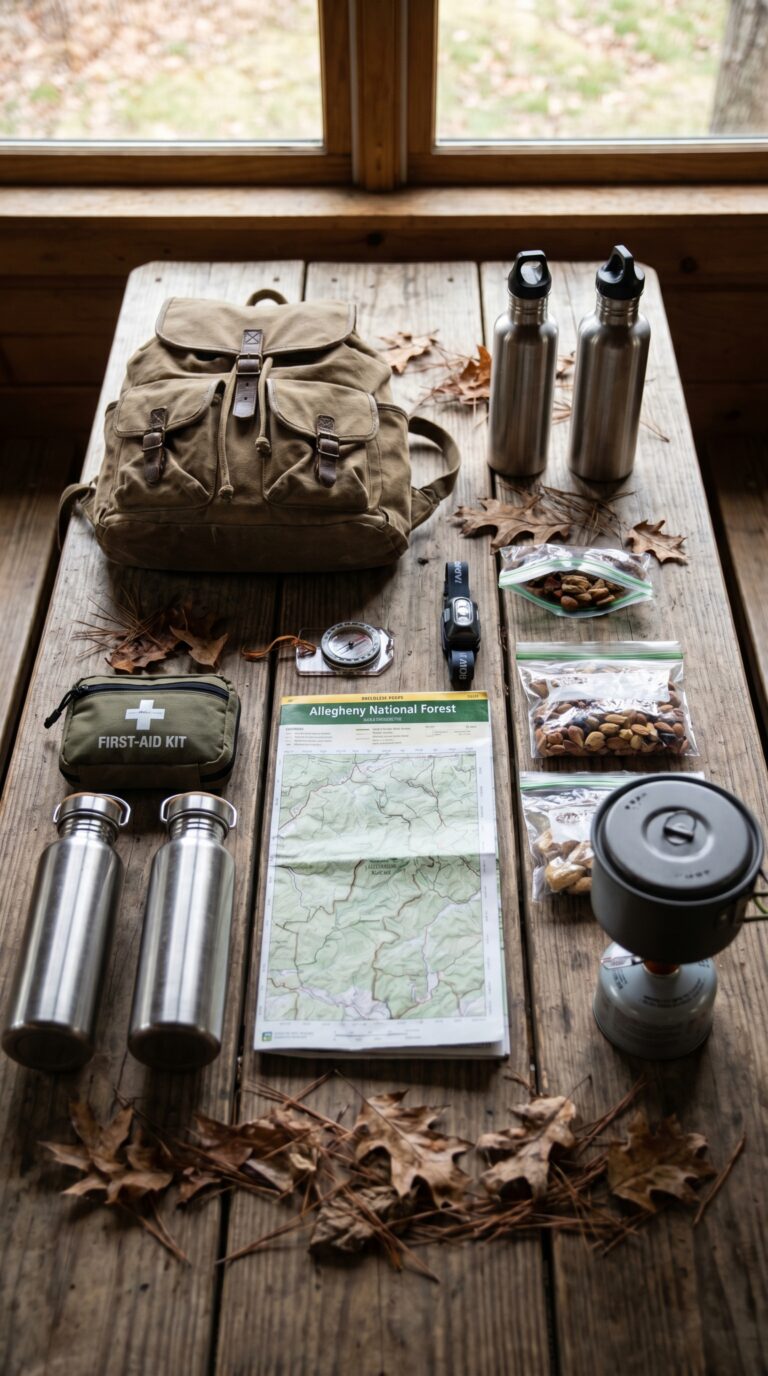
Allegheny is half a million acres of remote forest — dispersed camping, old-growth valleys and no cell service — so pack for self-sufficiency, changeable weather and trails well off the grid. The essentials:
- Boots with ankle support — muddy, root-laced forest trails
- A waterproof shell — forest weather turns wet fast
- A fleece layer — cool valleys and chilly nights, even in summer
- A satellite communicator — there’s no cell service out here — message for help anywhere
- A daypack with hydration — no services on the trail; carry your own water
- A rechargeable headlamp — for dispersed campsites and pre-dawn starts
- A pair of binoculars — old-growth forest is full of birds and wildlife
As an Amazon Associate we earn from qualifying purchases.
Where to Stay: Camping and Cabins
Allegheny National Forest offers 15 developed campgrounds with 600+ sites bookable through Recreation.gov, plus free dispersed camping on 90% of forest land following Leave No Trace principles.
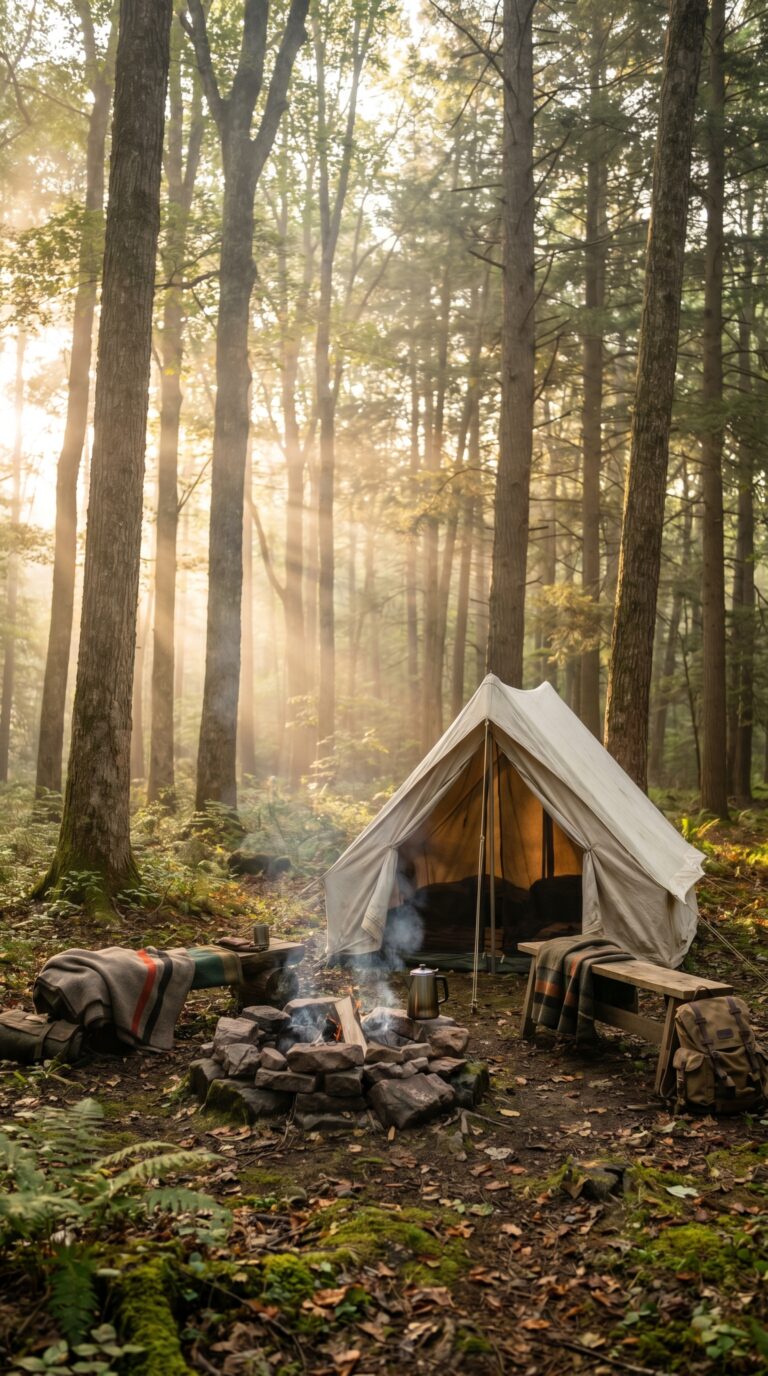
Camping is the main way to stay here. The forest runs 15 developed campgrounds with over 600 sites total, according to the USDA Forest Service campground directory. Hearts Content sits near the old-growth grove. Red Bridge hugs the Allegheny Reservoir shoreline. Dewdrop and Kiasutha offer RV hookups and flush toilets.
Book through Recreation.gov for developed sites. Some campgrounds fill weekends in summer. Others stay first-come-first-served. Rates run $20–40 per night depending on hookups. Most close November through April. A few stay open for winter camping with vault toilets only.
Dispersed camping beats the crowds. The USDA Forest Service Camping & Cabins page confirms 90% of forest land allows free primitive camping year-round. No permits needed. Camp 150 feet from water sources and trails. Pack out all trash. Download the dispersed camping map from the Forest Service site before you go, cell service dies fast here.
Cabin rentals inside forest boundaries are scarce. Gateway towns like Warren and Bradford rent private cabins starting around $100 per night. Check Airbnb or VRBO for options near trailheads.
Getting There and Around
Allegheny National Forest is located in northwestern Pennsylvania, accessible via US Route 6 and state highways, with Marienville serving as the central gateway town 100 miles north of Pittsburgh.
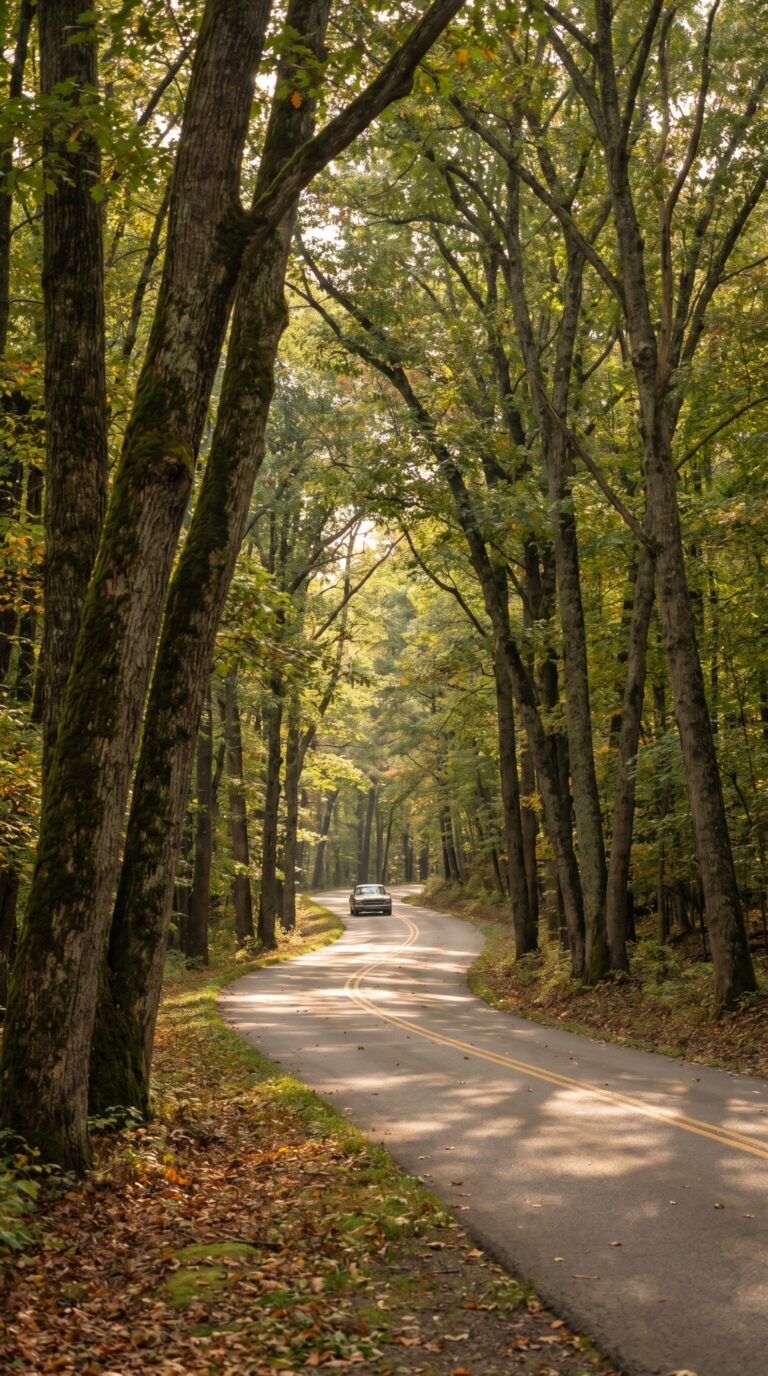
The forest sits in northwestern Pennsylvania. Pittsburgh is roughly 100 miles south. Erie is about 90 miles north. You need a car. Period.
US Route 6 runs along the northern boundary. PA Route 66 and PA Route 948 cut through the interior. These are your main arteries. Marienville anchors the center, gas stations, a grocery store, outfitters. Warren, Bradford, Kane, and Ridgway circle the perimeter as larger supply towns.
The forest contains over 500 miles of roads according to the USDA Forest Service road inventory. Some are paved. Most are gravel. A few require high-clearance vehicles, especially in spring when mud season hits. Download the official Visitor Maps and Guides before you arrive, cell service is patchy.
Winter closes some forest roads entirely. Check conditions with the ranger district office. No buses run here. No trains. The nearest commercial airports are Pittsburgh International and Erie International. Rent a car at either one and drive in.
Budget and Costs
Allegheny National Forest charges no entrance fee, with developed campsite fees ranging from $20-40 per night and free dispersed camping available throughout 90% of the forest.
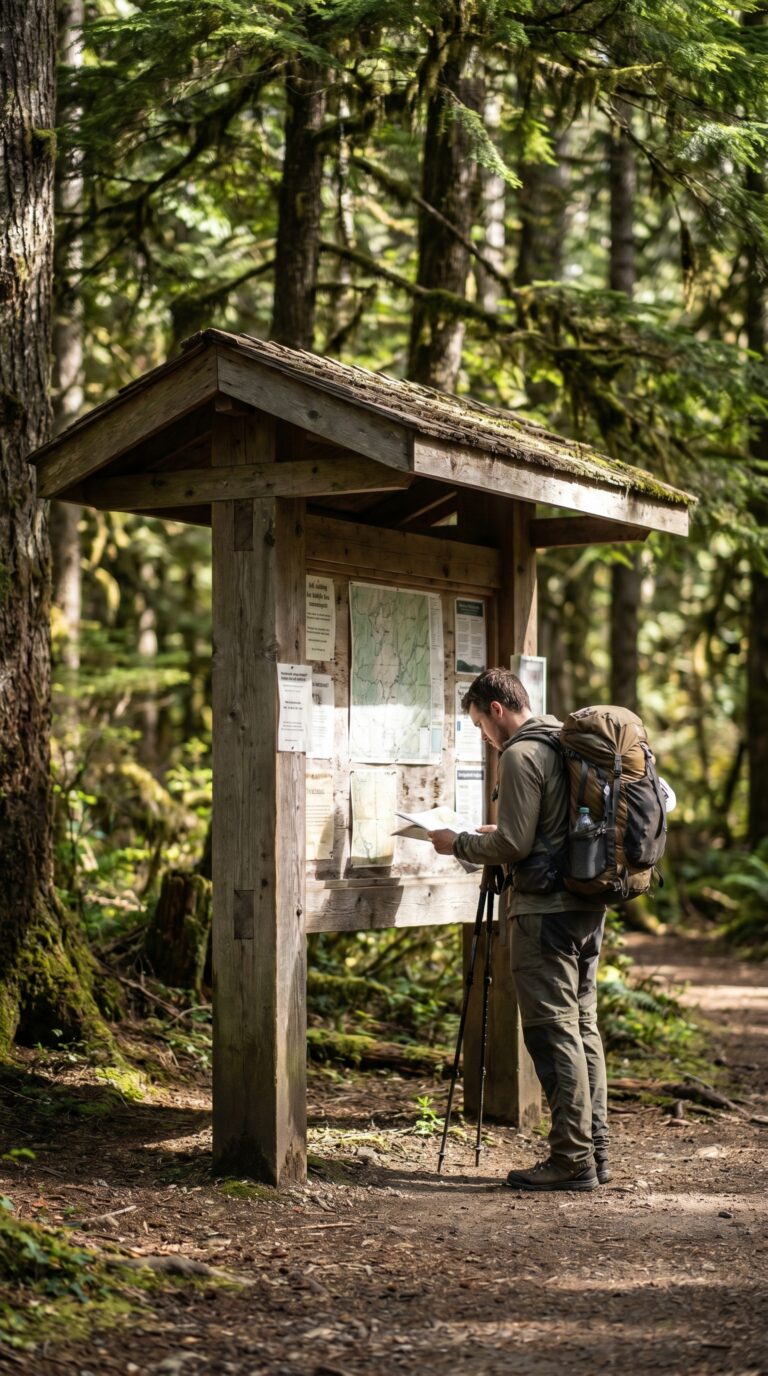
National forests don’t charge admission. There’s no entrance fee and no tickets. Hike anywhere. Only a handful of developed swimming and boat-launch areas charge small day-use fees.
Camping is where costs appear. Developed campgrounds with toilets and water run $20-40 per night according to the USDA Forest Service fee schedule. Sites like Hearts Content and Minister Creek have picnic tables and fire rings. Dispersed camping, setting up a tent anywhere more than 150 feet from water, costs nothing. Zero dollars.
Fishing requires a license. Pennsylvania residents pay $27.97 for an annual license. Non-residents pay $60.97. You can buy either online through the Pennsylvania Fish and Boat Commission official license purchase page. Hunting licenses apply if you’re coming for deer or turkey season.
Gas matters more than you’d think. The nearest services sit 20+ miles from most trailheads. Fill your tank in Bradford or Kane before heading into the forest. Driving empty forest roads burns fuel fast.
Total daily budget runs $30-50 if you’re camping in developed sites and cooking your own meals. Drop that to $10-15 with dispersed camping and a cooler full of groceries from town. This place rewards self-sufficiency.
Day Trips from Allegheny National Forest
Within 90 minutes of Allegheny National Forest, visitors can reach Erie on Lake Erie, Kinzua Bridge State Park’s historic viaduct, and charming Pennsylvania towns, while Pittsburgh sits 100 miles south.
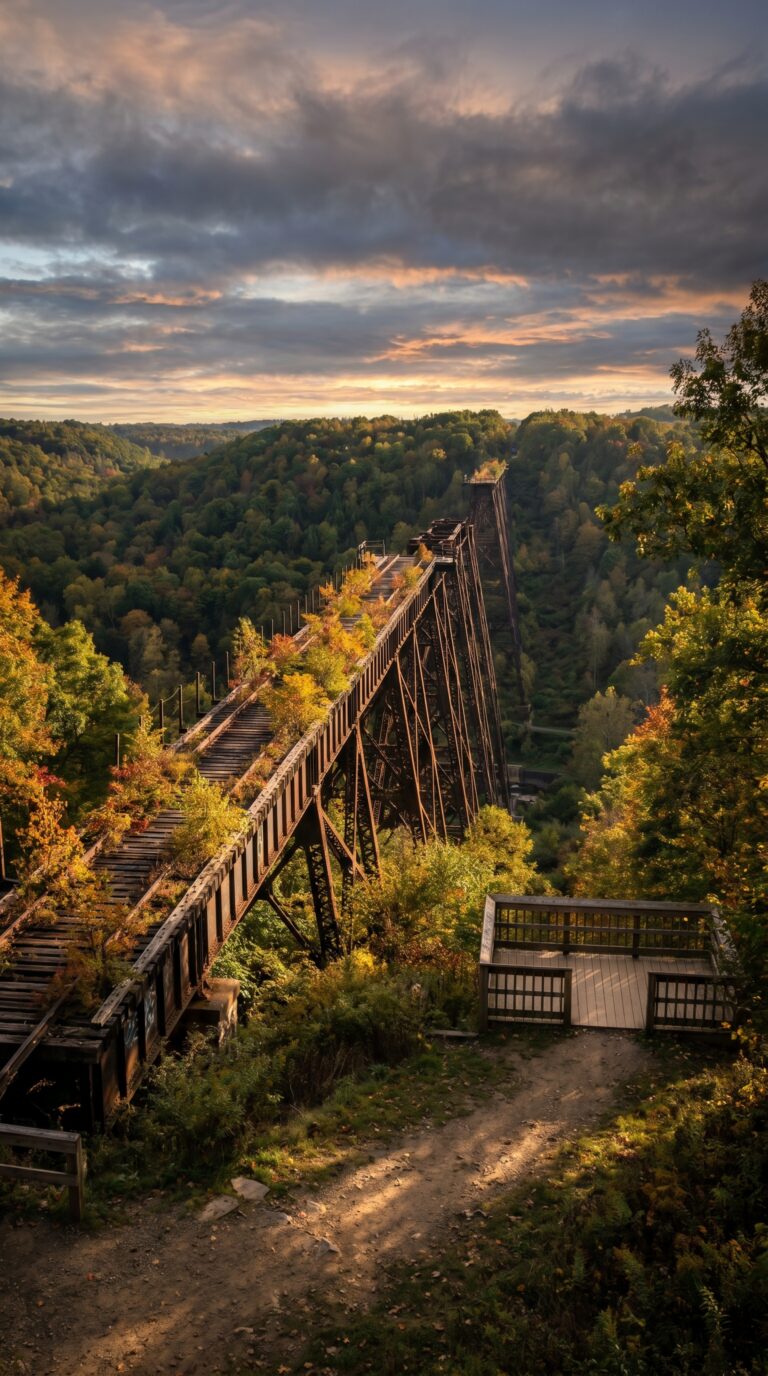
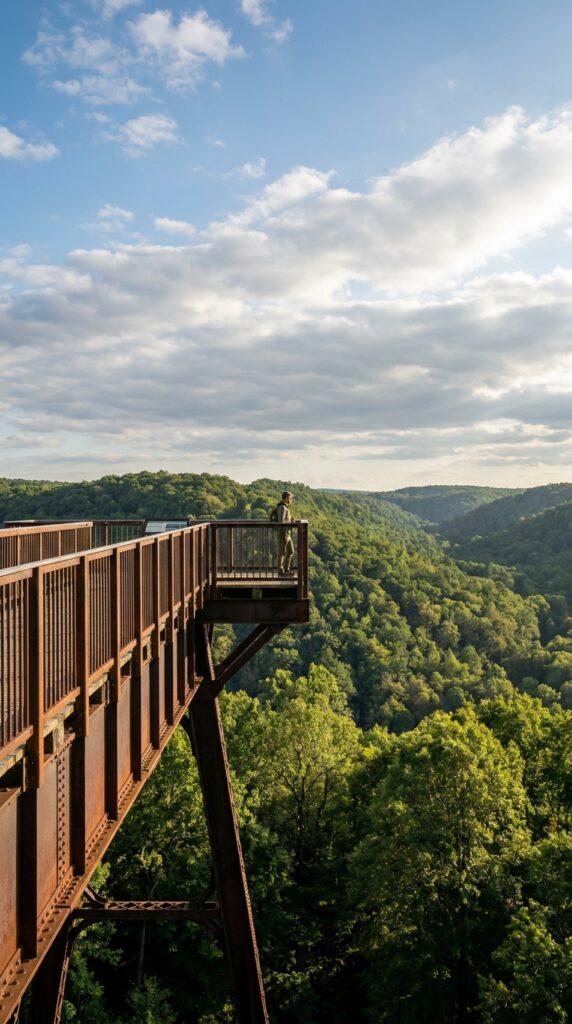
Kinzua Bridge State Park sits 20 minutes from the forest boundary. The 301-foot-tall railroad viaduct once carried trains across the valley. A tornado destroyed part of the structure in 2003, and the free Kinzua Sky Walk now lets you walk out over the wreckage. Note: the Sky Walk is closed for renovations through 2027, reopening only for fall foliage from September 1 to October 31, 2026. The rest of the park and the visitor center remain open.
Erie lies 90 miles north, about 90 minutes by car. Presque Isle State Park juts into Lake Erie. Seven miles of beaches. Kayak rentals. Maritime museums downtown. Fresh walleye at waterfront restaurants.
Pittsburgh sits 100 miles south. Two-hour drive. Museums, sports stadiums, Strip District food markets. Worth a full day if you want city attractions.
Ohiopyle is southeast. Whitewater rafting on the Youghiogheny River. Frank Lloyd Wright’s Fallingwater house tours nearby. Jim Thorpe offers Victorian architecture and train rides. Gettysburg has Civil War battlefields. Hershey runs chocolate factory tours and an amusement park.
Lancaster County shows Amish farms and roadside markets. Reading, Harrisburg, York, and Bethlehem are regional cities with museums and restaurants. Pocono Mountains and Delaware Water Gap add more outdoor options. Philadelphia is 4+ hours away but doable for extended trips.
Check Visit Pennsylvania for current attraction hours and seasonal closures.
Practical Tips for Visiting
The best time to visit Allegheny National Forest is May through October, with peak firefly viewing in late June and fall foliage from mid-September through October, while summer temperatures average 70-80°F.
Late spring through fall offers the most accessible conditions for camping and hiking. June brings the synchronous firefly display, thousands of insects blinking in unison across dark meadows. September and October deliver peak fall color, with maples and oaks turning the hillsides orange and red. Winter visits mean solitude but also snow-covered roads and sub-freezing temperatures.
Northwestern Pennsylvania sees four distinct seasons. According to National Weather Service climate data, summer highs reach the 70s and 80s°F, while winter lows drop well below freezing. Rain can hit any month. Pack layers, waterproof shells, and boots with ankle support.
Cell service disappears in most of the forest. Carry a detailed paper map or GPS unit. Bring water filtration, streams run clear but need treatment. Store food in bear-safe containers or hang it properly. The National Weather Service forecast for Allegheny National Forest area updates conditions before you leave.
Follow Leave No Trace principles. Respect private inholdings scattered throughout the checkerboard land ownership pattern. Stay on designated OHV trails if you’re riding. Check the USDA Forest Service Allegheny National Forest visitor guidelines and regulations for campfire rules and current closures.
Hunting seasons run heavy in fall. Wear blaze orange if you’re hiking between September and December. Tell someone your route and expected return time. Gateway towns like Bradford and Kane stock supplies, there’s almost nothing inside forest boundaries.
Frequently Asked Questions
Is the Allegheny National Forest worth visiting?
Absolutely. It’s Pennsylvania’s only national forest, covering 513,000 acres of wilderness. You’ll find experiences you can’t get elsewhere in the state: synchronous fireflies in late June, old-growth forest at Hearts Content, free dispersed camping, and dark sky viewing far from city lights. Perfect for self-sufficient adventurers who want uncrowded trails and remote conditions. Not ideal if you need developed facilities or paved paths everywhere.
Can you drive through the Allegheny National Forest?
Yes. The forest has paved and gravel roads throughout. US Route 6 runs along the northern boundary, with forest roads branching into remote areas. Some roads require high-clearance vehicles. Winter closures happen regularly. Check conditions with Allegheny National Forest Offices before heading out. You can scenic drive, but the real value is getting out and hiking.
What towns are near the Allegheny National Forest?
Marienville sits within the forest boundary as the central gateway. Warren, Bradford, Kane, and Ridgway surround the forest with full services, lodging, groceries, gas, restaurants. Erie is 90 miles north. Pittsburgh is 100 miles south. Stock up in these towns before heading into the backcountry.
Is the Kinzua Sky Walk free?
Yes. Admission to Kinzua Bridge State Park and the Kinzua Sky Walk is free — no tickets or reservations required. The Sky Walk is closed for renovations from 2025 to 2027, though, reopening only for fall foliage viewing from September 1 to October 31, 2026. The rest of the park and the visitor center remain open.
Are there black bears in the Allegheny National Forest?
Yes. The Allegheny National Forest has a healthy black bear population — Pennsylvania holds one of the largest black bear populations in the U.S. Sightings are uncommon but possible, so store food securely, keep your distance, and never feed them. There are no grizzly bears in Pennsylvania.