Estimated reading time: 16 minutes
Last updated: September 2026
Table of Contents
- Is Horta Worth Visiting?
- Top Attractions and Things to Do in Horta
- Where to Eat in Horta
- Where to Stay in Horta
- Getting to and Around Horta
- Day Trips from Horta
- Practical Tips for Visiting Horta
- Frequently Asked Questions
Is Horta Worth Visiting?
Yes — Horta is one of the most characterful towns in the Azores and a bucket-list stop for Atlantic sailors. Its marina is world-famous: crews crossing the ocean paint a good-luck mural on the harbour walls and toast the passage at Peter Café Sport, open since 1918. Add sweeping views of Mount Pico across the channel, whale-watching trips, and quick ferries to Pico, and Faial’s little capital easily rewards a day or an overnight stay.
Research Behind This Guide
This guide draws on official Faial Island tourism resources, government travel data, and documented visitor experiences. All information was current as of writing, but we recommend checking local tourism websites for any recent changes to hours, pricing, or services.
Want to see Horta’s painted marina and volcanic landscapes for yourself? Watch our complete Faial Island travel documentary in 4K.
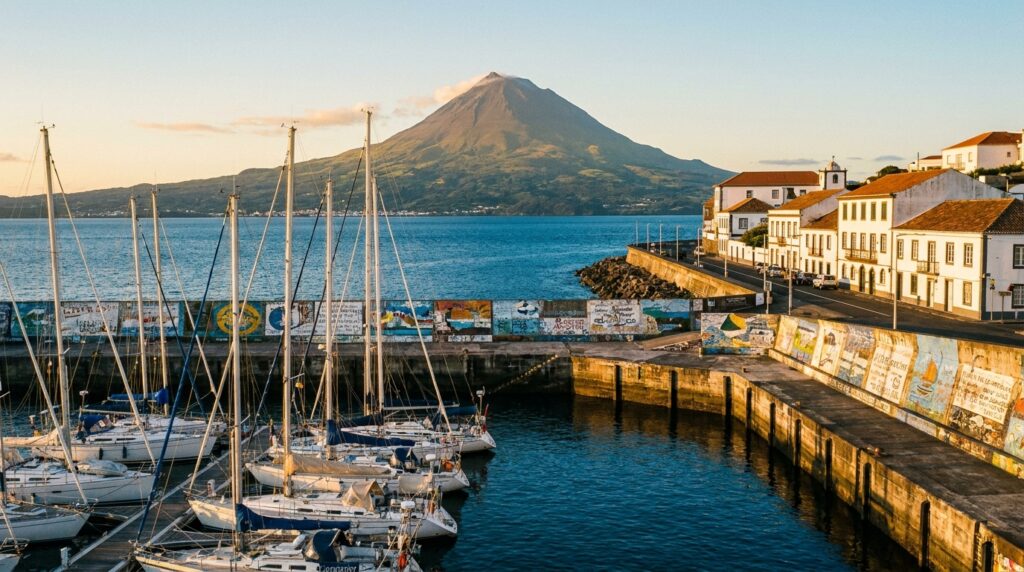
Horta sits 930 miles west of mainland Portugal. This tiny city on Faial Island has anchored transatlantic sailing routes for centuries. Sailors crossing between Europe and the Americas stop here to resupply, repair rigging, and paint murals on the marina walls. The tradition started decades ago. Now thousands of hand-painted boat names and crew signatures blanket every concrete surface around the harbor.
The setting is absurd. Mount Pico rises 7,713 feet across the channel, Portugal’s highest peak punching through clouds just five miles away. The volcano dominates every view from Horta city. On clear mornings, the summit glows orange above the blue strait.
This guide covers the volcanic calderas, black sand beaches, and whale-watching trips that make Horta Azores worth more than a fuel stop. You’ll find restaurant recommendations, accommodation options across budgets, and logistics for reaching neighboring islands. Horta Portugal sits at the crossroads of three continents. The marina connects North America, Europe, and the scattered volcanic dots of the mid-Atlantic. According to the Horta Marina authority, the port processes vessels from over 50 countries each sailing season.
The city itself holds 6,000 residents. Compact. Walkable. The entire downtown fits into a 15-minute stroll from the ferry terminal to Peter Café Sport, the sailors’ bar that has served gin and tonics since 1918. Check Visit Azores for current ferry schedules and inter-island flight times before booking.
Top Attractions and Things to Do in Horta
Horta’s marina features over 1,000 hand-painted murals created by visiting sailors, while Capelinhos Volcano’s 1957-58 eruption site and the 400-meter-deep Caldeira do Faial crater showcase Faial’s dramatic volcanic geology.
Horta Marina sits at the center of everything here. Walk the docks and you’ll see hundreds of painted murals covering every available surface, boats, walls, concrete pilings. Sailors passing through the mid-Atlantic have left their marks since the 1980s. The tradition carries weight. Skip painting your mural and you’ll supposedly face bad luck at sea. Superstition or not, crews take it seriously. Some paintings are crude stick figures. Others are elaborate multi-panel artworks that took days to complete.
Peter Café Sport anchors the waterfront scene. This sailors’ bar has operated since 1918. Yachties from every ocean stop here to swap stories, check weather reports, and drink gin and tonics. The walls inside are covered with pennants, photos, and maritime artifacts donated by visiting crews. The owner’s family still runs the place. They’ll tell you which boats just arrived and which are heading out tomorrow.
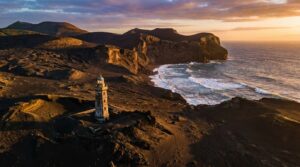
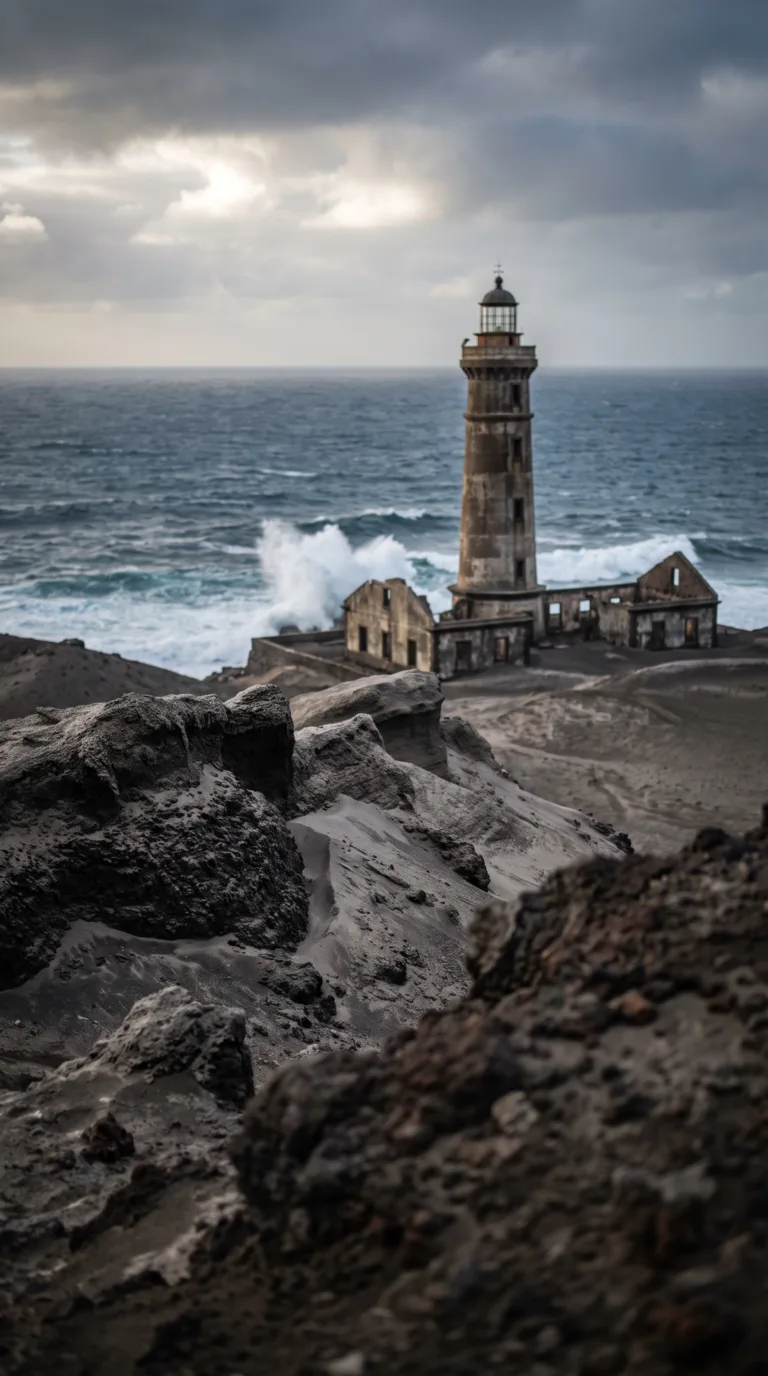
Capelinhos Volcano sits 20 minutes west of Horta by car. The 1957-58 eruption here added new land to Faial’s western tip and buried an entire lighthouse up to its midsection. According to the Capelinhos Interpretation Centre, the eruption lasted 13 months and forced mass emigration to North America, particularly to New England and California. The interpretation center sits underground beneath the ash fields. You descend into exhibits explaining volcanic mechanics and the human cost of the disaster. Outside, the landscape looks like the moon. Black ash stretches in every direction. The half-buried lighthouse is the only vertical structure. You can walk right up to it. Bring sturdy shoes, the ash is loose and shifts underfoot.
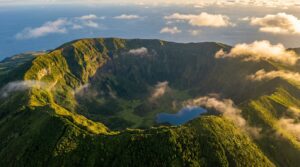
Caldeira do Faial dominates the island’s center. This massive volcanic crater measures 400 meters deep and two kilometers across, per Faial Natural Park data. A hiking trail circles the rim, about 7 kilometers total. The trail passes through endemic vegetation found nowhere else on earth. Fog rolls in without warning up here. One minute you’re looking down at the crater lake; the next you can’t see five meters ahead. The trail is well-maintained but muddy after rain. Plan two to three hours for the full loop.
Back in Horta’s historic center, Igreja Matriz de São Salvador dates to the 1680s. The church sits on the main square. Nearby, old whaling factories line the waterfront, most now converted to shops or closed entirely. Museu da Horta occupies a former Jesuit college. The collection covers whaling history, scrimshaw art, and Faial’s role in the transatlantic cable industry. Entry costs €2.
Monte da Guia juts into the harbor as a volcanic peninsula. Two hiking trails cross it, one easy coastal path, one steeper climb to the summit viewpoint. From the top you get clear views of Horta, Pico Island across the channel, and the entire marina spread below. The trails are short. You can walk both in under an hour.
Planning Tip
Porto Pim beach curves along a small bay just south of the city center. The sand is dark volcanic gray. Water temperature hits 22°C in August. Locals swim here in summer. The beach has no facilities beyond a small parking area. It’s a 10-minute walk from downtown.
Where to Eat in Horta
Horta’s compact dining scene centers on ultra-fresh Atlantic seafood including limpets and octopus, with most restaurants clustered around the marina offering views of Mount Pico across the channel.
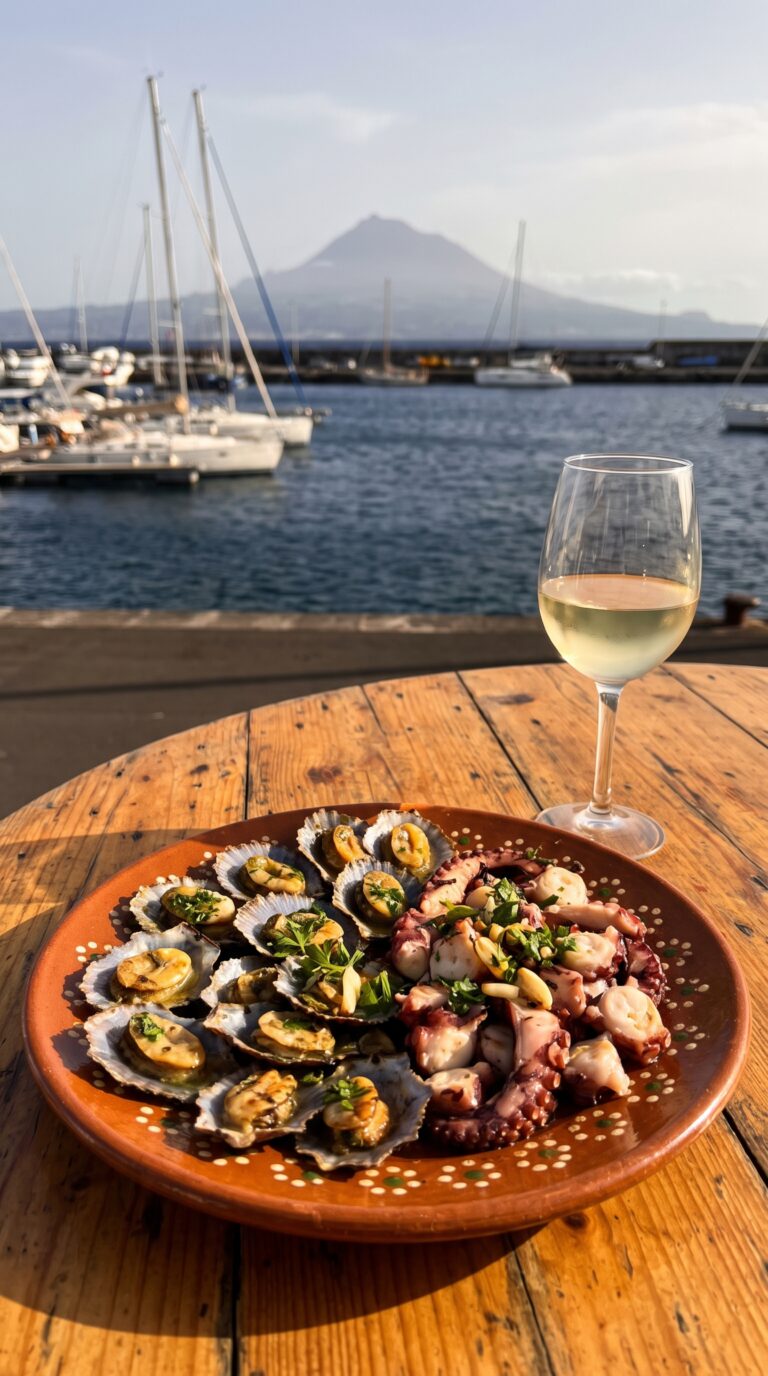
Seafood dominates. Horta’s fishing boats unload daily catches straight to restaurant kitchens. Expect grilled limpets (lapas), octopus stewed in wine, and tuna steaks the size of your hand. Most of the town’s 15 dining establishments line the marina. You sit with Mount Pico filling the horizon across the channel.
Peter Café Sport serves more than drinks. The Peter Café Sport official website lists a full menu alongside those famous gin and tonics. Maritime memorabilia covers every wall, scrimshaw, ship models, faded crew photos from decades of transatlantic crossings.
Try alcatra if you want meat. This slow-cooked beef stew simmers in clay pots with wine and spices. Faial’s dairy farms produce sharp local cheeses that appear on most appetizer plates. For dessert, queijadas, sweet pastries made with fresh cheese and cinnamon, show up at every bakery counter.
Pico Island wine flows freely here. Those UNESCO-protected vineyards across the water produce volcanic whites and reds served in almost every restaurant. The wine tastes mineral-heavy, almost salty from the sea spray that hits the vines.
Horta stays small. Book ahead in July and August. Walk-ins work fine the rest of the year. Everything clusters within five minutes of the main square.
Where to Stay in Horta
Horta offers approximately 15-20 small hotels and guesthouses concentrated near the marina, with advance booking essential during July-August peak season and international sailing regattas.
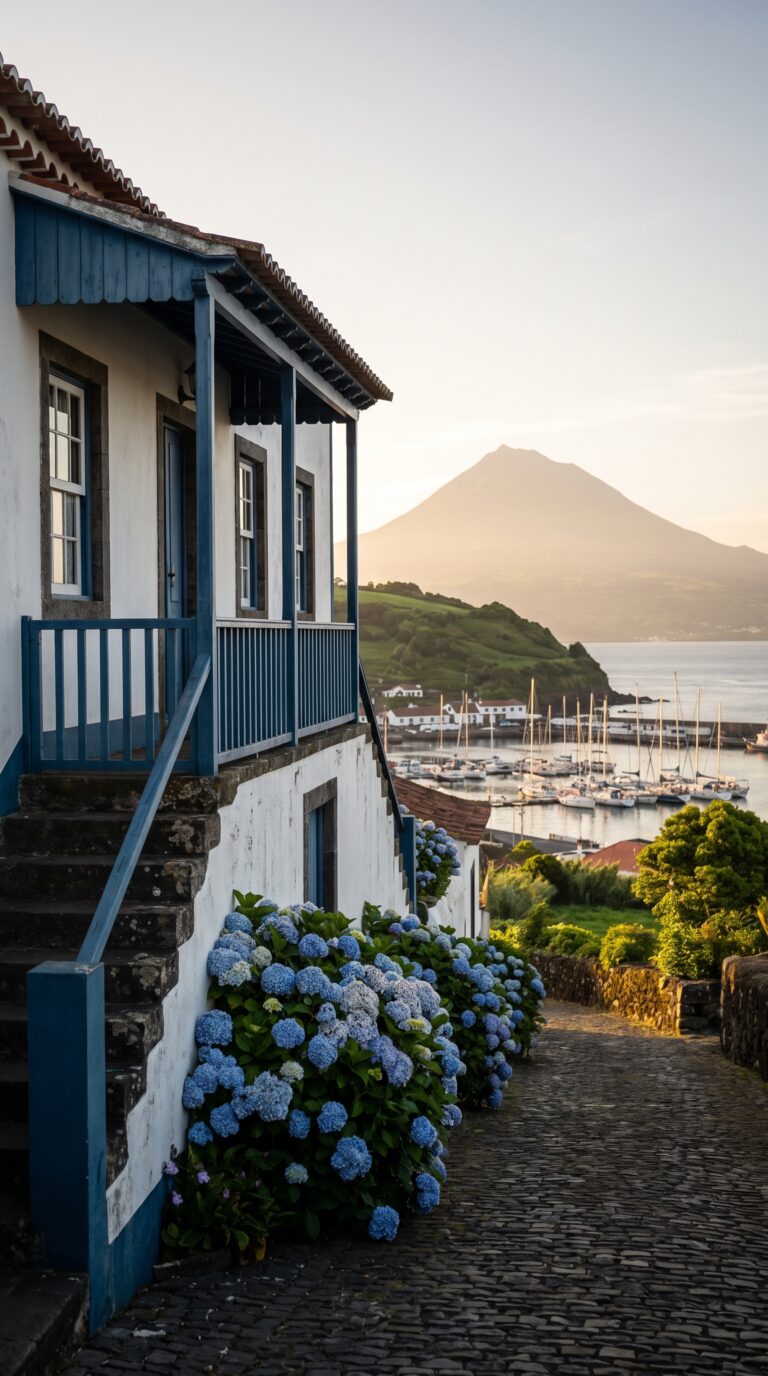
Horta is a small city. You won’t find resort chains or high-rise hotels. Lodging here means family-run guesthouses, 3-star hotels, and vacation rentals. Most sit within a 10-minute walk of the marina.
Stay near the waterfront if you can. The marina area puts you close to restaurants, bars, and the painted harbor wall. You’ll walk to everything. Breakfast is usually included at guesthouses and small hotels.
July and August fill up fast. Book ahead. Sailing regattas and international yacht events pack the marina, and rooms disappear. Many sailors sleep on their boats, but land-based travelers need to plan early.
If Horta is full, look at Praia do Almoxarife or Cedros elsewhere on Faial. You’ll need a rental car, but both are under 15 minutes from town. Horta remains the most practical base for exploring the island.
Check the Visit Azores accommodation listings for current availability and pricing.
Getting to and Around Horta
Horta Airport, located 10km from the city center, offers daily SATA Air Açores flights to Ponta Delgada and other Azores islands, while Atlânticoline ferries connect Faial to Pico and São Jorge islands year-round.
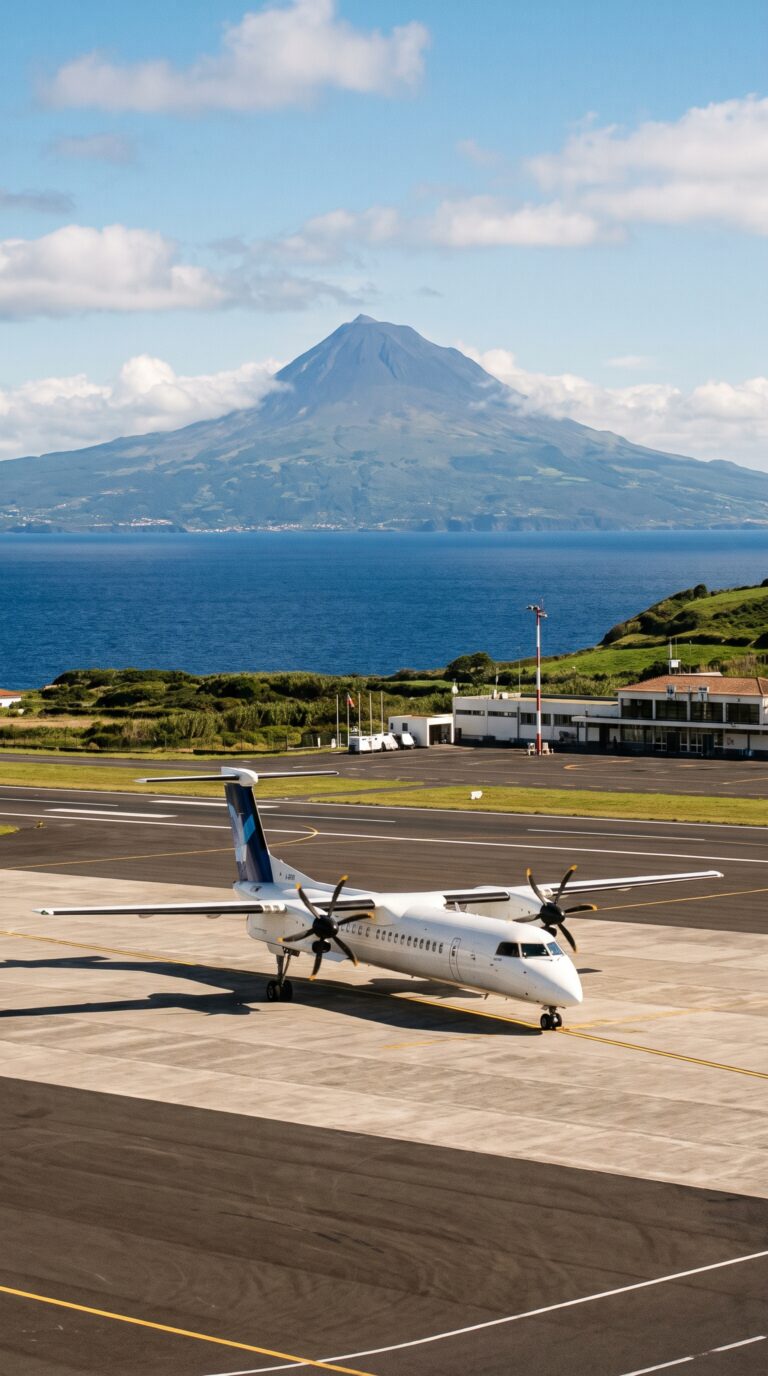
Horta Airport sits 10km east of the city center. SATA Air Açores operates daily flights from Ponta Delgada on São Miguel Island, the main Azores hub, with a flight time of 35 minutes. You’ll also find connections to Terceira and occasional direct flights to mainland Portugal. The airport is small. One terminal, one runway, no confusion.
A taxi to town costs €15–20 and takes 10 minutes. Car rental desks operate at the airport if you want to explore Faial’s volcanic craters and black sand beaches immediately. Public transport exists but runs infrequently, don’t rely on it.
Atlânticoline ferries connect Horta to Pico Island in 30 minutes (€6 one-way) and São Jorge Island in 90 minutes. Ferries run year-round but reduce frequency in winter. Book ahead in summer. Many visitors island-hop this way rather than flying.
Horta’s city center is compact. Marina to main square: 10 minutes on foot. Everything you need, restaurants, cafes, Peter’s Café Sport, sits within a 15-minute walk radius. You don’t need a car unless you’re driving to Capelinhos volcano or the Caldeira crater rim.
A significant number of visitors arrive by private yacht. The marina hosts hundreds of transatlantic sailors each year. Some crew on these boats, working passage across the Atlantic in exchange for a bunk.
Travel Routes
Below are recommended travel routes with key stops and estimated drive times.
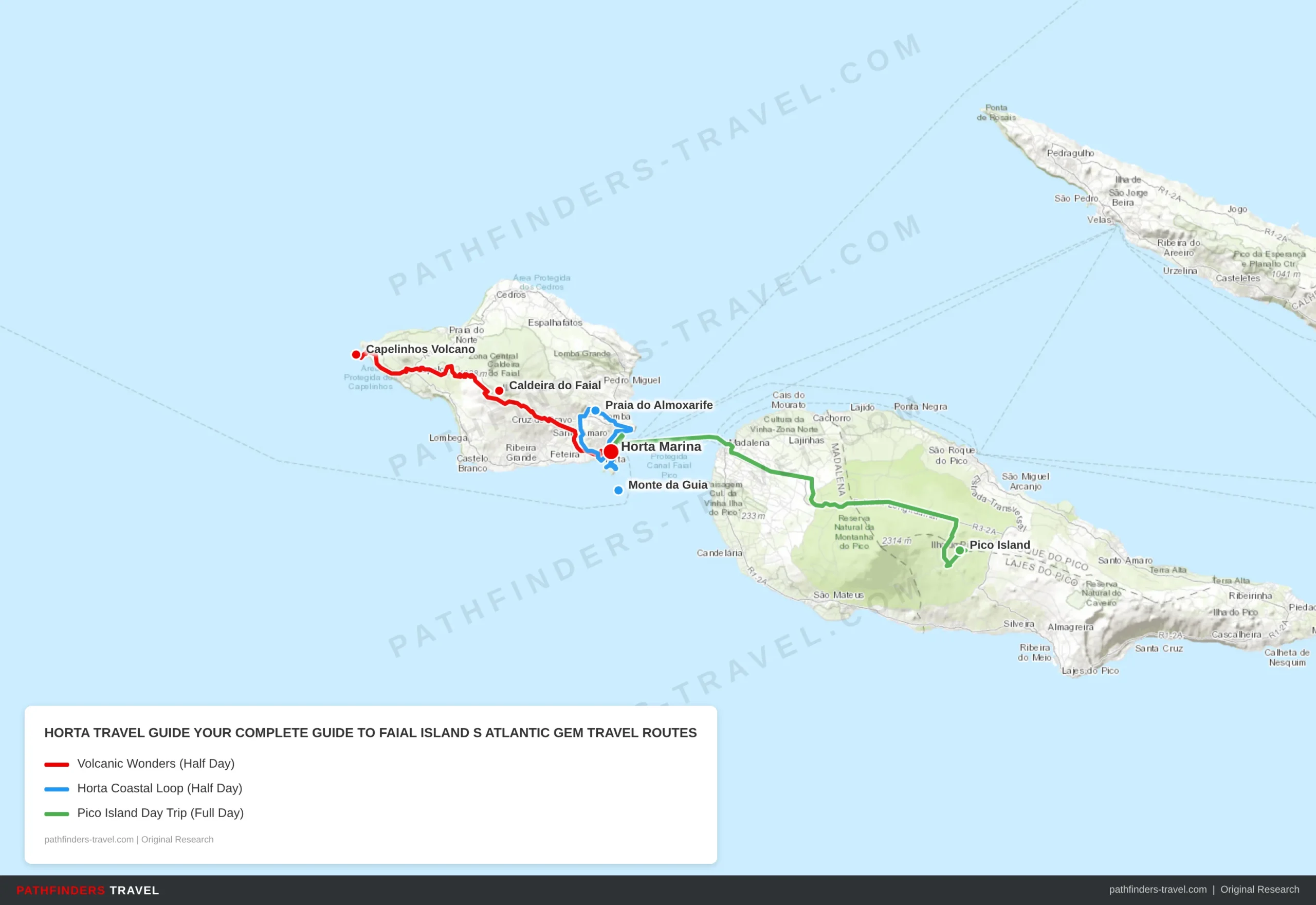
| # | Stop | Highlights | Drive Time |
|---|---|---|---|
| 1 | Horta Marina | Start at the iconic mural-covered marina. Visit Peter Café Sport (open since 1918) and walk the dock walls covered in sailors’ paintings. | Start |
| 2 | Caldeira do Faial | Faial’s vast summit caldera, 400m deep and 2km wide. Walk the crater rim trail for wide views over the island and neighboring Pico. | 25 min from Horta |
| 3 | Capelinhos Volcano | Lunar ash fields from the 1957–58 eruption. Explore the underground Interpretation Centre, walk to the half-buried lighthouse, and see new land formed within living memory. | 20 min from Caldeira |
| # | Stop | Highlights | Drive Time |
|---|---|---|---|
| 1 | Horta Marina | Begin at the waterfront with coffee and a stroll past the famous sailor murals. Check the marina notice board for active transatlantic arrivals. | Start |
| 2 | Monte da Guia | Twin volcanic cones forming Horta’s southern peninsula. Walk to the chapel at the summit for sweeping views of the harbor, Pico volcano, and the inter-island channel. | 10 min from Horta |
| 3 | Praia do Almoxarife | Faial’s most popular beach with dark volcanic sand, calm swimming waters, and a backdrop of green hillsides. Beachside café for lunch before returning to Horta. | 15 min from Monte da Guia |
| 4 | Horta Marina | Return to the marina for dinner at a waterfront restaurant. Watch yachts enter the harbor at sunset with Mount Pico glowing across the channel. | 10 min from Almoxarife |
| # | Stop | Highlights | Drive Time |
|---|---|---|---|
| 1 | Horta Marina | Catch the morning ferry from Horta’s terminal. Ferries run multiple times daily; crossing takes approximately 30–40 minutes across the Faial–Pico channel. | Ferry start |
| 2 | Pico Island | Explore Portugal’s highest peak (2,351m / 7,713ft), visible from Horta on clear days. Visit Pico’s famous UNESCO vineyards, whale watching departures, and the volcanic landscape around Madalena town. | 30–40 min ferry |
Day Trips from Horta
Mount Pico, Portugal’s highest peak at 2,351 meters, lies just 30 minutes by ferry from Horta, while São Jorge and Graciosa islands offer additional day trip options featuring UNESCO-listed vineyards, coastal fajãs, and volcanic caves.
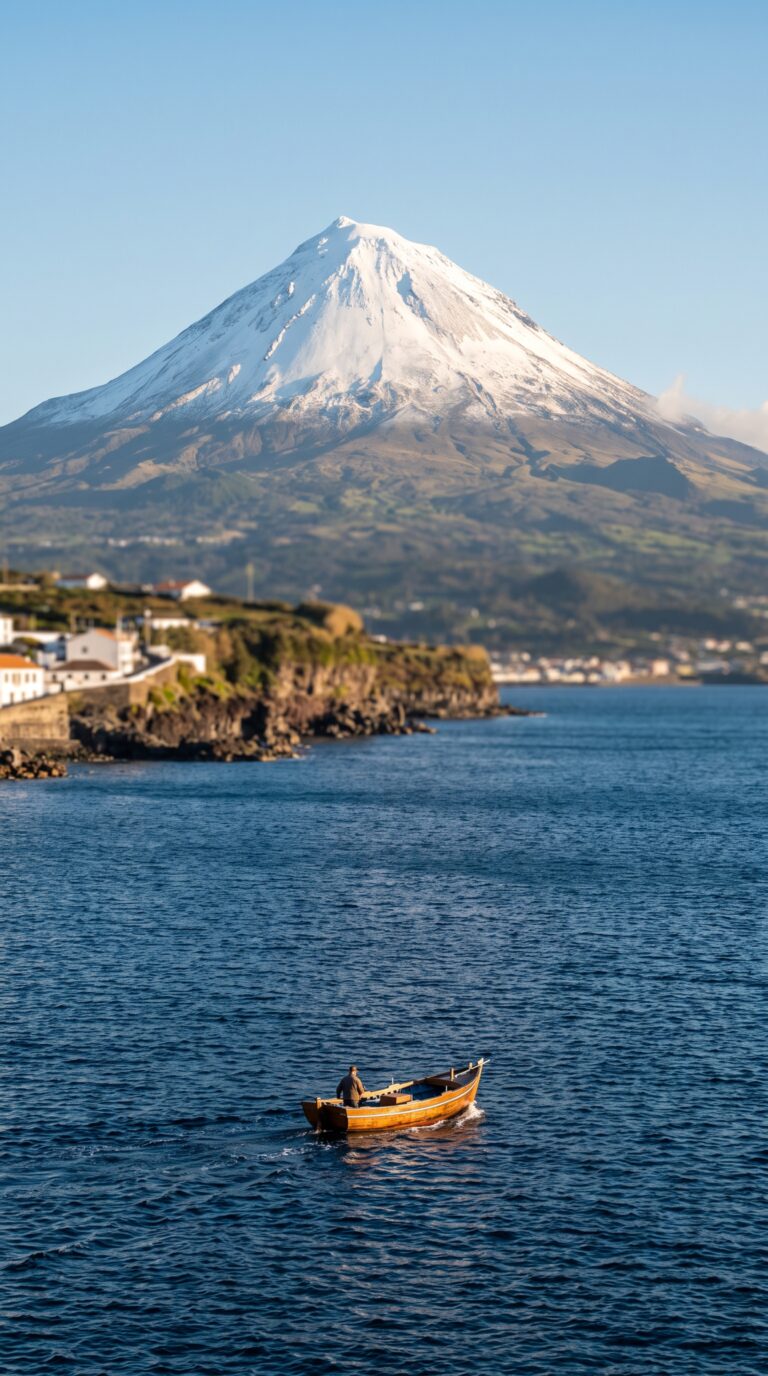
Mount Pico dominates the view from Horta’s harbor. Portugal’s highest mountain rises 2,351 meters from the Atlantic, according to official Portuguese geographic data. The ferry to Pico Island takes 30 minutes. Atlânticoline operates multiple daily crossings.
Summit hikes are challenging. Plan 6 to 8 hours round trip. You climb loose volcanic rock. Weather changes fast at altitude. Many hikers start at 2 AM to catch sunrise above the clouds. If you skip the summit, explore the base trails through lava fields and vineyards.
Pico Island Vineyards earned UNESCO World Heritage status in 2004. Farmers built thousands of small stone walls called currais to protect vines from Atlantic winds. The UNESCO World Heritage listing for Pico Island Vineyard Culture recognizes this unique landscape. Visit the wine museum in Madalena, then taste Verdelho wines at local producers. The volcanic soil creates distinct mineral flavors.
São Jorge Fajãs are flat coastal plains formed by ancient landslides. The island sits 90 minutes from Horta by ferry. Fajã da Caldeira de Santo Cristo is the most famous, a lagoon separated from the ocean by a black sand beach. Local farmers produce São Jorge cheese in small dairies. Hiking trails connect multiple fajãs along the coast.
Graciosa Island gets fewer tourists. The ferry takes 2 hours. Furna do Enxofre is a volcanic cave with a sulfur lake at the bottom. You descend 184 steps into the crater. The island also has a thermal spa and white-painted villages. Ferry schedules require a full day commitment. Check the Pico Island Natural Park official website for current trail conditions before planning hikes.
Organized boat tours visit multiple islands in one day. These trips include whale and dolphin watching between stops. Weather affects all ferry crossings. Bring warm layers even in summer. Book Atlânticoline tickets in advance during peak season.
Practical Tips for Visiting Horta
Horta experiences mild Atlantic weather year-round with temperatures between 14-25°C, with June through September offering the warmest and driest conditions though rain and wind remain possible any month.
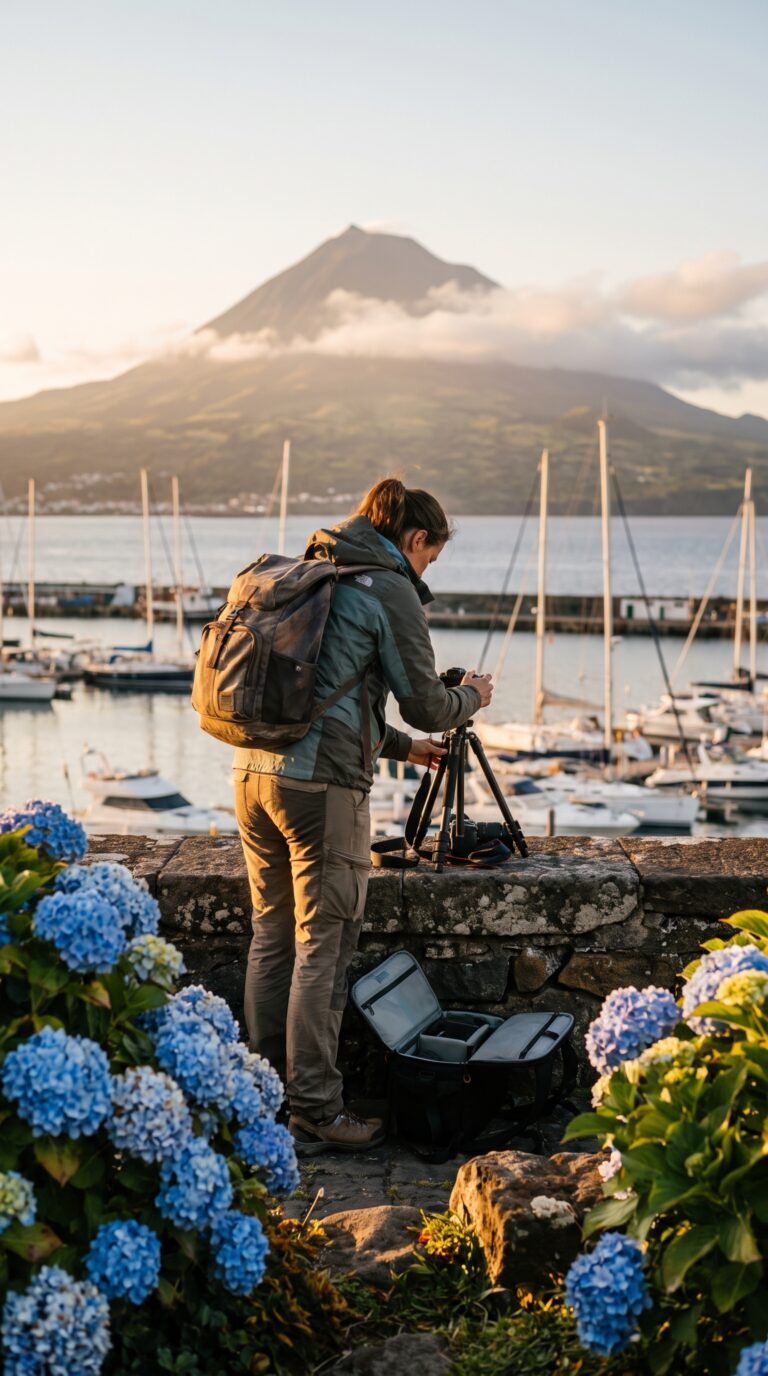
The weather here changes fast. Horta sits in the middle of the Atlantic, so expect rain and wind even in summer. According to Portuguese meteorological institute data, Faial receives approximately 1,100mm of rainfall annually spread across 180 rainy days, pack accordingly. Temperatures hover between 14°C in winter and 25°C in August. That’s mild, not tropical.
June through September brings the warmest and calmest seas. July and August get crowded with sailing regattas, the marina fills with international crews. Shoulder seasons (April-May, September-October) mean fewer tourists but more unpredictable weather. Check IPMA weather forecasts before planning day trips.
Pack layers. A waterproof jacket isn’t optional. Comfortable walking shoes matter, Horta’s cobblestones get slippery when wet. UV rays stay strong even under clouds, so bring sun protection. Swimwear if you’re visiting June-September.
Portuguese is the official language. English works fine in tourism businesses and with the sailing crowd, Horta has an international vibe thanks to the constant flow of transatlantic sailors. The maritime community brings traditions and superstitions you’ll notice around the marina.
Currency is the Euro. ATMs line Horta’s center. Most places take cards. Safety isn’t a concern beyond weather, sudden changes can make seas rough and hiking trails dangerous. Respect volcanic terrain warnings.
Frequently Asked Questions
What is Horta?
Horta is a city on Faial Island in Portugal’s Azores archipelago, famous as a legendary mid-Atlantic marina. It sits roughly 1,500 kilometers from mainland Portugal. Sailors crossing the Atlantic have stopped here for centuries. The marina walls are covered in colorful murals painted by visiting crews, thousands of them, each telling a story of a voyage. Horta serves as Faial’s main population center. About 15,000 people live on the island. The city blends Portuguese culture with a distinctly nautical, international vibe. You’ll hear English, French, German, and half a dozen other languages at the marina cafés.
Is Horta on an island?
Yes. Horta island refers to Faial Island, where the city sits on the eastern coast. Faial is one of nine islands in the Azores. It’s part of the central group, positioned between São Jorge and Pico islands. The city faces Mount Pico directly across a narrow channel. On clear days, the volcano dominates the view. Faial Island covers approximately 173 square kilometers. Small enough to drive around in a few hours.
How many days do you need in Horta?
Two to three days covers the essentials. Day one: walk the city center, explore the marina, and grab a gin at Peter Café Sport. Day two: drive to Capelinhos Volcano and hike the Caldeira do Faial crater rim. Day three: take the ferry to Pico Island to see the UNESCO vineyards or attempt the summit climb. Sailors often stay weeks. The marina atmosphere is addictive. If you’re on a tight schedule, two full days works. Three is better.
Can you climb Mount Pico from Horta?
Yes, via a 30-minute ferry to Pico Island. The summit hike is brutal: six to eight hours round trip, 2,351 meters of elevation gain. Start before dawn. Guided climbs are recommended and sometimes required depending on conditions. You can also explore Pico’s base, the lava rock vineyards, and coastal villages without climbing. Ferry schedules allow day trips. Many climbers stay overnight on Pico to recover. Book the ferry in advance during summer.
Why is Horta famous among sailors?
Geography. Horta sits perfectly between Europe, the Americas, and the Caribbean. The marina offers excellent shelter and facilities. Sailors have a superstition: paint a mural on the dock walls or face bad luck at sea. The tradition has created an open-air gallery of thousands of artworks. Peter Café Sport has served as the sailors’ meeting point and information hub since 1918. Over 1,500 yachts visit annually during transatlantic crossing seasons. The community is tight. Stories get swapped over beer. Weather forecasts get shared. Horta is a maritime crossroads.