Estimated reading time: 11 minutes
Last updated: September 2026
Table of Contents
- How Many Days Do You Need in Gettysburg?
- Top Attractions and Historic Sites
- Where to Eat in Gettysburg
- Where to Stay in Gettysburg
- Getting to and Around Gettysburg
- Day Trips from Gettysburg
- Practical Tips for Visiting Gettysburg
- Frequently Asked Questions
How Many Days Do You Need in Gettysburg?
Most visitors need one to two days in Gettysburg. One full day covers the Museum & Visitor Center film, the 360-degree Cyclorama, a battlefield auto tour past Little Round Top and Pickett’s Charge, and the Soldiers’ National Cemetery where Lincoln gave the Gettysburg Address. A second day adds a licensed-guide tour, the Eisenhower National Historic Site, and the town’s museums. The 6,000-acre battlefield is free.
Want to experience Gettysburg’s historic battlefield? Watch our complete Gettysburg travel guide in 4K.
Gettysburg National Military Park marks the spot where the war turned. Three days in July 1863 produced the conflict’s highest body count and ended Robert E. Lee’s northern invasion. The park sprawls across 6,000 acres of rolling Pennsylvania farmland, dotted with over 1,400 monuments and markers. According to National Park Service statistics, more than 1 million people visit each year to walk the ground where Pickett’s Charge failed and Little Round Top held.
This isn’t just a battlefield frozen in time. Gettysburg functions as a working town of 7,600 residents with restaurants, hotels, and a main street lined with Civil War bookshops and museums. You can tour the field at dawn, eat lunch at a tavern that served wounded soldiers, then spend the afternoon in a museum built around a massive cyclorama painting. The history here doesn’t hide behind glass. It sits in plain view.
Plan for battlefield auto tours, ranger-led walks through Devil’s Den, and the museum complex near the visitor center. Destination Gettysburg coordinates lodging and tour options across Adams County. What is Gettysburg famous for? The answer unfolds across fields where 51,000 men fell in 72 hours.
How We Researched This
Information for this guide came from National Park Service records, Pennsylvania tourism sources, and verified visitor experiences. Since conditions and details can shift, we recommend confirming specific hours, admission fees, and special events directly with Gettysburg National Cemetery before planning your trip.
Top Attractions and Historic Sites
Planning Tip
Gettysburg National Military Park offers a free 24-mile self-guided auto tour with 16 stops across 6,000 acres, while the Museum and Visitor Center charges $20.75 for adults to access the film, Cyclorama, and exhibits.
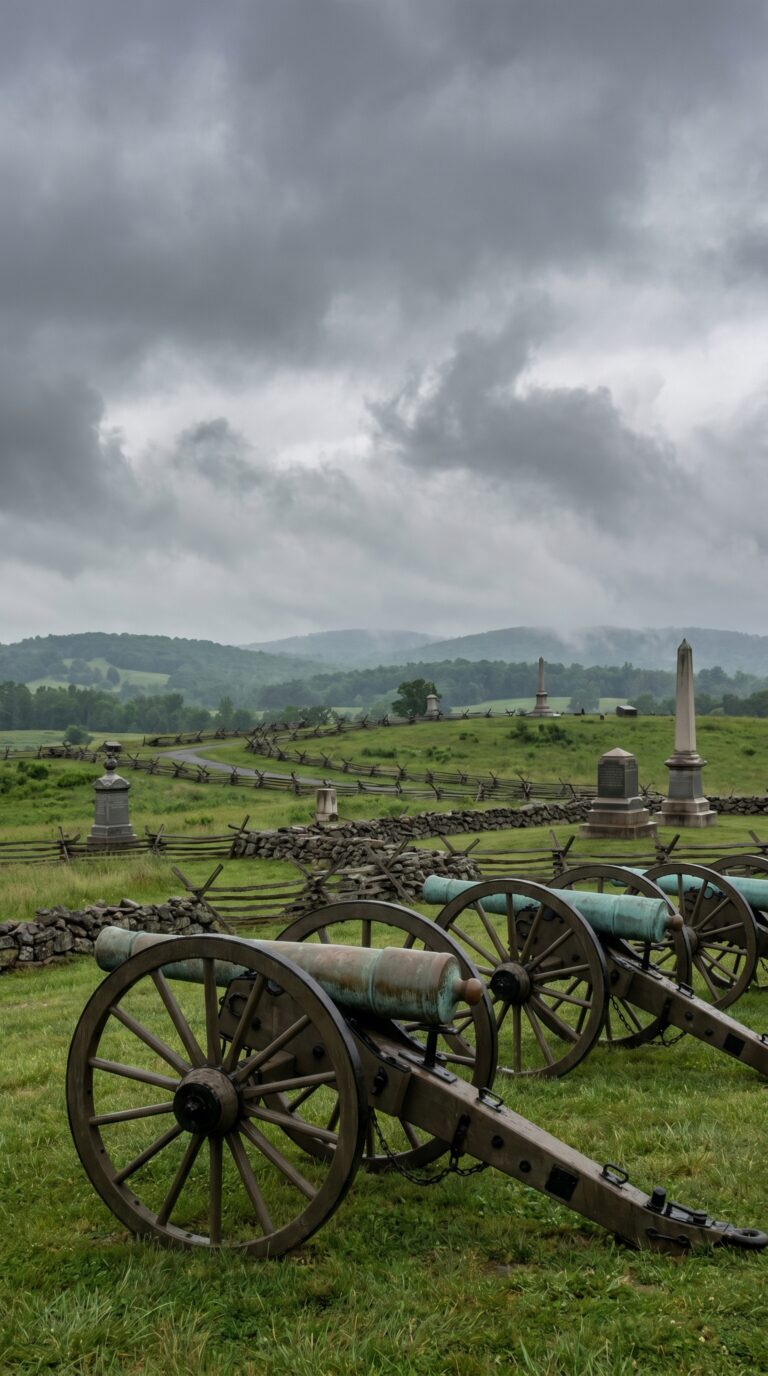
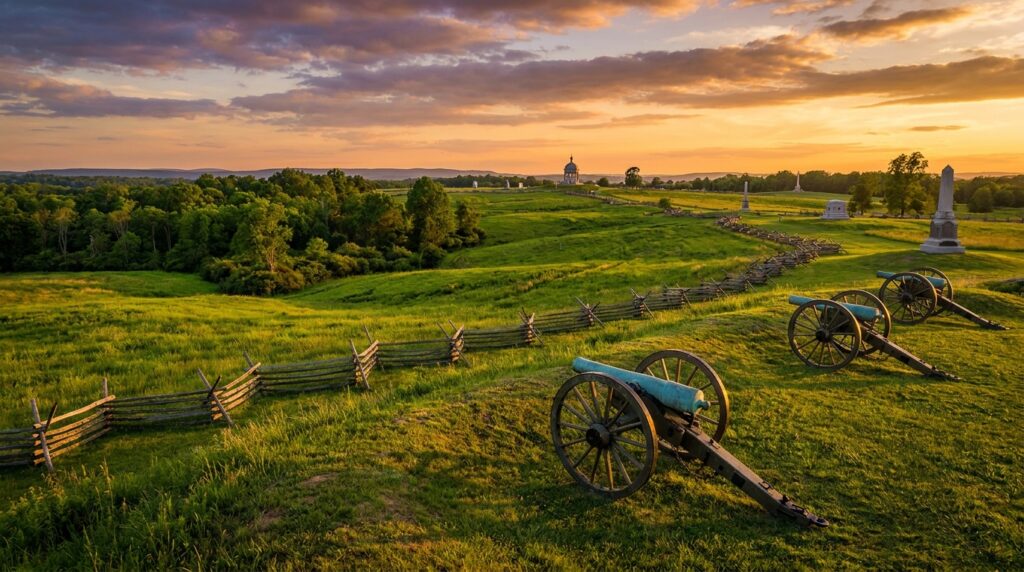
Gettysburg National Military Park spreads across 6,000 acres of preserved battlefield. The site holds more than 1,300 monuments and 400 cannons marking where regiments fought from July 1-3, 1863. According to the National Park Service, the three-day battle produced 51,000 casualties, 23,049 Union and 28,063 Confederate. The Union won. That victory turned the tide of the Civil War.
The grounds stay open dawn to dusk every day. No admission fee. You can walk or drive anywhere on the battlefield roads. Most visitors follow the 24-mile auto tour route that loops through 16 numbered stops. Each stop marks a critical moment in the battle. Little Round Top sits at stop 6. Union troops held this rocky hill on July 2, preventing Confederate forces from flanking the main line. Devil’s Den comes next, a jumble of boulders where sharpshooters traded fire. Cemetery Ridge anchors the Union position where Pickett’s Charge failed on the final day.
An audio guide costs $15 per vehicle at the Gettysburg Museum and Visitor Center ticketing desk. The narration runs about two hours if you drive straight through. Most people take three to four hours with stops. You can also download free apps like the National Park Service’s official tour, though the paid audio guide includes more detail.
The Gettysburg Museum and Visitor Center requires a separate ticket, $20.75 for adults and $15.75 for youth ages 6-12 (free for ages 5 and under). That price includes a 22-minute film narrated by Morgan Freeman, access to 12 galleries of artifacts (uniforms, weapons, personal letters), and the Cyclorama. The Cyclorama is a 377-foot circular painting depicting Pickett’s Charge. Paul Philippoteaux completed it in 1884. The painting wraps around you in a dedicated theater with a light-and-sound show. Check Gettysburg National Military Park official visitor information and hours for seasonal schedules, the center typically opens at 9 a.m. but closes earlier in winter months.
Soldiers’ National Cemetery sits adjacent to the visitor center. President Lincoln delivered the Gettysburg Address here on November 19, 1863, during the dedication ceremony. The cemetery holds 3,512 Union soldiers. You can walk the grounds for free. A small marker shows where Lincoln likely stood.
Gettysburg Beyond the Battle Museum focuses on civilian life during the battle. The collection includes household items, photographs, and accounts from townspeople who sheltered wounded soldiers. Admission costs $10 for adults. The museum occupies a building on Baltimore Street in downtown Gettysburg, about two miles from the main battlefield visitor center.
Eisenhower National Historic Site preserves the 690-acre farm where President Dwight Eisenhower and his wife Mamie lived. The property borders the battlefield, and admission is free — individual visitors can now drive directly to the site, while groups of 20 or more reserve a shuttle in advance. Tours cover the home, gardens, and cattle barns. Eisenhower used the farm as a weekend retreat during his presidency and hosted world leaders here, including Soviet Premier Nikita Khrushchev.
Where to Eat in Gettysburg
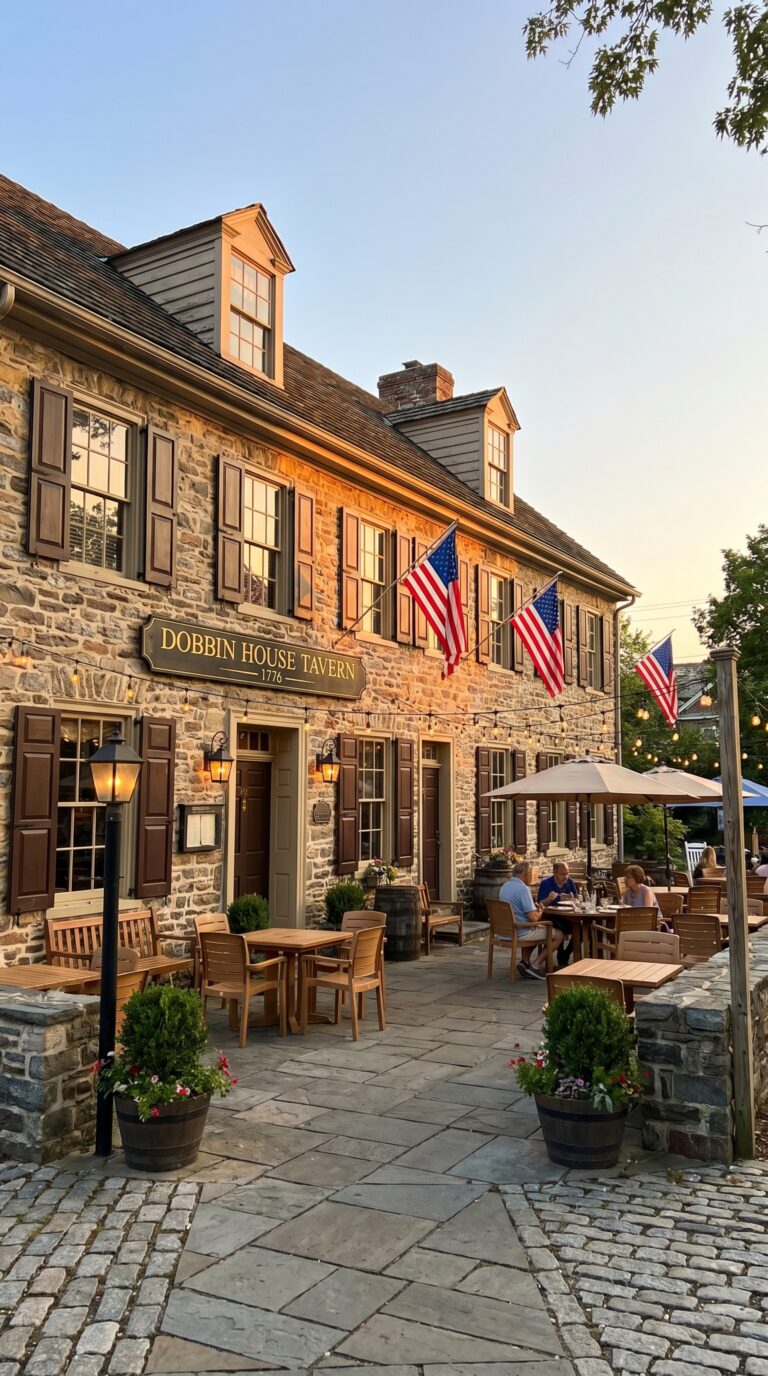
Gettysburg’s dining scene centers on historic taverns like Dobbin House (built 1776) and local favorites like Gettysburg Eddie’s, with over 50 restaurants concentrated in the walkable downtown district.
Gettysburg Eddie’s is where locals eat. This casual spot serves burgers, sandwiches, and American comfort food without the tourist markup. The dining room fills up fast on weekends. Families pack the booths. Prices stay reasonable, most entrees run $12 to $18.
For atmosphere, Dobbin House Tavern wins. Built in 1776, it’s Gettysburg’s oldest standing structure. The candlelit dining rooms feel like stepping into colonial America. Servers wear period clothing. The menu leans into 18th-century recipes, think pot roast, turkey, and hearty stews. Dinner reservations are smart, especially during summer.
Downtown Gettysburg clusters restaurants around Lincoln Square. You can walk to a dozen spots in five minutes. The mix spans pizza joints, brew pubs, and upscale bistros. Most places get slammed during peak season (June through August) and reenactment weekends. Book ahead or eat early.
Check Destination Gettysburg restaurants for current menus and hours. Some spots close Mondays or Tuesdays in the off-season.
Where to Stay in Gettysburg
Gettysburg offers approximately 3,500 hotel rooms ranging from $80-$300 per night, with historic bed and breakfasts downtown and chain hotels along the battlefield’s outer loop.
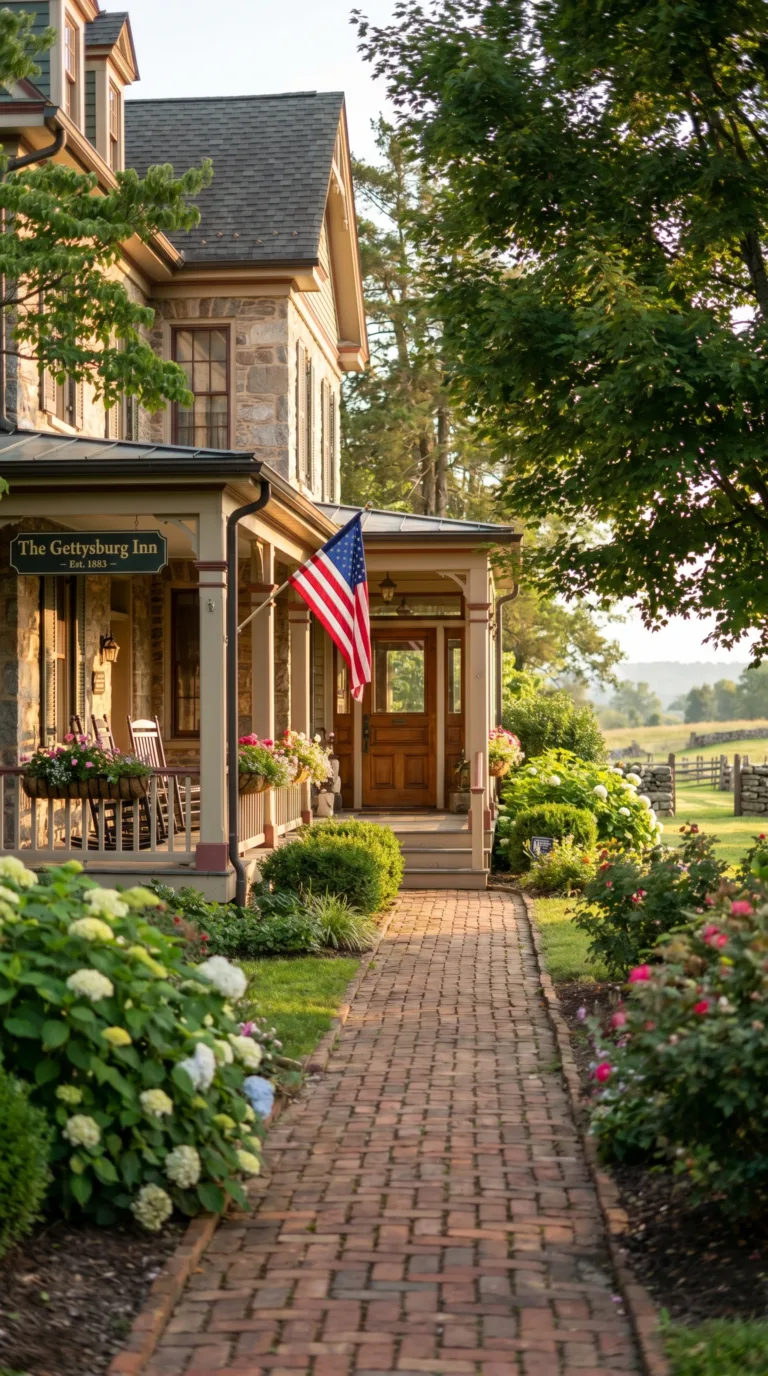
Gettysburg hotels split into two camps. Chain properties line the battlefield’s outer roads, Hampton Inn, Holiday Inn, Best Western. Historic inns cluster around Lincoln Square downtown. You’ll pay $80-$120 for standard motels on the outskirts. Upscale B&Bs in Civil War-era buildings run $200-$300.
The town has over 30 bed and breakfasts. Many occupy buildings that stood during the battle. Some rooms overlook Seminary Ridge or Cemetery Hill. Expect period furniture, creaky floors, and breakfast included. Downtown properties put you within walking distance of restaurants and shops.
Book early for summer. The battle anniversary (July 1-3) fills rooms six months out. Autumn weekends during leaf season also pack up fast. Spring and winter offer better rates and availability.
Staying near the square beats staying near the battlefield entrance. You can walk to dinner instead of driving. Most battlefield sites sit 10-15 minutes from downtown anyway. Check the Destination Gettysburg official lodging directory for current options and rates.
Budget travelers should look at motels along Route 30 or Route 15. They lack charm but cost half what downtown inns charge. You’ll need a car regardless of where you stay, the battlefield sprawls too wide for walking.
Getting to and Around Gettysburg
Gettysburg sits 80 miles from Washington DC and 55 miles from Baltimore with no public transportation, making a personal vehicle essential for the 24-mile battlefield auto tour.
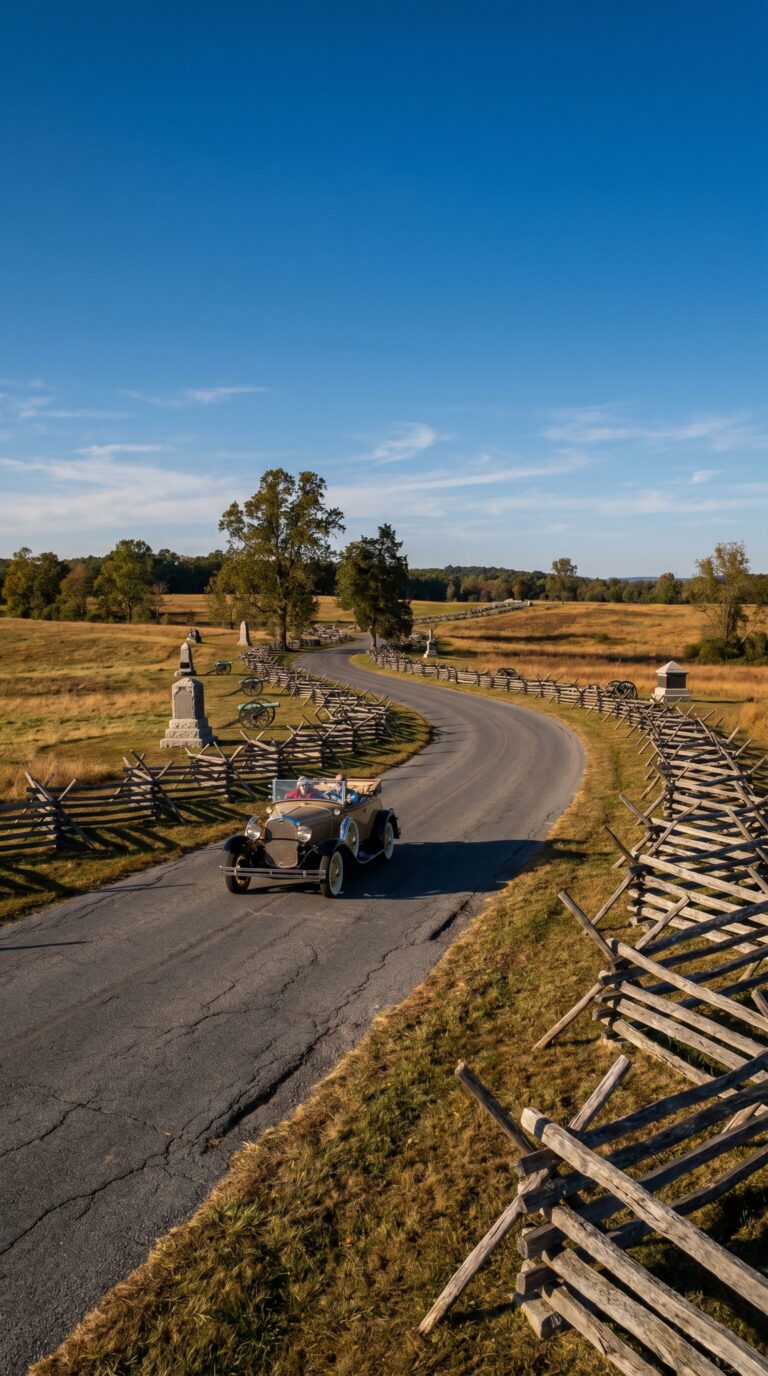
You need a car. Period. The battlefield sprawls across 6,000 acres. Harrisburg sits 36 miles north. Baltimore is 55 miles southeast. Washington DC is 80 miles south. Philadelphia is 140 miles east. No Amtrak stops here. No Greyhound terminal. No regional bus service.
Fly into Harrisburg International Airport (40 miles away) or Baltimore/Washington International (60 miles). Rent a car at the airport. That’s the move. Some visitors try Uber from Baltimore, it’ll cost you $120 each way.
Parking is free at the visitor center. Free throughout the battlefield. Downtown has metered spots along Baltimore Street, $1 per hour, enforced until 6 PM. The Gettysburg National Military Park official map and auto tour guide shows all parking areas. Download the NPS app before you arrive. Cell service gets spotty near Little Round Top.
Downtown Gettysburg is walkable. Five blocks of shops and restaurants. But the battlefield tour requires wheels. Guided bus tours run $40 per adult if you don’t want to drive yourself. They last two hours and hit the major stops.
Day Trips from Gettysburg
Gettysburg’s central location provides easy access to Hershey (35 miles), Lancaster County’s Amish country (30 miles), state capital Harrisburg (36 miles), and Philadelphia (140 miles) for varied day trip options.
South-central Pennsylvania spreads out from Gettysburg in every direction. You’ll need a car. Most destinations sit 30, 40 miles away, perfect for half-day runs.
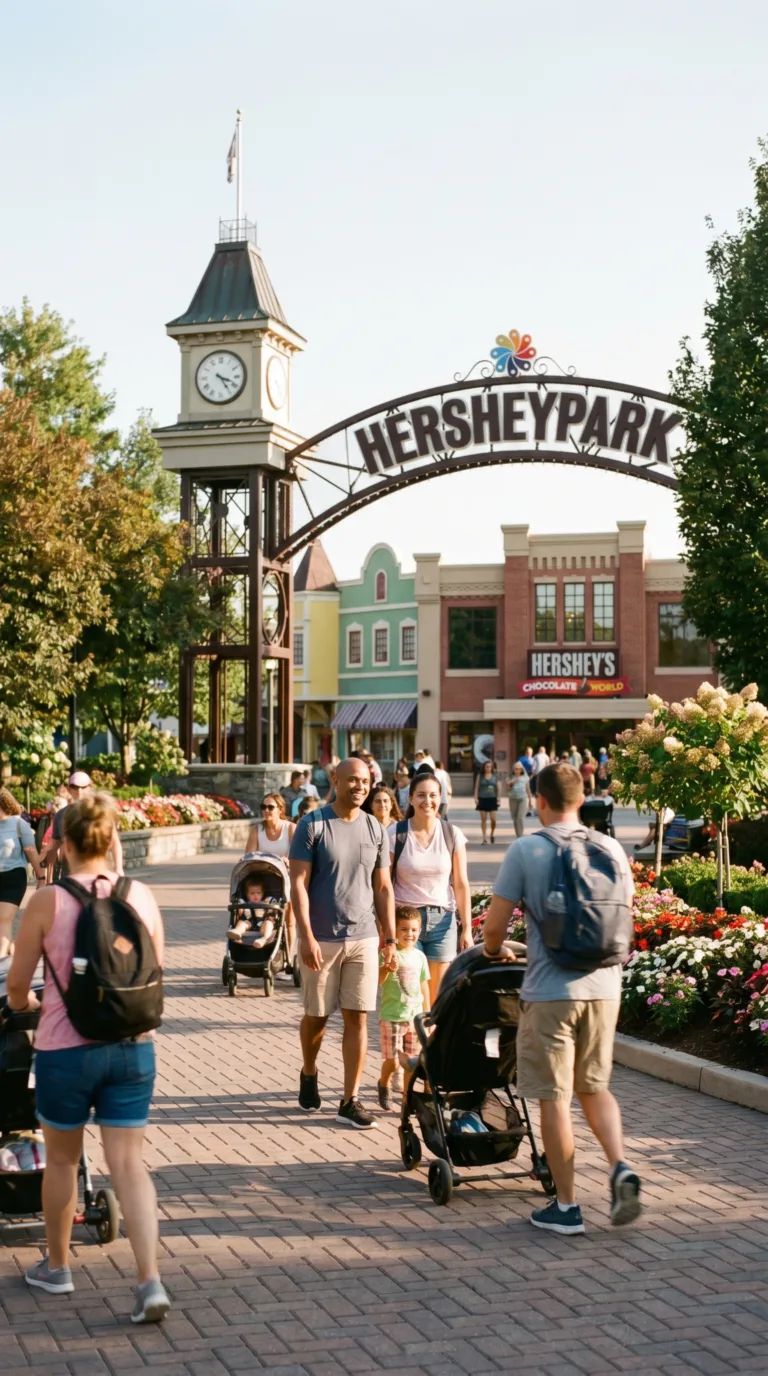
Hershey sits 35 miles north. Chocolate factory tours run year-round at Hershey’s Chocolate World (free admission). Hersheypark amusement park operates May through September with 70+ rides. Kids love it. Adults tolerate it. The whole town smells like cocoa on humid days.
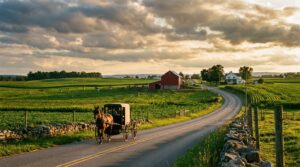
Lancaster County sprawls 30 miles east. Amish farms checker the landscape. Horse-drawn buggies share two-lane roads with pickup trucks. Discover Lancaster lists farmers markets, quilt shops, and furniture makers. Avoid Sundays, most Amish businesses close. Bird-in-Hand and Intercourse (yes, really) anchor the tourist circuit.
Harrisburg lies 36 miles north along the Susquehanna River. The state capitol building offers free tours weekdays. City Island hosts minor league baseball games. Riverfront parks stretch for miles. Nothing spectacular, but the National Civil War Museum holds 24,000 artifacts if you haven’t battlefield-ed yourself out yet.
York sits 30 miles east. The Harley-Davidson factory runs assembly plant tours Monday through Friday ($20 adults). Colonial-era buildings dot the downtown. York served as the U.S. capital for nine months in 1777, 1778 when the Continental Congress fled Philadelphia.
Philadelphia requires 140 miles of driving east, two hours minimum. Independence Hall. Liberty Bell. Reading Terminal Market. This becomes a full-day commitment. Leave by 7 AM or skip it. For more regional options, check Visit Hershey & Harrisburg for current attractions and seasonal events.
Practical Tips for Visiting Gettysburg
Plan 1-2 days for Gettysburg with spring and fall offering the best weather, while the July 1-3 battle anniversary weekend attracts over 50,000 visitors for reenactments and commemorations.
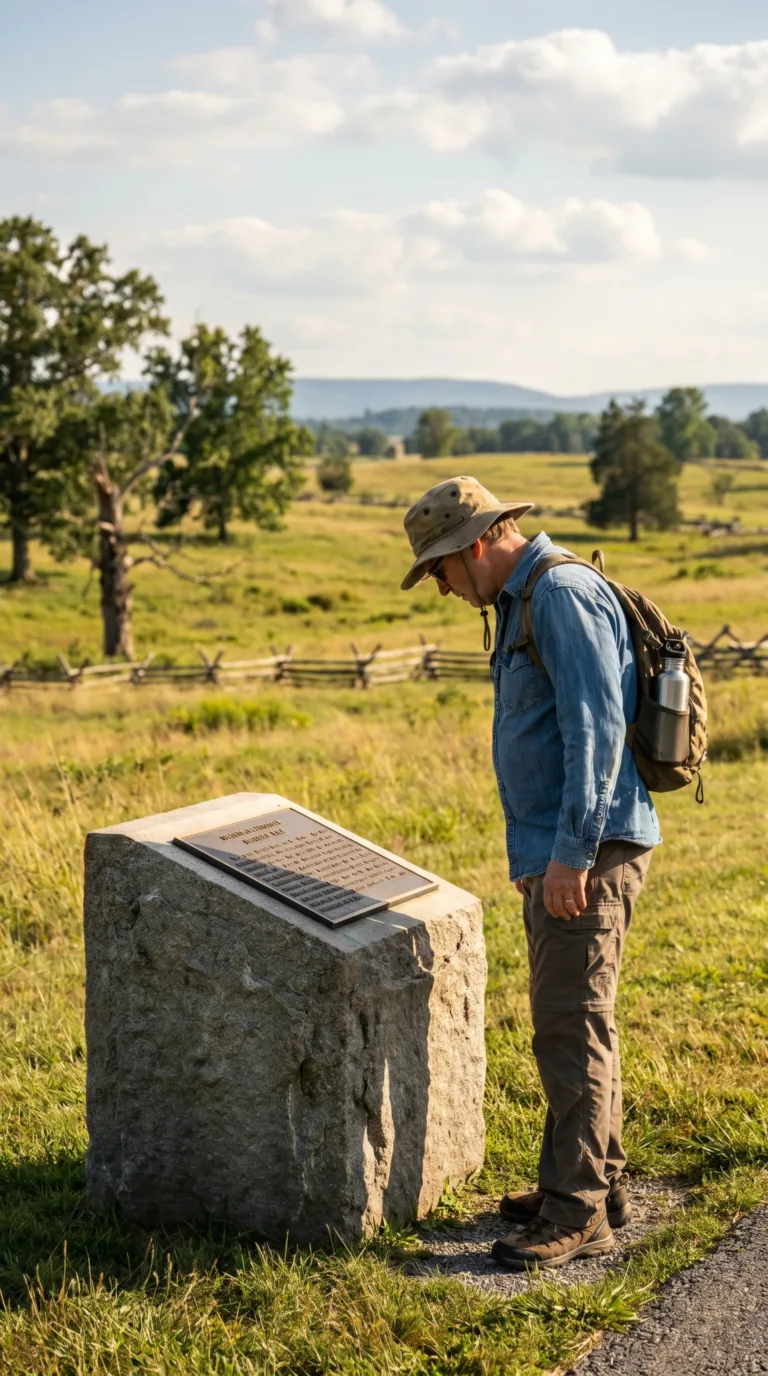
Spring (April through May) and fall (September through October) deliver mild temperatures and thinner crowds. Summer brings peak season chaos. The Gettysburg National Military Park ranger programs and events calendar lists living history demonstrations, ranger talks, and seasonal commemorations throughout the year.
The battle anniversary weekend (July 1-3) swells visitor numbers to over 50,000 people, according to Destination Gettysburg. Reenactments draw history buffs from across the country. Book lodging six months out if you’re targeting these dates.
Pack comfortable walking shoes. You’ll cover miles of uneven terrain. Bring sun protection, the battlefield offers little shade. Carry water. Binoculars help you read distant monument inscriptions and scan ridgelines where troops once massed.
Budget a minimum half-day for the museum and key battlefield stops. A full day lets you hit the major sites without rushing. Two days gives you time to explore lesser-known positions and absorb the scale of the fighting.
This is hallowed ground. Over 7,000 soldiers died here in three days. Walk quietly near monuments. Don’t climb on cannons or earthworks. The park functions as both memorial and cemetery.
Frequently Asked Questions
What is a must-see in Gettysburg, PA?
The must-see sights are the battlefield auto tour past Little Round Top, Devil’s Den, and Cemetery Ridge, plus the Museum & Visitor Center for the 360-degree Cyclorama and the Morgan Freeman film. Save time for the Soldiers’ National Cemetery, where Lincoln delivered the Gettysburg Address, and the sweeping view from Little Round Top over the fields where Pickett’s Charge failed.
What is free to do in Gettysburg?
Quite a lot. The 6,000-acre battlefield is free to drive, walk, and bike, as are the Soldiers’ National Cemetery and entry to the Museum & Visitor Center building. You only pay for the film/Cyclorama/museum ticket, licensed guides, the audio tour, and other attractions in town.
What is the best month to visit Gettysburg?
Late spring (May to June) and early fall (September to October) bring the best weather and thinner crowds. Summer is busiest, peaking around the July 1–3 battle anniversary events. Fall adds foliage across the battlefield, and the cooler shoulder months are ideal for walking the grounds.
What is the closest big city to Gettysburg, PA?
Harrisburg, the state capital, is the closest city at about 36 miles north. Baltimore lies roughly 55 miles southeast and Washington, D.C. about 80 miles south, both within a 90-minute drive. Philadelphia is farther, around 140 miles east. There is no train or bus service into Gettysburg, so plan on driving from any of these cities.
Is Gettysburg worth visiting?
Yes. As the site of the Civil War’s pivotal battle and Lincoln’s Gettysburg Address, it is one of America’s most significant historic destinations. Between the free battlefield, the museum and Cyclorama, and the walkable town, it makes a rewarding day or weekend trip for history fans and families.