Estimated reading time: 9 minutes
Last updated: 16 October 2026
Table of Contents
- Is Zaanse Schans Worth Visiting?
- Top Things to Do at Zaanse Schans
- Tickets, Cards and Costs
- Food and Local Treats
- How to Get There from Amsterdam
- Best Time to Visit and How Long to Stay
- Easy Day Trips Nearby
- Zaanse Schans FAQ
Is Zaanse Schans Worth Visiting?
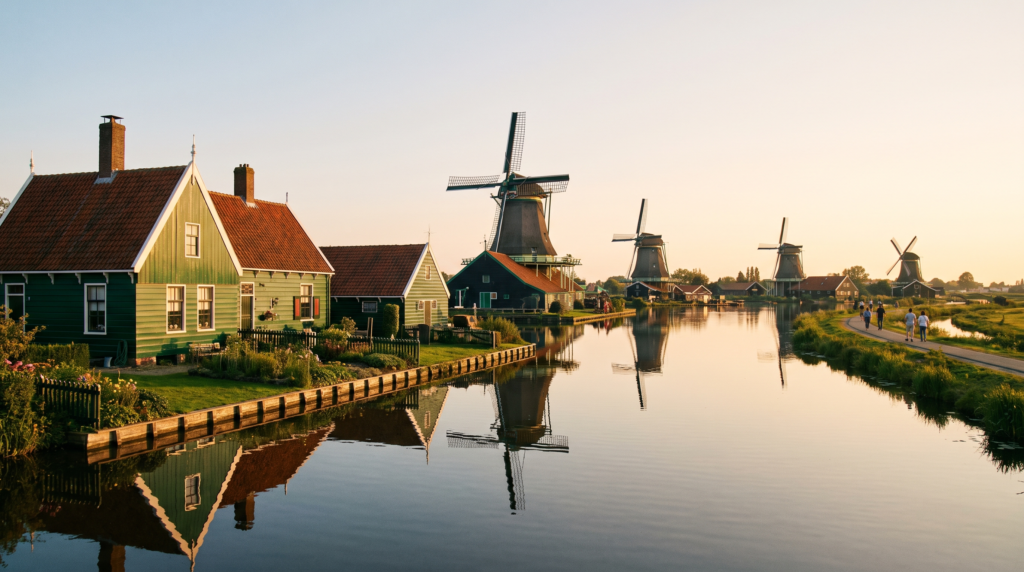
Yes, Zaanse Schans is worth visiting, especially as a half-day trip from Amsterdam. This open-air area on the Zaan river has six working windmills, a wooden shoe (clog) workshop, a cheese farm, and old green wooden houses you can walk among for free. It sits about 20 minutes by train from Amsterdam Central, so it fits easily into a day.
How This Guide Was Researched
This guide was compiled from travel documentaries, verified tourism sources, and community traveler feedback. Prices and operational details were confirmed at the time of writing. We recommend checking official sources for the latest information before your trip.
Want to see this for yourself? Watch the full video in 4K.
Think of Zaanse Schans as a living picture of old Holland. Real windmills still turn on the river. Craftspeople still carve clogs and press cheese. It’s touristy, sure, but the setting is the real thing, and you get to walk right up to it.
The best part for your wallet? Walking through the village and along the water is free. You only pay to step inside the windmills and the museums, and even then it’s just a few euros each. The official Zaanse Schans site lists what is open on any given day.
So is it worth it? For most people, yes. The zaanse schans windmills are the closest working set to Amsterdam, and the trip is short and cheap. One honest warning. It gets packed around midday in summer, when the tour buses roll in. Come early or late and it feels calm again.
Top Things to Do at Zaanse Schans
Top things to do at Zaanse Schans include touring the working windmills, watching clogs carved at the wooden shoe workshop, tasting cheese at the farm, and climbing the viewing tower.
Start at the windmills. Six of them still turn along the Zaan river, and a few let you climb inside. The De Kat paint mill grinds pigment the old way and is one of the mills you can enter for a few euros. Go up the narrow stairs, feel the whole building shake, and watch the great sails swing past the window. That’s the heart of any zaanse schans windmills tour. Check the official plan your visit page to see which mills are open on your day.
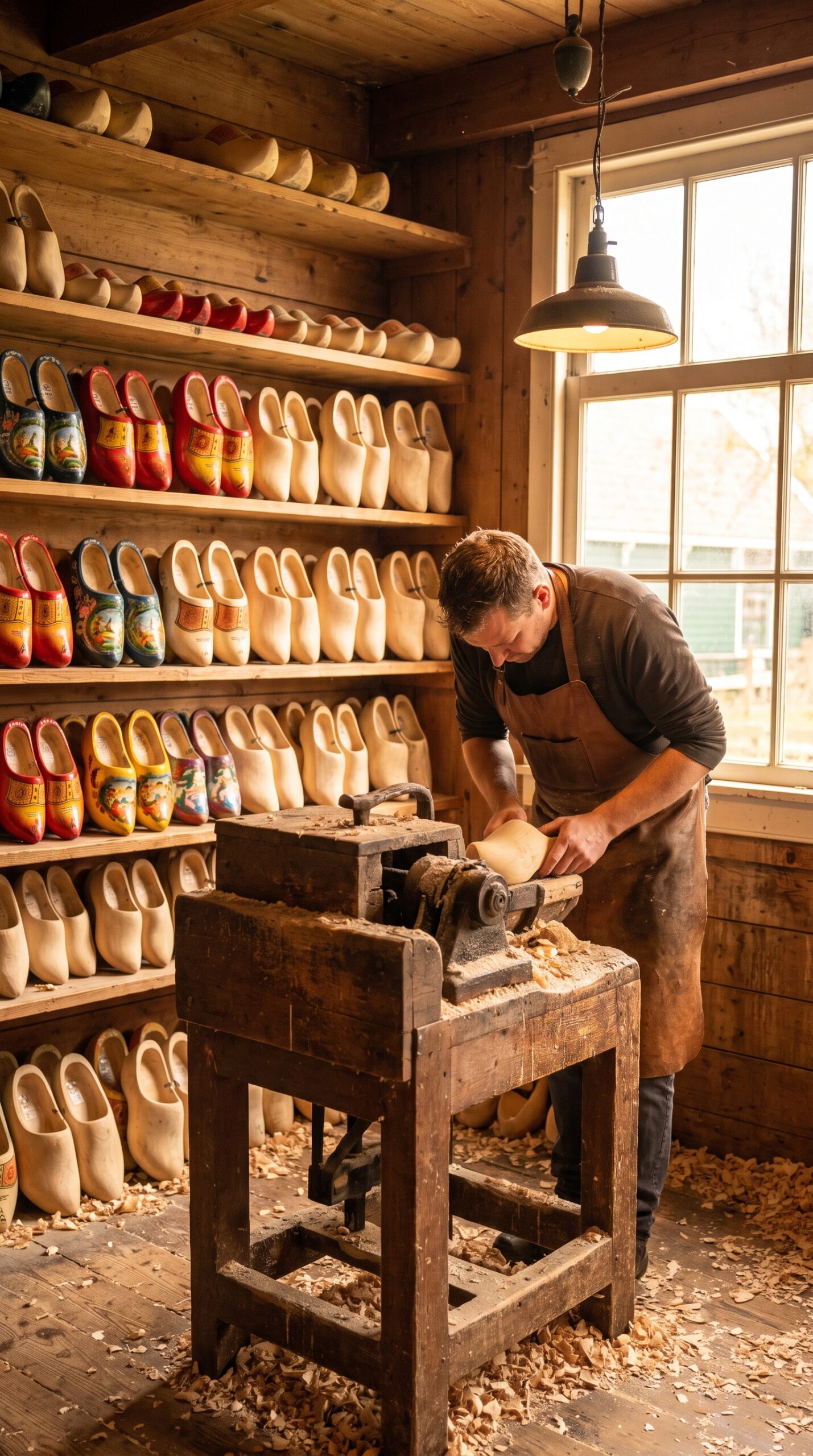
Head to the wooden shoe workshop next. This is the most popular free demo on the site, and it’s worth the crowd. A carver clamps a block of wood into an old copying machine and shapes a full clog in a few minutes, then explains why farmers wore them in the wet fields. Rows of painted clogs line the walls behind him. It’s fun, quick, and free.
The cheese farm is the tasty stop. Staff show how Gouda-style cheese gets pressed and aged, then hand out free samples on little sticks. Try the aged ones. They pack way more punch than the mild blocks in a supermarket.
Want a wider view? Climb the viewing tower, the uitzichttoren, for a look out over the whole row of mills and the flat green land beyond. It’s the best photo spot on the site, especially in soft morning light.
History fans should step into the Zaans Museum and the open-air museum, which tell how this small region powered a lot of early Dutch industry with wind. Both sit right by the entrance. If you would rather move than read, rent a bike and ride the quieter paths along the river, away from the main cluster.
One honest note about what to do in Zaanse Schans. The handicraft shops lean touristy and the prices run high. Treat them as free demos, watch the craft, and buy your cheese or clogs somewhere cheaper if you can.
Tickets, Cards and Costs
Zaanse Schans is free to enter, with individual windmills costing a few euros each; the Zaanse Schans Card bundles several attractions for one price.
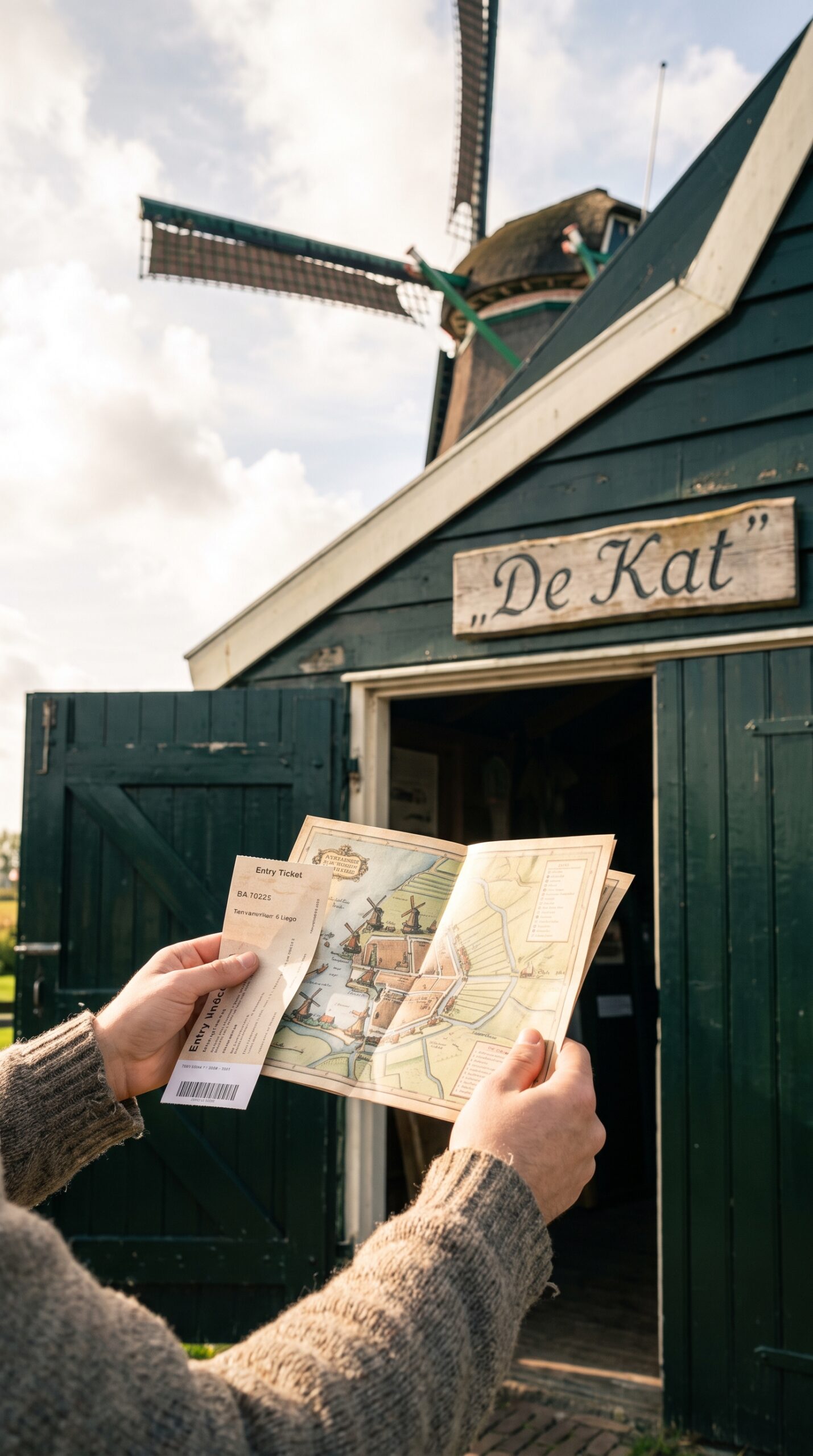
Good news first. Walking into the village and along the river costs nothing. That free access is the big reason budget travelers rate the place, and there’s plenty to do in Zaanse Schans for free, from the clog demo to the cheese samples.
The paid bits are the insides. Each windmill charges its own small entry, usually a few euros, and the museums cost a bit more. If you plan to go inside three or more spots, the Zaanse Schans Card pays off. It bundles the main windmills and museums into one ticket, so you skip paying at each door. Grab your zaanse schans tickets at the entrance or online through the official ticket page.
The honest take on cost? Buy one windmill entry, watch the free demos, and save the rest. Only spring for the full card if museums are your thing. The village itself is the real draw, and that part is free.
Food and Local Treats
Food at Zaanse Schans centers on free cheese samples at the farm, fresh stroopwafels from riverside stalls, and a few pricey sit-down restaurants with windmill views.
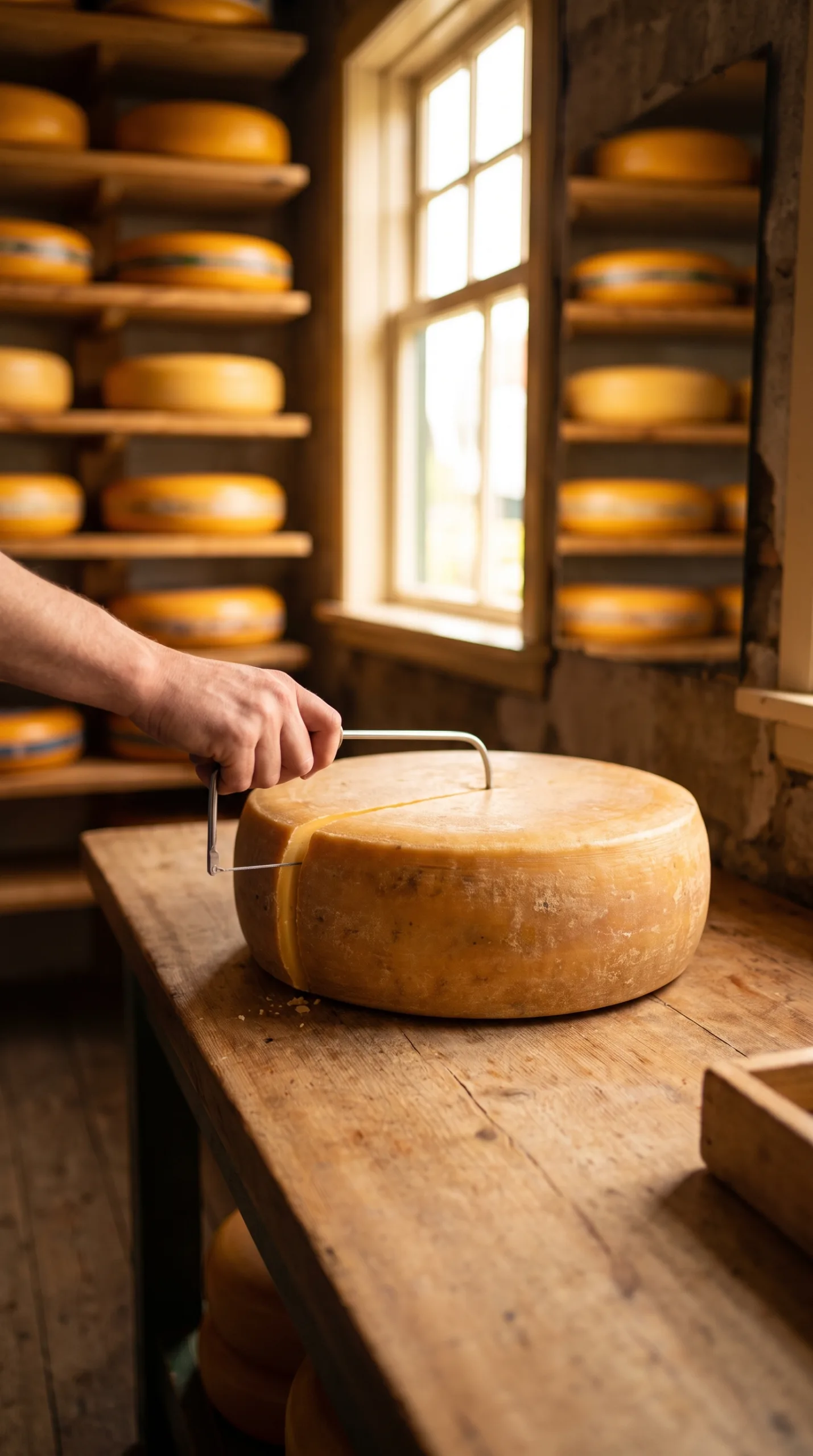
The cheese farm is the tastiest free stop. Staff hand out samples of Gouda-style cheese on little sticks, and you can taste your way from mild to sharp before buying a wheel to take home. Skip the plain ones. The aged and smoked cheeses are the reason people crowd the counter at this zaanse schans cheese factory.
Stalls near the river cook fresh stroopwafels, those warm caramel waffles, plus thin Dutch pancakes. Grab one and eat it by the water. For a proper meal, a couple of riverside zaanse schans restaurants do sit-down lunch with windmill views, though the prices run high for what you get.
Fair warning about lunch Zaanse Schans style. On-site food is limited and costs more than it should. Eat before you come, or pack a snack, and save the big meal for back in town.
How to Get There from Amsterdam
Trains from Amsterdam Central reach Zaandijk Zaanse Schans station in about 20 minutes, followed by a 10-minute walk; the village is roughly 15 kilometers north of the city.
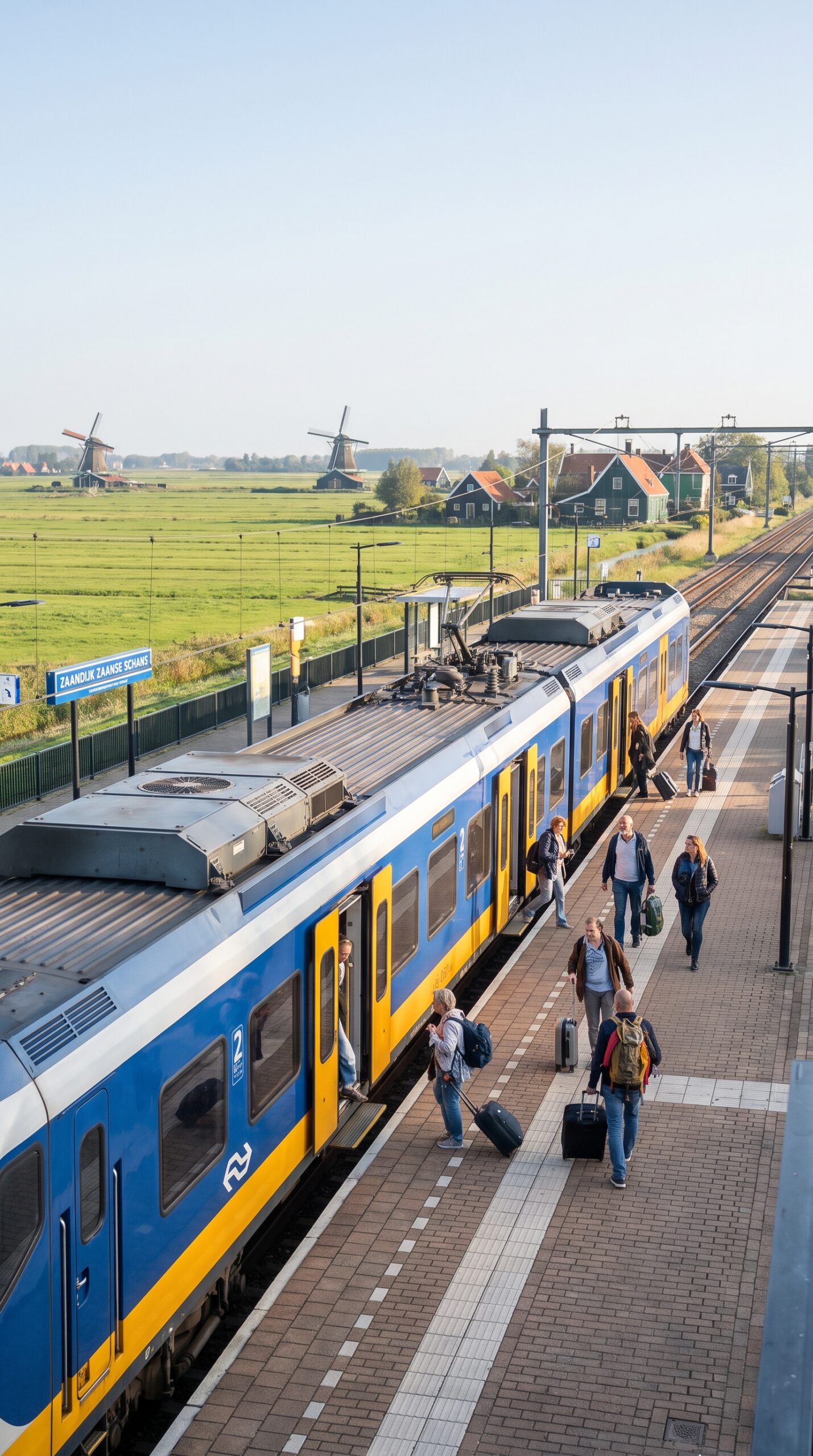
The train is the easy winner. Hop on at Amsterdam Central and ride to Zaandijk Zaanse Schans station, about 20 minutes. From there it’s a short 10-minute walk over the bridge to the windmills. That amsterdam to zaanse schans train runs several times a hour, so you rarely wait long. Check live times on the NS (Dutch Railways) site.
Distance-wise, the village sits about 15 kilometers north of the city, which is why how far is Zaanse Schans from Amsterdam has such a short answer. Close.
Prefer the bus? Route 391 leaves from behind Amsterdam Central and drops you nearer the entrance, but it takes longer than the train. For the fastest trip, and the simplest way how to get from Amsterdam to Zaanse Schans, stick with the train and walk the last stretch.
Best Time to Visit and How Long to Stay
Plan two to three hours at Zaanse Schans, and arrive before 10am or after 4pm to avoid the midday tour-bus crowds; the site is open year-round.
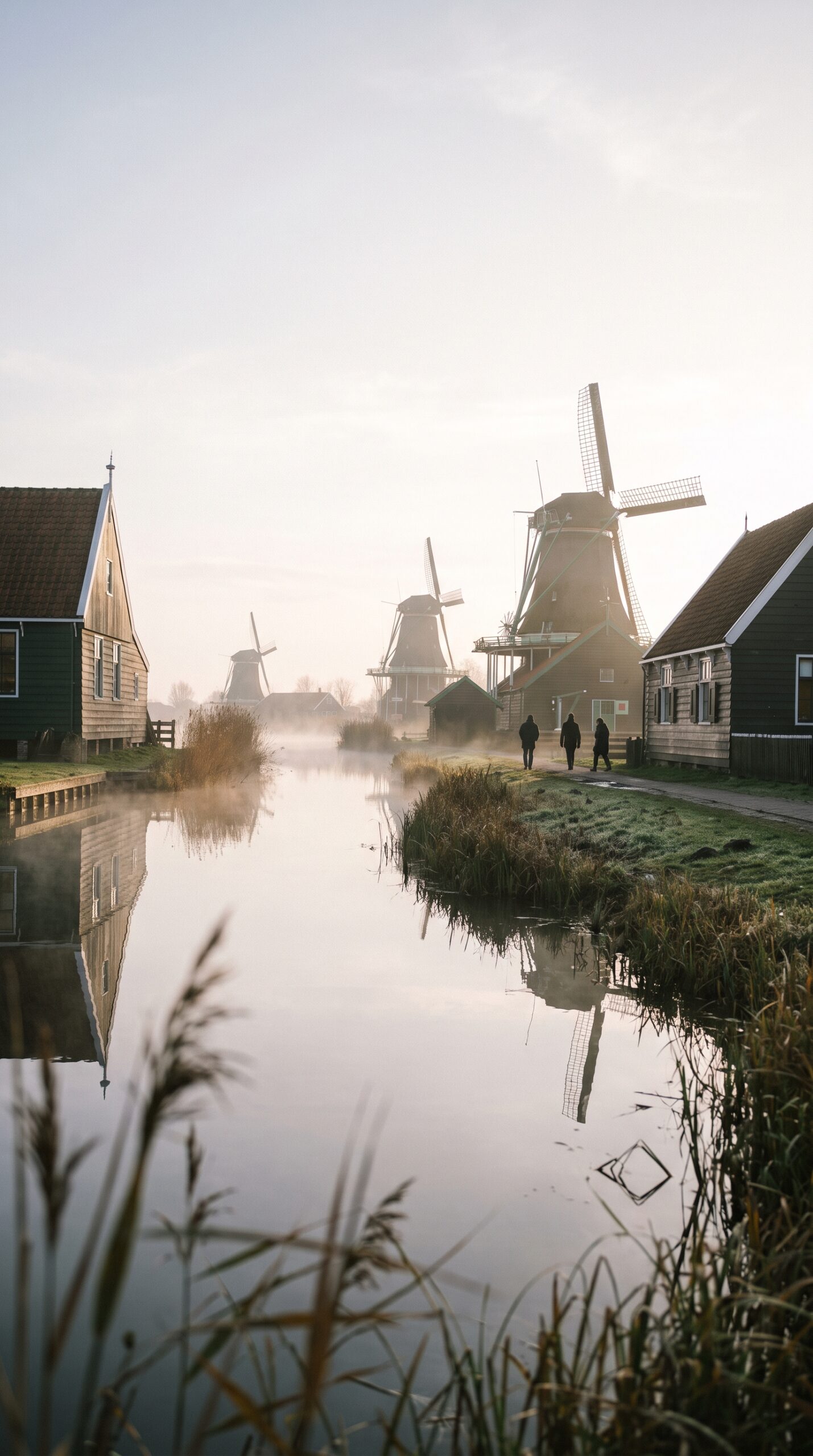
Two to three hours does it. That’s enough to walk the windmills, catch the clog demo, and taste cheese at the farm without rushing. If you’re wondering how long to spend in Zaanse Schans, treat it as a half day, not a full one.
Timing matters more than the season here. Come before 10am or after 4pm and the place feels calm and open. Show up at noon and you share the paths with packed tour buses. Early light is also kinder for photos.
Late spring and summer bring the best weather, plus the biggest crowds. The zaanse schans weather turns grey and windy in winter, but those cold mornings can be quiet and pretty if you dress warm. The site stays open year-round, so any month works with the right layers.
Easy Day Trips Nearby
Easy pairings with Zaanse Schans include Volendam, a nearby fishing village often combined on tours, and Kinderdijk, which has a larger row of historic windmills.
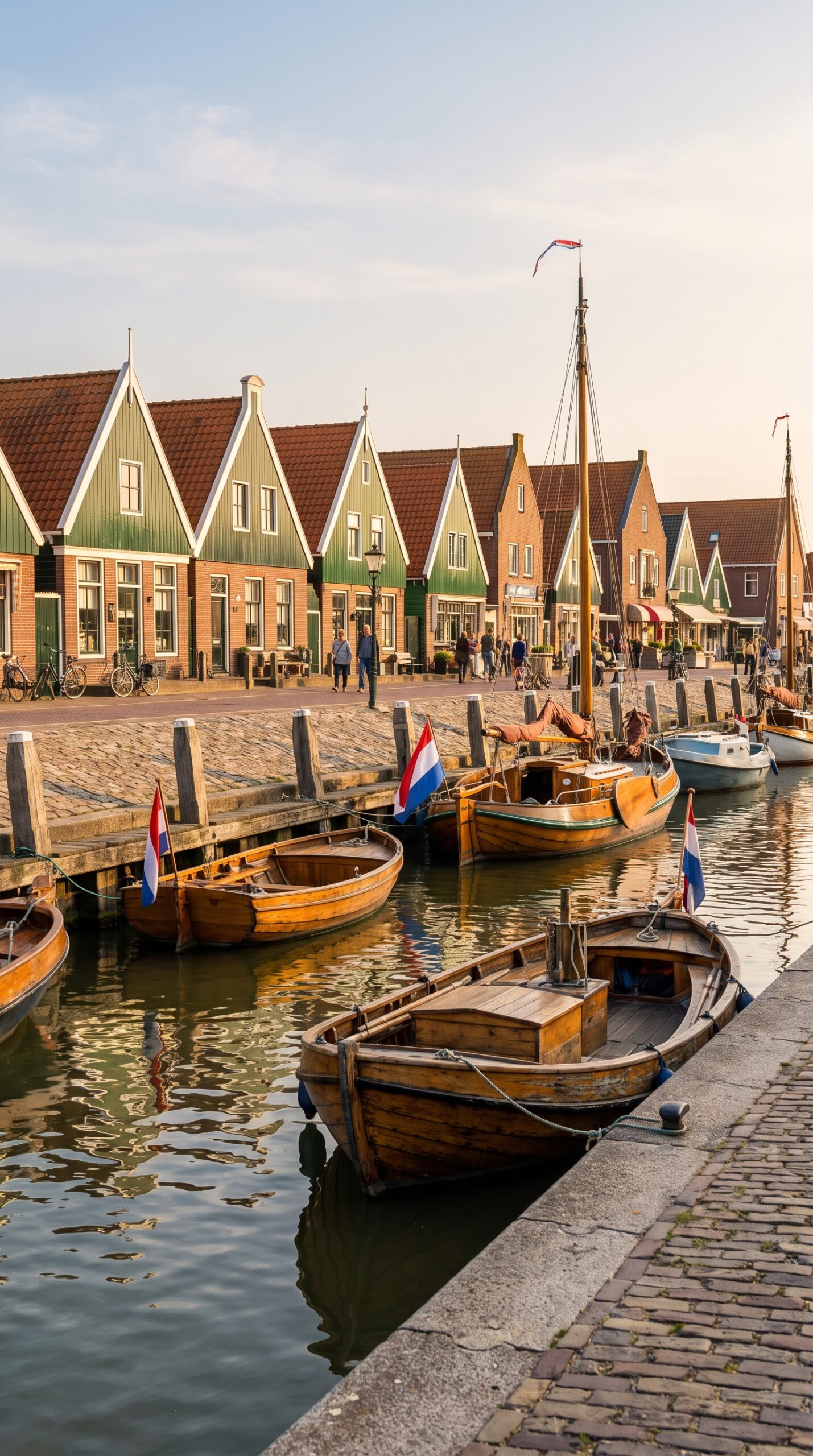
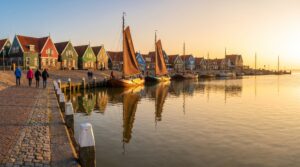
Volendam is the classic pairing. This old fishing village on the former sea has a working harbor, painted houses, and stalls selling smoked fish by the water. Plenty of day tours run Volendam and Zaanse Schans together on one loop, which saves you juggling trains. It makes for a full, easy day out.
Windmill fans have a choice to make. Kinderdijk holds a longer row of 18th-century mills lined along the dikes, so the classic Zaanse Schans vs Kinderdijk question really comes down to this: pick Kinderdijk if windmills alone are your goal, and Zaanse Schans if you want crafts and cheese too. Kinderdijk sits farther south, near Rotterdam, so it’s a separate trip rather than a quick add-on.
Short on time? Amsterdam is only 20 minutes back on the train, so you can tack on a canal walk or a museum once you return.
Zaanse Schans FAQ
How do I get from Amsterdam to Zaanse Schans?
Take a train with Amsterdam Central and Zaandijk Zaanse Schans station, about 20 minutes, then walk 10 minutes to the windmills. Bus 391 from behind Amsterdam Central is a slower alternative that stops a little closer to the entrance.
How far is Zaanse Schans from Amsterdam?
Zaanse Schans sits about 15 kilometers north of Amsterdam, roughly 20 minutes by train. That short distance is why it’s one of the easiest day trips from the city, with no need to stay overnight.
How long do I need at Zaanse Schans?
Two to three hours is enough to see the windmills, the clog workshop, and the cheese farm. Add more time if you plan to enter several windmills, visit the museums, or rent a bike along the river.
Is Zaanse Schans a tourist trap?
Not really, though it can feel like one at midday. The village is free to enter and the windmills are real working mills, so the setting is honest. The catch is pricey shops and heavy tour-bus crowds, both of which you dodge by coming early or late.
What does Zaanse Schans mean in English?
Zaanse Schans roughly means “Zaan sconce” or “Zaan entrenchment.” The word schans is an old Dutch term for a defensive earthwork, and Zaanse points to the Zaan river region where the village sits.