This guide contains affiliate links. As an Amazon Associate we earn from qualifying purchases — at no extra cost to you.
Estimated reading time: 10 minutes
Last updated: 15 September 2026
What Should You Pack for Bergen, Norway?
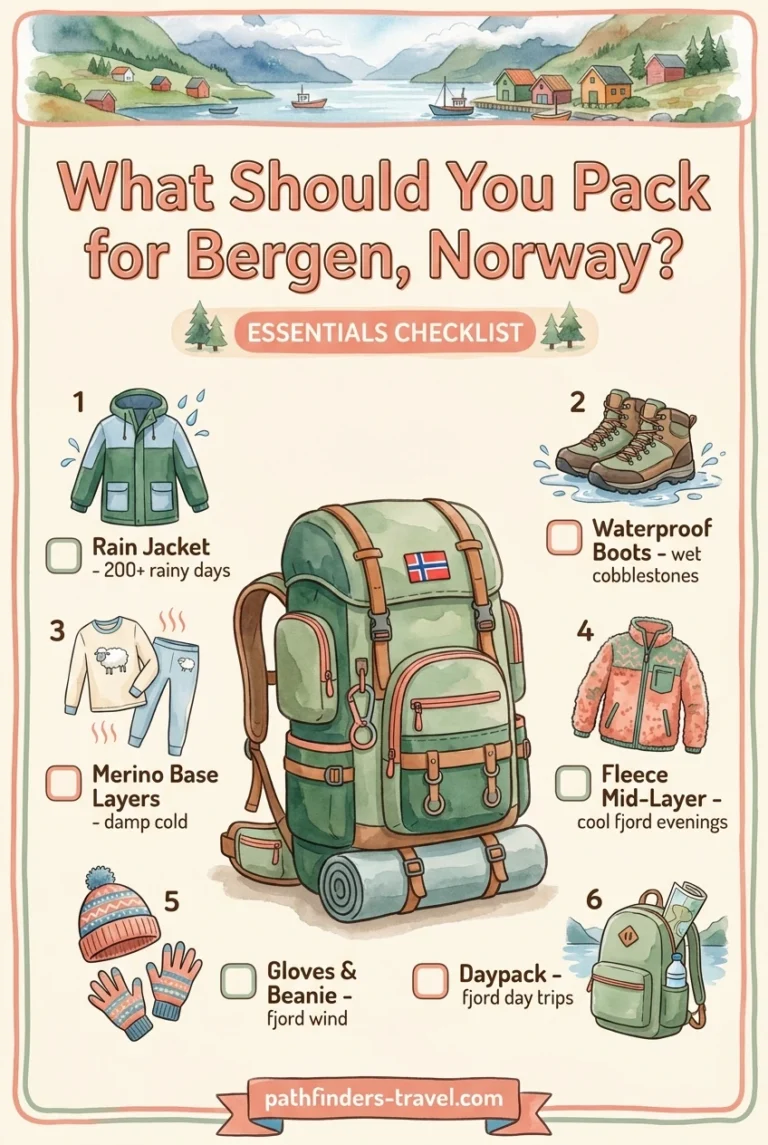
Pack a quality rain jacket, waterproof pants, moisture-wicking base layers, insulated mid-layers, sturdy waterproof boots with grip, and a daypack. Bergen receives rain more than 200 days a year, so waterproof gear is essential for exploring the historic Bryggen wharf, hiking Fløyen mountain, and cruising the fjords comfortably.
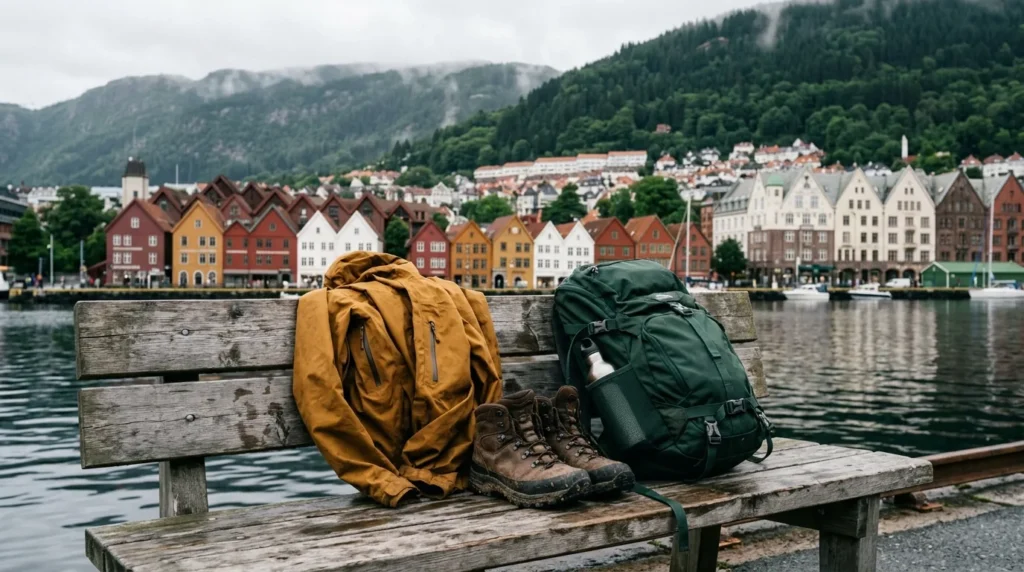
The city sits on Norway’s west coast where Atlantic weather systems roll in constantly. You can wake to drizzle, hike under sun on Mount Fløyen, then board a fjord boat in wind and spray. I always pack for four seasons in one day because Bergen’s microclimate shifts fast.
Your foundation starts with waterproof layers. A quality rain jacket and water-resistant pants protect you from the frequent drizzle that locals simply call “Bergen sunshine.” Add moisture-wicking base layers that dry quickly and insulated mid-layers for cool mornings and evenings, even in summer. Temperatures hover around 50°F to 65°F from May through September, but feel cooler in wind and rain.
This guide walks you through clothing layers, footwear for wet cobblestones and mountain trails, rain and wind protection, and extras like hand warmers and accessories that make the difference between enduring Bergen’s weather and enjoying it.
Whether you are strolling the Bryggen wharf, riding the Fløibanen funicular, or cruising Sognefjord, the right gear keeps you comfortable and dry so you can focus on the colorful wooden buildings and dramatic fjord views instead of the drizzle.
Waterproof Jackets and Insulated Layers
Your rain jacket is the single most important piece of kit for Bergen, where drizzle arrives without warning and stays for hours. Look for waterproof construction with sealed seams, a hood that cinches tight, and enough room to layer underneath when you duck into the fish market or climb toward Bryggen’s wooden alleyways.
If you’re planning serious fjord hikes or multi-day trips into the mountains, the 33,000ft Women’s Waterproof Softshell Jacket hits the sweet spot. It combines a fully waterproof outer shell with fleece lining for warmth on cool days and a removable hood so you can adjust to changing conditions. I wore mine from early morning fjord tours to afternoon hikes and never felt clammy or cold.
The full zip and breathable fabric let you vent when you’re climbing stairs up to Mount Fløyen, then seal up when the wind picks up on deck. It packs small enough to stuff in a daypack when the sun breaks through, but you’ll probably keep it on. Bergen’s weather flips fast, and nothing kills a good walk along the harbor like getting soaked because you left your jacket at the hotel.
Traveling with kids who want to splash through every puddle and explore every trail? The Boy’s Winter Parka offers the same waterproof shell with puffer insulation and a fleece lining that handles Bergen’s damp cold. The hood stays put in wind, and the longer cut keeps rain from soaking their legs on rocky paths. We found it worked from October through April when layered over merino base layers.
Both jackets handle the city grime from cobblestones and boat spray better in darker colors like navy, black, or charcoal. They’re built to move from the historic wharf to mountain viewpoints without a second thought, which is exactly how you’ll want to spend your days in western Norway.
Waterproof Boots for Wet Cobblestones and Trails
Bergen gets about 250 rainy days a year, so sneakers will soak through in fifteen minutes on the city’s wet streets. You need waterproof boots with grip and ankle support for uneven terrain, from Bryggen’s slick cobblestones to the rocky paths on Ulriken.
If you’re planning serious day hikes into the fjords or up Mount Fløyen, the Women’s Winter Snow Boots feature a waterproof duck-boot shell that sheds puddles and drizzle, with a warm lining for cooler months. The rubber sole grips wet stone and muddy trails better than anything else I tested. They’re not heavy hiking boots, but they handle the moderate trails around Bergen and keep your feet dry on long walking days through the fish market and up to the funicular station.
For kids, the Kids Waterproof Winter Snow Boots offer the same waterproof shell with fur lining and a design that stays put, no slipping off mid-hike. We walked for hours along the Bryggen waterfront and up the zig-zag trail to the viewpoint, and my son never complained once about wet socks or blisters. The price makes them practical even if your child outgrows them in a season.
Both boots break in quickly and pair well with merino wool socks. Avoid tall rain boots unless you’re only sightseeing in the city center. They lack the ankle support you need for even gentle mountain hikes, and your calves will ache after a few hours.
Bring a second pair of lightweight shoes, like trail runners, if you’re staying more than a few days. That way you can rotate and let damp boots dry overnight in your hotel room. Bergen’s humidity means nothing dries fast, so having a backup keeps your feet comfortable all week.
Base Layers and Thermal Underwear
Bergen’s damp cold seeps through cotton in minutes. Merino wool base layers wick moisture, regulate temperature, and don’t hold odors even after multiple wears, which matters when you’re packing light. When you step off the Fløibanen funicular into fog or board a ferry to the fjords in drizzle, merino keeps working.
If you’re doing serious hiking or spending full days outdoors, the 100% Merino Wool Base Layer Men Set is my go-to for any trip to Norway. The long-sleeve top and leggings layer under jeans and a sweater for city days or under softshell pants for hikes. Merino keeps you warm when wet (unlike cotton), so if drizzle soaks through your jacket cuffs or collar, you stay comfortable. I wore the same set three days running on a fjord tour without feeling clammy or smelling like a locker room.
For active families, this kids’ merino base layer set includes a beanie, which is smart because kids lose heat fast through their heads. The set fits snugly without bunching under outer layers, and the merino handles the constant on-off cycle of jackets as kids warm up on hikes and cool down on boat rides. The kids’ version works just as well in Bergen’s wet climate as the adult gear.
Pack at least two sets if you’re staying a week: one to wear, one to wash and dry. Merino dries faster than synthetics in Bergen’s humid hotel rooms, especially if you hang it near (not on) a radiator.
Merino costs more than synthetic base layers, but it lasts longer and performs better in Norway’s wet climate. Think of it as an investment you’ll use on every cold-weather trip.
Gloves, Hats, and Hand Warmers
Your hands and head lose heat fast in Bergen’s wind and drizzle, especially on open fjord boats or exposed mountain trails. Waterproof gloves and a good beanie are non-negotiable from October through April, and useful even in summer if you’re taking early morning cruises. Regular wool will soak through in fifteen minutes, so look for waterproof shells or treated fabrics.
If you’re doing serious hiking or long boat tours, the Carhartt Men’s Waterproof Insulated Knit Cuff Glove is tough, really waterproof, and warm enough for winter without being bulky. The knit cuff seals out rain and snow, and the insulation kept my hands comfortable on a two-hour Sognefjord boat ride in March. You can still operate a camera or phone with them on, which matters when you’re trying to capture the view.
Traveling with kids who won’t keep gloves on? The Kids’ Waterproof Insulated Gauntlet Glove has a longer cuff that tucks over jacket sleeves, so no gap where rain sneaks in. The gauntlet design means they stay on (no lost gloves on the trail), and the insulation handles cold mornings without overheating on active hikes.
For your head, this waterproof beanie is a game-changer. It sheds drizzle instead of soaking it up like wool, and it packs flat in a jacket pocket. I wore mine on every hike and boat trip, and it never got that soggy-heavy feeling of a regular knit cap.
For extra warmth on the coldest days or long boat tours, the OCOOPA IP56 Waterproof Hand Warmers provide up to sixteen hours of heat and double as a phone charger. The waterproof rating means you can use them in drizzle, and the extra heat mode is perfect for waiting on an outdoor platform for the Fløibanen funicular. They’re a bit heavy for ultralight packers, but worth it if you run cold or you’re traveling with kids who hate being chilly.
Common Questions About Packing for Bergen and the Fjords
What should I pack for a Norway fjord cruise from Bergen?
Pack a waterproof jacket, warm mid-layers like fleece or merino wool, and comfortable walking shoes since most cruises include shore excursions. Even summer cruises can feel chilly on deck when the wind picks up over the water, so bring a warm hat and light gloves. I always throw in a small pair of binoculars for spotting waterfalls and wildlife along the steep fjord walls. A daypack works well for carrying extra layers and your camera during port stops. If you’re planning to explore Bergen’s historic Bryggen wharf and the surrounding fjords beyond your cruise itinerary, you’ll want these same layers for the city’s cobblestone streets and mountain viewpoints.
How should I dress for Bergen’s weather year-round?
Bergen gets rain over 200 days a year, so waterproof layers are essential in every season. In summer, pack light layers like tee shirts and a fleece, plus a good rain jacket. Winter requires thermal base layers, insulated jackets, warm hats, and waterproof boots. Spring and fall sit somewhere in between, so think layering systems you can adjust quickly. I’ve learned that dressing in Bergen is all about being ready for four seasons in one day.
Can I wear jeans in Bergen, or do I need special hiking pants?
Jeans work fine for walking around Bryggen and exploring the city, but they’re not ideal for hiking. Once denim gets wet it stays heavy and uncomfortable, which matters on rainy trails. Quick-dry hiking pants or leggings are much better if you plan to hike near the fjords or up to Fløyen. Save your jeans for casual dinners and city days when you’re mostly indoors. If you’re tackling longer trails like the trek to Vettisfossen, Norway’s tallest free-fall waterfall, where stream crossings and muddy switchbacks are common, waterproof hiking pants become essential gear.
What is the 5 4 3 2 1 rule for packing?
The 5 4 3 2 1 rule keeps a week’s packing light: five tops, four bottoms, three pairs of shoes, two bags, and one hat. For Bergen you can bend it toward the weather, swapping one bottom for a warm mid-layer and making one pair of shoes a waterproof boot. It still fits a carry-on while covering rain, hikes, and a nicer night out. Treat it as a guide, not a strict limit, and always leave room for a packable rain jacket.
What is not allowed to bring into Norway?
Norway restricts meat and dairy brought from outside the EEA, bans spirits stronger than 60 percent, and prohibits drugs, weapons like flick and butterfly knives, and most fresh food. Alcohol and tobacco are duty free only up to set limits, currently 1 litre of spirits, 4 litres of wine and 200 cigarettes for adults. Your clothing, boots and camera gear have no limit, so packing for Bergen is about the weather, not customs. If you plan to carry food or extra alcohol, check Norwegian Customs before you fly.