Estimated reading time: 13 minutes
Last updated: September 2026
Table of Contents
- What Is the Smallest Island in the Azores?
- What to See and Do on Corvo Island
- Where to Stay on Corvo Island
- Getting to and Around Corvo Island
- Combining Corvo with Flores and the Western Azores
- Practical Information for Visiting Corvo
- Frequently Asked Questions
What Is the Smallest Island in the Azores?
Corvo is the smallest and most remote inhabited island in the Azores — just 17 km² and around 430 people in a single village, Vila do Corvo. Its centrepiece is the Caldeirão, a vast collapsed crater nearly 2 kilometres wide with a pond-dotted floor. The island is also one of Europe’s top birdwatching spots, drawing rare North American vagrant birds blown across the Atlantic each autumn.
What We Used to Write This
This guide draws from Portugal’s official tourism resources, regional government data, and accounts from travelers who’ve visited Corvo. All details were current when written, but we’d recommend checking local tourism websites before planning your trip, as schedules and services can shift.
Want to see Corvo’s dramatic volcanic landscape for yourself? Watch our complete Corvo Island travel guide in 4K.
Corvo Island sits 25 kilometers north of Flores in the middle of the Atlantic. The population hovers between 400 and 430 people, according to Portugal’s national statistics institute. All of them live in Vila do Corvo, the only settlement. No resorts here. No rental car agencies. Just one village clinging to a volcanic hillside and a massive crater at the island’s summit.
This is Europe’s westernmost inhabited frontier. The landscape is raw volcanic rock, windswept pastures, and sheer cliffs dropping into the ocean. The Official Visit Azores website calls Corvo the archipelago’s best-kept secret. That’s accurate. Most tourists skip it entirely.
You come here for the Caldeirão crater, a two-kilometer-wide volcanic caldera with a lake at the bottom. You come for silence. You come to hike trails where you won’t see another person for hours. Birdwatchers arrive in autumn when migratory species stop here on transatlantic crossings. Everyone else comes to experience what the Azores looked like before tourism arrived.
The Corvo Island Municipality maintains basic infrastructure. Expect simple guesthouses, a handful of cafés, and no ATMs. This guide covers what you actually need to know: how to get there, where to sleep, what to see, and how to combine Corvo with neighboring Flores Island.
What to See and Do on Corvo Island
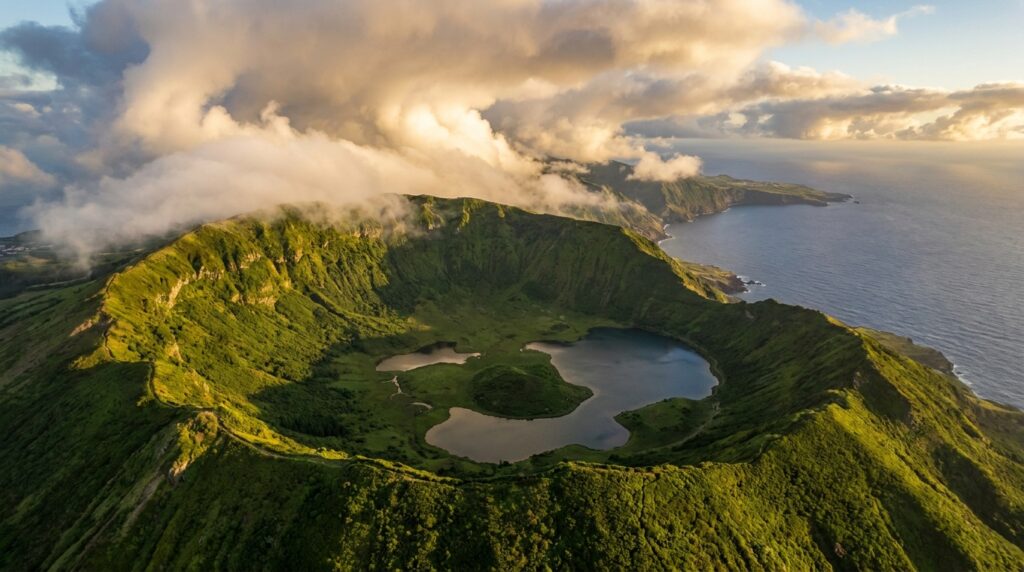
The Caldeirão do Corvo, a 2-kilometer-wide volcanic crater with twin lakes, dominates Corvo Island and offers a rim hiking trail with wide Atlantic views.
The Caldeirão do Corvo is why you came here. This massive volcanic crater sits at 718 meters elevation and measures 2.3 kilometers across at its widest point, according to the Azores UNESCO Global Geopark. Two lakes fill the caldera floor. The larger lake shifts between blue and green depending on algae levels. The smaller one dries up in summer.
A dirt trail circles the entire rim. The loop takes 90 minutes at a steady pace. No technical climbing required. Just uneven volcanic rock and mud after rain. The Miradouro do Caldeirão viewpoint on the eastern rim offers the clearest sight lines into the crater. On clear mornings you see straight down to the lake bottoms.
Corvo Island formed through a single volcanic cone that collapsed inward roughly 430,000 years ago. The caldera you see today is what remains after that collapse. Subsequent eruptions built the twin cones inside the crater. No volcanic activity has occurred here in recorded history. The island measures just 17 square kilometers total, making it Portugal’s smallest inhabited territory.
Back down at sea level, Vila do Corvo holds all 400 residents. The village clusters around a small harbor where the ferry docks. Stone houses with red tile roofs line narrow streets. The Igreja de Nossa Senhora dos Milagres church anchors the main square. Built in the 16th century, it’s been rebuilt twice after earthquakes.
The Nossa Senhora dos Milagres monument stands on a hill above the village. This white statue of the Virgin Mary watches over the harbor. Locals consider it a protective symbol. The 10-minute walk up from the square rewards you with views across the village rooftops to Flores Island, 18 kilometers southeast. On clear days you see Flores’s entire western coastline.
Corvo sits directly in the North Atlantic flyway. Migratory birds crossing between Europe and North America stop here to rest. The SPEA – Portuguese Society for the Study of Birds has recorded over 300 bird species on Corvo during peak migration months. September and October bring the highest variety. American warblers, thrushes, and sparrows show up alongside European species. Rare vagrants appear every season.
Bring binoculars. The crater rim and coastal cliffs are prime spotting locations. Local birdwatchers gather near the Caldeirão parking area at dawn. They share sightings freely.
Planning Tip
The coastline offers no sandy beaches. Black volcanic rock meets the Atlantic in steep drops. A few natural swimming spots exist where lava flows created sheltered pools. Ask locals for directions, these aren’t marked. The water stays cold year-round, around 17°C in summer.
Coastal paths wind along the western and southern shores. These trails are informal, created by foot traffic over decades. They connect small fishing spots and old whale lookout points. The paths are muddy and overgrown in sections. Wear boots.
Everything on Corvo is walkable. The island’s longest distance, from the northern tip to the southern coast, measures 6.5 kilometers. Most visitors cover the Caldeirão hike and village tour in a single day. That’s enough time to see what matters.
Where to Stay on Corvo Island
Corvo Island has only 1-2 small family-run guesthouses with fewer than 20 total beds, requiring advance booking, though most visitors day-trip from Flores Island.
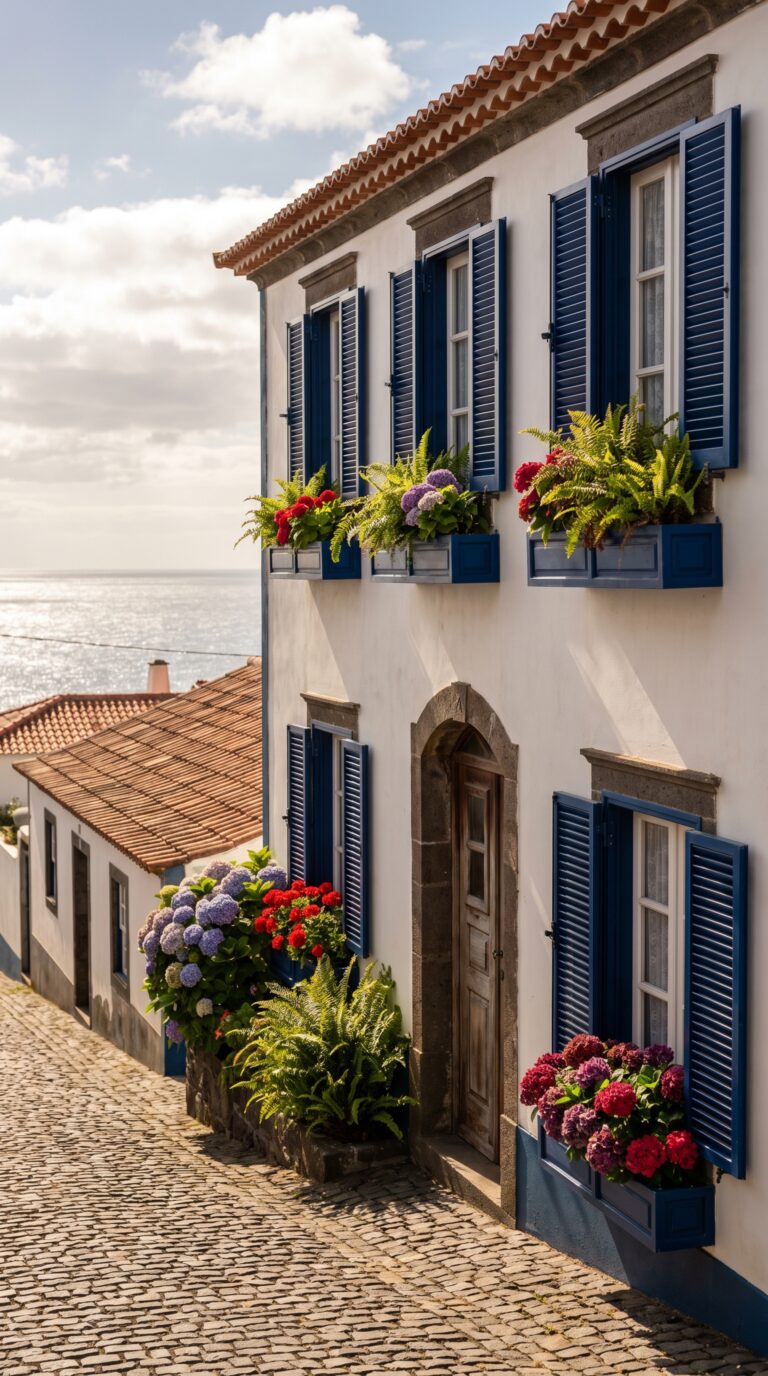
Can you stay on Corvo Island? Yes. But barely. The island offers exactly two small pensões in Vila do Corvo, basic rooms with shared bathrooms, clean sheets, and breakfast included. These family-run operations hold fewer than 20 beds combined, according to the Azores regional tourism board accommodation registry. No hotels. No resorts. No Airbnb listings. Just traditional guesthouses where the owner might cook your dinner if you ask nicely.
Book months ahead if you’re visiting May through September. Capacity fills fast. One guesthouse closes entirely in winter when ferry service becomes unreliable.
Most travelers skip the lodging question entirely. They base themselves on Flores Island, where you’ll find proper hotels, rental apartments, and restaurants that serve past 8 PM. Day-trip ferries to Corvo run regularly in summer, you leave Flores at 9 AM, spend six hours exploring Corvo, and return by late afternoon. This strategy gives you Flores’ infrastructure (ATMs, grocery stores, medical services) while still experiencing Corvo’s isolation.
The guesthouses on Corvo work fine for hardcore minimalists. Expect thin walls, cold showers some mornings, and dinner options limited to whatever the village café is serving. But you’ll wake up to zero light pollution and streets empty enough to hear the ocean from your bed. Check availability through Visit Azores before booking flights.
Getting to and Around Corvo Island
Corvo Airport (CCU/LPHR) receives 1-2 daily 15-minute SATA Air Açores flights from Flores Island, plus summer ferry service, both highly weather-dependent.
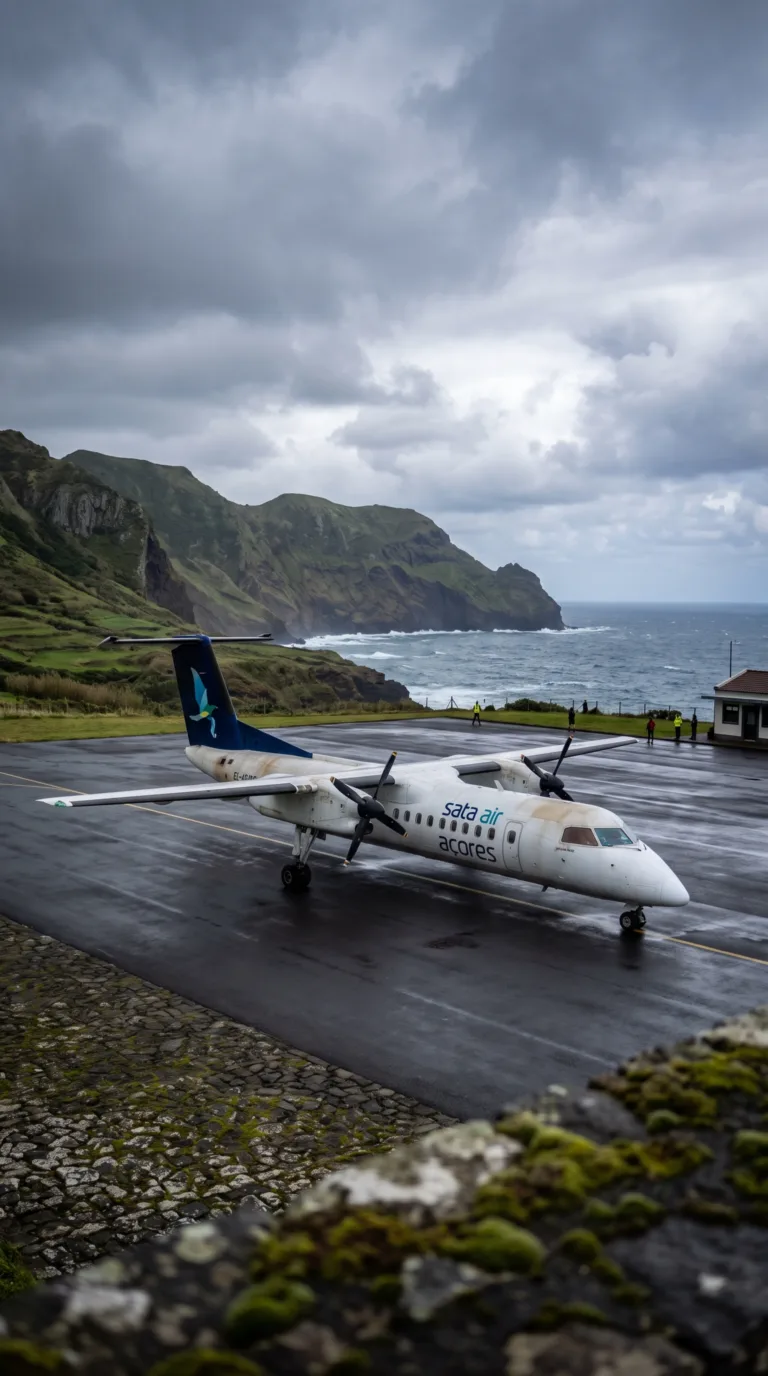
CCU airport is the smallest in the Azores. The LPHR ICAO code marks a runway that handles turboprops only. SATA Air Açores operates the lifeline: short hops from Flores Island. Flight time runs 15-20 minutes according to SATA Air Açores official schedules. Expect 1-2 daily departures in summer, fewer in winter. Weather scrubs flights constantly.
The ferry offers an alternative. Atlânticoline runs boats from Santa Cruz das Flores when the Atlantic cooperates. Crossing time hits roughly 1 hour per Atlânticoline’s official ferry schedule. Service operates summer months only. Swells cancel sailings without warning.
How to get to Corvo Island from anywhere else? Fly into Ponta Delgada on São Miguel or connect through Lisbon. Catch an onward flight to Flores. Sleep there. Take the morning hop to Corvo. No direct international service exists. Build two extra days into your schedule for weather delays.
Getting around the island requires nothing but legs. Corvo spans just 17 km². Vila do Corvo sits at sea level. A single paved road climbs to the Caldeirão viewpoint. No car rental agencies operate here. No taxis. No buses. Walk everywhere or arrange a ride with a local guesthouse owner.
Atlantic storms shut down both airport and harbor for days at a stretch. Pack patience. Corvo runs on nature’s timetable, not yours.
Combining Corvo with Flores and the Western Azores
Most travelers base themselves on Flores Island for 3-4 days and visit Corvo as a day trip via 15-minute flight or summer ferry.
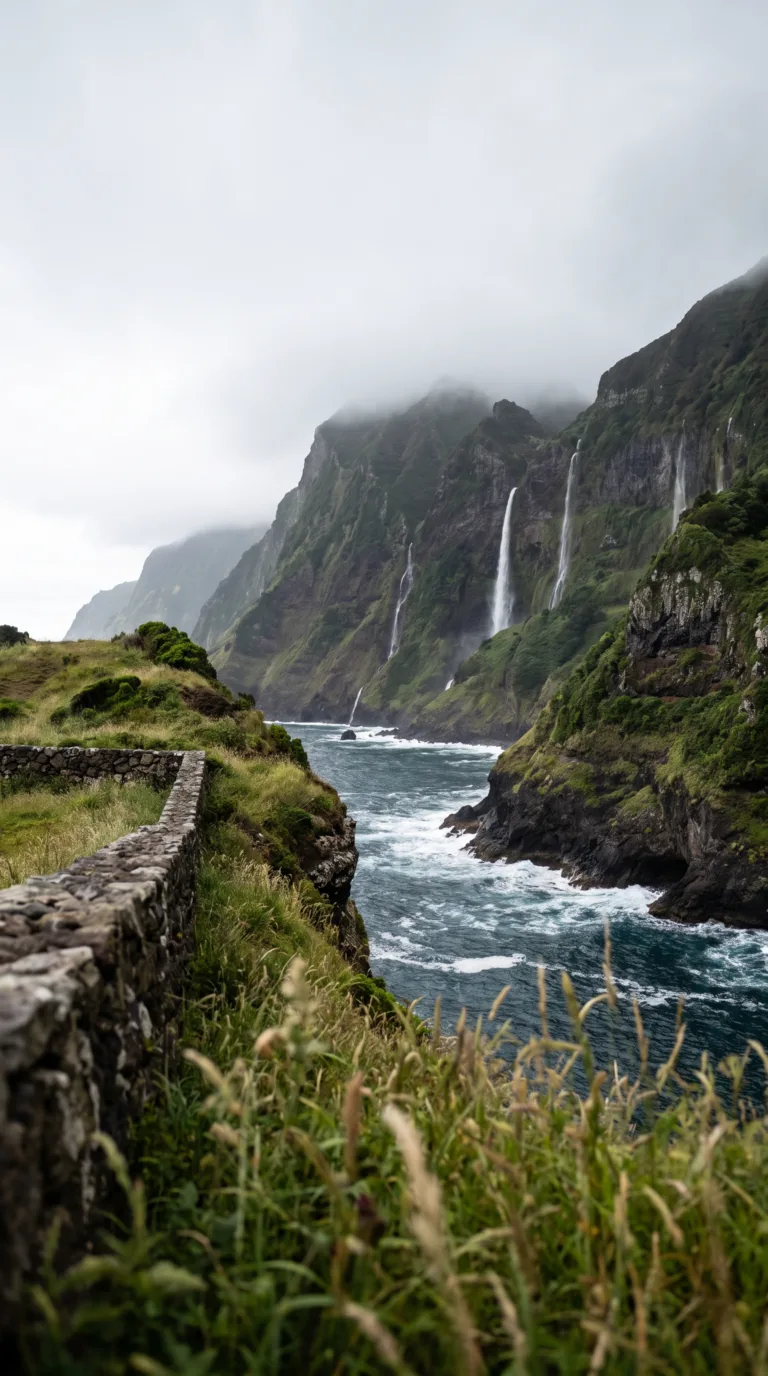
Corvo doesn’t exist in isolation. Flores Island sits just 18 kilometers south across the channel. It’s Corvo’s lifeline. Every supply shipment, every tourist flight, every medical emergency, they all run through Flores. You can’t visit Corvo without dealing with Flores first.
The standard approach: fly into Flores, spend three or four days exploring its waterfalls and coastal villages, then take a morning flight or ferry to Corvo. You get four to six hours on the ground. Walk the Caldeirão rim. Eat lunch in Vila do Corvo. Catch the afternoon flight back. It works.
Flores itself deserves the time. Fajã Grande clings to the westernmost cliffs in Europe. Poço da Alagoinha reflects the sky in a volcanic crater. Rocha dos Bordões displays vertical basalt columns like organ pipes. The hiking trails cut through laurel forests and past twenty-meter waterfalls. Explore Flores Island for route maps and trail conditions.
Some travelers extend the western Azores loop. Fly into Horta on Faial. Ferry to Pico for volcano hiking. Continue west to Flores. Add Corvo as the final stop. The entire circuit takes ten to twelve days if you don’t rush.
Corvo itself can’t serve as a base for day trips. There’s nowhere to go from here except back to Flores.
Practical Information for Visiting Corvo
Corvo Island spans just 17 square kilometers with 430 residents, experiencing mild oceanic weather (14-22°C) with high rainfall and wind year-round.
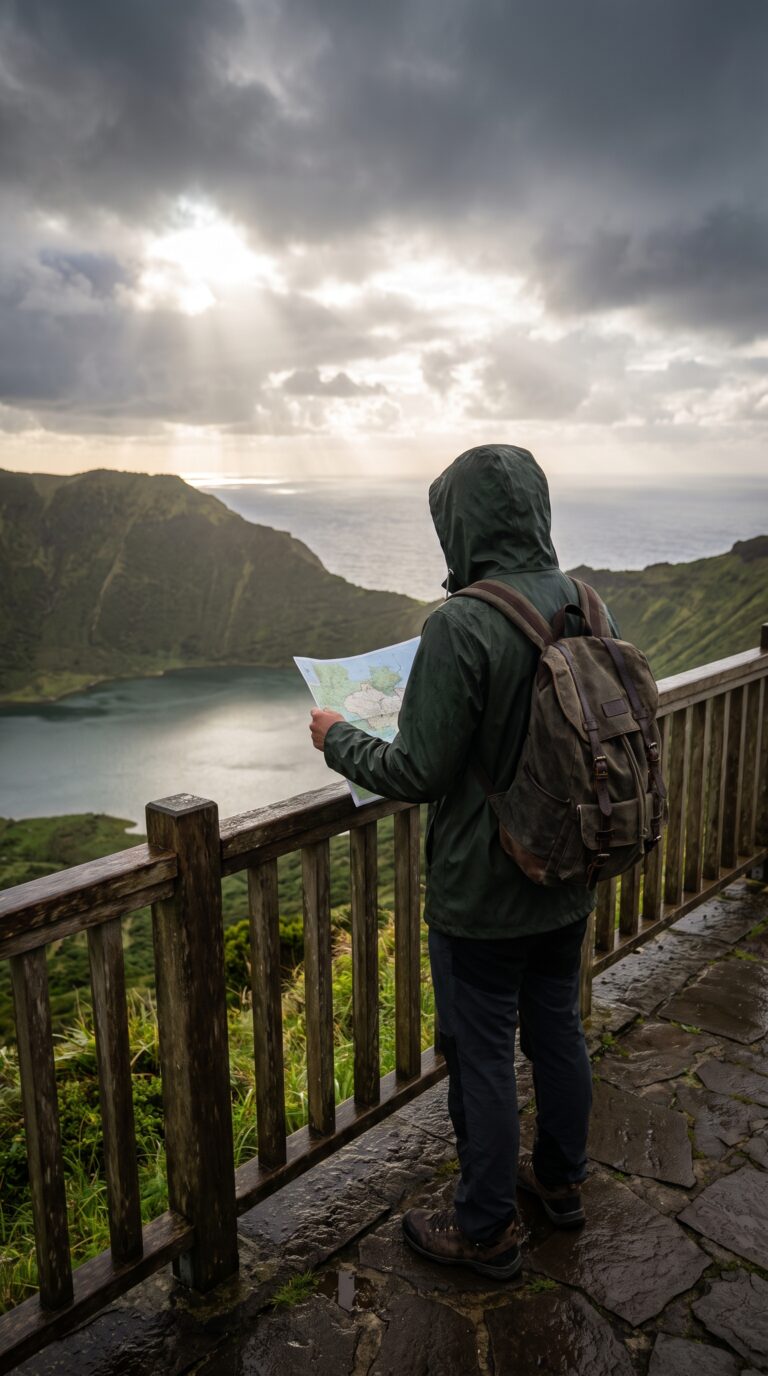
Corvo sits 25 kilometers northwest of Flores. It’s the westernmost point of the Azores. The entire island measures 17 square kilometers, you can walk the perimeter in a few hours.
About 430 people live here. Everyone clusters in Vila do Corvo, the single village. Most residents fish or farm. Portuguese is the primary language. English exists in guesthouses, but don’t count on it elsewhere.
The Atlantic dictates everything. Temperatures hover between 14°C in winter and 22°C in summer, according to the Portuguese meteorological institute (IPMA Weather Forecasts). Corvo receives over 1,000 millimeters of rain annually per IPMA climate data. Wind and fog roll in without warning. You’ll experience four seasons in one afternoon.
Visit between May and September. Ferries run more reliably. Flights operate year-round but cancel frequently in bad weather. Pack a waterproof jacket. Bring layers, fleece, long sleeves, warm socks. Sturdy hiking boots are non-negotiable. Binoculars help with birdwatching.
Services barely exist. One small shop sells basics. No ATM anywhere. Bring cash from Flores. No restaurants operate outside guesthouse dining rooms. Medical care stops at basic first aid. Download offline maps before arrival, the island has one main road, but cell service drops in the crater.
Navigation is simple. The road loops with the village and the crater rim. You can’t get lost.
Best Time to Visit
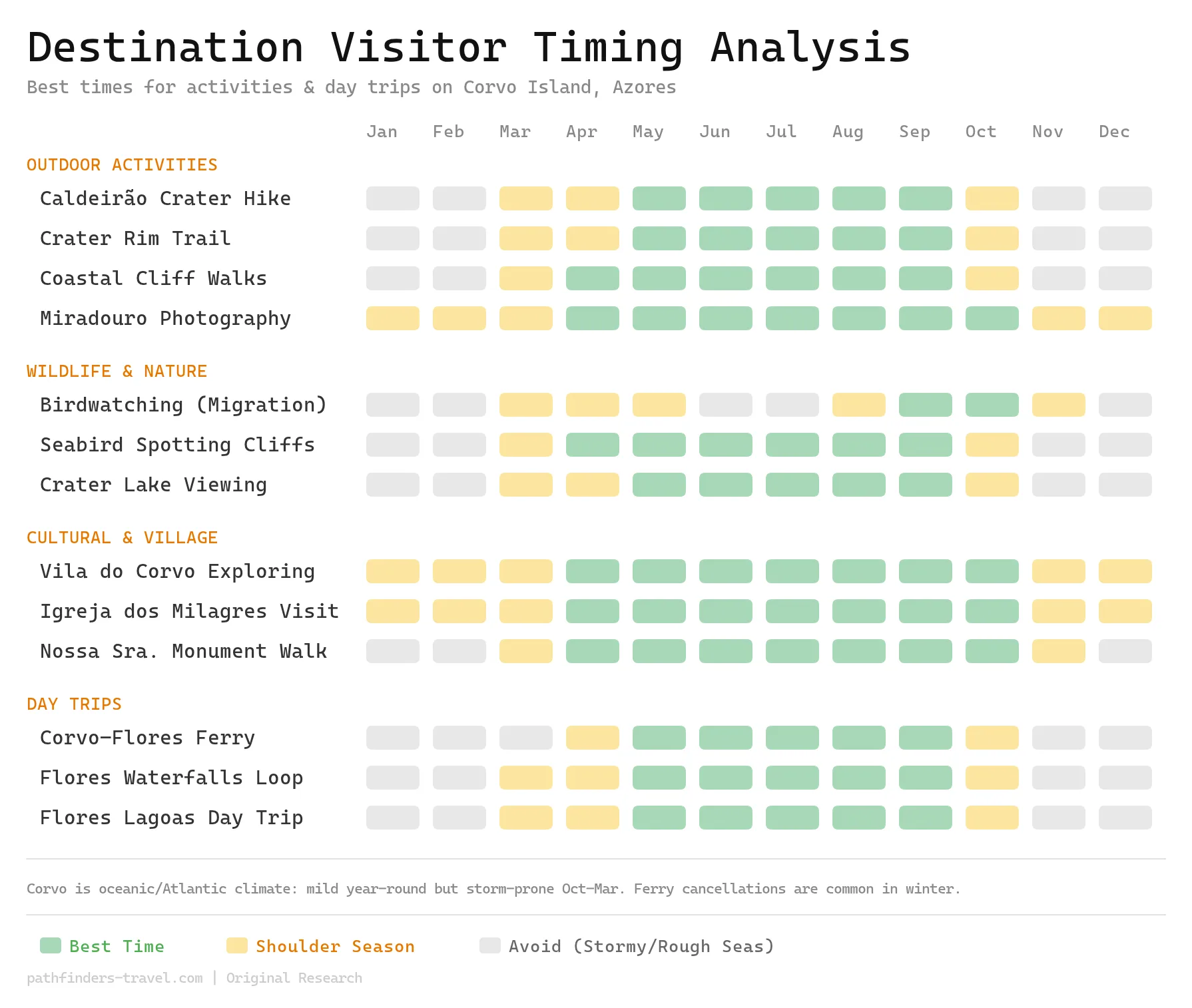
Corvo Island’s remote Atlantic location means weather and ferry reliability are your biggest timing factors. Summer months (May, September) bring the calmest seas, clearest skies for crater views, and the most reliable inter-island ferry connections to Flores. The exception is birdwatching: September and October are peak migration months, drawing dedicated birders despite the season’s increasing storms.
Frequently Asked Questions
Is Corvo Island worth visiting?
Yes, if you value untouched nature and solitude over tourist infrastructure. Corvo offers a rare glimpse of traditional Azorean island life. The Caldeirão crater dominates the landscape, a volcanic bowl 2 kilometers wide with twin lakes at the bottom. Birdwatchers come here for rare migratory species that use the island as a stopover point between Europe and North America. You won’t find restaurants, nightlife, or guaranteed weather. This is raw Atlantic wilderness. Best appreciated by hikers and travelers seeking Europe’s most isolated inhabited island. Not worth it if you need amenities or predictable conditions.
Can you stay on Corvo Island?
Yes, but accommodation is extremely limited. Only 1-2 small guesthouses exist, with fewer than 20 total beds across the entire island. Advance booking is essential, especially May through September. Most visitors day-trip from Flores Island due to limited lodging. Flores has better amenities, hotels, restaurants, rental cars. Staying overnight on Corvo allows you to experience the island’s quiet after day-trippers leave. The village empties out around 5 PM. You’ll hear nothing but wind and waves.
How many people live on Corvo Island?
Approximately 400-430 permanent residents live here, making it the least populated island in the Azores. Everyone lives in Vila do Corvo, the single village. The population has declined from historical highs due to emigration. Young people leave for education and jobs on larger islands or mainland Portugal. The community is tight-knit. Traditional livelihoods include fishing, farming, and limited tourism. You’ll see the same faces in the bakery, the church, the harbor.
How many days do you need in Corvo Azores?
Most visitors spend 4-6 hours on a day trip from Flores. That’s sufficient to see the Caldeirão crater and walk through Vila do Corvo. If staying overnight, 1-2 days is ideal. Hike the caldera rim. Explore coastal areas. Experience island life at a slower pace. The island is small, 17 square kilometers total, with limited attractions. More than 2 days may feel repetitive unless you’re a dedicated birdwatcher or seeking total solitude. Combine with 3-4 days on Flores for a complete western Azores experience.
How do you get to Corvo Island?
Fly SATA Air Açores with Flores Island and Corvo Airport. The flight takes 15-20 minutes. 1-2 flights run daily, weather-dependent. Take the Atlânticoline ferry from Flores in summer only, 1 hour crossing, highly weather-dependent. To reach Flores, fly from Ponta Delgada on São Miguel or from Lisbon. Inter-island ferries also connect the Azores chain. Build flexibility into your schedule. Flights and ferries are frequently cancelled due to Atlantic weather conditions. Fog, wind, and rough seas can strand you for days.