Estimated reading time: 17 minutes
Last updated: 24 August 2026
Table of Contents
- Is Flores Island Worth Visiting?
- Top Attractions and Things to Do on Flores Island
- Where to Eat: Flores Island’s Food Scene
- Where to Stay on Flores Island
- Getting to and Around Flores Island
- Day Trips from Flores Island
- Practical Tips for Visiting Flores Island
- Frequently Asked Questions
Is Flores Island Worth Visiting?
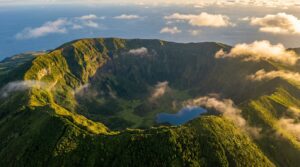
Yes — Flores is one of the most spectacular islands in the Azores. The westernmost point of Europe (1,900 km from mainland Portugal), it is a UNESCO Biosphere Reserve draped in waterfalls, volcanic crater lakes, and hydrangea-lined roads that give the island its name, “Flowers.” Its heavy rainfall — over 1,600 mm a year — keeps it the greenest island in the archipelago, rewarding hikers and nature lovers who don’t mind remote, rustic travel.
What We Used for This Guide
This guide draws from Portuguese tourism boards, travel statistics, and verified visitor experiences, all checked as of writing. Since Gunnar hasn’t been to Flores in person, we recommend checking official Azores tourism sites for the latest updates on weather, ferries, and local services.
Want to see Flores Island’s dramatic landscapes for yourself? Watch our Flores Island travel documentary in 4K Ultra HD.
Flores Island sits 1,900 kilometers west of mainland Portugal. It’s the last piece of Europe before the Atlantic swallows everything. Most people don’t know where Flores Island is. That’s the point.
Rain hammers this island constantly. The Portuguese named it “Flowers” because the hydrangeas never stop blooming. You’ll see them everywhere: blue, pink, white, lining every road and stone wall. The Flores Island UNESCO Biosphere Reserve designation came in 2009 because the ecosystem here doesn’t exist anywhere else in the Azores.
Only 3,400 people live here according to 2021 Portuguese census data. Two villages matter: Santa Cruz das Flores (the main town) and Lajes das Flores (the airport village). Everything else is farmland, volcanic craters filled with lakes, and waterfalls dropping straight into the ocean.
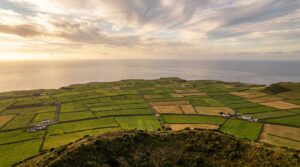
People fly here for silence. No resorts. No tour buses. The Visit Azores tourism board barely promotes it. You rent a car, drive 143 square kilometers of single-lane roads, and see maybe five other vehicles all day. Flores Island Portugal operates on a different clock than the rest of Europe.
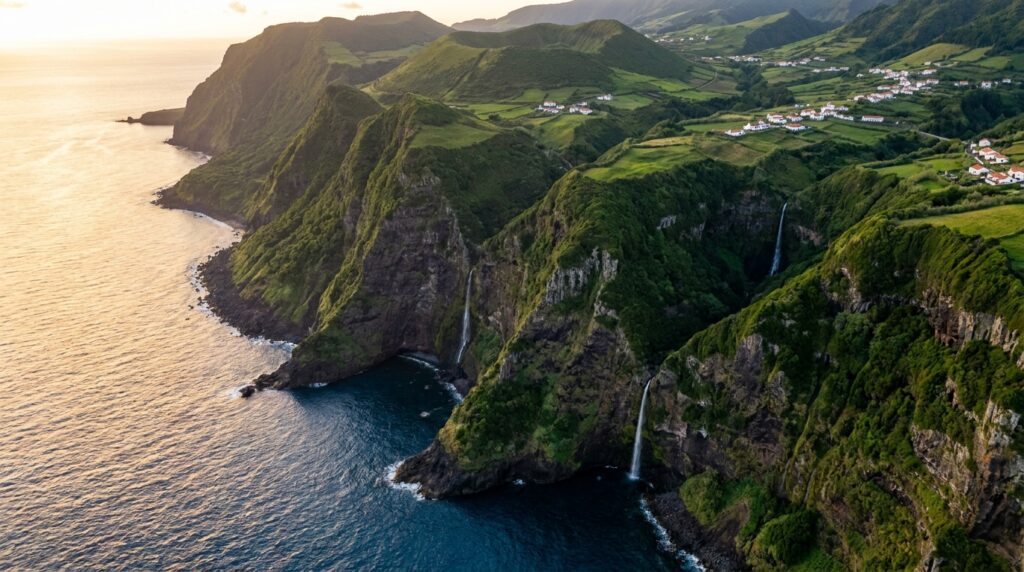
Waterfalls outnumber residents. The island’s volcanic rock channels all that rain into twenty major cascades. Some you can walk behind. Others require scrambling down cliffs. The green here isn’t normal green. It’s neon, almost artificial-looking, because nothing ever dries out.
Top Attractions and Things to Do on Flores Island
Flores Island features over 20 named waterfalls including Poço do Bacalhau at 90 meters (the Azores’ tallest), seven volcanic crater lakes, and Fajã Grande village marking Europe’s westernmost settlement at 31°16’W.
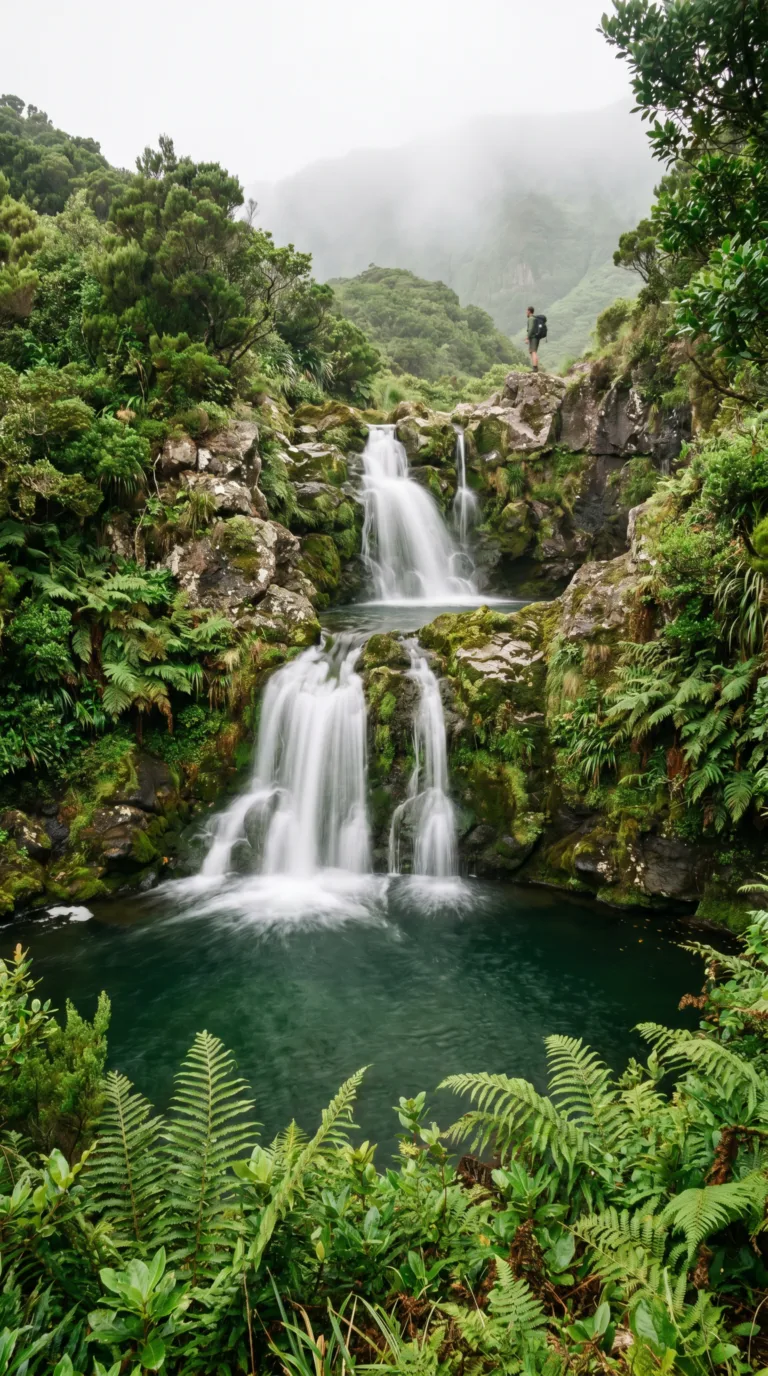
Flores earns its nickname Ilha das Flores (Island of Flowers) not from blooms but from waterfalls. The island collects more rainfall than any other spot in the Azores. That water carves through volcanic rock and drops over cliffs in every direction.
Poço da Alagoinha cascades in multiple tiers through a jungle-thick ravine. You reach it via a short trail from the main road. The falls pool at the base in water cold enough to make your teeth hurt. Poço do Bacalhau towers at 90 meters, making it the tallest waterfall in the Azores according to the Azores Tourism Board. It plunges straight down a basalt cliff face near Fajãzinha. The Ribeira Grande valley on the island’s north side holds at least six more named falls within a two-kilometer stretch.
Seven volcanic crater lakes dot the island’s interior plateau. Lagoa Funda sits deepest at 105 meters. Lagoa Rasa spreads wide and shallow, reflecting clouds on calm days. Lagoa Comprida stretches long and narrow between ridges. Lagoa Negra looks black when clouds block the sun. Hiking trails circle most of these lakes. The terrain stays muddy even in summer.
Rocha dos Bordões rises as a wall of vertical basalt columns near the island’s center. Each hexagonal pillar stands about 10 meters tall. The formation looks like organ pipes made of stone. Pull off at the marked viewpoint on the main road for photos.
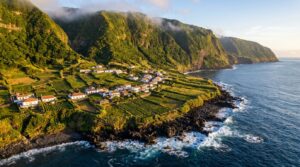
Fajã Grande claims the title of Europe’s westernmost village. The settlement sits at 31°16’W longitude, pressed between cliffs and the Atlantic. Houses cluster around a small church. Waterfalls pour directly off the cliffs behind town during heavy rain. Natural swimming pools form in the lava rock along the coast at nearby Fajãzinha. The ocean fills them at high tide. They’re too cold for most swimmers but locals use them year-round.
Flores maintains 40 kilometers of marked hiking trails according to the Flores Island municipal tourism office. Many follow old levada-style irrigation channels. The coastal path from Lajedo to Fajã Grande runs 7 kilometers along clifftops 200 meters above the sea. Crater rim walks offer views across multiple lakes. Check the Azores Trails – Official Hiking Map before heading out. Trail conditions change fast after storms.
Ponta Delgada (not the São Miguel city) sits on Flores’ southeast coast. The village keeps traditional stone houses with red tile roofs. A small harbor shelters fishing boats. One café serves espresso and pastéis de nata. This is where you see actual island life, not tourist infrastructure.
Sperm whales and dolphins pass close to shore year-round. The ocean drops to 1,000 meters depth within two kilometers of land. Scan from coastal viewpoints near Fajã Grande or the lighthouse at Ponta Delgada. Bring binoculars. Whale watching boats don’t operate regularly from Flores, so land-based spotting is your best option. For more details on visiting, check the Official Flores Island Tourism Portal.
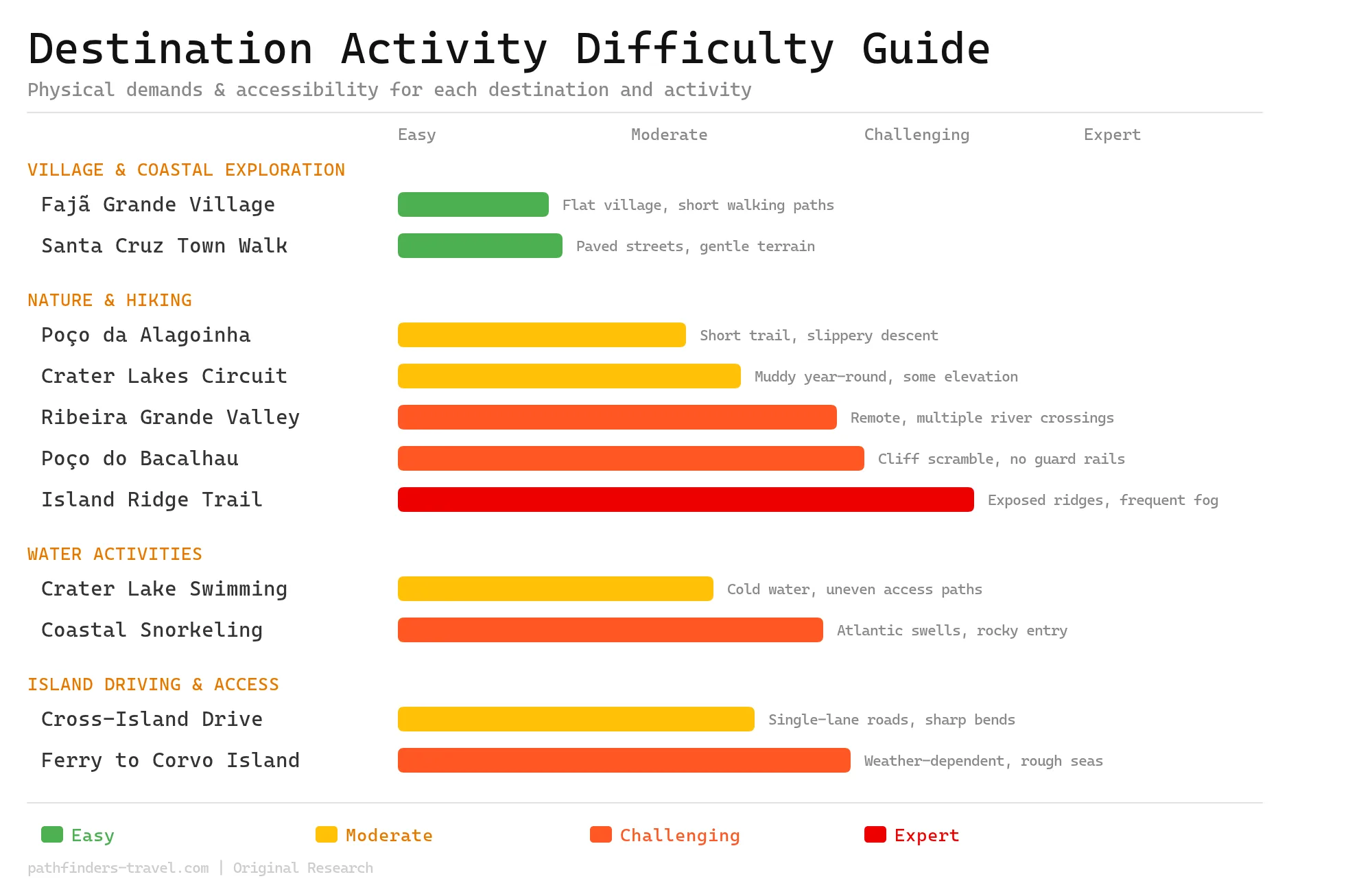
Activity Difficulty Guide
Flores Island spans a surprisingly wide difficulty range despite its small 143 km² footprint, gentle village strolls sit alongside expert-level ridge hikes shrouded in Atlantic fog. Volcanic terrain, near-constant rainfall, and limited infrastructure mean conditions can shift from moderate to expert quickly, especially in the interior. Visitors should plan for mud, mist, and minimal signage beyond the main roads.
Where to Eat: Flores Island’s Food Scene
Flores Island’s 12 restaurants and cafés serve traditional Azorean cuisine including fresh lapas (limpets), locally caught octopus, and Flores cheese, with most establishments concentrated in Santa Cruz das Flores and operating seasonally May-October.
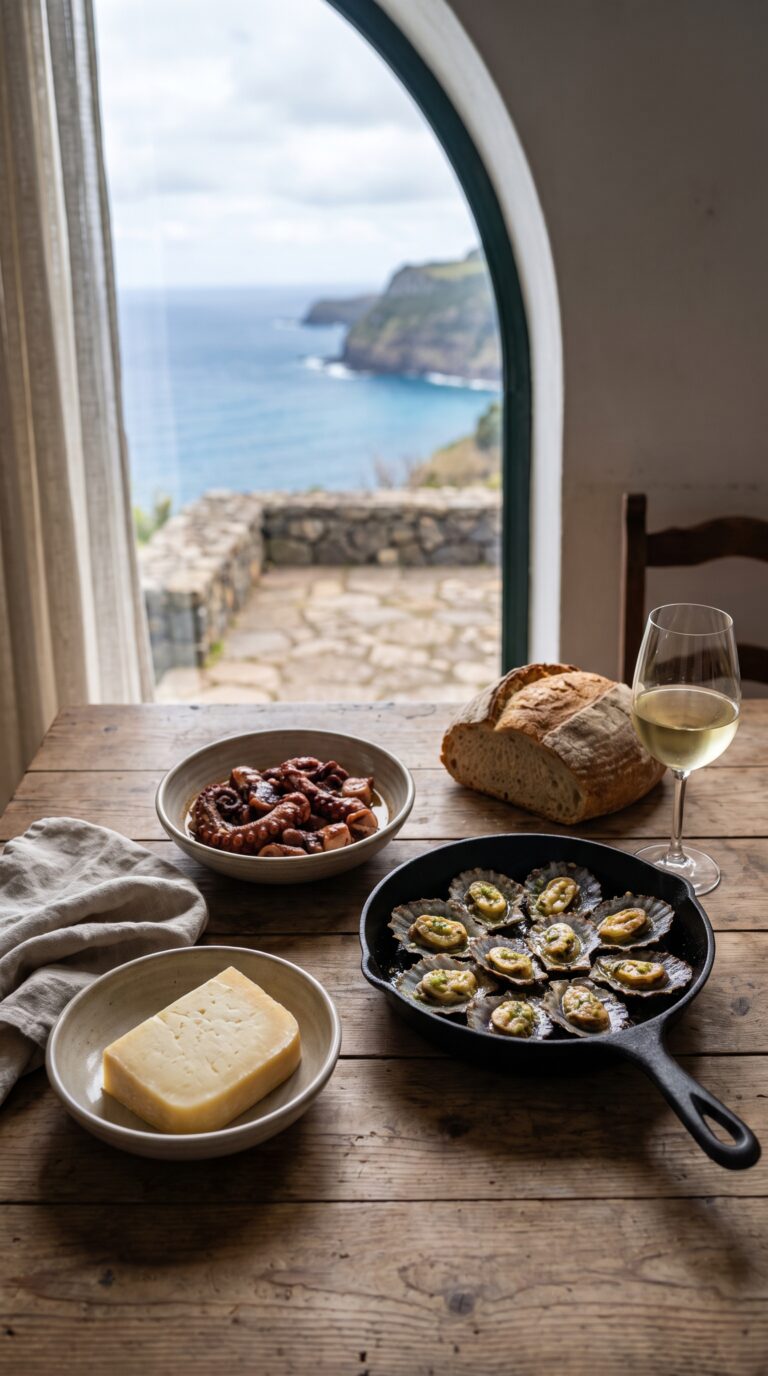
Flores has no tourist traps. The island’s 3,400 residents support a handful of family-run restaurants where menus stay honest. You’ll eat what locals eat, grilled lapas (limpets) pulled from the rocks that morning, polvo (octopus) braised until tender, and alcatra, a slow-cooked beef stew that’s been an Azorean staple for centuries. Fresh fish arrives daily at Lajes das Flores port. The catch dictates the menu.
Santa Cruz das Flores holds most dining options. Lajes das Flores and Fajã Grande each have a café or two. Expect Flores cheese, a sharp, crumbly variety made on the island, and sweet potato bread at every meal. Queijadas, small custard pastries, show up for dessert. Menus appear in Portuguese only at smaller spots. Locals speak Portuguese, so pointing works when translation apps fail. The Gastronomy of the Azores site explains traditional dishes if you want to study before ordering.
Lunch runs from noon to 2 p.m. Dinner starts around 7 p.m. Reservations matter in July and August when the island’s few tables fill fast. Half the restaurants close from November through April. Plan your meals a day ahead or you’ll end up eating bread and cheese from the grocery store.
Where to Stay on Flores Island
Flores Island offers approximately 15 small hotels and guesthouses with 200 total beds, primarily in Santa Cruz das Flores, requiring advance booking 2-3 months ahead for July-September peak season.
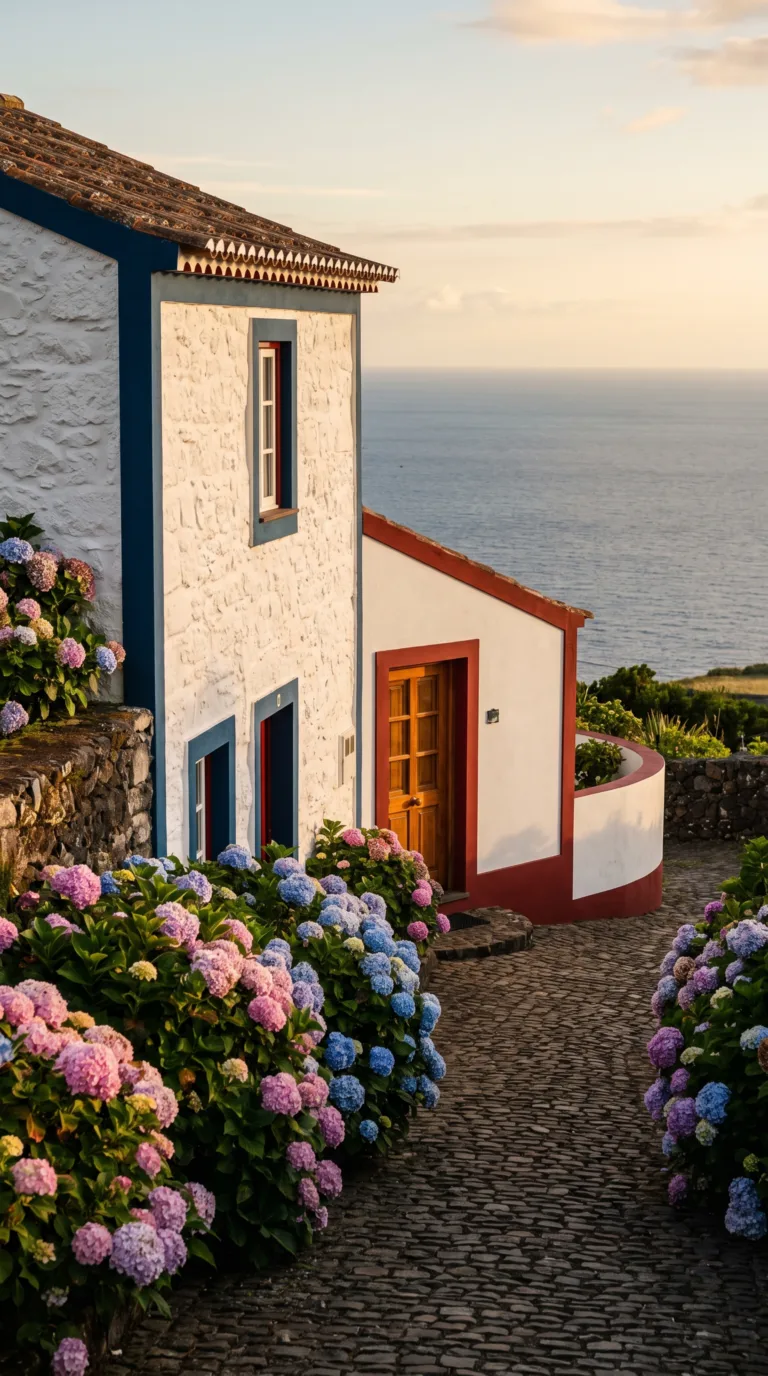
Don’t expect resorts here. Flores runs on small hotels, family guesthouses (pensões), and rural tourism properties. The island’s accommodation scene stays deliberately low-key, no chains, no large complexes. Most places hold 10 to 20 rooms max.
Santa Cruz das Flores makes the logical base. The island’s main town concentrates most lodging options within walking distance of restaurants, the marina, and the ferry terminal. You’ll stay central for exploring the entire island, nowhere takes more than 45 minutes by car.
Typical setup: family-run operations with breakfast included, simple but spotless rooms, and occasional ocean views. Some properties occupy restored traditional houses with thick walls and small windows. Others built in the 1980s offer less charm but more space. According to the Regional Directorate for Tourism – Local Accommodation, rates average €70-90 per night in peak season, cheaper than São Miguel or Terceira.
Lajes das Flores sits quieter near the airport. A handful of guesthouses serve travelers catching early flights or seeking a slower pace. Fajã Grande, the westernmost village in Europe, offers dramatic clifftop settings but fewer services. You’ll drive 30 minutes to Santa Cruz for groceries.
Book two to three months ahead for July through September. The island’s limited inventory fills fast with Portuguese families and European hikers. Vacation rentals, houses and apartments, work better for week-long stays or groups of four-plus. Check availability by April for summer travel.
Getting to and Around Flores Island
Flores Airport (FLW) receives 3-4 daily SATA Air Azores flights from Terceira and Faial during summer, with journey times of 45-60 minutes and advance car rental booking essential for the island’s 140km road network.
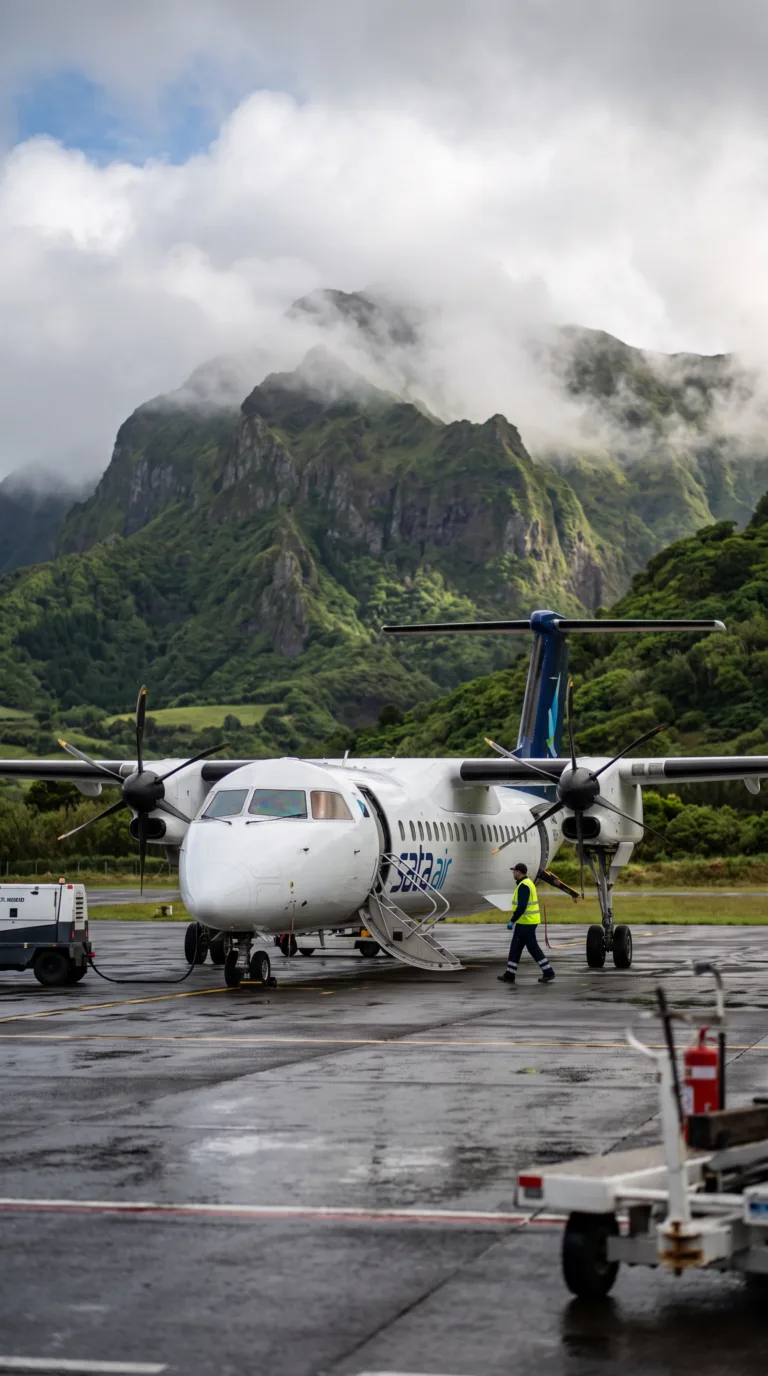
You cannot fly directly to Flores from outside the Azores. Every international traveler routes through a larger island first, usually Ponta Delgada on São Miguel or Terceira. From there, Azores Airlines operates inter-island hops to Flores Island Airport, a small single-runway facility near Santa Cruz das Flores. Flights from Terceira take 45 minutes. Flights from Faial take roughly an hour. Peak summer sees three to four daily departures. Winter cuts that to one or two.
Connection times matter. If you land in Ponta Delgada on a transatlantic flight, expect to overnight there before catching the morning Flores connection. Same-day connections exist but leave zero margin for delays. Book your inter-island leg separately through SATA Air Azores, codeshare tickets often don’t cover these routes.
A summer ferry runs from Horta on Faial to Flores, but it’s infrequent and weather-cancels often. The crossing takes six hours in good conditions. Most travelers skip it.
Once on Flores, you need a car. Public buses barely exist. Taxis charge €50-plus for a one-way trip across the island. Car rental counters sit inside Flores Airport and in Santa Cruz town. Book weeks ahead, the island has maybe 200 rental cars total, and they disappear fast in July and August. Expect to pay €40-60 per day for a compact.
The island measures 17 kilometers by 12 kilometers, but roads wind through every valley and crater. Pavement is good. Lanes are narrow. Guardrails are optional. Budget 90 minutes to drive coast to coast, not the 30 minutes the map suggests. Fuel stations operate only in Santa Cruz and Lajes, fill up before heading into the interior. You’ll cover maybe 140 kilometers of paved road if you hit every major sight, but those kilometers take time.
Travel Routes
Below are recommended travel routes with key stops and estimated drive times.
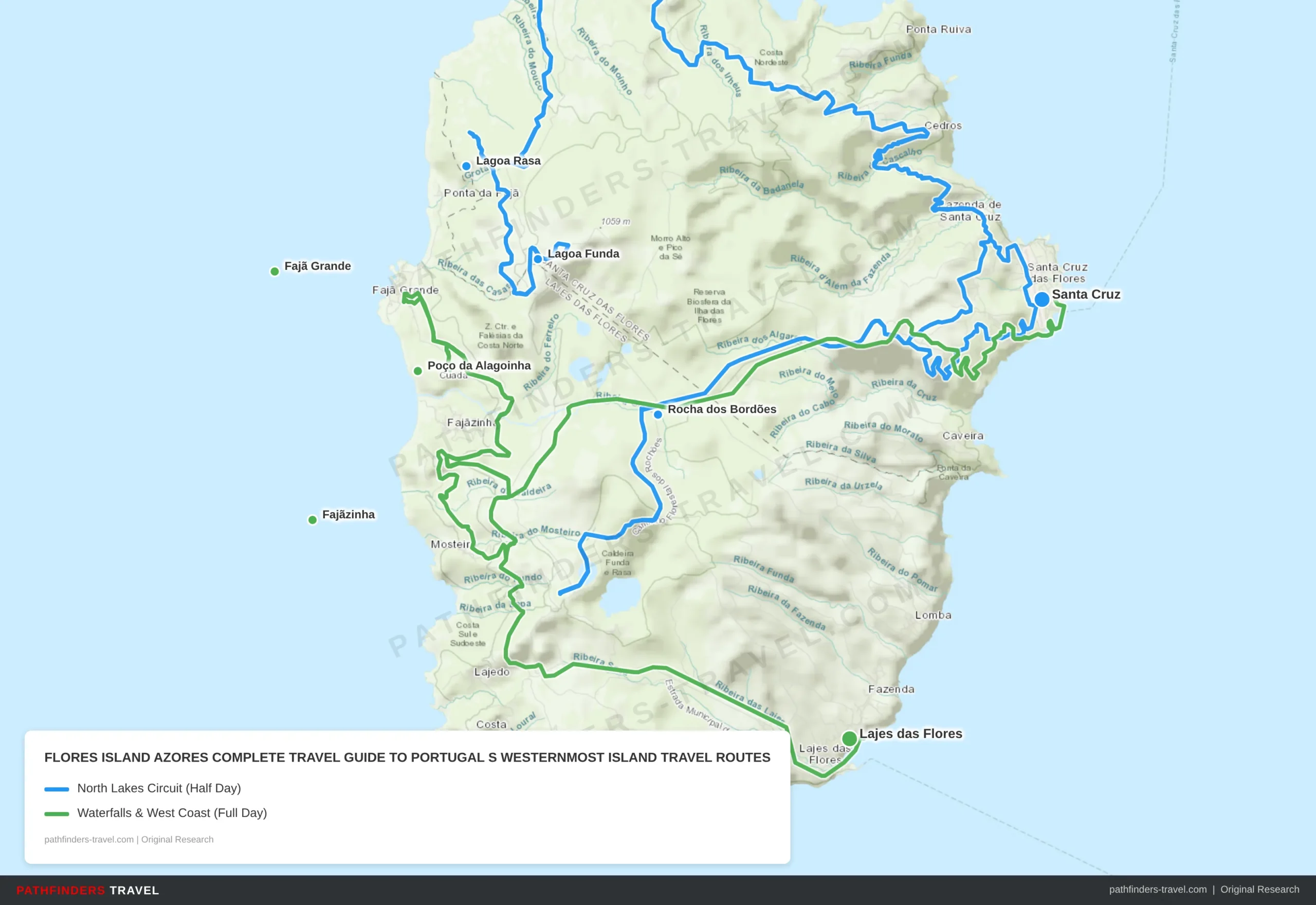
| # | Stop | Highlights | Drive Time |
|---|---|---|---|
| 1 | Santa Cruz | Main town hub; pick up supplies, grab a coffee, fill the tank before heading inland | Start |
| 2 | Rocha dos Bordões | Dramatic wall of hexagonal basalt columns ~10m tall, resembling giant organ pipes; pull-off viewpoint on main road | 15 min |
| 3 | Lagoa Rasa | Wide, shallow crater lake that mirrors clouds on calm days; short trail around the rim; beautiful panoramas | 10 min |
| 4 | Lagoa Funda | Deepest lake on Flores at 105m; Lagoa Comprida and Lagoa Negra nearby; expect muddy trails year-round | 10 min |
| 5 | Santa Cruz | Return to town for lunch; explore the harbour and local restaurants | 20 min |
| # | Stop | Highlights | Drive Time |
|---|---|---|---|
| 1 | Santa Cruz | Depart early; stop at the market for picnic supplies for the day | Start |
| 2 | Poço da Alagoinha | Multi-tiered waterfall through jungle-thick ravine; short trail from road; plunge pool at base, cold but refreshing | 25 min |
| 3 | Fajãzinha | Base for Poço do Bacalhau, the Azores’ tallest waterfall at 90m; sheer basalt cliff drop; Ribeira Grande valley holds 6+ named falls nearby | 15 min |
| 4 | Fajã Grande | Europe’s westernmost village at 31°16’W; small church, cliff-backed houses, Atlantic views, the literal edge of Europe | 10 min |
| 5 | Lajes das Flores | Airport village on south coast; end the day with dinner and views over the harbour before returning north | 30 min |
Day Trips from Flores Island
Corvo Island, located 18 kilometers north of Flores with 430 residents, offers 15-minute flights or summer boat transfers for day trips to the Azores’ smallest island featuring the 2km-wide Caldeirão volcanic crater.
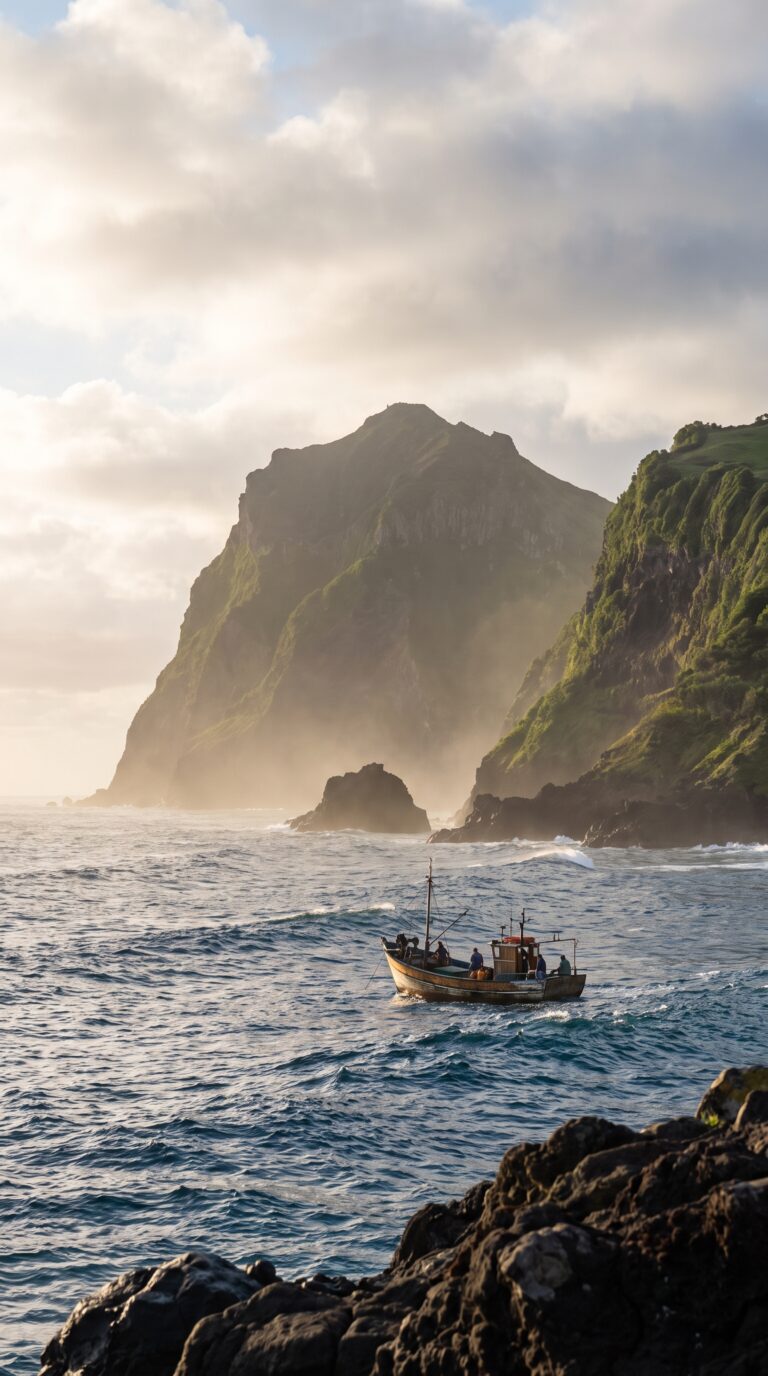
Corvo Island is your only realistic day trip option from Flores. This tiny volcanic cone rises from the Atlantic 18 kilometers north. On clear days, you can see it from Flores’ northern coast. The island holds around 400 people, all living in Vila do Corvo, the only settlement.
Getting there depends entirely on weather. SATA Air Azores runs 15-minute flights from Flores, but they book up fast. Check the SATA Air Azores Flight Schedule well in advance. Summer boat crossings operate when seas cooperate, which isn’t guaranteed. The 18-kilometer channel can turn rough without warning.
Corvo’s main attraction is Caldeirão, a volcanic crater holding two small lakes. The rim sits at 718 meters elevation. The hike up takes about an hour. Views stretch across the entire island in minutes because Corvo measures just 6.5 square kilometers. Vila do Corvo itself feels frozen in time. Stone houses line narrow streets. A single café serves locals. No hotels operate here.
Bring your own food and water. Services are minimal. The Corvo Island Municipal Website lists what’s open, which isn’t much. This is extreme isolation. That’s the point.
Boat tours around Flores itself work as backup plans. Operators run coastal trips to sea caves, cliff faces, and seabird colonies. Whale watching peaks from April through October. These trips don’t require gambling on Corvo’s weather.
Other Azores islands sit too far for day trips. São Miguel lies 360 kilometers east. Terceira and Faial require flights and overnight stays. Most visitors combine Flores with Corvo, then continue to central islands. Graciosa Island and Santa Maria Island appeal to serious island-hoppers building multi-week Azores itineraries, but neither connects directly to Flores.
Practical Tips for Visiting Flores Island
Planning Tip
Flores Island receives 1,600mm annual rainfall (the Azores’ highest) with June-September offering the driest conditions at 18-24°C, though waterproof gear remains essential year-round for the island’s 25+ hiking trails.
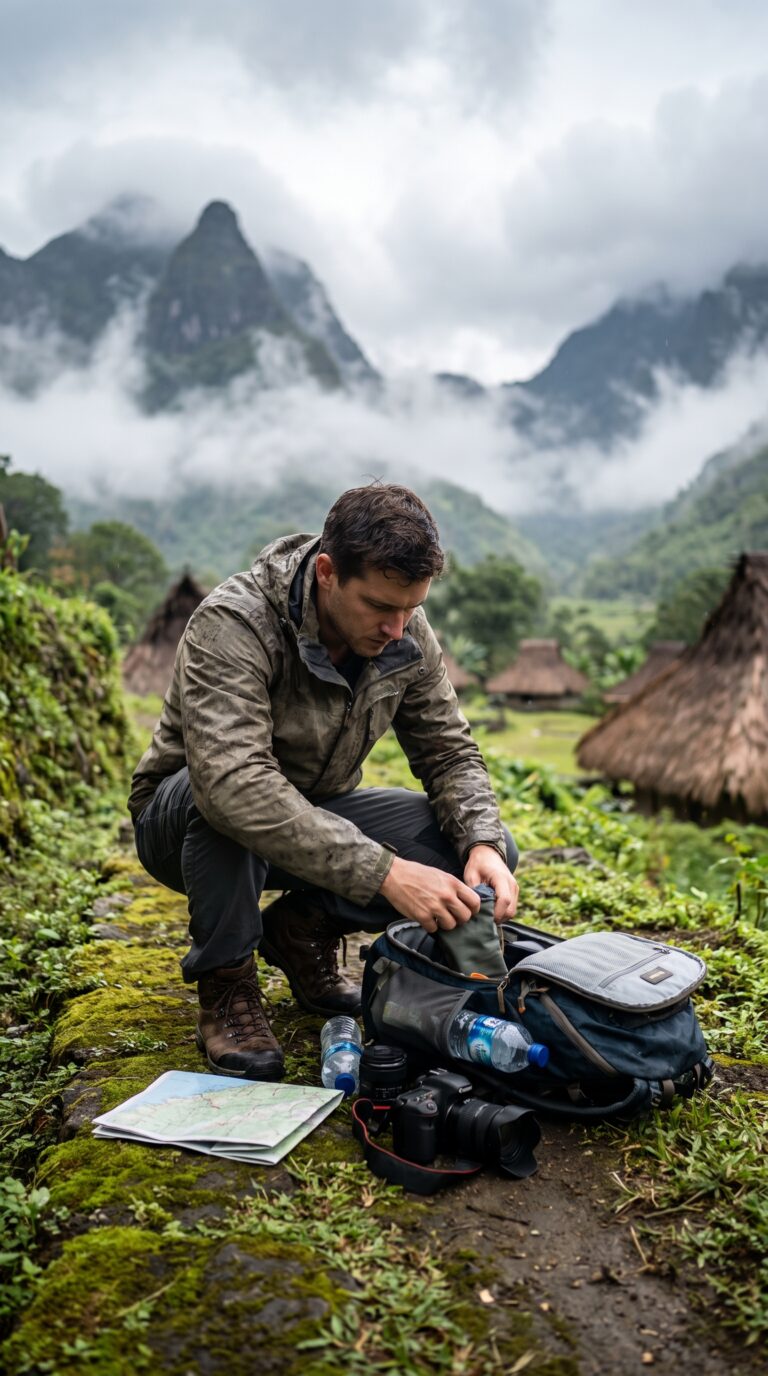
Flores Island Azores weather defines every trip here. This is the wettest island in the entire archipelago. Rain falls year-round. The Portuguese meteorological institute (IPMA) records show Flores averages 1,600mm of annual precipitation, significantly higher than Ponta Delgada’s 1,000mm. You will get wet.
June through September brings the warmest, driest weather. Temperatures range from 18-24°C. But “driest” is relative. Pack a waterproof jacket no matter what month you visit. Trails turn to mud after storms. Waterfalls swell to maximum power. This is not a flaw, it’s what makes Flores green.
Bring layers. Weather changes in minutes. A sunny morning becomes a foggy afternoon. Sturdy hiking boots are mandatory. Quick-dry clothing makes sense. Check the IPMA 10-day Forecast before heading to remote trails.
Practical realities: ATMs exist only in Santa Cruz das Flores and Lajes das Flores. Bring cash. Shops are sparse outside these towns. Stock up on snacks and supplies when you can. Portuguese is the primary language. English appears in hotels but rarely elsewhere. Learn basic phrases.
Mobile coverage works in towns. It drops in valleys and coastal areas. Ocean currents around Flores are dangerously strong. Swim only at designated beaches. Trails get slippery when wet, which is often. Stay on marked paths to protect fragile ecosystems. Support local businesses. This island runs on tourism but hasn’t been ruined by it yet.
Best Time to Visit
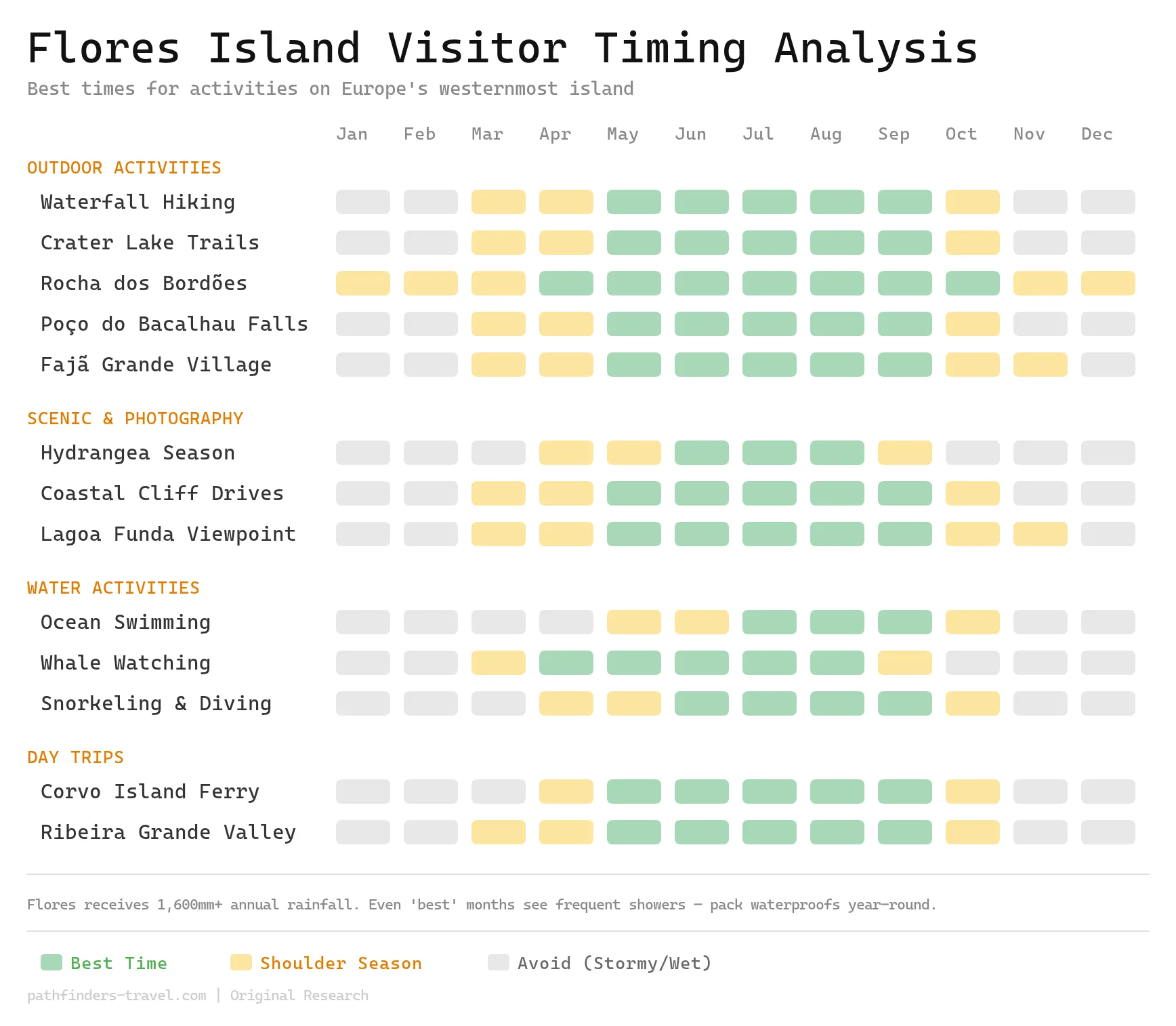
Flores Island’s extreme rainfall, highest in the Azores, dictates everything. May through September offers the best combination of stable weather, blooming hydrangeas, and accessible trails, with July and August being peak season despite the island rarely feeling crowded. Winter months bring frequent Atlantic storms that ground flights and cancel ferries, making November through February a genuine avoid period for most visitors.
Frequently Asked Questions
What are the best waterfalls on Flores Island?
Flores is famous for its waterfalls. The most spectacular is the Poço da Alagoinha (Poço da Ribeira do Ferreiro), where more than a dozen thin cascades pour down a moss-covered cliff into a lagoon. The Poço do Bacalhau near Fajã Grande drops about 90 metres beside a swimmable pool, and countless roadside falls appear after rain across the island’s west coast. Late spring through early autumn offers the best trail access.
What language is spoken on Flores Island?
Portuguese is the primary language on Flores. English is rare outside a few hotel receptions and younger residents who speak basic phrases. Learn key Portuguese terms for ordering food and asking directions. Flores is more linguistically isolated than São Miguel or Terceira. Download a translation app before arrival, you’ll use it daily in shops and restaurants.
How many days do I need in Flores?
Plan 3-4 days minimum to cover the main waterfalls and crater lakes without rushing. Five to seven days lets you hike all major trails, visit Corvo, and adjust for weather delays. A typical itinerary: Day 1 explores Santa Cruz, Day 2 hits western waterfalls and Fajã Grande, Day 3 covers Rocha dos Bordões and the crater lakes, Day 4 takes the Corvo day trip. Extra days matter here. Fog can close trails. Flights get canceled. Most travelers spend 4-5 days on Flores as part of a 10-14 day Azores island-hopping trip.
How do I get to Flores Island, Portugal?
Fly into Flores Airport (FLW) on SATA Air Azores inter-island flights from Terceira or Faial. International travelers route through Ponta Delgada or Lisbon, connect to Terceira or Faial, then catch the final leg to Flores. A summer ferry runs from Faial but operates infrequently and depends on sea conditions. No direct international flights exist. Book inter-island flights early, small aircraft fill fast from July through September.
What is Flores Island known for?
Flores is known as the westernmost land in Europe and one of the greenest, wildest corners of the Azores. Its calling cards are dramatic waterfalls, the twin crater lakes of Lagoa Funda and Lagoa Comprida, the hydrangeas that bloom along every road, and cliff-backed villages like Fajã Grande and Fajãzinha. Designated a UNESCO Biosphere Reserve, it draws hikers, photographers, and travellers seeking genuine isolation.