Estimated reading time: 11 minutes
Last updated: 4 November 2026
Table of Contents
- Can You Walk Around Kinderdijk for Free?
- Top Things to Do at the Kinderdijk Windmills
- Getting to Kinderdijk from Amsterdam or Rotterdam
- Kinderdijk Tickets and Entry Prices
- Zaanse Schans or Kinderdijk, and Other Nearby Stops
- Best Time to Visit Kinderdijk
- Frequently Asked Questions
Can You Walk Around Kinderdijk for Free?
Yes. The public dike paths at Kinderdijk are free to walk or cycle year-round, and all 19 windmills are visible from them. A paid day ticket adds the two museum mills, the Wisboom pumping station, the visitor center film, and the canal hop-on hop-off boat. Kinderdijk sits in the Alblasserwaard polder, 15 kilometers east of Rotterdam.
How This Guide Was Researched
This guide was compiled from travel documentaries, verified tourism sources, and community traveler feedback. Prices and operational details were confirmed at the time of writing. We recommend checking official sources for the latest information before your trip.
Want to see this for yourself? Watch the full video in 4K.
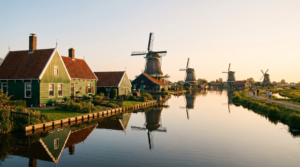
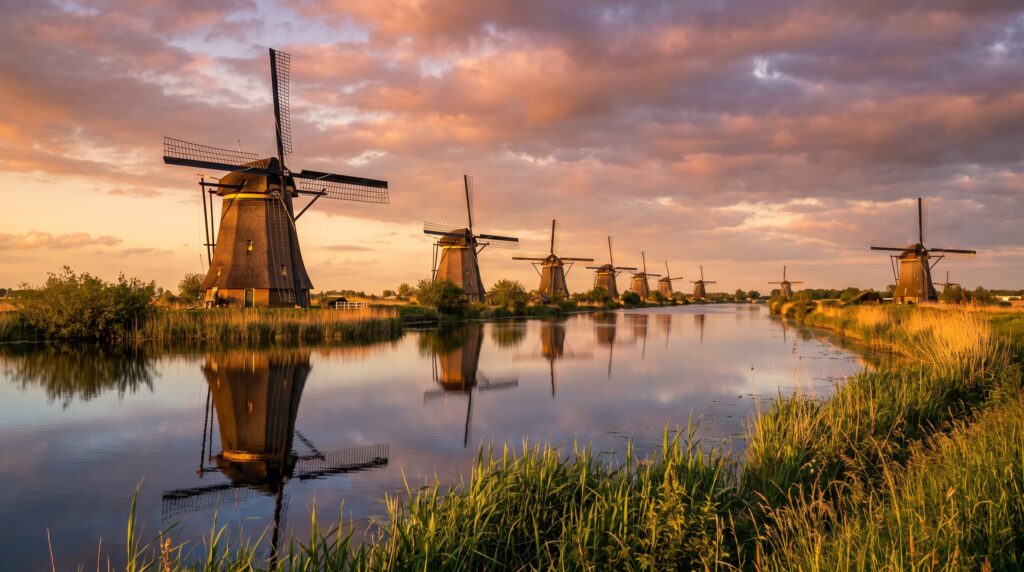
Kinderdijk holds the largest group of old windmills in the Netherlands, and it’s been on the UNESCO World Heritage listing since 1997. Nineteen mills from the 1730s, still standing in two neat rows along the canals. The name means “children’s dike” in Dutch. It comes from a legend about the 1421 Saint Elizabeth flood, when a wooden cradle supposedly floated onto the dike with a baby inside, safe and dry.
The setting is a drained polder between Rotterdam and Dordrecht in South Holland, roughly three meters below sea level. Water gets pumped out here. Constantly. That’s the whole reason the mills exist.
One warning before you plan. River cruise ships dock right at the site, so summer middays get packed with tour groups moving in waves. Come before 10 am or after 4 pm and you’ll share the paths with cyclists and herons instead. Check current opening hours on the official Kinderdijk website before you go.
Top Things to Do at the Kinderdijk Windmills
Kinderdijk has 19 working windmills from the 1730s, two museum mills open to visitors, a hop-on hop-off canal boat, and free walking and cycling paths along the full mill rows.
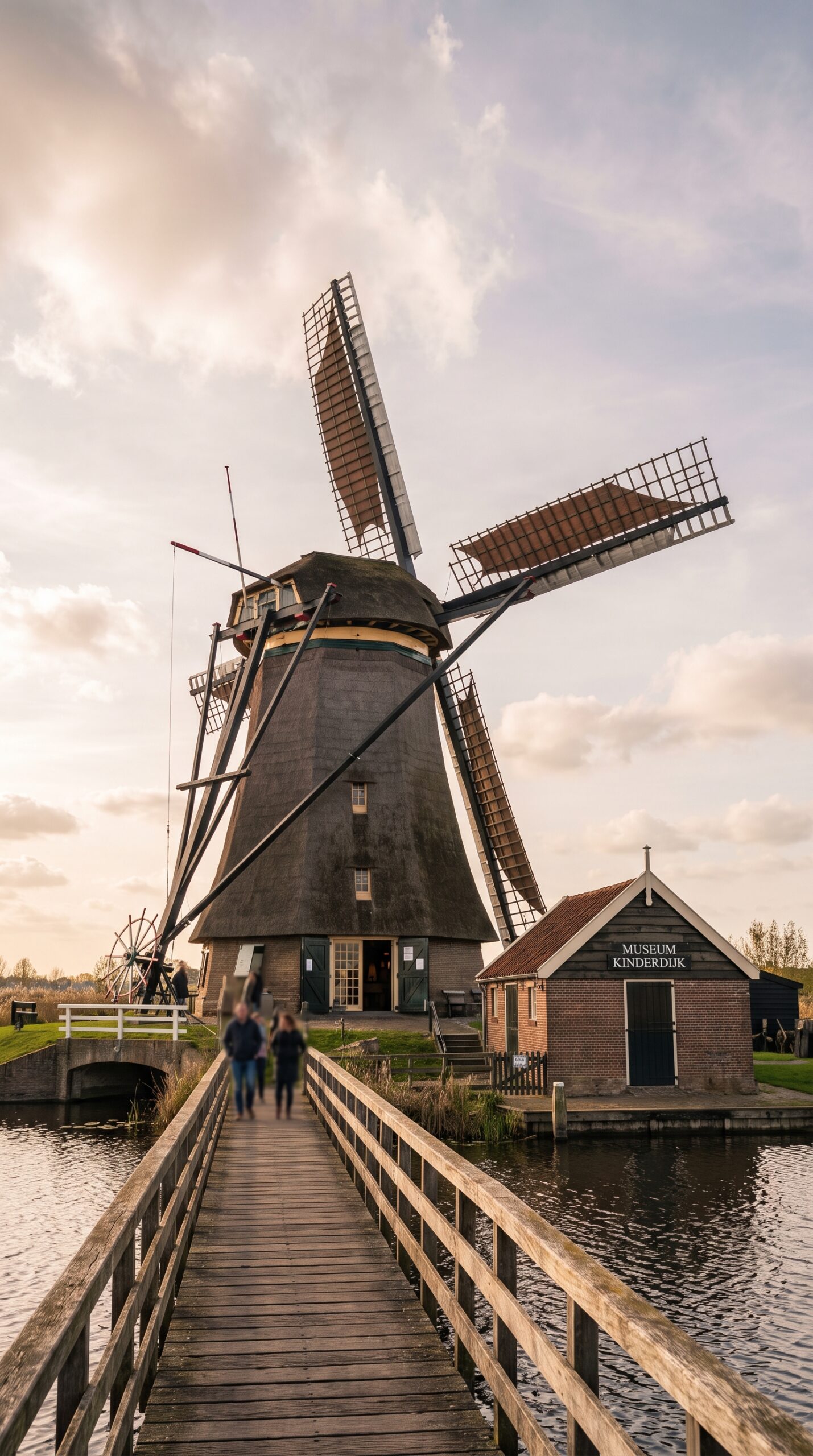
Start on foot. The dike path runs straight between the two mill rows, and you can cover the whole stretch in about 90 minutes at a slow pace with photo stops. Cycling is faster and more fun. Bike rental is available near the entrance and in Alblasserdam, and the flat polder makes for the easiest riding you’ll find anywhere in the Netherlands.
Two mills are open as museum mills, and they’re the reason a ticket is worth buying. The Nederwaard mill dates from 1738 and still has the cramped box beds, tiny kitchen, and steep ladders that miller families used until the 1950s. Picture eight kids in a space smaller than most studio apartments. The Blokweer mill nearby runs as a living museum, with the miller’s yard, animals, and gear laid out the way it worked a century ago.
Kinderdijk windmills tours by water give you the angle the walkers miss. The hop-on hop-off boat runs the length of the canal and stops near both museum mills, so you can ride out and walk back. Guided boat trips take about half an hour and pass close enough to hear the sails creak when the wind is up. Details and times are on the Kinderdijk ticket page.
Don’t skip the Wisboom pumping station. It looks dull from outside. Inside, it explains the thing that makes this place matter: the polder sits about three meters below sea level, and these 19 mills once lifted the water out, stage by stage, into the river Lek. The visitor center film covers the 1421 flood and the pumping system in 15 minutes, and it’s genuinely useful context before you walk the rows.
Photographers should head for the second bridge on the main path. From there the Overwaard mills line up in a single row across the reeds, the shot you’ve seen on every Dutch calendar. Sunrise beats sunset here since the light hits the mill faces from the east and the paths are nearly empty.
Fair warning about the weather. This is an open polder with almost no shade or shelter, so the wind cuts hard and rain arrives sideways. Pack a windproof layer even in July. On hot days, bring water, because the one cafe sits back at the entrance.
Getting to Kinderdijk from Amsterdam or Rotterdam
The fastest public route to Kinderdijk runs from Rotterdam by Waterbus in about 30 to 40 minutes, while the trip from Amsterdam takes 1.5 to 2 hours by train plus ferry.
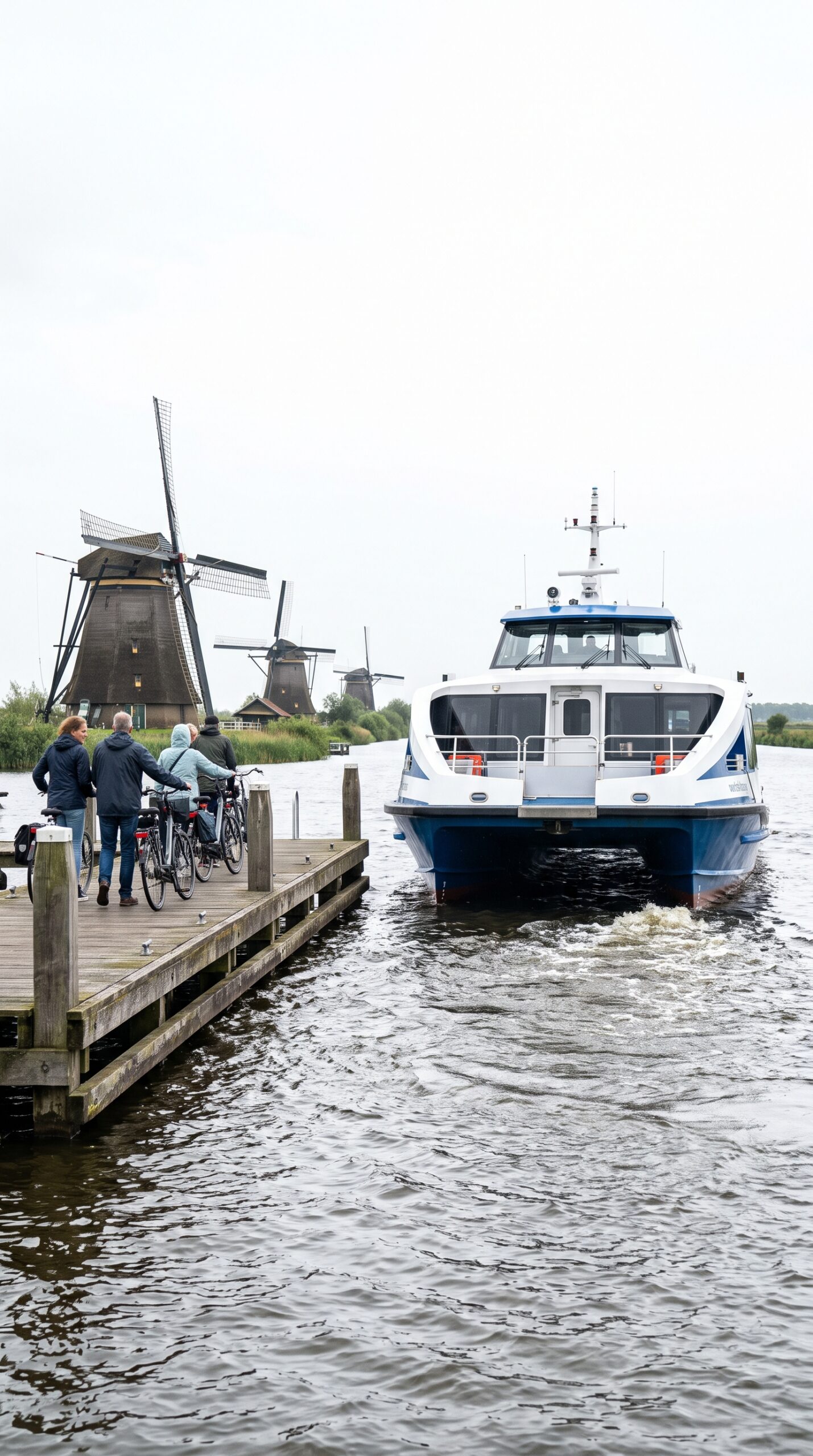
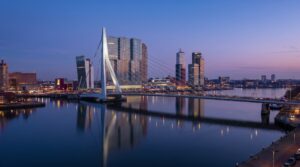
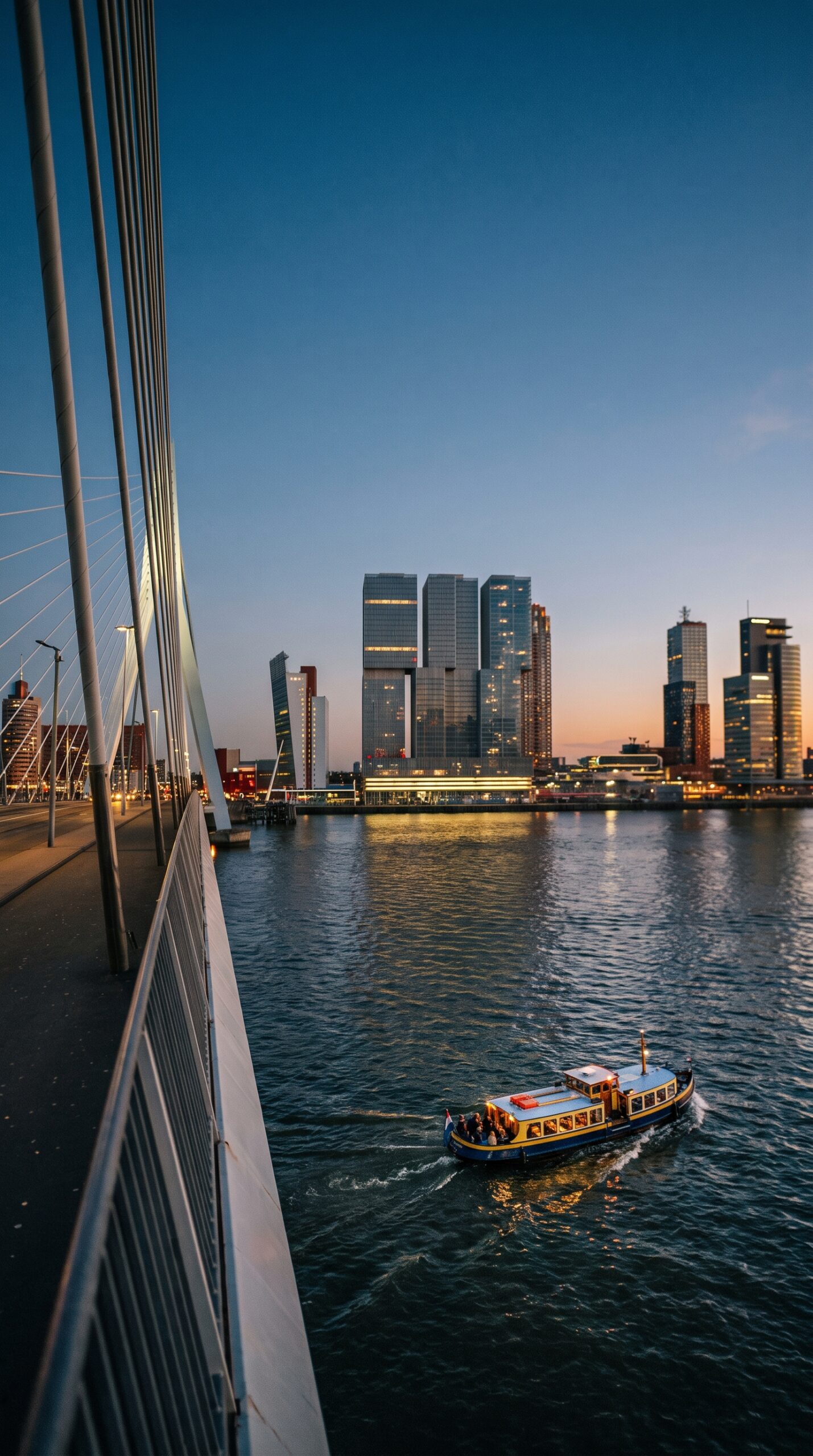
Rotterdam to Kinderdijk is the easy one. Catch the Waterbus at Erasmusbrug, ride to Ridderkerk De Schans, then hop on the small Driehoeksveer ferry across to the mill park. The whole trip takes 30 to 40 minutes, bikes travel free, and the river views beat any bus window. Check the Waterbus timetable before you go, because the last boat back leaves early in the evening. A sunset visit can strand you if you don’t plan the return.
Coming from Amsterdam takes more effort. Take the Intercity Direct to Rotterdam Centraal, about 40 minutes, then walk or take the metro to the Waterbus stop. Plan the rail leg on the NS journey planner. All in, the trip from Amsterdam runs 1.5 to 2 hours each way. Guided day tours by coach or boat also leave Amsterdam daily in season, and they make sense if you’d rather not juggle connections. There’s no direct scheduled boat from Amsterdam to Kinderdijk, despite what some old maps suggest.
On a budget from Rotterdam? Metro to Kralingse Zoom, then bus 489 toward Alblasserdam. Slower, but a couple of euro cheaper.
Drivers should arrive before 10 am in July and August. Parking is a fixed day rate, the lot fills by late morning, and overflow parking adds a 15 minute walk.
Travel Routes
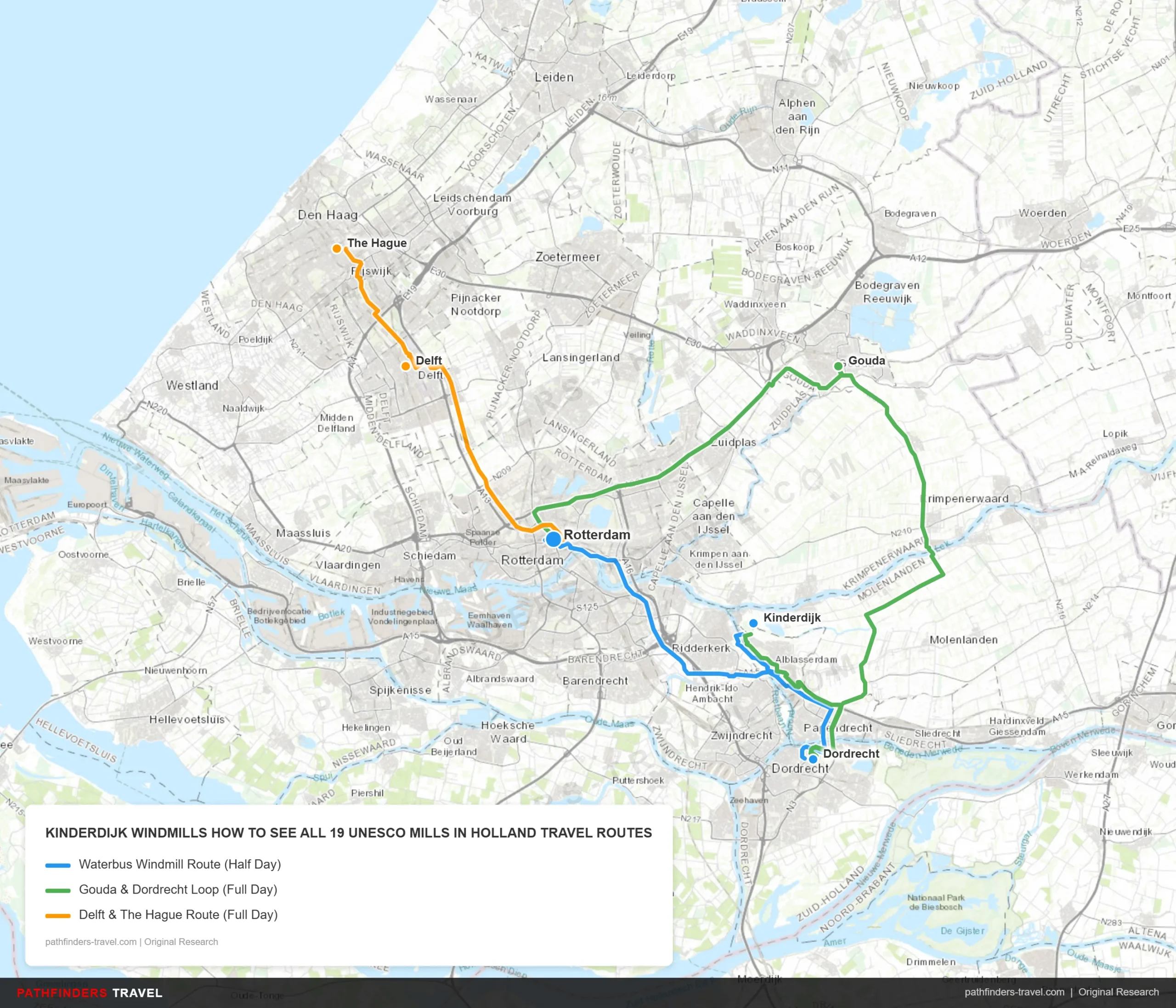
Below are recommended travel routes with key stops and estimated drive times.
| # | Stop | Highlights | Drive Time |
|---|---|---|---|
| 1 | Rotterdam | Depart from Erasmusbrug pier; Markthal and Cube Houses before or after | Start |
| 2 | Kinderdijk | 19 UNESCO windmills, museum mills, hop-on hop-off boat | 30m by Waterbus |
| 3 | Dordrecht | Oldest city in Holland, quiet canals, historic harbor | 20m by Waterbus |
| # | Stop | Highlights | Drive Time |
|---|---|---|---|
| 1 | Rotterdam | Hub city with direct trains in every direction | Start |
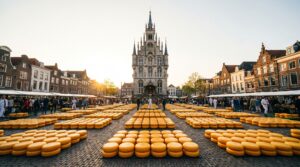
| 2 | Gouda | Thursday cheese market April to August, canal-ringed old town | 25m by train |
| 3 | Dordrecht | Riverside old town, Grote Kerk tower views | 30m by train |
| 4 | Kinderdijk | End the day with late-afternoon light on the mill rows | 20m by ferry |
| # | Stop | Highlights | Drive Time |
|---|---|---|---|
| 1 | Rotterdam | Start from Rotterdam Centraal | Start |
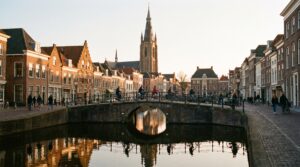
| 2 | Delft | Canals, Markt square, Delft Blue pottery workshops | 15m by train |
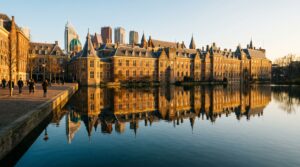
| 3 | The Hague | Mauritshuis, Binnenhof, Scheveningen beach | 15m by train |
Kinderdijk Tickets and Entry Prices
A Kinderdijk day ticket costs around 21 euro for adults and 9 euro for children aged 4 to 12, with cheaper weekday and online rates, covering both museum mills, the Wisboom pumping station, the visitor center film, and the hop-on hop-off boat.
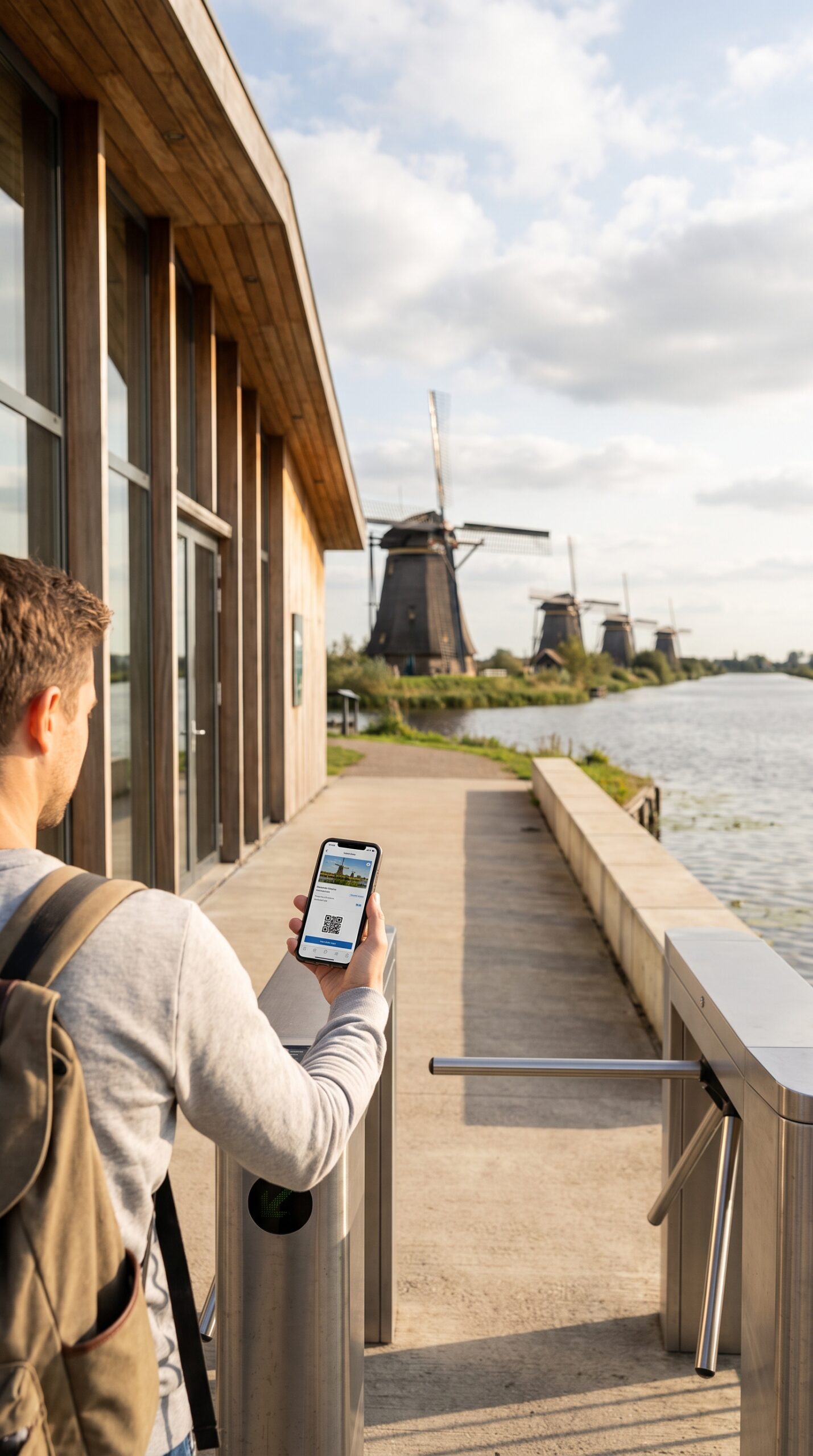
Here’s what your money buys. The day ticket opens both museum mills, the Wisboom pumping station, the film at the visitor center, and unlimited rides on the hop-on hop-off boat. Kids under 4 go free. Booking through the official Kinderdijk ticket shop saves a few euro over the gate price and skips the ticket line, which matters on cruise-ship days.
And what stays free? A lot, honestly. The full length of the public dike paths costs nothing, and every one of the 19 mills is visible from them. Plenty of visitors walk the rows, take their photos, and never buy a ticket at all. You’ll only miss the mill interiors and the boat.
A few ways to save. Rotterdampas holders get a discount, and some Dutch city cards include reduced entry, so check yours before paying full price. Families do better with the online family rate than with single tickets.
Budget for food too. The cafe at the entrance is the only place to eat on site, the lunch queue stretches long between noon and 2 pm, and a sandwich runs more than it should. Pack a picnic for the dike instead, or eat in Alblasserdam where prices drop. Kinderdijk lunch options are that thin, one cafe, full stop.
Zaanse Schans or Kinderdijk, and Other Nearby Stops
Kinderdijk has 19 original windmills in their working landscape with fewer crowds, while Zaanse Schans sits 20 minutes from Amsterdam and draws far bigger crowds to its relocated mills and craft shops.
The Zaanse Schans vs Kinderdijk question comes up constantly, so here’s a straight answer. Zaanse Schans wins on convenience. It sits a short train ride from Amsterdam, packs in craft demos, a cheese shop, and clog carving, and works well as a half day with kids. The catch: its mills were moved there in the 20th century to build an open-air museum, and the paths get shoulder to shoulder by 11 am. Kinderdijk’s 19 mills stand where they were built in the 1730s, still doing their original job in a quiet polder. Photographers and anyone allergic to crowds should pick Kinderdijk. Short on time near Amsterdam? Zaanse Schans.
Pairing Kinderdijk with a city makes the day trip stronger. Rotterdam is the obvious base, 30 minutes away by Waterbus, with the Markthal and Cube Houses filling the afternoon; trip ideas are on Rotterdam tourist information. Historic Dordrecht sits just across the river from the mills and most visitors skip it, which is exactly why it’s pleasant.
Going further, Delft and Gouda are each under 40 minutes from Rotterdam by train. Delft brings canals and the blue pottery workshops. Gouda does the cheese market on Thursday mornings from April to August. The Hague rounds out a same-day add-on, 25 minutes by train, for the Mauritshuis and the beach at Scheveningen.
Best Time to Visit Kinderdijk
The best months to visit Kinderdijk are April to June and September to October, with mild weather, soft light, and far fewer cruise groups than July and August.
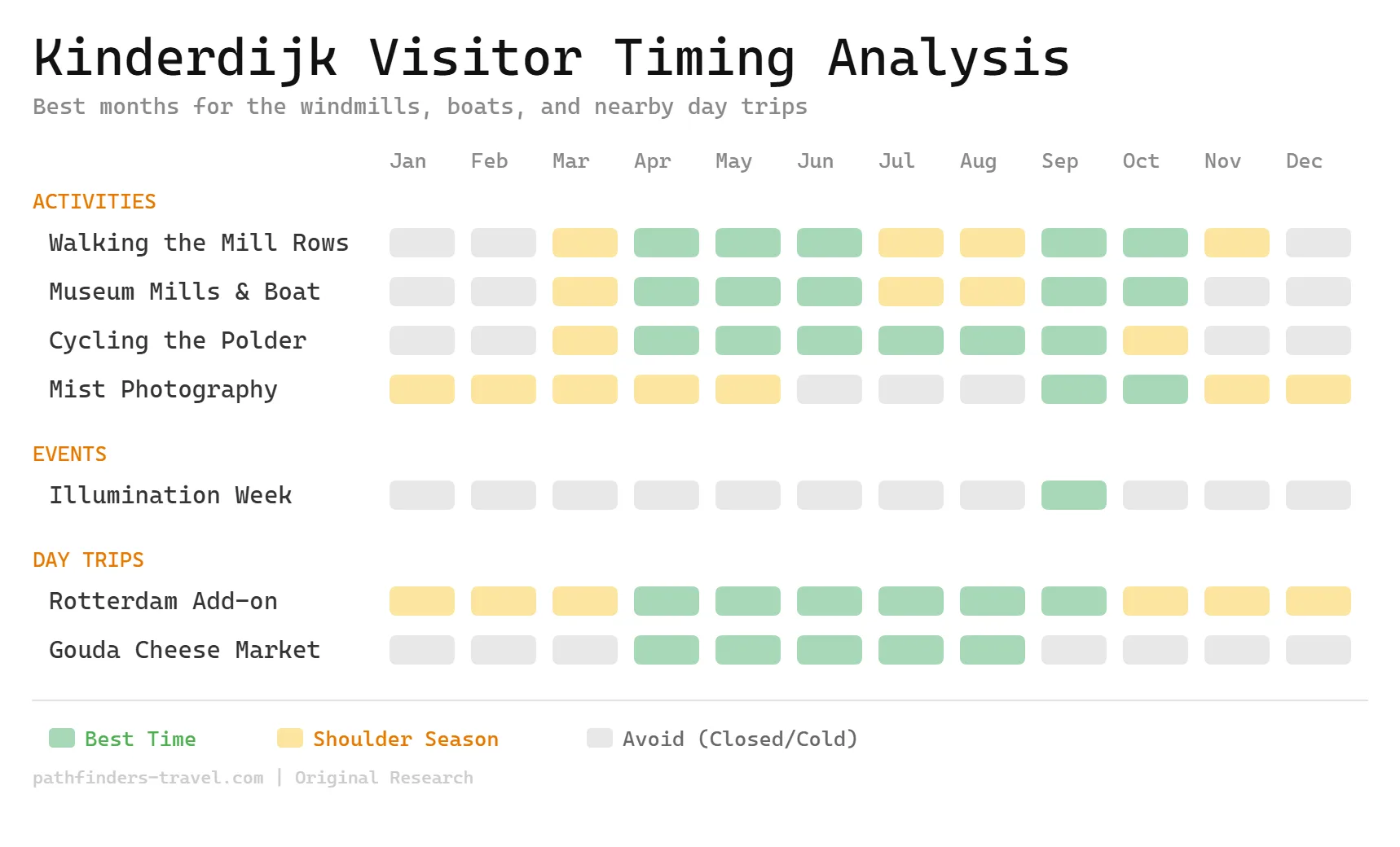
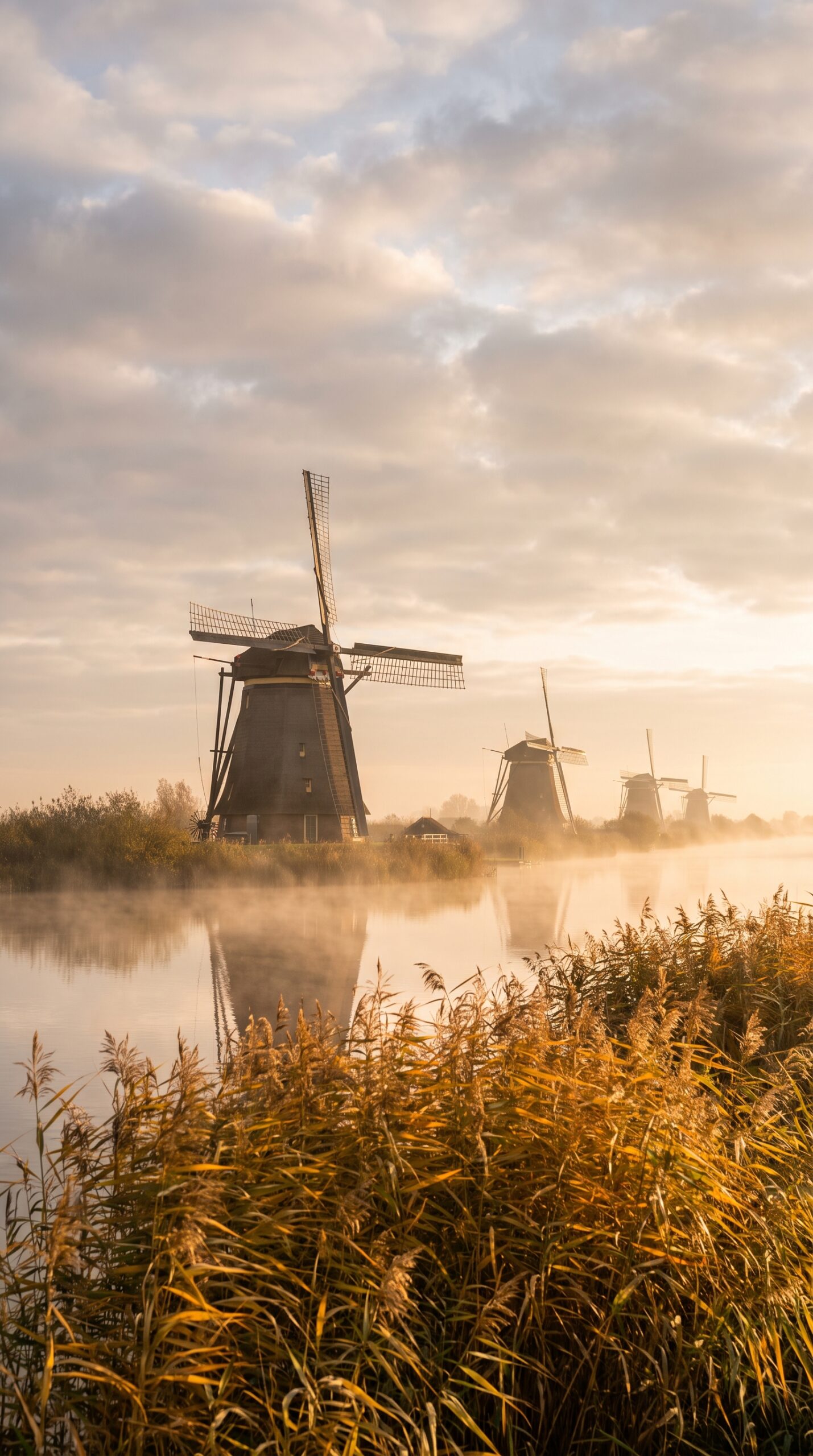
Kinderdijk weather follows the standard Dutch script. April to June brings 12 to 20 C days, green reeds, and nesting birds along the canals. July and August run warmest, but that’s also peak river-cruise season, and the paths fill fast between 10 am and 4 pm. September and October are the photographers’ pick. Morning mist hangs over the water, the reeds turn gold, and the low sun lights the mill faces for hours.
Winter is a gamble that sometimes pays off big. The boat stops running and the museum hours shrink, but a hard freeze turns the canals into a skating scene straight out of a 17th-century painting. It happens maybe once every few years. Dress for wind either way, the open polder makes every forecast feel 5 degrees colder, and from October to March a waterproof layer isn’t optional.
Two dates worth planning around. On Windmill Day, the first Saturday of each month, the mills run their sails together from 1 pm to 5:30 pm. Illumination Week in September floodlights all 19 mills after dark, and the evening cruises sell out weeks ahead. Dates are listed on the Kinderdijk events calendar.
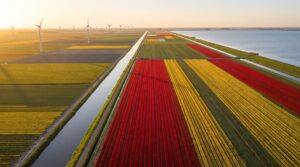
One expectation to correct: Kinderdijk tulips barely exist. Spring color here means small plantings near the entrance, not the striped fields you’ve seen online. Those grow near Lisse, 60 kilometers north.
Frequently Asked Questions
What does Kinderdijk mean in English?
Kinderdijk is Dutch for “children’s dike.” The name comes from a legend about the 1421 Saint Elizabeth flood, when a wooden cradle floated onto the dike carrying a sleeping baby, kept dry by a cat balancing the cradle. The story stuck, and the village took its name from it.
How much time do I need at Kinderdijk?
Plan about three hours to see Kinderdijk properly, including the paths, both museum mills, the pumping station, and a boat ride. A quick photo walk from the entrance to the first mills and back takes around one hour. Add extra time in summer, when the boat and museum mills draw queues.
Why are the windmills of Kinderdijk famous?
Kinderdijk is famous as the largest concentration of old windmills in the Netherlands, 19 of them built in the 1730s and standing where they were raised, which earned the site UNESCO World Heritage status in 1997. The mills drained the Alblasserwaard polder, which lies about three meters below sea level.
Where is Kinderdijk?
Kinderdijk sits in the Alblasserwaard polder in South Holland, about 15 kilometers east of Rotterdam near the village of Alblasserdam. Amsterdam lies roughly 90 kilometers north. The mills stand between the rivers Lek and Noord, in a stretch of drained farmland about three meters below sea level.
How do you get to Kinderdijk from Amsterdam?
Take the train to Rotterdam Centraal, then the Waterbus to the mills, about 1.5 to 2 hours in total. The Intercity Direct covers Amsterdam to Rotterdam in around 40 minutes. Direct coach and boat day tours also run from Amsterdam in season and remove the transfers.