
Estimated reading time: 18 minutes
Last updated: 9 November 2026
Table of Contents
- What Are the Best Places to Travel to in Japan?
- Japan Travel Visa Requirements
- Best Season to Visit Japan
- Japan Travel Budget and Daily Costs
- Tokyo and the Kanto Region
- Mount Fuji, Hakone and Yamanashi
- Kyoto, Nara and Osaka: The Kansai Triangle
- Hiroshima and Western Japan
- Hokkaido and the Okinawa Islands
- Japan Travel Itineraries: 7, 10 and 14 Days
- Japan Travel Essentials and Packing
- Frequently Asked Questions
What Are the Best Places to Travel to in Japan?
The best places to travel to in Japan are Tokyo, Kyoto, Osaka, Mount Fuji, and Hiroshima. The classic Golden Route links Tokyo with Hakone, Kyoto, Nara, and Osaka by bullet train in under 3 hours per hop. Add Hokkaido for powder snow, Kamakura for seaside temples, and Kabira Bay on Ishigaki Island for coral reefs, and you cover 18 destinations across four climate zones.
How This Guide Was Researched
This guide was compiled from travel documentaries, verified tourism sources, and community traveler feedback. Prices and operational details were confirmed at the time of writing. We recommend checking official sources for the latest information before your trip.
Want to see this for yourself? Watch the full video in 4K.
Japan logged 3.5 million foreign arrivals in May 2026 alone, according to the Japan National Tourism Organization. The crowds have a point. Few countries put neon cities, mountain shrines, and coral reefs on the same rail and flight network.
All 18 spots are covered here: six around Tokyo and the Kanto plain, the Fuji and Hakone mountain belt, the Kansai triangle of Kyoto, Nara and Osaka, then Hiroshima’s floating shrine, Sapporo’s snow country, and the reefs off Ishigaki. Fair warning: July and August get sticky on the main islands, so timing matters.
The practical stuff comes first. You’ll get the visa rules, what a day really costs, and which season fits your plans, plus tested itineraries for 7, 10 and 14 days. If you’d rather watch before you plan, our Wonders of Japan documentary on the Pathfinders Travel YouTube channel films every one of these places in 4K.
Japan Travel Visa Requirements
Citizens of the US, UK, EU, Canada, and Australia can enter Japan visa-free for up to 90 days of tourism with a passport valid for the length of stay.
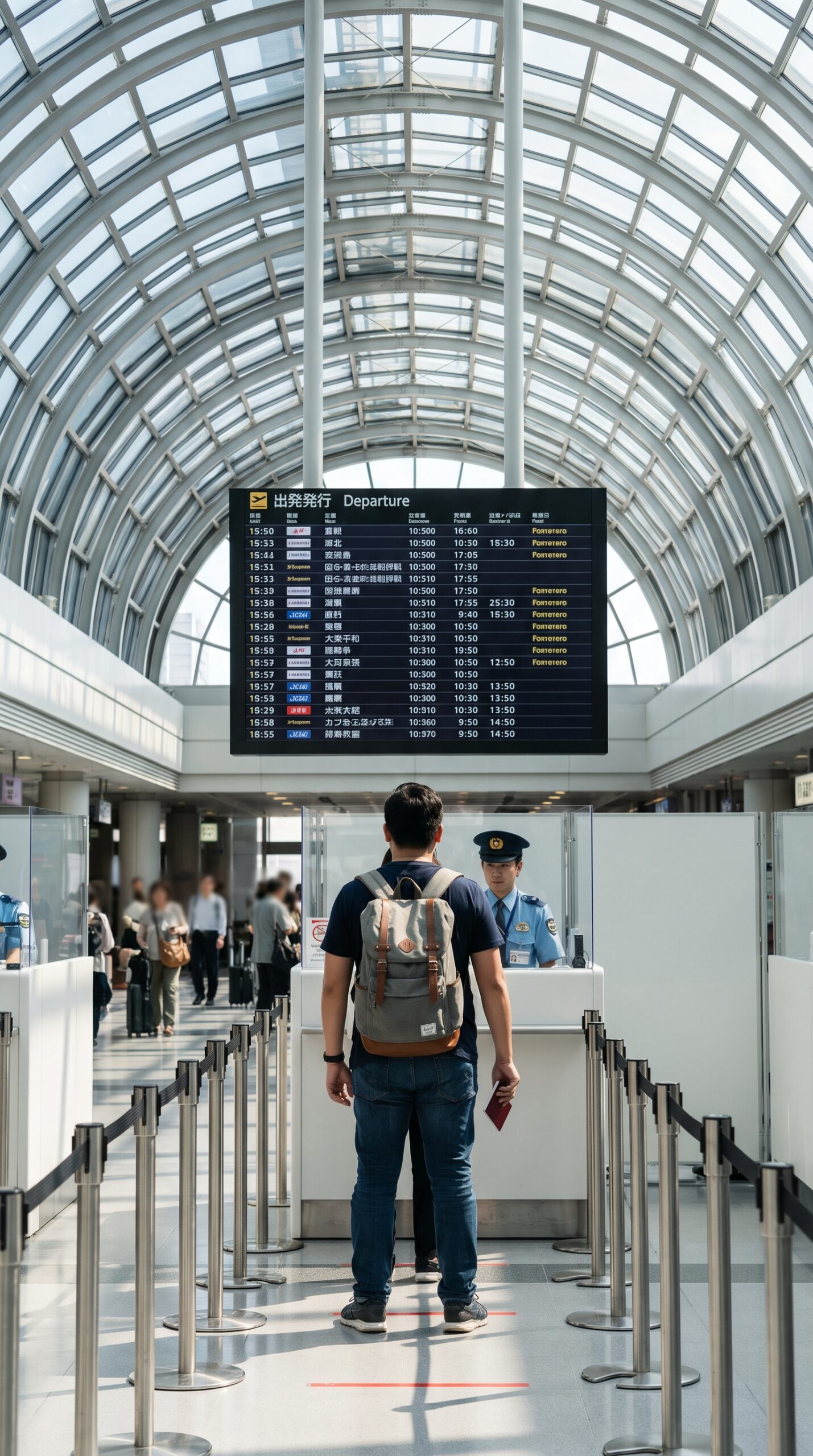
Good news first: most tourists don’t need a Japan travel visa at all. Japan waives short-term visas for around 70 nationalities, per the Japan Ministry of Foreign Affairs visa page, and the list covers the US, UK, most of the EU, Canada, and Australia. A US citizen gets 90 days stamped on arrival for tourism. Your passport only needs to stay valid for the length of your stay; Japan has no six month validity rule.
Before you fly, register on Visit Japan Web. The free official service turns your immigration and customs details into QR codes, and arrival halls at Narita and Haneda move much faster with them.
One catch: the 90 day waiver covers tourism only. Working, studying, or staying longer all call for a proper visa arranged through a Japanese embassy before you travel.
Best Season to Visit Japan
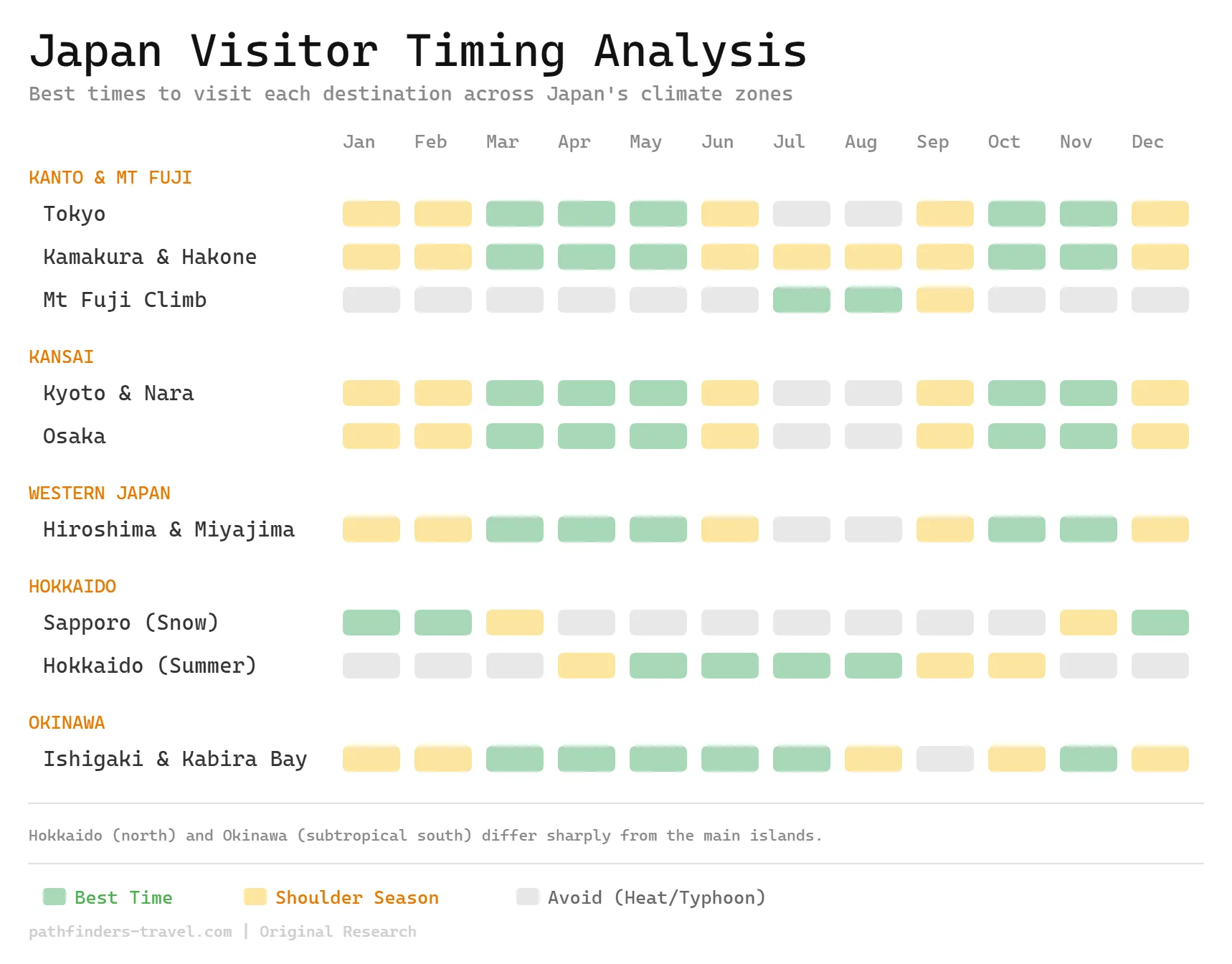
Late March to May and October to November are the best times to visit Japan, while mid-January to February and the June rainy season bring the lowest prices.
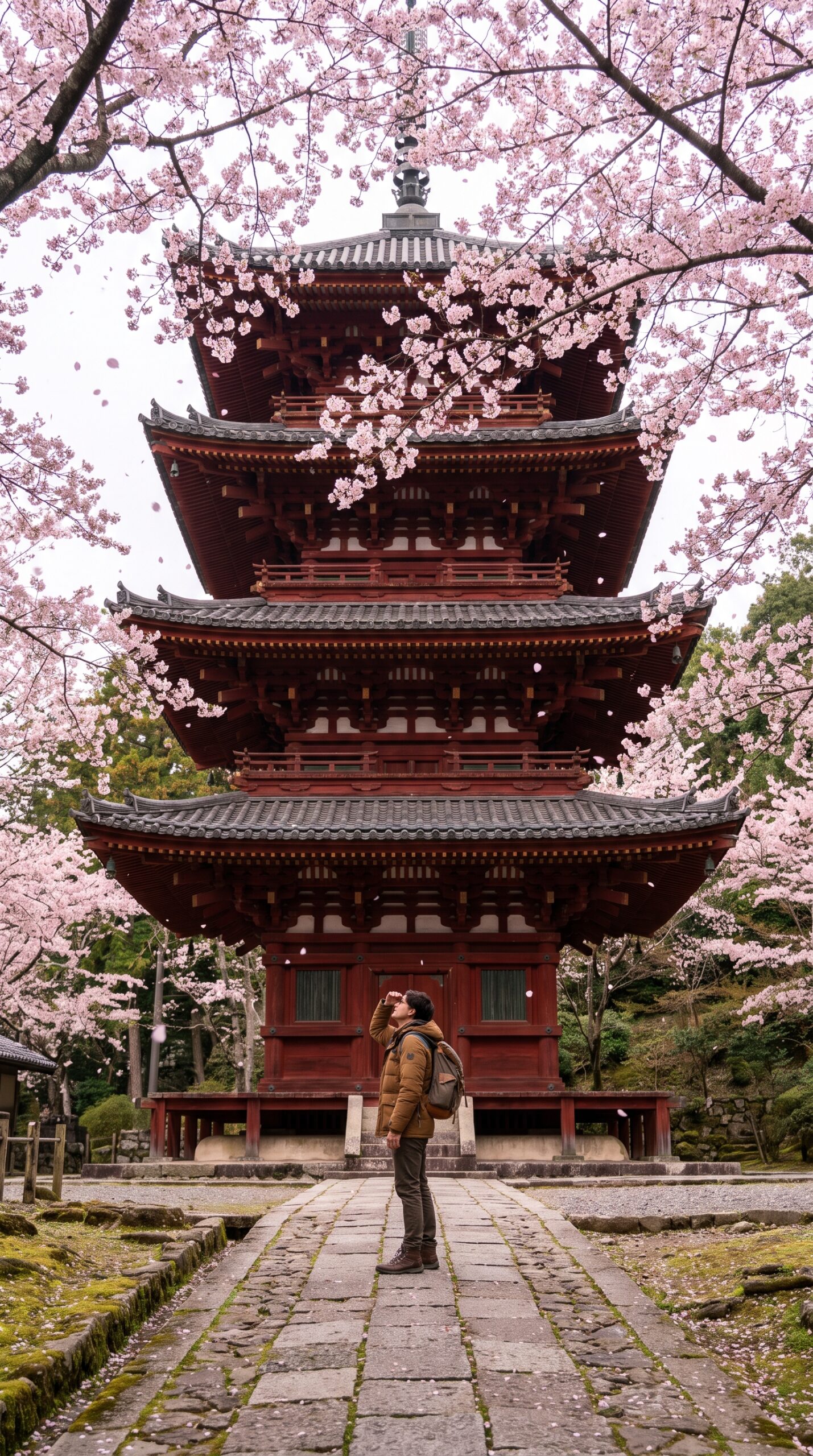
Ask ten travelers about the best months to travel to Japan and most will say spring. Tokyo’s cherry trees usually peak in late March and Kyoto’s in early April, per the official cherry blossom forecast. Autumn runs a close second. October and November trade pink petals for red maples, with the same mild weather and thinner crowds.
Summer has a split personality. It’s the best season to travel to Japan’s north, with Hokkaido’s lavender in bloom, and it’s the only window to climb Mount Fuji, from July to early September. Down south, the main islands turn hot and humid.
Chasing the cheapest times to travel to Japan? Aim for mid-January through February or the June rains. Just skip Golden Week in early May, when the whole country travels at once and prices jump.
Best Time to Visit
Spring and autumn are the sweet spots for Japan’s main islands, while Hokkaido peaks in winter for snow and midsummer for lavender fields. Okinawa’s reefs are best outside the September typhoon peak.
Japan Travel Budget and Daily Costs
A budget trip to Japan costs 8,000 to 12,000 yen per day, a mid-range trip runs 20,000 to 35,000 yen, and a 7-day Japan Rail Pass starts at 50,000 yen.
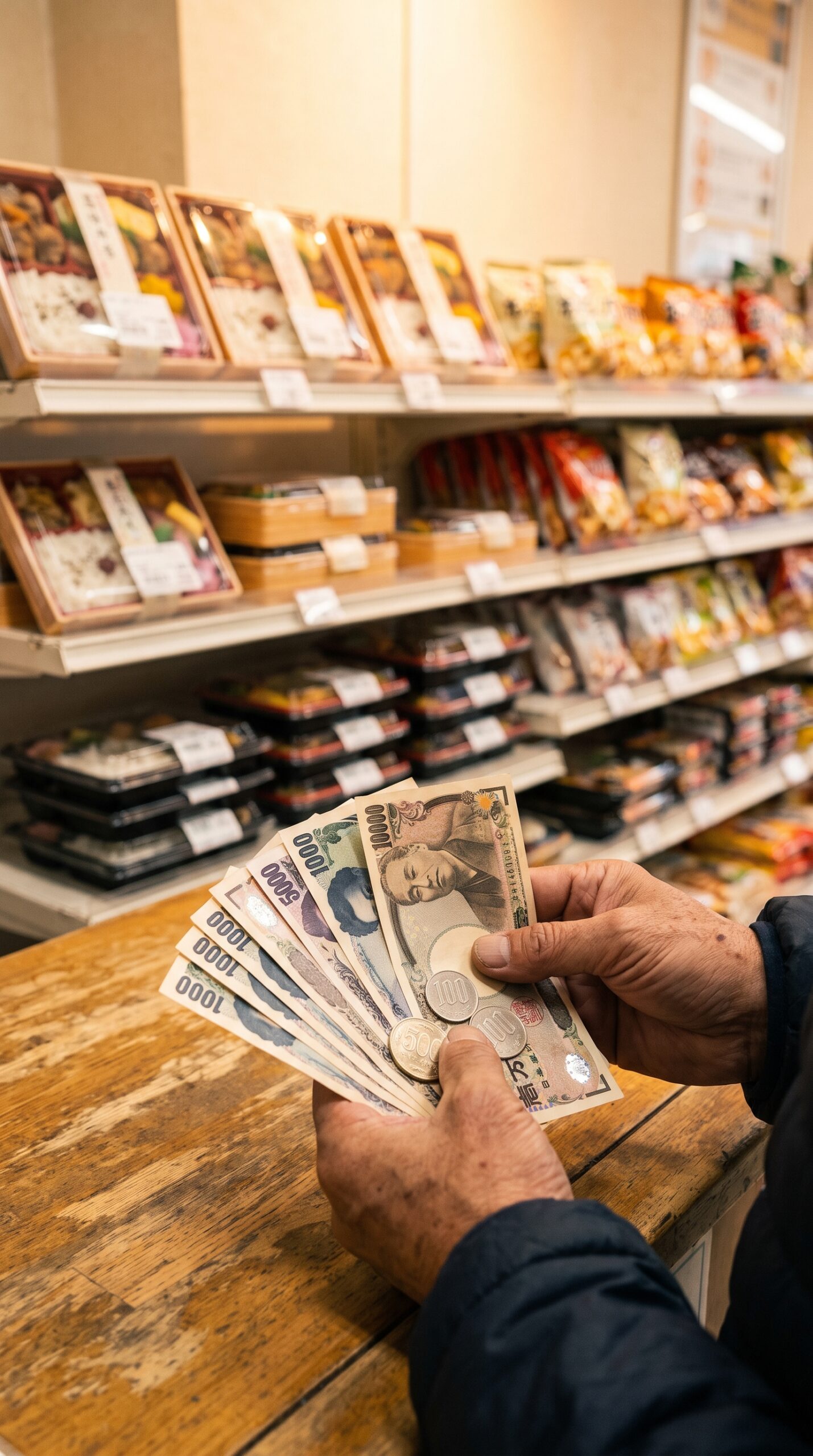
So how much does it cost to travel to Japan? Less than most people fear. A hostel bed, convenience store meals, and local trains keep a budget day at 8,000 to 12,000 yen, roughly 55 to 80 US dollars. A mid-range Japan travel budget of 20,000 to 35,000 yen buys a business hotel, restaurant dinners, and a few paid sights. The weak yen has been kind to dollar spenders since 2024.
Flights from the US usually land between 900 and 1,500 dollars round trip. Once you’re there, the big-ticket item is rail. The 7-day nationwide pass costs 50,000 yen booked direct on the official Japan Rail Pass site, or 53,000 yen through overseas agents since October 2026, and it only pays off if you cover Tokyo, Kyoto, and Hiroshima within one week.
One honest warning: hotel rates in Tokyo and Kyoto have climbed sharply since 2024. Book 2 to 3 months out or the travel cost to Japan swells fast.
Tokyo and the Kanto Region
The Kanto region packs six major destinations within an hour of Tokyo, including Shibuya Crossing, the 7th-century Sensoji Temple, Yokohama, Saitama, and coastal Kamakura.
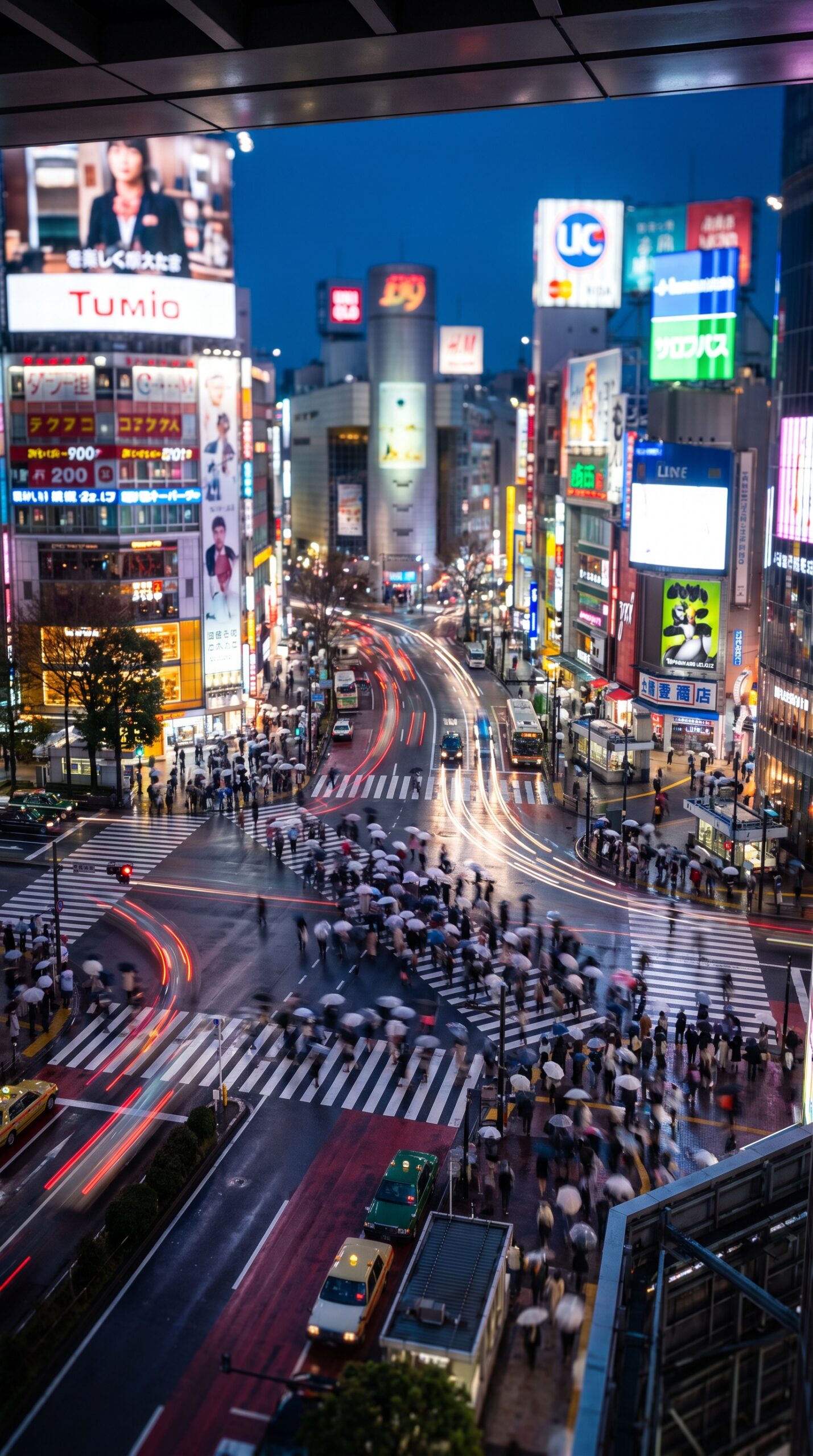
Nearly every trip starts on the Kanto plain. Tokyo sits at its center, and five more destinations ring it within an hour by train, which makes this region the easiest place in Japan to fill a week without ever packing a suitcase twice.
Tokyo
Tokyo is the world’s largest metro area, home to about 37 million people, yet it runs quieter than most mid-size cities. Neon districts like Shinjuku sit fifteen minutes from shrine forests and tiny six-seat ramen bars. First-timers do well basing near the Yamanote loop line, which circles most of the big sights. Plan more time than you think you need, according to GO TOKYO, the city’s official tourism site, the city holds over 200 museums alone. (Full guide about Tokyo coming soon.)
Shibuya Crossing
Shibuya Crossing is the intersection you’ve seen in every Japan montage. Up to 3,000 people cross in a single green light cycle, and the view from the Shibuya Sky deck 229 meters up turns the scramble into moving confetti. Come at night for the full neon effect, and say hello to the Hachiko statue by the station exit. (Full guide about Shibuya Crossing coming soon.)
Sensoji Temple
Sensoji Temple in Asakusa is Tokyo’s oldest temple, founded in 628. The giant red lantern at the Kaminarimon gate leads into Nakamise street, where stalls have sold snacks and souvenirs for centuries. Crowds get heavy by mid-morning; the official Sensoji Temple website lists the grounds as always open, so go at dawn when the incense smoke rises through empty courtyards. (Full guide about Sensoji Temple coming soon.)
Saitama
Saitama, just north of the capital, stays off most itineraries, and that’s exactly its charm. Kawagoe’s clay-walled warehouse street feels like Edo-period Japan with better coffee, and train fans lose whole afternoons in the Railway Museum’s collection of 36 real locomotives. It’s an easy half-day trip on the Tobu line. (Full guide about Saitama coming soon.)
Yokohama
Yokohama is Japan’s second city and a 30-minute ride south. The Minato Mirai waterfront mixes a giant Ferris wheel with red-brick warehouses full of craft shops, and the Cup Noodles Museum lets you design your own instant ramen. Its Chinatown is the country’s largest, with more than 600 restaurants crammed into a few blocks. (Full guide about Yokohama coming soon.)
Kamakura
Kamakura closes out the region an hour south of Tokyo. The bronze Great Buddha has sat in the open air since a tsunami swept away its hall in 1498, and it stands 13 meters tall. Hasedera Temple’s hillside gardens look over the bay, and wooded hiking trails connect the temples if you’d rather walk than ride the vintage Enoden line. Summer weekends get packed; a weekday visit is calmer. (Full guide about Kamakura coming soon.)
Mount Fuji, Hakone and Yamanashi
Mount Fuji stands 3,776 meters tall, and its official climbing season runs between early July and early September via four trails, with the Yoshida Trail busiest.
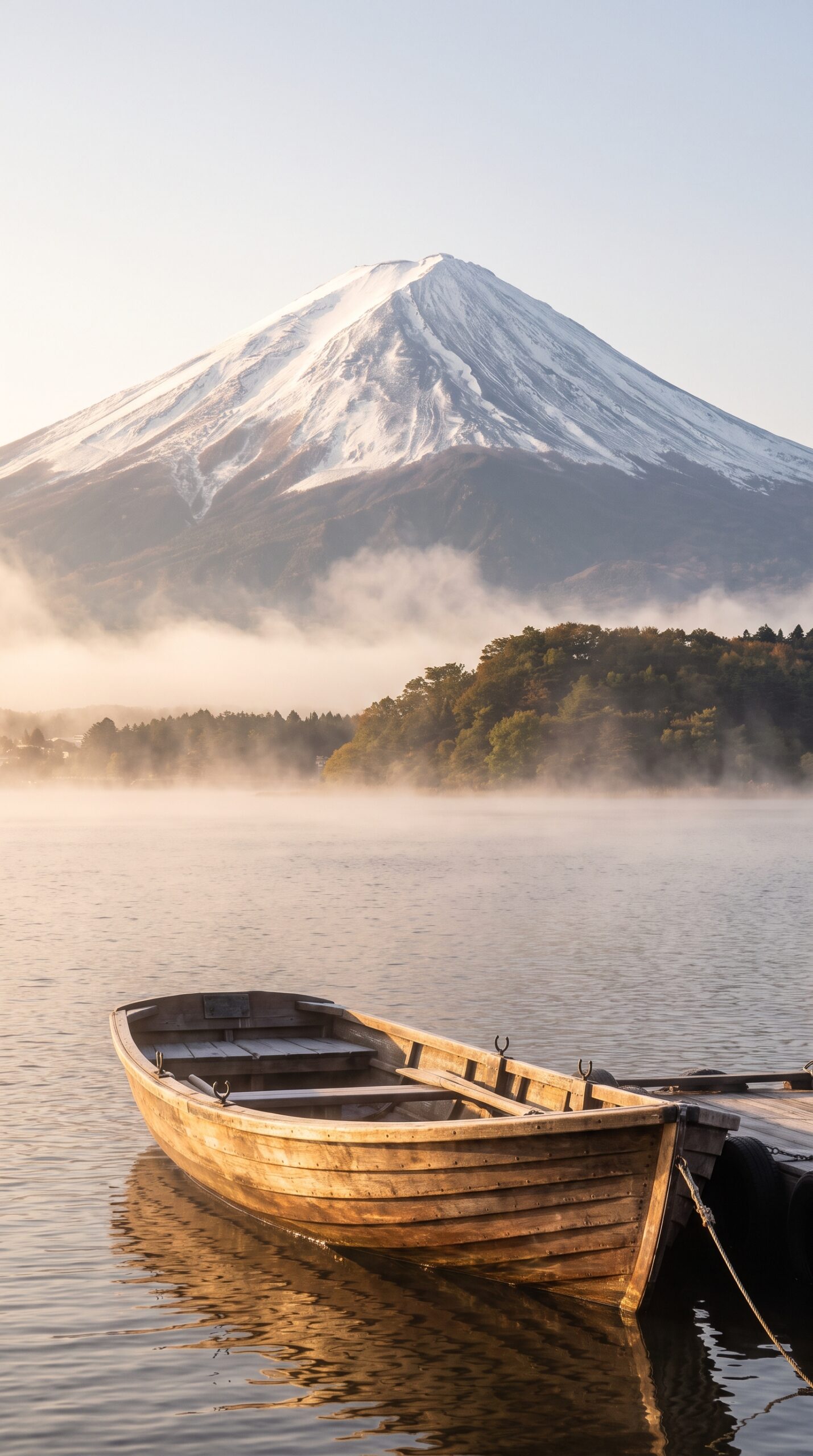
An hour and a half west of Tokyo, the land climbs into volcano country. This is the Japan of woodblock prints, and it delivers on the promise more often than not.
Mount Fuji
Mount Fuji tops out at 3,776 meters, the highest point in Japan. You’ve got two ways to enjoy it: look at it or climb it. Roughly 200,000 people a year choose the climb, per the official Mount Fuji climbing site, and the season only runs between early July and early September. Most start at night to catch sunrise from the crater rim. Everyone else gets the better photos from lake level. (Full guide about Mount Fuji coming soon.)
Hakone
Hakone is where Tokyo goes to soak. The classic loop, covered on Hakone’s official travel guide, chains a mountain railway, a ropeway over the steaming Owakudani crater, and a replica pirate ship across Lake Ashi. Spend the night in a ryokan with an onsen bath and eat the black eggs boiled in volcanic springs. One heads-up: Fuji hides behind clouds many afternoons, so plan your viewpoint stops for morning. (Full guide about Hakone coming soon.)
Yamanashi
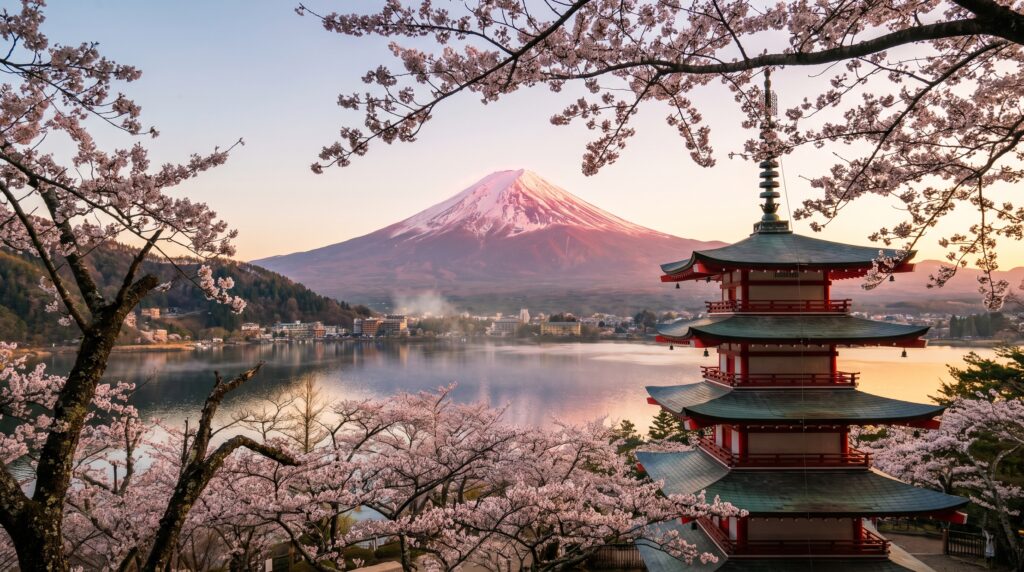
Yamanashi prefecture holds the Fuji Five Lakes and the single most photographed view in the country: the Chureito Pagoda with the mountain rising behind it, best in cherry blossom season. Lake Kawaguchi has the easiest access and the widest range of lakeside stays. The Koshu valley nearby is also Japan’s oldest wine region, with about 80 wineries pouring tastings. (Full guide about Yamanashi coming soon.)
Kyoto, Nara and Osaka: The Kansai Triangle
Kyoto, Nara, and Osaka form a triangle where each city sits within 45 minutes of the others by train, covering 1,600 temples, 1,200 wild deer, and Japan’s best street food.
If Kanto is Japan’s engine, Kansai is its soul. Three very different cities sit within 45 minutes of each other, so you can base in one and day-trip to the rest. Japan’s old capital, Kyoto, is the obvious anchor.
Kyoto
Kyoto held the emperor’s court for over a thousand years, and it kept the receipts: about 1,600 temples, 17 UNESCO World Heritage sites, and the lantern-lit lanes of Gion, per Kyoto’s official city guide. The golden pavilion of Kinkakuji and the wooden stage at Kiyomizudera top most lists. Give it three days minimum. It’s also crowded; early mornings are when the city shows its quiet face. (Full guide about Kyoto coming soon.)
Fushimi Inari Shrine
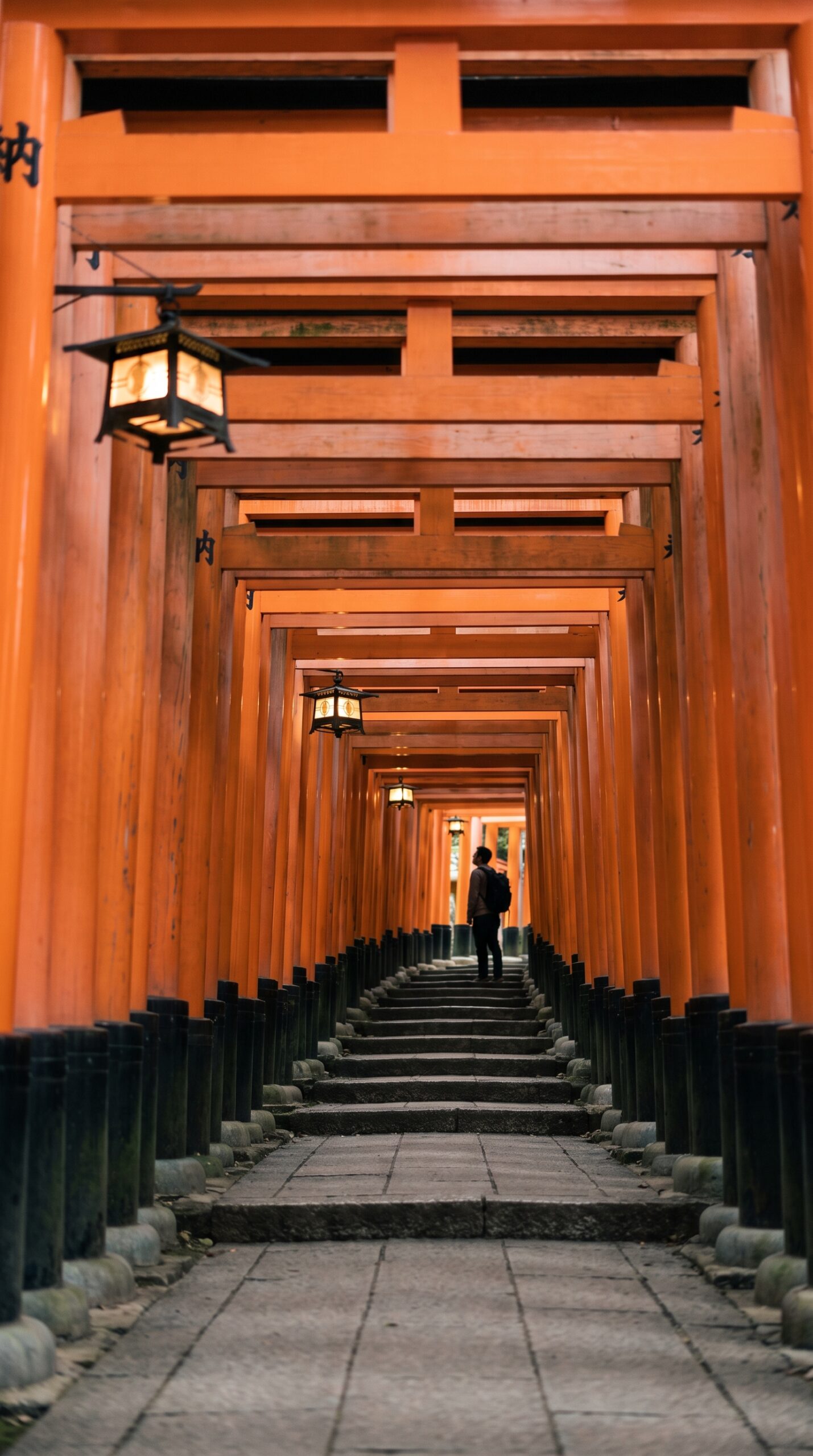
Fushimi Inari Shrine is the one with roughly 10,000 vermilion torii gates climbing a wooded mountain in southern Kyoto. The full loop takes 2 to 3 hours, and the crowds thin out dramatically past the halfway viewpoint. The gates glow best at dawn or after dark, when the lanterns come on and the paths empty. Entry is free and it never closes. (Full guide about Fushimi Inari Shrine coming soon.)
Arashiyama
Arashiyama, on Kyoto’s western edge, packs a towering bamboo grove, a monkey park with 120 free-roaming macaques, and the Togetsukyo Bridge over the Hozugawa river into one walkable district. Get there before 8am. By ten, the bamboo path feels like a train platform. (Full guide about Arashiyama coming soon.)
Nara
Nara was Japan’s first permanent capital, and around 1,200 wild deer now run the place. They bow for crackers sold in the park, though they’ll headbutt you for them too. The real draw is Todaiji, where a 15-meter bronze Buddha fills one of the largest wooden buildings on Earth. The official Nara travel guide maps three World Heritage areas in the city alone. An easy half-day from Kyoto or Osaka. (Full guide about Nara coming soon.)
Osaka
Osaka calls itself the nation’s kitchen and backs it up nightly along Dotonbori, where the neon Glico runner watches over canal-side stalls frying takoyaki octopus balls and kushikatsu skewers. Osaka Castle rises from its moat ten minutes north. The city stays up later than Kyoto and laughs louder; Osaka’s official tourism guide keeps a running list of food streets and festivals. (Full guide about Osaka coming soon.)
Hiroshima and Western Japan
Hiroshima pairs its Peace Memorial Park with Miyajima Island, a 10-minute ferry ride away, where the 16-meter floating torii of Itsukushima Shrine stands offshore.
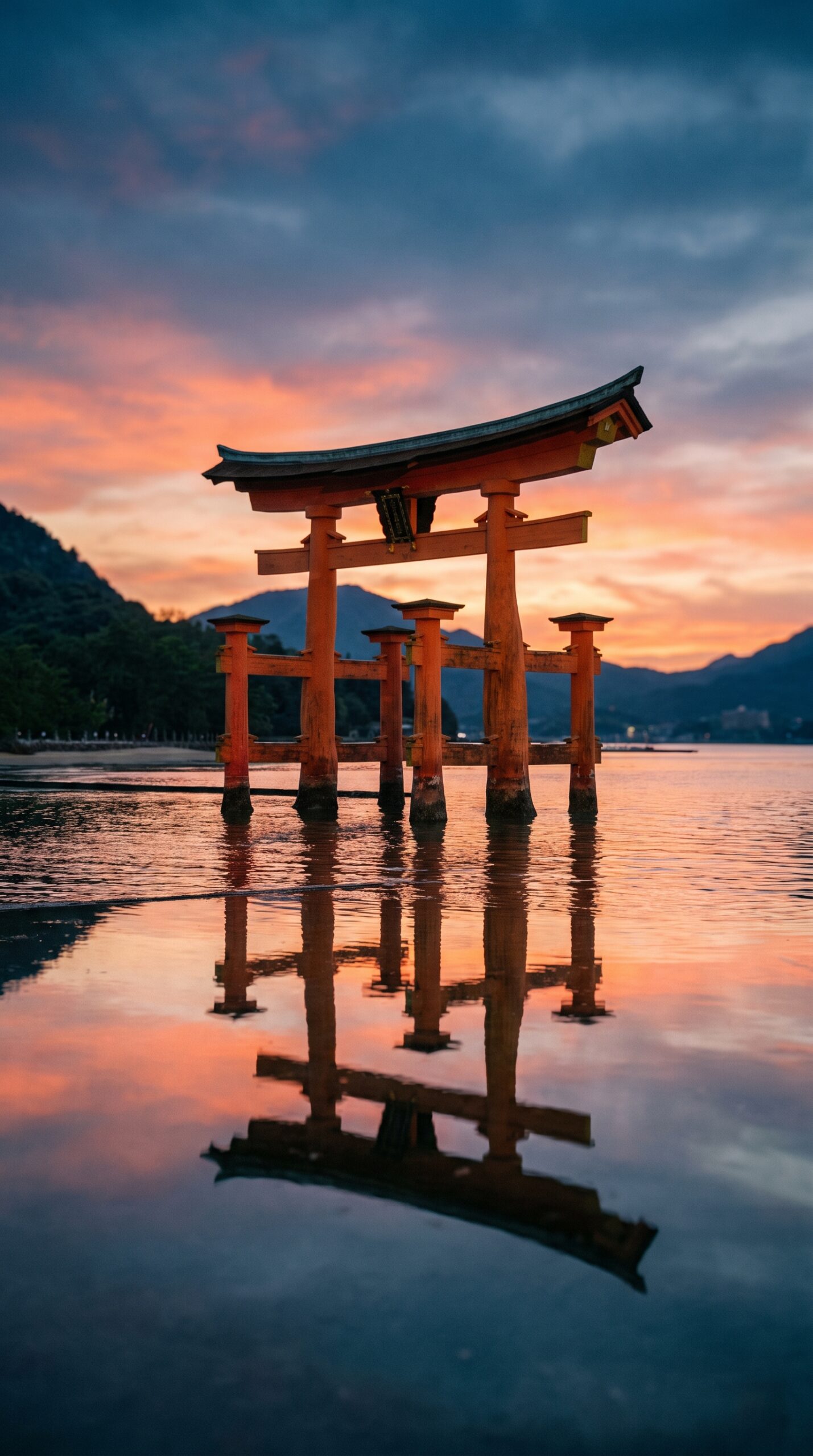
Push west across Japan and the tone changes. This corner of the country holds its heaviest history and one of its gentlest islands, side by side.
Hiroshima
Hiroshima asks for a slow morning. The Peace Memorial Park spreads along the river where the A-Bomb Dome still stands, a UNESCO site left exactly as the blast shaped it in 1945. The Hiroshima Peace Memorial Museum draws over 1.7 million visitors a year, and it earns the silence inside. The city around it is rebuilt, lively, and proud of its food. Finish the day at Okonomimura, a building stacked with stalls frying Hiroshima-style okonomiyaki layered with noodles. (Full guide about Hiroshima coming soon.)
Itsukushima Shrine
Itsukushima Shrine floats off Miyajima, a 10-minute ferry hop from Hiroshima’s edge. Its 16-meter vermilion torii rises straight from the sea at high tide; at low tide you walk across the flats and stand under it. Check the tide tables on the Miyajima Tourist Association site and plan around both. Then ride the ropeway up Mount Misen for a wide look over the Seto Inland Sea’s scattered islands. Wild deer patrol the ferry pier, so guard your snacks. (Full guide about Itsukushima Shrine coming soon.)
Hokkaido and the Okinawa Islands
Hokkaido and Okinawa sit at Japan’s climate extremes: Sapporo gets about 5 meters of snow a year while Kabira Bay on Ishigaki stays warm enough for reef trips most of the year.
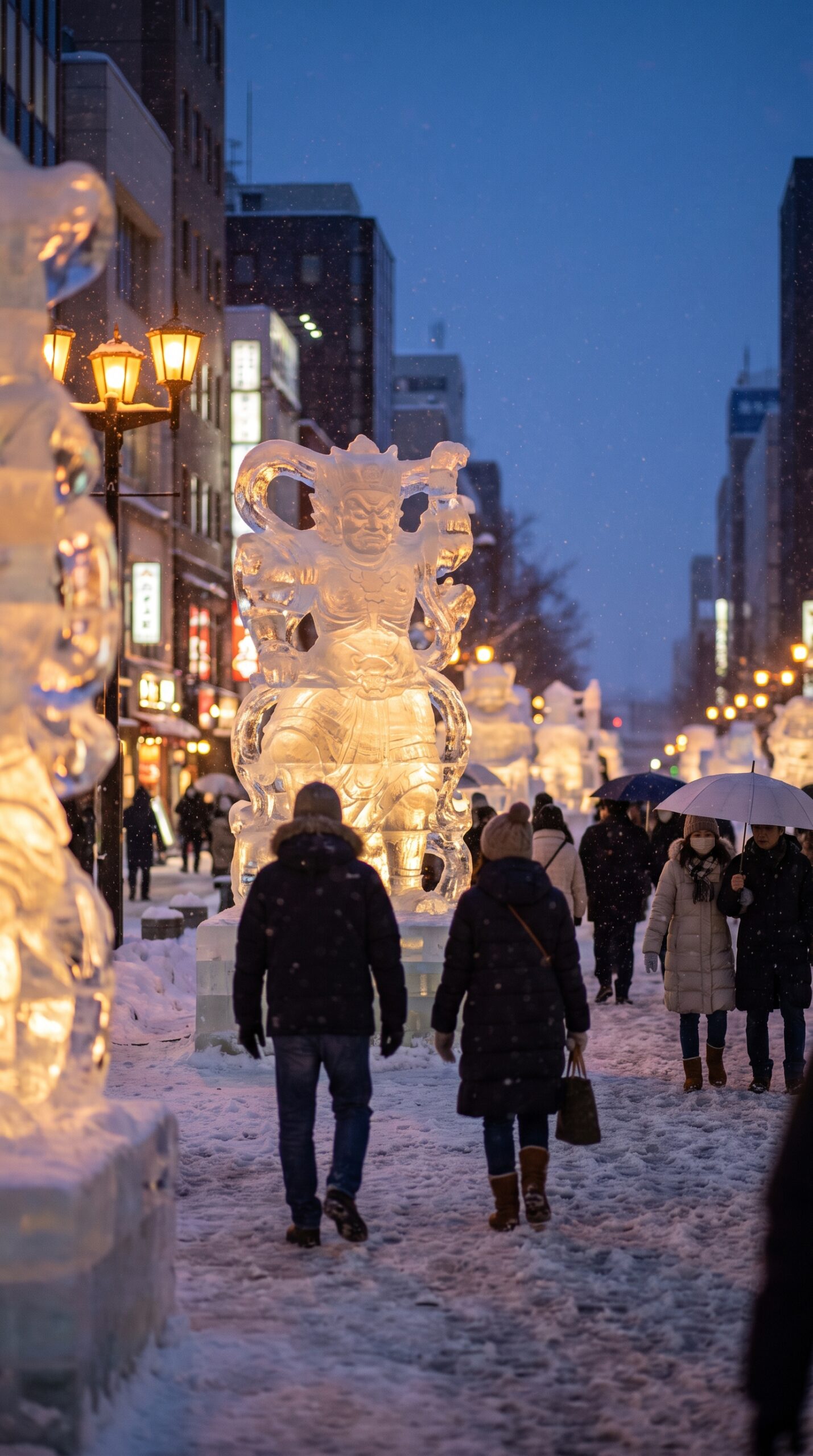
Here’s the part most first trips skip. Japan’s two ends sit in different worlds, and both reward the extra flight. Solo travellers rate both regions among the safest and friendliest places to wander alone.
Hokkaido
Hokkaido is the wild north. Winter buries resorts like Niseko in the powder snow skiers cross oceans for, and Hokkaido’s official tourism site counts six national parks across the island. Summer flips the script: lavender rows stripe the Furano valley in July, and farm stands sell melon and fresh dairy along the roads. A 90-minute flight from Tokyo gets you there. (Full guide about Hokkaido coming soon.)
Sapporo
Sapporo is the north’s easygoing capital. Ramen Alley crams 17 tiny shops into one lane, the Sapporo Beer Museum pours the city’s namesake in a 19th-century brick brewery, and Odori Park cuts a green line through downtown. Come in February and the park fills with massive snow sculptures for the Snow Festival, which draws around 2 million people. (Full guide about Sapporo coming soon.)
Then there’s the far south. On Ishigaki Island, 3 hours from Tokyo by air, Kabira Bay glows emerald over white sand. Swimming inside the bay isn’t allowed, so glass-bottom boats do the showing. Divers head just offshore instead: the surrounding Yaeyama Islands hold some of the country’s healthiest coral and manta ray sites, with beginner-friendly boat dives listed on Visit Okinawa Japan. Coral reef diving here runs year-round, though September typhoons can scrub a week of boats.
Japan Travel Itineraries: 7, 10 and 14 Days
A 7-day Japan itinerary covers Tokyo, Hakone, Kyoto, and Osaka; 10 days adds Hiroshima and Nara; 14 days adds Hokkaido or the Okinawa islands by domestic flight.
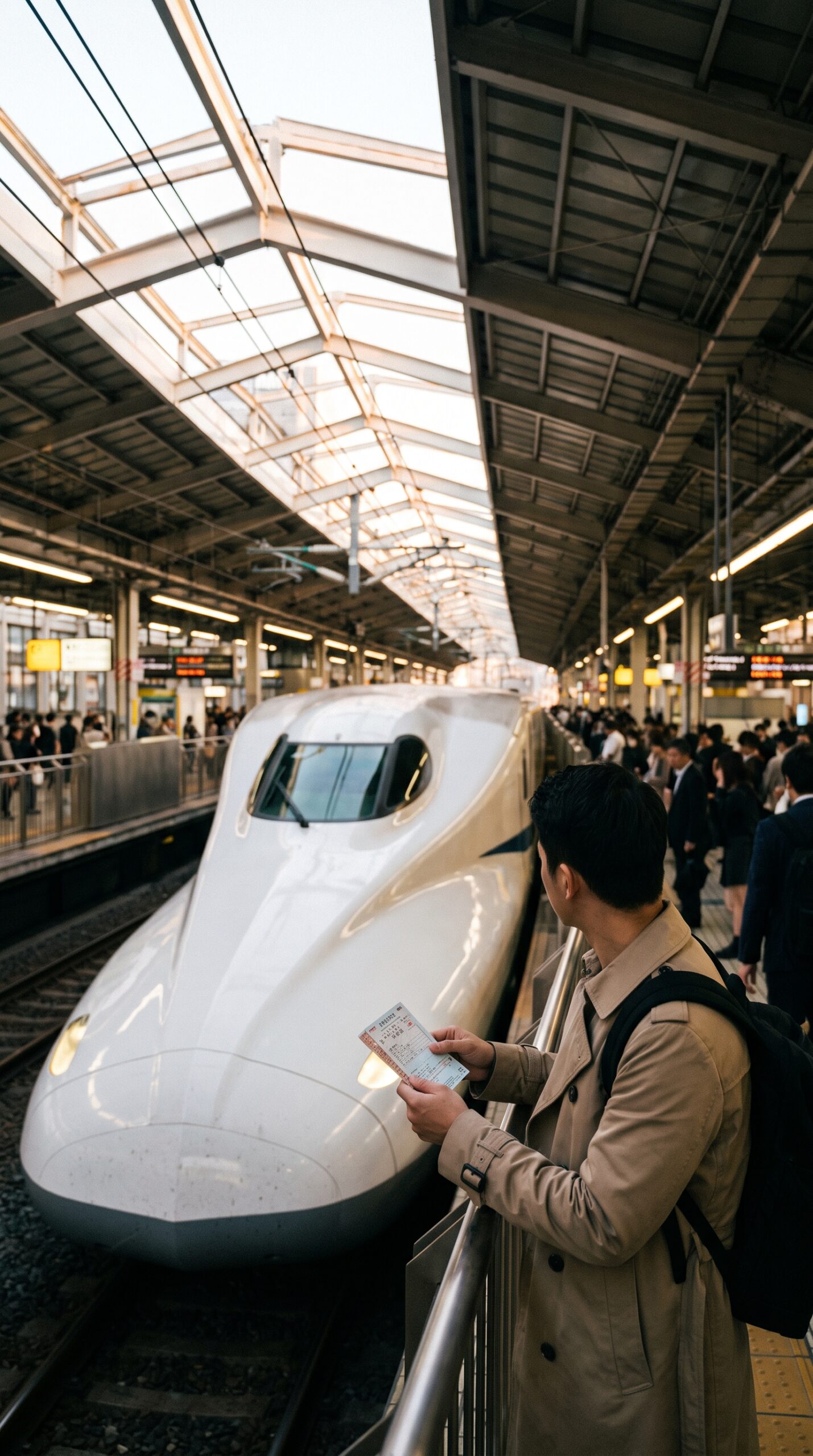
These three routes follow what people actually search for, and they build on each other. The Tokyo to Kyoto Shinkansen leg takes about 2 hours 15 minutes, which is what makes all of them work.
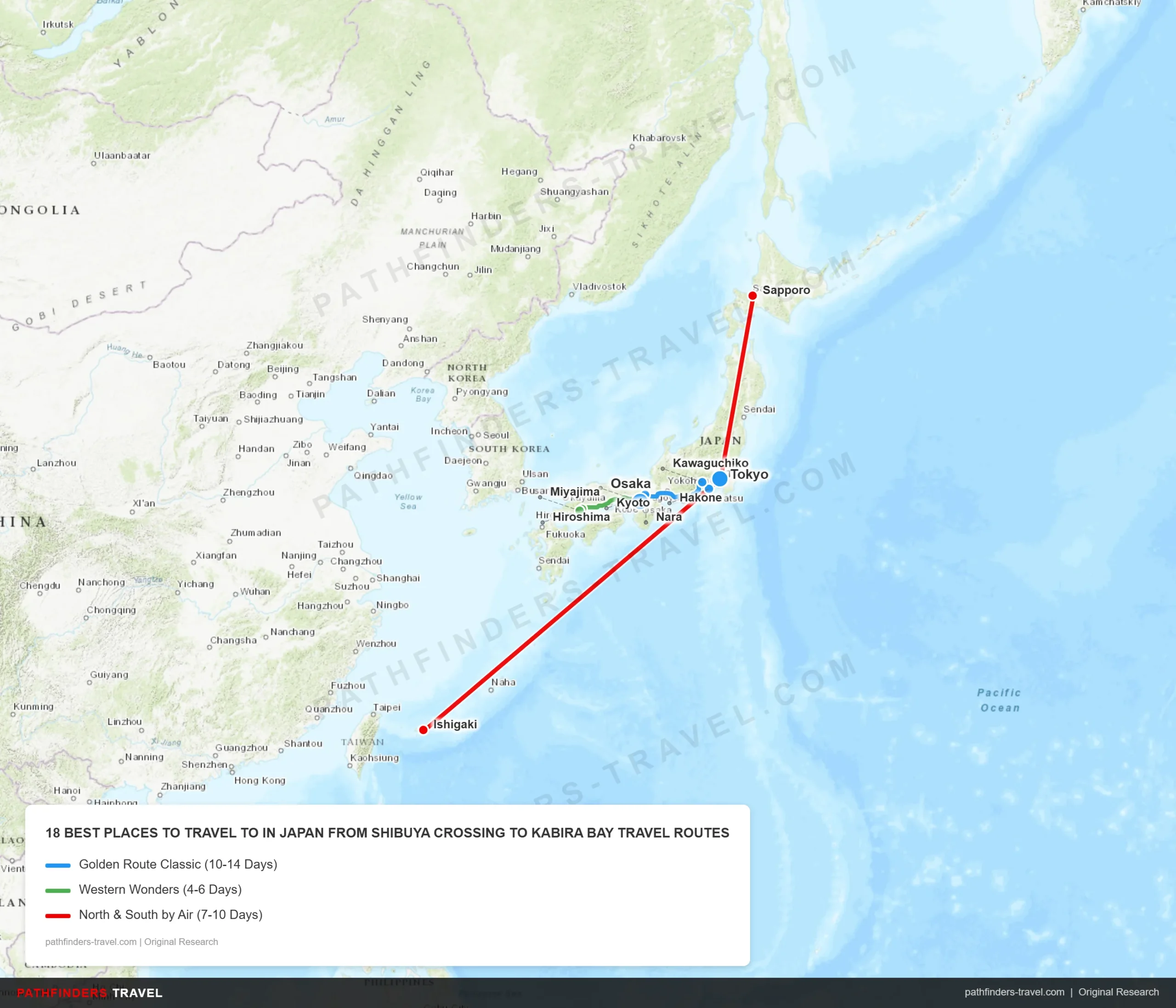
| # | Stop | Highlights | Drive Time |
|---|---|---|---|
| 1 | Tokyo | Shibuya Crossing, Sensoji Temple, Meiji Shrine | — |
| 2 | Hakone | Lake Ashi, onsen ryokan, Hakone Shrine torii | 1h 30m |
| 3 | Kawaguchiko | Mount Fuji views, Chureito Pagoda | 1h 30m |
| 4 | Kyoto | Fushimi Inari, Arashiyama bamboo grove, Gion | 2h 30m |
| 5 | Nara | Todaiji Temple, bowing deer of Nara Park | 45m |
| 6 | Osaka | Dotonbori street food, Osaka Castle | 45m |
| # | Stop | Highlights | Drive Time |
|---|---|---|---|
| 1 | Osaka | Dotonbori, Umeda Sky Building | — |
| 2 | Hiroshima | Peace Memorial Park, okonomiyaki | 2h 30m |
| 3 | Miyajima | Itsukushima Shrine floating torii, Mt Misen | 1h |
| # | Stop | Highlights | Drive Time |
|---|---|---|---|
| 1 | Sapporo | Odori Park, ramen alley, powder snow | — |
| 2 | Tokyo | Connect via Haneda for domestic flights | 1h 35m flight |
| 3 | Ishigaki | Kabira Bay, coral reef diving | 3h flight |
A 7-day Japan itinerary sticks to the Golden Route core. Skip the JR Pass at this length; point-to-point tickets cost less.
| Day | Base | Highlights |
|---|---|---|
| 1-3 | Tokyo | Shibuya Crossing, Sensoji Temple, Kamakura day trip |
| 4 | Hakone | Lake Ashi, ropeway, onsen ryokan night |
| 5-6 | Kyoto | Fushimi Inari at dawn, Arashiyama, Gion |
| 7 | Osaka | Dotonbori food crawl, fly out of Kansai |
The 10-day version is the sweet spot for most first trips. Activate a 7-day pass from the official Japan Rail Pass site on day 4 and the Hiroshima leg rides free.
| Day | Base | Highlights |
|---|---|---|
| 1-3 | Tokyo | City core plus Yokohama or Saitama day trip |
| 4 | Hakone / Mount Fuji | Fuji views from Kawaguchiko, onsen stay |
| 5-7 | Kyoto | Temples, Fushimi Inari, Nara day trip |
| 8 | Osaka | Street food and Osaka Castle |
| 9-10 | Hiroshima & Miyajima | Peace Memorial, Itsukushima Shrine |
With a two-week itinerary, Japan finally shows you its extremes. Use the 14-day rail pass for the main islands, then book a separate budget flight north or south.
| Day | Base | Highlights |
|---|---|---|
| 1-4 | Tokyo & Kanto | Tokyo, Kamakura, Yokohama |
| 5 | Hakone | Onsen and Fuji views |
| 6-8 | Kyoto & Nara | Temple circuit and deer park |
| 9 | Osaka | Dotonbori nightlife |
| 10-11 | Hiroshima & Miyajima | Peace Memorial and the floating torii |
| 12-14 | Hokkaido or Ishigaki | Sapporo snow and ramen, or Kabira Bay reef diving |
Japan Travel Essentials and Packing
Japan uses type A and B power plugs at 100 volts, so US devices work directly while UK and EU travelers need a simple plug adapter.
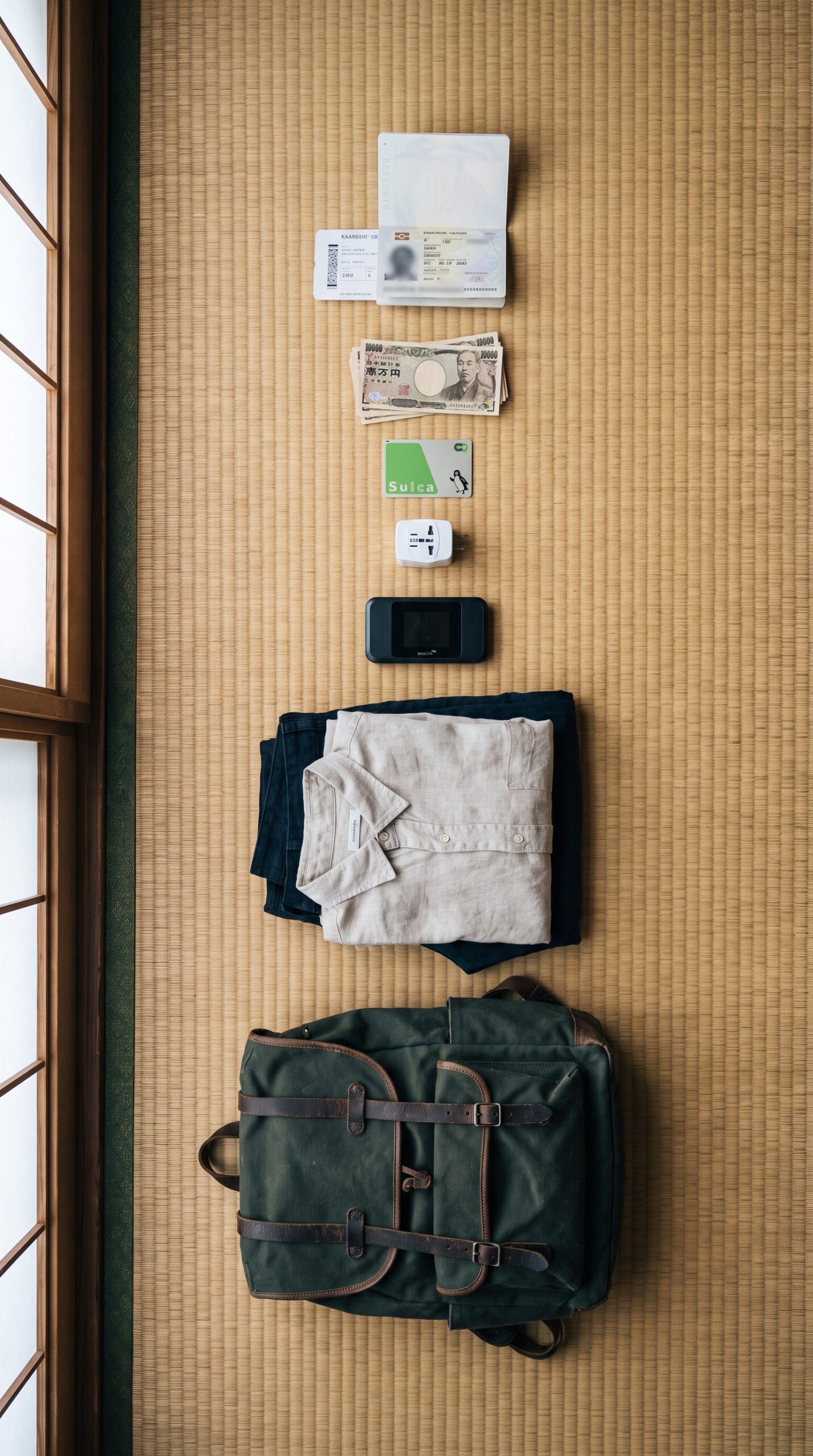
Packing for Japan is refreshingly simple. The country runs on 100 volts, the only nation in the world at that standard, with type A and B outlets. American two-prong gear plugs straight in. Coming from the UK or Europe? A basic travel adapter plug for Japan costs a few dollars and weighs nothing, so pack two.
Beyond the plug question, three things earn their space: a Suica or Pasmo IC card for trains and konbini payments, an eSIM or pocket wifi for maps, and slip-on shoes, since temples and ryokan mean shoes off several times a day. Carry some cash too. Small restaurants and shrine stalls often refuse cards, and 7-Eleven ATMs take foreign cards when you run dry.
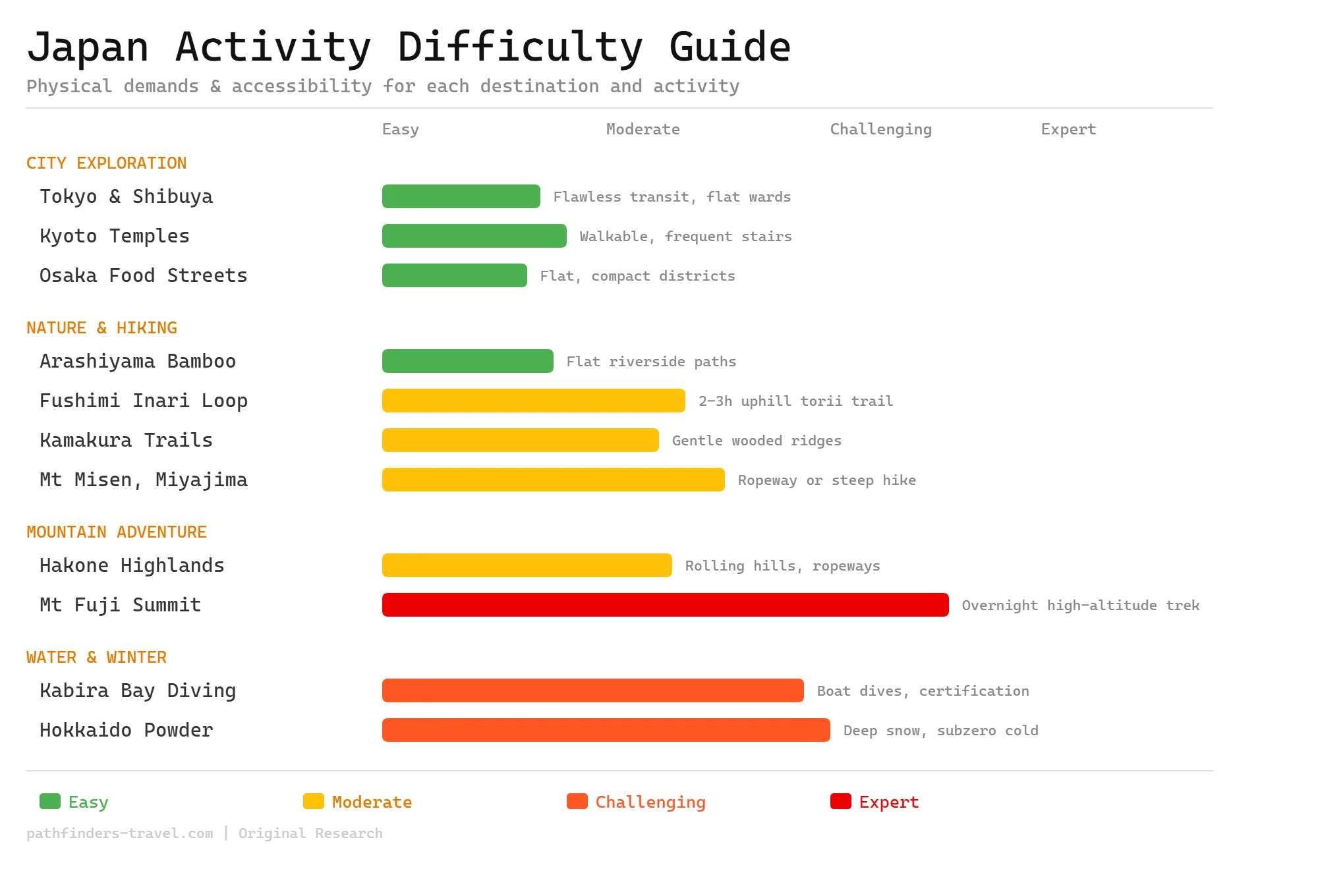
Activity Difficulty Guide
Japan spans everything from effortless city wandering to a high-altitude volcano climb. Most temple and city sights are easy, mountain trails ask for moderate fitness, and Mt Fuji or reef diving reward real preparation.
Frequently Asked Questions
How much does it cost to travel to Japan?
Budget travelers spend 8,000 to 12,000 yen per day, while mid-range trips run 20,000 to 35,000 yen daily, plus 900 to 1,500 dollars for US flights. The weak yen has kept on-the-ground costs friendly for dollar spenders. Hostels, konbini meals, and local trains anchor the low end; business hotels and restaurant dinners define the middle.
Do you need a travel visa for Japan?
No, tourists from the US, UK, EU, Canada, and Australia enter Japan visa-free for up to 90 days. Your passport just needs to stay valid for the length of the stay. Registering on Visit Japan Web before arrival speeds up immigration and customs with QR codes.
What is the best time to travel to Japan?
Late March to May and October to November offer the best weather, cherry blossoms, and autumn color across most of Japan. Summer suits Hokkaido and the official Mount Fuji climbing season. February is prime time for Sapporo’s snow festival and powder skiing.
What are the cheapest times to travel to Japan?
Mid-January to February and the June rainy season bring the lowest airfares and hotel rates of the year. Winter fares drop sharply once New Year traffic clears. Skip Golden Week in early May and the blossom peak, when prices double.
What is the prettiest part of Japan?
Kyoto is most often named the prettiest part of Japan, with about 1,600 temples, the Arashiyama bamboo grove, and the lantern-lit lanes of Gion. The Fuji Five Lakes in Yamanashi rival it for scenery, especially the Chureito Pagoda view in cherry blossom season. For coastline, Kabira Bay on Ishigaki Island wins.
