Estimated reading time: 15 minutes
Last updated: June 2026
Table of Contents
- How Do You Spend a Day in Tacoma?
- Top Attractions in Tacoma
- Getting to and Around Tacoma
- Tacoma Travel Budget
- Day Trips from Tacoma
- When to Visit Tacoma
- Tacoma Travel FAQs
How Do You Spend a Day in Tacoma?
A perfect day in Tacoma starts at the waterfront Museum of Glass and the Chihuly Bridge of Glass, then heads to Point Defiance Park for its zoo, gardens, and Puget Sound views. Add the LeMay – America’s Car Museum or the Tacoma Art Museum, lunch in the revitalized downtown, and sunset over Commencement Bay. Tacoma sits about 32 miles south of Seattle, an easy day trip or a stop on a Washington road trip.
Tacoma, Washington’s third-largest city with 220,000 residents, sits on Commencement Bay 32 miles south of Seattle and serves as Pierce County’s cultural and economic hub.
How We Researched Tacoma
This guide combines data from Visit Tacoma, Washington State tourism resources, and firsthand traveler feedback. Details on attractions, dining, and logistics were verified at the time of writing. Since things change, we suggest checking official sites for current hours and pricing before your trip.
Want to see Tacoma’s waterfront and city landmarks for yourself? Watch our complete Tacoma travel guide in 4K.
The Tacoma Dome defines the skyline. This wooden-domed arena hosts 150 events per year, from NBA preseason games to Metallica concerts. You’ll see it from I-5. It’s the largest wood-domed structure in North America.
People call this place the City of Destiny. The nickname dates to 1873 when Northern Pacific Railway chose Tacoma as its western terminus. The railroad brought timber barons and shipbuilders. Today, the Port of Tacoma moves 2.3 million shipping containers annually, according to the Northwest Seaport Alliance.
Planning Tip
Seattle sits 32 miles north per Washington State Department of Transportation data. Tacoma is also noticeably cheaper than Seattle for hotels, dining, and parking. You get waterfront parks, a revitalized downtown, and the Museum of Glass without the Seattle price tag.
This guide covers the Museum District galleries, Point Defiance Park trails, and ferry rides to Vashon Island. We’ll explain transport from Seattle-Tacoma International Airport. Day trips include Mount Rainier National Park (60 miles southeast) and Olympic National Park (90 miles northwest). The City of Tacoma runs free streetcars through downtown. We’ll break down costs, weather patterns, and what Tacoma is actually known for: glass art, craft breweries, and views of Mount Rainier from Ruston Way.
Top Attractions in Tacoma
Tacoma’s Museum District houses three top-quality institutions within walking distance, while Point Defiance Park spans 760 acres with a zoo, aquarium, and five miles of saltwater shoreline.
The Tacoma Dome anchors the city’s event scene. This massive venue seats 23,000 for concerts and hosts everything from monster truck rallies to NCAA basketball tournaments. Check the schedule before you visit, catching a show here beats reading about it later.
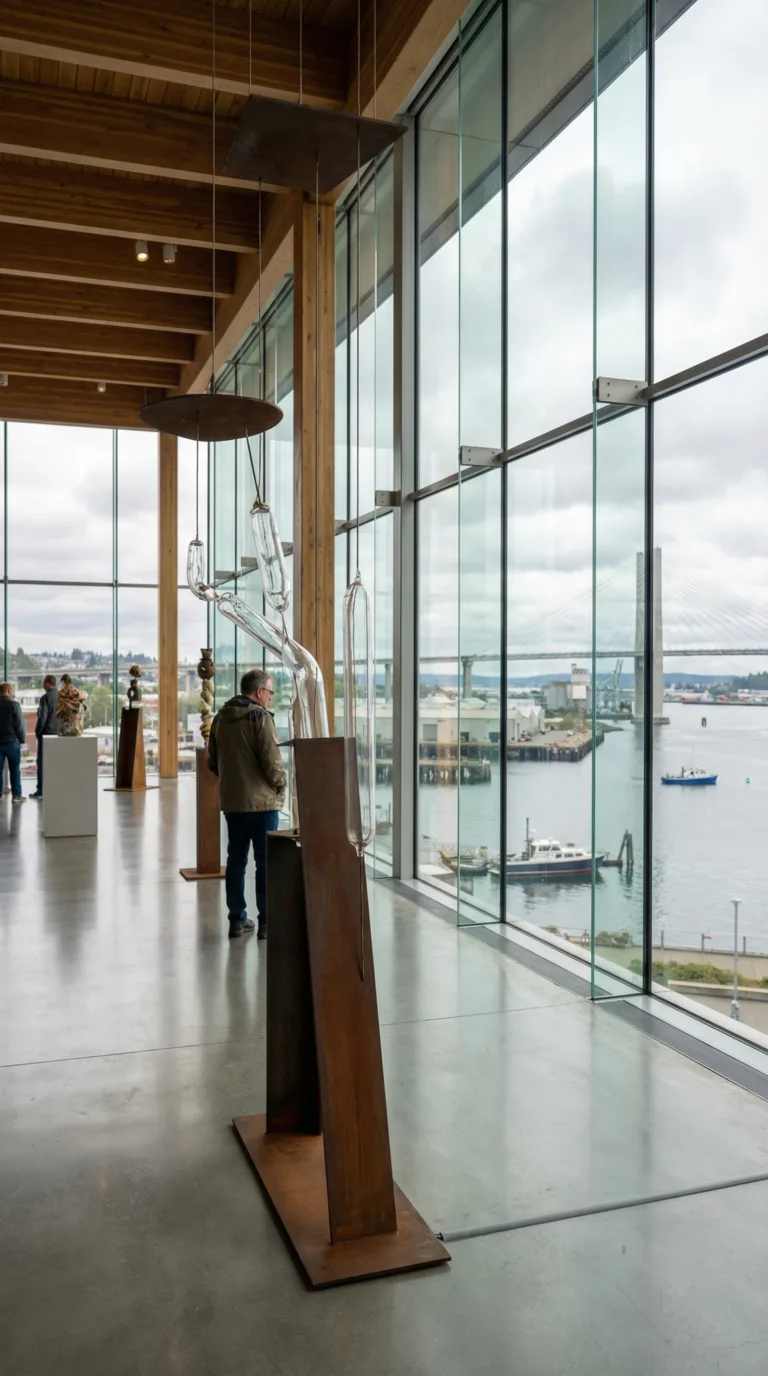
Three blocks downtown hold Tacoma’s museum trifecta. The Museum of Glass sits right on the waterfront with its 90-foot steel cone. Watch glassblowers work the furnaces in the Hot Shop Amphitheater. Real artists. Real fire. The Chihuly Bridge of Glass connects you to the Tacoma Art Museum, which rotates Pacific Northwest artists alongside its permanent collection. Next door, the Washington State History Museum covers 14,000 years of regional history without the usual dusty-textbook vibe. According to Travel Tacoma, these three museums draw over 500,000 visitors annually.
Point Defiance Park is the real surprise. At 760 acres, it ranks as the fifth-largest urban park in the United States per Parks Tacoma. The Point Defiance Zoo & Aquarium sits inside the park with Pacific walruses, red wolves, and a shark tank. Skip the zoo if you’re short on time and hit the five-mile waterfront trail instead. Owen Beach offers actual sand. Fort Nisqually is a reconstructed 1850s Hudson’s Bay Company trading post with costumed interpreters who actually know their history.
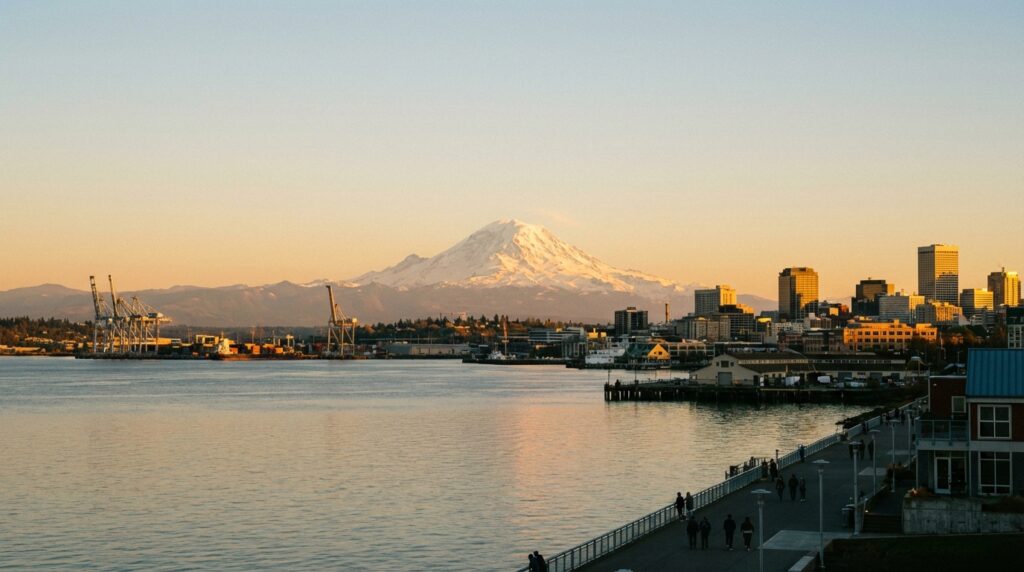
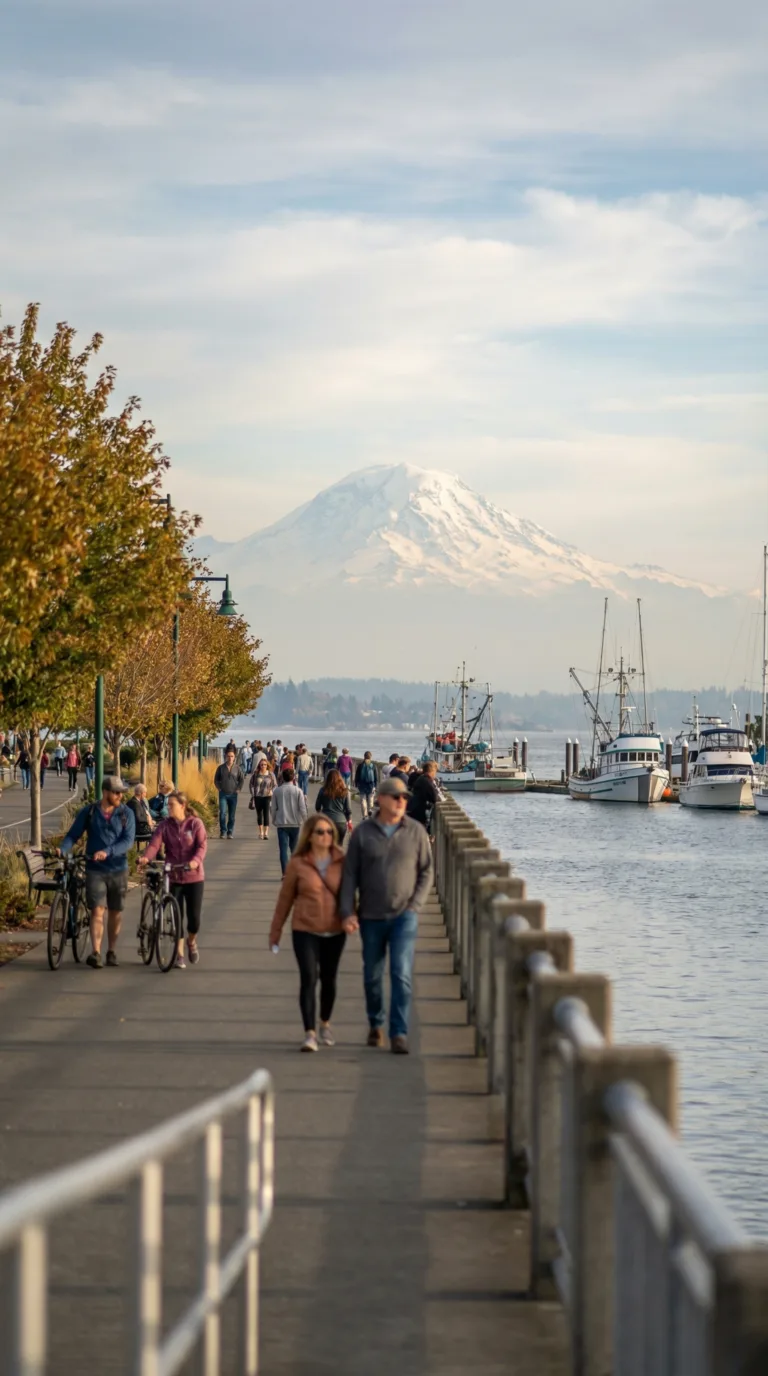
The Tacoma Waterfront runs along Ruston Way for two miles of paved walking path. Restaurants line the route with patios facing Commencement Bay. On clear days, Mount Rainier dominates the southern skyline. Early morning or late afternoon light makes the view worth stopping for.
Tacoma Mall serves as the region’s shopping hub with 150 stores. Standard American mall experience. The Stadium District offers more character, Victorian homes from the 1890s climb the hillside above downtown. Stadium High School looks like a French chateau. Walk it. The architecture tells Tacoma’s boom-era story better than any museum placard.
Getting to and Around Tacoma
Planning Tip
Seattle-Tacoma International Airport sits 20 miles north of Tacoma with economy parking from $12 per day, while Pierce Transit operates 40+ bus routes throughout the city with single fares at $2.00.
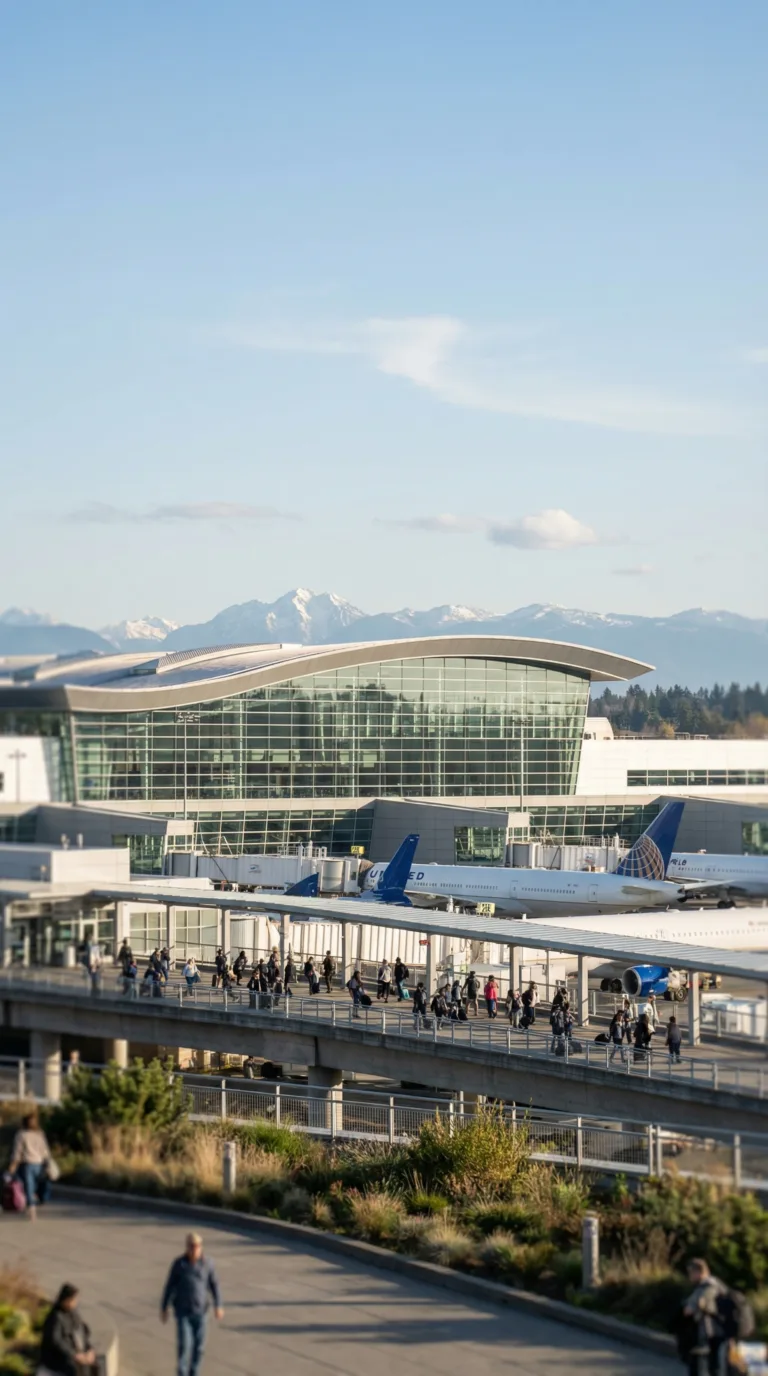
Seattle-Tacoma International Airport (SEA) is your gateway. The airport sits 20 miles north of downtown Tacoma, about a 30-minute drive without traffic. According to the Port of Seattle, the trip takes 25, 40 minutes depending on I-5 conditions. Most visitors fly into SEA and drive south.
Parking costs vary. Economy lots start at $12 per day. The main parking garage runs $30 per day. Book ahead on the Seattle-Tacoma International Airport official website to lock in rates. Long-term travelers save money in the off-site economy lots with shuttle service to the terminal.
Rental cars make sense if you plan day trips. All major agencies operate desks at SEA. Ride-share pickups happen on the third floor of the parking garage. Uber and Lyft charge $40–60 to downtown Tacoma. Airport shuttles cost less but run on fixed schedules.
Public transit works for budget travelers. Sound Transit’s Link light rail connects SEA to Seattle but doesn’t reach Tacoma yet. Extension plans are in progress. For now, take a shuttle or bus with the airport and the Tacoma Dome Station. Check the Sound Transit official website for regional connections for Amtrak and Sounder train schedules.
Inside Tacoma, Pierce Transit runs the show. The system covers 40+ bus routes across the city. Single fares cost $2.00, per Pierce Transit’s current pricing. Day passes run $5.00. Routes connect downtown, the waterfront, Point Defiance, and the University of Washington Tacoma campus. View routes and real-time tracking on Pierce Transit official route maps and schedules.
Downtown Tacoma is walkable. The waterfront, Museum District, and Stadium District sit within a mile of each other. Flat terrain makes walking easy. Bike lanes exist but aren’t extensive.
A car becomes useful for excursions. Mount Rainier National Park is 70 miles southeast. Olympic National Park is 90 miles northwest. Both require driving. Street parking downtown costs $1.50 per hour at meters. Garages charge $8–12 for all-day parking.
Tacoma Travel Budget
Tacoma’s cost of living runs 13% lower than Seattle, with mid-range travelers budgeting $150-250 daily for accommodation, meals, and attractions in Washington’s third-largest city.

Your wallet gets a break here. Tacoma is cheaper than Seattle, so you are not paying Seattle premiums for Puget Sound access. A hotel room that runs $200 in Capitol Hill costs $120 in Tacoma’s Stadium District. Same quality. Different price tag.
Budget travelers can scrape by on $80-120 per day if they stick to hostels or budget motels, cook some meals, and hit free attractions. Mid-range visitors spending $150-250 daily get comfortable hotels, restaurant meals, and museum tickets without stress. Luxury travelers dropping $300+ can book waterfront suites and fine dining without breaking a sweat.
Accommodation runs $70-200 per night depending on season and location. Meals cost $15-50 daily if you mix food trucks with sit-down spots. Museum admission averages $10-20, but several offer free days. Point Defiance Park trails cost nothing. Waterfront walks are free. The Chihuly Bridge of Glass sits outdoors with zero admission charge.
Save money by visiting April-May or September-October when hotel rates drop. Pierce Transit buses cost $2 per ride. Museum combo tickets through Visit Tacoma-Pierce County cut admission costs by 20-30%.
Day trips to Mount Rainier National Park require a $30 vehicle entrance fee per the Mount Rainier National Park Fees & Passes schedule. That covers seven consecutive days if you want multiple visits.
Day Trips from Tacoma
Tacoma’s location provides access to Mount Rainier National Park 70 miles southeast, Olympic National Park 90 miles west, and Seattle 32 miles north, plus North Cascades destinations within a 2-3 hour drive.
Tacoma sits in the middle of everything. You can hit a glacier, a rainforest, and a city skyline all in the same day if you start early.
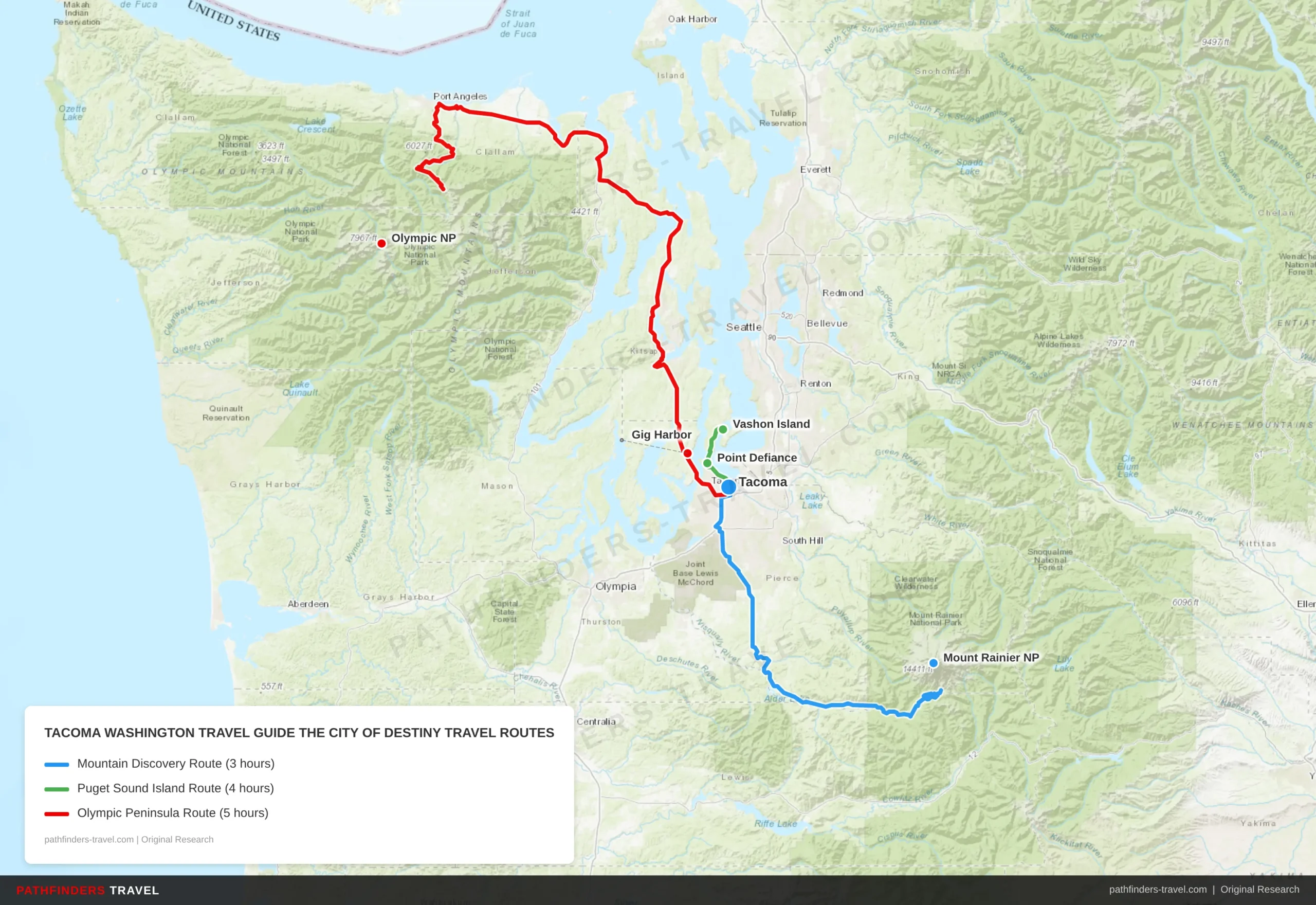
| # | Stop | Highlights | Drive Time |
|---|---|---|---|
| 1 | Tacoma | Museum District, Tacoma Dome, Waterfront Trail | Start |
| 2 | Puyallup | Historic downtown, antique shops, Fair Grounds | 25m |
| 3 | Mount Rainier NP | Paradise visitor center, hiking trails, glacier views | 1h 15m |
| # | Stop | Highlights | Drive Time |
|---|---|---|---|
| 1 | Tacoma | Museum of Glass, Art Museum, downtown attractions | Start |
| 2 | Point Defiance | Zoo & Aquarium, Owen Beach, Fort Nisqually, waterfront trails | 15m |
| 3 | Vashon Island | Ferry ride, island galleries, lavender farms, rural landscapes | 45m ferry |
| # | Stop | Highlights | Drive Time |
|---|---|---|---|
| 1 | Tacoma | History Museum, Chihuly Bridge, Ruston Way waterfront | Start |
| 2 | Gig Harbor | Historic waterfront, harbor views, maritime village charm | 30m |
| 3 | Olympic NP | Temperate rainforest, Hurricane Ridge, coastal wilderness | 2h 30m |
Mount Rainier National Park
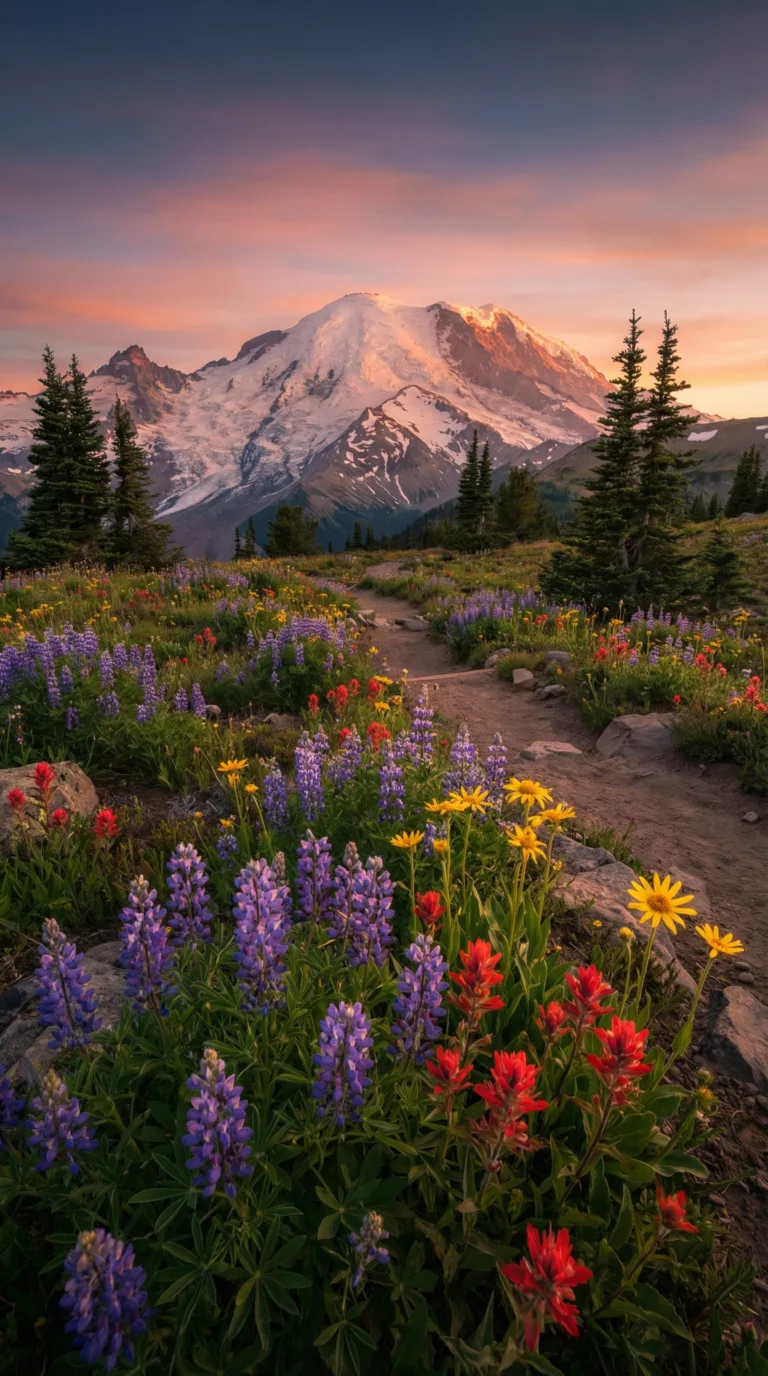
Mount Rainier National Park sits 70 miles southeast of downtown Tacoma. The drive to the Paradise entrance takes about 90 minutes on a clear day. Paradise is the most popular area, parking fills up by 10 a.m. on summer weekends. The Skyline Trail loops 5.5 miles through wildflower meadows with the mountain dead ahead. Sunrise, on the northeast side, sits higher at 6,400 feet. It opens later in the season but gets you closer to glaciers. The park has over 260 miles of maintained trails and pulls nearly 2 million visitors annually, according to the National Park Service. Entrance costs $30 per vehicle, good for seven days.
Snow lingers into July at higher elevations. Bring layers. Cell service dies once you leave Ashford.
Olympic National Park
Olympic National Park sprawls across the Olympic Peninsula, 90 miles west of Tacoma. The drive to the main visitor center in Port Angeles takes about two hours. Hurricane Ridge Road climbs to 5,200 feet with views of the Strait of Juan de Fuca and Vancouver Island. The Hoh Rainforest, on the west side, gets 140 inches of rain a year. Moss hangs from every branch. Rialto Beach has sea stacks and driftwood piles the size of cars. You need separate trips to see all three zones, mountains, rainforest, coast. The park covers nearly a million acres. Entrance is $30 per vehicle for seven days.
Gas stations are sparse on the peninsula. Fill up in Port Angeles or Forks.
Seattle
Visit Seattle is 32 miles north on I-5. Traffic turns the drive into a hour on weekdays, sometimes two during rush hour. Pike Place Market opens at 9 a.m. The fish-throwing is real but happens less often than tourists expect. The Space Needle costs $37.50 for adults. The view is fine, but the line is long. Capitol Hill has better food, pho, tacos, Ethiopian, all within walking distance. The waterfront got rebuilt in 2024. It’s cleaner now but less gritty. Bellevue sits across Lake Washington, 40 miles from Tacoma. It’s mostly shopping malls and tech campuses. Skip it unless you need REI flagship store gear.
Bellingham
Bellingham is 120 miles north, about two hours up I-5. It’s a college town with breweries and a refurbished waterfront. The real reason to go is Diablo Lake and the North Cascades. Diablo sits another 70 miles east on Highway 20. The water glows turquoise from glacial flour, fine rock particles suspended in the melt. The overlook is right off the road. North Cascades National Park has fewer visitors than Rainier or Olympic. The trails are steeper. Ross Lake stretches 23 miles into Canada. You need a boat to reach most campsites. The Cascade Range runs the length of Washington. Snow closes Highway 20 from November to April most years.
Whidbey Island
Whidbey Island is 80 miles north. Take the ferry from Mukilteo or drive up through Deception Pass Bridge. The bridge spans a 180-foot-deep channel with currents that hit 8 knots. Deception Pass State Park has trails along the cliffs. Coupeville is the oldest town on the island. It has a two-block downtown and a pier where you can watch harbor seals. Langley, on the south end, has art galleries and overpriced cafes. The ferry from Mukilteo costs $10.35 for a car and driver, $5.45 for walk-ons.
Skagit Valley
Skagit Valley is 90 miles north, past Mount Vernon. The tulip fields bloom in April. The Skagit Valley Tulip Festival runs the entire month. Traffic backs up for miles on weekends. Go on a weekday morning or skip it. The rest of the year, it’s farmland. Decent berry stands in summer.
Spokane
Spokane is 280 miles east, a four-and-a-half-hour drive across the state. It’s too far for a day trip unless you’re already heading that direction. The climate flips, dry summers, cold winters. Riverfront Park has waterfalls and a gondola ride. The city feels more Midwest than Pacific Northwest.
When to Visit Tacoma
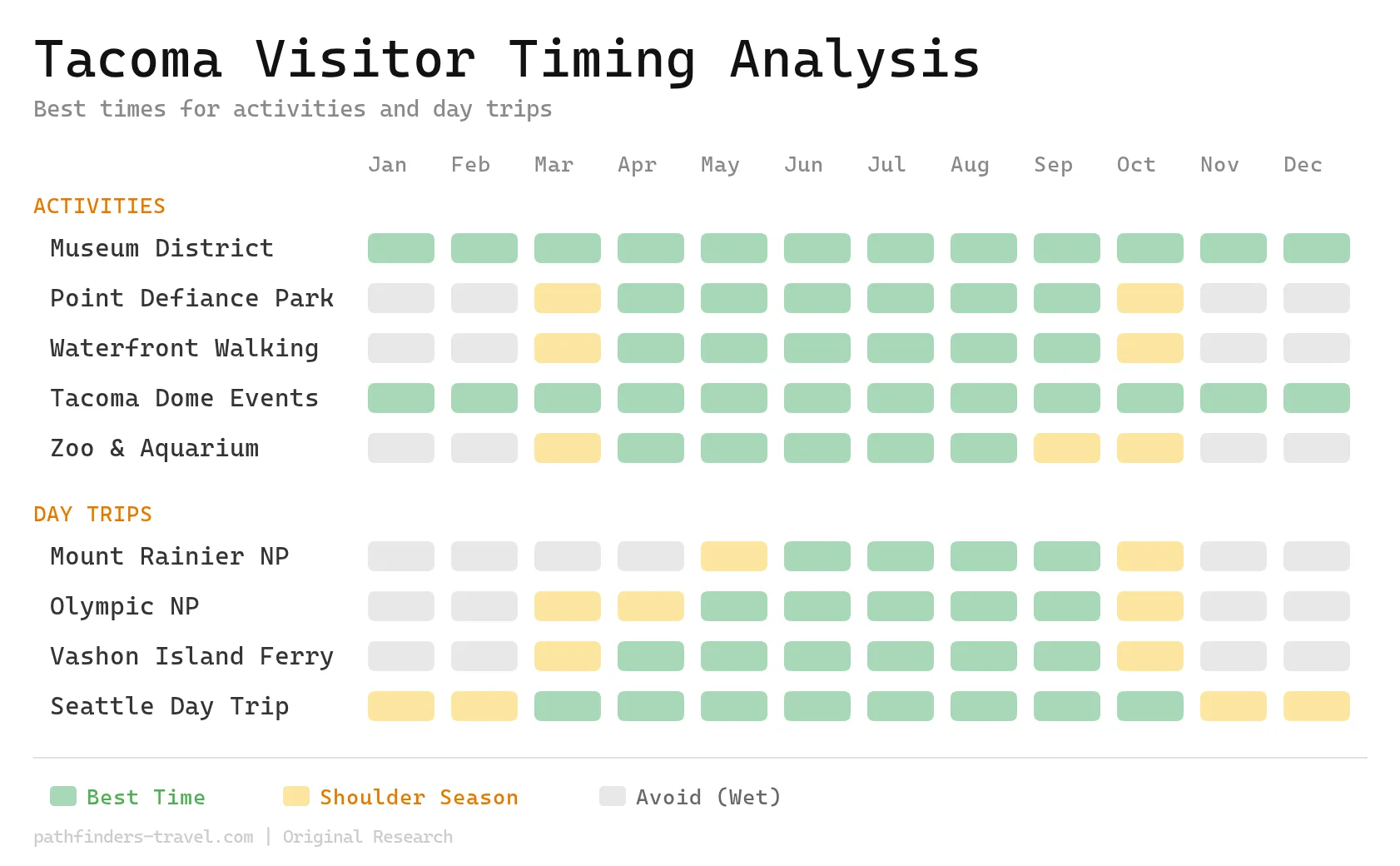
Tacoma enjoys a mild Pacific Northwest climate with summer temperatures averaging 70-80°F and annual rainfall of 38 inches, mostly falling between October and April.
First things first: Tacoma is in Washington State. Not Washington DC. The city sits on Puget Sound in the Pacific Northwest, about 30 miles south of Seattle.
June through September delivers the best weather Tacoma Washington has to offer. Skies stay clear. Rain takes a break. You’ll see locals emerge from hibernation to walk the waterfront and fill outdoor patios. According to the National Weather Service Tacoma forecast office, July and August average just 0.7 inches of rain combined. This dry window also gives you the best shot at unobstructed views of Mount Rainier National Park, the 14,410-foot volcano dominates the skyline when clouds cooperate.
Weather Tacoma WA throws at you the rest of the year? Wet. November through March dumps most of that 38 inches of annual precipitation. Temperatures stay mild, rarely dropping below freezing, but you’ll need a rain jacket. Every. Single. Day.
Shoulder seasons (April, May, October) cut crowds and hotel rates by 20-30%. Trade-off: you’ll dodge rain showers between museum visits. Pack layers year-round. A 65-degree morning can turn into an 80-degree afternoon or stay gray and damp all day.
Planning a trip to Mount Rainier? The National Park Service typically opens Paradise Road (the main access route) by late May, but snow can linger into June. Check road status before you drive, winter closures can extend into spring if snowpack runs heavy.
Browse the Travel Tacoma seasonal events calendar to time your visit around festivals or art walks. Comfortable walking shoes matter more than the season, Tacoma’s hills will test your calves no matter when you visit.
Frequently Asked Questions
What is Tacoma known for?
Tacoma, nicknamed the ‘City of Destiny,’ is known for its glass art — the Museum of Glass and Dale Chihuly, a Tacoma native — plus the huge Point Defiance Park and Zoo, the LeMay car museum, a revitalized waterfront, and views of Mount Rainier on clear days.
What are the best things to do in Tacoma?
Visit the Museum of Glass and Chihuly Bridge of Glass, explore Point Defiance Park, Zoo & Aquarium, tour the LeMay – America’s Car Museum, see the Tacoma Art Museum, walk the Ruston Way waterfront, and wander the historic Stadium District and Union Station.
How far is Tacoma from Seattle?
Tacoma is about 32 miles south of Seattle, a 35–45 minute drive on I-5 (longer in traffic). Sounder commuter trains and buses also connect the two, and Seattle-Tacoma International Airport sits roughly midway, about 20 minutes north of Tacoma.
How many days do you need in Tacoma?
One full day covers the main museums, Point Defiance, and the waterfront. Two days lets you slow down, add a day trip to Mount Rainier or Olympia, or explore more of the dining and arts scene. Many visitors see Tacoma as a day trip from Seattle.
When is the best time to visit Tacoma?
Summer (June to September) is warmest and driest, ideal for the parks, waterfront, and Mount Rainier views. Spring and fall are mild and quieter; winter is cool and rainy but good for indoor museums and lower prices.