This guide contains affiliate links. As an Amazon Associate we earn from qualifying purchases — at no extra cost to you.
Estimated reading time: 15 minutes
Last updated: August 2026
Table of Contents
- Why Is Olympic National Park Famous?
- Top Attractions & Things to Do in Olympic National Park
- Where to Stay: Lodges, Campgrounds & Nearby Hotels
- Getting to & Around Olympic National Park
- Best Time to Visit, Weather & Practical Tips
- Day Trips & Nearby Destinations
- Frequently Asked Questions
Why Is Olympic National Park Famous?
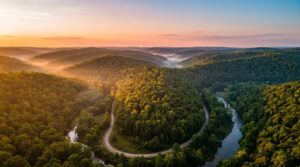
Olympic National Park is famous for packing three wild worlds into one: the moss-draped Hoh Rainforest (140+ inches of rain a year), 73 miles of rugged Pacific coastline with sea stacks and tide pools, and the glacier-capped Olympic Mountains topping out at 7,980-foot Mount Olympus. The 922,649-acre park on Washington’s Olympic Peninsula is a UNESCO World Heritage Site that draws about 3 million visitors a year.
Research & Sources
This guide was created using data from the National Park Service, tourism agencies, and firsthand traveler reports, not personal visits. All practical details were verified at the time of writing, though conditions and pricing can change seasonally. Check official Olympic National Park resources before planning your trip.
Want to experience Olympic’s diverse landscapes for yourself? Watch our complete Olympic National Park documentary in 4K Ultra HD.
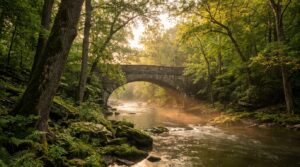
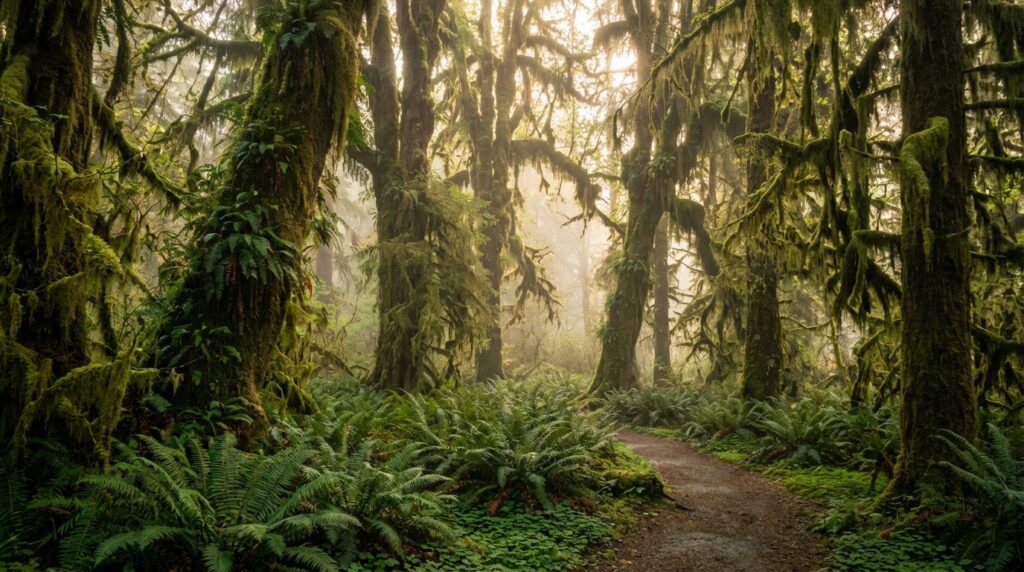
The Hoh Rainforest pulls moss-draped Sitka spruce from the soil like something out of a Tolkien novel. Trees here grow 300 feet tall. Nurse logs rot into the ground while new saplings sprout from their backs. You won’t find this anywhere else in the Lower 48. The UNESCO World Heritage Centre page for Olympic National Park recognizes this as one of the finest examples of temperate rainforest on Earth.
Olympic National Park sits on Washington’s Olympic Peninsula, about a three-hour drive from Seattle. The park sprawls across nearly one million acres, according to the National Park Service, exactly 922,649 acres, making it one of the largest protected wilderness areas in the continental United States. Three ecosystems collide here. Temperate rainforest valleys get 140+ inches of rain per year. Alpine meadows and glaciers cap Mount Olympus at 7,980 feet. Then 73 miles of wild Pacific coastline stretch between the Quillayute River and the Quinault Indian Reservation.
This guide breaks down the park’s major regions. You’ll learn where to stay, how to move between zones, and when to show up. The Official National Park Service Olympic National Park website provides current conditions, but this guide gives you the real logistics.
Top Attractions & Things to Do in Olympic National Park
Olympic National Park’s top attractions include the Hoh Rainforest with 0.8-mile Hall of Mosses loop, Hurricane Ridge at 5,242 feet elevation offering year-round mountain access, Ruby Beach’s iconic sea stacks, and the 0.8-mile Sol Duc Falls trail through old-growth forest.
The Hoh Rainforest is the park’s crown highlight. You walk through a cathedral of moss-draped Sitka spruce and western hemlock that feels prehistoric. The Hall of Mosses trail is only 0.8 miles, but it packs in the full rainforest experience. Nurse logs the size of school buses sprout entire ecosystems. Club moss hangs like green curtains from every branch. The Spruce Nature Trail runs 1.2 miles and loops through similar terrain with interpretive signs explaining how 140 inches of annual rainfall creates this jungle.
The Hoh River Trail starts at the same trailhead. It’s a 17.3-mile route into the park’s interior, popular with backpackers heading to Blue Glacier. Day hikers can walk the first few miles along the river. Elk graze in the riverside meadows most mornings.
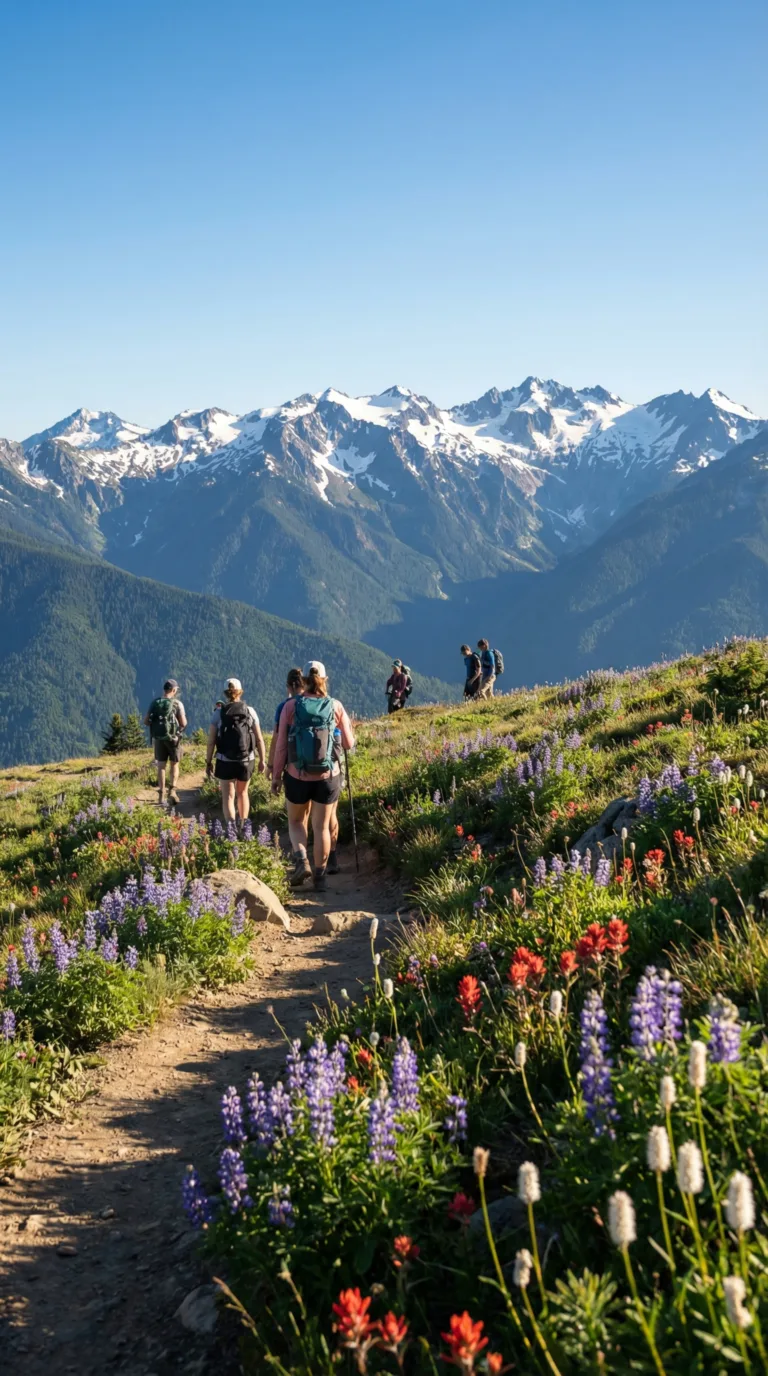
Hurricane Ridge sits at 5,242 feet and delivers alpine views without the alpine suffering. The road is paved all the way to the visitor center. On clear days you see Mount Olympus and the Strait of Juan de Fuca. According to the Official NPS Hurricane Ridge visitor information page, the ridge is accessible year-round, though winter requires chains or 4WD. The Hurricane Hill trail climbs 1.6 miles from the parking lot to a 5,757-foot summit. Wildflowers bloom in July. Black-tailed deer wander the meadows like they own the place.
Olympic National Park maintains over 600 miles of hiking trails, per National Park Service data. The terrain ranges from flat rainforest loops to punishing alpine scrambles. Check the Olympic National Park trail conditions and closures page before you go. Snow lingers on high-elevation routes through June.
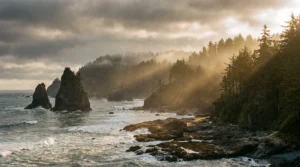
Ruby Beach is the park’s most photographed coastline. Sea stacks jut from the surf like broken teeth. Driftwood logs the size of telephone poles pile up on the sand. Low tide reveals anemones and starfish in the pools. Sunset turns the whole scene orange and purple. Abbey Island sits just offshore. The beach is a 0.2-mile walk down from the parking lot.
Planning Tip
Lake Crescent is a glacially-carved lake so clear you can see 60 feet down. The water stays cold year-round. Storm King Mountain rises straight from the south shore. The Marymere Falls trail is an easy 1.8-mile round trip through old-growth forest to a 90-foot waterfall. Lake Crescent Lodge sits on the north shore and rents kayaks for $25 per hour.
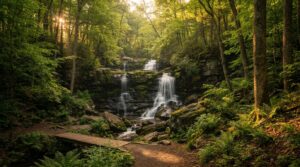
The Sol Duc Falls trail is 0.8 miles one-way through moss-covered forest. The falls drop into a narrow canyon with multiple cascades. The trailhead is near Sol Duc Hot Springs Resort. You can soak in the resort’s mineral pools for $20 if you’re not a guest.
Wildlife shows up everywhere. Roosevelt elk are the park’s signature species. Bulls can weigh 1,000 pounds. They graze in the Hoh and Quinault valleys. Black bears live here, not grizzlies. Harbor seals and sea otters float in the kelp beds off the coast. Bald eagles perch in shoreline snags.
The park’s genius is its variety. You hike through rainforest in the morning, drive to alpine meadows by lunch, and watch the sunset over the Pacific. Most visitors hit three ecosystems in a single day. That’s the whole point of Olympic.
What should you pack for Olympic National Park?
Olympic packs three worlds into one park: a 140-inch-a-year rainforest, a wild Pacific coast, and alpine ridges. Pack to stay dry and warm across all of them:
- packable rain jacket — the Hoh Rainforest gets 140+ inches of rain a year
- waterproof hiking boots — 600 miles of trails run from muddy rainforest loops to alpine scrambles
- hydration daypack — carry water and layers from the Hoh to Hurricane Hill’s 5,757-foot summit
- dry bag — keep your phone and camera dry in the rainforest and along the wild coast
- fleece layer — Hurricane Ridge is alpine-cold even when the coast is mild
As an Amazon Associate we earn from qualifying purchases.
Where to Stay: Lodges, Campgrounds & Nearby Hotels
Olympic National Park offers four historic in-park lodges including Lake Crescent Lodge (open late April-October) and 16 campgrounds with 910 total sites, of which Kalaloch, Sol Duc, and Mora accept reservations up to 6 months in advance via Recreation.gov.
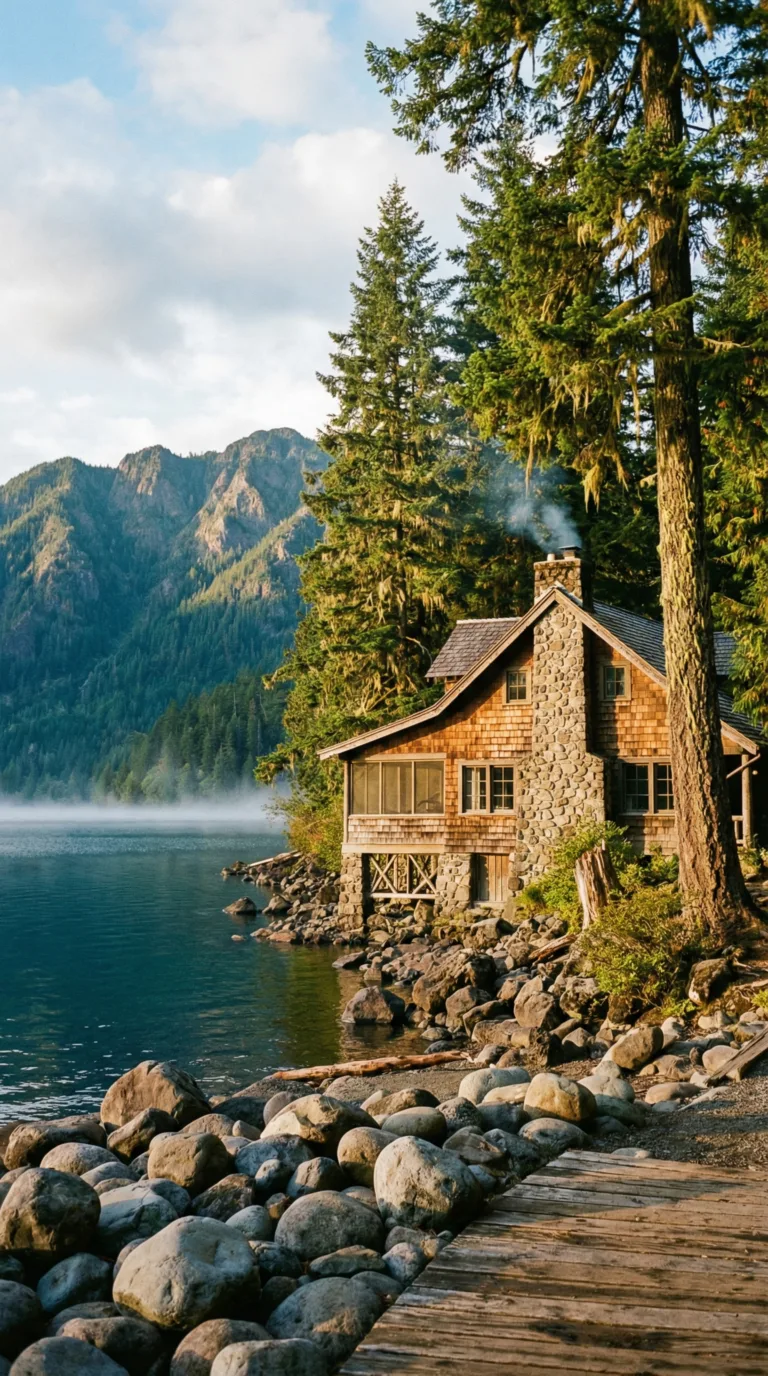
The park’s four in-park lodges give you direct access without daily drives. Lake Crescent Lodge sits on the shore of a glacially-carved lake 21 miles west of Port Angeles. Built in 1916, it operates late April through October with rooms starting around $200 per night. Book through Explore Olympic lodges booking six months ahead for summer weekends.
Kalaloch Lodge perches on a bluff above the Pacific coast. All 64 rooms face the ocean. It stays open year-round, unlike the other lodges. Lake Quinault Lodge anchors the southwest corner of the park in the rainforest zone. Log Cabin Resort on Lake Crescent offers cabins and RV sites from late May through September.
Camping gives you more flexibility and costs $20-30 per night. The park manages 16 campgrounds with 910 total sites according to the National Park Service. Three campgrounds accept advance reservations through Recreation.gov Olympic National Park campgrounds: Kalaloch (170 sites), Sol Duc (82 sites), and Mora (94 sites). You can book up to 6 months ahead per NPS reservation policies.
Kalaloch Campground sits right on the coast with beach access. Sites fill fast in July and August. Fairholme Campground on Lake Crescent’s west end has 88 first-come-first-served sites. Arrive before noon in summer to claim a spot. Sol Duc campground puts you near the hot springs and trailheads.
The remaining 13 campgrounds operate first-come-first-served. Heart O’ the Hills near Hurricane Ridge fills by early afternoon on summer weekends. Hoh Rain Forest campground (88 sites) rarely fills except holiday weekends.
RV camping works at several campgrounds with 21-35 foot length limits. Kalaloch, Mora, and Fairholme accommodate larger rigs. No hookups exist anywhere in the park. Dump stations operate at Fairholme, Kalaloch, and Mora.
Outside the park, Port Angeles offers the most hotel options as the main gateway. Forks on the west side has budget motels and serves Hoh Rain Forest visitors. Sequim east of Port Angeles costs less and sits 30 minutes from Hurricane Ridge.
Match your base to your itinerary. Coastal explorers should stay in Forks or Kalaloch. Rainforest hikers pick Forks or Lake Quinault. Mountain access means Port Angeles or Heart O’ the Hills campground near Hurricane Ridge.
Most lodges and some campgrounds close November through April. Lake Crescent Lodge shuts down entirely. Kalaloch Lodge and several lower-elevation campgrounds stay open year-round for winter storm watching.
Getting to & Around Olympic National Park
Olympic National Park sits 110 miles northwest of Seattle via US Highway 101, accessible by a 2.5-hour drive including a 35-minute Washington State Ferry crossing from Seattle to Bainbridge Island, or a 3-hour drive around Puget Sound through Tacoma.
The park sprawls across the Olympic Peninsula in northwest Washington. No single entrance exists. You pick a region, rainforest, coast, or mountains, and drive to that specific trailhead or visitor center. Seattle sits 110 miles southeast. Most visitors fly into Seattle-Tacoma International Airport (SEA), rent a car, and drive.
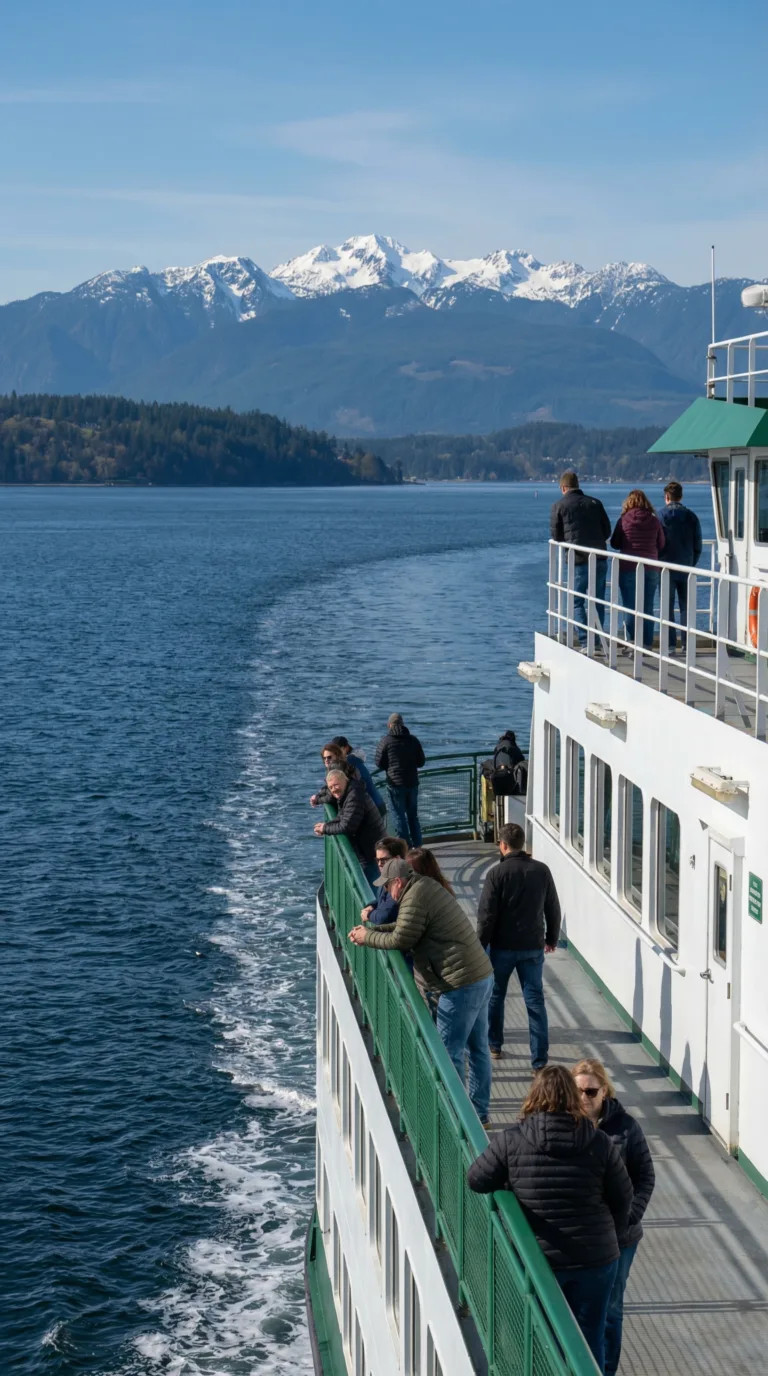
Two routes leave Seattle. The scenic option: drive to the ferry terminal, board a Washington State Ferries schedule and fares boat to Bainbridge Island (35 minutes on the water, departures every 50 minutes), then drive north on Highway 305 to US 101. Total time: 2.5 hours to Port Angeles. The land route: drive south through Tacoma, loop around Puget Sound, head north on US 101. No ferry. Three hours to Port Angeles.
A third ferry runs from Edmonds (north of Seattle) to Kingston. Same idea. Shorter drive to the dock, similar total time. Check the National Park Service – Directions and Transportation page for current conditions.
US Highway 101 circles the entire peninsula. All park entrances connect to this loop. Hurricane Ridge (alpine zone): enter near Port Angeles. Hoh Rainforest: western side, 90 miles from Port Angeles. Rialto Beach: near Forks on the coast. You drive between regions. No shuttles. No public transit inside park boundaries.
Fairchild International Airport in Port Angeles handles small regional flights. Most travelers skip it and fly into SEA. Bellingham sits two hours north of Seattle, known for its own small airport, but the drive to the park from there adds time.
Hurricane Ridge Road closes in winter during heavy snow. The road to the visitor center usually stays open. Check road status before driving. The park’s size demands advance planning. Download a map. Pick your destinations. Budget drive time between regions, sometimes two hours or more.
Best Time to Visit, Weather & Practical Tips
Olympic National Park’s best weather occurs July through September with average temperatures of 65-75°F, though the Hoh Rainforest receives rain year-round; entry costs $30 per vehicle for a 7-day pass, and no timed entry reservations are currently required as of 2026.
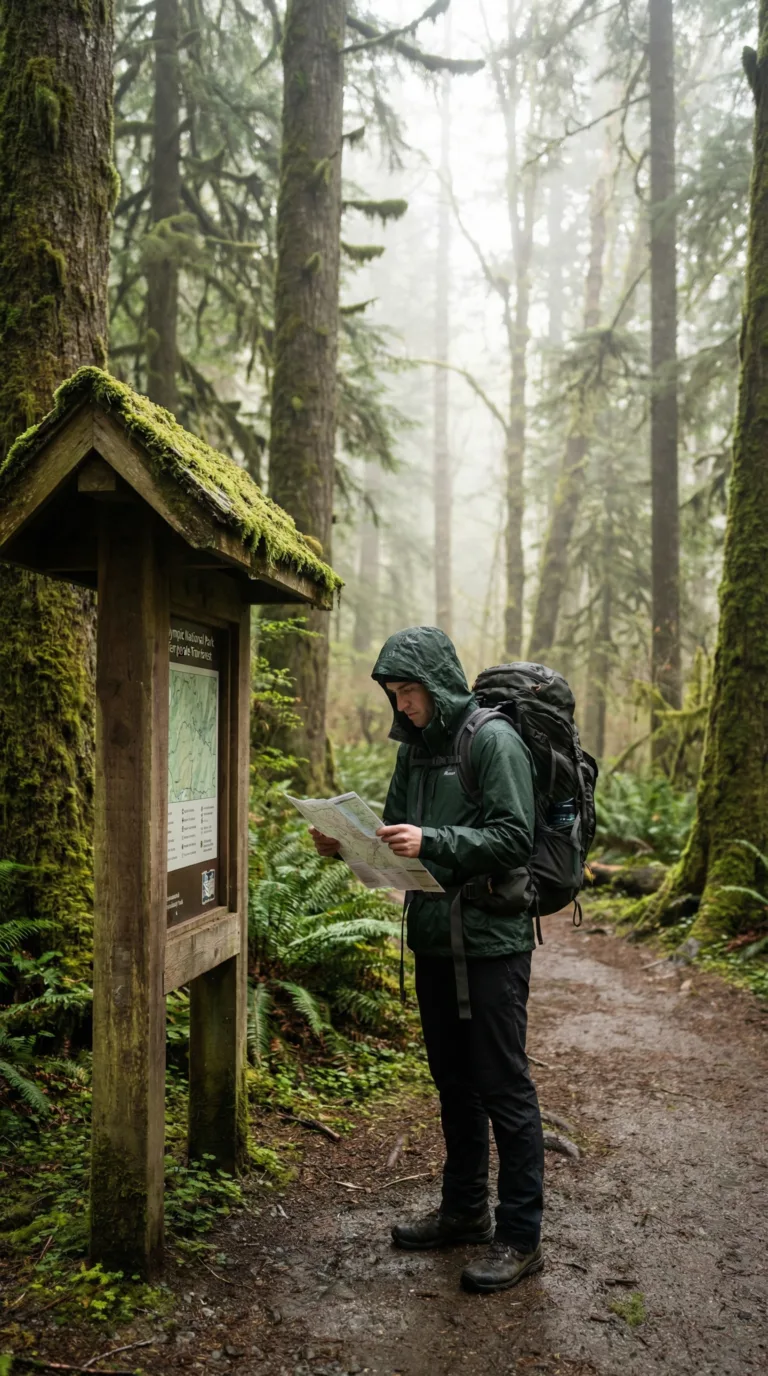
The park’s weather is schizophrenic. Hoh Rainforest dumps 140+ inches of rain annually, one of the wettest spots in the continental U.S. Drive 40 miles northeast to Sequim, and you hit the rain shadow: 15-20 inches per year. Pack accordingly.
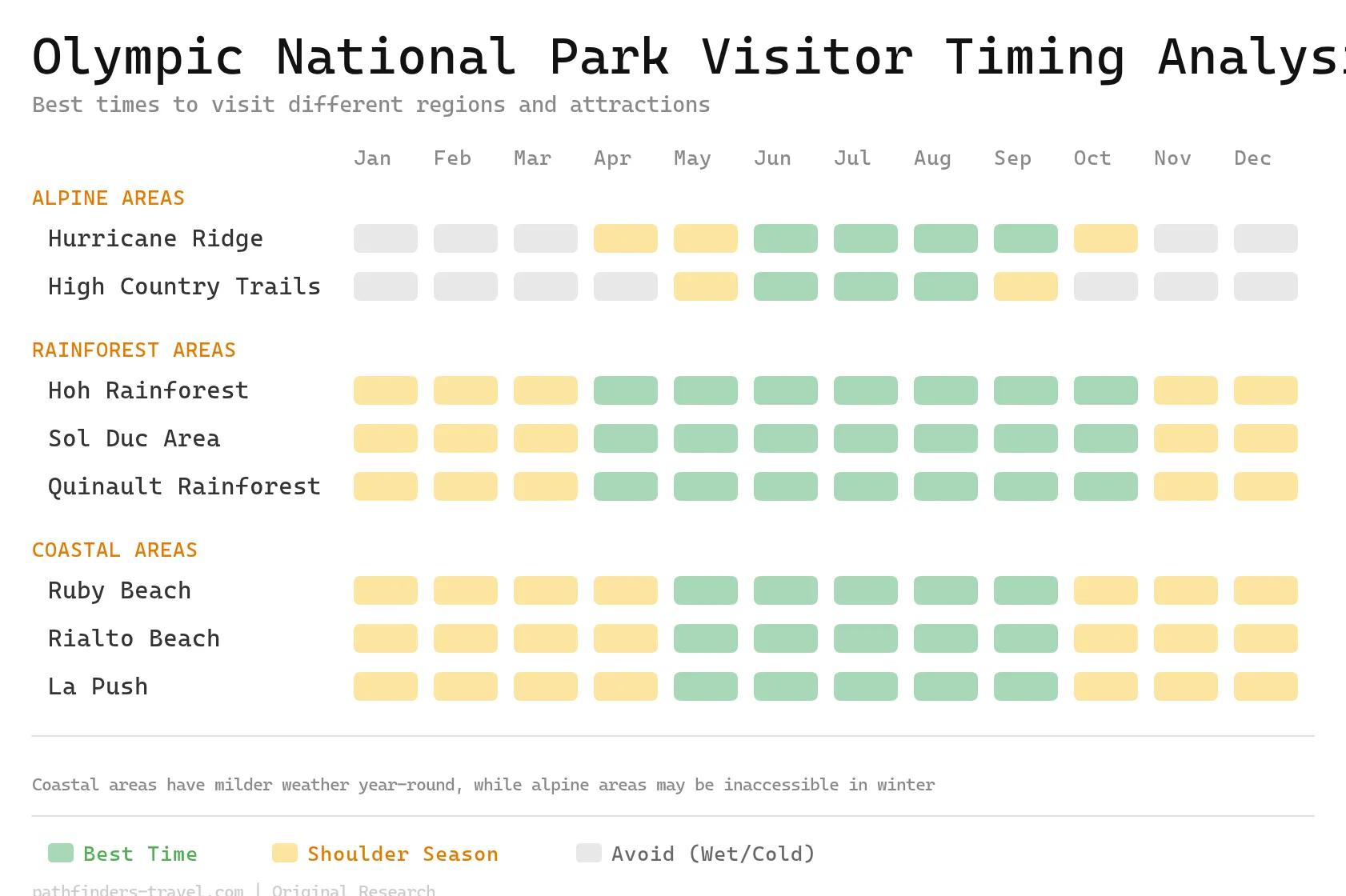
July through September delivers the driest conditions. Expect highs around 65-75°F in lower elevations, cooler at altitude. June still gets wet, don’t assume early summer means dry trails. Spring and fall bring fewer crowds but persistent drizzle. Winter closes Hurricane Ridge Road periodically and blankets higher elevations in snow.
Entry costs $30 per vehicle for a seven-day pass, $25 for motorcycles, $15 per person on foot or bike. The NPS Olympic National Park fees and passes page lists current rates. America the Beautiful Pass ($80 annually) covers all federal recreation sites. No timed entry system exists as of 2026, but arrive early at popular trailheads in summer, parking lots fill by 9 a.m.
Pack layers. Rain jacket goes in your bag every month, even August. Sturdy hiking boots with ankle support handle muddy rainforest trails and rocky beach scrambles. Backcountry campers need bear canisters for food storage, required in most areas.
Black bears roam the park, not grizzlies. Roosevelt elk wander valley floors and meadows. Keep 50 yards from elk, 100 yards from bears. Store food in your car or canister, never in your tent. According to the National Park Service, Olympic receives over 3 million visitors annually, with 60% arriving June through September. Check Weather information for Olympic National Park before you go, conditions shift fast.
UNESCO designated Olympic a World Heritage Site in 1981. The park protects one of the largest remaining temperate rainforests on Earth. President Theodore Roosevelt established Mount Olympus National Monument in 1909 to protect Roosevelt elk habitat. Congress upgraded it to national park status in 1938, expanding boundaries to include coastal strips and alpine zones.
Day Trips & Nearby Destinations
Mount Rainier National Park sits 150 miles southeast of Olympic National Park via a 3.5-hour drive through Tacoma, while Seattle’s urban attractions are 110 miles east, and Whidbey Island‘s scenic coastline is accessible via a 2-hour drive and short ferry crossing.
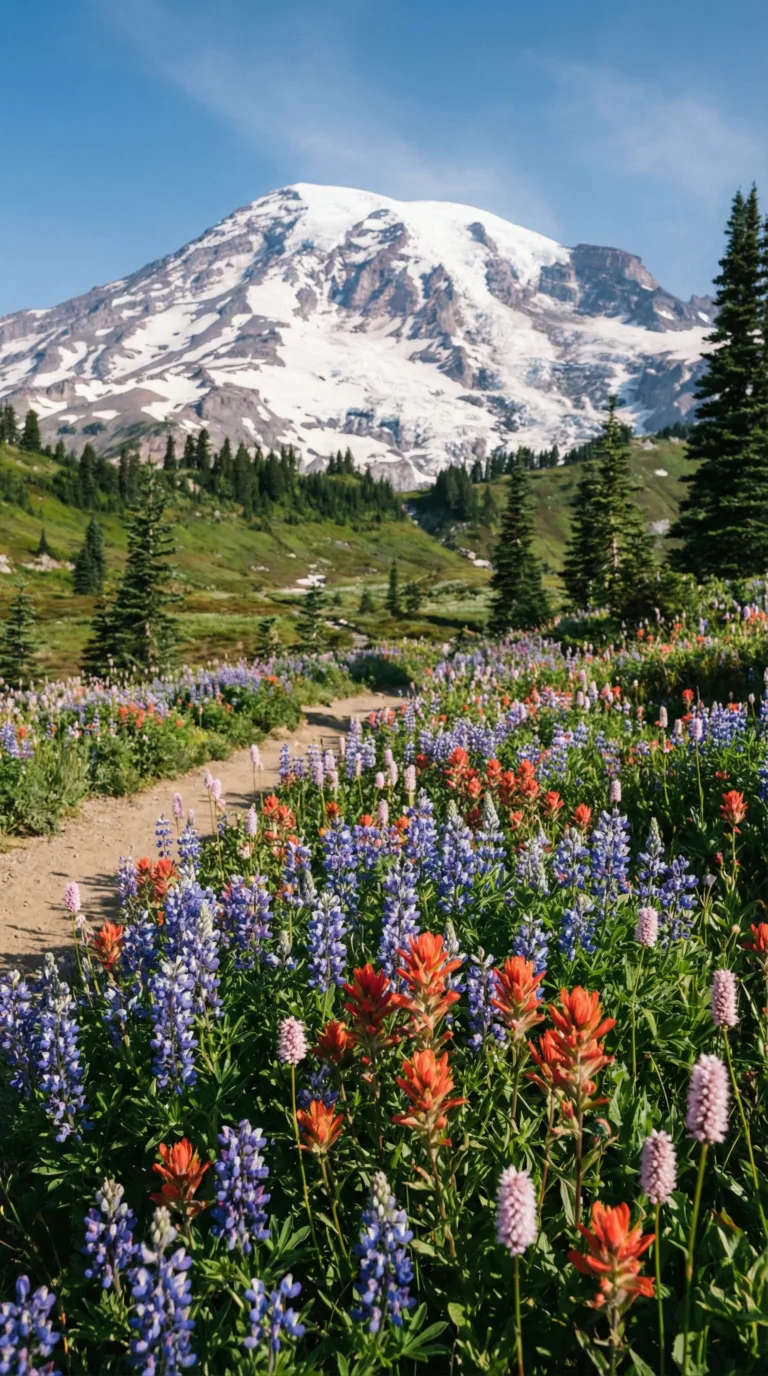
Mount Rainier National Park is Washington’s other headline attraction. The drive takes 3.5 hours from Port Angeles through Tacoma. Mount Rainier towers at 14,411 feet, the state’s highest peak, per National Park Service data. Paradise meadows explode with wildflowers in July and August. Sunrise offers alpine hiking without the crowds. You need a full day minimum. Two days is better.
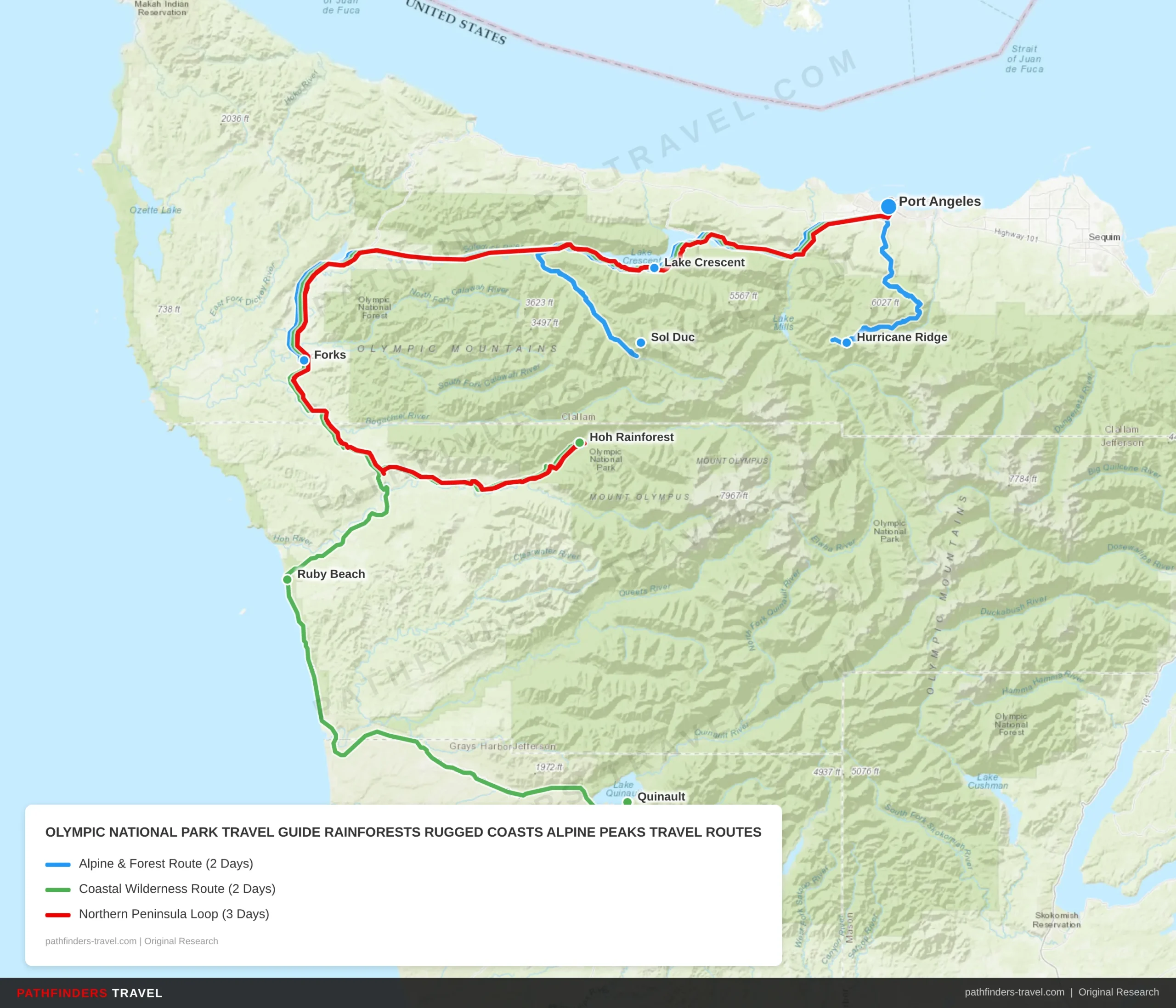
| # | Stop | Highlights | Drive Time |
|---|---|---|---|
| 1 | Port Angeles | Gateway city, visitor center, lodging base for park exploration | Start |
| 2 | Hurricane Ridge | 5,242ft alpine views, Hurricane Hill trail, wildflower meadows, Mount Olympus vistas | 45m |
| 3 | Lake Crescent | Glacial lake, Storm King Ranger Station, Marymere Falls trail | 1h 15m |
| 4 | Sol Duc | Hot springs resort, Sol Duc Falls 0.8mi trail, old-growth forest | 45m |
| 5 | Forks | Logging town, Twilight filming location, gateway to coastal areas | 1h |
| # | Stop | Highlights | Drive Time |
|---|---|---|---|
| 1 | Port Angeles | Starting point, ferry connections to Victoria BC | Start |
| 2 | Forks | Timber town base, supplies for coastal exploration | 2h |
| 3 | Hoh Rainforest | Hall of Mosses 0.8mi loop, Spruce Nature Trail, temperate rainforest | 45m |
| 4 | Ruby Beach | Sea stacks, tide pools, driftwood beaches, Pacific coastline | 30m |
| 5 | Quinault | Quinault Lake, rainforest lodge, giant trees trail | 1h 30m |
| # | Stop | Highlights | Drive Time |
|---|---|---|---|
| 1 | Port Angeles | Park headquarters, urban amenities, ferry terminal | Start |
| 2 | Ozette | Remote lake, boardwalk trails to Pacific beaches, wilderness camping | 2h 30m |
| 3 | Forks | Resupply stop, Forks Timber Museum, vampire tourism | 1h 30m |
| 4 | Hoh Rainforest | UNESCO rainforest, Hall of Mosses, Hoh River Trail access | 45m |
| 5 | Lake Crescent | Glacial lake, historic lodge, return to civilization | 2h |
Seattle sits 110 miles east of Port Angeles. Pike Place Market, the Space Needle, and waterfront breweries make a solid urban reset after days in the woods. The drive takes two hours via the Bainbridge ferry or three hours around the sound.
Whidbey Island works as a quieter alternative. Coupeville and Langley have Victorian storefronts and art galleries. Deception Pass State Park has dramatic bridge views and tide pools. The island is a two-hour drive plus a short ferry from Keystone to Port Townsend.
Diablo Lake and Ross Lake in the North Cascades show off turquoise glacial water. The Cascade Range runs the length of Washington. Olympic is part of that broader mountain system. Skagit Valley tulip fields bloom in March and April, plan accordingly if you’re visiting in spring.
For a week-long Washington loop, combine Olympic with Mount Rainier and the North Cascades. Spokane in eastern Washington adds another dimension if you’re doing a full state tour. Check Washington State Tourism for regional itinerary ideas.
Frequently Asked Questions
What is the best town to stay in to visit Olympic National Park?
Port Angeles is the most popular base for Olympic National Park, right by the Hurricane Ridge entrance and visitor center, with the widest choice of hotels and restaurants. Forks and Lake Quinault put you closer to the Hoh Rainforest and the coast, while Sequim offers a drier, sunnier base on the peninsula’s northeast side.
Which is better, Olympic or Mount Rainier National Park?
It depends on what you want. Olympic is far more varied — rainforest, wild coast, and mountains in one park — and is better for a multi-day road trip. Mount Rainier is more compact, centred on one iconic glaciated volcano with superb wildflower meadows. For diversity choose Olympic; for alpine scenery in a single day, choose Rainier.
What is the best month to visit Olympic National Park?
July through September brings the warmest, driest weather (65–75°F) and the best access to Hurricane Ridge and high trails, along with the biggest crowds. Late June and early October are quieter shoulder times. The Hoh Rainforest stays green and rainy year-round, and winter focuses on lowland rainforest walks and coastal storm-watching.
Are there grizzly bears in Olympic National Park?
No. Olympic National Park has no grizzly bears — only black bears, which are common in the mountains and rainforest. Store food properly and keep your distance. You are far more likely to see Roosevelt elk, deer, marmots, and tide-pool creatures than any bear.
How long is the ferry ride from Seattle to Olympic National Park?
There is no ferry directly to the park, but the scenic route from Seattle crosses Puget Sound first. The Seattle–Bainbridge Island ferry takes about 35 minutes and the Edmonds–Kingston ferry about 30; from either landing it is roughly a 1.5 to 2-hour drive to the main entrances near Port Angeles.