Estimated reading time: 15 minutes
Last updated: September 2026
Table of Contents
- Why Is Austin Famous?
- Top Things to Do in Austin
- Austin’s Food Scene: BBQ and Beyond
- Where to Stay in Austin
- Getting to and Around Austin
- Austin Travel Budget Guide
- Day Trips from Austin
- Practical Tips for Visiting Austin
- Frequently Asked Questions
Why Is Austin Famous?
Austin, the capital of Texas, is famous as the ‘Live Music Capital of the World,’ with hundreds of venues and festivals like SXSW and Austin City Limits. It is also known for outstanding barbecue and Tex-Mex, the ‘Keep Austin Weird’ spirit, outdoor spots like Lady Bird Lake and Barton Springs, the Texas State Capitol, and the bats of Congress Avenue Bridge. It is one of the fastest-growing, most creative cities in the US.
How This Guide Was Researched
This guide is based on research from official tourism resources, local visitor centers, and community travel forums. Prices and availability were accurate at the time of writing. For the latest updates, check the official websites linked throughout this guide.
Want to experience Austin’s live music scene and food culture for yourself? Watch our complete Austin travel guide in 4K.
Austin, Texas delivers an incredible array of things to do. Live music seven nights a week. Brisket that people drive three hours to eat. Swimming holes fed by natural springs. The city earned its “Live Music Capital of the World” nickname through sheer volume: over 250 venues host shows nightly, from dive bars on East 6th Street to amphitheaters along Lady Bird Lake.
The city population sits around 980,000 people. The metro area pushes past 2.3 million. That makes Austin, USA the 11th-largest city in the country and the fastest-growing major metro in Texas. Tech companies moved in during the 2010s. Dell, Apple, Tesla, and Oracle all built major campuses here. The influx changed the city’s character but kept its weird edge intact.
Planning Tip
This guide covers attractions, BBQ joints, hotels, transport options, budget breakdowns, and day trips across Texas. You’ll find real costs, specific addresses, and the kind of details the Visit Austin tourism board won’t tell you. The City of Austin government site has official info, but we’re giving you the ground truth. Spring and fall offer the best weather. Summers hit 100°F regularly. Plan accordingly.
Top Things to Do in Austin
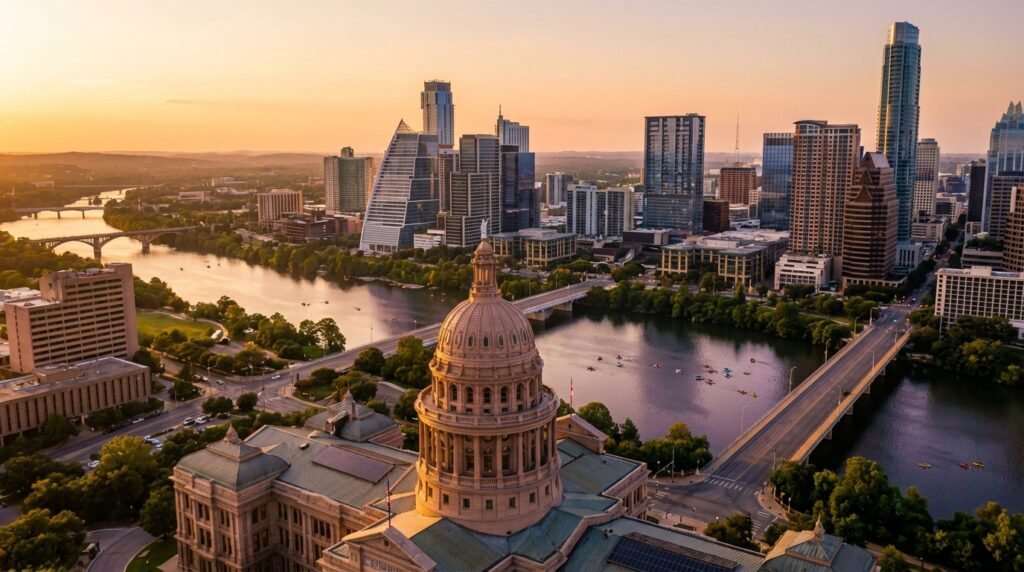
The Texas State Capitol sits downtown. Bigger than the U.S. Capitol in Washington. Free tours run daily. The pink granite exterior catches light differently depending on the hour. Inside, the rotunda stretches 218 feet high. You can walk in without a reservation most days. The grounds cover 22 acres. People jog there at lunch.
Planning Tip
Walk ten minutes south and you hit Sixth Street . Bars open at 11 a.m. Live music starts around 8 p.m. most nights. Cover charges run $5 to $15 depending on the band. The street closes to cars on weekends. Crowds get thick after 10 p.m. The Red River Cultural District runs parallel, smaller venues, local acts, fewer bachelorette parties. Austin earned its “Live Music Capital” nickname here. You can catch live shows seven nights a week.
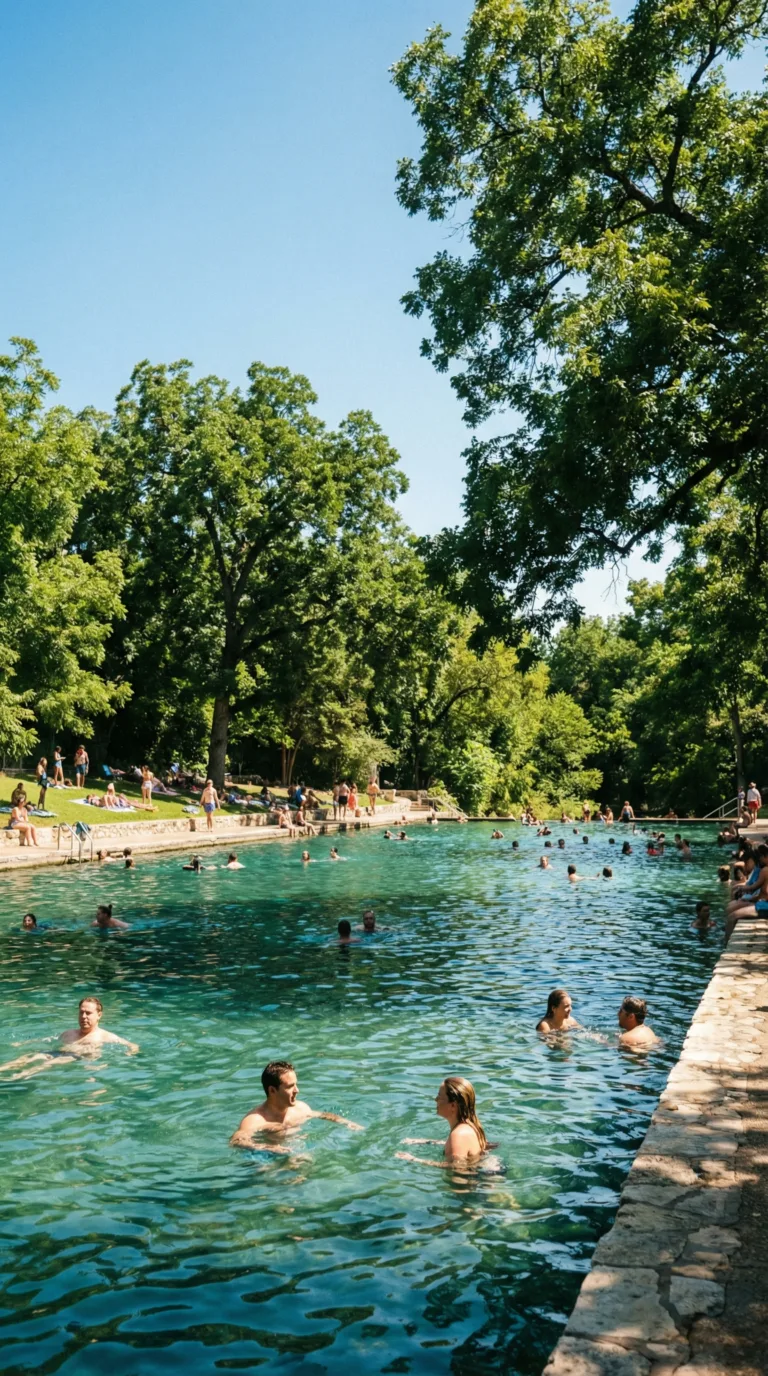
Barton Springs Pool stays 68 degrees year-round. Three acres of spring-fed water inside Zilker Park. Admission costs $9 for adults. The pool stretches 900 feet long. Locals swim laps in January. Tourists float on inner tubes in August. The temperature never changes. Underground springs pump 27 million gallons daily. Get there before noon on summer weekends or you’ll wait in line.
Lady Bird Lake cuts through downtown. Not actually a lake, it’s a dammed section of the Colorado River. The hike-and-bike trail loops 10 miles around the water. Kayak and paddleboard rentals cluster near Zilker Park and along Rainey Street. Expect to pay $25 per hour. The water stays calm. You can paddle under four bridges and see the skyline from the middle.
The Congress Avenue Bridge holds 1.5 million Mexican free-tailed bats from March through October. They emerge at sunset. The show lasts 45 minutes. Peak season runs July and August. You can watch from the bridge itself or rent a kayak and float underneath. The bats eat 10,000 pounds of insects nightly. Free entertainment. Just show up before dusk and claim a spot on the south side.
South Congress Avenue runs south from the river. Vintage shops, boot stores, food trailers. The “I Love You So Much” mural sits outside Jo’s Coffee. People line up for photos. The street stretches about a mile. You can walk it in 20 minutes if you don’t stop. Most people spend two hours browsing.
Things to do in Austin today: Most attractions don’t require advance tickets. Outdoor spaces open at dawn. Live music happens nightly across 250+ venues. The Texas Capitol Visitors Center takes walk-ins until 4 p.m. Barton Springs Pool stays open until 10 p.m. in summer.
Weekend options multiply. The Texas Farmers Market sets up Saturday mornings near the Capitol. Zilker Park hosts festivals March through November, usually two per month. Food truck parks on Rainey Street and East Sixth stay packed Friday and Saturday nights. Brewery tours run hourly at places like Jester King and Austin Beerworks. Most cost $10 and include samples.
Rainey Street converted old bungalows into bars. Smaller crowds than Sixth Street. Craft cocktails instead of beer buckets. The district spans four blocks. You can hit six bars without walking more than 500 feet. Popular with people in their late twenties and thirties.
Museums cluster downtown. The Bullock Texas State History Museum covers 16,000 years in three floors. The IMAX theater shows nature documentaries. Admission runs $15 for adults. The LBJ Presidential Library sits on the UT campus. Free parking on weekends. Exhibits cover the Civil Rights Act and Vietnam War. Contemporary art spaces like The Contemporary Austin change exhibitions every three months.
Downtown walkability beats most Texas cities. You can cover the Capitol, Sixth Street, and the waterfront in one afternoon. Scooters and bikes clutter every corner. Most bars and venues sit within a 15-block radius. The entertainment districts connect via the hike-and-bike trail.
Austin’s Food Scene: BBQ and Beyond
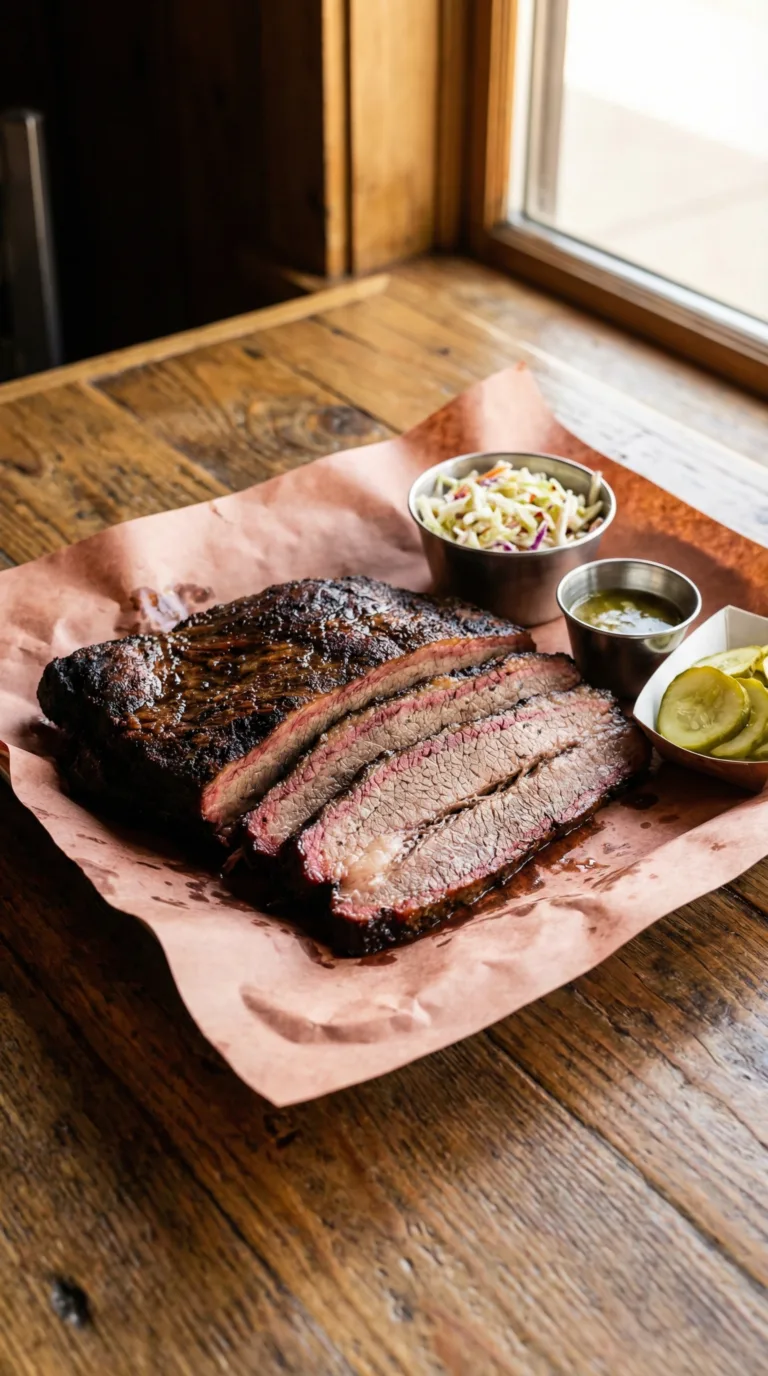
Austin built its food reputation on Central Texas barbecue. Post-oak smoked meat. Salt-and-pepper rub. Nothing fancy.
Terry Black’s Barbecue draws lines down the block most days. People wait a hour for brisket that melts on your tongue. Order by the pound. Get the fatty brisket, not the lean. Add ribs if you’re hungry. Sides come in small portions, this place is about the meat.
Franklin Barbecue still requires a 2-3 hour wait. La Barbecue and Micklethwait Craft Meats offer shorter lines with equally good smoke rings. The BBQ pilgrimage is real here. Tourists plan entire trips around eating smoked meat.
But Austin’s food culture runs deeper than brisket. Breakfast tacos fuel the city every morning. Gas stations sell them. Food trucks park on every corner slinging eggs, potato, and bean. Veracruz All Natural makes some of the best. Two bucks gets you breakfast.
South Congress hosts upscale restaurants in renovated bungalows. East Austin turned into the city’s foodie lab, experimental taco spots next to Thai street food next to natural wine bars. The farm-to-table movement hit hard here. Menus change weekly based on what local farms deliver.
Tex-Mex is everywhere. Queso flows like water. Food trucks offer the best value, $8 gets you a full meal from a trailer that might serve Korean-Mexican fusion or Detroit-style pizza.
Practical notes: BBQ joints sell out by 2pm on weekends. Arrive before they open or skip it. Food trucks accept cards now but bring cash just in case. Breakfast tacos taste the same at fancy spots and corner stores, save your money.
Where to Stay in Austin
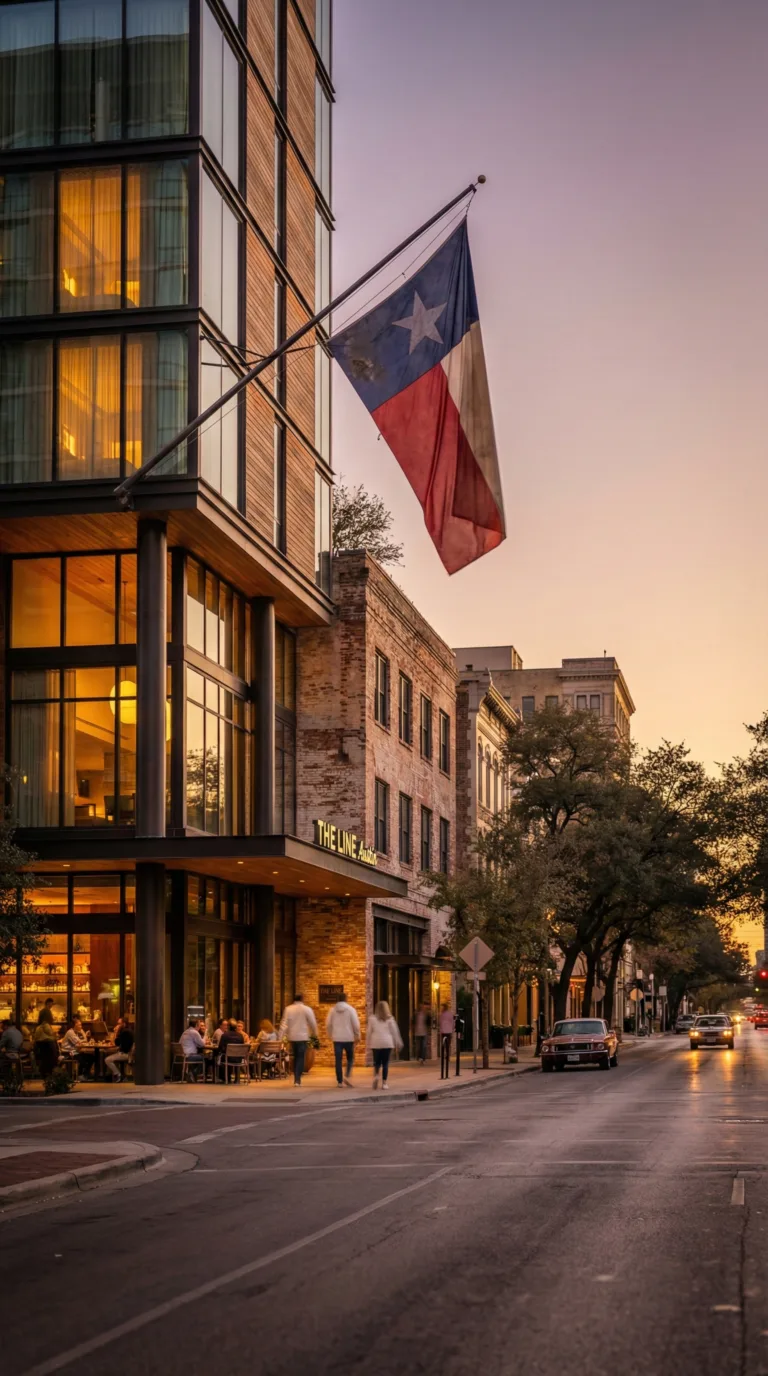
Downtown Austin is the best base for first-time visitors. You can walk to Sixth Street, the Capitol, and Lady Bird Lake. Hotels in Austin Texas cluster around Congress Avenue and Rainey Street. Parking downtown costs $20–40 per night at most properties. Skip the rental car if you stay here.
South Congress offers boutique hotels with actual personality. The neighborhood puts you near vintage shops, food trailers, and the Continental Club. Rates run lower than downtown, usually $150–250 per night. You’ll still walk to central attractions in 15 minutes.
East Austin has emerged as the hip hotel zone. Converted motels and design-forward properties sit among murals, breweries, and taco joints. This area works if you want to skip the tourist core. Expect to Uber downtown for $8–12.
The Domain area caters to business travelers and shoppers. Chain hotels line the streets near this outdoor mall complex north of downtown. You’ll need a car. Rates drop on weekends when corporate travelers leave.
Budget options exist near the University of Texas campus, hostels start at $35 per bed. Chain hotels along the I-35 corridor offer rooms for $80–120, but you’ll sit in traffic getting anywhere. Airbnb rentals in residential neighborhoods like Hyde Park or Zilker run $100–180 per night.
Austin hotels spike during SXSW (March), Austin City Limits Festival (October), and UT football weekends. Book three months ahead for these dates or pay double. The Official Visit Austin accommodation guide lists current deals and availability across all neighborhoods.
Getting to and Around Austin
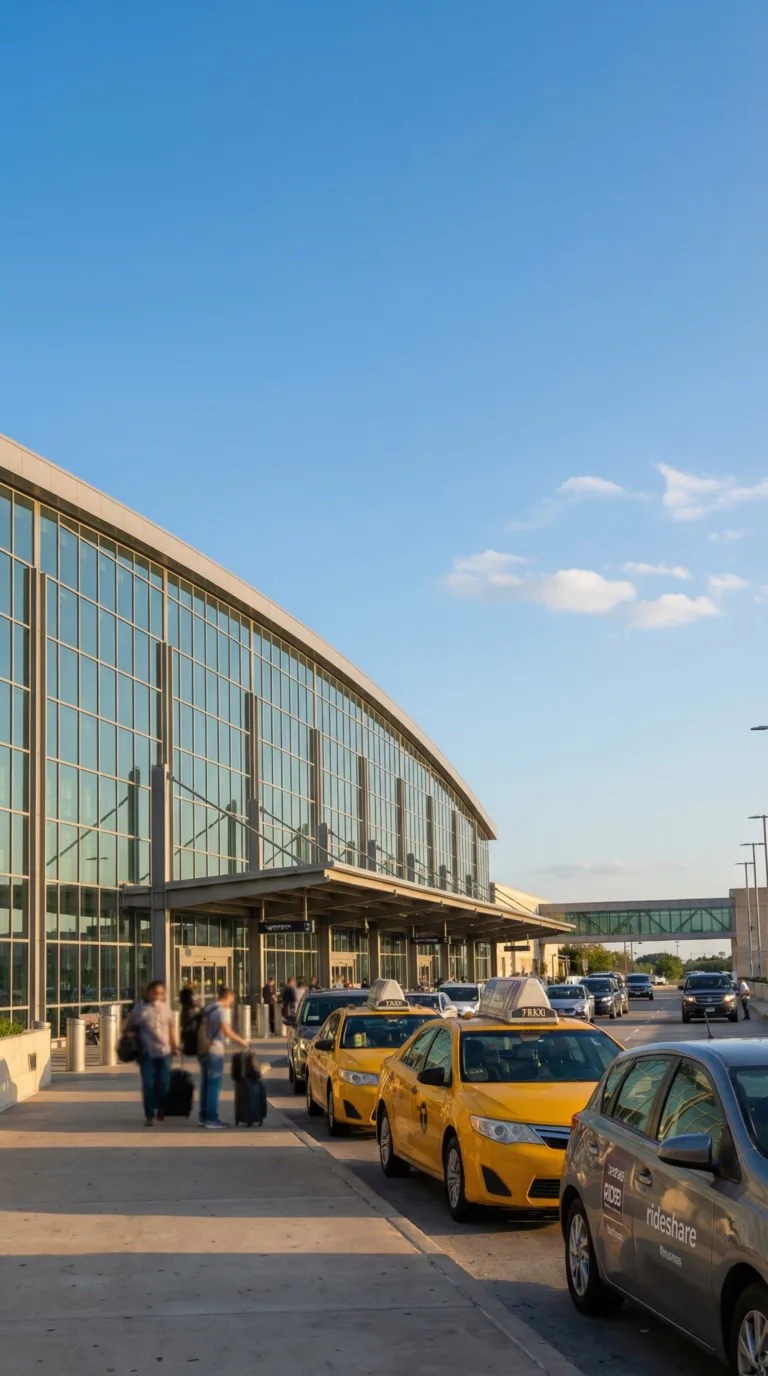
Austin-Bergstrom International Airport sits 5 miles southeast of downtown. Most visitors fly in here. Southwest Airlines runs a major hub, so you’ll find direct flights from most big US cities. International routes cover Mexico and Canada.
Rideshare works best for airport pickups. Uber and Lyft cost $25–35 to downtown, depending on surge pricing. Taxis line up outside baggage claim. Rental cars cluster in a consolidated facility connected by shuttle bus. Capital Metro bus route 20 runs to downtown for $1.25, but it takes 45 minutes with stops.
Austin is a car city. Downtown stays walkable, you can hit Sixth Street, the Capitol, and Lady Bird Lake on foot. The trail system around Lady Bird Lake works well for biking or running. Beyond that, you need wheels.
Public transit exists but feels limited. Capital Metro buses cover most neighborhoods. The MetroRail red line connects downtown to North Austin, though it skips many tourist spots. Most locals use rideshare instead. Trips across town run $15–20.
I-35 clogs up during rush hour. Avoid it between 7, 9 AM and 4, 7 PM. Downtown parking costs $20–30 daily at hotels. Park-and-ride lots near MetroRail stations offer cheaper alternatives.
B-cycle stations and electric scooters scatter across central Austin. They work for short hops, grabbing tacos on South Congress or cruising between bars on Rainey Street. Just watch for traffic.
Austin Travel Budget Guide
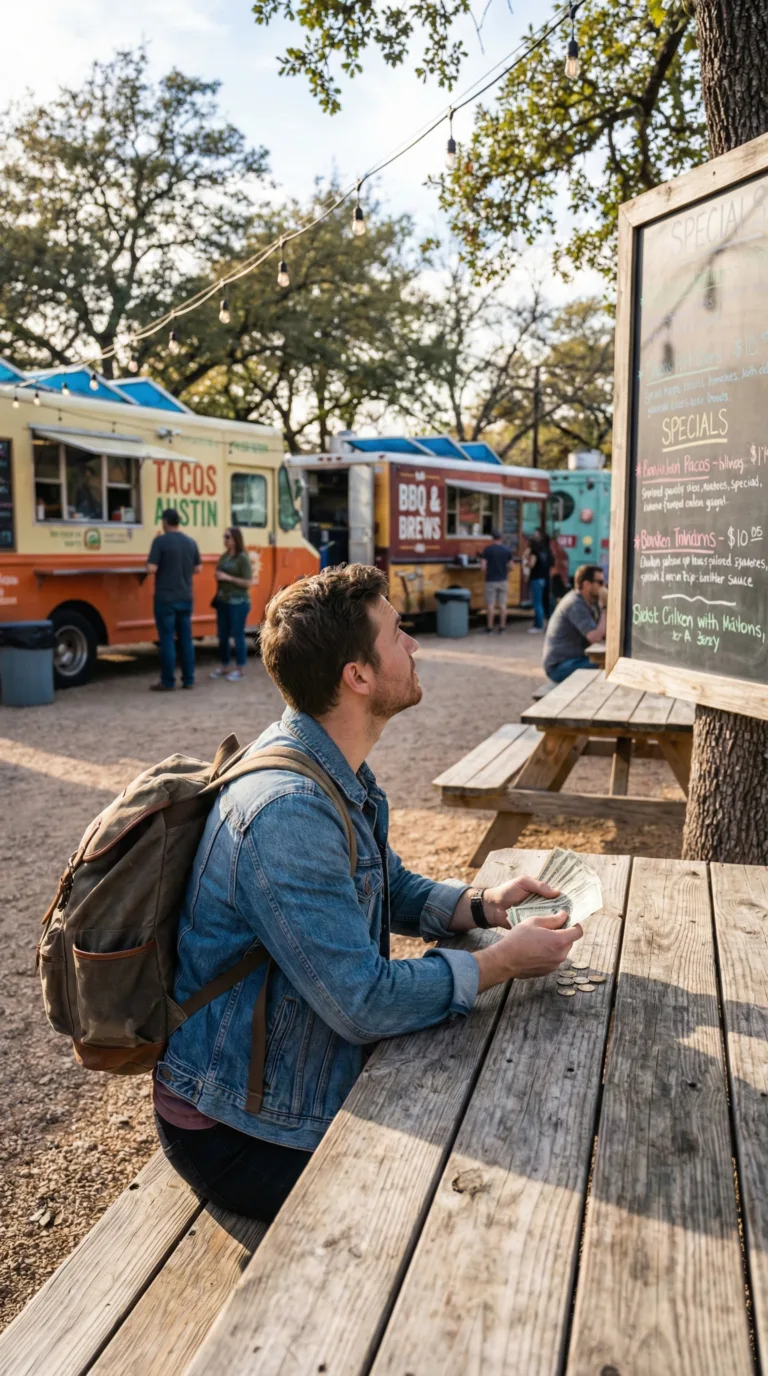
How far does $100 go in Austin? For travelers, $60–80 per day covers the basics. That gets you a hostel bed or budget motel room ($40–50), breakfast tacos ($3–5), food truck lunch ($8–12), and a few beers at a dive bar. Mid-range travelers spending $120–180 daily can afford nicer hotels ($100–120/night), sit-down dinners, and paid attractions. Luxury budgets start at $250+.
Accommodation drives costs. Hostels run $30–50. Chain motels near the interstate cost $60–80. Downtown boutique hotels? $150–200 minimum. Meals vary wildly. Breakfast tacos from a gas station cost $2. A plate of brisket at Franklin’s runs $25. Food trucks split the difference at $8–15 per meal.
Most top attractions are free. Texas State Capitol tours cost nothing. Barton Springs Pool charges $9 for non-residents. Hiking and biking trails don’t cost a cent. Watching bats fly from Congress Avenue Bridge is free. Window shopping on South Congress won’t touch your wallet unless you step inside.
Money-saving moves: hit food trucks for lunch instead of restaurants. Happy hour specials run 3, 6 PM at most bars. Live music venues often skip cover charges on weeknights. Rideshare costs $8–15 for most trips, cheaper than renting a car and paying for parking.
Avoid Austin during SXSW (March) and ACL Festival (October). Hotel rates triple. Spring and fall shoulder seasons offer better deals and comfortable weather.
Day Trips from Austin
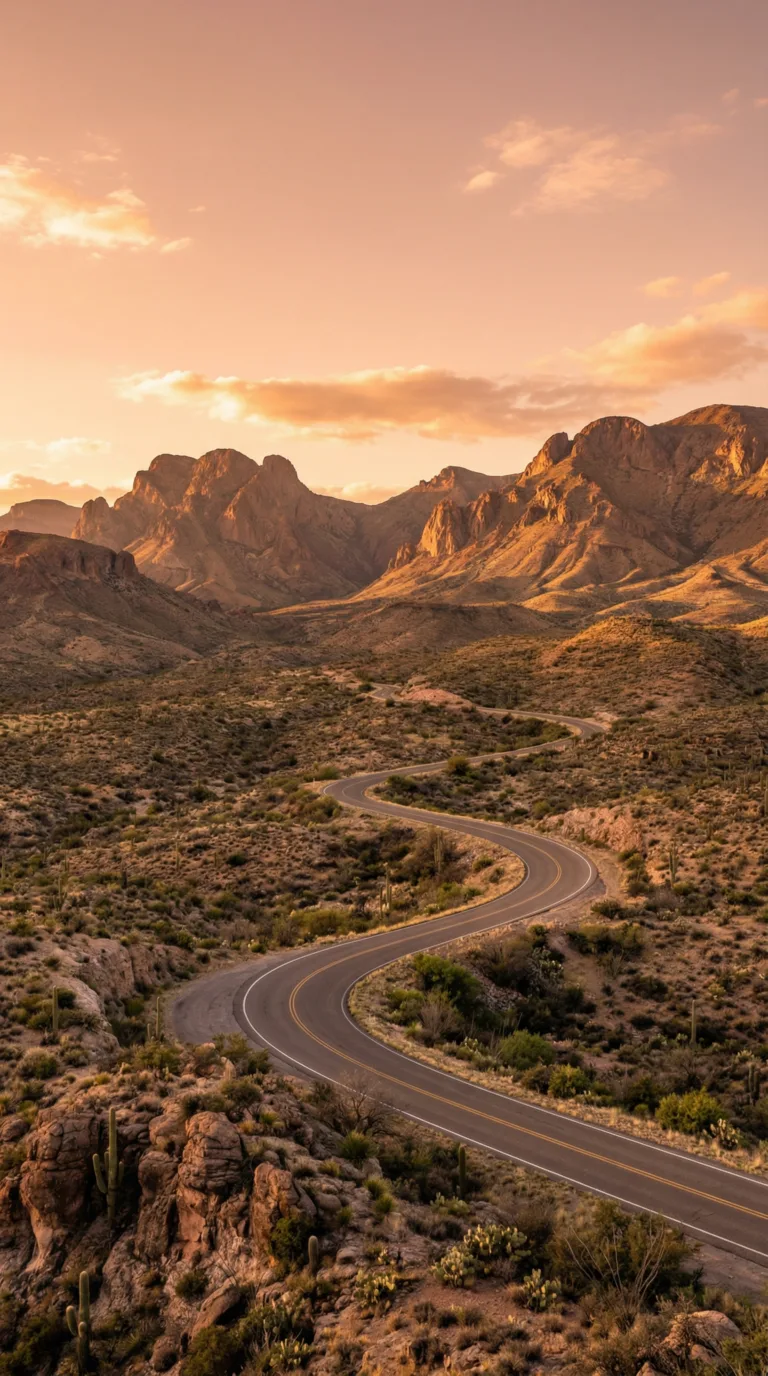
Austin sits in the center of Texas. That means you can reach four major cities, Gulf beaches, and desert canyons all within a day’s drive. You’ll need a rental car. Texas distances are real.
San Antonio sits 80 miles south, about 90 minutes down I-35. The River Walk winds through downtown past restaurants and bars. The Alamo stands in the middle of the city. Spanish missions line the river south of downtown. Check the Visit San Antonio official tourism website before you go.
Houston sprawls 2.5 hours east. Space Center Houston runs NASA tours. The Museum District packs 19 institutions into a walkable area. The food scene pulls from Vietnamese, Mexican, and Nigerian communities.
Dallas and Fort Worth make sense as a combined trip three hours north. Dallas has the Arts District and the Sixth Floor Museum. Fort Worth keeps the Stockyards and cattle drives. You can do both in one long day or split them across a weekend.
Waco sits 100 miles north on I-35. Magnolia Market draws crowds to Chip and Joanna Gaines’ retail empire. The Dr Pepper Museum shows the soda’s origins. It’s a quick two-hour round trip.
The Gulf Coast runs three to four hours southeast. Galveston Island has a historic downtown strand and a seawall beach. Corpus Christi sits 3.5 hours south with the USS Lexington aircraft carrier museum. Smaller beach towns like Port Isabel, Aransas Pass, and Isla Blanca Park offer fishing access and quieter sand. The Queen Isabella Causeway connects South Padre Island to the mainland.
Big Bend National Park requires six-plus hours of driving each way. You need at least two nights. The Chisos Mountains rise out of the Chihuahuan Desert. Hiking trails cut through canyons. The night sky shows more stars than most Americans have ever seen. Get details at Big Bend National Park visitor information.
Guadalupe Mountains National Park sits six hours west near the New Mexico border. Guadalupe Peak tops out at 8,751 feet, the highest point in Texas. Palo Duro Canyon cuts 800 feet deep in the Panhandle six hours north. Both work better as overnight trips.
Possum Kingdom Lake sits three hours northwest for water sports and fishing. Franklin Mountains State Park rises outside El Paso, too far for a day trip but worth noting if you’re driving west.
Practical Tips for Visiting Austin
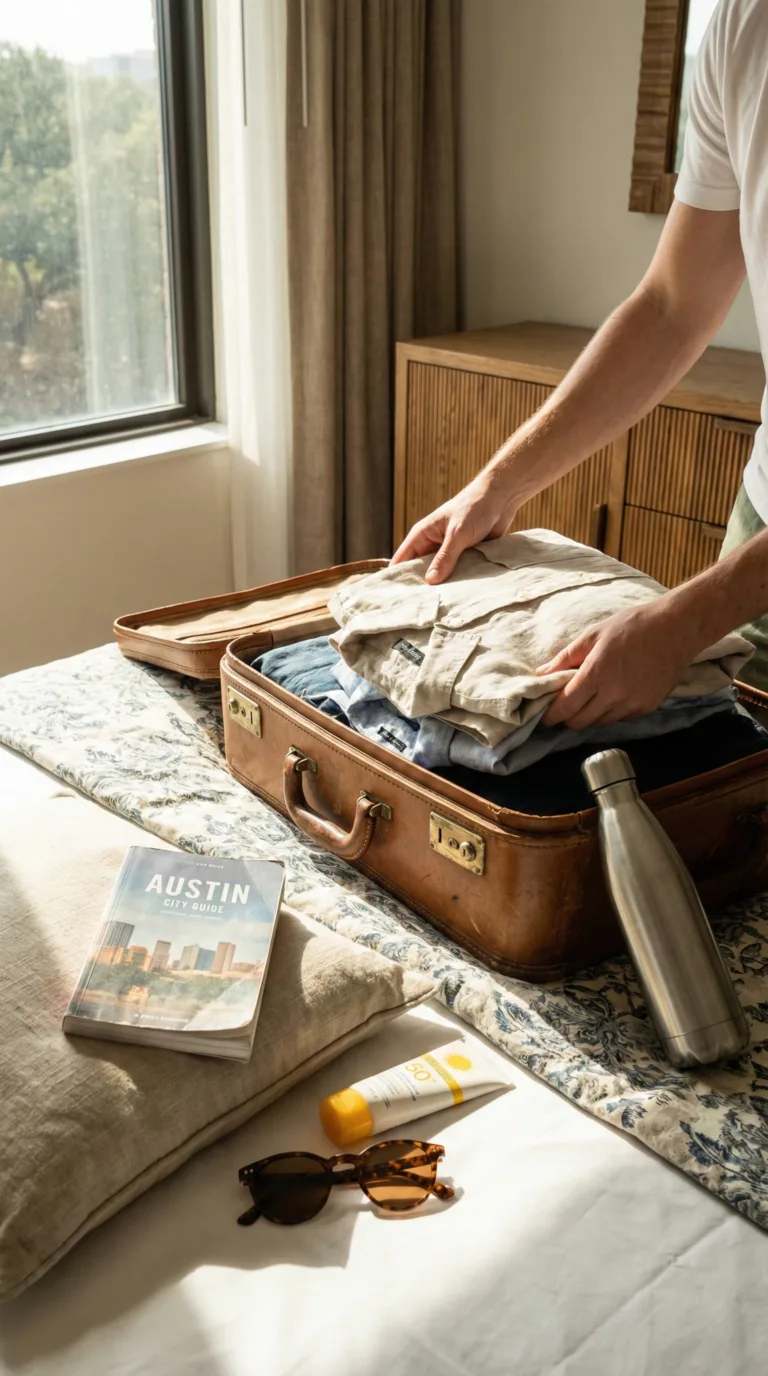
The weather for Austin Texas runs hot most of the year. Summers hit 90-100°F from June through September. Winters stay mild at 50-60°F. Spring and fall deliver the sweet spot: 70-85°F with tolerable humidity.
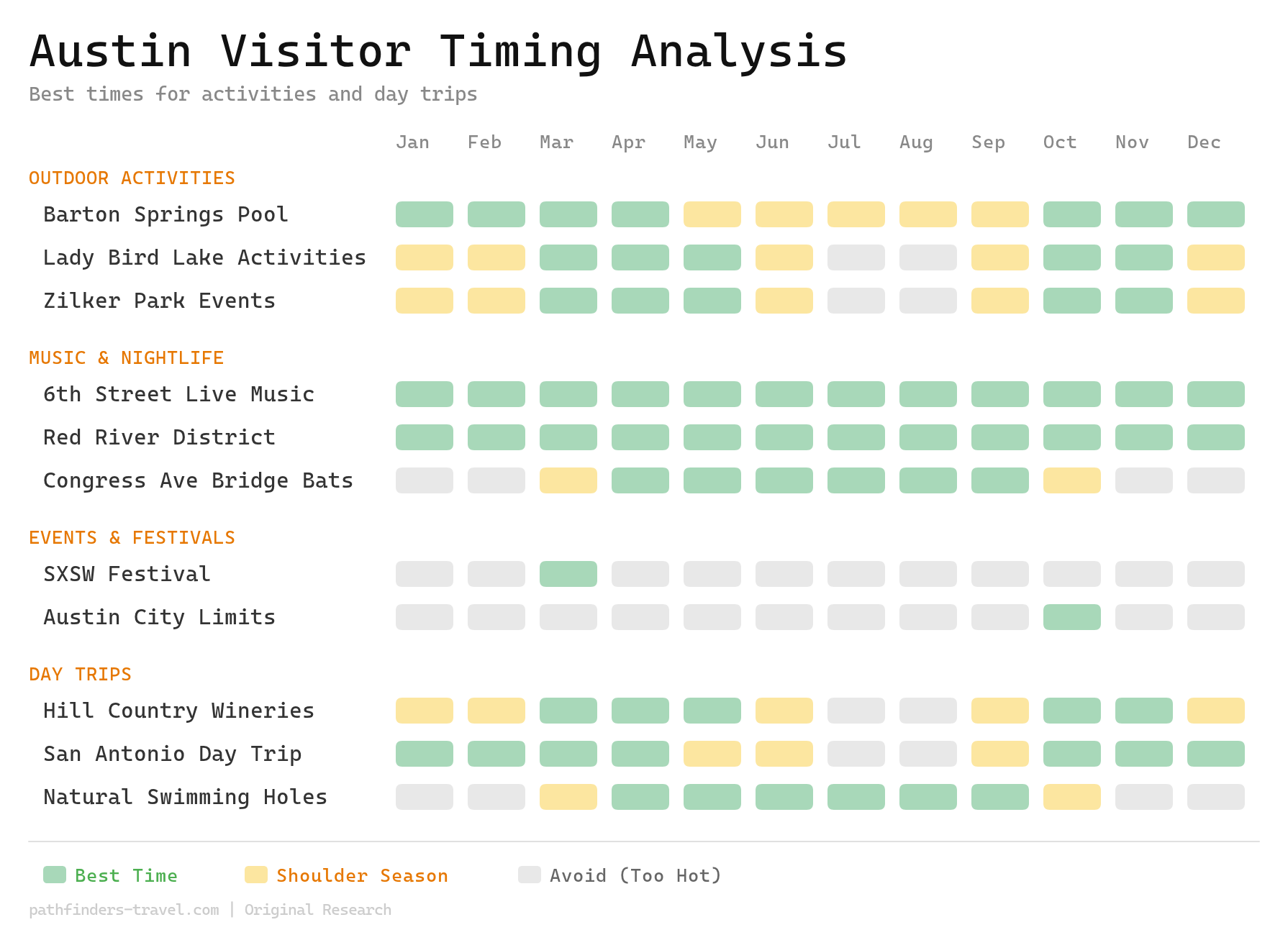
March through May is peak season for a reason. Bluebonnets blanket the roadsides. The heat hasn’t kicked in yet. September through November offers similar conditions with thinner crowds. Check the National Weather Service Austin forecast office before you pack.
Summer demands strategy. Locals hit Barton Springs Pool or other swimming holes to survive the heat. Schedule hikes and outdoor activities before 10 AM or after 6 PM. Carry water everywhere. Sunscreen isn’t optional.
Rain shows up year-round in short bursts. Spring and summer bring afternoon thunderstorms that clear fast. Throw a light rain jacket in your bag.
Major events spike prices and crowds. SXSW takes over March. Austin City Limits Festival floods hotels in October. UT football season packs downtown bars every fall Saturday. Formula 1 weekend in October sells out accommodations months ahead.
Pack light, breathable clothes. Indoor spaces crank the AC hard, so bring a layer. Comfortable walking shoes matter more than style. The city runs casual. “Keep Austin Weird” isn’t just a slogan, it’s permission to dress down. Tip 18-20% at restaurants. Live music venues charge $5-15 covers most nights.
Best Time to Visit
Austin offers year-round attractions, but timing matters for outdoor activities and events. Spring (March-May) and fall (October-November) provide ideal weather for most activities. Summer heat makes outdoor exploration challenging, though indoor venues like music clubs remain comfortable. Major festivals like SXSW (March) and Austin City Limits (October) create peak seasons with higher prices and crowds.
Austin makes an excellent base for exploring nearby Waco’s attractions, located just 90 miles north.
Many visitors combine their Austin trip with a journey south to San Antonio, home to the historic Alamo and iconic Riverwalk.
Austin is consistently ranked among the best places to visit in Texas, offering a unique blend of urban culture and outdoor adventure.
For another vibrant Texas city experience, consider exploring Dallas, located about three hours north along Interstate 35.
Frequently Asked Questions
What are the best things to do in Austin?
Catch live music on Sixth Street and at the Continental Club, swim at Barton Springs, kayak or stroll around Lady Bird Lake, tour the Texas State Capitol, eat barbecue and tacos, watch the Congress Avenue Bridge bats at dusk, and explore the South Congress (SoCo) shops.
What is the best time to visit Austin?
Spring (March to May) and fall (September to November) have the best weather and big events like SXSW and Austin City Limits. Summers are very hot; winters are mild. Book early around major festivals, when prices and crowds spike.
How many days do you need in Austin?
Three days is ideal for a first visit: one for downtown, music, and the Capitol, one for the lake and Barton Springs, and one for food and a Hill Country day trip. Add time for festivals or wineries.
Is Austin expensive to visit?
Austin is mid-range. Hotels jump during SXSW, ACL, and big events, but you can save in shoulder seasons, eat affordably at food trucks and taco spots, and enjoy free attractions like the Capitol, Barton Springs’ grounds, and the bat-watching.
What is ‘Dirty Sixth’ in Austin?
‘Dirty Sixth’ is the nickname for the east end of Sixth Street downtown, a strip of bars, clubs, and live-music venues that gets packed and rowdy at night. It is the heart of Austin nightlife; nearby Rainey Street and the Domain are more relaxed alternatives.