NETHERLANDS TRAVEL GUIDE
Overview
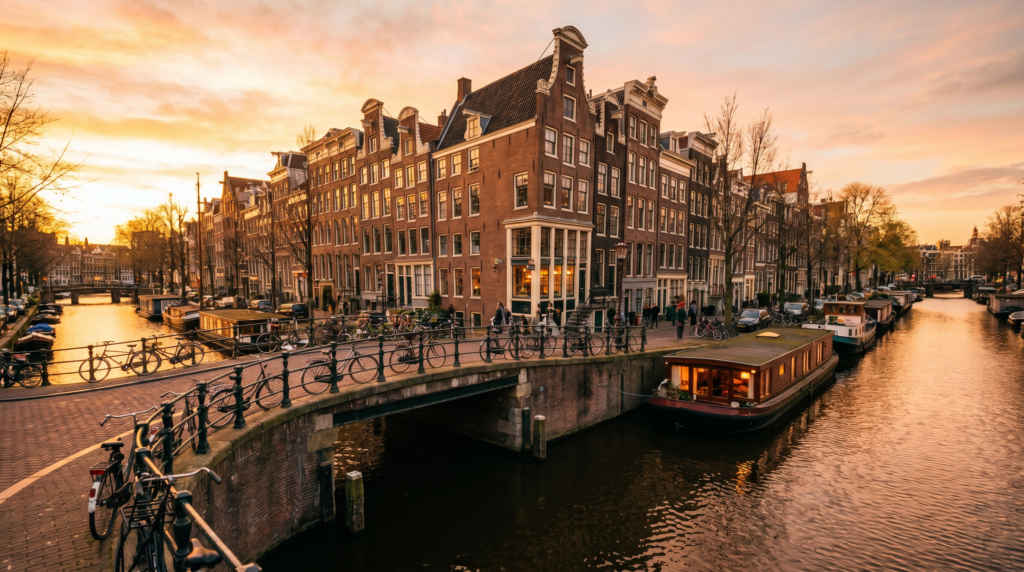
The Netherlands packs an astonishing amount of variety into a small, famously flat country. You can wander Amsterdam’s UNESCO-listed canal ring in the morning, cycle past classic windmills at Kinderdijk in the afternoon, and stand on land reclaimed from the sea by evening. From gabled merchant houses and world-class museums to tulip fields and the bold modern architecture of Rotterdam, the Netherlands blends centuries of Golden Age history with a forward-looking, design-driven present.
We absolutely love traveling in the Netherlands because everything is close, connected, and easy. The train network links nearly every city, the whole country is built for cycling, and almost everyone speaks excellent English. Amsterdam is the natural starting point – perfect for canal cruises, the Rijksmuseum and Van Gogh Museum, and atmospheric neighborhoods like the Jordaan – but it’s only the beginning of what the country has to offer.
Beyond the capital, each city has its own character. Rotterdam dazzles with bold contemporary architecture and a buzzing food scene, The Hague pairs royal grandeur with North Sea beaches, and Utrecht charms with its unique wharf-level canals. Historic Delft, Leiden, Gouda, and Amersfoort deliver picture-perfect old towns, while Zaanse Schans and Volendam offer the working windmills and wooden houses that many travelers come to see.
The Netherlands is also a country defined by its relationship with water. The engineering marvels of the Delta Works in Zeeland and the reclaimed polders of Flevoland show how the Dutch built a nation below sea level, while the wild tidal flats of the Wadden Sea – a UNESCO World Heritage Site – reveal a quieter, natural side far from the crowds.
Bookmark this Netherlands travel guide and keep checking back for more of our best Netherlands travel tips and hidden gems!
Country Snapshot
Safety
The Netherlands is one of the safest countries in the world, with low violent crime and excellent healthcare and emergency services. The most common issue tourists face is petty theft – pickpocketing and bike theft – in busy parts of Amsterdam like Centraal Station, Dam Square, and the crowded canal-belt streets. Keep an eye on your belongings, stay alert in crowds, and take normal city precautions and you’ll have no trouble.
One genuine hazard is traffic – not cars, but bikes. Cyclists move fast and have right of way, so always look carefully before stepping into a bike lane. Nearly everyone speaks fluent English, so communication is effortless, though a friendly “hallo” (hello) or “dank je wel” (thank you) is always appreciated by locals.
Accommodation
As a tourist in the Netherlands, you’ll find excellent accommodation across every budget, from design hotels and canal-house boutique stays in Amsterdam to modern hotels in Rotterdam and cozy guesthouses in smaller towns like Delft and Gouda. Because the country is so compact and well-connected by train, many travelers base themselves in one city and take day trips from there. Staying outside Amsterdam – in Haarlem, Utrecht, or Rotterdam – often means better value and a more local feel. You can search for the best accommodation deals in the Netherlands on Booking.com or Hotels.com.
Budget
The Netherlands is moderately expensive, but manageable with a little planning. Hostel dorms start around €25–40 per night, while budget hotels typically run €90–140, rising sharply in Amsterdam during peak season. A casual meal costs about €12–20 and a sit-down dinner €25–40, though supermarkets, bakeries, and street food like herring or fries keep costs down. A day of train travel between cities usually runs €15–30, and a Museumkaart pays off quickly if you plan to visit several museums.
Best Time to Visit
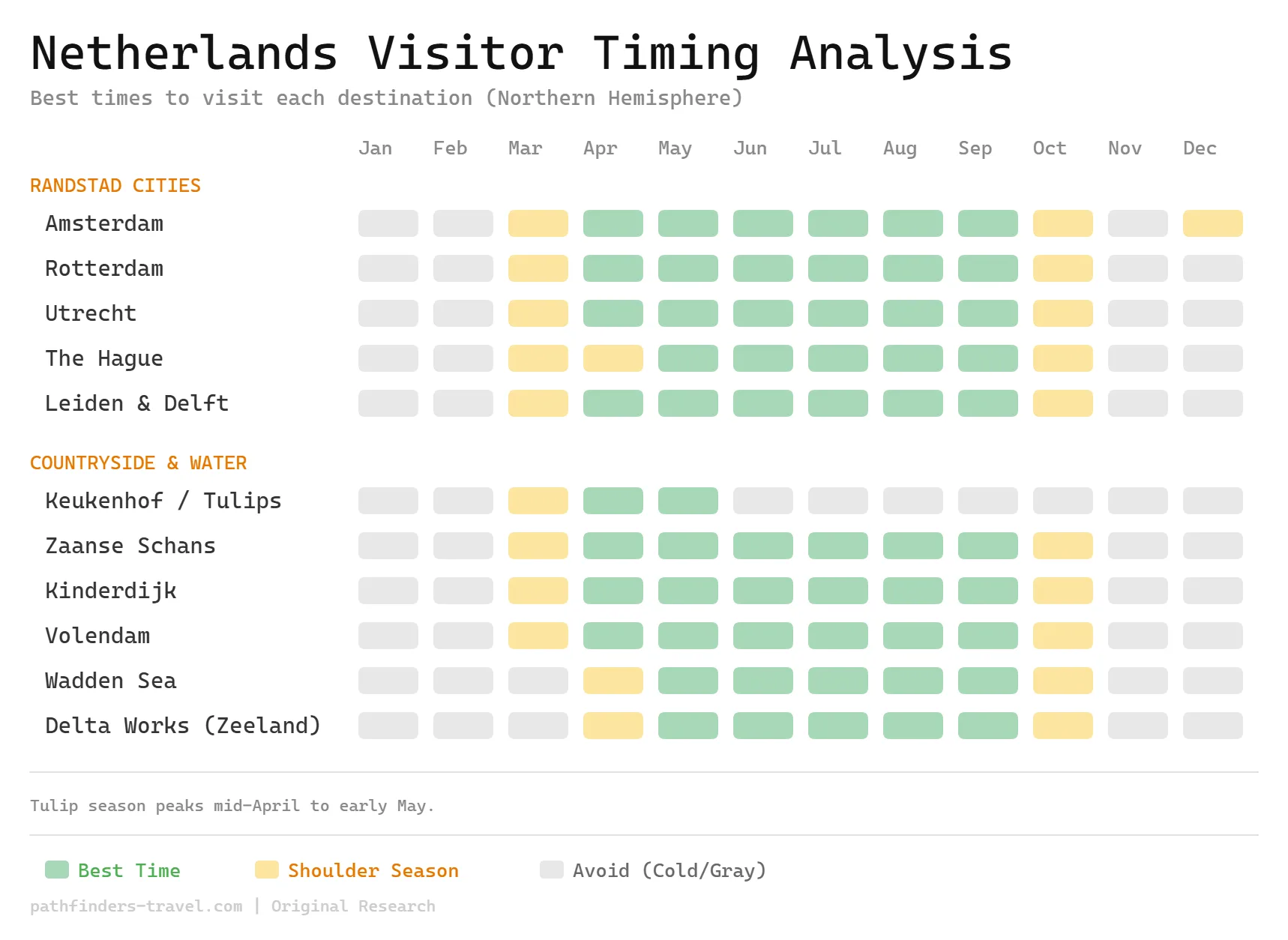
The best time to visit the Netherlands is from April to October, when the weather is mildest and the days are long. Spring – especially mid-April to early May – is magical thanks to the blooming tulip fields and Keukenhof gardens, plus the nationwide celebration of King’s Day on April 27. Summer brings warm café terraces and festivals but also the biggest crowds and highest prices. Autumn is quieter and atmospheric, while winter is cold and gray but cozy, with canals occasionally freezing over. The chart below breaks down the best timing for each destination.
Places to Visit
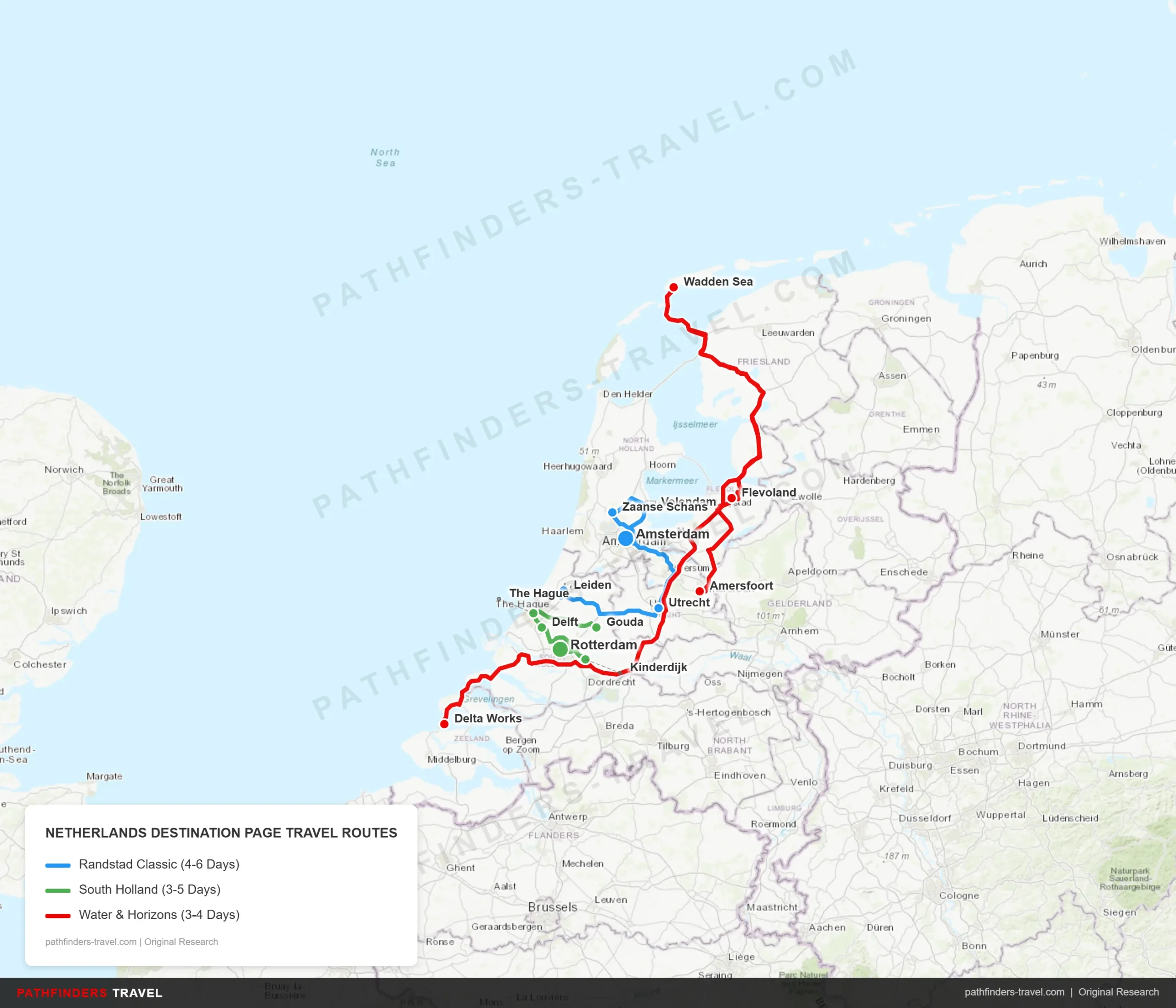
Because the Netherlands is so compact, you can see a huge amount in a single trip – most cities are less than an hour apart by train or car. Many travelers start with the classic Randstad loop around Amsterdam, then explore the historic cities of South Holland, before venturing out to the water landscapes of Zeeland, Flevoland, and the Wadden Sea. Below are our recommended routes with key stops and typical travel times.
| # | Stop | Highlights | Travel Time |
|---|---|---|---|
| 1 | Amsterdam | Canal ring, Rijksmuseum, Van Gogh Museum | — |
| 2 | Zaanse Schans | Working windmills, wooden houses, cheese | 30m |
| 3 | Volendam | Fishing village, harbor, Marken ferry | 40m |
| 4 | Utrecht | Wharf-level canals, Dom Tower, cafés | 1h |
| 5 | Leiden | Canals, museums, historic university town | 45m |
| # | Stop | Highlights | Travel Time |
|---|---|---|---|
| 1 | Rotterdam | Modern architecture, Markthal, harbor | — |
| 2 | Kinderdijk | 19 UNESCO-listed windmills | 30m |
| 3 | Delft | Old town, Vermeer, Delftware pottery | 20m |
| 4 | The Hague | Mauritshuis, royal city, Scheveningen beach | 15m |
| 5 | Gouda | Cheese market, historic market square | 40m |
| # | Stop | Highlights | Travel Time |
|---|---|---|---|
| 1 | Delta Works (Zeeland) | Storm-surge barriers, wide beaches | — |
| 2 | Kinderdijk | Polder windmills, waterways | 1h 30m |
| 3 | Flevoland | Reclaimed polders, Batavia, lakes | 2h |
| 4 | Wadden Sea | UNESCO tidal flats, guided mudflat walking | 2h 30m |
| 5 | Amersfoort | Medieval walls, canals, old town | 1h |
Destination Difficulty
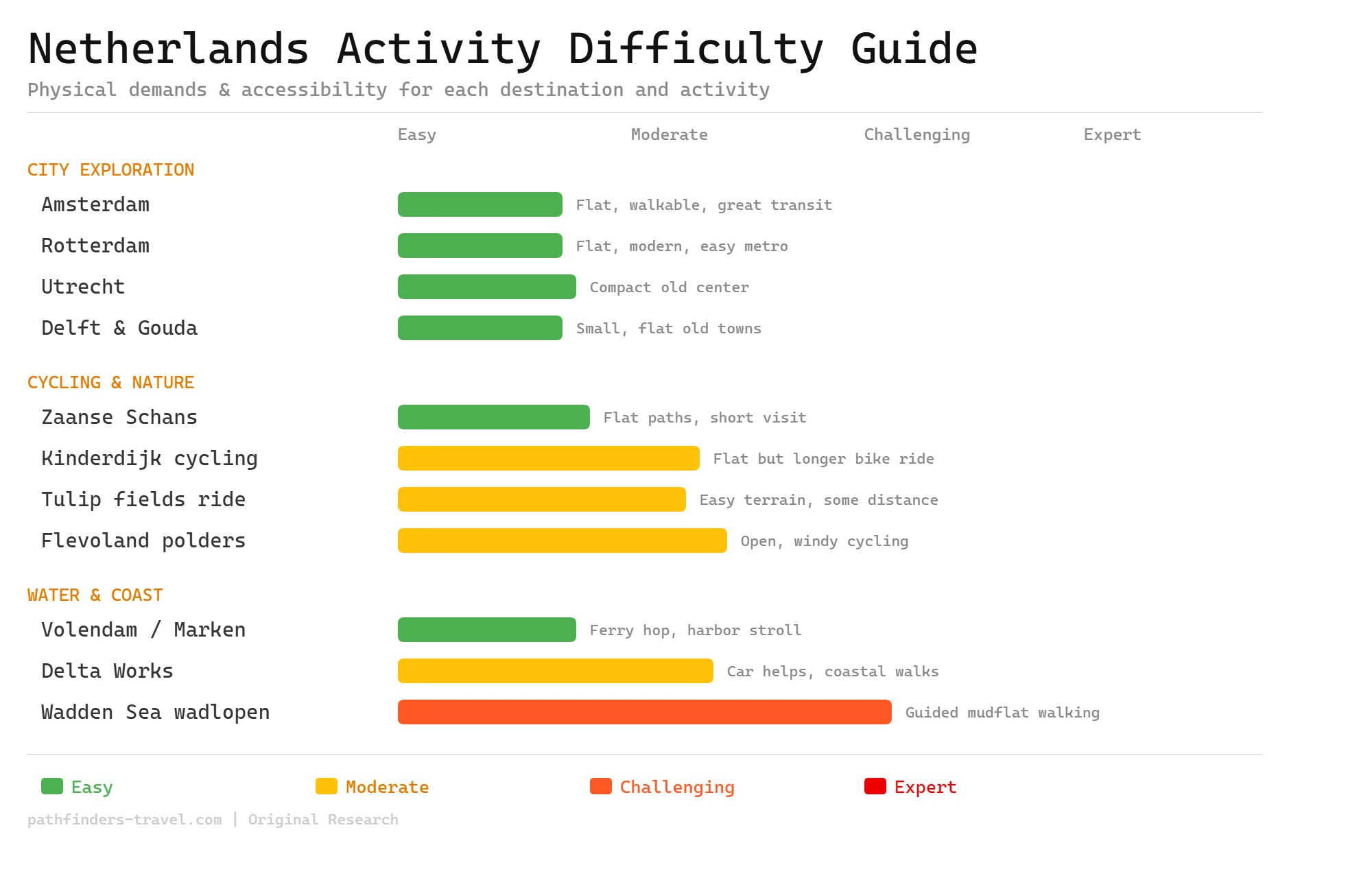
The Netherlands is one of the easiest destinations in the world to travel. The country is famously flat, cities are compact and walkable, and the train and tram networks are clean, punctual, and simple to use. City sightseeing is accessible to almost everyone, and cycling – the quintessential Dutch experience – is gentle and beginner-friendly on the country’s vast network of dedicated bike paths. The few more demanding activities, like guided mudflat walking (wadlopen) across the Wadden Sea, require a guide and reasonable fitness. The chart below rates each destination so you can plan around your comfort level.
Transport
Getting around the Netherlands is effortless. The national railway (NS) connects virtually every city with fast, frequent trains, and a single OV-chipkaart or contactless bank card works across trains, trams, buses, and metros nationwide. Distances are short – Amsterdam to Rotterdam takes about 40 minutes by intercity train. Within cities, cycling is the local way to get around, and rental bikes are everywhere. A car is rarely needed and can be a hassle given limited, expensive parking, though it helps for reaching the Delta Works, rural Zeeland, or the Wadden coast. Apps like the NS app and Google Maps make navigation simple.
Best Activities
The Best Activities & Tours That I Recommend
Blog Posts
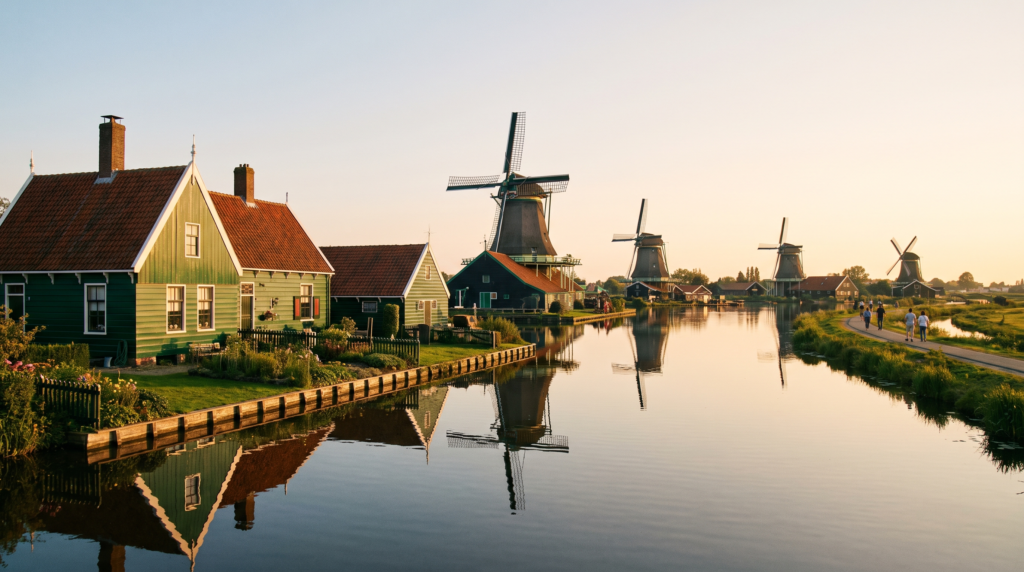
Zaanse Schans Windmills: Day Trip Guide from Amsterdam
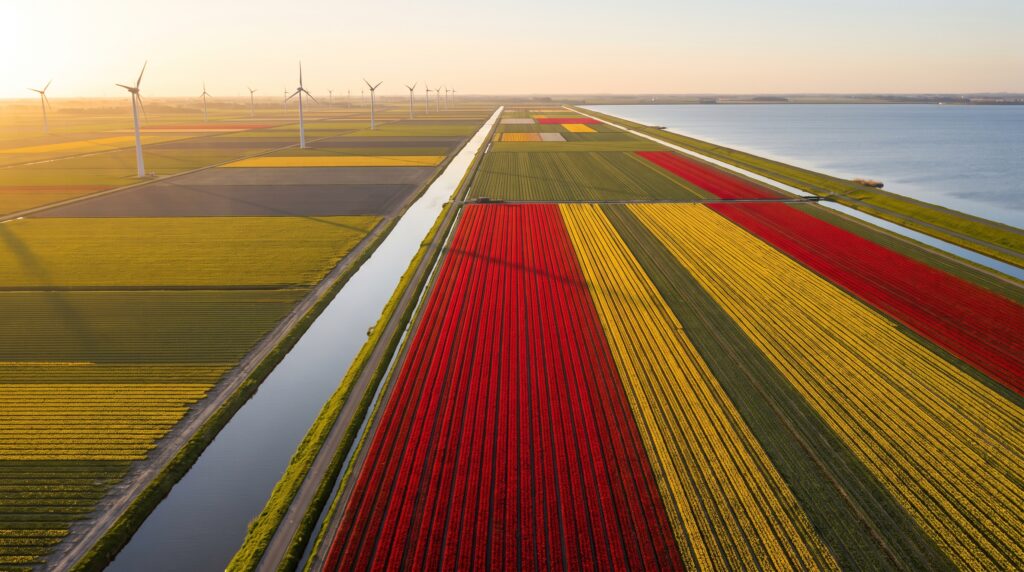
Flevoland Netherlands: Things to Do on Land Built Below the Sea
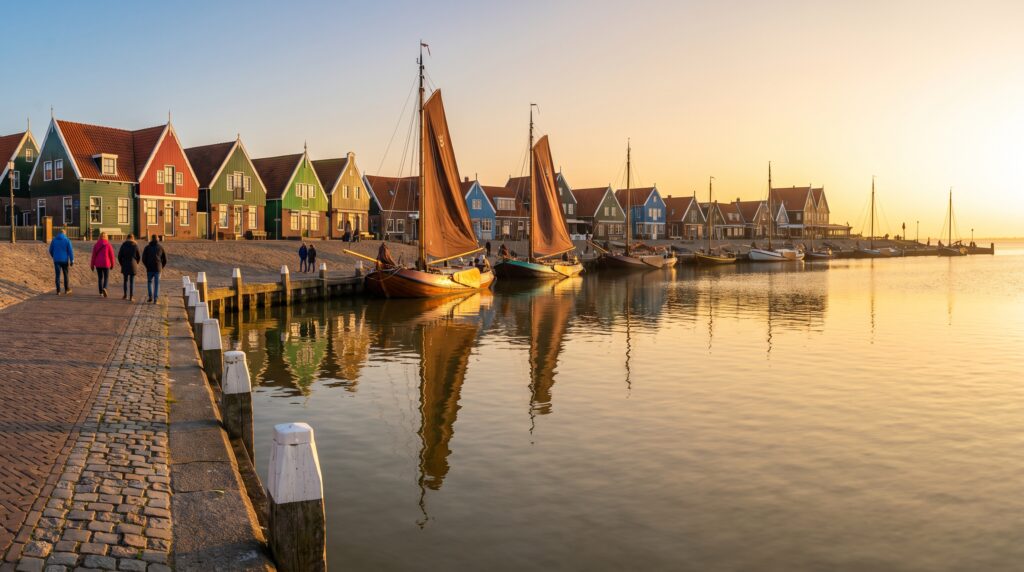
Things to Do in Volendam: A Dutch Fishing Village Guide
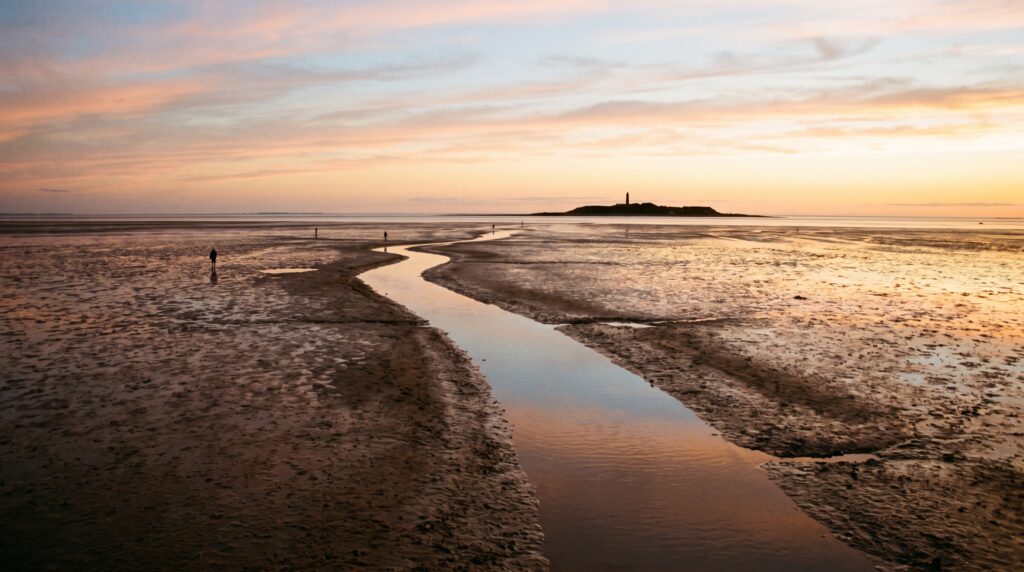
Wadden Sea, Netherlands: Things to Do & Island Guide