This guide contains affiliate links. As an Amazon Associate we earn from qualifying purchases — at no extra cost to you.
Estimated reading time: 15 minutes
Last updated: August 2026
Table of Contents
- How Far Is Mount Rainier from Seattle?
- Top Attractions and Things to Do
- Where to Stay: Lodges and Camping
- Getting to Mount Rainier National Park
- Entrance Fees and Passes
- Day Trips from Mount Rainier
- When to Visit and What to Pack
- Frequently Asked Questions
How Far Is Mount Rainier from Seattle?
Mount Rainier National Park sits about 85 miles southeast of Seattle, a 2 to 2.5-hour drive to the popular Nisqually entrance and the Paradise area; Tacoma is a bit closer at roughly 70 miles. It makes a long but doable Seattle day trip, though staying overnight in Ashford or Packwood lets you reach Paradise early for sunrise wildflowers and beat the summer crowds. The park protects 236,381 acres around a 14,410-foot active volcano.
Research Methodology
We assembled this guide using official National Park Service resources, 4K documentary footage, and feedback from hikers and visitors. All trail conditions, entrance fees, and facility information were verified at the time of writing. Before your trip, check the official Mount Rainier website for any seasonal closures or updated guidelines.
Want to experience Mount Rainier’s volcanic landscapes up close? Watch our complete Mount Rainier travel guide in 4K Ultra HD.
The volcano still rumbles. USGS Mount Rainier Volcano Monitoring tracks seismic activity daily. That last eruption around 1,000 years ago sent mudflows down valleys that now host hiking trails. You’re walking on volcanic history.
Seattle sits just 59 miles northwest. Drive two hours and you’re standing in subalpine meadows staring at 26 active glaciers. Mount Rainier National Park drew 1.67 million visitors in 2024 according to the National Park Service. Most come between July and September when wildflowers carpet Paradise and Sunrise.
The park sprawls across the Cascade Range with 260 miles of maintained trails threading through old-growth Douglas fir and western red cedar. Some trees here are 1,000 years old. Glaciers carve the mountain’s flanks year-round. You can hike to Nisqually Glacier’s terminus and watch ice calve into meltwater pools.
Winter buries Paradise under 600 inches of snow. A set of traction cleats keeps you upright on the packed ice. Summer opens the high country for wildflower season. Fall brings larch trees turning gold against the white summit. Spring means waterfalls at full roar from snowmelt. Each season rewrites the park.
This guide covers where to stay, how to get there, what to pack, and which trails deliver the best views without the crowds.
Top Attractions and Things to Do
Paradise at 5,400 feet elevation receives an average of 640 inches of snowfall annually and features the 5.5-mile Skyline Trail loop through wildflower meadows with 1,700 feet of elevation gain.
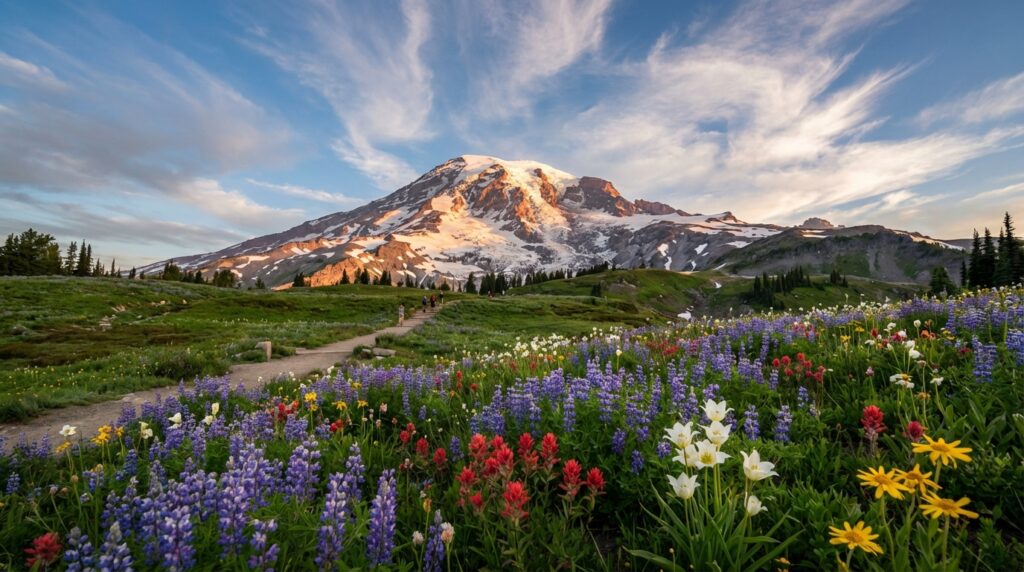
Paradise draws more visitors than any other part of the park. The name fits. Wildflower meadows explode with color from late July through early August. The Henry M. Jackson Visitor Center sits at the base of the area. Paradise Inn, a historic lodge built in 1916, serves meals and rents rooms during summer months. According to the National Park Service, Paradise holds the world record for measured snowfall in a single season, 1,122 inches fell during the winter of 1971-1972.
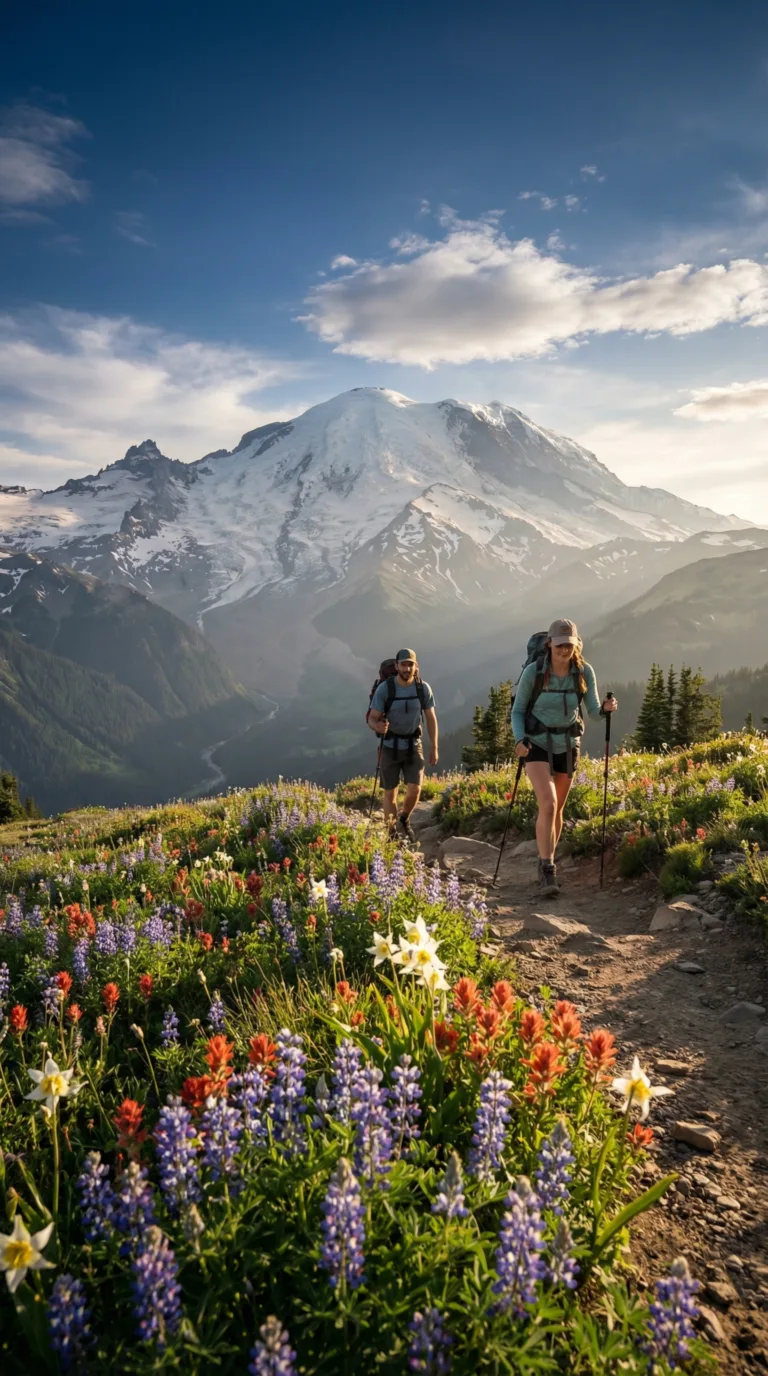
The Skyline Trail is the must-do hike at Paradise. This 5.5-mile loop gains 1,700 feet of elevation. You’ll walk through subalpine meadows packed with lupine, paintbrush, and avalanche lilies. The trail climbs to Panorama Point, where you can see the Nisqually Glacier up close. Plan three to four hours. The route is rated moderate to strenuous. Snow lingers until mid-July most years. Check the Official National Park Service trail conditions and closures page before you go.
The park maintains 260 miles of trails across 93 named routes. Waterproof hiking boots handle the mix of mud, snowmelt and rock. Options range from flat paved walks to multi-day backcountry treks. Most people stick to the day hikes near Paradise and Sunrise.
Sunrise sits at 6,400 feet elevation. It’s the highest point you can drive to in the park. The Sunrise Visitor Center opens when the road does, typically early July through late September. Snow closes the access road the rest of the year. Sunrise offers a different perspective than Paradise. The landscape is drier, rockier, more alpine. Trails here include the Sourdough Ridge Trail and the Mount Fremont Lookout hike. You’ll see fewer crowds than Paradise, especially on weekdays.
Waterfalls are everywhere. Christine Falls sits right along the road to Paradise. You can photograph it from a stone bridge without leaving your car. Comet Falls requires a 3.8-mile round-trip hike with 1,200 feet of elevation gain. The waterfall drops 462 feet, the tallest in the park. Spray Falls near Mowich Lake is harder to reach but worth it. The 4-mile round-trip trail passes through old-growth forest before opening to a meadow where the falls tumble over a cliff.
Reflection Lake along Stevens Canyon Road delivers the postcard shot. On calm mornings, the lake mirrors Mount Rainier perfectly. Arrive at sunrise for the best light and fewest people. The lake sits at a pullout, no hiking required.
Wildlife lives here. Black bears roam the forests and meadows. The park has no grizzlies. Elk graze in the valleys. Mountain goats cling to rocky slopes above treeline. Marmots whistle from boulder fields. The park is home to 65 mammal species. Keep 100 feet from bears and 25 feet from all other wildlife. Store food in your car, not your tent. Rangers issue citations for feeding animals.
Four visitor centers operate seasonally. Paradise and Sunrise are the main hubs. Longmire near the Nisqually Entrance has a small museum. Ohanapecosh on the southeast side offers exhibits about old-growth forests. Rangers lead free programs at all four locations during summer.
Wildflowers peak in late July and early August at Paradise. Timing shifts based on snowpack. A heavy winter delays bloom by two weeks. The National Park Service wildflower bloom status updates page tracks conditions weekly. The Skyline Trail, Naches Peak Loop, and Grove of the Patriarchs Trail are top picks for flower viewing.
What should you pack for Mount Rainier?
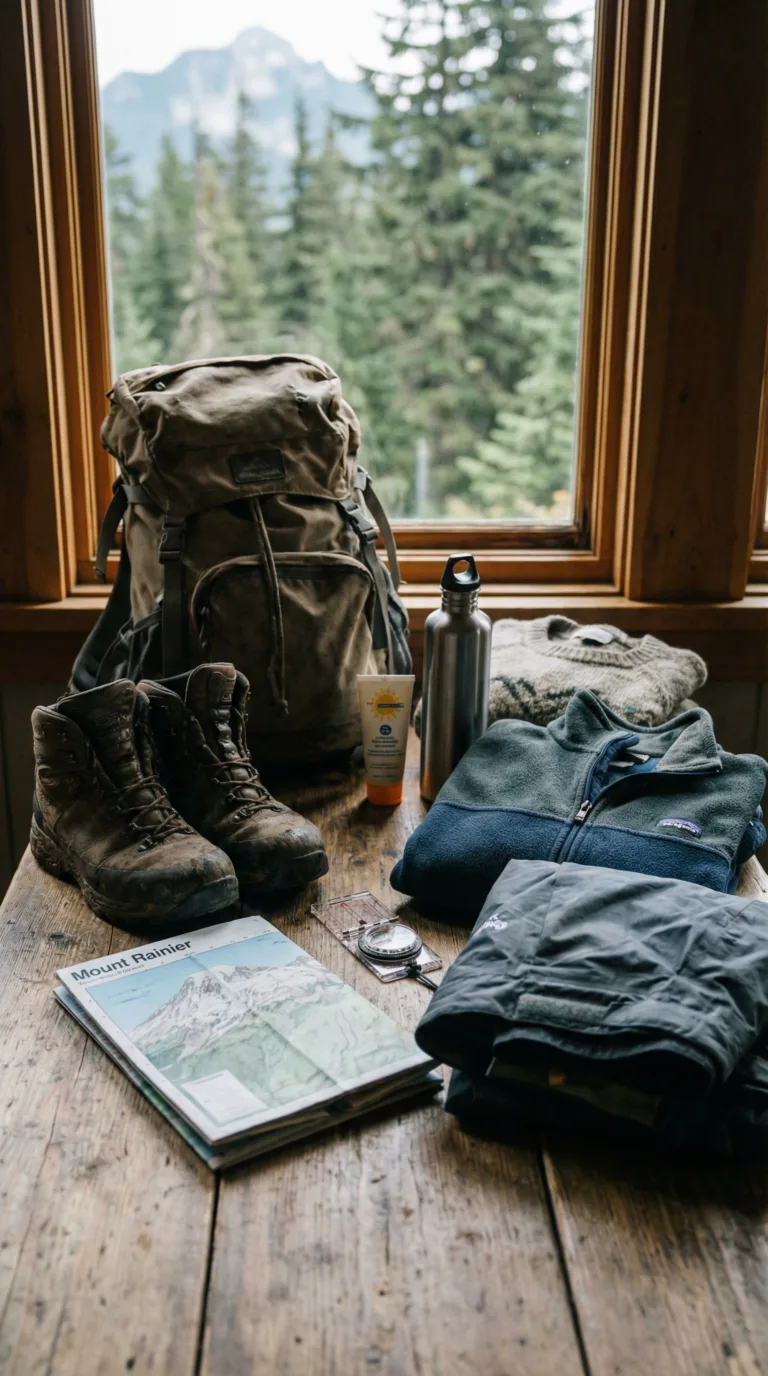
Pack waterproof hiking boots, a hiking daypack, a packable rain jacket, traction cleats, and a merino base layer. Mount Rainier is high-country hiking where the weather changes by the hour and snow lingers into summer, so layering up, staying dry, and keeping traction on icy stretches are what the mountain demands.
The Mount Rainier kit
High-country hiking where the weather changes by the hour.
- waterproof hiking boots — 260 miles of trails wind through old-growth forest and lingering snowfields
- hiking daypack — carry water, layers, and the ten essentials on the Paradise and Sunrise trails
- packable rain jacket — Rainier makes its own weather — rain and whiteouts roll in fast
- traction cleats — Paradise holds snow into summer and the trails stay icy
- merino base layer — it’s alpine-cold even in summer at 5,400-foot Paradise
As an Amazon Associate we earn from qualifying purchases.
Where to Stay: Lodges and Camping
Mount Rainier National Park offers two historic lodges (Paradise Inn with 121 rooms and National Park Inn with 25 rooms) plus five campgrounds with 423 total sites requiring reservations May through September.
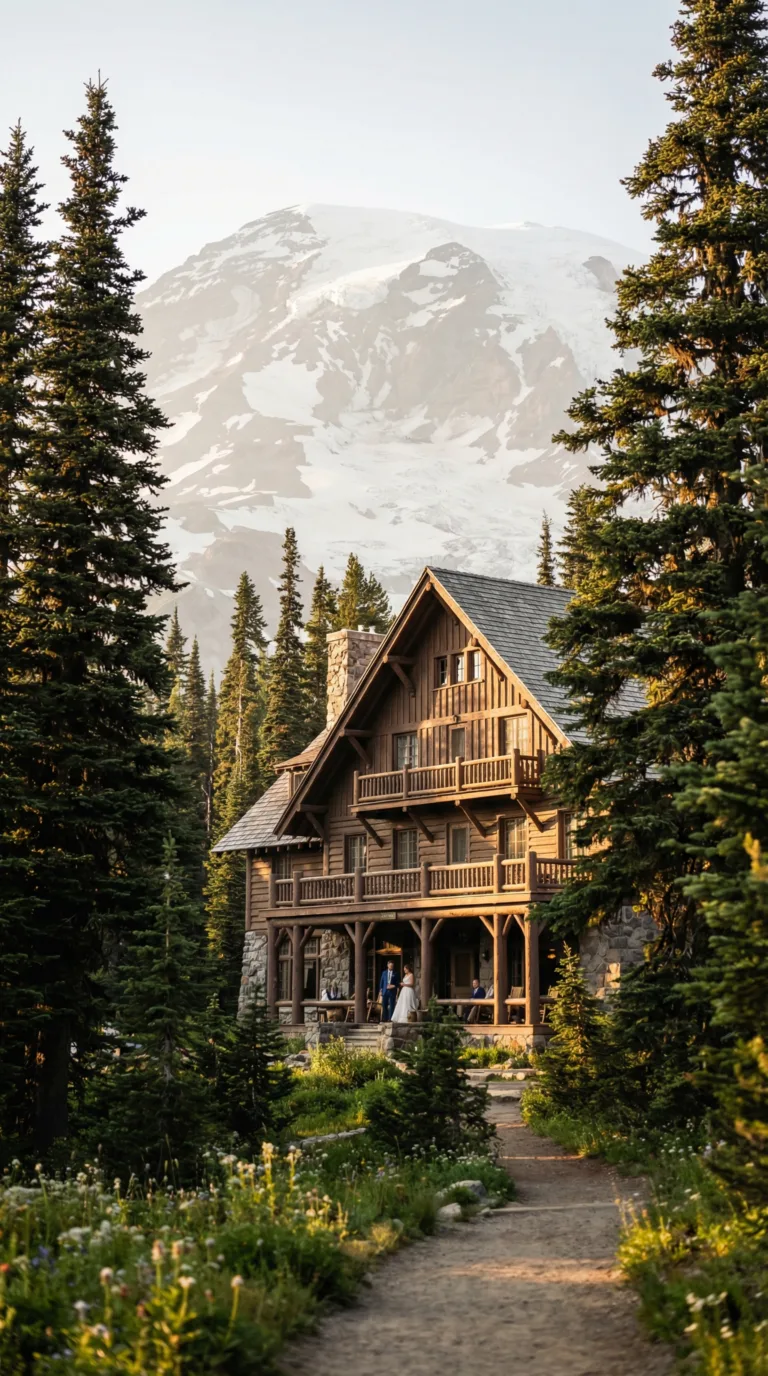
Paradise Inn sits at 5,400 feet elevation. Built in 1916, the lodge operates mid-May through early October. You get 121 rooms total. Book months ahead, this place fills fast. The timber-frame lobby feels like stepping into a national park postcard. Rooms are basic but clean. No TV, no cell service. That’s the point.
National Park Inn runs year-round at Longmire. Only 25 rooms here. Smaller scale means you can sometimes snag a last-minute booking when Paradise Inn is sold out. The on-site restaurant serves breakfast and dinner. Reserve through Mount Rainier Guest Services.
White River Campground near Sunrise offers 112 sites on a first-come, first-served basis. No reservations accepted. Opens late June, closes in September when snow returns. No hookups. No showers. Pit toilets only. Get there before 10 AM on summer weekends or you’re sleeping in your car at a trailhead.
Cougar Rock (173 sites) and Ohanapecosh (188 sites) take reservations through Recreation.gov starting six months out. Both accommodate RVs up to 35 feet. No electrical hookups anywhere in the park. Dump stations operate at Longmire and Ohanapecosh. Mowich Lake has 10 walk-in tent sites. Ipsut Creek serves backcountry campers only.
Gateway towns provide backup options. Ashford sits 6 miles west of the Nisqually Entrance. Packwood anchors the southeast side. Enumclaw serves the north. Expect basic motels, vacation rentals, and a few B&Bs. Nothing fancy, but you’ll have cell service and a hot shower.
Getting to Mount Rainier National Park
Planning Tip
Mount Rainier National Park is located 85 miles southeast of Seattle with a 2-2.5 hour drive time, accessible via four entrances with Nisqually being the only year-round entrance.
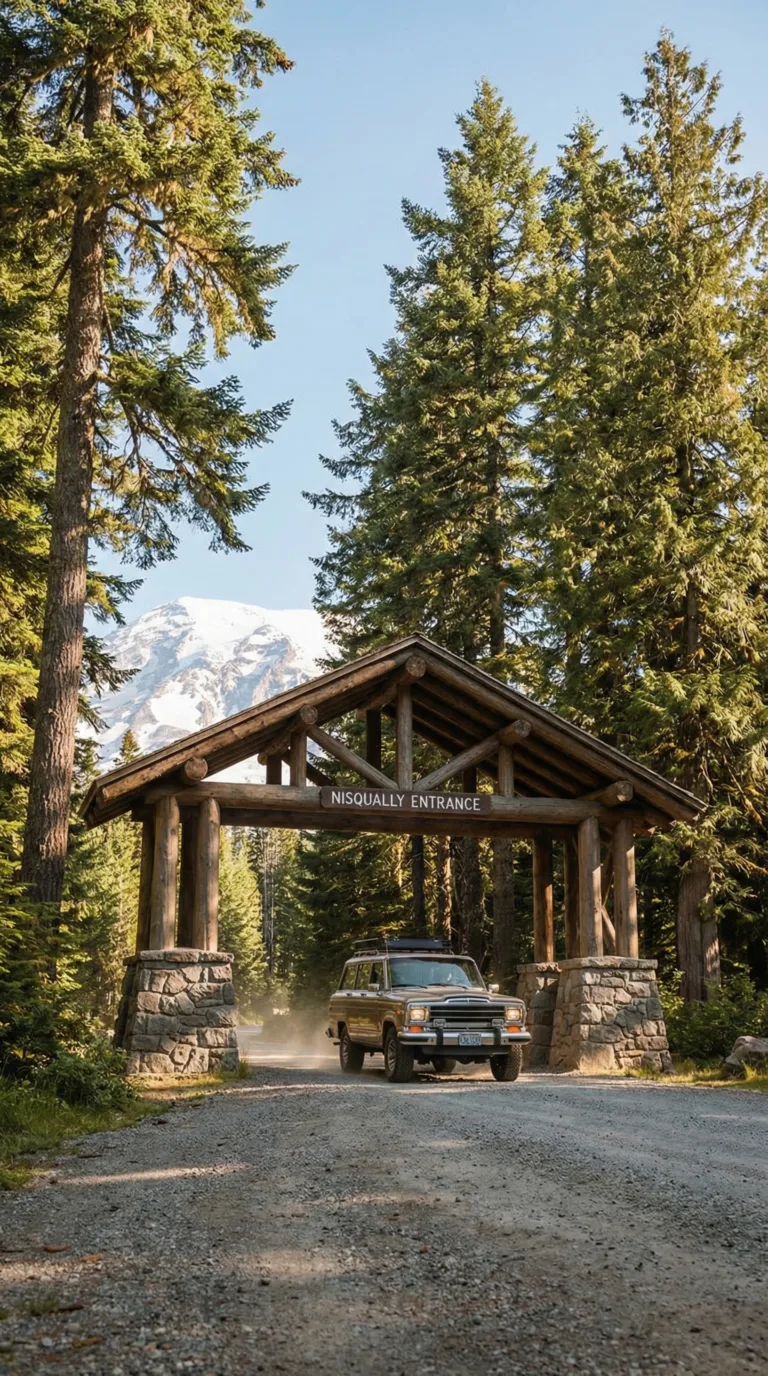
Seattle is the closest major city to the park. The drive takes about 2 hours in good conditions. Head south on I-5, then east on SR-7 and SR-706. Traffic adds time on weekends.
The park has four main entrances. Nisqually Entrance (southwest corner) stays open all year and leads to Paradise. White River Entrance (northeast) accesses Sunrise, typically open late May through October. Stevens Canyon Entrance (southeast) is seasonal. Carbon River Entrance (northwest) has limited services. According to the National Park Service, only Nisqually guarantees winter access.
No public transportation runs to Mount Rainier. No trains. No buses. You need a car or a tour.
Roads inside the park close often. Paradise Road can shut down for snow removal even in July. Sunrise Road stays closed October through June most years. Stevens Canyon Road operates seasonally, usually July through September when you can drive the full loop. Check the official Road Status page before you leave. Washington State DOT posts Mountain pass reports for highways leading to the park.
Parking lots at Paradise and Sunrise fill by 10am on summer weekends. Arrive early or wait until after 3pm. Overflow lots exist but you’ll walk farther.
Entrance Fees and Passes
Planning Tip
Mount Rainier National Park charges $30 per vehicle for a 7-day pass, $25 per motorcycle, or $15 per person on foot or bicycle, with annual passes available for $55.
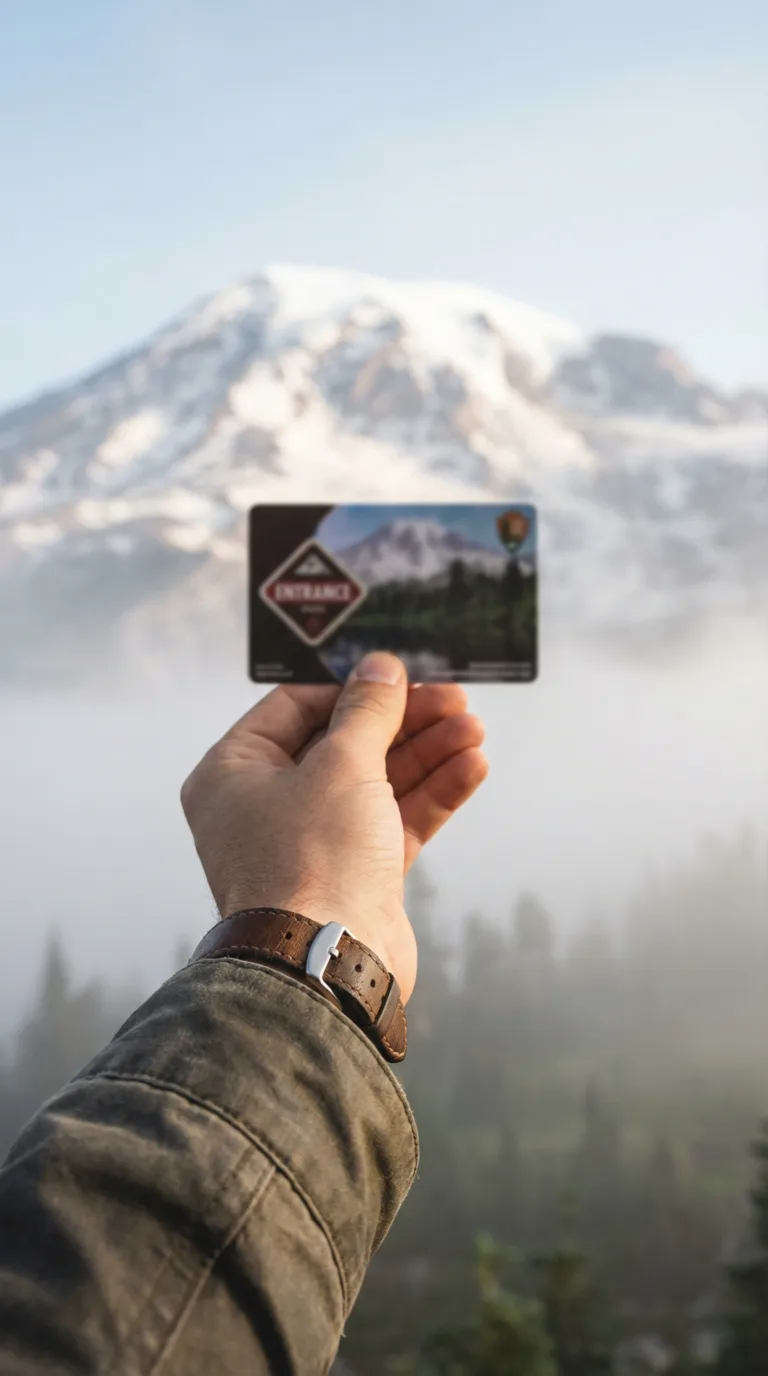
The standard vehicle pass costs $30 and covers everyone in your car for seven consecutive days. Motorcycles pay $25. Cyclists and hikers enter for $15 per person. According to the Mount Rainier National Park Fees & Passes page, these prices apply year-round.
Planning multiple visits? The Mount Rainier Annual Pass costs $55 and works for one full year from the month you buy it. Two trips pay for the pass.
The America the Beautiful Pass runs $80 annually and covers every national park and federal recreation site in the country. You visit three or more parks in a year, this pass saves money.
Free entrance days happen five to six times each year. The National Park Service waives fees on specific dates like Martin Luther King Jr. Day and Veterans Day.
Backcountry camping requires a separate wilderness permit, $20 per person per trip through Mount Rainier Wilderness and Climbing Permits. Glacier climbers need an annual climbing permit at $52 per person. These permits are not covered by entrance passes.
Mount Rainier is not using timed entry reservations in 2026, so no advance reservation is needed beyond your standard entrance fee.
Day Trips from Mount Rainier
Mount Rainier National Park is located within 2-3 hours’ drive of Seattle, Tacoma, Olympic National Park, and the North Cascades, making it an ideal base for exploring Washington State.
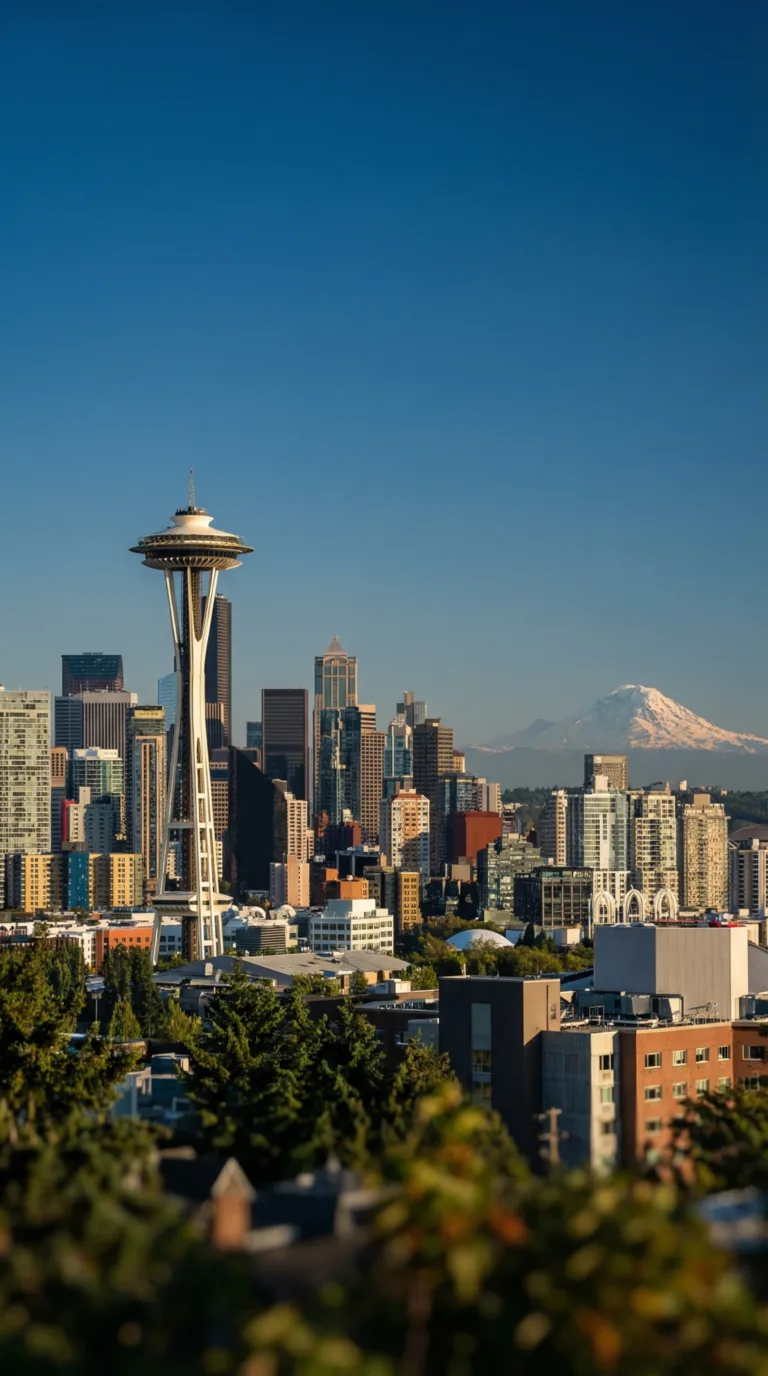
Seattle sits 85 miles northwest. The drive takes 2 to 2.5 hours depending on traffic. Pike Place Market sells fresh salmon and flowers. The Space Needle offers 360-degree views. Waterfront restaurants serve Dungeness crab. Museums include the Seattle Art Museum and Museum of Pop Culture. Plan a pre-park or post-park overnight here. For detailed itineraries, check the Visit Seattle official tourism website.
Tacoma is closer, 70 miles northwest, 1.5 to 2 hours. The Museum of Glass features live glassblowing demonstrations. Point Defiance Park has 760 acres of forest and beach. Hotel rates run $40-60 cheaper than Seattle. It’s a practical alternative if you’re watching costs.
Olympic National Park lies 3 to 3.5 hours northwest via Tacoma. You’ll see temperate rainforest dripping with moss. Hurricane Ridge climbs to alpine meadows. The Pacific coastline has sea stacks and tide pools. It’s a completely different ecosystem from Rainier’s volcanic terrain. Possible as a long day trip, but overnight makes more sense. Visit the Olympic National Park official site for current conditions.
Bellevue is 90 miles north, about 2 hours. This upscale Seattle suburb has high-end shopping at Bellevue Square. The Bellevue Botanical Garden covers 53 acres. Restaurants range with Korean barbecue and French bistros.
The North Cascades region sits 3.5 to 4 hours north. Diablo Lake and Ross Lake glow turquoise from glacial sediment. North Cascades National Park has jagged peaks and fewer crowds than Rainier. Bellingham, 4 hours north, is a college town with breweries and waterfront trails. Ferries to the San Juan Islands leave from here.
Whidbey Island takes 2.5 to 3 hours north. Beaches, state parks, and small towns like Langley offer a slower pace. Skagit Valley, 2.5 hours north, explodes with tulips every April. Farmland stretches to the horizon.
When to Visit and What to Pack
Mount Rainier’s best visiting months are July through September when roads are fully open and wildflowers peak, though Paradise is accessible year-round with winter conditions October through June.
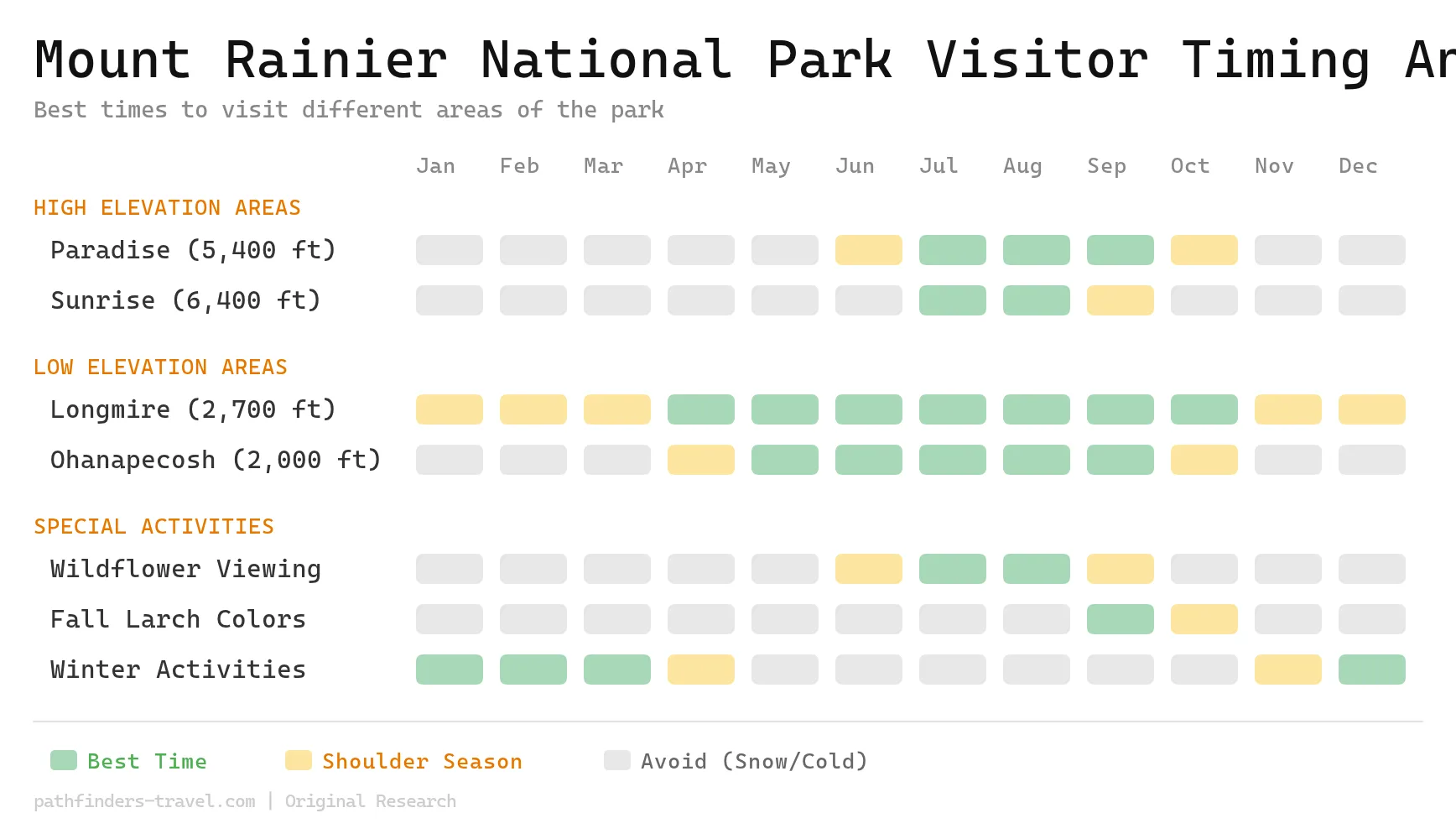
July through September delivers full road access, peak wildflowers (late July into early August), and the most stable weather. Paradise averages 640 inches of snow annually, more than almost anywhere else in the Lower 48. That snow doesn’t vanish until late June most years. October through May brings winter conditions and limited access, but the scenery is beautiful if you’re equipped for it.
Mountain weather is brutally variable. Temperatures run 10 to 20 degrees cooler than Seattle. According to National Park Service climate data, Paradise sits around 40°F in July and August, the warmest months, but can drop to freezing at night. June means roads opening and lingering snow. September brings fewer crowds, fall colors, and cooling temps. Always pack for rain and cold, even in summer.
Winter visiting is possible. Paradise stays open year-round for snowshoeing and skiing. Sunrise and other areas close completely. Tire chains are required. Check Mount Rainier National Park Webcams before you leave, real-time conditions at Paradise, Sunrise, and other spots will tell you what you’re actually driving into.
Mount Rainier cancelled its timed entry reservation system for the 2026 season, so no advance reservation is required to drive in. The park manages busy days with parking instead, and the lots at Paradise and Sunrise still fill by mid-morning on summer weekends, so arrive early.
Pack layered clothing. Temperatures swing 20 to 30 degrees from trailhead to higher elevations. Rain jacket, sun protection, sturdy hiking boots, plenty of water, snacks, map or GPS, first aid kit. No shortcuts.
Activity Difficulty Guide
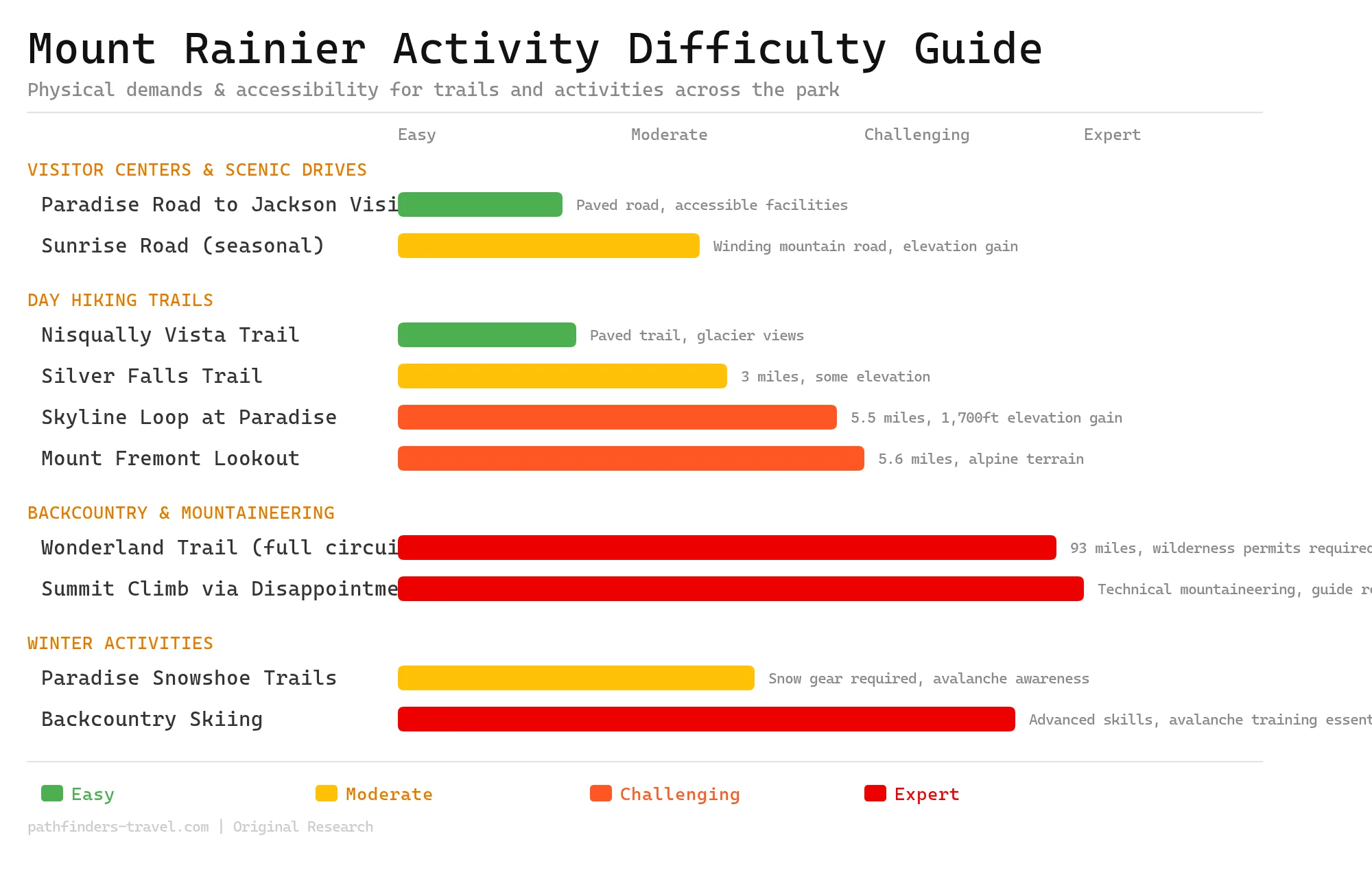
Mount Rainier offers activities from accessible visitor centers to extreme mountaineering challenges. Most visitors enjoy moderate day hikes around Paradise and Sunrise, while the park’s 14,410-foot summit and 93-mile Wonderland Trail attract experienced adventurers. Snow conditions dramatically increase difficulty from November through June.
Frequently Asked Questions
What are the top 5 things to do in Mount Rainier National Park?
The five best activities are hiking the Skyline Trail at Paradise, visiting Sunrise for alpine views, driving the scenic loop, photographing Reflection Lake, and exploring waterfalls. The Skyline Trail takes you through wildflower meadows with direct glacier views. Sunrise sits at the highest vehicle-accessible point in the park and offers sunrise vistas worth the early wake-up. The scenic loop connects Paradise, Stevens Canyon, and Sunrise when all roads are open. Reflection Lake delivers those postcard mirror shots of the mountain. Waterfalls like Christine Falls, Comet Falls, and Narada Falls are quick roadside stops or short hikes.
Is 1 day enough for Mount Rainier National Park?
One day is enough to see the highlights, though 2-3 days lets you dig deeper. Focus your single day on the Paradise area. Hit the visitor center, walk the Skyline Trail or a shorter meadow loop, and check out nearby waterfalls. Show up before 10am to grab parking and make the most of daylight hours. If you have extra time, drive to Sunrise when it’s open or swing by Reflection Lake and Stevens Canyon Road. Day trips from Seattle work fine. The drive takes 2 to 2.5 hours each way, but thousands of visitors do it every summer.
Do I need a reservation to get into Mount Rainier National Park?
No. Mount Rainier cancelled its timed entry reservation system for the 2026 season, so you do not need an advance reservation and only pay the standard entrance fee at the gate. The park uses parking management on busy days, so arrive early because the lots at Paradise and Sunrise fill by mid-morning on summer weekends. Camping and lodging still need separate bookings up to six months in advance. Check the current policy before your trip since rules shift by season.
What is the best month to visit Mount Rainier National Park?
July and August deliver the best weather, full road access, and peak wildflowers. Late July to early August is prime wildflower season at Paradise. September brings smaller crowds, fall colors, and solid weather, though some roads may close. June sees roads opening but snow lingers on trails. October through May is winter mode with limited access. For snowshoeing and skiing, December to March offers the deepest snow at Paradise.
Are there grizzly bears at Mount Rainier National Park?
No grizzly bears live at Mount Rainier, only black bears. Black bears roam throughout the park in forests and meadows. Store food in bear-proof containers, never feed or approach them, and you’ll likely never have a problem. The park is also home to elk, mountain goats, marmots, deer, and over 65 mammal species. Make noise on trails and handle food correctly to avoid most bear encounters.