This guide contains affiliate links. As an Amazon Associate we earn from qualifying purchases — at no extra cost to you.
Estimated reading time: 18 minutes
Last updated: September 2026
What Is Portland, Oregon Best Known For?
Portland, Oregon is best known for Powell’s City of Books (the world’s largest independent bookstore), its 70-plus craft breweries, 500-plus food carts, and Forest Park’s 5,200 acres of urban wilderness. The city’s quirky, creative “Keep Portland Weird” spirit, coffee culture and easy access to Mount Hood and the Columbia River Gorge round out its appeal.
How This Guide Was Researched
This guide was compiled from travel documentaries, verified tourism sources, and community traveler feedback. Prices and operational details were confirmed at the time of writing. We recommend checking official sources for the latest information before your trip.
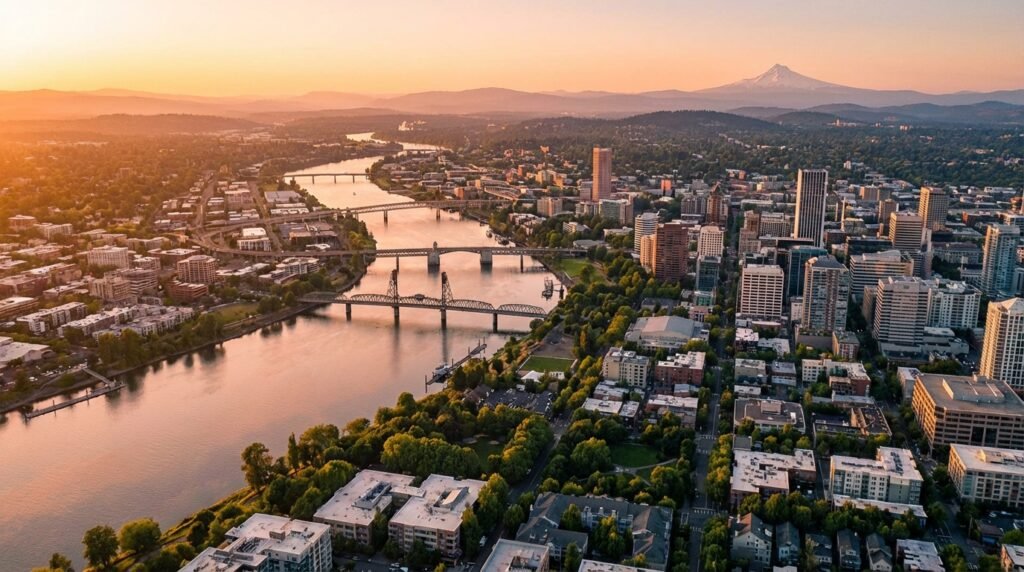
Portland sits in Oregon‘s Willamette Valley, not Maine. The Pacific Northwest city has a magnetic pull for visitors looking for things to do. The Cascade Mountains frame the eastern horizon. Mount Hood rises 50 miles away, visible on clear days.
This is the city with the world’s largest independent bookstore. Powell’s City of Books fills an entire city block. Over 1 million books line the shelves. Portland also claims the highest concentration of craft breweries in America, according to the Official Travel Portland tourism website. The Oregon Brewers Guild counts 75 breweries in the metro area as of 2026. You’ll find 500+ food carts scattered across the city. Thai, Mexican, Korean, vegan, BBQ. Pick your cuisine.
Forest Park covers 5,200 acres inside city limits. The Portland Parks & Recreation official site lists it as one of the largest urban forests in the United States. Bikes outnumber cars in some neighborhoods. The infrastructure supports it. Dedicated lanes, bike signals, low-stress routes.
This guide covers the attractions, neighborhoods, food, transport, and day trips. The Columbia River Gorge sits 30 minutes east. Cannon Beach is 90 minutes west. Crater Lake is two hours south. Portland works as a base camp for the entire region.
Top Things to Do in Portland
Portland’s top free attractions include Powell’s City of Books (occupying a full city block), the International Rose Test Garden with 10,000 rose bushes, and Forest Park’s 5,200 acres with 80+ miles of hiking trails.
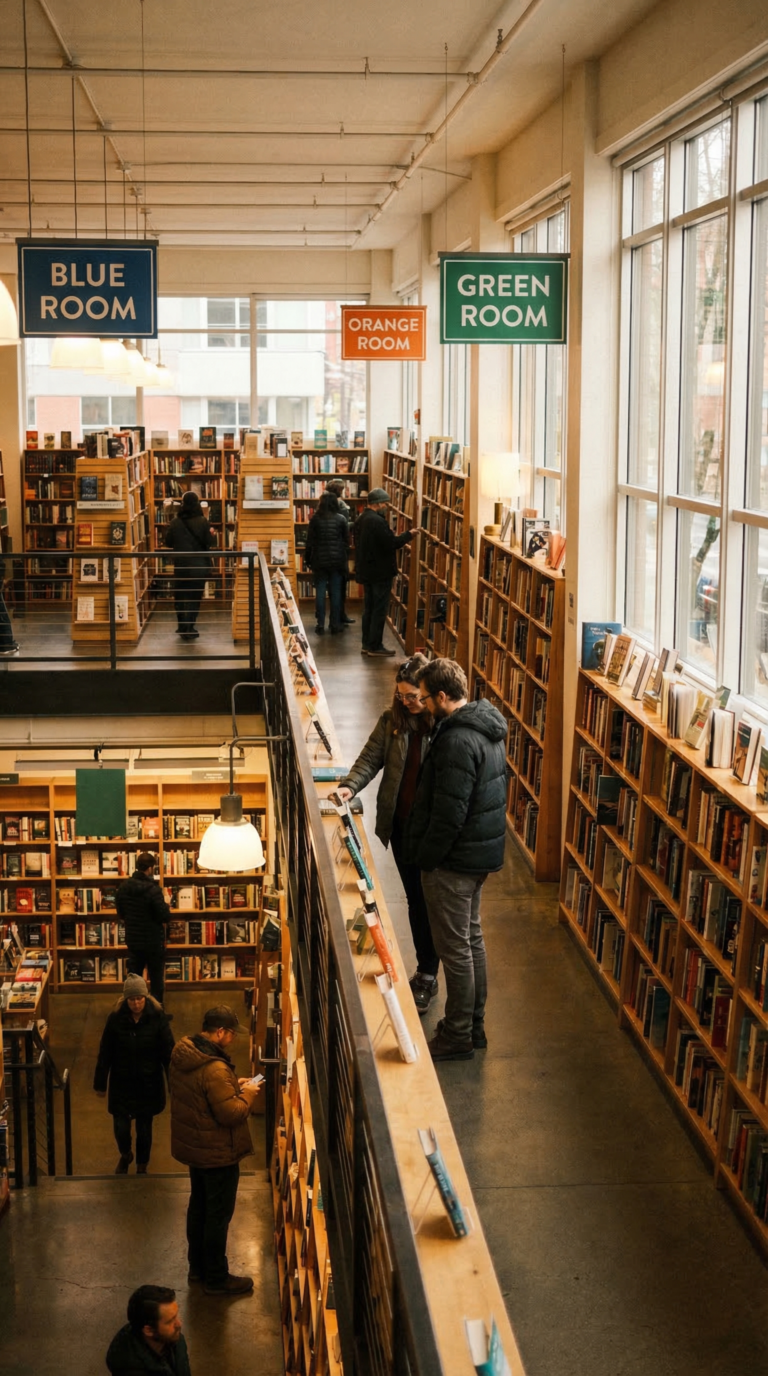
Powell’s City of Books takes up an entire city block in the Pearl District. Over one million new and used titles fill color-coded rooms across multiple floors. You can spend three hours here easily. Browse for free. The staff actually reads books and can recommend titles. Purple Room holds science fiction. Orange Room is for kids. No purchase required to wander the stacks.
The Portland International Rose Test Garden sits above Washington Park with views of Mount Hood on clear days. Ten thousand rose bushes bloom here. Portland Parks & Recreation maintains 650+ varieties tested for disease resistance and color. Admission costs nothing. Peak bloom runs May through September. The garden opened in 1917, making it the oldest public rose test garden in the United States.
Mount Tabor rises in southeast Portland as an extinct volcanic cinder cone. Hiking trails loop around the summit. You get wide city views from the top. This is the only extinct volcano inside a major US city limits. The park covers 196 acres. Trails range with paved paths and dirt single-track. Free parking fills up on weekends.
Planning Tip
Oaks Park has operated since 1905 along the Willamette River. The vintage roller skating rink still draws crowds. Carnival rides run seasonally from spring through fall. Admission is free. You pay per ride or buy an all-day wristband for $25. The wooden roller coaster dates to the park’s early years.
Pioneer Courthouse Square functions as Portland’s living room. Free concerts happen weekly in summer. Food carts ring the brick plaza. People meet here before heading elsewhere. The square hosts over 300 events annually.
Planning Tip
Portland Saturday Market runs weekends from March through December under the Burnside Bridge. This is the largest continuously operating outdoor market in the country. Local artisans sell handmade crafts. Food vendors serve everything from Thai to tamales. Prices run $5 to $50 for most items.
Forest Park stretches 5,200 acres along the Tualatin Mountains. Portland Parks & Recreation reports this as the largest urban forest in the United States. Eighty miles of trails cut through Douglas fir and western red cedar. On a wet morning a pair of comfortable walking shoes keeps the dirt single-track and the city sidewalks equally manageable. Wildwood Trail runs 30 miles end to end. You can hike for free. Parking is limited at trailheads.
Pittock Mansion perches 1,000 feet above the city. The 1914 French Renaissance building costs $12 to tour. You see original furnishings and family artifacts. The view from the lawn spans downtown to Mount Hood. The mansion belonged to newspaper publisher Henry Pittock.
Portland keeps weird on purpose. Voodoo Doughnut sells bacon maple bars and cereal-topped creations. Street art covers walls in the Central Eastside. Keep Portland Weird bumper stickers plaster cars citywide. Most of the best things to do here cost zero dollars. That makes sightseeing budget-friendly even when hotel prices climb.
What should I pack for Portland?
Pack a packable rain jacket, comfortable walking shoes, a daypack, an insulated water bottle, and a compact umbrella. Portland is a rainy, walkable city and a base camp for the Gorge, Mount Hood, and the coast: it rains much of the year and Forest Park alone has eighty miles of trails, so waterproofing and cushioned feet matter most. The jacket and shoe come in men’s and women’s versions.
The Portland kit
Five picks for a rainy, walkable city and its trail-and-gorge day trips.
- 33,000ft packable rain jacket (men’s) — Portland’s own rule is a rain jacket year round; this folds into its own pocket for a gorge waterfall hike or a sudden downtown shower. Women: the women’s 33,000ft rain jacket in the matching cut.
- Skechers Go Walk (men’s) — Forest Park alone has eighty miles of trails, and downtown is best on foot; these slip on and cushion both. Women: the Go Walk Joy has over ninety thousand reviews for the same reason.
- Osprey Ultralight Stuff Pack daypack — Packs down to a fist, then carries a layer and lunch on a Multnomah Falls hike or a day at Cannon Beach. One bag for the whole trip.
- Takeya Actives insulated water bottle — The reusable water bottle the post lists. Insulated stainless keeps coffee hot on a cool morning and water cold on the trail.
- Totes compact travel umbrella — November through March brings five to six inches of rain a month. This auto-open umbrella packs small for exactly that and shrugs off wind.
As an Amazon Associate we earn from qualifying purchases.
Portland’s Neighborhoods: Where to Explore
Downtown Portland spans 20 walkable blocks centered on Pioneer Courthouse Square, while eastside neighborhoods like Hawthorne and Alberta Arts District offer vintage shops, street art, and over 100 independent cafes and restaurants.
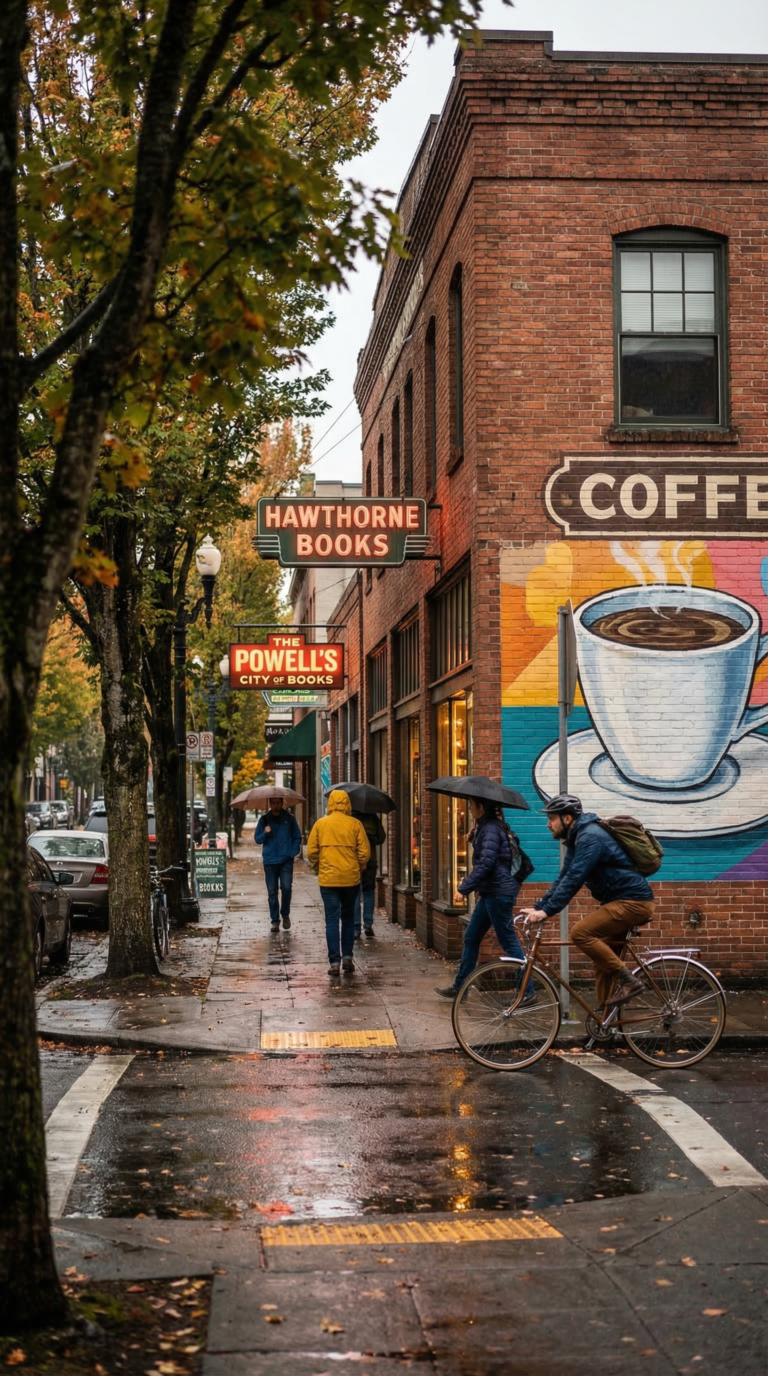
Downtown Portland packs tight. Twenty blocks. You can walk the whole core in 15 minutes. Pioneer Courthouse Square sits dead center, locals call it Portland’s living room. Powell’s Books anchors the northwest corner. The MAX light rail cuts through on surface streets. Shopping clusters around Morrison and Yamhill. No car needed.
The Willamette River splits the city. Twelve bridges connect the eastside to downtown. The Travel Portland neighborhood guide page maps this divide clearly.
Pearl District converted old warehouses into loft apartments and galleries. First Thursday art walks happen monthly. Powell’s flagship store occupies an entire block here. Restaurants lean upscale. Parking costs $4 per hour.
Hawthorne District runs along Southeast Hawthorne Boulevard. Vintage clothing stores. Record shops. Street performers on corners. The crowd skews young, college students and twentysomethings. Coffee shops stay open past midnight. Rent a bike. Traffic moves slow.
Southeast Portland sprawls beyond Hawthorne. Division Street became a dining corridor in the 2010s. Residential blocks. Fewer tourists. Locals eat here.
Alberta Arts District hosts Last Thursday art walks. Murals cover entire building facades. Food carts cluster at Northeast 15th. Ethiopian, Thai, Venezuelan, all within one block. Boutiques sell handmade jewelry and ceramics.
Mississippi Avenue runs six blocks north. Indie record stores. Small music venues. The creative community lives here. Expect beards and fixed-gear bikes.
Portland’s Food Scene: with Food Carts and Fine Dining
Portland has over 500 food carts serving global cuisines at $5-12 per meal, 70+ craft breweries (the highest per-capita concentration in the US), and farm-to-table restaurants featuring Pacific Northwest seafood and local ingredients.
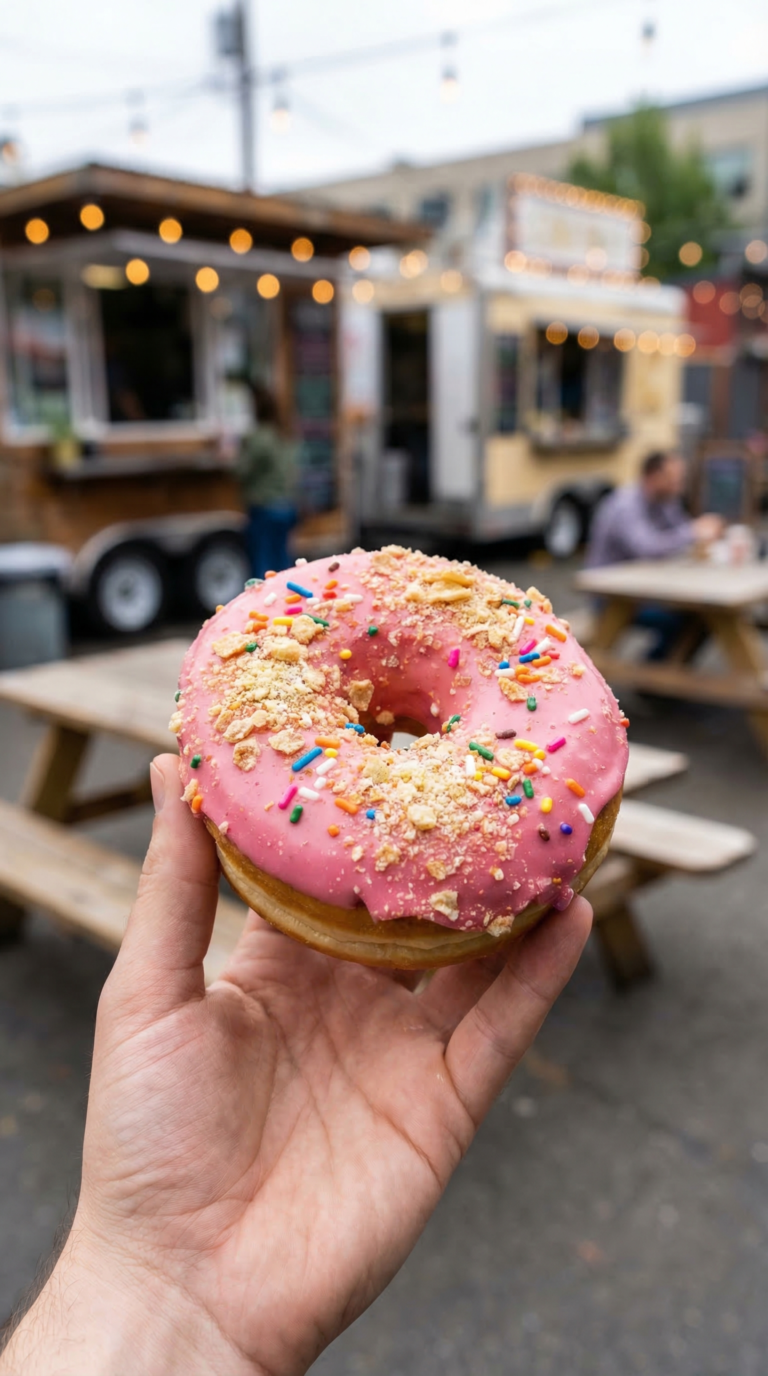
Portland runs on food carts. Over 500 carts operate citywide, according to the Portland Food Cart Association. You’ll find Thai curries, Korean bibimbap, Venezuelan arepas, and Memphis BBQ, all for $5 to $12. Alder Street Food Cart Pod downtown packs 50+ vendors into a single block. Cartopia on Hawthorne stays open late. No reservations. No dress code. Just good food.
Voodoo Doughnut draws lines around the block at its 24-hour downtown location. The pink boxes are everywhere. Bacon Maple Bar. Captain My Captain with Cap’n Crunch cereal. Memphis Mafia with banana and peanut butter. Quirky flavors, yes. But the doughnuts taste good, and the spectacle is part of the experience. Go at 2 a.m. to skip the wait.
Pacific Northwest ingredients dominate menus. Dungeness crab from the Oregon coast. Wild Chinook salmon. Chanterelle mushrooms foraged from the Cascades. The Portland Farmers Market at Portland State University runs every Saturday with local produce, artisan cheeses, and fresh-baked bread.
Craft beer is serious business here. Portland has 70+ breweries, the highest per-capita concentration in the US, per the Oregon Brewers Guild. Brewery tours run daily. Pints cost $6 to $8.
Fine dining leans on local sourcing. Andina serves Peruvian small plates with Oregon ingredients. Nostrana makes wood-fired pizzas with house-milled flour. Coquine offers French-inspired tasting menus that change weekly. Reservations required at all three.
Coffee culture started here. Stumptown Coffee Roasters launched in Portland in 1999. Dozens of independent roasters now operate across the city. The Travel Portland Food Guide tracks the latest openings and seasonal menus.
Getting Around Portland
Portland International Airport connects to downtown via MAX Red Line in 38 minutes for $2.50, while the city’s 350+ miles of bikeways and complete TriMet system (MAX light rail, buses, streetcar) make car-free travel easy.
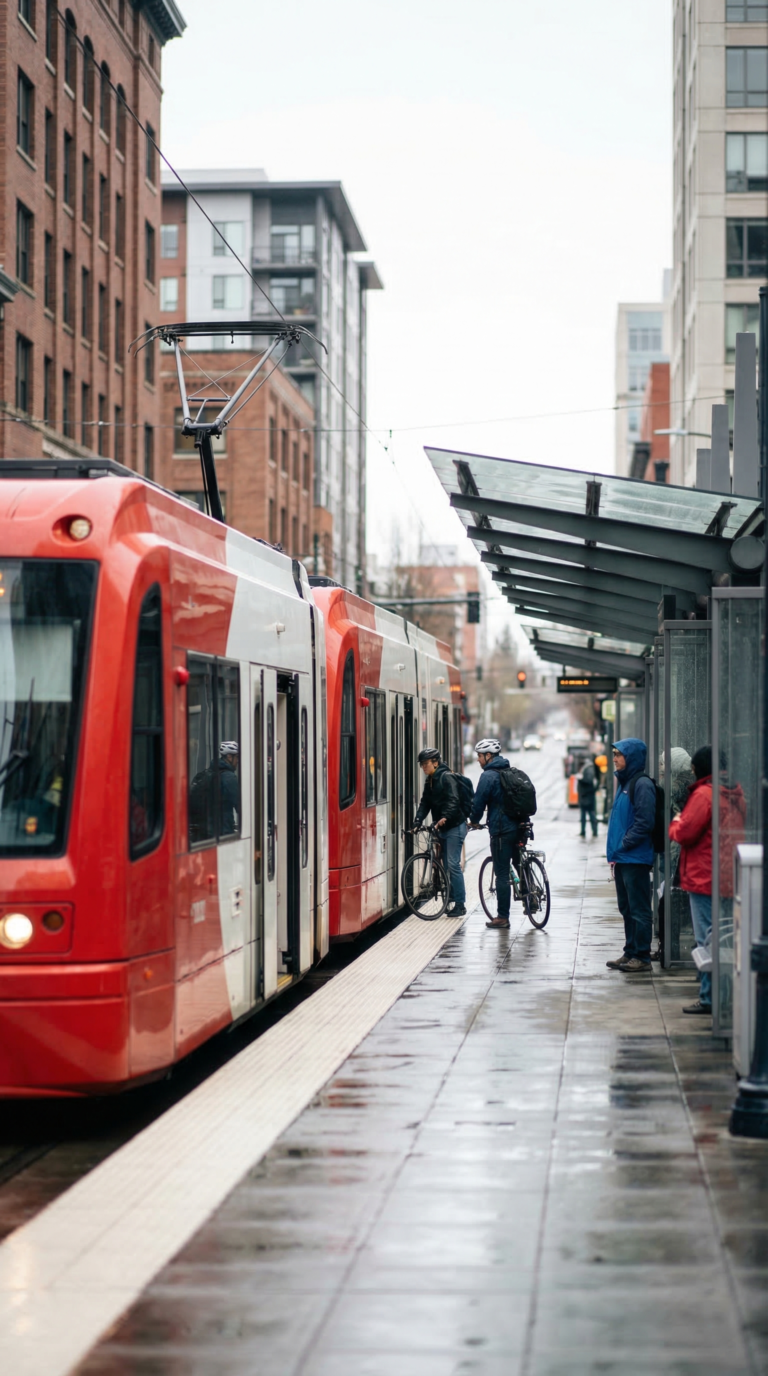
Portland International Airport sits 20 minutes from downtown. The MAX Red Line runs directly from the airport terminals to the city center. Cost: $2.50. Travel time: 38 minutes. Check the TriMet official website for current schedules.
The MAX light rail system uses five color-coded lines. Red, Blue, Green, Yellow, Orange. Trains run frequently throughout the day. Same $2.50 fare covers buses too. A day pass costs $5. TriMet buses fill the gaps where MAX doesn’t reach. Coverage extends across the metro area.
The Portland Streetcar connects downtown to the Pearl District and South Waterfront. Certain zones ride free. Walking works downtown. Most attractions fall within a 20-minute walk of each other. The city built over 350 miles of bikeways, according to the Portland Bureau of Transportation. Biketown operates the bike-share program. Dedicated lanes make cycling safe.
Car rentals exist but you won’t need one for city exploration. Save the rental for day trips to Mount Hood or the coast. Downtown parking runs $3 to $5 per hour. Park-and-ride lots offer cheaper alternatives. Visit the PDX Ground Transportation page for airport options.
Day Trips from Portland
Portland sits within 90 minutes of the Columbia River Gorge’s 90+ waterfalls, Mount Hood’s year-round skiing, and Cannon Beach’s Pacific coastline, with Crater Lake National Park (the deepest US lake at 1,943 feet) reachable in 4 hours.
The city’s location makes it a base camp for Pacific Northwest exploration. Mountains rise to the east. The coast stretches west. You can hit waterfalls before lunch and be back for dinner.
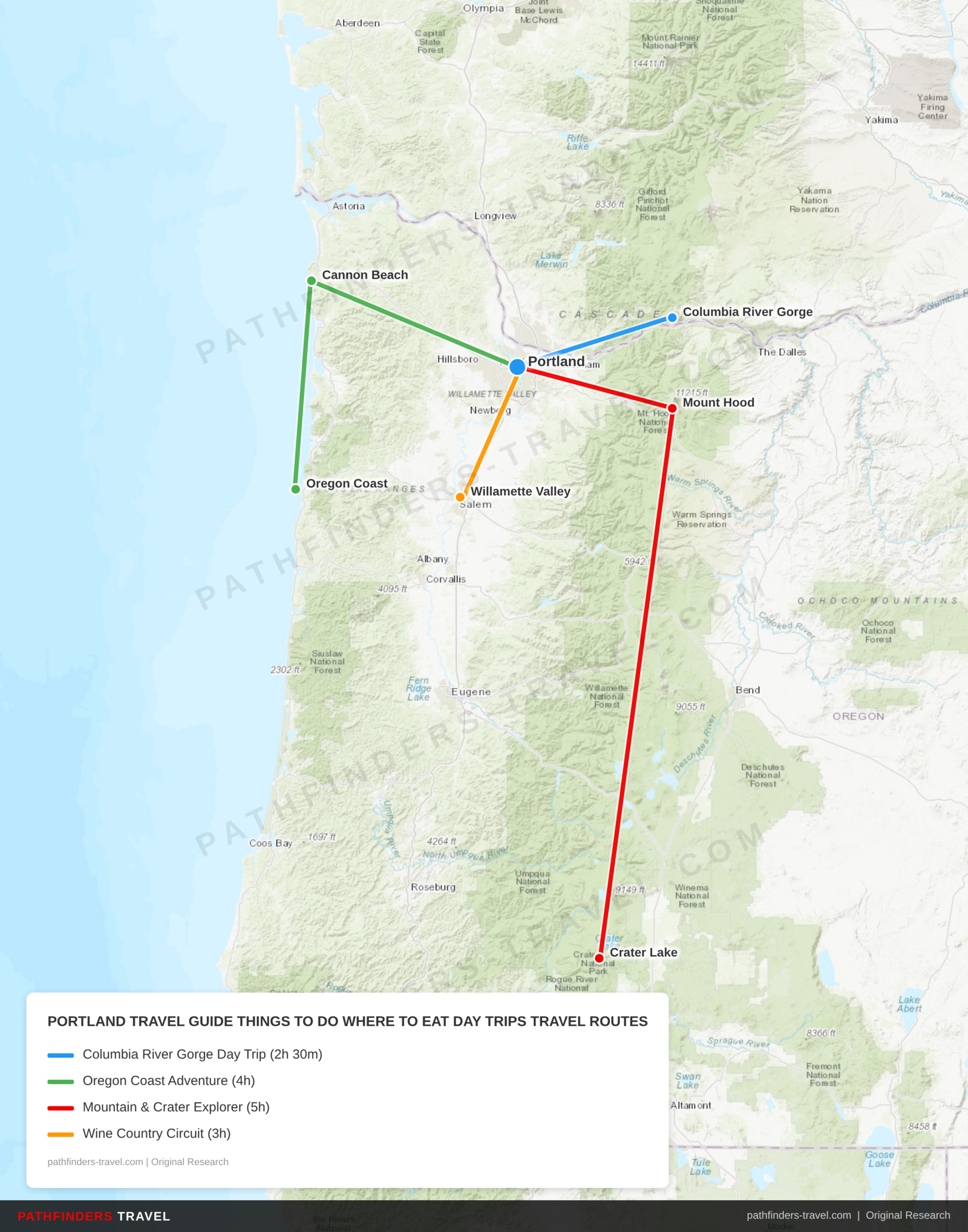
| # | Stop | Highlights | Drive Time |
|---|---|---|---|
| 1 | Portland | Powell’s Books, Rose Garden, Forest Park, food carts, craft breweries | Start |
| 2 | Columbia River Gorge | Multnomah Falls, Vista House, scenic driving, waterfalls, hiking trails | 30m |
| # | Stop | Highlights | Drive Time |
|---|---|---|---|
| 1 | Portland | Pioneer Courthouse Square, Mount Tabor, Saturday Market, urban forest | Start |
| 2 | Cannon Beach | Haystack Rock, sandy beaches, coastal towns, tide pools | 1h 30m |
| 3 | Oregon Coast | Rugged coastline, lighthouse tours, seafood dining, coastal hiking | 45m |
| # | Stop | Highlights | Drive Time |
|---|---|---|---|
| 1 | Portland | Pittock Mansion, city views, craft brewery tours, food scene | Start |
| 2 | Mount Hood | Ski slopes, alpine hiking, Timberline Lodge, mountain views | 1h 15m |
| 3 | Crater Lake | National park, deep blue lake, rim drive, volcanic formation | 2h |
| # | Stop | Highlights | Drive Time |
|---|---|---|---|
| 1 | Portland | Oaks Park, Willamette River, vintage attractions, local markets | Start |
| 2 | Willamette Valley | Wine tasting, vineyard tours, Pinot Noir, scenic countryside | 45m |
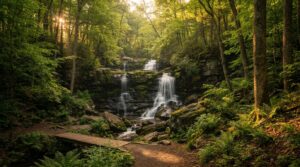
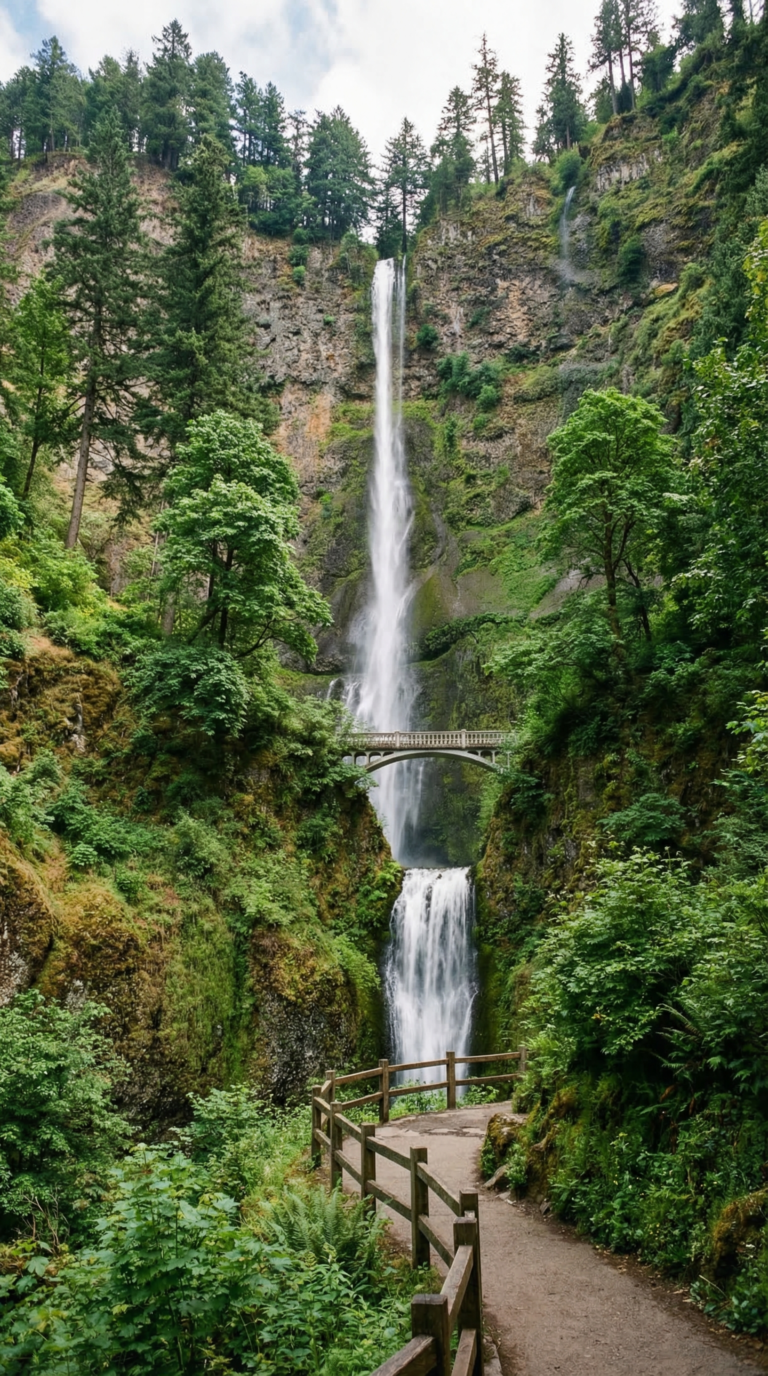
Columbia River Gorge sits 30 minutes east on I-84. The Columbia River Gorge National Scenic Area contains more than 90 waterfalls according to the US Forest Service. Multnomah Falls drops 620 feet in two tiers. You’ll see it from the parking lot. The Historic Columbia River Highway winds past trailheads and viewpoints. Weekends get packed. Go early or skip the main falls for quieter hikes like Wahclella or Horsetail.
Mount Hood National Forest sprawls 50 miles east. How far is Mount Hood from Portland? About an hour to Government Camp. Timberline Lodge runs year-round skiing on Palmer Glacier. Summer brings wildflower meadows and alpine lakes. On clear days you can see Mt Hood from Portland, look east from improved spots like Council Crest or Powell Butte. The peak dominates the skyline at 11,240 feet.
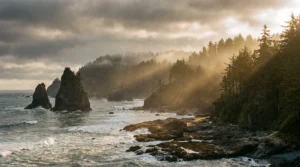
Cannon Beach anchors the north coast 90 minutes west on Highway 26. Haystack Rock rises 235 feet from the sand. Low tide reveals starfish and anemones in the pools. Art galleries line Hemlock Street. The town gets crowded in summer but the beach stretches for miles. Park at the public lots on 2nd Street.
Silver Falls State Park lies 90 minutes south near Silverton. The Trail of Ten Falls loops 7.2 miles past, you guessed it, ten waterfalls. Four of them you walk behind. It’s Oregon’s largest state park. The trail gets muddy in winter. Bring waterproof boots.
Crater Lake National Park sits 4 hours south near the California border. The lake fills a collapsed volcano. At 1,943 feet deep, it’s the deepest lake in the United States per National Park Service data. The water glows an impossible blue. Rim Drive circles the caldera but only opens fully in summer, snow closes sections until July most years. This is a full-day commitment. Pack snacks. The park has one lodge and limited food options.
Newport draws crowds 2 hours west on the central coast. The Oregon Coast Aquarium houses sea otters and jellyfish. The historic bayfront smells like fish and salt. Yaquina Head Lighthouse perches on a rocky point. Whale watching peaks in spring and winter. Gray whales migrate close to shore.
Tillamook sits 90 minutes west in dairy country. The Tillamook Creamery offers free samples and a self-guided factory tour. Cape Lookout State Park juts into the Pacific. The trail to the point runs 2.5 miles through old-growth spruce.
Bend sprawls 3 hours southeast across the Cascades. The Deschutes River cuts through town. Breweries outnumber stoplights. The high desert landscape feels nothing like Portland’s greenery. Things to do in Mt Hood and Bend overlap, both offer skiing, hiking, and mountain scenery, but Bend adds desert trails and rock climbing.
Smith Rock State Park rises 2.5 hours southeast near Terrebonne. Rock climbers come from everywhere. The Crooked River snakes through the canyon 400 feet below the rim. The Misery Ridge Trail climbs steeply but the views justify the name. Bring water. The desert heat hits hard in summer.
Ashland anchors southern Oregon 4.5 hours south. The Oregon Shakespeare Festival runs February through October. Lithia Park covers 93 acres in the town center. Wineries dot the Rogue Valley. This trip works best as an overnight.
Bandon scatters along the southern coast 4 hours southwest. Sea stacks puncture the surf. Face Rock looks like a woman staring at the sky. Golf courses cling to the cliffs. Cranberry bogs turn red in fall.
Brookings marks Oregon’s southernmost coast 5 hours southwest. The Samuel H. Boardman Scenic Corridor runs 12 miles of cliffs and coves. The climate stays mild year-round. Azaleas bloom in winter.
Heceta Head Lighthouse perches 2.5 hours west near Florence. It’s the most photographed lighthouse in Oregon according to Travel Oregon. Sea Lion Caves sit a mile south, the largest sea cave in America. You take an elevator down 208 feet to see the colony.
Yachats clings to the central coast 2.5 hours west. Tide pools fill the rocky shore. Thor’s Well appears to drain the ocean at high tide. The village runs small and quiet.
Cape Kiwanda rises 90 minutes west in Pacific City. A massive sand dune climbs the headland. People run down. Pelican Brewing sits at the base. Dory boats launch straight into the surf.
Rogue River carves through southern Oregon 4 hours south. Jet boat tours run from Gold Beach. Whitewater rafting trips launch from Grants Pass. Salmon and steelhead draw anglers.
Hells Canyon drops 5+ hours east on the Idaho border. At 7,993 feet deep, it’s the deepest river gorge in North America. The drive takes commitment. The remoteness is the point.
Sparks Lake reflects the Cascades 3 hours southeast on the Cascade Lakes Scenic Byway. Photographers camp here for sunrise shots of South Sister. The shallow lake fills with lily pads in summer.
Sahalie Falls thunders 2 hours southeast on the McKenzie River. The waterfall drops 100 feet over a lava flow. Old-growth forest surrounds the trail. Check out Travel Oregon Scenic Drives for route details on the McKenzie Pass and other byways.
Coast trips head west. Mountain trips go east or southeast. You get desert, forest, ocean, and alpine terrain within a tank of gas. Most day trips need no advance planning. Crater Lake National Park and Hells Canyon demand more time. Everything else you can hit on a whim.
Practical Tips for Visiting Portland
Portland’s best weather runs June through September with temperatures of 70-85°F and minimal rain, while November through March brings the rainy season with 40-50°F temperatures requiring waterproof layers and an umbrella.
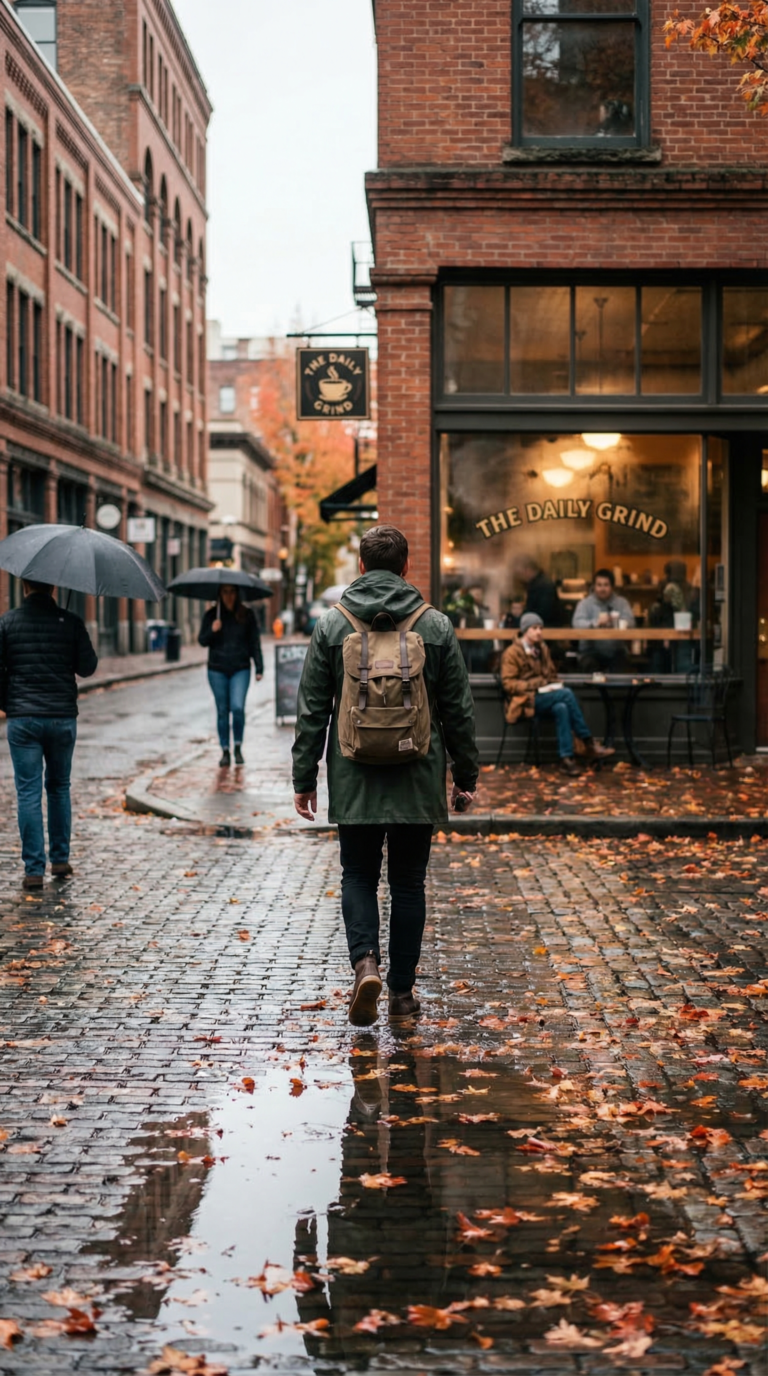
June through September delivers the goods. Expect 70-85°F and clear skies. Rain stays away. This is peak tourist season for good reason.
May and October work if you want smaller crowds. Temperatures stay mild. You’ll see some rain, but not the constant drizzle of winter.
November through March? That’s the wet season. According to the National Weather Service Portland, the city averages 5-6 inches of rain per month during winter compared to less than 1 inch in July and August. Temps hover around 40-50°F. Pack a waterproof jacket, layered clothing, and an umbrella. A packable rain jacket that stuffs into its own pocket is the one item locals never leave home without. Indoor attractions like Powell’s Books and the Portland Art Museum still make the trip worthwhile.
What to bring: rain jacket year-round (seriously), comfortable walking shoes, layers for temperature swings, reusable water bottle. Portland has zero sales tax, so the price you see is what you pay. Shopping here saves you money compared to neighboring states.
Tip 18-20% at restaurants. Bartenders expect $1-2 per drink. Standard US practices apply.
Portland values its weirdness. Support local coffee roasters over chains. Bring reusable bags, the city banned plastic bags years ago. Eco-consciousness isn’t performative here. It’s just how things work.
Frequently Asked Questions
What state is Portland in?
Portland is in Oregon, located in the Pacific Northwest region of the United States. Not to be confused with Portland, Maine on the East Coast. Portland, Oregon sits in the Willamette Valley between the Cascade Mountains and Pacific Coast.
Is Portland, Oregon worth visiting?
Yes. Portland rewards visitors with a walkable downtown, the world’s largest independent bookstore at Powell’s City of Books, more than five hundred food carts, and over seventy craft breweries. Green spaces like Forest Park and the International Rose Test Garden sit minutes from the center, and Mount Hood and the Columbia River Gorge are within easy day-trip range. Two to three days is enough to enjoy the city and add one nearby escape.
What food is Portland most known for?
Portland is famous for its food cart scene (500+ carts), Voodoo Doughnut’s quirky creations, and farm-to-table restaurants featuring Pacific Northwest ingredients. Fresh seafood (Dungeness crab, wild salmon), craft beer (70+ breweries), and artisan coffee are staples. The city pioneered the food cart movement and has the highest number of breweries per capita in the US.
What are the best free things to do in Portland?
Top free attractions include Powell’s City of Books (free to browse), Portland International Rose Test Garden (10,000 rose bushes), Forest Park (80+ miles of trails), and Pioneer Courthouse Square. Also free: Portland Saturday Market (weekends March through December), street art tours, and hiking Mount Tabor. Many of Portland’s best experiences cost nothing, making it budget-friendly for travelers.
How far is Mount Hood from Portland?
Mount Hood is approximately 50 miles (80 km) east of Portland, about a 90-minute drive via US-26. On clear days, Mount Hood is visible from many points in Portland. The mountain offers year-round skiing at Timberline Lodge and summer hiking, making it an easy day trip from the city.