This guide contains affiliate links. As an Amazon Associate we earn from qualifying purchases — at no extra cost to you.
Estimated reading time: 16 minutes
Last updated: September 2026
What Is Ross Lake Known For?
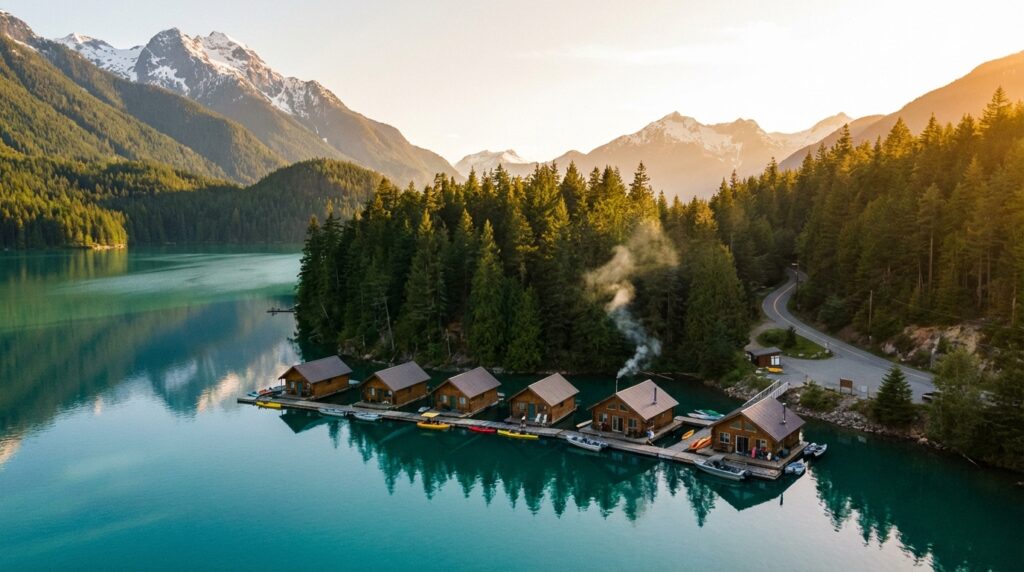
Ross Lake Resort is a remote floating-cabin lodge on a 23-mile reservoir in Washington’s North Cascades, reachable only by a short hike plus the resort water taxi from Diablo Lake (no road access). It’s open late June through October, with floating cabins renting from about $305 to $520 per night for the 2026 season – cabins literally floating on turquoise, glacier-fed water beneath alpine peaks, one of the Pacific Northwest’s most unique stays.
How We Researched This Guide
We built this guide using North Cascades National Park records, Ross Lake Resort’s official information, and firsthand accounts from past guests. Details about rates, amenities, and access were verified at writing time. Before booking, contact the resort directly to confirm current availability and pricing.
Want to see what it’s really like to stay in a floating cabin? Watch our full North Cascades travel guide in 4K.
You can’t drive to Ross Lake Resort. No parking lot. No paved access road. The only ways in are a 2-mile trail or a boat ride across Diablo Lake. That alone weeds out most casual tourists.
Ross Lake itself is a 23-mile reservoir that starts at Diablo Dam and runs north to the Canadian border, according to the National Park Service. It sits inside the Ross Lake National Recreation Area, part of the larger North Cascades National Park complex. The water is cold. The shoreline is dense with Douglas fir and western hemlock. Peaks from the Cascade Range rise straight up from the water.
The resort floats on the lake. Literally. Cabins bob on log rafts. They creak when you walk across the deck. You hear water lapping underneath the floorboards at night.
This isn’t a spa retreat. You come here to fish for rainbow trout, paddle a kayak into empty coves, or hike trails that see maybe a dozen people per week. Cell service doesn’t exist. The nearest grocery store is 40 miles away in Marblemount. If you forget bug spray, you’re stuck with mosquitoes until you leave.
But if you want silence, Ross Lake Washington delivers. The kind of silence where you hear your own breathing. Where a loon’s call echoes off granite cliffs for five full seconds.
Things to Do at Ross Lake
Ross Lake Resort rents motorboats and kayaks from June to October and operates a water taxi service to 19 backcountry campsites along the 23-mile lake.
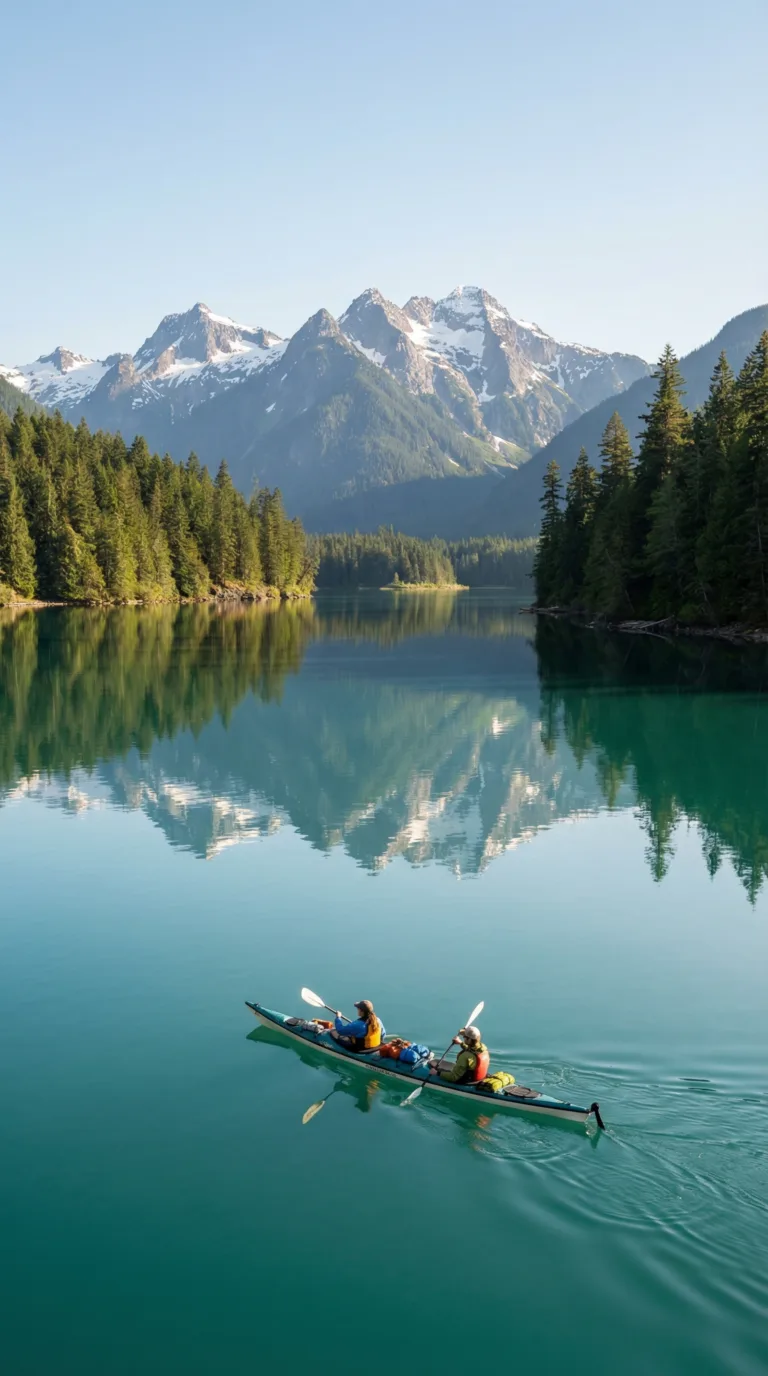
The floating cabins are the main draw. But the real action starts when you get on the water. Ross Lake Resort rents motorboats by the day or half-day. These aren’t luxury pontoons, they’re functional aluminum boats with outboard motors. You drive them yourself. No license required. Just pay attention during the five-minute safety briefing.
The lake stretches 23 miles north into Canada. Most of it’s wilderness. No roads touch the shoreline except at the south end near Diablo Lake. You can spend a full day motoring up to the far end and back. The water is that glacial turquoise color you see in photos. It’s real.
Kayak rentals are also available. Single and double kayaks. Paddle out in the morning when the water is glassy. By noon the wind picks up and paddling gets harder. The resort also rents canoes, but most people skip them, too tippy in afternoon chop.
Planning Tip
The Ross Lake Resort water taxi runs scheduled trips to drop off and pick up hikers and campers. According to the National Park Service, there are 19 designated backcountry campsites along the lake. Most are boat-access only. The taxi costs around $40–60 per person depending on distance. You can also arrange a portage service if you bring your own kayak, they’ll truck it around the dam so you don’t have to hike it down the trail.
Fishing is serious here. Ross Lake fishing runs year-round, but peak season is May through October. You’ll catch rainbow trout, cutthroat trout, bull trout, and kokanee salmon. Bull trout are catch-and-release only. Check the WDFW Ross Lake Fishing regulations before you cast, rules change annually. You need a Washington state fishing license. The resort sells tackle and bait if you forget yours.
Anglers like this lake because it’s deep and cold. Fish stay active all summer. Troll near the Canadian border for bigger trout. Early mornings are best. By 10 a.m. the sun is high and fish go deeper.
Hiking trails branch off from several campsites. The Ross Lake Overlook trail is the most popular land-based hike in the area. It starts from Highway 20 and climbs 800 feet in less than a mile. You get a view of the entire southern basin. But you can’t reach the water from there, it’s a viewpoint only.
For real ross lake backpacking, take the water taxi to Lightning Creek or Big Beaver Trail. Big Beaver is a 16-mile out-and-back through old-growth cedar forest. It’s flat and shaded. You’ll see deer, black bears occasionally, and river otters if you’re quiet. Lightning Creek connects to the Cascade Pass trail system if you want to go deeper into the backcountry.
Wildlife viewing happens without trying. Ospreys nest along the cliffs. Bald eagles fish near the inlet streams. Marmots whistle from rockslides. Bring binoculars. The resort is quiet enough that you’ll hear birds before you see them.
Planning Tip
Swimming is allowed in designated areas during July and August. The water stays cold, around 55°F even in peak summer. Most people dip in for five minutes and get out. Kids don’t seem to mind. There’s a small swim area near the resort docks.
Photography is a given. The light changes every hour. Sunrise turns the peaks pink. Afternoon clouds build over the ridges. Sunset reflects orange on the water. Bring a polarizing filter to cut glare off the lake surface.
What should you pack for Ross Lake Resort?
Ross Lake is a roadless, boat-in world of floating cabins, glassy paddling coves, and rainbow-trout fishing. Pack for water, fishing, and off-grid nights:
- telescopic fishing rod combo — Ross Lake runs rainbow, cutthroat, and bull trout plus kokanee salmon
- waterproof phone pouch — kayaking empty coves and the water-taxi rides; keep your phone dry
- water shoes — launching kayaks and canoes off the floating docks and rocky shore
- quick-dry towel — for swims and the splashy afternoon chop on the lake
- headlamp — the 19 boat-in backcountry campsites have no power
As an Amazon Associate we earn from qualifying purchases.
Where to Stay: Floating Cabins and Campgrounds
Ross Lake Resort offers 13 floating cabins sleeping 2-8 guests with propane lights and cookstoves but no electricity, operating June through October with advance reservations required.
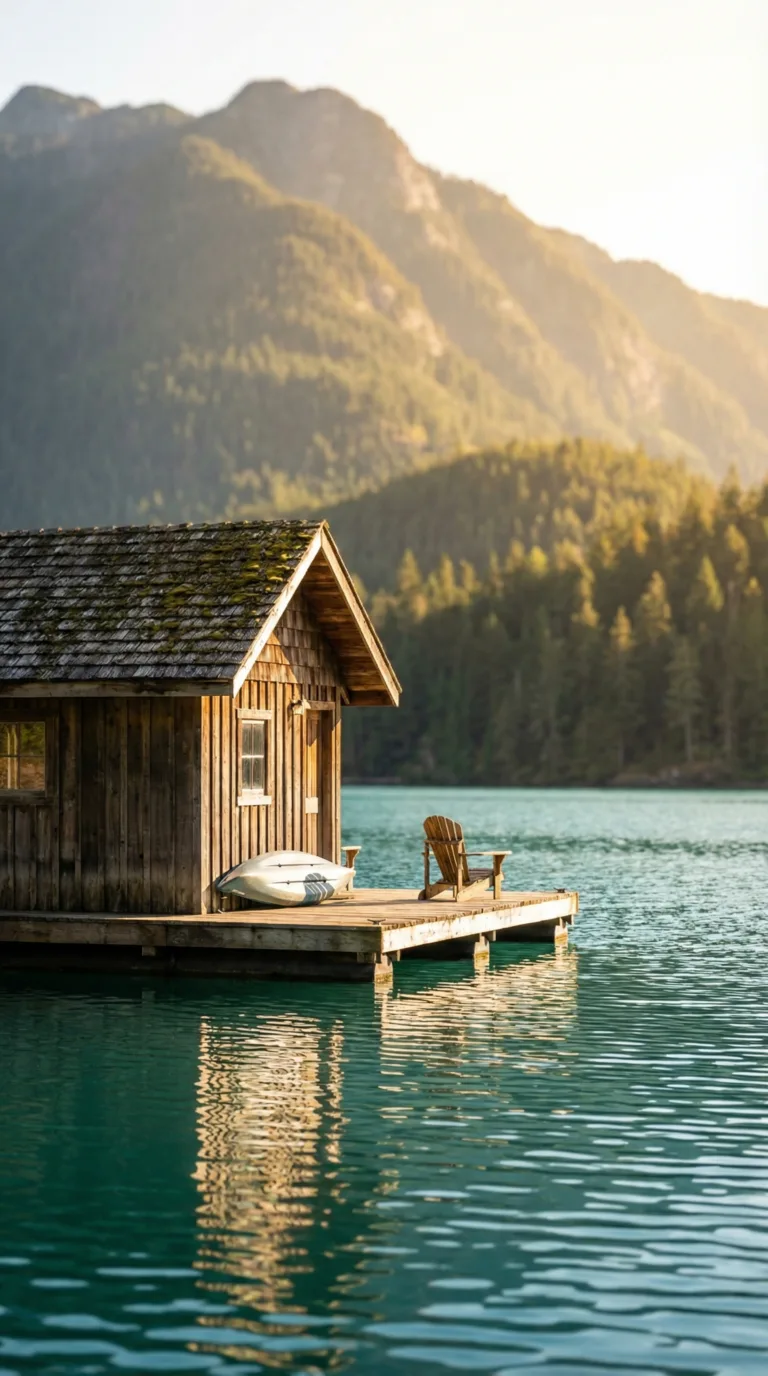
Ross Lake Resort runs the only lodging directly on the water. The floating cabins bob on the lake year-round, but guests can only access them mid-June through late October. Each cabin sits on a log float. You get propane lights, a propane cookstove, and a deck over the water. No electricity. No running water. You haul lake water for washing and bring your own drinking supply.
Cabins sleep between 2 and 8 people depending on size. According to the resort’s 2026 pricing, nightly rates run about $305 for a cabin sleeping two, up to $520 for the largest cabin (sleeps nine). You book months ahead, cabins fill up by February for peak summer weekends. Ross Lake Resort reviews consistently mention the solitude and the novelty of sleeping on the water, though some guests find the lack of amenities jarring.
The resort has no restaurant or store. You bring every meal, every snack, every coffee filter. The tugboat delivers you and your gear to your cabin, then picks you up days later. It’s not a hotel. It’s a floating camp.
Colonial Creek Campground on Recreation.gov is the main drive-in option. It holds 142 sites along the Thunder Arm of Diablo Lake. You get fthick toilets, potable water, and a boat launch. Sites cost $20 per night. The campground operates May through October. It’s the most convenient base if you’re hauling kayaks or canoes.
Goodell Creek Campground on Recreation.gov sits lower down near Newhalem with 19 sites along the Skagit River. It’s quieter, cheaper at $16 per night, and open year-round. No lake access, but it works if Colonial Creek is full.
Backcountry campsites line the Ross Lake shoreline. You need a boat to reach them. Free permits available at the Wilderness Information Center in Marblemount. No facilities. Just a cleared patch of dirt and a fire ring.
Getting to Ross Lake Resort
Ross Lake Resort has no direct road access and requires either a 2-mile hike from Highway 20 or a water taxi from Diablo Lake, with Seattle located 120 miles southwest.
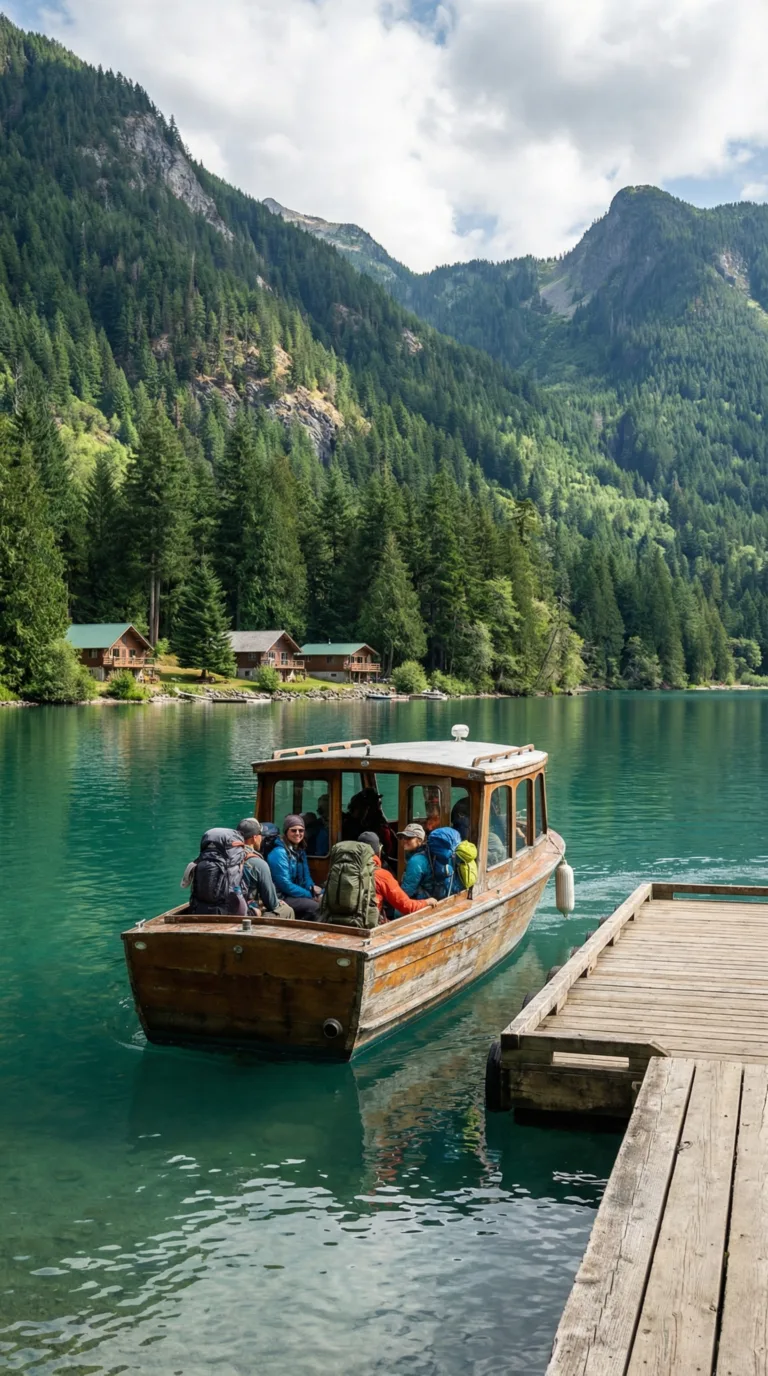
There’s no road to Ross Lake Resort. None. The floating cabins sit on water, surrounded by wilderness. You have two ways in: walk or boat.
Most visitors take the resort’s water taxi. It departs from the Diablo Lake dock, a 2-mile drive past the Ross Lake trailhead on Highway 20. The resort operates water taxi and portage services from June through October. Water-taxi fares are charged per boat for up to six passengers and start around $30 one-way, rising with distance to the backcountry campsites and trailheads along the lake. Book ahead, as space is limited.
The hiking route starts at the Ross Lake trailhead parking area off Highway 20. The trail drops 2 miles through forest, moderately steep in sections. It takes 45 minutes to a hour with a loaded pack. You’ll emerge at the resort’s dock on the east shore.
From Seattle, drive 120 miles northeast via Interstate 5 and Highway 20. The Washington State Department of Transportation lists the drive at 2.5 hours to the trailhead parking area. From Bellingham, it’s 90 minutes east on Highway 20. Check the North Cascades Highway (SR 20) Conditions before you leave, the road closes in winter, typically from November through April.
If you own a boat, you can launch at the Hozomeen boat ramp on the lake’s north end, accessible only via a 40-mile gravel road through British Columbia. The resort rents motorboats and kayaks, so bringing your own is optional unless you want extended range for fishing or exploring the 23-mile reservoir.
Essential Planning Tips for Ross Lake
Ross Lake requires backcountry permits year-round for overnight stays, with June-October offering the best weather and temperatures ranging from 50-75°F in summer.
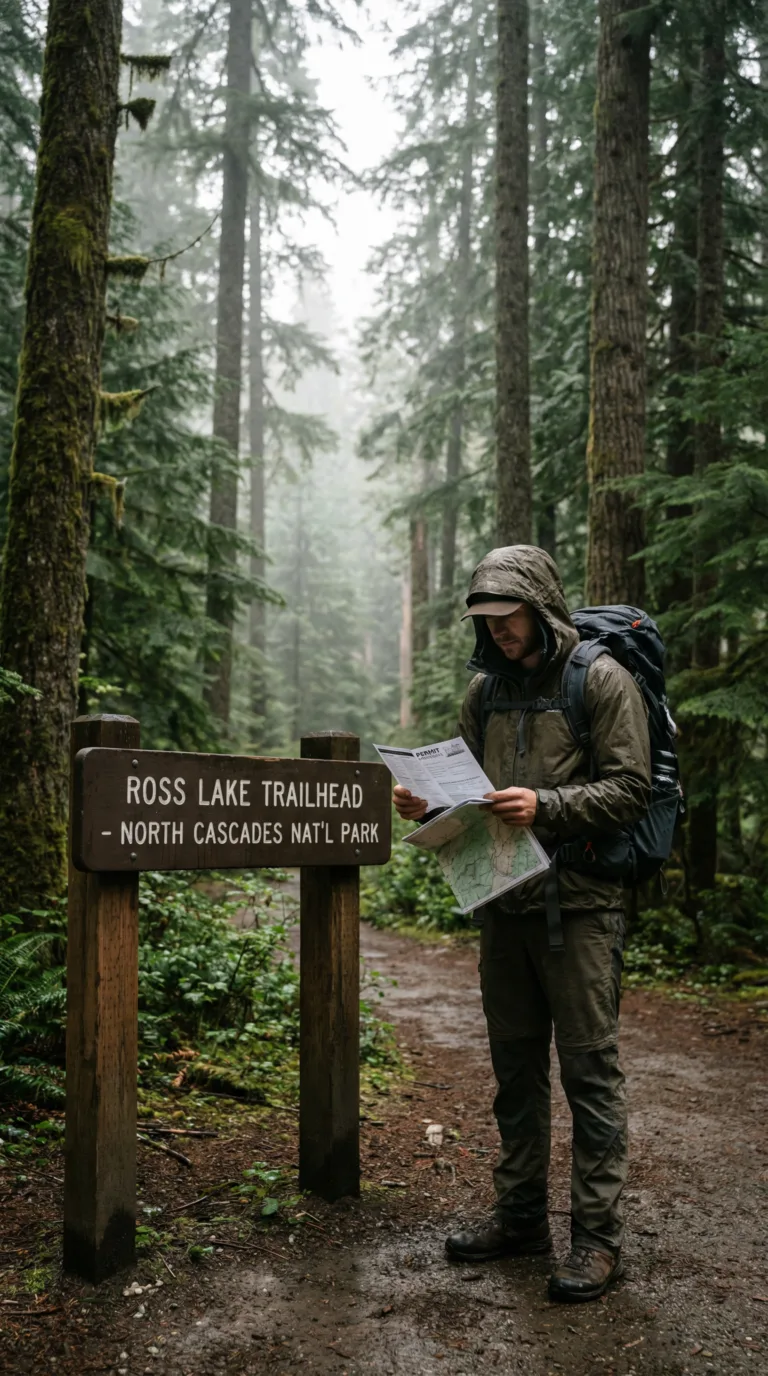
Every overnight trip to Ross Lake requires a backcountry permit. No exceptions. The National Park Service manages the entire North Cascades National Park Service Complex under a mandatory permit system. You apply online through North Cascades Backcountry Reservations. Backcountry permits carry a $6 reservation fee plus a $10 per person, per night recreation fee (youth 15 and under free) under the 2026 NPS fee schedule. Applications open 90 days before your trip date. Peak summer weekends fill within hours.
Ross Lake weather follows a narrow window. The resort operates June through October. That’s your best bet. Summer temperatures hover between 50°F and 75°F per National Weather Service North Cascades Forecasts. Rain shows up even in July. Higher elevations see snow year-round. Pack warm layers.
Bring every ounce of food you plan to eat. No store. No restaurant. The resort sells nothing but cabin rentals. Water filtration is mandatory, lake water needs treatment. Cell service doesn’t exist here. Download your ross lake map before you leave pavement. The NPS website offers detailed backcountry camping maps showing designated sites.
Drive-in campgrounds at Colonial Creek and Goodell Creek operate on a different reservation system than backcountry sites. Check the NPS website for current ross lake camping reservations protocols. Book resort cabins 6-12 months ahead for July and August dates. They vanish fast.
Day Trips from Ross Lake
Diablo Lake sits just 2 miles south of Ross Lake with turquoise glacial waters and roadside viewpoints, while Olympic National Park and Mount Rainier National Park are both within a 3-hour drive.
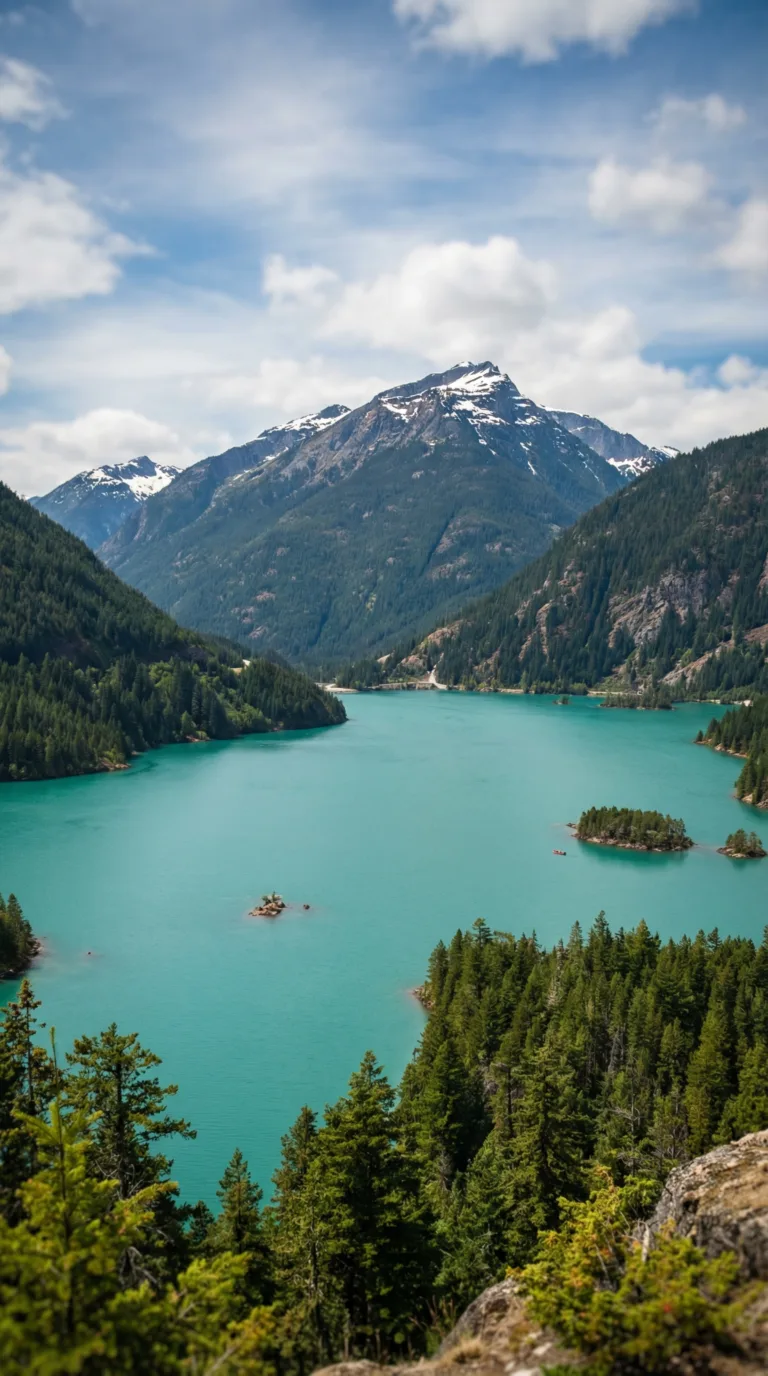
Diablo Lake is your easiest escape. Two miles south on Highway 20. The water glows an unreal turquoise, glacial flour suspended in the lake scatters light like crushed gems. Pull off at the Diablo Lake Overlook for photos. The color shifts with the sun. Morning light makes it electric blue. Afternoon turns it jade.
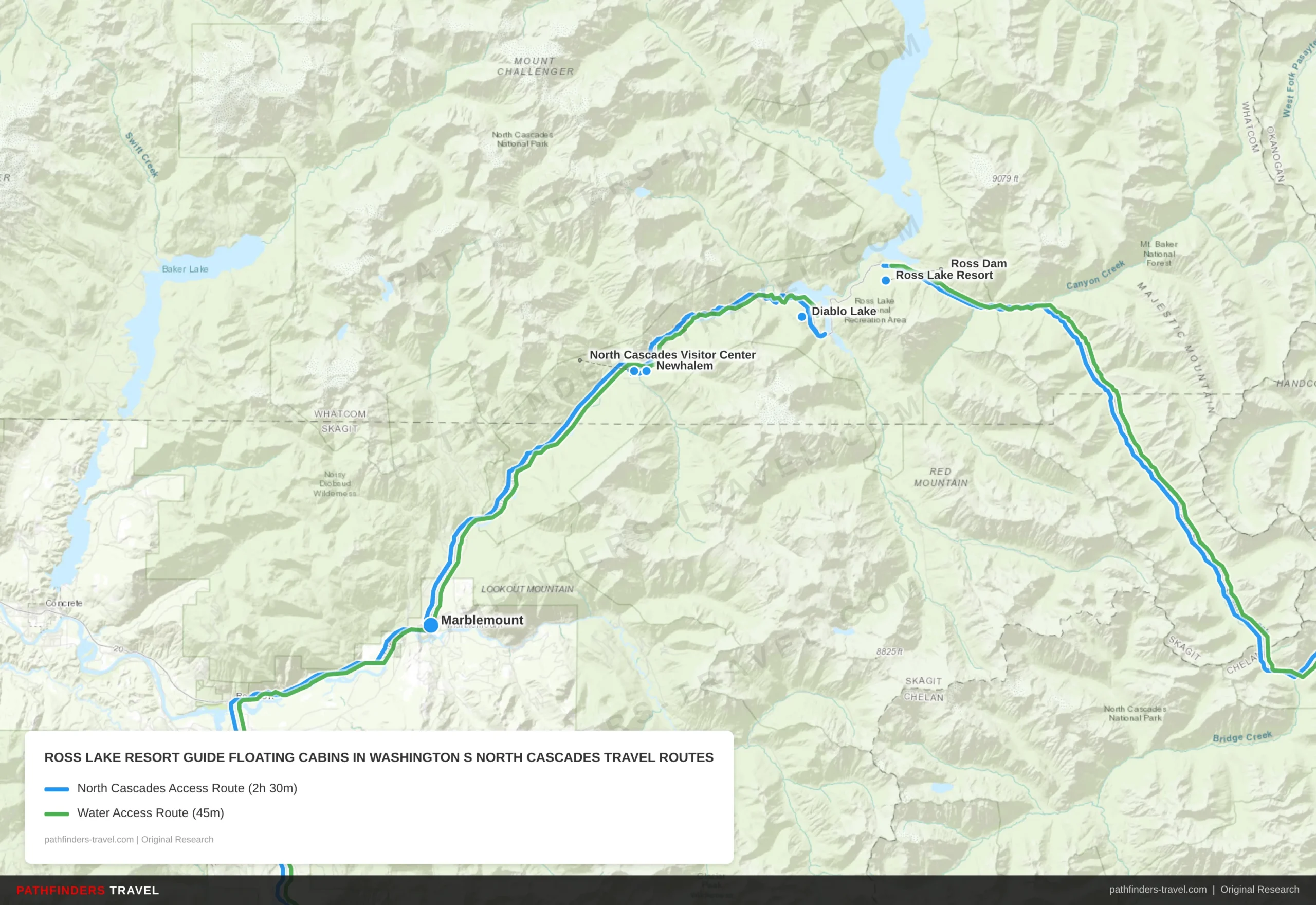
| # | Stop | Highlights | Drive Time |
|---|---|---|---|
| 1 | Marblemount | Last town with services, grocery store, gas station. Gateway to North Cascades | Start |
| 2 | Newhalem | Historic company town, Skagit General Store, trailhead access | 20m |
| 3 | North Cascades Visitor Center | Park information, exhibits, restrooms, trail maps | 5m |
| 4 | Diablo Lake | Turquoise glacial lake, water taxi departure point, scenic overlook | 15m |
| 5 | Ross Dam | Diablo Dam access, beginning of Ross Lake reservoir | 10m |
| 6 | Ross Lake Resort | Floating cabins, boat rentals, fishing access, wilderness accommodation | 2-mile hike or water taxi |
| # | Stop | Highlights | Drive Time |
|---|---|---|---|
| 1 | Diablo Lake | Water taxi departure point, parking area, scenic views | Start |
| 2 | Ross Lake Resort | Floating cabins on 23-mile reservoir, kayak rentals, fishing, backcountry access | 45m by water taxi |
You can fish here. The boat launch on the north shore gives access to rainbow trout and Dolly Varden. Bring a Washington fishing license. The lake gets 200,000+ visitors annually according to National Park Service data, but most just snap photos and leave. Get on the water to avoid the crowds.
Skagit Valley spreads west toward Puget Sound. Farmland. Tulip fields in April. The Skagit Valley Tulip Festival draws half a million people each spring. Outside tulip season, it’s quiet, roadside fruit stands, dairy farms, bald eagles in winter.
Olympic National Park sits 2.5 hours west. Rainforest. Coastline. Elk. The drive takes you through lowland forest to the Pacific. Olympic National Park has three ecosystems, mountains, temperate rainforest, rugged beaches. You can hike the Hoh Rainforest or walk tide pools at Rialto Beach. It’s a full day. Leave early.
Mount Rainier National Park looms three hours south. The volcano dominates the skyline from Seattle on clear days. Mount Rainier National Park gets 1.5 million visitors per year. Paradise Meadows explodes with wildflowers in July and August. Sunrise offers fewer crowds and better views of the glacier.
Whidbey Island makes a coastal detour. Two and a half hours southwest. Beach towns. Coupeville’s historic waterfront. Deception Pass Bridge connects the island to the mainland, the view from the bridge is worth the stop alone.
Seattle works as a base before or after Ross Lake. The city sits 3.5 hours from the resort. Pike Place Market. Coffee. Museums. Most visitors fly into Seattle, rent a car, then drive the North Cascades Highway. You can build a longer Pacific Northwest loop, Ross Lake to Mount Rainier to Olympic to the coast. Two weeks covers it properly.
Best Time to Visit
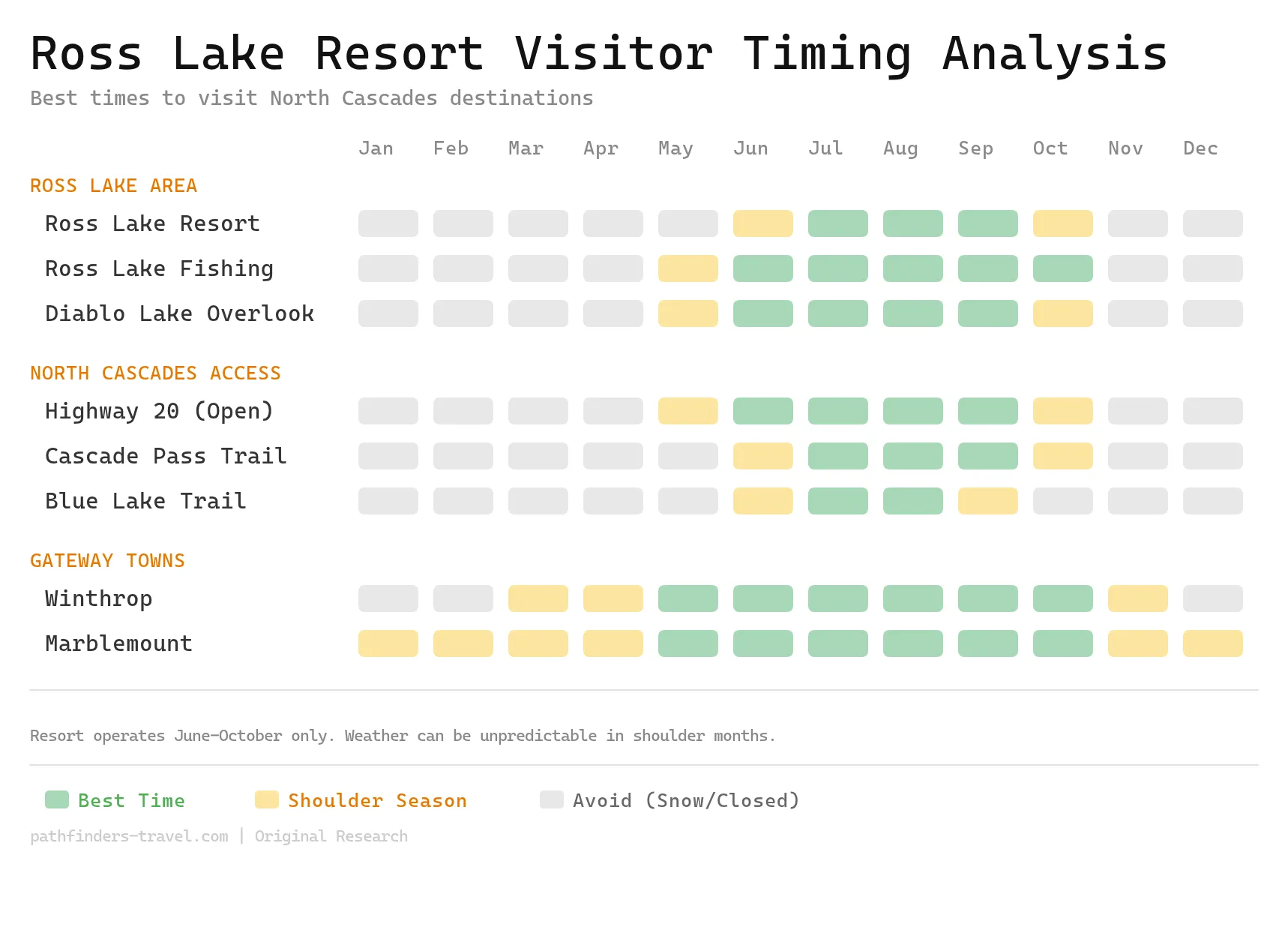
Ross Lake Resort operates only June through October, with peak season from July to September when weather is most reliable. Highway 20 closes seasonally due to snow, making spring and fall access unpredictable. Summer offers the best combination of resort availability, clear trails, and stable weather for outdoor activities.
Activity Difficulty Guide
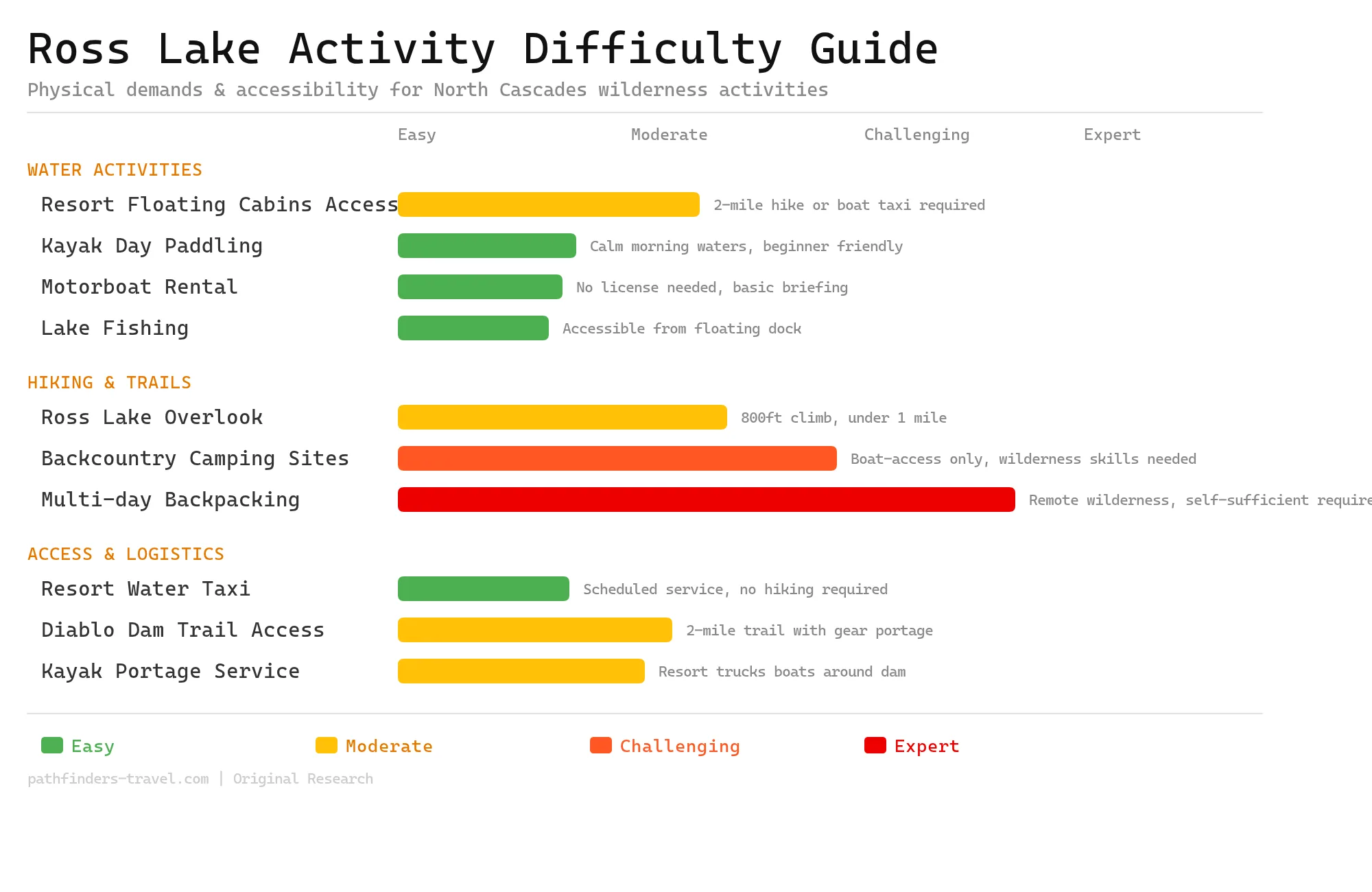
Ross Lake offers activities ranging from accessible floating cabin stays to expert-level wilderness backpacking. Most activities require boat access or hiking, making this destination unsuitable for those with mobility limitations. The remote location and seasonal operation create additional logistical challenges.
Is Ross Lake the same as Diablo Lake?
No, Ross Lake and Diablo Lake are two separate lakes. Ross Lake sits north of Diablo Lake, connected by the Skagit River system. Ross Lake stretches 23 miles from Diablo Dam all the way to the Canadian border. Both lakes are part of the North Cascades National Recreation Area and were created by dams. Diablo Lake is smaller and more accessible by car. Ross Lake requires a boat or a long hike.
Frequently Asked Questions about Ross Lake
Can you swim in Ross Lake?
Yes, swimming is allowed in Ross Lake and is popular during summer months. The water stays cold year-round, typically 50-60°F even in July and August, because of glacial melt and the lake’s depth. Ross Lake Park has a designated beach area for swimming. Always practice cold water safety. Stay close to shore. The shock of cold water can trigger involuntary gasping, even for strong swimmers.
Is there a restaurant at Ross Lake Resort?
No, Ross Lake Resort has no restaurant or store on site. You must bring all your own food and supplies. Cabins have propane cookstoves for meal preparation. The nearest grocery stores are in Marblemount or Concrete, 30-40 miles away. Plan your meals carefully. There’s no place to restock once you’re on the water.
Are motor boats allowed on Ross Lake?
Yes, motorboats are allowed on Ross Lake. Ross Lake Resort rents both motorboats and paddle boats. The resort also operates a water taxi service using motorboats. Visitors can launch their own boats at designated access points. Gas-powered engines are permitted, though you’ll see plenty of kayakers and canoeists as well.
Do I need a permit to visit Ross Lake?
Permits are required year-round for all overnight stays in the backcountry. This applies to North Cascades National Park, Ross Lake, and Lake Chelan National Recreation Areas. Day use doesn’t require a permit. Obtain permits through the National Park Service reservation system in advance. Don’t wait until arrival, popular sites fill up weeks ahead during summer.
How much does it cost to stay at Ross Lake Resort?
Floating cabins at Ross Lake Resort cost about $305 per night for a cabin sleeping two, up to $520 for the largest cabin (sleeps nine), for the 2026 season. Reaching the cabins also means a hike from Highway 20 plus the resort boat across the lake, and cabins book up months in advance for peak summer weekends.