Estimated reading time: 14 minutes
Last updated: August 2026
Table of Contents
- Welcome to Bellevue: Seattle’s Polished Eastside Gem
- Top Attractions and Things to Do in Bellevue
- Bellevue’s Neighborhoods: Where to Explore
- Dining in Bellevue: A World-Class Food Scene
- Where to Stay in Bellevue
- Getting to and Around Bellevue
- Bellevue on a Budget: What to Expect
- Day Trips from Bellevue
- Practical Tips for Visiting Bellevue
- Frequently Asked Questions
Is Bellevue, WA Worth Visiting?
Yes — Bellevue, just across Lake Washington from Seattle, is an easy, upscale Eastside base. Top things to do include the free 53-acre Bellevue Botanical Garden, the waterfront Bellevue Downtown Park with its canal and waterfall, shopping and dining at the Bellevue Collection (Bellevue Square), KidsQuest Children’s Museum, and trails around Lake Washington and Mercer Slough. It is a short drive or light-rail ride from downtown Seattle.
Curious what Bellevue looks like beyond the shopping district? Watch our Bellevue travel guide in 4K.
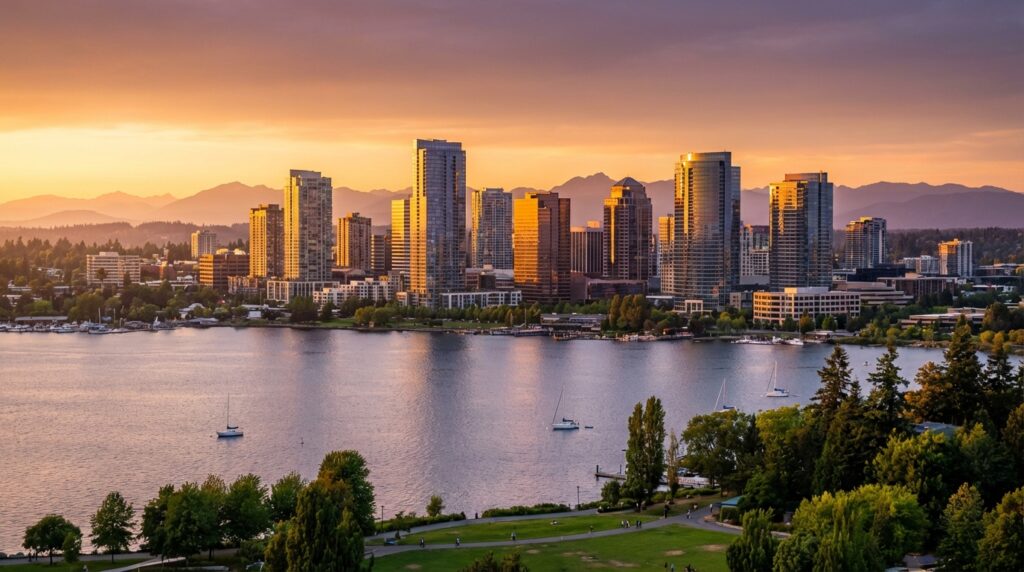
Things to do in Bellevue range from browsing designer boutiques at Bellevue Square to wandering quiet trails through the Bellevue Botanical Garden. This is Seattle’s polished eastside neighbor. Streets are cleaner. The pace feels slightly calmer. Sidewalks are wider.
Bellevue sits across Lake Washington from Seattle, about 10 miles west by car or light rail. The Cascade Range rises to the east. You can reach Olympic National Park in under three hours. Mount Rainier National Park is a 90-minute drive south. Bellevue works as a base for exploring the Pacific Northwest without the grit of a major city.
Expect top-quality shopping at Bellevue Square, calm walks through Downtown Park’s circular waterway, and a restaurant scene that rivals Seattle’s best neighborhoods. The City of Bellevue official website tracks ongoing development projects that keep adding hotels, office towers, and public art installations. Bellevue vs Seattle? Bellevue wins on polish. Seattle wins on edge.
How We Researched Bellevue
This guide combines Bellevue’s official visitor information, Washington state tourism data, and real visitor feedback. Details on dining, shopping, and attractions were current at writing time. Since things change seasonally, we suggest checking local websites before heading out.
Top Attractions and Things to Do in Bellevue
Bellevue Botanical Garden offers free admission to 53 acres of selected Pacific Northwest gardens, while Bellevue Square anchors a shopping district with over 200 stores generating more than $1 billion in annual retail sales.
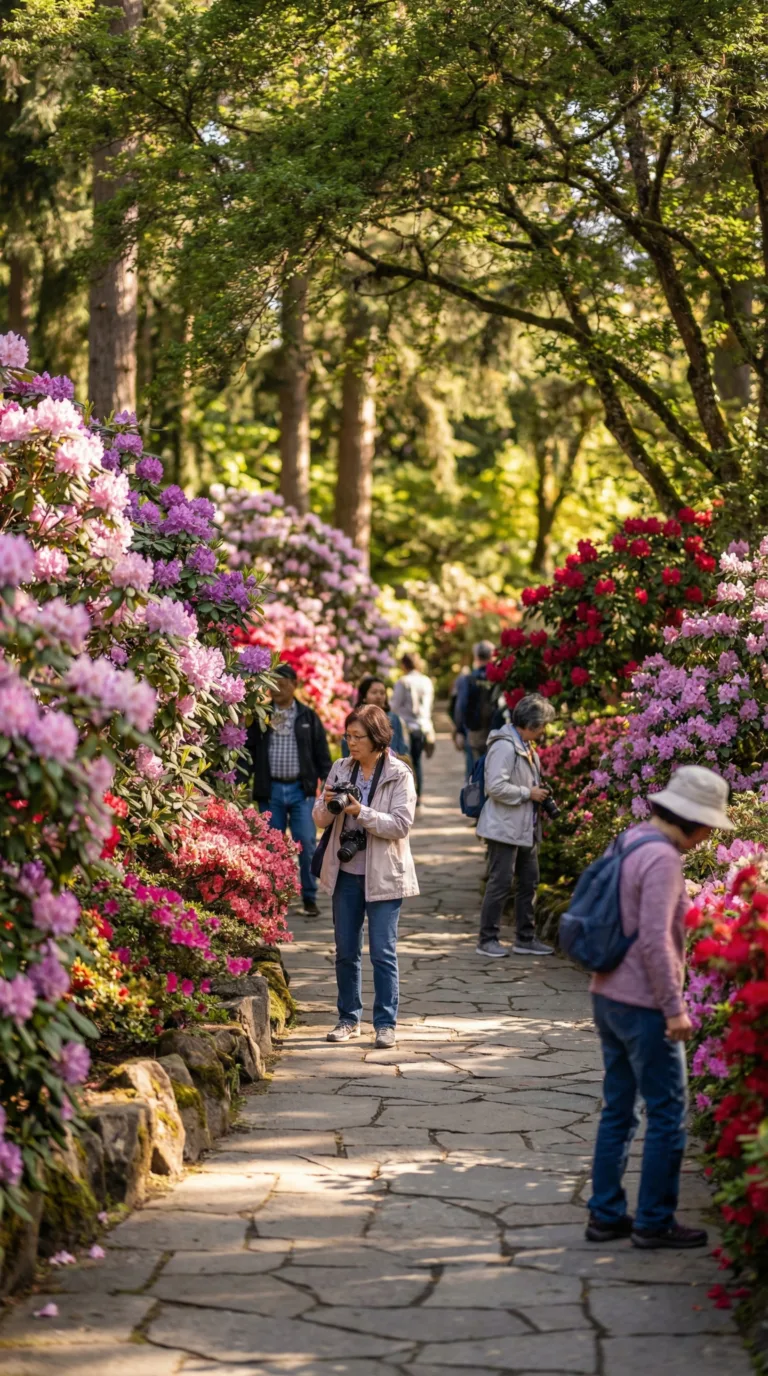
Bellevue Botanical Garden sprawls across 53 acres of manicured grounds. No entrance fee. The Bellevue Botanical Garden official website lists seasonal highlights, rhododendrons explode in May, Japanese maples turn crimson in October. The Yao Garden features traditional Asian landscaping with stone lanterns and koi ponds. Perennial borders run 240 feet long. Fuchsia Garden holds over 50 varieties. Waterwise Garden demonstrates drought-tolerant plants for Pacific Northwest summers. Open dawn to dusk year-round. Parking lot fills fast on spring weekends.
Bellevue Downtown Park centers on a circular reflecting canal. 21 acres total. The promenade loops around calm water where office workers eat lunch on benches. Lawn space hosts summer concerts and food truck gatherings. Kids feed ducks at the canal edge. The park connects to a half-mile walking trail system. No playground equipment, but open grass works for picnics. Free parking in adjacent garage for two hours. Weekday mornings stay quiet. Weekends draw families and wedding photographers.
Bellevue Square dominates the retail scene. Over 200 stores packed into a three-level indoor mall. Nordstrom anchors the north end. Macy’s holds the south. Between them: Apple Store, Lululemon, Tesla showroom, Zara, Uniqlo. The Bellevue Square shopping center operates Monday through Saturday 10 a.m. to 9 p.m., Sunday 11 a.m. to 7 p.m. Directory kiosks on each floor list stores by category. Food court offers 15 vendors. Valet parking costs $10. Standard garage parking validates with purchase. Holiday season crowds require patience. Bellevue Collection includes Lincoln Square North across the street, more dining, a cinema, luxury condos above retail.
According to the Bellevue Downtown Association, Bellevue Square generates over $1 billion in annual retail sales, making it one of the highest-grossing malls per square foot in the United States.
Bellevue Library sits at 1111 110th Avenue Northeast. The building looks like stacked glass boxes. Three floors of books, study rooms, and community meeting spaces. Second floor holds the children’s section with a dedicated story time area. Third floor offers quiet study carrels and mountain views. Free WiFi. Parking garage underneath. Bellevue Parks and Community Services runs year-round programs here, author talks, tech workshops, language classes. Open seven days a week with extended evening hours.
Pro Club Bellevue operates a 250,000-square-foot athletic facility on Northeast 8th Street. Tennis courts, pools, climbing wall, spa services. Day passes available for visitors. Membership costs run high, but the facility rivals resort-level amenities.
Weekend activities shift by season. Farmers Market runs downtown Thursdays May through October. Bellevue Arts Museum (closed indefinitely since 2024 due to financial troubles) previously showcased contemporary craft and design. Outdoor sculpture installations dot Bellevue Way, rotating exhibits from local artists. Winter brings an ice skating rink to Downtown Park from late November through January. Summer concerts happen Friday evenings at the park bandstand.
Bellevue’s Neighborhoods: Where to Explore
Downtown Bellevue spans 400 acres and contains 12 million square feet of office space, 1.4 million square feet of retail, and over 3,000 hotel rooms within a walkable urban core.
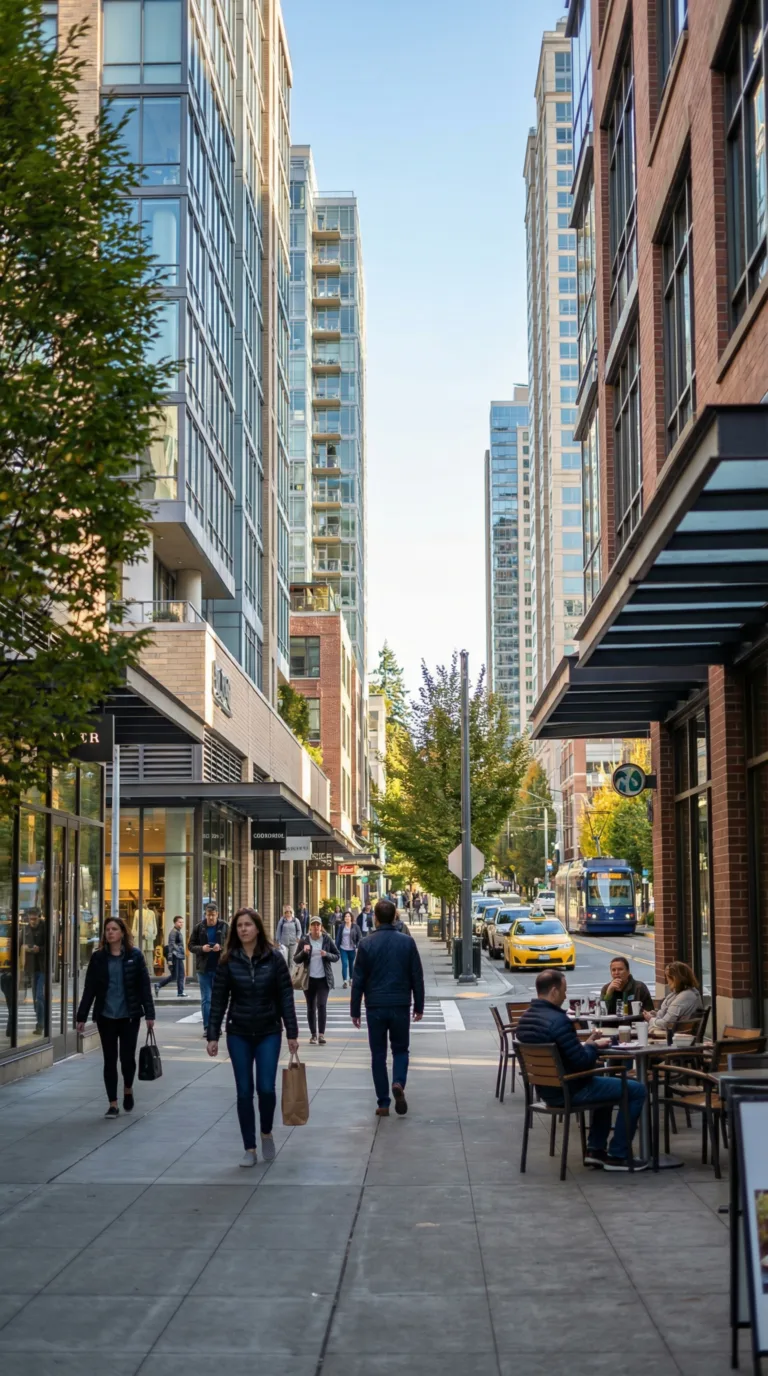
Downtown Bellevue is the city’s polished core. Glass towers. High-end shops. Restaurants that take reservations weeks out. The Bellevue Downtown Association oversees a district that feels more like a corporate campus than a gritty urban center. Streets stay clean. Sidewalks stay wide. You won’t dodge tents or step over garbage.
South of downtown sits Factoria. This is Bellevue’s working neighborhood. Strip malls. Apartment complexes. A Target. Factoria Square shopping center anchors the area with chain stores and casual restaurants. Housing costs drop here compared to the lakefront zones. Families pick Factoria for proximity to I-90 and I-405 without paying downtown premiums.
Old Bellevue occupies a few blocks near Main Street. Historic storefronts. Local coffee shops. Boutiques selling handmade goods. It’s the closest thing Bellevue has to neighborhood character that predates the tech boom. Walk it in 20 minutes.
Bellevue’s layout spreads wide. Roads connect everything. Transit runs through downtown and along major corridors. The city prioritized space over density. Parks buffer residential streets from commercial strips. It’s quieter than Seattle. Cleaner. Built for people who want urban amenities without urban grit.
Dining in Bellevue: A World-Class Food Scene
Bellevue hosts over 600 restaurants representing 40+ cuisines, including the first U.S. location of Din Tai Fung which opened in 2003 and regularly draws 2-hour waits.
Bellevue punches above its weight in the food department. The city’s dining scene rivals Seattle’s without the pretension. You’ll find everything from $3 banh mi to $200 omakase within a ten-block radius.
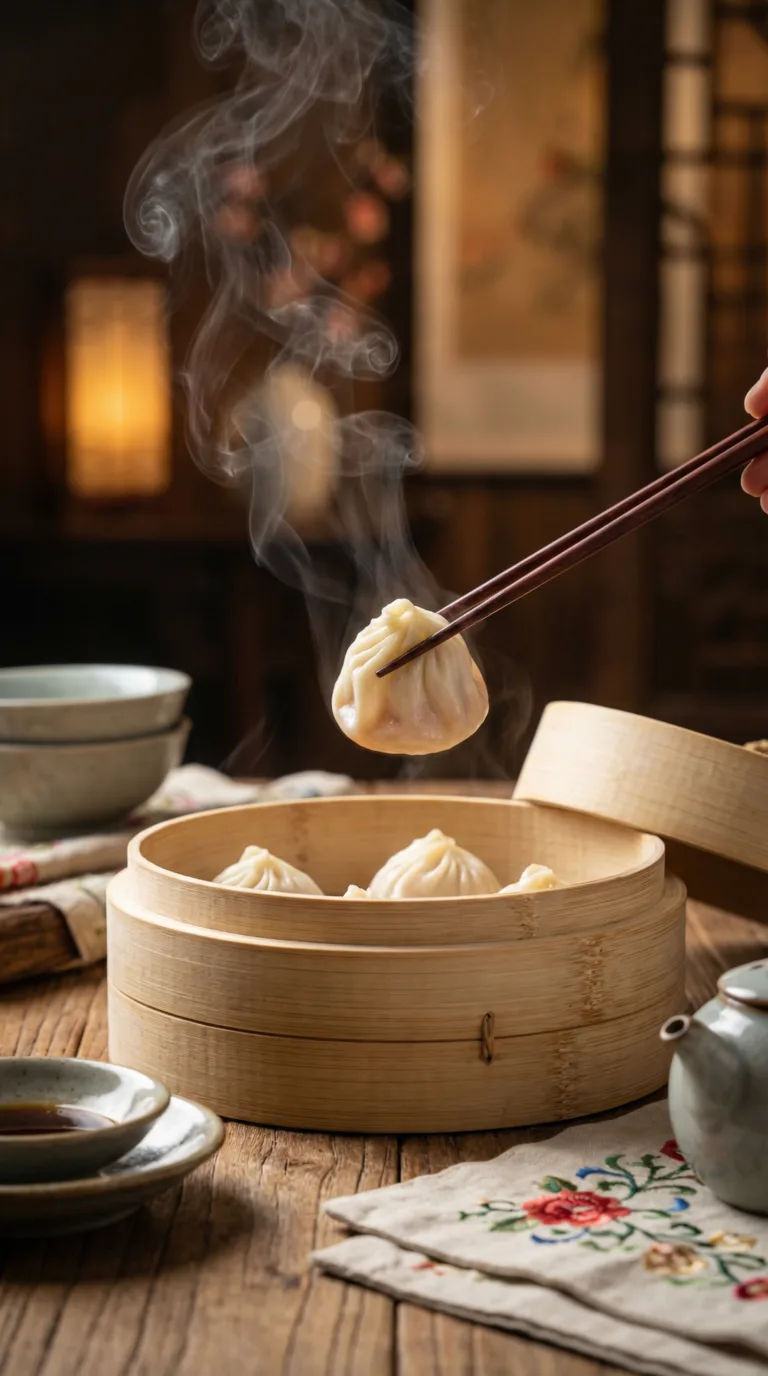
Din Tai Fung Bellevue opened in 2003 as the chain’s first American outpost. The soup dumplings still draw crowds. Weekend waits hit two hours regularly. Get there at 11 a.m. sharp or use the waitlist app. Each xiaolongbao arrives with exactly 18 folds. The pork and crab version costs $13.80 for ten dumplings.
Joey’s Restaurant occupies prime real estate in Lincoln Square. The menu skips trends for well-executed basics, sushi rolls, steaks, and a solid happy hour. Expect $18-32 entrees and a scene that skews corporate casual.
Cactus serves Southwestern food that locals swear by. The margaritas come strong. Portions run large. A dinner for two with drinks lands around $80. Three locations across Bellevue mean you’re never far from chips and salsa.
Carmine’s does family-style Italian in the Bellevue Collection. One entree feeds three people easily. The chicken parm costs $32 and arrives on a platter the size of a hubcap.
Uwajimaya Bellevue anchors the Asian food scene beyond restaurants. The supermarket stocks ingredients you won’t find elsewhere. The food court serves fresh poke, bento boxes, and Vietnamese sandwiches for under $10. Grab lunch here before shopping.
Bellevue Square and downtown concentrate most dining options. Daniel’s Bellevue handles special occasions with French technique and local ingredients. Anthony’s serves Pacific Northwest seafood with water views. The range runs deep, you can eat well at any price point.
Where to Stay in Bellevue
Bellevue contains approximately 3,000 hotel rooms with average nightly rates ranging from $180-$350, concentrated in the downtown core within walking distance of Bellevue Square.
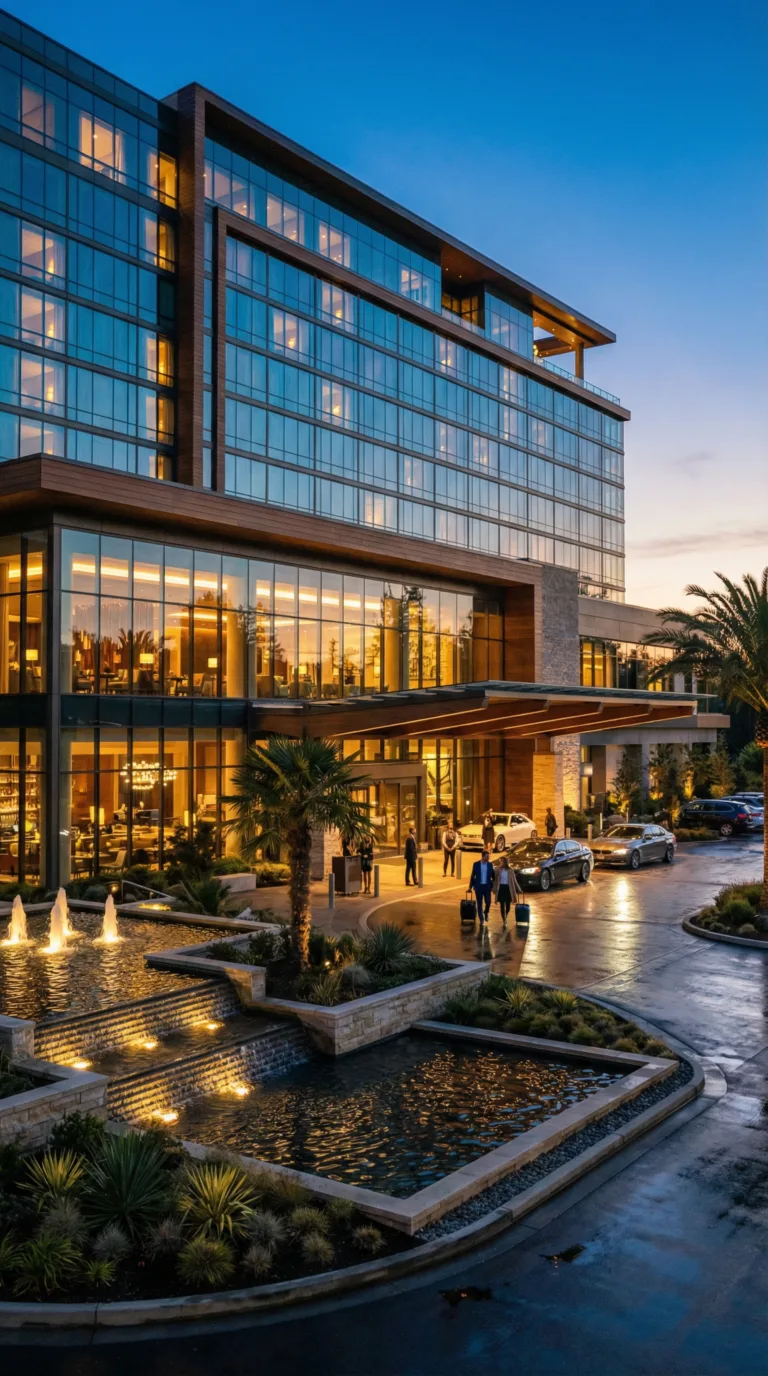
The city’s hotel scene skews upscale and business-focused. Most properties cluster downtown within a half-mile radius of the shopping district. Hilton Bellevue sits one block from Bellevue Square, a full-service property with 353 rooms, a fitness center, and an on-site restaurant. Standard rooms start around $220 per night during weekdays.
Hyatt Regency Bellevue occupies the opposite end of the price spectrum. This 732-room tower connects directly to Bellevue Square via skybridge. Expect rates from $280 upward. The property includes a rooftop bar, indoor pool, and 24-hour room service.
Other major chains operate here: Westin Bellevue (337 rooms, $240+ nightly), W Bellevue (245 rooms, $300+ nightly), and Residence Inn by Marriott (234 suites, $190+ nightly for extended stays). All maintain the same pattern, modern builds, business amenities, premium pricing.
Seattle sits 10 miles west across Lake Washington. That city offers triple the inventory at wider price points. If you’re willing to drive or use transit, Capitol Hill and University District hotels run $120-$180 per night with more neighborhood character.
Book downtown Bellevue for walkability to restaurants and shops. Choose properties near transit stations if you plan frequent trips to Seattle. The Visit Bellevue official accommodation page lists current availability across all properties.
Getting to and Around Bellevue
Bellevue Transit Center serves 45 bus routes with connections to Seattle every 10-15 minutes during peak hours, and the East Link light rail extension opening in 2023 reduced travel time to downtown Seattle to 23 minutes.
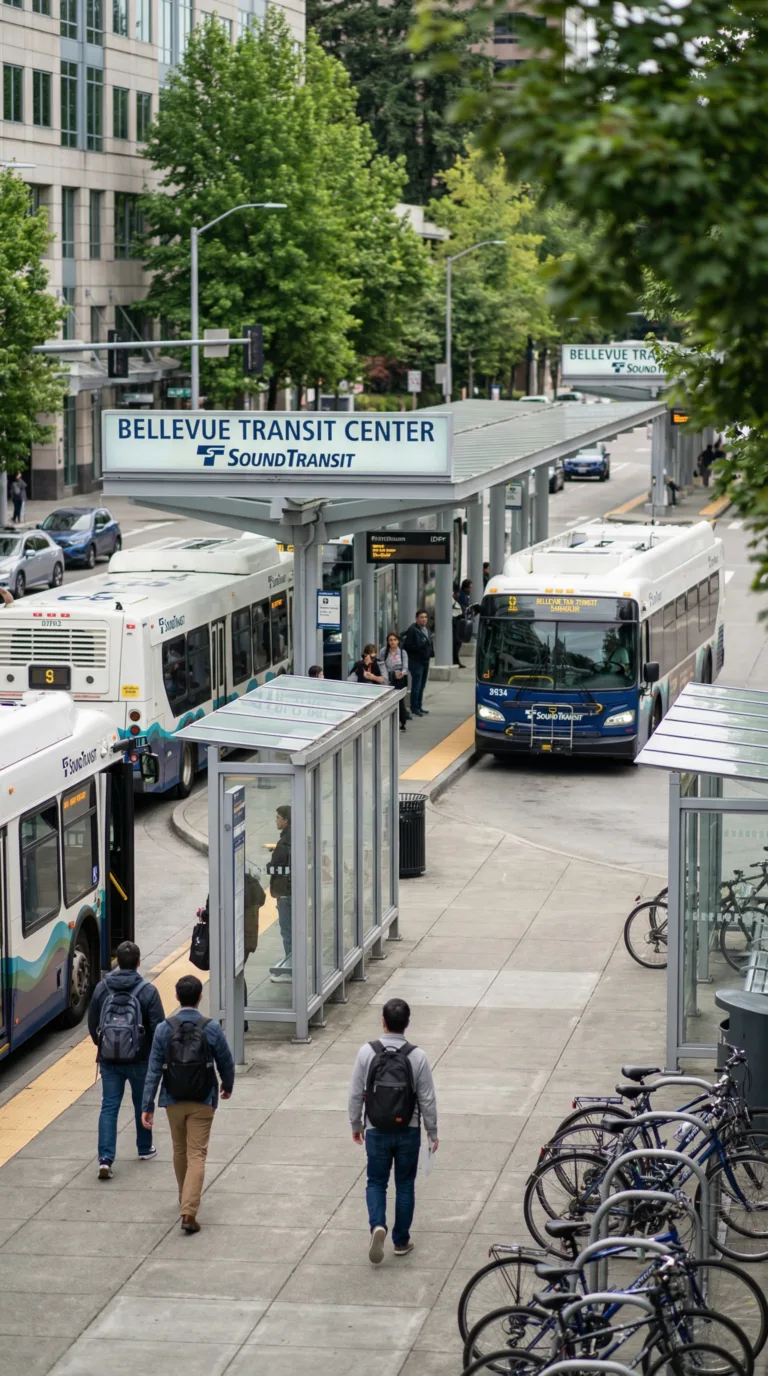
Seattle-Tacoma International Airport sits 20 miles south. Rental cars work best for regional trips. Rideshare runs $40–60 to Bellevue. Transit takes 90 minutes with transfers.
Bellevue Transit Center anchors the city’s public transport network. Sound Transit and King County Metro buses fan out from here. The Sound Transit East Link Extension light rail now connects Bellevue to Seattle in 23 minutes, trains run every 8, 10 minutes during rush hour. According to Sound Transit, the line opened in 2023 after years of construction delays.
Downtown Bellevue is walkable. Most hotels, restaurants, and Bellevue Square sit within a 15-minute walk of each other. The city built protected bike lanes along major corridors. Cars dominate outside the core. Parking is plentiful and usually free at shopping centers.
Use the King County Metro Trip Planner to map bus routes. Service drops after 9 PM on weekdays.
Bellevue on a Budget: What to Expect
Bellevue’s median household income of $130,000 drives higher prices, with average restaurant meals costing $18-35 per person and hotel rooms averaging $250 per night, approximately 15% more than comparable Seattle options.
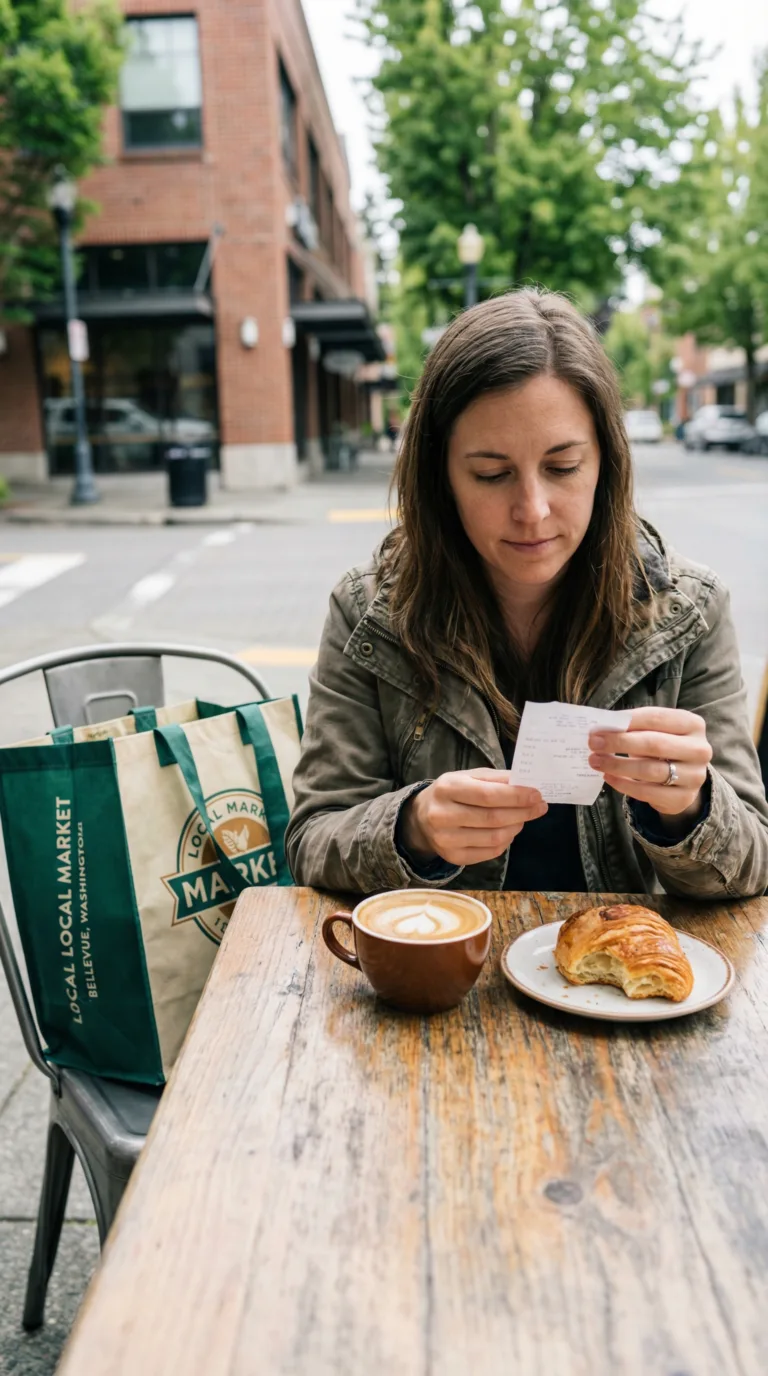
Why is Bellevue so expensive? The city’s median household income sits around $130,000 according to U.S. Census Bureau data, one of the highest in Washington State. That wealth fuels upscale retail, luxury housing, and premium dining. You’ll pay more here than in Seattle for most services.
Daily budget estimates: Budget travelers need $100-150 (hostel or Airbnb, grocery meals, free parks). Mid-range travelers should plan $200-300 (chain hotel, casual restaurants, paid attractions). Luxury travelers burn $400+ daily (boutique hotel, fine dining, spa treatments).
Restaurant meals run $18-35 per person at sit-down spots. Hotels average $250 nightly, 15% higher than comparable Seattle properties. Parking fees add $3-5 per hour downtown.
Free attractions exist. The Bellevue Botanical Garden costs nothing. Downtown Park is open to everyone. The public library offers air conditioning and Wi-Fi.
Money-saving tips: Shop at Uwajimaya for affordable prepared meals and snacks. Use King County Metro transit instead of paying downtown parking rates. Visit during January or February when hotel rates drop 20-30%.
Day Trips from Bellevue
Bellevue’s central location provides access to Seattle in 23 minutes by light rail, Mount Rainier National Park in 2 hours, and Olympic National Park in 2.5 hours, making it an ideal base for exploring Washington State.
Seattle sits 10 miles west. The 2 Line light rail gets you to downtown in 23 minutes for $3.25. Pike Place Market opens at 9 AM daily. The Space Needle costs $37.50 per adult. Walk the waterfront. Catch a ferry to Bainbridge Island.
Mount Rainier National Park requires a 2-hour drive south on State Route 167 and 410. The Paradise area stays open year-round. Entry costs $30 per vehicle, valid for seven days. Check the Mount Rainier National Park official NPS website for road conditions before you go. Snow closes some roads until July.
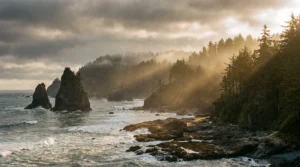
Olympic National Park takes 2.5 to 3 hours depending on your route. Drive around Puget Sound or take the Washington State Ferries official schedule and routes from Seattle to Bainbridge Island. The Hoh Rainforest gets 140 inches of rain per year. Ruby Beach has sea stacks and driftwood. Park entry runs $30 per vehicle. The Olympic National Park official NPS website lists current trail conditions.
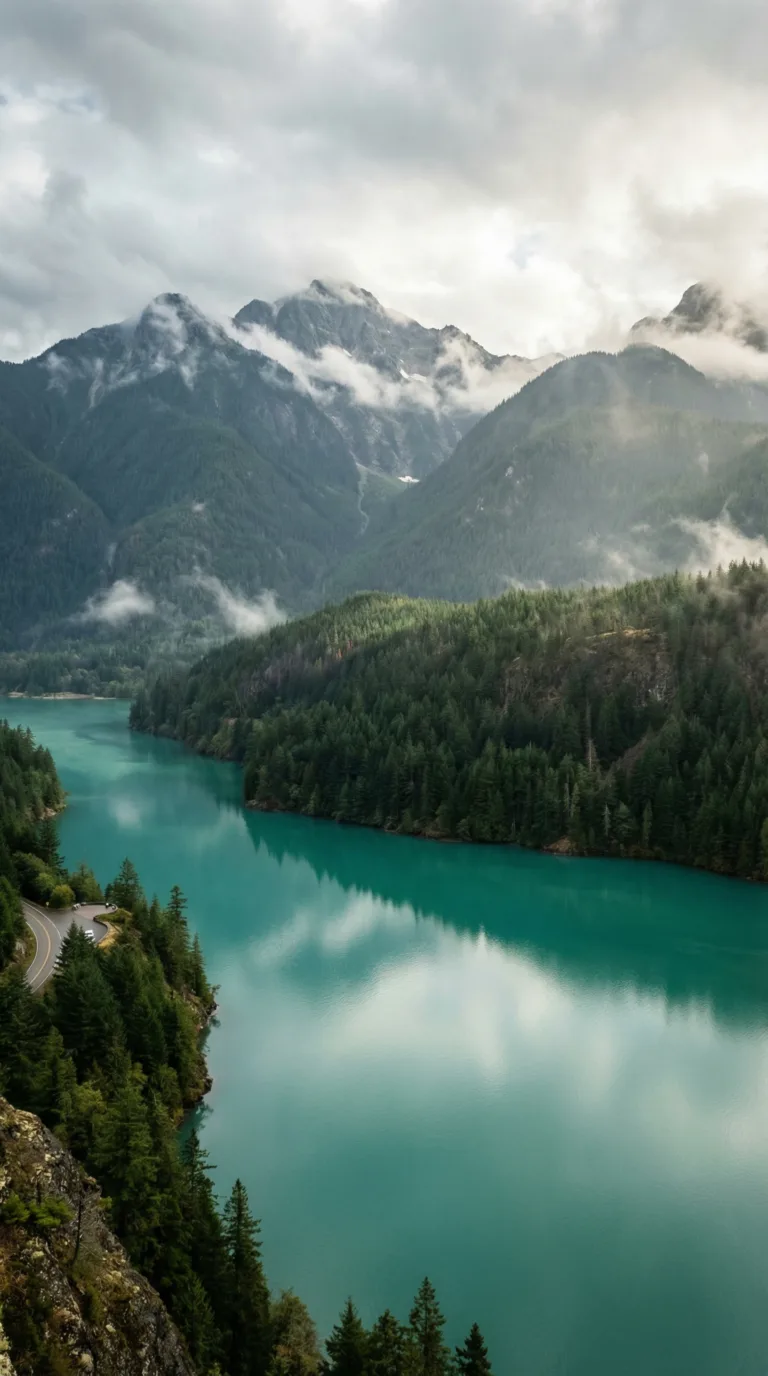
Diablo Lake glows turquoise from glacial flour. It’s 2.5 hours northeast on Highway 20. Stop at the overlook pullout for photos. Ross Lake sits further up the same highway. Both lakes freeze in winter when the North Cascades Highway closes.
Whidbey Island requires 1.5 hours north. Deception Pass Bridge connects the island to the mainland. Coupeville has 19th-century buildings. Langley offers art galleries and waterfront cafes.
Tacoma is 35 miles south on I-405 and I-5. The Museum of Glass costs $20 per adult. Point Defiance Park has 760 acres of forest and beaches. Hotel rooms run $40 cheaper than Seattle on average.
Skagit Valley tulip fields bloom in April. The Tulip Festival runs for a month. Drive 1 hour north on I-5. Bellingham sits 90 miles north. Western Washington University anchors the downtown. It’s the last major town before the Canadian border.
The Snoqualmie Region has Snoqualmie Falls, a 268-foot waterfall visible from a free viewing platform 30 minutes east of Bellevue.
Practical Tips for Visiting Bellevue
Bellevue receives 36 inches of rain annually with July-September averaging less than 1 inch per month, making summer the optimal time to visit for outdoor activities and exploring the city’s parks and gardens.
Summer runs June through September. Dry weather dominates. Outdoor activities peak. Spring brings blooms at the Botanical Garden but expect drizzle. Fall delivers fewer crowds and mild temps.
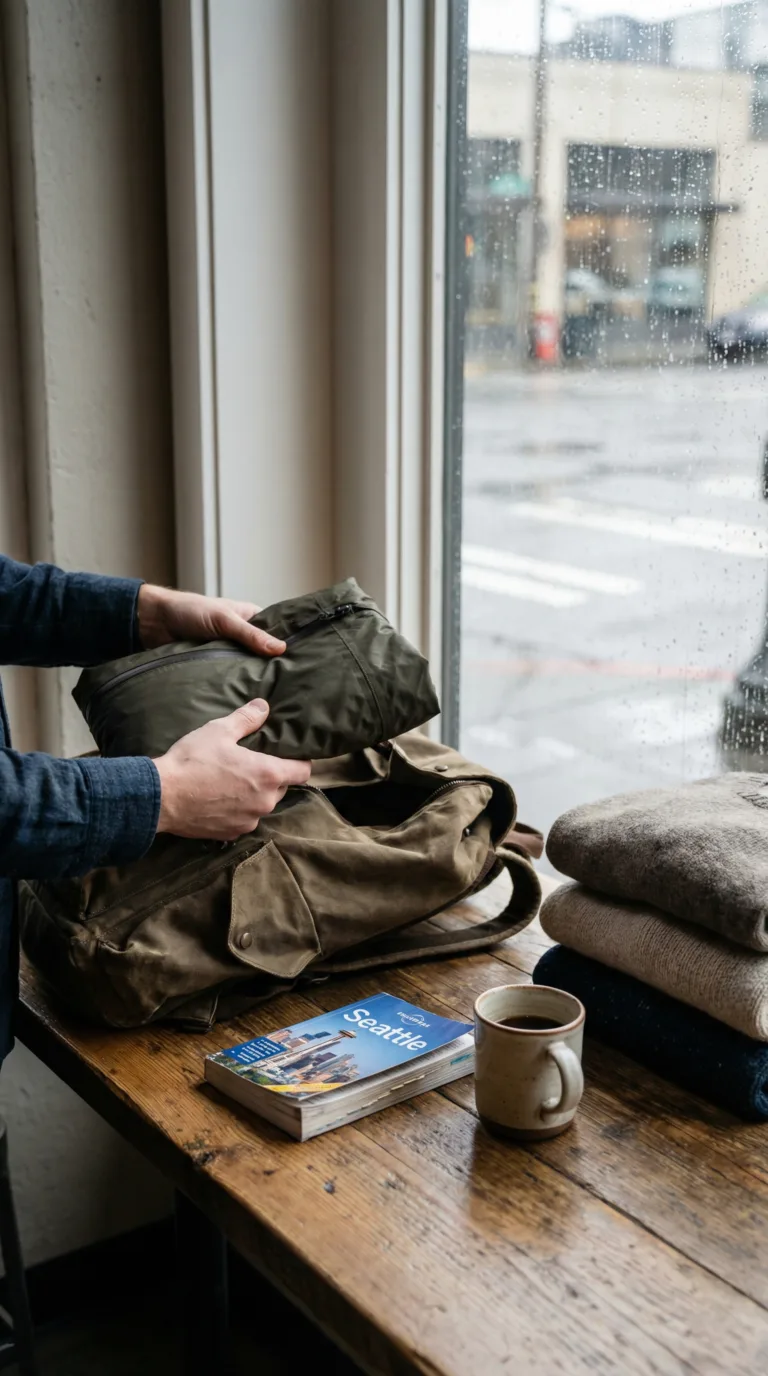
Pacific Northwest weather means layers. Always. Winters stay mild but wet. Summers warm up but mornings can be cool. Pack a rain jacket year-round. The National Weather Service Seattle/Tacoma posts reliable forecasts.
Pronunciation matters. It’s BELL-view. Not bell-VEW. French origin. Means “beautiful view.” Locals notice when you get it wrong.
Bellevue welcomes LGBTQ+ travelers. Grindr named it a Top Gay City in 2024. The city maintains inclusive policies and a welcoming atmosphere.
Bring comfortable walking shoes. Downtown sprawls. Casual attire works for most places though some restaurants lean upscale. Bellevue runs polished and orderly. Respect public spaces. Follow parking rules. The city takes both seriously.
Frequently Asked Questions
What are fun things to do in Bellevue, WA?
Top picks include the free Bellevue Botanical Garden (and its Garden d’Lights in winter), the waterfront Bellevue Downtown Park, shopping and dining at the Bellevue Collection, KidsQuest Children’s Museum for families, and kayaking or walking the trails around Lake Washington and Mercer Slough.
How do you spend a day in Bellevue?
Start at the Bellevue Botanical Garden, stroll Bellevue Downtown Park’s loop and waterfall, then have lunch and browse the Bellevue Collection. Add the KidsQuest Children’s Museum, and finish with sunset and a walk or paddle along Lake Washington at Meydenbauer Bay Park.
How far is Bellevue from Seattle?
Bellevue sits just across Lake Washington from Seattle, about 10 miles (15 to 25 minutes) east via the I-90 or SR-520 floating bridges. The 2 Line light rail and frequent buses also connect the two, making Bellevue an easy base or day trip from downtown Seattle.
What is the best time to visit Bellevue?
Summer (June to September) is the driest, sunniest time, ideal for gardens, lakeside parks, and patios. Spring brings blossoms and fewer crowds, autumn adds colour, and the winter holidays light up Bellevue with Garden d’Lights and Snowflake Lane at the Bellevue Collection.
What is Bellevue known for?
Bellevue is known as Seattle’s upscale Eastside city — home to major tech employers, the high-end Bellevue Collection, a fast-growing skyline, excellent Asian dining, and green spaces like the Bellevue Botanical Garden and Mercer Slough Nature Park.