This guide contains affiliate links. As an Amazon Associate we earn from qualifying purchases — at no extra cost to you.
Estimated reading time: 14 minutes
Last updated: June 2026
Table of Contents
- Is One Day Enough for Crater Lake National Park?
- Top Attractions and Things to Do
- Where to Eat at Crater Lake
- Accommodation Options
- Getting There and Around
- Budget and Entrance Fees
- Day Trips from Crater Lake
- When to Visit and What to Pack
- Frequently Asked Questions
Is One Day Enough for Crater Lake National Park?
One day is enough to see Crater Lake’s highlights: drive the 33-mile Rim Drive, stop at viewpoints like Discovery Point and the Watchman, and walk a short rim trail. Two days let you add longer hikes such as Garfield Peak and Mount Scott. Note that the Cleetwood Cove Trail — the only lake access for swimming and boat tours — is closed 2026 to 2028 and reopens in 2029. Entrance is $30 per vehicle.
How We Researched This Guide
We compiled this guide using the National Park Service website, Oregon tourism data, 4K documentary footage, and feedback from recent visitors. All details about access points, fees, and conditions were current at the time of writing. Since park conditions can change seasonally, please verify current information on the official Crater Lake website before your trip.
Want to see Crater Lake’s incredible blue waters for yourself? Watch our full Crater Lake travel documentary in 4K Ultra HD.
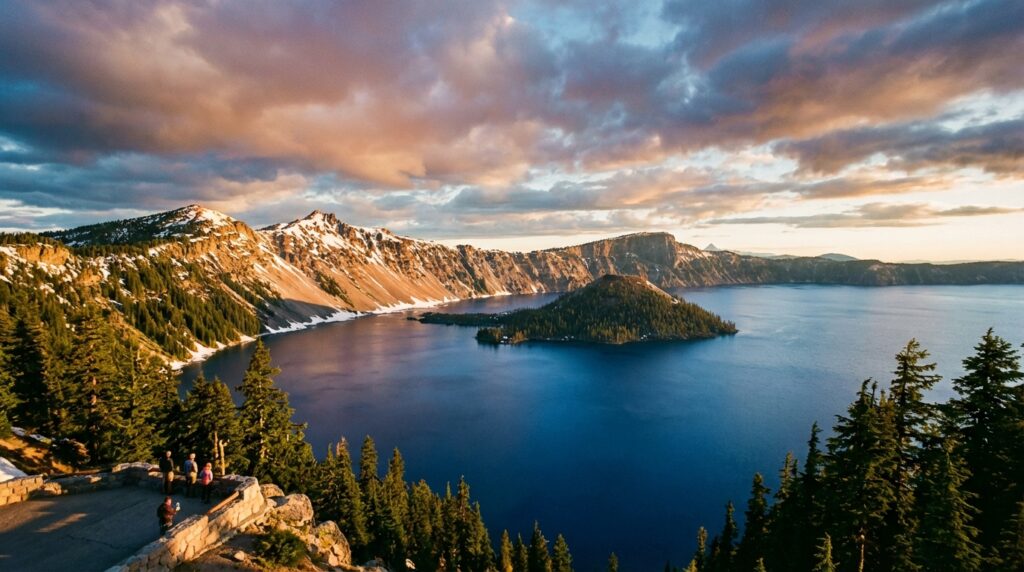
The numbers tell the story. Crater Lake plunges 1,943 feet down, making it the deepest lake in the United States according to the Official National Park Service Crater Lake National Park website. No river feeds it. No stream drains it. Rain and snowmelt are the only sources.
How was Crater Lake formed? Mount Mazama erupted 7,700 years ago, then collapsed inward. The mountain’s peak caved into its own empty magma chamber. What remained was a massive bowl, a caldera, that slowly filled with precipitation over centuries. The National Park Service page on Crater Lake’s geological formation and volcanic history documents this violent birth in detail.
The lake’s color stops people cold. That blue isn’t Photoshopped. Pure water absorbs every wavelength except blue, and Crater Lake’s extreme depth amplifies the effect. A pair of polarized sunglasses cuts the glare so that blue really pops. The water contains almost no sediment or algae. Visibility reaches 100 feet on calm days. The park attracted 720,659 visitors in 2023 per National Park Service statistics.
The park sits in southern Oregon’s Cascade Range, roughly 80 miles north of the California border. Rim Drive circles the caldera for 33 miles, connecting viewpoints and trailheads. The elevation at rim level averages 7,100 feet. Snow buries the roads from October through June most years.
Top Attractions and Things to Do
Crater Lake’s 33-mile Rim Drive circles the caldera with over 30 viewpoints, while the Cleetwood Trail provides the only lake access (closed for construction through summer 2028).
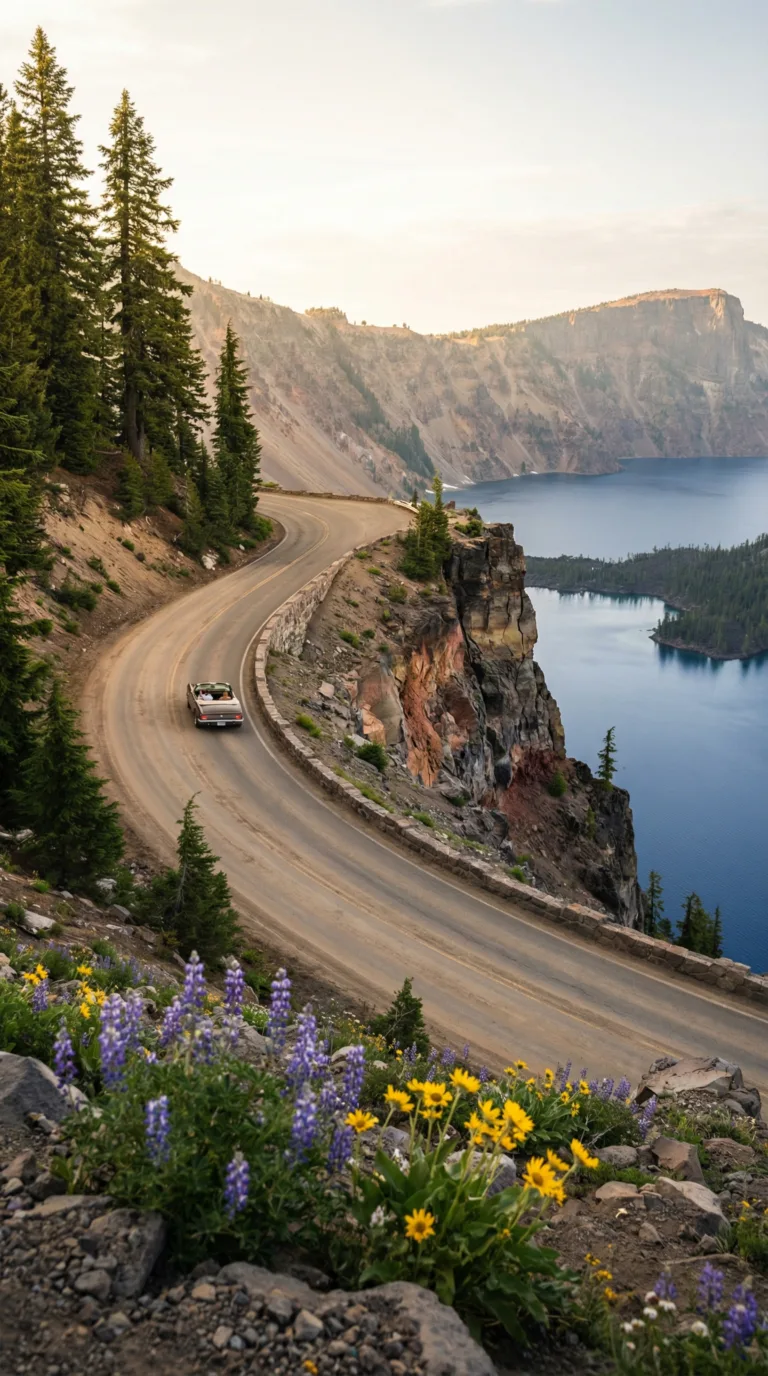
Start with Rim Drive. This 33-mile loop circles the entire caldera, connecting over 30 designated viewpoints along the way. The road typically opens in early July and closes in October when snow arrives. You can drive it in about two hours if you skip the stops. Don’t skip the stops.
Three viewpoints stand out. Watchman Overlook sits on the west rim with direct views of Wizard Island. Cloudcap Overlook on the east side reaches 8,000 feet elevation, the highest point accessible by car. Phantom Ship Overlook on the south rim frames a jagged rock formation that looks like a sailing ship when fog rolls in.
The park has excellent Crater Lake Hiking Trails, but you need to know about the closures. Cleetwood Trail is the only path down to the lake itself. It drops 700 feet over 1.1 miles. The National Park Service closed this trail in 2026 for major reconstruction and rock scaling work, it won’t reopen until summer 2028.
Planning Tip
That closure kills two popular activities. Boat tours to Wizard Island normally launch from Cleetwood Cove. No trail access means no Crater Lake Boat and Trolley Tours until 2028. Swimming at the lake is technically allowed, but you can only reach the water via Cleetwood Trail. The steep switchbacks call for waterproof hiking boots with real grip. Cold water anyway, the surface stays around 55°F even in August.
Other trails stay open. Watchman Peak Trail climbs 420 feet in 0.8 miles to a fire lookout tower with 360-degree views. Garfield Peak Trail is steeper, 1,000 feet of elevation gain over 1.7 miles, but the payoff is a perch directly above the lake’s south rim. Mount Scott Trail reaches the park’s highest point at 8,929 feet. That’s a 2.5-mile climb with 1,250 feet of elevation gain.
You can fish without a license. The lake holds kokanee salmon and rainbow trout, both non-native species introduced in the early 1900s. No bait restrictions. No catch limits. The fish average 8-12 inches.
Wildlife shows up most often at dawn and dusk. Black bears roam the forests (no grizzlies in Oregon). Deer graze near the rim. Yellow-bellied marmots sun themselves on rocks. Bald eagles and Clark’s nutcrackers patrol the cliffs. Keep food locked in your car, bears here have learned to recognize coolers.
Winter flips the park. Rim Drive closes under 10-15 feet of snow. The park stays open for cross-country skiing and snowshoeing. Rangers lead free snowshoe walks on weekends from late December through March. Rent gear at Rim Village if you don’t own any.
Where to Eat at Crater Lake
Crater Lake Lodge’s dining room offers Pacific Northwest cuisine with lake views, while Rim Village has casual cafeteria-style options and a coffee shop.
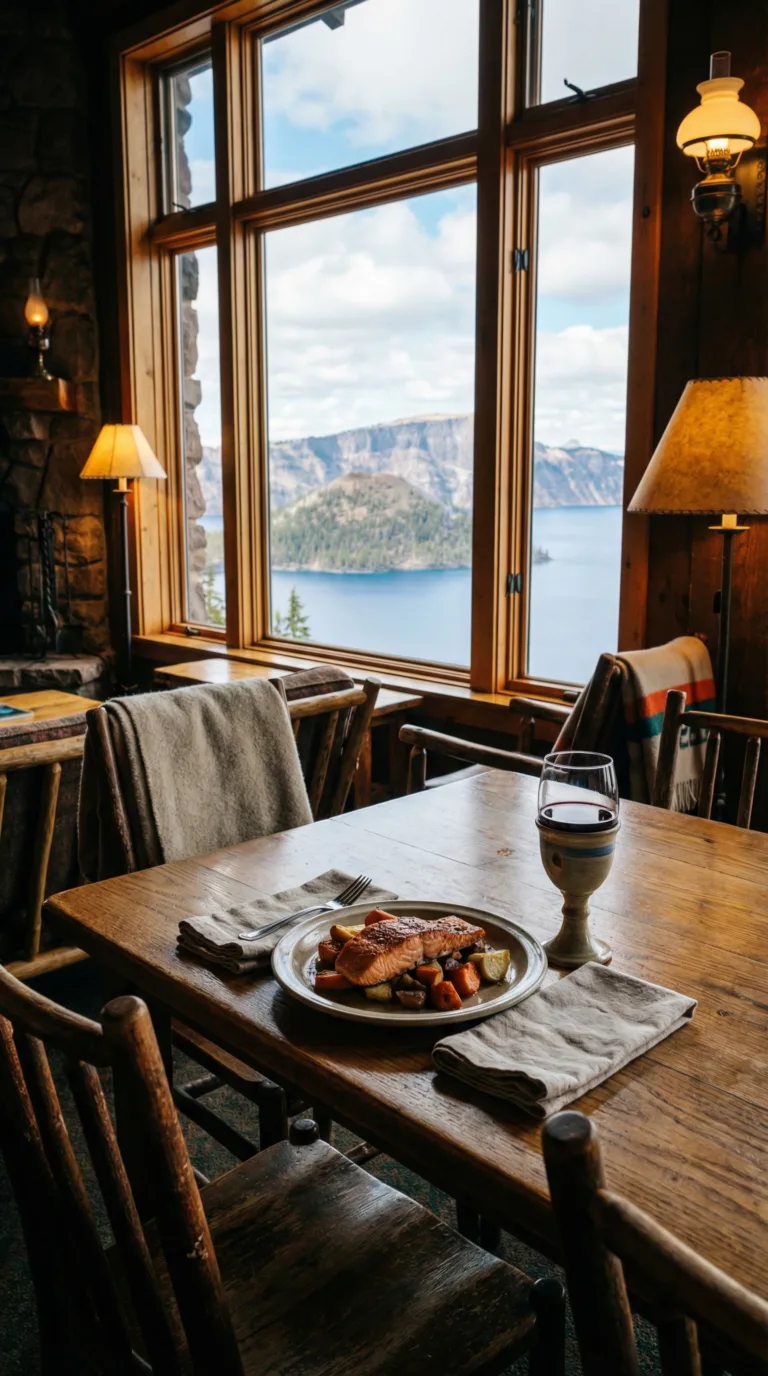
Your dining options inside the park are limited. Plan accordingly.
Crater Lake Lodge Dining Room serves upscale Pacific Northwest dishes, think wild salmon, Oregon wines, and seasonal vegetables. The dining room operates from late May through mid-October, matching the lodge’s seasonal schedule. Reservations are strongly recommended during summer weekends. Expect to pay $25–40 per entrée. The views through the floor-to-ceiling windows are worth the price.
Rim Village Café offers cafeteria-style meals. Burgers, sandwiches, salads. Nothing fancy. It’s open during peak season and gets crowded at lunch. Grab food early or late to avoid the rush.
Annie Creek Restaurant at Mazama Village serves pizza, sandwiches, and grab-and-go items. It’s your best bet for quick fuel before a hike. The menu is basic but functional.
Bring your own snacks and picnic supplies. The park’s dining options close early in the evening, and nothing operates year-round. Stock up in Klamath Falls (60 miles south) or Medford (80 miles southwest) before you arrive. Both towns have grocery stores and full restaurant selections.
What should you pack for Crater Lake?
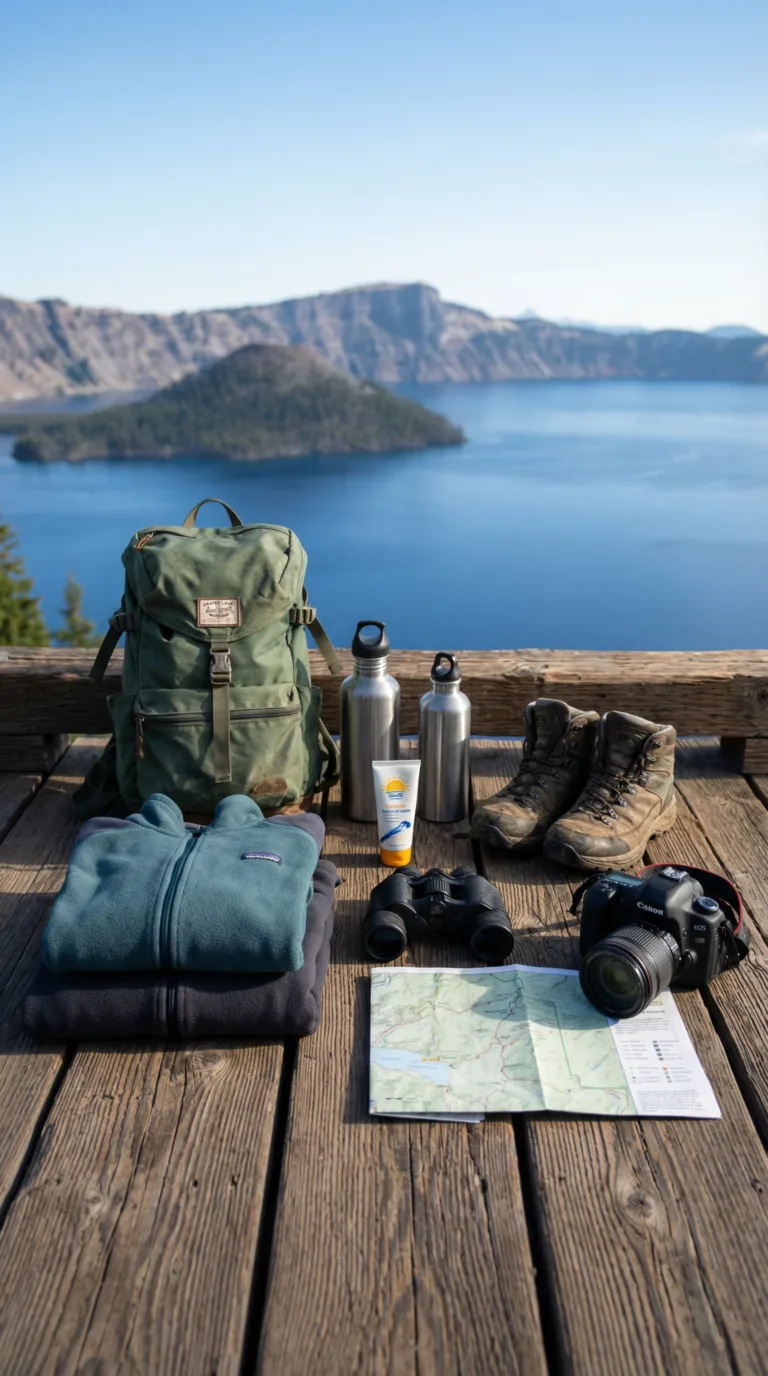
Pack waterproof hiking boots, a hiking daypack, polarized sunglasses, a merino base layer, and compact binoculars. Crater Lake is rim-and-trail hiking above the deepest, bluest water in the country: the glare off the lake is intense, the rim stays cool, and good optics bring the caldera and its wildlife close.
The Crater Lake kit
Rim-and-trail hiking above the deepest, bluest water in the country.
- waterproof hiking boots — rim hikes like Garfield Peak and Mount Scott are rocky and steep
- hiking daypack — carry water on the 33-mile Rim Drive stops and longer trails
- polarized sunglasses — the lake’s intense blue and lingering snow create serious glare
- merino base layer — the rim sits above 7,000 feet and stays cold, with snow into July
- compact binoculars — scan Wizard Island, Phantom Ship, and the caldera rim
As an Amazon Associate we earn from qualifying purchases.
Accommodation Options
Crater Lake Lodge (71 rooms, $200-400/night) and Mazama Village Cabins are the only in-park lodging; both require reservations months in advance for summer visits.
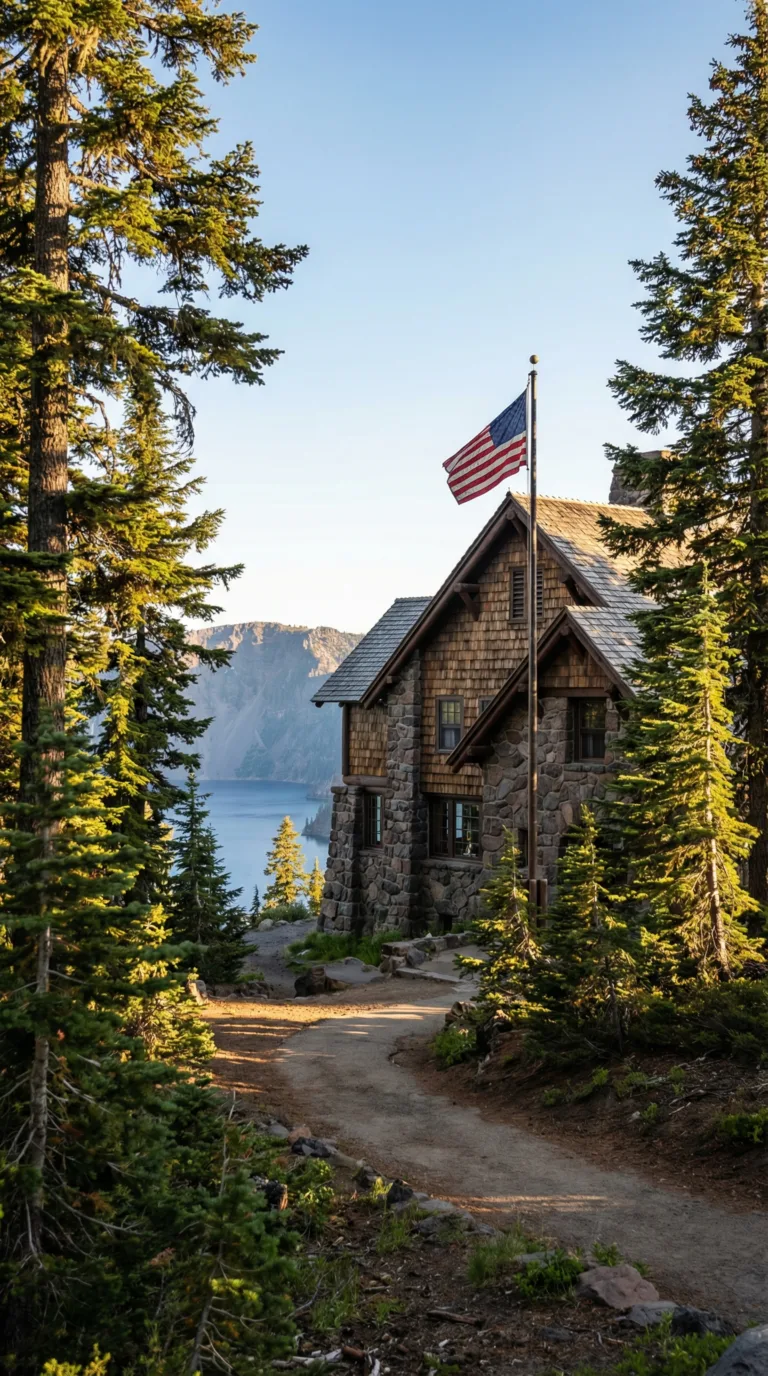
Crater Lake Lodge sits directly on the caldera rim. This 1915 stone-and-timber building holds 71 rooms. Rates run $200 to $400 per night. The lodge operates late May through mid-October only. You’ll need to book 6 to 12 months ahead for summer dates, rooms sell out fast. Every room offers lake views. The Great Hall has massive stone fireplaces and floor-to-ceiling windows. Crater Lake Lodge reservations open one year in advance.
Mazama Village provides the budget alternative. It sits 7 miles from the rim. No lake views here. The complex includes 40 motor inn rooms and rustic cabins. Rates start around $150 per night. The village has a general store, gas station, and restaurant. You’ll drive to the rim for views.
Two campgrounds operate inside the park. Mazama Campground offers 200+ sites with fthick toilets and showers. Sites cost $30 per night. Reserve through Recreation.gov – Mazama Campground. Lost Creek Campground has 16 tent-only sites. First-come, first-served. No water or hookups. It’s free but primitive.
Hotels near Crater Lake National Park cluster in three towns. Klamath Falls sits 60 miles south. Medford is 80 miles southwest. Bend lies 100 miles north. All three have chain hotels and vacation rentals. Expect 90-minute to 2-hour drives to the park entrance.
Book early. Summer accommodation fills up by February for peak season.
Getting There and Around
Crater Lake’s south entrance via Highway 62 is open year-round, while the north entrance closes in winter; the nearest airport is Rogue Valley International-Medford (75 miles).
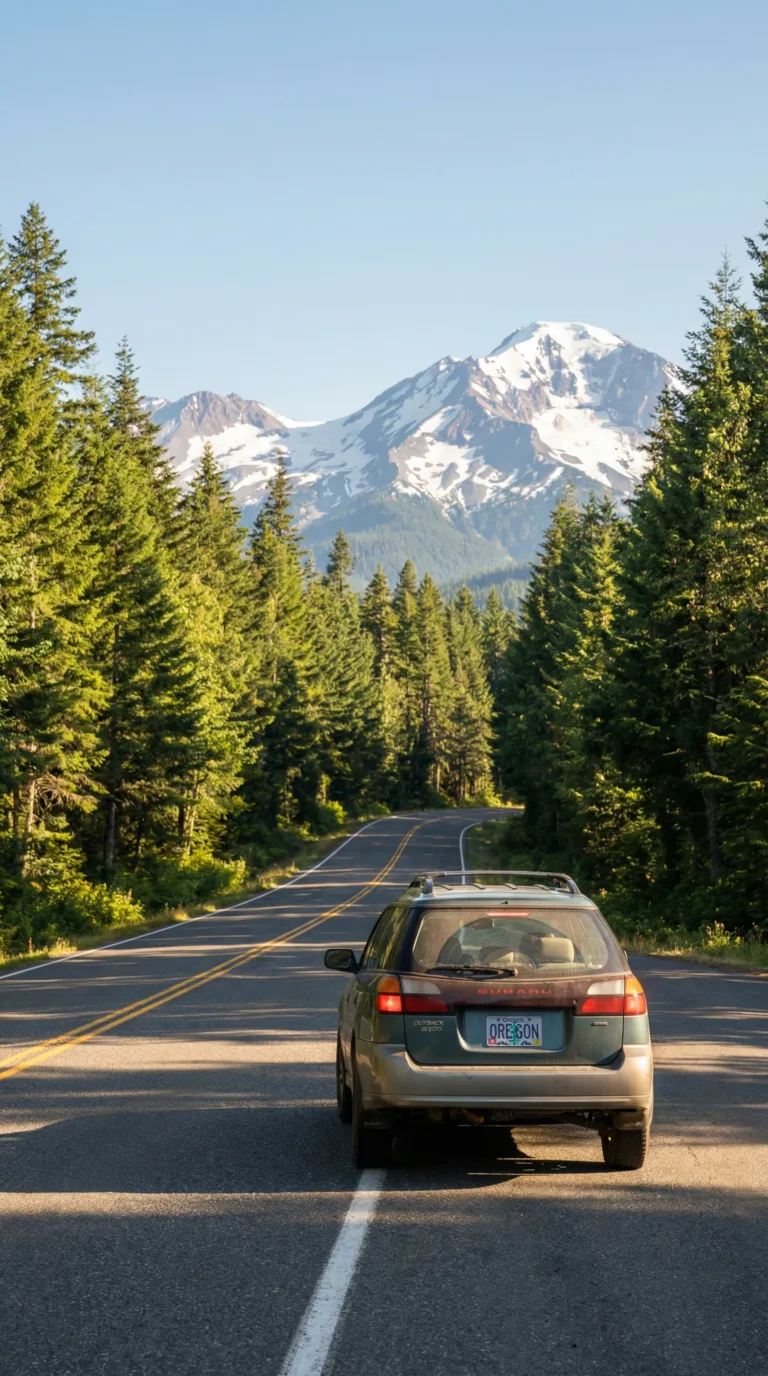
You need a car. Rogue Valley International-Medford (MFR) sits 75 miles southwest of the park’s south entrance, the closest airport with daily flights. Eugene Airport (EUG) is 125 miles northwest if you find cheaper fares. No buses run to the park.
From Portland, the drive takes four hours via I-5 South and Highway 62. Seattle sits 6.5 hours north. San Francisco is seven hours south. All routes funnel through Highway 62 to the south entrance, the only year-round access point. Check Crater Lake Directions and Road Status before you leave.
The north entrance via Highway 138 closes from November through June. Snow gates stay locked until plows clear the road. Even in July, patches of snow linger on the shoulders. The Oregon TripCheck – Road Conditions site posts real-time closures.
Inside the park, you drive yourself. Rim Drive circles the lake, 33 miles with pullouts every half-mile. Some sections run one-way in summer. Parking is free at all viewpoints and trailheads. No shuttles operate here.
Budget and Entrance Fees
Crater Lake National Park charges $30 per vehicle for a seven-day pass, or visitors can use the $80 America the Beautiful annual pass covering all national parks.
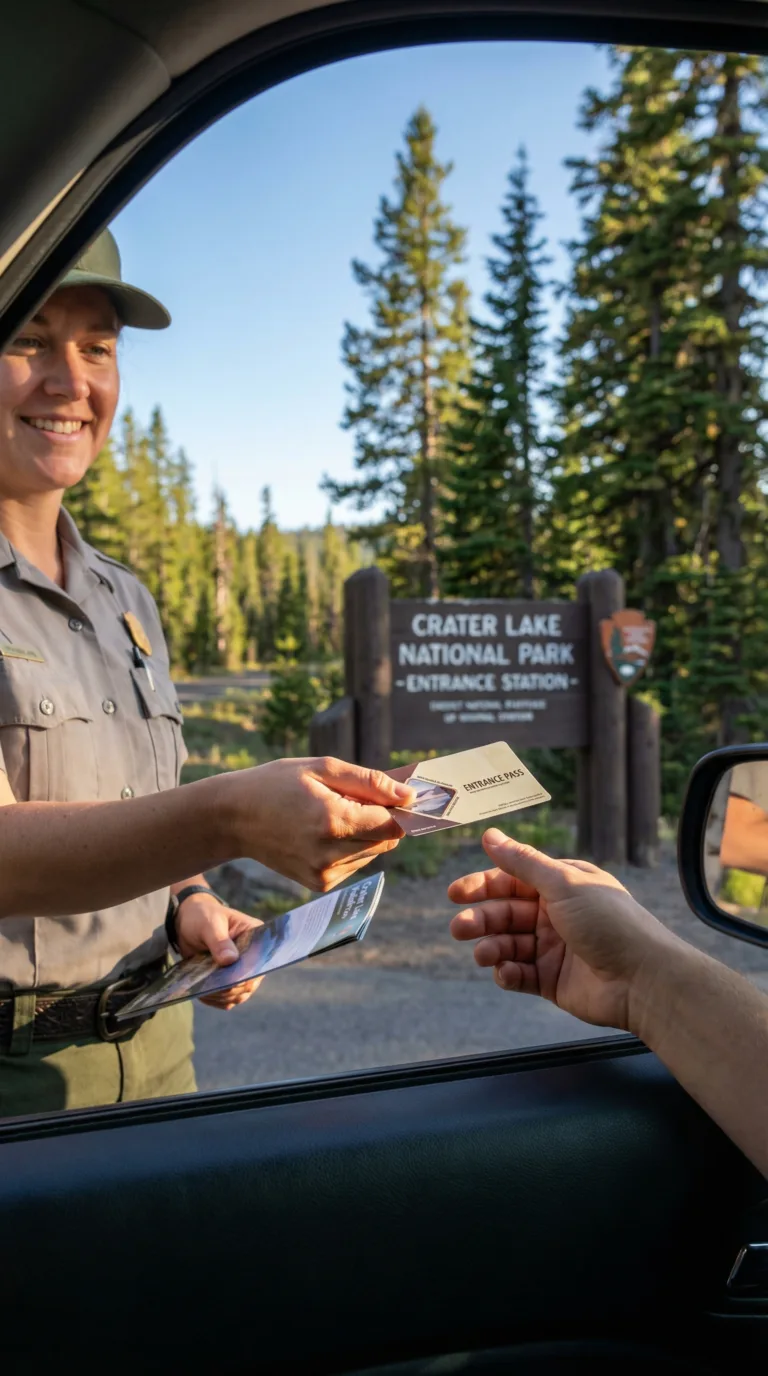
The Crater Lake National Park entrance fee is $30 per vehicle. That gets you seven days of access. Motorcycles pay $25. Walk-in visitors or cyclists pay $15 per person. No hidden charges for hiking trails or driving Rim Drive.
The Crater Lake National Park entrance fees and passes page lists current rates. If you plan to visit multiple parks in a year, buy the $80 America the Beautiful annual pass. It covers every national park and federal recreation site in the country. You break even after three park visits.
The park offers free entry on five or six days per year, usually tied to national holidays like Martin Luther King Jr. Day or Veterans Day. Check the National Park Service website for exact dates.
Boat tours to Wizard Island typically cost $40 to $50 per adult, but tours are suspended through 2028 due to dock repairs. Budget $100 to $150 per day for entrance, meals, and gas. Staying at Crater Lake Lodge adds $200 to $400 per night depending on the season.
Day Trips from Crater Lake
Crater Lake’s central Oregon location enables day trips to Bend (100 miles north), the Oregon Coast (150 miles west), and Ashland‘s Shakespeare Festival (75 miles south).
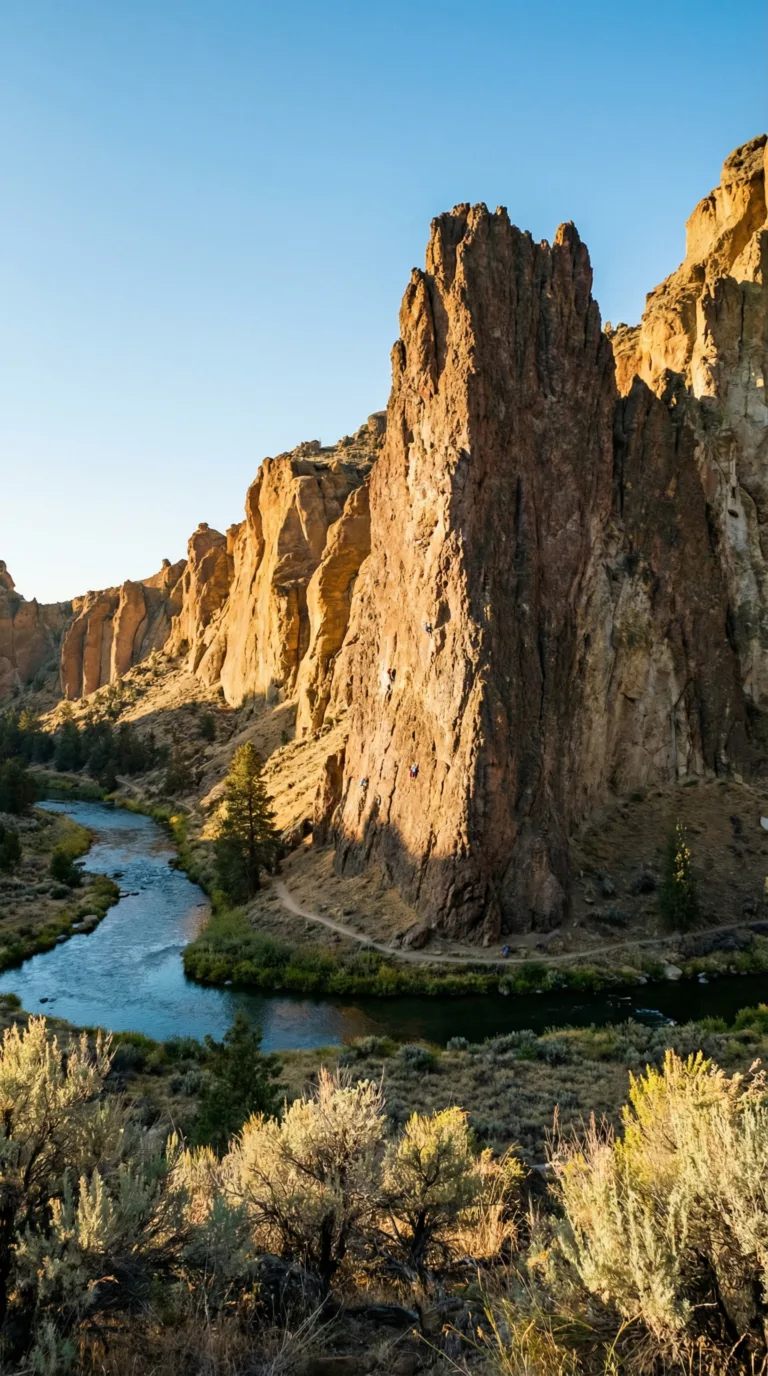
Bend sits 100 miles north, a two-hour drive through ponderosa pine forests. The outdoor recreation hub has 30+ breweries packed into the Old Mill District. Rent a paddleboard on the Deschutes River. Eat lunch at one of the food cart pods downtown. Drive another 30 minutes to Smith Rock State Park for some of the best rock climbing in America. Non-climbers can hike the Misery Ridge Trail for canyon views. The orange volcanic cliffs rise 600 feet above the Crooked River.
Ashland makes a solid southern option, 75 miles from the park’s south entrance. The Oregon Shakespeare Festival runs February through October with 11 plays in rotating repertory. Lithia Park has 93 acres of trails and duck ponds in the town center. Wineries dot the Applegate Valley 20 minutes west.
The Rogue River cuts through southern Oregon near Medford. Book a half-day rafting trip through Hellgate Canyon. The Oregon Coast requires more commitment. Newport, Cannon Beach, and Bandon sit 2.5 to 3 hours west through the Coast Range. Plan an overnight.
North toward Portland, Silver Falls State Park has the Trail of Ten Falls, a 7.2-mile loop passing ten waterfalls. It’s three hours from Crater Lake. The Columbia River Gorge and Mount Hood National Forest make better overnight trips at 3.5 hours north. Check the Travel Oregon official tourism website for seasonal road conditions. The Oregon State Parks website lists current trail closures and camping availability.
When to Visit and What to Pack
July through September offers the best weather at Crater Lake with all roads open, though the park receives 43 feet of snow annually and winter visits require chains or 4WD.
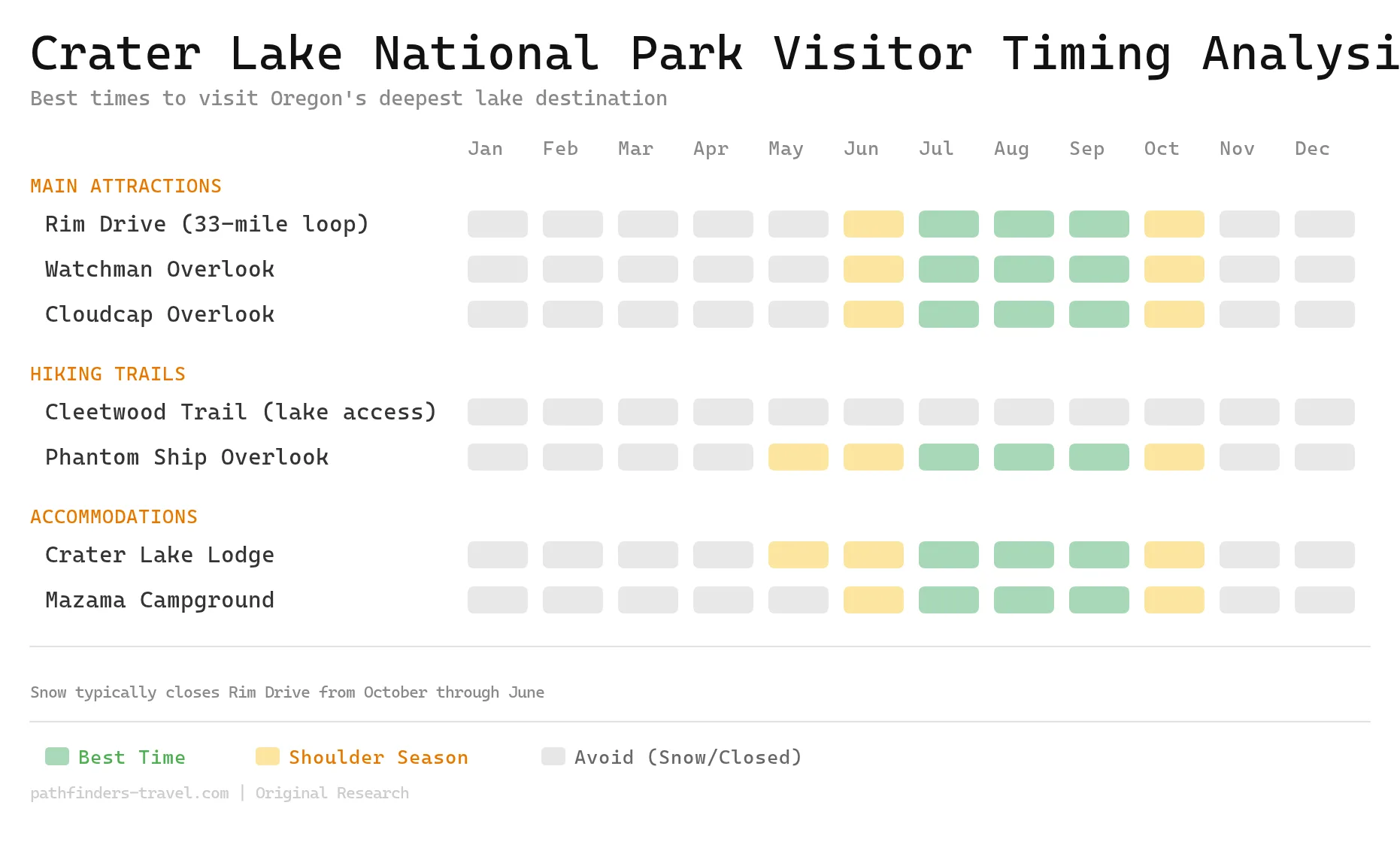
The park stays open year-round. But Rim Drive closes from October through June. Snow buries the road under 15 feet of powder. According to the National Park Service, the park receives an average of 43 feet of snow annually, one of the highest totals in North America.
Rim Drive typically opens in early July once plows clear the route. Roads stay accessible through late September. This window gives you the best chance at clear skies and passable trails. Even summer mornings hit 40°F at the rim.
The crater lake rim elevation ranges from 7,100 to 8,000 feet. Your lungs will notice. Drink water constantly. Walk slower than you think you need to. Altitude sickness hits fast at this height.
Pack layers. A fleece jacket works under a windbreaker. Bring sunscreen rated SPF 50 or higher, UV exposure doubles at this elevation. Sturdy hiking boots with ankle support prevent twisted ankles on rocky trails. Carry two water bottles per person. Snacks matter. Trail mix, protein bars, anything calorie-dense. For specific picks, our Crater Lake packing list for Rim Drive and hikes breaks down the boots, layers, trekking poles, and daypacks that handle this terrain.
Winter visits demand tire chains or four-wheel drive. Check Current Conditions – Crater Lake National Park before you leave. The National Weather Service Forecast updates hourly. Weather shifts without warning at crater lake national park elevation.
Frequently Asked Questions
Why is lake access to Crater Lake closed until 2029?
The Cleetwood Cove Trail, the only legal route down to the water, is closed for rehabilitation for the 2026, 2027, and 2028 seasons and is expected to reopen in summer 2029. That means no swimming, no boat tours to Wizard Island, and no marina access during the closure, though the rest of the park stays open.
How deep is Crater Lake?
Crater Lake is the deepest lake in the United States at 1,943 feet (592 m) and one of the deepest in the world. It formed about 7,700 years ago when the volcano Mount Mazama collapsed, and it is famous for its intensely blue, exceptionally clear water fed only by rain and snow.
What is the best time to visit Crater Lake?
July through September is the best time, when the full Rim Drive and most trails are snow-free and facilities are open. Crater Lake gets enormous snowfall, so many roads stay closed into June and reopen by October. Winter offers stunning snowy views but very limited access.
Can you swim in Crater Lake?
Normally you can swim at Cleetwood Cove, the only legal lake-access point, but during the trail rehabilitation (2026 to 2028) there is no lake access and swimming is not possible. When open, the water is clear but very cold, rarely above the low 60s°F even in summer.
What is the closest city to Crater Lake?
The closest towns are Klamath Falls (about an hour south) and Medford or Roseburg (1.5 to 2 hours west), each with airports and lodging; Bend is about 1.5 hours north. There is limited lodging inside the park, so many visitors base in these gateway towns.