This guide contains affiliate links. As an Amazon Associate we earn from qualifying purchases — at no extra cost to you.
Estimated reading time: 23 minutes
Last updated: September 2026
Which Part of Texas Is Best to Visit?
Texas is huge and wildly varied, so the best places to visit span big cities, Gulf beaches, and desert national parks. Top picks include live-music capital Austin, historic San Antonio (the Alamo and River Walk), space-and-museum hub Houston, the beaches of Galveston and South Padre Island, the red canyons of Palo Duro and Big Bend, and the Dallas–Fort Worth metroplex. Big Bend’s remote Chisos Basin sits at 5,400 feet and sees temperature swings of 40 degrees between day and night, so anyone planning desert hikes needs proper layering and sun protection for Big Bend’s extreme conditions. Spring (March–May) and fall (October–November) are the best times to visit.
How This Guide Was Researched
The information in this guide was gathered from official destination websites, national park services, and experienced traveler reports. Costs, schedules, and conditions were verified at publication. We recommend confirming details directly before your visit.
Before we talk about the best places to travel to in Texas, let’s address the elephant in the room. You may have heard about travel warnings near the Texas-Mexico border. Most of Texas is perfectly safe for visitors. The warnings apply to specific border counties, and we’ll cover that in detail later. The vast majority of Texas travel places are nowhere near those areas.
Now, here’s what makes Texas special. This state is bigger than most countries. It spans 268,000 square miles. That means you can find warm-water beaches on the Gulf Coast, red rock canyons in the west, rolling green hills in the center, and top-quality cities throughout. The Official Travel Texas state tourism website lists hundreds of destinations, but we’ve narrowed it down to the top 10 places to visit in Texas and a few more you shouldn’t miss.
Texas offers something for every traveler. Families love the theme parks and natural areas. Couples enjoy the food scenes and romantic Hill Country. Adventure seekers head to Big Bend and Palo Duro Canyon. Culture enthusiasts explore museums in Houston and live music in Austin. These texas travel attractions are more diverse than you’d expect.
This guide covers 16 destinations across the state. You’ll get practical advice on when to visit, how to get around, what to budget, and how to plan your trip. Texas is bigger, bolder, and more varied than most visitors realize.
Best Time to Visit Texas
Planning Tip
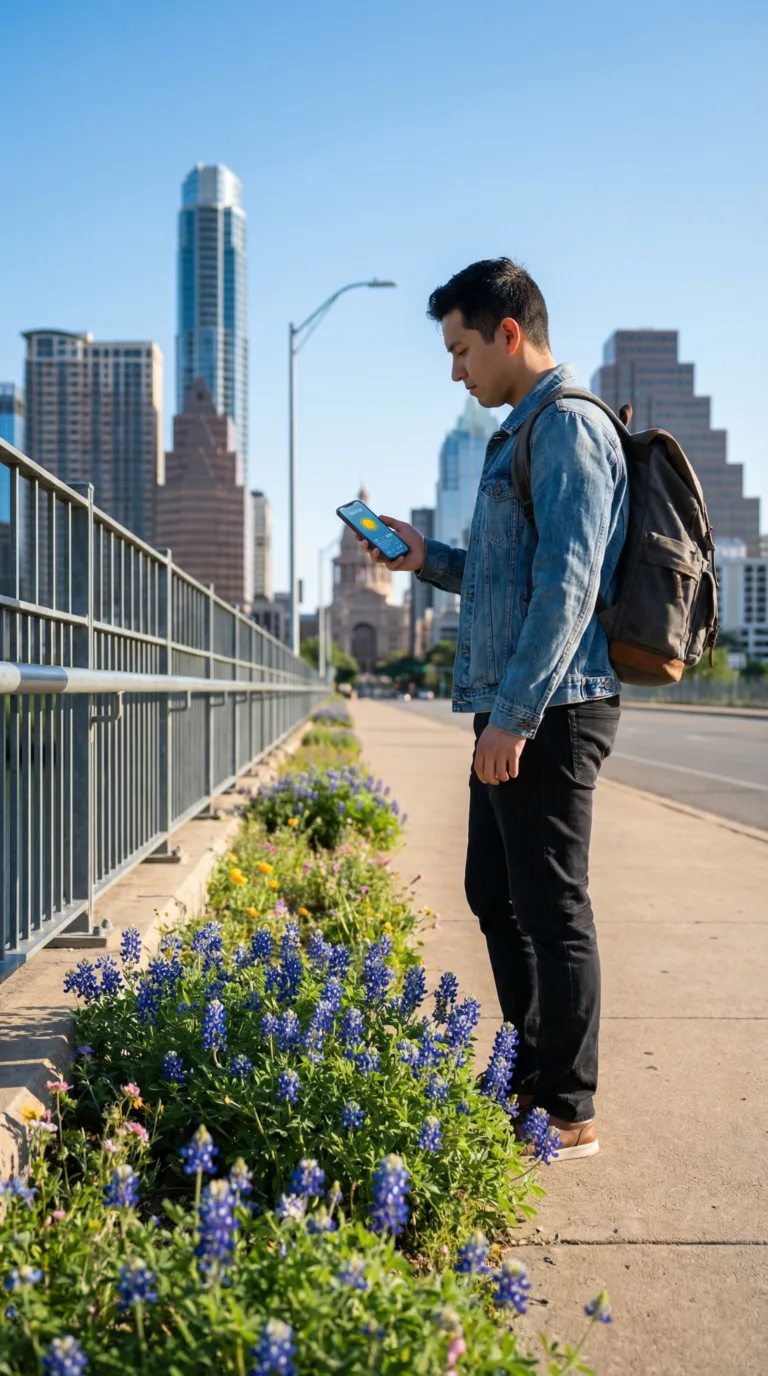
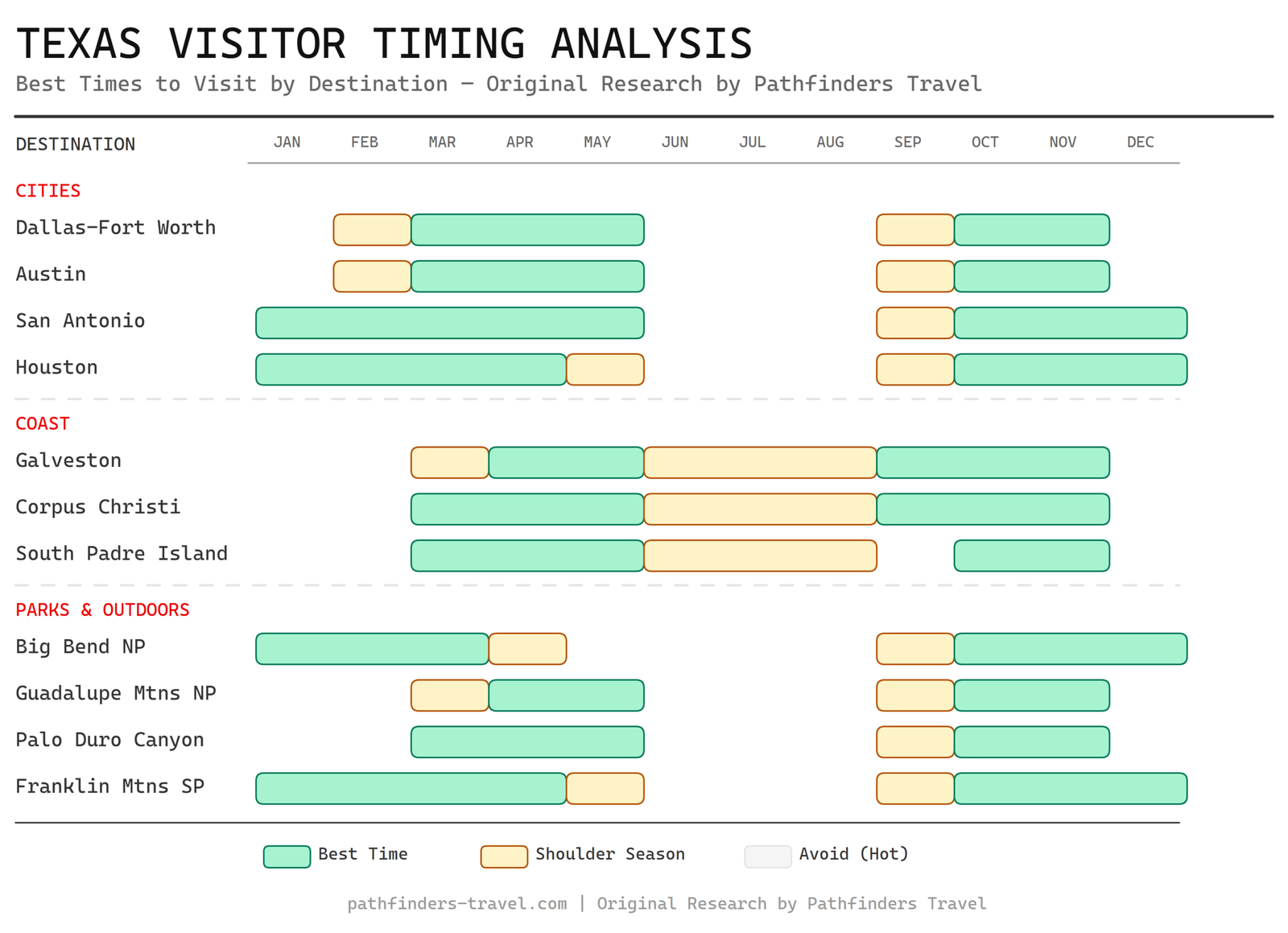
The best month to visit Texas depends on what you want to do, but late October through November and March through May offer the most comfortable weather statewide. Spring brings wildflower season and temperatures in the 70s and 80s, perfect for hiking, city walks, and outdoor festivals. Fall delivers similar conditions with fewer crowds, making it ideal for exploring Dallas, Austin, and San Antonio without the peak-season rush.
Summer (June through August) is brutally hot across most of Texas, with temperatures regularly hitting 95 to 105°F. If you visit during these months, stick to Gulf Coast beaches or indoor attractions like museums. Winter (December through February) stays mild in South Texas but can turn cold and unpredictable in the Panhandle and northern regions. Check the National Weather Service Texas Forecast for regional updates before you go.
Peak tourist season runs from late spring through summer and during spring break in March. Book hotels and rental cars early if you plan to travel during these windows.
Getting to Texas
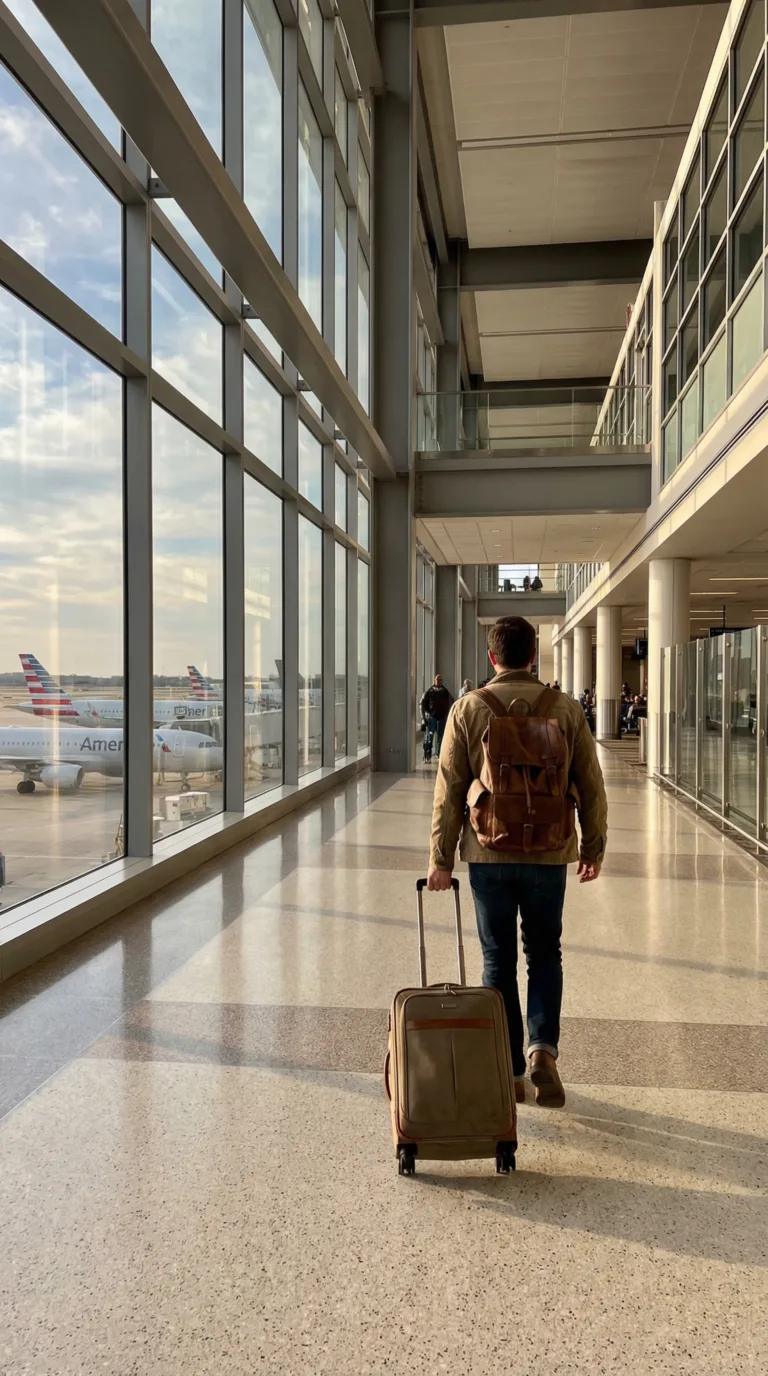
Texas has several major international airports that make getting here easy from anywhere in the world. Dallas-Fort Worth International Airport and Houston George Bush Intercontinental Airport are the largest hubs, with direct flights from Europe, Asia, and Latin America. Both airports offer connections to cities across the United States.
If you travel to San Antonio, Austin, or smaller cities, you will find good options through budget carriers and regional airlines. Austin-Bergstrom International Airport has grown quickly in recent years, with more direct routes added each season. San Antonio International Airport serves the south-central part of the state.
Driving into Texas is straightforward if you are coming from neighboring states. Interstate 35 runs north-south through the center of the state, while I-10 crosses from Louisiana to El Paso. I-20 and I-40 provide east-west routes through the northern regions.
Train travel is limited but available through Amtrak Texas Routes and Schedules. The Texas Eagle connects Chicago to San Antonio, while the Sunset Limited runs with New Orleans and Los Angeles through Houston and San Antonio. Book flights two to three months ahead for the best prices, especially during spring and fall.
Getting Around Texas
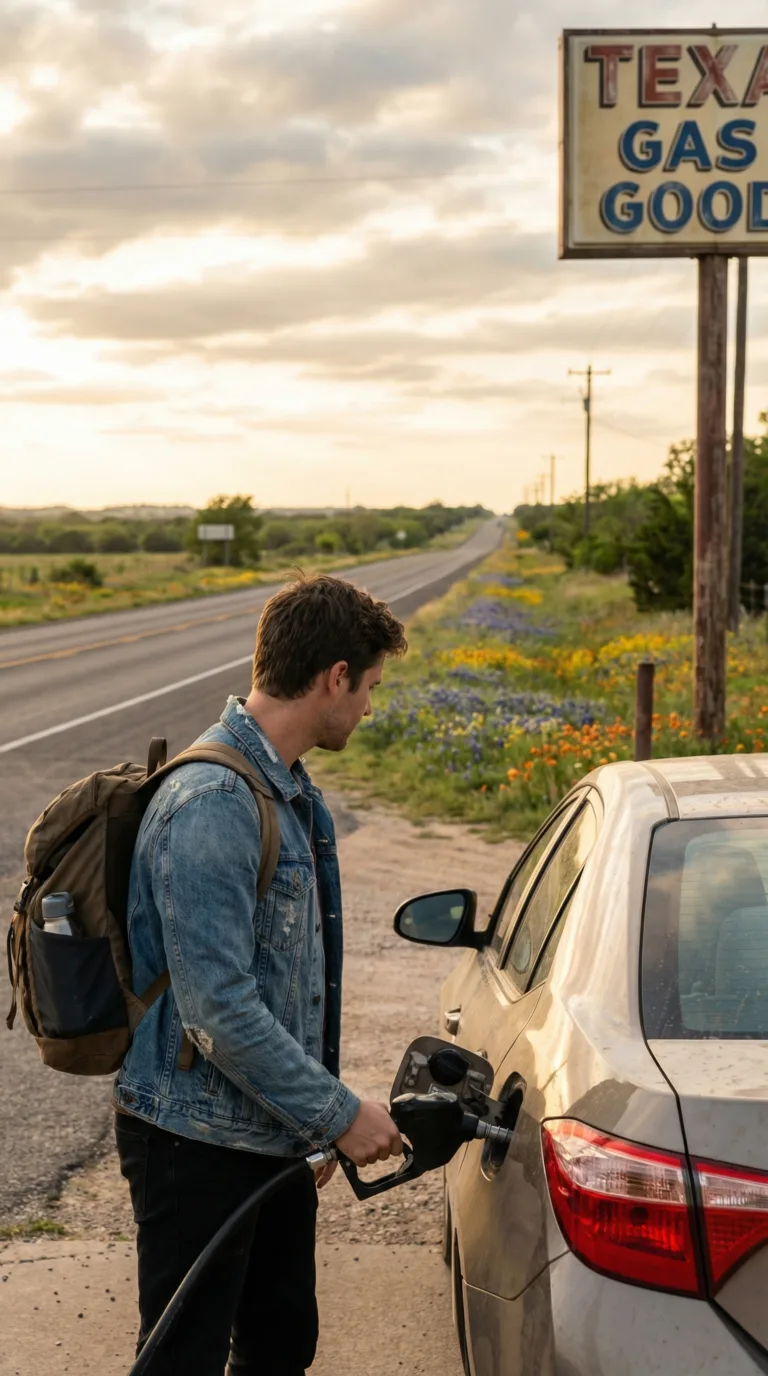
A rental car is essential for exploring Texas. The state stretches more than 800 miles across, and public transit outside major cities is limited. All major airports and cities have rental car companies ready to serve you.
Plan your driving times carefully. Dallas to Houston takes about four hours. Austin to Big Bend National Park requires seven hours or more. Houston to El Paso is a full 12-hour drive. These distances add up quickly.
Cities offer public transit options. Dallas has DART, Houston runs Metro, Austin operates CapMetro, and San Antonio provides VIA. Uber and Lyft work well in all urban areas. But once you leave the cities, you need your own wheels.
Gas stations are everywhere, except in West Texas. Out there, towns sit far apart. Fill up whenever you see a station. Before you hit the road, check TxDOT Travel Conditions and Road Closures for weather alerts and road updates. Texas weather can change fast, and you want to stay informed.
Texas Travel Budget: What to Expect
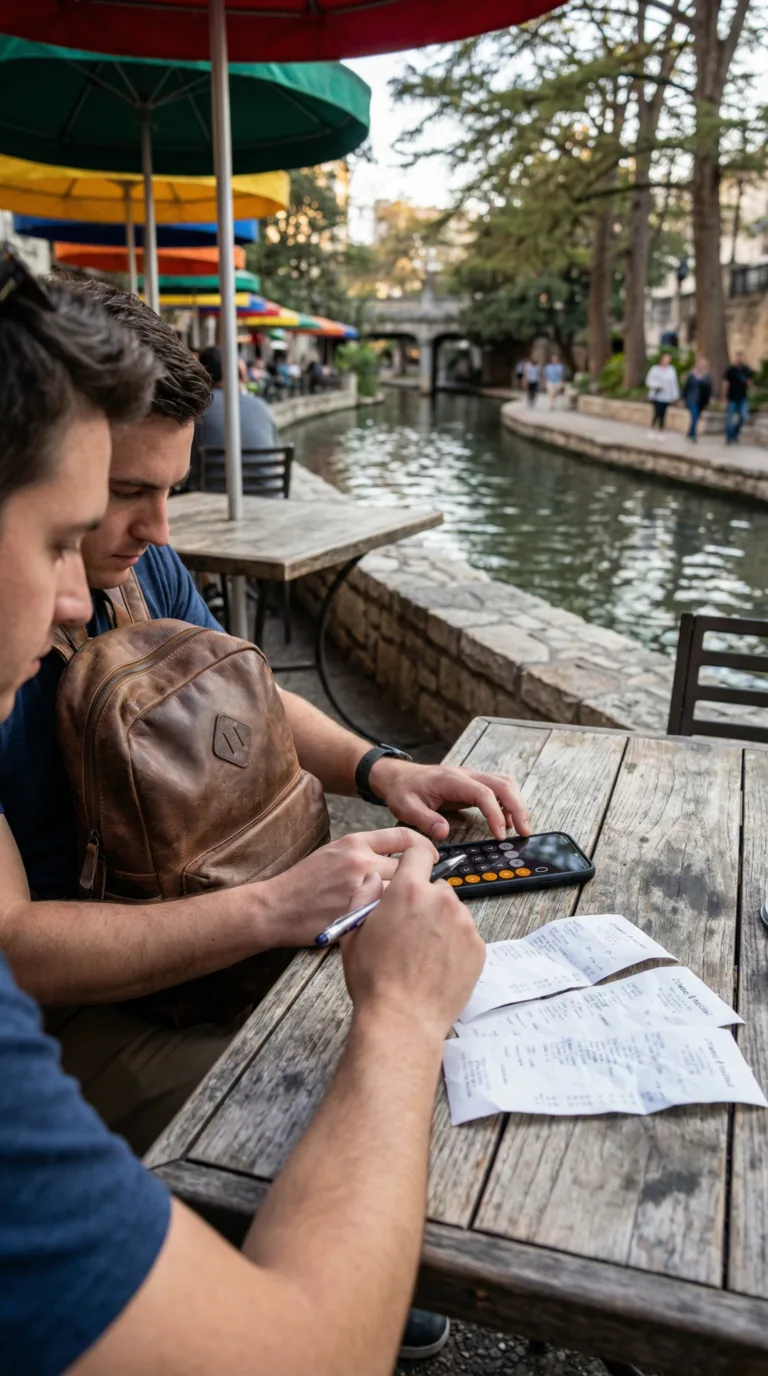
Texas offers cheap vacations in texas for families across every budget level. A budget traveler can get by on $60 to $80 per day, while mid-range visitors typically spend $100 to $150. Luxury travelers should plan for $200 or more daily.
Accommodation costs vary widely. Budget motels run $50 to $70 per night. Mid-range hotels cost $100 to $150. Luxury properties start at $200 and climb from there. Staying outside city centers saves money without sacrificing access to attractions.
Food is affordable across the state. Tacos and barbecue plates cost $8 to $15. Casual restaurants charge $15 to $25 per meal. Fine dining starts around $40 per person. Food trucks offer excellent value and authentic local flavors.
Many attractions are free or low-cost. State park day passes cost just $7. Museums charge $10 to $25 for entry. Theme parks run $60 or more per ticket. Rental cars cost $30 to $60 daily, with gas around $3 to $4 per gallon. Expect to pay $10 to $20 for parking in major cities.
Texas has no state income tax, but sales tax adds 6.25% to 8.25% to most purchases.
Border Safety & Travel Advisories
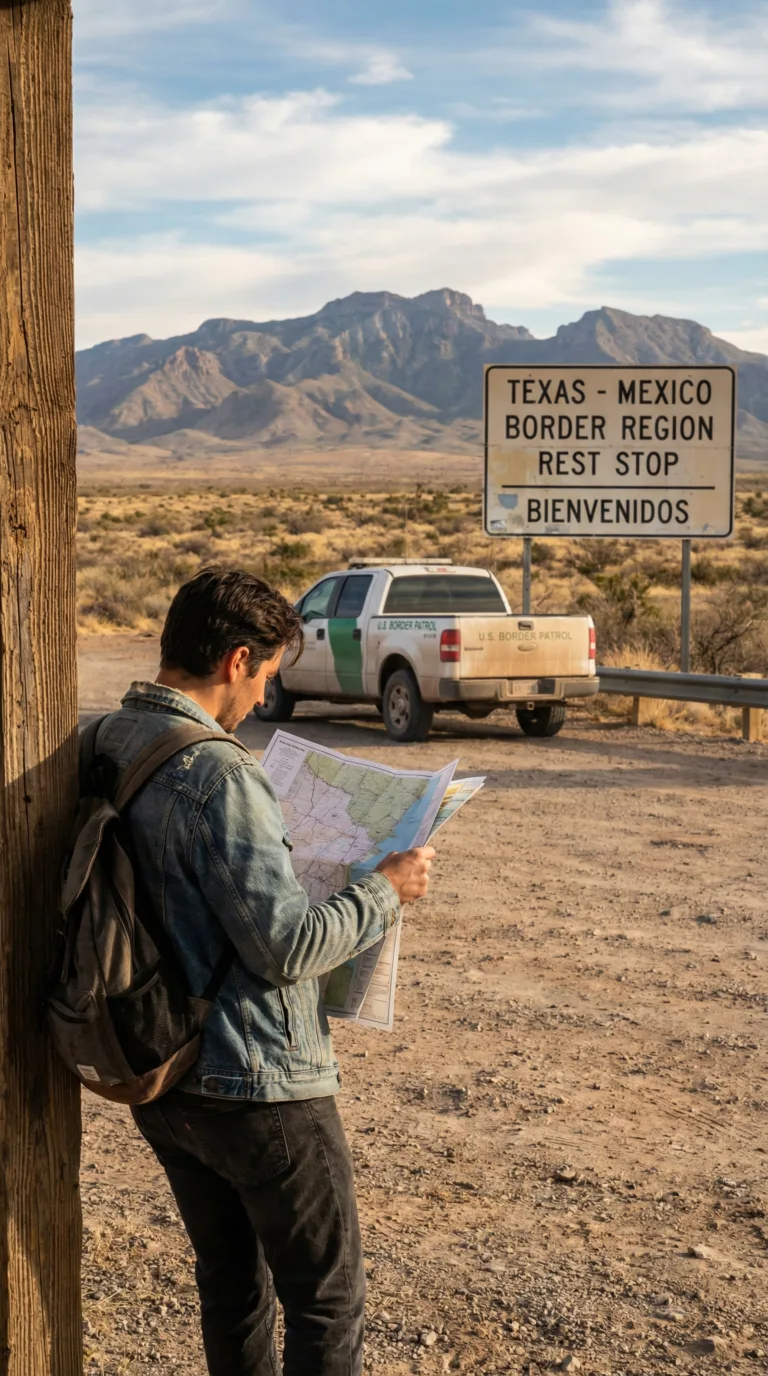
If you search for a Texas Mexico border travel warning, you might worry the entire state is risky. The truth is simpler: most of Texas is very safe for tourists. Major cities like Austin, San Antonio, Houston, and Dallas sit hundreds of miles from the border and have low crime in tourist areas.
Border cities such as El Paso, Laredo, and Brownsville are generally safe during daytime in tourist zones. Use normal precautions: stay aware of your surroundings, avoid walking alone late at night, and keep valuables out of sight. If you plan to cross into Mexico, research current conditions first. Check the U.S. State Department travel advisory for Mexico before you go.
Big Bend National Park shares a border with Mexico but remains safe for visitors. Stick to marked trails and follow park ranger guidance. For general road safety across Texas, review the Texas Department of Public Safety travel tips before your trip. Common sense goes a long way in keeping your Texas adventure smooth and secure.
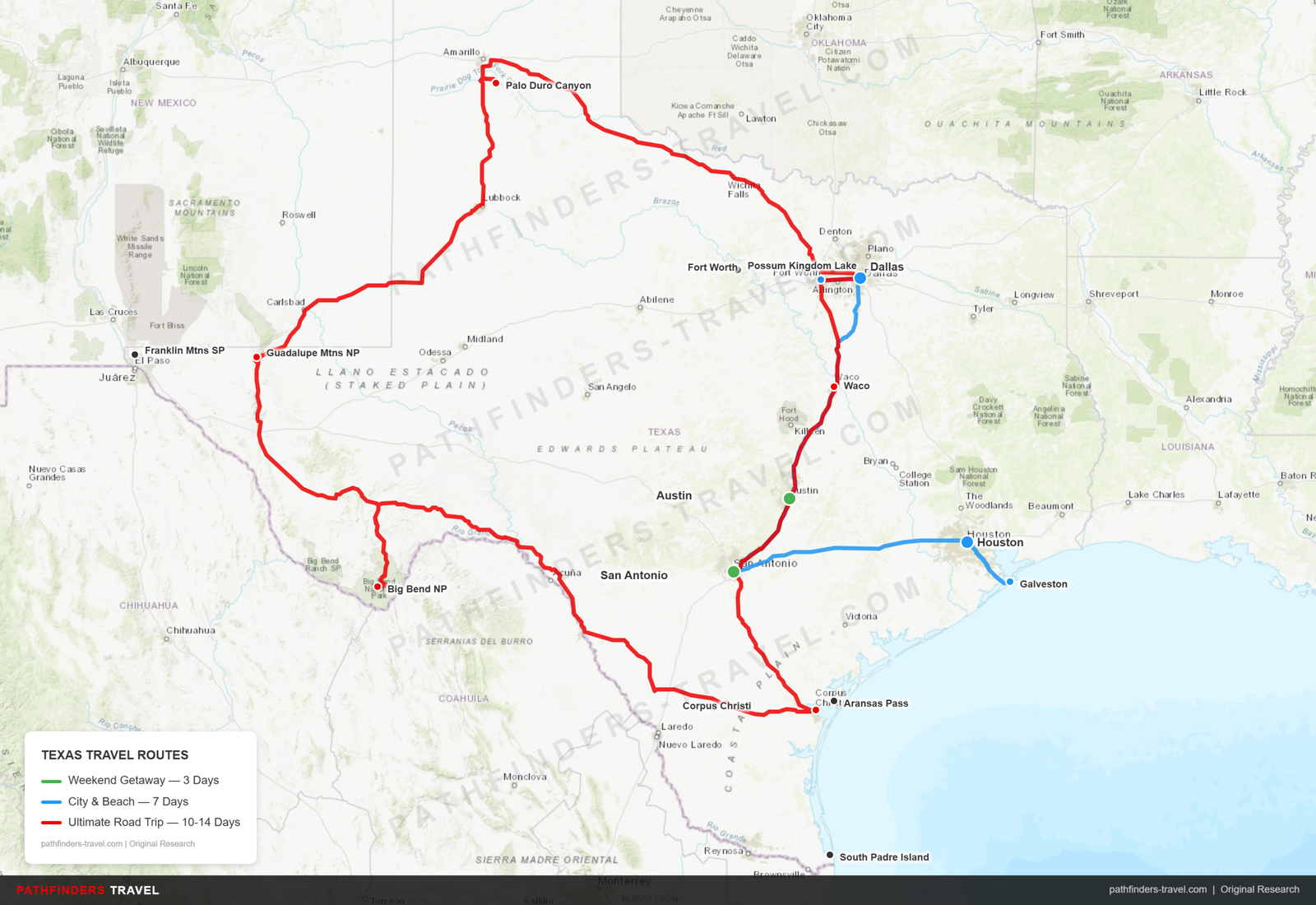
| # | Stop | Highlights | Drive Time |
|---|---|---|---|
| 1 | Austin | Live music capital, Barton Springs, South Congress | — |
| 2 | San Antonio | The Alamo, River Walk, Missions, Pearl District | 1h 30m |
| 3 | Austin / Hill Country | State Capitol, winery tours, Zilker Park | 1h 30m |
| # | Stop | Highlights | Drive Time |
|---|---|---|---|
| 1 | Houston | Space Center Houston, Museum District, food scene | — |
| 2 | Galveston Island | Beaches, Strand District, Pleasure Pier, Moody Gardens | 1h |
| 3 | San Antonio | Alamo, River Walk, San Antonio Missions (UNESCO) | 3h 30m |
| 4 | Austin | Sixth Street live music, Barton Springs, SoCo | 1h 30m |
| 5 | Dallas | Arts District, Sixth Floor Museum, Deep Ellum | 3h |
| 6 | Fort Worth | Stockyards, cattle drives, Kimbell Art Museum | 45m |
| # | Stop | Highlights | Drive Time |
|---|---|---|---|
| 1 | Dallas | Arts District, Reunion Tower, Klyde Warren Park | — |
| 2 | Fort Worth | Stockyards, rodeos, Sundance Square | 45m |
| 3 | Waco | Magnolia Market, Dr Pepper Museum, Cameron Park | 1h 30m |
| 4 | Austin | State Capitol, live music, Lady Bird Lake | 1h 30m |
| 5 | San Antonio | Alamo, River Walk, Pearl District | 1h 30m |
| 6 | Corpus Christi | Padre Island, USS Lexington, Texas State Aquarium | 2h 30m |
| 7 | Big Bend NP | Chisos Mountains, Santa Elena Canyon, stargazing | 5h 30m |
| 8 | Guadalupe Mtns NP | Guadalupe Peak (8,751 ft), McKittrick Canyon | 4h |
| 9 | Palo Duro Canyon | Lighthouse Trail, canyon views, TEXAS musical | 4h 30m |
| 10 | Dallas | Return, final exploration | 5h 30m |
What should I pack for a Texas road trip?
Texas is huge, hot, and sun-drenched, with long drives between stops and temperatures that can swing 30°F in a single day. Pack to stay hydrated, charged, and sun-safe on the road:
- insulated water bottle — Texas summers top 100°F with little shade — a vacuum bottle keeps water ice-cold for hours on the trail or in the car
- portable power bank — long days of GPS navigation, maps, and photos drain a phone fast on big-distance Texas drives
- SPF 70 sport sunscreen — the Texas sun is intense year-round — even winter days in the south will burn you
- car phone mount — you’ll cover huge highway distances between stops — keep navigation in view and hands on the wheel
As an Amazon Associate we earn from qualifying purchases.
Dallas-Fort Worth Metroplex & North Texas
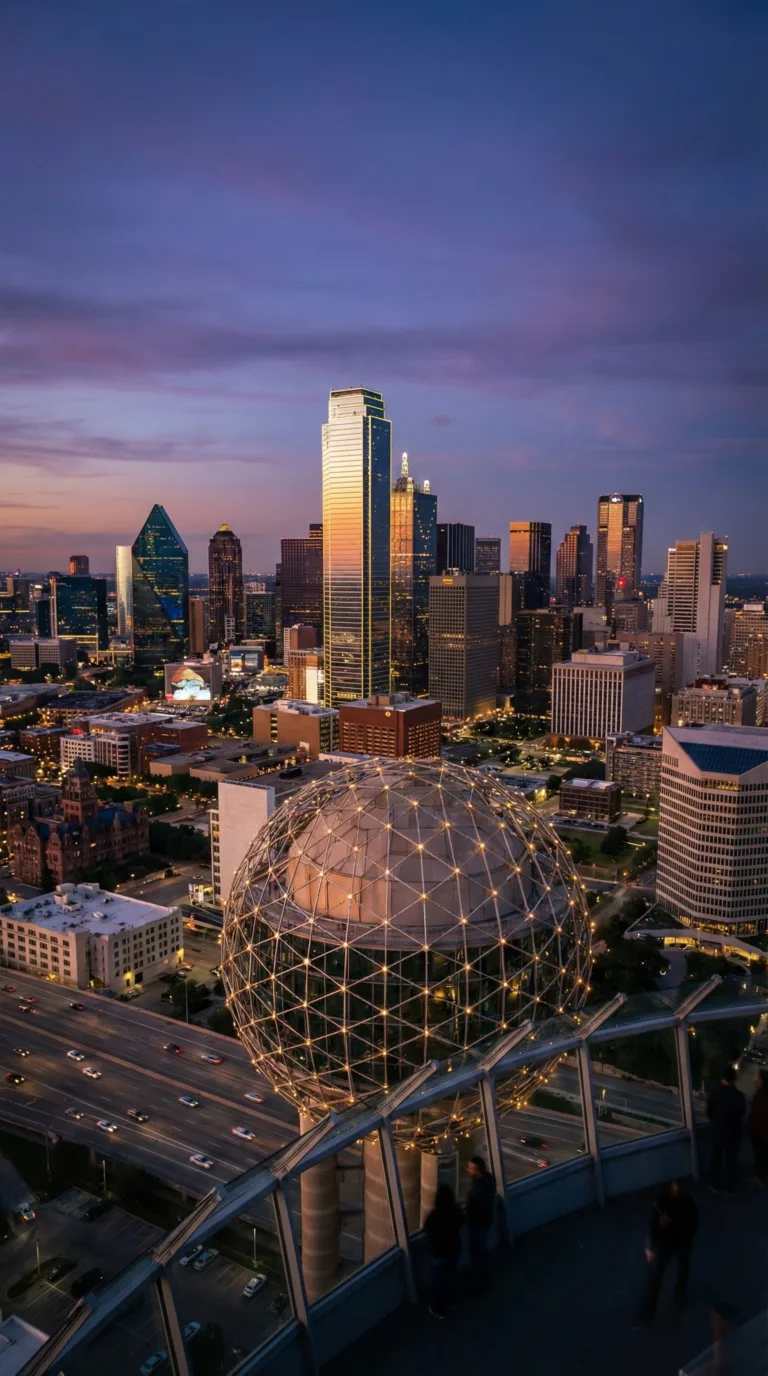
The Dallas-Fort Worth Metroplex is Texas’s largest urban area and a major cultural hub. This large region combines two distinct cities with their own personalities, plus smaller destinations worth exploring. Western heritage, or lakeside relaxation, North Texas has it all.
Dallas
Dallas is a cosmopolitan city known for its arts, dining, and shopping. The Sixth Floor Museum at Dealey Plaza official website tells the story of President Kennedy’s assassination and draws history buffs from around the world. The Dallas Arts District is the largest urban arts district in the United States, home to the Dallas Museum of Art, Nasher Sculpture Center, and AT&T Performing Arts Center.
For wide views, head to Reunion Tower’s observation deck. Klyde Warren Park sits on top of a freeway and offers food trucks, green space, and free activities. The Deep Ellum neighborhood pulses with live music, street art, and late-night energy. The Dallas Arboretum & Botanical Gardens showcases seasonal blooms across 66 acres along White Rock Lake. Visit Dallas official tourism website for event calendars and attraction details. Continue to read: Dalles Travel Guide->
Fort Worth
Fort Worth proudly calls itself the place “Where the West Begins.” The Fort Worth Stockyards National Historic District brings the Old West to life with daily cattle drives at 11:30 a.m. and 4 p.m., plus rodeos on weekends. You can watch cowboys in action, browse Western wear shops, and eat at authentic steakhouses.
The Cultural District rivals any major city with the Kimbell Art Museum, Modern Art Museum of Fort Worth, and Amon Carter Museum. The Fort Worth Zoo ranks among the top zoos in the country. Downtown’s Sundance Square offers dining, shopping, and entertainment in a walkable area. Fort Worth Convention & Visitors Bureau official website has maps and visitor information. Continue to read: Fort Worth ->
Waco
Waco became a tourist destination thanks to Magnolia Market at the Silos, created by Chip and Joanna Gaines of HGTV fame. The complex includes a retail store, bakery, food trucks, and gardens perfect for photos. Beyond Magnolia, visit the Dr Pepper Museum to learn about the birthplace of the famous soft drink. Cameron Park offers hiking and views along the Brazos River, while the Waco Mammoth National Monument preserves Ice Age fossils. Waco makes a good day trip or overnight stop between Dallas and Austin. Continue to read -> Waco Travel Guide
Possum Kingdom Lake
Possum Kingdom Lake is a scenic reservoir about 90 minutes west of Fort Worth. The clear blue water and dramatic cliffs create a impressive setting for boating, jet skiing, and swimming. Hell’s Gate is a narrow canyon with towering rock walls that you can explore by boat. Lakeside resorts and vacation rentals make this a popular weekend getaway from the Metroplex. Fishing is excellent for striped bass and catfish. Visit between spring and fall for the best weather and water conditions. Continue to read Possum Kingdom Lake Travel Guide ->
Austin & San Antonio: Hill Country Gateways
Austin and San Antonio serve as the main gateways to the Texas Hill Country and rank among the state’s most visited cities. Both offer distinct personalities: Austin brings creative energy and outdoor adventure, while San Antonio delivers deep historical roots and family-friendly attractions. Together, they give you two very different ways to experience central Texas.
Austin
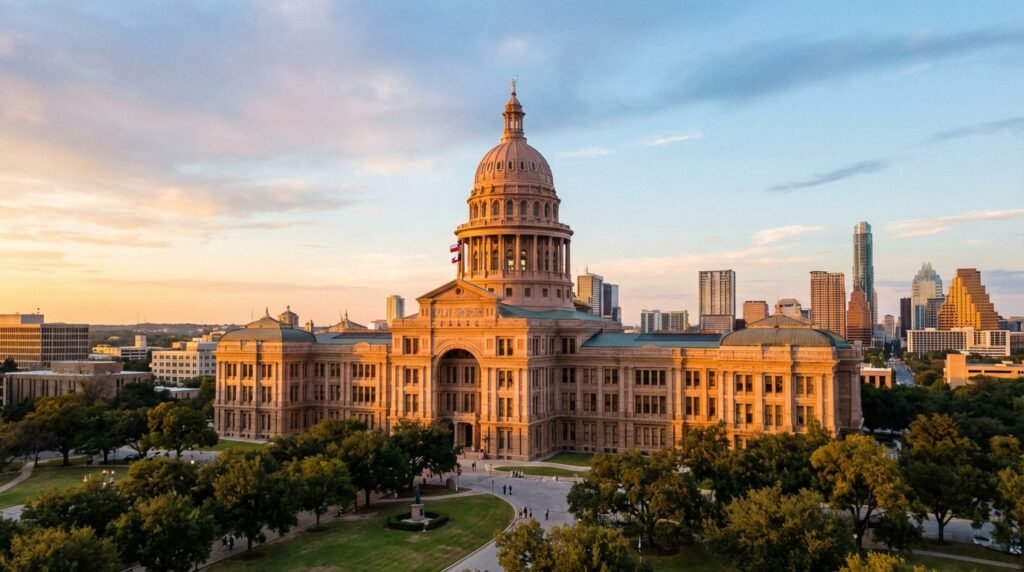
Austin is the state capital and the self-proclaimed “Live Music Capital of the World.” The city lives up to its reputation with hundreds of live music venues scattered across Sixth Street and Rainey Street. You can catch everything from blues to indie rock on any given night. The Texas State Capitol building anchors downtown, offering free tours of its pink granite exterior and ornate interior.
For outdoor recreation, head to Barton Springs Pool, a natural spring-fed swimming hole that stays around 68 degrees year-round. Lady Bird Lake runs through the heart of the city, perfect for kayaking and paddleboarding. South Congress Avenue (SoCo) delivers the city’s famous “Keep Austin Weird” vibe through vintage shops, food trucks, and local boutiques. The Visit Austin official tourism website has current event listings and neighborhood guides. Read more about the Austin Travel Guide
San Antonio
San Antonio is one of the most historic cities in Texas. The Alamo is the most famous site, where 189 defenders held out against thousands of Mexican troops in 1836. The Alamo official website offers ticket information and historical context. Beyond the Alamo, the San Antonio Missions National Historical Park preserves four additional Spanish colonial missions, all part of a UNESCO World Heritage Site.
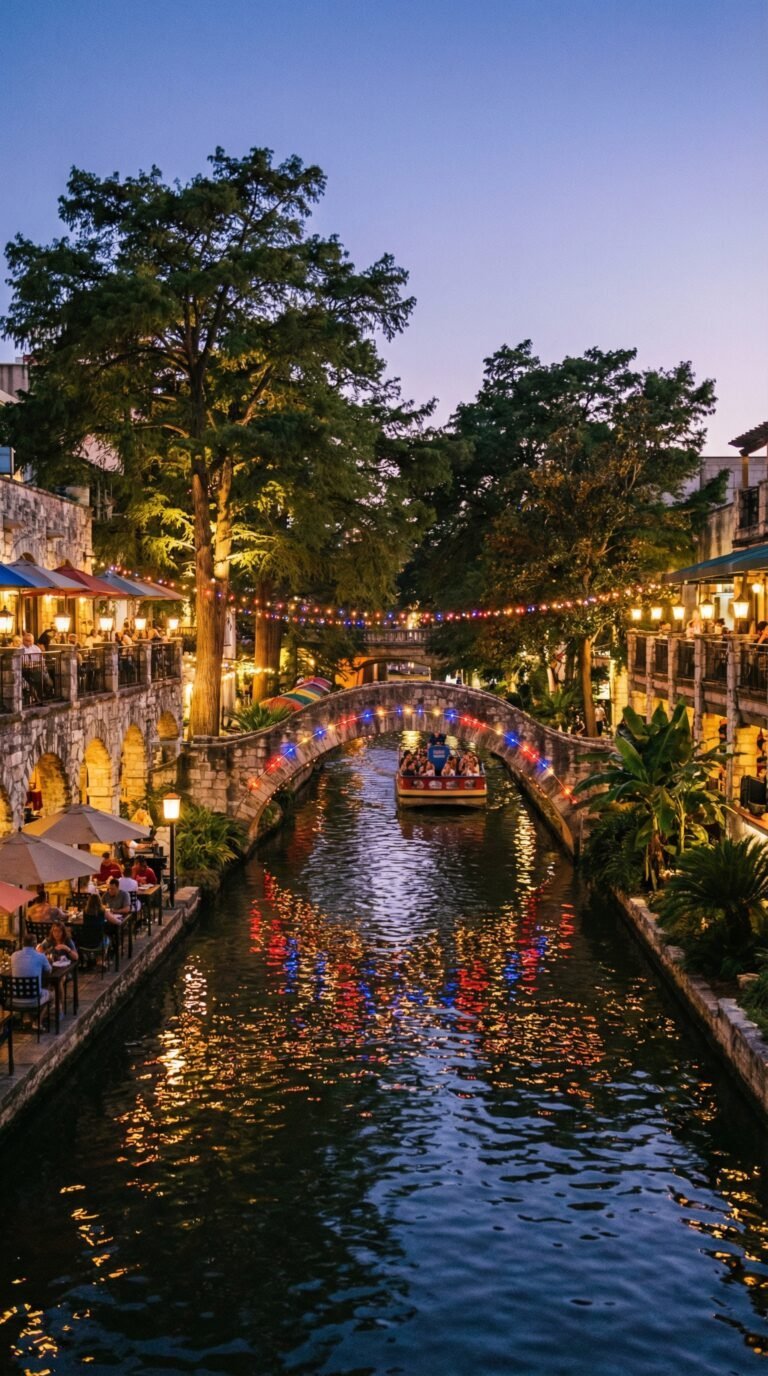
The River Walk winds through downtown as a scenic waterway lined with restaurants, shops, and stone bridges. It’s especially beautiful at night when lights reflect off the water. The Pearl District brings a modern contrast with trendy dining and craft breweries in a renovated brewery complex. Market Square offers authentic Mexican goods and food, while SeaWorld San Antonio provides theme park thrills for families. The Visit San Antonio official tourism website covers current attractions and seasonal events. Read more about -> San Antonio Travel Guide
Houston & the Gulf Coast
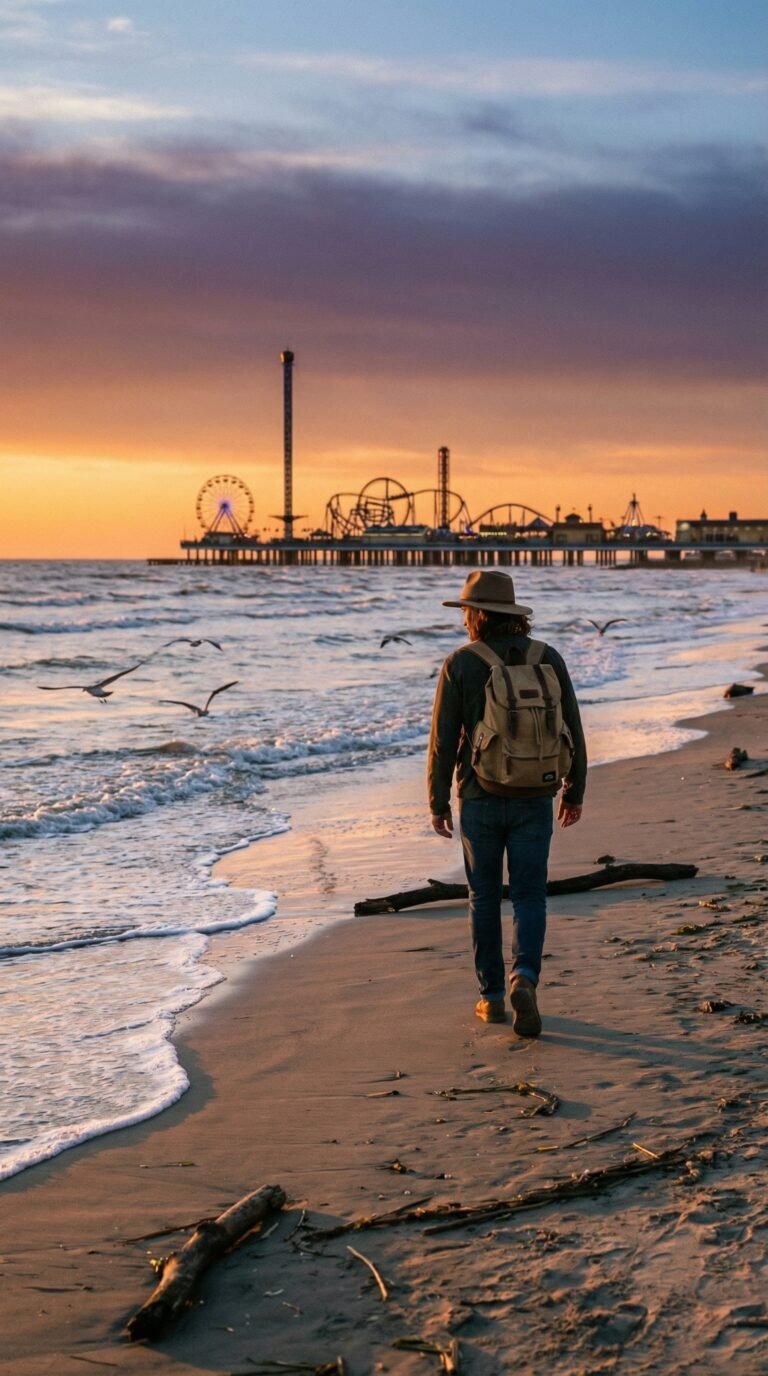
Houston and the Gulf Coast offer a different side of Texas. This region combines big-city culture with beach towns and coastal charm. You will find top-quality museums, fresh seafood, and miles of sandy beaches along the warm waters of the Gulf of Mexico.
Houston
Houston is the largest city in Texas and the fourth-largest in the United States. This large metropolis is known for its Museum District, which includes 19 museums like the Houston Museum of Natural Science and the Museum of Fine Arts. Space Center Houston, the visitor complex for NASA’s Johnson Space Center, lets you see real spacecraft and learn about America’s space program. Check the Space Center Houston official website for tour times and exhibits. The city’s dining scene is one of the best in the country, with incredible Vietnamese, Mexican, and Indian food. Walk through Buffalo Bayou Park or explore the trendy Montrose and Heights neighborhoods for local shops and cafes. Houston is a major business and cultural hub, and it shows in the quality of its arts and food. Continue to read -> Houston
Galveston Island
Galveston Island sits just an hour from Houston and offers a quick beach escape. This historic town has beautiful Victorian buildings in the Strand District, where you can shop and eat in restored 19th-century storefronts. The beaches include Stewart Beach and East Beach, both great for swimming and sunbathing. Pleasure Pier is a classic seaside amusement park built over the water. Moody Gardens features an aquarium and a rainforest pyramid. You can also tour the 1877 Tall Ship Elissa, a real sailing ship from the age of sail. Galveston is perfect for a weekend trip when you want sand, history, and good seafood. Visit the Galveston Island Convention & Visitors Bureau official website for event calendars and travel tips. Continue to read -> Galveston Island
Corpus Christi
Corpus Christi is a major Gulf Coast city known for beaches and water sports. Padre Island National Seashore protects the longest undeveloped barrier island in the world, with miles of wild coastline. The USS Lexington Museum sits in the bay, a massive World War II aircraft carrier you can tour. The Texas State Aquarium showcases Gulf marine life. Corpus Christi Bay is popular for fishing, sailing, and windsurfing. The city sits close to South Padre Island, making it a good base for exploring the southern coast. Continue to read -> Corpus Christi
Aransas Pass
Aransas Pass calls itself the “Saltwater Fishing Capital of Texas,” and for good reason. This small coastal town is all about fishing charters for redfish, speckled trout, and flounder. Conn Brown Harbor serves as the main marina with boat launches and fishing guides. The town sits near Port Aransas beaches but keeps a quieter, more laid-back feel. If you love fishing or want a calm coastal getaway, Aransas Pass delivers. Continue to read-> Aransas Pass
Port Isabel
Port Isabel is a historic fishing village at the southern tip of Texas. It serves as the gateway to South Padre Island. Climb the Port Isabel Lighthouse State Historic Site for views of the Laguna Madre and the coast. Fishing is a big draw here, with access to the Lower Laguna Madre’s rich waters. The Queen Isabella Causeway is the dramatic 2.4-mile bridge that connects Port Isabel to South Padre Island, offering great views as you drive across the water. Continue to read-> Port Isabel
Isla Blanca Park
Isla Blanca Park sits at the southern tip of South Padre Island. This park has some of the best beaches in Texas, with white sand and clear Gulf waters. You can swim, kiteboard, or play beach volleyball. The jetty is popular for fishing and watching ships enter the channel. RV camping is available if you want to stay right on the beach. Spring breakers and families both love this spot for its beauty and easy beach access.
For more information on planning your visit, check the Visit Houston official tourism website for city guides and event listings. Continue to read -> Isla Blanca Park
West Texas & National Parks
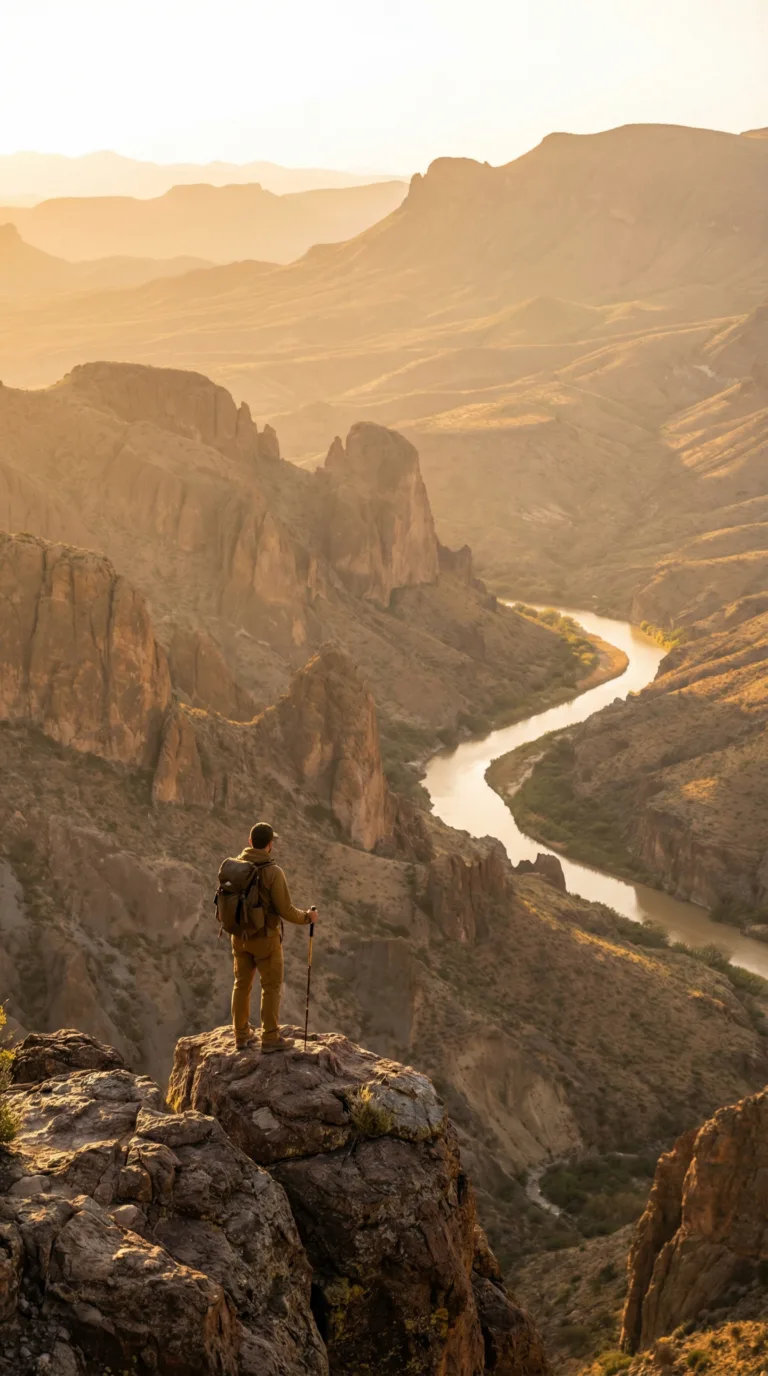
West Texas is a land of extremes. This vast region stretches across desert basins, rugged mountain ranges, and deep canyons that reveal millions of years of geological history. Unlike the humid forests of East Texas or the rolling hills of the central region, West Texas offers raw, dramatic landscapes that feel worlds away from the state’s urban centers. Two national parks, a state park larger than some Eastern states, and the biggest urban wilderness park in America all call this region home.
Big Bend National Park
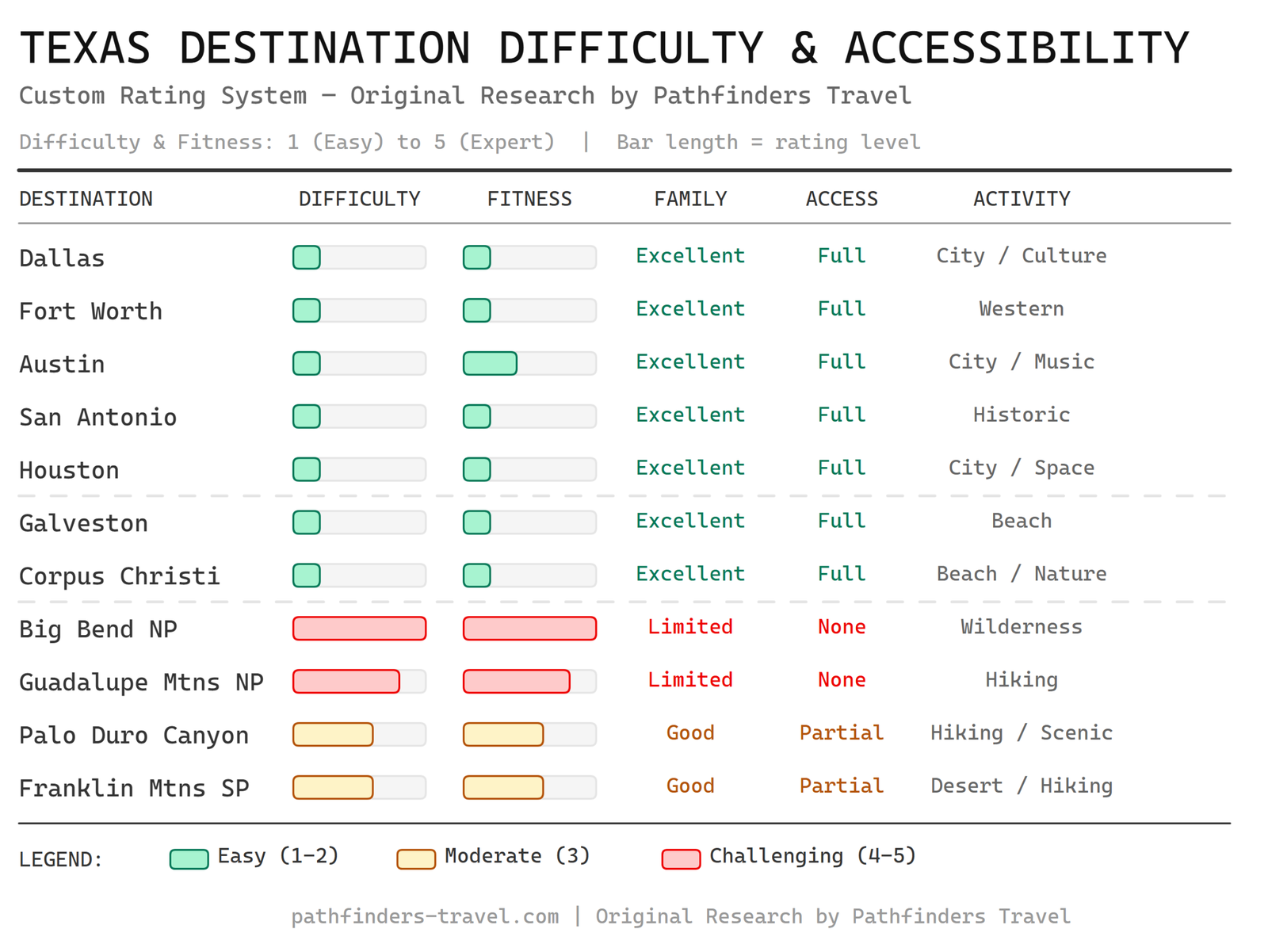
Big Bend National Park sits along the Rio Grande at the Texas-Mexico border, more than 100 miles from the nearest city. This remoteness defines the park. The Chisos Mountains rise from the desert floor, offering trails like Lost Mine Trail and the challenging South Rim hike with views across three mountain ranges. Santa Elena Canyon’s 1,500-foot limestone walls tower over the Rio Grande, creating one of the most dramatic scenes in Texas. Natural hot springs along the river provide a warm soak after a day of hiking. At night, the park becomes an International Dark Sky Park, where the Milky Way stretches across the horizon with zero light pollution. Before you visit, prepare carefully. Gas stations and services are scarce. Bring more water than you think you need. Cell service does not exist here. Continue to read: Big Bend National Park, The Complete Guide to Texas’s Remote Desert Wilderness ->
Guadalupe Mountains National Park
Guadalupe Mountains National Park protects the highest peaks in Texas. Guadalupe Peak stands at 8,751 feet, earning its nickname as the “Top of Texas.” The trail to the summit gains 3,000 feet over four miles, great hikers with views across the salt flats and desert below. McKittrick Canyon transforms each fall when bigtooth maples turn brilliant red and gold, a rare sight in Texas. The park sits on an ancient Permian reef that formed 265 million years ago when this area was covered by an inland sea. Unlike Big Bend, this park has no paved roads through the interior. You hike in, or you don’t see it. No lodging, no restaurants, no gas stations exist within park boundaries. Come prepared with experience and supplies. (Continue to read: Guadalupe Mountains National Park)
Palo Duro Canyon
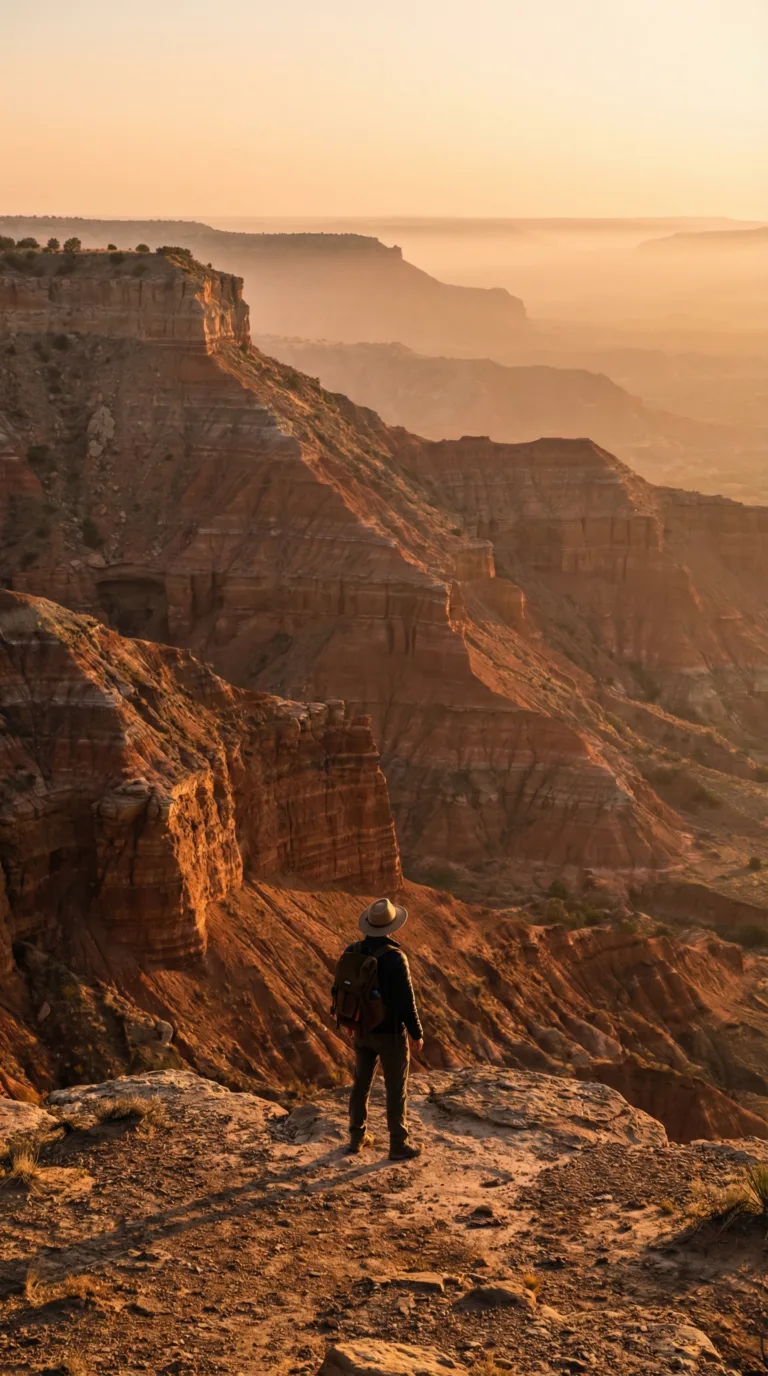
Palo Duro Canyon State Park carves 120 miles across the Texas Panhandle near Amarillo. At 800 feet deep and 20 miles wide, it’s the second-largest canyon system in the United States. The layered red, orange, and yellow rock walls glow at sunrise and sunset, creating some of the most photogenic landscapes in Texas. The Lighthouse Trail leads to the park’s most famous rock formation, a 75-foot pillar that stands alone on the canyon floor. Mountain bikers ride the canyon rim trails, while horseback riders explore the backcountry. Each summer, the outdoor musical “TEXAS” performs in the canyon’s natural amphitheater, telling the story of Panhandle settlers. Unlike the national parks farther west, Palo Duro offers campgrounds, cabins, and easier access for families. Continue to read: Palo Duro Canyon State Park->
Franklin Mountains State Park
Franklin Mountains State Park in El Paso is the largest urban park in the country, covering 27,000 acres entirely within city limits. The park’s desert peaks rise directly behind downtown El Paso, offering hiking trails with views of two countries. From the ridgelines, you see El Paso spreading across the valley floor on one side and Ciudad Juárez, Mexico on the other. The Wyler Aerial Tramway carries visitors to Ranger Peak, where the views stretch for miles across three states. Rock climbers tackle the park’s granite faces, while mountain bikers get around the desert trails. Unlike the remote national parks, you can hike here in the morning and eat lunch downtown an hour later.
Texas Itineraries: How to Plan Your Trip
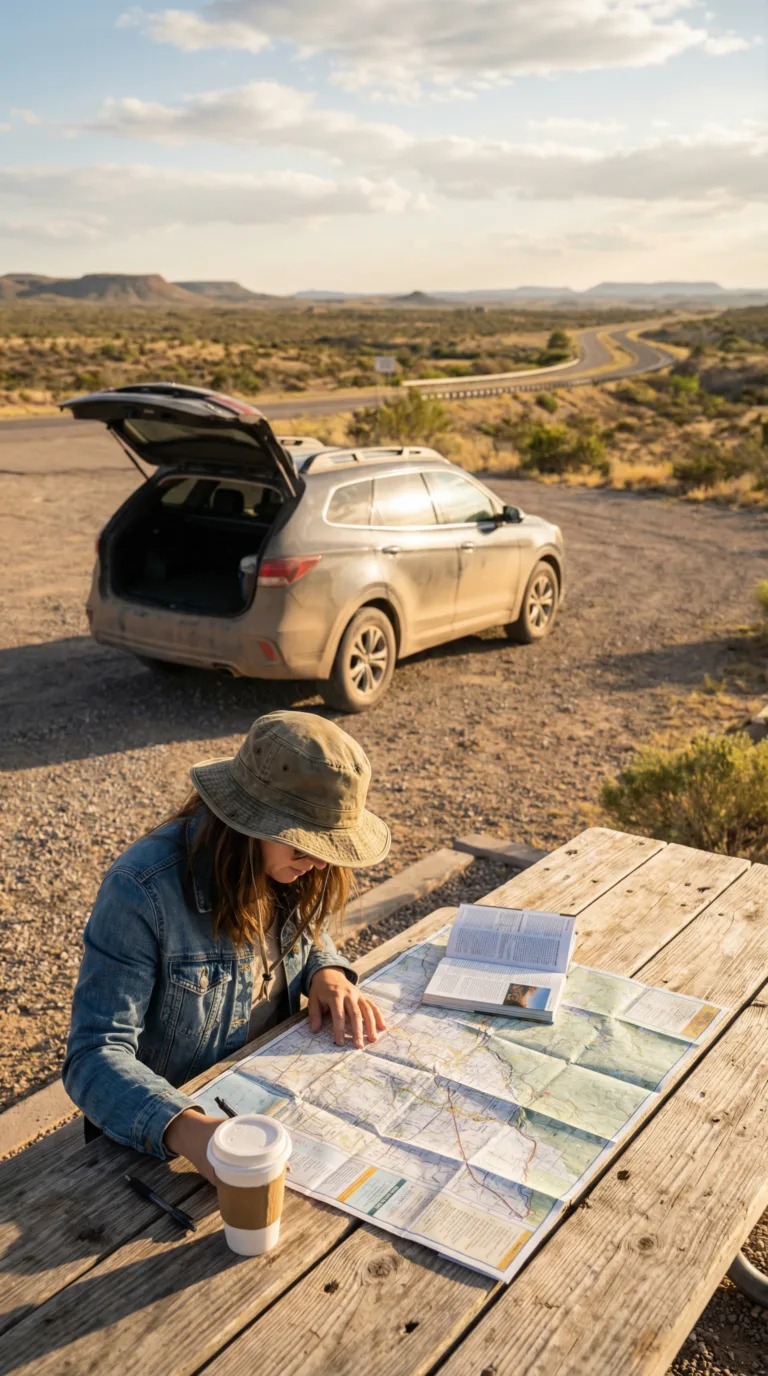
Texas is too large to see everything in one trip. The state spans 268,000 square miles, which means you need to choose destinations based on your interests and available time. These three itineraries help you plan a trip that matches your schedule, Couples, or anyone with limited time wanting to experience Texas highlightsDay 1: Austin, Explore South Congress, swim at Barton Springs Pool, enjoy live music on Sixth Street
Day 2: San Antonio, Visit the Alamo, stroll the River Walk, tour San Antonio Missions
Day 3: Austin or Hill Country, Return to Austin for brunch and Texas State Capitol tour, or explore nearby Hill Country wineries
Transport: Rent a car in Austin; San Antonio is 1.5 hours south via I-35
What to Pack for Texas
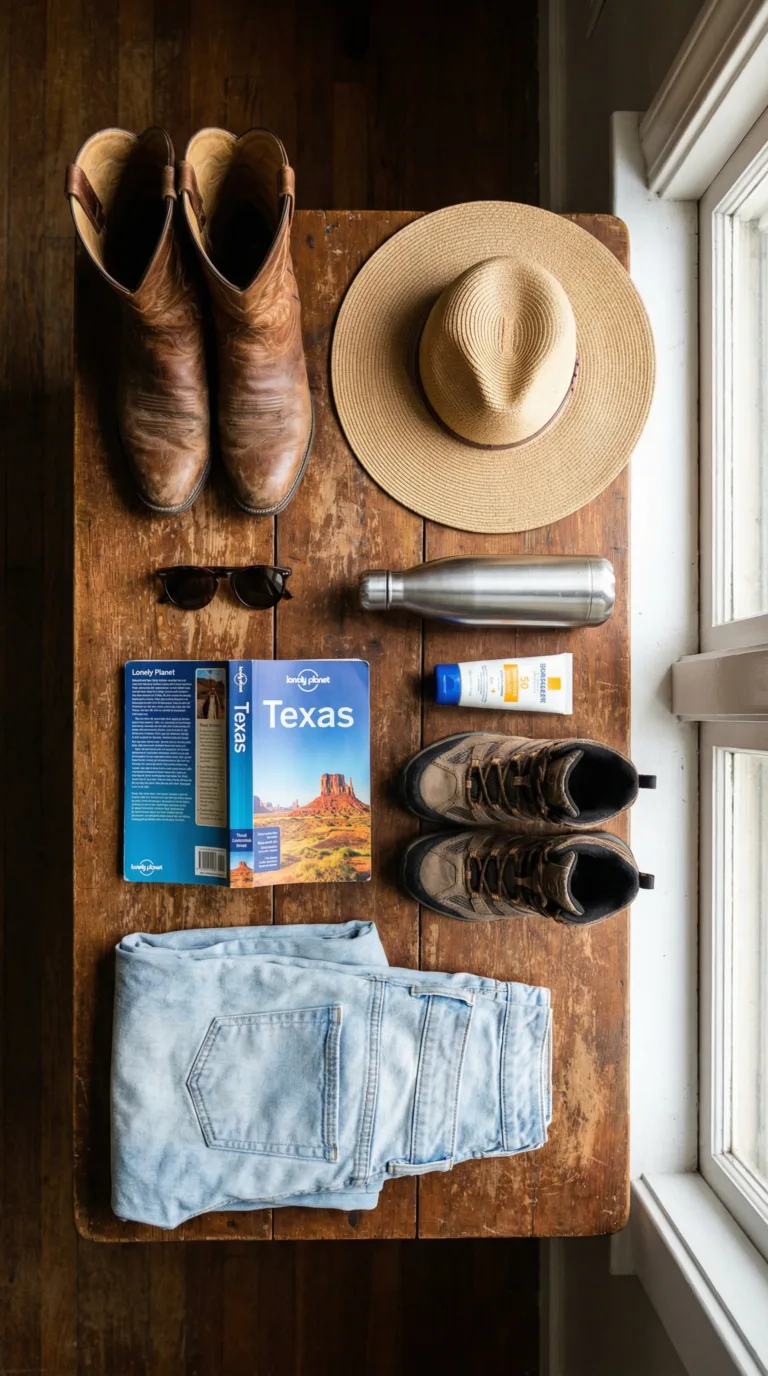
Texas weather demands smart packing. The sun here is intense year-round, so bring high-SPF sunscreen, polarized sunglasses, and a wide-brimmed hat. You’ll use all three more than you expect.
Pack layers. Temperatures can swing 30 degrees between morning and afternoon, especially in West Texas. A light jacket works for cool mornings, then stows easily when the heat kicks in. Add a rain jacket for spring storms and Gulf Coast humidity.
Footwear matters. Comfortable walking shoes handle city exploration in Dallas or Austin. If you’re hitting Big Bend or Guadalupe Mountains, bring hiking boots with good ankle support. The terrain is rocky and unforgiving.
Carry a reusable water bottle everywhere. Staying hydrated is critical in Texas summers and dry desert areas. Refill stations are common in cities and parks.
Most Texas destinations are casual. Jeans and a clean shirt work almost anywhere. Pack one dressier outfit if you plan to visit upscale restaurants in Houston or San Antonio.
Don’t forget practical gear: a camera for those Hill Country sunsets, a portable phone charger for long days out, and a car phone mount for navigation on Texas’s large highways.
Frequently Asked Questions About Traveling to Texas
What is Texas’s number one tourist attraction?
The Alamo in San Antonio is widely considered Texas’s top tourist attraction. This historic mission draws millions of visitors each year. Other popular spots include the Dallas Arboretum, the Sixth Floor Museum, Space Center Houston, and the Fort Worth Stockyards. Natural attractions like Big Bend National Park and Palo Duro Canyon also rank among the state’s most visited sites.
What is the best month to visit Texas?
Late October through November and March through May offer the best weather statewide. Spring brings wildflowers and comfortable temperatures across most regions. Fall provides pleasant weather with fewer crowds. Avoid summer (June through August) unless you’re heading to the coast. Temperatures regularly exceed 95 to 100 degrees during these months.
Which city in Texas is best for tourists?
San Antonio is often considered the best for tourists due to the Alamo, River Walk, and family-friendly attractions. Austin is ideal for music lovers, foodies, and outdoor enthusiasts. Houston offers top-quality museums and Space Center Houston. Dallas and Fort Worth provide urban culture and Western heritage. Your choice depends on your interests.
What’s the prettiest place in Texas?
Palo Duro Canyon State Park is often cited as the most impressive. The colorful red rock cliffs look especially impressive at sunrise and sunset. Big Bend National Park offers dramatic desert mountain scenery. The Texas Hill Country features rolling hills, wildflowers, and scenic drives. Guadalupe Mountains National Park has the state’s highest peaks and fall foliage.
Is it safe to travel near the Texas-Mexico border?
Most of Texas, including major tourist destinations, is very safe and far from the border. Border cities like El Paso, Laredo, and Brownsville are generally safe in tourist areas during daytime. Big Bend National Park borders Mexico but is safe for visitors who stay on marked trails. Check current U.S. State Department advisories before crossing into Mexico. Exercise normal travel precautions and avoid remote border areas at night.